Best Racerback Sports Bras for a Large Bust
A construction-first guide to cup depth, band anchoring, strap convergence, closures and activity testing—so a racerback clears the shoulder blades without transferring all the load to the neck.
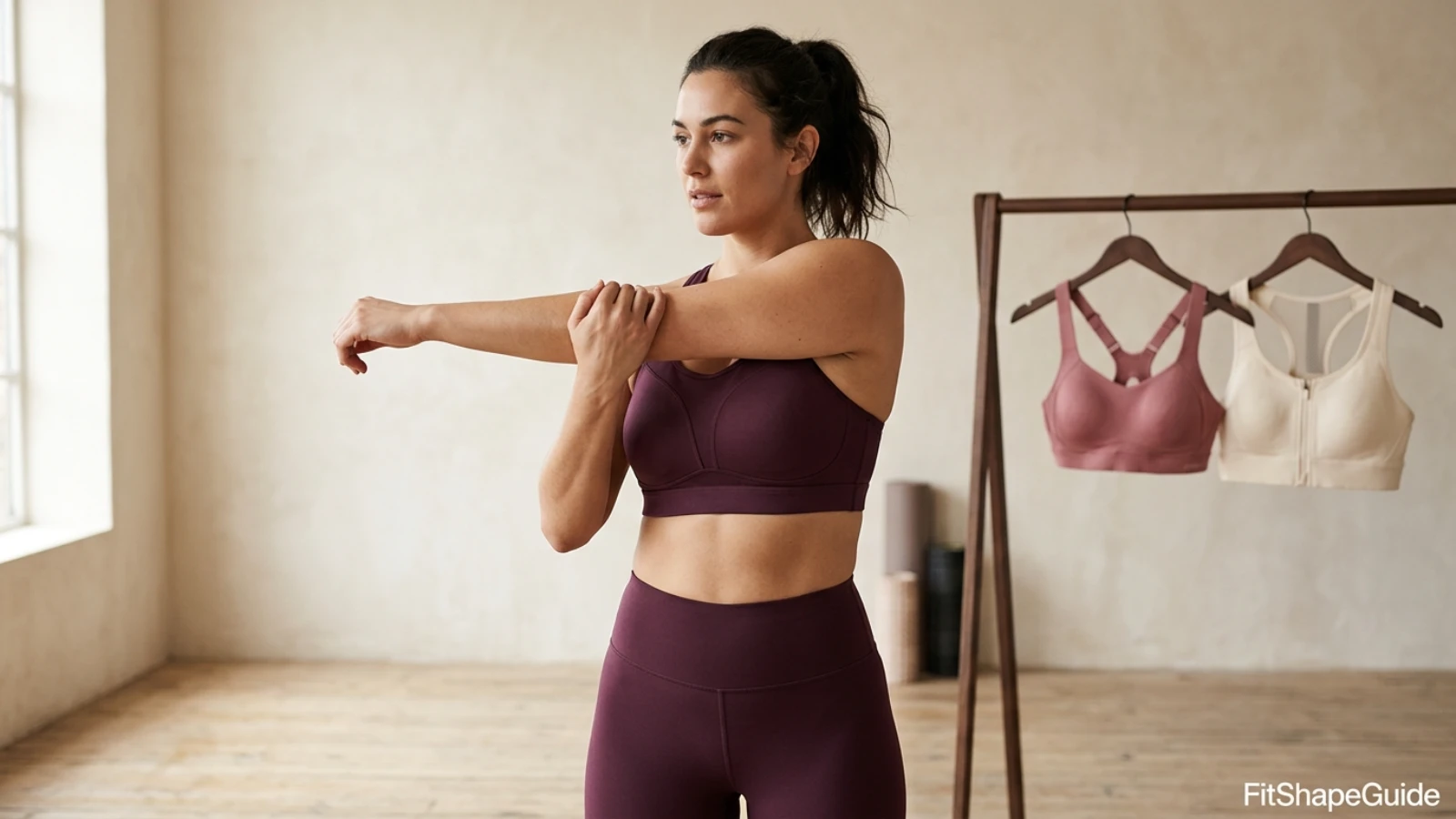
The 90-second racerback fit check
- Fasten the band and loosen the straps slightly; the band should remain horizontal.
- Set all breast tissue inside the cups, including at the underarm and lower edge.
- Confirm that cup seams, liners or molded shapes contain rather than flatten.
- Check that the racerback junction clears the shoulder blades through arm circles.
- Take five full breaths; the band and neckline should not restrict expansion.
- March, hinge and perform a gentle activity-appropriate movement test.
- Look for strap-edge pressure near the neck after several minutes, not only at first try-on.
Best racerback sports bras for a large bust by construction
“Racerback” describes the route of the straps across the upper back, not the complete support system. Two bras can look similar from behind yet behave very differently because one has deep shaped cups and a stable adjustable band while the other is a shallow stretch tube. Start with the activity and cup-to-band difference, then select the back route.
Bra-sized encapsulation racerback
Best for: fuller busts that need distinct cup volume and separation for walking, gym work or moderate impact. Seamed or molded cups create space while the racerback stabilizes the upper frame. Trade-off: a fixed back may be difficult to dress and less adjustable through the torso.
Encapsulation-compression hybrid
Best for: running, court sports and HIIT when shaped inner cups need an outer control layer. The overlay should hold the cups closer without flattening them. Trade-off: extra layers can hold heat, and too much overlay tension may restrict breathing.
Adjustable J-hook or convertible racerback
Best for: choosing between parallel straps and a racerback route. A J-hook can reduce strap slip and work with different tops. Trade-off: connecting straps effectively shortens them, so the hook must sit comfortably and should never be forced high toward the neck.
Front-zip racerback
Best for: easier entry when pulling a firm bra over the head is difficult. Seek deep cups, a stable band, a protected zipper base, a top lock or backup fastening and a full skin guard. Trade-off: a shallow center front can bow, press or unzip under load.
Longline racerback
Best for: spreading pressure over a taller underband and pairing smoothly with high-rise bottoms. A longline can feel secure for lifting or low-impact training. Trade-off: the lower edge may roll on a short torso, rib flare or repeated flexion.
Pullover seamless racerback
Best for: low-impact sessions, mobility work and comfort when the knit supplies real cup depth and recovery. Trade-off: generic letter sizing may compress without containing, and a sweat-damp pullover can be hard to remove safely.
The best racerback sports bras for a large bust distribute work across cups, band, side wings and straps. A dramatic center-back shape cannot compensate for missing cup capacity or a band that slides.
Racerback geometry: where the straps meet matters
Parallel straps descend more vertically from the shoulder to the band. A racerback brings them inward, which can improve stability and reduce outward slip. The trade-off is a more concentrated force path. A narrow junction placed too high can pull into the trapezius muscles; a very low junction can restrict the shoulder blades or twist the band.
Fixed T-back
A fixed T-back creates one narrow vertical line between the shoulder blades. It can feel secure under sleeveless tops, but it offers limited tuning. Check that the upper junction does not sit at the base of the neck and that the lower anchor remains flat rather than puckering.
Curved Y-back
A Y-shaped route spreads into two straps above a wider center panel. It often balances stability with a smoother force transition. Wider straps may distribute pressure, but width alone does not solve a loose band or shallow cup.
J-hook conversion
A J-hook or clip lets parallel straps connect behind the upper back. It is useful when strap spacing changes across tops or activities. Connect the hook only after the band and cups fit. If fastening it lifts the band, cuts the neckline or causes neck pressure, lengthen the straps or use the parallel route.
Broad racer panel
A wide mesh panel can spread load across more of the upper back and provide ventilation. Its edges must stretch with torso rotation without rubbing. The panel should lie flat, not form a tight ridge down the spine.
| Back route | Potential advantage | What to inspect | Best starting use |
|---|---|---|---|
| Fixed T-back | Minimal strap slip and narrow visual profile | Neck pressure, fixed strap length, lower anchor puckering | Moderate activity when exact sizing is available |
| Curved Y-back | Smoother load path with shoulder-blade clearance | Junction height and strap-edge pressure | Gym, walking and mixed training |
| J-hook conversion | Parallel or racerback wearing options | Hook position, shortened strap path and hardware rub | Changing tops or variable strap-slip needs |
| Broad mesh panel | Wider load distribution and airflow | Edge friction and restriction during rotation | Longer sessions and warmer conditions |
| Cross-back straps | Secure diagonal anchoring | Correct manufacturer route and dressing access | Impact work with fully adjustable straps |
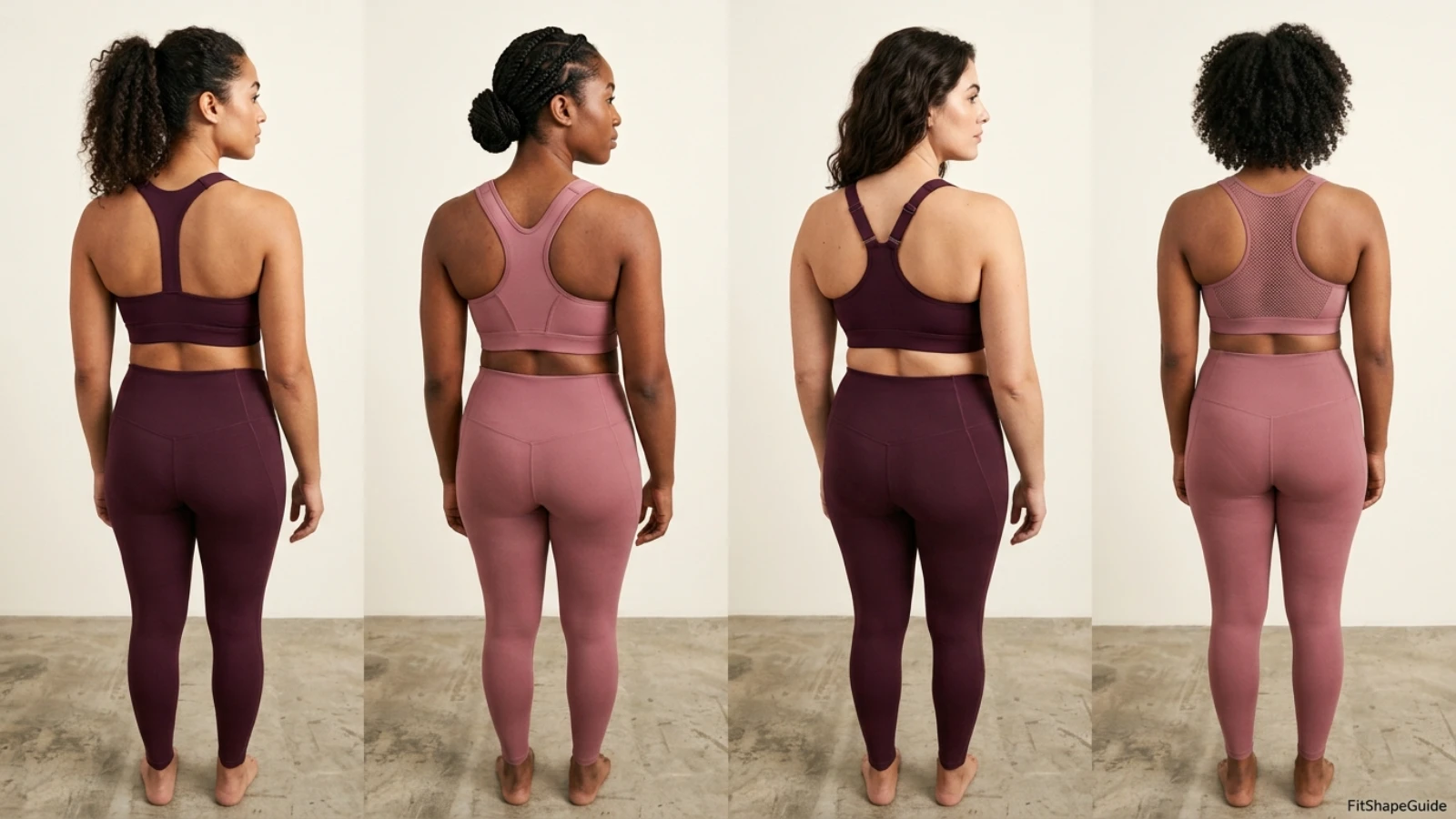
The best racerback sports bras place the junction low enough to spare the neck and high enough to preserve shoulder-blade movement.
Band, cup depth and side containment
A comfortable racerback depends on the same foundation as any supportive sports bra. The band resists upward movement, the cups hold breast volume, the side frame limits outward escape and the straps position the neckline. If the upper back is doing most of the work, inspect the lower frame first.
Band tension before strap tension
Fasten an adjustable band on the loosest useful setting so future tightening remains available as elastic relaxes. The band should stay level when arms lift and when straps are loosened slightly. It may feel firm, but five full breaths and normal speech should remain comfortable. A band that climbs can be too loose, stretched out or displaced by cups that are too shallow.
Cup depth, width and upper capacity
Breast tissue should settle into the lower and side cup without folding, cutting or floating. Shallow cups can push the whole bra forward, make the band appear loose and turn the racerback into an improvised lifting device. High necklines improve upper containment only when the cup beneath has sufficient depth.
Encapsulation versus compression
Encapsulation uses shaped cups to control each breast. Compression holds tissue closer to the torso. Fuller busts often benefit from both, particularly for higher impact, but compression should be applied over adequate volume. Side escape, flattened tissue, neckline overflow or restricted breathing are not signs of stronger support.
High side wings and underarm comfort
Taller side wings can contain lateral tissue and connect the cup to the back more securely. The top edge should clear the arm crease through reach and rotation. If it rubs, the cause may be excess side height, a rough binding or breast tissue being pushed outward by shallow cups.
Adjusters and hardware
Sliders should stay in position under repeated arm movement. Hooks, J-clips and zipper parts need smooth backing and enough distance from high-friction areas. Hardware should improve adjustment, not press into the spine or shoulder blade.
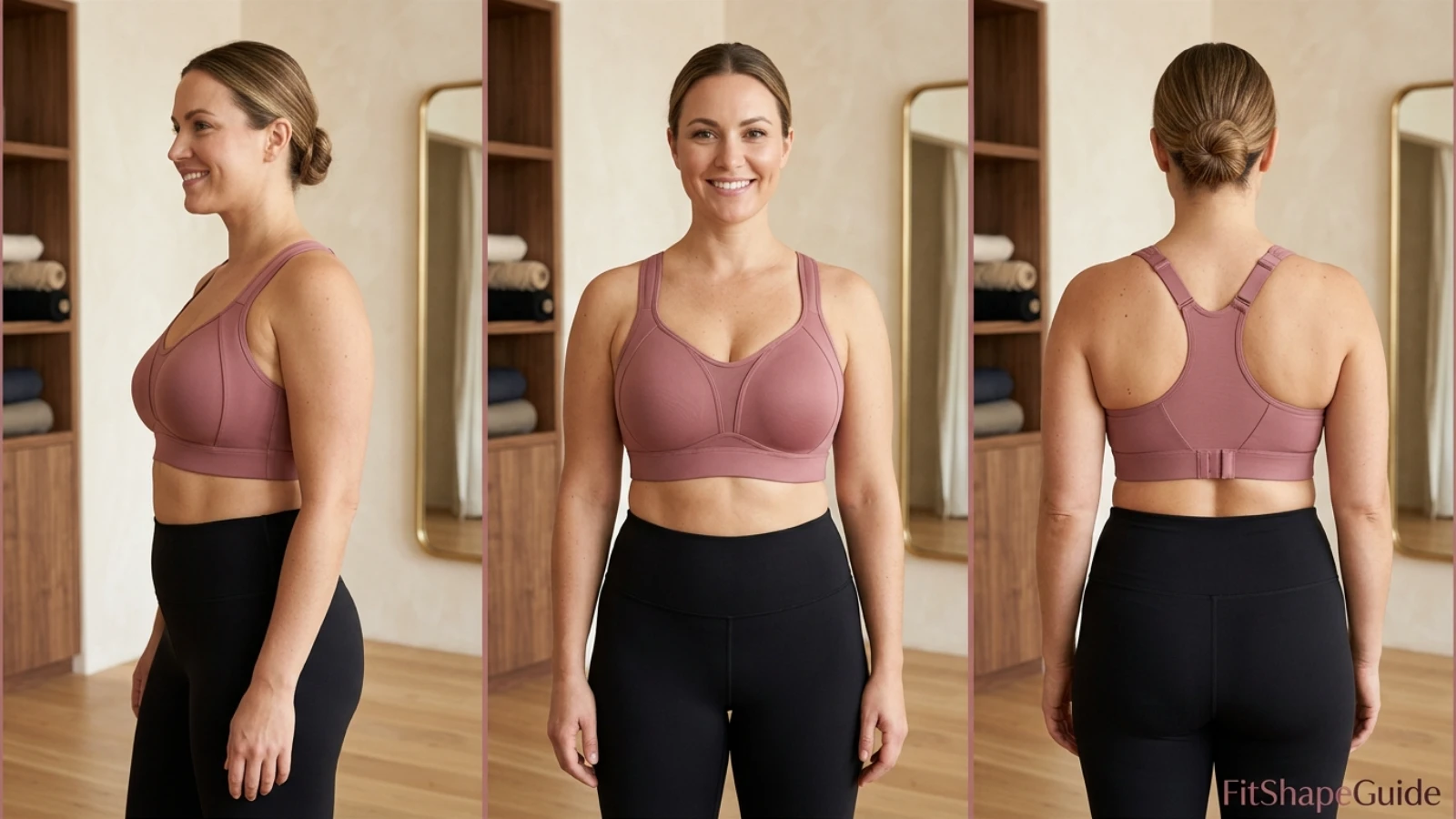
The best racerback sports bras let the band and cups carry the frame before the straps fine-tune its upper edge.
Running, HIIT, lifting and floorwork tests
A racerback that feels secure while standing may change during arm drive, a forward hinge or overhead reach. Test the exact movement pattern and duration you plan to use. Begin gently, keep the environment safe and stop when the bra causes pain or breathing restriction.
Running
Running creates repeated vertical, side-to-side and forward-back movement. Begin with walking, then a brief easy jog if appropriate. Watch for neckline escape, band bounce, slider creep and a racerback junction that pulls toward the neck. For detailed construction comparisons, see the sports bras for running guide.
HIIT and jumping
Direction changes and landings can expose side escape or delayed fabric recovery. Test a controlled squat-to-reach, side step and low-impact alternative before progressing. The HIIT sports bra guide explains why upper containment and secure hardware matter during varied movement.
Lifting
For presses, rows and pulls, the racerback should clear the shoulder blades without blocking retraction. Check the band during a hinge and the front edge during a bench position. Longline bands may spread pressure, but they can roll during deep flexion. A moderate-support bra with strong range of motion may outperform a rigid high-impact frame for controlled lifting.
Yoga, Pilates and floorwork
Test spinal flexion, rotation and a supported lying position. Hard adjusters should not sit directly beneath the body. A front zipper must remain guarded when the torso folds. Seamless pullovers may feel comfortable here, provided cups still contain and the lower edge does not migrate.
High-impact decision
If the session includes running or frequent jumping, compare the racerback against a purpose-built high-impact sports bra. A racerback silhouette is useful, but the impact rating must come from the complete cup-and-band construction and your own movement test.
| Activity | Priority construction | Short test | Failure signal |
|---|---|---|---|
| Running | Hybrid cups, stable band, locked adjusters | Walk, easy jog, arm drive | Band bounce, neckline escape, neck pull |
| HIIT | High sides, upper containment, secure closure | Squat-to-reach and side step | Side escape, hardware shift, breathing restriction |
| Lifting | Shoulder-blade clearance and controlled stretch | Reach, row, hinge and press position | Back panel blocks movement or lower edge rolls |
| Yoga or Pilates | Low-profile hardware and flexible frame | Rotation, fold and supported floor position | Adjuster pressure, gaping or front closure rub |
| Walking | Comfortable encapsulation and stable straps | Ten-minute brisk walk | Gradual strap slip or underarm friction |
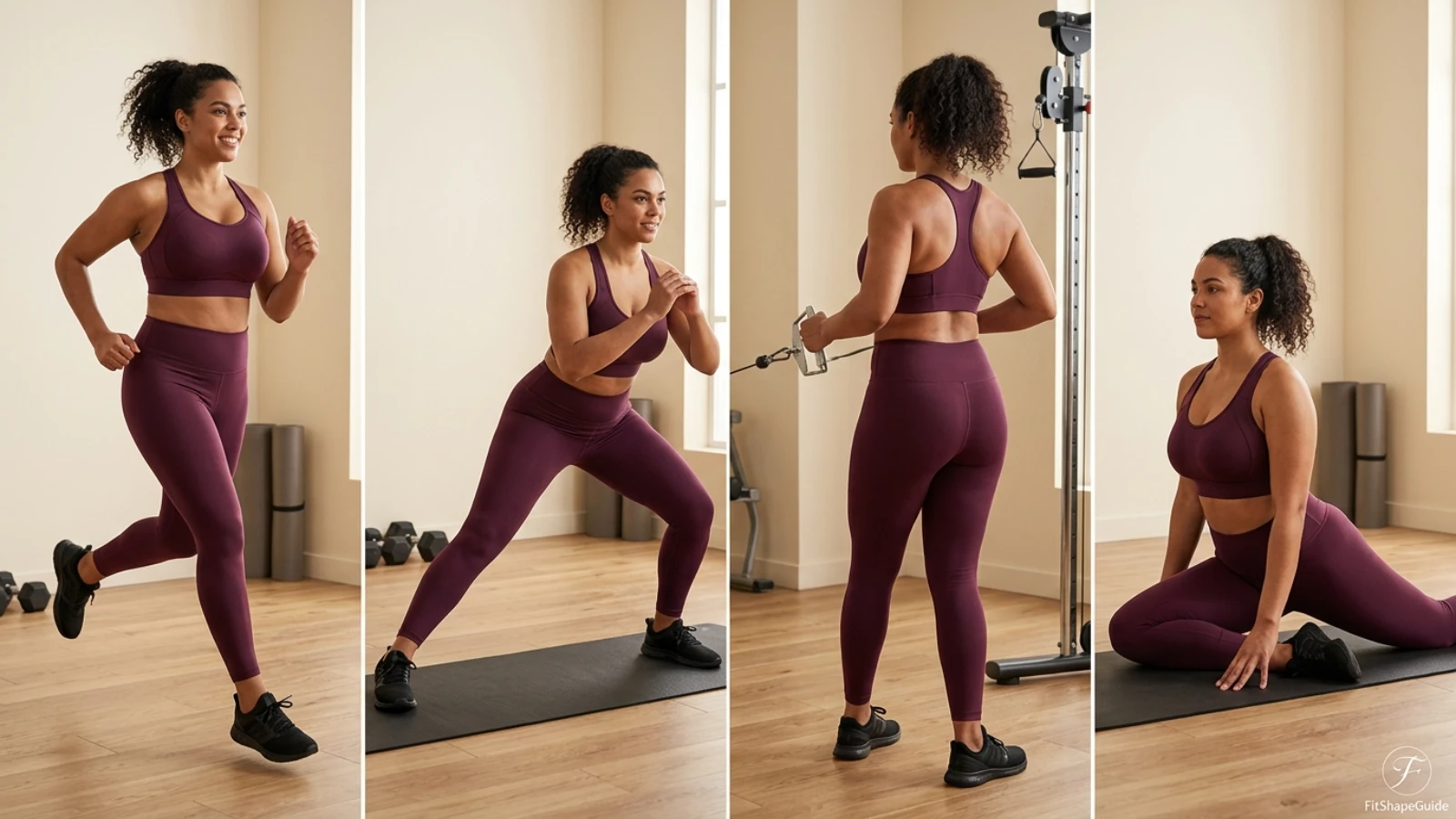
The best racerback sports bras stay centered through the exact arm, torso and impact pattern of the intended session.
Fabric recovery, chafing and care
Racerback bras place seams, mesh and strap edges across a mobile area. A route that feels smooth during a fitting can rub after repeated arm swing or when sweat increases friction. Evaluate both material recovery and the placement of every edge.
Stable knit and power mesh
Stable cup knit helps hold shape, while power mesh can control the side and back with less bulk. Mesh stiffness should be balanced with soft bindings. A broad back panel needs enough recovery to return after stretching, yet enough give for torso rotation.
Foam, liners and removable pads
Spacer foam can add shape without a heavily padded feel. Dense foam may trap heat, while loose removable pads can fold or migrate. Any pad should lie flat after washing and not reduce cup depth. A liner should move with the outer cup rather than creating wrinkles or pressure ridges.
Friction map
Inspect the inner edge of each strap, the center-back junction, underarm binding, band joins, J-hook, zipper guard and label. Check again after twenty minutes. Redness that grows, burning, broken skin or a need to keep repositioning the bra is a reason to stop and choose another frame.
Wash and dry
Follow the garment label. Fasten hooks and use a wash bag when instructed. Adidas advises air-drying sports bras and avoiding a tumble dryer because heat can damage elastic; it also notes that hanging by the straps may stretch them. Lay the bra flat or support its weight as directed in the brand’s sports-bra care guidance.
Know when support has changed
Replace or retire a bra when the band remains stretched, the straps no longer hold adjustment, the back panel stays distorted, cups wrinkle or support changes noticeably. Rotation between several suitable bras gives elastic time to dry and recover.
A highly compressive top is not a substitute for correct cups. If you prefer layered activewear, compare purpose-built compression tops for a large bust without relying on the outer layer to repair a poor bra fit.
How to shop online for a supportive racerback
The strongest listings show front, side, interior and back views; describe cup construction; identify band and cup sizing; show the closure and adjusters; state the intended impact level; list materials and care; and provide current return terms. A back-view photograph alone cannot prove support.
Start with the seller’s own size chart
Measure according to the current brand instructions rather than assuming one size transfers across makers. Nike’s official sports-bra fit guide recommends checking that the band stays level, straps remain secure and support is tested with movement such as jumping jacks. Use those principles as a fit check, while following the actual seller’s chart and safe movement appropriate to you.
Look for cup evidence
Words such as “high support” or “racerback” are insufficient. Look for seamed or molded encapsulation cups, an inner sling, a defined lower frame, cup-size availability or clear interior photographs. If every front view appears perfectly flat, the style may rely mainly on compression.
Inspect adjustability and access
Determine whether the straps are fixed, fully adjustable or convertible; whether the band pulls on, hooks at the back or zips at the front; and whether a damp garment can be removed comfortably. If a front opening is important, compare the dedicated front-close sports bra guide.
Read reviews as fit evidence
Prioritize reviews that mention band/cup size, purchased size, torso proportions, activity, duration and a specific outcome. “Great support” is less useful than an account of band position, strap pressure, cup containment and chafing during a defined workout. Body shapes differ, so treat reviews as clues rather than guarantees.
Amazon verification workflow
Before adding any affiliate product, confirm the live product title, brand or authorized seller, size chart, cup frame, back route, closure, materials, care, intended activity and current return eligibility. Never hard-code price, coupon, rating, review count, stock or delivery promises. Affiliate disclosures must be clear and close to recommendations, consistent with the FTC’s endorsement and review guidance.
For a wider starting list beyond racerback designs, use the sports bra guide for a large bust.
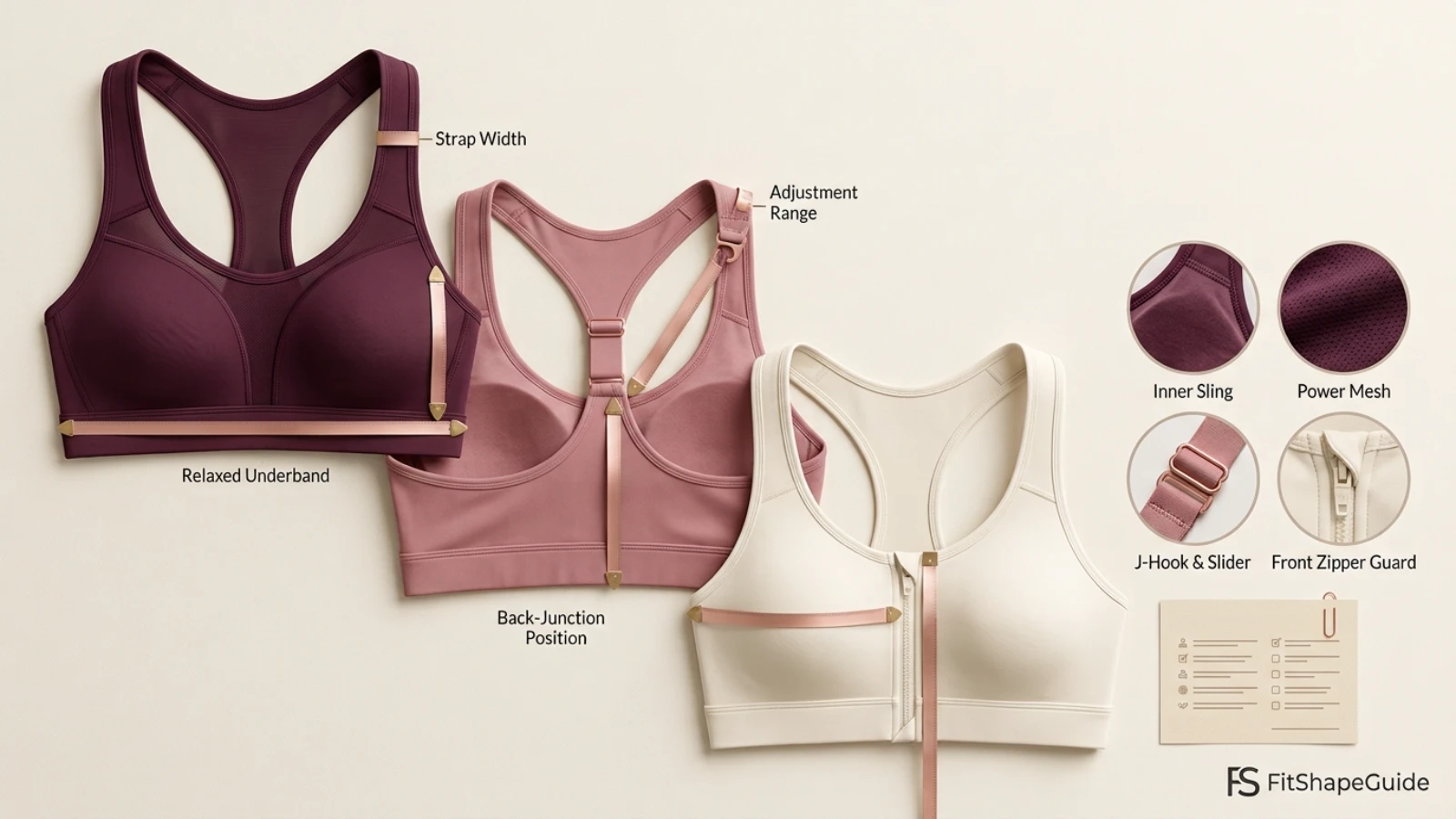
Listings for the best racerback sports bras make cup capacity, band adjustment, back routing and access visible before checkout.
Common racerback fit problems
| Symptom | Likely cause | Better next step |
|---|---|---|
| Pressure near neck or traps | Junction too high, straps too short or band/cups not carrying load | Lengthen straps, lower the hook or choose a wider Y-back |
| Band rides upward | Loose band, worn elastic or shallow cups pushing the frame | Reassess band and cup together before tightening straps |
| Overflow at neckline or side | Insufficient cup depth, width or upper capacity | Increase cup volume or choose shaped encapsulation |
| Back panel puckers | Strap route too tight or panel geometry mismatched | Release upper tension or try a different back shape |
| J-hook rubs | Hook placed too high, exposed hardware or excessive tension | Reposition within the approved range or wear straps parallel |
| Longline edge rolls | Torso length, rib shape or flexion conflicts with tall band | Choose a shorter stable band or different lower-edge shape |
| Damp bra is hard to remove | Firm pullover with insufficient access stretch | Choose adjustable back hooks or a guarded front closure |
| Straps still slip outward | Junction too low, stretch straps or loose adjustment | Check slider hold and choose a more stable approved route |
Do not let straps replace the band
Shortening straps can temporarily lift the front, but it also pulls the back upward and increases shoulder pressure. A level band and fitting cups should remain the foundation. Adjust straps only enough to position the upper cup and prevent slack.
Do not assume a narrower back is more supportive
A very narrow T-back can feel locked in while concentrating pressure. A wider Y-back or mesh panel may distribute load more evenly. The better choice is the one that maintains cup containment, breathing and shoulder freedom through the actual workout.
Do not accept pain as performance
Support is not measured by how difficult a bra is to fasten or remove. If the frame causes sharp pain, numbness, skin damage or restricted breathing, stop using it. The best racerback sports bras for a large bust control movement through balanced construction rather than punishing tension.
Choose cup-and-band support first, racerback routing second
The best racerback sports bras for a large bust pair deep shaped cups with a level band, high side containment and a back junction that clears the shoulder blades without pulling into the neck. Choose an encapsulation-compression hybrid for higher impact, an adjustable J-hook for routing flexibility, a guarded front zip for easier entry or a longline for broader pressure distribution. Keep only the construction that stays contained, breathable and comfortable through the intended workout and sweat-loaded removal.
Frequently asked questions
These answers clarify how the best racerback sports bras for a large bust should fit, move and feel.
The best racerback sports bras still require a personal fit check; the back shape alone is not a support rating.
What racerback sports bra style is best for a large bust?
A bra-sized encapsulation racerback or encapsulation-compression hybrid is a strong starting point because shaped cups and a stable band provide the foundation while the back route stabilizes the straps.
Are racerback sports bras more supportive?
Not automatically. Racerback straps can reduce outward slip, but support still depends mainly on cup capacity, band stability, side containment, fabric recovery and a construction matched to the activity.
Why does my racerback hurt my neck?
The junction may sit too high, the straps may be too short or the band and cups may not be carrying enough load. Release strap tension or choose a wider, lower back route.
Is a J-hook good for a large bust?
A J-hook can stabilize straps and provide wearing options when the underlying bra fits. It should connect without lifting the band, cutting the neckline or creating pressure near the neck.
Can I run in a racerback sports bra?
Yes, when the complete bra is designed for running and passes a gradual movement test. Look for shaped cups, controlled compression, a stable band, secure adjusters and comfortable upper containment.
Are front-zip racerback bras supportive?
They can be when the cups and band fit and the zipper has a protected base, reliable top lock or backup fastening and a full skin guard. The closure should not bow or rub.
How should a racerback sports bra fit?
The band should stay level, the cups should contain without overflow or empty folds, the junction should clear the shoulder blades and full breathing should remain comfortable during movement.
How do I remove a tight racerback after exercise?
Use the manufacturer’s intended opening and avoid forcing painful shoulder positions. If sweat-damp removal is consistently difficult, choose back hooks, a guarded front closure or a more accessible construction.
Editorial and verification standards
This guide evaluates construction rather than inventing a ranked product list. Fit checks align with practical principles in the Nike sports-bra size and fit guide: a band that stays in place, secure straps and a movement test appropriate to the claimed support. Care guidance is checked against current manufacturer instructions, and affiliate language follows the FTC disclosure framework.
Before publication of any product module, an editor should verify the live listing, exact size system, seller, product images, cup and back construction, intended activity, materials, care and current return terms. Commercial claims that change—such as price, rating, stock, delivery or coupons—should not be hard-coded into evergreen copy.
The phrase best racerback sports bras for a large bust therefore means the most suitable verified constructions for an individual fit and activity, not a guarantee that one garment will work for every body.