Best Dance Wear for a Large Bust
A studio-movement guide to supportive foundations, leotard and top layering, torso length, secure necklines, jumps, turns, floorwork and dress-code fit.
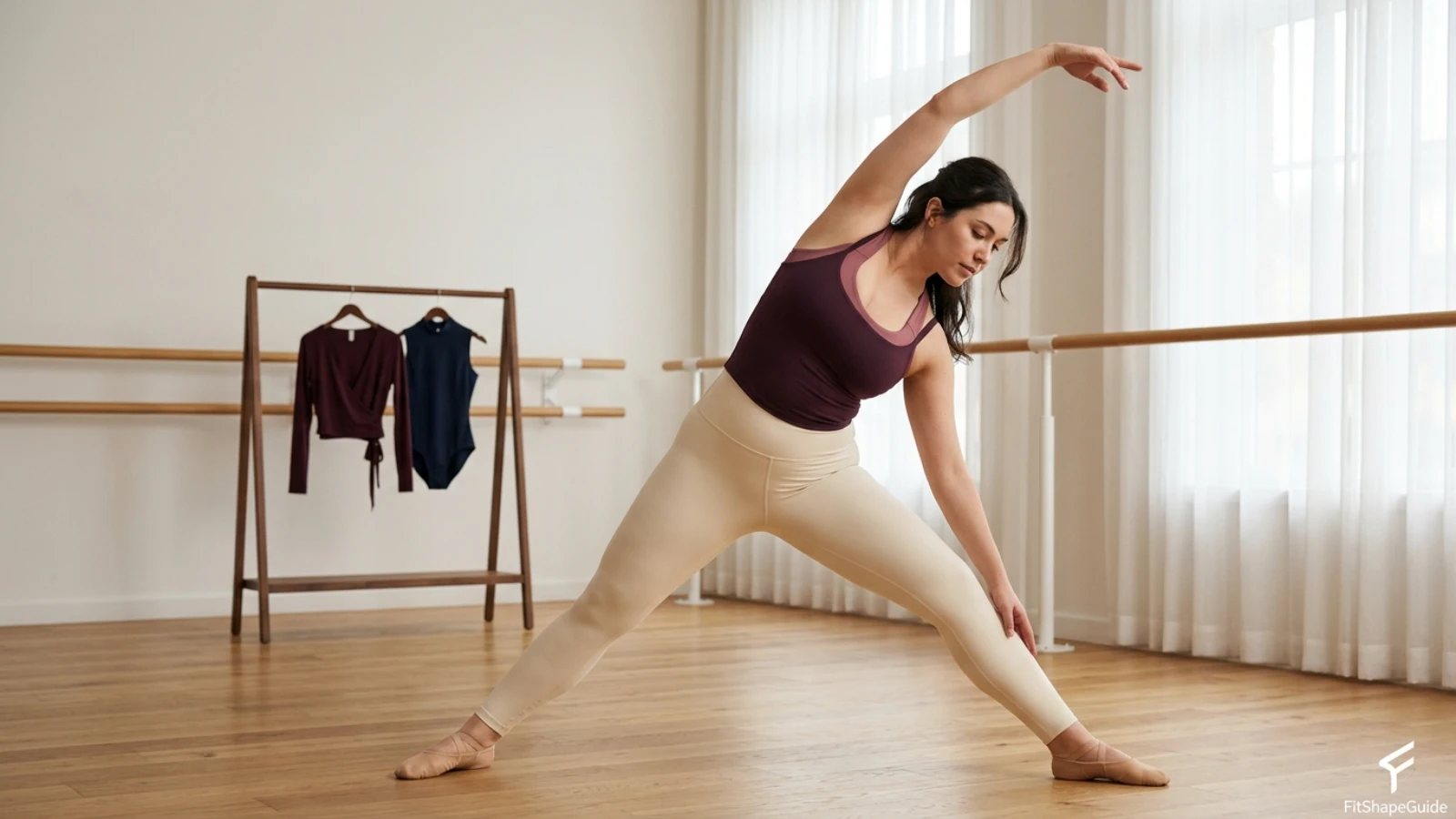
The 90-second studio movement check
- Wear the exact bra, tights, briefs or leggings planned for class.
- Lift both arms overhead and lengthen through the full torso.
- Rotate through a controlled spiral and side bend.
- Fold forward and return without neckline or cup movement.
- Perform several gentle jumps and spot a slow turn.
- Test kneeling or floorwork if the class includes it.
- Check that seams, straps and closures do not stack painfully.
- Take full breaths; pain, numbness or restriction means the fit fails.
Best dance wear for a large bust by construction
Dancewear has to provide support, reveal or preserve the movement line required by the class, and stay secure in multiple planes. A beautiful neckline is not useful if it shifts in a forward fold; a strongly compressive top is not successful if it restricts rib movement or shoulder placement.
Sports bra, shaped tank and leggings
Best for: independent sizing and support control in contemporary, jazz, fitness dance and general studio classes. Trade-off: multiple bands can overlap at the rib cage or waist, so test combined pressure during a deep bend.
Supportive leotard over a low-profile bra
Best for: ballet or technique classes where a visible body line matters but more support is needed. Trade-off: bra straps, backs and seams must fit the dress code and align beneath the leotard without rubbing.
Built-in-support adjustable leotard
Best for: reducing separate layers when the inner support, cup depth and adjustable straps genuinely fit. Trade-off: a shelf or “support bra” label is not proof of high support, and standard S–XL cups may remain shallow.
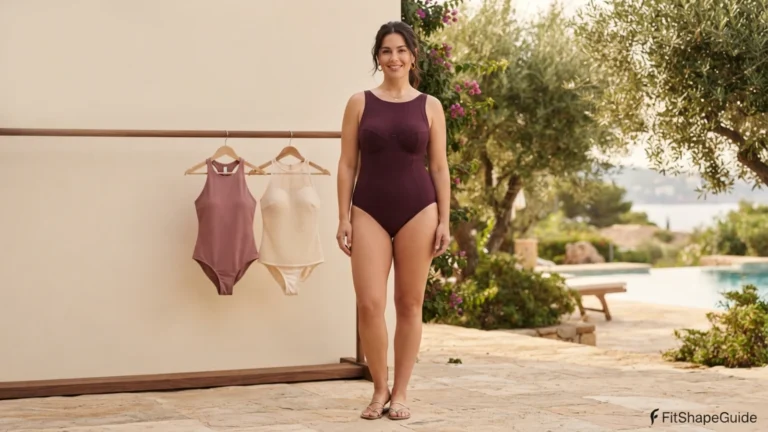
High-neck unitard or one-piece
Best for: secure neckline coverage through inversions, floorwork and expansive movement. Trade-off: fixed torso length can pull the neckline, compress cups or create excess fabric at the waist.
Longline dance bra with wrap layer
Best for: warm-up flexibility, adjustable coverage and easy temperature changes. Trade-off: wrap ties and crossover edges can shift, knot or create pressure during floorwork.
Fitted tee with high-rise dance pants
Best for: hip-hop, commercial or rehearsal settings that permit separates and more shoulder coverage. Trade-off: excess fabric can hide movement lines or ride upward during turns when the hem lacks recovery.
The best dance wear lets the bra handle support and the outer garment handle studio coverage, line and fabric movement. One tight layer should not be forced to perform every job.
Choose support for jumps, turns and floorwork
Support needs depend on genre, choreography, intensity and personal comfort. A slow barre class may create different movement from commercial choreography or repeated jumps. The right bra remains level and containing while allowing full breathing and shoulder range.
Band-led support
The underband should stay level when arms lift and the torso lengthens. If it rises, first check band firmness and cup volume instead of tightening straps. A longline band may distribute pressure but can fold during deep flexion if the torso length and elastic do not match.
Cup containment
Encapsulation or hybrid encapsulation-compression can provide cup depth with controlled movement. Check the neckline and side cup during a forward fold and side bend. Spillage or flattened cups means the construction is too shallow, not that the body is wrong.
Straps and backs
Racerback, camisole, convertible and cross-back routes interact differently with leotards. Adjustable straps help placement, but sliders should not sit beneath a tight leotard seam or on the floor-contact area. Clear straps may satisfy some visual preferences but do not disappear and are not automatically more supportive.
Built-in support
A built-in shelf may provide light containment; a shaped inner bra with adjustable straps may provide more structure. BLOCH’s current support-leotard description, for example, distinguishes a built-in support bra and adjustable strap options. Treat that as construction evidence for that garment only—not a promise that every built-in bra supports a fuller bust.
| Support construction | Useful evidence | Dance test | Trade-off |
|---|---|---|---|
| Bra-sized encapsulation | Distinct cup depth and stable band | Jump and side bend without spill | Hooks or seams may show beneath leotard |
| Hybrid support bra | Shaped cups plus controlled outer panel | Turns and travelling steps | Can feel too compressive under tight bodywear |
| Longline dance bra | Wider lower band and smooth edge | Forward fold without band roll | Long band may overlap high-rise bottoms |
| Built-in shaped bra | Inner cups, band and adjustable straps | Test leotard alone through full range | Fixed cup-to-torso proportion limits fit |
| Shelf lining | Elastic underbust panel and front lining | Evaluate light movement honestly | Often supplies less depth and separation |
| Convertible straps | Secure hooks and multiple stable routes | Check each route through overhead reach | Extra hardware may create pressure points |
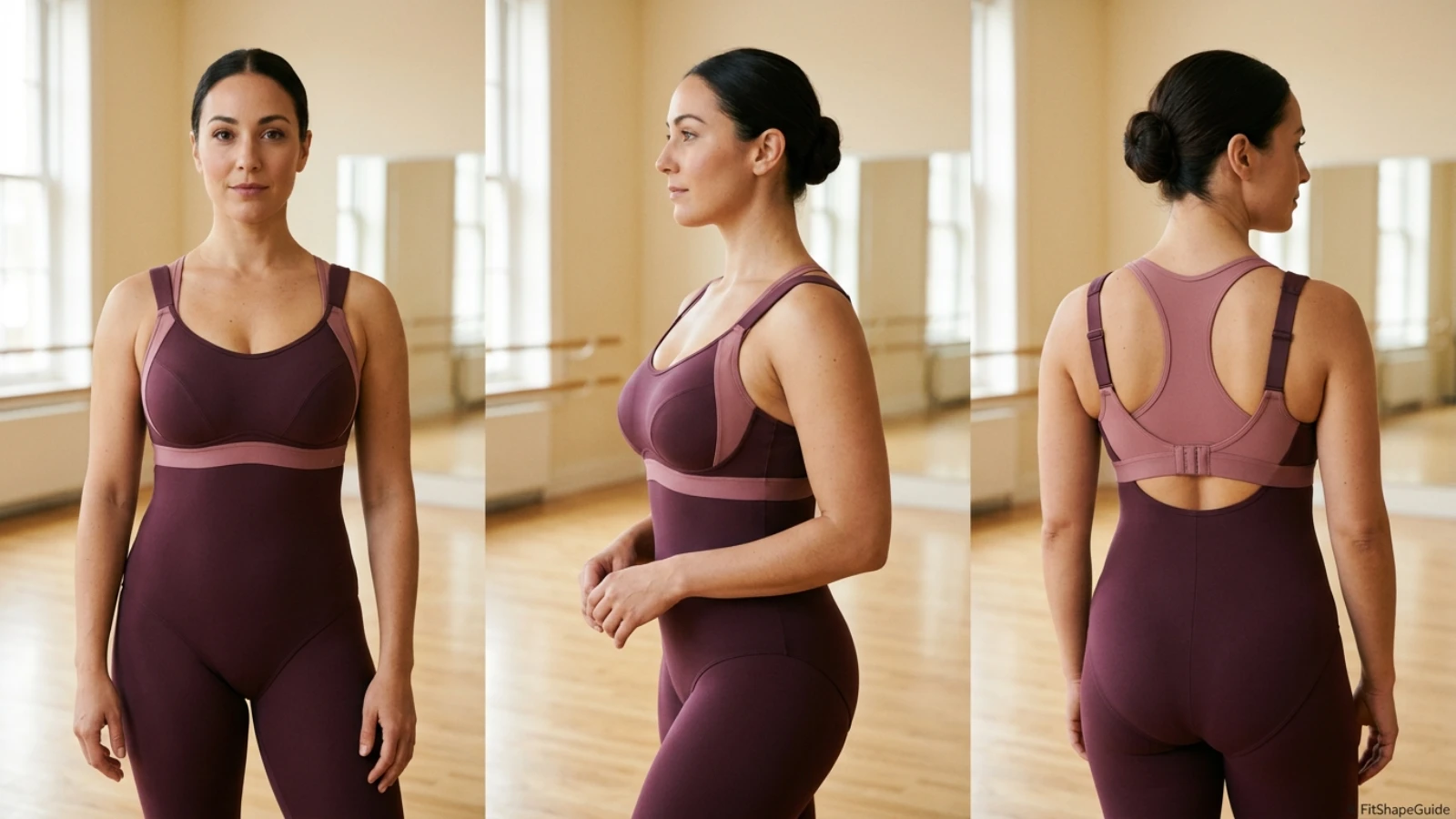
The best dance wear for a large bust supports repeated movement without treating painful compression as evidence of a better fit.
Leotard, unitard and dance-top fit
Leotards and unitards link the shoulders, bust, waist, hips and girth into one pattern. A fuller bust can use additional fabric length and volume, so fit must be assessed vertically as well as around the chest.
Girth and torso length
Use the brand’s measurement method for girth—the loop from shoulder through the legs and back—rather than guessing from dress size. If the bodywear is too short, it can pull the neckline downward, raise the leg line or dig at the shoulders. Excess length may wrinkle at the waist or shift during turns.
Neckline security
Scoop, square, boat, high and mock necklines can all work when they have adequate depth and recovery. Test a forward fold and overhead reach. A higher neckline provides more coverage but may pull toward the throat if the front torso is shallow or short. Compare general construction in the necklines guide.
Armholes and straps
Armholes should stay close enough for coverage without cutting the front shoulder. Wide straps can cover a bra more easily; camisole straps may suit a dress code but provide less coverage. Strap placement should preserve the shoulder line and remain secure during port de bras or expansive contemporary reach.
Front and back lining
Front lining can add opacity and a smoother surface, but lining alone is not support. A full inner bra, shelf, cups and elastic band perform different functions. Check what the listing actually includes instead of relying on “lined” language.
Separates
A shaped tank or fitted tee with leggings allows independent top and bottom sizing. It may also be easier to combine with a bra. Use the verified tank-top guide for armhole and built-in-support checks, then confirm the fabric and silhouette meet the studio requirement.
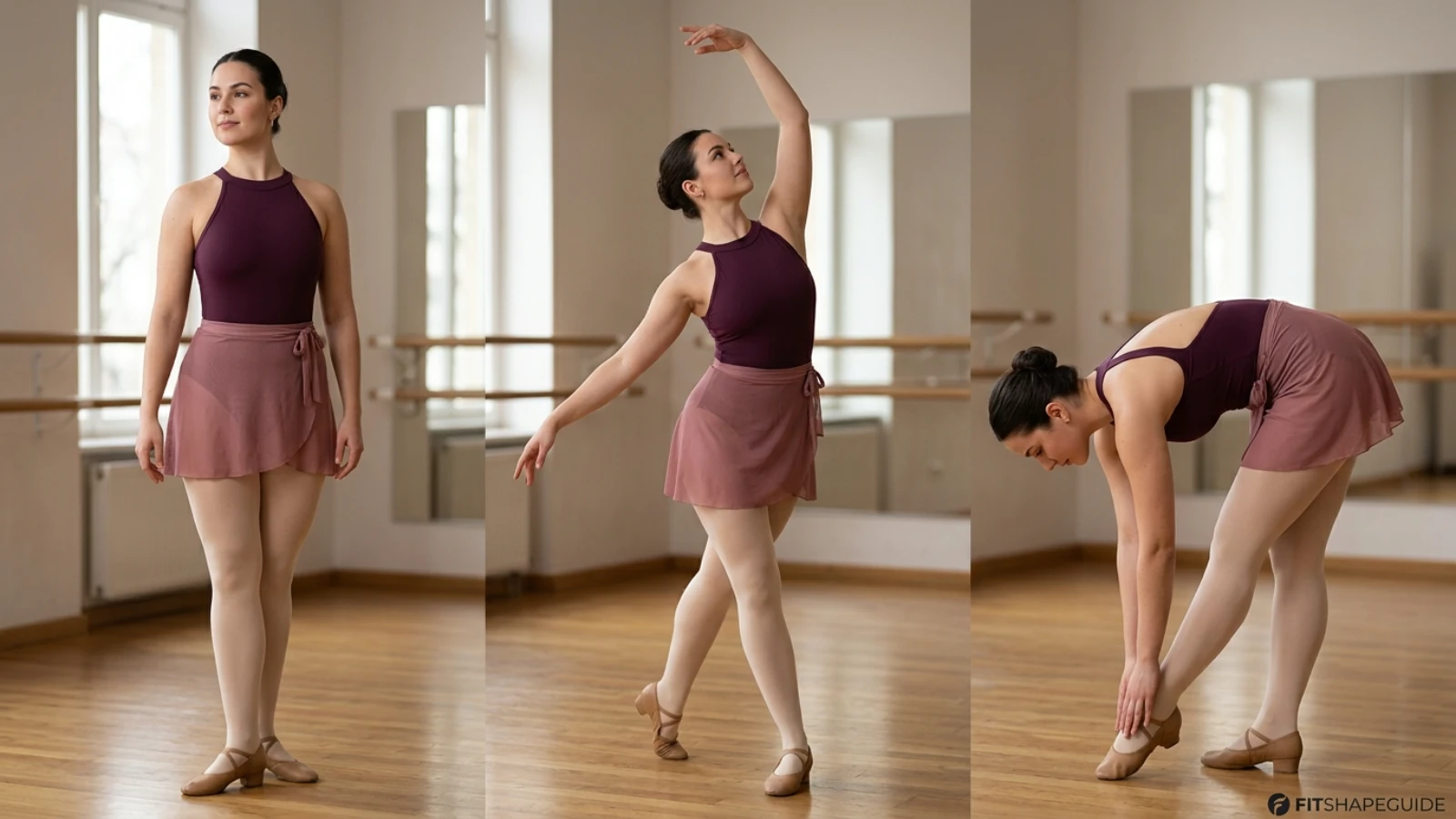
The best dance wear stays secure because the torso pattern fits, not because straps and leg openings are pulled tighter.
Ballet, contemporary, jazz and commercial dance
Genre labels do not determine one mandatory outfit, but they help identify movement and visibility needs. Teacher requirements always take priority for class, rehearsal, examination or performance.
Ballet and barre
A well-fitting leotard or close top helps the teacher see alignment. The Royal Academy of Dance says exam clothing should be clean, well-fitting, appropriately supportive and comfortable, and notes that underwear may be worn as required. Check local rules for color, strap shape, tights and visible underlayers.
Contemporary and floorwork
Secure necklines, covered closures and abrasion-aware seams matter during rolls, contractions and floor contact. A unitard or tucked fitted top can reduce hem migration. Avoid exposed hard hardware at likely contact points.
Jazz and musical theatre
Turns, kicks and travelling combinations may benefit from firmer support and a top that stays anchored. A shaped tank with leggings or shorts gives independent sizing. Test any costume layer over the base rather than assuming rehearsal fit transfers.
Hip-hop and commercial
Looser tees, cropped layers or joggers may be permitted, but a secure bra foundation still handles support. Check whether the instructor needs the torso line visible for correction. Tie, tuck or layer only when it remains safe for the choreography.
Ballroom and social dance
Upright posture, partner contact, spins and arm lines can expose gaping or strap movement. A bodysuit-style top can remain tucked, while a wrap top can adjust coverage. Performance costumes need their own rehearsal test.
| Class or movement | Useful outfit system | Priority test | Trade-off |
|---|---|---|---|
| Ballet/barre | Supportive leotard plus permitted underlayer | Full port de bras and torso length | Dress code may limit visible bra routes |
| Contemporary floorwork | High-neck unitard or tucked fitted top | Roll, fold and kneel without shifting | One-piece girth must fit precisely |
| Jazz | Sports bra, shaped tank and leggings | Turns, kicks and travelling steps | Multiple bands can stack |
| Hip-hop/commercial | Support bra under tee or cropped layer | Sharp directional changes and jumps | Loose fabric may hide line or catch |
| Ballroom/social | Bodysuit top with dance trousers or skirt | Partner frame, spins and arm lines | Low backs may complicate bra support |
| Warm-up | Longline bra, wrap top and pants | Remove layer without disrupting base | Ties can press during floorwork |
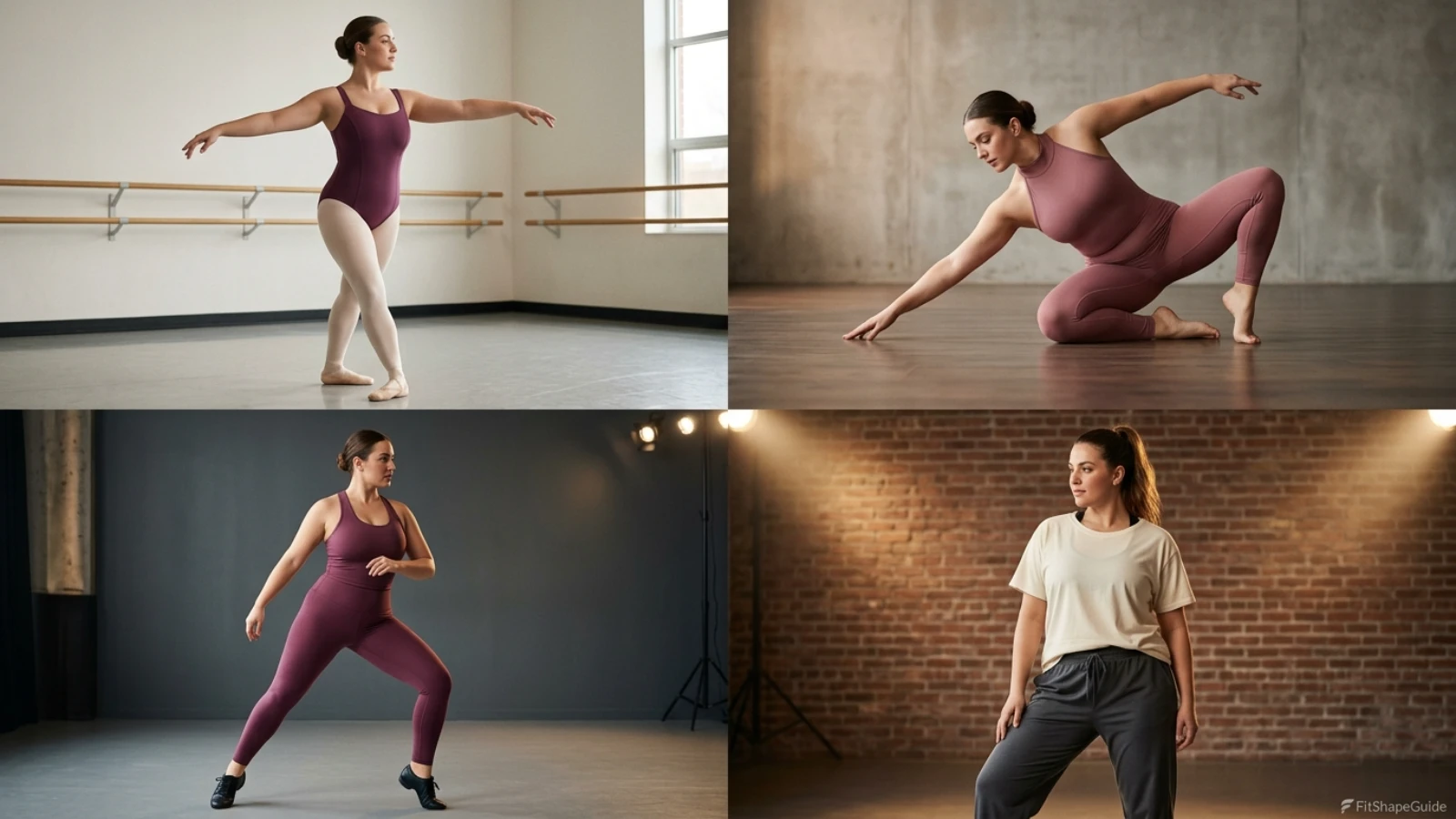
The best dance wear for a large bust matches the choreography and teaching environment without making one studio silhouette the only valid choice.
Dress codes, fabric, opacity and care
Ask the teacher or studio before purchasing a uniform. Color, sleeve, strap, leg-line, tights, skirt and visible-underwear rules can differ by grade and organization. Performance costumes may have separate requirements from weekly class.
Visibility and comfort
Close-fitting clothing may help an instructor observe alignment, but it should remain appropriately supportive and comfortable. RAD guidance explicitly treats suitable support and individual comfort as part of a well-fitting uniform. Request reasonable clarification or adjustment through the school when needed.
Stretch and recovery
Four-way stretch can support movement, but recovery determines whether a neckline and armhole return after extension. A soft fabric that stretches widely may still become unstable. Dense fabric may stay opaque yet feel hot, so test the full combination.
Opacity
Check the garment in bright light while bending and stretching. Front lining can help, but light colors and overstretched fabric may become more transparent. Wear the intended underlayers for this check, consistent with studio rules.
Care
Follow the sewn-in label. Close hooks or separate rough fasteners when instructed, use the recommended temperature and reshape cups or lining before drying. Dance tights, underwear and bodywear may have hygiene-based return restrictions, so read the policy before opening packaging.
For everyday styling beyond the studio, the large-bust dressing pillar explains how garment structure—not the body—creates fit problems.
How to shop online for dancewear
A reliable listing should explain the intended dance use, support construction, lining, strap routes, fabric, care and returns; show the front, side and back; and provide a current size chart with bust, waist, hip and girth where relevant.
Measure bust and girth
Use the brand’s method. Girth can decide whether a leotard reaches comfortably from shoulder through the torso, while bust measurement helps assess width and depth. When the two point to different sizes, study the return policy and construction rather than assuming either measurement can be ignored.
Identify the real support system
“Lined,” “shelf bra,” “removable cups,” “support bra” and “bra-sized” describe different structures. Look for interior images or exact wording about cups, underband and straps. If the information is missing, contact the seller or choose a clearer listing.
Inspect every viewing angle
Front views show neckline and cup shaping; side views reveal containment and leg-line pull; back views show bra compatibility; movement images reveal torso length. Zoom in on sliders, hook points, wrap ties and any raised seam likely to contact the floor.
Use reviews as fit evidence
Prioritize measurements, purchased size, dance style and a specific result: neckline movement, strap pressure, girth pull, band roll, opacity or wash change. A rating without those details cannot predict fuller-bust fit.
Amazon verification workflow
Confirm the direct live page, brand or authorized seller, exact color and size, current chart, girth method, support, lining, straps, care, studio suitability and hygiene return policy. Never publish a search-results URL or copy a changing price, coupon, rating, review count, stock statement or delivery promise. Keep the affiliate disclosure near recommendations.
For more general upper-body construction comparisons, use the verified best tops guide, then apply the dance-specific movement and dress-code tests here.
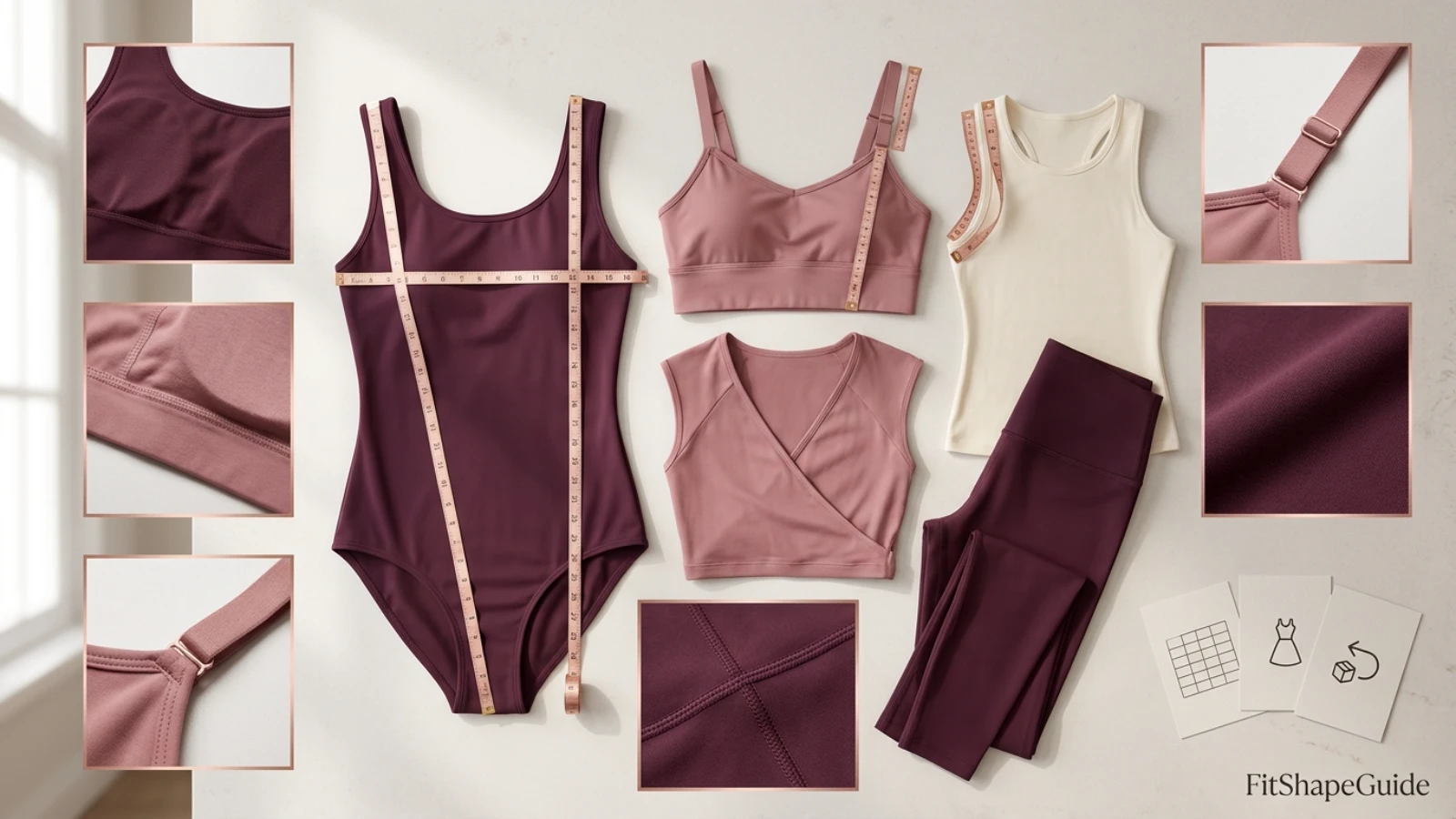
Listings for the best dance wear make support, girth, movement and studio-suitability evidence visible before purchase.
Common dancewear fit problems
| Symptom | Likely cause | Better next step |
|---|---|---|
| Neckline opens in a fold | Insufficient recovery, shallow chest or long straps | Choose shaped depth and a more secure neckline |
| Leotard pulls at shoulders | Girth too short or bust uses extra torso length | Compare longer-girth construction or adjustable straps |
| Leg line rides upward | Short girth, tight opening or torso movement | Refit full body length and leg-opening shape |
| Bra shows outside dress code | Strap/back routes conflict with leotard | Ask requirements and choose compatible coverage |
| Longline band rolls | Band depth, torso length or flexion mismatch | Try shorter band or different lower-edge recovery |
| Wrap top shifts | Loose tie, slippery fabric or floor contact | Use secure permitted layer or remove for floorwork |
| Top rides during turns | Insufficient front length or weak hem recovery | Choose shaped front, bodysuit or stable tuck |
| Pain, numbness or restricted breath | Combined bra and bodywear pressure | Stop and reduce compression in the system |
Do not solve every issue with tighter straps
Shortening straps can lift the front temporarily while increasing shoulder pressure and pulling the neckline or leg line. Correct cup depth, band stability and girth first.
Do not assume built-in means sufficient
Built-in support ranges from a light shelf to a shaped inner bra. Evaluate the actual components and movement result rather than the label alone.
Do not judge only in first position
The best dance wear for a large bust stays aligned during overhead reach, rotation, a fold and the class’s highest-impact movement—not just while standing.
Fit support, bodywear and choreography together
The best dance wear for a large bust combines a level support band, containing cups, secure neckline, bra-compatible straps and sufficient torso length. Start with a separate bra, shaped tank and leggings for flexible sizing; choose a supportive leotard when its inner structure or underlayer works; and use a high-neck unitard for secure floorwork coverage. Keep the outfit that remains comfortable through breathing, arm lines, turns, folds and jumps while meeting the studio’s actual rules.
Frequently asked questions
These answers explain how the best dance wear for a large bust should support, fit and move.
What dancewear is best for a large bust?
A supportive sports bra, shaped fitted tank and high-rise leggings is the most adjustable starting point because each layer can be sized and tested separately.
Can a leotard support a large bust?
It can when it has an adequate inner bra or layers cleanly over a separate support bra. Front lining or a shelf alone may provide less support.
Can I wear a sports bra under a leotard?
Yes when the studio permits it and the straps, back, seams and closures align comfortably beneath the leotard through the full movement range.
How should a dance leotard fit a fuller bust?
It should contain the bust, stay secure at the neckline and armholes, and provide enough girth so the shoulders and leg openings do not pull.
Are high-neck dance tops good for a large bust?
They can provide secure coverage, but the front still needs adequate depth and length so the neckline does not pull toward the throat.
What should I wear for contemporary dance floorwork?
A secure high-neck unitard or tucked fitted top can reduce shifting. Avoid hard exposed hardware at likely floor-contact points and follow the teacher’s rules.
Why does my dance top ride up during turns?
Common causes include insufficient front length, weak hem recovery or a loose body cut. A shaped front or bodysuit-style base may stay more stable.
How do I test dancewear before keeping it?
Wear every intended layer and test overhead reach, torso rotation, a forward fold, gentle jumps, turns and any expected floorwork while breathing fully.
Editorial and verification standards
This guide evaluates observable construction: cup depth, band stability, straps, neckline, armholes, lining, girth, torso recovery, leg openings, opacity, choreography, studio rules, care and returns. It recommends garment systems rather than inventing products or universal fit promises.
Studio-fit principles reference official Royal Academy of Dance guidance on clean, well-fitting, appropriately supportive clothing and permitted underwear, while construction examples reference an official BLOCH support-leotard description. Always check the exact teacher, studio and product requirements.
Before publishing a product module, verify the direct live seller, size chart, girth, inner support, lining, straps, care, studio suitability and hygiene returns. Affiliate relationships should be disclosed clearly and close to recommendations under the FTC endorsement guidance.
“Best” means a suitable verified outfit for an individual body, support preference, dance style, choreography and studio—not a guarantee that one garment works for every dancer.