Best Wrap Coats for a Large Bust
A construction-first guide to front overlap, lapel control, belt position, hidden fastenings, shoulder reach, sweater layering, warmth and seated comfort.
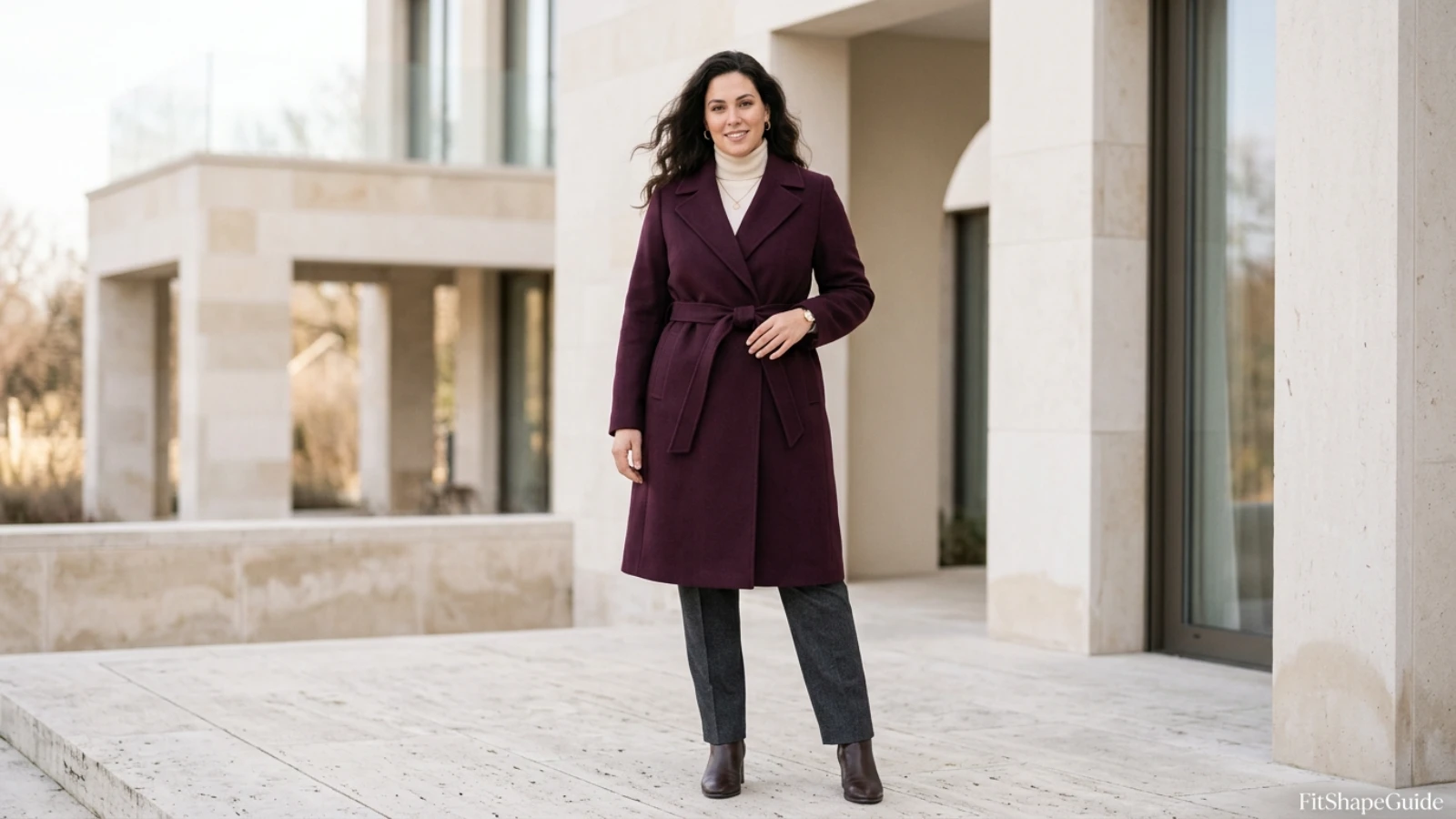
The 90-second wrap-coat check
- Wear the exact bra, top and thickest likely knit beneath the coat.
- Let the coat hang open first and check shoulder and sleeve placement.
- Cross the fronts naturally; do not drag one side across the body.
- Secure the inner tie, hidden button or snap before tying the belt.
- Confirm the overlap remains covered at the neckline, bust and thigh.
- Cross the arms, reach forward and lift each arm independently.
- Sit for one minute, breathe fully, then stand and walk ten steps.
- Place a light item in each pocket and reassess front balance.
Best wrap coats for a large bust by construction
“Wrap coat” covers several patterns: some have only a loose belt, some add an inner tie, and others use a concealed button or snap to stabilize the overlap. The most useful choice depends on required warmth, planned layers, movement, preferred neckline and how much closure security is needed. These six constructions solve different jobs.
Shaped wrap coat with hidden fastening
Best for: dependable coverage and a cleaner tailored line. Princess seams, darts or curved panels create chest depth, while a hidden button or snap anchors the inside front. Trade-off: the fixed fastening offers less position flexibility and must align comfortably on the wearer.
Classic robe coat with generous overlap
Best for: adjustable everyday layering and an easy waist. A wide front, inner tie and soft self-belt can accommodate different knits. Trade-off: a belt-only design may shift in wind or while seated if the overlap is shallow or the fabric is slippery.
Collarless wrap coat
Best for: reducing lapel bulk and keeping the neckline visually quiet around scarves or high-neck sweaters. Trade-off: the upper chest receives less built-in weather coverage, and a high edge can press the throat if the front is too short.
Double-faced wool wrap coat
Best for: a fluid, low-bulk drape with refined internal finishing. The fabric can form a clean overlap without a conventional lining. Trade-off: unlined construction may grip some sweaters, offer less wind resistance and require specialist care.
Raglan or kimono-sleeve wrap coat
Best for: upper-back reach, flexible shoulder placement and relaxed layering. Trade-off: extra fabric through the underarm can create volume, and a dropped line provides less sharply tailored shoulder definition.
Belted wrap trench or raincoat
Best for: transitional weather, adjustable layering and practical coverage in a lighter shell. Trade-off: storm flaps, stiff water-resistant fabric and double layers can add bulk; water resistance also depends on seams and coating, not the wrap shape alone.
The best wrap coats do not rely on a dramatic cinch to create the whole fit. First establish shoulder comfort and enough front fabric; then use the belt for position and styling. For a broader wardrobe framework, start with how to dress a large bust.
Front overlap, lapels and hidden fastenings
Wrap adjustment can be helpful, but adjustability is not the same as unlimited fit. A front that barely crosses while standing may separate when the upper back expands, a pocket is used or the wearer sits. Evaluate overlap at several heights because one wide section does not guarantee coverage everywhere.
Check usable overlap, not total width
Usable overlap is the amount that remains after the coat settles on the shoulders and curves around the chest. Compare the inner front edge with the outer front edge from neckline to hem. A strong design keeps a meaningful covered zone without forcing either side seam forward. Very wide lapels can look generous while the lower front remains narrow, so inspect the entire closure line.
Read the lapel roll
Notch and shawl lapels should roll smoothly and meet the front without kicking outward. A buckled lapel may signal insufficient chest depth, a break point in the wrong place, a rigid facing or a belt pulled too tight. A wider lapel is not automatically better; it also adds fabric layers. Collarless wraps reduce that bulk but need a clean upper edge and compatible scarf plan. The necklines guide explains how opening depth changes the frame around the chest.
Use fastening hierarchy
An inner tie prevents the underlap from dropping. A hidden button or snap can anchor the over-front. The belt then secures the exterior. Each part should work without painful pressure. If a concealed snap pops open during an ordinary reach, it is not functioning as intended. If no internal fastening exists, the overlap and fabric friction must do more work.
| Closure system | Useful evidence | How to test | Trade-off |
|---|---|---|---|
| Belt only | Wide continuous overlap and stable fabric | Walk, sit and turn after tying once | Can shift or loosen more easily |
| Inner tie plus belt | Separate anchor for the underlap | Tie both without pulling the side seam | Inner ties can twist or show through thin fabric |
| Hidden button plus belt | Fixed anchor and clean exterior | Close button first, then belt and reach | Fixed placement may not match every torso |
| Hidden snap plus belt | Quick low-profile stabilization | Cross arms and check for release | Weak snaps can open under strain |
| Double button with wrap front | Multiple anchor points and structured facing | Fasten every intended button while seated | Less adjustable and potentially bulkier |
| Hook or throat latch | Optional upper-chest weather closure | Turn head and breathe with it secured | Can press the neck if front length is short |
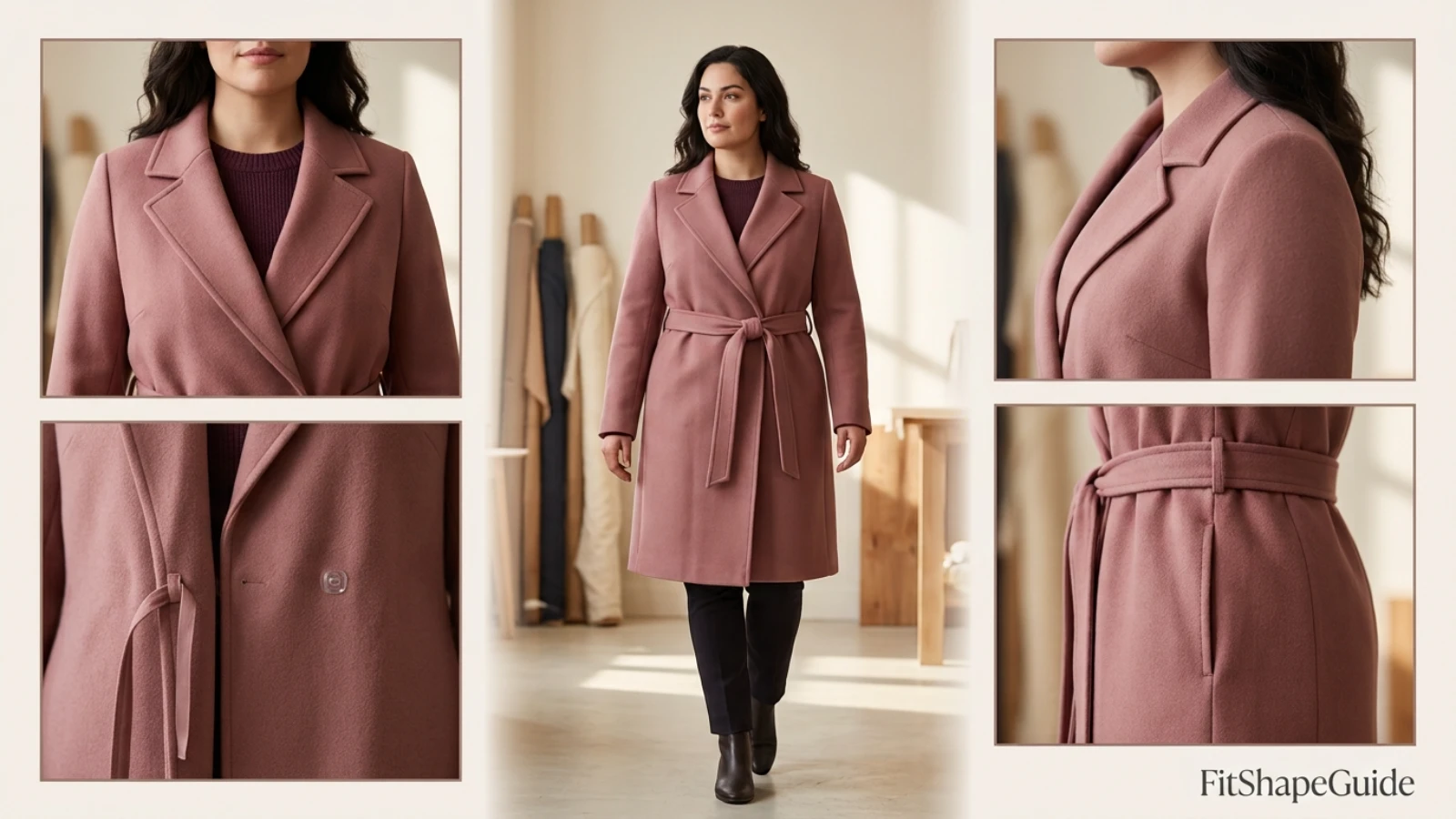
The best wrap coats for a large bust stay covered because their fronts are cut with enough depth and overlap—not because the belt compresses the wearer.
Belt placement, front balance and seated fit
There is no universal “most flattering” belt height. A comfortable position is one where the belt follows the coat’s shaping, the loops can be used without dragging the fabric, the lapels remain smooth and breathing stays unrestricted. It may sit at the natural waist, slightly above it or lower, depending on torso length and the pattern.
Start with the loops, then evaluate
Belt loops indicate the designer’s intended level, but they are not proof of personal fit. Tie the belt through them first and inspect the side seam, pocket access and back waist. If the belt lands directly under the bust, rides upward or cuts across a pocket opening, a different coat pattern is usually cleaner than tying aggressively at another height. A tailor may be able to move simple thread loops, but that does not create missing chest depth.
Tie for security, not compression
A flat knot or simple half-bow can reduce bulk compared with a large bow. The belt should lie flat without folding the front facing. Tying slightly off-center may keep the knot away from the fullest front area, provided the tension remains even. After tying, take a full breath and slide two fingers comfortably beneath the belt. Pain, numbness or restricted breathing is an immediate failure.
Run the seated test
When seated, the lap naturally pushes a long coat upward. Check whether the neckline rises, the overlap separates or the belt presses the lower ribs. Unbelt briefly, sit, arrange the skirt, then resecure if that is how the coat will be worn during travel. A coat that works only in a motionless standing pose is not ready for everyday use.
Check front-to-back hem balance
The bust uses front length, so the front hem can appear shorter even when the pattern pieces match. Some difference may be intentional, especially in a fluid robe coat, but a dramatic front rise accompanied by lapel buckling indicates insufficient depth. View the coat from side and back before deciding.
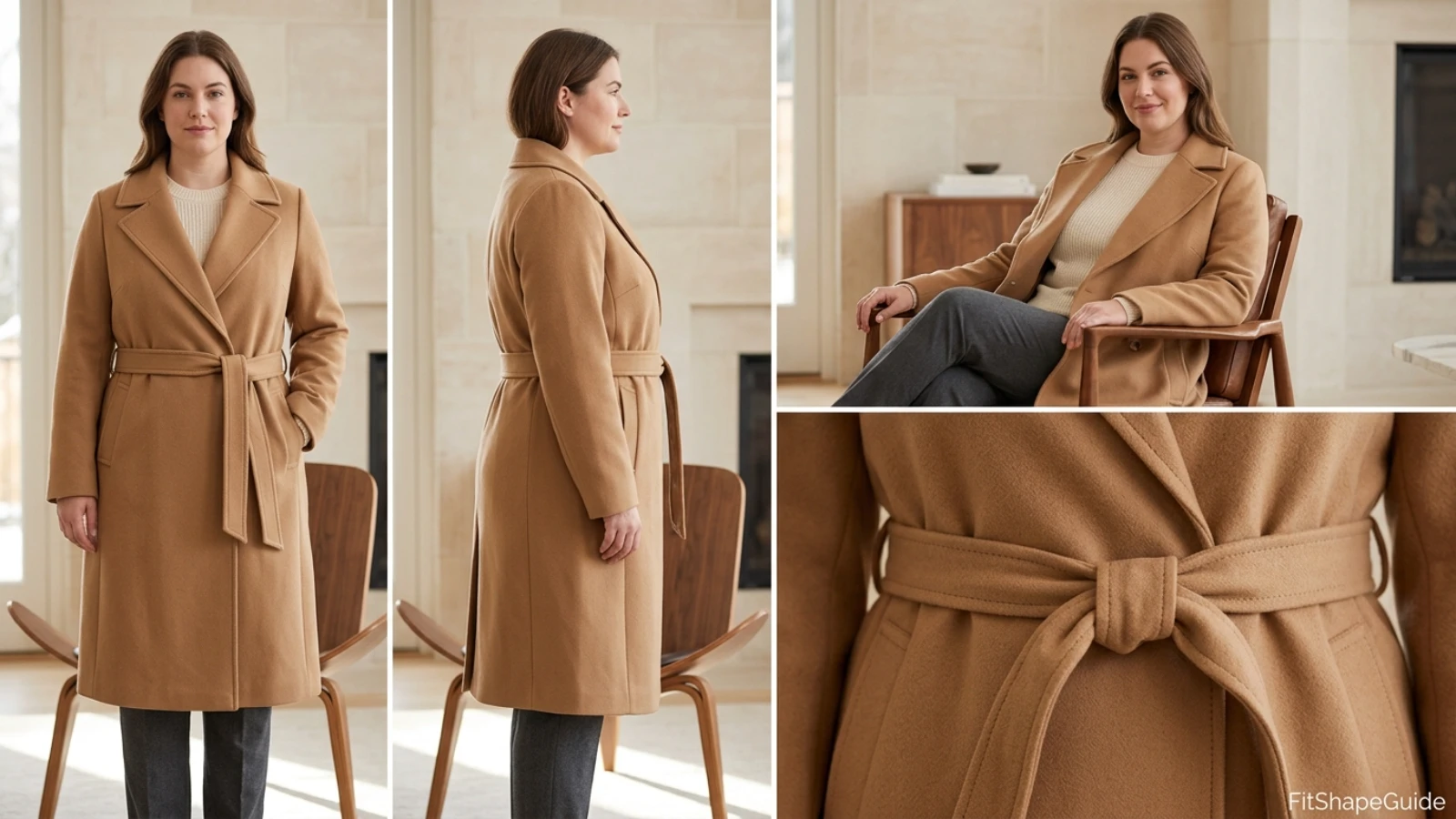
The best wrap coats allow the belt to secure an already balanced front. Never use belt tension to disguise a shallow chest or an unstable overlap.
Shoulders, sleeves, sweater layers and coat length
Chest fit cannot be isolated from shoulder reach and sleeve pitch. When the upper back is tight, reaching forward can pull both fronts apart even if the coat looks closed while standing. Test the exact layer planned for winter and prioritize normal movement over a rigid showroom silhouette.
Set-in shoulders
A set-in sleeve can create a clean tailored line when the shoulder seam sits near the shoulder point and the armhole allows reach. Too narrow creates drag lines and pulls the lapels; too wide drops the sleeve head and may make the upper coat feel heavy. Structured shoulders work best when the chest is also shaped rather than simply widened.
Raglan and kimono sleeves
Raglan sleeves remove a fixed shoulder seam and can provide useful upper-back movement. Kimono-style fronts can feel fluid and accommodate layers. Their trade-off is more fabric under the arm and a softer outline. Check that the sleeve still allows a handbag strap and does not bunch inside another layer.
Upper-arm and cuff room
Slide a hand along the upper sleeve while wearing the sweater. It should not feel tightly packed. Bend the elbows, reach as if driving and lift a bag. Cuffs should cover the intended wrist area without swallowing the hand. Very wide sleeves can layer easily but may admit cold air or catch on hardware.
Choose length by use
A hip-length wrap jacket is agile but provides less lower-body weather coverage. Knee length balances mobility and warmth for many commutes. Midi and calf lengths create more coverage and visual continuity, but add weight and can catch on steps, car doors or wet ground. Petite and tall shoppers should verify actual center-back length instead of relying on “midi.”
| Planned use | Construction to prioritize | Movement test | Trade-off |
|---|---|---|---|
| Fine knit and office commute | Shaped set-in shoulder, lined sleeve | Carry bag and reach forward | Less room for chunky sweaters |
| Chunky sweater layering | Raglan sleeve, deeper armhole, generous upper arm | Cross arms and lift both elbows | May look relaxed over thin layers |
| Driving and frequent sitting | Knee or shorter length, stable inner fastening | Sit, belt and rotate torso | Less leg coverage outdoors |
| Walking in exposed weather | Secure overlap, throat option, wind-resistant lining | Walk briskly and turn into airflow | More closures and facing bulk |
| Formal over dresses | Smooth lining, controlled lapel, compatible hem | Sit without coat catching dress | Fluid fabric may offer less wind protection |
| Long outdoor coverage | Midi/calf length, back vent and secure belt | Take stairs and a long stride | More weight and hem-management needs |
A knit that already fits smoothly makes the test more informative; compare options in the best tops guide or the button-down shirt guide.
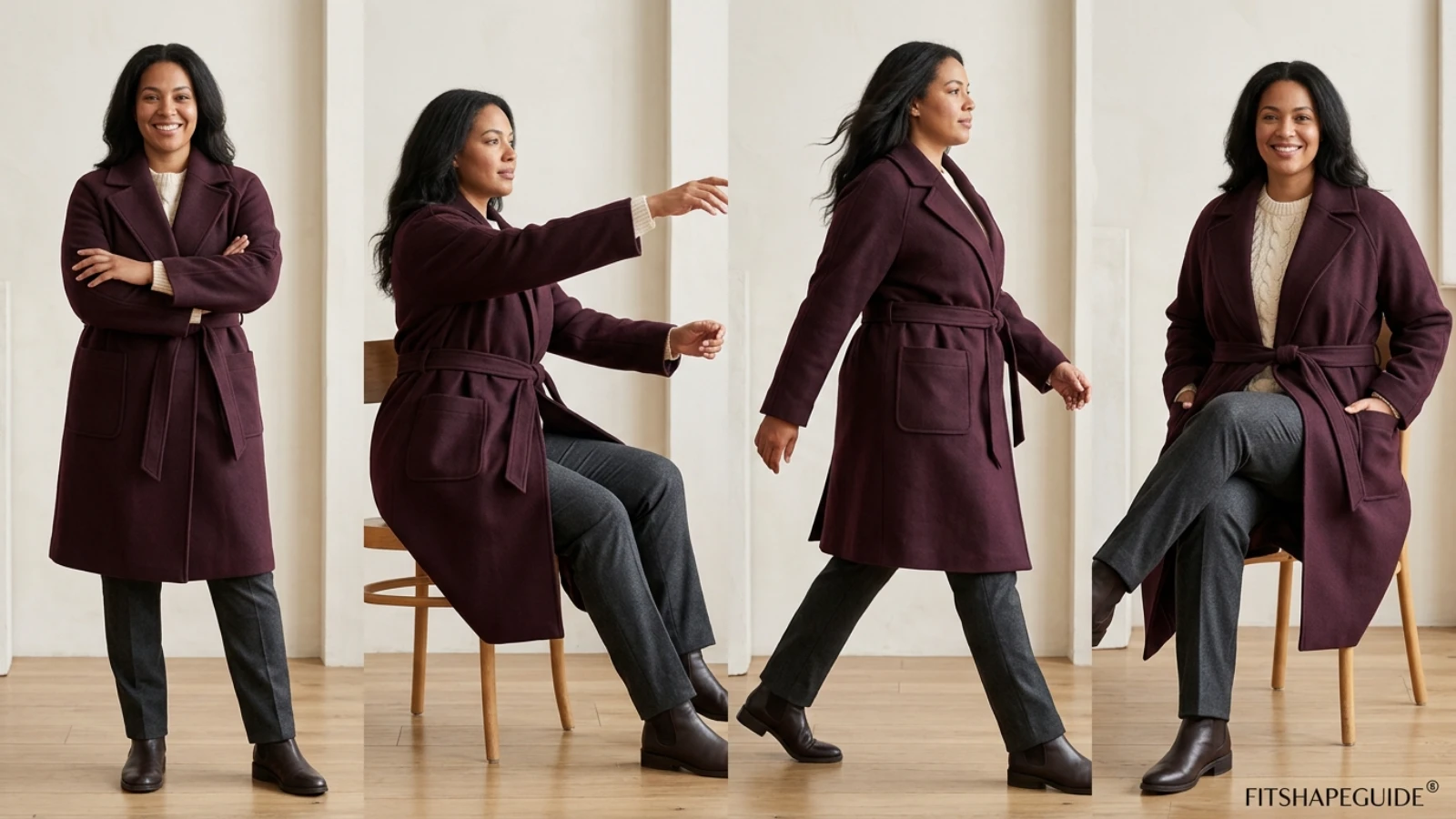
Fabric, lining, warmth, pockets and care
Fiber content matters, but it cannot predict warmth or drape alone. Fabric weight, density, weave, wind resistance, lining, seam construction, garment length, closure and the layer underneath all contribute. Compare the whole coat rather than assuming any wool or cashmere percentage guarantees a result.
Wool and wool-blend coatings
Dense coating can support lapels and block more airflow; softer cloth can drape around the front with less stiffness. A high synthetic content may change pilling, static, feel and care, while a natural-fiber blend can still be lightweight. Check product weight when available and inspect close images for surface texture and thickness.
Double-faced versus lined construction
Double-faced coats join two layers of fabric with refined interior seams, often without conventional lining. This can reduce lining bulk and produce a soft edge. The trade-off is that the inner surface may not slide over fuzzy knits as easily. A full lining improves slip and can reduce friction, but its quality, breathability and durability vary. Sleeve-only lining may be a useful compromise.
Pockets and front balance
Side-seam and inset pockets can keep the chest visually quiet, but their bags add weight near the front. Put hands in both pockets and walk; if the coat opens or the belt rises, the overlap needs more stability. Large patch pockets may be practical yet add bulk. Never assess drape with empty pockets only if daily use includes keys or a phone.
Vent, hem and interior finish
A back vent supports stride in a longer coat. Inspect whether it is meant to be opened after purchase and whether the hem hangs smoothly when the coat is belted. Inside, look for securely attached belt loops, finished seams, a hanging loop and reinforced fastening points. These details affect durability but do not replace fit.
Care and storage
Follow the sewn-in care label for the exact garment. “Wool blend” does not always mean the same cleaning method. Empty pockets, untie the belt and use a supportive hanger so the fronts are not stored under tension. Keep the belt with the coat without knotting it tightly, and address stains according to the manufacturer’s instructions.
For sharper tailoring and less wrap adjustment, compare the verified blazer fit guide.
How to shop online for a wrap coat
A useful listing should show the coat open, overlapped and belted from front, side and back. It should state the exact closure system, belt type, pockets, lining, fabric, care and length. “Adjustable” and “relaxed” are marketing descriptions, not standardized measurements.
Measure a known-good coat
On a comparable coat, record flat chest width, shoulder width, upper arm, sleeve, center-back length and hem width. For a wrap design, also measure each front panel from side seam to edge at bust and waist levels. That panel measurement provides better overlap evidence than circumference alone. Confirm whether a seller chart lists body measurements or finished garment dimensions.
Read every closure detail
Zoom in to find an inner tie, hidden button, snap, hook or exterior belt loops. A listing that says “self-belt closure” may have no other anchor. Decide whether that matches the planned weather and activity. Official wrap-coat pages from Max Mara and Ralph Lauren show that current designs vary across set-in, raglan or kimono sleeves, lining, lapel shape, length, pockets and fastening—so do not transfer assumptions between similarly named coats.
Use reviews as evidence, not votes
Prioritize reviews that state body measurements, purchased size, sweater thickness and observable outcomes: overlap coverage, lapel behavior, shoulder reach, belt-loop position, sleeve length, pocket drag or fabric weight. A star average cannot predict whether the front panels will cross securely on a specific body.
Verify Amazon modules immediately before publishing
Use only a direct live product page after confirming the brand or authorized seller, exact variant, current chart, measurements, closure, belt, fabric, lining, pockets, care and return eligibility. Do not publish a search-results URL. Do not copy changing prices, coupons, ratings, review counts, stock claims or delivery promises into evergreen editorial copy. Place a clear affiliate disclosure close to recommendations.
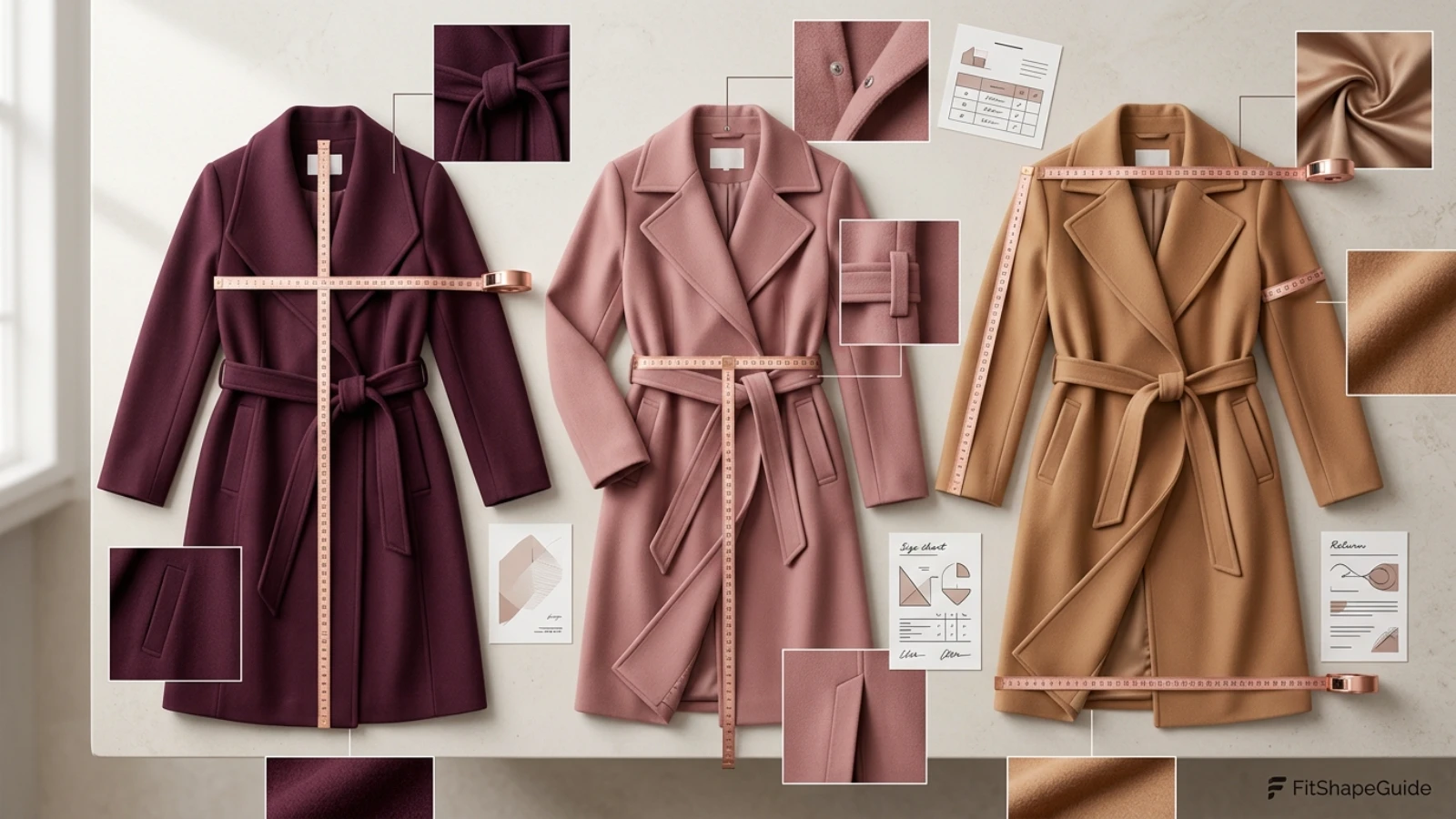
Listings for the best wrap coats for a large bust make overlap, fastening and layering evidence visible before checkout.
Common wrap-coat fit problems
| Symptom | Likely cause | Better next step |
|---|---|---|
| Underlayer shows while walking | Shallow overlap, slippery fabric or no internal anchor | Choose wider front panels or hidden fastening |
| Lapels spring outward | Insufficient chest depth, wrong break point or belt tension | Refit the front before tightening the belt |
| Belt rides under the bust | Loops too high, shallow front or waist shaping mismatch | Try a different pattern or professionally move simple loops |
| Hidden snap pops open | Fastening sits under strain | Choose more front room and a compatible anchor position |
| Neckline presses the throat | Coat is pulled upward by chest or upper-back tightness | Add front depth and reach; stop if breathing is affected |
| Pockets pull fronts apart | Pocket load exceeds overlap stability | Use lighter contents or a more secure closure system |
| Shoulders drop after sizing up | Global size adds width without targeted front depth | Choose shaping, raglan construction or better proportions |
| Long coat restricts stride | Narrow hem, closed vent or rigid cloth | Check vent and choose more hem sweep or shorter length |
Do not size up automatically
A larger size may create overlap but also drop shoulders, lengthen sleeves and place belt loops too low. Diagnose whether room is missing at the chest, upper back, upper arm or sweater layer. A differently shaped front is often more useful than adding width everywhere.
Do not let the belt hide the evidence
Always inspect the coat open and naturally overlapped before tying. Heavy cinching can temporarily flatten a buckle, but the lapel, side seam and neckline reveal where the strain has moved.
Do not blame the body for an unstable front
The best wrap coats for a large bust account for three-dimensional front volume. Gaping, riding and popped fastenings are construction evidence—not body failures. Choose the garment that supports normal breath and movement.
Choose secure overlap before dramatic cinching
The best wrap coats for a large bust combine generous usable overlap, enough chest depth, a calm lapel, a stable inner or hidden fastening, comfortable belt placement and shoulder reach over the intended sweater. Start with a shaped hidden-fastening wrap coat for security, a wide-overlap robe coat for adjustment, or a raglan wrap coat for relaxed layering. Keep the coat that stays covered while walking and seated without tight belt tension.
Frequently asked questions
These answers explain how the best wrap coats for a large bust should overlap, fasten and move.
What wrap coat style is best for a large bust?
A shaped wrap coat with generous overlap and a hidden button or snap is a secure starting point because it combines targeted chest room with an adjustable belt.
Are wrap coats good for a large bust?
They can be. The useful designs provide enough front-panel width, chest depth and overlap before the belt is tightened, then stay covered through normal movement.
How much front overlap should a wrap coat have?
There is no universal measurement. The usable overlap should remain covered from neckline to hem while walking, reaching and sitting over the intended layers.
Where should the belt sit on a wrap coat?
It should follow the coat’s shaping at a comfortable level where the lapels stay smooth, pockets remain accessible and breathing is unrestricted.
Is a hidden button useful on a wrap coat?
Yes. A well-placed hidden button or snap can stabilize the front beneath the belt, but it should not pop open or pull during ordinary movement.
Are raglan sleeves good for a fuller bust?
Raglan sleeves can improve upper-back reach and layering flexibility, though they create a softer shoulder line and may add fabric beneath the arm.
Should I size up in a wrap coat?
Only if the shoulders, sleeves, belt position and length remain intentional. A different pattern with targeted chest depth is often better than extra width everywhere.
How do I test a wrap coat before keeping it?
Wear the thickest planned layer, secure every fastening, belt comfortably, cross and raise the arms, walk, sit, breathe fully and check that the overlap stays covered.
Editorial and verification standards
This guide evaluates observable construction: front-panel width, overlap, chest depth, lapel roll, inner and hidden fastenings, belt loops, shoulder reach, upper arm, length, fabric, lining, pockets, vent, care and returns. It recommends coat constructions rather than inventing products or universal fit promises.
Current construction examples were checked against official Max Mara pages for a lined set-in-sleeve wrap coat and a kimono-front, raglan-back wrap coat, plus Ralph Lauren pages for a softly constructed cashmere wrap coat and a wool-blend twill wrap coat. These references illustrate why “wrap coat” alone does not describe fit; verify the exact garment.
Before publishing a product module, verify the direct live seller, measurements, overlap evidence, fabric, lining, closures, belt, pockets, care and returns. Affiliate relationships should be disclosed clearly and close to recommendations under the FTC endorsement guidance.
“Best” means a suitable verified coat for an individual body, sweater, climate, movement needs and closure preference—not a guarantee that one belt height or silhouette works for everyone.