Best Shift Dresses for a Large Bust
A construction-first buying guide to secure necklines, real bust projection, controlled drape, center-front length, hem circumference, movement and bra-friendly fit.
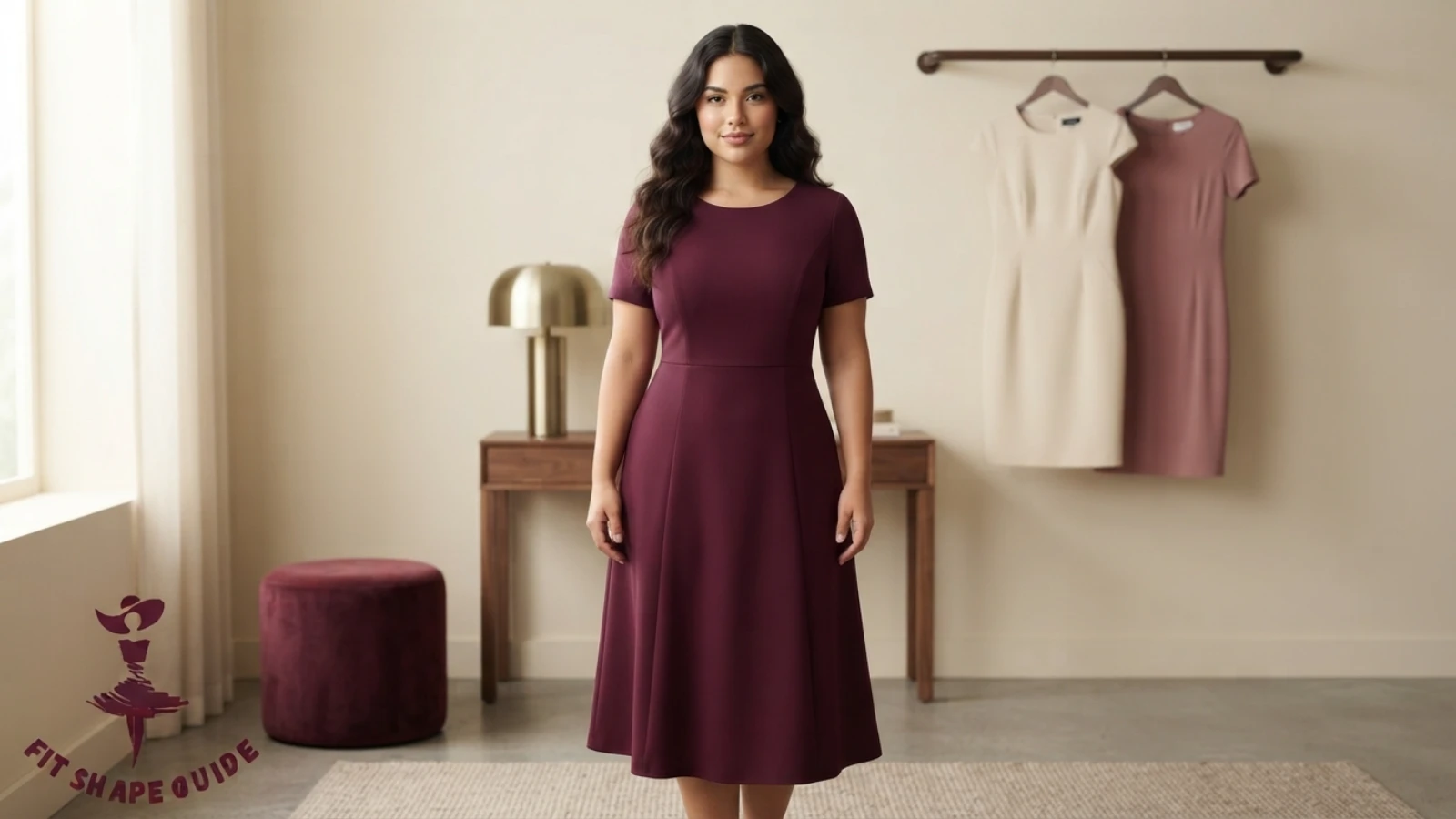
The 60-second shift-dress fit check
- The bodice covers the intended bra and does not open when you lean, reach or sit.
- The bust is shaped by darts, princess seams, gathers or controlled stretch—not by simply sizing up.
- The shoulder seams stay located and the armholes remain smooth.
- The fabric clears the bust and falls with controlled ease instead of forming a rigid tent.
- The side seams remain close to vertical, with no obvious swing toward the front.
- The hem and side vents keep the intended coverage through a normal stride and seated cross-leg test.
- The front hem looks deliberately level or intentionally shaped, not shortened only by bust projection.
Best shift dresses for a large bust by design
A shift dress hangs relatively straight from the shoulders or upper torso instead of being closely fitted at the natural waist. That simple outline can feel easy, but looseness alone does not create bust room. One shift may use princess seams, another darts, a shaped yoke, side panels or stable stretch; an overly flat version can tent from the fullest bust and make the entire front look shorter. For a fuller bust, choose controlled projection, adequate center-front length and useful hem circumference before judging the silhouette. For the wider fitting hierarchy, read how to dress a large bust.
Princess-seam shift midi
Best for: precise projection without a tight waist. Curved vertical seams distribute room across the bust and can release into a straighter body. Check that the fullest curve aligns with your bust apex, the seams remain vertical and the front hem does not lift.
Darted woven shift dress
Best for: clean workwear with dependable structure. Side, French or double-ended darts should point toward the bust without ending at the apex. A back or side zip prevents neckline stretching during dressing. Confirm that the fabric skims the ribcage and abdomen rather than hanging as a rigid tent.
Stable jersey shift dress
Best for: travel, sitting and flexible daywear. Choose a dense matte jersey with recovery, an opaque print or color, faced neckline edges and controlled rather than extreme stretch. Jersey should supply comfort, not replace missing pattern room. If the fabric becomes shiny or sheer across the bust, side seams swing forward or the waist rises, the dress is undersized even if it closes.
Sheath-shift hybrid
Best for: polished outfits with gentle side shaping. This hybrid follows the torso more than a classic shift but does not grip the waist. Look for bust darts, back darts, side panels or a center-back seam; then sit to confirm the midsection still has usable ease.
Shirt-style shift dress
Best for: smart-casual outfits with collar structure. Look for bust darts, a concealed placket or well-spaced buttons, a straight body and side vents. If the placket gaps at the fullest point while the shoulders are already loose, a larger size may not solve the pattern mismatch.
Shaped-bodice occasion dress
Best for: events requiring lining and a controlled neckline. Pleats should release over the bust rather than spread under tension. Test the lining separately, confirm bra-compatible straps or sleeves and sit for several minutes before deciding.
Why bodice projection and torso balance decide the fit
A roomy shift body cannot compensate for a chest drafted too flat or short. Fuller-bust projection requires horizontal room plus extra vertical distance from shoulder to hem. Without it, the neckline pulls, armholes distort, side seams swing forward, fabric tents away below the bust and the front hem rises. The large-bust neckline guide explains neckline depth, width and bra coverage.
Seams and darts create projection
Princess seams, side darts, French darts, gathers and shaped yokes turn flat fabric into three-dimensional space. Their apex should align with your body without a pointed finish. Product photos from the side help reveal whether shaping exists or whether stretch alone is being asked to cover the bust.
Neckline and armholes need independent stability
Facing, binding, stay tape or a fully lined upper body can keep neckline and armhole edges from stretching. Stability should not make either edge rigid or wavy. A loose neckline rolls away from the chest; an undersized armhole cuts inward. Neither problem is solved by extra width lower in the dress.
Center-front length prevents tenting and hem lift
The center and princess-front sections need enough vertical length to travel over the bust and continue to the intended hem. When they do not, the dress borrows length from below, the side seams swing forward and the front hem rises. Petite, tall and short-torso labels do not predict this by themselves. Compare shoulder-to-hem length at the front and back, and look for side-view product photos that reveal whether the fabric drops downward after clearing the bust.
| Construction evidence | What good fit looks like | Warning sign |
|---|---|---|
| Bodice shaping | Seams or darts create smooth three-dimensional projection | Flat fabric is forced to stretch across the bust |
| Bust shaping | Darts, seams, gathers or stable stretch create projection | Diagonal drag lines radiate from bust to waist or armhole |
| Torso ease | Fabric clears the bust, then falls with controlled space | Dress hangs from the bust like a tent or grips the ribcage |
| Hem circumference | Allows sitting and a full stride without climbing | Side vents pull open or the whole dress rides upward |
| Side seam | Hangs vertically from underarm to hem | Angles sharply toward the front |
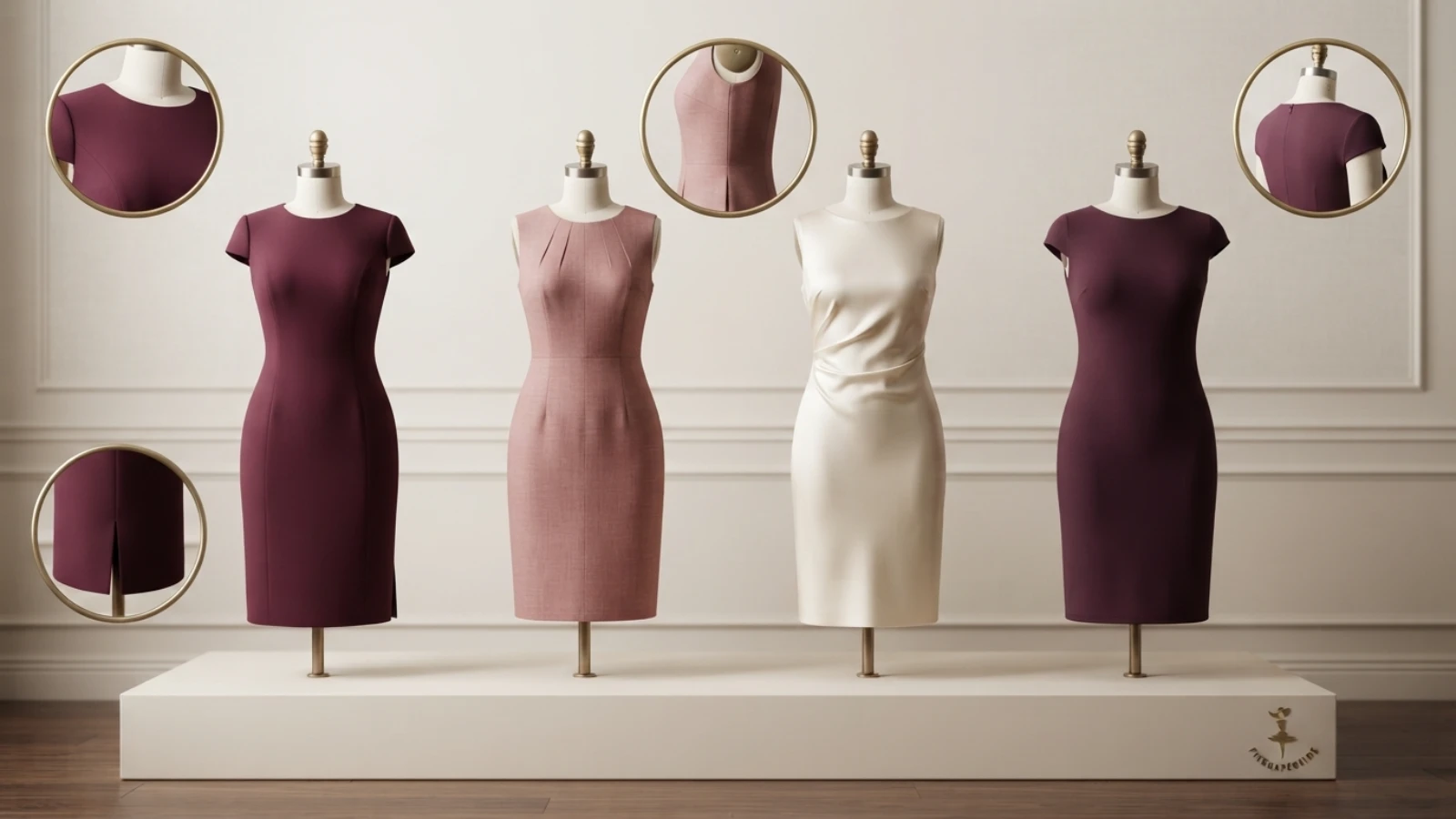
Best fabrics for shift dresses on a fuller bust
Fabric changes whether a shift skims, clings or tents. Weight, weave, stretch, recovery, surface finish and lining matter more than fiber name alone. Fluid fabric can fall after clearing the bust but may reveal weak shaping; crisp fabric preserves a geometric shift outline yet needs accurate darts and enough finished chest ease. Use the complete fabric guide for a large bust when comparing drape, opacity and recovery.
Matte jersey and ponte
Medium-weight jersey provides movement and can accommodate small measurement fluctuations. Look for dense opacity and quick recovery. Ponte creates a firmer shift outline, although thick layers at a gathered waist may feel bulky. Check whether print, ribs or surface sheen distort across the bust.
Crepe and woven viscose
Crepe’s textured surface and fluid fall suit shifts, while woven viscose can create a soft drape. Neither guarantees bust room. Inspect seam reinforcement, opacity, static, shrinkage guidance and whether the dress is lined. Lightweight woven viscose may lengthen on the bias, so an asymmetric hem after washing can be a fabric-and-construction issue rather than body fit.
Poplin, linen blends and satin
Poplin and linen blends make the geometry easy to read but tolerate less missing ease. Choose them when darts, princess seams or fuller-bust sizing are visible. Satin highlights drag lines and rippling, so test an occasion shift under event lighting and while seated with the exact undergarments planned.
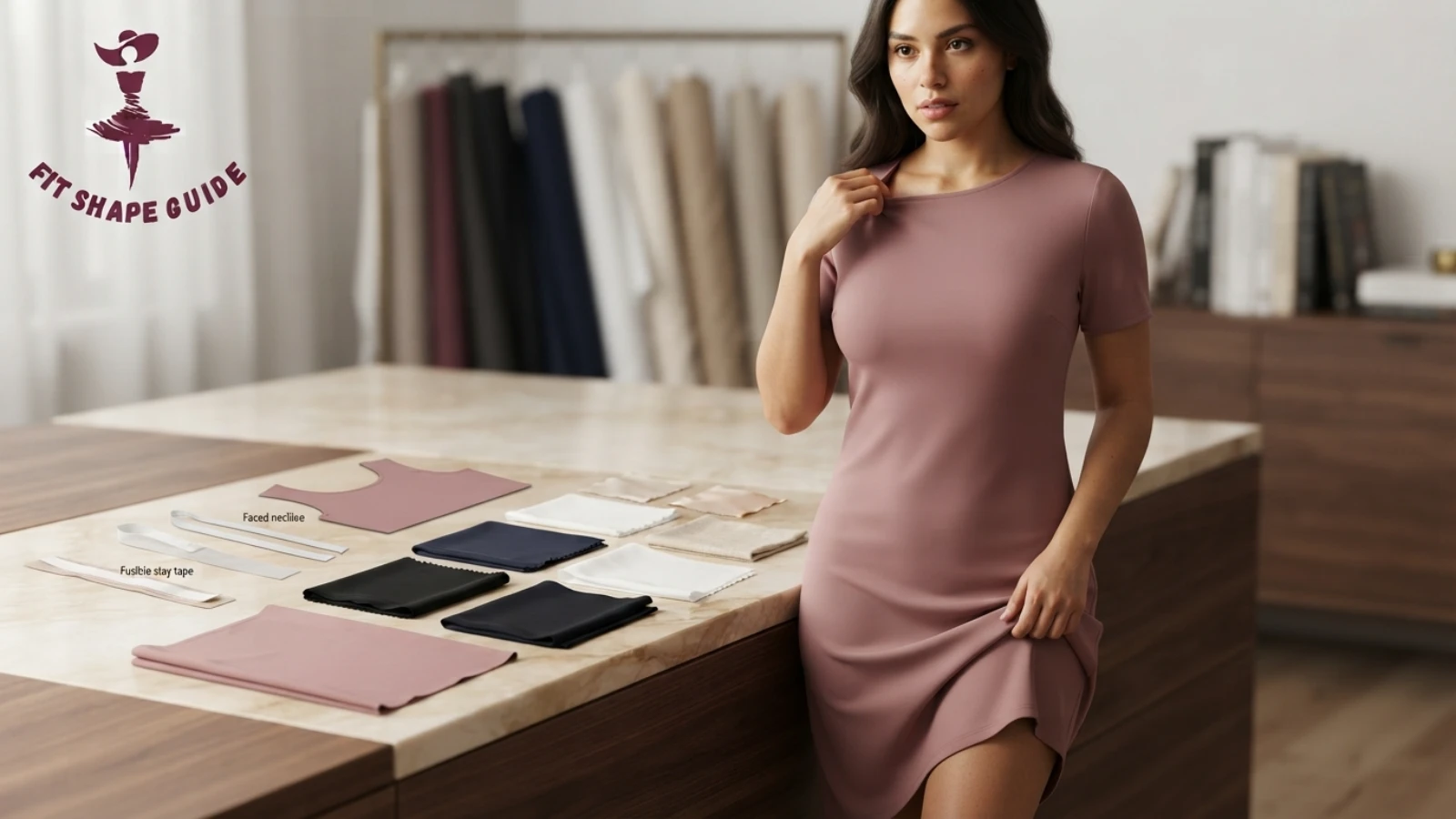
How to shop for the best shift dresses online
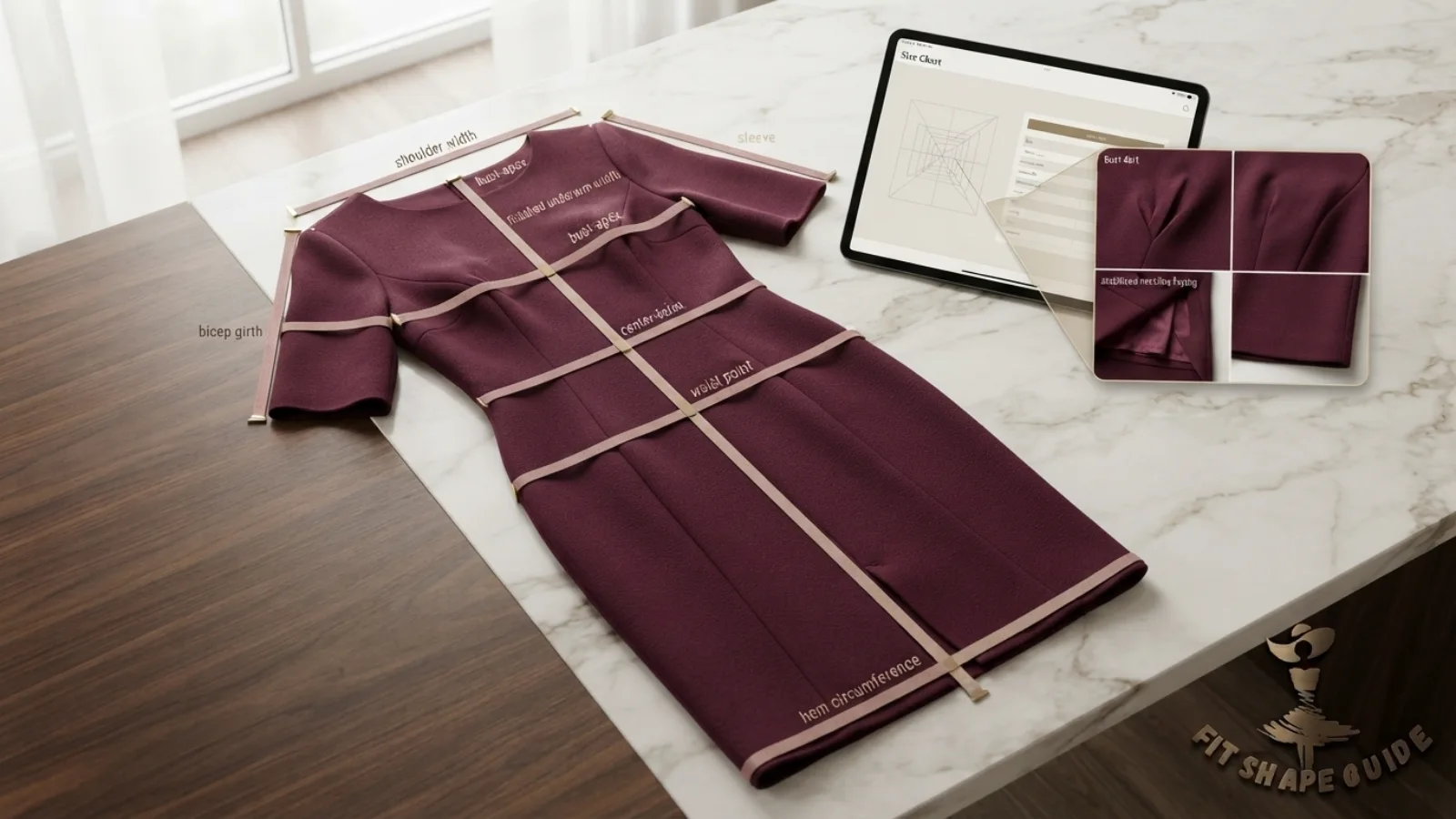
Start with a shift dress you already own or a similarly constructed dress. Measure it flat without stretching and record how the retailer defines each dimension. Body measurements and garment measurements are not interchangeable; a size chart that lists only body bust cannot reveal finished chest ease, center-front length or usable hem circumference.
| Measurement or evidence | How to use it | Risk when missing |
|---|---|---|
| Finished chest or underarm width | Compare with a dress of similar fabric and sleeve construction | Stretch may be expected to supply all bust room |
| Shoulder to front hem | Compare front length with back length and your reference dress | Bust projection may consume length and lift the front hem |
| Front-section width | Assess garment reserve at the fullest bust | Neckline may pull even when the lower body is loose |
| Waist and hip circumference | Allow breathing, sitting and the intended straight fall | A dress sized only to bust may cling or pool below it |
| Armhole, bicep and sleeve | Confirm movement independently from bust fit | Sizing up may still leave sleeves restrictive |
| Hem width, vents and total length | Estimate stride, stairs and seated coverage | A narrow shift can ride up even when the bust fits |
| Shell, lining and stretch | Judge opacity, recovery and care | A restrictive lining can defeat a flexible shell |
Use reviews as evidence, not a universal verdict
Useful reviews mention the reviewer’s usual size, approximate bust-waist difference, height, torso length, purchased size, bra coverage, sleeve comfort and what happened while sitting or walking. “Too revealing” gives less information than “the bodice opened when I leaned forward.” A reviewer’s preferred coverage may differ from yours, but the described garment behavior is still useful.
What to verify before adding an Amazon recommendation
Confirm the exact variant, current size range, size-chart method, shell and lining, closure system, care instructions, return eligibility and recent customer-photo evidence. Do not transfer details from a visually similar listing or a different seller. Prices, ratings, stock and coupons change; keep them out of permanent editorial copy unless a system updates them accurately.
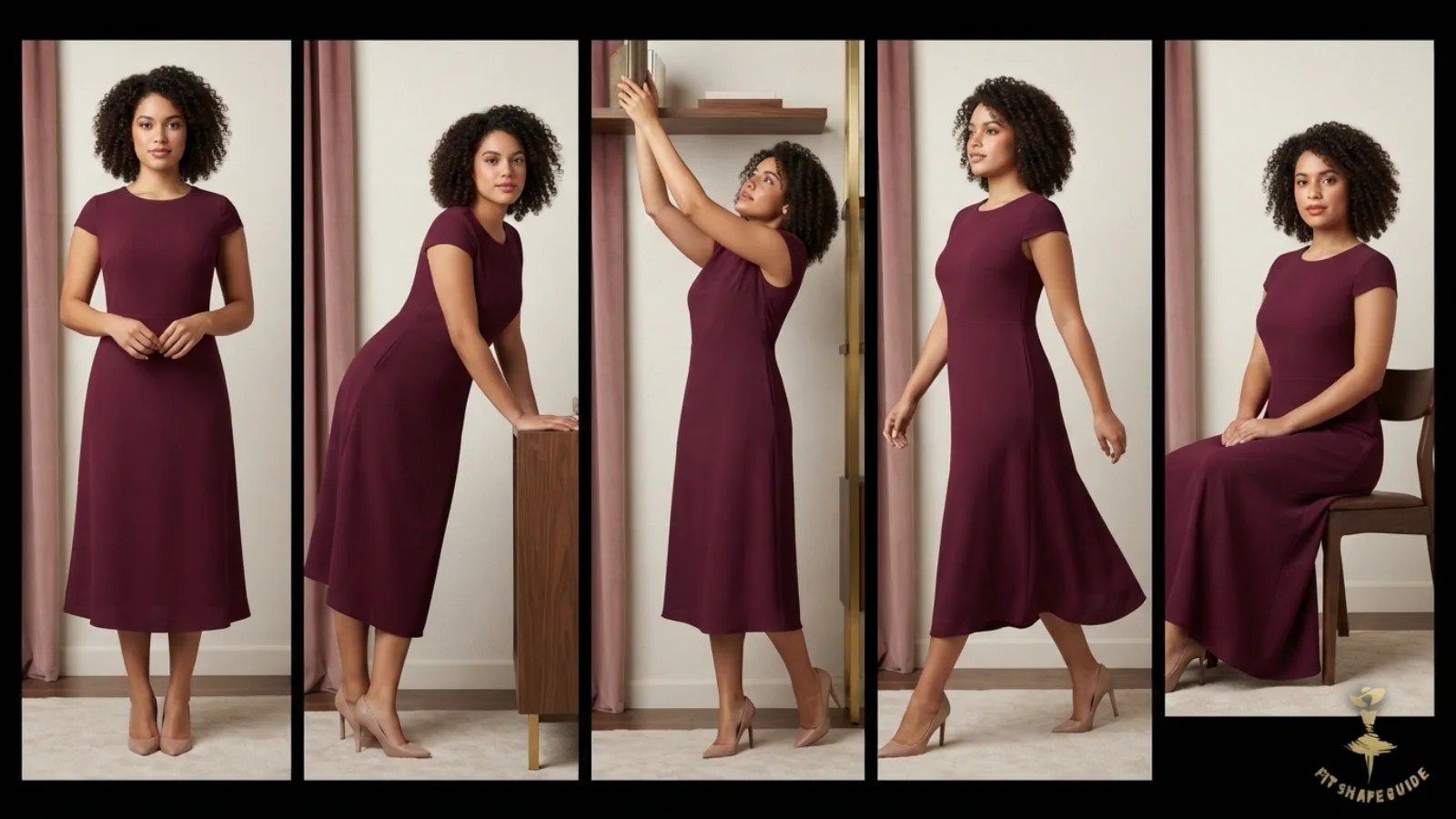
Movement tests every shift dress should pass
Lean and forward reach
Lean toward a table and reach as if picking up a bag. The neckline may move with the body, but it should not fall fully away from the chest or expose the intended bra. If it opens, first check section width and edge stabilization. A camisole can be a styling choice, but it should not be required to disguise a bodice that has become structurally too small.
Overhead reach and self-hug
Raise both arms and then hug the shoulders. Watch whether the bodice travels upward, the armholes cut in, the waist area shifts or the skirt becomes dramatically shorter. A small amount of movement is normal; a dress that remains stuck high after the arms lower lacks mobility or usable length.
Walk, stairs and side vents
Take a full stride and climb several steps. The hem and side vents should keep the coverage you intend while the dress returns to position. A narrow woven shift may fit while standing but ride upward because its hem circumference is too small for the stride. For commuting and work, useful vents or a subtle trapeze release often move better than a rigid column.
Sit, breathe and eat
Sit upright, relax the abdomen, cross and uncross the legs, then take a deep breath. The torso should remain comfortable and the neckline should not be pulled wider by ribcage expansion. If the dress only hangs straight when you hold your posture rigidly, the cut or fabric does not provide enough usable ease for the day.
Common shift-dress fit problems and their real causes
| Visible symptom | Likely cause | Best next step |
|---|---|---|
| Neckline opens while leaning | Stretched edge, excess shoulder width or insufficient bust projection | Try fuller-bust geometry or a better-stabilized neckline |
| Fabric tents below bust | Flat chest, very stiff fabric or excessive all-over size | Choose bust darts, princess seams, softer drape or better grading |
| Side seams swing forward | Front borrowing fabric from back | Increase front bust room or change construction |
| Front hem rises | Missing front length above waist | Choose longer front bodice or deliberate high-low hem |
| Dress rides up while walking | Insufficient hem/hip ease or lining friction | Choose more circumference, useful vents or smoother lining |
| Neckline ripples | Edge stretched in sewing, wear or hanging storage | Steam cautiously; choose reinforced edge if it persists |
| Dress fits bust but shoulders drop | Straight size-up added width everywhere | Look for fuller-bust sizing, darts or alteration-friendly seams |
When sizing up helps
A larger size can restore opacity, front length, bust ease, armhole comfort and hem sweep. It works when the shoulders, neckline, back and waist remain controllable. If the larger dress falls from the shoulders, creates a very loose back and still places the waist too high, a different pattern is more useful than another size increase.
Alterations that are usually realistic
Depending on seam allowance and construction, a tailor may shorten waists, add a discreet internal anchor, move a non-load-bearing snap, refine the waist after fitting the bust, shorten the hem or sleeves, and adjust a loose back neckline. Adding significant front-section width, lowering a fixed waist, rebuilding armholes or creating bust projection in an unseamed bodice is closer to pattern reconstruction. Ask for an assessment before purchasing a final-sale dress, and use the large-bust tailoring guide to judge alteration risk.
How to style shift dresses without relying on “minimizing” rules
A shift dress does not need to make the bust look smaller to be successful. Once the neckline, bust, shoulders and straight body behave correctly, choose color, print, sleeve and accessories according to personal style and setting. For a more waist-defined alternative, compare the best wrap dresses for a large bust and best A-line dresses for a large bust.
Work and polished daywear
A structured shift midi in matte crepe or stable jersey offers reliable coverage. Add a smooth bra that suits the neckline and an open blazer with enough front and armhole room. Check the complete outfit while seated: a close blazer can pull the dress neckline sideways even when the dress fits correctly on its own.
Casual and travel outfits
Dense jersey, wrinkle-tolerant crepe and a free hem sweep are practical. Flat shoes, sneakers or boots change the mood without changing the fitting principles. Place a crossbody strap after dressing and verify that it does not pull the neckline or compress the fullest bust.
Events and evening
Choose the dress with the intended bra, shapewear if desired, jewelry and coat. Satin, velvet and embellished surfaces need side lighting because strain becomes more visible. A lined princess-seam bodice is often predictable for dancing; confirm that the lining permits sitting, breathing and arm movement.
Belts and waist definition
A belt is optional styling, not a repair for a misplaced waist area. A flexible belt can emphasize the designed waist, but a rigid belt placed too high may press into the underbust when seated. If the dress has belt loops, check their height before buying.
Care and value checks before you buy
Close zips and buttons as directed before washing, and turn embellished shifts inside out when the care label permits. Avoid hanging a wet jersey or viscose shift dress from the shoulders, because weight can stretch the neckline and change the hem. Dry and store according to the label, then steam the neckline and vents from the reverse with appropriate heat.
Value comes from repeated, comfortable use. Inspect the stress points: waist attachment, internal anchor, waist opening, neckline facing, underarm seam, skirt edge and hem. A cheaper dress that requires constant pinning, a new lining and complex waist reconstruction may offer less value than a better-patterned dress with simpler fabric.
Final buyer checklist
- Secure bra-compatible neckline in neutral and moving positions
- Visible bust shaping or proven stable stretch and recovery
- Adequate center-front length over bust projection
- Controlled drape below the bust without rigid tenting
- Armhole, bicep and sleeve room tested independently
- Opaque shell and non-restrictive lining
- Enough hip and hem circumference for sitting and stride
- Care instructions compatible with realistic use
- Return policy checked before selecting an uncertain size
Frequently asked questions
Are shift dresses good for a large bust?
Yes. Shift dresses can work well when the upper body includes genuine bust shaping, sufficient center-front length, stable neckline edges and enough hem circumference for movement. A loose-looking silhouette alone does not guarantee fit; bust geometry, drape and movement are the deciding evidence.
What type of shift dress is best for a fuller bust?
Princess-seam midis, darted woven shifts, stable jersey shifts, sheath-shift hybrids, shirt-style shifts and lined occasion dresses can all work. Compare bust projection, center-front length, shoulder position, torso drape and hem movement rather than choosing by label alone.
How do I stop a shift dress from gaping at the bust?
First identify the cause. A loose neckline edge may be altered, but gaping combined with bust drag lines usually means missing projection. Choose more bust room, better-positioned darts or princess seams rather than forcing the neckline closed.
Should I size up in a shift dress for a large bust?
Size up if it restores bust ease, opacity, front length and armhole comfort while the shoulders and neckline remain controlled. If the larger size drops from the shoulders and tents below the bust, choose fuller-bust shaping or a different cut.
What bra should I wear under a shift dress?
A plunge or balconette may suit a lower neckline, while a full-cup bra can work beneath a higher neck. The correct bra depends on neckline depth, width, strap position and side coverage. Test the dress with the intended bra before removing tags.
Are princess seams or darts better for a large bust?
Both can work. Princess seams distribute shaping vertically and may be easier to alter in several areas; darts create focused projection in a woven bodice. Placement and total volume matter more than the seam name.
How much hem sweep should a shift dress have?
There is no universal number because hip measurement, fabric, length, vents and stride differ. The practical standard is free walking and sitting without the dress riding up or the vents pulling open. Test movement rather than relying on a still photograph.
What fabric is best for a fuller-bust shift dress?
Medium-weight matte jersey, ponte, crepe and fluid woven viscose are useful starting points. Poplin and linen blends work when the pattern supplies precise bust shaping. Evaluate density, opacity, recovery, edge stabilization, lining and care; fiber content alone cannot predict fit.