
Best Bra Straps That Don’t Dig In
A fuller-bust guide to wide straps, padded straps, centered strap placement, stable bands and better cup fit—because shoulder comfort starts with how the entire bra distributes support, not with the strap alone.
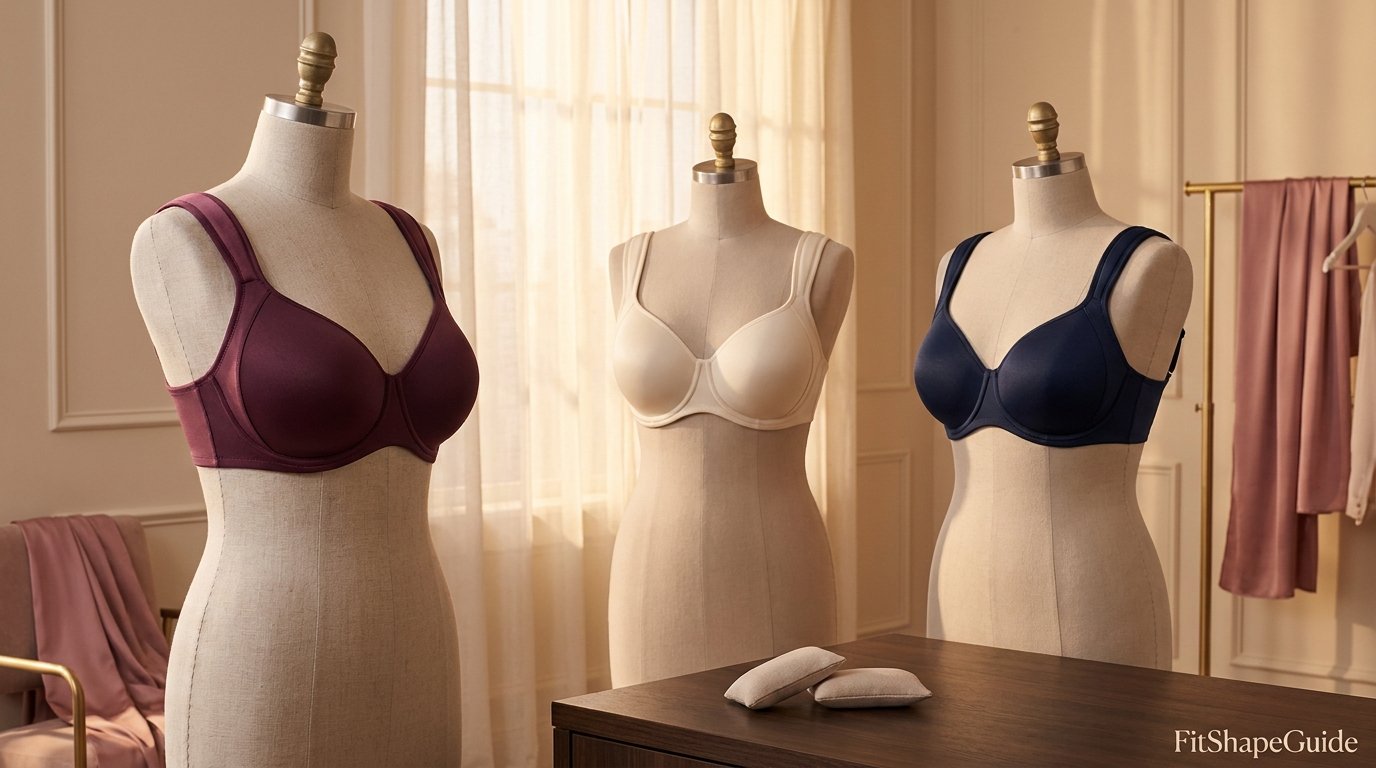
The 60-second strap-pressure test
- Loosen both straps slightly: see whether the band still provides meaningful support.
- Check the back band: it should stay approximately level instead of climbing toward the shoulder blades.
- Settle the bust into the cups: overflow or shallow cups can increase downward pull.
- Adjust each strap only enough to stay secure: do not shorten them automatically to maximum tension.
- Raise and rotate your shoulders: the strap should move comfortably without cutting sharply.
- Wear the bra for more than five minutes: pressure that gradually becomes painful matters even if the first mirror check looks good.
Why bra straps dig into your shoulders
Straps help position the upper cups and keep the bra connected over the shoulders, but they should not be forced to carry the whole bust. When the band is too loose, the back can rise and the wearer may compensate by shortening the straps harder and harder.
Cup fit can create the same cycle. If the cups are too shallow or too small, breast tissue pushes the bra away from its intended position. Tightening the straps may temporarily lift the cups, but it also transfers more pressure into the shoulders.
Strap construction still matters. A very narrow strap concentrates tension over a smaller area, while a broader or padded strap can distribute that pressure more widely. Shoulder shape matters too: very wide-set straps may sit close to the edge of narrower or sloping shoulders, while more centered straps may feel more secure.
The best solution therefore comes from diagnosing the full bra rather than assuming every shoulder mark needs a thicker strap.
| What you notice | Possible cause | First thing to check | Useful next option |
|---|---|---|---|
| Deep strap pressure + back rides up | Band too loose | Band size and tension | Firmer correctly fitted band |
| Straps tight + cup overflow | Cups too small/shallow | Cup volume and projection | Deeper/larger cup |
| Band stable but narrow straps hurt | Pressure concentrated | Strap width | Wider or padded straps |
| Strap digs near neck | Strap placement too centered or adjustment uneven | Shoulder/strap position | Different strap geometry |
| Strap falls off outer shoulder | Very wide-set strap or shoulder shape mismatch | Strap placement | Centered/racerback style |
| Metal adjuster hurts shoulder | Hardware sitting at pressure point | Slider position | Longer padded front section |
| Pain increases during day | Load or localized pressure | Whole-bra fit | Re-fit before adding accessories |
| Only one shoulder hurts | Asymmetry or uneven strap adjustment | Individual strap setting | Fit each side independently |
Best bra strap styles that don’t dig in
Wide padded straps
A broader strap with a soft cushioned section spreads contact over more of the shoulder and can be particularly useful for long-wear fuller-bust bras.
Trade-off: the strap may be visible beneath narrow-strap tops.
Wide non-padded straps
A broad flat strap can distribute pressure without the extra thickness of foam or padding.
Trade-off: edge finish matters; a wide strap with a stiff edge can still feel uncomfortable.
Broad front straps + adjustable backs
Some comfort bras use a wider front shoulder section that narrows into adjustable elastic farther behind the shoulder.
Trade-off: adjustment range can be more limited than with a fully elastic strap.
Centered full-cup straps
Straps attached closer to the upper center of the cup can sit farther from the shoulder edge and may feel more secure for sloping or narrow shoulders.
Trade-off: very centered straps may show beneath wide-neck garments.
Racerback or J-hook-compatible straps
Bringing straps toward the center of the back can change shoulder placement and reduce slipping for some wearers.
Trade-off: the altered angle can create neck pressure if straps are left too short.
Wide hardware-free comfort straps
Some wireless or lounge-oriented bras remove sliders from the top shoulder area entirely and use broad stretch fabric across the shoulder.
Trade-off: fixed-length straps offer less individual adjustment.
Convertible multiway straps
Adjustable strap positions can solve a placement problem when one fixed route consistently lands on a sensitive shoulder area.
Trade-off: conversion changes strap angle, so length must be re-adjusted each time.
Removable strap cushions
Soft shoulder pads can increase the contact area of an otherwise well-fitting bra without replacing it.
Trade-off: pads treat local pressure; they cannot repair an unsupportive band or undersized cup.
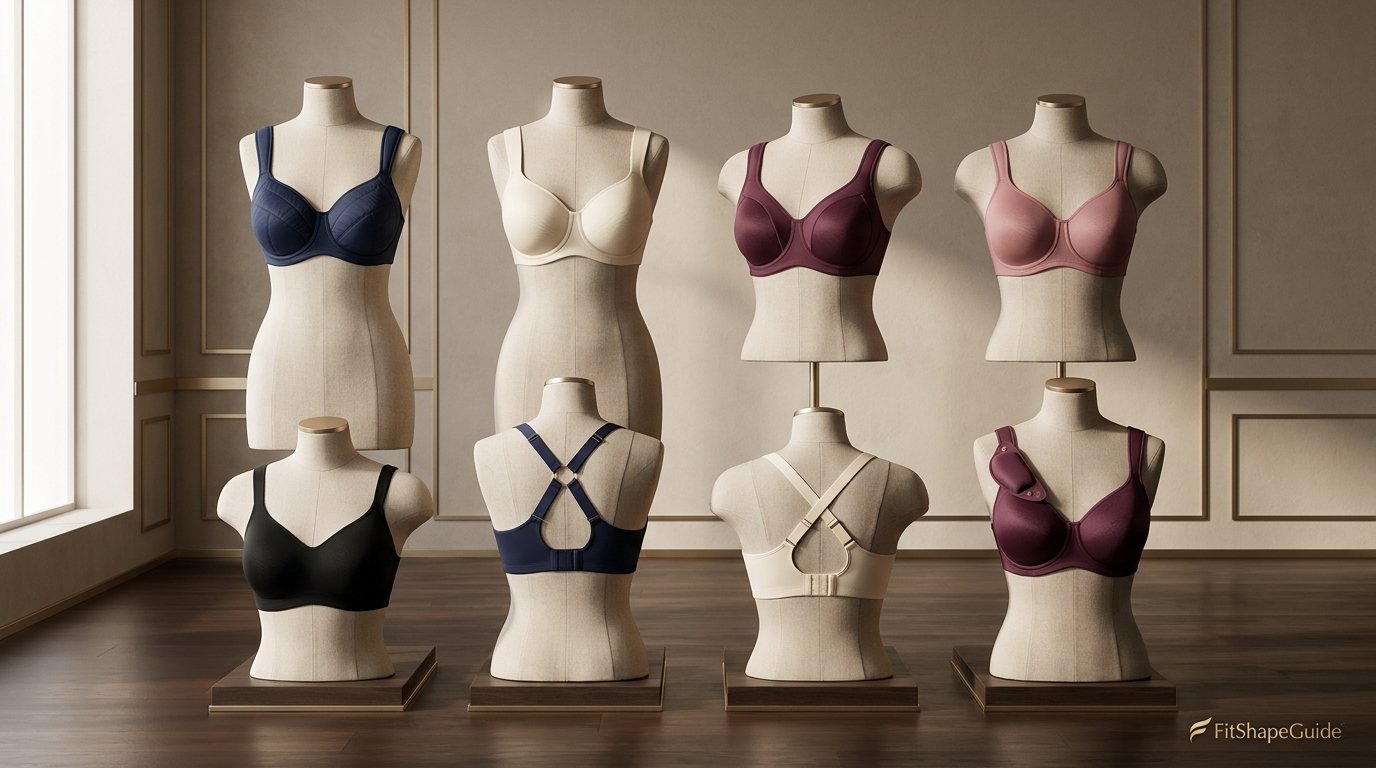
Fix the bra band before tightening the straps
Specialist bra-fitting guidance consistently places major emphasis on a snug, level back band. If the band rises up, support decreases and the temptation is often to tighten the straps to compensate.
Check the band level
Stand side-on to a mirror. The back band should remain approximately level around the torso rather than forming a steep angle upward.
Raise both arms
A well-matched band should stay relatively stable as the shoulders move. Major upward movement suggests the band deserves another fit check.
Firm does not mean painful
The band needs enough tension to anchor the bra, but it should not create painful restriction or obvious wire distortion.
Check stretched-out bras
An older bra can gradually lose band tension. You may start tightening the straps without realizing that the elastic below them is no longer providing the same anchor.
Recheck sister sizing carefully
Changing band size changes cup-volume relationships. Do not change only the band while assuming the same cup letter automatically preserves the same volume.
How cup fit affects shoulder pressure
Cup overflow
If breast tissue spills over the top or side, the cup may not provide enough volume or the right shape. Tightening the straps can pull the cup edge harder into the body without creating the missing room.
Shallow cups
A cup can technically cover the bust while still lacking front-to-back depth. The breast pushes outward, and the straps may feel as though they are constantly working to hold the bra upward.
Wrinkled cups
Wrinkling may indicate too much volume in that area or a cup-shape mismatch. Do not automatically tighten the straps until the wrinkles disappear; that can distort cup placement.
Underwire position
The wire should sit around breast tissue rather than on it. A wire displaced by an undersized cup can change the entire support path.
Center front
In an underwire bra designed to sit against the sternum, a center that floats far away can be another sign that cup volume or shape needs reassessment.
Fit to the larger side when needed
If one breast is larger, adjust for the larger side first and then refine the smaller side through strap adjustment or a style that accommodates asymmetry.
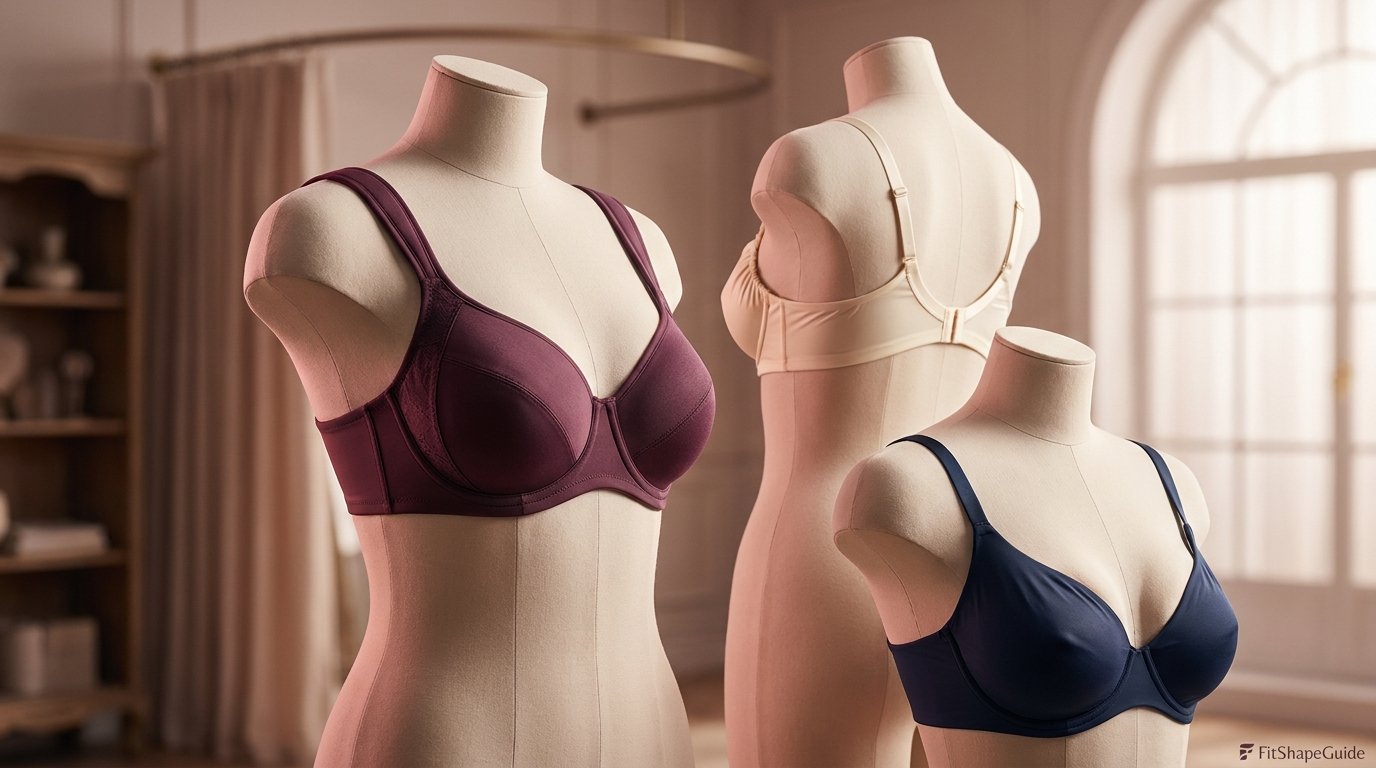
Are wide bra straps better for a large bust?
Wide straps can improve comfort because the same strap tension is distributed across a broader shoulder area. This is especially noticeable when comparing a narrow lingerie strap with a broader comfort strap on the same correctly fitted bra.
Width does not replace band support
A very wide strap can still dig if it is overtightened because the band is loose. Treat width as a comfort feature layered onto correct fit.
Check strap edges
A wide strap with stiff binding can create two concentrated edges. Soft finishes and flexible materials may feel better even when the nominal width is similar.
Consider clothing
Wide straps work easily under ordinary T-shirts, sweaters and many dresses but may show beneath camisoles or narrow shoulder straps.
Broad front sections
Some comfort designs broaden the strap only where it crosses the shoulder, then narrow it at the back so normal adjustment hardware can still be used.
Wide straps for sports
Sports bras often use broader straps as part of a larger stability system. Sports support also depends on cups or compression, underband and back construction, so do not judge performance by strap width alone.
For higher-movement support, compare Best Sports Bras for a Large Bust .
Padded straps and removable shoulder cushions
Integrated padding
Some bras build a soft foam, spacer-like or cushioned section into the strap where it passes over the shoulder. This can reduce concentrated pressure without adding a separate accessory.
Removable strap cushions
Aftermarket shoulder pads sit between the strap and shoulder. They can be useful when an otherwise well-fitting bra has a narrow strap that becomes uncomfortable over a long day.
Non-slip pads
Some cushions are designed to reduce strap movement as well as add surface area. Verify the material and attachment system before purchase rather than assuming every pad works with every strap width.
Padding thickness
Very thick padding can become bulky beneath fitted tops. A thinner broad pad may create a smoother silhouette.
Do not hide an extreme tension problem
If strap pads make an overtightened bra tolerable but the back still rises or cups still overflow, the accessory is masking the fit problem rather than solving it.
Centered, wide-set and racerback strap placement
Centered straps
A strap attached closer to the center of the upper cup may remain farther from the outer shoulder edge. This can be useful for narrower or sloping shoulders.
Wide-set straps
Balconette and some demi styles position straps farther apart. That can suit wider necklines but may feel less secure for someone whose straps frequently slip from the shoulder edge.
Racerback straps
A racerback configuration shifts the rear straps inward. This may reduce slipping, though it also changes the strap angle over the shoulder.
J-hook conversion
A built-in J-hook allows compatible straps to connect behind the upper back. Re-adjust strap length after connecting the hook; leaving them at the same short setting can create unnecessary pressure toward the neck.
Convertible straps
Multiway bras let you alter strap geometry for different clothes and shoulder shapes. Only use configurations the bra is designed to support.
Shoulder asymmetry
The left and right strap do not have to be identical lengths. Adjust each side to the body rather than matching slider positions visually.
Strap sliders, rings and adjustment range
Slider location
An adjuster sitting directly on top of the shoulder can feel more noticeable under a bag strap or tight garment. Bras with longer padded front sections often move the adjuster farther toward the back.
Full adjustment
Fully adjustable straps allow more variation for long or short torsos. Partial adjustment may still work well if the fixed front section matches your proportions.
Metal versus coated hardware
Hardware comfort depends on size, finish and location. Do not assume a specific material is automatically comfortable without checking the actual design.
Strap stretch
Very stretchy straps can feel soft but may require more shortening to maintain upper-cup position. Firmer straps may need less tension but feel less flexible.
Old strap elastic
Elastic loses recovery over time. If straps repeatedly lengthen themselves during wear, the bra may simply be reaching the end of its useful life.
Twisted straps
Make sure straps lie flat. A twisted strap creates a narrower pressure surface and can feel substantially sharper than the same strap when untwisted.
Movement and all-day strap testing
Raise the arms
The band should remain stable and the straps should stay on the shoulders without becoming dramatically tighter.
Reach forward
Reach as though typing, driving or hugging someone. Check whether the strap edge cuts near the neck or outer shoulder.
Carry your normal bag
A handbag, backpack or work bag may stack pressure directly over the bra strap. If possible, test the bra with the bag you actually use.
Sit at a desk
Shoulders often roll slightly forward during desk work. A strap that feels perfect standing may move toward the neck or outer shoulder when seated.
Walk for several minutes
Repeated arm swing can reveal strap slipping, hardware rubbing and uneven left-right adjustment.
Recheck after several hours
If the band rises gradually through the day, you may repeatedly shorten the straps without noticing. Judge the final position, not only the morning fit.
Look at temporary marks sensibly
Clothing can leave temporary impressions on skin. The more useful warning signs are significant pain, numbness, persistent irritation or the need for extreme strap tension to keep the bra functioning.

How to buy a bra with comfortable straps online
Product descriptions often highlight “comfort straps,” but that phrase can refer to width, padding, fabric, placement or simply marketing language. Inspect the actual construction.
- Verify band and cup sizing: comfortable straps cannot compensate for a bra that does not fit.
- Check strap width: use real product measurements when the manufacturer provides them.
- Look for padding: verify whether the cushion is integrated or simply a wider elastic strap.
- Inspect strap attachment: centered and wide-set straps behave differently.
- Check adjustability: full versus partial adjustment can matter for torso length.
- Look at slider position: a long padded front section can keep hardware away from the top of the shoulder.
- Check band construction: wings, closure width and elastic influence how much work reaches the straps.
- Inspect cup construction: seamed, molded, full cup and plunge shapes distribute the bust differently.
- Review racerback features: J-hooks or converters may help when slipping and placement are part of the problem.
- Review returns: a bra may need several strap adjustments before you know whether the shoulder comfort is right.
Do not buy by strap width alone
The widest strap in the store can still dig if the back band rides high and cups do not contain the bust. Prioritize the entire fit system.
Check padding placement
Some bras have padding only at the front of the strap while others broaden the complete shoulder section. Compare where your personal pressure point sits.
Consider full-cup and supportive everyday shapes
Full-cup constructions often combine more cup containment with straps that originate farther inward than very wide-set balconette designs.
Keep strap pads as a secondary option
If you already own a bra that fits correctly except for localized strap discomfort, a removable shoulder cushion may be a lower-cost experiment than replacing the bra.
Check clothing compatibility
Very wide comfort straps are excellent under everyday tops but may not work beneath camisoles, sleeveless dresses or wide necklines. Foundation wardrobes can include more than one strap construction for different clothes.
For shoulder-free formal clothing, continue with Best Strapless Bras for a Large Bust . For open-back formalwear, see Best Backless Bra Solutions for a Large Bust .
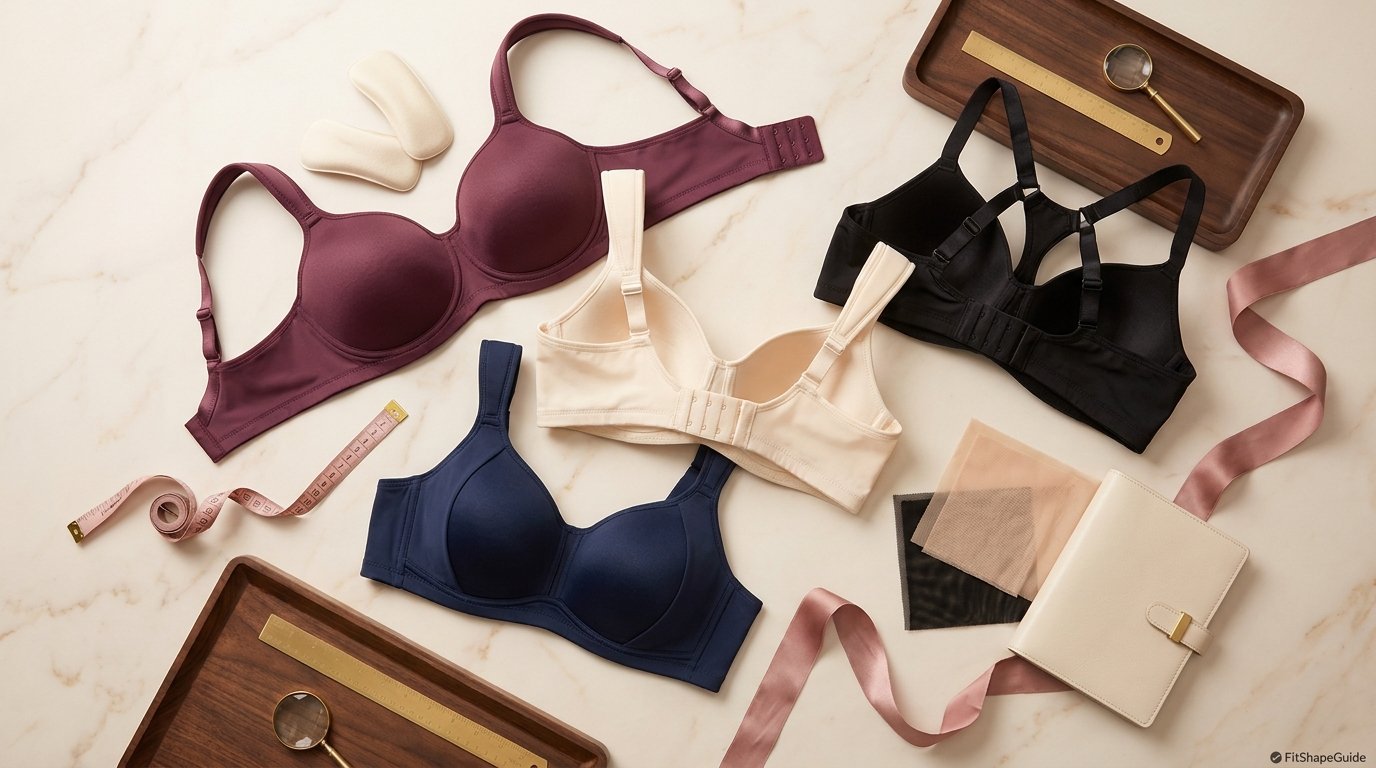
Common bra strap problems and better fixes
| Problem | Likely cause | Better response | Avoid |
|---|---|---|---|
| Straps dig deeply into shoulders | Too much load reaching straps | Recheck band, cups and strap tension | Adding more strap tension |
| Band rides up | Band too loose or stretched | Reassess band fit | Shortening straps to pull front upward |
| Wide straps still hurt | Whole-bra fit or edge pressure | Check band/cups and strap construction | Assuming wider always means comfortable |
| Straps fall off shoulders | Wide-set placement / shoulder mismatch | More centered or racerback option | Overtightening to stop slipping |
| Straps sit too close to neck | Placement or racerback tension | Adjust angle or choose different style | Ignoring neck pressure |
| Slider presses into shoulder | Hardware position | Long padded-front strap | Putting extra pad over bulky hardware blindly |
| One side digs more | Asymmetry or uneven setting | Adjust sides independently | Matching slider positions exactly |
| Straps loosen during day | Sliders slipping / elastic aging | Check hardware and bra condition | Retightening indefinitely |
| Cups spill when straps loosen | Cup too small/shallow | Reassess cup volume | Using straps to contain bust |
| Shoulder pads keep moving | Accessory/strap mismatch | Correct-size pad or integrated padding | Attaching unsafe improvised clips |
The straps leave marks but do not hurt
Temporary impressions can occur with fitted clothing. The stronger reason to reassess fit is significant discomfort, painful pressure, irritation, numbness or the need to overtighten the straps for basic support.
I keep shortening the straps every few weeks
Check whether the back band or strap elastic has stretched with age. A worn bra may no longer maintain its original support geometry.
My cups fit only when the straps are very tight
Reassess cup shape and volume. The straps should not have to drag an unsuitable cup into contact with the bust.
Wide straps show under all my tops
You may benefit from two foundation categories: a maximum-comfort everyday bra with broad straps and a narrower-strapped bra that still has a strong band and cups for specific clothes.
Final verdict
The best bra straps that don’t dig in are part of a bra where the band and cups already fit well. Start by making sure the back stays level and the bust is fully contained. Then refine comfort through wider straps, soft padding, better strap placement, appropriate adjustment and hardware that stays away from sensitive pressure points.
If a narrow strap is the only remaining issue, integrated padding or a removable shoulder cushion can help. But if every bra requires extremely short straps just to keep the bust supported, solve the band-and-cup fit first. Comfortable straps should position the bra—not rescue it.
Frequently asked questions
Why do my bra straps dig into my shoulders?
One common reason is that too much support is being transferred to the straps because the band is too loose or the cups do not fit correctly. Narrow straps or overtight adjustment can then increase localized pressure.
Are wide bra straps better for a large bust?
Wide straps can spread pressure over more of the shoulder and may feel more comfortable, but they work best when the band and cups already provide proper support.
Do padded bra straps help?
Yes, padding can reduce concentrated shoulder pressure for some wearers. It is a comfort feature rather than a substitute for correct bra sizing.
How tight should bra straps be?
They should stay secure on the shoulders without digging or carrying excessive load. Fit guidance commonly suggests enough room to slide fingers beneath the strap with gentle resistance rather than tightening until the strap presses sharply.
Why do my bra straps hurt even when they are wide?
The problem may be band fit, cup shape, strap placement, stiff strap edges or the location of the adjuster rather than strap width itself.
What bra strap style is good for sloping shoulders?
More centered straps, racerback-compatible styles or a J-hook can help move the strap away from the outer shoulder edge. Re-adjust strap length whenever the angle changes.
Do bra strap cushions work?
They can help spread pressure when the bra already fits reasonably well. They cannot correct a band that rides up or cups that are too small.
Should my bra band or straps provide most of the support?
Specialist bra-fitting guidance emphasizes that the band should provide most of the bra’s support, while the straps help position the upper cups and remain secure without digging.
Editorial and verification standards
This guide evaluates bra-strap comfort as part of the entire bra system: band stability, cup volume and projection, underwire position, strap width, padding, shoulder placement, adjustability, hardware position, back configuration and real movement.
Specialist fitting guidance consistently emphasizes that shoulder straps should remain secure without digging and that the back band provides the major foundation for bra support. When the shoulders are taking excessive strain, band fit deserves reassessment rather than simply shortening the straps further.
Wide and comfort-focused straps remain useful features after the core fit is right. Fuller-bust bras may use broad padded straps, broad hardware-free straps, more centered placement, supportive full-cup construction or racerback conversion depending on the intended use.
Before publishing any commercial recommendation, FitShapeGuide should verify the exact live seller, product, color, band range, cup range, strap width, padding construction, strap material, adjustability, adjuster location, strap attachment point, centered or wide-set placement, racerback or J-hook feature, band construction, cup construction, care, current availability and return conditions.
For strap-pad accessories, verify the exact dimensions, compatible strap widths, material, attachment system and care instructions before recommendation.
No ASIN, strap measurement, cup range, band range, price, rating, review count, coupon, stock claim or delivery promise should be published unless directly verified. Affiliate disclosure should remain clearly visible close to commercial recommendations.





3 Comments