Best Swim Cover-Ups for a Large Bust
A construction-first guide to bust ease, closure security, shoulder movement, breathable coverage, wet-swimsuit layering and safe pool-to-shore style.
The 90-second cover-up fit check
- Buttons, zipper or wrap edges lie flat without forming tension lines across the fullest bust.
- You can raise both arms, reach forward and sit without the front climbing or the sleeves binding.
- The garment layers over the intended wet swimsuit without catching its straps or compressing its cups.
- Armholes cover as intended but do not rub the front underarm.
- The hem clears steps, deck furniture and normal walking; ties remain secured away from feet.
- Wet fabric does not become excessively heavy, cling tightly or turn unexpectedly transparent.
- Pockets and trims do not pull the front off balance when loaded or wet.
Best swim cover-ups for a large bust by construction
A flattering cover-up is not simply the loosest garment available. Too little room causes buttons to gape, wrap panels to separate and hems to rise in front. Too much unshaped volume can shift, catch wind, drag when wet or hide the location of steps and obstacles. The useful middle ground combines bust ease with a controllable waist, open front, adjustable tie or deliberate drape.
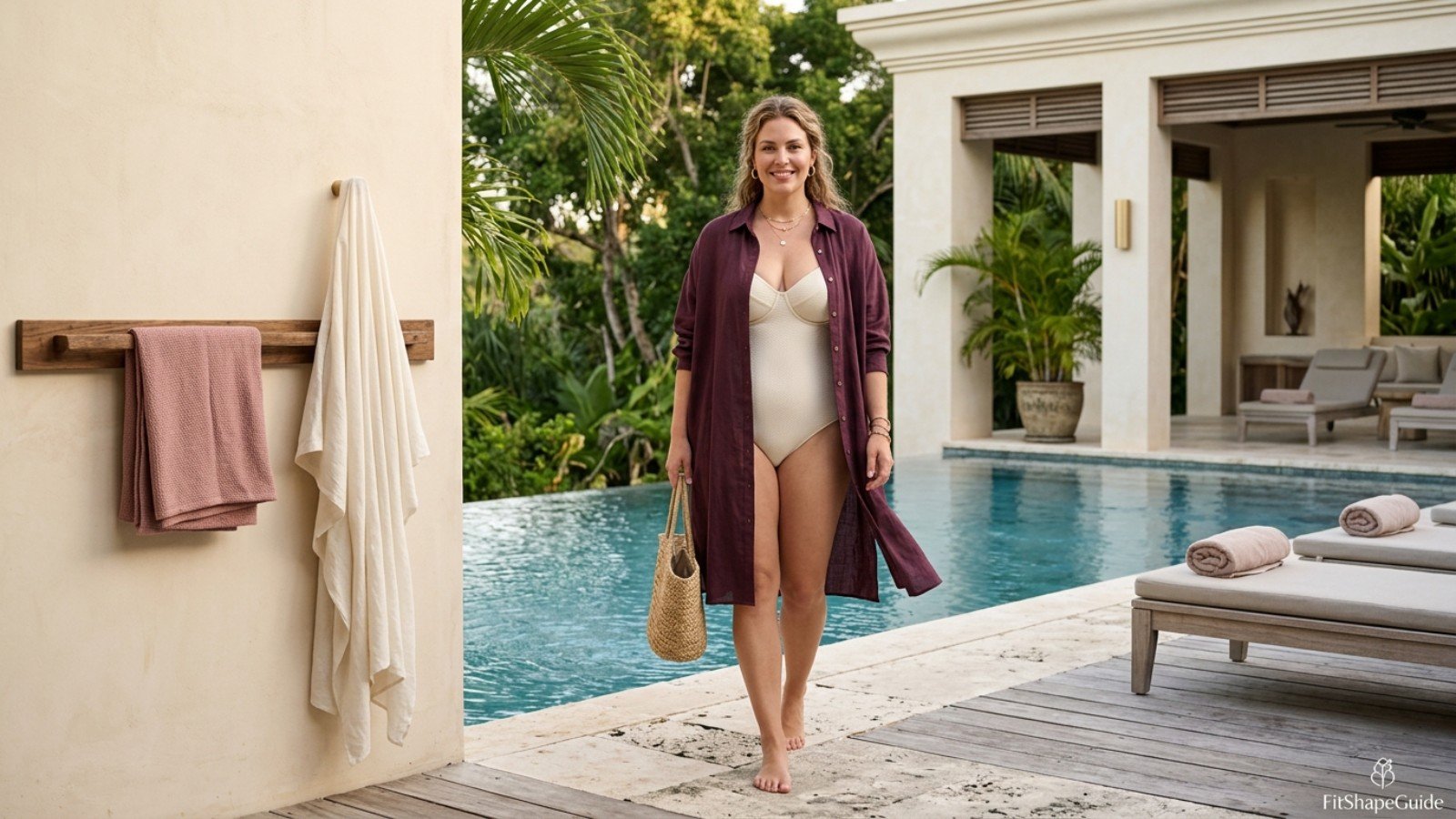
Button-front shirt cover-up
Best for: adjustable coverage and pool-to-lunch versatility. Seek a relaxed shoulder, bust-level button spacing, side slits and a finished bust measurement larger than the body. Trade-off: a narrow placket may gape even when the waist fits.
Adjustable wrap sarong or pareo
Best for: flexible hip, waist and skirt coverage without fitting the bust. It can sit below the bust or at the natural waist. Trade-off: the knot must stay secure and the hem must not trail during walking or swimming.
Empire-seam cover-up dress
Best for: defined shape with room below the bust. Choose a seam that actually sits under—not across—the bust and an adjustable back or elastic channel. Trade-off: a shallow upper bodice can push the seam upward.
Open-front kimono
Best for: zero front-closure strain, airflow and easy layering over a supportive swimsuit. Trade-off: very wide sleeves and long hems can catch wind, chairs or poolside fixtures.
Zip-front hooded cover-up
Best for: active transitions, sun coverage and controlled closure. Seek a two-way or smooth zipper, bust ease and a guard that does not rub. Trade-off: a rigid zipper exposes every shortage in front length.
Relaxed kaftan with side slits
Best for: airy coverage with few pressure points. A shaped V or open neckline prevents the front from hanging from the fullest bust. Trade-off: excessive width or low armholes may expose more than intended.
The best choice depends on whether the wearer needs quick changing, shoulder coverage, modesty, lunch-ready polish, wheelchair-friendly access or a compact item for travel. A cover-up can solve several of these needs, but it should never be expected to correct a poorly fitting swimsuit underneath.
Bust ease, front length and closures decide comfort
Full-bust cover-up fit is three-dimensional. The fabric must travel outward over the bust and downward to the hem without borrowing length from the front. When projection is missing, a level hem becomes shorter at center front, a waist seam climbs, side seams swing forward and the neckline may pull backward. Choosing a wider size sometimes helps, but a garment with darts, gathers, a yoke, curved seams or an open front usually uses the extra room more effectively.
Finished bust measurement matters most
Compare the garment’s finished bust circumference with your full-bust measurement while wearing the intended swimsuit. The difference is wearing ease. A floaty woven layer normally needs more ease than a stretchy knit. Exact ease is a preference and construction question, not a universal number: a straight shirt requires room to button, while an open kimono does not need to meet at center front.
Button and zipper paths reveal front shortage
A closed placket should remain vertical. Star-shaped pulling around buttons, horizontal lines into the armhole or a zipper that bows outward indicate insufficient room or length. Do not rely on fashion tape to hold a strained placket. It may control a small edge movement on a correctly fitted garment, but it cannot create missing fabric.
Shoulders and armholes control mobility
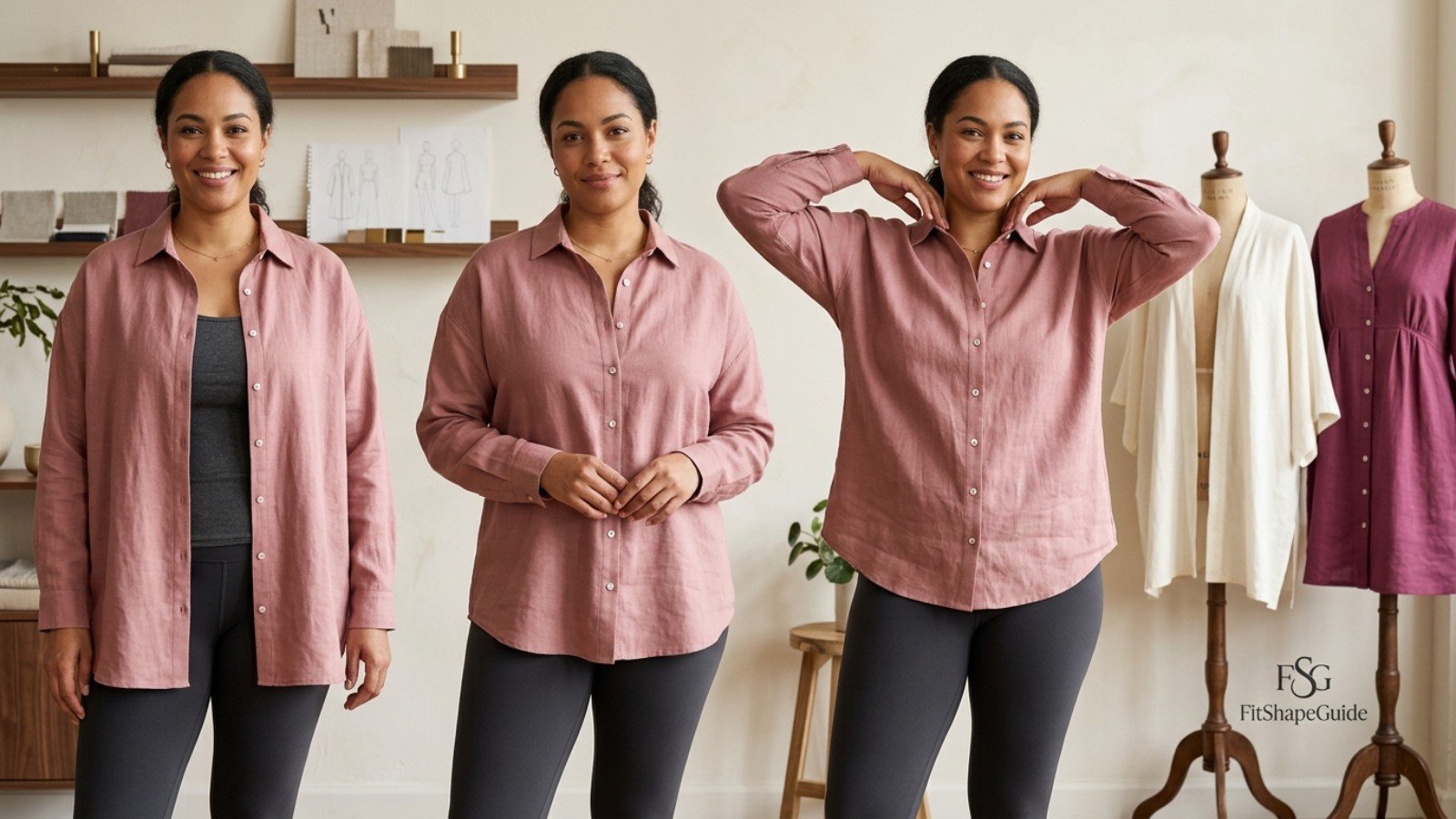
Cover-ups are often pulled over damp skin, so shoulder width and armhole depth matter. Test a self-hug, overhead reach and towel-drying motion. A sleeve that looks relaxed at rest can bind when the shoulder rotates. Conversely, an extremely deep armhole can expose the swimsuit side or catch on furniture. The correct geometry moves without dragging the bust panel upward.
Waist placement should follow the body
An empire seam belongs directly beneath the bust. A natural-waist drawstring belongs at the waist. If either sits across breast tissue, the upper body is too short or shallow. A flexible casing, wrap belt or separate tie allows more control than a fixed seam, but tightening the waist cannot repair missing bust depth.
| Construction detail | Why it helps | Evidence to check | Warning sign |
|---|---|---|---|
| Bust darts or gathers | Adds projection without excessive body width | Shaping reaches the fullest area | Dart ends far above or below bust |
| Open front | Removes closure strain | Front edges hang vertically | Edges swing backward from bust |
| Adjustable waist | Balances bust ease with shape | Tie or casing sits at intended level | Drawstring cuts across breast tissue |
| Relaxed shoulder | Allows damp-skin layering and reach | No pull from neck to underarm | Sleeve lifts entire garment |
| Side slits | Improve walking and sitting ease | Slit ends below coverage zone | Opening rises excessively when seated |
Fabric, opacity, drying speed and wet weight
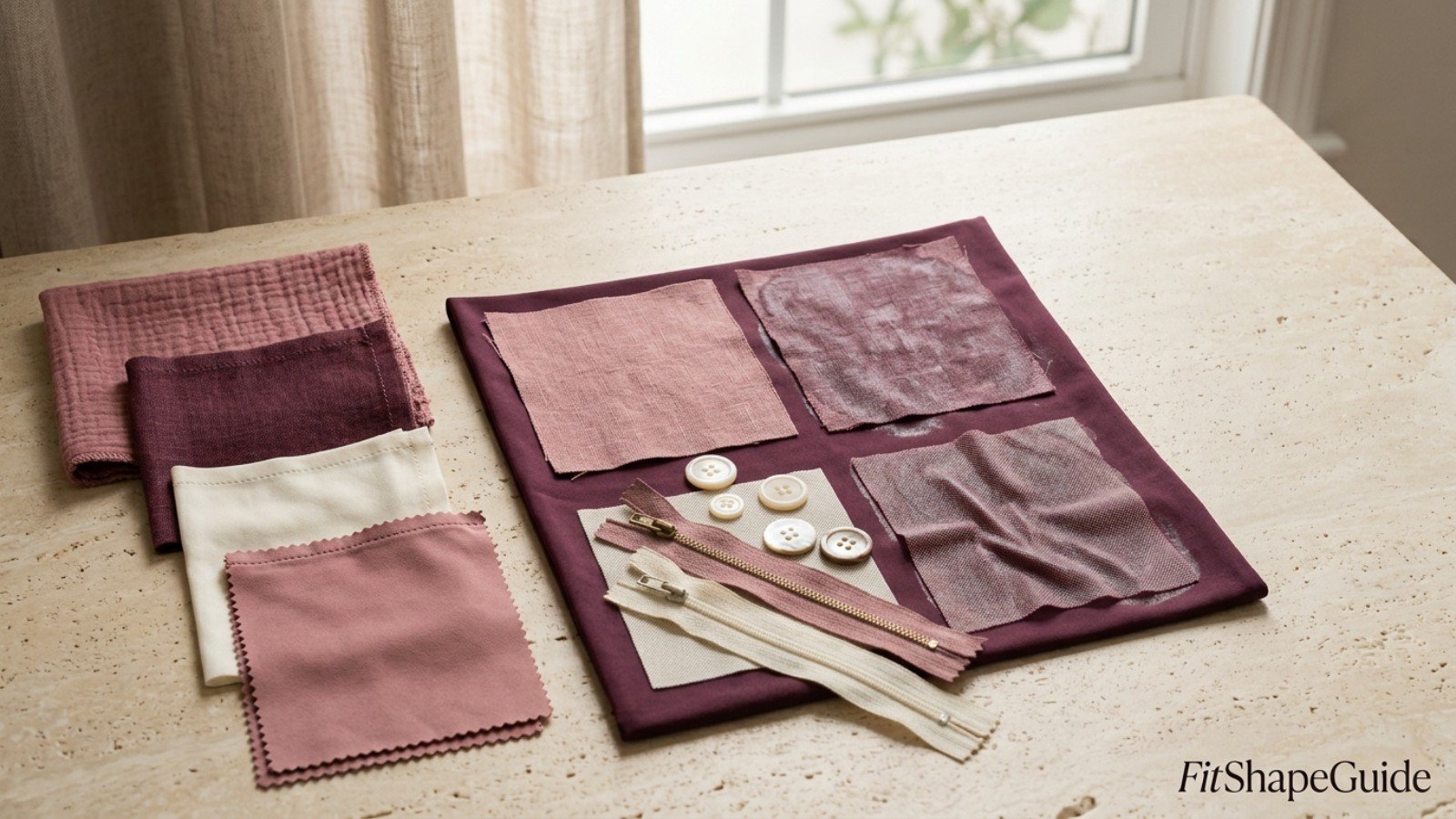
The same pattern can behave very differently in cotton gauze, linen blend, rayon, polyester chiffon, mesh or stretch jersey. A beach photograph captures only the dry state. A useful buying decision asks how the material changes after contact with water, sunscreen, salt, chlorine, humidity and a damp swimsuit.
Lightweight does not always mean quick-drying
Thin cotton feels breathable but may hold water longer than a lightweight synthetic. Rayon can drape beautifully yet become heavier and more delicate when wet. Polyester and nylon commonly dry faster, although tight weaves may trap heat. A mesh cover-up offers airflow and fast drying but less opacity. Match the fiber and weave to the job rather than treating one fabric as universally best.
Opacity changes over wet swimwear
Light colors and loose weaves may become translucent when damp or stretched over the bust. Review front, side and back photos in daylight, then test the received garment over the exact swimsuit. A lining can improve opacity but also add warmth and drying time. If coverage is important, seek a dense weave, print, darker shade or layered construction whose behavior is disclosed.
Cling can change the apparent fit
Wet fabric may adhere to cups, straps and skin. Static can also make dry synthetics cling. Adequate ease, surface texture and side openings help the garment release. A cover-up that looks generous on dry skin may outline and pull around a wet molded cup, so the layering test matters more than the hanger measurement alone.
Trim and hardware require practical review
Metal beads, heavy tassels, zippers and decorative rings add concentrated weight. Hot hardware can become uncomfortable in direct sun, and loose trims may catch on loungers or laundry. Inspect attachment points, rust-resistant claims and care instructions. Decorative weight should not drag the neckline or make the hem hazardous.
How to buy a bust-friendly swim cover-up online
Record full bust over the intended swimsuit, high bust, shoulder width, upper-arm circumference, preferred sleeve length, shoulder-to-underbust length, desired waist placement and shoulder-to-hem length. For a closed woven style, the finished garment measurement is more useful than the letter size alone. For an open kimono, compare shoulder, back width, sleeve and total length. For a wrap dress, confirm the actual overlap and tie length.
| Listing evidence | Why it matters | Red flag |
|---|---|---|
| Finished bust circumference | Shows real room over swimsuit and bust | Only “oversized” with no measurements |
| Garment and model measurements | Separates body chart from finished dimensions | Model size without her measurements |
| Front and back length | Reveals hem balance and coverage | One length with unclear measuring point |
| Shoulder, sleeve and upper-arm width | Predicts reach and damp-skin comfort | Only a front posed photo |
| Closure and overlap detail | Predicts gape and adjustability | Placket hidden by belt or pose |
| Fiber, weave and lining | Predicts drying, opacity and weight | “Beach fabric” without composition |
| Care and return eligibility | Protects comparison fitting | Final-sale or hygiene terms unclear |
Measure a successful layer
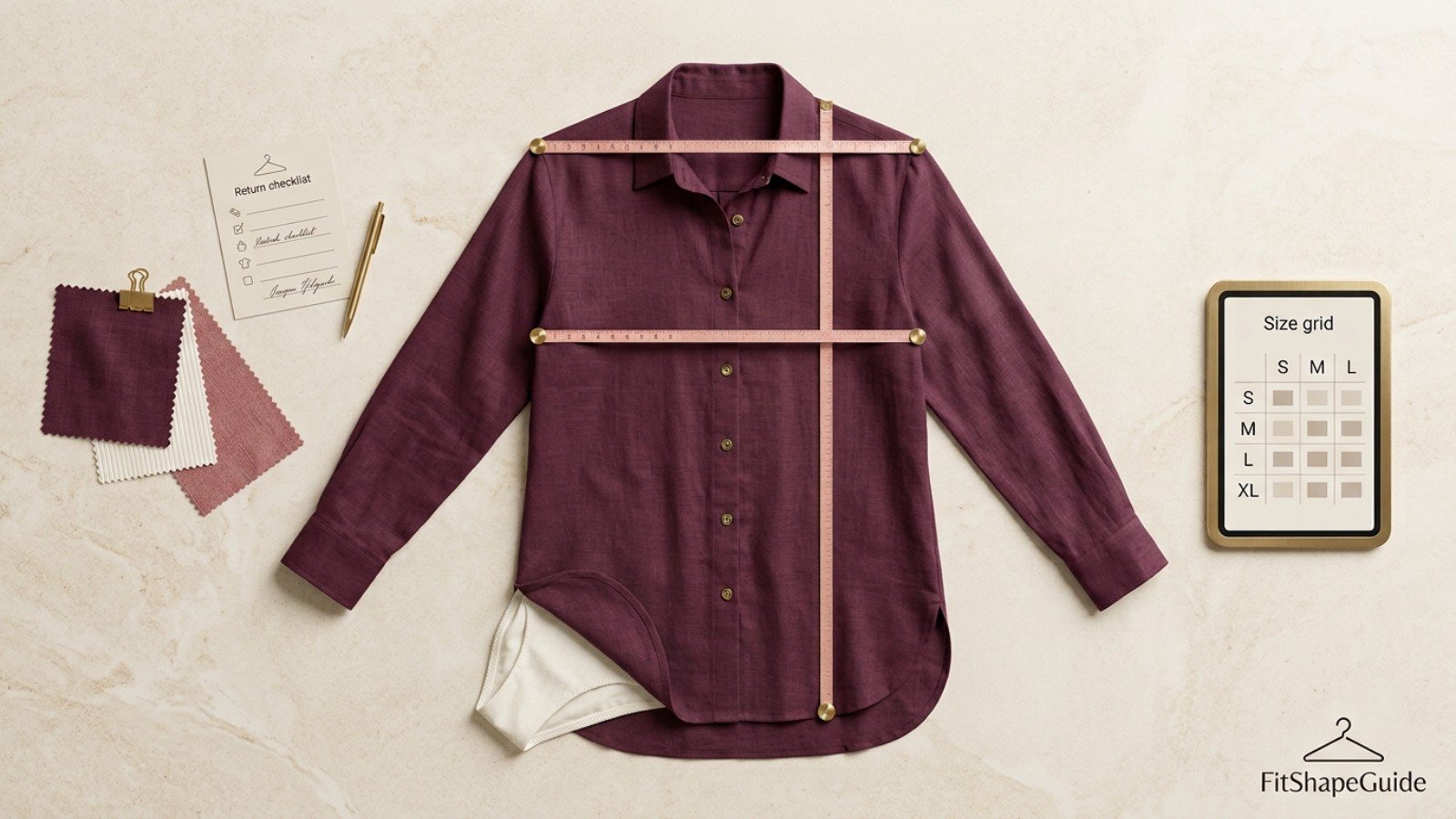
Lay a shirt, robe or beach dress that already fits over the bust on a flat surface. Measure underarm-to-underarm, shoulder width, upper arm, front length, back length and hem. Compare construction as well as numbers: a stretchy knit and non-stretch linen shirt do not need identical ease.
Use reviews as fit evidence, not votes
Useful reviews include the wearer’s approximate measurements, purchased size, swimsuit layer, fabric behavior when damp and the exact location of any pulling. “Runs small” is incomplete without knowing whether the failure occurred at bust, arm, hip or length. Customer photos can reveal front hem lift, button strain, transparency and sleeve volume, but lighting and styling still affect appearance.
Verified-only Amazon workflow
Before adding a product, confirm the live title, seller, size chart, finished dimensions, closure, fiber content, lining, pocket and trim details, care instructions and current return eligibility. Check whether color variants change composition or opacity. Never hard-code price, rating, coupon, review count, stock or delivery claims because they change. If the listing does not provide enough evidence to assess bust ease and fabric behavior, omit it or state the uncertainty.
Movement, wet-layer and hem-safety tests
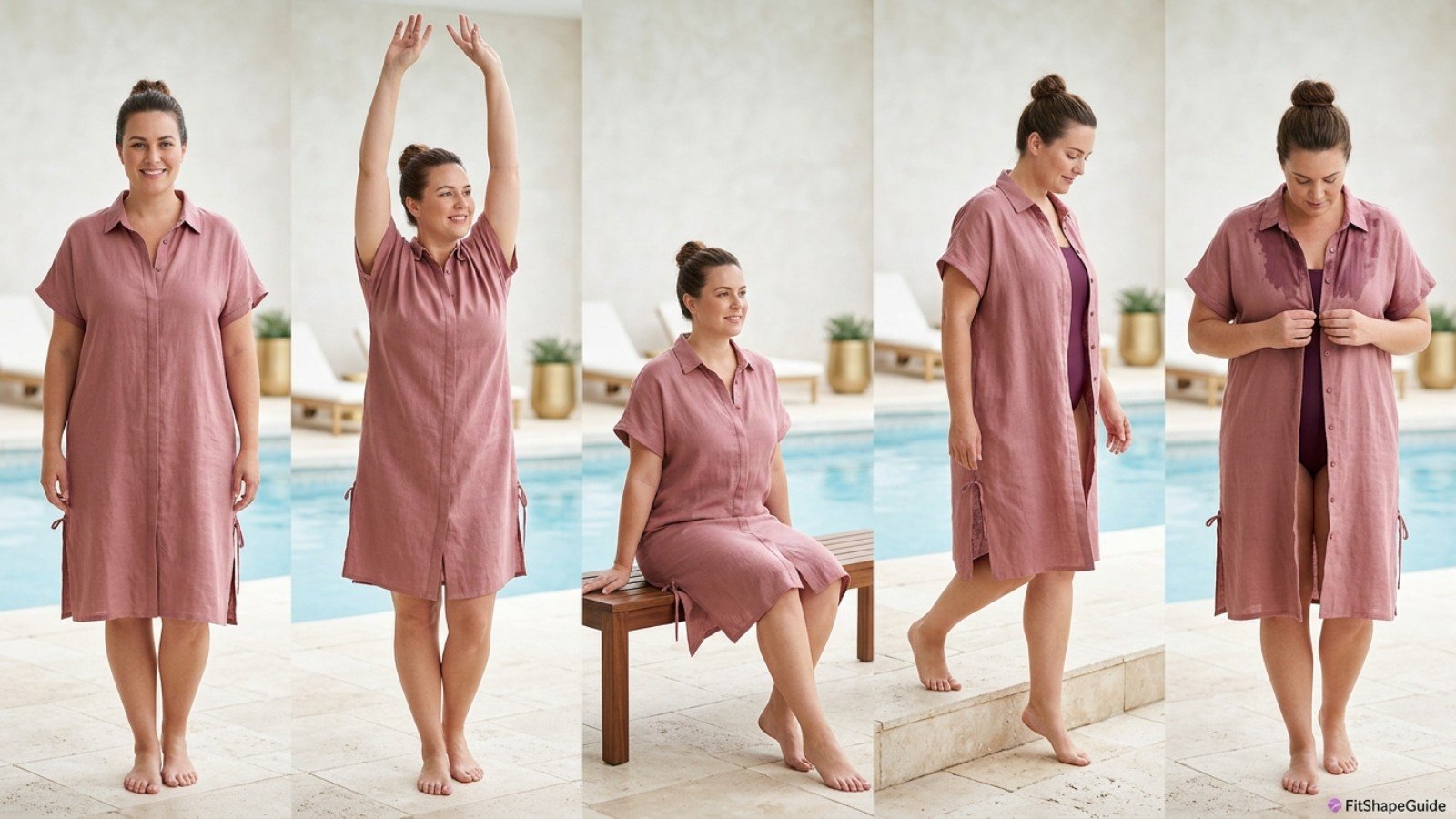
Try the cover-up over the exact swimsuit, bra-sized bikini or tankini it will accompany. Fasten it as intended, load the pockets only with lightweight items the manufacturer allows and wear the chosen footwear. The best swim cover-ups for a large bust remain predictable during normal resort or beach movement without repeated pulling at the front.
Reach and self-hug test
Reach overhead, forward and across the body, then gently hug the shoulders. The garment should not pull the neckline backward, force buttons apart or bind across the upper back. If the entire front lifts, compare a larger shoulder or armhole shape before adding more bust circumference everywhere.
Sit, bend and stair test
Sit fully, bend to collect a light item and step up and down safely. Check whether the front hem rises, side slits expose unexpectedly, a belt migrates onto breast tissue or a zipper presses into the abdomen. Keep long hems and loose ties clear of feet and mobility aids.
Wet-swimsuit layering test
Lightly dampen the swimsuit, then put on the cover-up as you would after swimming. It should slide over straps and cups without folding them or shifting the underband. Wait ten to twenty minutes. Note cling, transparency, odor retention, dye transfer and increased weight. Remove the layer immediately if trapped heat, chafing or skin irritation develops.
Wind and pocket test
A lightweight open garment can blow across the face or away from the body. Check the belt, snap or closure in a safe breezy area. Add only the items you realistically carry. A wet phone or heavy bottle can distort a patch pocket, swing the hem and pull one shoulder downward; use a beach bag for heavier objects.
Changing and bathroom access
If the garment is used for changing, confirm genuine coverage through the full sequence without relying on a precarious knot. If it is worn at a café or resort, verify sitting coverage and dress-code expectations. A two-way zipper, full placket or secure wrap can improve access, provided it remains easy to operate with damp hands.
Common cover-up fit problems and the right fix
| Symptom | Likely cause | Better next step |
|---|---|---|
| Buttons gape at bust only | Insufficient projection or poor button spacing | Choose darts, more finished bust room or an open-front style |
| Front hem sits much higher | Bust is borrowing front length | Seek bust shaping or longer center front |
| Armholes pull during reach | Narrow shoulder, upper arm or back | Try relaxed sleeves, gusset or roomier shoulder |
| Empire seam crosses bust | Upper bodice too short or shallow | Choose longer shoulder-to-underbust depth |
| Wrap separates when seated | Insufficient overlap or unstable tie | Choose greater overlap or a secure internal tie |
| Wet fabric clings and drags | Absorbent fiber, low ease or heavy trim | Try lighter quick-dry fabric and fewer decorations |
| Neckline slides backward | Front weight, shoulder slope mismatch or short front | Choose balanced front length and controllable closure |
| Long hem catches | Excess length, loose ties or wide volume | Use a shorter hem or secure side adjustment |
When sizing up helps
Size up when the next size restores button closure, front hem balance, arm mobility and comfortable swimsuit layering without making shoulders, neckline and sleeves uncontrollable. If the larger size still pulls at the bust but becomes very wide elsewhere, the pattern needs more projection rather than more overall circumference.
When an alteration is realistic
A specialist may add a discreet bust-level snap to a placket that already has enough overlap, shorten a hem, secure a side slit, move a waist tie, shorten sleeves or refine an open front. Creating substantial bust depth, enlarging an armhole, adding missing front length or rebuilding a zipper placket may cost more than choosing a better pattern. Do not alter an item until return eligibility is understood.
What not to use as a fix
Do not size down to force an open neckline closed, tighten a belt across breast tissue or accept strained buttons as “shaping.” A cover-up should not compress the swimsuit cups or pull its straps. If the underlayer loses support after the cover-up is added, the outer layer is too tight, too heavy or poorly balanced.
Choose coverage for the beach, pool, travel and lunch
For a short walk from room to pool, a simple open shirt or kaftan may be enough. For a full beach day, prioritize sun coverage, breathable fabric, secure pockets and a hem that clears sand and steps. For lunch, check venue rules and choose an opaque style with stable closure. For water sports, remove loose outer layers before activity and use a supportive performance swimsuit designed for the water.
Work with the swimsuit neckline
An open V-shaped cover-up can frame rather than crowd a high-neck or scoop swimsuit. A collared shirt offers controllable coverage over a plunge suit. A kaftan can layer over a bikini without forcing the top and bottom into one size. Explore the supportive swimsuit guide, underwire swimsuit options and bra-sized bikini guide for the independently supportive base layer.
Color and print are practical tools
Dark colors and prints may disguise temporary damp patches, while pale shades can feel cooler but show transparency more readily. Vertical plackets, open fronts and continuous prints can create a long visual line, yet no visual effect should replace proper ease. Choose the palette that makes you comfortable after checking the actual fabric under daylight and moisture.
Care protects fit
Rinse salt, chlorine and sunscreen according to the care label. Close zippers and secure ties before laundering when permitted. Avoid twisting delicate rayon, mesh or trims. Reshape the shoulders, placket and hem, then dry as directed. Store fully dry so odor and fiber damage do not become mistaken for a permanent fit problem.
The best cover-up makes room without losing control
The best swim cover-ups for a large bust combine intentional bust ease, balanced front length, comfortable shoulders, secure closures and fabric suited to wet-swimsuit layering. Start with the intended activity, compare finished garment measurements, and test reaching, sitting, walking and damp wear. Keep bust support in the swimsuit underneath, and reject any cover-up that strains its closures, shifts the cups, becomes dangerously heavy or requires constant adjustment.
Frequently asked questions
What type of swim cover-up is best for a large bust?
An adjustable shirt dress, open-front kimono, correctly placed empire dress or relaxed kaftan usually works well. The best option has enough finished bust room, comfortable shoulders and a closure that does not strain.
Should I size up in a swim cover-up for a large bust?
Size up only if it restores bust room, front length and movement without making the shoulders and neckline unstable. If every larger size remains tight at the bust and oversized elsewhere, choose a pattern with darts, gathers or an open front.
How much bust ease should a cover-up have?
There is no single correct amount. A closed non-stretch shirt needs more usable ease than a stretch knit or open kimono. Compare the finished garment measurement with your full bust over the intended swimsuit and follow the brand’s fit description.
Can a swim cover-up support a large bust?
No. A cover-up can provide coverage and visual shape, but structural bust support must come from a correctly fitted swimsuit or bikini top with adequate cups, band and straps.
Why does a cover-up hem rise in the front?
The bust may be borrowing front length because the garment lacks projection or center-front length. Darts, gathers, a longer front or open construction can work better than simply adding width.
What fabric is best for a swim cover-up?
Choose according to the setting. Lightweight synthetics often dry quickly, cotton gauze is breathable but can retain moisture, and mesh offers airflow with lower opacity. Verify wet weight, cling, transparency and care.
Can I swim while wearing a cover-up?
Usually, loose cover-ups should be removed before swimming because long hems, sleeves and ties can create drag or snag. Swim only in garments specifically designed and labeled for the activity, and follow facility rules.
How do I stop buttons from gaping over a large bust?
Choose more finished bust room, closer bust-level button spacing, darts or an open-front style. A hidden snap can stabilize adequate overlap, but it cannot safely hold a strained placket together.