
Best Strapless Bras for a Large Bust
A construction-first guide to fuller-bust strapless bras that stay anchored through the band, cups and side structure—so off-shoulder, bandeau, asymmetric and formal necklines do not depend on shoulder straps for support.
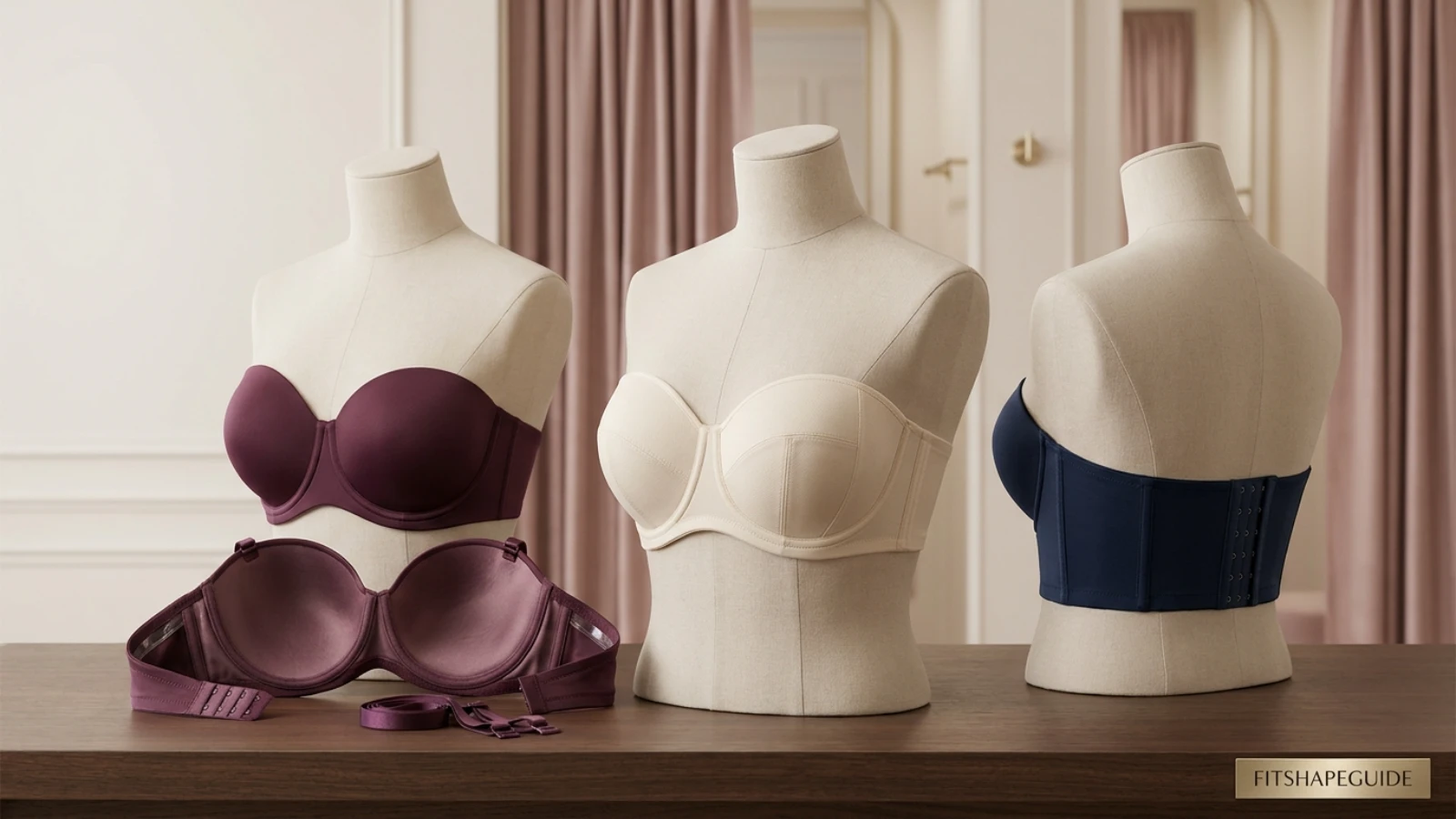
The 90-second strapless bra test
- Fasten the bra without straps: fit should be judged in the configuration you actually need.
- Scoop and settle the bust: all breast tissue should sit inside the cups without overflow or folding.
- Check the band: it should remain approximately level around the torso.
- Raise both arms: the bra should not drop substantially or require immediate pulling upward.
- Sit and lean: underwire, boning and the lower band should remain comfortable.
- Put on the actual dress: check neckline height, cup edge visibility and whether the bra changes the garment fit.
How can a strapless bra support a large bust?
A conventional bra shares work between the cups, band, frame and straps. Remove the straps and the rest of the structure has to become more precise. That is why a well-designed strapless bra often looks more substantial through the band and wings than an everyday plunge or T-shirt bra.
The underband anchors the bra around the ribcage. The cups contain and shape breast tissue. Underwire or another cup frame helps maintain the lower cup boundary. Side wings transfer tension toward the back closure, while flexible reinforcement can help prevent those wings from collapsing.
Gripper elastic may add friction at the upper wing or band, but it should be considered an assist—not the entire support system. Likewise, a tight neckline edge cannot compensate for a cup that is several sizes too shallow.
The goal is not to make a large bust motionless. The goal is to keep the bra’s structural frame in its intended position so the garment worn over it can sit correctly.
| Feature | What it contributes | Good sign | Warning sign |
|---|---|---|---|
| Firm underband | Main torso anchor | Stays level through movement | Slides down or rides high at back |
| Deep cups | Contain bust projection | Whole bust sits inside cup | Overflow, folding or flattened shape |
| Underwire | Defines lower cup boundary | Surrounds breast tissue comfortably | Sits on tissue or floats away |
| Wide wings | Distribute band tension | Lie smooth around side/back | Roll, fold or cut sharply |
| Side/flex boning | Helps wing resist collapsing | Stays upright without digging | Bends sharply into ribs |
| Gripper elastic | Adds friction | Helps band stay stable | Irritates skin or creates painful pressure |
| Multi-row back | Spreads closure load | Back remains secure and flat | Narrow back twists under tension |
| Longline frame | Adds anchoring area below cups | Torso panel stays flat | Rolls upward or compresses ribs |
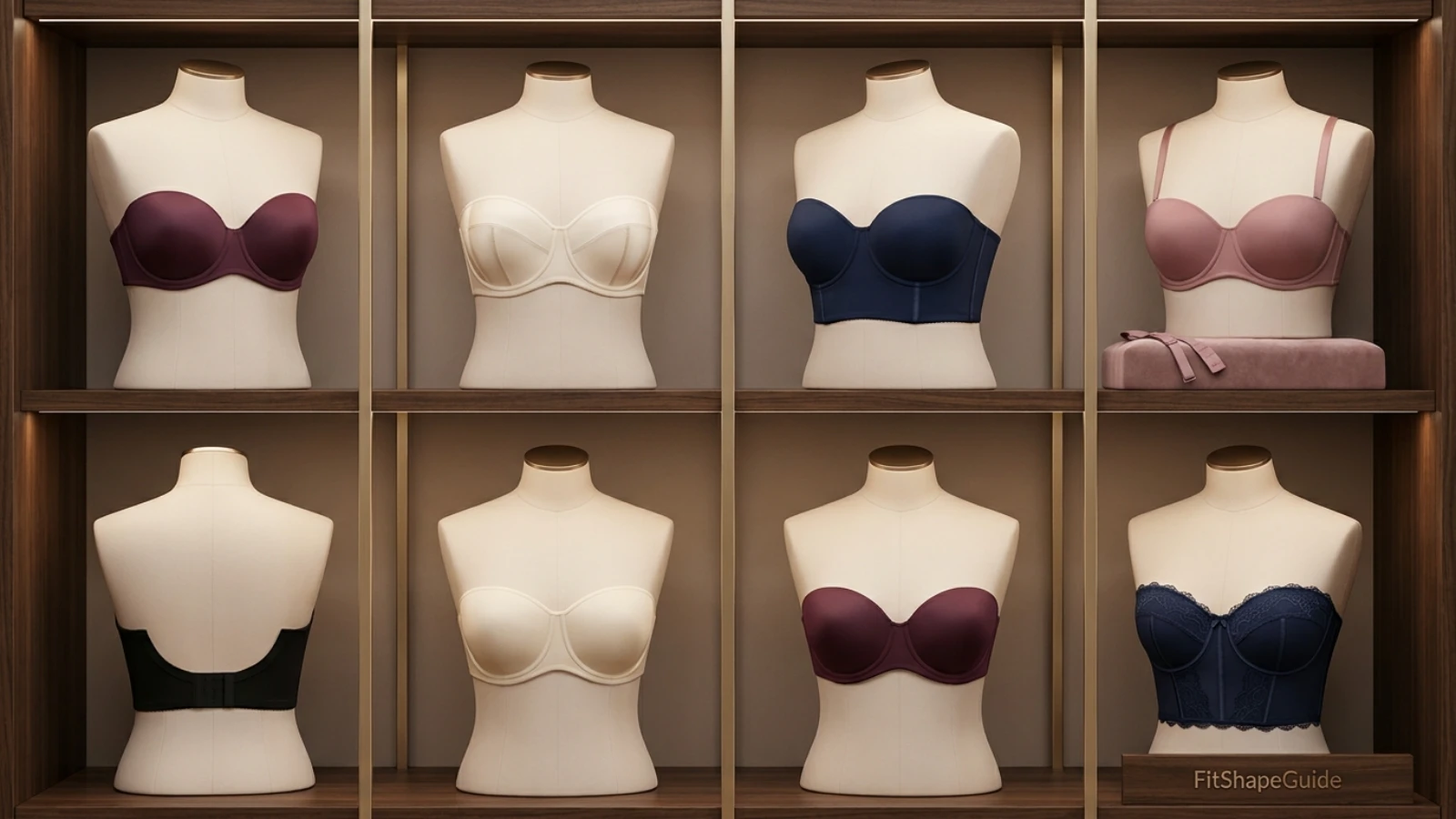
Best strapless bra styles for a large bust
Molded underwire strapless bra
Smooth molded cups create a clean surface under fitted dresses and tops. A fuller-bust version should combine the molded cup with a firm frame, substantial wings and secure band construction.
Trade-off: molded cups use a fixed shape. If your bust does not match that shape, changing size alone may not eliminate gaping or compression.
Seamed-cup strapless bra
Multi-part cups can provide more adaptable projection than a single molded shell. Vertical or diagonal seams can shape the lower cup while the band anchors the frame.
Trade-off: seams may show beneath thin or very smooth fabrics.
Longline strapless bra
An extended band provides more torso surface area below the cups and can work well beneath formal gowns or structured dresses.
Trade-off: the longer frame must match ribcage and waist proportions or it may roll.
Multiway strapless bra
Removable straps allow the same foundation to be worn strapless, straight, crossed or in other manufacturer-approved configurations.
Trade-off: the bra still needs to fit correctly with every strap removed.
Low-back strapless solution
Some formal outfits need both bare shoulders and a lower back. Purpose-built low-back or extended-band systems can be considered when an ordinary strapless back would show.
Trade-off: lowering the back can reduce the usual anchoring position, so fit becomes more specialized.
Fuller-coverage bandeau-frame bra
A higher center and broader upper cup can provide more containment under straight or gently curved strapless necklines.
Trade-off: the upper edge may show beneath deep sweetheart or plunge garments.
Sweetheart strapless bra
A lower center and curved cup edge can disappear beneath sweetheart and some off-shoulder formal dresses while retaining a structured band-and-cup frame.
Trade-off: the lower neckline needs accurate cup fit to remain secure.
Bridal-style structured strapless foundation
A more substantial formal foundation may combine deeper cups, boning, a longer band or multiple support panels for gowns that need a very stable base.
Trade-off: more structure can mean more heat and less flexibility during a long event.
Why the band matters more in a strapless bra
With shoulder straps removed, band fit becomes especially obvious. The band should be firm enough to remain stable around the ribcage without being so tight that wires distort, hooks strain or breathing becomes uncomfortable.
Level back
Stand side-on to a mirror. The back band should sit approximately at the same level as the front underband rather than rising several centimeters toward the shoulder blades.
Wide wings
A wider side and back section can distribute tension over more area and create room for reinforcement, gripper elastic and additional hook rows.
Back closure
A broader multi-hook closure can add stability. The exact number of hooks matters less than how the full wing and closure system behave under tension.
Hook position
A new bra is generally intended to provide adjustment room as elastic changes with wear. Follow the manufacturer’s fit guidance rather than buying an intentionally smaller band merely to start on the loosest possible setting.
Band rolling
A band that rolls or folds may be too narrow, too soft, too tight for the torso shape or lacking enough vertical reinforcement.
Do not use pain as a fit signal
“Strapless bras have to hurt” is not a useful fitting standard. Firm support and painful compression are different things.
Molded cups, seamed cups and fuller-bust projection
Complete containment
The breast should sit fully inside the cup without overflow across the top or sides. Empty space or folding can indicate excess volume or a shape mismatch.
Molded cups
Molded foam creates a smooth shape beneath fitted formalwear. Because the molded shell has a predetermined contour, it may fit one fuller-bust shape beautifully and another poorly at the same nominal size.
Seamed cups
Seamed construction can build depth through several fabric panels. Vertical seams often create lower-cup projection while diagonal or side panels can influence where breast tissue is directed.
Center gore
In an underwire design, the center area should sit according to the intended frame and cup shape rather than floating far away because the cups are too shallow.
Upper cup edge
The top edge should sit smoothly enough to disappear beneath the planned garment. Cutting into tissue or standing visibly away from the bust can both become obvious under formal fabrics.
Asymmetry
Small differences between breasts are common. Fit the larger side first when necessary, then evaluate whether the cup shape allows the smaller side to sit smoothly without major gaping.
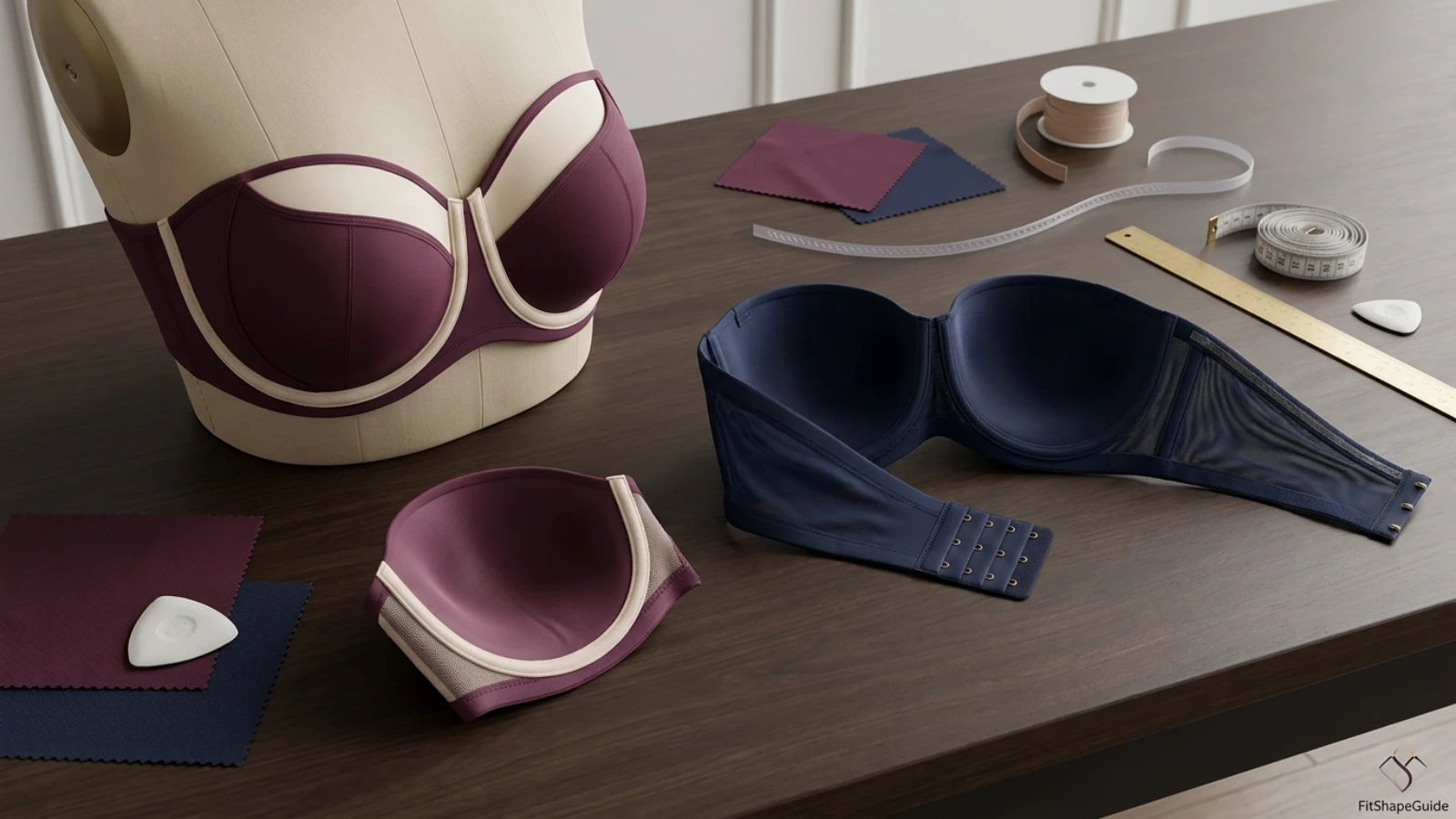
Underwire, side boning and frame stability
Underwire placement
The wire should sit below and around the breast tissue rather than on top of it. If the side wire rests on breast tissue, the cup may be too small or the wire shape may be too narrow.
Wire distortion
An excessively tight band can pull wires wider than their intended shape. This is one reason sizing down indiscriminately for strapless wear can backfire.
Side boning
Flexible reinforcement at the side can help the wing remain upright instead of collapsing under bust and band tension.
Back reinforcement
Some fuller-bust strapless frames use additional flexible support through the back or wings. The reinforcement should remain smooth rather than creating a pressure point when seated.
Longline boning
A longline foundation may use several vertical channels to keep the extended torso section from folding. The channels should follow the torso rather than digging into the ribs or waist.
Wire-free strapless bras
Wireless strapless designs exist, but evaluate what replaces the wire structurally. Firm molded cups, a substantial underband, reinforced wings or an extended frame may be doing more of the support work.
Silicone, gripper elastic and skin comfort
Many strapless bras use silicone-coated or grippy elastic at the upper wing, back or underband to increase friction against the skin.
Useful role
Grip can reduce small amounts of sliding as the body moves. It is especially helpful when paired with a stable cup-and-band frame.
Skin sensitivity
If you know that silicone or similar materials irritate your skin, check the exact product materials before purchase. Stop wearing a garment that causes significant irritation.
Sweat and heat
Formal events, dancing and warm weather can change how the skin and gripper surface interact. Test the bra for longer than a few minutes before an important event.
Do not add random adhesive
Avoid applying unapproved adhesives directly to the bra or skin simply to make an unsuitable bra stay up. If additional fashion tape is used for a garment neckline, follow the product’s skin-use directions separately.
Clean according to care instructions
Body oils, lotions and washing products can affect elastic and grippy surfaces. Follow the manufacturer’s specific care directions rather than treating all strapless bras identically.
When a longline strapless bra makes sense
A longline strapless bra extends farther below the ordinary underband. That gives the garment more torso surface area to distribute tension and can be useful under structured formal dresses.
Formal gowns
A longline foundation pairs naturally with strapless, off-shoulder and some corset-inspired formal gowns when the longer frame remains hidden.
Waist relationship
The lower edge should match your torso proportions. If the longline ends at a point where the body changes circumference quickly, the edge may roll or flare.
Short torso
A very deep longline may be uncomfortable on a shorter torso because the lower edge can collide with the waist or upper abdomen while seated.
Long torso
A longer torso may accommodate the extended structure more comfortably, but band and cup sizing still need to be correct.
Seated test
Sit for at least ten minutes. If the bottom edge folds sharply or reinforcement presses into the ribs, the frame may not match your torso even if it looks excellent standing.
Longline is not mandatory
A properly fitted standard strapless bra can provide excellent support. Choose longline because it suits the outfit and body—not because fuller busts automatically require one.
Convertible and multiway strap options
Detachable straps can make one bra work under more necklines, but strapless fit should be solved first. If the bra only feels secure when the straps are attached, it is functioning primarily as a multiway bra rather than a successful strapless foundation for you.
Straight straps
Useful when the same bra needs to function under ordinary tops after the formal event.
Crossback
A crossback configuration can work under racerback or cut-in shoulders. Lengthen the straps before crossing so the cup frame is not pulled upward.
Halter
A halter strap can help position the upper cup, but the neck should not become the main support point for a large bust.
One-shoulder
Only use an asymmetric strap arrangement when the manufacturer supports that configuration. Unequal strap tension can rotate the bra if the band is not secure.
Strap attachment loops
Check whether the hooks remain fully seated and hidden beneath the garment. Bulky attachment hardware can show beneath thin formal fabrics.
Replacement straps
If straps are removable, store them with the bra. A random replacement strap may have different stretch, width or hardware.
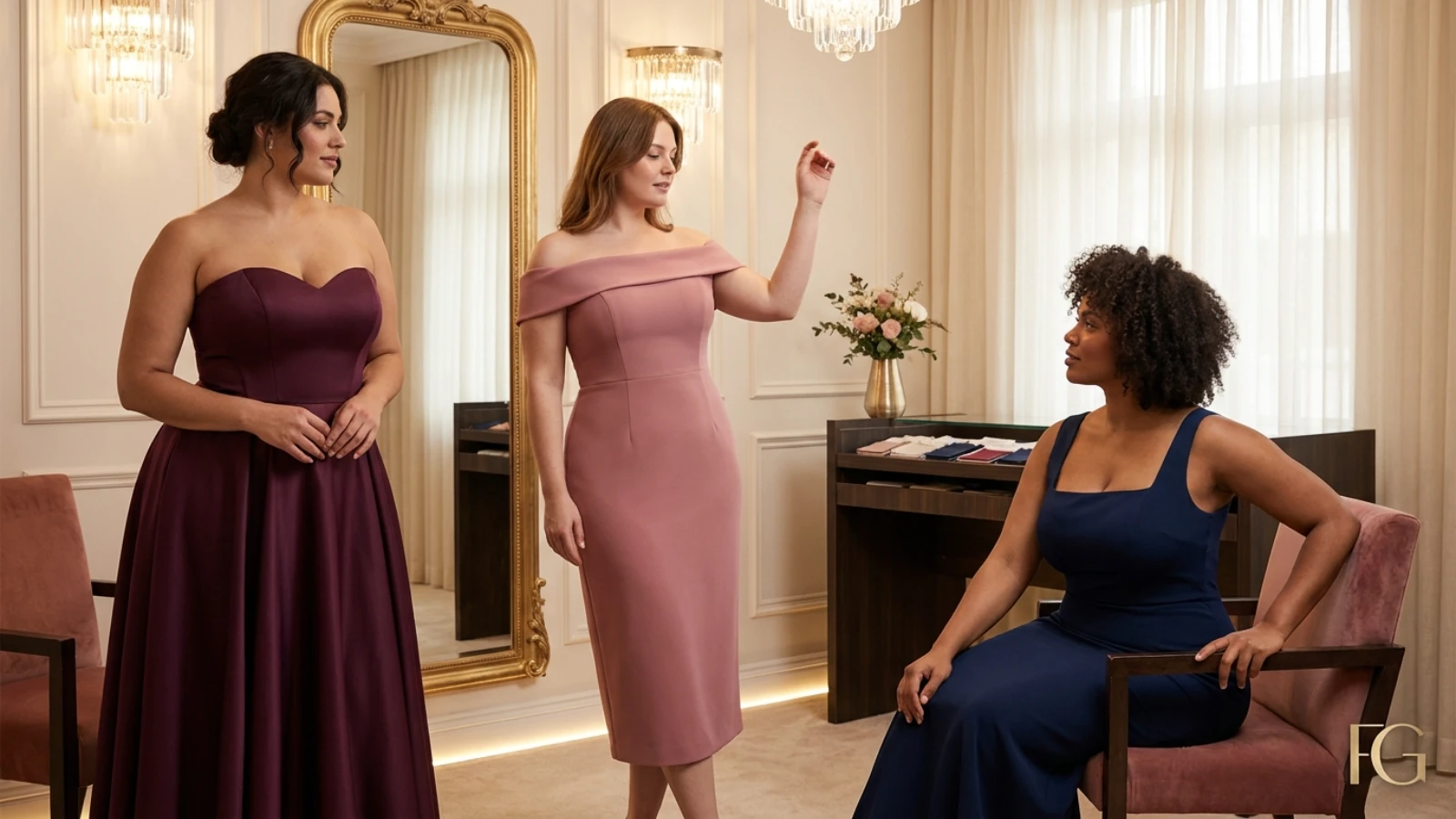
Test the strapless bra under the actual dress
A strapless bra can fit well by itself and still be wrong for a specific garment. Cup edge height, center-front shape, side-wing height and back position all need to disappear beneath the intended neckline.
Strapless gown
Check that the dress neckline sits independently instead of being pushed outward by a bra cup that is too tall.
Off-shoulder dress
The bra wing and cup edge should remain hidden as the garment sleeve sits lower on the shoulder.
Square neckline
A square-neck garment may expose the upper outer cup even when the center is well hidden. Check from both front and three-quarter angles.
Sweetheart neckline
Compare the curve of the bra cup with the curve of the dress. Two individually well-fitting garments can still have incompatible neckline shapes.
Asymmetric gown
Turn side-to-side and raise the uncovered shoulder. The bra should remain level rather than rotating with the dress.
Low back
Confirm the back band remains completely hidden while preserving enough support. A conventional strapless bra cannot automatically become low-back simply by lowering the band.
Thin satin or crepe
Smooth fabrics can reveal cup-edge transitions and boning. Put the outfit under both natural room light and direct phone flash before the event.
How to buy a strapless bra for a large bust online
Strapless-bra product descriptions often emphasize staying power, smoothing or multiway styling. Those claims are less useful than the actual size range and construction.
- Start from a recent bra size: use a well-fitting everyday bra as the starting reference, then follow the exact brand chart.
- Check cup range: confirm the exact size you need is genuinely offered.
- Inspect the cup: molded, seamed, foam, spacer-style or another construction.
- Check underwire: look for enough width and depth rather than assuming all underwires fit similarly.
- Inspect wing height: higher/wider wings often provide more space for stabilization.
- Check band reinforcement: gripper elastic, power mesh and flexible boning can all contribute.
- Inspect closure width: a substantial back frame is often useful when shoulder straps are absent.
- Check cup edge height: it must disappear under the intended dress.
- Review multiway options: only if you will genuinely use them.
- Verify returns: foundation garments need enough fitting flexibility to test cup shape and comfort carefully.
Do not automatically size down
A smaller band can feel secure for the first minute while simultaneously pulling the wires too wide, reducing cup volume and increasing pressure around the ribs.
If your normal size does not feel stable in a particular strapless bra, investigate the style, cup shape and band construction before assuming the answer is simply a smaller size.
Do not automatically size up in the cup to stop overflow
Overflow can mean more volume is needed, but cup shape matters too. A molded cup can gape in one area while still compressing another if its geometry does not match the bust.
Check skin-facing materials
If a bra uses silicone or gripper material, confirm that the feature suits your skin and intended wear duration.
Buy the bra before final dress alterations
A strapless bra can change bust height, projection and neckline position. Formal alterations should ideally be done over the exact foundation garment that will be worn at the event.
Test beyond the fitting-room minute
Wear the bra at home within the retailer’s return requirements for enough time to sit, move and assess pressure points before relying on it for a wedding, gala or long celebration.
For outfit-specific testing, continue with Gala Outfit Guide for a Large Bust , Red Carpet-Inspired Looks for a Large Bust and Birthday Party Outfit Ideas for a Large Bust .
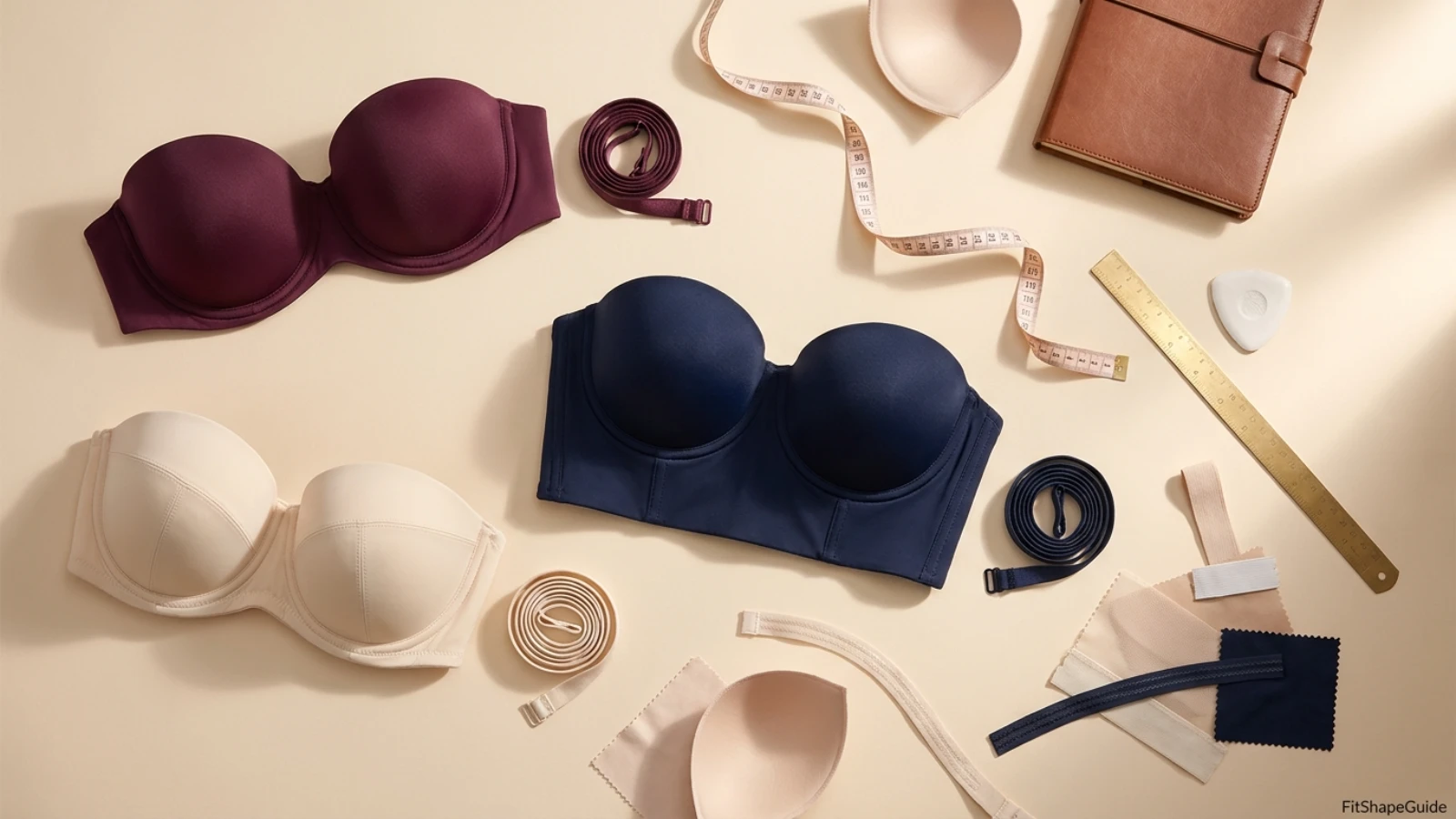
Common strapless bra fit problems
| Problem | Likely cause | Better response | Avoid |
|---|---|---|---|
| Bra slides downward | Band/frame unstable or cup shape mismatch | Better band and cup construction | Automatically buying several sizes smaller |
| Back rides upward | Band too loose or distorted fit | Recheck band and cup relationship | Pulling front upward repeatedly |
| Bust spills over cup | Insufficient volume or depth | Larger/deeper cup | Tightening upper edge |
| Cup gaps at top | Cup shape mismatch or excess volume | Different cup shape/size | Assuming tighter band fixes cup contour |
| Wire sits on breast tissue | Cup or wire too small/narrow | Different cup/wire geometry | Ignoring wire placement because bra stays up |
| Side boning digs | Reinforcement position or torso mismatch | Different wing/frame design | Waiting for painful boning to “break in” |
| Silicone irritates skin | Skin sensitivity or friction | Different gripper construction | Continuing through significant irritation |
| Longline rolls upward | Torso/waist shape mismatch | Shorter frame or different longline cut | Making lower section tighter |
| Bra shows above dress | Cup edge too high for neckline | Lower cup-edge style | Pushing bra downward below correct position |
| Bra only works with straps | Band/frame insufficient for strapless use | Different strapless design | Calling it successful strapless fit |
The bra stays up but feels painfully tight
Staying up is only one fit criterion. Check whether the band is distorting the wire, compressing the ribs or making the cups behave differently from their intended shape.
The band fits but the cups keep collapsing
This suggests the cup construction or shape is the limiting factor. Look for deeper molded cups, seamed cups or another fuller-bust frame rather than simply changing band tension.
The bra is comfortable but shows above my dress
That is a bra-to-garment compatibility issue. Use a lower sweetheart or lower-coverage strapless style if the dress neckline requires it rather than wearing the bra too low on the torso.
The longline rolls when I sit
The extended frame may not match your torso length or waist relationship. A standard-height strapless bra may actually be more stable.
Final verdict
The best strapless bras for a large bust stay secure because the band, cups, wings and frame fit—not because the bra has been sized painfully small. Start with accurate cup volume and a firm level band, then compare molded versus seamed cups, side reinforcement, gripper elastic and longline construction according to the outfit.
Finally, test the bra beneath the actual dress. Raise your arms, sit, lean and take photographs from several angles. The right foundation should support the bust while disappearing under the neckline, leaving you free to think about the event rather than pulling the bra back into place.
Frequently asked questions
Can a strapless bra really support a large bust?
Yes. A fuller-bust strapless bra can work when support comes from accurately fitted cups, a firm underband, supportive wings, a secure back and appropriate structural reinforcement rather than shoulder straps.
Should I size down in a strapless bra?
Not automatically. An overly small band can distort the wire, reduce comfort and change cup fit. Start from an accurate current bra size and follow the specific brand’s fitting guidance.
Are underwire strapless bras better for a large bust?
Underwire can provide a strong lower cup frame, but the full design still matters. Cup depth, band anchoring, wings and back construction need to work with the wire.
Are longline strapless bras more supportive?
They can provide more anchoring area below the cups, especially under formalwear, but they only work well when the extended frame matches your torso and does not roll while seated.
Why does my strapless bra keep sliding down?
Possible causes include an unstable band, cup-shape mismatch, insufficient bust depth or a frame that does not suit your torso. Simply buying a much smaller band is not always the correct solution.
Is silicone gripper important in a strapless bra?
Gripper elastic can help reduce movement, but it should assist a correctly fitted band-and-cup system rather than replace proper structure.
Can I wear a strapless bra under an off-shoulder gown?
Yes. Check that both the bra cup edge and side wings remain hidden while the gown neckline and sleeves sit in their intended positions.
How do I test a strapless bra before an event?
Wear it without straps under the intended outfit, then sit, lean, raise both arms and walk. Check band position, cup containment, wire comfort and whether any bra edge becomes visible.
Editorial and verification standards
This guide evaluates strapless bras through cup containment, cup projection, underwire placement, center-front stability, underband tension, wing width, side reinforcement, gripper elastic, back closures, longline structure, multiway hardware and compatibility with formal clothing.
A strapless bra is not rated as better simply because it feels tighter. Supportive fit should keep the garment stable without painful compression, wire distortion or significant cup overflow.
Current specialist fuller-bust strapless designs demonstrate why construction matters: molded cups may be combined with flexible support bones, silicone-coated elastic, secure wings and detachable multiway straps, while other strapless frames pair soft molded cups with gripper elastic and multiple strap positions.
Before publishing any commercial recommendation, FitShapeGuide should verify the exact live seller, product, color, band range, cup range, molded or seamed construction, underwire, center gore, wing height, band width, side or back reinforcement, gripper material, hook closure, longline depth where relevant, detachable straps, care, current availability and return conditions.
No ASIN, price, rating, review count, coupon, stock claim or delivery promise should be published unless directly verified. Affiliate disclosure should remain clearly visible close to commercial recommendations.
3 Comments