Wide-Leg Pants and a Large Bust
A construction-first guide to wide trousers and jeans that hold their rise, hang cleanly from the hip and coordinate with fuller-bust tops without relying on a single “balance your shape” rule.
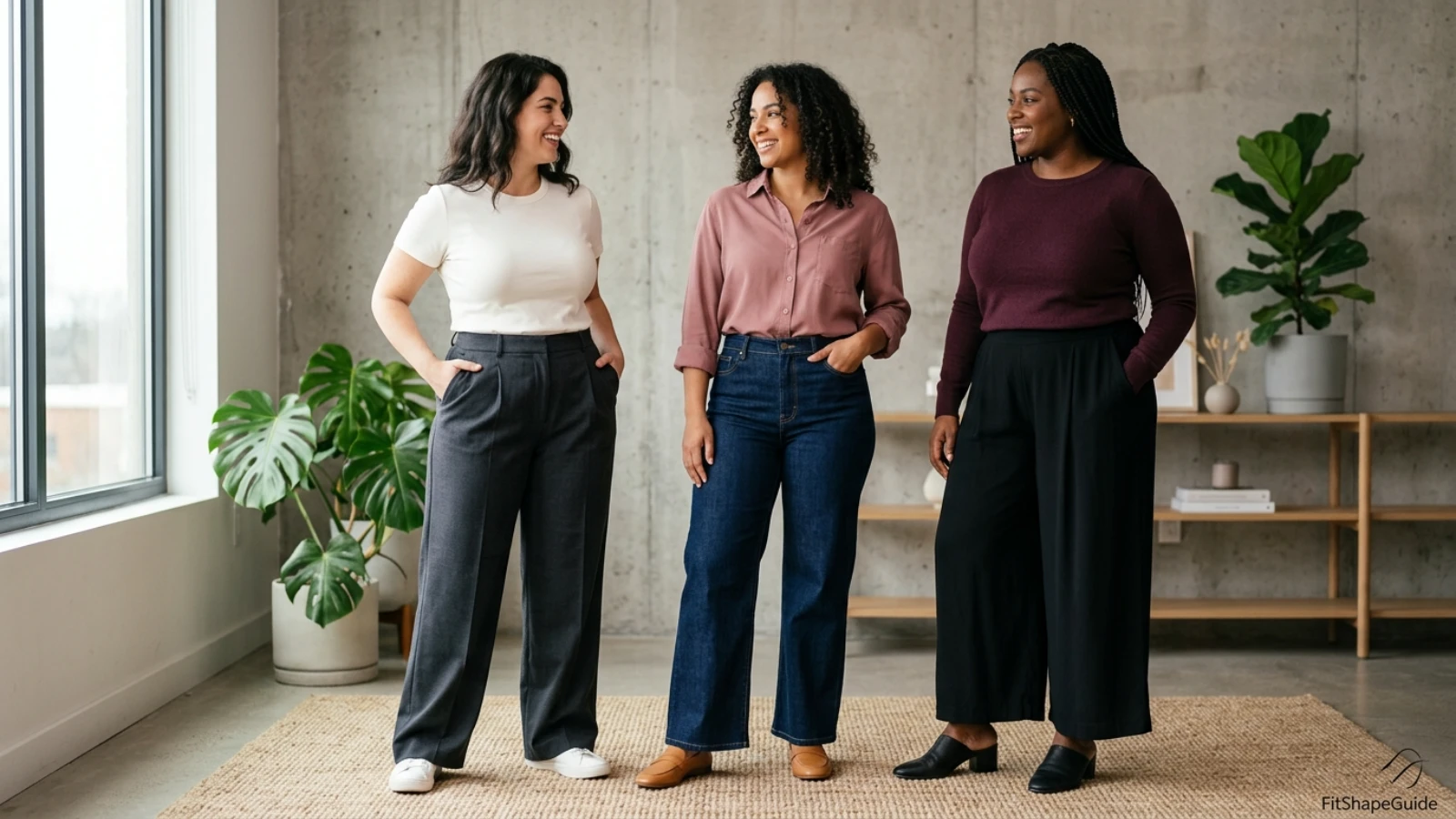
The 90-second wide-leg test
- Fasten the pants with the actual top tucked, half-tucked or untucked as planned.
- Check the waistband front, side and back before adjusting the top.
- Sit for thirty seconds, cross one leg and lift a knee as if climbing a step.
- Stand and check whether pleats close, pockets flatten and side seams return.
- Walk quickly, turn and take a long stride without holding the hem.
- Test the intended shoes and confirm the hem clears the floor on both sides.
If the leg has generous volume but the front rise, hip or waistband pulls, the pants are not functionally wide where your movement begins.
How wide-leg pants should actually fit
The term “wide leg” describes the lower silhouette, but most fit problems begin at the waist, rise, seat or upper thigh. The leg may fall straight from the hip, widen below it or open gradually from the thigh. Those constructions behave differently. A pant that is close through the hip and dramatically wide below creates a tailored column; a cut that is roomy from the seat creates more swing; a palazzo may use both width and fluid cloth.
Measure the natural or preferred waist, fullest hip, rise and inseam. The official Lands’ End pants measurement guide separates waist, hip, rise and inseam and explains the body path used for rise. These are different variables: two pants can share a waist size but feel completely different because one has more seat depth or a shorter front rise.
Evaluate the pants independently from the bust first. Then assess the outfit connection. A waistband near the lower ribcage may interact with the bra band, a tucked top or seated torso; a mid rise changes the visible top length; a low rise may require a longer top. The body does not need to be divided according to a formula. The construction simply needs to remain comfortable and intentional.
The strongest wide-leg pants and a large bust outfit has four stable lines: a waistband that does not roll, a front rise without whiskers or vertical strain, side seams that hang close to vertical, and hems that move without tangling. Once those work, color, top length and shoe can alter the visual proportion.
| Fit area | What good fit looks like | Warning sign | Better construction response |
|---|---|---|---|
| Waistband | Level, secure and comfortable while seated | Rolling, gaping, digging or fly strain | Contoured band, correct waist room, internal elastic or adjuster |
| Front/back rise | Follows torso without drag or excess pooling | Crotch pull, wedging, long fold or waistband tilt | Different rise depth, curvy cut or altered balance |
| Hip/seat | Pockets and seams remain calm | Pocket flare, horizontal lines or pleats opening | More hip/seat ease or better waist-to-hip proportion |
| Thigh | Allows full stride before leg volume begins | Fabric grips high thigh and pulls side seam | Width starting higher, deeper pleat or more thigh ease |
| Hem | Clears floor and shoes through a full step | Dragging, catching, kicking inward or uneven break | Correct inseam, alteration or cropped length |
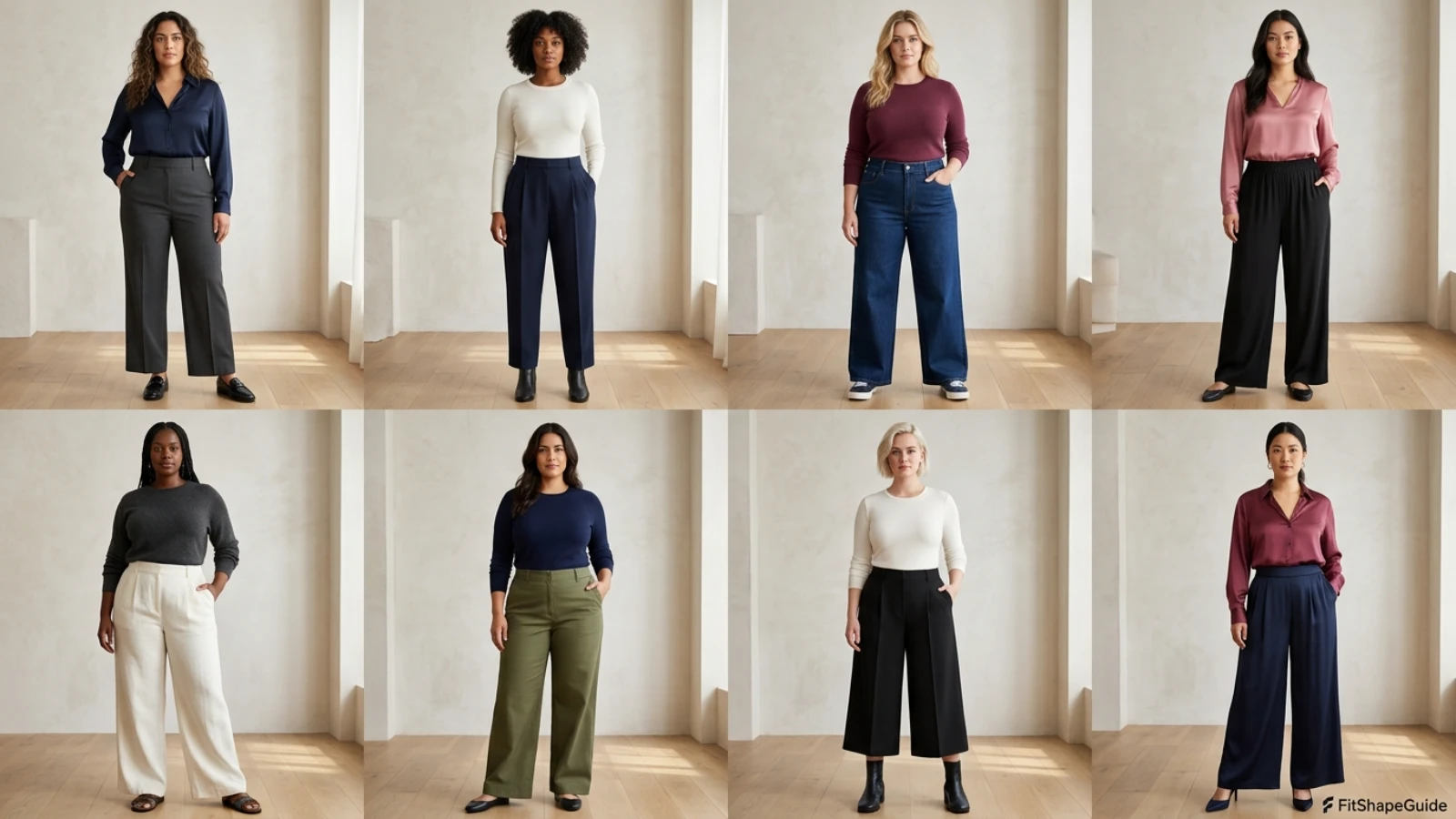
Eight wide-leg pant styles compared
Flat-front tailored trousers
Best for: office, occasion and polished casual outfits. A contoured waistband, darts and a clean front reduce bulk while the leg falls from the hip.
Trade-off: a flat front offers less expansion than pleats. The rise and hip must already have enough room for sitting and pockets.
Single-pleat wide trousers
Best for: controlled front ease and movement. One inward or outward pleat can open during sitting without creating the volume of multiple pleats.
Trade-off: if the hip or rise is short, the pleat stays open while standing and reads as strain rather than design.
Wide-leg jeans
Best for: everyday structure and a defined denim line. Rigid denim holds the silhouette; stretch denim can improve movement at waist and hip.
Trade-off: heavy cloth, pockets, fly and waistband layers add bulk. Rigid styles need real ease rather than promised break-in.
Pull-on wide-leg pants
Best for: travel, long sitting and flexible waist comfort. A wide elastic or hybrid waistband can distribute pressure more evenly.
Trade-off: weak elastic may roll or descend under pocket weight, and gathered waists add volume under a tucked top.
High-rise wide-leg pants
Best for: short or tucked tops and a clear waistline. A high contoured band can stabilize the upper pant and allow a long vertical leg.
Trade-off: seated comfort is less forgiving when the band reaches the lower ribcage. Height alone does not predict whether the rise works.
Mid-rise wide-leg pants
Best for: versatile top lengths and wearers who prefer the waistband below the natural waist. Mid rise can reduce interaction with the bra band.
Trade-off: tops require more length for a stable tuck, and a straight waistband may gap if waist and hip differ substantially.
Cropped wide legs or culottes
Best for: visible footwear, warm weather and easier floor clearance. The crop creates a clear endpoint without a full-length hem alteration.
Trade-off: an awkward crop at the widest calf can feel visually or physically heavy; exact length matters more than the style name.
Fluid palazzo pants
Best for: airflow, movement and evening or resort styling. Fluid fabric can fall from the high hip without a stiff outline.
Trade-off: slippery or lightweight cloth may show pocket bags, cling with static, become sheer or catch around shoes in wind.
| Style | Upper fit structure | Movement | Best top relationship | Main trade-off |
|---|---|---|---|---|
| Flat-front tailored | High | Depends on rise/hip ease | Shaped tuck or waist-length top | Less expansion at front |
| Single pleat | Medium–high | Good when pleat stays closed standing | Smooth tuck or fine knit | Pleat exposes strain |
| Wide-leg denim | High | Moderate to good | Tee, shirt, bodysuit or short knit | Weight and bulk |
| Pull-on | Low–medium | High | Untucked, front tuck or thin full tuck | Elastic roll/gathering |
| High rise | High | Depends on seated band | Tucked or cropped/waist length | Ribcage pressure |
| Mid rise | Medium | Often versatile | Longer tuck or shaped untucked top | Possible back gap |
| Cropped/culotte | Varies | Good floor clearance | Compact or tucked top | Length must be deliberate |
| Palazzo | Low–medium | High but weather-sensitive | Secure fitted or fluid coordinated top | Cling, sheerness, shoe catching |
Rise, waistband and waist-to-hip proportion
A high rise can create a long leg line, but its functional test is placement. The waistband should sit where its shape matches the torso. A straight band at the natural waist may gape at the back; a sharply contoured band may fit the waist but cut at the side if the rise is too short. A mid rise may feel steadier during sitting even if it creates a shorter visible leg. There is no universal best rise for a larger bust.
Measure where the waistband actually lands, not where a product label implies. The official Levi’s women’s jeans guide shows wide-leg fits across rise and silhouette categories, which reinforces that “wide leg” is not a single standard pattern. Compare published front rise and back rise when available, and remember that the same number sits differently depending on torso and seat depth.
Waist-to-hip ratio affects whether sizing up works. If the pants fit the hip but gap at the waist, a curvy cut, adjustable tab, elastic back section or alteration may be more useful than a belt. If the waist fits but pockets flare, the hip or front rise needs attention. Tightening a belt can close a gap while increasing diagonal pull from the hip.
Sit with the intended top inside the waistband. A wide structured band distributes pressure but covers more vertical space; a narrow band flexes more but can roll. Internal hook-and-bar closures keep a tailored front clean, yet they must remain aligned. A button and fly add more bulk but may be easier to replace or adjust. Choose by wear, not appearance alone.
Pleats, darts, fly and pocket placement
Pleats are functional folds. They should lie closed or softly relaxed while standing, then open to provide space when sitting and walking. Inward-facing pleats direct fullness toward the fly; outward-facing pleats send it toward the hip. One is not automatically better. The useful option is the one whose fold stays controlled above the fullest hip.
Multiple deep pleats add significant fabric at the front. This can create beautiful drape in a fluid cloth but bulk in a crisp or thick one. If a tucked top is planned, combine the two layers before judging. A flat front with darts may be calmer under a belt or jacket; a single pleat may be more comfortable for long sitting. Trade-off, not a body rule, determines the choice.
Slant pockets often flare when the hip or front rise is too tight. Put both hands inside, remove them and observe whether the openings return. Pocket bags should not show through pale or fluid fabric. Welt pockets create a flatter line but may offer less storage. Cargo pockets add weight and width where placed; verify that a loaded phone does not pull the side seam or make a lightweight leg swing unevenly.
The fly should remain vertical without strain lines. A long fly can be useful on a high rise, but it adds structure. Side zips create a smooth front and suit fluid trousers; their trade-off is less adjustability and possible pressure at the side waist. Pull-on designs remove the fly but must stretch over the hip without permanently weakening the waistband.
Fabric weight, drape, stretch and opacity
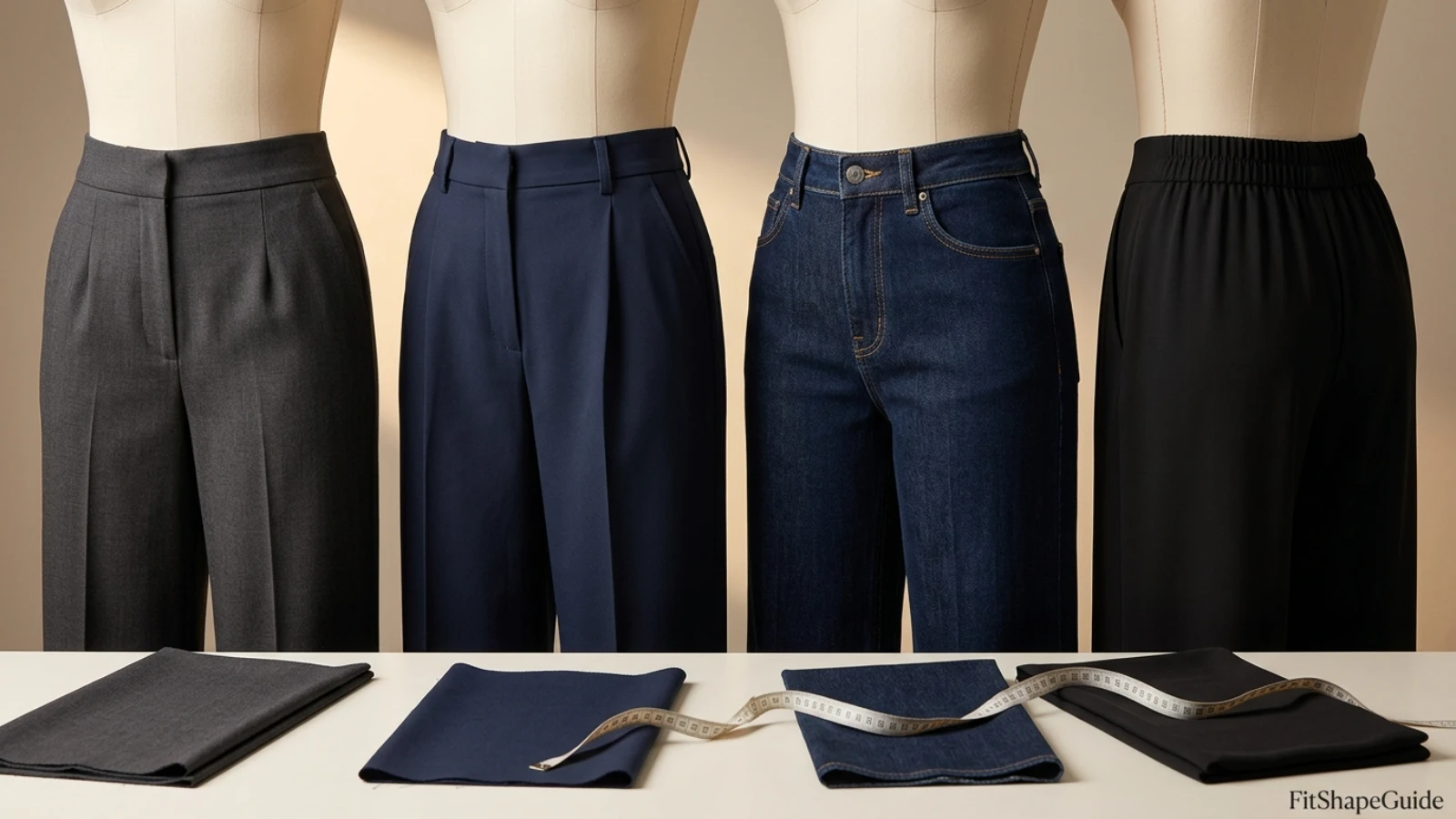
Drape is how fabric hangs under its own weight and responds to movement. It depends on more than fiber name: yarn, weave, weight, thickness, finishing and stretch all matter. CottonWorks describes fabric physics through thickness, weight, bending and stretching in its digital fabric overview. For shoppers, this explains why two “polyester trousers” or two cotton pants can fall completely differently.
Medium-weight woven fabric is a versatile starting point because it can skim the hip while keeping a clear leg. Crisp twill holds pleats and seams but may stand away from the body. Fluid crepe, viscose or lyocell-like drapes move easily but may cling with static. Linen and linen blends provide texture and airflow, though they crease and may become more transparent in pale colors. Wool-blend suiting hangs well but requires care and climate judgment.
Stretch improves sitting and recovery only when the pattern already fits. Too much stretch in a heavy wide leg can cause the waistband to descend under fabric weight. Rigid denim preserves shape but needs adequate hip and thigh ease. Soft stretch denim gives movement yet can bag at the seat or knee if recovery is weak. Stand after sitting without smoothing the pants and observe whether they resettle.
Hold light fabric toward daylight and inspect pocket bags, seams and underlayers. Wide legs use more material, so opacity can change as panels overlap during a step. Linings improve opacity and hang but add heat and friction. Partial lining to the upper thigh can stabilize the hip while preserving lower-leg movement; full lining is more polished but may reduce airflow.
Full length, ankle length and shoe clearance
Full-length wide pants can skim the top of the shoe or create a small controlled break, depending on fabric and style. The back hem must clear the ground through a normal stride. Check both feet because posture and leg length can differ. A heavy hem helps fluid cloth hang, while a very deep stiff hem can kick outward.
Ankle-length wide pants reveal the shoe and reduce floor contact. The endpoint should look intentional; a pair merely too short for full length is not always a successful crop. Culottes generally end higher and need enough width to separate from a straight cropped pant. Try the pants with the exact shoe height before alteration.
Shoe choice is practical first. A broad stable sole gives a wide hem a surface to clear; a narrow heel can catch inside very fluid fabric. Sneakers, loafers, boots, sandals and heels can all work if the hem moves freely. Walk up and down stairs while holding a rail and note whether the front catches. In rain or on escalators, extra-long hems are a safety and care issue, not merely a styling preference.
Also test bags and pockets before finalizing length. A crossbody strap can press a high waistband, while a loaded side pocket can pull one fluid leg closer to the shoe. Walk with the everyday bag, phone and keys you expect to carry. If the hem becomes uneven only after pockets are loaded, the fabric may be too light for that storage plan. Use a bag or more stable pocket construction instead of shortening one side to compensate for temporary weight.
Alter only after laundering according to the care label and confirming rise placement. Shortening from the bottom is usually straightforward, but it changes the leg-opening circumference and may remove original finishes. If the leg has a vent, cuff, border, pleat or print placement, alteration is more complex. Petite and tall options can preserve proportions better than large hem changes.
Tops and jackets with wide-leg pants and a large bust
A shaped top that meets or enters the waistband makes the pant construction easy to read. This does not mean the top must be tight. Bust darts, princess seams, a controlled knit or a secure wrap can provide room through the bust and less excess at the hem. Our tuckable-tops guide explains usable front length and waistband bulk; the same principles apply to trousers.
Short untucked tops can work when the hem meets the waistband or ends at a deliberate point above it. Check reach coverage and side length. Long loose tunics over a wide leg create volume across more of the outfit, which can be elegant in fluid coordinated fabrics but cumbersome in stiff layers. The decision is about movement and desired line, not a command to define the waist.
For work, pair tailored wide trousers with a non-gape shirt, shell, fine knit or stable wrap top. The ideas in our work pants and top pairings guide help connect neckline, sleeve and waistband. Where denim is permitted, our business-casual guide covers dress-code and layering choices.
Outer layers should relate to the rise and pocket position. A cropped jacket can expose the full waistband; a hip-length blazer may meet the widest upper trouser point; a long coat creates a separate vertical line. Structure does not need to be duplicated everywhere. A crisp pant can pair with a soft knit, while fluid palazzos may benefit from a stable shoulder or defined neckline. Use the construction framework in our structured coats guide for cooler-weather layers.

Shopping, alterations and a two-pair capsule
Record preferred waist placement, waist, fullest hip, rise, upper thigh and inseam. Measure a successful pair flat: waistband, front rise, back rise, hip at the appropriate depth, thigh, knee, leg opening and inseam. Compare garment measurements when available; body charts alone do not reveal how much ease or leg width the pattern includes.
Product images should include front, side and back views, plus seated or walking imagery where possible. Zoom in on waistband contour, darts, pleats, pocket openings, fly, side seam and hem. Confirm whether “wide” starts at the hip or below the thigh. Check fabric composition, lining, care and whether the inseam varies by size or length option.
Reviews can suggest patterns, but prioritize comments that include measurements, chosen size, rise behavior and specific construction observations. “Flattering” is subjective; “front pockets stayed open while standing” is diagnostic. Never infer fit from model height alone. Return policy matters when several rise or length options must be compared.
A useful two-pair capsule separates roles. One tailored flat-front or single-pleat pair in charcoal, navy or black covers work and polished outfits. One wide-leg jean, pull-on trouser or fluid palazzo covers casual, travel or warm-weather wear. Choose different fabric and waistband behavior so the second pair solves a new need rather than repeating the first.
If denim is the priority, compare the leg and rise choices in our best jeans guide. For high waistbands specifically, the high-waisted jeans guide explains seated comfort and torso interaction. These links support the trouser decision without turning proportion into a rigid rule.
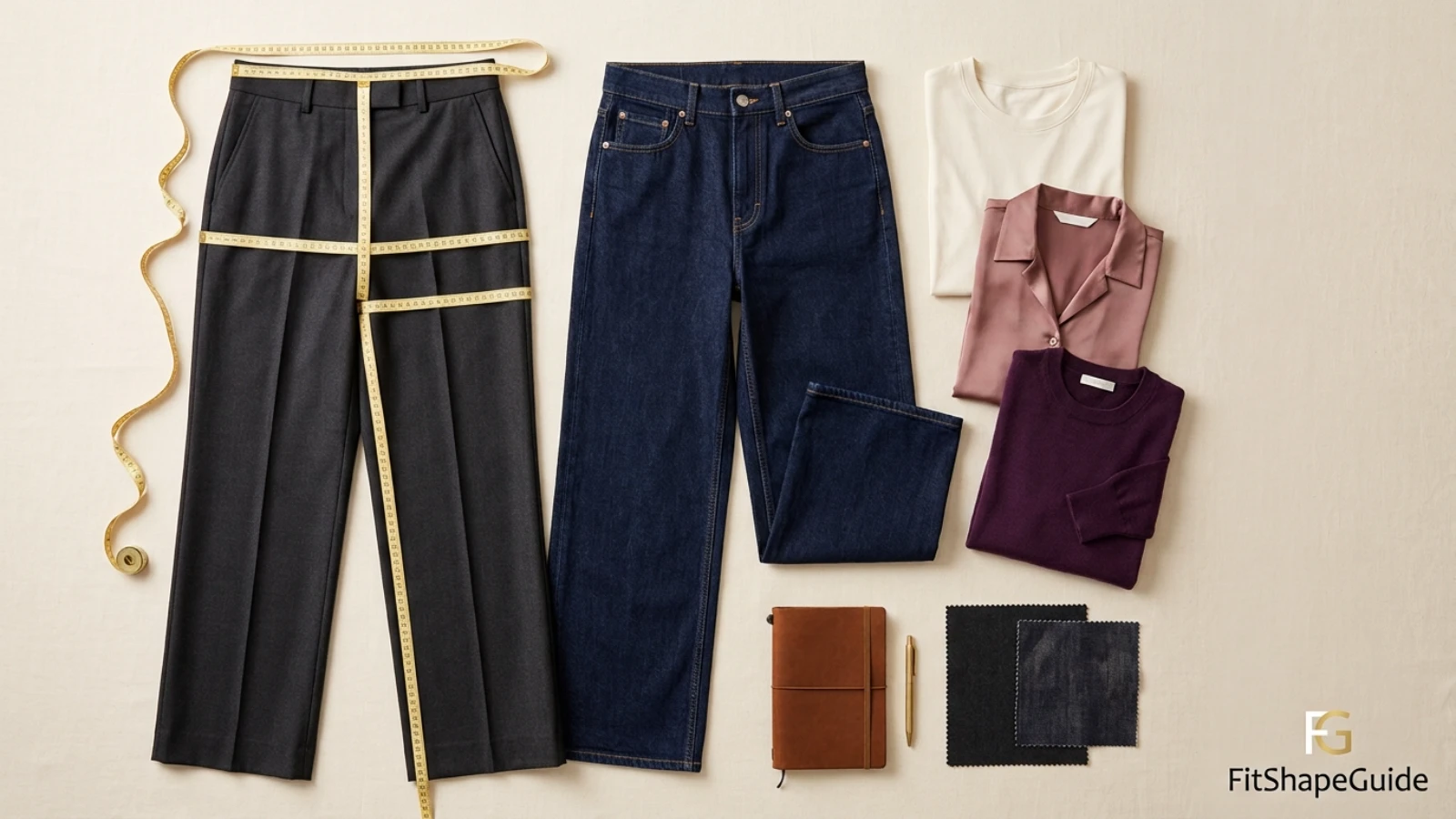
Common wide-leg fit problems and fixes
| What you see or feel | Likely cause | First test | Better solution |
|---|---|---|---|
| Waist gaps at back | Waist-to-hip proportion mismatch | Pin a temporary back reduction | Curvy cut, contoured band, adjuster or alteration |
| Waistband digs while seated | Too little waist/rise room or overly rigid high band | Sit with top untucked | Different rise, more room, flexible band or thinner tuck |
| Pleats stay open standing | Hip/front rise strain or too much pleat volume | Size up and compare upper fit | More hip ease, different rise or flat/single-pleat front |
| Pockets flare | Hip/thigh strain or pocket angle | Empty pockets and release waistband | More hip ease, flatter pocket or altered opening |
| Fabric pulls at crotch | Short front/back rise or insufficient seat depth | Compare standing and seated waistband tilt | Longer/deeper rise or better pattern balance |
| Leg grabs upper thigh | Width begins too low | Take a long stride and observe seam | Roomier high thigh or width starting at hip |
| Wide leg looks collapsed | Fabric too soft/light for intended line | Compare with a structured sample | More body, heavier hem or narrower volume |
| Hem catches shoes | Too long, too fluid or incompatible footwear | Walk and turn in exact shoes | Alter length, choose crop or safer shoe/hem pairing |
| Elastic waist rolls | Band too narrow/soft or under excess tension | Try untucked and unloaded pockets | Wider stable elastic, correct size or structured band |
| Side seams swing forward | Front/back balance or thigh pull | Mark waistband seam points and sit | Different rise balance, seat depth or thigh ease |
Do not size up solely to obtain a wider hem. A larger size changes the waist, rise, hip and pocket position too. Select the pattern whose upper block fits, then choose the intended leg opening or alteration.
Fit the upper block before choosing the volume
The best wide-leg pants and a large bust pairing starts with a stable waistband, compatible rise, adequate hip and thigh room, controlled pleats and fabric that supports the intended drape. Flat-front trousers are the most versatile polished option; single pleats add movement; denim adds structure; pull-on styles prioritize comfort; crops simplify clearance; and palazzos trade structure for flow.
Test the pants with the real top and shoes, then sit, walk, turn and climb a step. Pleats should close again, pockets should settle, side seams should return and hems should clear the floor. Once the construction works, use top length, color and layers to create the visual line you prefer—without requiring the pants to “fix” the body.
Frequently asked questions
Do wide-leg pants work with a large bust?
Yes. Choose a stable waistband, compatible rise, enough hip and thigh room, controlled front details and a fabric whose drape suits the intended outfit.
What rise is best for wide-leg pants and a large bust?
The best rise is the one that stays comfortable and level while sitting and moving. High rise defines the waist; mid rise may reduce ribcage interaction and suit longer tops.
What tops look good with wide-leg pants?
Shaped tees, secure shells, non-gape shirts, stable wrap tops and fine knits work well tucked or at waist length, provided they fit the bust without strain.
Should wide-leg pants have pleats?
Pleats are useful when they stay closed or softly relaxed while standing and open for movement. If they remain spread, the hip, rise or pleat construction may be incompatible.
How long should wide-leg pants be?
Full-length hems should clear the floor and shoes during a normal stride. Cropped lengths should end deliberately and allow easy movement without appearing accidentally short.
Are wide-leg jeans or trousers easier to wear?
Wide-leg jeans provide structure but add weight and bulk; trousers usually drape more fluidly but may show pockets, cling or require careful opacity checks.
How do I stop wide-leg pant pockets from flaring?
Check hip and front-rise room first, empty the pockets and confirm the waistband is not over-tightened. A different pocket angle, curvy cut or flatter pocket may help.
How should I test wide-leg pants before buying?
Wear the planned top and shoes, sit, walk quickly, turn, lift a knee, use the pockets and confirm that waistband, pleats, seams and hems return to position.
Editorial standards
This guide prioritizes garment construction, measurable fit, movement and explicit trade-offs. It does not treat a large bust as a flaw, promise that one rise suits every reader or claim wide legs must “balance” a body. Measurement and textile concepts were checked against official resources; exact care instructions remain those on each garment’s sewn-in label.
Before publishing a commercial recommendation, FitShapeGuide should verify a direct live listing, seller, exact style/color, current size and length range, garment measurements, intended rise, waistband, closure, darts/pleats, pockets, hip/thigh ease, inseam, leg opening, fiber content, stretch/recovery, opacity, lining, care, stock and return policy. Any material connection should be disclosed clearly and near the recommendation in line with the FTC endorsement guidance.
3 Comments