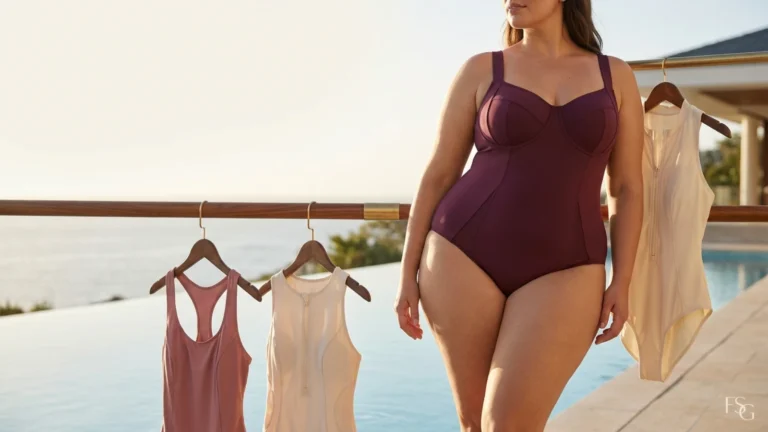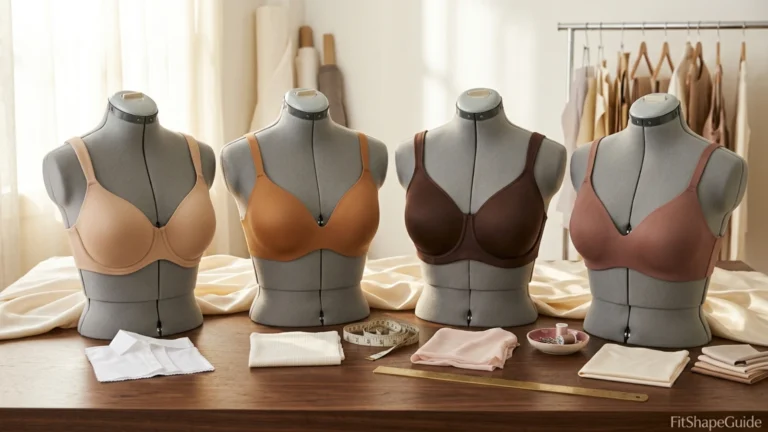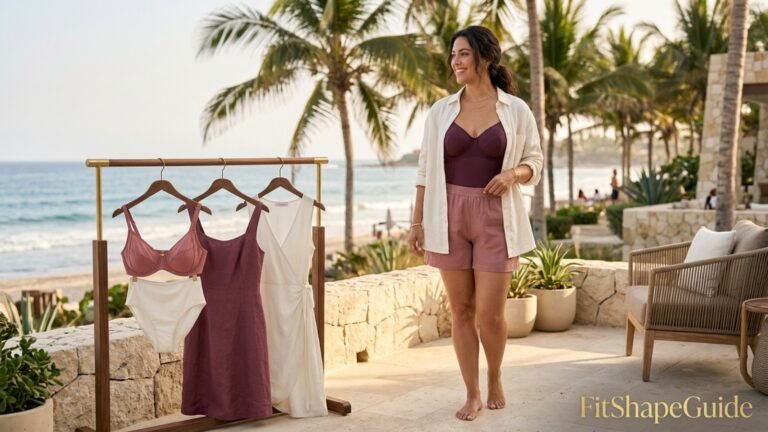
Best Plus-Size Swimsuits for a Large Bust
A construction-first guide to plus-size swimwear that fits the body and the bust independently—covering bra-sized cups, underwire and wireless support, adjustable straps, torso length, side coverage, bottoms and practical wet-fit testing.
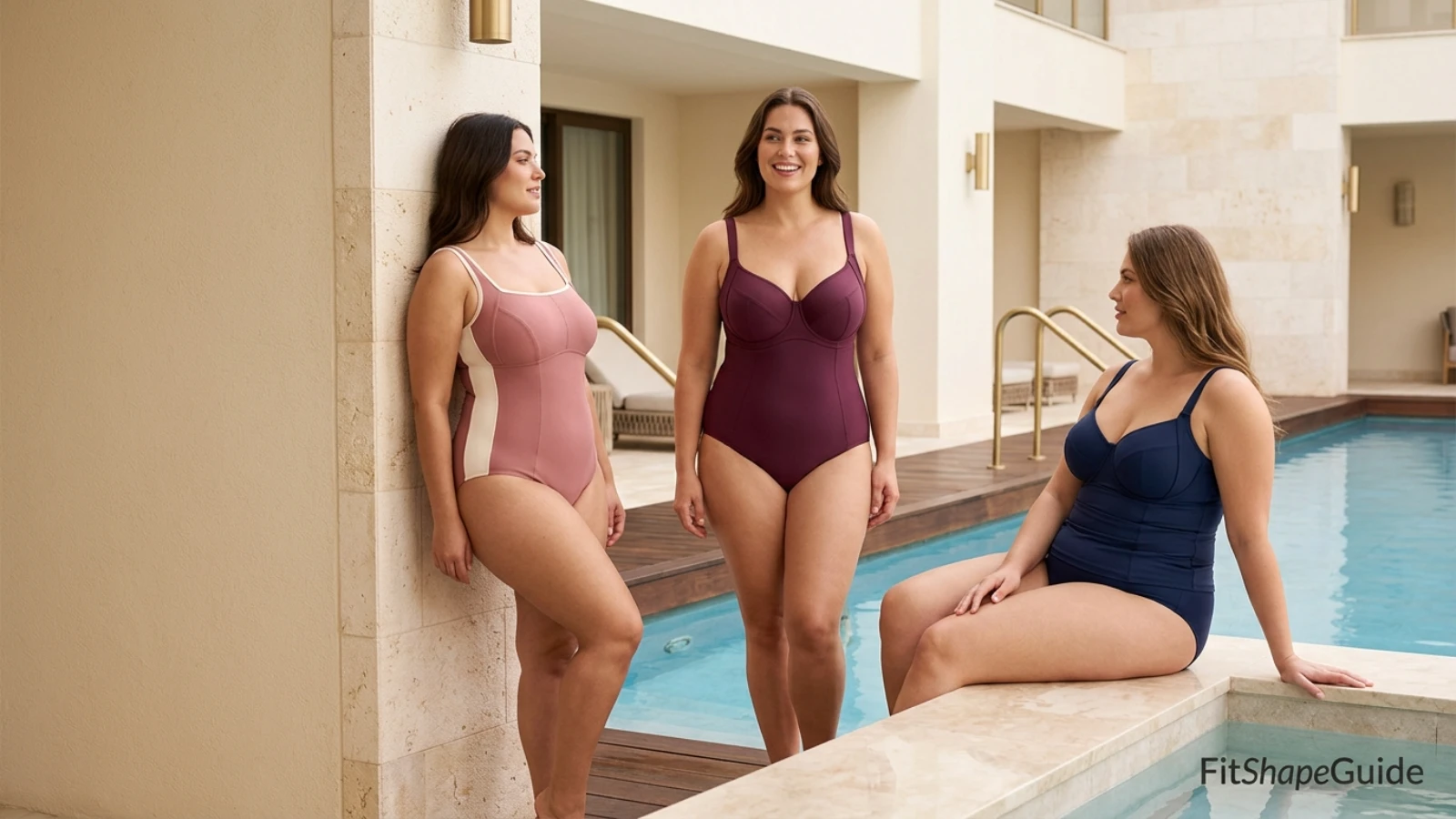
The 90-second plus-size swimsuit test
- Fit the bust first: settle all breast tissue inside the cup or support area.
- Check the underbust: the band or elastic should remain level and comfortable.
- Check torso length: shoulder straps and leg openings should not pull against each other.
- Sit and bend: the suit should move without rolling sharply at the waist or digging into the groin.
- Raise both arms: neckline and cups should stay secure.
- Repeat wet: support, lining and fabric should recover after swimming without repeated adjustment.
What makes plus-size swimwear work for a large bust?
A plus-size swimsuit may provide more circumference through the bust, waist and hip than a smaller straight-size garment, but greater circumference does not automatically create deeper cups or stronger bust support.
That distinction matters because fuller-bust support is three-dimensional. The garment needs enough room around the bust and enough projection from front to back. A suit can measure generously around the torso while still using a shallow front panel that compresses the bust or pushes tissue toward the neckline and underarms.
The strongest plus-size fuller-bust swimwear handles these requirements through deliberate cup shaping, a stable lower anchor, supportive side and back construction, adjustable straps and appropriate body length.
Fit the most construction-sensitive areas first. If the bust needs cup sizing, solve that before judging waist compression. If the one-piece body consistently pulls from shoulders to crotch, solve torso length before shortening straps. If the swim top fits but the bottom does not, use separates rather than compromising both.
| Swimsuit construction | Why it can work | Best use | Main trade-off |
|---|---|---|---|
| Bra-sized underwire one-piece | Separates cup support from body size | Pool, beach and general swimming | Torso still needs to match |
| Seamed wireless one-piece | Creates projection without wire | Comfort-focused swimming | Needs firm underbust anchoring |
| Cup-sized tankini | Top and bottom can be sized independently | Flexible coverage and varied proportions | Outer tank can float in water |
| Underwire bikini + separate bottoms | Maximum sizing independence | Beach and pool use | Less torso coverage if that is desired |
| High-neck supportive one-piece | More neckline containment | Active swimming | More coverage does not replace cup depth |
| Fixed-wrap swimsuit | Diagonal front accommodates projection | Resort and relaxed swimming | Overlap must remain secure |
| Adjustable-side tankini | Torso length can be tuned | Different torso and bottom rises | Wet fabric may become heavier |
| Long-torso supportive one-piece | Reduces vertical shoulder and leg tension | Longer body-girth proportions | Too much length creates wrinkles |
Best plus-size swimsuit styles for a large bust
Bra-sized underwire one-piece
A band-and-cup system gives the bust its own fit structure inside the swimsuit. Concealed wire, seamed or molded cups and supportive side wings can provide bra-like control while the outer body fits the waist and hip.
Trade-off: a correct cup size does not automatically fix one-piece torso length.
Seamed wireless one-piece
Multi-part wireless cups can create projection without underwire and may feel softer for long pool or resort days.
Trade-off: the band or shelf underneath needs enough firmness to prevent the straps taking over.
Underwire tankini
A bra-sized tankini separates bust support from bottom sizing and gives more freedom through the waist and hip than a one-piece.
Trade-off: outer tank fabric can float or cling after leaving the water.
Full-cup bikini with high-rise briefs
Separate sizing gives the most control when bust and lower-body measurements differ significantly. A high-rise bottom can provide additional torso coverage if desired.
Trade-off: coverage between pieces is different from a one-piece or tankini.
High-neck supportive swimsuit
A higher neckline can feel secure for active swimming when the front contains enough bust projection and the shoulders remain mobile.
Trade-off: high fabric coverage alone can compress rather than support if the cups are shallow.
Fixed-wrap one-piece
A secure crossover creates diagonal shaping and can provide more adaptable front geometry than a flat panel.
Trade-off: the wrap should be structural or fixed enough to remain secure wet.
Adjustable-strap one-piece
Adjustable straps let you fine-tune upper-cup position across different torso lengths.
Trade-off: straps cannot compensate for insufficient cup depth or an unsuitable body length.
Long-torso plus-size swimsuit
A longer one-piece body can reduce shoulder strain when standard suits pull vertically despite enough width.
Trade-off: body girth must genuinely require the extra length or the suit may wrinkle and shift.
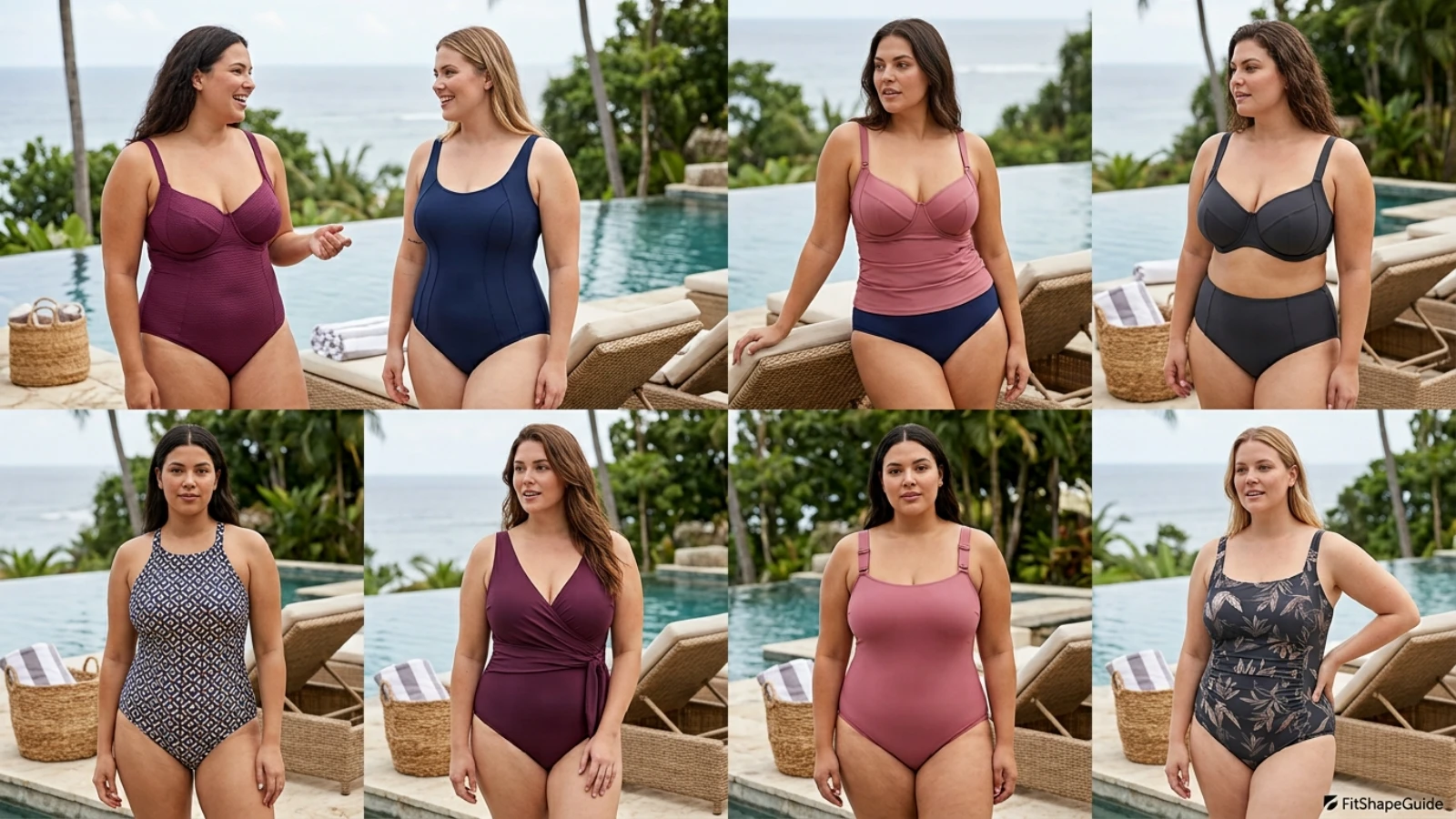
Underwire, wireless cups, bands and side support
Bra-sized cups
Bra-sized swimwear is useful when the bust requires a more precise size relationship than a generic dress-size swimsuit can provide. Start from a current well-fitting bra size where the brand recommends it, then use the exact swimwear size chart.
Underwire
Underwire should surround the breast root and remain below breast tissue. A larger body size should not be used to compensate for a wire that is too narrow or cup that is too shallow.
Seamed wireless cups
Seams can build projection and directional support without metal wire. Look for enough underbust elastic or band structure beneath the cups.
Built-in bra support
A true built-in support system may include shaped cups, an underband, lined wings and a supportive back. A thin foam insert floating inside the front is a different construction and should not automatically be treated as equivalent support.
Side wings
Side wings help transition the cup into the back. They should contain the bust without rising into the active underarm area.
Back support
A firm lined back or internal clasp can make the support system more stable. The back should remain level rather than creeping upward as the shoulder straps tighten.
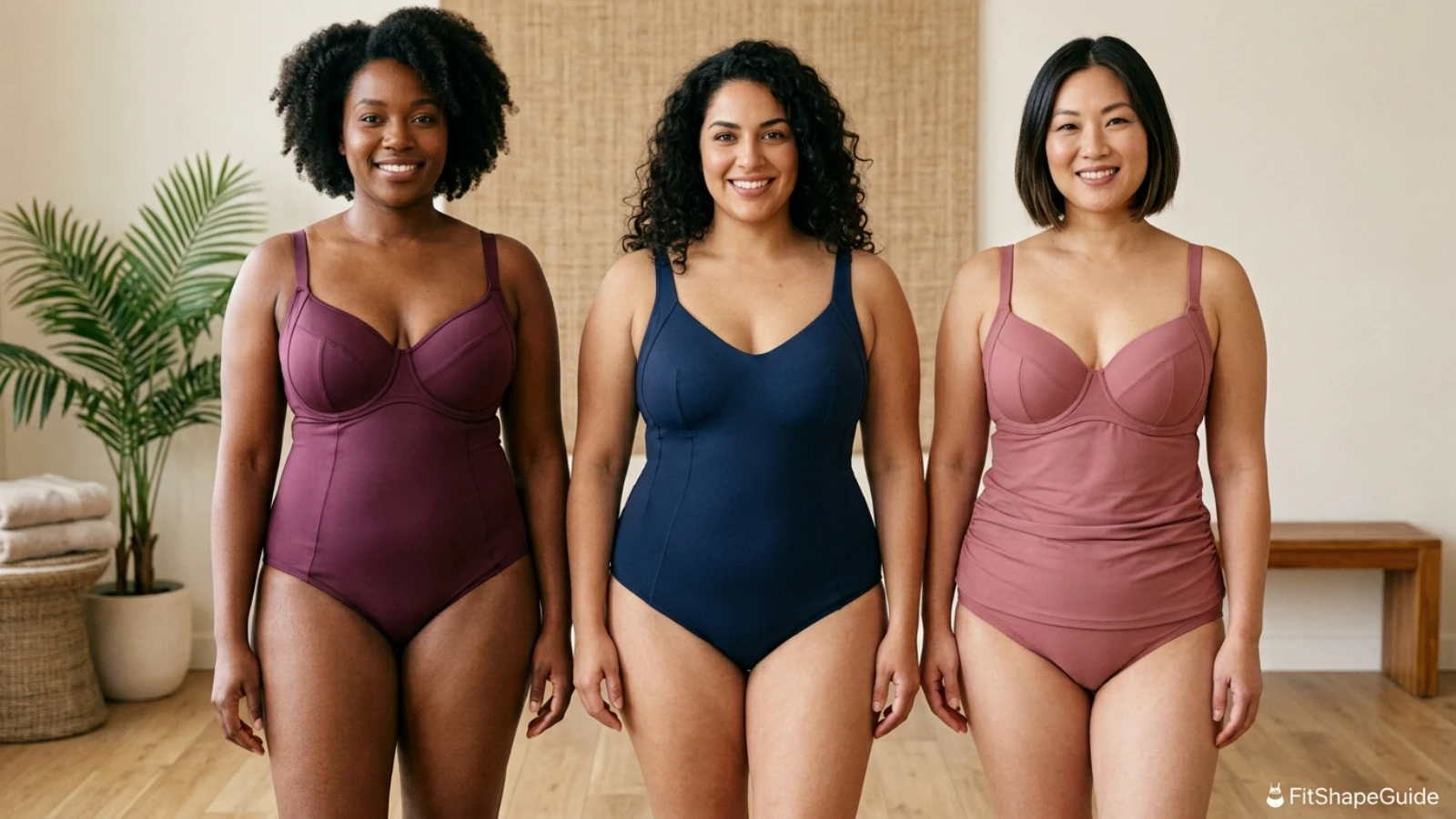
Torso length, waist, hip and leg openings
A one-piece swimsuit connects shoulders, bust, waist, hip and crotch. That creates more opportunities for proportions to conflict than in a bikini or tankini.
Full bust and torso length
Bust projection uses front length. If a suit has generous body circumference but insufficient front depth, the bust may pull the neckline downward and create shoulder strain.
Waist
The waist panel can fit close, skim or use ruching depending on preference. There is no requirement for a plus-size suit to compress the waist. The useful question is whether the fabric remains comfortable while sitting, bending and breathing.
Hip
Hip circumference should allow the body of the suit to stay in its designed position. A hip area that is too tight can pull fabric downward from the bust and upward from the leg openings simultaneously.
Leg openings
The elastic should remain secure without cutting sharply into the groin or seat. A higher or lower cut is a style and activity decision, not a body-correction rule.
Long torso
If the suit is consistently tight from shoulders to crotch while the width feels correct, look for long-torso sizing or a tankini rather than simply moving to a wider size.
Shorter torso
If the waist wrinkles and straps always need maximum shortening, a shorter body proportion may fit more predictably.
Adjustable straps, wide straps and supportive backs
Wide adjustable straps
Wider straps can spread pressure across more of the shoulder. Adjustment allows the upper cup and neckline to be positioned without assuming every wearer has the same torso length.
Narrow adjustable straps
Narrower straps can still work when the underbust band and cup construction carry enough load. Strap width alone is not a reliable support rating.
Crossback
Crossback straps can improve security for swimming and reduce slipping. They should not pull the cups inward or restrict shoulder blades.
Halter
Halter swimsuits can work when most support comes from the cup and band. If the neck must be tied very tightly to hold the bust, the configuration may become uncomfortable.
Higher supportive back
A larger back area can distribute tension and work well with fuller-bust cup systems. The cut should still allow easy arm movement.
Internal clasp
Some bra-sized swimsuits use a hidden clasp or bra-like inner back. That can help the support frame remain independent from the outer swimsuit body.
For a deeper strap-specific guide, see Best Swimsuits with Adjustable Straps for a Large Bust.
Best one-piece construction for plus size and a large bust
A one-piece can provide streamlined coverage and a simple single-garment solution. It also creates the strongest connection between bust fit and lower-body proportions.
Underwire one-piece
This is a strong starting point when defined bust support is important. Check that the underwire frame is not being pulled out of position by the swimsuit body.
Wireless full-cup one-piece
A wireless cup can provide comfortable coverage when it includes real shaping and a stable band rather than a flat front panel.
Fixed-wrap one-piece
Diagonal fronts can accommodate bust projection and create a secure neckline when the overlap is sewn or otherwise stabilized.
High-neck active one-piece
Higher coverage works well for active pool use when the armholes and shoulders stay free. More front fabric should not mean flattening the bust.
Ruched one-piece
Ruching can create flexible torso fabric, but it should not hide a support frame that is pulling or sitting incorrectly.
Long-torso one-piece
This construction deserves attention when standard suits consistently shorten over the bust or dig into shoulders and leg openings.
Plus-size tankinis and bikinis for a large bust
Separates are particularly useful when bust, waist and hip do not align within one brand’s one-piece proportions.
Bra-sized tankini
A cup-sized tankini provides structured bust support while allowing the outer torso fit to be more flexible. High-rise, standard-rise or shorts-style bottoms can then be selected separately.
Underwire bikini
An underwire bikini top provides the clearest bust-focused sizing without involving torso length. The bottom can be chosen entirely around waist, hip, rise and coverage preference.
Full-cup bikini
Fuller cup coverage can feel secure for pool and beach use without relying on a high neckline across the entire torso.
High-rise briefs
High-rise bottoms can provide additional torso coverage if desired. The waistband should remain comfortable when seated and should not roll because it is undersized.
Swim shorts
Swim shorts can be useful for additional upper-thigh coverage or activity. Check the leg opening and waistband rather than simply sizing up for looseness.
Skirted bottoms
A swim skirt can be chosen for personal style or coverage preference. The attached brief underneath still needs to fit independently.
For more tankini-specific support, see Best Underwire Tankinis for a Large Bust.
Swim fabric, lining and support panels
Stretch swim fabric
Stretch allows the suit to move over different body dimensions, but high stretch alone does not guarantee support. Recovery determines whether the fabric returns after movement and wet wear.
Support mesh
Firm mesh or lining can stabilize cups, underbands, side wings and backs. It should feel supportive without creating abrasive edges.
Double lining
Double lining can improve opacity and create more even containment. It also adds weight when wet, so strap and band support still matter.
Compression panels
Compression is optional. Some swimmers like a firmer torso feel; others prefer less pressure. A support panel should not be presented as a requirement for a plus-size body.
Chlorine resistance
Frequent pool swimmers should pay more attention to fabric durability and recovery. Follow the exact manufacturer’s care instructions and rinse pool residue after use when recommended.
Print placement
Print, color blocking and solid colors are style choices. They do not make a swimsuit more or less structurally appropriate for a large bust.
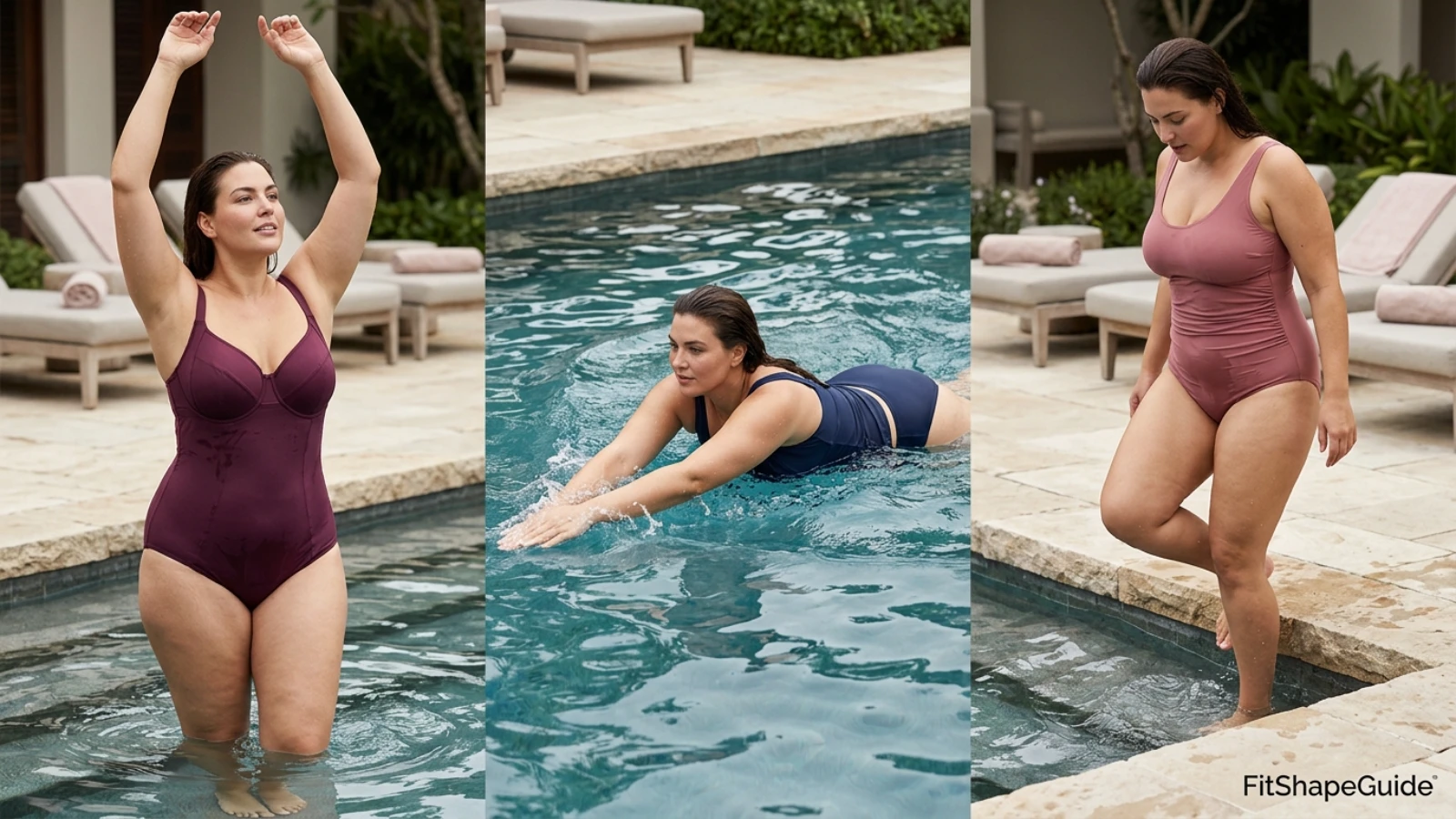
Wet-fit and real-movement tests
A dry fitting checks basic measurements. Wet testing reveals whether the swimsuit’s support and proportions remain stable after the fabric becomes heavier and more flexible.
Raise the arms
The cups and neckline should stay in place while the shoulders move. If the entire front rises, check band and torso length.
Lean forward
Check cup containment, neckline and side coverage without holding or rearranging the suit.
Walk through water
The leg openings, torso and top should remain secure as water resistance pulls against the fabric.
Swim several strokes
The goal is not zero fabric movement. The important question is whether the support frame returns predictably rather than requiring constant adjustment.
Pool exit
Step out and let water drain. Heavy wet fabric can expose a weak band or overly long outer layer that was less obvious in the dry fitting.
Sit afterward
Check the waistband or one-piece torso after swimming. Fabric should remain comfortable and not roll sharply at the waist or leg opening.
How to buy plus-size swimwear for a large bust online
A product may be available in plus sizes without offering fuller-bust cup construction, while another may offer deep cup sizes but a narrower range of body sizes. Read the actual size system rather than relying on category labels.
- Check whether the swimsuit is dress-sized or cup-sized: these solve different fit problems.
- Verify cup construction: underwire, seamed wireless, molded, full cup, shelf or compression.
- Check underbust support: look for a band, elastic, internal bra frame or lined wings.
- Inspect straps: adjustable and supportive straps make torso variation easier to accommodate.
- Check torso sizing: long-torso or adjustable-length alternatives can matter more than increasing width.
- Review waist and hip measurements: particularly for one-pieces.
- Consider separates: use independently sized tankini or bikini bottoms when top and bottom sizing conflict.
- Read fabric composition: support depends on recovery and lining, not stretch alone.
- Check activity: relaxed resort wear and lap swimming place different demands on the suit.
- Review returns: preserve hygiene liners and tags during permitted dry fitting.
Do not assume one plus size fits every plus-size body
Body proportions vary widely within every clothing-size category. Compare bust, waist, hip and torso information instead of treating the number or letter on the label as a complete description.
Do not size up only for the bust
If increasing the body size gives enough bust circumference but makes the band, torso and leg openings unstable, the swimsuit needs a different cup or front construction.
Do not size down only for compression
A smaller suit may feel firmer but can reduce cup depth, shorten the torso and increase strap or leg-opening pressure.
Use mix-and-match sizing
Tankinis and bikinis are valuable when the bust needs one size and the hips another. Independent sizing is a fit tool, not a compromise.
Verify support claims
Words such as supportive, shaping and control are not enough on their own. Look for specific features: band-and-cup sizing, underwire, cup seams, lined wings, adjustable straps, supportive backs and firm swim lining.
For a big-bust/smaller-waist proportion, compare Best Swimsuits for a Big Bust and Small Waist. For convertible strap systems, see Best Convertible Swimsuits for a Large Bust. For active pool use, compare Best Support Swimsuits for Swimming Laps for a Large Bust.
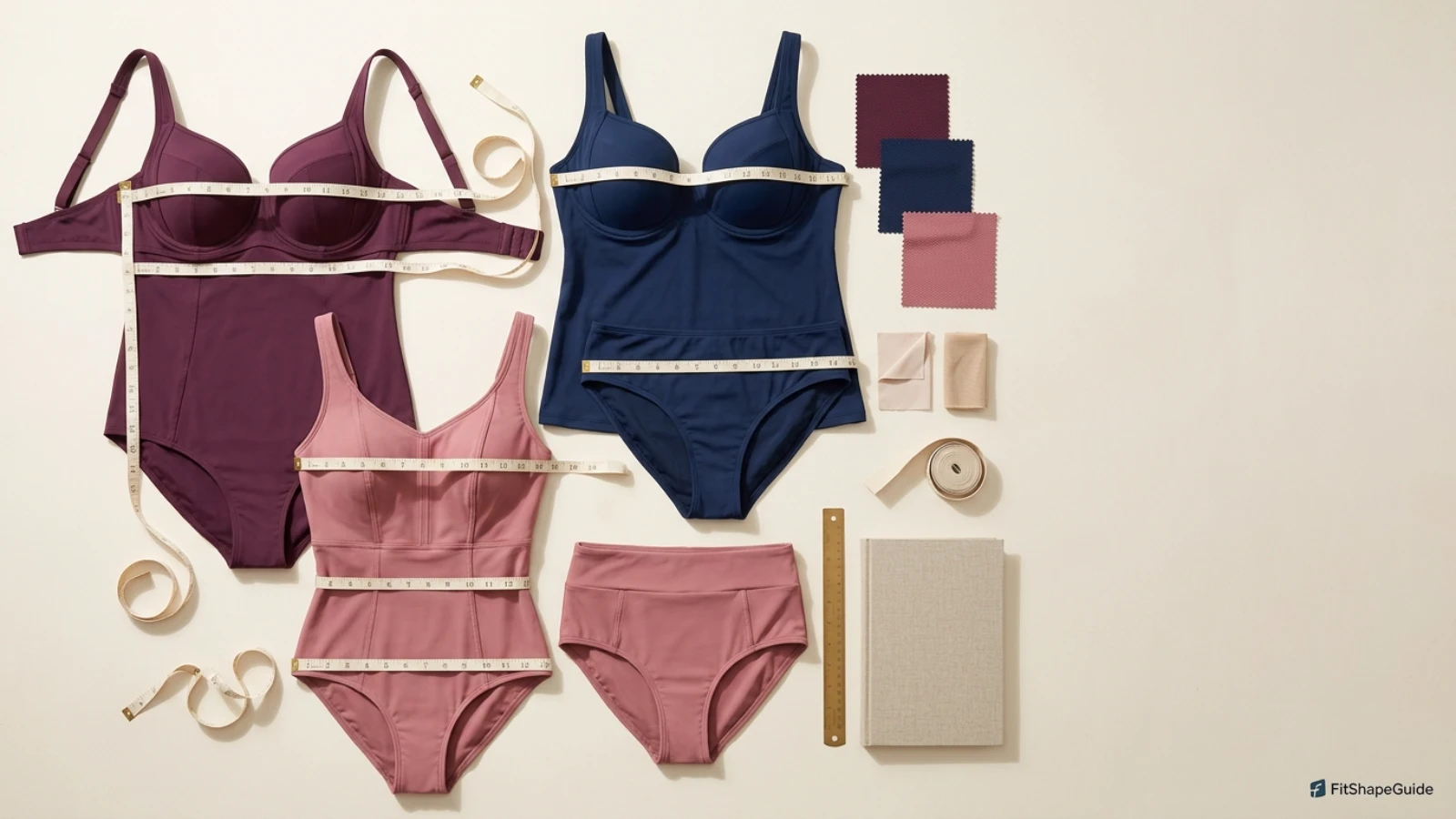
Common plus-size swimsuit fit problems
| Problem | Likely cause | Better response | Avoid |
|---|---|---|---|
| Suit body fits but bust spills | Cups too shallow or generic front | Deeper/cup-sized construction | Sizing whole suit up repeatedly |
| Bust fits but body is loose | Size increased mainly for bust room | Bra-sized suit or separates | Accepting unstable waist and legs |
| Shoulders hurt | Torso too short or straps overloaded | Longer body or better band/cup support | Loosening until neckline becomes unstable |
| Waist rolls or folds | Body length/waist proportion mismatch | Different torso cut or separates | Assuming stronger compression will fix proportion |
| Leg openings dig | Hip/seat room too small or body too short | More lower-body room or different cut | Sizing down for tighter bust support |
| Underwire sits on tissue | Wire too narrow or cup too small | Different cup/wire geometry | Using larger body size only |
| Back rides up | Band/support too loose | Stronger lower anchor | Tightening straps harder |
| Tankini floats dramatically | Outer torso too loose for activity | Closer or adjustable-side tank | Expecting all tankinis to stay streamlined |
| One-piece pulls front neckline down | Insufficient torso/front length | Long-torso or deeper-front design | Shortening straps |
| Suit feels supportive only when painfully tight | Support coming from compression instead of structure | Better cups, band and fit proportions | Equating discomfort with support |
The largest bust size still feels shallow
The brand may be increasing circumference without substantially changing projection. Look for a dedicated fuller-bust or cup-sized swimwear pattern.
The one-piece never fits top and bottom together
A tankini or bikini may be the cleaner solution. There is no requirement to make one connected garment work when independent sizing fits better.
The plus-size suit feels too compressive
Plus-size swimwear does not need to be control wear. Choose a less compressive body with stronger targeted bust support if that better matches your comfort.
The swimsuit fits beautifully dry but becomes loose in water
The fabric may have weak wet recovery or the initial dry fit may have been too loose. Evaluate the exact textile and support structure rather than automatically sizing down.
Final verdict
The best plus-size swimsuits for a large bust do not treat “plus size” as a substitute for bust engineering. Start with enough cup depth, a stable underbust anchor, supportive sides and straps, then make sure the swimsuit body matches your torso, waist, hip and preferred leg cut.
When one-piece proportions conflict, use independently sized tankinis or bikinis instead of compromising both halves. The final test happens wet: bust support, neckline, torso and bottoms should all remain predictable without painful compression or repeated adjustment.
Frequently asked questions
What is the best plus-size swimsuit for a large bust?
A bra-sized underwire or well-shaped wireless swimsuit with stable underbust support, adjustable straps and enough torso room is one of the strongest starting points.
Are plus-size swimsuits automatically better for large busts?
No. Plus-size body sizing and fuller-bust cup construction are separate. A suit can offer more body circumference while still using shallow cups.
Should I buy a bra-sized swimsuit?
Bra-sized swimwear can be particularly useful when the bust requires different proportions from the waist and hip. Use the brand’s exact swimwear size chart.
Are underwire swimsuits good for a plus-size large bust?
They can be excellent when the wire follows the breast root, the cups have enough depth and the band remains stable.
Are tankinis good for plus-size women with a large bust?
Yes. Cup-sized tankinis allow the bust-supporting top and swim bottoms to be selected more independently and can simplify proportion differences.
Should I size up for my bust?
Only if the resulting torso, waist, hip and leg openings still fit. If sizing up mainly fixes the bust while destabilizing everything else, look for deeper cups or cup sizing.
Do I need tummy-control swimwear?
No. Compression is a personal preference, not a requirement for a plus-size body. Prioritize comfort, support and the activity you plan to do.
How do I test a plus-size swimsuit?
Fit the bust, underband, torso, waist and hip dry first. Then evaluate arm movement, sitting and appropriate wet movement to confirm the suit stays stable.
Editorial and verification standards
This guide evaluates plus-size fuller-bust swimwear through cup sizing, cup depth, underwire or wireless support, underbust anchoring, side wings, straps, back construction, torso length, waist and hip fit, leg openings, separates, lining, fabric recovery and wet movement.
“Plus size” is treated as a clothing-size category rather than a complete description of body proportions. The guide does not assume that any plus-size body needs compression, shaping or visual correction.
Before publishing a commercial recommendation, FitShapeGuide should verify the exact live seller, swimsuit, style and color, body-size range, cup-size range where applicable, cup construction, wire, underband, side wings, straps, back design, torso options, waist and hip measurements, leg cut, shell and lining composition, care, current availability and return conditions.
No ASIN, price, rating, review count, coupon, stock claim or delivery promise should be published unless directly verified. Affiliate disclosure should remain clearly visible close to commercial recommendations.