Best Convertible Swimsuits for a Large Bust
A construction-first guide to multiway swimsuits that switch between straight, crossed, halter or strapless configurations without asking detachable straps to replace the cups, underband and side support a fuller bust actually needs.
The 90-second convertible-swimsuit test
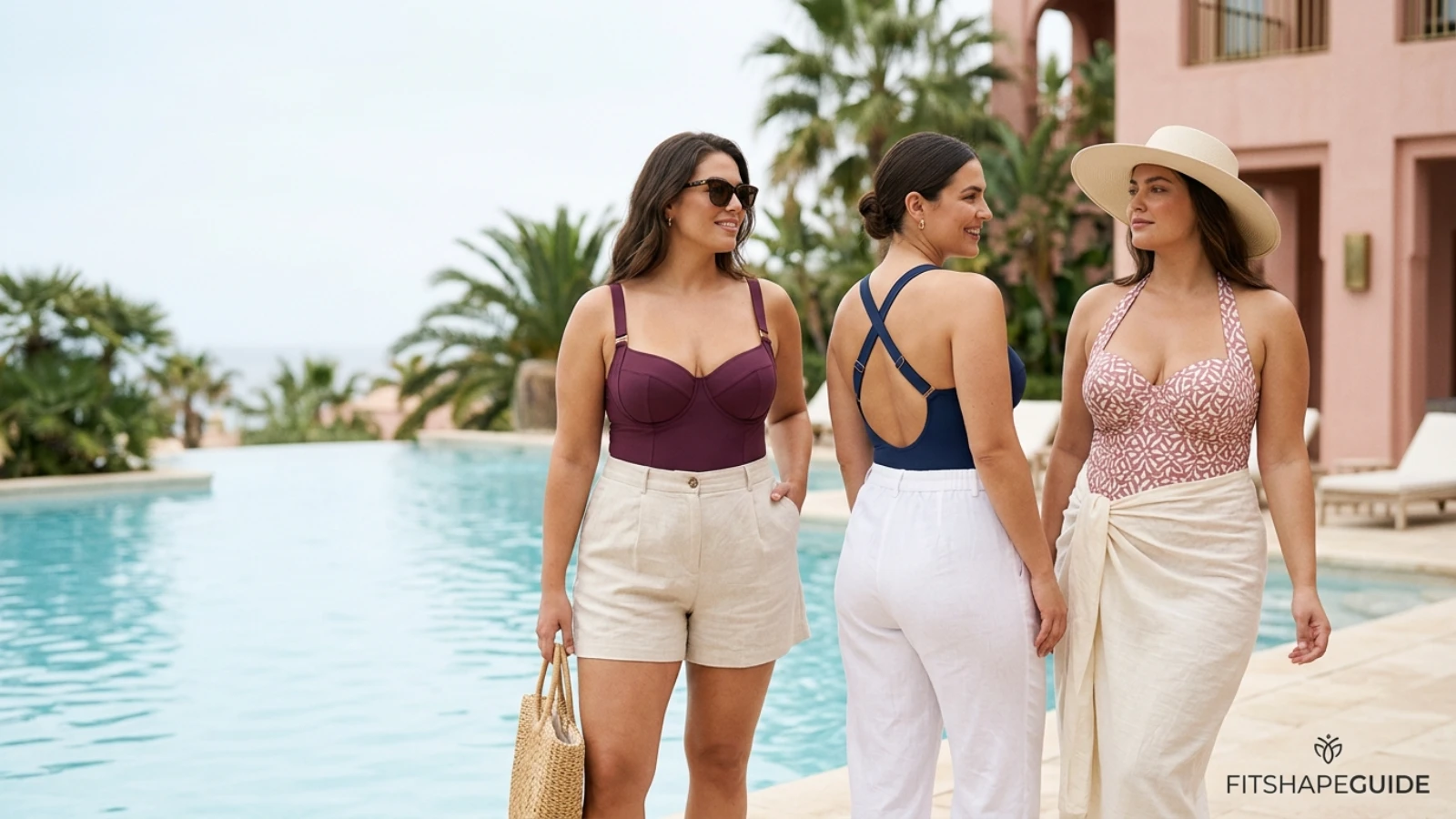
- Fit it in standard mode first: settle cups, band, sides and torso before changing the straps.
- Check attachment hardware: hooks, loops and sliders should sit securely without twisting.
- Convert to crossback: verify that crossing the straps does not pull cup corners inward.
- Convert to halter: the band should still carry enough support that the neck remains comfortable.
- If strapless is intended, remove the straps: walk, raise the arms and lean without holding the neckline.
- Repeat your preferred mode wet: attachment points and sliders should remain stable after swimming.
What makes a convertible swimsuit work for a large bust?
Convertible swimwear promises more than one way to wear the same garment. That can be useful when you want straight straps for a long beach day, a crossback for more shoulder security, a halter under a particular cover-up or a strapless neckline for short periods of relaxed poolside wear.
The important fit question is what remains unchanged when the straps move. If all support disappears as soon as a strap is detached, the suit is not truly using an independent fuller-bust support frame. It is relying on shoulder or neck tension.
A stronger construction keeps the cups, wire or wireless cup seams, underbust band, side wings and back anchoring intact in every permitted configuration. Strap routing then alters upper-cup positioning and shoulder security without rebuilding the foundation of the swimsuit.
This is why cup-sized multiway swimwear can be especially useful for a fuller bust. Band-and-cup proportions can be fitted first, while detachable straps provide styling flexibility afterward.
| Convertible mode | What changes | What should stay stable | Main trade-off |
|---|---|---|---|
| Straight straps | Traditional shoulder path | Cups, band and neckline | May slip on some shoulders |
| Crossback | Rear strap anchors cross | Cup depth and underband | Can pull cup apex inward |
| Halter | Straps redirect toward neck | Band and lower cup frame | Neck pressure if band is weak |
| Strapless | Shoulder straps removed | Entire cup-and-band frame | Requires strongest independent anchoring |
| One-shoulder | Asymmetric upper attachment | Lower frame and opposite cup | Uneven tension can rotate suit |
| Convertible wide straps | Broad straps reposition | Side wings and neckline | Bulkier hardware |
| Multi-loop back | Straps choose multiple rear anchors | Front cup geometry | More attachment points to manage |
| Detachable fashion straps | Strap styling changes | Support frame | Decorative straps may not suit active swimming |
Best convertible swimsuit styles for a large bust
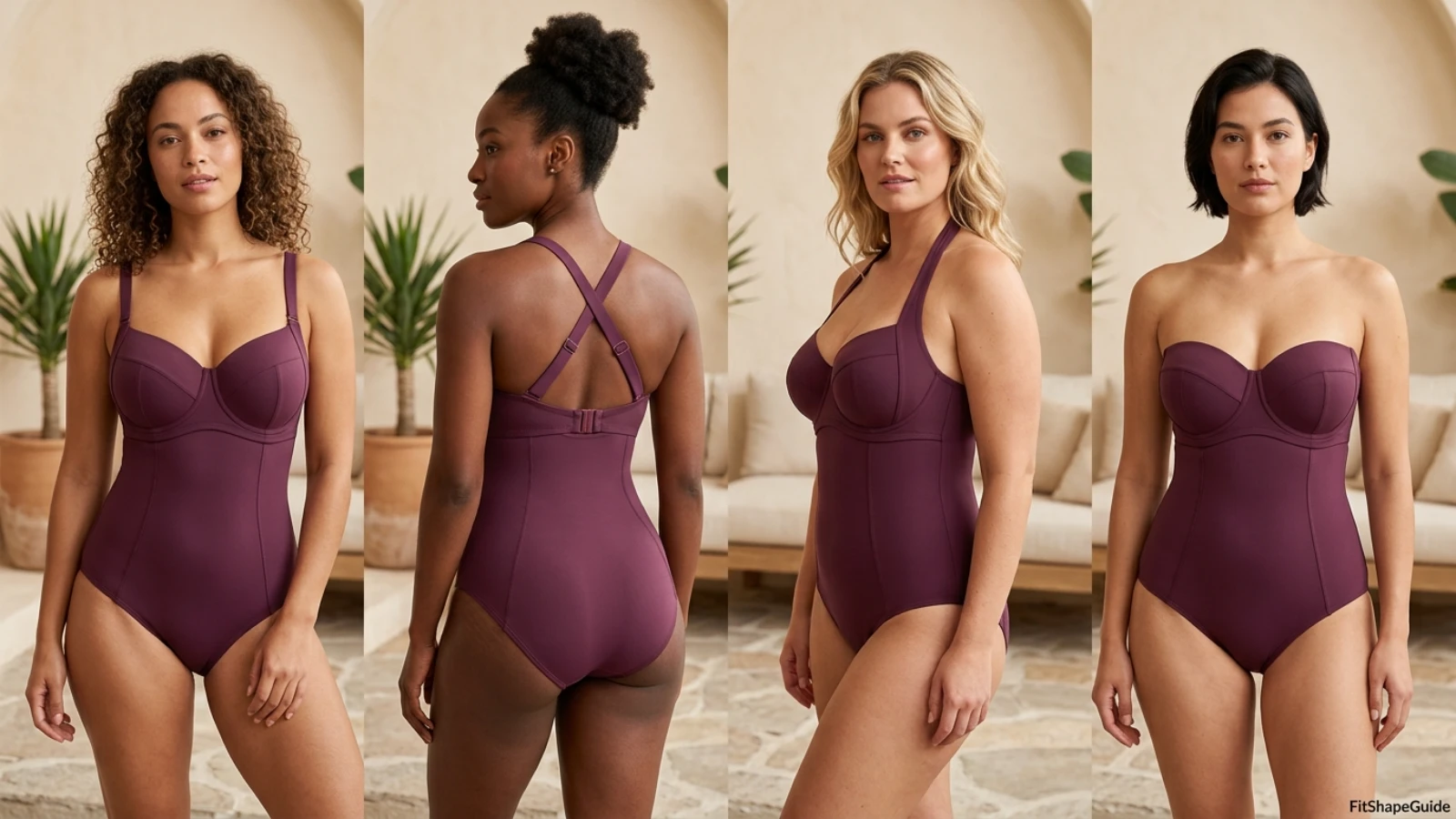
Bra-sized multiway bandeau swimsuit
A concealed underwire, padded or seamed cups, strong side wings and a supportive back create the best chance of wearing the suit both with and without straps.
Trade-off: strapless fit is demanding. The cup-and-band frame must fit accurately before style flexibility matters.
Straight-to-crossback swimsuit
Detachable rear straps can move from standard shoulder placement into a crossback. This is useful when straight straps tend to migrate outward.
Trade-off: crossing the straps shortens their effective path and can over-tighten the upper cup.
Straight-to-halter swimsuit
Two detachable straps can sometimes connect together or attach behind the neck for a halter configuration.
Trade-off: halter mode becomes uncomfortable quickly when the band is not providing enough support.
Convertible sweetheart swimsuit
A structured sweetheart cup shape works naturally with straight, crossed or detachable straps because the neckline already has a defined cup edge.
Trade-off: strapless use requires strong band anchoring and a cup edge that does not roll outward.
Convertible plunge swimsuit
A moderate plunge combined with detachable straps allows neckline styling while retaining a bra-like lower frame.
Trade-off: an already-low center front can become less secure when strap tension changes.
Convertible crossback active swimsuit
Some swimming-focused suits allow rear strap positioning to change while maintaining a higher front and firm underbust structure.
Trade-off: convertible hardware should stay smooth during repeated shoulder motion.
One-shoulder convertible swimsuit
An asymmetric configuration can provide a fashion-led option when the underlying bust frame remains symmetrical.
Trade-off: one-sided strap tension can rotate the neckline or side seams if the band is not stable.
Wide multiway strap swimsuit
Broad detachable straps spread pressure and can be routed straight or crossed while remaining more comfortable for long wear.
Trade-off: wide straps and larger hooks can create more hardware bulk.
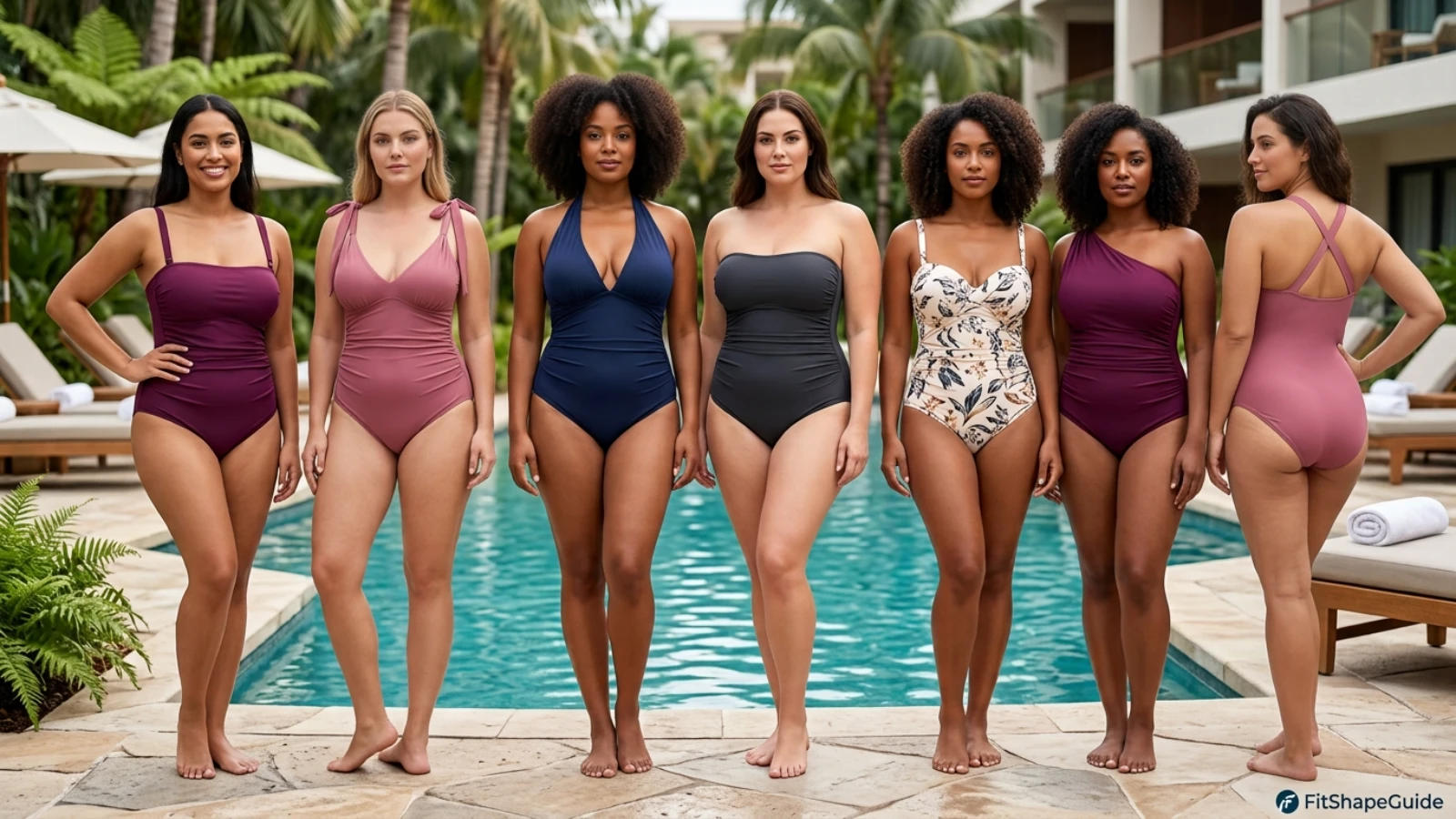
Fit the swimsuit with straight straps first
Straight-over-the-shoulder straps are usually the clearest baseline because they create the least complicated tension path. Fit the cup, underband, side wings and torso in this configuration before testing the alternatives.
Set cups before straps
Place the bust fully inside the cup. Confirm that underwire, if present, follows the breast root and that wireless cup seams contain rather than flatten the bust. Only then adjust strap length.
Leave usable strap range
A convertible swimsuit needs additional strap length for some configurations. If straight mode already requires maximum extension, there may not be enough strap to cross or convert comfortably.
Check rear anchor spacing
Straight straps should align naturally with the shoulders. Very wide rear anchors can encourage slipping; very narrow anchors can push straps toward the neck.
Test independent support
Loosen the straps slightly. The cups and band should remain reasonably anchored. This tells you whether the suit is ready to be tested in less conventional configurations.
Crossback mode for a fuller bust
Crossback straps can be useful when straight straps slide or when more upper-body security is preferred for swimming. But crossing changes the effective length and direction of pull.
Lengthen before crossing
Crossed straps usually travel farther across the back. Extend them before reconnecting, then tighten gradually rather than forcing a straight-strap setting into the new route.
Watch the outer cup
Crossing can pull the cup apex and outer edge inward. Check that breast tissue remains contained and that the side wire or side seam does not move onto tissue.
Check the neck
The crossing point should sit between the shoulder blades rather than migrating so high that the straps rub the base of the neck.
Test overhead reach
Raise both arms and mimic a swimming stroke. A crossback should improve security without pinning the shoulder blades together.
Halter mode and neck pressure
Halter configurations can create a different neckline and may suit particular cover-ups or outfits. For a large bust, however, the lower support system becomes especially important.
Band before neck tension
The underband or supportive back should already anchor the cups. The halter strap should position the upper cup, not lift the full weight of the bust from the neck.
Use a broad strap when possible
A wider halter section spreads pressure over more area. Narrow cords may feel acceptable briefly but can become uncomfortable after swimming or extended wear.
Check cup rotation
Pulling upward toward the neck changes force direction. Make sure the cups remain level and do not rotate inward or collapse at the center front.
Limit activity if necessary
A halter conversion can be excellent for relaxed swimming and poolside wear without necessarily being the best configuration for repeated lap swimming.
When can a convertible swimsuit work strapless?
Strapless mode is the clearest test of whether the swimsuit has an independent support frame. If the manufacturer intends strapless wear, the cups, band, side wings and back closure should remain stable without shoulder straps.
Bra-sized cups
Separate cup sizing can improve the odds of getting enough projection without making the rest of the suit overly large.
Concealed underwire
Underwire can define the cup perimeter and help stabilize the lower bust. It still needs a sufficiently firm band and supportive wings behind it.
Wide back clasp or stable back
A deeper or stronger back connection can provide more anchoring surface. The band should remain level rather than sliding downward.
Upper-edge grip
Some bandeau designs use supportive edge construction to help the neckline remain in place. Any grip treatment should feel secure without irritating the skin.
Strapless activity level
A strapless configuration that works for poolside lounging may not be appropriate for diving, lap swimming or active water play. Choose the mode according to what you are actually doing.
The jump test is not enough
A quick bounce in a fitting room cannot predict wet support. Lean, sit, raise the arms and, where permitted by the garment and return policy, evaluate the intended configuration in real water use.
Detachable hooks, sliders and anchor points
Convertible swimwear adds hardware that ordinary fixed-strap suits do not need. Each extra hook or anchor point is both a styling feature and a potential failure point.
Detachable hooks
Hooks should sit fully inside their loops and resist accidental release when the strap twists. They should also be smooth enough not to scratch the skin.
Adjustment sliders
Sliders need to hold their selected length under wet tension. A smooth slider that gradually creeps can make crossback and halter configurations unpredictable.
Multiple rear loops
Some multiway suits provide several rear attachment locations. This can improve fit flexibility, but each point should be reinforced and clearly usable without twisting the cup.
Front attachment points
Front hooks near the cup apex carry concentrated tension. They should be securely sewn into the cup frame rather than attached only to a thin decorative outer layer.
Hardware and heat
Metal-look trim can become part of the visual design. Check the manufacturer’s material guidance and how the hardware feels in direct sun before long wear.
Replacement straps
If straps are fully removable, store them together. Replacing a lost strap with an arbitrary fashion strap can change length, stretch and load capacity.
Torso length, cup depth and neckline stability
Convertible options work best when the swimsuit body already matches the wearer’s torso. Strap changes alter the upper connection; they do not change shoulder-to-crotch body length.
Suit too short
A short suit pulls the cups downward and creates shoulder or neck pressure. Crossback and halter modes can make this tension feel even stronger.
Suit too long
Extra torso length can wrinkle through the waist and reduce band stability. Tightening convertible straps may disguise some wrinkles while making the upper body uncomfortable.
Fuller-bust front length
Bust projection uses front length. A suit that has enough total girth may still need a deeper front pattern so the neckline does not get pulled downward.
Plunge necklines
Convertible plunge suits need enough cup depth and center stability to tolerate different strap directions. A lower neckline should not depend on extreme strap tension.
Sweetheart and bandeau necklines
These shapes lend themselves naturally to multiway styling because their cup edge is already clearly defined. The upper edge should remain smooth in every approved configuration.
One-shoulder mode
Asymmetric routing should not cause side seams to rotate or one cup to sit noticeably higher. If it does, use a symmetrical configuration instead.
Wet movement and configuration testing
A convertible swimsuit is effectively several swimsuit fits sharing one garment. Do not assume performance in one mode proves performance in the others.
Straight-strap wet test
Swim or move naturally, then check the cup position, band and sliders. This is your reference configuration.
Crossback wet test
Perform overhead reaches. Ensure the straps do not crawl toward the neck and the cup apex does not get pulled inward.
Halter wet test
Wear the halter long enough to assess neck pressure after the outer fabric becomes wet. If pressure increases substantially, return to a shoulder-based configuration.
Strapless wet test
Only use this mode if the swimsuit is designed for it. Raise the arms, walk, sit and enter shallow water. The neckline and band should remain in position without constant pulling.
Pool-exit check
Wet fabric briefly becomes heavier. Step from the water and allow it to drain before adjusting anything. This reveals whether the underlying support frame stayed stable.
Recheck hooks
After converting the suit, confirm every hook is fully seated before entering the water. A partially attached strap can release under movement.
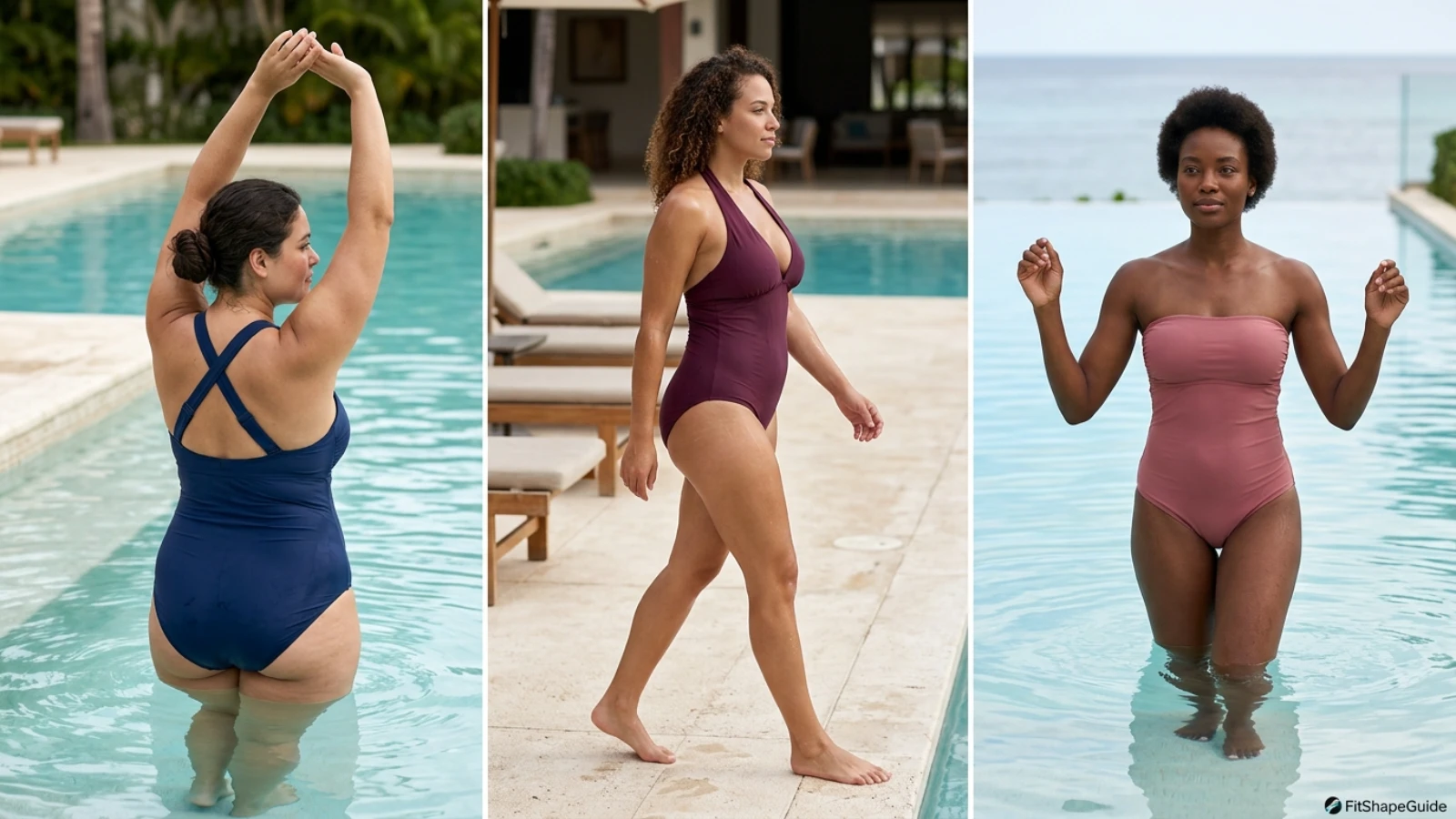
How to buy a convertible swimsuit online
The word “multiway” can mean anything from two rear strap positions to a genuine straight, crossback, halter and strapless system. Read the exact product construction rather than assuming every convertible suit offers the same modes.
- Confirm every supported configuration: straight, crossback, halter, strapless or one-shoulder.
- Check cup sizing: bra-sized options are especially useful when the suit must stay secure after strap changes.
- Verify the support frame: underwire, seamed cups, side sling, firm lining, underband and supportive wings.
- Inspect strap attachment: hooks and loops should be clearly reinforced.
- Check adjustment range: crossback and halter routes may need more strap length than straight mode.
- Inspect the back: a supportive clasp or stable wing can matter more in strapless mode than decorative front styling.
- Check neckline edge: bandeau and sweetheart shapes should stay smooth with and without straps when strapless use is intended.
- Verify torso fit: multiway straps cannot correct a one-piece body that is too short or too long.
- Read fabric and lining: wet recovery affects how stable every configuration remains.
- Review return rules: preserve tags and hygiene protection during permitted dry fitting.
Choose the primary configuration first
If you expect to wear the suit with straight straps 80 percent of the time, buy for that fit first. Treat crossback or halter as useful alternatives. If strapless is the main goal, start with a genuine supportive bandeau construction rather than a standard swimsuit whose straps happen to detach.
Convertible does not mean unlimited
Use only configurations supported by the garment’s actual attachment design. Improvised tying or rerouting can concentrate tension in places the swimsuit was not designed to carry it.
Check sizing in every cup range
Some fuller-bust swim styles adjust strap width, clasp depth or cup construction as cup sizes increase. Verify the exact size you plan to order rather than assuming every size has identical components.
Choose activity honestly
A multiway bandeau can be excellent for a resort trip while a fixed performance racerback may remain better for serious lap swimming. Versatility is valuable only when it matches the intended use.
For adjustable but non-detachable strap options, see Best Swimsuits with Adjustable Straps for a Large Bust. For performance swimming, compare Best Support Swimsuits for Swimming Laps for a Large Bust. For underwire tankini construction, use Best Underwire Tankinis for a Large Bust.
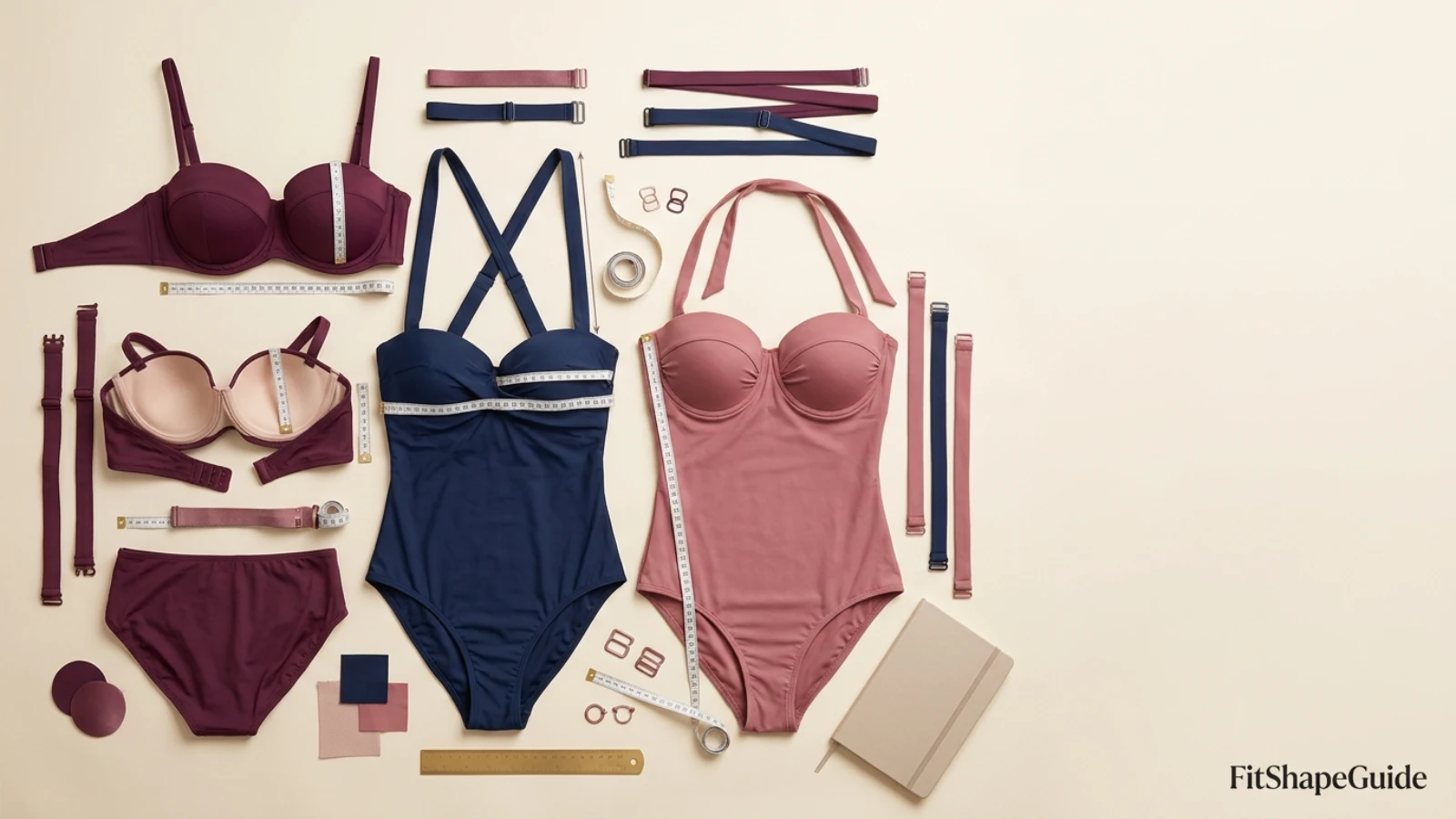
Common convertible-swimsuit fit problems
| Problem | Likely cause | Better response | Avoid |
|---|---|---|---|
| Straight straps fit but crossback feels too tight | Crossed path needs more strap length | Lengthen straps before crossing | Forcing straight-mode settings |
| Crossback pulls cups inward | Straps too tight or anchors too narrow | Reduce tension or use straight mode | Accepting cup distortion for strap security |
| Halter hurts neck | Neck strap carrying too much bust weight | Improve band support or use shoulder straps | Tying halter tighter |
| Strapless mode slides down | Band too loose or cup frame lacks anchoring | True bra-sized bandeau support | Using adhesive or constant pulling as main fix |
| One-shoulder mode twists suit | Asymmetric strap tension overwhelms lower frame | Return to symmetrical mode | Overtightening single strap |
| Hook releases during movement | Poor attachment seating or hardware design | Fully seat hook or choose more secure hardware | Entering water with partially attached strap |
| Slider creeps when wet | Adjustment hardware lacks grip | More secure slider construction | Repeated manual adjustment in water |
| Bandeau neckline rolls outward | Cup shape or upper-edge tension mismatch | Better cup depth and edge stability | Using straps to force edge flat |
| All modes cause shoulder pressure | One-piece body is too short | Longer-torso construction | Changing strap routing repeatedly |
| Cups fit only in one mode | Other strap routes distort cup geometry | Use best-fitting mode or different multiway design | Assuming every advertised configuration must suit every body |
The swimsuit is great with straps but not strapless
That is useful information rather than a failed purchase if strapless wear was only optional. Use the configuration that preserves support. If strapless wear is the main goal, choose a stronger bandeau-specific frame.
The crossback is secure but uncomfortable
Check strap length and crossing height. Security is not useful if the straps cut into the neck or limit shoulder movement.
Halter mode looks better but becomes painful after an hour
The neck is probably carrying more load than it should. Switch to straight or crossback straps for longer wear rather than tightening the halter.
The detachable straps feel flimsy
Because the same straps may be used in several load paths, strap fabric and hardware quality matter. A decorative-looking strap is not automatically suitable for a supportive fuller-bust configuration.
Final verdict
The best convertible swimsuits for a large bust change strap routing without changing the fundamental support system. Start with cups that contain the bust, a firm band or underbust frame, stable side wings and a secure back.
Then test straight, crossback, halter and strapless modes separately. The strongest configuration is the one that keeps the cups level, the neckline secure and the shoulders or neck comfortable after the suit becomes wet. You do not need every advertised conversion to work equally well for the swimsuit to be useful.
Frequently asked questions
Are convertible swimsuits good for a large bust?
They can be excellent when the suit has supportive cups, a firm underbust frame and secure side and back construction that remain stable while strap routing changes.
Can a large bust wear a multiway bandeau swimsuit?
Yes, particularly when the bandeau uses bra-sized cups, concealed underwire or shaped cups, supportive wings and a strong back anchor.
Is crossback more supportive than straight straps?
Crossback can reduce strap slipping and create more upper-body security, but it should not be so tight that it distorts the cups or restricts shoulder movement.
Are halter swimsuits comfortable for a large bust?
They can be when the band and cups provide most of the support. If the neck strap must be very tight to create lift, another configuration may be more comfortable.
Can convertible swimsuits be worn strapless?
Only when the swimsuit is designed for strapless use. The cups, band, side wings and back must remain supportive after the straps are removed.
Why do my cups fit differently when I cross the straps?
Crossing changes strap direction and effective length. Over-tight crossback straps can pull the cup apex or outer edge inward.
Should I size down for strapless support?
Not automatically. A smaller size can reduce cup depth and shorten the torso. Choose appropriate band-and-cup or garment proportions instead of using general compression as the main support method.
How do I test a convertible swimsuit?
Fit it in the primary configuration first, then test every mode you plan to use through arm raises, leaning, walking and, where appropriate, wet movement.
Editorial and verification standards
This guide evaluates convertible swimwear through band-and-cup sizing, cup depth, underwire or wireless support, underbust anchoring, side wings, detachable straps, adjustment range, crossback geometry, halter tension, strapless stability, hardware security, torso length and wet movement.
A swimsuit is not treated as supportive merely because its straps can be rearranged. Convertible styling is useful only when the underlying support frame remains appropriate for a fuller bust.
Before publishing a commercial recommendation, FitShapeGuide should verify the exact seller, swimsuit, color, band-and-cup range where applicable, cup construction, underwire, underband, side wings, back clasp, supported strap configurations, detachable hardware, strap width, adjustment range, torso sizing, shell and lining composition, care, availability and return conditions.
No ASIN, price, rating, review count, coupon, stock statement or delivery promise should be published unless directly verified. Affiliate disclosure should remain clearly visible near commercial recommendations.