Best Shapewear for a Large Bust
A fuller-bust shapewear guide that starts where most generic roundups do not: at the bust line. Compare open-bust bodysuits, high-waist separates, built-in wireless support, slips and targeted compression without sacrificing the bra fit that already works for you.
The 90-second shapewear test
- If using open-bust shapewear, put on the bra you plan to wear first.
- Step into the shapewear carefully rather than aggressively stretching it over the bust unless the manufacturer directs otherwise.
- Check whether the upper edge pushes against the cups or bra band.
- Sit fully in a chair.
- Raise both arms overhead.
- Take several long walking steps.
- Bend forward and return upright.
- Check waist and thigh edges for rolling.
- Test the gusset or bathroom opening before leaving home.
What shapewear works best for a large bust?
Shapewear and bras have overlapping jobs, but they are not the same garment. Shapewear may smooth fabric, create a stable base layer, reduce friction or add varying degrees of compression through the torso. A bra needs much more specific control over band size, cup volume, breast shape and strap placement.
That difference explains why an all-in-one shapewear bodysuit can be difficult for a fuller bust. The waist and hips may fit perfectly while the upper section does not provide enough breast space. Going up a complete garment size for the bust can then reduce the intended fit through the rest of the torso.
Open-bust shapewear avoids that conflict. The garment shapes or smooths the torso while leaving the breast area open, allowing a separate bra to do the specialized bust-fitting work.
Built-in support can still be an excellent option when it is genuinely engineered like a bra rather than relying on a flat stretch panel. Look for shaped breast space, dedicated support construction, adjustable straps and clear bust-related sizing guidance.
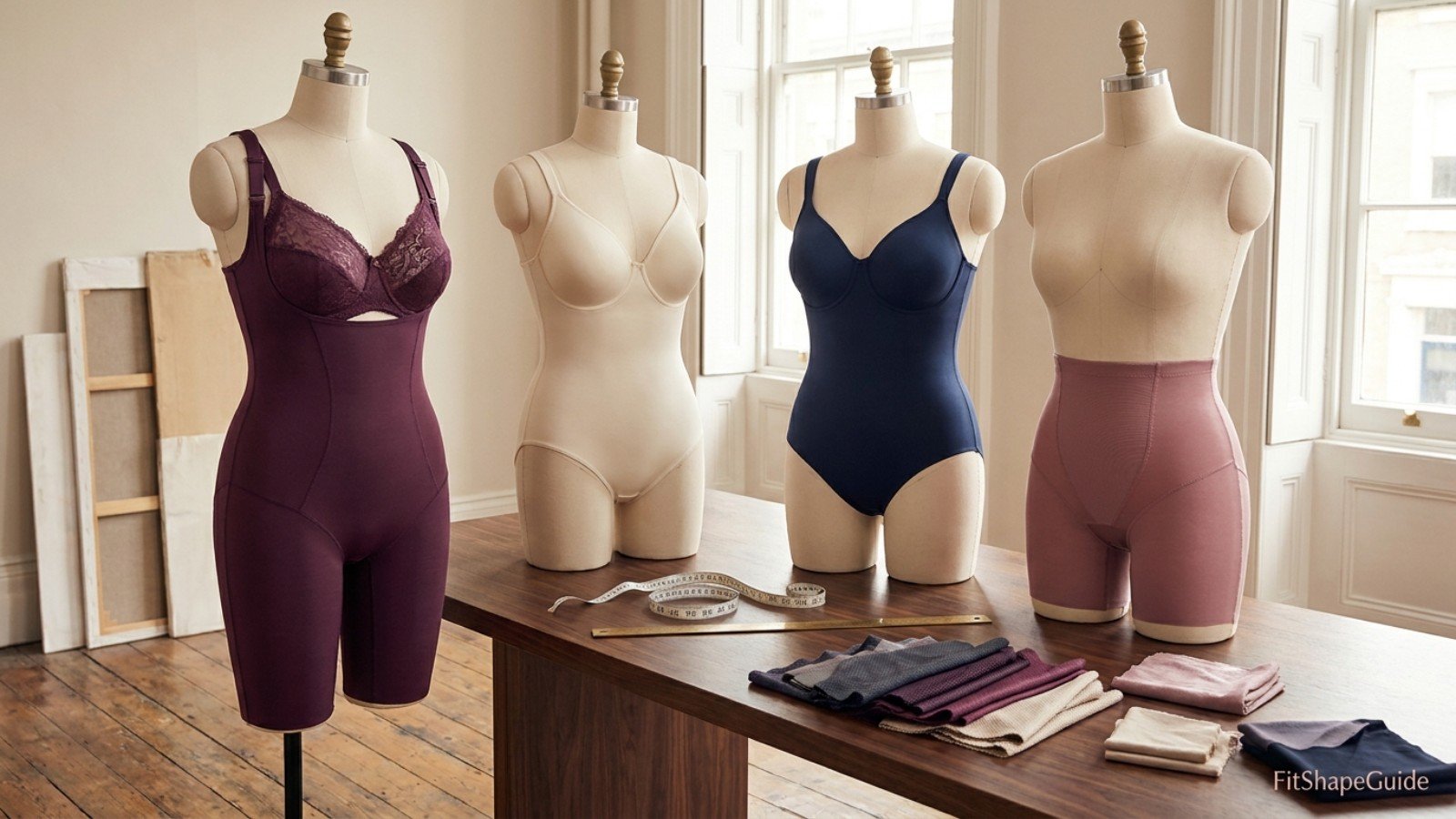
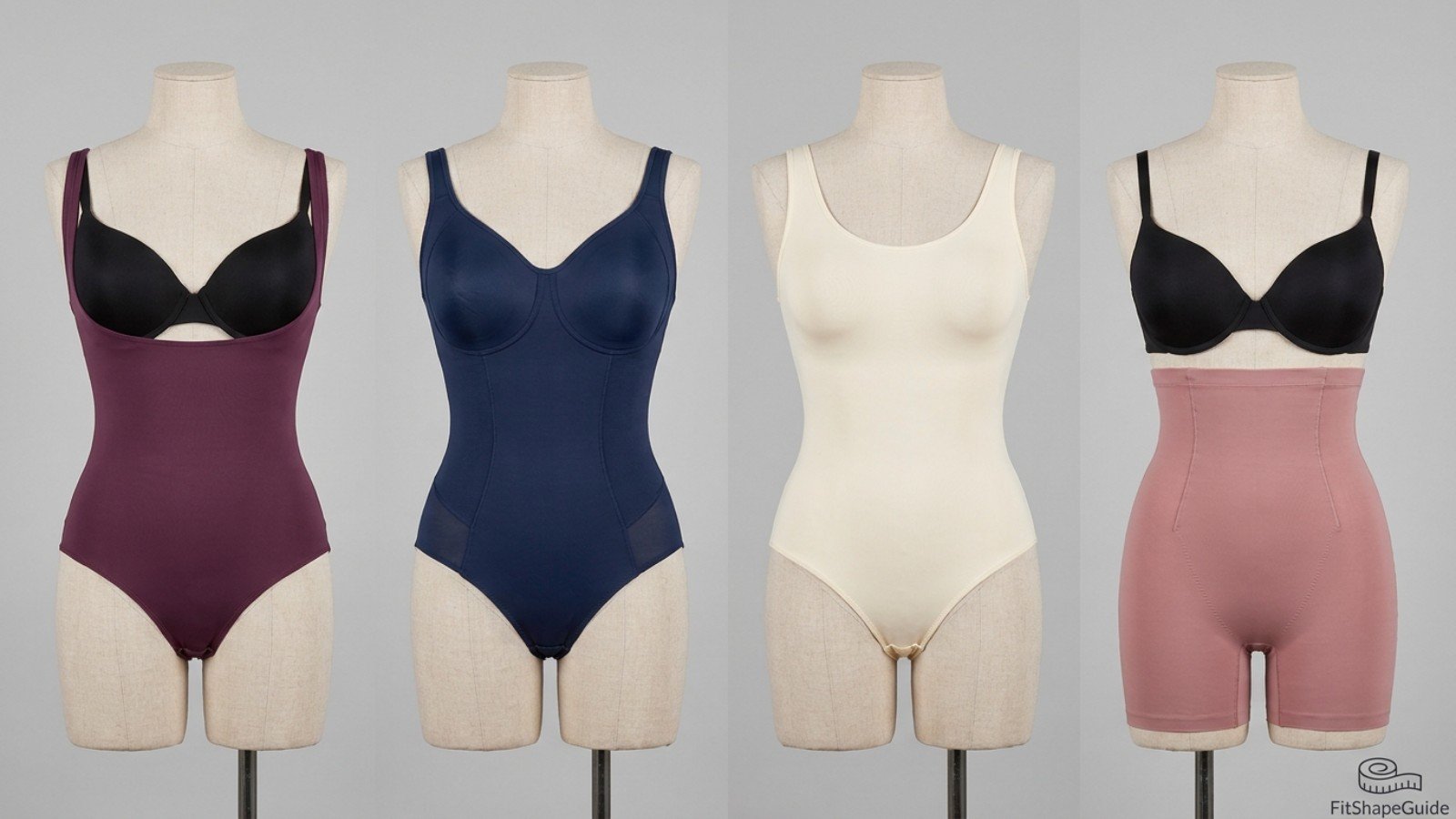
Open-bust bodysuit plus your own supportive bra.
One-piece shapewear with genuinely shaped built-in wireless bust support.
High-waist shorts or briefs that stop below the bra.
| Style | Bust interaction | Strongest advantage | Main fit challenge |
|---|---|---|---|
| Open-bust bodysuit | Separate bra | Preserves precise bra fit | Upper edge must integrate with bra |
| Built-in-support bodysuit | Garment supports bust | One-piece foundation | Cup volume may not match torso size |
| High-waist shorts | None | Complete bra freedom | Waist edge can roll |
| High-waist brief | None | No thigh hem | Top or leg edges may show |
| Open-bust mid-thigh suit | Separate bra | Torso + thigh coverage | Torso and leg length matter |
| Shaping slip | Depends on neckline | Continuous layer under dresses | Upper section may conflict with bust |
| Shaping cami | Touches upper torso | Useful under tops and tailoring | Needs enough bust/front length |
| Brief bodysuit | Open or integrated | No visible mid-thigh edge | Brief and torso length must align |
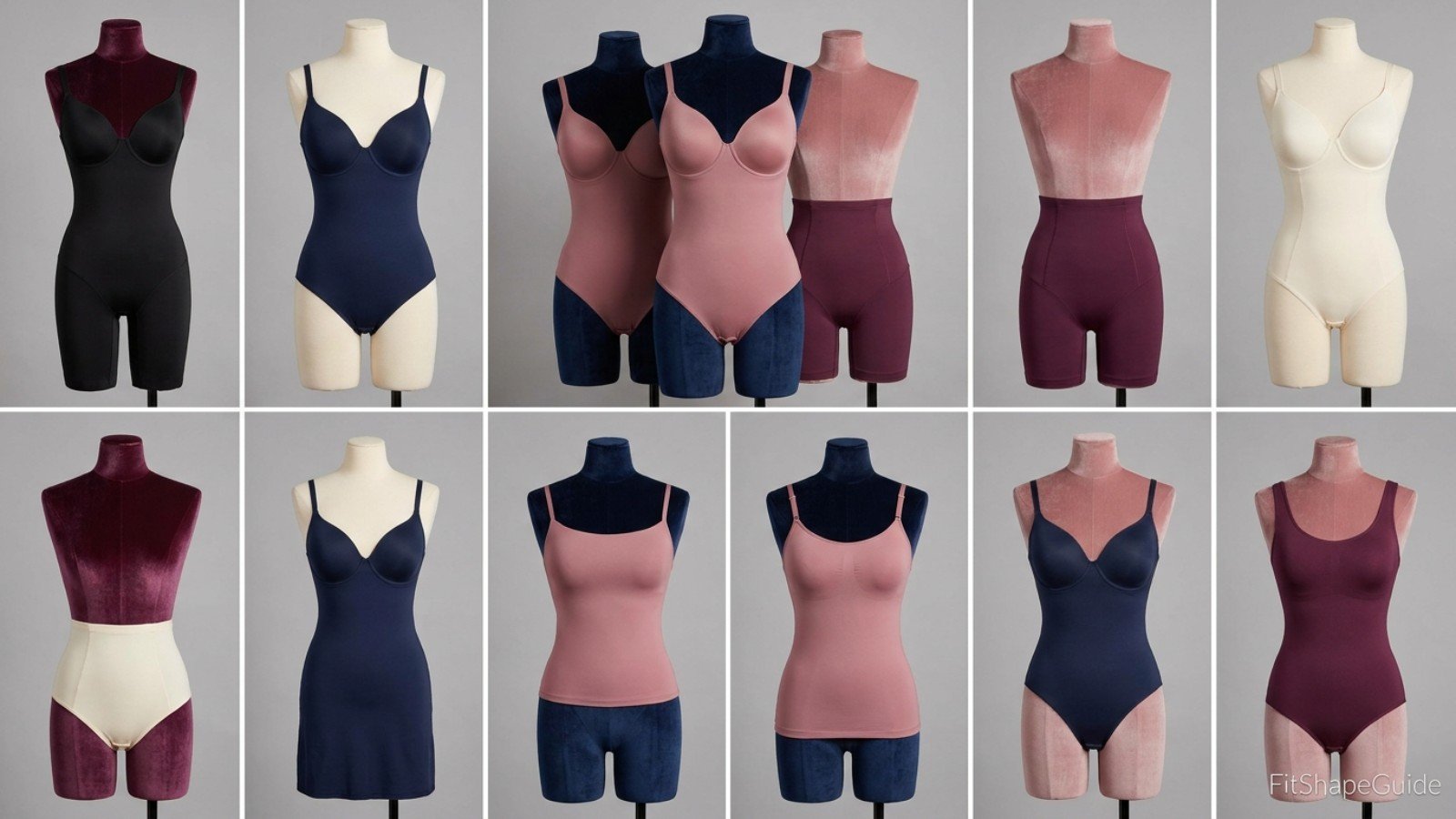
Best shapewear styles for a large bust
Open-bust mid-thigh bodysuit
A shoulder-anchored suit shapes the torso and upper thighs while leaving the breast area open for your preferred bra.
Best for: fitted midi, maxi and formal dresses.
Open-bust brief bodysuit
Keeps the torso connected from shoulder to brief without adding a mid-thigh edge.
Best for: shorter dresses or outfits where thigh coverage is unnecessary.
Built-in wireless support bodysuit
The useful version has actual shaped breast space, supportive straps and internal architecture rather than one flat compression layer across the chest.
Best for: simplified one-piece layering when the bust section fits well.
High-waist shaping shorts
Leaves bra choice completely independent while adding torso and thigh coverage.
Best for: dresses, skirts, trousers and chafe reduction.
High-waist shaping brief
Provides lower-torso shaping without shoulder straps or a thigh line.
Best for: trousers, shorter dresses and skirts.
Open-bust shaping slip
Creates a continuous layer beneath a dress while allowing the bra to be selected separately.
Best for: fine knits and fitted occasion dresses.
Shaping camisole
Works primarily through the upper and middle torso and can sit beneath blouses or jackets when it offers enough length and breast accommodation.
Best for: tops and tailoring.
Light-compression everyday bodysuit
A softer layer can provide garment stability and a smoother surface without the stronger feel of event-focused shapewear.
Best for: everyday layering and body-skimming knits.
Why open-bust shapewear is so useful for a large bust
Open-bust shapewear shapes or smooths the torso while ending around the breast area rather than attempting to contain the breasts itself.
For a fuller bust, that separation is powerful because the shapewear does not need to solve two very different sizing problems at once.
Wear the bra that already fits
You can pair the shapewear with a T-shirt bra, seamed fuller-bust bra, minimizer, plunge or another style based on the outfit rather than accepting whatever cup design happens to be attached to the bodysuit.
More flexible cup-size accommodation
If your cup-to-band proportions differ strongly from standard clothing proportions, leaving the breast area open removes a major source of compromise.
Watch the upper edge
The shapewear should meet the lower bra area cleanly rather than pushing the band or lower cup upward.
Check underarm height
The open-bust frame and shoulder straps should not cut tightly into the area beside the cup.
Adjustable straps are valuable
They help position the upper edge correctly on different torso lengths and reduce the temptation to pull the entire garment too high.
Built-in bra shapewear for a large bust
An integrated support bodysuit can create a beautifully simple one-piece foundation, but the breast area deserves the same scrutiny you would give a bra.
Look for three-dimensional cup space
The bust section should have room for breast projection instead of simply stretching a firm torso panel over the chest.
Wireless support can still be structured
Built-in wireless systems may combine molded or shaped cups with supportive straps, bonded bands, reinforced side panels or flexible side structure.
Check the actual sizing method
If the garment is sold primarily by clothing size, inspect any available bust or bra guidance. Fuller-bust fit can vary dramatically within the same waist or hip measurement.
Removable pads do not create missing cup depth
Pads can change opacity and surface contour, but they cannot compensate for breast space that is fundamentally too shallow.
Check side containment
A well-designed integrated bust area should keep the breast contained without forcing excessive tissue into the armhole.
Switch to open bust when needed
If the torso is excellent but the bust remains compressed or unsupported, separate the two jobs instead of forcing the one-piece option to work.
High-waist shapewear for a fuller bust
High-waist briefs and shorts are often the simplest option when you want shaping below the bra line and do not need shoulder-anchored torso compression.
Complete bra freedom
Wear a strapless, plunge, T-shirt, minimizer or seamed bra without changing the shapewear below it.
Useful under dresses
Mid-thigh shorts create a continuous layer through the waist, hips and thighs and may also reduce inner-thigh friction.
Useful under trousers
A brief or short can create a smooth base without adding another layer over the chest.
Watch waistband rolling
A high rise that does not agree with your torso shape may fold or migrate. Changing rise or construction is often more useful than sizing down.
Check overlap with the bra band
Very high styles may meet or overlap the lower bra band. Test whether that creates a smooth continuous foundation or an unnecessary ridge.
Choose the right compression level
Compression should be selected according to your clothing goal and tolerance—not by choosing the smallest garment you can put on.
Light compression
Useful when you mainly want a smoother fabric base, reduced cling or a little extra garment stability.
Moderate compression
Can create more noticeable torso control beneath fitted dresses and tailoring while remaining practical for extended wear when the fit is correct.
Firm compression
May suit specific formal outfits, but test sitting, eating, walking, stairs and bathroom access before relying on it for an event.
Targeted compression
Some garments use different levels of stretch resistance in different zones rather than making the entire bodysuit equally firm.
Do not size down
If you want more shaping, choose a garment designed for a stronger compression level in the correct size. Sizing down can create rolling and pressure without improving the outer garment.
Comfort still matters
A successful foundation should allow ordinary movement and breathing. Significant pain, numbness or persistent irritation is not a useful clothing outcome.
Torso length and shoulder straps matter
Bodysuit fit is not only about waist and hip circumference. Vertical torso length can determine whether the upper edge sits correctly around a fuller bust.
If the bodysuit is too short
It may pull down against the bra, create strong shoulder tension or make the gusset uncomfortable.
If it is too long
Excess fabric may bunch through the middle or reduce the intended position of targeted panels.
Adjustable shoulder straps help
They are particularly valuable on open-bust styles because they control the relationship between shapewear and bra.
Check seated length
The torso effectively shortens when you sit. A bodysuit that feels fine while standing may pull sharply upward at the shoulders once seated.
Long-torso or petite options can matter
When available, treat garment length as another fit variable rather than assuming one vertical proportion works for everyone.
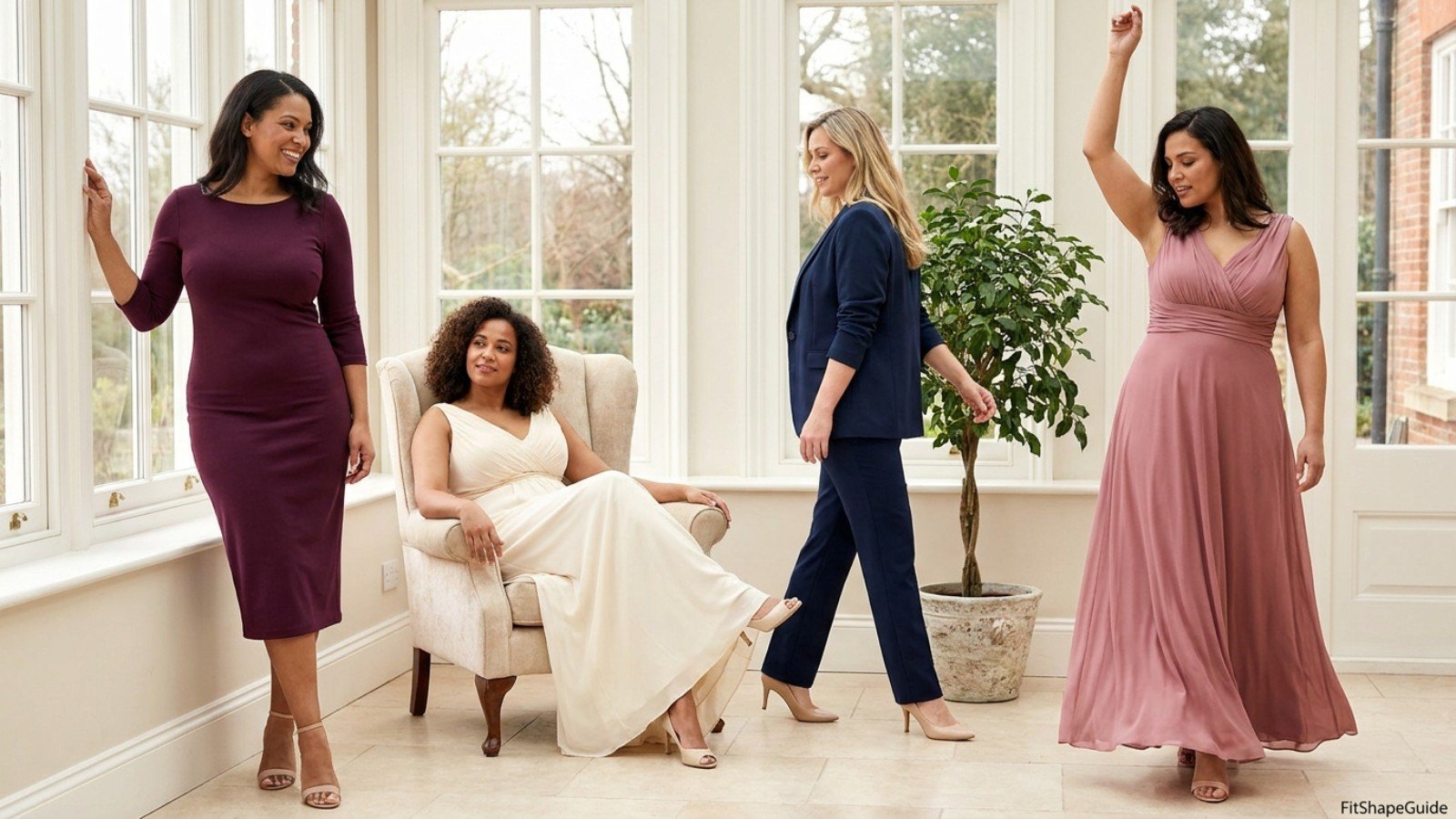
Match shapewear to the dress or outfit
Fitted midi or maxi dress
An open-bust mid-thigh bodysuit can create a continuous torso-and-thigh layer while allowing a separate bra.
Short dress
Use a brief bodysuit or shorter-leg shaper so the shapewear cannot become visible during walking or sitting.
Dress with a slit
Compare the slit height with the shaper’s leg length while walking—not only while standing still.
Strapless dress
High-waist separate shapewear plus a dedicated strapless bra often keeps the shoulder area simpler.
See Best Strapless Bras for a Large Bust .
Low-back dress
Check the back height of both shapewear and bra. A standard bodysuit can show even when its front works perfectly.
See Best Backless Bra Solutions for a Large Bust .
One-shoulder or halter dress
High-waist separates keep the shoulder area clear and let you choose the bra solution independently.
Tailored trousers
A high-waist brief or short may be all you need; a full bodysuit can add unnecessary upper-body complexity.
Fine-knit dress
Pay special attention to thigh and brief edges because very smooth knits can reveal the point where the shapewear ends.
Sitting, walking and bathroom testing
Sit for several minutes
Check rib pressure, waistband folding and whether the shoulder straps start pulling upward.
Walk normally
Mid-thigh edges should remain reasonably stable rather than continually climbing.
Take a large step
This reveals whether the thigh opening or gusset restricts the stride.
Raise your arms
Open-bust shapewear should not drag the bra cups or band upward.
Test the restroom system
Before wearing the garment for several hours, understand whether it uses a hook-and-eye gusset, opening or another access method.
Put the dress back into position
After sitting and standing, make sure both shapewear and outer garment naturally return to a comfortable position.
How to buy shapewear for a large bust online
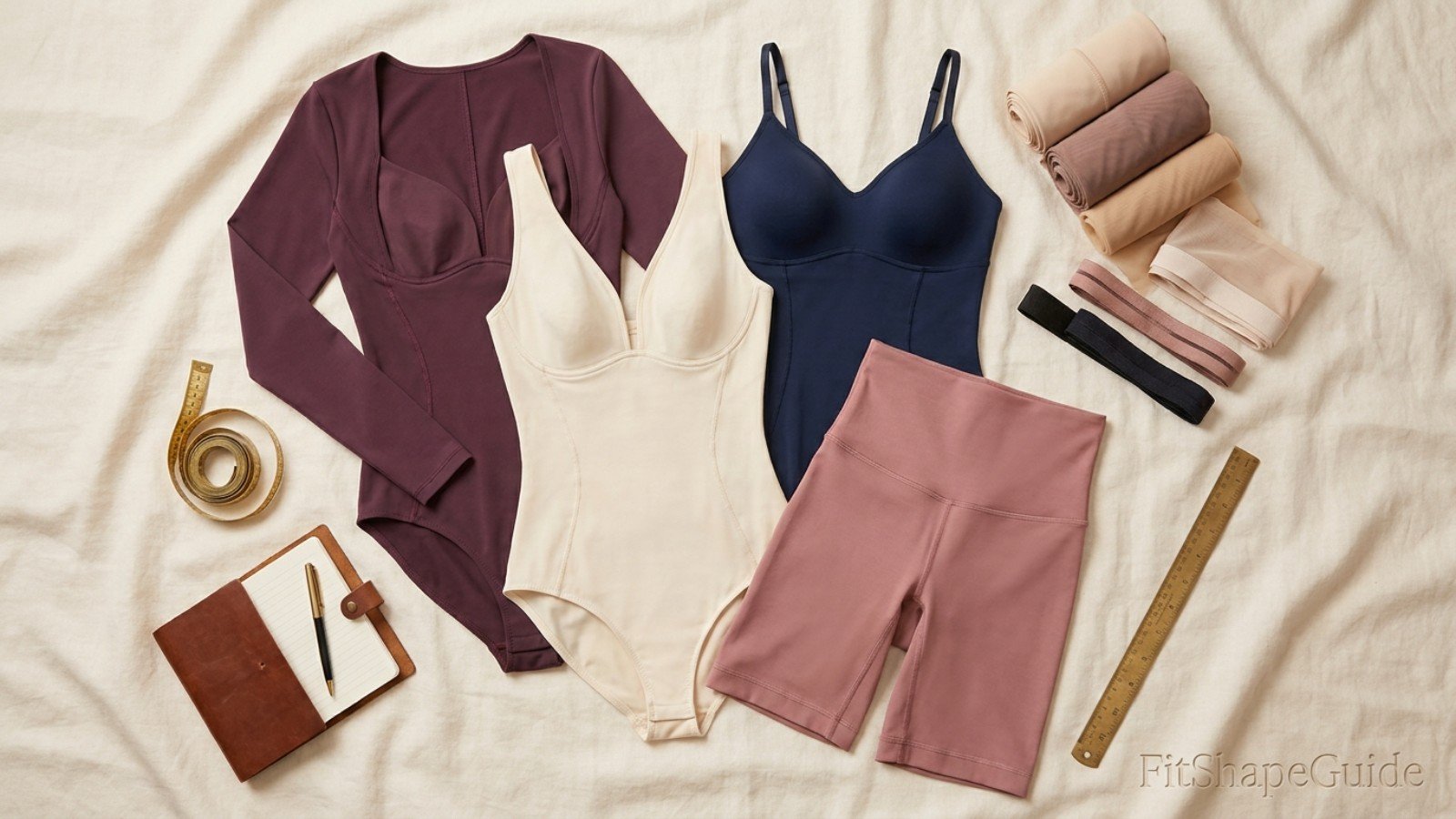
- Decide whether the shapewear should support your breasts. Open-bust and built-in-support garments are fundamentally different systems.
- Use the current manufacturer size chart. Do not size down automatically for stronger shaping.
- Check bust architecture. If support is integrated, look for actual shaped breast space and bust-related fit guidance.
- Check the open-bust edge. It should frame rather than cover or distort your preferred bra.
- Check torso length. Especially on shoulder-anchored bodysuits.
- Verify compression level. Choose light, moderate or firmer construction based on the job you want done.
- Inspect leg openings. The hem must stay hidden beneath the outer garment.
- Check adjustable shoulder straps. Especially if you have a longer or shorter torso.
- Inspect bathroom access. Know the gusset design before an event.
- Check return eligibility. Full-body fit depends on several proportions at once.
Do not size down for extra compression
Choose stronger engineered compression in your appropriate size instead.
Do not sacrifice bust fit
If an integrated garment fits the waist but visibly compresses or displaces the bust, an open-bust design is usually a cleaner solution.
Check dress and shapewear length together
The shaper should remain hidden not only while standing but also while walking, sitting and climbing stairs.
Check edge placement
A full-body garment can still create visible transition lines at the thigh, brief or back. Choose those edges based on the outfit.
Consider a modular system
A correctly fitted fuller-bust bra combined with high-waist shorts may outperform an all-in-one garment simply because each piece is optimized for a different part of the body.
Common shapewear problems with a large bust
| Problem | Likely cause | Better next move | Avoid |
|---|---|---|---|
| Built-in section flattens bust | Insufficient breast depth | Open-bust style or different built-in frame | Sizing down |
| Torso fits but breast area overflows | Bust capacity too small | Separate bra + open bust | Sizing up entire garment blindly |
| Shapewear pushes bra upward | Upper edge too high or torso too short | Adjust straps / change torso length | Tightening bra straps |
| Shoulder straps dig | Garment too short or straps overtightened | Lengthen / reassess bodysuit length | Accepting persistent pressure |
| Waistband rolls | Rise or torso-shape mismatch | Different rise or bodysuit | Sizing down |
| Thigh edges roll upward | Leg length or edge mismatch | Different hem construction | Constant manual adjustment |
| Compression becomes painful | Wrong level or size | Correct size / lighter compression | Assuming pain means better shaping |
| Dress slit reveals shapewear | Shaper leg too long | Brief or shorter short | Testing only while standing |
| Low back reveals bodysuit | Back coverage too high | Low-back compatible solution | Pulling ordinary shapewear down |
| Bathroom access is impractical | Wrong gusset/closure for use case | Different access design | Discovering this during the event |
The waist fits but the bust feels compressed
That is a proportion mismatch. Open-bust shapewear lets your torso and bra be sized independently.
The bodysuit lifts my bra
Check vertical torso length and shoulder adjustment. The upper edge may be sitting too high beneath the cups.
My shorts roll down
Try another rise or waistband construction—or use a shoulder-anchored bodysuit if you want the upper edge stabilized from above.
It feels fine standing but uncomfortable when seated
Seated fit counts. A foundation intended for several hours of wear should remain practical after the torso shortens into a sitting position.
Which shapewear should you choose?
Choose an open-bust bodysuit when preserving your existing fuller-bust bra fit matters most. Choose high-waist shorts or briefs when you want no interaction with your bra at all. Choose built-in-support shapewear only when its breast section provides enough genuine cup space and support for your proportions.
Then choose length, compression and edge placement from the outer garment. The best foundation is the one that stays hidden, remains comfortable through normal movement and makes your clothing behave the way you want—not simply the garment with the strongest compression label.
Frequently asked questions
What shapewear is best for a large bust?
Open-bust bodysuits and high-waist separates are particularly flexible because they let you choose a separate bra. Built-in-support bodysuits can also work when their breast area genuinely fits your cup volume.
What is open-bust shapewear?
Open-bust shapewear shapes or smooths the torso while leaving the breast area open so you can wear a separate bra.
Is open-bust shapewear good for a fuller bust?
Yes, it can be especially useful because bra fit and torso shapewear fit can be handled separately rather than forcing both into one garment size.
Can shapewear have a built-in bra for a large bust?
Yes. Look for real shaped breast space, supportive internal construction, adjustable straps and sizing guidance that accounts for bust proportions.
Should I size down in shapewear?
No. Use the manufacturer’s current sizing guidance and choose the compression level designed for your goal rather than buying a smaller garment.
What shapewear works under a strapless dress?
High-waist shorts or briefs pair easily with a separate strapless bra because they leave the shoulders and upper torso free.
Why does shapewear roll down?
Rolling can result from the rise, waistband construction, torso proportions or sizing. Changing the design is often more useful than simply choosing a tighter size.
How tight should shapewear feel?
It should feel secure according to its intended compression level while still allowing ordinary movement and comfort. Significant pain, numbness or difficulty with normal breathing is not a successful fit.
How FitShapeGuide evaluates shapewear
This guide evaluates shapewear through bust architecture, torso fit, open-bust versus integrated support, compression distribution, underarm construction, shoulder-strap adjustment, edge placement, leg length, waist stability, movement and bathroom practicality.
FitShapeGuide treats shapewear as an optional clothing tool. We do not treat compression, smoothing or contouring as requirements for a fuller body.
For fuller-bust shoppers, open-bust and integrated-support designs should be treated as different foundation systems. Open-bust construction lets a separate bra handle breast support, while integrated bodysuits must provide enough shaped breast space and their own effective support structure.
A product should not be described as fuller-bust friendly simply because it stretches over the chest. Bust depth, side containment, strap placement, torso length and size guidance all matter.
Before publishing any commercial recommendation, FitShapeGuide should verify the exact live seller, product name, color, size range, open-bust or integrated design, bust-sizing guidance, built-in-bra construction, compression level, torso length, straps, underarm finish, leg length, hem construction, waistband, rear height, gusset, materials, care, current availability and return eligibility.
No ASIN, size range, compression percentage, price, rating, review count, coupon, stock or delivery statement should be published unless directly verified.