Best Minimizer Bras for a Large Bust
A construction-first guide to minimizer bras that reduce forward projection through cup shaping, redistribution and controlled support—plus the full coverage, side structure, stable bands and clothing tests that help you decide whether a minimizer actually suits your wardrobe.
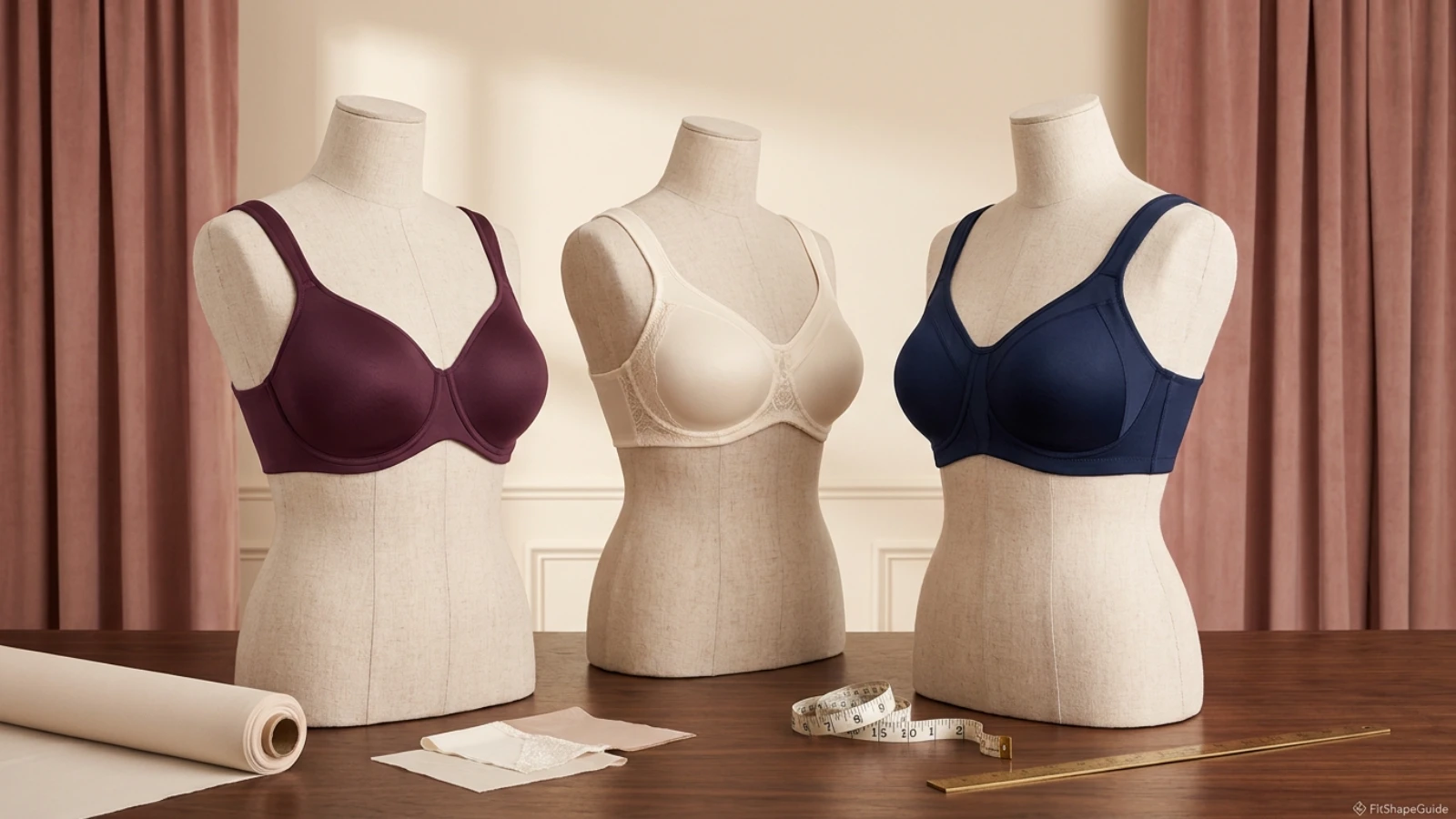
The 60-second minimizer test
- Put on the bra in your correct size: do not size down to chase a stronger minimizing effect.
- Settle all breast tissue into the cups: nothing should be pushed above or outside the cup.
- Check from the side: compare forward projection with your usual bra.
- Check from the front: make sure reduced projection has not created unwanted extreme side spread.
- Button a fitted shirt: look for reduced pulling rather than relying only on the mirror.
- Sit and move: the underwire, center front, band and side panels should remain comfortable.
How does a minimizer bra work?
The word “minimizer” can sound as though the bra is shrinking the bust. It is not. The bra changes where the existing breast volume sits while it is being worn.
A highly projected bra may allow more breast volume to sit forward from the chest. A minimizer generally uses cup geometry that brings the bust closer to the torso and distributes some of that volume across a broader area.
That can help a button-down shirt close with less strain, allow a tailored jacket to sit more smoothly or change how a fitted knit looks from the side.
The exact mechanism varies. One design may use wider, shallower cups and firm fabric. Another may combine full coverage with a side sling to control outward spread. Another may use molded material or greater compression. “Minimizer” therefore describes an intended silhouette rather than one universal bra pattern.
| Feature | What it may do | Good sign | Warning sign |
|---|---|---|---|
| Broader cup geometry | Reduces forward projection | Bust stays fully contained | Excessive tissue pushed into underarm |
| Firm cup fabric | Controls shape | Smooth rounded profile | Painful flattening |
| Full coverage | Contains redistributed volume | Upper edge lies smoothly | Overflow above cup |
| Side sling/panel | Limits uncontrolled side spread | Bust remains centered | Panel cuts into breast tissue |
| Stable underband | Anchors the bra | Back remains level | Band rides upward |
| Centered straps | Supports cup position | Remain secure on shoulders | Need extreme tightening |
| Seamless cup | Smoother clothing surface | Disappears under fitted tops | Shape mismatch creates gaping |
| Back-smoothing wing | Creates broader rear support | Band tension feels distributed | Wing rolls or digs |
Best minimizer bra styles for a large bust
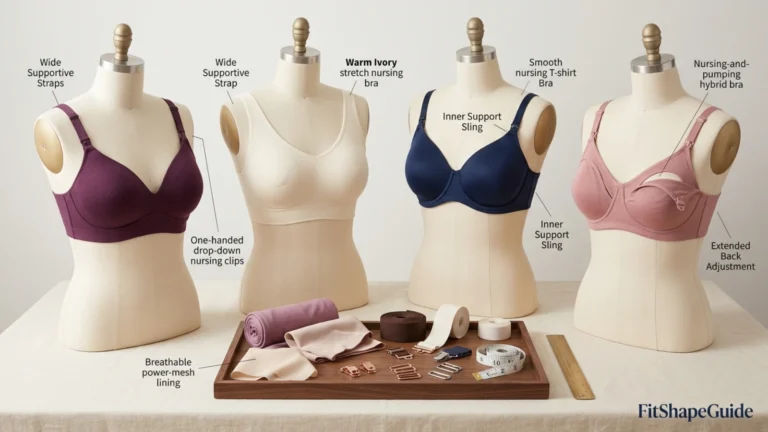
Seamless underwire minimizer
Smooth full-coverage cups create an uninterrupted surface beneath fitted knits, button-down shirts and workwear.
Best for: smooth clothing where cup seams would be visible.
Seamed full-cup minimizer
Multiple cup panels can create more controlled shaping and may provide a more adaptable fit than one rigid molded shell.
Best for: wearers who value shape control more than perfectly invisible seams.
Side-support minimizer
A dedicated side panel can help keep redistribution from becoming excessive outward spread toward the underarms.
Best for: a more centered minimized profile.
Back-smoothing minimizer
Wider rear wings combine reduced front projection with a broader, smoother support frame around the back.
Best for: fitted tops and structured jackets.
Wide-strap minimizer
Broader or lightly cushioned straps can improve shoulder comfort while full cups and the band handle the main structural work.
Best for: longer everyday wear.
Wireless minimizer
A wire-free design can use firm fabric, full cup coverage and a broad lower band to create controlled projection without an underwire.
Best for: wearers who prefer a wireless frame and like its resulting shape.
Molded minimizer
A molded cup can produce a consistently smooth shape beneath clothing while using a relatively controlled profile.
Best for: T-shirts and fitted dresses when the molded shape matches your bust.
Strapless minimizer
A specialized strapless minimizer combines reduced projection with a band-and-cup frame designed to remain stable without shoulder straps.
Best for: specific formalwear when both minimizing and bare shoulders matter.
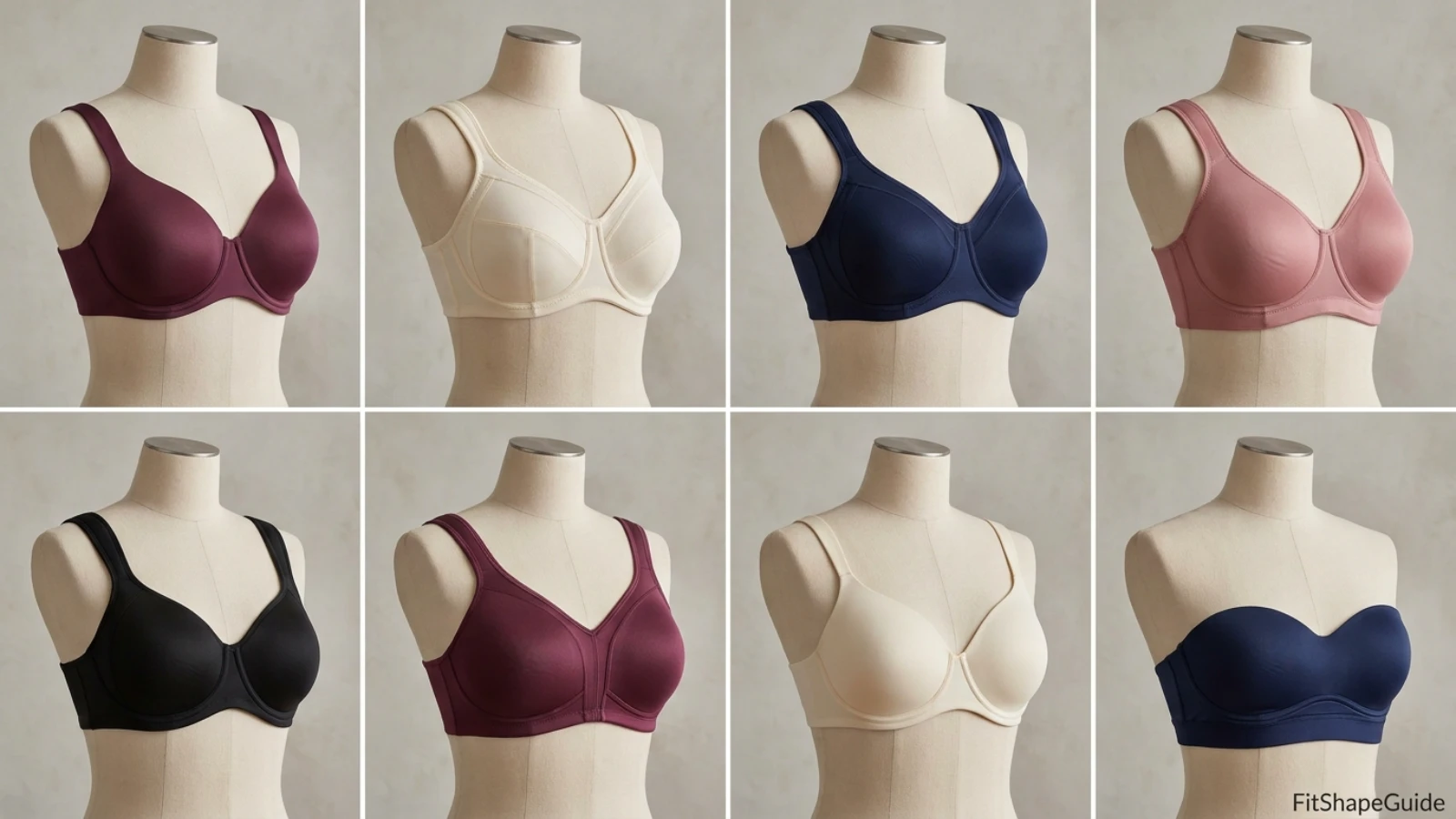
Redistribution vs compression
Minimizers are often described as though every style simply presses the breasts flat against the chest. Modern designs can be more nuanced.
Redistribution-focused construction
A wider cup footprint and controlled side or upper cup panels can reposition volume across a broader area while reducing forward projection.
The bust is still the same volume; the shape occupies a different three-dimensional space while the bra is worn.
Firm contouring
Some minimizers use stable cup textiles to keep the bust in a controlled rounded profile. Firm does not need to mean painfully tight.
Compression-based designs
Some bras use more compression as part of their minimizing method. That may suit wearers who like a closer-held silhouette, but compression should remain comfortable and should not create overflow or significant pressure.
Side spread matters
Reducing projection by pushing all available volume sideways can make the torso appear broader from the front and may place more tissue near the underarm. Side-support panels can help control that effect.
Centering matters too
A well-designed side sling or cup panel can reduce forward projection while maintaining a more centered breast position rather than allowing uncontrolled east-west spread.
Full coverage, cup depth and minimizer fit
Use your actual bra size
Do not size down in the cup to increase the minimizing effect. An undersized cup can push breast tissue above the neckline, toward the underarm or against the wire.
Full containment
The breast should remain within the intended cup boundaries. A minimizer cannot redistribute volume cleanly if some of that volume is escaping the cup.
Broader cup base
Many minimizer designs use a wider cup footprint than highly projected bras. That geometry helps reduce how far the bust extends forward.
Upper cup height
Fuller coverage helps contain volume as it is repositioned. The upper edge should lie flat rather than cutting sharply into breast tissue.
Center gore
In an underwire style designed for the center to sit against the sternum, a floating gore can indicate a size or shape mismatch rather than successful minimizing.
Underwire width
A wider minimizer wire still needs to follow the breast root comfortably. “Wider” is not automatically correct if the wire extends far beyond the breast tissue.
Seamless versus seamed
Seamless cups can be useful under smooth shirts. Seamed cups can give designers more control over direction and projection. Neither is universally better.
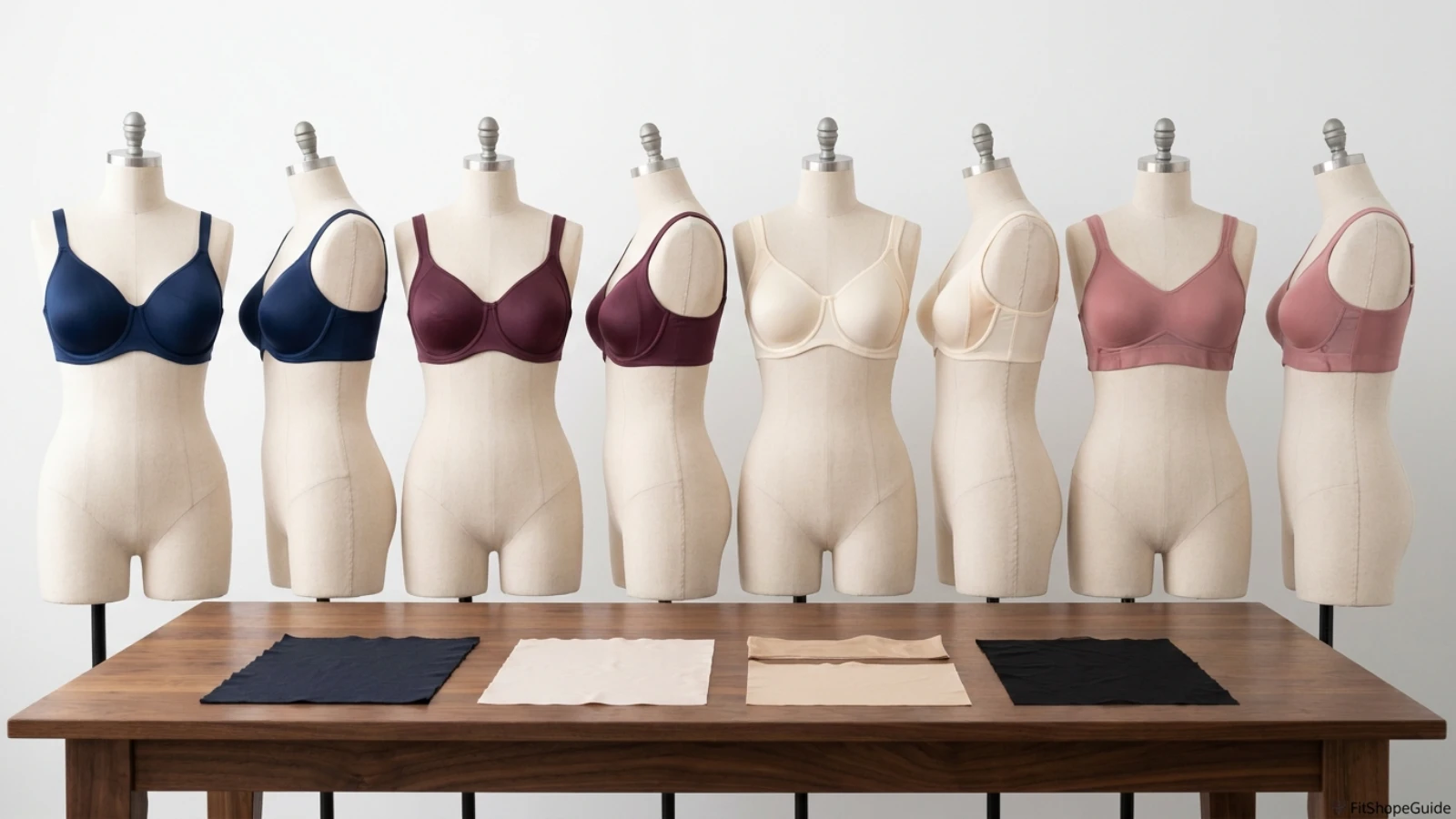
Why side-support panels matter in a minimizer
When breast volume is repositioned away from the most projected point, some minimizers can create more width across the chest.
Whether you like that effect is personal. If your goal is fitting a button-down or reducing side-view projection, a little additional front-facing width may be completely acceptable. If you prefer a more centered silhouette, look for side-support construction.
Inner side sling
An internal sling can help direct outer breast tissue toward the center while the rest of the cup controls forward projection.
Tall side cup
A higher outer cup can help contain tissue that might otherwise escape toward the armhole.
Stable side wing
The wing should anchor the cup rather than collapse or roll under redistributed volume.
Underarm comfort
A tall side section should not cut into the underarm when the arms move. Height and shape need to suit your torso.
Front-view check
Do not judge a minimizer only from the side. Compare front, side and three-quarter views before deciding whether its redistribution pattern works for you.
Band, back and strap construction
Level underband
The back band should stay approximately level. A rising band reduces stability and can change how the minimizer cup positions breast tissue.
Broad wings
Many full-coverage minimizers use substantial wings to distribute band tension and support a larger cup frame.
Back smoothing
A taller or broader back can create a smoother clothing surface, but that is an optional construction feature rather than a requirement.
Centered straps
More centered straps can help support the upper cups and remain secure on the shoulders, especially when paired with a leotard-style back.
Wide or lightly padded straps
These can improve long-wear comfort, but the straps should not be carrying the entire bust. The band remains an essential anchor.
Do not overtighten
Pulling the straps extremely short can distort the top of the minimizer cup, change its intended redistribution pattern and increase shoulder pressure.
For shoulder comfort, compare Best Bra Straps That Don’t Dig In and Best Wide-Strap Bras for a Large Bust .
What clothes work well with minimizer bras?
Button-down shirts
This is one of the clearest tests. Compare the shirt over your regular bra and the minimizer. Look at button strain and horizontal pulling across the bust.
Fitted blazers
Reduced forward projection may help lapels and front closures sit more smoothly. Make sure the minimizer has not created additional side fullness that pushes into the armhole.
Fine-gauge sweaters
A seamless minimizer can create a smooth surface beneath turtlenecks and fitted knits where cup seams or stronger projection would be more visible.
Sheath dresses
A controlled profile can change how a fitted dress falls from bust to waist. Check that the dress still has enough room across the chest rather than using the minimizer to force an undersized garment to fit.
Uniforms and work shirts
A minimizer can be practical when clothing has a fixed front closure and limited ease through the chest.
T-shirts
A smooth minimizer can work under tees, although some wearers prefer a more projected T-shirt bra shape. Try both rather than assuming minimizer always looks smoother.
When a minimizer bra may not be your best choice
You prefer forward projection
If you like a lifted, projected side profile, a balconette, full-cup side-support or another projected bra may match your preferred silhouette better.
You dislike a wider front profile
Some minimizers reduce side-view projection by spreading more volume across the chest. If that front-view width bothers you, try a more centered side-support minimizer or skip the category.
Your outfit has a deep neckline
Full-coverage minimizer cups may show above plunging, square or sweetheart garments.
Your cup size is outside the style’s range
Do not force an adjacent size simply because you want the minimizing effect. Use a full-cup or side-support bra designed in your actual size instead.
The cup compresses painfully
Minimizing should not mean enduring breast, wire or rib pressure. A different bra shape may work better.
You mainly need movement control
A minimizer is not automatically a sports bra. For running, jumping or other higher-impact activity, use a bra designed for that movement.
Movement and clothing-fit testing
Raise both arms
The band should remain stable and redistributed breast tissue should not escape over the cup edge.
Reach forward
Check the side panel and underarm area. A cup that seems smooth while standing may cut or bulge as the arm moves.
Sit at a desk
A fuller-coverage bra can feel different when the torso shortens. Check center gore, underwire and lower band pressure.
Button-down test
Sit, stand and reach in the shirt. Reduced gaping in one static pose is less useful if buttons pull apart as soon as the shoulders move.
Blazer test
Button the jacket if that is how you intend to wear it. Turn side-on and three-quarters to compare lapel and armhole behavior.
End-of-day comfort
Firmer minimizer textiles may feel different after several hours than during a quick fitting. Evaluate shoulder, underwire, side panel and band comfort after sustained wear.

How to buy a minimizer bra for a large bust online
A commercial claim like “reduces your bustline” can be useful only when the exact product, size range and measurement method are verified. Treat projection-reduction numbers as manufacturer-specific claims, not universal results.
- Start with your current bra size: do not size down to create more compression.
- Verify your exact band and cup: do not rely only on “full figure” or “plus size” labels.
- Check full coverage: confirm whether the cup height works with your clothes.
- Inspect cup construction: seamless, molded, seamed, firm knit or wireless.
- Look for side control: especially if you do not want excessive outward redistribution.
- Check underwire width: a broader minimizer frame still needs to match the breast root.
- Inspect the band: look at wing height, back shape and closure construction.
- Check strap placement: centered or wider-set straps may fit shoulders differently.
- Verify any projection claim: only repeat the exact manufacturer’s current claim for that product.
- Review returns: the minimized silhouette is highly shape-dependent and should be tested beneath your own clothes.
Do not order a smaller cup for a stronger effect
A too-small cup may create overflow while pushing tissue toward the underarm. That is poor fit, not successful minimizing.
Compare the front as well as the side
A bra can produce excellent side-view reduction but more front-view width than you prefer. Look at both before deciding.
Use your hardest-to-fit shirt as the test garment
If button gaping is your reason for buying a minimizer, try the bra beneath that exact shirt. The garment gives you a more useful answer than measuring the bra by itself.
Check the neckline
Many minimizers are intentionally full coverage. A beautifully fitting minimizer may simply be wrong beneath a low scoop, plunge or square-neck top.
Keep another bra shape available
You do not need every bra in your wardrobe to create the same profile. A minimizer can serve button-downs and fitted tailoring, while another side-support or projected bra works beneath other outfits.
For strap comfort, see Best Wide-Strap Bras for a Large Bust . For shoulder-pressure troubleshooting, see Best Bra Straps That Don’t Dig In .
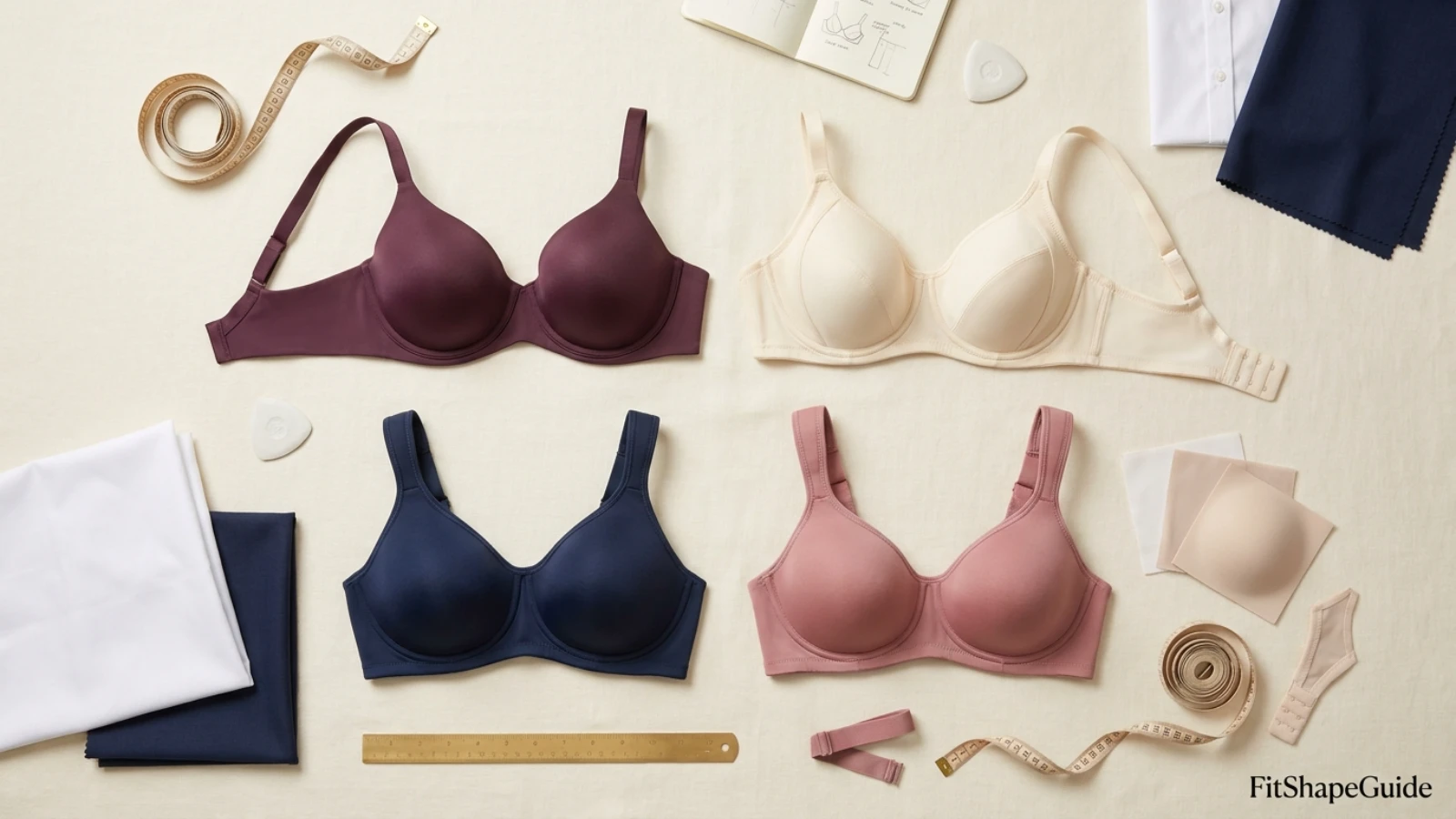
Common minimizer bra fit problems
| Problem | Likely cause | Better response | Avoid |
|---|---|---|---|
| Bust looks extremely flattened | Compression/style mismatch | Redistribution-focused minimizer | Sizing down further |
| Tissue pushed into underarms | Uncontrolled side redistribution | Side-support minimizer | Accepting painful side pressure |
| Overflow above cup | Cup too small/short | Correct cup volume | Calling overflow “extra minimizing” |
| Wire sits on tissue | Wrong wire/cup geometry | Different size or shape | Ignoring wire placement |
| Center floats away | Insufficient cup depth/volume or shape mismatch | Reassess cup fit | Tightening straps |
| Band rides upward | Band too loose or worn | Correct stable band | Using straps to hold bra up |
| Straps dig | Too much load or excessive adjustment | Recheck band/cups; wider straps | Shortening further |
| Shirt still gaps | Garment may lack enough bust room | More garment ease or tailoring | Forcing a smaller bra |
| Bra makes torso look wider than preferred | Redistribution pattern | More centered side-support style | Assuming all minimizers fit alike |
| Cup edge shows above neckline | Full-coverage cup incompatible with top | Different bra style | Wearing bra too low |
The minimizer makes me look wider from the front
That can happen because some of the volume that previously projected forward is distributed across a broader area. Try a minimizer with stronger side-control panels or a different cup pattern.
The shirt still pulls across my bust
A minimizer can change projection, but it cannot create fabric that the shirt does not have. The garment itself may still need more bust room.
The bra feels tight even though my usual size fits
Minimizer cups use different geometry and often firmer material. Try another minimizer construction rather than assuming you need to tolerate discomfort.
I like the clothing fit but not the bra shape
Use the minimizer selectively. It can be a tool for button-downs or jackets rather than your everyday foundation for every outfit.
Final verdict
The best minimizer bras for a large bust reduce forward projection while keeping all breast tissue comfortably contained. Look for full-coverage cups, a stable band, controlled side redistribution and a cup shape that produces a front and side profile you actually like.
Do not size down or accept painful flattening for a stronger “minimizing” effect. Test the bra beneath the shirt, blazer, sweater or dress you bought it for. If it improves clothing fit while remaining comfortable, it is doing its job. If you prefer your usual projected shape, there is no reason a minimizer needs to be part of your wardrobe at all.
Frequently asked questions
What does a minimizer bra do?
A minimizer bra changes the way breast volume is distributed while the bra is worn, typically reducing forward projection. It does not reduce the actual amount of breast tissue.
Do minimizer bras actually make your breasts smaller?
No. They can create the appearance of a less projected bust under clothing by changing shape and distribution, but they do not change breast size.
Are minimizer bras good for a large bust?
They can be useful if you prefer reduced forward projection, particularly under button-down shirts, tailored jackets or fitted tops. They are optional rather than necessary for a fuller bust.
Should I size down in a minimizer bra?
No. Start with your correct bra size and the specific brand’s size guidance. A smaller cup can cause overflow, side pressure and wire problems rather than better minimizing.
Do minimizer bras flatten your breasts?
Some designs use more compression than others, but many modern minimizers use redistribution, contouring and side-support construction to reduce projection while maintaining a rounded shape.
Are minimizer bras good under button-down shirts?
They can be particularly useful when reducing forward projection decreases strain across the shirt front. The shirt itself still needs enough overall bust room.
Can minimizer bras cause more side fullness?
Some cup shapes redistribute volume across a broader chest area. If you dislike that effect, look for a minimizer with a stronger side-support sling or a more centered shape.
Are wireless minimizer bras supportive for a large bust?
They can be when the design uses firm shaped cups, a strong lower band and supportive side and back construction. Their shape will differ from many underwire minimizers.
Editorial and verification standards
This guide evaluates minimizer bras through forward projection, cup geometry, full containment, side redistribution, side-support panels, upper cup fit, underwire placement, band stability, wing construction, strap placement and clothing performance.
FitShapeGuide treats minimizing as an optional garment-silhouette preference. The goal is not to describe a large bust as a flaw or something that needs correcting. “Balance” or proportion, where discussed, refers only to garment and outfit composition—not correction of the body.
Current specialist minimizer ranges confirm that the category uses several different constructions. Current Wacoal minimizers include full-coverage and unlined underwire designs, stable back construction and fully adjustable straps, while its current range reaches larger cup sizes. Current Chantelle minimizer guidance distinguishes between contour/side-control approaches and firmer minimizing constructions, and its current minimizer range includes seamless, full-coverage and wire-free options in extended cup sizing.
Those manufacturer-specific projection claims should not be generalized. If a brand says a particular style reduces projection by a stated amount, FitShapeGuide should repeat that number only after verifying the exact live product and wording.
Before publishing any commercial recommendation, FitShapeGuide should verify the exact live seller, product, style, color, band range, cup range, cup construction, seamless or seamed design, underwire or wireless frame, full-coverage height, side sling, back-smoothing construction, strap width and placement, manufacturer projection claim, fabric, lining, care, current availability and return conditions.
No ASIN, projection-reduction number, band range, cup range, price, rating, review count, coupon, stock claim or delivery promise should be published unless directly verified. Affiliate disclosure should remain clearly visible near commercial recommendations.