Best Work Dresses for a Large Bust
A dependable office dress should fit through a full workday, not merely during a standing mirror check. This construction-led guide explains which seams, necklines, fabrics and layers give a fuller bust usable room while keeping the shoulders, waist, hem and professional coverage balanced.

Quick answer
The best work dresses for a large bust are princess-seam sheaths, secure wrap midis, structured ponte dresses, properly shaped shirt dresses, belted A-lines and sleeveless layering dresses. Look for adequate center-front length, bust darts or curved panels, bra-friendly coverage, a stable moderate neckline and fabric that stays opaque without pulling. The shoulder line, waist seam and hem should remain level while you sit, type, reach and walk. Choose the dress for your real workplace and intended bra, then use tailoring only for realistic refinements.
The 60-second office fit check
- Wear the bra and base layer planned for an ordinary workday.
- Check that the neckline, armholes and sleeve openings cover every bra edge.
- Confirm bust darts or princess seams align with the bust rather than cutting across it.
- View the side: waist, side seam, pockets and hem should remain level.
- Sit at a desk, type, reach forward, cross the arms and lift a work bag.
- Add the intended blazer or cardigan and confirm it does not distort the dress.
- Inspect the fabric in daylight for strain, shine, transparency and wrinkling.
Best work dresses for a large bust by construction
Princess-seam sheath dress
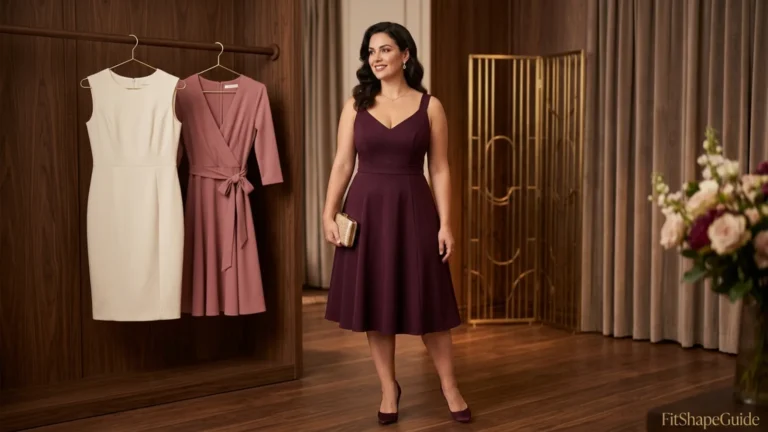
Best for formal offices, presentations and work events. Curved vertical seams can create forward bust projection and then taper toward the waist without asking one flat panel to stretch. Choose a moderate neckline, comfortable sleeve mobility and a back vent deep enough for walking but suitable for sitting. The waist should remain at its intended position rather than climbing under the bust. See the sheath dress fit guide.
Secure wrap-style midi
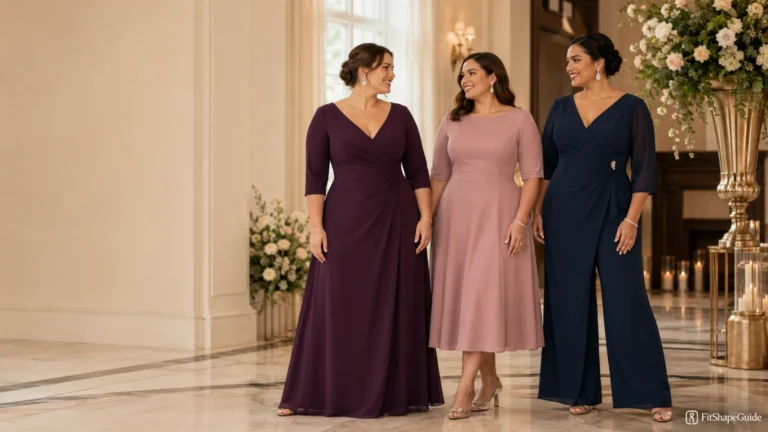
Best for adjustable waist definition and offices with business-casual dress codes. A work-ready wrap needs generous overlap beyond the bust apex, stable edge finishing and a tie anchored at the natural waist. Sit and lean forward to ensure the neckline stays closed. A discreet snap can control a correctly fitted edge, but it cannot replace missing width or coverage. Compare the wrap dress guide.
Structured ponte dress
Best for long seated days, commuting and travel. Substantial ponte offers stretch with recovery, but the bodice still needs shaping and enough front length. Check that the knit remains matte and opaque over the bust after sitting. A clean V, scoop or square neckline can work when its edge returns to place after movement and the armholes contain the bra. The fabric should follow the body without acting like compression.
Tailored shirt dress
Best for polished casual workplaces and seasonal layering. Look for bust darts, princess panels, hidden interior security and a button placket that lies flat. Buttons should be positioned around the fullest area rather than leaving one closure to carry all the strain. A stitched modesty panel may help, but gaping means the bodice needs more room. Use our shirt dress guide for placket checks.
Belted A-line work dress
Best for mobility, fluctuating waist fit and smart-casual offices. The bodice must reach the waist before the belt is tightened; otherwise the belt can trap a raised seam beneath the bust. Choose controlled skirt volume that clears the hips and remains comfortable on stairs. An integrated or removable belt should define an already balanced dress rather than conceal excess fabric. Compare the A-line dress guide.
Sleeveless layering dress
Best for capsule wardrobes and temperature-controlled offices. Wide shoulders, moderate armholes and a stable neckline allow a regular bra and create a clean base under jackets. Check the dress alone because a layer should not be required to hide exposed cups or gaping. Leave enough upper-body ease for a thin top beneath only if that is the intended use. A lined crepe or matte suiting fabric usually layers more cleanly than clingy jersey.
Fit the fuller bust before refining the office silhouette
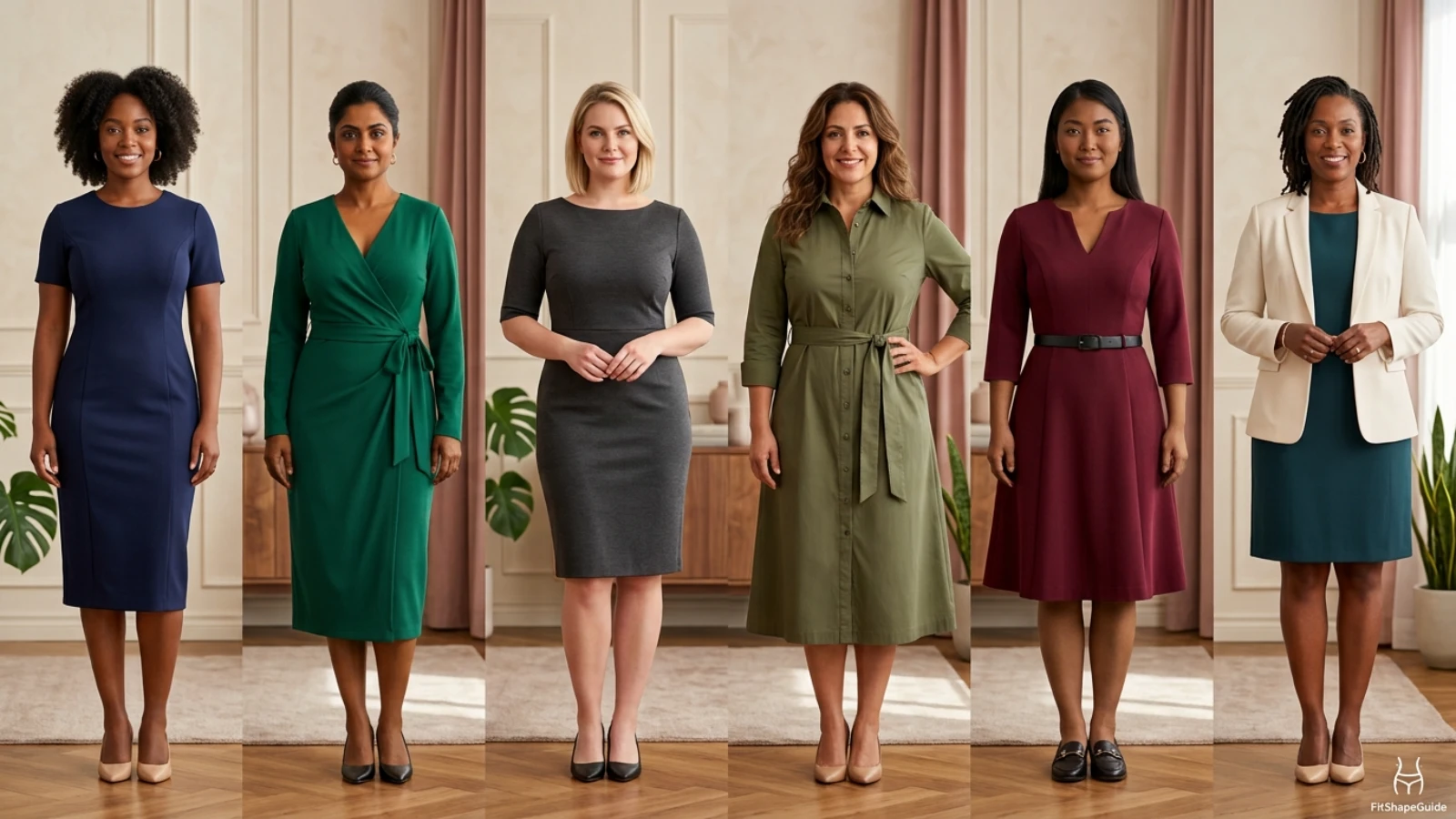
Across the best work dresses for a large bust, professional polish begins with correct three-dimensional fit rather than extra tightness or an oversized frame. Use these checkpoints before judging color, print or accessories.
Projection needs length as well as circumference
A fuller bust requires fabric to travel forward and return beneath the bust. When a front bodice is shallow or short, the waist rises at center front, side seams swing forward and the front hem appears shorter. Going up a size may add width everywhere while leaving the shaping equally shallow. Inspect the dress from the side: the neckline should sit where designed, the waist should remain level and the skirt should begin without being pulled upward.
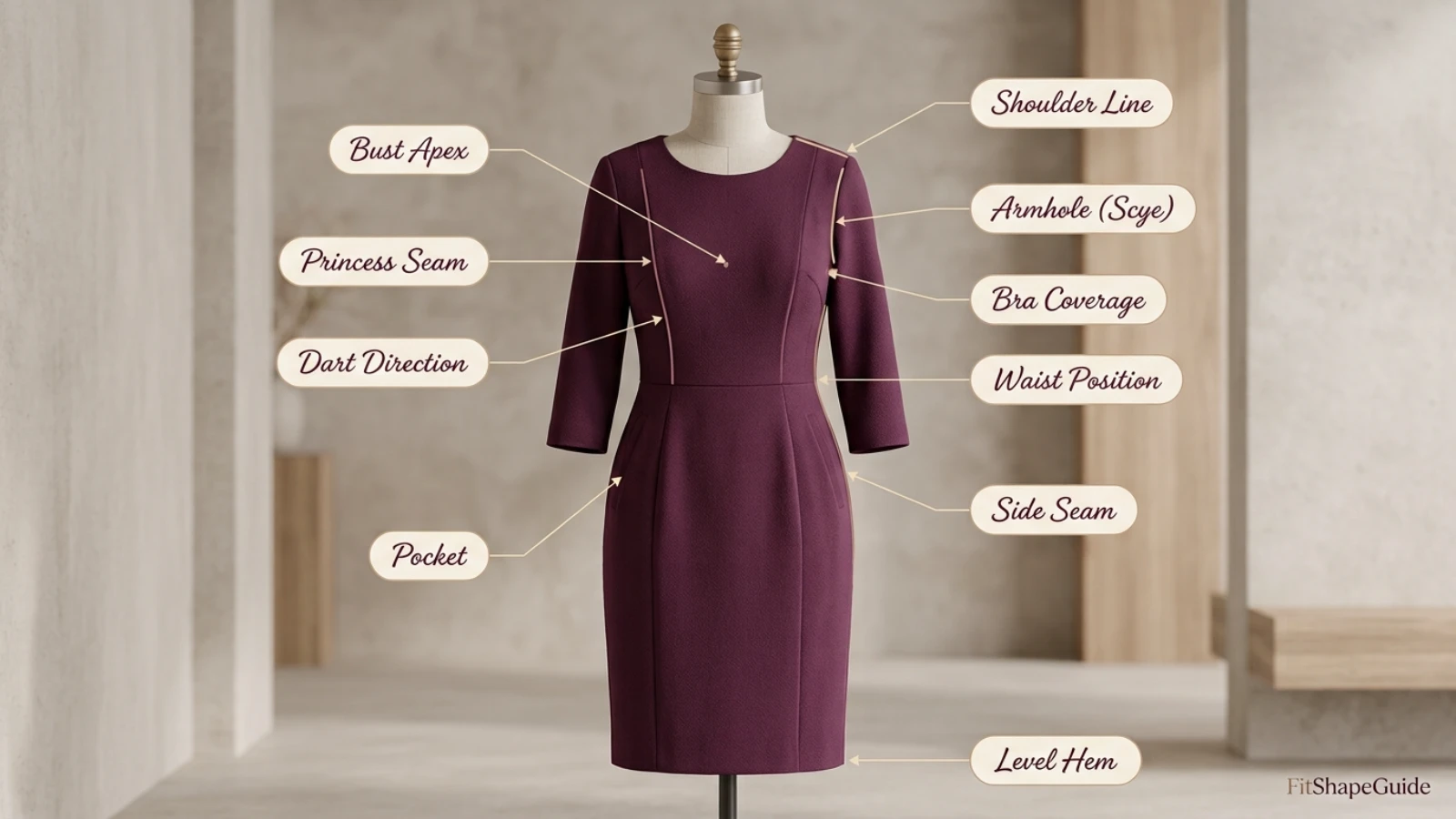
Princess seams and well-placed darts create three-dimensional room more predictably than a plain woven front. A dart should point toward the bust apex and finish before it, while a princess curve should travel over the fullest area without sliding toward the armhole. Neither should dimple, collapse or cut across the bust. A knit may need fewer visible seams, but it still needs enough length, recovery and thoughtful panel shaping.
Shoulders control the whole dress
Work dresses often fail because a larger size solves circumference but makes the shoulders too broad. A slipping shoulder changes the armhole, sleeve mobility and neckline. Conversely, a narrow shoulder can make sleeves pull when typing or reaching. Start with a stable shoulder line, then assess whether the garment offers genuine bust room. Petite, tall and fuller-bust ranges can change vertical proportions, so compare garment measurements rather than relying on the size label alone.
Ease should support an eight-hour day
Useful ease lets you inhale, rotate, sit and reach while keeping the dress tidy. It is not the same as loose fabric at the neckline or back waist. Test a full seated posture, not a careful perch. The zipper, placket or waist seam should not dig in after lunch, and sleeves should permit keyboard use without pulling the bodice upward. If you spend the day tugging the dress down or closing the neckline, it has not passed the fit test.
Compression is not bust support
A tight dress can feel held in place while actually pushing tissue toward the neckline and armholes. Structural support normally comes from a correctly fitted bra, unless the garment contains a genuinely engineered internal bodice. The dress should accommodate that support system. Wearing the intended bra during every try-on matters because lift changes apex height, dart alignment, neckline coverage and the position of the waist.
Professional necklines, sleeves and bra compatibility
Moderate V-neck
A moderate V can create an open, vertical neckline while working with many plunge or lower-center bras. Both edges should lie flat when seated and leaning, and the point should remain centered. A camisole may adjust coverage for a conservative workplace, but it should be a styling choice rather than a tool for forcing an undersized neckline closed. The V-neck dress guide explains depth and return.
Square, scoop and jewel necks
A square neckline can provide bra-friendly straps and visible collarbone, provided its corners are faced and stable. A moderate scoop is flexible under jackets; check that tension does not spread it wider. A jewel or crew neckline offers coverage, but a shallow front may pull toward the bust and create horizontal lines. Every neckline must have enough front length, not merely a higher edge. Compare options in the neckline guide for a large bust.
Wrap and crossover fronts
Work-appropriate overlap should stay beyond the bust apex through typing, leaning and carrying a bag. A fixed faux-wrap can be more stable than a true wrap, but only when its underlayer contains enough fabric. If the edge rolls outward, the waist twists or the lower layer migrates, choose a different construction instead of depending on tape throughout the day.
Sleeves and armholes
Cap sleeves can restrict a fuller upper body if the armscye is tight. Short, elbow and three-quarter sleeves often work well when they permit reaching without lifting the whole bodice. Sleeveless designs need armholes high enough to cover the bra band and side cup but not so high that they cut the underarm. Test with a jacket, because a bulky sleeve inside a narrow blazer can distort both garments.
Back and strap coverage
Check the rear neckline while sitting and reaching forward. A low or wide back may reveal the band even if the front looks conservative. Wide dress shoulders are easiest with standard supportive bras. Bra keepers at the shoulder can prevent straps from appearing, but they cannot fix a neckline or armhole cut too far outward.
Workwear fabrics that stay polished around a large bust
Fabric determines whether shaping remains visible and whether a dress recovers after hours of movement. Matte crepe can skim while showing clean seams. Ponte and double knit combine mobility with opacity when the weight and recovery are sufficient. Woven suiting holds a tailored line but needs accurate darts or panels. Soft twill can work well for shirt dresses, while thin rayon may collapse around buttons and wrinkle at the waist.
The shell is only half the story. A rigid lining can make a stretchy dress feel tight, and a loose lining can bunch at the bust. Check both layers while seated. Hold the garment toward daylight and photograph it with phone flash: stretched fabric may become shiny or translucent. The fabric guide for large-bust clothing compares substance, drape and recovery.
| Fabric | Useful office quality | Check before keeping |
|---|---|---|
| Matte crepe | Polished drape and low shine | Drag lines, lining tension and snagging |
| Ponte | Stable stretch and easy movement | Opacity, pilling and recovery after sitting |
| Double knit | Structure with comfortable give | Heat, bulk and seam flexibility |
| Stretch suiting | Crisp tailored appearance | Actual stretch direction and front shaping |
| Twill | Durable structure for shirt dresses | Placket strain and stiffness at the bust |
| Jersey | Softness and travel convenience | Cling, transparency and permanent stretching |
Match the dress to the workplace—not a universal rule
The best work dresses for a large bust are appropriate because they align with a specific employer, role and working environment—not because one neckline or hem is universally professional.
Conservative or formal office
A knee or midi sheath with a stable moderate neckline, sleeves or jacket-compatible shoulders and matte fabric is a practical base. Confirm the hem remains appropriate when seated. Subtle seams, restrained hardware and covered bra edges usually matter more than whether the silhouette is fitted or flared. A dress that fits smoothly can look more professional than an oversized one that shifts and gaps.
Business casual
Wrap midis, belted A-lines, knit dresses and polished shirt dresses offer flexibility. Keep closures secure and fabric opaque. Loafers, flats, low heels or clean boots can change the tone without affecting fit. If a belt is included, test the dress without tightening it excessively; the bodice should already reach the waist.
Creative, hybrid and client-facing work
Color, print and asymmetric detail may be welcome, but movement and coverage still matter during presentations or video calls. For hybrid work, examine the upper third of the dress on camera: neckline stability, sleeve shape and fabric glare become more visible. A strong dress should also function off camera during commuting, equipment setup or client visits.
Uniform, laboratory or active workplaces
Follow safety and employer requirements first. Loose ties, wide sleeves, open necklines and decorative hardware may be inappropriate around equipment. Choose washable, breathable construction with useful pockets and unrestricted reach. This article addresses general apparel fit, not occupation-specific protective clothing.
Layering without hiding poor fit
A blazer, cardigan or vest should extend the dress, not rescue it. Test the full outfit while seated and reaching. Narrow blazer lapels may bow if the layer lacks bust room; bulky cardigans can catch on a wrap tie. A sleeveless dress can be an excellent base, while a shirt dress may layer better under an open cardigan than a fitted jacket. For tailored options, see the blazer dress guide.
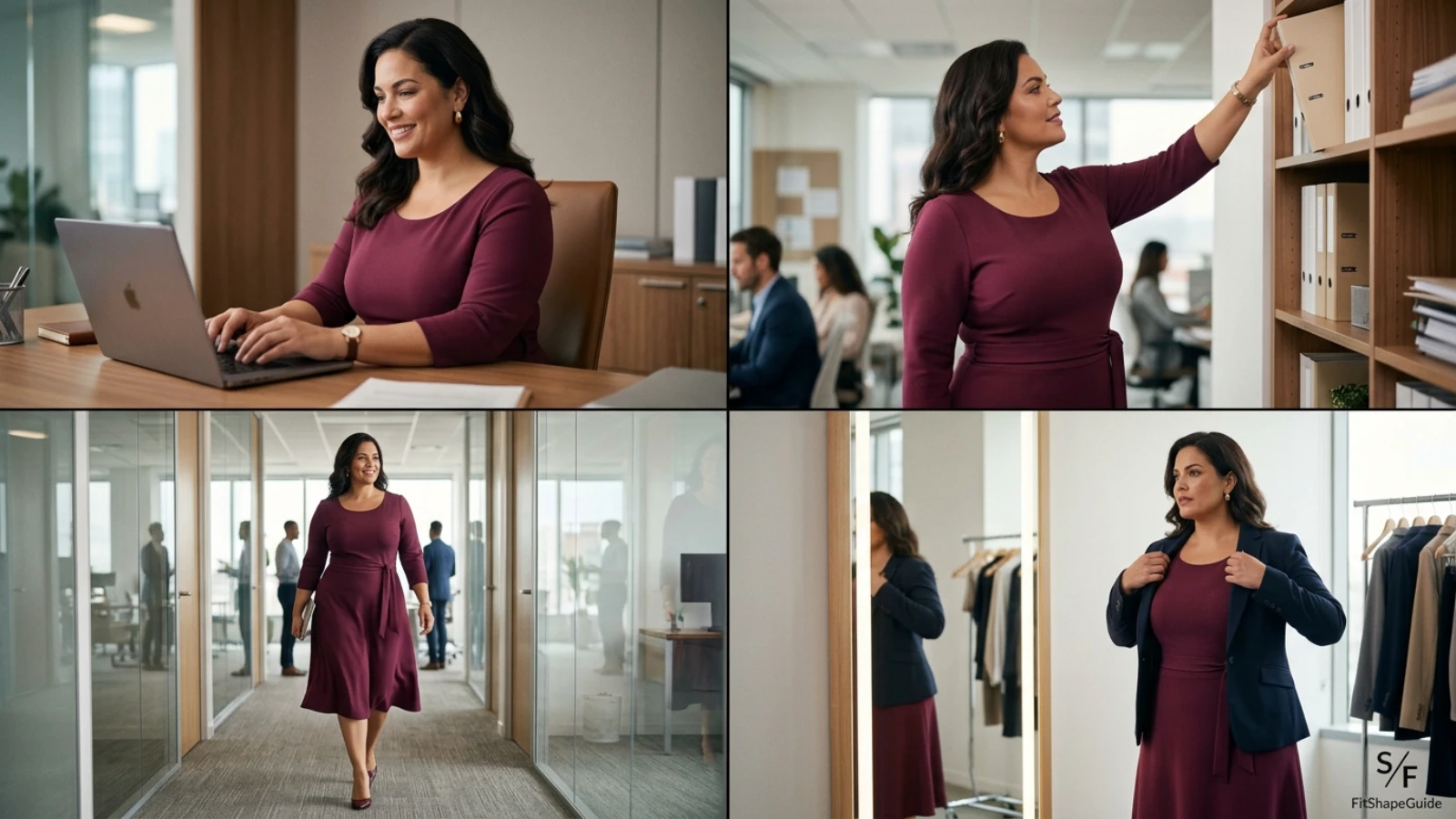
Body proportions that change work-dress fit
Large bust with a smaller waist
Fit the area that is hardest to alter, then assess whether the waist can be refined without disrupting a zipper, pockets or skirt hang. Princess seams, side seams and adjustable wraps can offer options. A belt may manage modest excess, but cinching a very large bodice creates folds and can pull the front shorter. Our large-bust, small-waist dress guide explains this balance.
Short torso or petite frame
A standard dress may place its bust shaping and waist too low even when circumference is correct. Petite grading can shorten shoulder-to-apex and shoulder-to-waist distances, not merely the hem. Avoid aggressively shortening straps to pull the dress upward; that can make armholes cut into the underarm and move darts above the bust.
Tall torso or extra center-front length
A taller wearer or anyone with greater projection may need additional front bodice length. Warning signs include a waist that rises only at center front and a hem that looks shorter there. Tall sizing can help if its added length appears in the bodice rather than only the skirt. Check product measurements and the model’s side view.
Full upper arms or broad shoulders
Sleeve and shoulder fit should be evaluated separately from bust fit. A raglan or knit sleeve can offer mobility, while a tailored set-in sleeve may look sharper when its shoulder point is correct. Stretch panels or gussets can improve reach. Do not accept a tight sleeve simply because the bodice fits; it will pull the neckline and waist upward during routine tasks.
How to shop online for the best work dresses for a large bust
Read garment data, not only the size chart
Useful listings provide garment bust, waist, shoulder, sleeve and length measurements; fabric composition; stretch information; lining; closure; care instructions and photographs of the side and back. “Office-ready,” “curve-friendly” and “supportive” are marketing phrases, not construction facts. Zoom in to locate darts, princess seams, placket buttons, waist placement and pocket openings.
Use reviews as fit evidence
The most helpful reviewers share full-bust, underbust, waist and height measurements, ordered size, bra choice and workplace use. Look for repeated reports of button gaping, neckline movement, tight sleeves, transparency, wrinkles or a raised front waist. A star rating alone cannot tell you whether the dress provides the shape or vertical length your body needs.
Choose versatility carefully
A versatile office dress works with at least two layers and shoe options while remaining secure on its own. Neutral color does not automatically make an uncomfortable dress useful. Calculate likely wears across your real week: meetings, desk work, commute, travel and after-work plans. Comfort, laundering and pocket function may matter more than a dramatic detail.
Amazon affiliate verification
This page is Amazon affiliate-ready but contains no fabricated product names, ASINs, prices, ratings, stock claims or review counts. Before inserting a recommendation, verify the live seller, current garment chart, shell and lining materials, closure, care label, return window and recent customer photographs. Mark affiliate links rel="sponsored nofollow", disclose the relationship clearly and keep selection standards independent of commission.
A complete home try-on for office reality
Even the best work dresses for a large bust should be tested against your real routine before the return window closes.
Begin with the planned bra and ordinary underwear, keeping tags attached. Let the dress settle from the shoulders, close it without holding your breath and photograph front, sides and back in daylight. Check that shaping points toward the bust, the neckline lies flat, shoulder seams sit correctly and the waist and hem remain level.
Next, recreate at least ten minutes of work. Sit fully in a chair, type, reach across a desk, lift a laptop bag, bend to a low drawer, climb stairs and put on a jacket. Place realistic objects in the pockets. The neckline should return to place, sleeves should not lift the waist and the skirt should not twist. Note heat, scratchy labels and pressure points that may worsen over hours.
Finally, inspect the dress after sitting. Good fabric recovers rather than retaining shiny stretch marks or deep horizontal creases. Check the outfit under office-like lighting and on a video call. Compare notes before trying another size; photographs taken from the same angles are more reliable than memory.
| Fit symptom | Likely reason | Better response |
|---|---|---|
| Diagonal lines from bust | Missing width or projection | Choose deeper seams or darts |
| Placket opens between buttons | Insufficient bust ease or poor button spacing | Choose a shaped shirt dress, not a safety-pin fix |
| Waist rises at front | Front bodice is too short | Seek longer shaped panels or tall/full-bust grading |
| Neckline gaps | Frame too large or edge too long | Try better grading or a realistic alteration |
| Sleeves lift the dress | Restricted shoulder or upper-arm room | Choose a better armscye, sleeve or stretch panel |
| Fabric shines over bust | Shell is overstretched | Increase usable ease or fabric substance |
Work-dress alterations: useful refinement versus reconstruction
Commonly manageable changes include shortening a simple hem, refining accessible side or princess seams, taking in a waist, shortening sleeves and adding bra keepers or a discreet snap. A tailor may improve dart shape or button placement when seam allowance and fabric permit. Bring the exact bra, base layer, shoes and jacket to the fitting because they change bust position and hem balance.
Adding substantial bust projection, lowering an underbust seam, rebuilding a neckline, moving shoulders or inserting a large panel can become expensive reconstruction. Fully lined dresses, complex pockets, bonded fabrics and intricate plackets add labor. Consult a tailor before the return deadline. The tailoring guide for a large bust helps distinguish sensible adjustments from redesign.
Button gaping deserves special judgment. Moving a button slightly or adding an interior snap can control a placket that already overlaps correctly. It cannot supply missing fabric. If the placket separates, pulls into an X or shifts off center, look for more bust room or a dress designed with darts and better closure placement.
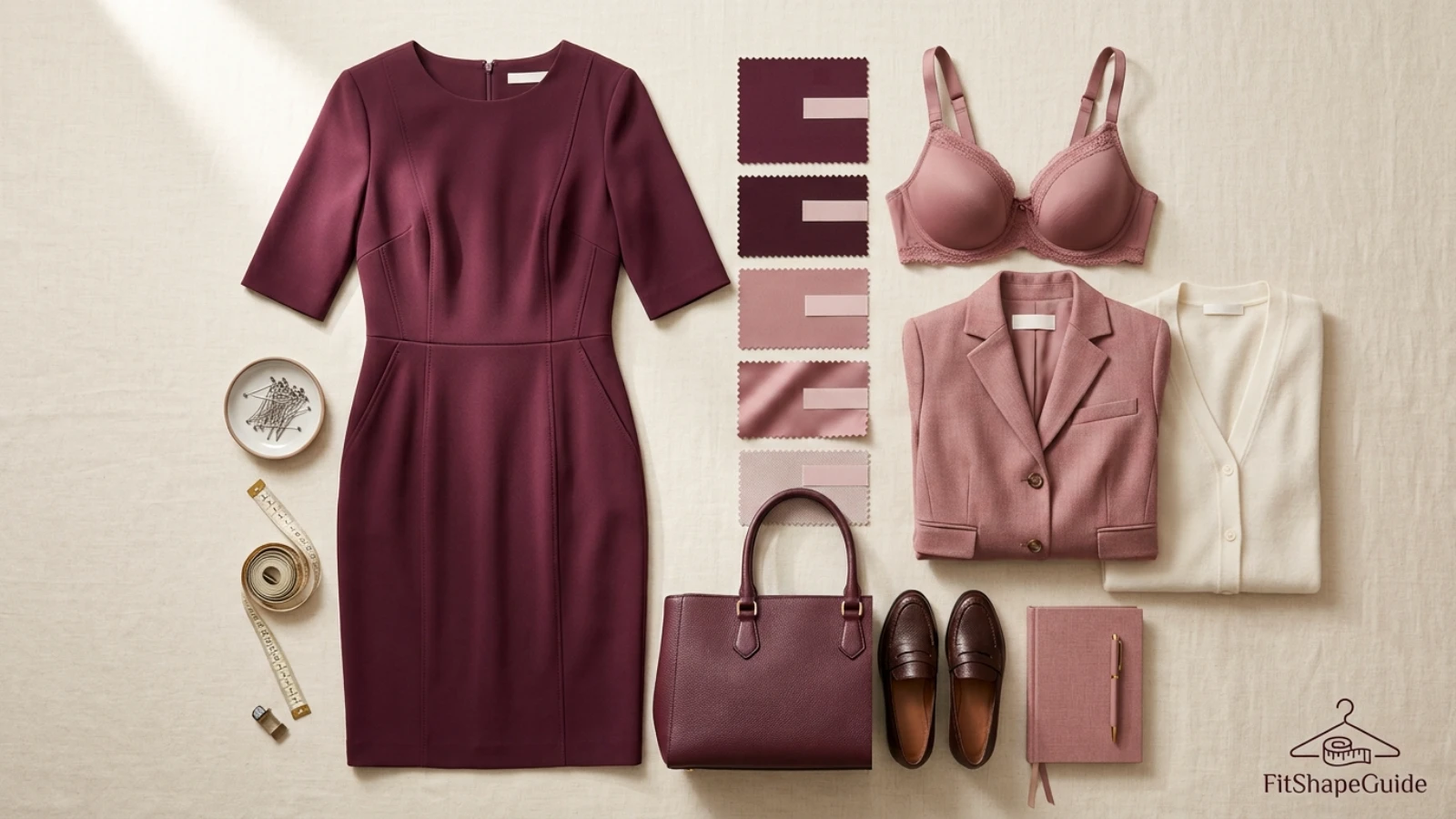
Care, rotation and long-term value
Follow the sewn-in care label because shell, lining, stretch fibers and trims may require different treatment. The U.S. Federal Trade Commission provides official Care Labeling Rule guidance and apparel labeling resources. These standard follow links explain manufacturer responsibilities; the garment’s own label remains the instruction for that dress.
Close fastenings before washing when directed, avoid excessive heat that damages elastane and hang or fold according to fabric weight. Rotate work dresses so fibers can recover. Treat stains quickly and repair loose hems, hooks or buttons before they become larger failures. Steam only at a safe temperature and test delicate fabric from the inside.
The best work dresses for a large bust earn value through comfortable repeat wear. Record which bra, layer and shoes work with each dress, then build a small rotation around reliable shapes. Recheck fit when support garments change, because altered lift can move the bust apex relative to darts, neckline and waist. A practical wardrobe is not defined by owning many dresses; it is defined by having pieces that remain secure and polished without constant attention.
The best work dresses for a large bust combine projection, coverage and real workday mobility
Start with stable shoulders and seams that make room for the bust, then confirm the neckline covers the intended bra and the waist and hem stay level. Test the dress seated, reaching and under the layer you will actually wear. Professional style is not a single neckline or body shape: it is clothing that respects the dress code, performs the job and lets you focus on your work instead of repeated adjustments.
Frequently asked questions
What style of work dress is best for a large bust?
Princess-seam sheaths, secure wrap midis, structured ponte dresses, shaped shirt dresses and belted A-lines are useful starting points. The best option provides front length, bust projection, stable coverage and movement for your actual workday.
Are wrap dresses professional for a large bust?
They can be when the overlap remains secure beyond the bust apex, the neckline suits the dress code and the tie sits at the natural waist. A snap can control a correctly fitted edge but should not force an undersized front closed.
How do I stop a shirt dress from gaping at work?
Choose a bodice with adequate bust ease, darts or princess seams and useful button placement. An interior snap may stabilize sufficient overlap, but visible pulling or separation means the dress needs more room or a different cut.
Should I size up in a work dress for my bust?
Size up only if it adds usable bust projection while shoulders, neckline and armholes remain controllable. If the larger size becomes wide everywhere but remains shallow at the bust, choose another construction or fuller-bust grading.
What neckline is most office-appropriate for a fuller bust?
A moderate V, scoop, square or jewel neckline can all work. The right choice stays flat while leaning and moving, covers the planned bra and matches the specific workplace rather than following a universal flattering rule.
What fabric is best for an all-day office dress?
Matte crepe, quality ponte, double knit and stretch suiting can balance structure, opacity and movement. Check the actual weight, lining and recovery because fiber names alone do not guarantee performance.
Can I wear a sleeveless dress to work with a large bust?
Yes when the dress code allows it. Choose wide shoulders, a stable neckline and armholes that cover the bra from every angle. Test it alone and under the intended jacket or cardigan.
How many work dresses do I need?
The number depends on dress code, laundry access, climate and weekly schedule. A small rotation of reliable, washable dresses that layer with existing shoes and jackets is usually more useful than many difficult-to-style pieces.