Best Zip-Up Hoodies for a Large Bust
A construction-first guide to chest ease, straight zipper lines, shoulder placement, fabric recovery and layering—so a hoodie closes smoothly without turning the torso into a box.
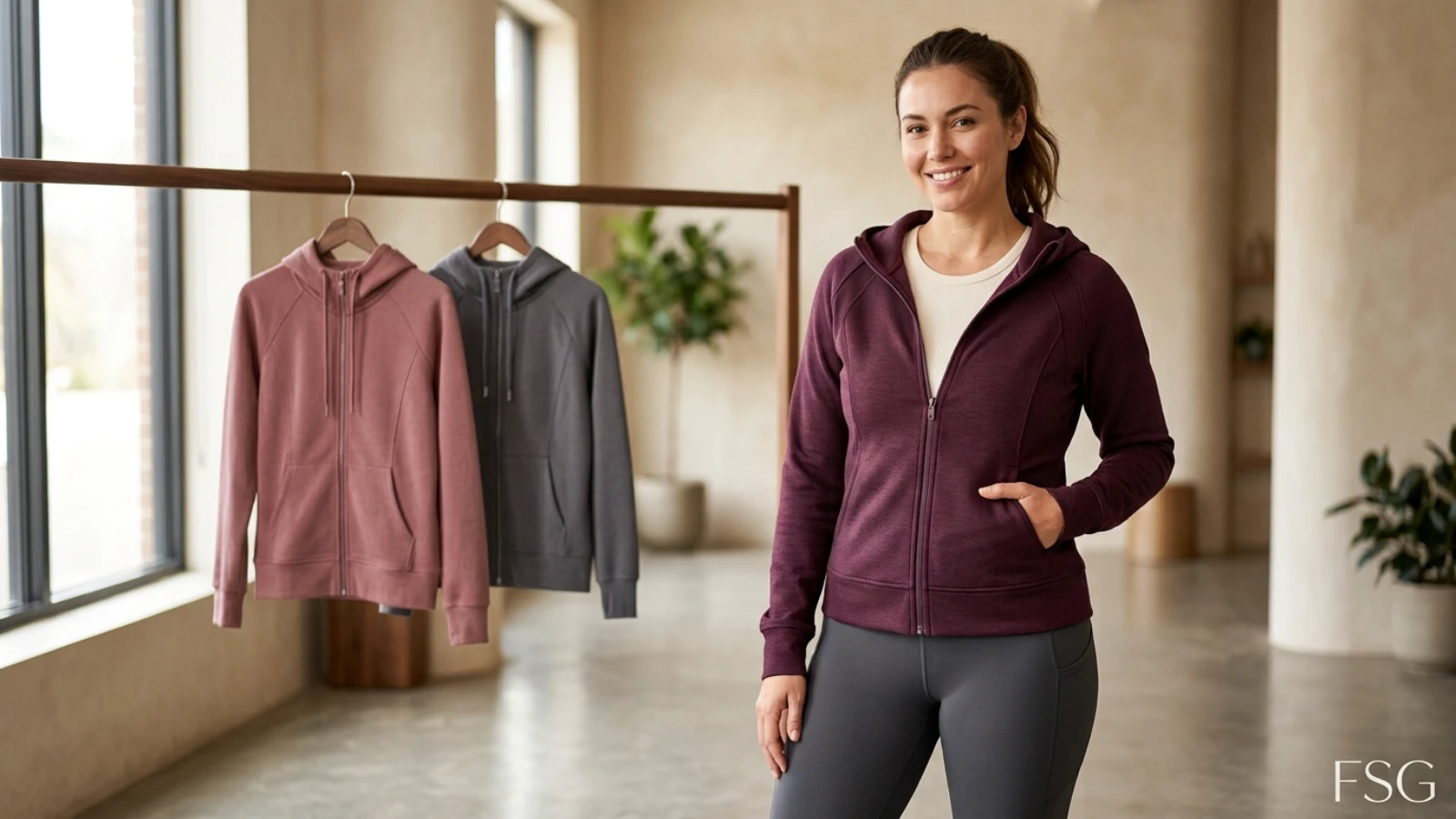
The 90-second hoodie fit check
- Wear the intended base layer and settle the hoodie at the shoulder points.
- Close the zipper slowly without pulling the two front edges together.
- Check for horizontal drag lines, zipper waves or fabric opening between teeth.
- Raise both arms; shoulder seams should not slide far down the upper arm.
- Reach forward and rotate without the back becoming tight across the shoulder blades.
- Place hands in the pockets; the front should not flare or pull across the bust.
- Sit and walk; a two-way zipper may open slightly from the hem when designed to do so.
- Confirm that the hood stays back instead of dragging the neckline toward the throat.
Best zip-up hoodies for a large bust by construction
The category ranges from thin training layers to dense fleece. A larger label size may add chest room, but it can also lower the armholes, lengthen sleeves and remove waist definition. Construction decides where the extra fabric goes. Start with the intended warmth and layer thickness, then compare the cut.
Princess-seam athletic hoodie
Best for: creating three-dimensional chest room while preserving a shaped waist. Curved seams can distribute volume more cleanly than one flat front panel. Trade-off: a seam placed directly over the fullest point may pull or look misplaced when the bust shape differs.
Side-panel performance hoodie
Best for: active layering with stretch concentrated through the side body and underarm. Panels can improve reach without making the center front unstable. Trade-off: very firm side fabric may squeeze the chest forward and exaggerate zipper strain.
Double-knit structured zip hoodie
Best for: a smooth smart-casual line that resists clinging and hides minor base-layer texture. Trade-off: stable fabric needs enough pattern ease because it will not stretch around insufficient chest room.
Stretch-fleece training hoodie
Best for: warmth plus movement during walks, warm-ups and travel. A brushed interior can feel soft while elastane supports recovery. Trade-off: thick fleece adds visual volume and may make tight pockets or zipper waves more obvious.
Two-way-zip longer hoodie
Best for: sitting, commuting and layering over fuller hips because the lower slider can release hem tension. Trade-off: two sliders add weight and must align correctly; opening the hem cannot create missing bust ease.
High-hip relaxed hoodie
Best for: balancing a fuller upper torso without a long ribbed hem gripping below the bust. A softly relaxed body can skim rather than cling. Trade-off: very cropped or boxy cuts may ride up and visually widen the chest if the hem ends at the fullest point.
The best zip-up hoodies for a large bust solve volume inside the pattern. They do not depend on an oversized shoulder or a stretched zipper to manufacture room after the garment is closed.
Bust ease, zipper waves and front-panel tension
A zipper creates a visible vertical reference down the body. On a fitting hoodie it lies smoothly or follows a gentle natural curve. On a tight hoodie it may ripple, bow away from the chest or pull the two front panels into diagonal lines. The zipper is showing where the fabric is under strain; it is rarely the only cause.
Finished garment room matters
Body measurements and garment measurements are different. The hoodie needs enough room for the body, the intended base layer and the desired wearing ease. A fitted performance layer may use less ease than a fleece jacket, but neither should crush the bust or distort the closure.
Horizontal drag lines
Lines running from the bust toward the side seam or armhole usually indicate that the front needs more width or shape. Sizing up can work when shoulders and sleeves remain reasonable. When they become oversized, a more contoured cut or a different size system is the better solution.
Zipper tape stability
Stable tape helps the center keep its line, but extremely stiff tape against soft stretch fabric can create ripples. Close the hoodie without tugging down on the slider. If the zipper becomes smooth only when stretched vertically, the body length or chest ease may be wrong.
Pocket placement and pull
Kangaroo-style split pockets, welt pockets and zip pockets add seams and extra layers to the lower front. Pockets beginning too high can compete with the bust; heavy phones can pull the hem and make the center wave. Test the hoodie with the items you commonly carry.
| Visible clue | Likely explanation | What to compare next | Do not rely on |
|---|---|---|---|
| Horizontal lines from bust | Insufficient front width or cup-shaped volume | More chest ease, princess seams or side panels | Forcing the zipper closed |
| Zipper bows outward | Front panels pulled around chest projection | Deeper front shape and stable tape | A heavier zipper alone |
| Shoulders fit but waist is wide | Size grading adds width everywhere | Contoured body or adjustable hem | Randomly sizing farther up |
| Hem pulls upward in front | Bust uses vertical length or hem grips hips | More front length, higher hem or two-way zip | Stretching ribbing while wet |
| Pockets flare | Opening or pocket bag under tension | Lower/slanted pockets and more hip ease | Loading pockets during fitting |
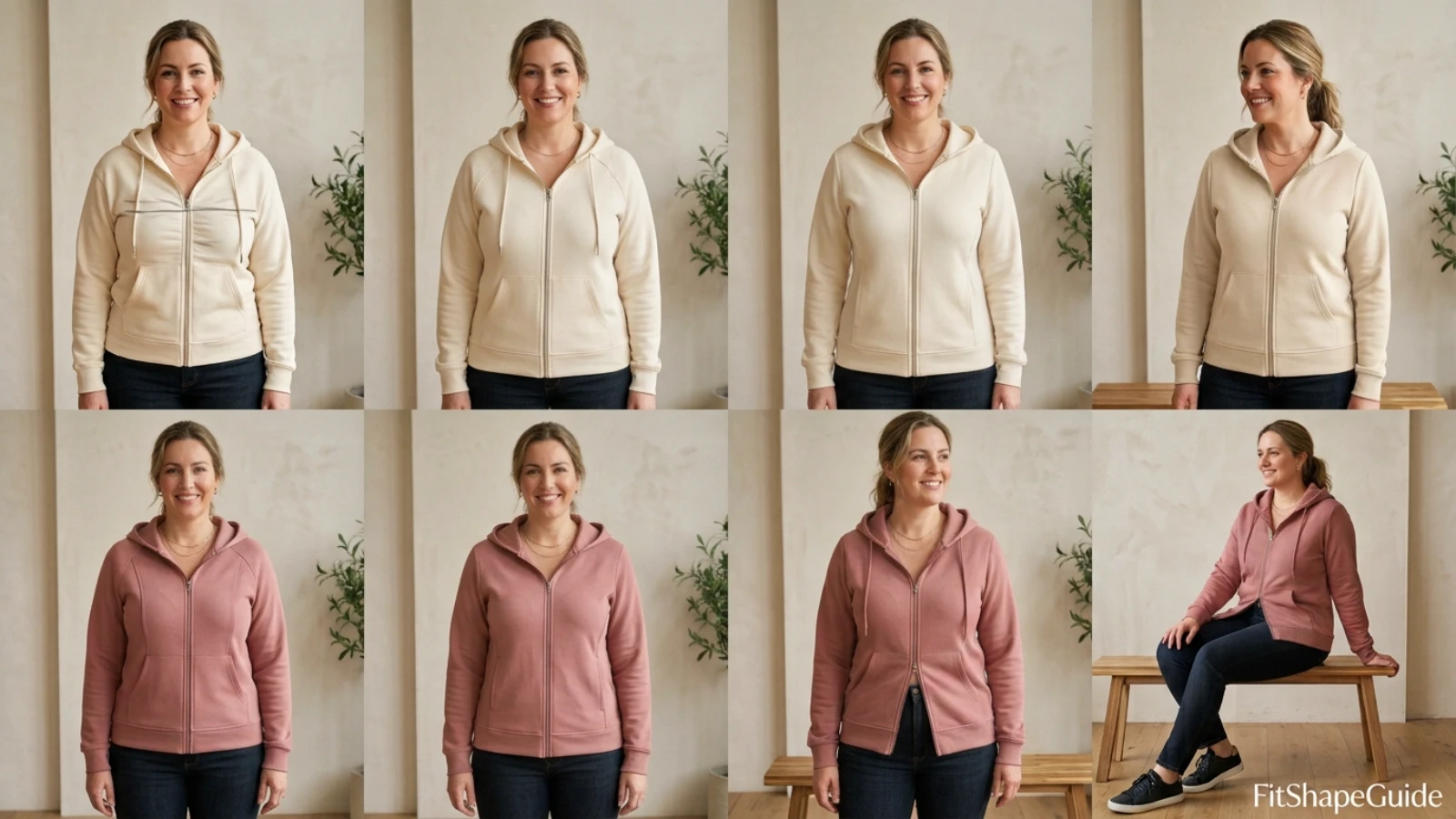
The best zip-up hoodies keep the center controlled because the panels already accommodate chest projection and the chosen layer underneath.
Shoulders, armholes, sleeves and hood weight
Chest fit cannot be judged in isolation. When a hoodie is sized up for the bust, its shoulder seam may fall down the arm and the armhole may become deep. That extra fabric can restrict reach in a different way, create bunching beneath a jacket and make the garment feel heavier than it is.
Shoulder seam position
A set-in shoulder usually sits near the shoulder point. A deliberate drop-shoulder can extend lower, but both sides should look intentional and allow the sleeve to hang cleanly. If only the bust area pulls while the shoulder is already wide, change the cut rather than adding another size.
Armhole depth and reach
Very low armholes lift the whole hoodie when the arms rise. Performance gussets, raglan sleeves or shaped underarm panels can improve mobility, though raglan seams still need enough room across the upper chest. Test a forward reach, overhead reach and comfortable self-hug.
Sleeve volume and cuffs
Sleeves should layer over the intended top without twisting. Firm cuffs keep warmth in but should not make the sleeve ride upward. Thumbholes can stabilize the sleeve during warm-ups, provided they do not pull the shoulder or shorten reach.
Hood size and neckline
A double-layer hood can drag a soft neckline backward, especially when wet. Check the hoodie zipped to several heights with the hood down and up. The neckline should not press the throat, and drawcord hardware should not strike the chest during movement.
Back width
Fuller busts sometimes lead shoppers to focus only on the front, but rows, driving and desk posture need adequate upper-back width. Fabric should not form strong horizontal lines between the shoulder blades during reach. A back yoke or stretch panel can add mobility without widening the entire torso.
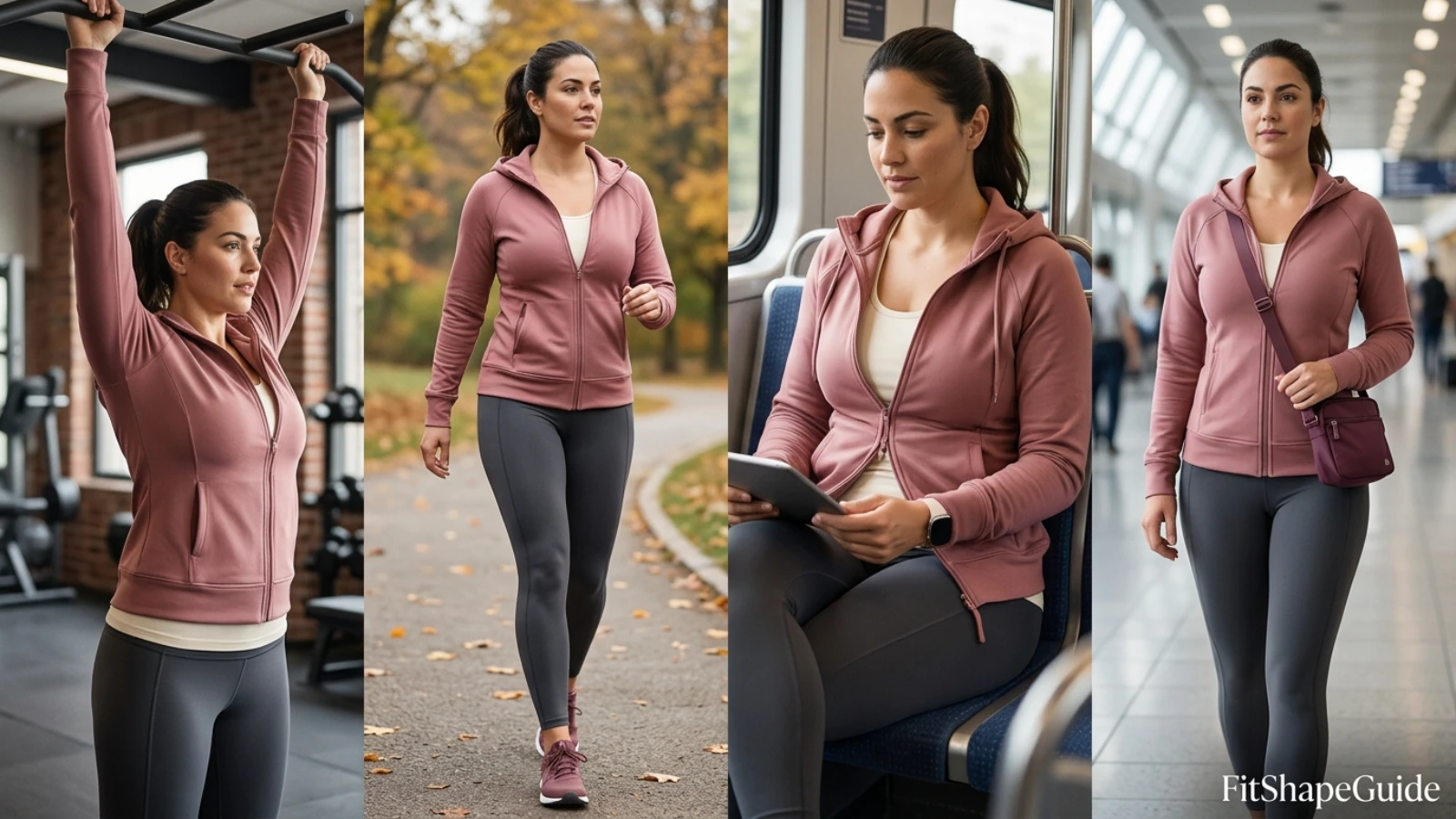
The best zip-up hoodies fit the chest without borrowing uncontrolled width from the shoulders, sleeves or back.
Gym, walking, running and everyday layering
A hoodie fitted over a thin bra may become tight over a tank and training top. Conversely, buying for the thickest possible layer can make everyday wear shapeless. Define the primary outfit first and treat unusual extra layers as a separate use case.
Gym warm-up
For strength sessions, test reaching, rowing and setting up on a bench. A high-hip hem can avoid bunching at the waist, while flat pockets reduce pressure against equipment. Pairing with one of the gym tanks for a large bust lets you evaluate the real neckline and armhole stack.
Walking and commuting
For longer wear, judge temperature control, hood weight, pocket security and seated comfort. A two-way zipper can release the lower front when sitting. The upper slider should remain stable, and the lower opening should not rise so high that it exposes the bust or base layer unexpectedly.
Running warm-up or cooldown
A light performance hoodie may work before and after running, but loose drawcords, heavy hoods and bouncing pocket contents can distract during the activity. Compare breathable base layers in the running tops guide.
Travel and all-day casual wear
Test the hoodie seated with a bag strap across it. Thick seams, pocket zips and hood bulk may become uncomfortable under backpacks or seat belts. A smooth double-knit layer can look more polished, while fleece may provide more warmth.
Complete activewear proportions
A fuller upper body can be balanced with a clean high-hip hem, tonal base layer and uninterrupted vertical zipper. For coordinated choices, compare workout sets for a large bust. Use styling as a preference, not a rule that every body must appear smaller.
| Use case | Priority construction | Layering test | Common conflict |
|---|---|---|---|
| Gym warm-up | High-hip hem, mobile armhole, flat pockets | Reach, row and bench setup over tank | Hem bunching or pocket hardware pressure |
| Walking | Stretch fleece, stable zipper, secure pockets | Twenty-minute walk with normal carry items | Heat buildup or front pulled by pockets |
| Running transition | Light knit, controlled hood and cuffs | Brisk walk and brief easy jog | Hood bounce, drawcord movement or ride-up |
| Commuting | Two-way zip and seated hem ease | Sit, stand and use bag strap | Hip tension travels upward to bust |
| Everyday styling | Princess seams or structured double knit | Zip at several heights over usual top | Waist becomes wide when chest is sized up |
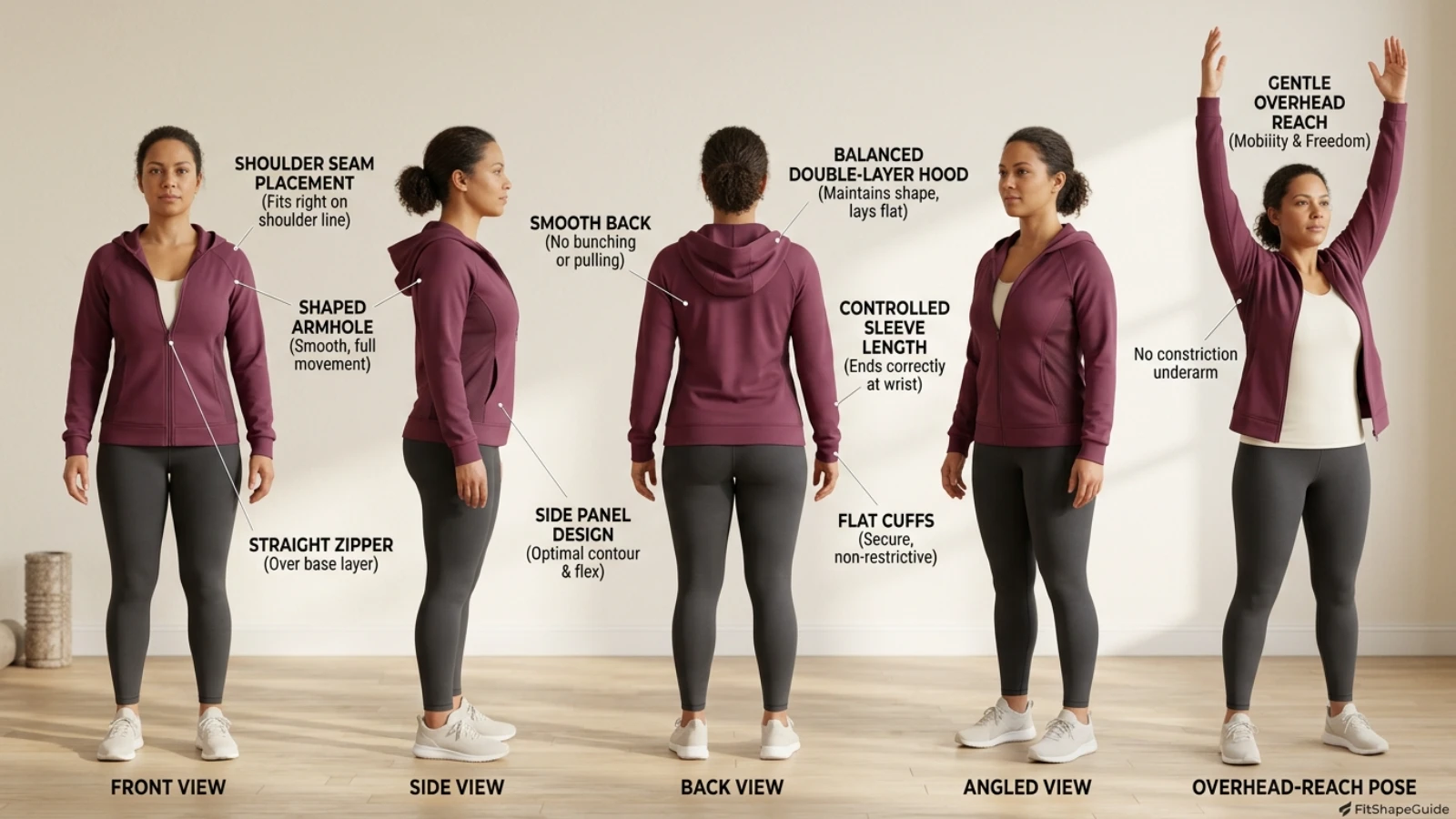
The best zip-up hoodies preserve their line over the actual outfit and movement pattern rather than a bare-body fitting that never occurs in use.
Fleece, double knit, jersey and fabric recovery
Fabric weight changes how a hoodie fits. Thin jersey reveals base-layer lines and may cling; heavy fleece stands away from the body and adds insulation; double knit offers surface structure; technical stretch fabric prioritizes movement and drying. Fiber percentages alone do not reveal drape, thickness or recovery.
Cotton-rich fleece
Cotton-rich fleece often feels soft and familiar. Brushed interiors trap warmth, while ribbed cuffs and hems help shape retention. A dense fleece requires real bust ease because it may stretch less than expected. Check shrinkage guidance and the care label before choosing between sizes.
Polyester performance knit
Technical polyester can be lighter and faster-drying, with elastane added for movement. Very thin fabric may cling to the chest or show pocket bags. Look for recovery: gently stretch a low-risk area according to the seller’s guidance and see whether it returns without rippling.
Double knit or ponte-like structure
A double-knit surface can skim the torso and support a straighter zipper line. Because it often has more body, it may feel warm without a brushed interior. Stable versions need precise shoulders and enough front volume.
Ribbed hem behavior
A tight ribbed band below the bust or at the hip can pull the front upward, especially when the hoodie needs extra vertical length over the chest. A straight high-hip hem, side vents, drawcord or two-way zipper can reduce that conflict. The better choice depends on torso length and desired warmth.
Care and zipper protection
Follow the garment label. Nike’s hoodie-care guidance recommends cold water and a gentle cycle as a general approach and advises reducing excess friction; it also suggests turning the garment inside out and closing zippers before washing. Requirements vary by fabric and finish, so the sewn-in label remains the final instruction.
Before washing, empty pockets and inspect the slider. Retire or professionally repair a zipper whose teeth separate, tape tears or slider no longer joins the track. Patagonia provides official repair guidance, including zipper-slider repair resources, which illustrates why repairability is useful evidence when evaluating outer layers.
How to shop online for a fuller-bust zip hoodie
Useful listings provide a current size chart, garment measurements, front and back views, fabric composition, fabric weight or seasonal use, closure type, pocket construction, hem style and care. “Relaxed,” “oversized” and “slim” are not standardized measurements.
Compare body and garment charts
Some charts describe the body; others describe the finished hoodie. Identify which one you are reading. For garment measurements, compare chest width, shoulder, sleeve, body length and hem against a hoodie that already fits the intended way. Flat chest width usually represents half the circumference, but confirm the seller’s method.
Account for the base layer
Measure a suitable hoodie over the tank, sports bra or training top you plan to wear. If supportive foundations affect the outer silhouette, start with the sports bra guide for a large bust. The hoodie should fit the outfit without being used to compress it.
Inspect side and back photographs
Front styling can hide zipper waves with an open pose. Side views reveal front length and hem rise; back views reveal shoulder placement and hood bulk. Interior photographs show pocket bags, seam finishing and whether the zipper tape is backed.
Use reviews as fit evidence
Prioritize reviews that mention body measurements or usual size, purchased size, base-layer thickness, torso length and a specific result. Comments about chest pull, zipper ripples, sleeve length, hood weight, pilling and wash change are more useful than “cute” or “runs small.”
Amazon verification workflow
Before adding an affiliate module, confirm the live title, brand or authorized seller, current chart, garment measurements, fabric, zipper, pockets, care, color/size variant and return eligibility. Never hard-code price, coupon, rating, review count, stock or delivery promises. Affiliate relationships should be disclosed clearly and conspicuously under FTC guidance.
If the desired garment is more structured, weather-resistant or designed as outerwear, compare the athletic jackets guide. For close base layers, use the compression tops guide without expecting compression to repair a hoodie that is too small.
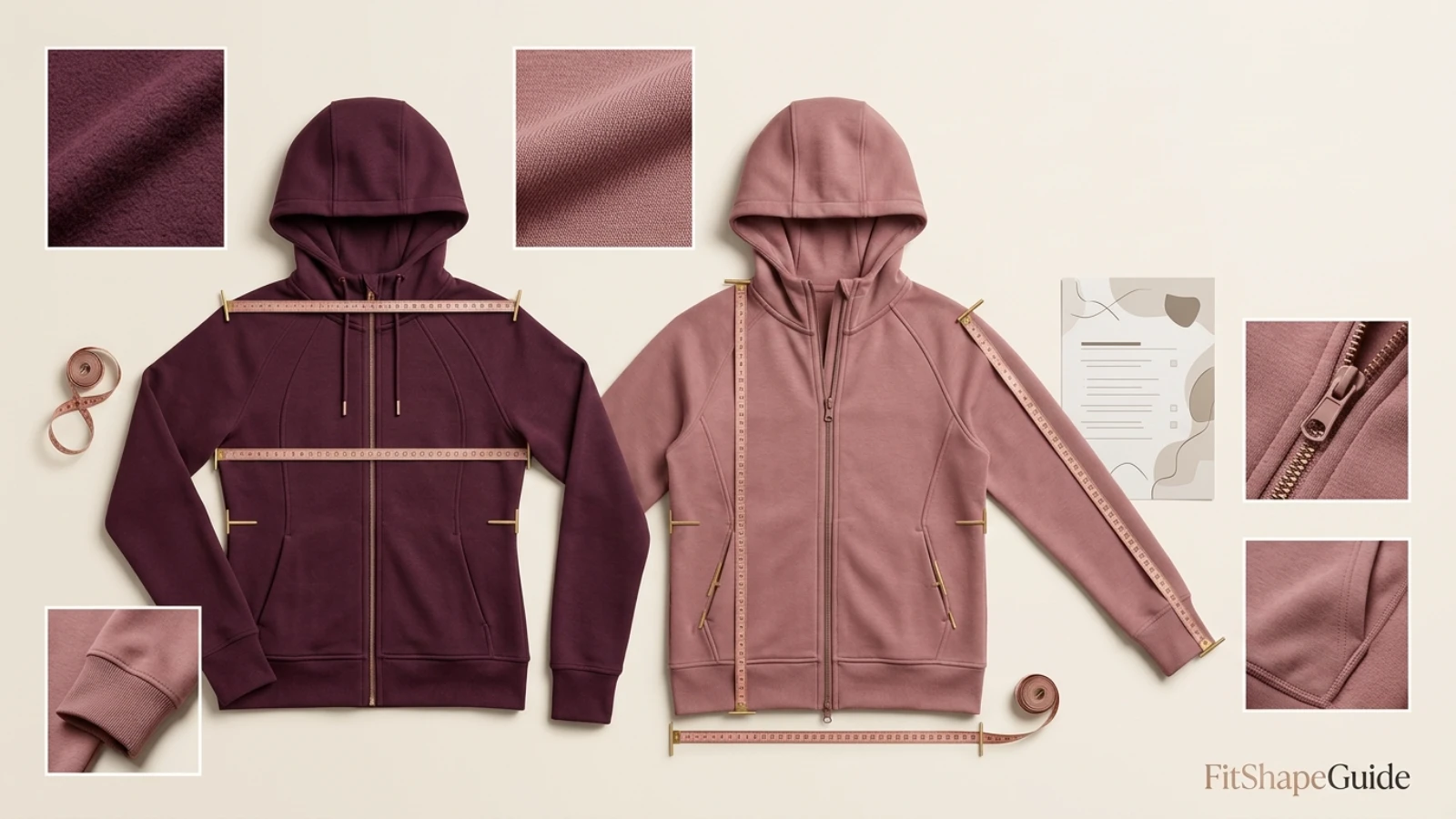
Listings for the best zip-up hoodies make size distribution visible instead of asking shoppers to trust one vague “oversized” label.
Common zip-up hoodie fit problems
| Symptom | Likely cause | Better next step |
|---|---|---|
| Zipper waves across chest | Insufficient bust ease, soft body with stiff tape or wrong front length | Compare more front volume, stable panels or another size/cut |
| Shoulders hang too low | Size increased for bust within straight grading | Choose bust-shaped seams or a deliberate drop shoulder |
| Front hem rises | Chest uses vertical length or rib hem grips below | Seek more front length, high-hip hem or two-way zip |
| Waist looks much wider | Extra circumference distributed evenly | Use princess seams, side panels or adjustable hem |
| Pockets flare or pull | Opening placed under tension or pocket bag overloaded | Choose lower/slanted pockets and test empty first |
| Hood pulls neckline backward | Heavy double layer, wet fabric or weak neckline | Choose lighter hood or more stable upper frame |
| Whole hoodie lifts with arms | Low armholes, tight back or insufficient sleeve mobility | Try shaped armholes, gusset, raglan or stretch panel |
| Lower zipper bunches when seated | Long rigid front conflicts with hip flexion | Try shorter length, hip ease or functioning two-way zip |
Do not force the zipper to create room
If the two sides need to be pulled together, the garment lacks usable ease. Repeated strain can distort tape, fabric and seams. Try a different size only when shoulders and sleeves remain workable; otherwise change the cut.
Do not judge only while open
An open hoodie can drape beautifully even when it cannot close smoothly. If you intend to wear it zipped, test several zipper heights over the real base layer. The fit should remain intentional at the positions you will use.
Do not use “flattering” as a demand to look smaller
Good fit means comfort, movement and a line you enjoy. The best zip-up hoodies for a large bust can be fitted, relaxed, cropped or long; the shared requirement is that the design accommodates the body without distortion.
Choose front volume with a controlled frame
The best zip-up hoodies for a large bust combine real chest ease with stable zipper tape, intentional shoulders, mobile armholes and a hem that does not pull the front upward. Choose princess seams for shaping, side panels for movement, double knit for structure, stretch fleece for warmth or a two-way zipper for seated and hip comfort. Keep the hoodie that closes without force and remains balanced through reaching, pockets, sitting and the intended base layer.
Frequently asked questions
These answers explain how the best zip-up hoodies for a large bust should close, layer and move.
The best zip-up hoodies are defined by where their fabric volume sits, not simply by choosing an oversized label.
What zip-up hoodie style is best for a large bust?
A princess-seam or side-panel hoodie is a strong starting point because it can add chest volume while retaining shoulder and waist shape. Choose fabric weight for the intended activity.
Why does my hoodie zipper wave over my bust?
Common causes include insufficient chest ease, a stiff zipper attached to soft fabric, incorrect front length or pocket and hem tension pulling on the center.
Should I size up in a zip hoodie for a large bust?
Size up when the added chest room helps and shoulders, sleeves and armholes still fit. If those areas become oversized, choose a more bust-shaped cut instead.
Is a two-way zipper better for a fuller bust?
A two-way zipper can release tension at the hem when sitting or over fuller hips. It improves lower-body comfort but cannot replace missing chest ease.
What hoodie length is most balanced for a large bust?
A high-hip hem often avoids gripping directly below the bust, while longer styles can work with enough front length and hip ease. The best length depends on torso proportions.
How should a zip-up hoodie fit across the shoulders?
A set-in seam should sit near the shoulder point, while a drop shoulder should look intentional. Reaching should not pull the chest, back or whole hoodie upward.
Which hoodie fabric is best for a large bust?
Structured double knit skims, stretch fleece adds warmth and performance jersey favors movement. The best fabric supplies enough ease, drape and recovery for the intended layer.
How do I measure a hoodie before buying online?
Compare chest width, shoulder, sleeve, front length and hem with a hoodie that fits. Confirm whether the seller chart lists body or finished-garment measurements.
Editorial and verification standards
This guide evaluates construction instead of inventing a ranked product list. Garment decisions are based on observable pattern features: chest ease, seam position, shoulder fit, armhole movement, fabric recovery, zipper behavior, hem balance and pocket load.
Care guidance references the official Nike hoodie-washing guide, while repairability is supported by Patagonia’s official care and repair resources. Always follow the label attached to the actual garment because fibers, finishes and trims vary.
Before publication of any product module, an editor should verify the live listing, seller, chart, garment measurements, fabric, zipper, pockets, care and current return terms. Affiliate relationships should be disclosed clearly and conspicuously according to the FTC endorsement guidance.
The phrase best zip-up hoodies for a large bust therefore means suitable verified constructions for an individual body, layer and use—not a universal promise that one cut will fit everyone.