Best Bandeau Swimsuit Alternatives for a Large Bust
A support-first guide to straight-neck looks, optional straps, bra-sized balconettes, square necks and convertible styles that stay secure beyond the poolside pose.
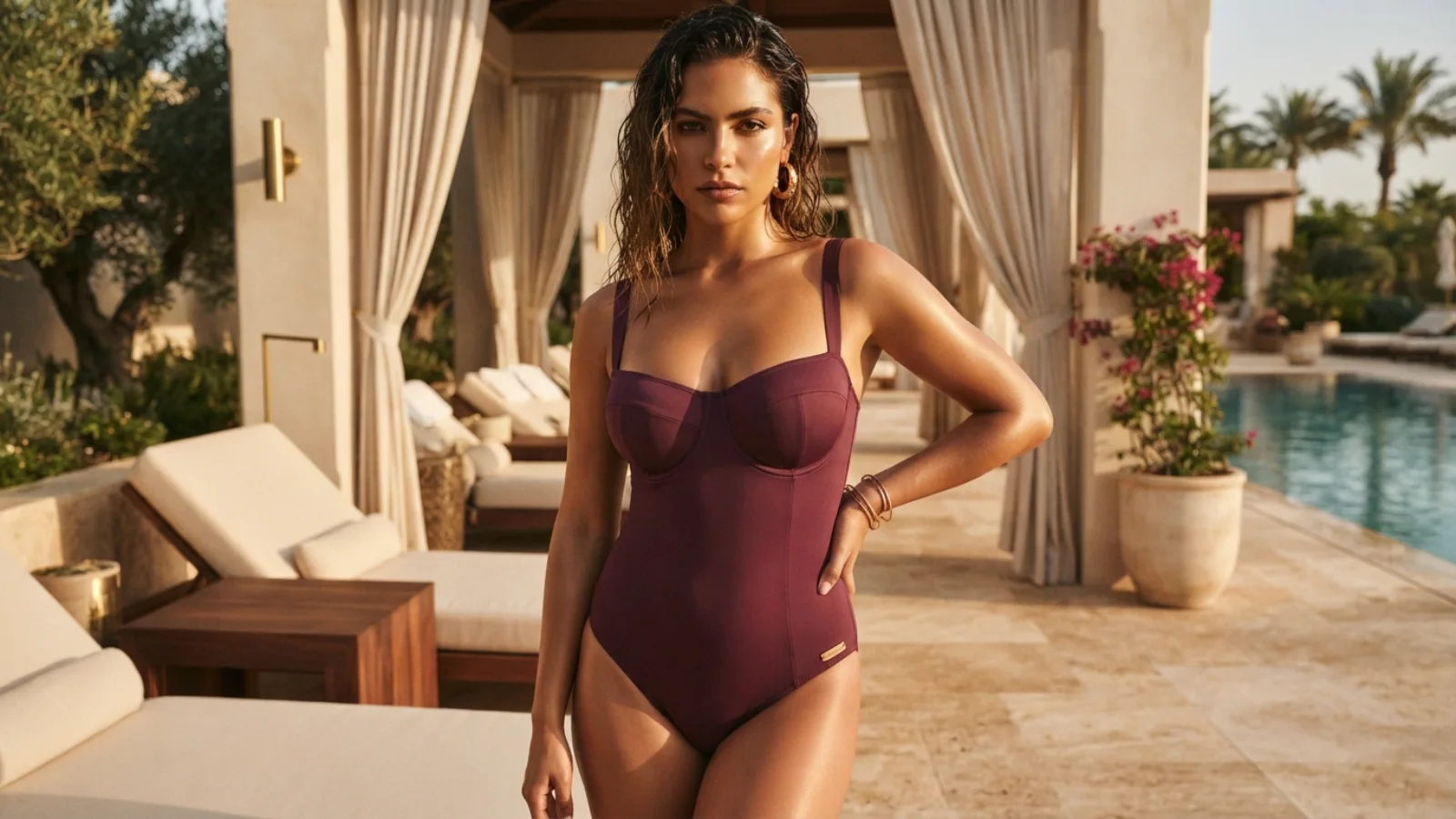
The 90-second bandeau-alternative check
- The cups or shaped panels fully contain the bust without flattening or folding.
- The underband stays level when the shoulder straps are loosened slightly.
- The straight or square neckline lies flat without cutting into tissue.
- Side wings and boning remain vertical rather than bowing or digging.
- Removable hooks sit fully inside reinforced loops and do not rotate loose.
- The suit permits a full breath without relying on maximum tightness.
- After wet movement, the neckline, band and cups recover without retightening.
Best bandeau swimsuit alternatives for a large bust
A plain tube of stretch fabric asks the upper edge and torso compression to perform every support job. An effective alternative distributes load through shaped cups, a firm underband or internal shelf, high side wings, a stable back and a strap route appropriate to the activity.
Bra-sized optional-strap bandeau
Best for: a genuine straight neckline with band-and-cup sizing and removable straps for extra security. Seek side support and a firm closure. Trade-off: strapless mode must pass independently; cup labels alone do not guarantee it.
Wide-set removable-strap balconette
Best for: an open shoulder line with shaped underwire or seamed cups. Wide-set straps preserve the visual effect while controlling the upper edge. Trade-off: strap anchors must not sit so far outward that they slip.
Supportive square-neck one-piece
Best for: a clean geometric neckline with permanent bra-friendly straps and strong side coverage. Trade-off: square corners can gape if the front is shallow or the edge lacks recovery.
Convertible straight-to-cross-back suit
Best for: switching from a wide-set resort look to a more secure swimming route. Trade-off: every hook, loop and approved route needs its own pressure and wet-security test.
One-shoulder suit with independent band
Best for: asymmetric open-shoulder styling without fully strapless wear. The inner band and cups should remain level. Trade-off: one strap must not pull the neckline or torso diagonally.
Straight-neck supportive tankini
Best for: a bandeau-like line with removable or wide-set straps and separate bottom sizing. Trade-off: the outer tank body must not drag the inner cup frame downward when wet.
The best bandeau swimsuit alternatives for a large bust are not defined by how little strap is visible. They are defined by whether the internal structure remains stable before the strap is asked to help.
Band, cups, side support and neckline grip
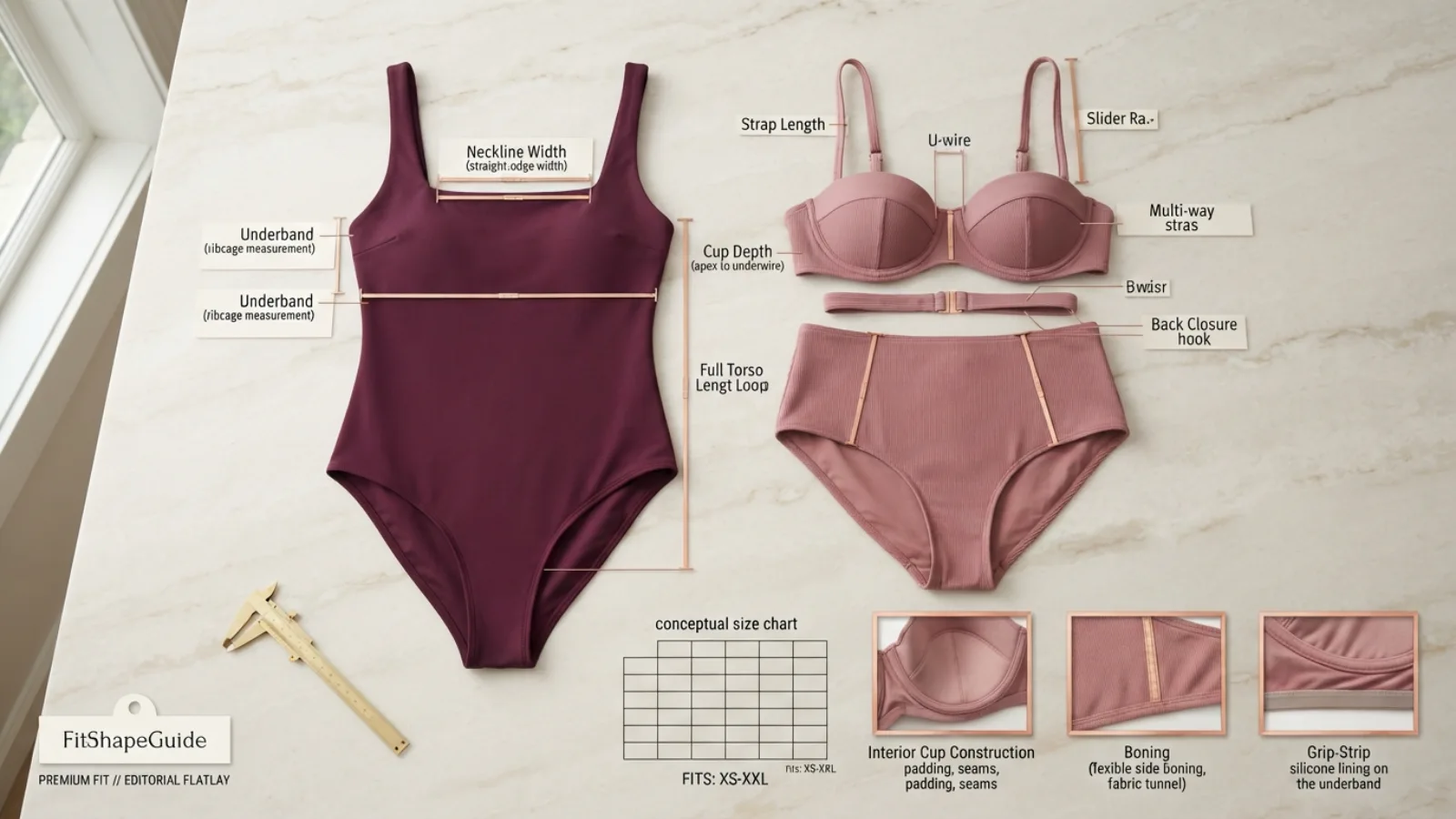
A fuller bust creates downward and outward load. In a conventional suit, straps help position the cup edge while the band and back provide the horizontal anchor. In a strapless mode, the anchor and cup frame must work harder. This makes band fit, side height, cup depth and upper-edge recovery more important—not maximum compression.
The band must remain horizontal
With the cups properly settled, loosen or remove the straps only if the manufacturer approves that mode. The band should stay level and the front should not drop. If the back climbs, the band may be too loose, the cups may be shallow or the torso may be pulling downward. A tighter hook is useful only if breathing and cup geometry remain correct.
Cup depth prevents the neckline from carrying tissue
A straight edge should frame the upper bust, not cut across displaced tissue. Shallow cups push the bust upward and outward, creating overflow even when the neckline feels tight. Seek seams, molded depth, underwire or a clearly shaped inner cup. Removable pads offer coverage or minor shaping; they do not create missing capacity.
Side wings and boning stabilize rotation
Tall sides can contain tissue and resist the band folding. Flexible side stays or boning may keep the band vertical, but they should not poke, warp or press into the underarm. Boning supports the band shape; it does not compensate for an incorrect cup or torso size.
Silicone grip is secondary evidence
A silicone or rubberized strip can reduce edge movement on compatible skin, but it is not the primary support system. Check care instructions, sensitivity and whether sunscreen or water affects grip. Stop use if irritation develops. A gripping edge should never be so tight that it restricts breathing or leaves painful marks.
| Support element | Primary job | Evidence to confirm | Warning sign |
|---|---|---|---|
| Firm underband/back | Horizontal anchor | Stays level without strap load | Rides up or folds |
| Shaped cups | Width, depth and containment | No overflow, floating or flattening | Neckline cuts across tissue |
| High side wings | Lateral containment | Comfortable underarm coverage | Chafing or tissue escape |
| Side stays/boning | Resist band collapse | Remain vertical in motion | Bow, poke or twist |
| Upper-edge grip | Reduce minor slippage | Skin-compatible and recoverable | Irritation or reliance on extreme tightness |
Removable straps, hooks and convertible routes
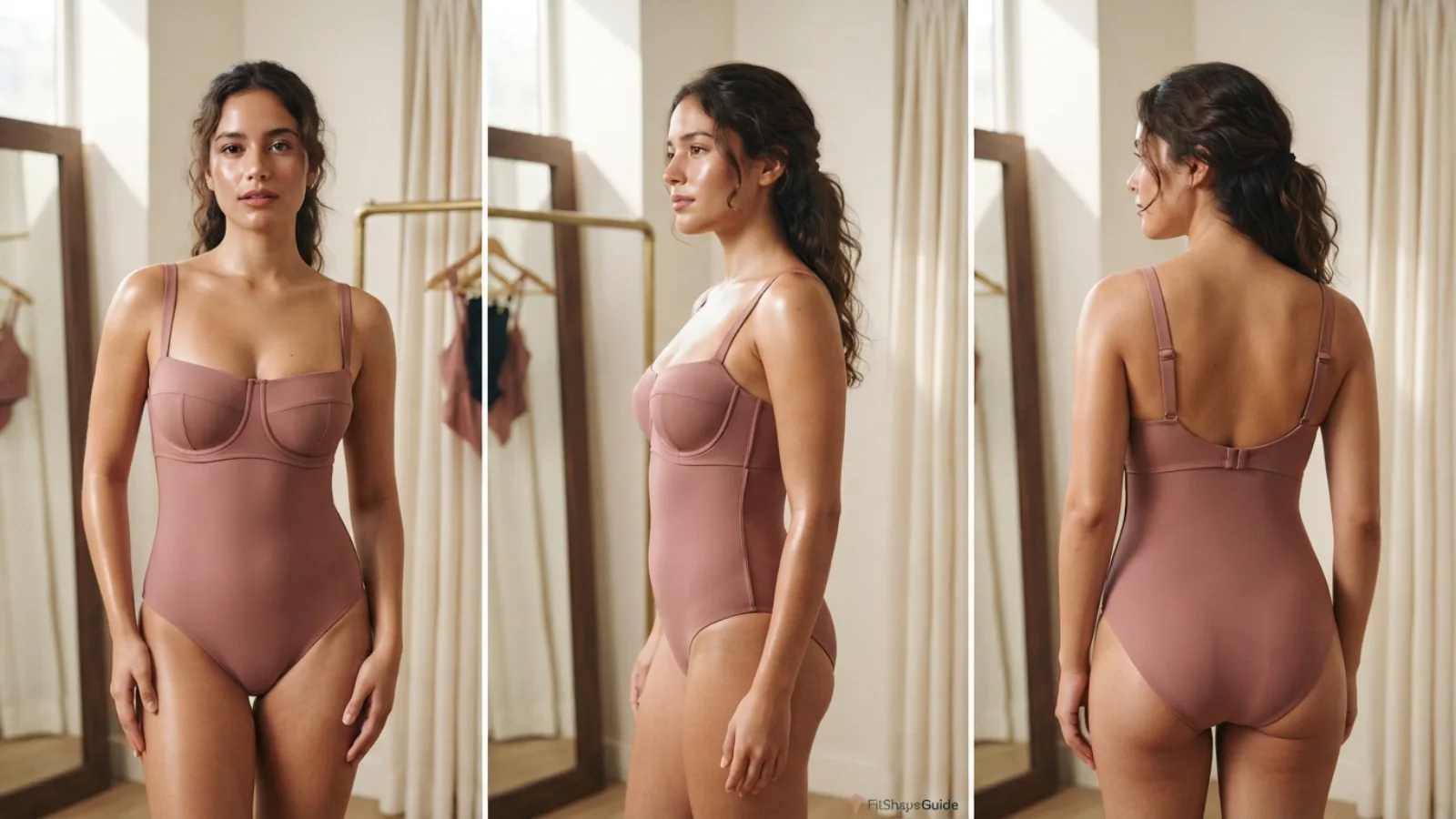
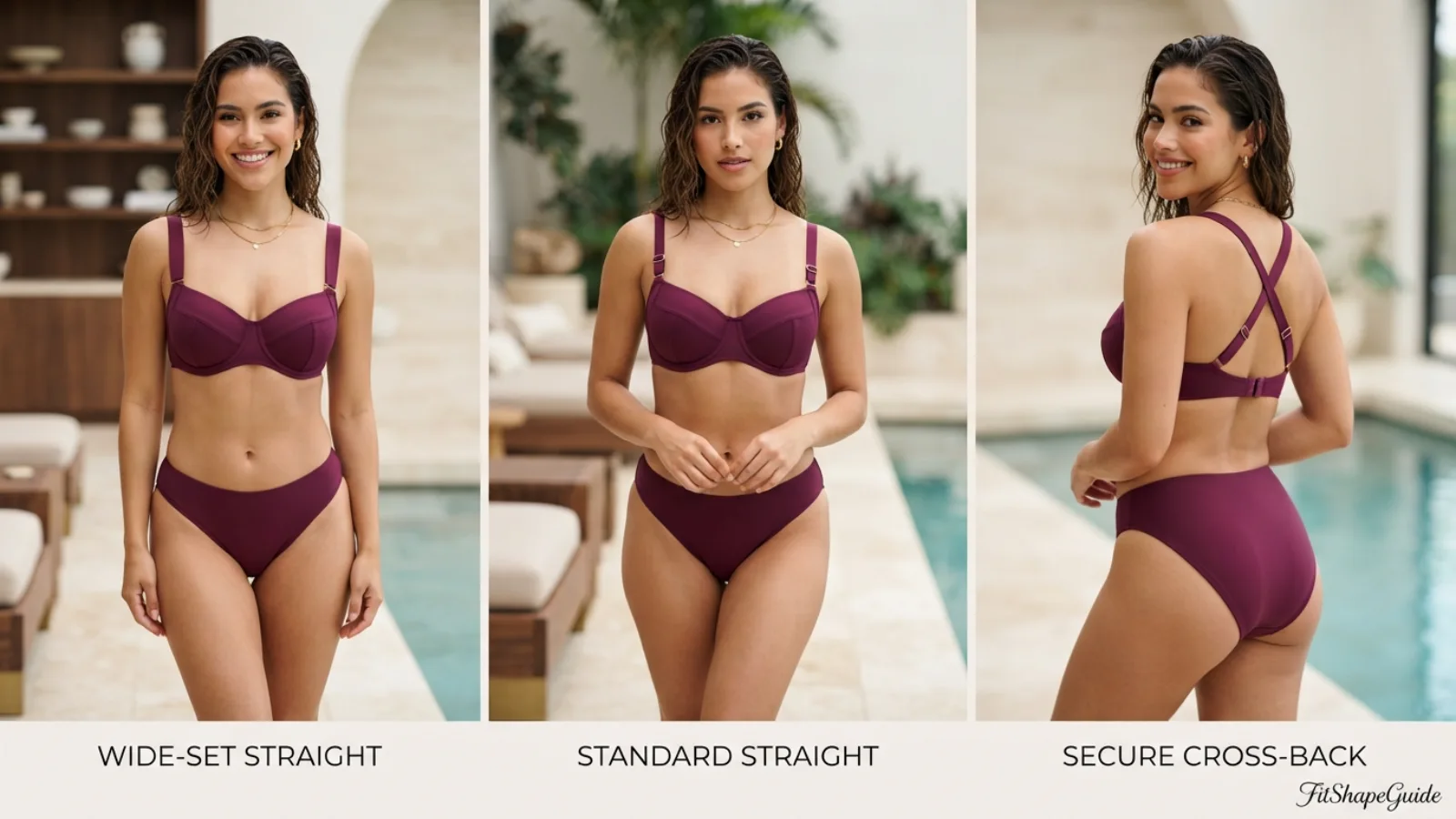
A convertible suit is only as useful as its weakest approved route. Straight straps, wide-set straps, cross-back and halter positions transfer load to different areas. A route that feels comfortable for ten minutes may create neck pressure or slider creep after a full wet session.
Straight or wide-set straps
Straight straps usually create the most familiar vertical support path. Wide-set anchors preserve an open neckline but may slip from sloped shoulders or press near the underarm. Adjustable length and a secure slider matter. Shortening the straps should position the neckline, not lift the entire bust from above.
Cross-back routes
Crossing straps can improve shoulder security for swimming and reduce outward slip. It may also change cup tension and narrow the rear neckline. Use only the anchor pattern approved by the manufacturer. Improvised crossing can overstress loops, distort cups or make the suit difficult to remove.
Halter routes
A halter can centralize neckline tension but may place substantial load on the neck. It is not automatically the strongest fuller-bust option. The band and cups must remain independently stable so the tie or strap only positions the upper edge. Stop if headache, numbness or persistent neck pressure develops.
Detachable hardware
Hooks should be smooth, fully seated and correctly oriented inside reinforced loops. They should not rotate open, expose sharp edges or deform the fabric. Test attachment and removal with dry and damp hands before relying on the system away from home.
One-piece, bikini and tankini bandeau alternatives
Each format changes how vertical and horizontal tension interact. A one-piece adds torso pull to the cup frame. A bikini isolates the band and lets the bottom size separately. A tankini adds an outer torso layer that can float or drag when wet. The visual neckline may match while the support system differs completely.
Square-neck and straight-neck one-pieces
Permanent wide-set straps often give a bandeau-like appearance without removable hardware. Check the square corners for gape, side wings for containment and full torso girth for vertical fit. If the body is too short, the leg openings or neckline may pull even when the cups fit.
Convertible balconette bikinis
A bra-sized balconette or straight-neck top can be paired with an independently sized bottom. This is useful when bust, waist and hip do not match one set size. Verify the band-and-cup system, side height, approved strapless mode and bottom rise separately. See the bikini guide.
Straight-neck tankinis
The inner cups and band must remain independent of the outer tank. Adjustable side ruching can manage torso length, but it does not support the bust. Wet the garment and confirm the hem does not pull the band downward or float around the arms. Compare the underwire tankini guide.
One-shoulder alternatives
An asymmetric neckline supplies more visible anchoring than a strapless tube, but the internal band must keep the cups level. The single strap should not drag one cup upward or rotate the torso. Test both directions of reach and swimming-arm movement.
For flexible route systems, also see the convertible swimsuit guide.

Measurements for a secure bandeau-like fit
Record snug underbust, full bust, high bust, full torso girth, shoulder-to-bust, shoulder-to-underbust, waist and hip. For bikini tops, prioritize the brand’s band-and-cup chart. For one-pieces, add torso length and hip evidence. For tankinis, compare top length and inner-band position.
Band size is not torso size
A stable band should feel close and horizontal without restricting breathing. The rest of the suit may use a body-size chart, so confirm how the brand combines bra and dress sizing. Choosing a smaller body simply to tighten the band can crush cups, shorten the torso and cut the leg opening.
Compare strap length and anchor spacing
Usable adjustment matters more than the claim “adjustable.” Measure a successful swimsuit strap and note its anchor position. A slider should remain accessible and hold its setting when wet. If wide-set anchors fall beyond the shoulder, a more central route may be required.
Check neckline width and side height
A very wide straight neckline can reduce center containment, while tall sides improve lateral control. Compare finished cup width, top-edge length, side-wing height and back closure where provided. Front-only photos cannot prove these dimensions.
| Measurement/evidence | Why it matters | Common mistake |
|---|---|---|
| Snug underbust | Sets primary band anchor | Using full bust as body size only |
| Full bust | Estimates cup capacity | Compressing tissue with tape |
| Full torso girth | Controls one-piece vertical pull | Using height as a substitute |
| Side-wing height | Predicts lateral containment | Judging only the front neckline |
| Strap adjustment range | Controls approved routes | Assuming removable means usable |
| Top-edge recovery | Predicts gape and slippage | Relying only on silicone grip |
How to buy bandeau swimsuit alternatives online
Useful listings reveal cup construction, underband, closure, side wings, stays, grip strips, strap width, adjustment range, hooks, approved routes, torso options, shell and lining. “Bandeau,” “supportive” and “tummy control” are marketing labels until the construction confirms them.
Inspect the strapless claim
Determine whether the suit is designed to be worn strapless or merely has decorative removable straps. Look for a size range with cup information, firm back closure, shaped cups and side support. If the listing avoids rear and interior views, the anchor system remains uncertain.
Check every hook and loop
Zoom into hardware and reinforcement. Plastic or metal alone does not determine quality; finish, fit, rotation and attachment matter. A recent customer photo may show whether hooks stay seated, but a personal wet test is still required.
Use reviews as failure evidence
Prioritize reviews with band/cup size, torso notes, chosen strap route and actual activity. “Stayed up” during a photo is not the same as stability through swimming. Useful failure descriptions include band ride, cup overflow, edge gape, boning pressure, hook rotation and slider creep.
Safe Amazon workflow
Before inserting a product module, verify the live product title, seller, size chart, cup and band system, strap routes, materials, care, current return eligibility and recent construction evidence. Add the approved affiliate tag and disclosure. Never hard-code price, rating, coupon, review count, stock or delivery claims.
Dry and wet tests for strapless and supported modes
Fit the cups and band first. Set each approved strap route once, record the slider position and note every later adjustment. Do not assume performance in one route predicts another.
Strapless standing and breathing baseline
Use strapless mode only when approved. Stand naturally, inhale fully, walk and turn. The band should remain level and the neckline should not sink or cut. If security requires painful tightness, choose a supported alternative.
Reach, lean and self-hug
Raise both arms, reach forward, lean and gently hug the shoulders. The cups should contain tissue, side stays should remain vertical and the edge should return without pulling. Constant upward tugging is a failed test.
Supported stroke test
Attach the most secure approved route for swimming. Complete several strokes, kicks and a safe pool exit. Hooks, sliders and loops should stay seated; the band should not ride and cups should not distort. For energetic water activity, follow the manufacturer’s intended-use guidance.
Twenty-minute wet recovery
Wear the wet suit for at least twenty minutes in a safe setting. Walk, sit and move the arms. Check edge recovery, grip comfort, boning pressure, hook rotation and slider creep before adjusting. Stop if numbness, chafing, breathing restriction or persistent pain develops.
Route matrix
Repeat the same checks for straight, wide-set, cross-back or halter configurations you intend to use. Mark a route as functional only if it remains comfortable and stable. A product can be technically convertible while one or more routes are unsuitable for a particular body or activity.
Choose a bandeau look with a real support path
The best bandeau swimsuit alternatives for a large bust combine genuine cup depth, a level band, high side support and a secure strap option. A square neck, wide-set balconette, convertible one-piece or straight-neck tankini can create the visual effect without asking one tight edge to carry the bust. Keep strapless mode for situations it actually passes, and use supported routes for active movement.
Frequently asked questions
Can women with a large bust wear bandeau swimsuits?
Yes, when the suit provides correctly sized shaped cups, a stable band, high side support and an approved strapless mode. Many people will find an optional-strap alternative more reliable.
What is the best alternative to a bandeau swimsuit?
A square-neck one-piece, wide-set balconette, convertible straight-neck suit, one-shoulder style or supportive tankini can keep an open neckline while providing clearer anchoring.
Do removable straps make a bandeau supportive?
They can improve neckline position and movement security, but they do not repair a loose band or shallow cups. The cup-and-band frame must fit first.
Is silicone grip enough for a strapless swimsuit?
No. Grip strips can reduce minor slipping, but structural support must come from the band, cups, back and side support. Stop use if the grip irritates the skin.
Can I swim actively in a strapless bandeau?
Only if the manufacturer designs it for that activity and it passes secure wet testing. A supported straight or cross-back route is generally more reliable for energetic swimming.
Are square-neck swimsuits good for a large bust?
They can be excellent when the suit has shaped cups, stable permanent straps, high sides and a neckline edge that returns without gaping.
Why does my bandeau swimsuit roll down?
Common causes include a loose band, shallow cups, weak edge recovery, short torso length or insufficient side support. Tightening straps alone will not correct all of these.
Should I size down in a bandeau swimsuit?
No, not simply to make it stay up. Sizing down can compress the bust, distort cups and restrict breathing. Choose the correct band and cup system instead.