Red Carpet-Inspired Looks for a Large Bust
A wearable guide to translating red-carpet drama into fuller-bust evening outfits through sculpted bodices, secure necklines, fluid draping, column gowns, statement capes, formal jumpsuits and photograph-ready tailoring.
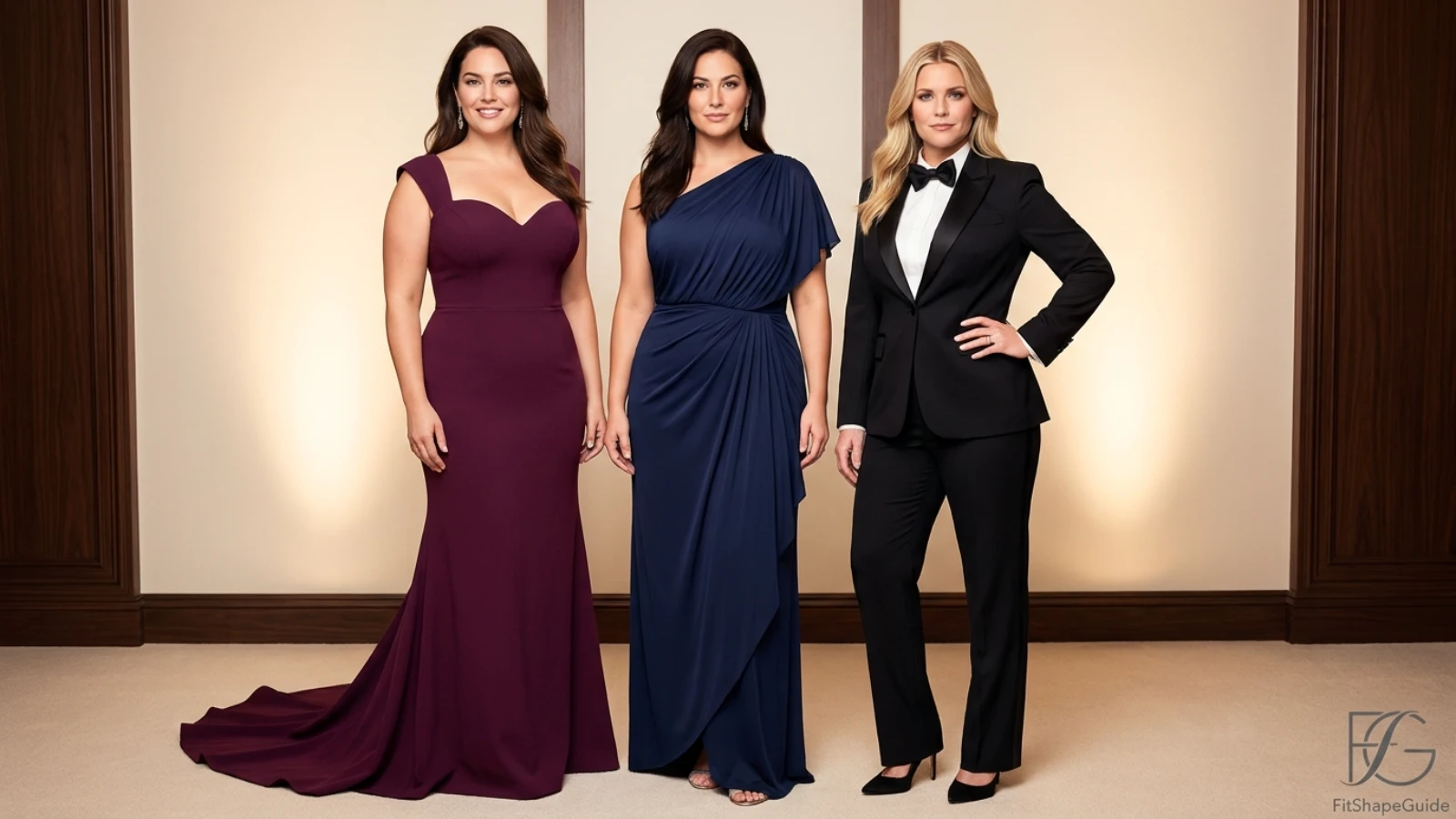
The 90-second red-carpet fit test
- Take a front photograph: check neckline, seam placement and whether the waist remains level.
- Take a side photograph: look for enough bust projection and an intentional front hem.
- Turn three-quarters: side seams should not twist dramatically toward the front.
- Sit down: the bodice should remain secure instead of requiring perfect posture.
- Walk ten steps: check slit, train, trouser or skirt movement in the actual shoes.
- Raise both arms: confirm that the outfit can survive greetings, photos and dancing.
How to make red-carpet inspiration wearable
Red-carpet fashion often works because several design decisions are exaggerated at once: sculpted shape, unusual neckline, dramatic train, high-shine surface, oversized jewelry or deliberately minimal tailoring. That creates an image strong enough to read from a distance and in photographs.
You do not need every one of those elements in an event outfit. A more wearable approach is to identify the feature that creates the visual impact and reproduce that idea using a garment you can actually move in.
For a fuller bust, construction comes before drama. If an asymmetric neckline cannot stay level, a cutout moves every time you sit or a corset line ends halfway through the bust, the outfit is asking styling tricks to solve a pattern problem.
Instead, choose a bodice with enough front depth. Princess seams, cup seams, bust darts, diagonal draping, stable side panels and deliberate internal structure can all create a dramatic silhouette without compressing the bust flat.
| Red-carpet idea | Wearable translation | Helpful construction | Main trade-off |
|---|---|---|---|
| Sculptural gown | Structured A-line or column dress | Princess seams + firm fabric | Rigid bodice must match bust shape |
| Liquid draping | Draped crepe or jersey gown | Fixed folds + shaped lining | Drape cannot replace cup depth |
| Asymmetric neckline | One-shoulder or asymmetric formal dress | Stable lower bodice | Uneven strap tension can rotate gown |
| Cape drama | Cape-back gown or removable cape | Clean shoulder anchor | Extra fabric adds weight |
| Metallic glamour | Satin, lamé-look or subtle shimmer | Smooth bodice fit | Shine reveals strain lines |
| Statement train | Floor gown with modest sweep | Correct front and back length | Needs movement management |
| Tuxedo dressing | Evening pantsuit or jumpsuit | Fuller-front jacket + shaped shell | Lapels expose bust-fit problems |
| Minimal column | Clean square-neck or bateau gown | Vertical shaping seams | Simple design makes fit highly visible |
Red carpet-inspired looks that work with a large bust
Sculpted sweetheart gown
Use a moderate sweetheart neckline with shaped cups or princess seams and an architectural skirt. The neckline creates impact while the full bodice keeps the bust contained.
Trade-off: a generic molded sweetheart can be too shallow even when the dress closes.
Square-neck column gown
A clean column silhouette lets the neckline and fabric carry the visual story. Vertical seams can provide fuller-bust room without obvious gathering.
Trade-off: the hip and stride need enough room to preserve the straight line.
Draped one-shoulder gown
Diagonal draping creates red-carpet movement while a stable asymmetric shoulder anchors the upper bodice.
Trade-off: the single shoulder should position the gown—not carry the full bust weight.
Cape-back evening dress
A cape or floating back panel adds drama without requiring an extreme front neckline. This is especially effective with a clean column or A-line base.
Trade-off: heavy cape fabric can pull backward on the neckline.
Liquid metallic gown
A fluid satin-like or metallic-look fabric creates high-impact photography. Choose restrained draping and enough bust ease so the surface stays smooth.
Trade-off: high-shine fabric reveals every pull line and poorly placed seam.
Velvet evening column
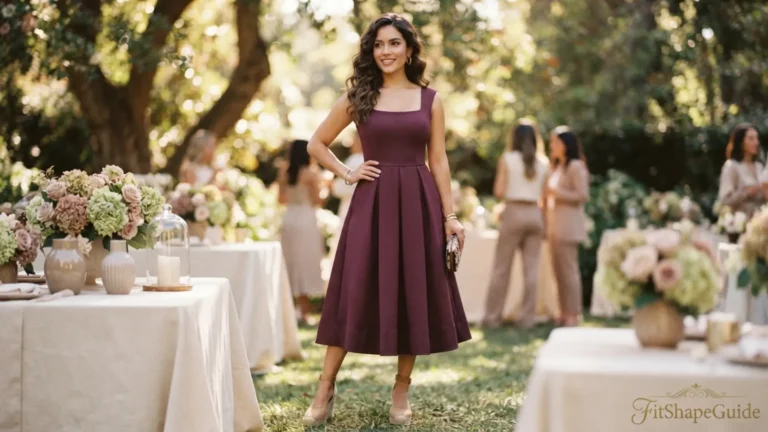
A jewel-tone or dark velvet-like column gown creates rich visual depth without needing complicated cutouts or embellishment.
Trade-off: heavier fabric requires good shoulder and bodice support.
Tuxedo-inspired pantsuit
A longline jacket, shaped evening shell and fluid trousers create a polished alternative to the gown while still reading as formal.
Trade-off: the jacket lapels should lie smoothly rather than spreading around the bust.
Minimal black gown + statement jewelry
A technically excellent black gown can become red-carpet-inspired through strong earrings, a cuff, sculptural clutch or dramatic evening shoe.
Trade-off: minimal garments make seam and fit problems easier to see.
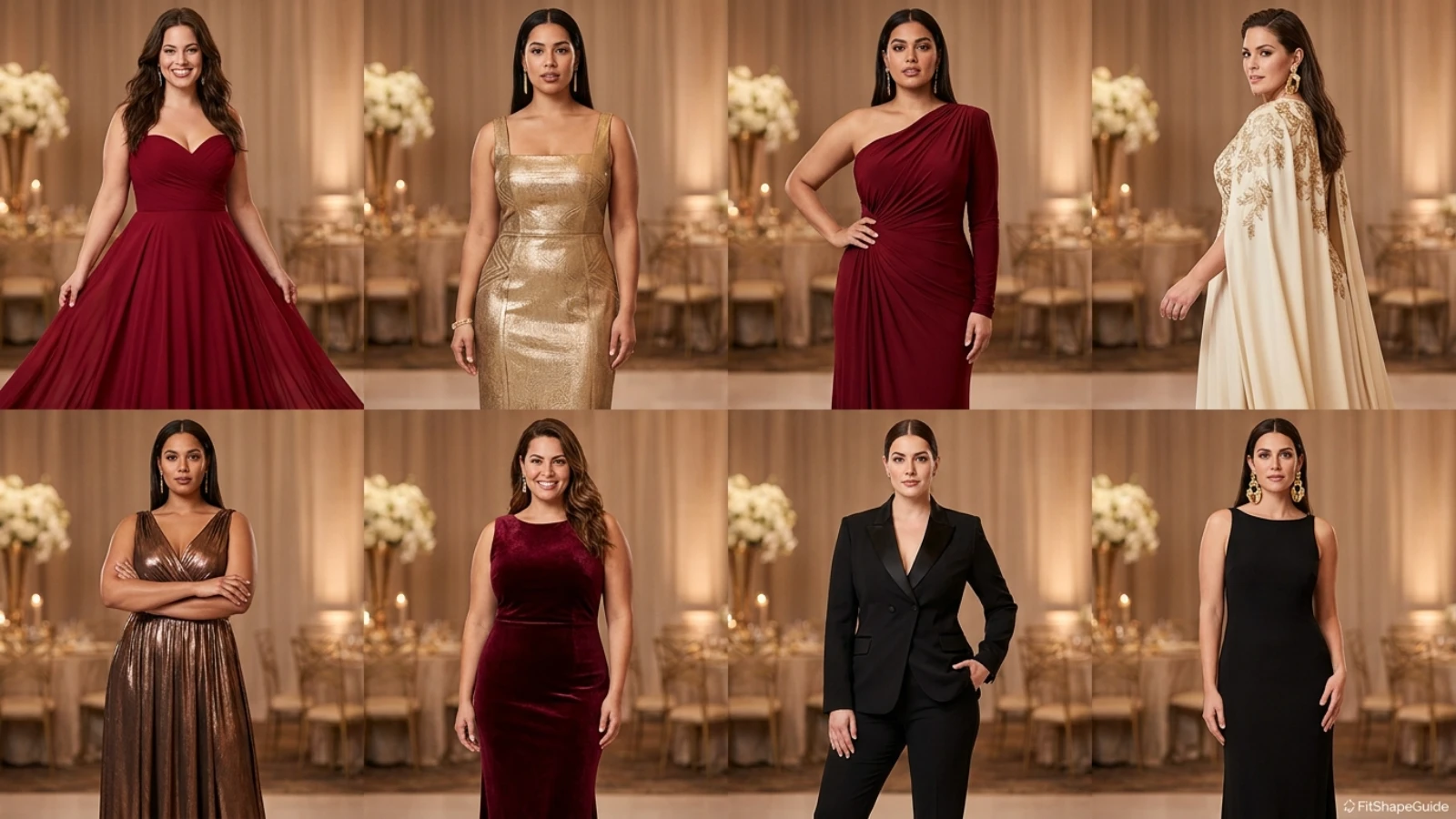
Statement necklines that can work with a fuller bust
Sculpted sweetheart
A sweetheart neckline is naturally red-carpet friendly because it creates a clear upper-bodice shape. For a fuller bust, look beyond the edge itself and inspect cup depth, vertical seams, boning and side support.
Square neckline
Square necklines create strong geometry and photograph cleanly from the front. Broad straps or a sleeved upper bodice can also make foundation choices easier.
Asymmetric neckline
One-shoulder and asymmetric necklines add impact with relatively little embellishment. The lower bodice should remain stable so the single shoulder does not need to lift the entire garment.
Portrait neckline
Portrait necklines frame the shoulders and can feel dramatic without becoming revealing. Test them while sitting because a wide neckline can change as the shoulders move forward.
Deep V-inspired look
You can borrow the visual line of a deep V without choosing the deepest possible neckline. A moderate V with tonal mesh, a secure inset or shaped overlap can create a similar vertical effect with more stability.
Bateau neckline
A clean bateau gown can create minimalist red-carpet sophistication. The bodice below needs enough bust projection so the horizontal neckline remains in its designed position.
Strapless sculpted neckline
A strapless neckline works only when the dress itself has enough internal structure. Shaped cups, boning, a stable back and waist anchoring matter more than simply having a tight upper edge.
Draped, gathered and sculpted red-carpet looks
Draping is one of the easiest ways to introduce evening drama because it adds movement and depth without requiring heavy embellishment. For fuller-bust dressing, the distinction between structural draping and accidental pulling matters.
Diagonal draping
Diagonal folds can travel across the bust toward the waist or hip. They should look broad and intentional rather than concentrating into stress lines at the fullest point.
Waist draping
Gathering at the waist can create a sculptural effect while leaving the bust relatively clean. This is useful when you want visual interest without adding extra volume around the neckline.
Shoulder draping
A draped shoulder or cape sleeve can create asymmetry while keeping the front secure. Confirm that the additional fabric is not pulling the neckline backward.
Twisted bodices
Twist fronts can create dramatic texture but may consume significant fabric at center front. The bust still needs enough width and depth behind the twist.
Sculpted peplum
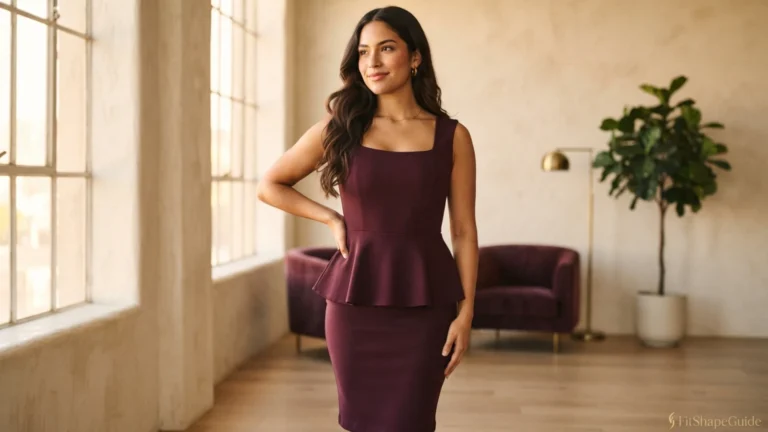
A controlled formal peplum can create architectural interest below the bust. The waist seam should stay at its intended level rather than climbing upward.
Ruching
Ruching can adapt to small proportion differences and work beautifully in matte jersey or crepe. It should remain deliberate instead of hiding a bodice that is too small.
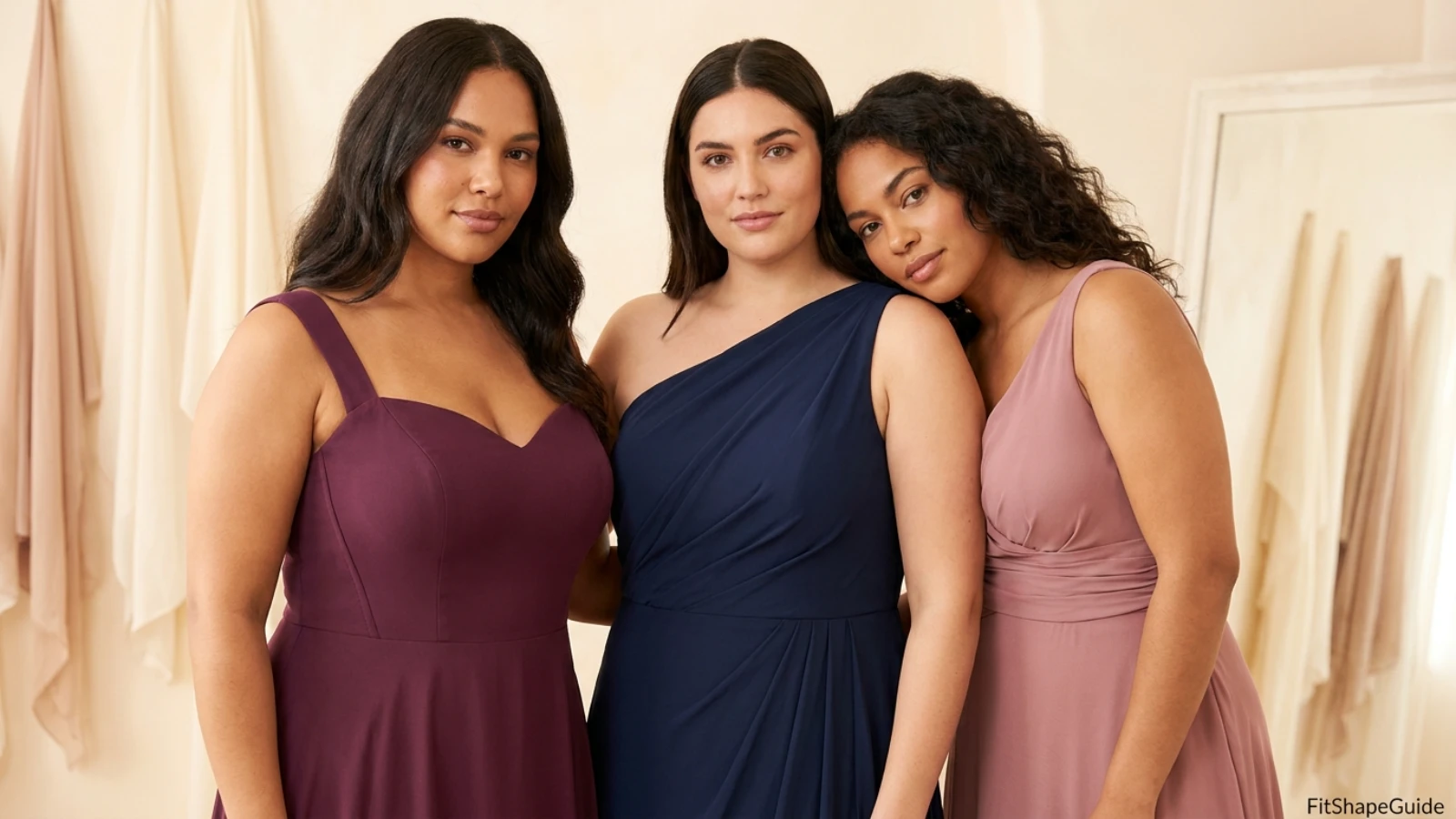
How to wear a red-carpet-style column gown
Column gowns create impact through simplicity. Because there is less skirt volume or surface decoration, the eye notices proportion, seam placement and fabric quality immediately.
Use vertical seams
Princess or long panel seams can create enough front projection while maintaining the gown’s straight visual line.
Check hip room
A column should skim or fit according to the design without preventing a natural walking stride. If the skirt is too narrow, the entire dress may pull downward from the bust.
Use a slit intentionally
A side or back slit can improve movement. The slit should remain controlled while sitting and walking instead of opening because the hip section is undersized.
Watch front hem length
If bust projection uses more front length than the pattern allows, a straight floor-length gown can become noticeably shorter at center front.
Pair clean silhouette with stronger accessories
A simple column gown can support a sculptural earring, metallic cuff, statement clutch or distinctive evening shoe without needing more garment detail.
Cape gowns, statement sleeves and shoulder details
Cape-back gown
A cape attached at the shoulders or back creates movement without adding complexity across the bust. Keep the base gown clean and fitted correctly before considering cape volume.
Removable cape
A detachable cape can create a dramatic arrival and then be removed for dinner or dancing. Attachment points should not distort the neckline.
Flutter cape sleeve
A lighter cape sleeve adds motion and upper-body drama while keeping the bodice itself relatively simple.
Statement long sleeves
Velvet, chiffon or embellished sleeves can provide strong visual interest. Test shoulder rotation so surface drama does not compromise movement.
One sculpted shoulder
An asymmetric shoulder detail can mimic couture-like construction. The element should sit above a stable bodice instead of compensating for an insecure neckline.
Avoid overloaded upper bodices
If a gown already has strong bust draping, dramatic shoulders, sequins and a cape, removing one element may make the complete look stronger and easier to wear.
Evening jumpsuits, tuxedo tailoring and separates
Wide-leg evening jumpsuit
A formal jumpsuit creates a long visual line and can photograph as dramatically as a gown. Look for shaped cups, darts or a fixed-wrap front rather than a flat upper torso.
Tuxedo jacket
A longline evening blazer can create a strong sculptural frame. Lapels should sit close to their intended line instead of spreading sideways around the bust.
Shaped evening shell
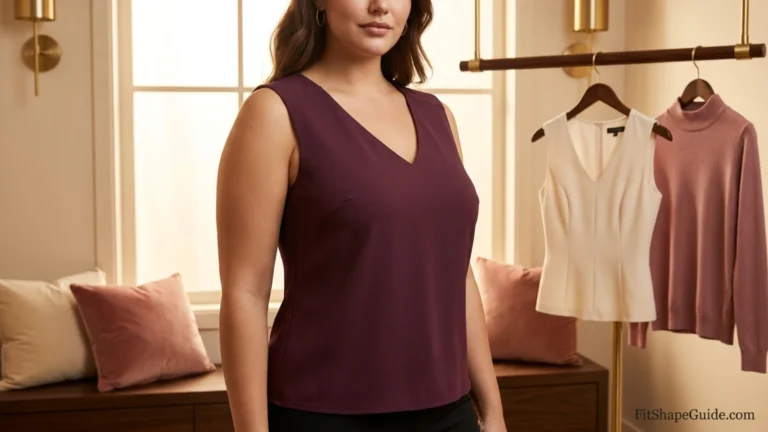
Under a blazer, a fitted shell with princess seams, a moderate V or square neckline can provide a smooth base without needing to be oversized.
Wide-leg trousers
Fluid trousers help create evening movement and pair naturally with fitted or shaped upper layers. Fit the rise and waist independently from the bust.
Monochrome dressing
Wearing jacket, shell and trousers in one dark or jewel-tone family creates a high-impact formal look while letting fabric texture create contrast.
Jewelry as the statement
If the tailoring is minimal, use one strong accessory: sculptural earrings, a cuff, a brooch or a refined metallic clutch.
For a deeper trouser framework, see Wide-Leg Pants and a Large Bust . For jacket fit, compare Best Blazers for a Large Bust .
Metallics, velvet, satin, sequins and rich color
Fluid metallics
Metallic-looking satin or softly reflective fabric can create immediate red-carpet impact. Keep construction clean because reflective surfaces amplify wrinkles and drag lines.
Jewel tones
Deep mulberry, emerald-like green, sapphire-like blue, rich plum and other saturated shades work particularly well in formal fabrics because color itself becomes part of the evening drama.
Black
Black is powerful when the silhouette or texture is interesting: velvet, satin, crepe, cape construction, sculptural neckline or polished tailoring.
Velvet
Velvet creates depth under evening lighting and works well for columns, long sleeves and tailored jackets. Weight and heat are the main practical considerations.
Satin
Satin creates movement and shine but makes fit precision visible. Enough ease is particularly important around bust, waist and hip.
Sequins
Sequins can create strong photographic sparkle. Fully sequined garments may become heavy, so check shoulder load, lining and underarm comfort.
Lace
Lace can soften a structured gown or create sleeves and upper panels. The support needs to come from the underlying bodice rather than the decorative lace.
Art-deco-inspired surface detail
Geometric beading or linear embellishment can add a vintage evening reference. Look at the garment flat and worn to confirm the motif does not become distorted by a bodice that lacks bust room.
Photo-ready fit without posing around the dress
A red-carpet-inspired outfit should photograph well because its lines remain stable—not because the wearer holds one carefully rehearsed posture.
Front photo
Check neckline symmetry, bust seams, waist placement and whether a front slit or drape hangs as intended.
Three-quarter angle
This view quickly reveals cup depth and side-seam rotation. A properly shaped bodice should travel around the bust rather than flattening it.
Side photo
Look at front bodice length and hem. The dress should provide space for bust projection without becoming unexpectedly short in front.
Seated photograph
Formal event photographers often capture tables and candid seated moments. Check that the neckline remains secure when the shoulders move forward.
Walking photograph
Skirts, capes, wide trousers and trains often look best in motion. Practice a normal stride rather than forcing a pose that only works for a still photograph.
Flash test
Take one flash photograph at home. Some lightweight, pale, sheer or reflective fabrics look substantially different under direct light.
Accessory test
Make sure earrings do not catch on cape fabric, necklaces do not fight the neckline and bag chains do not snag delicate surfaces.
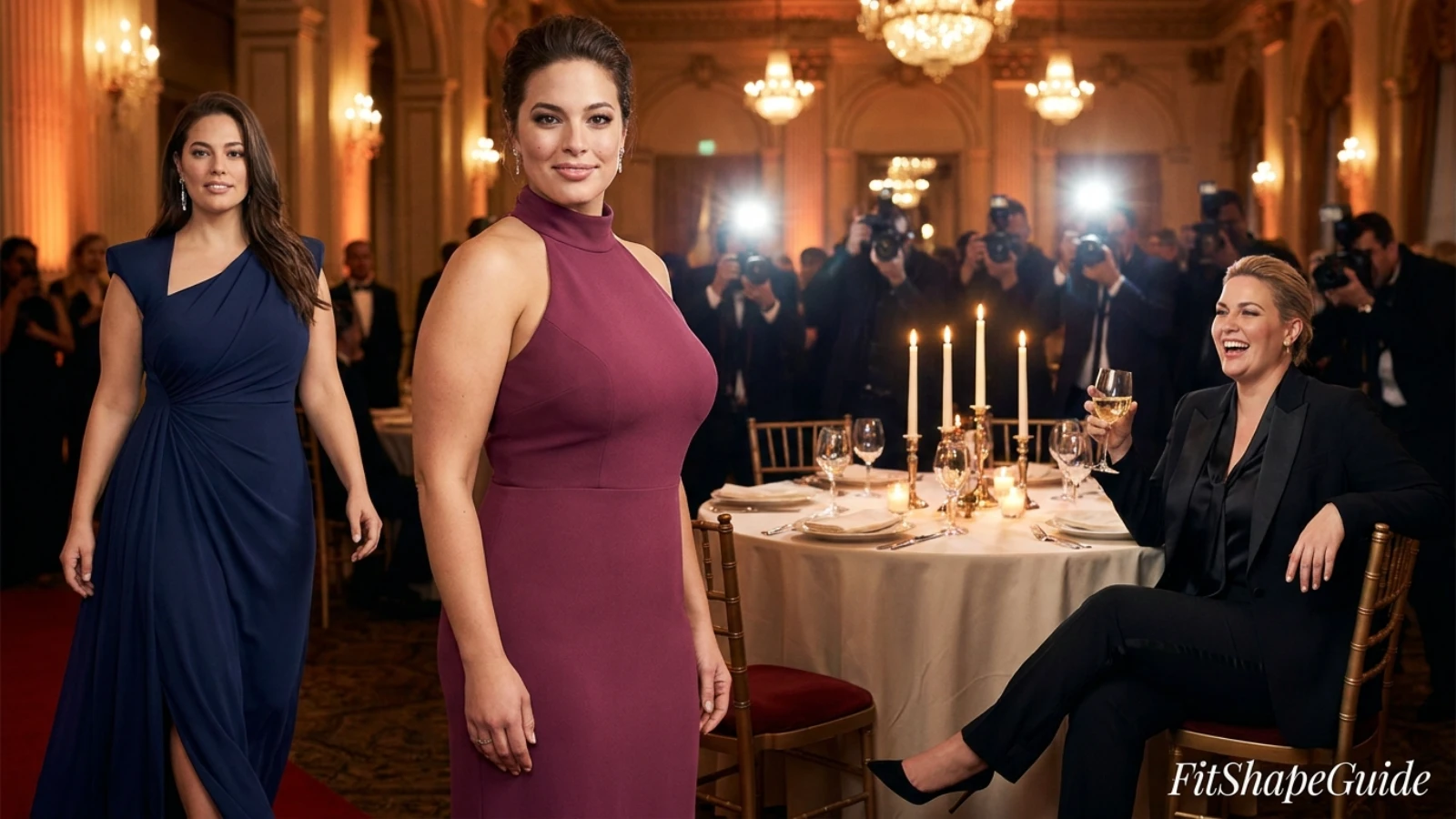
How to buy a red-carpet-inspired outfit for a large bust
Most shoppers are not buying custom couture, which means the goal is to find ready-to-wear formal clothing that captures the visual idea while still fitting predictably.
- Choose the inspiration element: sculpted neckline, draping, metallic fabric, cape, column silhouette, train, tailoring or statement sleeve.
- Check the event dress code: make sure the idea is formal enough for the actual event.
- Measure full bust and underbust: use the bra you plan to wear.
- Look for real bust shaping: princess seams, darts, seamed cups, fixed draping or shaped panels.
- Check front bodice length: especially if dresses usually ride upward over the bust.
- Inspect neckline stability: extreme shapes deserve more—not less—fit scrutiny.
- Check lining: the outer fabric can drape beautifully while the lining remains too small.
- Check garment weight: sequins, velvet, capes and trains increase load.
- Read actual length: floor gowns need to work with your chosen shoes.
- Leave time for tailoring: hemming and small waist adjustments can transform otherwise strong formalwear.
Start with the hardest area to alter
Bust shape, shoulders, armholes and complex necklines are usually more difficult to rebuild than a simple waist or hem. Buy the garment that gets those areas closest first.
Avoid buying only for the photograph
A dramatic neckline that requires constant tape or a train you cannot safely walk in may create one beautiful still image and a frustrating event.
Use accessories to add the last 20 percent
If the gown itself fits exceptionally well but feels less dramatic than the inspiration, a sculptural earring, cuff, metallic clutch, evening wrap or bold shoe may provide enough visual lift.
Consider tailoring before rejecting a strong dress
A gown with excellent bust and shoulder fit but a slightly generous waist can be a far better starting point than a tight dress with an ideal waist measurement.
Do not copy a celebrity size choice
Red-carpet clothing is frequently custom-fitted or altered. Use the design idea as inspiration and fit your own garment through measurements and movement testing.
For formal event construction, continue with Gala Outfit Guide for a Large Bust . For another high-formality dress framework, see Mother-of-the-Bride Dress Guide for a Large Bust .
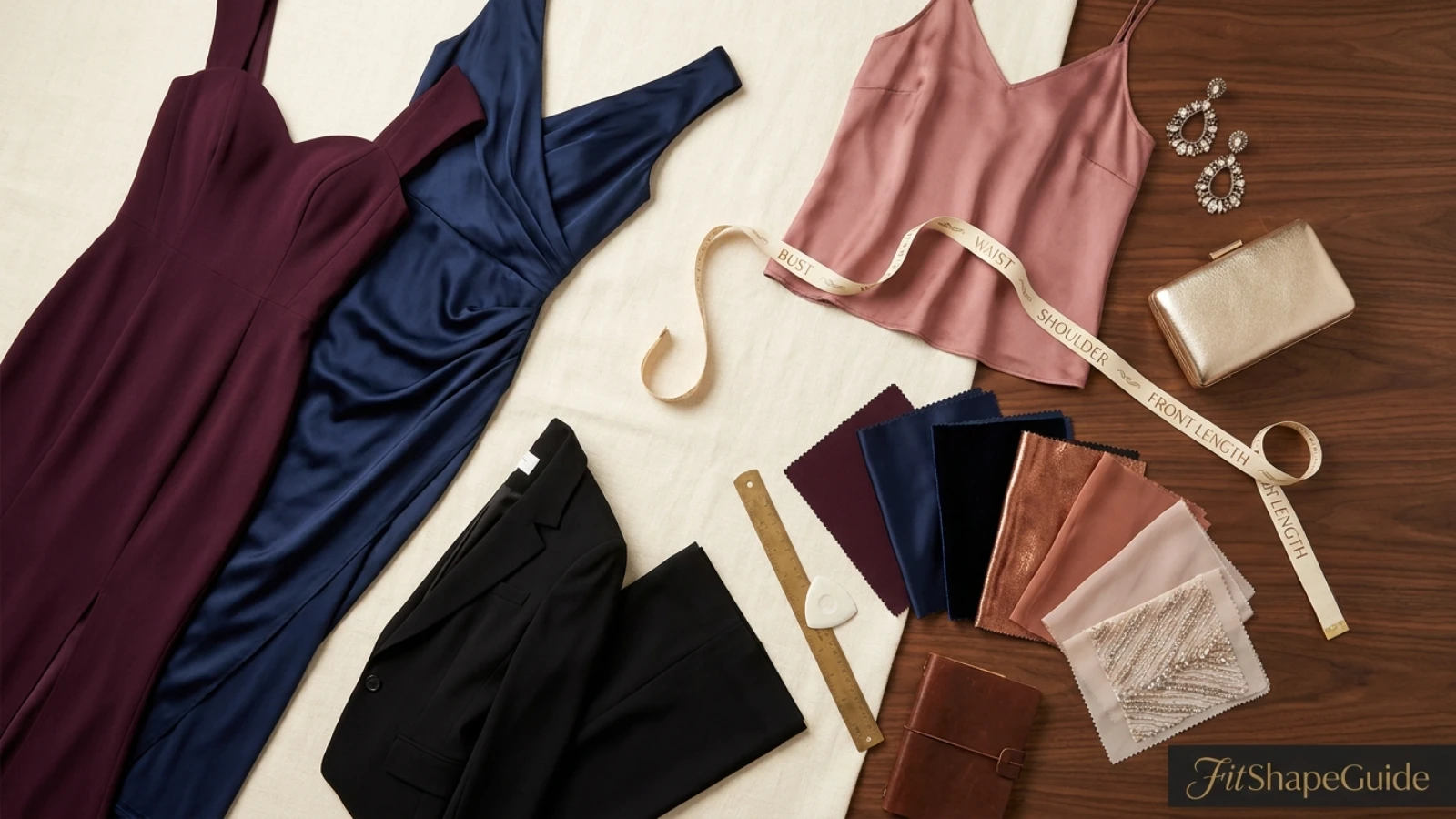
Common red carpet-inspired fit problems
| Problem | Likely cause | Better response | Avoid |
|---|---|---|---|
| Sculpted neckline cuts into bust | Cup shape too shallow or small | Deeper shaped bodice | Sizing down for stronger structure |
| One-shoulder gown rotates | Asymmetric strap carrying too much load | Stronger lower bodice support | Tightening shoulder further |
| Draping looks like strain lines | Insufficient bust ease | More room underneath the drape | Assuming all diagonal folds are intentional |
| Column gown rides upward | Bust/hip area too tight | More projection or body ease | Pulling hem down repeatedly |
| Cape pulls neckline backward | Cape too heavy for shoulder anchor | Lighter/removable cape | Compensating with tighter front |
| Satin shows horizontal pulls | Insufficient circumference | More ease or different cut | Blaming shine alone |
| Blazer lapels spread | Insufficient jacket front room | Fuller-front blazer | Using permanently open styling to hide strain |
| Statement sleeve blocks movement | Armhole/sleeve construction too restrictive | More mobile sleeve design | Holding arms unnaturally in photos |
| Train twists around legs | Train too long or narrow for use | Shorter sweep or bustle option | Carrying train all evening by hand |
| Outfit only looks right in one pose | Design relies on posture instead of stable fit | Retest seated, side and moving | Building the evening around one camera angle |
The dramatic neckline only works with fashion tape
Tape can refine an already secure design, but it should not carry the main structural job. Look for more cup depth, a smaller neckline opening or more stable internal support.
The dress looks amazing from the front but wrong from the side
Side photography often exposes missing bust projection. Check whether side seams rotate forward or the front hem becomes shorter.
The gown fits but the effect feels too ordinary
Add one controlled red-carpet element rather than replacing the garment: sculptural jewelry, a cape, metallic clutch, evening glove, stronger shoe or more deliberate hair and makeup styling.
The look feels too costume-like
Reduce one element. If the gown has architectural draping, metallic fabric and dramatic sleeves, simpler jewelry may make the full outfit feel more modern and wearable.
Final verdict
Red carpet-inspired dressing works best when you borrow an idea rather than an exact outfit. Sculptural necklines, dramatic draping, column gowns, cape details, liquid metallics, velvet, wide-leg tailoring and strong accessories can all create the effect.
For a large bust, make the bodice the non-negotiable foundation: enough front projection, stable neckline, properly placed seams and a waist that stays where designed. Then add the drama. The strongest look should survive front, side, seated and walking photographs without requiring you to pose around the garment.
Frequently asked questions
What red carpet-inspired dress works best for a large bust?
Princess-seam A-line gowns, square-neck columns, fixed-wrap gowns and well-supported asymmetric dresses are strong starting points because they combine visual impact with deliberate bust shaping.
Can a large bust wear a one-shoulder gown?
Yes. The lower bodice should provide enough support that the single shoulder positions the dress rather than carrying the entire bust and garment weight.
Are metallic dresses good for a fuller bust?
They can be. Reflective fabrics simply make fit lines more visible, so adequate cup depth and torso ease become especially important.
Can I wear a column gown with a large bust?
Yes. Look for vertical shaping seams, enough front length and sufficient hip and stride room so the gown maintains its intended line.
How do I make a simple gown look red carpet-inspired?
Add one strong design or styling element such as sculptural earrings, a metallic clutch, cape, dramatic sleeve, statement shoe or refined evening wrap.
Are cape dresses suitable for a large bust?
Yes. Cape details can place visual drama around the shoulders and back while leaving the front bodice relatively clean. Keep the cape light enough that it does not pull the neckline backward.
Should I copy a celebrity’s exact red carpet dress?
It is usually more useful to borrow the silhouette, color, draping, texture or accessory idea. Celebrity red-carpet clothing may be custom-made or extensively altered.
How do I test a red carpet-inspired gown?
Wear the planned foundations and shoes, then photograph the outfit from the front, side and three-quarter angles. Sit, walk, raise the arms and confirm that neckline, seams, waist and hem remain stable.
Editorial and verification standards
This guide translates red-carpet-inspired eveningwear through garment construction rather than celebrity body comparison. It evaluates neckline stability, bust projection, princess seams, draping, asymmetric construction, internal support, shoulder mobility, fabric behavior, tailoring, hem movement and photography.
“Red carpet-inspired” means borrowing design vocabulary—silhouette, draping, tailoring, texture, color and accessories. It does not mean copying a real person’s body, outfit, measurements or custom alterations.
The guide uses body-neutral fit language. “Balance” or “proportion” refers to garment and outfit composition, not an instruction to correct or minimize the body.
Before publishing any commercial recommendation, FitShapeGuide should verify the exact live seller, garment, style, color, size range, bust measurement, waist, hip, neckline, bust construction, front bodice length, shoulder, upper arm, closure, lining, internal structure, fabric, embellishment, garment length, care, current availability and return conditions.
No celebrity endorsement, ASIN, price, rating, review count, coupon, stock statement or delivery promise should be published unless directly and independently verified.
Affiliate disclosure should remain clearly visible close to any commercial recommendations.