
Best Bralettes for a Large Bust: Do They Actually Work?
Yes—but the fuller-bust bralette that works is very different from a lightweight triangle bralette designed mainly for coverage. This guide shows which underbands, cup shapes, internal slings, longline frames and adjustable straps can make wire-free support realistic.
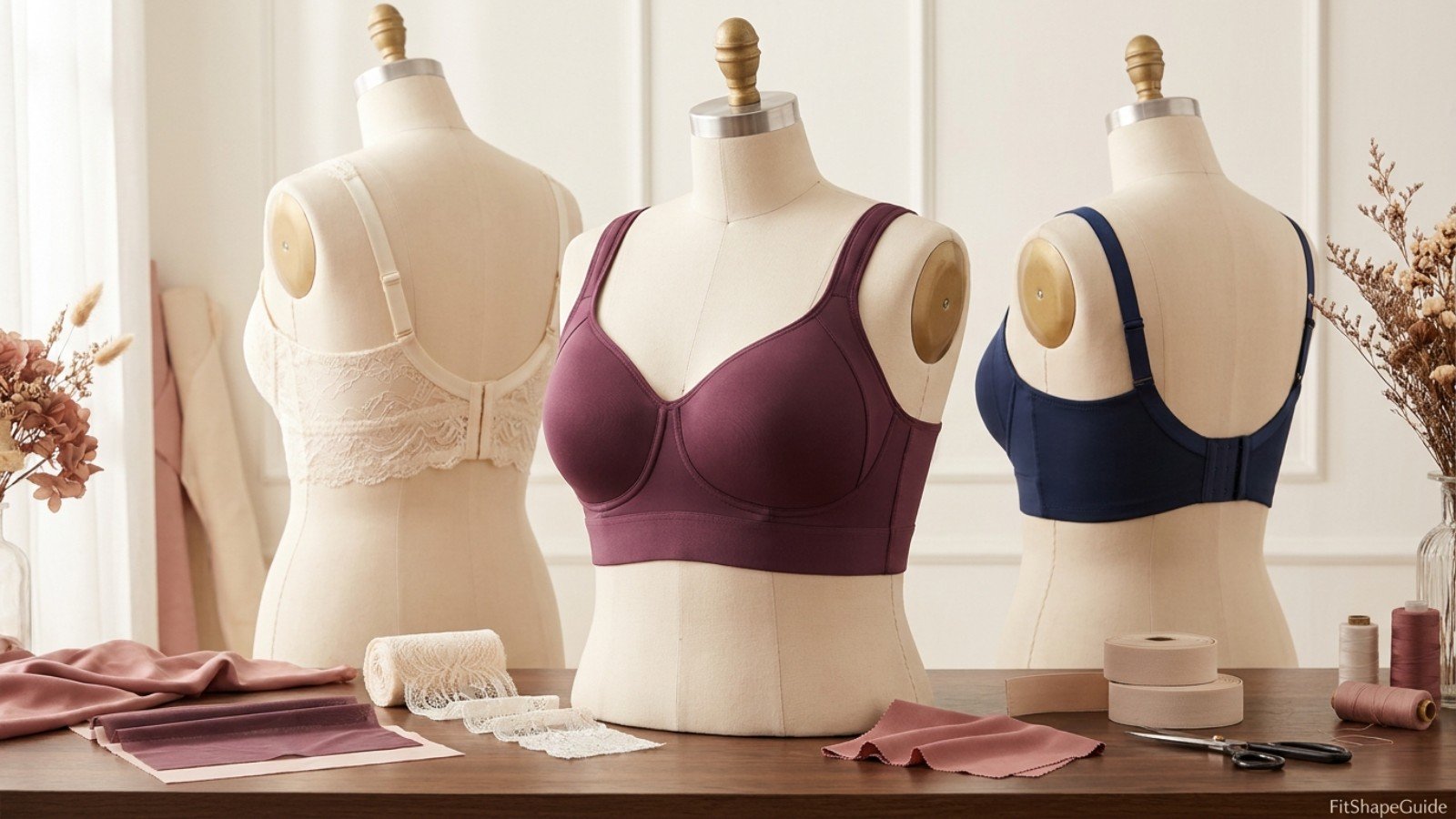
The 60-second bralette support test
- Put the bralette on and settle the full bust inside the cup area.
- Check whether the underband sits directly beneath the breast.
- Raise your arms and see if the band rides upward.
- Look for breast tissue escaping beneath or around the sides.
- Check whether the straps need extreme tension for basic support.
- Sit down and lean forward.
- Walk briskly for a minute.
- Judge the support against what you actually plan to use it for.
Do bralettes work for a large bust?
The answer depends on the level of support you expect.
If your goal is relaxed coverage for reading on the sofa, traveling, working from home or sleeping, a soft non-wired bralette may work beautifully even if it creates less lift and separation than an underwire bra.
If you want an all-day foundation for a fuller bust, construction becomes much more important. The bralette needs some way to control cup depth and anchor the breast from underneath without relying on wire.
Modern fuller-bust-specific bralettes can use deeper cup sections, power-mesh-style linings, side slings, wide underbands, adjustable straps and ordinary back closures. Those are real support components—even though the garment still looks softer than a conventional bra.
What you should not expect is every bralette to perform identically. A decorative stretch-lace pullover and an engineered fuller-bust wireless bra may both be sold under the same broad category while providing very different levels of lift and containment.
Soft triangle or crop bralette for sleeping, lounging and low-demand wear.
Fuller-bust-specific cups, stronger band, lining and adjustable straps.
Requires activity-specific construction; use a true sports bra when impact control matters.
Best bralette styles for a large bust
Fuller-bust cup bralette
Designed with more room through the cup while keeping the band comparatively smaller, this solves the common problem of sizing up for cup space and ending up with a loose underband.
Best for: everyday wireless wear.
Power-mesh-lined bralette
A supportive inner layer can control stretch beneath a softer lace or microfiber exterior.
Best for: soft aesthetics with more structure underneath.
Side-sling bralette
Internal side panels can encourage breast tissue inward and forward rather than allowing everything to spread toward the underarms.
Best for: more centered wireless shaping.
Longline bralette
A deeper band extends below the bust and spreads tension over more torso area.
Best for: greater band stability and soft fashion styling.
Wide-strap bralette
Broader adjustable straps can distribute shoulder contact more comfortably while a supportive band does the anchoring below.
Best for: longer everyday wear.
Racerback bralette
Centered rear straps can reduce slipping and work beneath racerback tanks while the front remains wireless.
Best for: narrow or sloping shoulders and racerback clothing.
Smooth microfiber bralette
Bonded or smooth fabric can sit more quietly under everyday clothes than textured lace.
Best for: T-shirts and fine knits.
Supportive lounge bralette
Soft cups, a wider band and moderate containment can provide comfortable at-home support without pretending to behave like a structured underwire bra.
Best for: lounging, travel and low-demand wear.
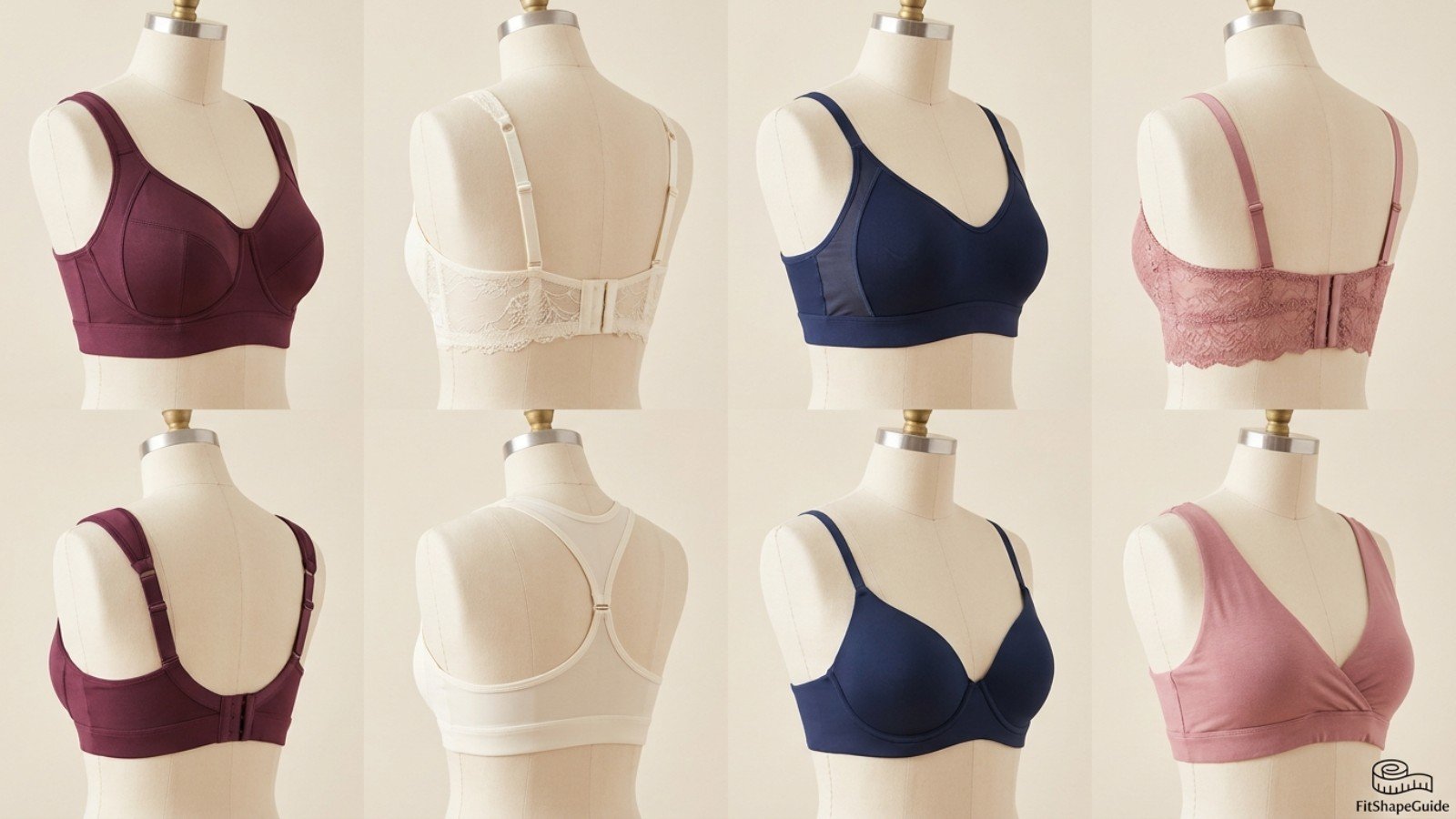
What makes a bralette band supportive?
The underband is one of the most important differences between a decorative bralette and a fuller-bust support bralette.
Wider elastic
A broader band can distribute tension across more ribcage area and create a more stable platform beneath the breasts.
Firm recovery
The band needs enough elastic recovery to return toward its original shape instead of stretching dramatically during a few hours of wear.
Hook-and-eye closure
A rear closure allows the band and cup proportions to be engineered more independently than a simple pullover style. It can also make a supportive bralette easier to put on without over-stretching the band.
Longline support
Extending the band lower on the torso can spread pressure and increase stability, although longline fit depends strongly on ribcage and torso shape.
Band placement
The lower edge should remain beneath the breast rather than creeping upward onto breast tissue.
A tighter band is not always better
Support requires stability, not painful compression. If the band rolls, folds or makes breathing uncomfortable, reassess the size or construction.
Cup depth, coverage and lining
Deeper cup area
A fuller bust needs enough three-dimensional space. Simply adding more stretchy fabric can create coverage without creating useful shape or containment.
Separate cup zones
Seaming, darts or shaped panels can help a wireless bralette create actual breast depth rather than functioning as one flat front panel.
Power-mesh-style lining
A firmer lining beneath stretch lace can reduce uncontrolled stretch and help the cup maintain a more stable shape.
Double-layer fabric
Even without a formal inner sling, two strategically selected fabric layers can provide more control than a single lightweight knit.
Upper cup stretch
A little controlled stretch can accommodate natural changes and asymmetry. Too much stretch can reduce support; too little can cut into the upper breast.
Coverage is personal
Fuller coverage can improve containment, but a plunge bralette can still work when its cup depth, side structure and band are engineered appropriately.
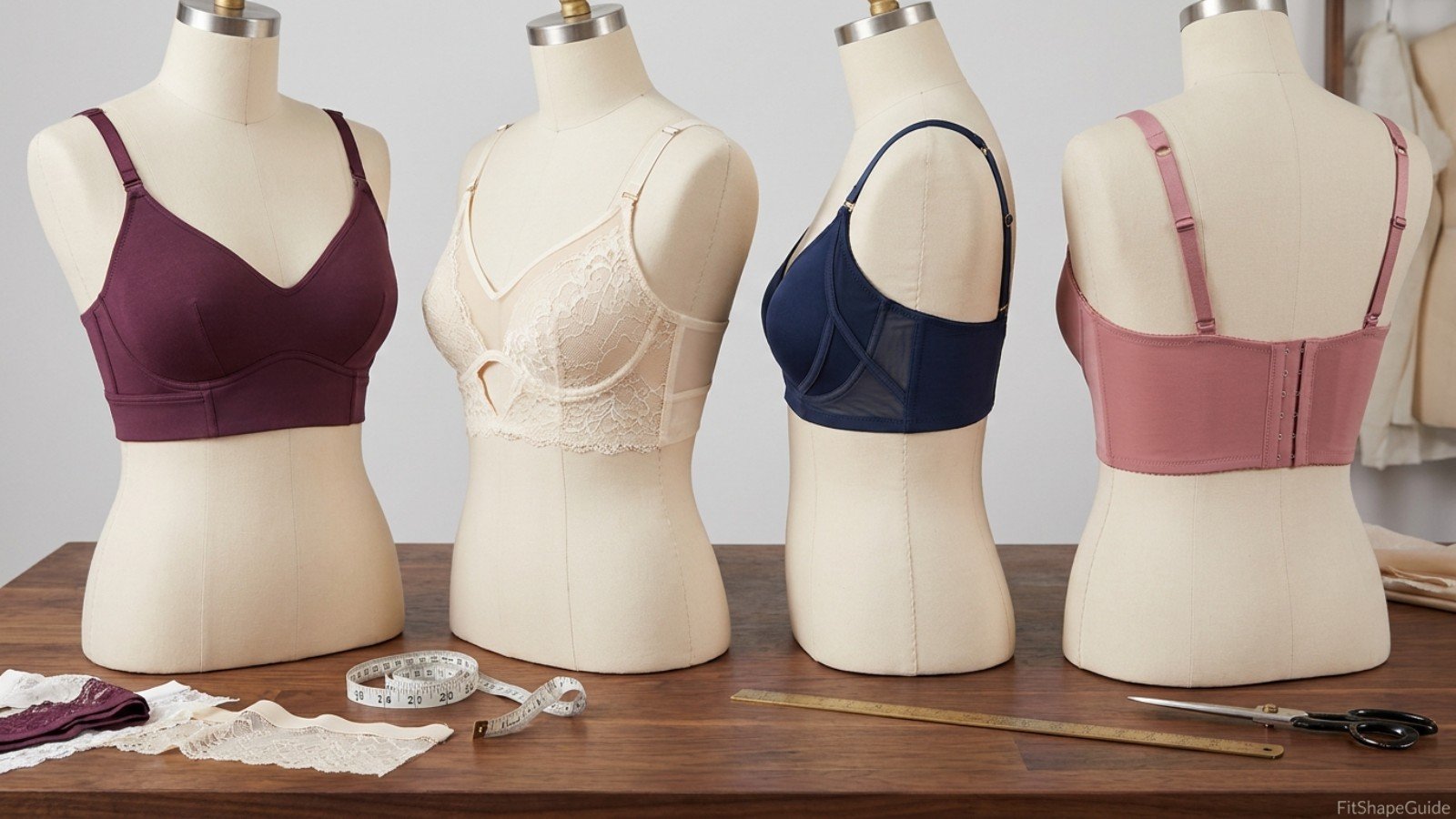
Internal side slings and wireless separation
One of the biggest challenges in a soft wireless bralette is controlling where breast tissue moves when there is no rigid underwire frame.
Side slings
An internal panel along the outer cup can direct breast tissue inward and reduce excessive side spread.
Under-cup support panels
Some wireless designs build firmer material beneath or around the cup area to help support the breast from below.
Center shaping
A wireless bralette may not create the same firm separation as an underwire bra, but cup seams, inner slings and center fabric geometry can reduce the feeling of one continuous unsupported panel.
Natural shape is not poor fit
Wire-free support often creates a softer, more natural profile. Do not judge a bralette as unsuccessful simply because it does not reproduce the shape of a structured underwire bra.
Are longline bralettes better for a large bust?
They can be, particularly when a standard narrow elastic band feels insufficient.
More contact area
A longline band distributes pressure over a deeper section of the ribcage.
Less concentrated elastic pressure
A broad fabric-and-elastic frame can feel more comfortable than one narrow strip carrying similar tension.
Improved fashion versatility
Some longline bralettes are designed to be visible beneath oversized shirts, jackets or higher-waisted bottoms rather than functioning only as hidden underwear.
Torso length matters
A longline can roll or collide with the natural waist on a shorter torso. More fabric is not automatically more comfortable.
Sitting test is essential
Sit for several minutes. If the lower edge folds sharply or pushes upward, try a shorter longline or ordinary band.
Wide and adjustable straps
Adjustability matters
A fixed stretchy shoulder strap may become too long for one torso and too short for another. Adjustable hardware gives a fuller-bust bralette more fit range.
Wider straps can improve comfort
Broad straps spread contact across more shoulder area, particularly useful during longer wear.
Low-stretch sections
Some supportive wireless designs use firmer strap sections so the upper cup does not repeatedly bounce downward as the elastic stretches.
Racerback options
A racerback or J-hook can help straps stay on narrower or sloping shoulders.
Do not overtighten
If the straps need to be painfully short for the bralette to feel supportive, the band or cup construction may not be strong enough for your needs.
For shoulder-specific fit, see Best Wide-Strap Bras for a Large Bust and Best Bra Straps That Don’t Dig In .
How bralette sizing works for a large bust
Traditional bralettes are often sold in generic clothing sizes. That can create a familiar fuller-bust problem: choose the size for your cups and the band becomes loose; choose the size for your ribcage and the cup area becomes restrictive.
Look for fuller-bust-specific grading
Some specialist ranges build larger cup capacity into comparatively smaller bands rather than simply enlarging the whole garment.
Dual sizing
Some bralettes group adjacent cup sizes together. This can work well with stretch fabric, but verify the actual size chart instead of assuming your normal bra size maps intuitively.
Bra-sized bralettes
A true band-and-cup sizing system offers more precision and may suit wearers who struggle with generic sizing.
Hook settings matter
If the bralette has a hook-and-eye closure, begin according to the manufacturer’s fitting guidance rather than automatically using the tightest setting.
Do not size up just for cup room
A band that becomes too loose can undermine the very support you were trying to gain.
Do not size down just for “lift”
Extreme compression can force breast tissue outside the intended cup area and create discomfort.
Lounging, everyday wear, sleeping and light activity
Lounging
This is where lighter-support bralettes shine. Soft materials and fewer rigid components can be more important than strong separation.
Everyday wear
Look for deeper cups, a substantial underband, adjustable straps and controlled lining if you want to wear the bralette for several hours away from home.
Working from home
A medium-support bralette can provide a useful middle ground between going completely braless and wearing a structured everyday bra.
Travel
Soft wireless construction can be comfortable for long seated periods. Check that the band does not roll when sitting.
Sleeping
Some people prefer light breast containment while sleeping. Choose a soft style designed for comfort rather than using a tight support bra unnecessarily.
Walking and light movement
A supportive bralette may be adequate for gentle daily movement. The exact threshold depends on the garment and your comfort expectations.
Running or jumping
Use a bra engineered for sports support. A crop silhouette or racerback shape alone does not make a bralette a high-impact sports bra.
For exercise, see Best Sports Bras for a Large Bust and Best High-Impact Sports Bras for a Large Bust .

How to buy a bralette for a large bust online
- Check the sizing system. Look for band-and-cup, dual sizing or fuller-bust-specific S/M/L grading.
- Verify cup capacity. Do not rely on a model photo to estimate whether the front has enough room.
- Inspect the underband. Look at width, elastic structure and whether the bralette has a back closure.
- Look for internal lining. Power mesh, double-layer cups or support panels can make a major difference.
- Check for side slings. These are useful if you prefer a more centered wireless shape.
- Inspect strap width. Broad straps may improve long-wear comfort.
- Check adjustability. Fixed stretchy straps offer less fit control.
- Look at longline depth. Make sure a deeper band will suit your torso when seated.
- Check closure type. Pullover styles and hook-and-eye styles feel very different when dressing and fitting.
- Read the intended-use description. Do not assume lounge support equals sports support.
Do not buy by lace appearance alone
A pretty stretch-lace exterior can hide a highly engineered support lining—or it can be nothing more than stretchy fabric. Inspect the inside construction.
Check whether cup and band proportions are truly fuller-bust specific
The most useful designs give more room through the cup without forcing you into an unnecessarily loose torso band.
Check whether straps adjust
This is especially valuable if you have a shorter or longer torso or experience frequent strap slipping.
Look for a real underband
A narrow decorative elastic trim behaves differently from a substantial supportive band.
Consider one lounge bralette and one everyday bralette
You do not need one garment to serve every purpose. A soft pullover can be perfect for home while a lined, adjustable style handles everyday wear.
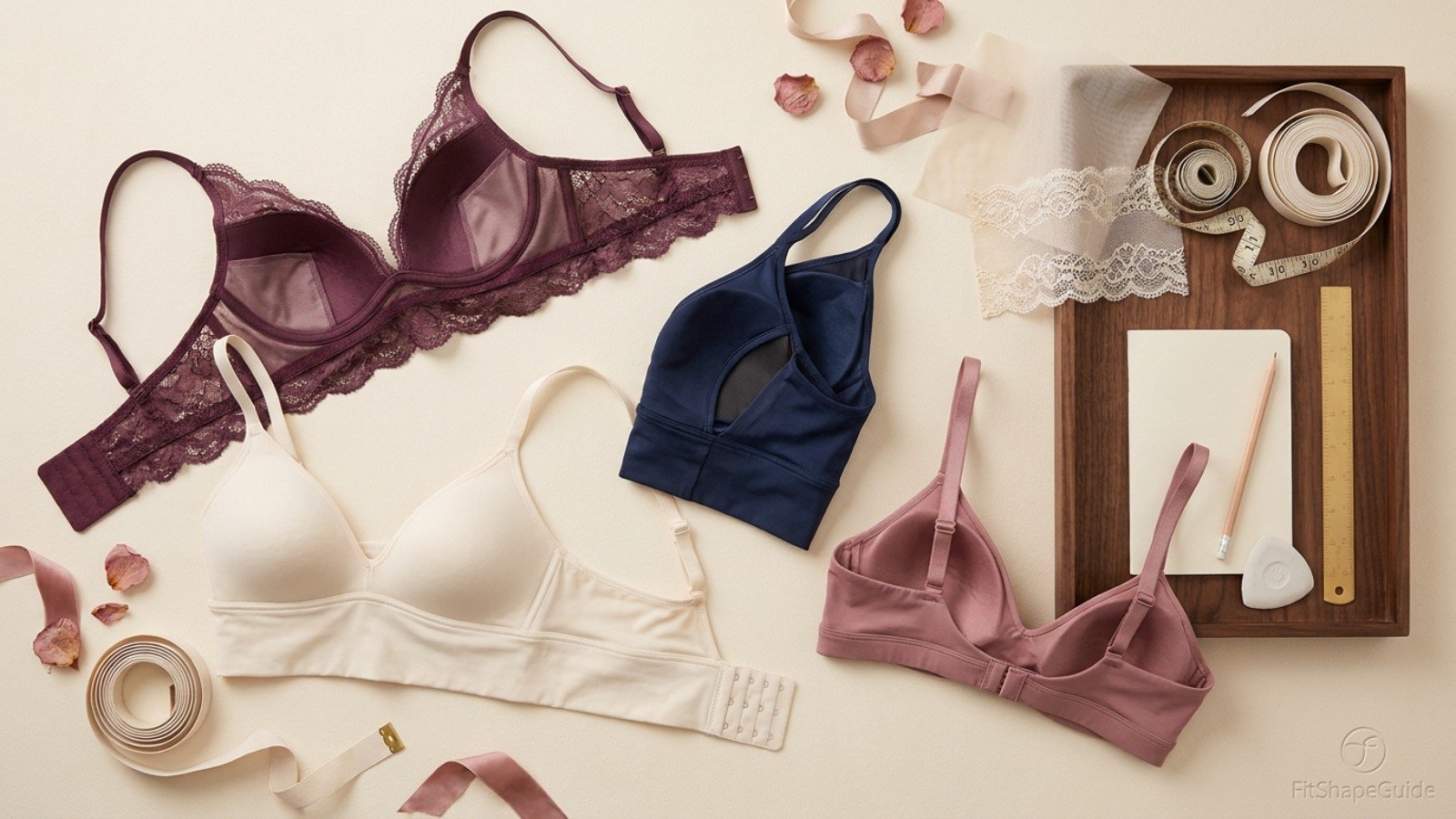
Common bralette fit problems with a large bust
| Problem | Likely cause | Better next move | Avoid |
|---|---|---|---|
| Band rides upward | Band too loose / overstretched | Fuller-bust-specific band sizing | Tightening shoulder straps |
| Bust falls beneath band | Band lacks stability | Wider or firmer underband | Accepting under-bust escape |
| Cups feel restrictive | Insufficient cup depth | Deeper fuller-bust design | Sizing up entire garment blindly |
| Band fits but cups overflow | Generic proportions | Curvy/full-bust-specific sizing | Using stretch as the only solution |
| Very wide side spread | No side support | Internal side sling | Expecting underwire-level centering from a flat panel |
| Straps dig | Too much support transferred upward | Better band + wider adjustable straps | Shortening further |
| Straps fall off | Wide placement or stretch | Centered/racerback design | Overtightening |
| Longline rolls upward | Torso/band-shape mismatch | Shorter longline or standard band | Buying a tighter size |
| Little separation | Normal wireless geometry | Shaped cups / internal slings | Assuming softness must mimic underwire |
| Bralette bounces during exercise | Not designed for impact support | True sports bra | Judging sports support by crop-top appearance |
The band fits but the cups are much too small
This is exactly where fuller-bust-specific sizing helps. Look for a range designed to increase cup capacity without simply making the entire garment wider.
I sized up for my bust and lost all support
The larger size probably increased both cup space and band circumference. Try a bralette range with independent or curvy/full-bust proportions.
The bralette feels supportive only when the straps are extremely tight
That suggests the band and cup frame are not contributing enough. Look for stronger underband construction or a more engineered wireless style.
I get a natural shape rather than my usual lifted bra shape
That is often normal. Wireless bralettes can be supportive without producing the exact same silhouette as an underwire bra.
So, do bralettes really work for a large bust?
Yes—when the bralette itself is designed for fuller-bust proportions. Look beyond the absence of underwire and examine the actual support system: deeper cup space, a strong underband, lining or side slings, adjustable straps and enough fabric stability to keep the bust contained.
For lounging, you may prefer less structure. For all-day wear, choose an engineered fuller-bust bralette. For high-impact movement, use a proper sports bra. The best bralette is not the one that imitates an underwire bra perfectly—it is the one that delivers the level of support you actually want while preserving the comfort that made you choose wireless in the first place.
Frequently asked questions
Do bralettes work for a large bust?
Yes. Fuller-bust-specific bralettes can combine deeper cups, strong underbands, supportive lining, side slings and adjustable straps to create meaningful wireless support.
Can a bralette support a large bust without underwire?
Yes, although the support architecture is different. The underband, cup fabric, lining, internal slings and straps replace some of the structural work normally provided by an underwire frame.
What should I look for in a supportive bralette?
Look for fuller-bust cup depth, a substantial underband, supportive lining or internal slings, wide adjustable straps and sizing that does not force you to choose between cup room and band stability.
Are longline bralettes better for a large bust?
They can provide more band contact and distribute pressure over a larger area, but longline comfort depends on torso length and whether the lower band rolls when seated.
Are bralettes good for everyday wear?
They can be when the construction matches the level of support you want. Fuller-bust-specific everyday bralettes are usually more structured than simple lounge bralettes.
Why does my bralette band ride up?
The band may be too loose, too stretchy or stretched out. A stronger or more precisely sized underband may provide better stability.
Why do bralettes give me little separation?
Many wireless designs create softer separation because they do not use a rigid underwire frame. Shaped cups and internal side slings can improve centering without wire.
Can I exercise in a bralette?
A bralette may be suitable for gentle movement if the manufacturer designs it for that use, but running and jumping require a sports bra engineered for appropriate impact support.
How FitShapeGuide evaluates bralettes
This guide evaluates bralettes through fuller-bust cup capacity, band stability, cup lining, internal side support, longline depth, strap width, adjustability, closure system, stretch recovery, garment use and realistic support expectations.
Wire-free is not treated as a synonym for unsupported. Current specialist fuller-bust bralettes demonstrate that support can be created through engineered textiles, shaped cups, wider underbands, power-mesh-style linings, side slings and adjustable straps.
Current specialist ranges also demonstrate why generic S/M/L bralette sizing can be limiting for fuller busts. Some current collections are intentionally graded to provide more cup depth with comparatively smaller bands, while others use band-and-cup or grouped fuller-bust sizing.
FitShapeGuide distinguishes lounge support, everyday wireless support and sports support. A soft bralette does not need to perform like an underwire bra to be useful, but it should be described according to the job it is actually designed to do.
Before publishing any commercial recommendation, FitShapeGuide should verify the live seller, exact product, sizing system, band range, cup range, fuller-bust-specific grading, underband construction, longline depth, cup lining, side sling, strap width, strap adjustability, rear closure, racerback feature, fabrics, care, intended use, current availability and return eligibility.
No product name, ASIN, cup range, band range, material claim, price, rating, review count, coupon, stock statement or delivery promise should be published unless directly verified.

2 Comments