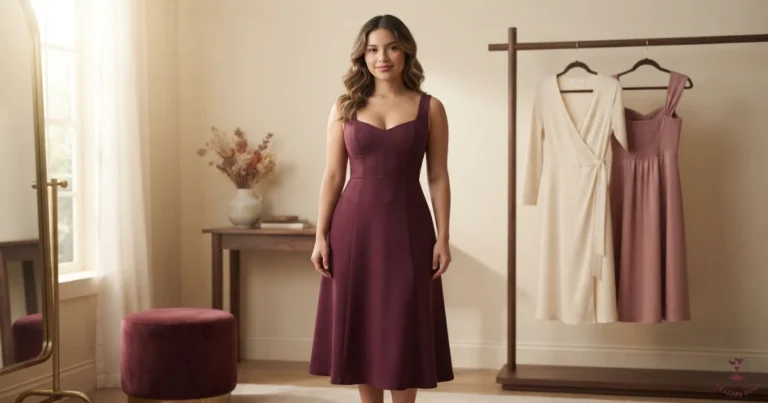
Best Ball Gowns for a Large Bust
A beautiful ball gown should let you breathe, sit, climb stairs and dance without adjusting the neckline through the formal event. This construction-led guide explains which bodices, straps, necklines and closures create dependable fuller-bust fit—and how to tell genuine support from decorative structure before you buy.
Quick answer
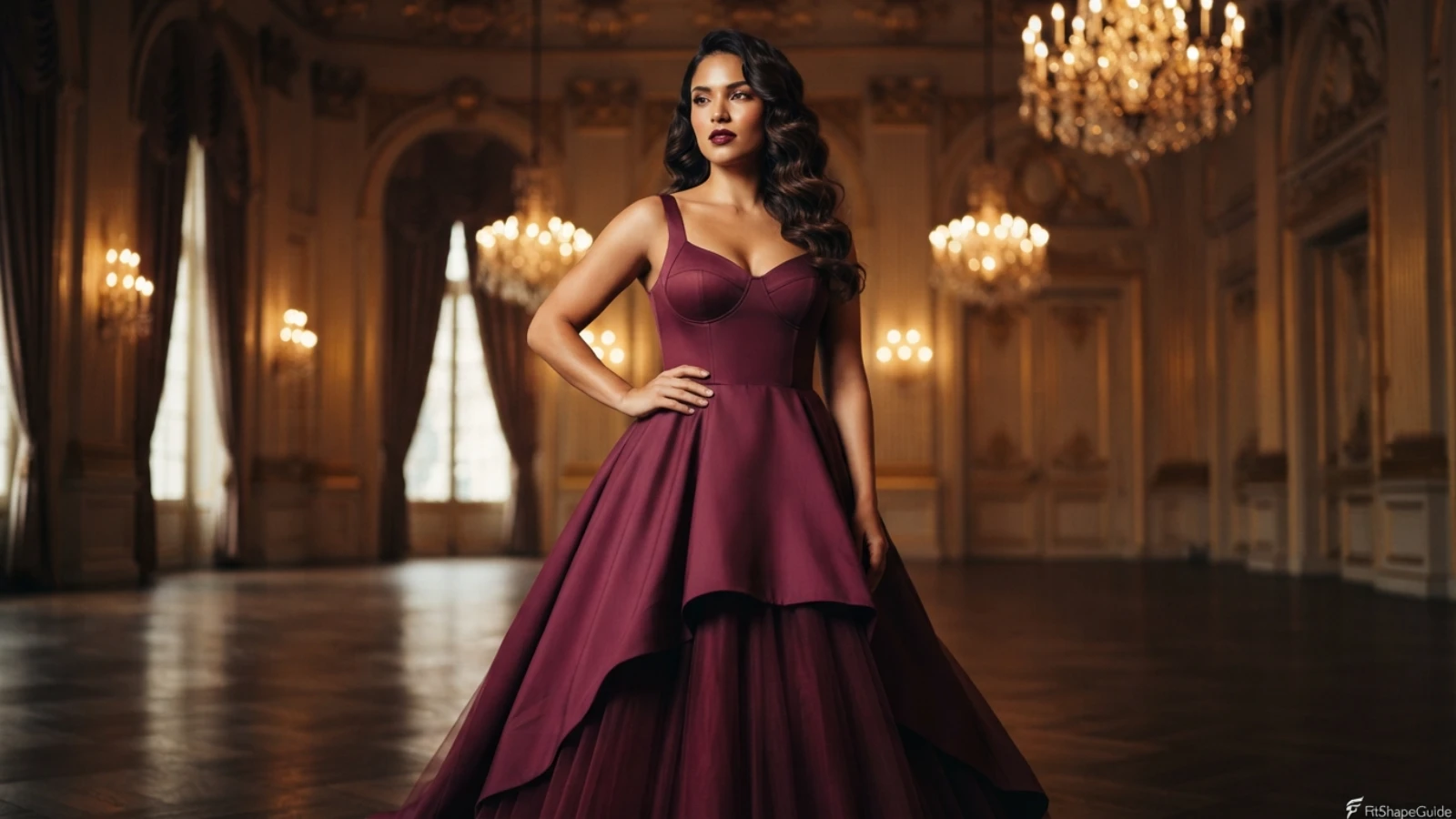
The best ball gowns for a large bust use full-length princess seams, adequate cup depth, a stable underbust seam and either supportive straps or properly engineered internal structure. Wide-strap A-line, square-neck fit-and-flare, adjustable lace-up-back and well-proportioned corset-seamed gowns are strong starting points. Choose a neckline that stays against the chest when you raise your arms, a closure that does not carry all the bust pressure, and enough center-front length to keep the waist and hem level. Decide on the bra or support method before alterations, then test the complete outfit while sitting, walking, hugging and dancing.
The 60-second ball-gown fit check
- Settle the bust fully into the bodice while wearing the planned bra or support.
- Check that the neckline returns to the chest after reaching and raising both arms.
- Confirm seams travel smoothly over—not across or away from—the bust apex.
- View the side: waist seam, side seam and front hem should remain level.
- Sit, breathe deeply and bend to put on a shoe without pinching or spillage.
- Walk, climb a step and turn as if dancing; the bodice should stay anchored.
- Test the train or bustle with the exact shoes before approving the hem.
Best ball gowns for a large bust by construction
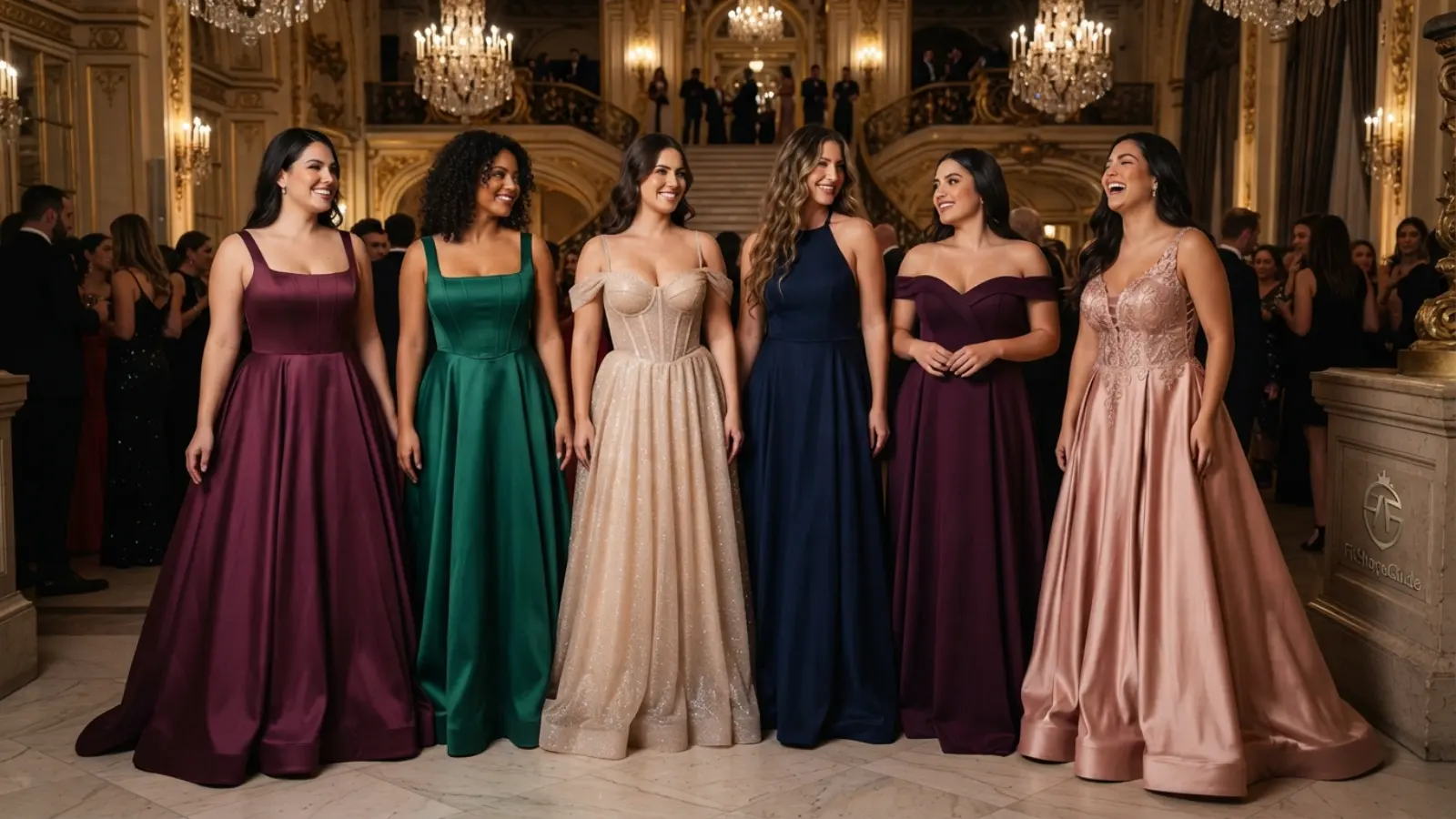
Wide-strap princess-seam ball gown
Best for: reliable bra compatibility and dramatic but controlled skirt volume. Full princess seams can add projection at the bust and reduce smoothly toward the waist without forcing the chest into a flat panel. Wide straps conceal supportive bra straps and help stabilize the upper edge, but the waistband or internal stay should carry the skirt weight. The full skirt must begin only after the bodice reaches the natural waist. Compare the underlying silhouette in our A-line dress guide for a large bust.
Square-neck structured ball gown
Best for: visible collarbone, strap stability and a clean frame above a full skirt. A square neckline provides helpful vertical and horizontal boundaries, but its corners must stay flat and its width must align with the bra. Choose curved princess shaping, a substantial facing and straps set close enough to cover cup edges. The skirt attachment should not drag the corners outward. Our square-neck dress guide explains corner stability.
Corset-seamed gown with real cup depth
Best for: formal structure when the bust area is genuinely proportioned. Look beyond visible boning: the cups or seam panels must contain breast tissue without cutting across it, the underbust line must sit beneath the bust, and boning must not bow outward. A corset-look bodice can be decorative rather than supportive. Use our corset dress fit guide to separate structure from compression.
Supportive halter ball gown
Best for: an open shoulder line when the neck closure is broad and stable. The bust weight should be shared by the underbust, side panels and waist—not suspended from a narrow neck strap. Check for neck pressure during a ten-minute wear test and make sure side coverage contains the bra or intended support. A high halter front often offers more security than a very deep plunge.
Structured off-the-shoulder gown
Best for: a formal neckline with internal anchoring. The sleeves should decorate the shoulder line rather than hold up the bust. Seek a firm waist stay, shaped bodice panels, stable side seams and compatible strapless support. Raise your arms: the neckline should return without rolling or pulling the entire dress upward. See our off-the-shoulder dress guide for recovery tests.
Adjustable lace-up-back ball gown
Best for: a significant bust-to-waist difference and fine fit adjustment. A lace-up back can adapt circumference, but it cannot create missing cup depth or correct a misplaced seam. The modesty panel must cover securely, the lacing loops must remain parallel, and tension should be distributed across several points. Add a waist stay when appropriate rather than tightening the top edge until breathing becomes difficult.
Support architecture: what actually holds a ball-gown bodice in place?
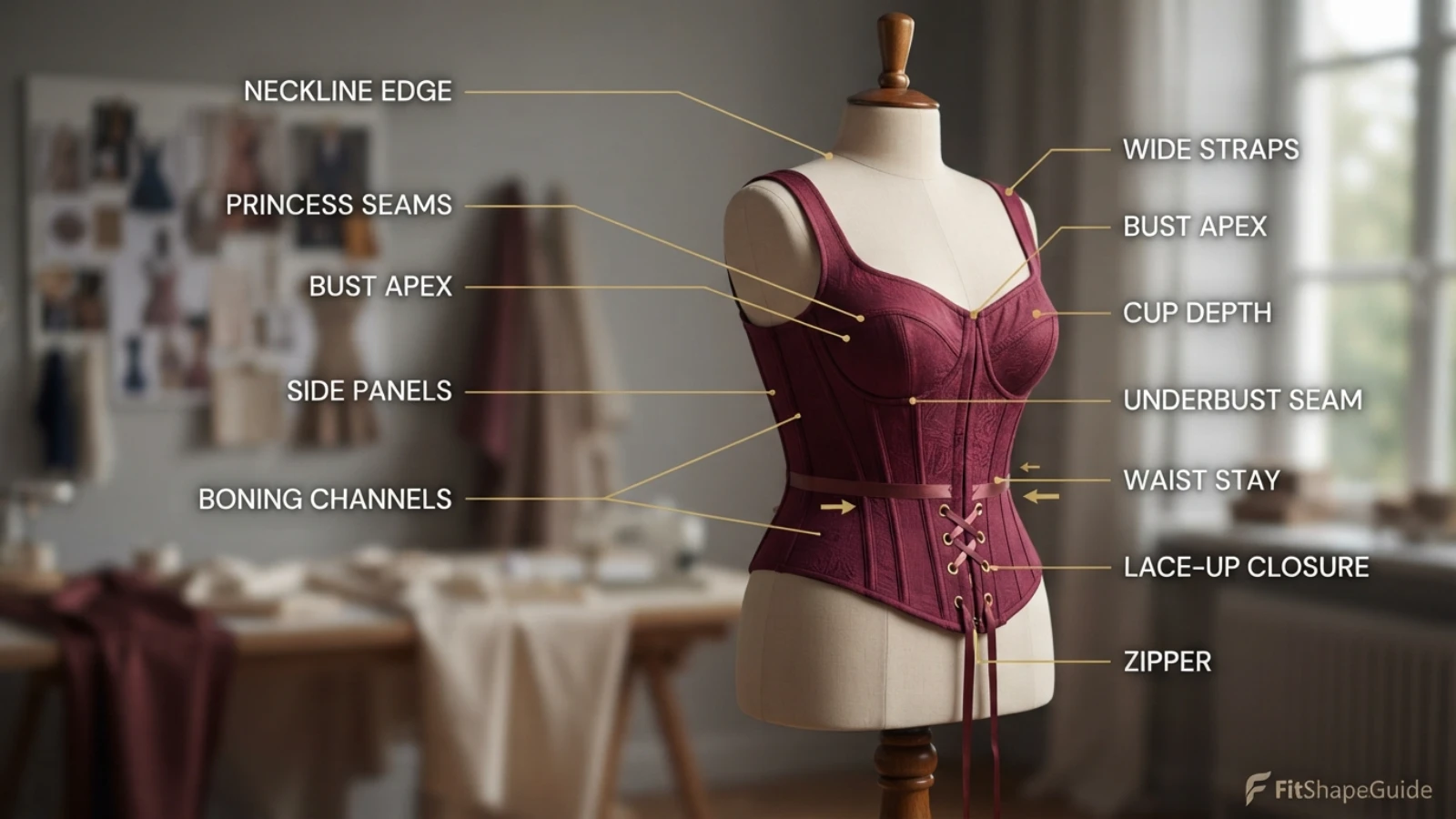
Princess seams create projection
A fuller bust needs fabric to travel forward as well as around the body. Long curved princess seams can build that projection, then taper toward the underbust and waist. If a seam sits far outside the bust apex, curves sharply across breast tissue or twists toward the armhole, the shaping is misplaced. Darts and multi-panel cups can also work, but smooth unshaped fronts often borrow length from the skirt and ride upward.
Boning controls fabric; it does not create cup capacity
Boning keeps panels vertical and resists folding. It cannot make a shallow bodice deep enough. If the bust spills above the neckline while the waist feels loose, harder boning or tighter lacing will not solve the geometry. Look for curved seam panels, an appropriately placed underbust and enough center-front length. Boning ends should be padded and should not press into breast tissue while sitting.
The waist is the best anchor
Many strapless or corset-style gowns work by anchoring at the waist and ribcage so the neckline does not carry the garment. A hidden waist stay—a firm inner ribbon with a secure fastening—can improve stability. It should feel snug, not painful, and must remain level. If the dress slides downward, check the waist anchor and bodice dimensions before pulling the top edge tighter.
Built-in cups are not automatically bra-sized
Foam pads can provide coverage and shape, but standard fashion cups may be too small or shallow for a fuller bust. Breast tissue should not sit below, beside or on top of the molded area. Removable pads are useful only when the underlying bodice already fits. Ask whether cups can be replaced during alterations, and bring the intended bra to the first fitting.
Closures must share tension
Zippers, hooks, lacing and inner fastenings should work as a system. A zipper that waves or needs to be forced is carrying too much tension. Hook-and-eye guards, internal waist stays and wider lacing distribute force more safely. The zipper must close with the bust settled; holding your breath or compressing the chest to fasten it is a fit failure.
Necklines, straps and bra compatibility
Square and moderate V necklines
A square neckline provides predictable edges, while a moderate V can lengthen the upper torso and suit plunge support. In either case, the edge must lie flat without cutting into tissue or revealing the bra when you lean. Product photos cannot confirm recovery, so perform raised-arm and forward-lean tests. Compare coverage and proportions in our best necklines for a large bust guide.
Wide straps and adjustable straps
Wide straps usually provide better bra coverage and visual continuity. Adjustable straps help set bodice height, but should not be shortened until the underbust seam is pulled upward. If the dress collapses when straps loosen slightly, the bodice may lack waist or underbust support. Check adjusters for strength and confirm embellishment does not scratch the shoulders.
Halter necklines
A broad halter can frame the shoulders, but narrow neck ties may become uncomfortable during a long event. The halter dress guide for a large bust covers neck pressure, side coverage and bra options. Supportive halters use stable side panels and underbust shaping rather than hanging the entire bust from the neck.
Strapless and off-the-shoulder necklines
These require the most careful engineering. A level waist anchor, substantial side seams and sufficient bust depth matter more than a tight top edge. Test with the exact strapless bra, longline bra or structured support planned for the formal event. Our strapless dress guide explains grip, waist anchoring and movement recovery.
Deep plunges, mesh and cutouts
Illusion mesh may hold neckline edges in position but does not necessarily support weight. Inspect mesh stretch, seam reinforcement and skin comfort. Deep plunges restrict bra choice, and fashion tape should be treated as edge control—not structural support. Perform a patch test for any adhesive and follow its manufacturer’s directions.
Fabrics, lining and embellishment that affect fit
Crepe and matte satin
Substantial crepe can skim smoothly and tolerate movement when supported by good seams. Satin highlights every tension line, so diagonal shine or ripples across the bust reveal missing room quickly. Bias-cut satin is fluid but may stretch unevenly; it needs careful hanging and fitting before hemming.
Tulle, organza and layered skirts
These create volume without requiring a tight hip, but layers add weight at the waist. Check that the waistband stays level and the bodice does not slide. Raw edges, glitter and stiff tulle should not scratch the arms. A horsehair braid can shape the hem but requires enough clearance for stairs, hugging and dancing.
Velvet, sequins and beading
Embellished fabrics are heavier and harder to alter. Beading may limit seam access, while sequins can irritate underarms and catch on mesh. The bodice must fit before decoration is used to disguise tension. Ask how embellishment continues across altered seams and whether replacement beads are included.
Lining and interlining
A non-stretch lining can determine the real fit even when the outer fabric stretches. Sit and reach in the complete gown. Interlining can stabilize bodice panels, but an overly rigid layer may fight bust projection. Learn to assess fiber, weight and recovery in our fabric guide for large-bust clothing.
Ball-gown skirt weight, petticoats and crinolines
The skirt must hang from the waist—not the neckline
A true ball gown may contain several layers of tulle, organza, satin, lining and horsehair braid. That weight should be secured at a stable waist seam or inner waistband. If the skirt pulls the bodice downward, tightening straps or the top edge transfers the problem to the shoulders and bust. Wear the complete gown for at least fifteen minutes: the waist should remain level, the neckline should not migrate, and the zipper should not develop new waves.
Choose petticoat volume after the gown fits
A petticoat or crinoline can keep layers away from the legs and create the intended dome, but a larger diameter changes hem height, doorway clearance and the way fabric pushes against the waist. Test the exact understructure before final hemming. Too little support can make a heavy skirt collapse inward; too much can distort pleats, expose lining or turn a controlled silhouette into a costume-like shape. Follow the gown maker’s recommendation when one is provided.
Hoop clearance affects sitting and stairs
Practice sitting slowly while guiding the skirt rather than pulling the bodice. A rigid hoop can tilt upward if its diameter exceeds the chair or if the wearer sits on it incorrectly. Walk through a standard doorway, turn in a narrow space and climb several steps with the skirt safely lifted. The gown must leave a clear view of the shoes and floor. A companion can help manage a large train, but the basic movement should still be safe and repeatable.
Hem only with final shoes and understructure
Shoes, petticoat height and skirt support all change the distance from waist to floor. Marking the hem without them risks an uneven or unsafe result. Let bias and layered sections hang as the tailor recommends before the final fitting. Test front, side and back clearance, then walk on carpet and a smooth surface. A floor-length hem should skim appropriately without disappearing beneath the shoe or requiring a constant kick forward.
Measurements to compare before ordering
| Measurement | Why it matters | Warning sign |
|---|---|---|
| Full bust | Controls circumference at the fullest point | Garment equals body measurement in a rigid woven bodice |
| High bust | Helps distinguish frame size from bust projection | Shoulders and neckline become too large when full bust fits |
| Underbust | Checks anchoring and seam position | Underbust seam sits on breast tissue or floats below it |
| Natural waist | Determines waist stay and skirt balance | Waist is painful before the bust settles |
| Shoulder to bust apex | Tests vertical seam and cup placement | Princess curve or cup peak sits too high |
| Shoulder to waist, front | Allows length over bust projection | Waist and front hem rise |
| Back waist length | Checks bodice balance | Back wrinkles because front and back lengths conflict |
| Hip and seated hip | Protects sitting and walking ease | Skirt pulls bodice downward or zipper waves |
| Hollow to hem with shoes | Sets safe final gown length | Hem catches under the planned heel |
Measurement rule: use the brand’s current garment chart, not only a generic size chart. Bra size alone cannot predict ball-gown fit because cup volume, torso length, seam placement and intended ease vary widely.
How to shop online for the best ball gowns for a large bust
Read construction details, not adjectives
“Corset,” “supportive” and “built-in bra” are not standardized fit measurements. Look for garment bust, underbust and waist dimensions; fabric composition; lining; boning locations; strap width; closure type; cup removability; and stretch. Zoom into front, side and back photos. A smooth bodice on one model does not establish fit for another proportion.
Use reviews as evidence, not guarantees
Prioritize reviewers who share full bust, underbust, waist, height, ordered size and whether they wore a bra. Repeated comments about shallow cups, zipper strain, falling straps or neck pressure are useful construction clues. Ratings alone cannot tell you where a dress fits or fails.
Verify Amazon products before publishing
This guide is Amazon affiliate-ready but intentionally contains no invented product name, ASIN, price, rating, stock status or review count. Verify the live listing, seller, garment chart, fabric, care instructions, return window and photographs before inserting any product. Mark affiliate links rel="sponsored nofollow" and keep selection criteria independent of commission.
Order early enough for comparison
Leave time to compare two plausible sizes, confirm color in natural light and book alterations. Keep tags attached during home tests. Formalwear-season shipping, exchange timing and tailor availability can change, so verify current dates rather than relying on an old review or cached listing.
Check gala and venue requirements
Confirm current dress-code expectations, bag policies and venue conditions. A removable modesty panel, matching wrap or secure mesh insert can add flexibility without changing the design’s character. Test the dress under indoor light, flash photography and outdoor evening conditions.
Movement, hugging, dancing and comfort tests every gown should pass
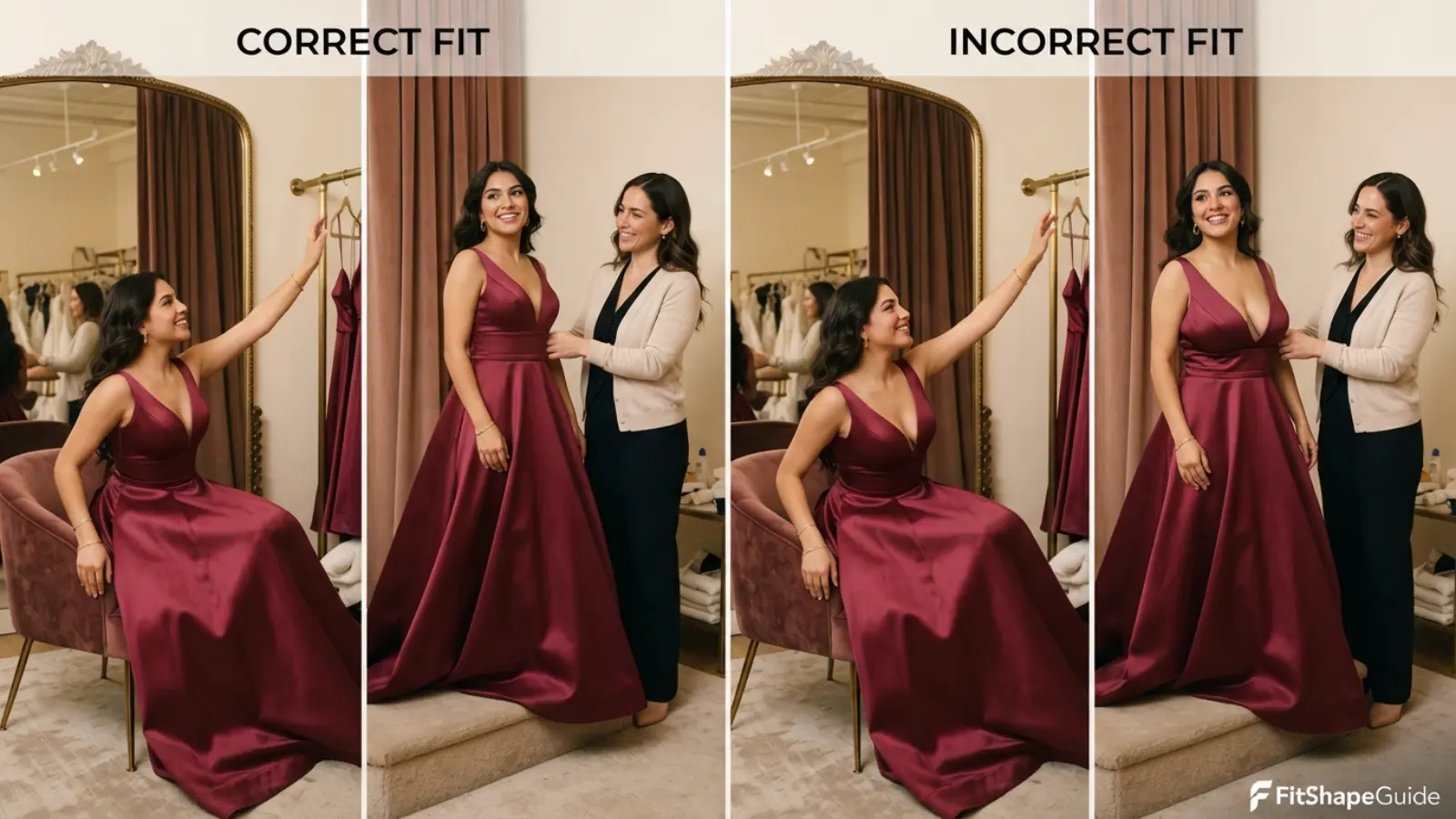
The full-breath test
Fasten the dress and take several slow, full breaths. The waist stay may feel secure, but you should not become light-headed or unable to expand the ribcage. Boning must not dig under the bust. If comfort depends on holding your breath, the dress is too small or incorrectly shaped.
The raised-arm recovery test
Raise both arms as if embracing guests, then lower them. Straps should return, neckline edges should lie flat and the whole bodice should not remain lifted. Repeat after sitting because warmth and movement can change fabric behavior. The best ball gowns for a large bust stay anchored without constant pulling.
The dance test
Move side to side, turn, reach and lightly bounce for at least two full minutes at home. Check spillage, strap movement, neck pressure, skirt tangling and zipper comfort. Try the planned shoes. A large skirt needs enough clearance that you can step backward without catching the hem.
The seated and meal test
Sit for ten minutes, lean forward and stand without using the neckline as a handle. Confirm the bodice does not pinch the abdomen, cups do not rise and the skirt permits a natural seated posture. Consider the room needed after a meal; a formal event lasts longer than a fitting-room pose.
The photo and flash test
Photograph the dress from front, side and back with and without flash. Check whether lining becomes visible through the fabric, cups show as separate shapes, mesh changes color or reflective satin emphasizes strain. Evaluate comfort and security first; photographs simply reveal details that mirrors may miss.
Ball-gown alterations: what to book and when
Bring the final undergarments and shoes
Lift, cup shape and strap position change the bodice. Shoes set the hem. Bring both to every fitting, along with any shapewear and fashion tape you genuinely plan to use. Changing the bra after bust alterations can shift the apex and neckline.
Usually realistic alterations
Taking in the waist, shortening straps, adjusting a hem, refining side seams, adding bra keepers and securing a modesty panel are often manageable when seam allowance and decoration permit. A tailor may add an inner waist stay or replace generic cups, but feasibility depends on access to the bodice layers.
Often complex or expensive alterations
Adding substantial bust depth, moving an underbust seam, rebuilding tiny cups, changing a rigid neckline, shortening a fully beaded bodice or correcting a dramatically misplaced waist can require reconstruction. Before buying, compare the alteration estimate with a better-cut dress. Our tailoring guide for a large bust explains why fitting the hardest area first is usually economical.
A practical fitting timeline
Book a consultation as soon as the dress arrives and passes the basic return-window test. Allow more time for beading, lace, corsetry or multiple layers. Schedule the final fitting close enough to the event date that the fit is current, but early enough for a correction. Exact timing varies by tailor and season, so confirm it directly.
Common ball-gown fit problems and better responses
| Symptom | Likely cause | Better response |
|---|---|---|
| Spillage above neckline | Cups or front panels too shallow/small | Choose more cup depth; do not only tighten straps |
| Neckline gaps | Frame too large, edge too long or bust shape mismatch | Try better grading or a careful neckline alteration |
| Underbust seam rides up | Missing bust depth or front bodice length | Choose deeper princess/cup shaping |
| Zipper waves or separates | Excess tension or zipper installation problem | Size/cut for the bust; inspect closure construction |
| Boning bows outward | Bodice is too shallow or boning too weak | Choose correct projection, not harder compression |
| Halter hurts the neck | Bust weight is suspended from a narrow strap | Use broader halter plus waist/underbust support |
| Front hem rises | Insufficient shoulder-to-waist front length | Seek longer front panels before hemming |
| Strapless gown slides | Poor waist anchor or oversized ribcage | Refit the anchor; do not only tighten neckline |
Should you size up?
Size up when it adds real bust depth or circumference and leaves alterable excess at the waist. It is less useful when cups stay the same shallow shape, straps move too far outward or the neckline becomes dramatically large. Compare the two sizes with the same undergarments before altering either.
When a formal gown category may help
If ball-gown styles rely on very small fashion cups or extreme cutouts, a broader formal collection may offer more mature construction, fuller lining and additional strap options. Use our formal gowns for a large bust guide to compare evening silhouettes without sacrificing a celebratory look.
Care, transport and formal-event preparation
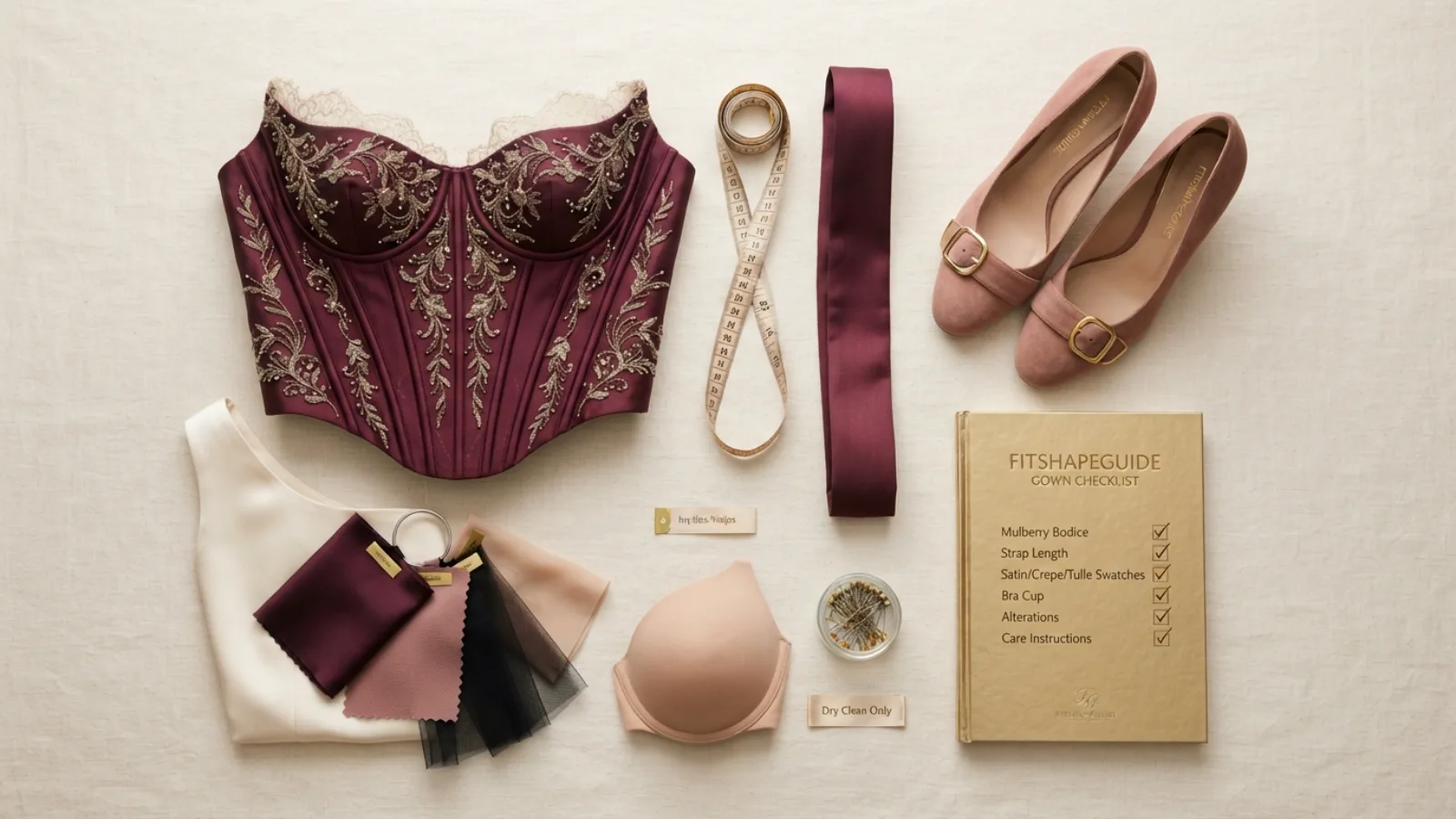
Follow the sewn-in care label because the shell, lining, boning, adhesive trim and embellishment may require different treatment. The U.S. Federal Trade Commission’s official Care Labeling Rule guidance explains regular-care instructions, and its apparel labeling resources cover fiber-content responsibilities.
Store the gown as its maker recommends. Heavy beading can stretch a dress on a narrow hanger; some gowns are better supported by hanger loops or stored flat. Keep it away from direct sunlight, cosmetics and moisture. Steam only when the care label permits, using caution around sequins, glued stones, tulle and synthetic satin.
For transport, protect the bodice from crushing and allow the skirt room. Pack a small, venue-appropriate kit with matching thread, safety pins, fashion tape for edge control, blister care and a stain cloth—but remember that emergency tape cannot repair missing structural support. Practice using the restroom, managing the train and sitting in a vehicle before the event.
The best ball gowns for a large bust feel secure enough that the wearer can focus on the event. Do a final complete-outfit test several days beforehand, including bra, shoes, jewelry, wrap and bag. Check closures, loose beads, straps and hem. Comfort is part of formal polish, not a compromise.
- Fit bust, underbust and front bodice length before the waist and hem.
- Confirm the exact bra or built-in support before alterations.
- Test breathing, sitting, stairs, hugging, dancing and raised-arm recovery.
- Verify current seller, return, care and venue requirements.
- Choose construction that stays secure without compression or constant adjustment.
The best ball gowns for a large bust combine projection, anchoring and movement security
Start with enough bust depth, accurately placed seams and a stable waist or underbust anchor. Then choose straps and a neckline that suit the planned support method. A strong ball gown keeps its waist level, neckline flat and closure smooth while you breathe, sit, climb stairs and dance. Keep the dress that supports the occasion without asking you to compress your body or monitor the bodice all night.
Frequently asked questions
What ball gown style is best for a large bust?
Wide-strap princess-seam, square-neck structured and adjustable lace-up-back gowns are useful starting points. The best choice has enough bust projection, stable anchoring and secure movement rather than one required silhouette.
Can a large bust wear a strapless ball gown?
Yes, when the bodice has sufficient depth, a firm waist or ribcage anchor, stable side seams and compatible strapless support. A tight top edge alone is not adequate engineering.
Are corset ball gowns supportive for fuller busts?
Some are, but visible boning does not guarantee support. Cups or seam panels must have adequate capacity, the underbust must sit correctly and the waist should share the load without painful compression.
Should I size up in a ball gown for my bust?
Size up when the larger size adds usable bust room and the excess waist can be altered. If cups remain shallow or the neckline and shoulders become too large, choose a differently proportioned design.
What bra should I wear under a ball gown?
Choose the bra after evaluating neckline, back height and straps. A regular supportive bra suits wide straps; plunge, strapless or longline support may suit other constructions. Fit the dress over the exact bra before alterations.
How can I tell if built-in cups are too small?
The cup edge may cut across tissue, the bust may sit below or beside the molded area, or the underbust seam may ride upward. Padding does not fix a cup that lacks volume or depth.
How early should ball-gown alterations begin?
Arrange a consultation as soon as the dress passes your return-window checks. Beading, lace, corsetry and layered hems need more time, and local tailor availability varies during formalwear season.
Can fashion tape support a large bust in a ball gown?
Fashion tape can help control a neckline edge, but it should not be treated as the dress’s structural support. Use appropriate support, patch-test adhesives and follow the product instructions.