Best Tea-Length Dresses for a Large Bust
A tea-length dress can feel polished, playful and easier to move in than a floor-length gown—but the shorter skirt makes bodice balance especially visible. This construction-led guide explains how to find secure bust shaping, a level waist and a purposeful mid-calf hem without relying on compression or constant neckline adjustment.
Quick answer
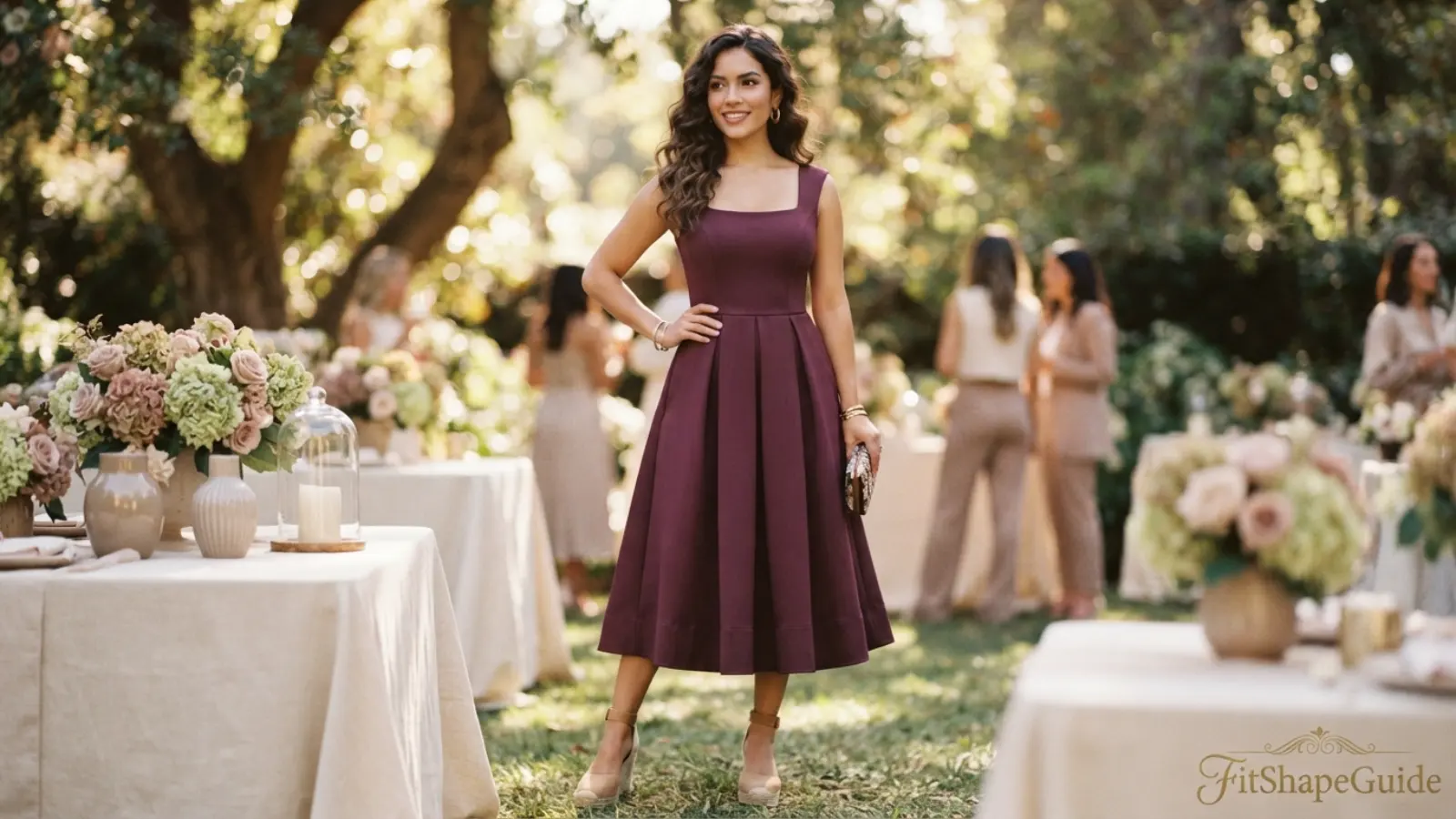
The best tea-length dresses for a large bust combine curved princess seams or well-placed darts with a stable neckline, bra-compatible straps, adequate center-front bodice length and a skirt that begins at the intended waist. Princess-seam fit-and-flare, secure wrap, square-neck A-line, structured ponte and wide-strap occasion dresses are strong starting points. The waist and hem should remain level after the fabric travels over the bust, and the skirt should end at a deliberate part of the lower leg. Test the dress with the planned bra and shoes while sitting, walking, climbing a step and turning.
The 60-second tea-length fit check
- Wear the exact bra and shoes planned for the dress.
- Confirm the neckline and armholes cover every bra edge.
- Check that darts or princess curves align with the bust apex.
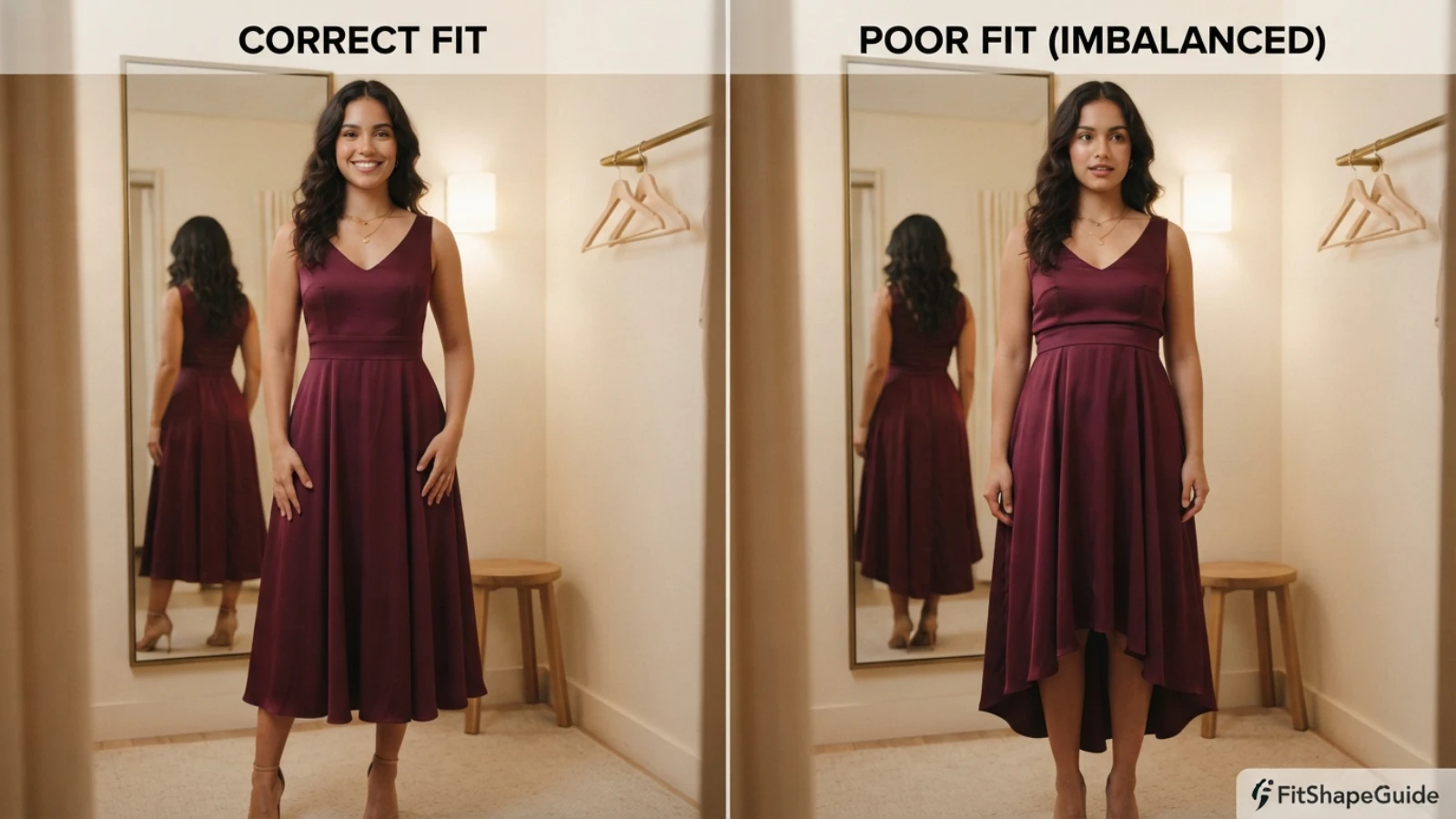
- View the side: waist, side seam and hem should stay level.
- Sit fully, reach forward, raise both arms and take a long stride.
- Turn once and check that the skirt falls back without twisting.
- Photograph front, side and back to judge the actual hem point.
Best tea-length dresses for a large bust by construction
Princess-seam fit-and-flare tea dress
Best for: reliable bust projection and a defined waist. Curved seams can travel over the fullest area and taper beneath it without forcing one flat front panel to stretch. Choose bra-friendly straps, a moderate neckline and a waist seam that reaches the natural waist at both front and back. Controlled flare gives room for walking while keeping the shorter formal silhouette balanced. Compare the shaping principles in our fit-and-flare dress guide.
Secure wrap tea-length dress
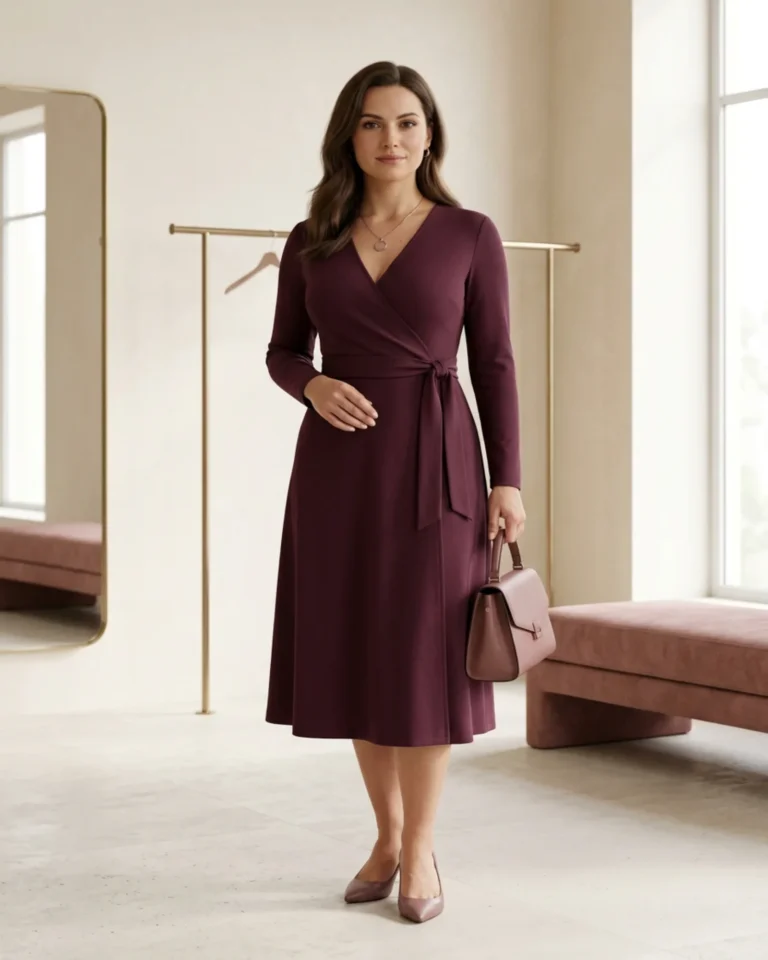
Best for: adjustable waist fit and day-to-evening versatility. The overlap should remain beyond the bust apex when you sit or lean; the tie should settle at the natural waist rather than under the bust. Stable binding helps the edge return after movement. A discreet snap may control a correctly fitted edge, but it cannot create missing coverage. See the wrap dress guide for a large bust.
Square-neck A-line tea dress
Best for: visible collarbone, regular-bra compatibility and classic occasion styling. The square corners should lie flat and the straps should align with the bra. Look for princess panels or bust darts beneath the clean neckline. The skirt can widen gradually without adding concentrated bulk at the waist. Check that the center-front hem does not rise after the bust settles. Our square-neck dress guide explains edge stability.
Structured ponte tea-length dress
Best for: work events, travel and long periods of sitting. Quality ponte can combine stretch, opacity and recovery, but it still needs adequate front length and shaping. The fabric should return after you stand and remain matte over the bust. A paneled skirt gives controlled movement without requiring stiff petticoats. Compression is not support; the dress should accommodate a well-fitted bra without flattened tissue or stretched shine.
Wide-strap occasion tea dress
Best for: weddings, graduations and formal daytime events. Wide straps conceal supportive bra straps and visually connect the bodice to a fuller skirt. A V, scoop or sweetheart neckline can work when its edge remains secure and the front panels provide enough depth. Lining should move with the shell rather than pulling the waist upward. If the skirt is layered, check that its weight is anchored at the waist instead of dragging on the neckline.
Adjustable-waist shirt tea dress
Best for: smart-casual styling and practical daytime wear. Bust darts, princess seams, useful button placement and a removable belt make this construction more adaptable. Buttons should lie flat across the fullest area; a hidden snap can stabilize adequate overlap but should not force a shallow bodice closed. The belt should refine an already level waist. Review placket and shoulder checks in our shirt dress guide.
What does tea length mean—and where should the hem finish?
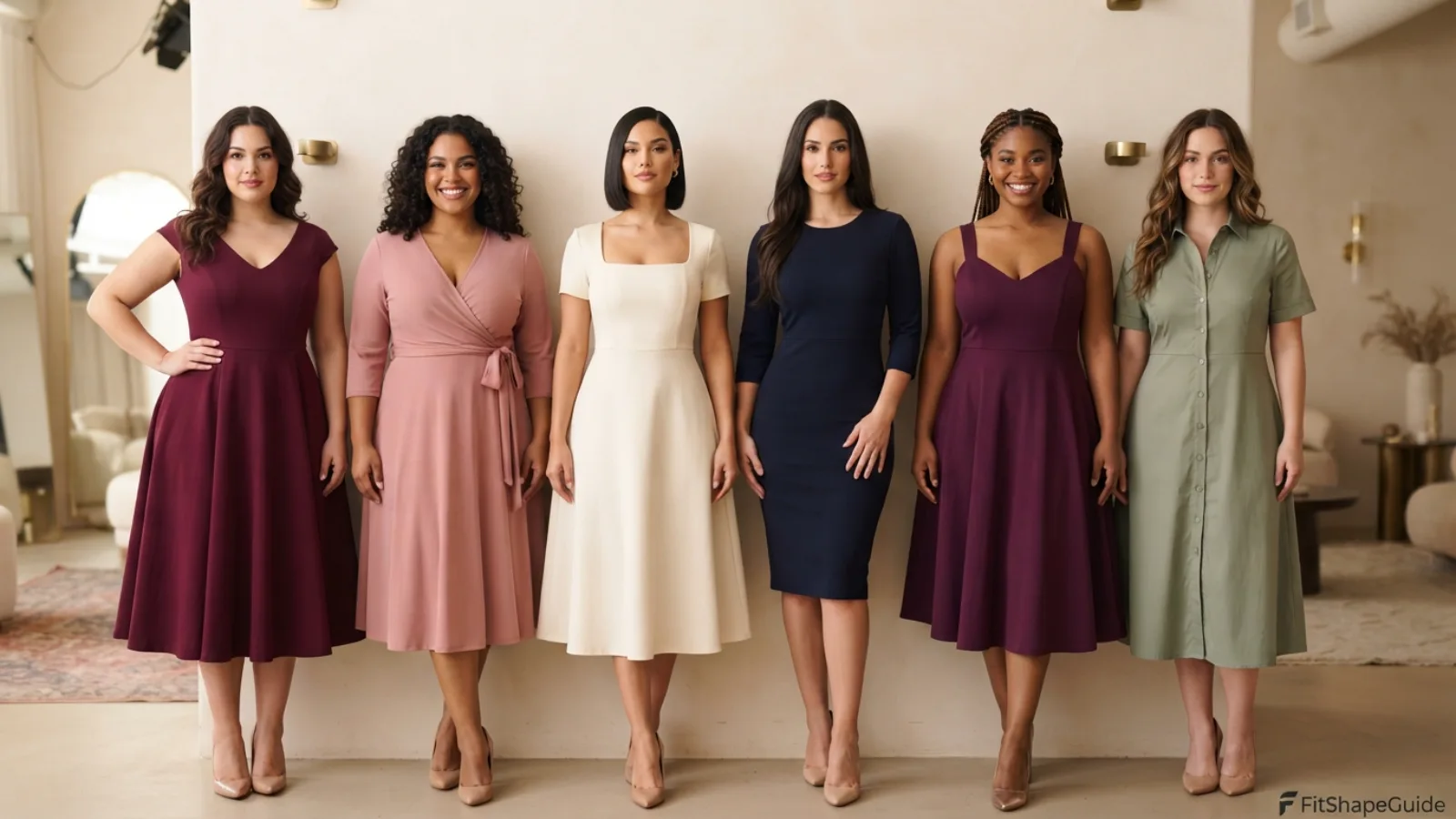
Tea length generally describes a hem between the knee and ankle, often around mid-calf. Retailers use the label loosely, so the listed dress length and the wearer’s height matter more than the category name. The same garment may look traditionally tea length on one person, close to midi on another and almost ankle length on a petite frame. Product photography can also mislead when the model’s height or shoe height is missing.
Choose a purposeful lower-leg point
The hem does not need to hit one universal flattering spot. It should look deliberate, clear the widest movement of the calf and work with the intended shoe. Try small changes by folding or pinning the hem temporarily. A difference of two or three centimeters can change the visual relationship between skirt, lower leg and footwear. Judge the full outfit from several meters away, not only a close mirror.
Fuller-bust projection can change the apparent hem
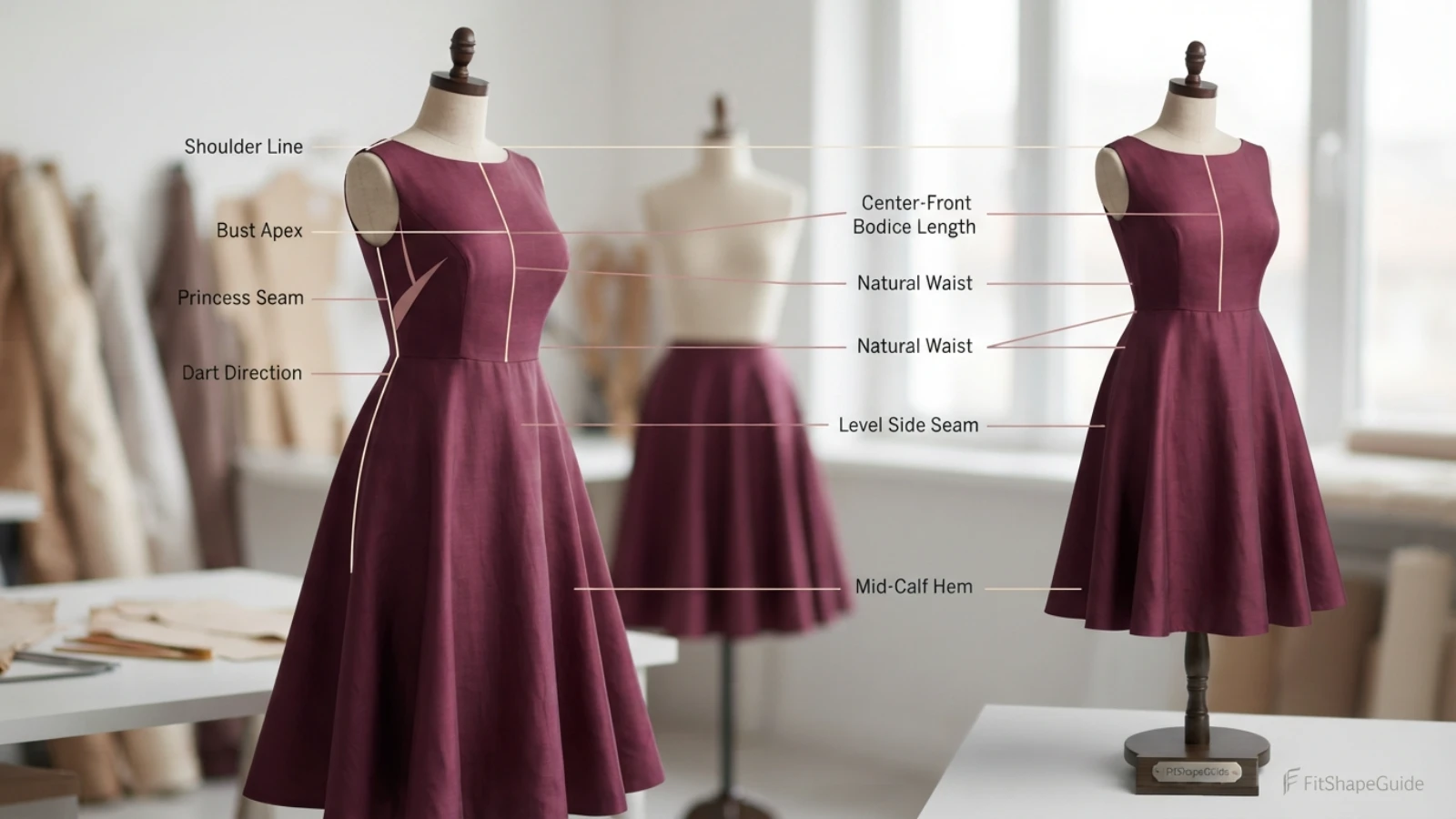
If the front bodice lacks length, it borrows fabric from the skirt. The waist rises, the side seam swings forward and the front hem becomes shorter. Hemming the skirt before fixing the bodice can lock in this imbalance. Settle the bust into the correct bra, align the waist and allow the dress to hang before marking any final length. A level hem starts at the shoulder and bust, not at the scissors.
Skirt shape changes the reading of length
A circular skirt appears lively and may lift while turning. Pleats concentrate volume at the waist. A-line panels create quieter movement, while a pencil or straight tea skirt emphasizes the exact calf endpoint. None is automatically right for a fuller bust. Choose the skirt based on movement, venue and body proportions after the bodice fits. The A-line dress guide explains how gradual flare can balance a shaped upper body.
Fit the fuller bust before judging the tea-length silhouette
Projection requires depth and vertical length
A size chart’s full-bust circumference cannot show whether a bodice is deep enough. Two dresses with the same measurement can distribute fabric differently: one may offer forward projection while another adds width at the side and back. In a shallow bodice, darts sit too low or too far outward, the neckline pulls, and the waist climbs. Look from the side and confirm the front waist reaches the same level as the back without compressing tissue.
Shoulders should remain stable
Sizing up for the bust often makes the shoulders, neckline and armholes too large. A slipping shoulder changes the entire dress: straps drift, the neckline gaps and the armhole exposes the bra. Start with a shoulder line that sits securely, then evaluate usable bust space. Fuller-bust or curve grading can be more effective than simply choosing a larger straight size. Petite and tall ranges may also change the shoulder-to-waist length.
Darts and princess seams need accurate placement
A dart should point toward the bust apex and finish before it rather than cutting into the fullest point. Princess seams should curve smoothly over the bust and return beneath it. If a seam twists toward the armhole or collapses at the upper chest, its shaping does not match the wearer. Seam placement matters more than the presence of decorative stitching. A plain knit front can work, but only when it has enough length, recovery and opacity.
The waist must meet the actual torso
A high waist seam can look intentional in an empire design, but a natural-waist tea dress should not be pushed upward by the bust. Check the waist from front, side and back. A belt cannot correct a bodice that ends too early; it merely traps the raised seam. Shoppers with a large bust and smaller waist may need to fit the bust first and refine an accessible waist seam. Our tailoring guide for a large bust explains realistic refinements.
Ease should support sitting and movement
Tea dresses are often chosen for social events where the wearer sits, eats, walks and turns. Test a full seated posture. The zipper should not dig, the waist should not cut into the ribcage and the neckline should stay against the body. Cross the arms, reach for a bag and take a long step. The best tea-length dresses for a large bust return to position without repeated pulling or rearranging.
Necklines, straps and bra compatibility
Moderate V-neck
A moderate V can create vertical openness and work with many lower-center bras. Both edges must lie flat when the wearer leans and turns. The point should remain centered, and the bust should not push the neckline wider. A camisole may adjust coverage for a particular setting, but it should not be required to hold an undersized front together. Compare depth and edge return in the V-neck dress guide.
Square and scoop necklines
A square neckline gives predictable boundaries and usually pairs well with standard straps. Its corners need stable facing so they do not curl. A scoop can be flexible, but thin fabric may spread over a fuller bust. In either design, check the neckline after raising the arms and sitting. The edge should return to its original position without revealing the cup or creating a horizontal pull line.
Wrap and sweetheart fronts
A wrap front needs substantial overlap, while a sweetheart requires enough cup or panel depth. Tiny molded fashion cups are not automatically supportive. If the cup edge crosses tissue or the underbust seam sits on the bust, choose another construction. A sweetheart tea dress may work beautifully with wide straps and a stable waist anchor, but a low strapless version requires more careful engineering.
Sleeves and armholes
Short, elbow and three-quarter sleeves suit many tea dresses, provided the armscye allows reaching without lifting the bodice. Sleeveless designs should cover the side cup and band from every angle. Cap sleeves can restrict the upper arm if their opening is narrow. Test with the intended jacket or wrap because bulky sleeves beneath a fitted layer may pull the neckline and waist out of position.
Choose the support method before alterations. A regular bra is easiest under wide straps and a moderate back. Plunge, strapless or longline options depend on neckline and back height. Fashion tape can control a correctly fitted edge but is not structural support. For a broader comparison, use our neckline guide for a large bust.
Fabrics and skirt volume that hold the silhouette
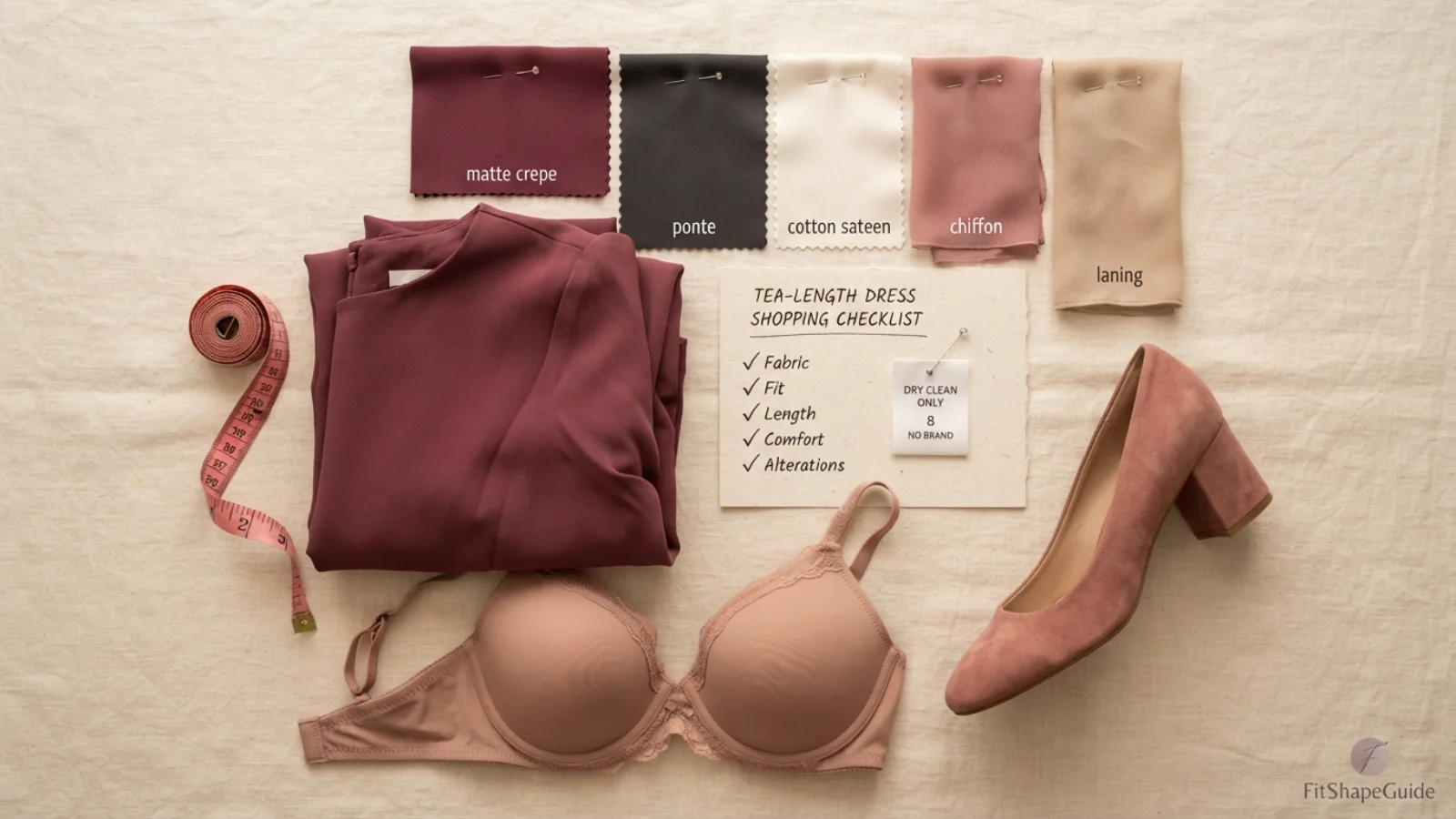
Fabric determines whether the bodice keeps its shaping and whether the hem moves cleanly. Matte crepe offers polished drape when seams create enough projection. Cotton sateen suits structured daytime tea dresses but needs accurate darts. Quality ponte provides stable stretch for work and travel. Chiffon creates light movement but depends on a well-fitted opaque lining. Satin reveals every tension line, so diagonal shine across the bust is useful evidence of missing room.
| Fabric | Useful quality | Check carefully |
|---|---|---|
| Matte crepe | Elegant drape with low shine | Drag lines and lining tension |
| Cotton sateen | Crisp vintage-style structure | Dart placement and wrinkling |
| Ponte | Stable stretch and recovery | Opacity, pilling and stretched shine |
| Chiffon | Soft layered movement | Static, transparency and lining fit |
| Satin | Formal surface and fluidity | Strain lines, snags and seam show-through |
| Tulle or organza | Light volume and occasion shape | Waist bulk, scratchiness and skirt weight |
Control volume at the waist
Gathering and box pleats add fabric exactly where a fuller-bust silhouette may already have a raised waist problem. That is not inherently wrong, but the bodice must reach the waist first. Knife pleats, panel seams or a circular skirt can distribute fullness differently. Try the dress seated to ensure bulky layers do not force the waist upward. The shell and lining should hang together rather than fighting each other.
Check recovery after sitting
Sit for ten minutes, then stand without smoothing the dress. Ponte should recover, woven cotton may crease, and delicate overlays should fall without clinging. Assess whether wrinkles are acceptable for the occasion. Read the sewn-in care label and inspect fiber content; a fabric name alone does not guarantee weight or performance. Our large-bust clothing fabric guide offers more construction checks.
Tea-length proportions for petite, tall and different torso lengths
Petite or short frame
A standard tea dress may approach the ankle on a petite wearer. Petite sizing can reposition the bust apex, waist and hem together, which is often better than shortening the skirt alone. Avoid assuming a higher heel solves excess length; the bodice still needs correct vertical placement. Pin the proposed hem evenly while wearing the final shoes and walk before committing.
Tall or long-torso frame
A dress marketed as tea length may finish just below the knee on a tall wearer. Check the listed shoulder-to-hem measurement and model height. More importantly, confirm enough shoulder-to-waist front length over the bust. Tall sizing may improve torso position as well as skirt length. If the waist seam sits high, adding length at the hem will not correct the upper-body imbalance.
Large bust with a smaller waist
Fit the least alterable area first. A princess-seam woven dress that fits the bust and shoulders may be taken in at accessible waist seams, provided there is enough seam allowance and the alteration does not distort pockets or the zipper. An adjustable wrap or belt can reduce minor waist excess. Do not size down until the bust is compressed simply to make the waist look closer.
Fuller hips or seated hip
Tea-length skirts usually offer more hip freedom than fitted midi styles, but lining, pockets and pleat stitching can reduce that ease. Measure the seated hip if the skirt is straight or lightly flared. Sit fully and check whether the skirt pulls the bodice downward. A correctly fitted A-line or circular skirt should allow movement without forcing the waist to migrate.
How to shop online for the best tea-length dresses for a large bust
Use measurements, not the style label alone
Look for full bust, high bust, underbust, natural waist, shoulder-to-waist front length and shoulder-to-hem length. Many listings provide only body measurements, so ask whether dimensions refer to the wearer or garment. Check fabric stretch and lining separately. “Tea length,” “midi” and “midaxi” are inconsistent retail labels; the numeric length and model height provide better evidence.
Study front, side and back photographs
Front photos reveal neckline and seam placement, side views reveal projection and waist balance, and back views show strap spacing and closure tension. Zoom in for horizontal pull lines, side seams swinging forward, a raised front waist and uneven hem. A belt, pose or cropped photograph can conceal those clues. Video may show skirt movement, but it cannot establish fit for another body proportion.
Read reviews as fit evidence
Prioritize reviewers who share full bust, underbust, waist, height, ordered size and bra choice. Comments such as “buttons opened,” “waist sat under my bust,” “front was shorter” or “straps were too wide” reveal construction patterns. A star rating without measurements is less useful. Confirm whether the reviewer altered the dress before judging the original fit.
Verify Amazon products before publishing
This page is Amazon affiliate-ready but intentionally contains no invented product name, ASIN, price, rating, stock status or review count. Before inserting a product, verify the live seller, current garment chart, materials, care label, return window and recent photographs. Mark affiliate links rel="sponsored nofollow". Selection criteria should remain independent of commission, and unavailable products should be replaced rather than left as misleading recommendations.
Plan the whole outfit during the return window
Try the dress with the actual bra, shoes, hosiery, jacket and any belt. Keep tags attached while testing indoors. Photograph the hem in natural light and with flash. Confirm that the shoe does not visually or physically conflict with the calf endpoint. Review the seller’s current return conditions before altering, removing labels or wearing the garment outside.
Match a tea-length dress to the occasion
Wedding guest and daytime formal
Structured crepe, chiffon overlays and wide-strap fit-and-flare styles can feel formal without floor-length fabric. Confirm the host’s dress code and cultural expectations. Secure necklines, stable shoes and an outer layer suited to the venue matter more than following a universal rule. For ceremony-specific choices, compare our wedding guest dress guide.
Work events and presentations
A matte ponte, crepe sheath-flare hybrid or tailored shirt tea dress can work when its neckline, sleeves and movement suit the workplace. Sit at a desk and add the intended blazer. The hem should not become restrictive when seated. Avoid using a cardigan to hide exposed bra edges or bodice pulling; the base dress needs to pass independently.
Cocktail parties and evening occasions
Satin, lace, velvet or embellished tea dresses can create evening impact. Extra weight and rigid decoration reduce alteration flexibility, so fit the bust before choosing surface detail. Check sequins near the underarm, mesh stretch and lining opacity. Our cocktail dress guide covers occasion fabrics and secure necklines.
Casual daytime wear
Cotton, linen blends and washable knits make tea length useful for lunches, travel and warm-weather events. Pockets should remain flat and reachable without pulling the side seam. Test the skirt in wind and on stairs. A practical dress should work with existing shoes and layers rather than requiring constant styling corrections.
Tea-length alterations: useful refinements and expensive rebuilds
Usually realistic adjustments
Shortening straps, refining an accessible waist, adjusting sleeve width, adding bra keepers and hemming a plain skirt are often manageable. A tailor may secure a wrap edge or reposition a belt loop after confirming the bodice fits. Feasibility depends on seam allowance, lining, pockets and decoration. Bring the final bra and shoes to every fitting because both change the apparent waist and hem.
Alter the bodice before the hem
Do not mark a final hem while the front waist is still being pulled upward. First settle the bust, correct accessible bodice balance and allow the dress to hang. Then mark the hem around the body while standing naturally. Circular and bias areas may need time to drop before final cutting. A professional can level the hem relative to the floor or choose an intentional design line based on the skirt.
Often complex alterations
Adding major bust depth, moving a rigid underbust seam, rebuilding tiny cups, changing a wide neckline or relocating a zipper can become reconstruction. Shortening a heavily pleated, scalloped-lace or border-print skirt may disrupt its design. Compare the alteration estimate with the cost of a better-proportioned dress before buying. An inexpensive dress is not good value if its core geometry must be rebuilt.
| Fit symptom | Likely cause | Better response |
|---|---|---|
| Front waist rises | Missing bust depth or front length | Choose deeper shaping before adjusting hem |
| Neckline gaps | Frame too large or edge too long | Try better grading or feasible edge alteration |
| Wrap opens | Insufficient overlap or misplaced tie | Choose more front width; do not rely only on tape |
| Front hem looks shorter | Bodice borrows length over bust | Correct upper-body balance first |
| Skirt feels bulky | Dense gathers or lining at waist | Try panelled or differently distributed flare |
| Armhole shows bra | Armhole too deep or shoulder too large | Choose better frame fit before minor tailoring |
Care, storage and long-term value
Follow the sewn-in care label because shell, lining, interfacing and trim may require different treatment. The U.S. Federal Trade Commission’s official Care Labeling Rule guidance explains regular-care instructions, while its apparel labeling resources cover fiber disclosures. These are authoritative references, not substitutes for the garment’s own instructions.
Store structured bodices on supportive hangers using internal loops when provided. Heavy skirts may stretch a narrow hanger, while delicate knits can distort when suspended. Keep garments away from direct sunlight and moisture. Steam only when permitted, taking care around adhesives, sequins, synthetic satin and structured interfacing. Repair loose hooks, hems or belt loops before the next wear.
Value comes from repeatable fit and realistic use. A dress that works with a supportive bra, two existing shoes and more than one outer layer will usually earn more wears than a dramatic style requiring special fixes. Record the garment’s measurements and any alteration after a successful fit. That evidence makes future online shopping more reliable than remembering only a size label.
The best tea-length dresses for a large bust remain comfortable from arrival to departure. Before keeping one, complete a final ten-minute test: sit, eat, reach, walk, climb a step, turn and photograph the hem. Choose the dress that returns to position without compression, exposed support or continual adjustment.
- Fit shoulders, bust projection and front torso length first.
- Confirm the waist stays level before judging or altering the hem.
- Use garment length and model height instead of trusting “tea length.”
- Test the exact bra, shoes and outer layer within the return window.
- Verify live product details before adding any affiliate recommendation.
The best tea-length dresses for a large bust balance secure shaping with an intentional hem
Start with enough bust projection, accurate seam placement and a stable neckline. Confirm the bodice reaches the intended waist without pulling the front skirt upward. Then choose a skirt and hem point that suit your height, movement and shoes. Keep the tea dress that stays level while you sit, walk and turn—and lets you enjoy the occasion without compressing your bust or monitoring the neckline.
Frequently asked questions
What tea-length dress style is best for a large bust?
Princess-seam fit-and-flare, secure wrap, square-neck A-line and wide-strap occasion dresses are useful starting points. The best choice provides enough bust projection, stable coverage and a level waist before the hem is judged.
Where should a tea-length dress finish?
Tea length usually finishes between the knee and ankle, often near mid-calf. Because retailer labels vary, use the numeric garment length, your height and the planned shoes to choose an intentional lower-leg point.
Are tea-length dresses flattering for a large bust?
They can be well balanced when the bodice fits correctly and the hem suits the wearer’s proportions. No length is universally flattering; seam placement, front torso length, waist level and movement matter more than a body-type rule.
Should I size up in a tea-length dress for my bust?
Size up when the larger size adds usable bust depth and leaves manageable excess at the waist. If the shoulders and neckline become too large while the bodice stays shallow, choose another construction or fuller-bust grading.
What bra works under a tea-length dress?
Match the bra to the neckline, straps and back. A standard supportive bra is easiest under wide straps; plunge or strapless options may suit other designs. Always fit and alter the dress over the exact bra.
Can a petite woman wear a tea-length dress?
Yes. A standard tea dress may sit closer to the ankle on a petite frame, so compare shoulder-to-hem length and consider petite grading that also repositions the bust and waist. Hem only after upper-body fit is correct.
How do I stop the front hem from looking shorter?
A raised front hem often begins with missing bust projection or center-front bodice length. Correct the bodice and waist balance first, allow the skirt to hang, and only then mark the final hem.
Can fashion tape make a wrap tea dress secure?
Tape may control the edge of a correctly fitted wrap, but it cannot create missing overlap or structural bust support. Choose sufficient front width, patch-test adhesive and follow the product instructions.