Best Bras for Backless Wedding Dresses
A backless wedding dress can remove the exact part of a normal bra that usually provides most of its anchoring: the back band. For a fuller bust, that means the best solution is not simply the bra with the lowest back. Start with the gown itself—its back depth, neckline, side coverage, internal boning, waist structure and alteration potential—then choose the least complicated foundation that stays hidden and secure from the ceremony through the dance floor.
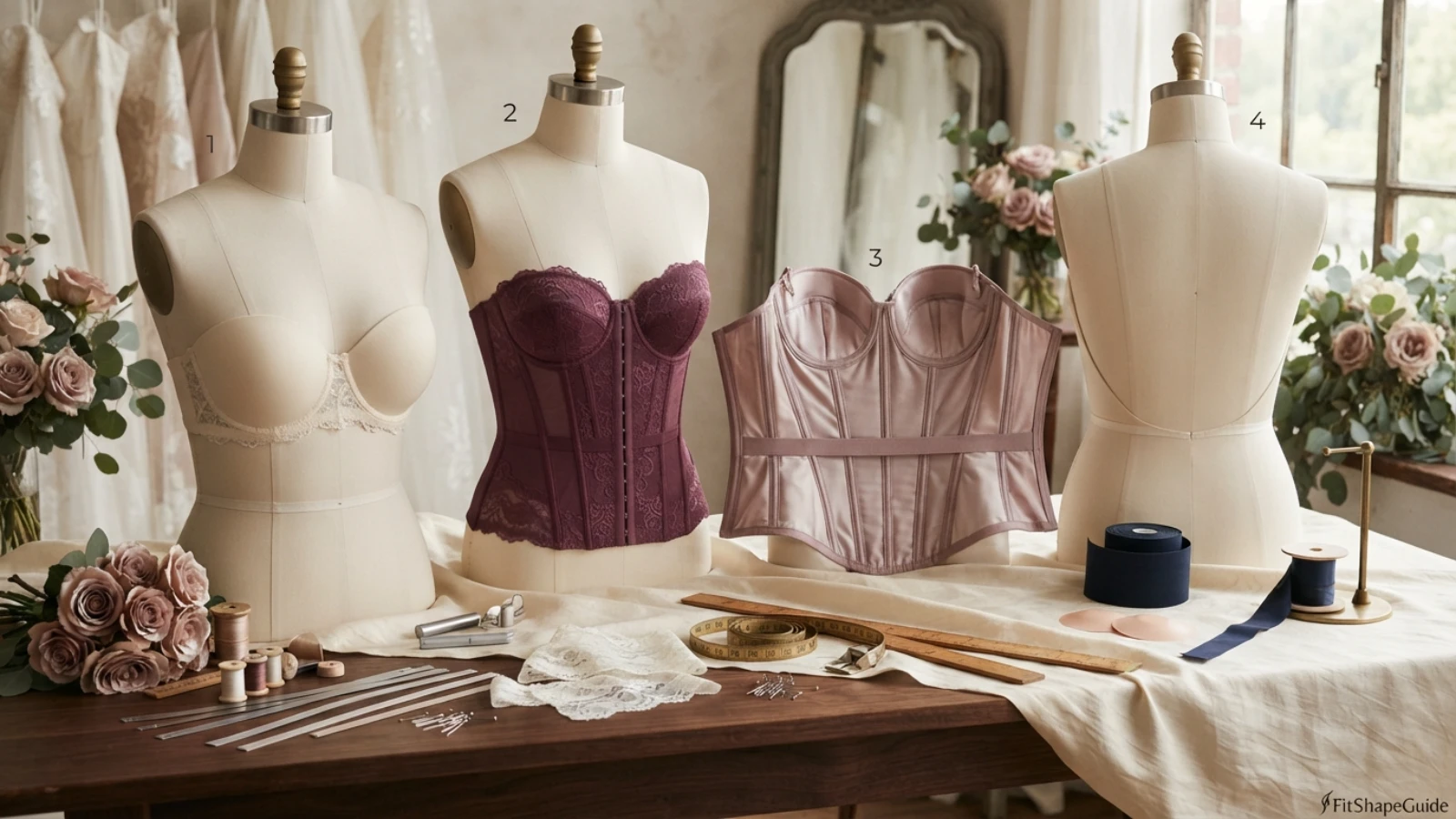
The 90-second bridal support test
- Put on the exact foundation you plan to wear.
- Put on the actual wedding dress—not a similar neckline.
- Check the center front, side seams and armholes for visible cup edges.
- Turn fully around and check the entire back opening.
- Raise both arms as if greeting guests.
- Sit down as you would during the ceremony or meal.
- Lean forward slightly and check bust containment.
- Walk briskly, turn and perform several gentle dance-like movements.
- Photograph the dress from front, side and back in bright light to confirm the foundation stays hidden.
First: how backless is your wedding dress?
A gown that dips a few inches below a conventional bra band is different from one that exposes the back almost to the waist.
Before buying lingerie, look at the rear neckline together with the front neckline, side seams and shoulder treatment. The foundation has to disappear from every exposed angle.
The dress still covers much of the rear torso. A low-back band or converter may be possible.
The dress removes most normal rear-band coverage. A specialist foundation or built-in dress structure becomes more useful.
A conventional bra band may have nowhere to hide, shifting the job toward the gown itself, tape or another band-free solution.
| Wedding-dress construction | Strong starting option | Why | Main check |
|---|---|---|---|
| Moderately low back + covered shoulders | Low-back bra/converter | Keeps conventional cup support | Rear closure remains hidden |
| Low back + bare shoulders | Low-back strapless bra | Addresses straps and rear band | Band stability |
| Low back + structured fitted bodice | Longline/bustier | Uses more torso surface | Rear edge and torso length |
| Very low back + boned gown | Built-in support/alterations | Gown becomes part of support | Bodice anchoring |
| Open back + plunge front | Tape / engineered gown | Normal band and center may show | Skin and neckline compatibility |
| Open back + low sides | Tape / structured bodice | Conventional side wings may show | Side containment |
| Corset-style bridal gown | Internal gown support | Boned bodice may carry more of the load | Correct alteration |
| Soft slip-style open-back gown | Minimal adhesive/built-in strategy | Little fabric available to hide hardware | Realistic support expectation |
Best bra solutions for backless wedding dresses
Low-back conventional bra
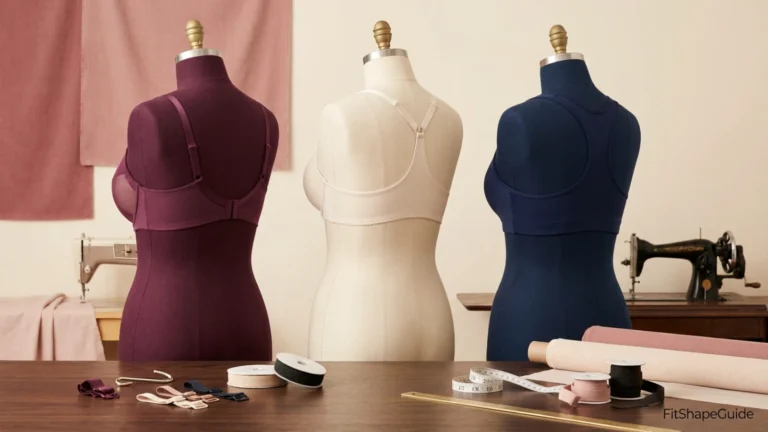
Uses full bra cups and straps with a rear closure positioned lower than an everyday bra.
Best for: moderately lowered backs that still cover the sides and straps.
Low-back converter
Wraps or redirects an existing compatible bra band lower around the torso.
Best for: dresses only somewhat lower than your ordinary back band.
Low-back strapless bra
Combines strapless cup support with a specially lowered rear closure.
Best for: low-back gowns with exposed shoulders.
Bridal bustier or low-back longline
Extends the foundation farther down the torso with structured panels and boning.
Best for: fitted gowns that can conceal the longline frame.
Sewn-in cups plus bodice alteration
A bridal tailor integrates shaped cups into the dress while adjusting the bodice to hold them in the correct position.
Best for: dresses with enough internal structure to participate in support.
Structured corset-style gown
Boning, supportive lining and a stable bodice can reduce or eliminate the need for a separate bra.
Best for: wedding gowns intentionally engineered as their own foundation.
Purpose-made breast tape
Individual strips allow support placement around an open back and unusual neckline.
Best for: gowns with too little coverage for conventional bands.
Adhesive cups or coverage-only solution
Useful when the dress itself provides much of the hold and the remaining need is shaping or nipple coverage.
Best for: structured dresses where full bra-level support is not required from the adhesive product.
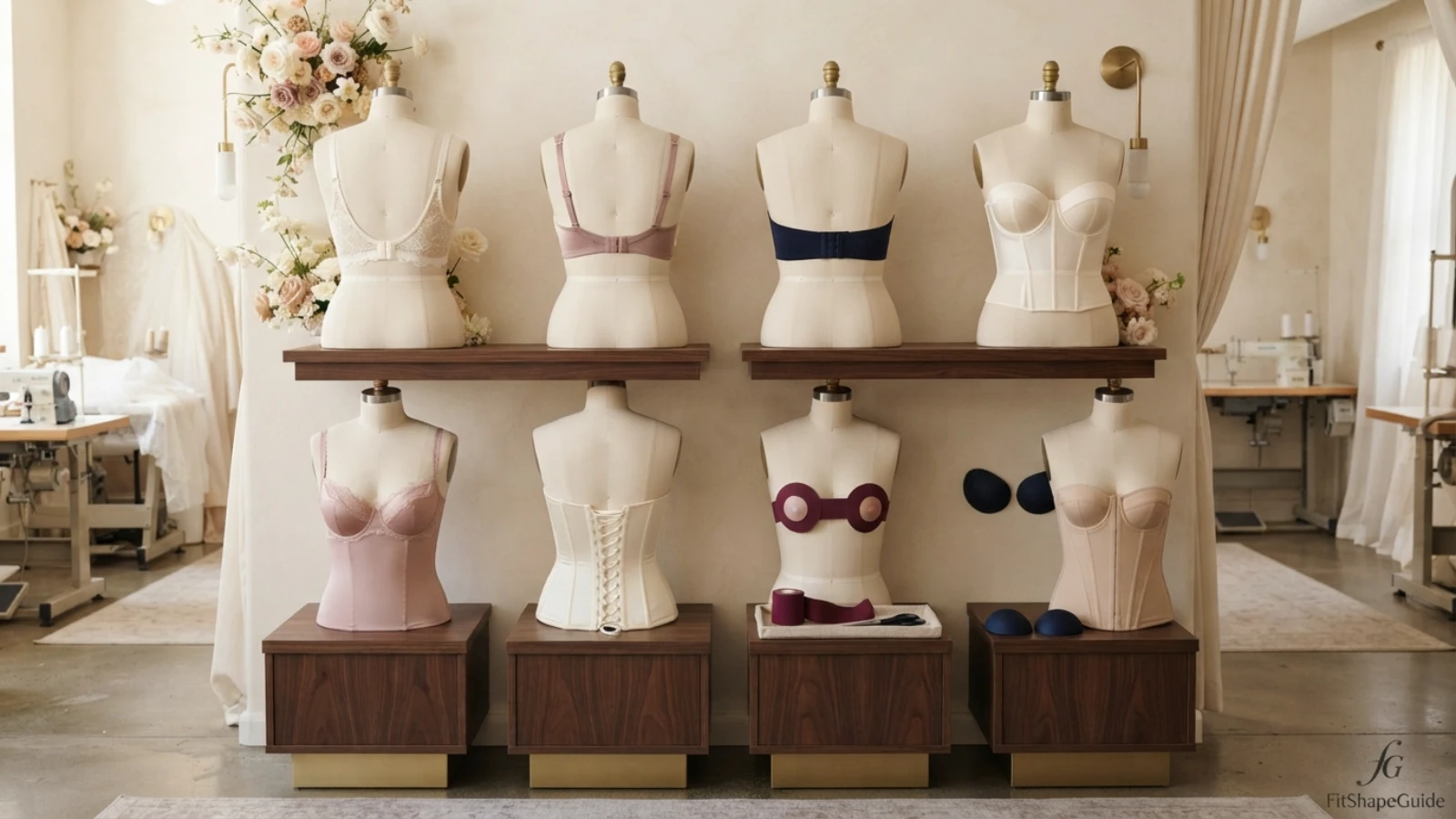
Low-back bras and low-back converters
If the wedding dress is only moderately lower than an ordinary bra, keeping a traditional cup-and-band structure can be the simplest option.
A true low-back bra
A specialist low-back bra places its rear closure below the position of a normal bra while still using shaped cups and a torso band.
A low-back converter
A converter attaches to a compatible existing bra closure and redirects the band lower around the torso.
A converter does not make a bra fully backless
It lowers the visible band. If the gown exposes almost the entire lower back, the converter itself may still show.
Support mechanics change
Moving the rear anchor lower can change how the bra feels and how tension is distributed. Test the full system for several hours rather than assuming your favorite everyday bra will behave identically after conversion.
Check the sides
A low-back dress may also have low side panels. Conventional bra wings can remain visible even when the rear band is successfully lowered.
Practice dressing
Converters and specialist low-back closures may be less intuitive than an ordinary hook-and-eye band. Know how the system works before the wedding morning.
Low-back strapless bras for bridal gowns
When the gown exposes both shoulders and back, a standard low-back bra with shoulder straps will not be enough.
The band becomes even more important
Without shoulder straps, the torso frame must provide much of the anchoring.
Look for shaped cups
A fuller bust still needs adequate depth. An aggressively shallow strapless cup can push breast tissue upward or outward rather than contain it.
Boning can stabilize the frame
Some low-back strapless foundations use vertical boning or reinforced side panels to resist collapsing and rolling.
Grip details can help—but fit comes first
Some specialist strapless bands use silicone or other grippy finishes. These features supplement the band; they do not rescue the wrong size or cup shape.
Check skin sensitivity
If the band contains silicone or another grip material, test comfort before committing to all-day wear.
Do the seated test
A low-set bridal band can feel dramatically different once you sit for a ceremony, dinner or car ride.
For broader strapless guidance, see Best Strapless Bras for a Large Bust .
Bridal bustiers and longline bras
A longline foundation extends below the ordinary bra band and uses more of the torso to stabilize the cups.
Useful beneath fitted bridal bodices
A bustier can work especially well when the dress itself is structured and provides enough fabric to cover the longer foundation.
Boning supports the garment frame
Vertical reinforcement helps the torso section resist folding and can keep cup positioning more stable.
Back depth still matters
Not every “bridal bustier” is low-back. Many longlines actually extend higher at the rear than a regular bra.
Torso length matters
A longline that is too long for your torso can hit the waist or hip and push upward when seated.
Do not size down for corset-like compression
The bustier should be stable, not painfully restrictive. If the cups are shallow, tightening the torso more will not create proper breast space.
Check boning against the dress seams
A rigid foundation can sometimes show through smooth crepe, satin or fine fitted bridal fabrics. Test the actual gown rather than relying on the foundation alone.
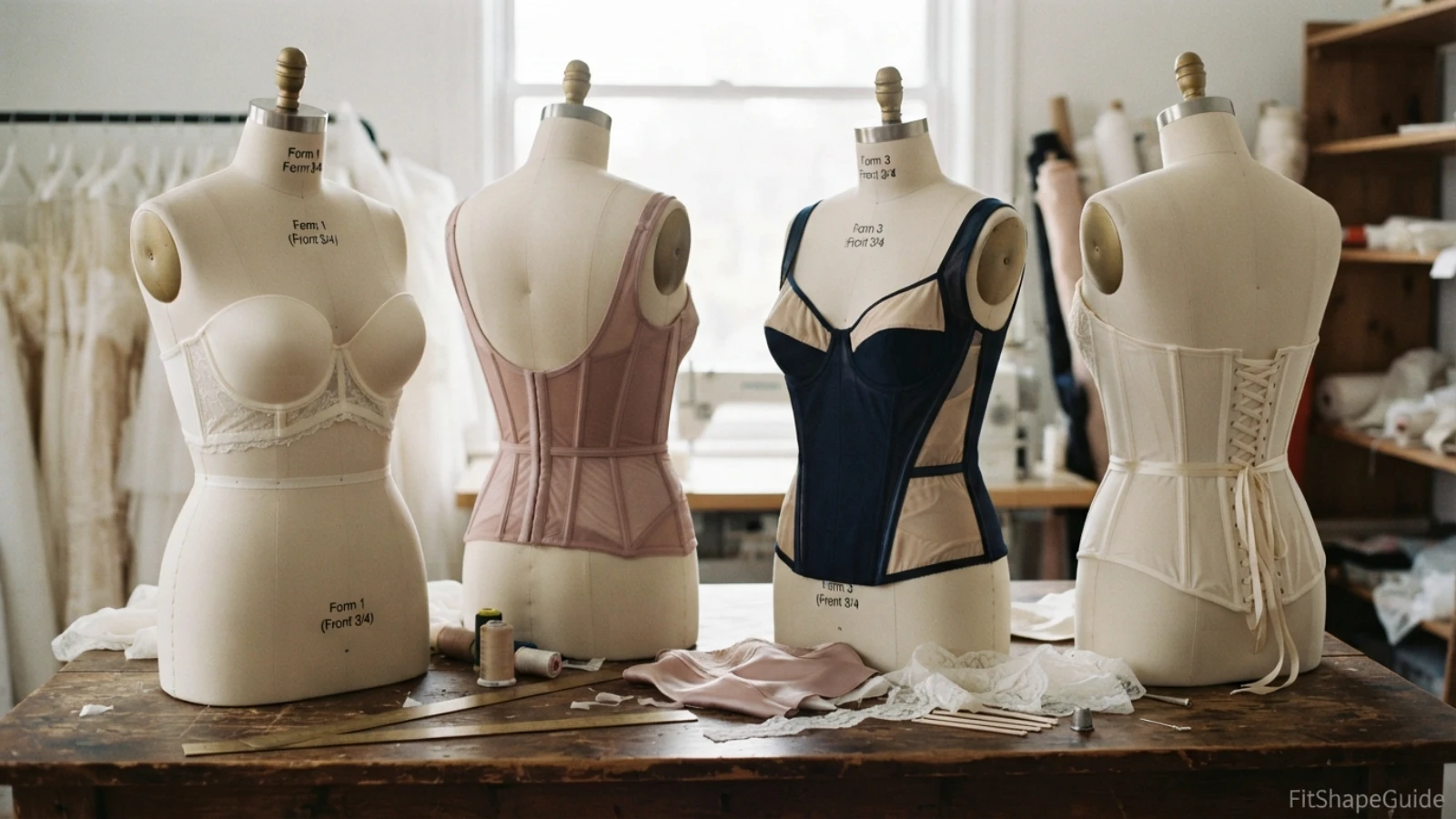
Sewn-in bra cups and bridal alterations
Sewn-in cups are often recommended for wedding dresses, but the cup itself does not automatically create the equivalent of a supportive bra.
The cup needs an anchor
A cup stitched into soft fabric can provide shape or coverage while doing relatively little to control the weight of a fuller bust.
The bodice fit matters
For meaningful support, the dress needs to hold the cup and breast in a stable relationship with the torso.
Side seams matter
A tailor may need to adjust the side bodice so the breast does not drift outward or away from the sewn-in cup.
Boning can help the bodice resist collapse
Internal reinforcement may allow the dress to transfer more of the support through the torso rather than asking the cup fabric alone to do the work.
Waist stability can matter
A structured gown may anchor lower on the torso so the bust section does not simply slide downward during hours of wear.
Bring your intended foundation to fittings
If you will wear a bra, tape, cups or inserts, alterations should be completed while wearing that same system whenever the bridal fitter requests it.
Can a structured wedding dress support a large bust without a bra?
It can, if the gown is genuinely engineered and altered to do that job.
Structured cups
The bodice should provide three-dimensional breast room rather than flatten the bust against a decorative front panel.
Internal boning
Boning can stabilize the vertical structure of the bodice and help resist collapse.
Stable waist or torso fit
The gown needs a lower anchor so the bodice is not suspended only from the shoulders or breast area.
Strong side construction
Side seams and internal panels help contain the outer breast even when the back is open.
Alterations are part of the support system
A structured dress can still feel unsupported if it is too loose at the torso or shaped for different breast proportions.
Do not assume “corset look” means corset function
Visible corset-style seams, lace-up details or decorative boning do not guarantee that a gown has the internal engineering needed for fuller-bust support.
Breast tape for a backless wedding dress
Purpose-made breast tape can be useful because support strips can be routed around the exposed areas of the dress rather than following a fixed bra frame.
Practice before the wedding
Do not make your wedding morning the first time you test the tape, neckline placement or removal process.
Use purpose-made skin-contact products
Do not substitute household or industrial tape for a product intended and labeled for the application.
Follow patch-test directions
If the manufacturer recommends a patch test, complete it within the stated timeframe before using a large adhesive surface.
Protect the nipple area
Use the barrier or cover specified by the tape manufacturer rather than applying strong adhesive directly over sensitive tissue.
Do not create lift with extreme tape tension
Position the breast first and apply the tape using the manufacturer’s method. More stretch is not automatically more secure.
Plan removal too
A wedding-day foundation is not finished until you know how it will be removed safely. Follow the manufacturer’s release instructions and remove adhesive slowly.
For the full technique and safety guide, see Boob Tape Guide for a Large Bust .
Adhesive cups and nipple covers under bridal gowns
Nipple covers
Useful when the dress itself already provides enough bust support and you only want additional nipple coverage.
Adhesive cups
These can add shaping and eliminate a rear band, but should not automatically be expected to provide the same support as a correctly fitted fuller-bust bra.
Garment-supported inserts
Some inserts work best inside a tight, structured bridal bodice that helps hold them against the body.
Loose slip gowns provide little external structure
A product that works inside a firm corset bodice may perform very differently inside a fluid silk-style dress.
Test dress fabric over the product
Adhesive cup edges, inserts and nipple covers can show beneath thin crepe or satin even though the back itself looks perfect.
Match the front neckline and back opening together
Backless + deep plunge
A low-back strapless bra may still have too high a center front. You need a foundation that clears both openings—or another system entirely.
Backless + sweetheart
A structured sweetheart bodice may offer more space for supportive cups and internal boning than a narrow plunge.
Backless + straight strapless neckline
The gown can sometimes hide a substantial strapless cup frame while exposing the rear torso.
Backless + halter
The back is open, but the neckline may give the dress additional upper-torso structure. Do not assume halter fabric itself replaces bust support.
Backless + low side cutouts
This removes another section where a bra ordinarily hides supportive wings. Tape or gown-integrated support may become more practical.
If the front is very low, also see Best Bras for Deep-Plunge Necklines .
The ceremony-to-dance-floor support test
Walk
Take full-length steps. Heavy skirts, fitted bodices and normal arm movement can change how the foundation sits.
Sit
Check the low-back band, bustier edge, boning and waist area while seated. Wedding receptions involve far more sitting than fitting-room photos suggest.
Raise your arms
Rehearse hugging guests, fixing hair and raising your arms during dancing.
Lean forward
Check center and side containment without deliberately holding the neckline in place.
Twist
Rotate the torso and make sure the gown remains aligned with sewn-in cups or adhesive support.
Dance
You do not need a full routine. A few turns, side steps and gentle bouncing motions can reveal whether the bust begins moving separately from the bodice.
Photograph from behind
Ask someone to take a normal standing photograph from the back. A low-back closure that appears invisible in the mirror can sometimes peek above the gown when the shoulders move.
Recheck after several minutes
Tape, strapless bands and structured bodices should be assessed after movement rather than immediately after dressing.
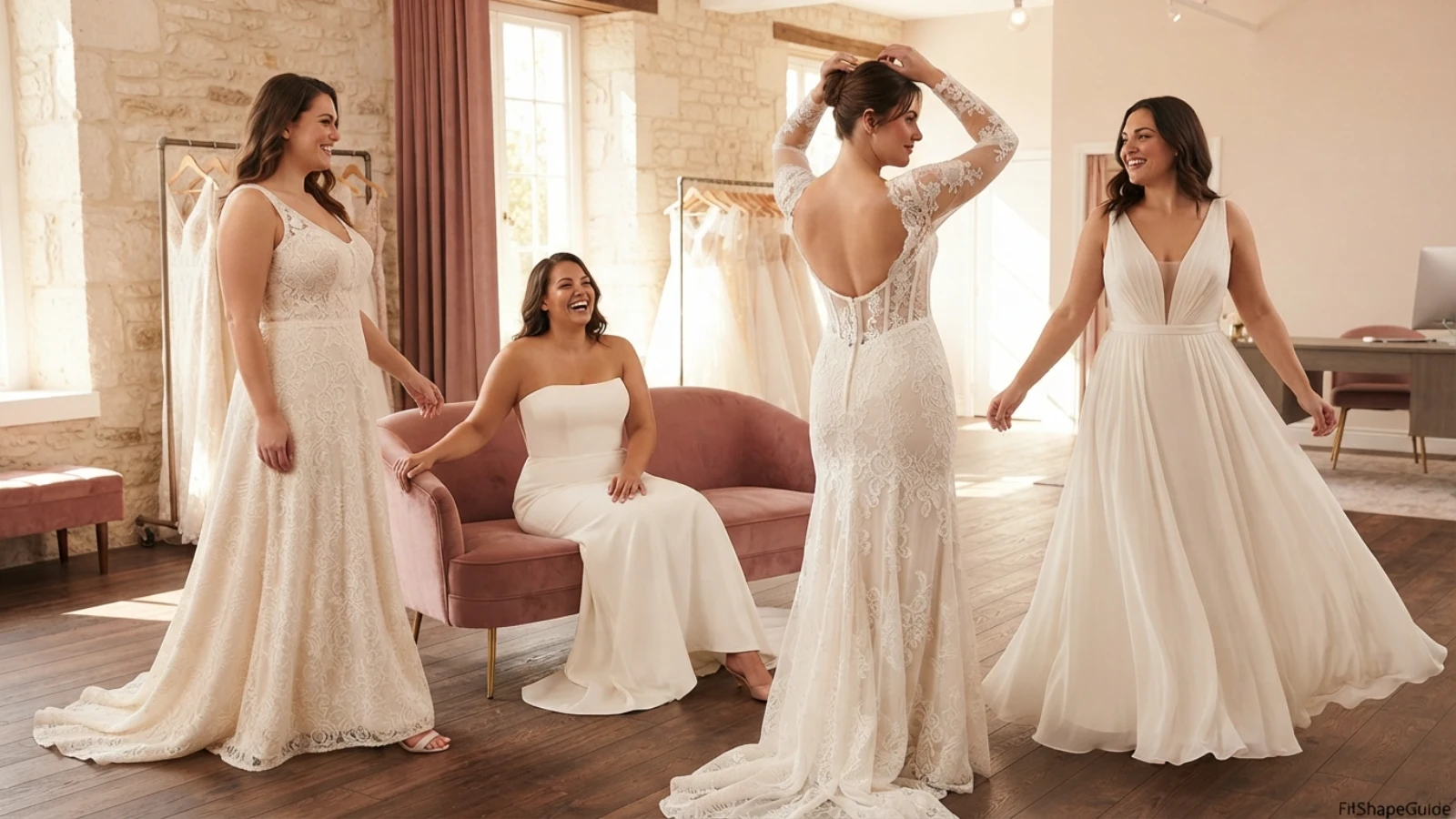
When to choose your wedding-dress bra
Dress shopping
You do not necessarily need your final bridal bra before selecting a gown, but a supportive strapless option can help you judge general silhouette and fit when trying different dress styles.
Once you choose the gown
Now the exact back, side and neckline geometry becomes known. This is the right time to narrow the foundation strategy.
Before major bodice alterations
Ask the bridal tailor whether the dress is intended to be worn with a separate bra, built-in cups, a bustier or no separate bra.
Bring the chosen foundation to fittings
If you will wear a separate foundation, changing it after the bodice has been precisely altered can change breast height, projection and circumference.
Test tape early
If tape is the final plan, practice the exact neckline and movement before the wedding week rather than only testing a small strip.
Final fitting
Wear the same foundation system, undergarments and ideally similar shoes you plan to use on the wedding day so the garment can be assessed as one complete outfit.
How to buy support for a backless wedding dress
- Photograph the gown front, side and back. Support has to clear all three views.
- Determine the rear opening depth. Do not rely only on the product phrase “low back.”
- Check front neckline depth. A low-back foundation can still show at the center front.
- Check side coverage. Low armholes can expose bra wings or longline panels.
- Confirm your current bra size. A specialist bridal bra still needs enough cup volume and correct band proportion.
- Inspect cup depth. Do not accept shallow cups simply because the back is low.
- Verify strapless support if required. Low back and strapless are separate construction claims.
- Check torso length on bustiers. Longline foundations must work while standing and sitting.
- Discuss built-in support with the alterations specialist. The gown may be able to solve the problem more elegantly than separate lingerie.
- Do a realistic wear test. Walk, sit, hug, lean and dance before trusting the system for the wedding day.
Do not assume “bridal bra” means low back
Many bridal bras are simply ivory strapless or longline bras with conventional rear heights.
Do not buy a converter for a completely open back
A converter lowers the band; it does not eliminate it.
Do not treat sewn-in cups as automatic fuller-bust support
The bodice needs enough structure and a secure torso fit to hold those cups in position.
Do not size down to make a strapless bra feel safer
Painful compression and shallow cups are not substitutes for correct strapless engineering.
Do not test only while standing
Wedding outfits spend hours in cars, chairs, ceremonies, dinners and dancing. Seated fit is part of bridal fit.
Do not leave adhesive practice until the wedding day
Application, skin response, dress compatibility and removal should all be known in advance.
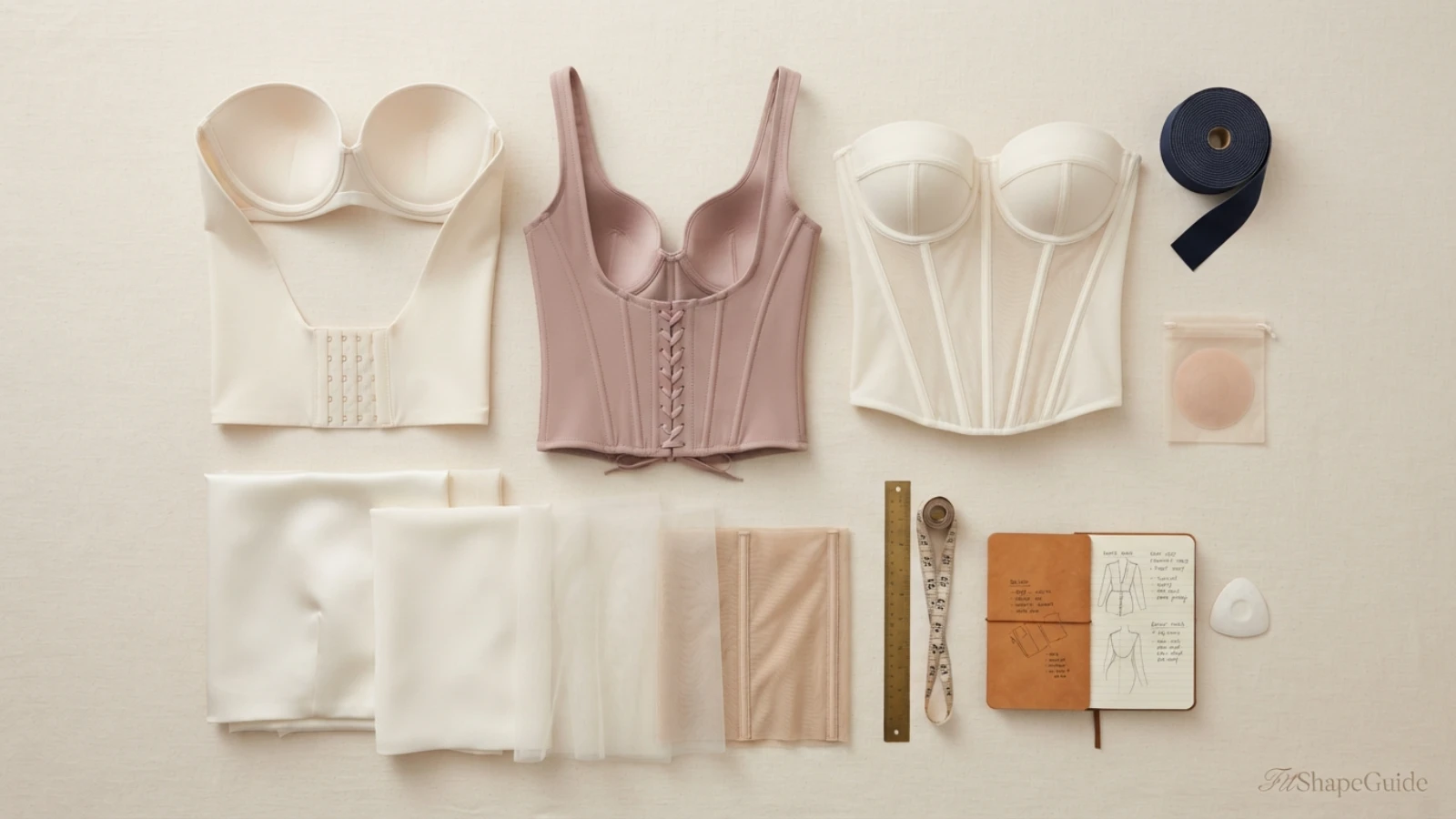
Common backless wedding-dress support problems
| Problem | Likely cause | Try next | Avoid |
|---|---|---|---|
| Back closure shows | Foundation not low enough | Lower-back option or built-in support | Pulling ordinary band downward |
| Strapless bra slides | Band/cup mismatch or poor frame stability | Recheck fit and structure | Sizing down blindly |
| Breasts overflow in low-back bra | Cups too small/shallow | More cup depth/volume | Prioritizing back depth over cup fit |
| Bustier pokes when seated | Torso length/boning mismatch | Shorter or different foundation | Assuming discomfort is necessary |
| Sewn-in cups feel unsupported | Bodice lacks anchoring | Alter bodice/boning/torso fit | Adding thicker cups only |
| Dress slips downward | Bodice not sufficiently stabilized | Professional bridal alteration | Overtightening adhesive/tape |
| Bra hidden at back but shows at sides | Low side cut / tall wings | Alternative support route | Checking rear only |
| Bra clears back but not plunge front | Center gore too high | Deep-plunge compatible solution | Pulling bra lower |
| Tape irritates skin | Adhesive sensitivity / application issue | Remove per instructions and discontinue | Ignoring burning or blistering |
| Everything shows in open-back, low-side gown | Too little dress coverage for bra frame | Gown-integrated support / tape | Forcing traditional bra architecture |
My seamstress added cups, but I still feel unsupported
Cup insertion and support are not the same job. The bodice may need more stable side shaping, internal reinforcement or torso anchoring so the cups stay where the breasts need them.
My low-back bra works standing but hurts when I sit
The lowered band or boning may be interacting poorly with your torso length. Bridal comfort has to include seated wear.
My dress is completely backless
A traditional rear band is unlikely to be the cleanest solution. Explore the dress’s internal structure, professional alteration, or a carefully tested band-free support route.
I need full support but also a deep front, open sides and open back
That is an extremely demanding foundation brief. The strongest route may be to build more support into the gown rather than expecting one removable bra to stay invisible everywhere.
Which bra should you choose for a backless wedding dress?
Choose a low-back bra or converter when the gown is only moderately low in back. Choose a low-back strapless bra when the shoulders are also exposed. Consider a bridal bustier or longline when the dress can conceal a deeper structured frame.
For a very low or completely open back, the best fuller-bust solution often moves beyond a conventional bra: professionally fitted built-in cups plus a structured bodice, a genuinely supportive corset-style gown, or carefully tested purpose-made breast tape. The wedding dress and foundation should function as one system—not fight each other.
Frequently asked questions
What bra is best for a backless wedding dress with a large bust?
For a moderately low back, a specialist low-back or low-back strapless bra may work. Very low or fully open backs often need structured dress support, bridal alterations, a longline solution that stays hidden, or carefully tested breast tape.
Can a low-back bra support a large bust?
It can when the cup volume, band construction and rear anchoring suit the wearer. Lowering the back changes support mechanics, so the exact bra must be tested with the wedding dress.
Do sewn-in cups support a large bust?
Sewn-in cups can provide shape and coverage, but meaningful support also depends on the fit and structure of the bodice, including its side panels, boning and torso anchoring.
Can I wear no bra with a structured wedding dress?
Possibly. A genuinely structured and correctly altered bodice can sometimes function as the bust foundation itself. Decorative corset styling alone does not guarantee this level of support.
Does a low-back converter work with a completely backless dress?
Usually not. A converter lowers a conventional bra band rather than eliminating it, so it still requires enough dress coverage to hide the redirected band.
Can I use breast tape under a backless wedding dress?
Purpose-made breast tape can be useful when conventional bands cannot be hidden. Practice before the wedding, follow manufacturer skin and removal instructions, and test the tape with the exact dress.
Should I buy my bridal bra before wedding-dress alterations?
If you plan to wear a separate bridal foundation, bring the intended bra or support system to the alterations appointments requested by your bridal fitter so the bodice can be shaped around the final foundation.
What if my wedding dress is backless, strapless and deep plunge?
That combination removes several places a conventional bra normally hides. A professionally structured gown, built-in support or carefully tested tape-based system may be more practical than a standard removable bra.
How FitShapeGuide evaluates backless bridal support
This guide evaluates wedding-dress foundations through back depth, front-neckline depth, side exposure, shoulder exposure, cup volume, band position, strapless engineering, torso length, boning, gown structure and real-world bridal movement.
FitShapeGuide does not treat “backless” as one standardized dress category. A slightly lowered rear neckline may still accommodate a conventional lowered band, while a completely open back may remove nearly all of the structure a normal bra uses to anchor itself.
We also distinguish sewn-in cups from a complete built-in support system. Cups can add shape and coverage, but a fuller bust usually needs the surrounding bodice to hold those cups securely through side construction, internal reinforcement and stable torso fit.
A corset-look wedding dress is not automatically treated as supportive. We look for actual three-dimensional cup space, internal bodice structure, reinforcement and a fit that anchors the garment rather than decorative boning alone.
Low-back converters are treated as solutions for lowered backs rather than completely open backs because the converted band still needs somewhere to sit beneath the dress.
Adhesive and breast-tape solutions are evaluated separately from conventional bras. They require product-specific skin preparation, application, wear and removal instructions and should be tested before the wedding rather than tried for the first time on the day.
Before publishing any commercial recommendation, FitShapeGuide should verify the exact live seller, product name, current band and cup range, rear closure depth, strapless construction, cup depth, side-wing height, boning, silicone or grip details if claimed, longline length, low-back converter compatibility, materials, care, current availability and return eligibility.
For adhesive products, also verify patch-test guidance, nipple-protection instructions, application method, removal procedure and maximum wear guidance directly from the current manufacturer information.
No ASIN, size range, low-back measurement, support claim, adhesive wear time, price, rating, review count, coupon, stock statement or delivery promise should be published unless directly verified.