Best Nipple Covers and Adhesive Bra Alternatives
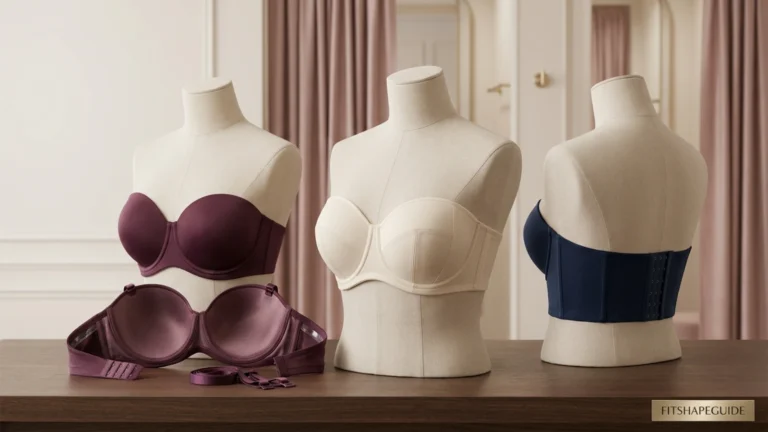
Nipple covers, adhesive cups, double-sided inserts and breast tape are often grouped together as “braless solutions,” but they do very different jobs. This fuller-bust guide separates coverage from lift, shape from support, and reusable accessories from solutions that depend on the structure of the dress itself.

The 90-second outfit-solution test
- Put on the dress or top before choosing the bra alternative.
- Decide whether you need coverage only, shape, lift or true support.
- Check how much of the chest, side and back the garment exposes.
- If using adhesive, follow the product’s patch-test instructions before the event.
- Apply only to clean, dry, product-free skin when directed.
- Raise both arms and reach forward.
- Sit down and check whether the garment itself still holds the bust securely.
- Check the edges from front, side and three-quarter views.
- Practice the manufacturer’s removal method before relying on the solution for a major event.
What do nipple covers and adhesive bra alternatives actually do?
The phrase “adhesive bra” can cover several products that perform very different functions.
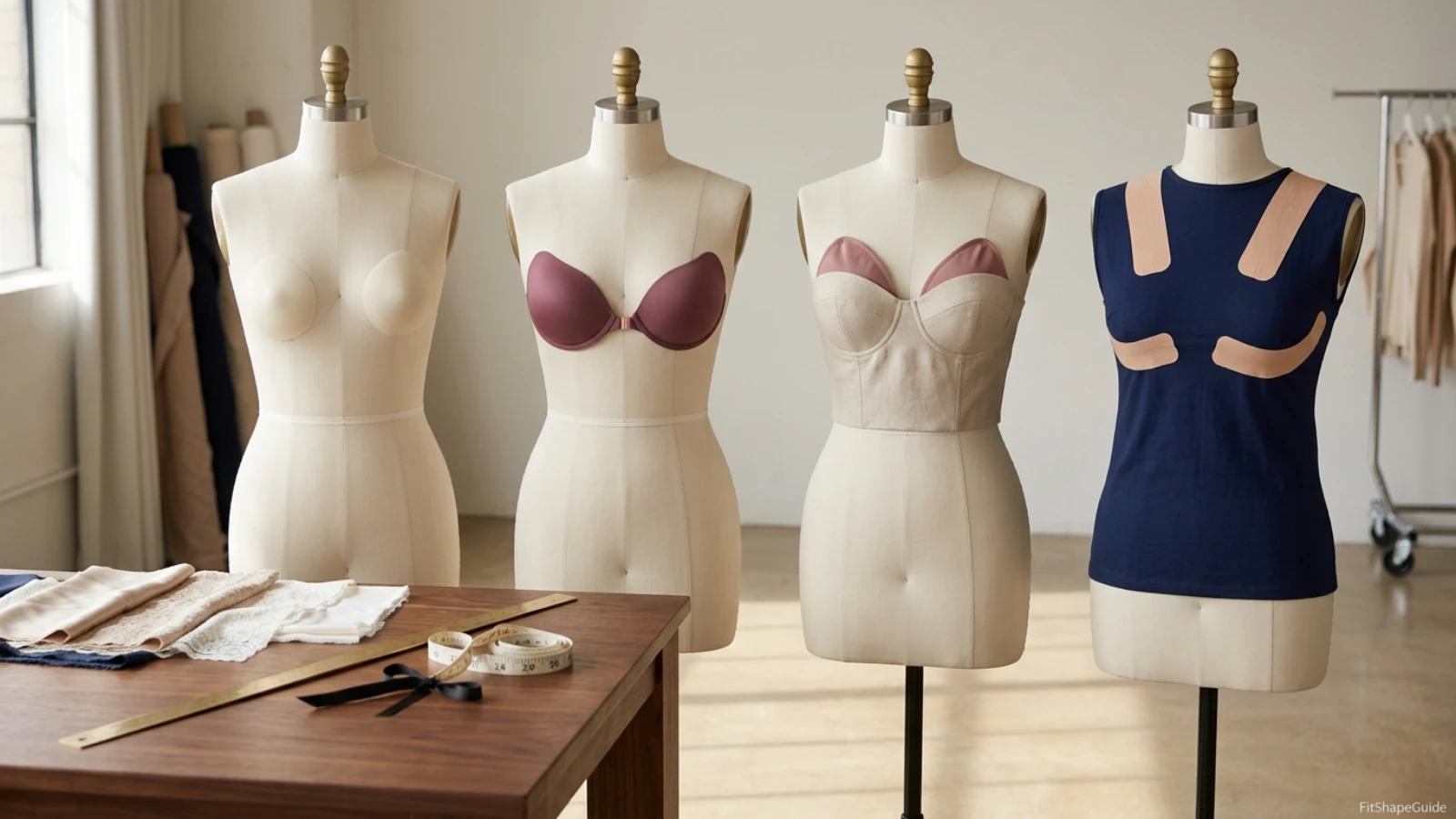
A nipple cover may create a smooth, opaque surface beneath clothing without changing breast position at all. An adhesive cup can add shape and sometimes bring the breasts closer together. A double-sided insert can add contour or lift but may depend on a fitted garment to hold the system in place. Breast tape allows more customized positioning because individual strips can be placed around the neckline.
None of those categories should automatically be assumed to provide the same support as a correctly fitted fuller-bust bra.
Nipple covers or petals when the outfit already provides enough hold.
Adhesive cups or clothing-supported inserts when the outfit can help stabilize them.
Purpose-made breast tape or structured garment engineering for more demanding necklines.
| Solution | Main job | Support level | Best environment |
|---|---|---|---|
| Reusable nipple covers | Coverage | Minimal / none | Garment already supports bust |
| Lift-style nipple covers | Coverage + small positioning change | Limited | Light wardrobe adjustment |
| Adhesive cups | Shape / cleavage | Varies | Backless or low-sided garments |
| Front-clasp sticky bra | Shape + centering | Varies | Backless dresses with adequate garment structure |
| Double-sided inserts | Volume / shaping / positioning | Depends heavily on garment | Fitted structured tops and dresses |
| Breast-support tape | Customized positioning | Potentially more customizable | Backless, plunge and unusual necklines |
| Sewn-in cups / boning | Garment-based support | Can be substantial | Structured formalwear |
| Low-back / strapless bra | Traditional bra support | Typically most familiar | When the garment can conceal the frame |
Best nipple-cover and adhesive bra alternatives
Reusable silicone-style nipple covers
Thin covers conceal nipple projection while keeping the breast itself free of a larger foundation garment.
Best for: lined dresses, structured tops and outfits that already control breast movement.
Ultra-thin matte nipple covers
A tapered edge can reduce the chance that the cover itself creates a visible circle beneath fine fabric.
Best for: smoother thin tops when support is unnecessary.
Adhesive bra cups
Separate skin-adhering cups can provide coverage and shape without a rear band.
Best for: backless clothing when the cup geometry actually fits your bust.
Front-clasp adhesive bra
Two adhesive cups connect at the center to create more inward positioning than separate covers alone.
Best for: plunge or backless outfits when substantial traditional support is not required.
Double-sided bra inserts
These adhere to both the skin and inner garment and depend on the fitted top or dress to help hold them in position.
Best for: structured sweetheart, corset-style or fitted formal tops.
Breast-support tape
Individual strips allow placement to be customized around necklines and open backs.
Best for: unusual necklines that defeat pre-shaped cups.
Sewn-in cups and internal dress support
A tailor can integrate cups, boning or supportive lining directly into the garment without relying on skin adhesive.
Best for: important formalwear that can be altered.
Conventional hidden-support alternative
A strapless, low-back, plunge or convertible bra can be a better solution when the garment hides enough of a traditional frame.
Best for: fuller-bust support when invisibility requirements allow it.

When nipple covers are enough
Nipple covers are useful when the dress or top already holds the bust where you want it and you only need opacity or a smoother surface.
They are not automatically a bra replacement
Traditional nipple covers generally do not include an underband, cup frame or shoulder straps. Their main job is concealment.
Edge thickness matters
A thick circular edge can become visible beneath very thin fabric. A tapered, soft edge may transition more quietly beneath clothing.
Diameter matters
The cover should provide enough surrounding area to sit smoothly without placing the adhesive only on the most sensitive center area.
Skin tone can matter under pale fabrics
A strongly contrasting cover may show through light-colored clothing even when the shape itself is hidden.
Non-adhesive options also exist
Some covers rely on body warmth, silicone grip or garment pressure rather than strong adhesive. Performance varies with garment fit and product design.
Adhesive bra cups for a fuller bust
Adhesive cups attach directly to the breast and eliminate the conventional back band. Some are separate cups; others join at the center with a clasp.
Cup size still matters
If the adhesive cup is too small or shallow, the outer breast may sit outside the intended surface or the edge may become obvious beneath clothing.
A center clasp changes shape
Connecting cups can draw the breasts more inward, but this should not be confused with the distributed support of a traditional band-and-cup bra.
Test the neckline first
The cup may be technically invisible from the back yet show at a deep plunge, low side or narrow sweetheart neckline.
Sweat and skin products can affect adhesion
Follow the exact preparation instructions for the product. Adhesive systems commonly require clean, dry skin without oils or lotions.
Practice before the event
Positioning two separate cups symmetrically can take trial and error, especially beneath a structured formal dress.
Double-sided bra inserts and structured clothing
Double-sided inserts are different from a standalone sticky bra. They attach to the skin and the inside of the garment, so the dress or top becomes part of the support system.
The garment needs structure
A fitted bodice, swimsuit, corset-style top or substantial fabric can help press the insert securely against the breast.
Loose fabric is a poor match
If the garment is thin, loose or extremely stretchy, an insert may not have enough external pressure to remain smooth and useful.
Place the garment first
For products designed to work as garment-supported inserts, positioning them inside the clothing before securing the breast can make alignment easier. Always follow the exact current instructions for the product being used.
They can alter contour
Some inserts are designed to add volume, others to provide a more subtle lift or shape. Do not assume every insert has the same thickness or purpose.
When breast tape makes more sense
Breast tape can adapt to a neckline rather than forcing the neckline to adapt to a pre-shaped adhesive cup.
That can make it particularly useful for asymmetric, deep-plunge, low-side and backless clothing.
Position first, tape second
Move the breast into the desired garment position before adding tension to the tape. Do not try to drag the breast into place by aggressively stretching the adhesive strip.
Use enough surface area
For a fuller bust, relying on one narrow highly stretched strip can concentrate force on the skin. Follow the manufacturer’s fuller-bust application method and use the amount of material it specifies.
Protect the nipple area
Use the protective cover or barrier specified by the tape manufacturer rather than applying strong body tape directly over the nipple.
Practice removal too
Safe use includes removal. Do not rip strongly adhered tape from the skin. Use the manufacturer’s recommended loosening method and work slowly.
For the dedicated application guide, see Boob Tape Guide for a Large Bust .
Structured dresses, sewn-in cups and tailoring
A dress with enough internal construction can reduce or eliminate the need for a separate visible bra.
Sewn-in cups
A tailor can add appropriate cups to the inside of a bodice so they stay aligned with the garment instead of being independently stuck to the skin.
Boning and internal panels
A structured bodice can transfer part of the support job through the dress itself.
Waist and underbust stability
The strongest formal bodices often rely on the entire garment frame rather than asking the breast cups to do everything alone.
Alteration can be more reliable for important events
For a wedding, gala or another long formal event, investing in garment alteration may create a more predictable result than experimenting with unfamiliar adhesive products on the day.
Conventional bras are still valid
If a low-back converter, strapless bra, plunge bra or another traditional foundation remains hidden, it may offer the familiar support you prefer.
Compare: Best Backless Bra Solutions for a Large Bust and Best Strapless Bras for a Large Bust .
Skin-safety checklist for adhesive breast products
Patch test when instructed
If the manufacturer supplies or recommends a patch test, complete it within the stated timeframe before using a large adhesive surface on the breast or chest.
Start with clean, dry skin
Oils, lotions, makeup and some body products can interfere with adhesion. Follow the preparation instructions for the exact product.
Do not apply to compromised skin
Avoid adhesive products on open cuts, active irritation, sunburn or other skin conditions unless a qualified clinician and the manufacturer say otherwise.
Stop if irritation develops
Itching, burning, rash, blistering or significant discomfort are reasons to remove the product according to its safe-removal instructions and discontinue use.
Respect the wear-time limit
Do not assume that because an adhesive is still holding, it should remain on longer. Wear-time limits vary by product.
Remove gently
Strongly bonded adhesive should not be ripped away quickly. Use the specific removal process recommended by the manufacturer.
Do not improvise with unrelated tape
Use products designed and labeled for the intended skin-contact application rather than household, industrial or fashion tape not intended for breast support.
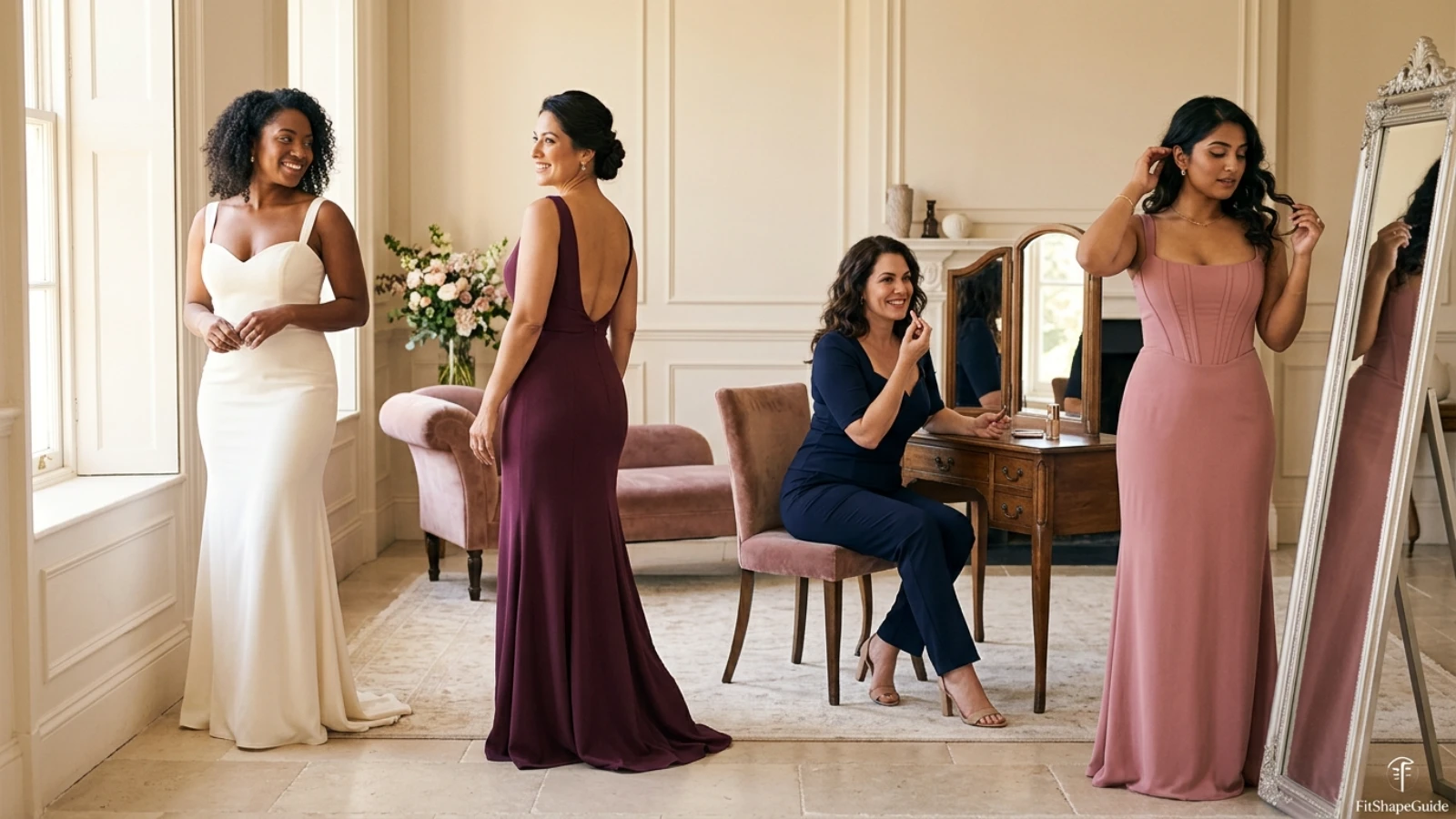
Best bra alternative by outfit
| Outfit | Strong starting option | Why | Check carefully |
|---|---|---|---|
| Lined fitted top | Nipple covers | Garment may already hold bust | Cover edges |
| Structured sweetheart dress | Garment-supported inserts | Bodice can stabilize insert | Symmetry and neckline |
| Deep plunge dress | Tape / plunge-specific solution | Custom open center | Skin safety and center visibility |
| Backless dress | Tape, adhesive cups or structured dress | No rear band | Side support |
| Strapless gown | Strapless bra or built-in bodice | Traditional support may still fit | Dress neckline |
| One-shoulder dress | Strapless support or tape | Keeps shoulder clear | Asymmetric movement |
| Loose silk slip | Nipple cover / sewn-in solution | Insert may lack garment pressure | Fabric show-through |
| Corset-style formal top | Sewn-in cups or inserts | Garment structure assists support | Correct internal cup placement |
How to buy nipple covers or adhesive bra alternatives
- Define the job. Decide whether you need opacity, shaping, added volume, lift or actual support.
- Check the garment. A structured fitted dress can support accessories that would fail inside a loose top.
- Check the exact adhesive instructions. Do not assume all silicone covers, cups, inserts and tapes use the same skin preparation.
- Check skin-sensitivity warnings. Especially if you already know that adhesives irritate your skin.
- Check dimensions. Nipple-cover diameter and adhesive-cup dimensions matter independently of standard bra sizing.
- Check edge thickness. Tapered edges tend to be easier to hide under fine fabrics.
- Verify whether the insert is standalone. Some products require a fitted or structured garment to work correctly.
- Check whether protective covers are required with tape. Do not improvise this step.
- Check removal and cleaning. Reusable products need product-specific care to preserve the adhesive surface.
- Test before the event. Wear the exact dress and solution together long enough to identify slipping, skin reaction or visibility issues.
Do not shop by cup letter alone
Adhesive products can use sizing systems that differ substantially from conventional bras. Check the exact dimensions and fit chart.
Do not assume “reusable” means unlimited use
Adhesive performance changes with skin oils, care, storage and product design. Follow the manufacturer’s stated reuse guidance.
Do not assume waterproof means universal
Sweat, heat, swimming and long event wear can affect products differently. Verify the exact intended-use claim.
Test the edge under flash
Thin dresses and direct photography can reveal nipple-cover or adhesive-cup edges that looked invisible in ordinary room lighting.
Keep a non-adhesive backup when practical
For important events, a strapless bra, low-back converter, dress alteration or sewn-in cup can provide a backup if your skin does not tolerate the adhesive test.
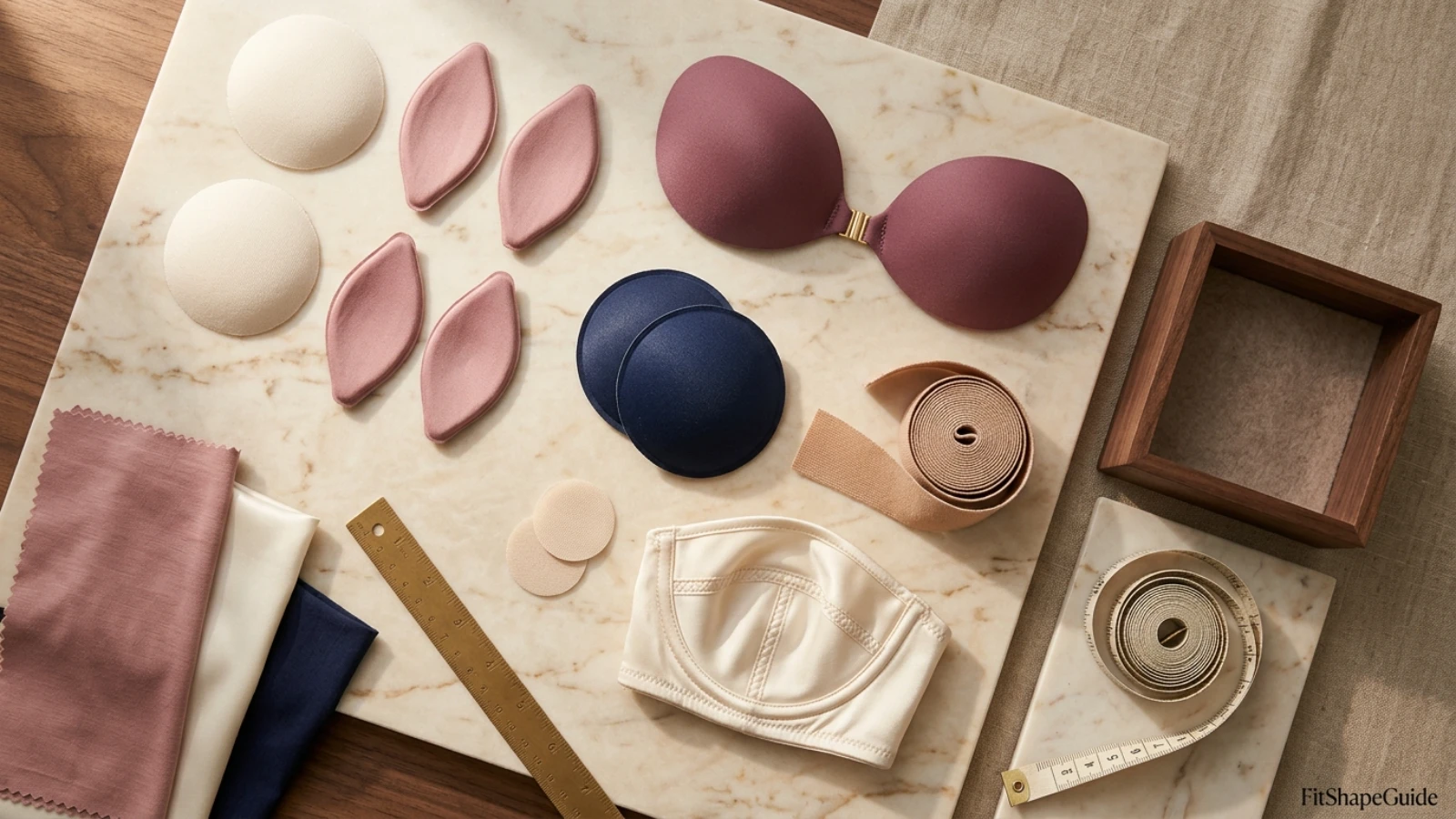
Common problems with adhesive bra alternatives
| Problem | Likely cause | Better next move | Avoid |
|---|---|---|---|
| Nipple cover edge shows | Edge too thick / fabric too fine | Tapered cover or lined garment | Stacking multiple covers |
| Cover slips | Skin products / adhesion mismatch | Follow exact prep directions | Adding unrelated glue |
| Adhesive cups feel unsupported | No band or garment structure | Structured garment, tape or traditional bra | Overtight center clasp |
| Insert looks lumpy | Garment too loose or thin | Use structured fitted garment | Expecting insert to work standalone |
| Tape pulls skin | Too much tension / inadequate surface area | Reapply according to manufacturer directions | Stretching narrow strips aggressively |
| Adhesive irritates skin | Sensitivity or prolonged wear | Remove safely and discontinue | Ignoring burning or blistering |
| Edges show at neckline | Product geometry conflicts with dress | Tape or smaller solution | Cutting reusable inserts unless allowed |
| Backless dress still lacks support | Accessory provides coverage, not structure | Garment tailoring / tape / low-back system | Expecting nipple covers to lift |
| Removal hurts | Adhesive released too quickly | Use manufacturer removal method slowly | Ripping product from skin |
| Product works at fitting but fails later | Heat, movement, skin products or garment shift | Do a realistic wear test | First-time use at major event |
I only need nipple coverage—do I need an adhesive bra?
Probably not. If the dress already supports your bust, a well-hidden nipple cover may be simpler and more comfortable.
My adhesive cups stick but do not lift much
Adhesion and support are not the same thing. If you need significant positioning, consider purpose-made tape, garment structure or a conventional support solution.
My inserts work in one dress but not another
That can be expected when the insert depends on garment pressure. A structured fitted bodice behaves differently from a loose stretch top.
I react to adhesive products
Stop using the product and prioritize a non-adhesive option such as sewn-in cups, structured garment support or a conventional bra compatible with the outfit.
Which bra alternative should you choose?
Choose nipple covers when you need coverage but the garment already supports the bust. Choose adhesive cups when you want a backless cup shape with limited visible hardware. Choose double-sided inserts when a fitted structured garment can help stabilize them. Choose breast tape when the neckline requires custom placement.
For the most demanding fuller-bust outfits, do not overlook sewn-in dress support, a strapless bra, low-back system or professional alteration. Adhesive products are useful wardrobe tools—but the strongest solution is the one that matches both your support needs and the construction of the garment.
Frequently asked questions
Do nipple covers support a large bust?
Traditional nipple covers are primarily for coverage rather than meaningful breast support. If the bust needs lift or stabilization, use another support system or a garment that provides structure.
What is the best adhesive bra alternative for a large bust?
It depends on the outfit. Breast tape offers customizable placement, structured clothing can support inserts, and sewn-in cups or conventional hidden bras may provide stronger support when the garment allows them.
Do sticky bras work for a large bust?
They can provide coverage and shaping for some wearers, but their performance depends on cup geometry, adhesive area, skin preparation and the amount of support required.
What is the difference between nipple covers and adhesive cups?
Nipple covers mainly conceal nipple projection. Adhesive cups cover more breast area and can alter shape or centering, depending on their construction.
Can bra inserts be worn without a bra?
Some double-sided inserts are specifically designed to work inside a fitted structured garment rather than as a standalone bra. Follow the exact manufacturer’s instructions.
Is breast tape better than an adhesive bra for a large bust?
Tape can be more customizable because individual strips can be positioned around the garment neckline, but it requires careful application, skin precautions and safe removal.
Should I patch test nipple covers or breast tape?
Follow the exact product instructions. If the manufacturer recommends or supplies a patch test, complete it before wearing a larger adhesive area for an event.
What can I use instead of adhesive products?
Depending on the outfit, alternatives include a strapless bra, low-back bra or converter, sewn-in cups, internal bodice support, tailoring or a structured dress that provides its own breast support.
How FitShapeGuide evaluates adhesive bra alternatives
This guide evaluates nipple covers and adhesive bra alternatives according to the job they are designed to perform: opacity, breast shaping, positioning, garment-assisted support or true foundation support.
FitShapeGuide does not describe nipple covers as supportive bras when their primary purpose is concealment, and we do not describe garment-supported inserts as standalone bras when their performance depends on a fitted outer garment.
Adhesive products are also evaluated through their application and removal instructions. Skin preparation, patch testing, wear-time limits, removal technique and contraindications can vary materially between products and manufacturers.
For fuller-bust wearers, garment structure is part of the assessment. A structured bodice can provide useful external stability, while loose lightweight clothing may provide little help to an insert or adhesive system.
Before publishing any commercial recommendation, FitShapeGuide should verify the exact live seller, product name, dimensions, sizing method, skin-contact material, adhesive type, intended use, nipple protection requirements, patch-test directions, wear limit, removal directions, cleaning method, reuse guidance, garment requirements, current availability and return eligibility.
No ASIN, size claim, wear-time claim, reuse count, hypoallergenic claim, support level, price, rating, review count, stock or delivery statement should be published unless directly verified.