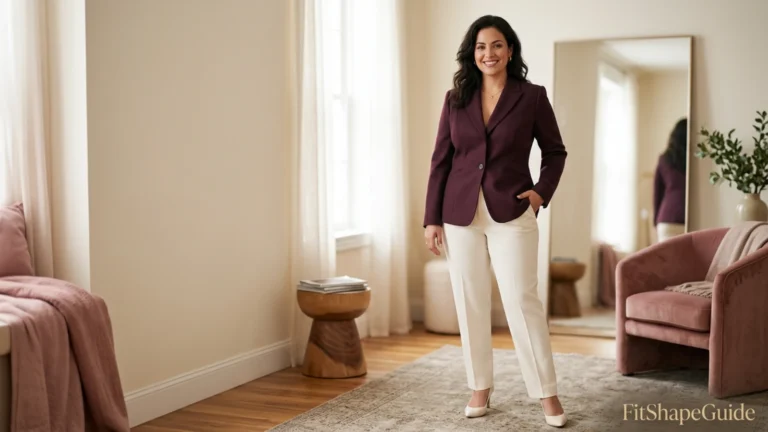
Best T-Shirts for a Large Bust
The best T-shirts do more than stretch across the chest. They balance neckline, shoulder, sleeve, fabric recovery, and front length so an everyday basic stays comfortable, opaque, and visually clean.
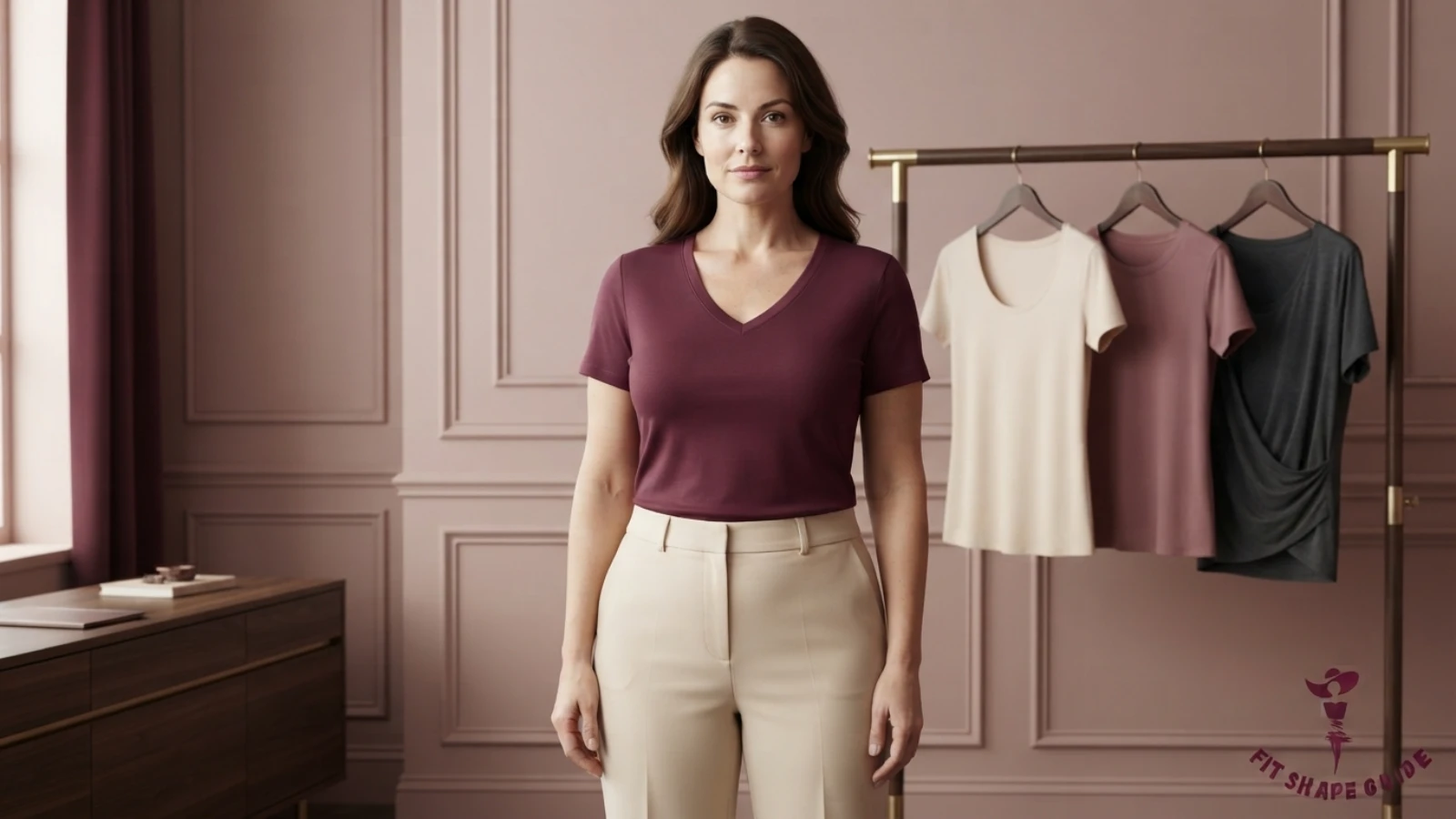
The best T-shirts for a large bust are rarely the thinnest, stretchiest, or most oversized options on the rail. A good T-shirt must solve several fit demands at once: it needs enough width and length to travel over the bust, but it should not fall from an unnecessarily wide shoulder; it needs softness, but not so little recovery that the neckline and front body grow during the day; and it needs coverage without feeling heavy. When these details are wrong, a simple tee can pull into horizontal lines, ride upward, turn sheer, twist at the side seams, or make the wearer choose between chest room and a neat waist. This guide replaces vague “flattering” rules with construction evidence you can use in a shop, a fitting room, or an online size chart.
Quick answer
The best T-shirts for a large bust are semi-fitted styles in medium-weight jersey with a stable medium V-neck, open scoop, soft square neck, or well-cut crew neck. Prioritize correct shoulder width, enough bust ease, adequate front length, opaque fabric, and stretch that snaps back instead of remaining distorted. Cotton-modal, cotton-Lyocell, compact cotton, and cotton-elastane blends often work well when their knit is substantial. Compare finished garment measurements when available, then test the tee while sitting, reaching forward, lifting the arms, and wearing your usual bra.
The six-point check for the best T-shirts
- The shoulder seam ends near the shoulder edge instead of sliding down because you sized up for the bust.
- The fabric rests smoothly over the fullest point without sharp horizontal strain lines or obvious transparency.
- The neckline lies flat, returns after being stretched, and stays where you placed it during movement.
- The front hem has enough length to remain close to level and does not climb toward the waist after a few steps.
- The sleeves and armholes permit forward reach without pulling the entire T-shirt upward.
- The jersey recovers after a gentle stretch and keeps its shape after washing according to the care label.
Best T-shirts for a large bust by type and fit need
There is no single best shape because a work layer, a travel tee, and a relaxed weekend shirt solve different problems. Comparing the best T-shirts by role makes their trade-offs easier to see. The useful comparison is not “tight versus loose.” It is controlled ease versus uncontrolled volume. Controlled ease gives the bust enough room while preserving a readable neckline, shoulder, sleeve, and hem. Uncontrolled volume simply increases every part of the pattern, which can produce dropped shoulders, open armholes, and excess fabric at the back without fixing front length.
Start with the role the shirt must perform, then judge its construction. A semi-fitted V-neck is a strong all-rounder. A compact crew can be polished beneath a blazer. A substantial scoop neck offers openness without the sharp line of a V. A relaxed draped tee can be excellent for weekends when the fabric falls instead of standing away. The best T-shirts make their intended silhouette obvious rather than looking accidentally stretched or oversized.
A medium V opens the upper chest while a semi-fitted body follows the torso without gripping it. Choose a neckband that lies flat, sufficient front length, and matte medium-weight jersey. The trade-off is neckline depth: very shallow V-necks can behave like crew necks, while very deep versions may limit bra options.
A well-cut crew looks intentional under a blazer or cardigan and protects the neckline from office air conditioning. It works best when the collar is neither tight nor wide and the fabric has enough structure to remain smooth. The trade-off is visual coverage across the upper chest, so shoulder fit and a clean sleeve become especially important.
An open scoop creates space around the neck without a center point. It is useful when a V feels too angular or low. Look for a reinforced curve that hugs the body. The trade-off is that a wide, weak scoop can stretch sideways, reveal straps, or shift during movement.
A tee with curved side seams or subtle vertical shaping can accommodate the bust and return toward the waist. This is usually cleaner than forcing a tight shirt to define the waist through stretch. The trade-off is precision: shaping placed too high may pull, while aggressive tapering can make the hem climb.
A deliberate dropped shoulder and fluid jersey can create a modern relaxed line without pretending to be tailored. The neckline should remain controlled and the hem should have a purposeful length. The trade-off is that stiff cotton may tent from the bust, making an intentional oversized cut feel bulky.
A modal or Lyocell blend can feel cool, drape smoothly, and pack compactly. Select a blend with recovery and enough opacity rather than the softest possible hand. The trade-off is that very fine, heavy drape can cling when damp or show the outline of every layer beneath it.
| T-shirt type | Why it can work | Check before buying | Best use |
|---|---|---|---|
| Medium V-neck | Opens the neckline and creates a clear vertical point. | V depth, neckband recovery, bust ease, front length. | Everyday, work, smart casual. |
| Open scoop | Softens the neckline while keeping visual breathing room. | Strap coverage, curve stability, shoulder width. | Everyday and warm-weather layers. |
| Compact crew | Creates a polished, simple base beneath structured layers. | Collar pressure, transparency, sleeve balance. | Office and capsule wardrobes. |
| Soft square neck | Frames the upper chest with a defined, modern line. | Corner stability, bra coverage, neckline width. | Dressier casual outfits. |
| Relaxed draped tee | Provides movement without close cling when the jersey falls well. | Tenting, back volume, hem length, neckline control. | Weekends and travel. |
| Shaped rib tee | Vertical texture stretches with the body and can recover cleanly. | Opacity, rib distortion, cling, hem rolling. | Layering and fitted looks. |
How the best T-shirts use necklines and collars
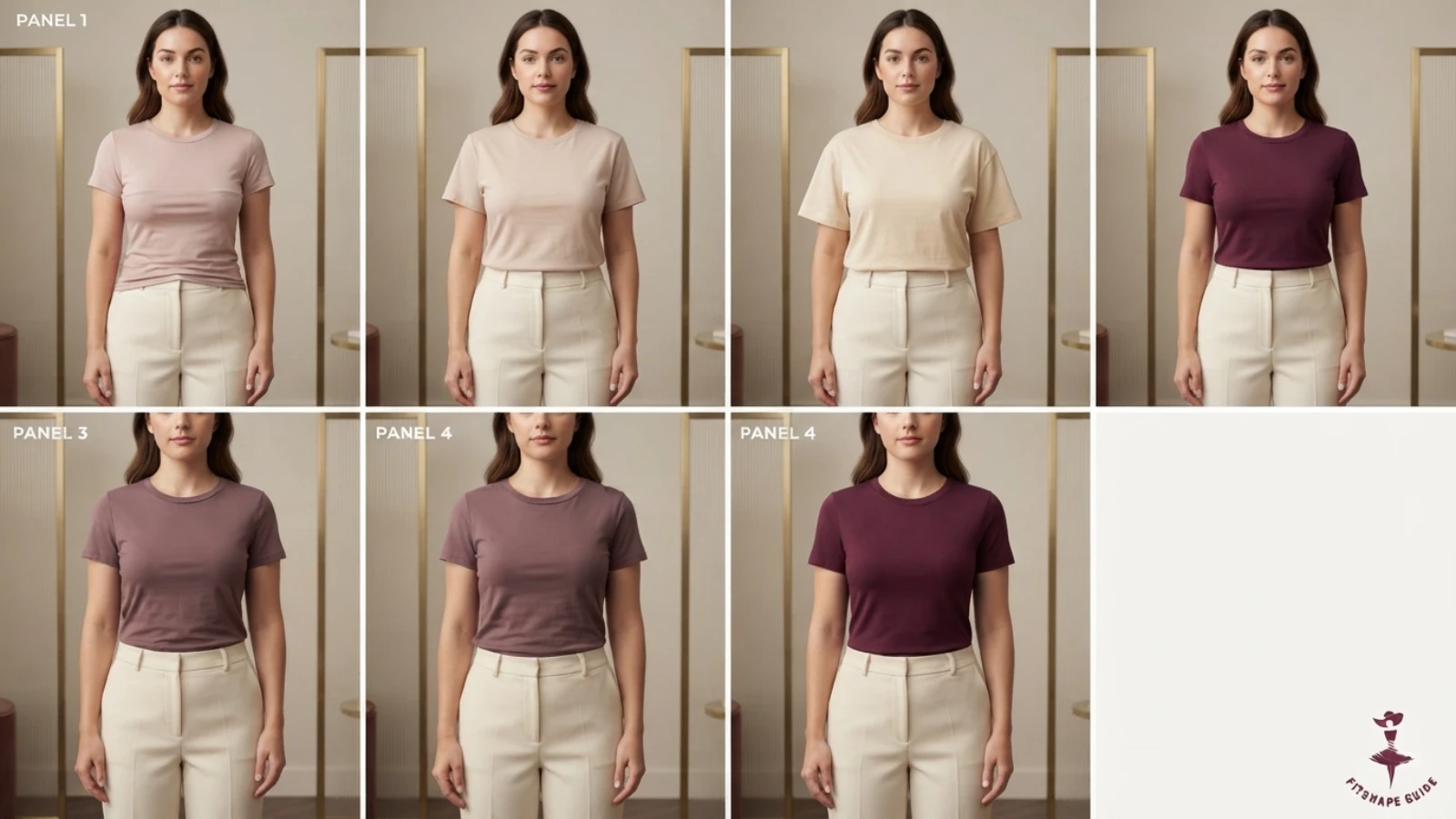
A neckline changes both the visual balance and the physical stability of a T-shirt. The best T-shirts do not need to expose more skin; they need a neckline whose scale makes sense for the upper body and whose band or facing returns after stretch. Among the best T-shirts, neckline depth varies but edge stability does not. A collar that ripples, twists, or stands away can make an otherwise good tee look tired after one wear.
Medium V-necks create space without demanding a plunge
A V-neck draws the eye toward a central point and breaks up a broad area of fabric. For daily wear, the most useful depth usually sits between a high notch and a plunge, but torso length and bra shape change where that point lands. Inspect the base of the V: puckering there suggests the binding or stitching was not controlled. Pull the neckline gently and release it. It should settle back without a wavy edge.
Scoop necks need reinforcement across the widest curve
Scoop necks can be beautifully open and calm, but their long curved edge is vulnerable to stretching. A slightly wider band, clean cover stitching, or stable binding helps. Lift both arms, lean forward, and turn the shoulders. If the scoop slides toward one side or reveals straps, the issue is not simply neckline preference; it may be excessive width or weak recovery.
Crew necks rely on proportion and fabric surface
A crew neck is not automatically unhelpful for a full bust. A neat crew in matte compact jersey can be an excellent minimal base, particularly beneath an open jacket that adds vertical lines. Problems arise when the collar is tight, the body is thin and clingy, and the sleeve ends at the fullest horizontal level. If you prefer coverage, look for a crew that leaves comfortable space at the neck and pair it with a deliberate shoulder line.
Square and boat necks require careful width
A soft square neck creates clear structure and can frame the collarbones, but the corners must lie flat and the width must cover the bra. Boat necks spread horizontally and may visually widen the upper body; that may be desirable or not, depending on the outfit. They also need enough shoulder coverage to remain stable. Judge them by movement, not a front-facing mirror pose.
If a neckline looks good only after you pull the T-shirt down and reset the shoulder seams, it is not stable enough for normal wear. For more shape-by-shape detail, use the best necklines for a large bust guide.
Best T-shirt fabrics for a large bust: weight, drape, recovery, and opacity
Fiber content helps predict behavior, but it does not tell the whole story. Two shirts labeled 95% cotton and 5% elastane may have different yarn thickness, knit density, finishing, and recovery. One may skim and return; the other may feel rubbery, become shiny over the bust, or shrink in length. The best T-shirts are chosen by fabric behavior as well as label language. In practice, the best T-shirts retain both their surface and their shape after ordinary movement.
Medium weight usually offers the safest balance
Very thin jersey can feel soft on the hanger because there is little material to resist the hand. Once stretched over a fuller area, it may become translucent, emphasize seams underneath, or cling between the breasts. Very heavy jersey provides opacity but may stand away from the bust and feel hot. A medium-weight knit usually offers enough substance to skim while remaining flexible. When a retailer lists grams per square meter, treat it as useful evidence, not an absolute quality score; knit structure and fiber still matter.
Recovery prevents a temporary fit from becoming permanent distortion
Stretch describes how far fabric moves. Recovery describes whether it returns. For a fuller-bust T-shirt, recovery is essential at the neckline, across the front, and around the sleeves. Pinch a hidden area, stretch it gently for a few seconds, and release. Persistent waviness suggests the tee may grow during wear. Elastane can improve recovery, but well-made compact cotton or interlock may also perform well without a high stretch percentage.
Drape determines whether ease falls or tents
A relaxed shirt needs enough drape to fall from the fullest point instead of projecting outward like a shelf. Modal and Lyocell blends often drape fluidly, while crisp open-end cotton tends to hold a more architectural shape. Neither is universally better. Choose fluid drape for soft movement and a slightly firmer knit for a polished outline, then confirm that the fabric does not collapse into every contour.
Opacity must be tested at the actual degree of stretch
Hold the shirt in bright light, place a hand beneath one layer, and gently stretch a section to approximate wear. White, pastel, and fine ribbed tees deserve extra attention. A fabric can look opaque while hanging and become sheer over the bust. A nude-to-you smooth bra may reduce contrast, but underwear should not be asked to solve an unsuitable fabric. The broader best fabrics for a large bust guide explains how surface, weight, and recovery affect other garment types too.
| Fabric family | Likely strength | Possible weakness | Best evidence |
|---|---|---|---|
| Compact cotton jersey | Opaque, matte, crisp enough for a clean line. | Can tent or shrink if very firm and untreated. | Wash reviews, front length, hand feel, seam stability. |
| Cotton-modal | Soft drape with familiar cotton feel. | Fine versions may cling or grow. | Fabric weight, opacity photo, recovery test. |
| Cotton-Lyocell | Smooth, cool, and fluid. | May show moisture or require gentle care. | Care label, surface close-up, return policy. |
| Cotton-elastane | Flexible with potential for strong recovery. | Can cling or look shiny when overstretched. | Unstretched versus worn opacity and snap-back. |
| Rib knit | Vertical texture and adaptable stretch. | Ribs may spread, turn sheer, or remain distorted. | Rib appearance over bust, hem behavior, recovery. |
| Interlock or double knit | Stable, smooth, and generally opaque. | Warmer and sometimes less fluid. | Thickness, breathability, shoulder drape. |
Retail descriptions should be checked against the sewn-in or published fiber and care information. The U.S. Federal Trade Commission provides official guidance on textile fiber labeling requirements, which helps explain what a fiber label can—and cannot—tell you about a garment.
Why the best T-shirts balance bust ease and front length
Horizontal room and vertical length work together. When a T-shirt is too narrow, the fabric stretches sideways and may become shorter. When the pattern has insufficient front length, the hem rises even if the measured chest width seems adequate. The best T-shirts for a large bust account for both dimensions, either through a fuller-bust pattern, strategic stretch, a longer front, or a silhouette with enough controlled ease. Across the best T-shirts, front balance is treated as a fit requirement rather than an afterthought.
Measure a trusted tee instead of relying only on body measurements
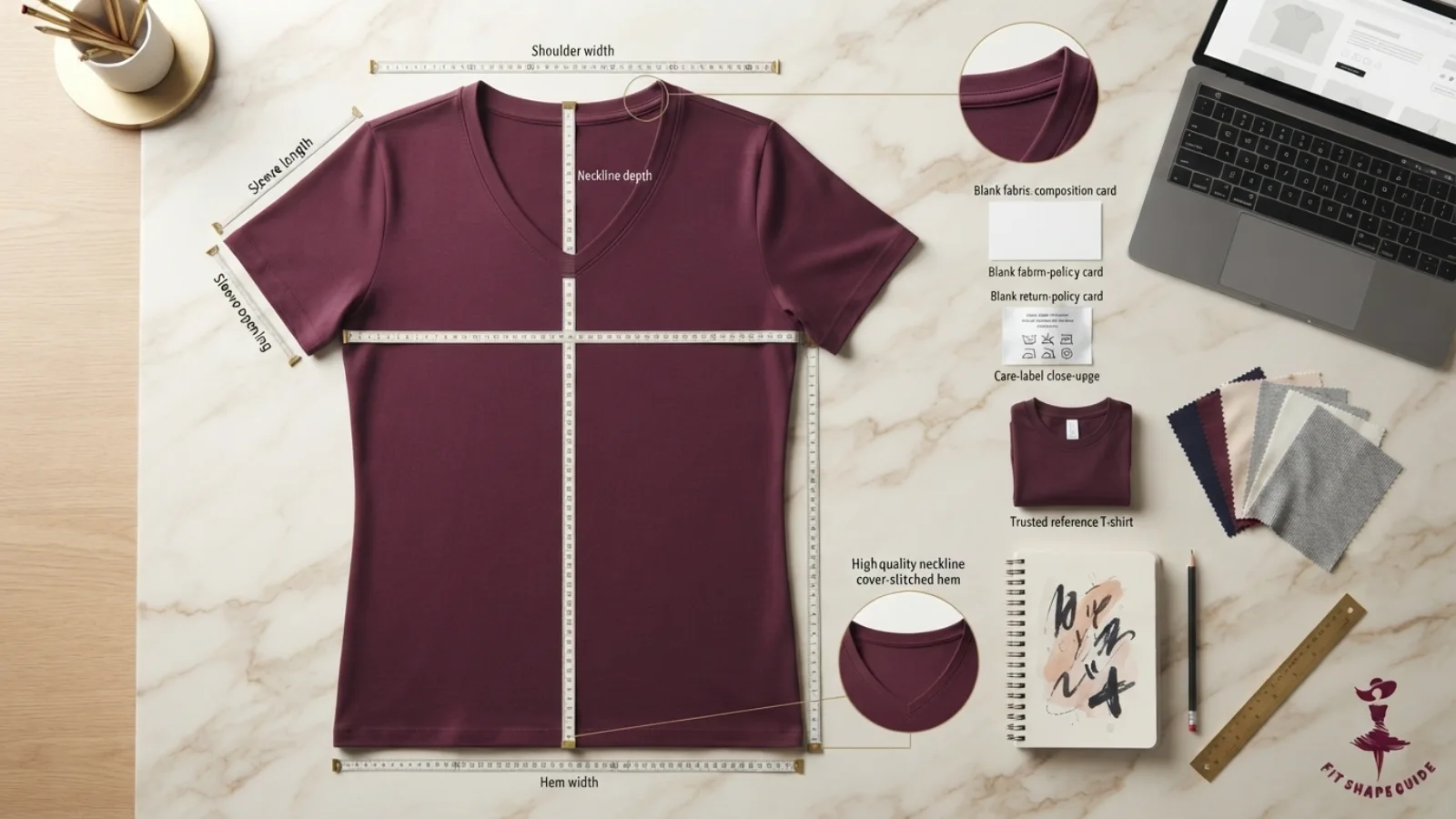
Lay a T-shirt you like on a flat surface without stretching it. Record the chest width from underarm to underarm, shoulder width, body length at center back, front length if the hem differs, sleeve opening, and hem width. Double the flat chest number for approximate circumference. This does not reveal every pattern detail, but it creates a personal benchmark far more useful than choosing a generic size letter.
Positive ease and stretch must be read together
A woven blouse needs measurable room beyond the body. A knit tee can be cut with little positive ease or modest negative ease because it stretches. That does not mean every close measurement is comfortable. If the fabric must use most of its stretch simply to stand still, it has little reserve for breathing, sitting, and reaching. It may also turn shiny or transparent. Choose ease according to fabric recovery and the intended silhouette rather than treating “stretchy” as unlimited capacity.
Front length is the hidden measurement behind riding up
The bust creates a longer route from shoulder to hem. If the front pattern does not provide that route, the shirt borrows fabric from the lower body and side seams. Common signs include a hem that arcs upward, side seams that swing toward the front, and a neckline that is repeatedly pulled downward. A slightly curved or longer front hem can help. However, if strong horizontal lines remain, the shirt also needs more circumference.
The waist should be shaped only after the bust has enough room
A narrow waist below a full bust can make standard tees look boxy when sized for the chest. The solution is not to downsize until the waist fits. Buy enough room at the bust and keep the shoulders credible, then look for curved side seams or consider narrowing removable excess. The tailoring guide for a large bust explains which changes are realistic and which require rebuilding the garment.
How the best T-shirts fit through shoulders, armholes, and sleeves
Many T-shirt problems attributed to the bust begin at the shoulder and armhole. Sizing up may add chest circumference, but it also moves the shoulder seam outward and lowers the armhole. Sizing down may clean the shoulder but make the sleeve pull and the front strain. The best T-shirts coordinate these areas so the shirt moves without dragging its entire body upward.
Use the shoulder seam as a diagnostic, not an absolute rule
On a classic set-in sleeve, the seam should end near the shoulder edge. If it sits far down the upper arm and the garment was not intentionally designed as drop-shoulder, the size or cut is likely too broad. On a relaxed tee, a dropped seam can be deliberate; then judge whether it falls at the same place on both sides and whether the sleeve hangs cleanly rather than twisting forward.
Armhole shape controls reach
A surprisingly low armhole can restrict movement because raising the arm lifts a large section of the bodice. A higher, well-shaped armhole often allows better reach even though it looks smaller. Test by driving an imaginary steering wheel, crossing the arms, and reaching to a shelf. The hem may move a little, but it should not remain bunched beneath the bust.
Sleeve length changes the strongest horizontal line
A short sleeve ending at the fullest bust level can create a broad horizontal band, especially when the sleeve is tight. A slightly longer sleeve, a diagonal cut, or a relaxed opening can change the balance. Cap sleeves may emphasize the shoulder and upper chest; elbow sleeves add coverage but need enough opening circumference. Choose the effect you enjoy, then confirm the sleeve does not pull the armhole forward.
Raglan and dolman tees prioritize freedom over exact shoulder definition
Raglan seams run toward the neckline and can offer comfortable movement, but contrast seams may draw attention inward or outward depending on color. Dolman sleeves create volume between arm and body, which can be elegant in fluid jersey but bulky in stiff fabric. These cuts are useful when standard shoulders are difficult, provided the neckline stays stable and the side volume feels intentional.
- Reach forward without permanent lines radiating from the armhole.
- Raise both arms and confirm the hem returns after you lower them.
- Check that sleeves do not rotate or pull toward the front.
- View the shoulder and upper back from the side, not only the front.
- Confirm bra straps remain covered throughout ordinary movement.
- Sit for several minutes and recheck the neckline and front hem.
Best T-shirts for work, weekends, travel, and layering
A T-shirt that succeeds in one setting may fail in another. The best T-shirts earn their place by matching fabric, neckline, and ease to the job. Instead of searching for one mythical universal tee, build a small rotation with clear functions.
For work: choose compact surface and controlled neckline
A medium-weight crew, shallow V, or stable scoop in an opaque matte knit looks polished beneath an open blazer. The body should be semi-fitted so it does not bunch under the jacket, and sleeves should sit smoothly inside the armholes. Avoid relying on a blazer to hide a neckline that shifts; you will still adjust it whenever the layer comes off.
For weekends: choose deliberate relaxation
A fluid relaxed tee can work with straight jeans, wide-leg trousers, or a skirt when one part of the outfit clarifies the shape. A partial tuck, visible waistband, shorter front, or open overshirt prevents soft volume from becoming visually unresolved. If you prefer no waist cue, tonal dressing and a clean vertical side line can make the volume feel composed.
For travel: prioritize recovery and repeat wear
The travel winner resists neck stretching, does not remain deeply creased after packing, and can dry predictably. Dark or mid-tone marl may disguise small marks better than flat pale color. Test the shirt beneath the exact cardigan or jacket you plan to bring. Fabric that feels perfect alone may catch against a rough lining and ride upward.
For layering: control bulk at all contact points
A layering tee should have smooth seams, a neckline that complements the outer layer, and enough length to stay positioned without extra fabric collecting at the waist. A V-neck under an open cardigan creates a continuous center line; a crew under a blazer gives a cleaner modern block. The layering tips for a large bust can help you compare open versus closed layers and manage bulk.
Diagnose common T-shirt fit problems before buying
Wrinkles are directional evidence. They show where fabric is being pulled, where it has nowhere to go, or where a seam is hanging away from its intended position. Even the best T-shirts form temporary movement folds, so do not reject every natural crease. Focus on repeated, symmetrical signs that remain after you settle the garment.
| Visible sign | Likely cause | Better next test | Buying decision |
|---|---|---|---|
| Horizontal lines across bust | Insufficient width or stretch being pushed too far. | Compare next size and a better-recovery cut. | Do not keep if lines remain at rest. |
| Front hem rises sharply | Not enough front length, width, or both. | Check side-seam angle and measure front route. | Choose longer front or fuller-bust pattern. |
| Neckline ripples | Weak binding recovery or sewing distortion. | Stretch and release the neckband gently. | Reject if it cannot return while new. |
| Shoulder seam drops unintentionally | Size increased globally to fit bust. | Try a narrower-shoulder, roomier-front cut. | Avoid tailoring unless shirt value justifies it. |
| Side seams rotate forward | Front is borrowing width or pattern is off grain. | Lay shirt flat and compare seams before wearing. | Reject persistent twist or seek more front room. |
| Fabric turns shiny or sheer | Jersey is overstretched or too fine. | Inspect in daylight over normal underlayer. | Choose denser fabric or more ease. |
| Hem or sleeves roll | Knit torque, narrow finish, or fabric instability. | Check after washing if return policy permits. | Treat repeated rolling as a quality warning. |
Keep when the shoulders, bust room, neckline, and movement are already right. Consider alteration when the only issue is removable waist or hem excess. Return when fabric is sheer under normal stretch, the neckline cannot recover, the shoulder is fundamentally wrong, or the shirt must be reset after every movement.
How to shop online for the best T-shirts for a large bust
Online shopping improves when you stop treating the size label as the decision and start treating it as one clue. Retailers offering the best T-shirts make the fit evidence easy to verify. The best product page supplies garment measurements, fabric composition, care instructions, multiple views, model information, and a usable return policy. When evidence is missing, the uncertainty should lower your confidence rather than encourage guesswork.
Build a measurement benchmark from a T-shirt you already wear
Measure chest width, shoulder width, front and back length, hem width, sleeve length, and sleeve opening. Record whether the fabric is firm, medium, or highly stretchy. Your benchmark is a combination of dimensions and material behavior, not just one chest number.
Distinguish body measurements from garment measurements
A chart labeled “bust 40 inches” may describe the body the brand expects to fit, not the actual shirt circumference. Finished garment measurements are more directly comparable with your benchmark. If the retailer does not clarify which kind it provides, ask customer service or treat the chart cautiously.
Read composition together with fit language
“Slim fit” in 100% firm cotton behaves differently from “slim fit” in cotton-elastane rib. “Relaxed” may mean extra body width, a dropped shoulder, or both. Look at side and back photographs to see whether room was added only through the body or throughout the whole pattern.
Search reviews for observable facts
Useful review language includes “neck stretched after washing,” “white is see-through,” “front runs short,” “shoulders are wide,” “fabric shrank in length,” or “kept its shape.” Statements such as “flattering” are personal and less diagnostic unless the reviewer explains why. Give extra weight to reviewers who share measurements and the size they purchased.
Order only when the return pathway is acceptable
A first purchase from an unfamiliar cut is a fit test. Check return window, return postage, final-sale status, and whether washing removes eligibility. Try the tee with your usual bra and intended bottom before removing tags. Photograph the side view and sit for several minutes; these checks reveal issues a quick mirror glance misses.
If the product later includes affiliate links, recommendations should remain independent of commission and be limited to items whose current listing confirms the required construction evidence. A verified link is not a substitute for checking the live size chart because product specifications can change.
Style the best T-shirts without hiding their fit
Styling cannot repair a T-shirt that is too tight, transparent, or unstable, but it can preserve the clean line of a good one. The best T-shirts remain visually calm without being hidden beneath corrective layers. The goal is to let the neckline and fabric do their job while the rest of the outfit supplies proportion, rhythm, and purpose.
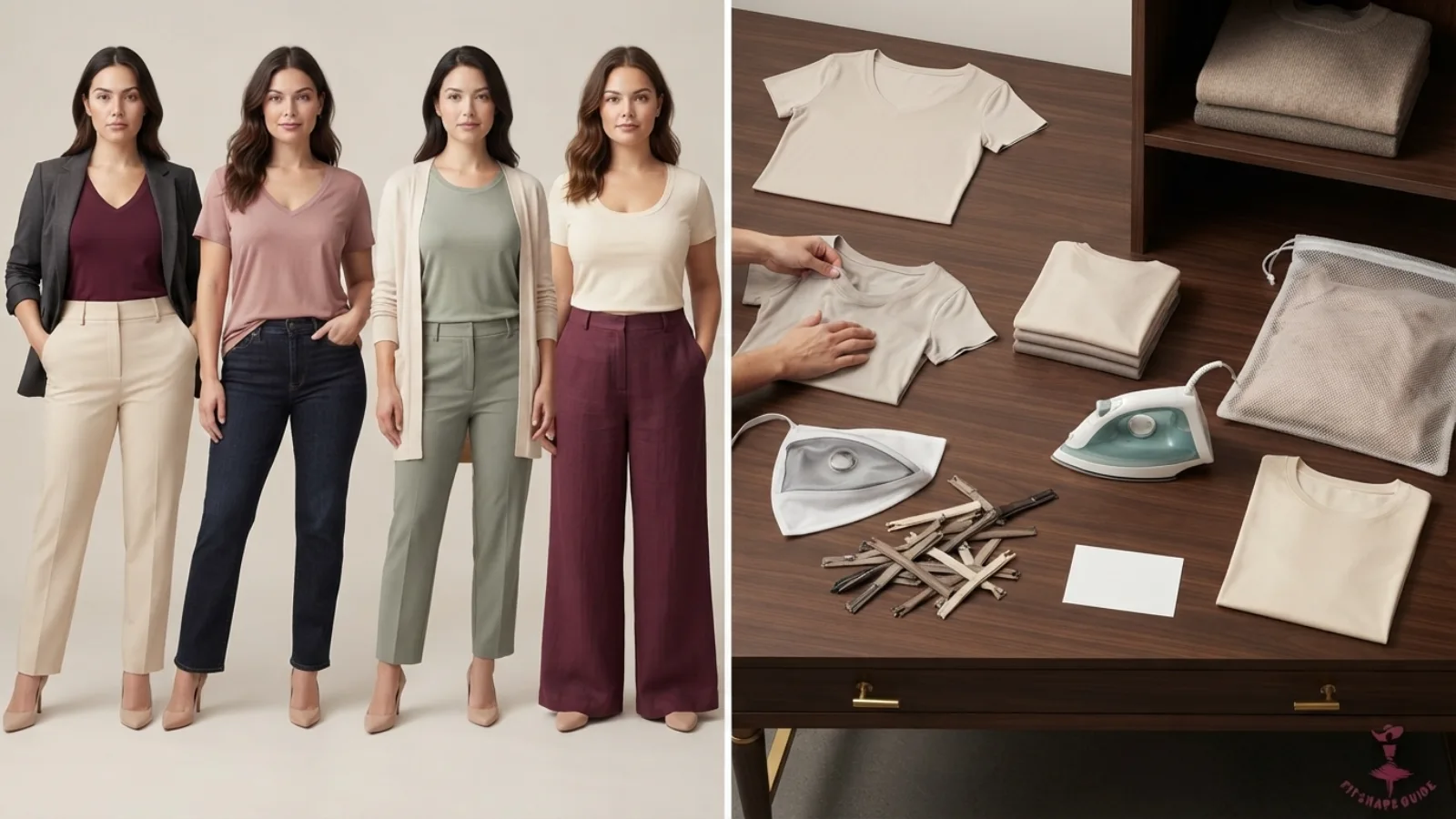
Office formula: compact tee + open blazer + high-rise trouser
A stable crew, scoop, or shallow V sits smoothly beneath a single-breasted open blazer. The open fronts create vertical lines while a higher rise defines the lower boundary of the outfit. Keep the tee hem flat or tucked without pulling it so tightly that the fabric stretches across the bust.
Weekend formula: relaxed V-neck + straight denim + partial tuck
A small partial tuck can reveal the waistband and control front volume while leaving the sides relaxed. Use this only when the shirt has enough length and ease; tugging a short tee into the waistband will exaggerate the front rise. A simple necklace above the neckline or a longer pendant below the bust can add a deliberate focal point. See the accessorizing guide for necklace, scarf, and belt placement.
Travel formula: resilient tee + open cardigan + tonal bottom
A tonal column underneath an open cardigan keeps the outfit calm and allows the tee to repeat across travel days. Choose a cardigan surface that slides over the jersey rather than gripping it. Pack the shirt rolled or folded along its natural seams, then hang it briefly on arrival.
Warm-weather formula: open scoop + wide-leg linen trouser
A substantial scoop-neck tee balances the movement of wide-leg trousers without competing with them. A front hem that ends near the waistband can be left untucked, while a longer tee may benefit from a clean full tuck. Check the back after tucking so excess fabric is distributed rather than gathered into one bulky point.
Layered casual formula: semi-fitted tee + open button-down
Use a semi-fitted base beneath an open shirt to combine comfort with two vertical edges. The outer shirt should have enough bust room to hang open without being pulled backward. The best button-down shirts for a large bust guide explains plackets, darts, and shoulder fit if you also want the option to close the layer.
If a T-shirt is not the right level of polish or drape for the occasion, compare the construction-led options in the best blouses for a large bust guide rather than trying to force one basic to cover every role.
Care, value, and the best T-shirt buying standard
A low price does not create value if a collar ripples after one wash, a body twists off grain, or the fabric becomes too short. The best T-shirts should be judged by calm wears: how often you can put one on, move normally, wash it as directed, and wear it again without repair or adjustment.
Inspect the new shirt before washing
Lay it flat. Compare the side seams, check that the neckline is symmetrical, inspect stitching for skipped sections, and see whether the body already twists. Measure length and chest width if shrinkage would materially affect the fit. This creates a baseline and helps distinguish a manufacturing issue from care-related change.
Follow the care label, then minimize unnecessary stress
Heat and agitation can shrink cotton, weaken elastane, distort ribbing, and age printed surfaces. Wash according to the label, fasten rough items separately, and reshape the neckline and hem while damp when appropriate. The FTC’s official care-label guidance explains the information manufacturers are expected to provide. Always follow the garment-specific instructions rather than a generic internet rule.
Calculate cost per successful wear, not cost per item
A moderately priced tee worn weekly for two years may be better value than a cheaper one abandoned after three uncomfortable outings. Track whether it layers well, recovers by evening, stays opaque, and remains within your routine. The capsule wardrobe guide for a large bust can help identify which neckline and color genuinely repeat across your clothes.
Use a transparent editorial standard for future product additions
Any product recommendation added to this page should be checked against the current listing for sizes, finished measurements, fiber content, care, return terms, and image accuracy. A commission must never determine fit claims. Because colorways, suppliers, and specifications can change, each link should be rechecked before publication and reviewed periodically after it goes live.
Best T-shirts for a large bust: editor’s final verdict
Begin with a semi-fitted medium V-neck or open scoop in opaque, medium-weight jersey with dependable recovery. Fit the shoulders first, confirm that the bust has room without overstretching, and demand enough front length for the hem to settle after movement. Then choose the fiber blend, sleeve, and level of drape for the shirt’s actual job. The winning tee is not the one that looks smooth for ten seconds in a front-facing pose; it is the one whose neckline, side seams, opacity, and hem remain calm after sitting, reaching, layering, washing, and wearing again.
FAQs about the best T-shirts for a large bust
What type of T-shirt is best for a large bust?
A semi-fitted T-shirt with a stable medium V-neck, open scoop, or soft square neckline is the most versatile starting point. Look for enough front length, a shoulder seam that ends at the shoulder edge, and substantial cotton-modal, cotton-Lyocell, or cotton-elastane jersey that stretches and returns without clinging.
Are V-neck T-shirts good for a large bust?
Yes. A medium V-neck can create visual space and reduce the solid block of fabric across the upper chest. The V should be deep enough to open the neckline but high and stable enough for the intended setting. Check that the neckband lies flat and does not ripple or pull outward.
Should I size up in T-shirts for a large bust?
Size up only when the larger size improves bust ease without dropping the shoulder seam, opening the armhole, or making the body excessively wide. When one size is tight at the bust and the next is loose everywhere else, a fuller-bust cut, a stretchier fabric with recovery, or a small waist alteration is usually a better solution.
What fabric is best for a fuller-bust T-shirt?
Medium-weight jersey with a matte surface, soft drape, and reliable recovery is usually easiest to wear. Cotton-modal, cotton-Lyocell, compact cotton jersey, and cotton with a small elastane percentage can work well. Fabric performance matters more than the fiber name alone, so test opacity, stretch, snap-back, and wash stability.
How do I stop a T-shirt from riding up over my bust?
Choose more front length and enough horizontal ease, then check that the armholes are not too tight. A shirt rides up when the front must borrow length to travel over the bust or when sleeve movement pulls the body upward. A curved hem or fuller-bust pattern can help, but extra length alone will not correct severe tightness.
Are oversized T-shirts flattering on a large bust?
They can be, especially when the fabric drapes and the styling makes the volume intentional. The cleanest oversized fit usually has a controlled neckline, a shoulder or sleeve shape that looks deliberate, and a visible vertical or waist cue such as an open layer, a partial tuck, or a shorter front. Stiff oversized fabric may tent outward instead of falling.
How can I tell if a white T-shirt will be see-through?
Stretch a single layer gently over your hand in bright natural light and compare it with an unstretched section. Also check the product photos against a dark background, read fabric weight or composition details, and test the shirt while bending and sitting. A double layer at the neckline does not indicate that the body fabric is opaque.
Can a tailor alter a T-shirt for a large bust?
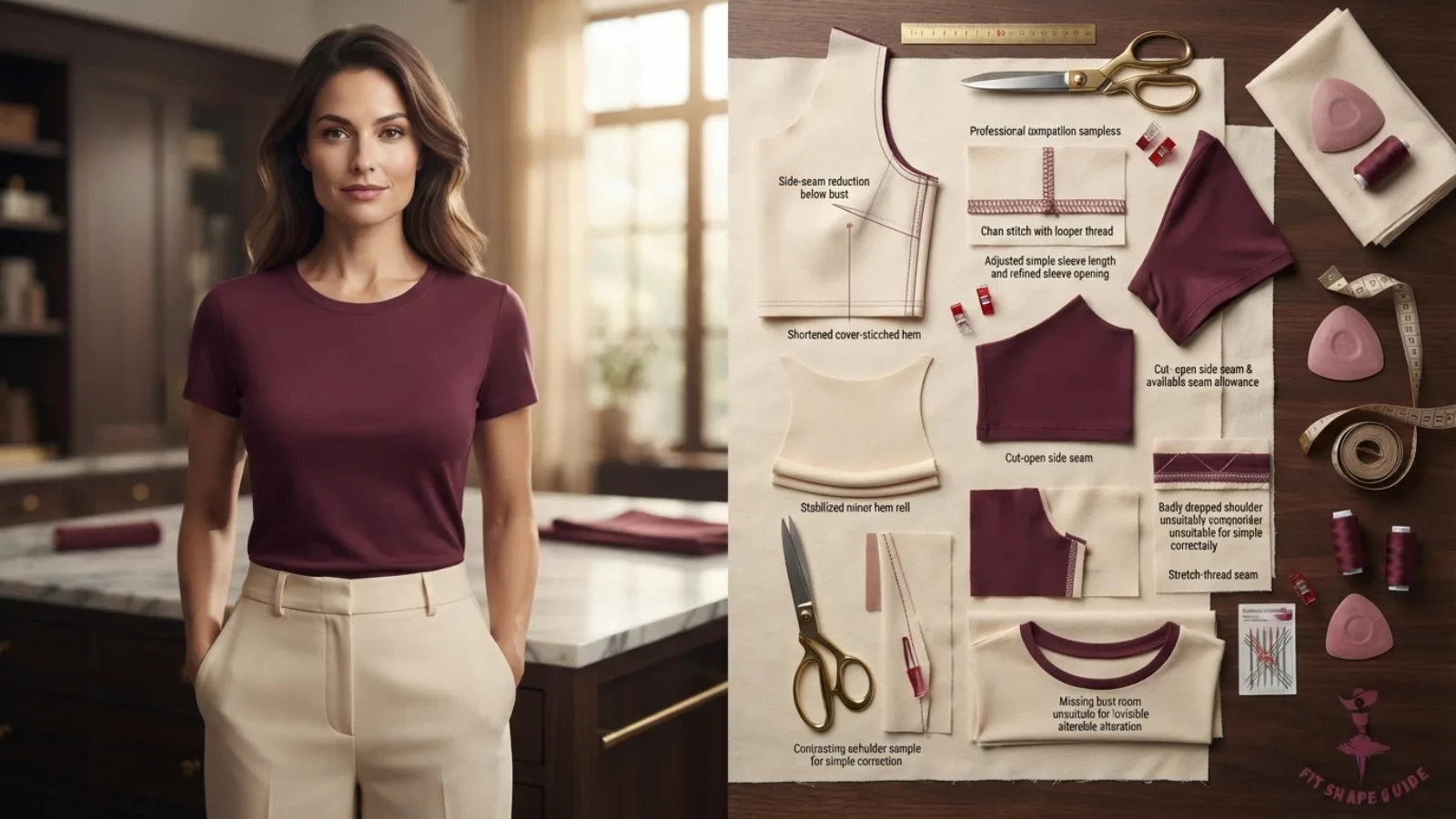
A tailor can often narrow the waist or side seams, shorten the body, adjust a simple sleeve, or refine a hem. Adding meaningful bust room, moving a neckline, correcting a badly dropped shoulder, or rebuilding a stretched neckband is less economical. Buy for adequate bust room and shoulder fit first, then alter removable excess.