Best Tunic Tops for a Large Bust
A construction-first guide to bust projection, shoulder fit, useful front length, side-slit placement, hip clearance, fabric drape, layering, movement, and evidence-led online shopping.
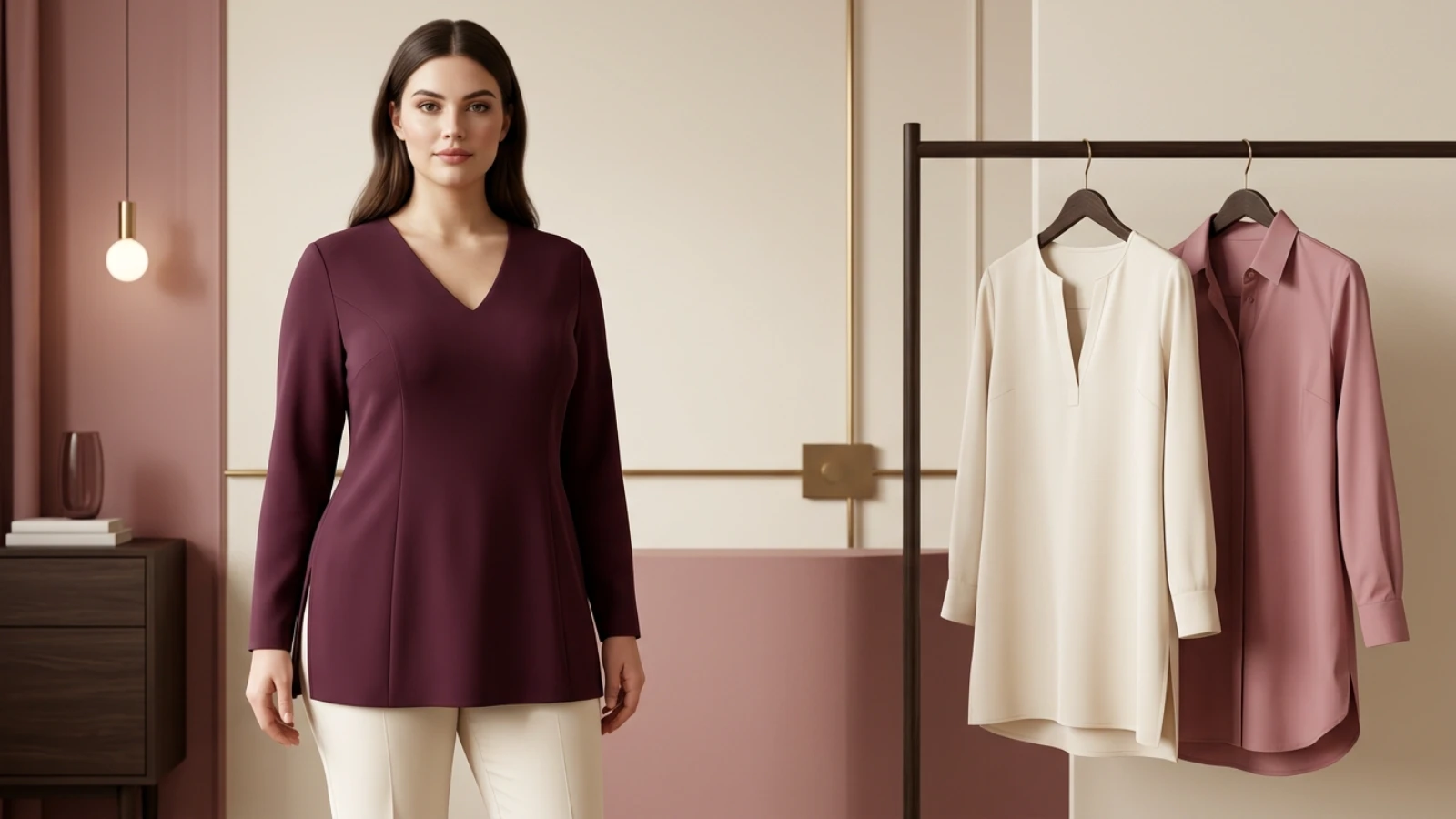
The best tunic tops for a large bust do more than add inches below an ordinary top. A tunic has a longer vertical route across the bust, waist, high hip, seat, and sometimes upper thigh, so one fit decision can affect several others. Bust projection consumes center-front length. A straight body that is wide enough at the chest may become unnecessarily loose at the shoulders, while a shoulder-correct size may pull forward, lift at the front hem, spread a placket, or drag side slits upward. A very wide design can fall from the fullest point like a rigid tent; a very soft design can cling under the bust and collect on the hips. The answer is not a universal neckline, a dark color, or automatic sizing up. It is a compatible pattern: shoulders that locate the garment, sufficient shaped volume over the bust, a lower body with the right sweep, and fabric whose weight supports the intended line. This guide compares six useful constructions, explains how to evaluate length and slits, and builds an online-shopping workflow around finished garment evidence. Product modules remain private until the current item, exact measurements, materials, care, returns, availability, and affiliate disclosure are verified. No Amazon product name, ASIN, price, rating, review, or personal wear claim is invented.
The 60-second tunic fit test
Wear the planned bra and bottoms, let the tunic settle naturally, then inspect the front, side, back, and hem before styling it.
- Shoulder seams land where the design intends and do not migrate backward under bust tension.
- The neckline lies flat, the armholes stay controlled, and the planned bra remains covered.
- Darts, princess seams, wrap edges, or plackets accommodate projection without strain.
- The center front reaches the intended point instead of lifting sharply over the bust.
- Side seams hang close to vertical and the hem reads as intentionally level or intentionally shaped.
- The hip and seat have enough clearance for walking and sitting without the tunic riding upward.
- Side slits begin below the needed coverage point and do not expose the waistband unexpectedly.
- Fabric falls away from the bust without becoming sheer, rigid, clingy, or excessively bulky.
Best tunic tops by fit architecture
The best tunic tops for a large bust coordinate the upper block with the longer lower body. Start with the construction that matches the intended polish, neckline, bust shaping, and amount of hip coverage.
Princess-seam V-neck tunic
Best for: deliberate bust shaping and a cleaner waist transition. A correctly curved princess seam can create projection without making the shoulders or lower body excessively wide. Look for the seam to travel smoothly over or near the fullest point, a V that stays stable over the planned bra, and enough length below the curve. The risk is inaccurate shaping: a narrow or low apex creates pulling that stretch alone will not relocate.
Split-neck fluid tunic
Best for: relaxed everyday wear and low-bulk layering. A controlled split neckline introduces vertical openness without requiring a full button placket. Soft crepe or viscose can fall past projection, while a back yoke or small bust darts improve direction. Check that the split does not spread during sitting, the shoulder is not oversized merely to create chest room, and the fabric remains opaque at the bust.
Stretch-poplin shirt tunic
Best for: workwear, leggings, and polished layering. Useful evidence includes close practical button spacing, a button near the fullest bust line, darts or princess seams, a shaped hem, and side slits below the hip. A small amount of elastane may add comfort but cannot compensate for a flat chest block. Check placket reinforcement, collar scale, shoulder fit, and front lift before judging the length.
Controlled A-line jersey tunic
Best for: easy movement and gentle hip clearance. The most useful version fits at the shoulder and upper chest, then widens gradually below the bust or waist. Medium-weight jersey with recovery prevents the top from becoming either clingy or shapeless. Avoid a flare that begins directly at the fullest bust point unless a pronounced tent line is intentional, and check that pockets do not add weight or volume at the hip.
True wrap tunic
Best for: adjustable waist placement and controlled neckline depth. A functional wrap can respond to bust-to-waist difference when both fronts have generous overlap, the tie anchors at the correct level, and the lower skirt remains balanced. Faux wraps are often simpler but less adjustable. Test the neckline seated, check side coverage, and make sure the tie is long enough without pulling the side seam forward.
Side-slit sweater tunic
Best for: cool-weather layering over slim or straight bottoms. Fine- or mid-gauge knit usually follows the bust more cleanly than a very chunky surface. Side slits reduce restriction at the hip and can keep a long hem from bunching, but they must begin below the desired coverage line. Look for stable shoulders, opaque ribs, a neckline that does not collapse, enough sleeve room, and a center front long enough after stretch.
The best tunic tops can borrow useful shaping ideas from longline shirts and blouses without becoming copies of either. Compare the neighboring constructions in the best blouses for a large bust guide, then return to tunic-specific evidence: lower sweep, hip clearance, slit height, and usable front length.
Measure tunic length after accounting for bust projection
A retailer may call a garment a tunic without stating where it will land on a specific body. Bust projection changes the path of the fabric: the front must travel outward and down before it reaches the waist or hip. This can make the center front appear shorter, pull a shaped hem upward, or rotate side seams toward the front. The effect depends on pattern shaping, fabric behavior, torso length, and bust position—not cup label alone.
When comparing the best tunic tops for a large bust, treat stated length as a starting measurement rather than a guaranteed body landmark. The best tunic tops preserve their intended front coverage after projection and still provide enough lower width for the fabric to fall.
Use three vertical measurements
Compare center-front length from the highest shoulder point, center-back length, and side length from underarm or shoulder according to the seller’s method. A curved shirttail hem can be intentionally longer at the back, so numerical equality is not required. What matters is whether the front reaches the garment’s intended landmark and the difference reads as design rather than unplanned lift.
Check width where the tunic actually lands
A chest measurement does not predict high-hip or seat clearance. Measure the garment at the waist, high hip, fullest hip, and hem sweep when those points will be covered. A long straight tunic may fit the bust but catch on the hip and ride upward. An A-line cut may solve lower clearance, yet too much early flare can add a tent effect. Side slits are useful only when the upper body is wide enough before the opening begins.
Read side-slit height as coverage information
Measure from the hem to the top of the slit, then subtract that from the side length if necessary to estimate where the opening starts. A deep slit can improve walking and sitting but expose a waistband, pocket, or skin higher than expected. Curved vents and stepped hems need the same check. The best tunic tops keep the opening compatible with the intended bottoms and setting.
| Tunic length zone | What it can do | Primary fit check | Common failure |
|---|---|---|---|
| Below-waist long top | Light coverage and easy tucking | Front clears waistband after bust | Called a tunic but lifts to standard top length |
| High-hip tunic | Works with jeans and trousers | Hem sweep clears high hip | Front catches and side seams rotate |
| Full-hip tunic | Useful over slim bottoms | Seat width and slit height | Rides upward while walking |
| Upper-thigh tunic | More coverage and dress-like line | Sitting coverage and stride | Too narrow without useful vents |
| Asymmetric tunic | Deliberate visual movement | Shortest point after bust lift | Front point becomes unexpectedly high |
| Shirttail tunic | Polished layered shape | Front/back curve and placket | Back length hides front strain |
Choose drape and structure for the cut—not by fiber name alone
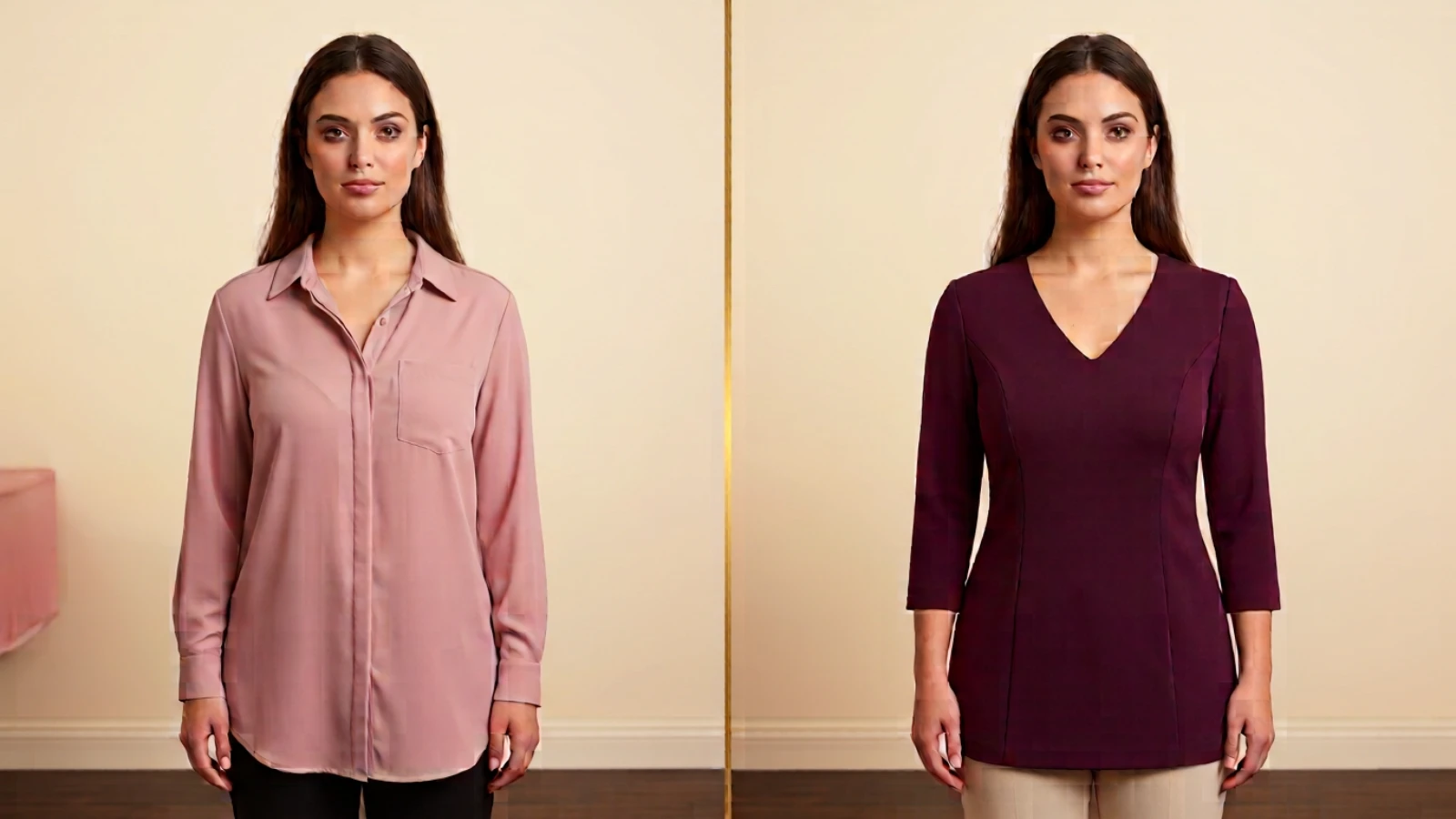
The best tunic tops rely on a compatible relationship between fabric and pattern. A crisp fabric makes every line visible, including good darts and poor strain. A fluid fabric softens the silhouette but may reveal bra texture, cling with static, or collapse into the space below the bust. A knit accommodates movement but can lengthen, bag, or turn sheer when the front is undersized.
Fluid woven fabrics
Crepe, viscose challis, soft twill, and some modal blends can move past projection without building a rigid front plane. They work well for split-neck and relaxed A-line designs. Check opacity at the fullest point, recovery from crushing, static behavior, and whether the shoulder seam supports the weight. Very light fabric may cling to both the bra and waistband.
Stable stretch wovens
Stretch poplin and stretch crepe can preserve a tailored collar, cuff, placket, or dart while allowing moderate reach. Treat stretch as movement insurance rather than a source of missing cup volume. If button spacing, dart depth, and front length are inadequate, the elastane may simply reveal more diagonal strain.
Jersey, rib, and sweater knits
Medium-weight jersey and compact rib can create a smooth everyday tunic when the knit remains opaque at realistic extension. Fine- and mid-gauge sweater knits layer more easily than heavy cable surfaces. Pull a hidden area gently, release it, and check whether the fabric returns. Compare the bust ribs with relaxed ribs at the back; extreme widening signals insufficient ease.
Lining and layered fronts
A double front can improve opacity and edge stability, but mismatched layers can drag or twist. Lined yokes, plackets, and pockets add localized structure. Inspect how those components transition into the softer body. A heavy chest pocket or embellished yoke can pull the front downward unevenly and may add visual bulk even when the base tunic fits.
For a broader comparison of weave, recovery, opacity, and surface, use the fabric guide for a large bust. The best tunic tops use that evidence in context rather than assuming one named fiber is always superior.
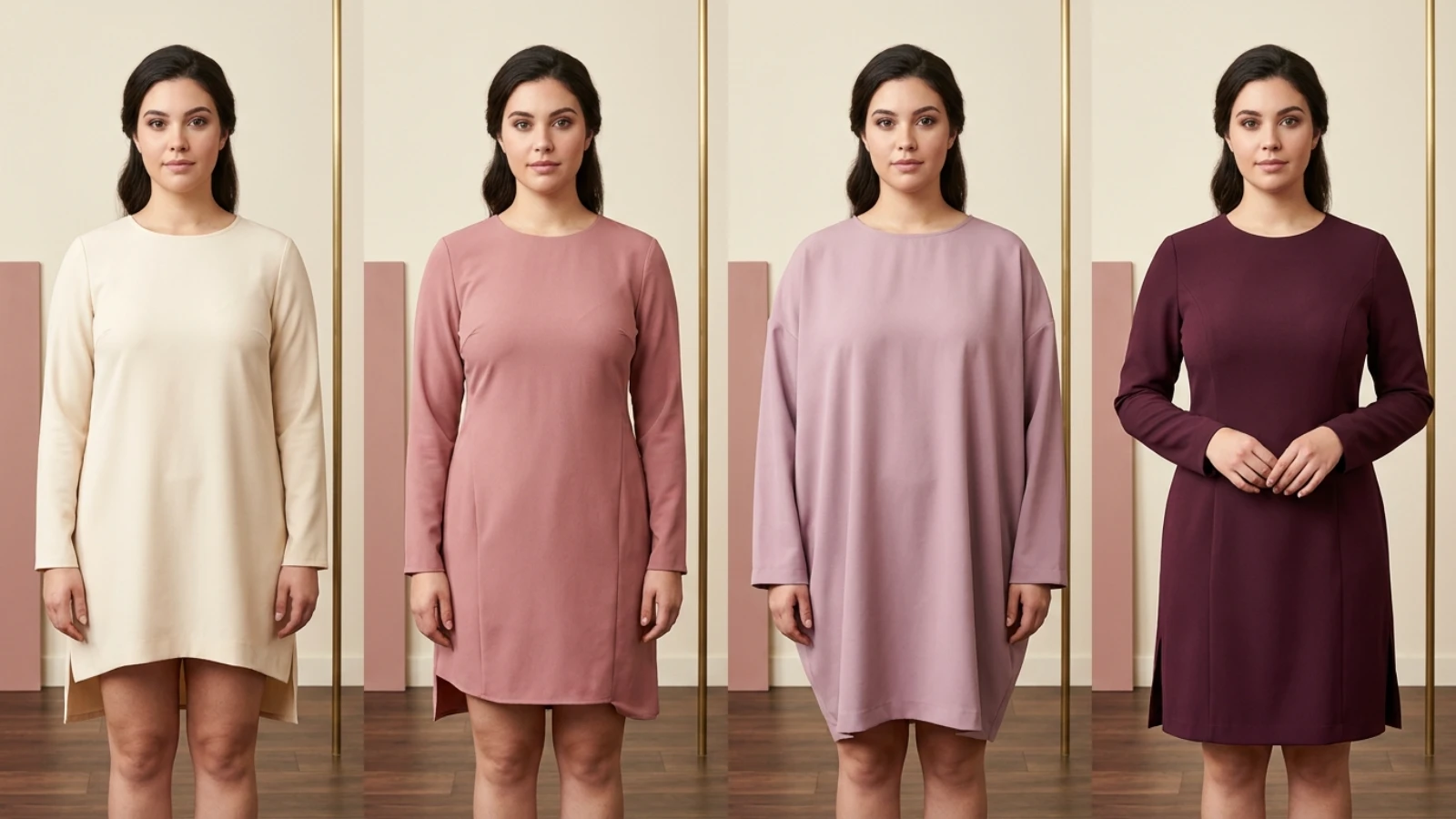
Fit the shoulders, neckline, and bust before judging the lower sweep
A tunic can appear forgiving because the lower body is wide, yet its shoulder and chest block may still be narrow. The shoulder seam determines sleeve rotation, neckline position, armhole height, and where darts or yokes begin. If bust tension pulls the garment forward, the back neckline may rise, the shoulder seam may roll backward, and the front hem may shorten.
Neckline stability
A V, split neck, open collar, scoop, or controlled wrap can create visual breathing room, but it must lie flat and cover the planned bra. A very deep opening may spread farther when seated. High necklines can work when there is enough bust ease and vertical length; the problem is strain, not the existence of fabric above the bust. Compare options with the best necklines guide.
Darts and princess seams
A side bust dart should point toward the fullest point and end before it rather than finishing directly on it. Princess seams need their curve at the wearer’s actual bust height and width. Too little shape produces diagonal drag lines; too much or misplaced shape creates empty fabric. These are pattern issues, so sizing up may move the entire shoulder and armhole before fixing the curve.
Buttons, collars, and yokes
A shirt tunic needs close practical button spacing and reinforcement along the placket. Look for a button near the fullest bust line or a discreet internal fastening. The collar should remain balanced rather than being pulled open by chest strain. A back yoke can support fluid fabric and add upper movement, but deep gathers directly behind the bust may create unwanted bulk.
Sleeves and armholes
Long tunics are often worn as layering pieces, so bicep width and armhole depth matter. A low oversized armhole can expose a bra from the side and pull the whole top when layered under a jacket. A high armhole can improve reach when correctly shaped, but it must not cut into the front of the underarm. Test forward reach and a self-hug rather than measuring only sleeve length.
The best tunic tops keep this upper framework stable before the eye reaches the longer hem. If the shoulder, sleeve, or neckline moves under ordinary reach, extra length below cannot restore balanced fit.
How to find the best tunic tops online
Start with a tunic you already own—or a long blouse whose upper fit you like. Lay it flat without stretching. Record finished chest width, shoulder width, front and back length, armhole depth, bicep, hip width, sweep, and slit height. Note where the garment lands on your body and whether its front lifts. These reference dimensions are more useful than copying a size label across brands.
A reliable shortlist of the best tunic tops begins with comparable garment data. Model photography can show the design, but the best tunic tops for a large bust need measurements that explain how the same design will travel across a different bust, torso, hip, and height.
- Choose the planned foundation and bottoms. Bra shape changes projection, while waistband height changes how much tunic length and slit coverage you need.
- Read the size-specific chart. Separate body measurements from finished garment measurements and identify any stated ease.
- Verify chest and shaping. Look for darts, princess seams, stretch direction, a wrap panel, gathers, or another credible source of projection room.
- Verify the lower body. Check hip width, hem sweep, length, vent or slit position, pockets, and whether the back is intentionally longer.
- Inspect every view. Front-only photos do not reveal side-seam rotation, back pooling, slit depth, or a shorter front under bust tension.
- Confirm materials and care. Use the exact fiber, lining, trim, and care disclosures instead of interpreting “soft” or “premium” as measurable performance.
- Read current returns. Tunic fit is multi-point; a return-friendly trial is valuable when finished dimensions are incomplete.
| Listing evidence | What it helps predict | Warning sign | Question to ask |
|---|---|---|---|
| Finished chest width | Bust ease before stretch | Only generic body chart | Is this measured flat by size? |
| Front and back length | Coverage after bust projection | One length without method | From which shoulder point? |
| Hip width and sweep | Whether the lower body can hang | Chest shown but hip omitted | What width is measured at hem? |
| Side-slit height | Movement and coverage | Slits hidden in photos | How far above the hem do they begin? |
| Darts, seams, placket | Real bust architecture | “Curvy fit” without construction | Where are shaping and closures placed? |
| Fabric and lining | Opacity, care, and likely drape | Vague “luxury blend” | What are shell and lining percentages? |
| Return conditions | Trial feasibility | Restocking or final sale unclear | What tags and packaging are required? |
The U.S. Federal Trade Commission explains core textile-label disclosures in its textile and wool labeling guidance and care-instruction responsibilities in its Care Labeling Rule guidance. Those sources help interpret labels; they do not predict whether a specific tunic will drape well, remain opaque, or fit a fuller bust.
The best tunic tops remain candidates only after the material, shaping, vertical dimensions, lower sweep, and return conditions support the intended use. Missing evidence should reduce certainty rather than be replaced with marketing language.
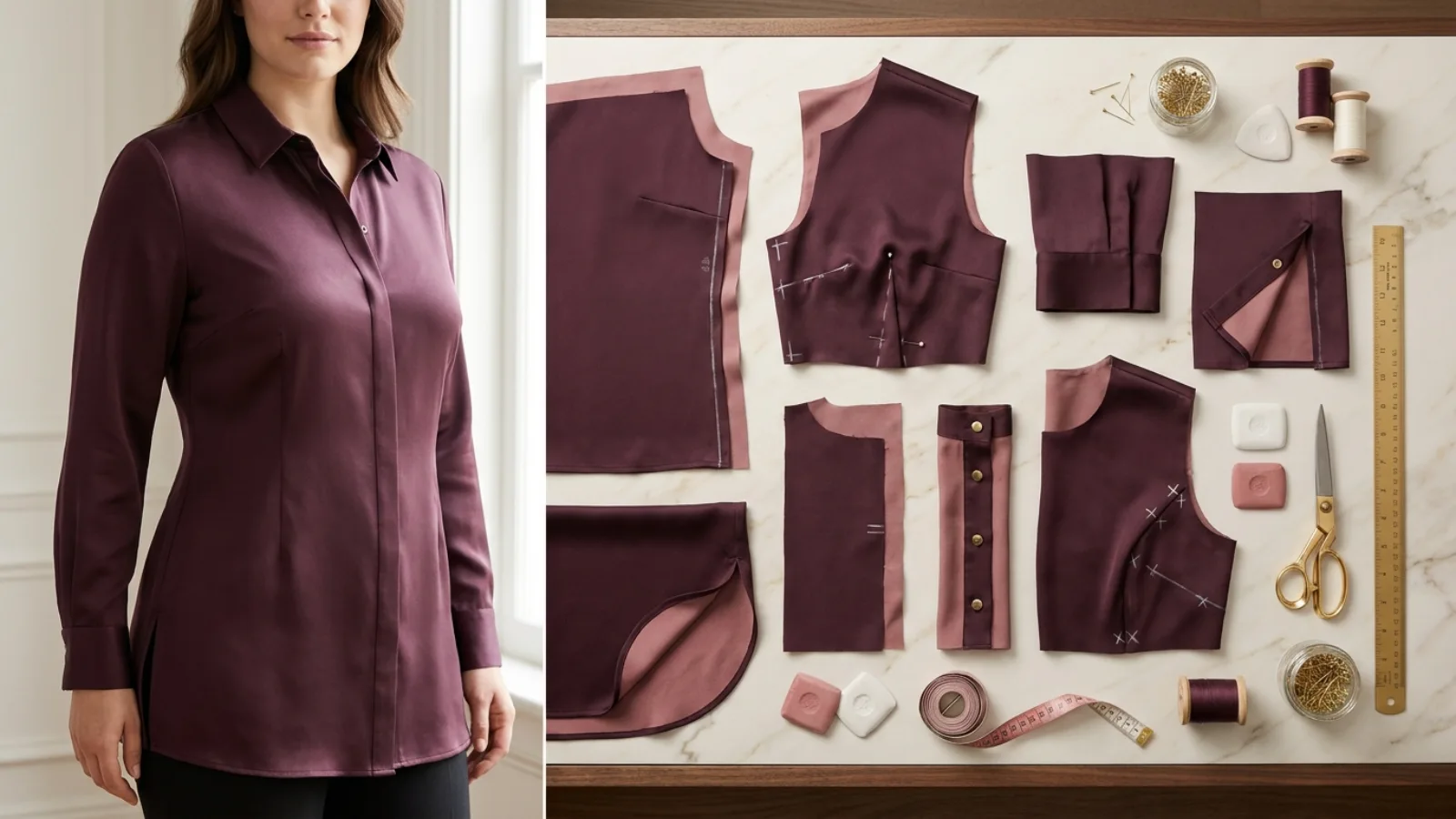
A five-position trial before keeping a tunic
The best tunic tops stay intentional outside a front-facing mirror pose. Keep tags attached and follow the retailer’s current return terms. Wear the planned bra and bottoms because a different cup shape, waistband, or pocket can change the way the tunic hangs.
1. Neutral standing
Let the garment settle without pulling it down. Check shoulders, neckline, armholes, bust shaping, placket, side seams, front and back hem, hip clearance, and slit position. Photograph the side if useful; it reveals front lift and seam rotation more clearly than repeatedly looking down.
2. Seated position
Sit upright and then relax. The tunic should not choke at the neckline, spread at the bust, bunch heavily above the hip, or expose more through the side slit than intended. Check whether pockets become bulky under the body and whether the front hem remains long enough over the waistband.
3. Reach and self-hug
Reach forward and overhead, then gently hug yourself. The shoulders and armholes should allow movement without pulling the entire front upward. Buttons should remain closed, the neckline should return, and sleeve cuffs should not drag the shoulder seam toward the arm.
4. Walk and take a step
Walk normally and take a step up. A straight tunic needs enough hip and seat space or slits to permit stride. Watch for the hem catching on the seat, the back climbing, or the side seams twisting. Fabric should return close to its initial position rather than requiring a downward tug.
5. Add the planned layer
Try the cardigan, blazer, coat, scarf, or belt you expect to wear. Sleeve and shoulder bulk should remain comfortable. A long cardigan can catch a wide tunic hem, while a fitted jacket may compress the bust and make the tunic placket strain even when it worked alone.
The best tunic tops preserve coverage, line, and mobility across this sequence. A style that needs constant smoothing may not suit the planned activity or fabric pairing.
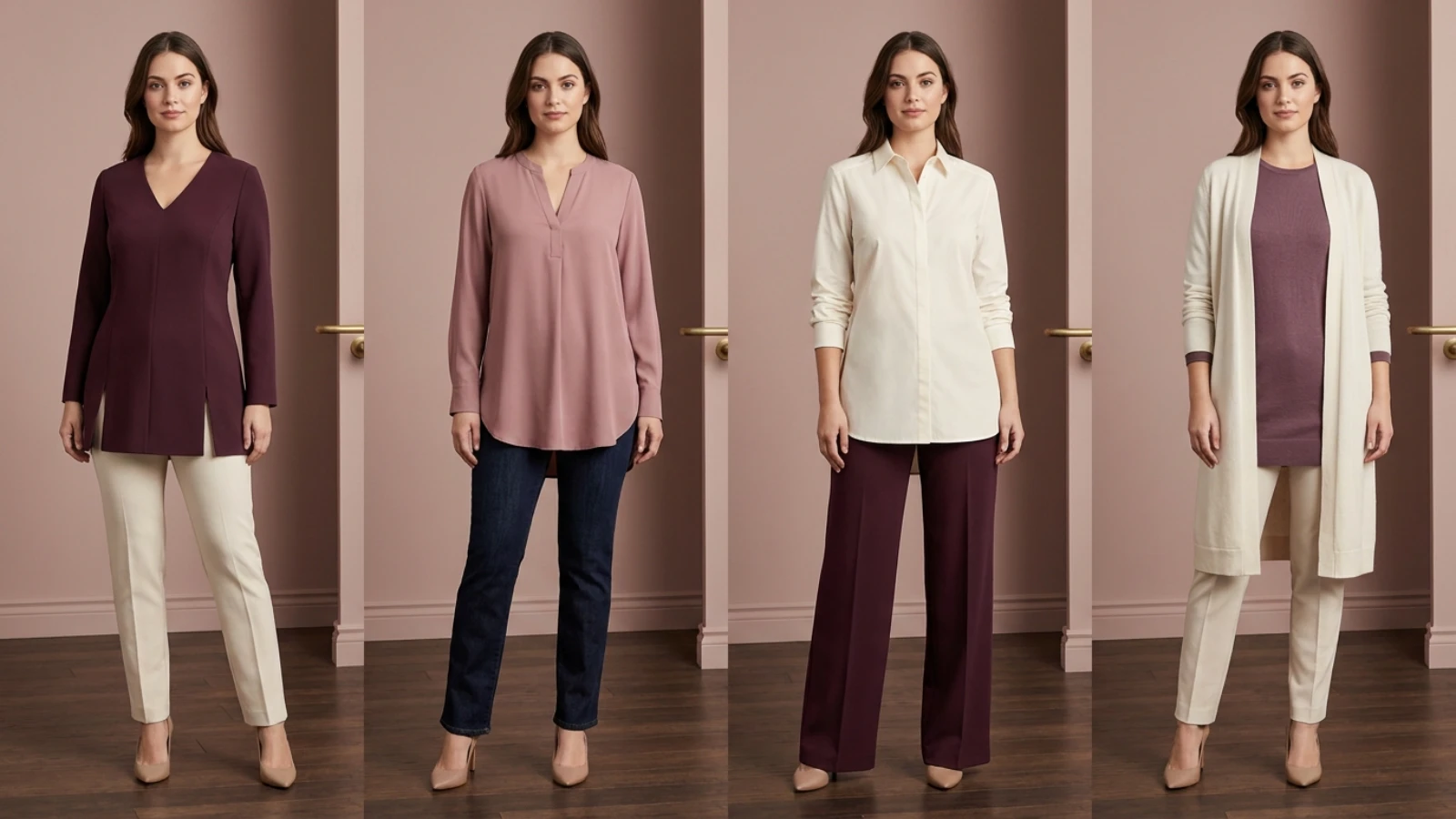
Common tunic fit problems and what they mean
The best tunic tops distribute room through the correct zones rather than adding uncontrolled width everywhere. Use the full symptom pattern to decide whether to change size, length, shaping, fabric, or silhouette.
| What you see | Likely cause | Better next test | Do not assume |
|---|---|---|---|
| Front hem lifts sharply | Insufficient bust volume or front length | More shaping and measured center front | A longer back solves the front |
| Side seams pull forward | Bust or front-body width is too small | Fuller front block or useful dart | Hip width is the only issue |
| Shoulders fall too wide | Sized up to obtain chest room | Shoulder-correct fuller-bust cut | Oversized means correctly fitted |
| Placket gaps at bust | Button spacing, ease, or shaping failure | Reinforced close placket and dart | Fashion tape creates volume |
| Fabric tents from bust | Rigid cloth or flare begins too high | Fluid drape or lower shaping point | More total width adds definition |
| Hem catches on hips | Insufficient hip width, sweep, or slit | A-line body or lower side vents | Pulling the tunic down is a fix |
| Side slit exposes waistband | Slit too high after front lift | Lower slit and longer side length | Model coverage predicts yours |
| Back pools below neck | Front pull, long upper back, or poor shoulder | Correct bust room and upper block | Back fabric should be pinched first |
When sizing up helps
Try the next size when the chest strains, the placket spreads, the fabric turns sheer, armholes cut, or the hip and seat restrict movement. Then recheck shoulders, neckline, sleeve position, and overall sweep. If those become uncontrolled while the bust still pulls, the pattern distribution is wrong; a different bust block is more useful than another size.
When sizing down helps
A smaller size can help only when the current tunic has genuine excess through shoulders, neckline, upper back, bust, and lower body. Do not size down merely to remove a tent line if the chest already shows strain. The stronger next test may be a fabric with more vertical drape, a lower flare point, or deliberate waist shaping.
When a different tunic is the answer
Misplaced princess seams, a slit that begins above the needed coverage point, a collar pulled open by the bust, or a hem that catches in every size are pattern-level issues. The best tunic tops should fit before a belt, partial tuck, or shapewear is used to change the appearance.
What a tailor can improve—and what must be purchased correctly
Tunics offer more alteration options than bonded or seamless garments, especially when they have conventional seams and enough allowance. Even so, changing one area can affect length, slit position, pocket placement, and hem balance.
- Often manageable: shortening sleeves, narrowing a very wide lower body, reducing pocket bulk, lowering a slit by closing part of it, adding an internal placket snap, or refining hem length.
- Possible with enough allowance: adding modest side-seam room, reshaping a waist, adjusting darts, narrowing shoulders, or changing a collar and neckline after evaluating the whole upper block.
- Usually poor value: creating major bust projection in a flat front, relocating multiple princess seams, extending a front that is already too short, or rebuilding an entire set-in sleeve and armhole.
Use the large-bust tailoring guide to separate small refinements from pattern reconstruction. For a button-front tunic, the button-gaping guide explains why adding a hidden snap can secure an already adequate fit but cannot replace missing bust room.
Style tunic proportions without using rules as fit fixes
The best tunic tops provide a stable base, after which styling can change emphasis. A belt, tuck, necklace, scarf, cardigan, or bottom should express the outfit rather than conceal severe pulling or missing length.
With slim trousers or leggings
A full-hip or upper-thigh tunic can balance slim bottoms when the fabric has enough body not to cling to every layer. Confirm coverage while seated and bending, especially if side slits are deep. A straight tunic needs enough seat room; an A-line shape often permits more stride without requiring extreme width at the chest.
With straight or wide-leg trousers
Use a tunic with controlled sweep, a more defined shoulder, or a shorter high-hip length so both top and bottom do not compete for unlimited volume. A partial tuck can reveal the waistband, but test whether the front fabric bunches because of excess length or because the chest is pulling it upward.
With jeans
Split-neck, shirt, jersey, and sweater tunics all work with denim. Rigid denim can catch a long hem at the hip, so check walking and sitting. A curved shirttail creates visual movement, while a straight hem provides a stronger horizontal line. Neither is universally more flattering; the correct length and sweep matter more.
Under cardigans and jackets
A long open cardigan can echo tunic length, while a shorter jacket can define the upper frame. Check sleeve bulk, hem friction, and whether the outer layer pushes the tunic neckline or placket out of place. The large-bust layering guide provides additional proportion and fabric combinations.
With belts
A self-belt or separate belt can add definition when the tunic has enough bust and back room. Place it where it stays level, not automatically at the narrowest visible point. If belting creates large fabric shelves above the bust or pulls the back hem up, the tunic may have too much unstructured volume or the belt position may not match the pattern.
For petite and tall frames
Petite shoppers may need shorter front/back lengths, higher slit placement relative to total length, narrower shoulders, and less sweep. Tall shoppers may need added torso and sleeve length, lower pocket placement, and slits that remain below the needed coverage line. The garment’s finished dimensions are more useful than assuming a standard tunic length fits every height.
Care, cost per wear, and the keep-or-return decision
The best tunic tops for a large bust keep their upper shape and lower hang after care. Follow the disclosed label, close buttons or zips as instructed, empty pockets, and avoid heat when the label warns that it may affect elastane, knit recovery, bonding, or trims. Drying a heavy long knit on a hanger can stretch shoulders and length; reshaping flat may be more suitable when the label permits.
After laundering, inspect neckline binding, shoulder seams, darts, princess seams, placket, pocket corners, side slits, and hem. Compare the front and back lengths with the original measurements if dimensional change matters. Steam or press only at a compatible temperature and protect crepe, viscose, embellishment, and synthetic surfaces according to the care instructions.
Calculate value from realistic combinations. Count compatible bras, bottoms, layers, seasons, activities, and care effort. A tunic that works with three planned outfits, stays stable when seated, and returns to shape may provide better value than a heavily discounted style that requires a new foundation, constant pressing, or repeated adjustment.
Final buyer checklist
The best tunic tops pass this full checklist instead of succeeding only in a front-view photograph.
- Shoulders, neckline, armholes, sleeves, and planned bra work together.
- The bust receives shaped room without sheerness, placket spread, or severe drag lines.
- Center-front length remains useful after the fabric travels over projection.
- Hip width, seat room, and hem sweep allow sitting and walking.
- Side slits begin below the intended coverage point and return after movement.
- Fabric weight, opacity, drape, recovery, static, and layering friction suit the cut.
- Pockets, ties, collars, and embellishment remain balanced rather than pulling the front.
- Measurements, materials, care, returns, availability, and affiliate disclosure are verified.
Frequently asked questions
What tunic style is best for a large bust?
A shaped V-neck, split-neck, or softly structured shirt tunic is a dependable starting point when it has correct shoulder placement, enough bust projection room, controlled armholes, a front length that accounts for bust lift, and adequate hip clearance. Princess seams, useful darts, a restrained A-line body, or a true wrap panel can shape the upper body without forcing the entire garment to be oversized.
How long should a tunic be for a fuller bust?
The useful length depends on torso height, bust projection, hip shape, planned bottoms, and the look you want. Measure the finished center-front, center-back, and side lengths on the garment rather than relying only on a label such as tunic length. The hem should reach its intended point after the fabric travels over the bust, remain reasonably balanced from the side, and allow sitting and walking without excessive bunching.
Should I size up in a tunic top for a large bust?
Size up when the bust shows horizontal strain, the front placket spreads, armholes cut, side seams pull forward, or the fabric becomes sheer. Recheck the shoulders, neckline, sleeve position, and hip area in the larger size. If those become too loose while the bust still pulls, choose a fuller-bust pattern, more effective shaping, a stretchier stable fabric, or a different tunic rather than continuing to size up.
Are oversized tunics flattering on a large bust?
An oversized tunic can be comfortable and stylish, but extra width alone does not guarantee balanced fit. The shoulders and neckline still need control, while the fabric should fall from the bust without forming a rigid tent or collecting heavily at the front. A fluid fabric, deliberate shoulder line, useful side slits, and enough but not unlimited sweep usually create a more intentional result.
What neckline works best on a fuller-bust tunic?
V-necks, split necks, open collars, soft scoop necks, and controlled wrap necklines often provide useful visual and physical space. The best choice is the one that stays stable, covers the planned bra, and works with the garment’s bust shaping. A high neck can also work when the fabric drapes cleanly and the shoulder and bust fit are correct; neckline shape is not a substitute for adequate garment room.
Can a tunic work on a petite frame with a large bust?
Yes. Look for petite or shorter tunic lengths, controlled sweep, side slits that begin below the fullest bust area, sleeves that end intentionally, and a shoulder line that is not excessively dropped. Compare center-front and center-back measurements with a top you already like. A partial tuck, open neckline, or tonal bottom can adjust proportion, but the garment should fit before styling techniques are added.
Which fabric is best for tunic tops for a large bust?
Fluid crepe, soft woven viscose, stable stretch poplin, medium-weight jersey, compact rib, and fine twill can all work when their structure matches the cut. Useful qualities include opacity over the fullest point, enough recovery or drape, low static, controlled cling, and a hem that hangs rather than flips. Fiber percentages alone do not prove the finished garment’s behavior.
What measurements should I check when buying a tunic online?
Check finished chest width, shoulder width, center-front and center-back length, neckline depth, armhole depth, sleeve and bicep width, waist and hip width, sweep, side-slit height, button spacing, pocket placement, fabric composition, lining, and stretch. Compare those dimensions with a tunic or long top that fits, then confirm how the retailer measured each point and read the current return conditions.