Best Bodysuits for a Large Bust
A construction-first guide to bust room, bra-compatible necklines, vertical torso length, dependable fabric recovery, comfortable gussets, smooth leg openings, movement, and evidence-led online shopping.
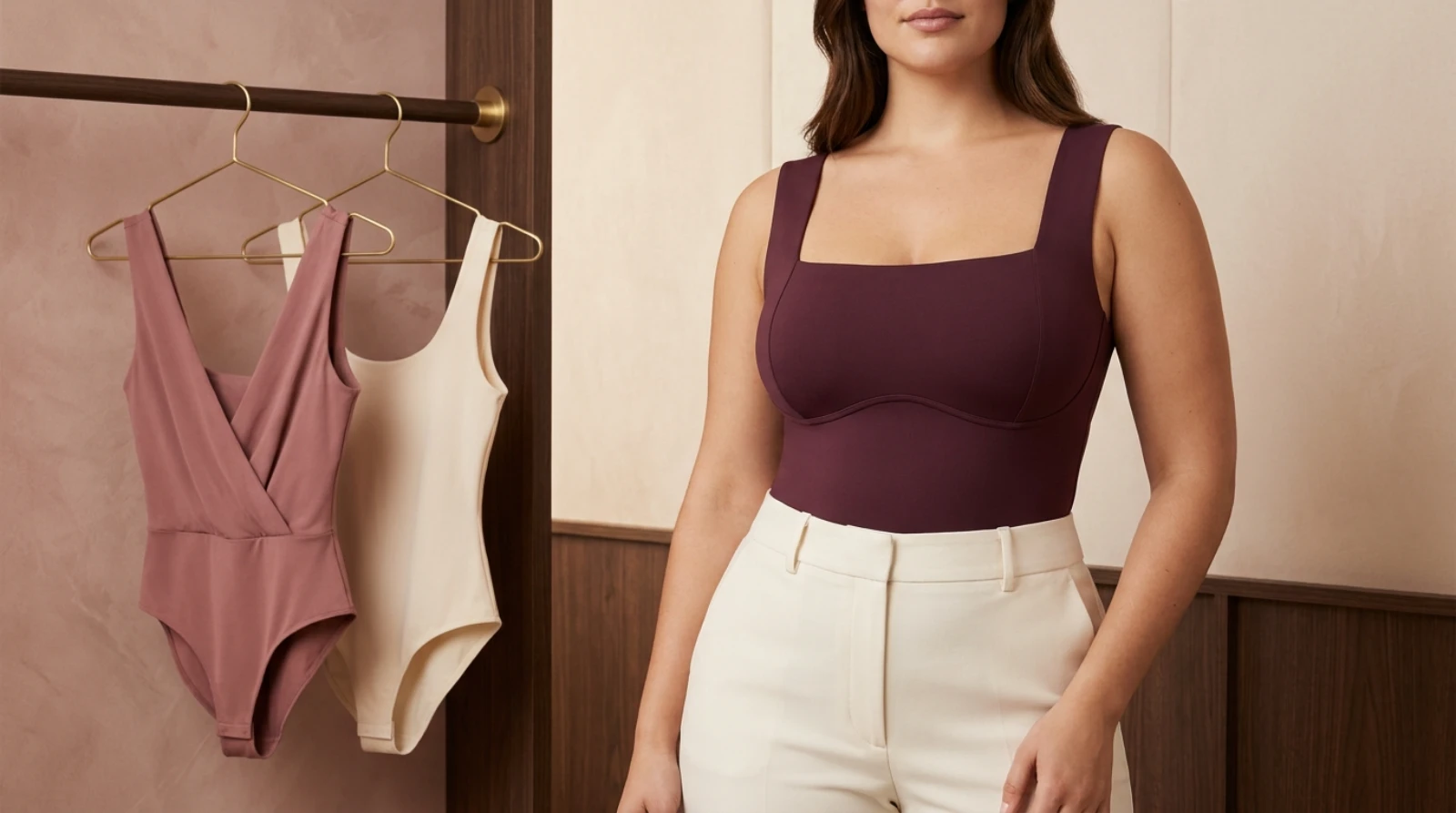
The best bodysuits for a large bust must solve two connected fit problems at once. The upper section behaves like a close-fitting top: it needs enough volume over the breasts, stable neckline and armhole edges, suitable bra coverage, opacity, and a front length that does not climb. The lower section anchors that top through the hips and gusset. If the shoulder-to-gusset length is too short, the closure pulls downward on the neckline and upward on the leg openings; bust projection consumes additional vertical length, so a size that looks adequate on a flat chart can still feel sharply tensioned in wear. If the bodysuit is too long, the back waist may wrinkle, the gusset may shift, and the neckline can lose stability. Compression is not the same as support, and a shelf panel is not automatically a bra replacement. This guide compares six useful constructions, shows how to evaluate torso length and lower-body anchoring, and builds an online-shopping workflow around finished garment evidence. Product modules remain private until the current item, exact measurements, materials, closures, care, returns, availability, and affiliate disclosure are verified. No Amazon product name, ASIN, price, rating, review, or personal wear claim is invented.
The 60-second bodysuit fit test
Wear the planned bra and underwear, close the gusset without stretching the garment by hand, then assess the front, side, back, and lower edges.
- The neckline lies flat without being pulled downward, spread open, or lifted by bust tension.
- The straps and armholes cover the planned foundation and do not cut into the front of the underarm.
- The bust has enough room; fabric remains opaque and seams land where the design intends.
- The waist stays smooth enough for the chosen outfit without excessive back pooling or strong vertical pull.
- The gusset closes easily, lies centered, and does not press painfully when sitting.
- Leg openings remain comfortable and do not ride sharply upward or create harsh pressure lines.
- Side seams remain close to vertical while the upper edge returns after reaching and turning.
- You can use the closure and move normally without repeatedly adjusting the neckline or lower edge.
Best bodysuits by fit architecture
The best bodysuits for a large bust coordinate neckline, bust shaping, torso length, hip width, leg opening, and gusset rather than treating the lower anchor as an afterthought. Start with the architecture that matches the planned bra, outfit, and amount of structure.
Bra-friendly scoop-neck bodysuit
Best for: everyday layering and straightforward foundation coverage. Look for substantial adjustable straps, a scoop that stays above the cup edge, high armholes, medium-weight jersey, and a double-layer front. The trade-off is simplicity: an unshaped tube-like front may become tight across the bust while remaining loose at the waist.
Controlled wrap-front bodysuit
Best for: adjustable-looking neckline depth and visual shaping. The crossover should overlap beyond the center line, remain attached or reinforced at the side, and sit over the planned bra without collapsing. The trade-off is movement: a loose faux wrap can gape, while a tight crossover can divide or flatten the bust.
Bust-seamed square-neck bodysuit
Best for: defined neckline geometry and more deliberate projection room. Curved seams, darts, or princess panels should align with the wearer rather than cutting across breast tissue. The trade-off is precision: decorative cup seams designed for a smaller bust volume may sit too low or too narrow even when the body size is correct.
Long-torso rib bodysuit
Best for: shoppers who consistently feel upward gusset pull or downward neckline drag. Compact rib can adapt to projection while a longer rise reduces vertical tension. The trade-off is growth: weak ribs may widen, become sheer, show bra texture, or remain stretched at the bust after sitting.
Shirt-style woven bodysuit
Best for: a reliably tucked button-down look. Choose bust darts or princess seams, close button spacing, a stable placket, a knit or stretch lower brief, and sufficient front bodice length. The trade-off is complexity: both placket gaping and gusset tension must be solved, and the woven shell usually has less tolerance for size error.
Double-layer occasion bodysuit
Best for: smooth formal outfits and controlled opacity. A lined square, V, asymmetric, or draped neckline can provide a polished surface when the inner and outer layers recover together. The trade-off is heat and pressure: doubled fabric, grip, mesh, or internal panels can feel restrictive and should not be marketed as universal support.
| Wardrobe need | Strong starting point | Evidence to verify | Main trade-off |
|---|---|---|---|
| Everyday base | Bra-friendly scoop neck | Straps, armholes, opacity, recovery | May lack bust shaping |
| Adjustable visual neckline | Controlled wrap front | Overlap depth and side anchoring | Can gape or compress |
| Defined upper shape | Bust-seamed square neck | Seam position and cup volume | Needs precise proportions |
| More vertical room | Long-torso rib | Shoulder-to-gusset length | Rib may relax or show texture |
| Tucked shirt finish | Woven shirt bodysuit | Darts, placket, hybrid lower brief | Two fit systems to solve |
| Formal smoothness | Double-layer occasion style | Lining, edge stability, closure | May feel warm or restrictive |
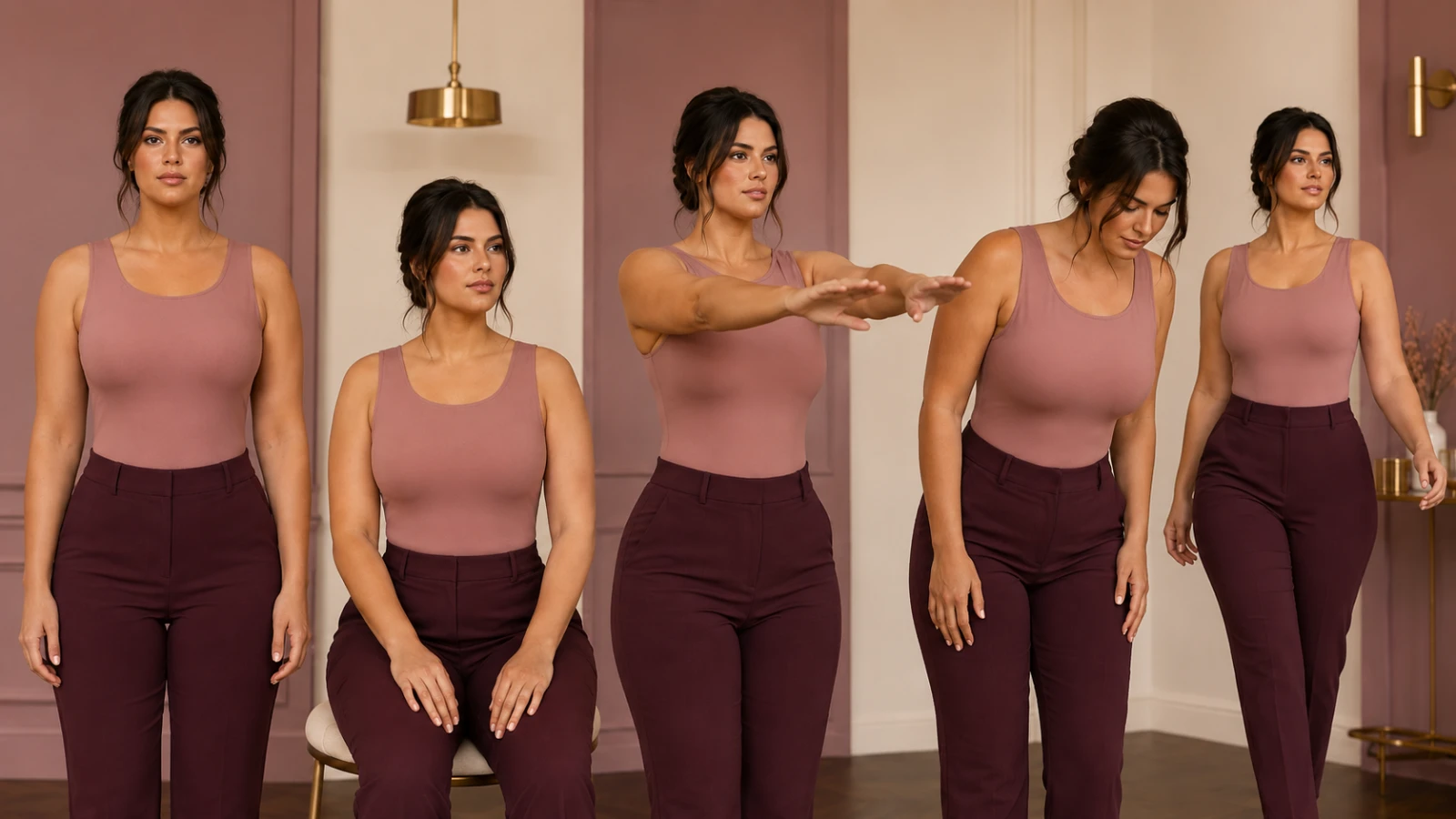
Torso length, rise, gusset, and leg-opening geometry
Horizontal chest stretch is only one dimension. The best bodysuits for a large bust must also span from shoulder to crotch while traveling over bust projection and through the waist and hip. That route is longer than a straight front measurement, which is why a fuller bust can create vertical tension even when the brand’s standard torso category normally works.
Read the direction of pull
Short vertical length often shows as a neckline dragged downward, straps digging, armholes pulled long, underbust fabric creeping upward, strong vertical lines through the abdomen, snaps that require force, or leg openings cutting upward. A long upper body section behaves differently: the neckline may gape, shoulder straps may loosen, fabric can pool at the back waist, and the gusset can shift rather than lie centered. Both failures may be misread as “wrong size,” but they require opposite corrections.
Separate upper length from rise
Two bodysuits can share the same total shoulder-to-gusset length while distributing it differently. One may allocate more length above the waist for bust and torso; another may have a longer brief rise. Compare neckline-to-waist and waist-to-gusset proportions when available. Adjustable straps change upper length modestly, but shortening them to correct gaping also lifts the armholes and bust seams. A long-torso option is useful only when its added length occurs where the wearer needs it.
Inspect the gusset as a functional component
Check width, length, lining, seam bulk, closure direction, and snap count. A narrow gusset can twist; a very wide one may bunch for some bodies. Metal or plastic snaps should close securely without excessive force and should be covered or positioned so their edges do not create painful pressure. The closure must also be reachable in the context of the wearer’s mobility and planned outfit. A product photo showing snaps proves their presence, not comfort or accessibility.
Choose back coverage deliberately
Thong, Brazilian, brief, boyshort, and laser-cut backs create different pressure and line patterns. A thong is not automatically the best answer under every skirt or trouser. Thin outer fabrics may reveal gusset seams, leg binding, or snap bulk even when the back edge is minimal. Comfort, movement, laundry routine, outer-garment weight, and personal preference should control this decision.
Among the best bodysuits, lower coverage is a deliberate functional choice rather than a hidden detail. A retailer should disclose enough imagery and construction information for the buyer to compare comfort and outfit compatibility before ordering.
Fabric recovery matters more than maximum stretch
The best bodysuits use stretch as controlled mobility, not as permission to make the pattern smaller. A fabric can stretch far enough to close yet still create constant vertical tension, bust compression, transparency, or edge pressure. Evaluate weight, direction, recovery, surface, lining, and seam behavior together.
Test realistic stretch, not an extreme pull
Hold a swatch or hidden section near the distance it will travel on the body. Check whether the color pales, the knit opens, the rib spreads, or the surface becomes shiny. Release it and see whether it returns quickly. Then repeat the test after warming the fabric in the hands. The relevant question is not “does this stretch?” but “does this remain opaque, stable, and comfortable at the amount of stretch the finished garment requires?”
Understand stretch direction
Two-way stretch usually travels more across the body than vertically. Four-way stretch can offer more sitting and torso mobility, but the label is not a performance guarantee. Strong vertical elasticity may help the gusset close while also encouraging the neckline to drop if recovery is weak. Stable binding, lining, elastic, or facing may be needed at upper and lower edges even when the body fabric is very flexible.
Compression does not replace bust architecture
A compressive panel may reduce motion for some wearers, but it can also flatten, push tissue toward the armholes, create a single compressed shape, or make breathing and sitting uncomfortable. Built-in cups can be too narrow, shallow, low, or widely spaced. Treat removable pads, shelf bands, molded areas, and mesh panels as construction features to assess—not proof that the garment supports every larger cup size without a bra.
Watch the high-friction zones
The best bodysuits remain usable at their high-friction zones. Pilling and wear often develop beneath the arms, along side seams, where waistbands rub, at the inner leg opening, and around the gusset closure. A soft brushed surface may feel pleasant but catch on outer layers. A slick performance knit may layer smoothly but show heat or shine differently. Use the brand’s disclosed care instructions and inspect return restrictions before laundering.
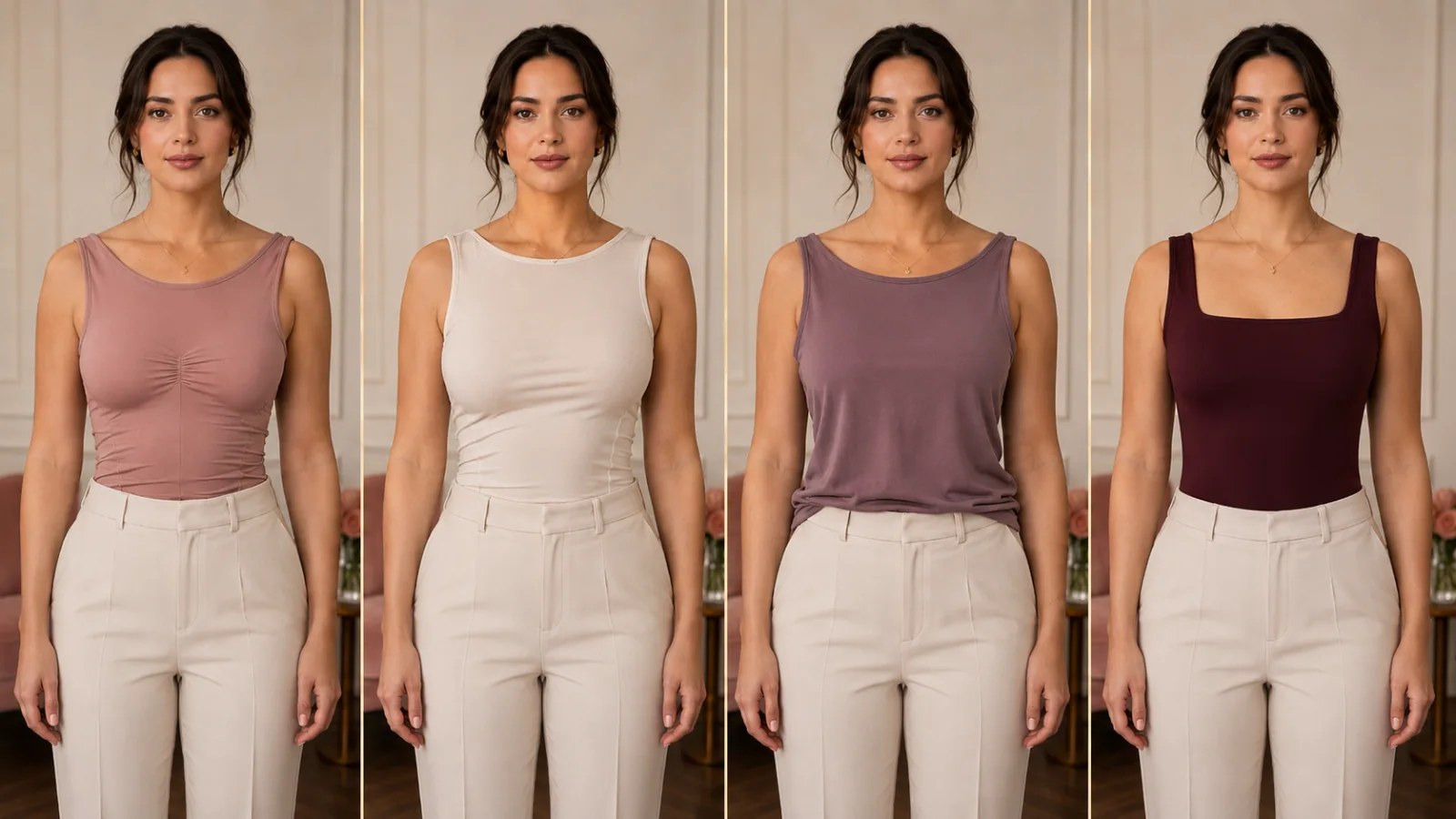
Bra compatibility, neckline control, and bust shaping
The best bodysuits coordinate with the foundation the wearer actually plans to use. Choose that bra before deciding whether a bodysuit is bra-friendly. A listing may show a low neckline on one model and still cover a different bra on another, or the reverse. Bust height, cup edge, bridge width, strap spacing, side-wing height, and back band all change the result.
Map four coverage boundaries
Check the front neckline against the top of the cup and center gore, the shoulder straps against bra straps, the armholes against cup and side wing, and the back neckline against the band. Broad bodysuit straps can still sit too far outward; narrow straps can conceal a centered bra strap if their paths match. High armholes usually improve side coverage, but they need enough front-underarm shaping to avoid cutting.
Look for volume, not just stretch
Darts, princess seams, underbust seams, gathered panels, controlled wrap fronts, and contoured lining can create three-dimensional room. A flat front relies on fabric extension alone. That can be comfortable in a resilient jersey, but it may also shift the waist upward and consume torso length. If a seam is presented as a cup, compare its width, depth, and position rather than assuming “bustier” styling equals fuller-bust capacity.
Know when a shelf panel is useful
A shelf panel can add coverage, keep removable pads in place, or provide light containment. Its elastic must sit below breast tissue rather than cutting across it. For many fuller-bust wearers, the panel works best over a separate bra or when gentle coverage rather than independent support is desired. Product descriptions should distinguish a shelf, lining, removable padding, molded cups, underwire, and true bra-sized construction.
The best bodysuits describe these upper-body features precisely enough that a shopper can separate coverage, shaping, and support instead of treating them as interchangeable promises.
For neckline-specific decisions, use the best necklines for a large bust guide. If the bodysuit behaves more like a sleeveless base, compare its strap and armhole evidence with the tank-top buying guide and the camisole fit guide.
How to buy a bodysuit online without guessing
The best bodysuits for a large bust are easier to identify when the listing gives size-specific garment evidence. Model styling, generic “snatched” claims, and a single stretch percentage cannot tell you whether the bust, torso, hip, and gusset proportions work together.
- Choose the foundation and use: decide whether the bodysuit must cover a regular bra, work alone by choice, sit beneath a blazer, or function as an occasion top.
- Record a successful reference: measure a comfortable bodysuit. If none exists, combine the upper measurements of a fitted top with the rise, hip, and leg-opening comfort of preferred underwear.
- Compare finished chest and waist: use garment measurements where possible. Body-size charts explain the target wearer, not how much ease or compression is built into the item.
- Compare vertical length: prioritize shoulder-to-gusset length, front and back rise, strap adjustment, and long-torso or petite options.
- Map coverage: verify neckline depth, armhole depth, side height, back height, and strap path against the planned bra.
- Inspect lower construction: identify back coverage, leg binding, gusset lining, snap type, closure direction, and seam bulk.
- Read material and care: use disclosed fiber content, lining, stretch direction, and care instructions as evidence without converting them into unsupported performance promises.
- Check returns before ordering: bodysuits may have hygiene-related restrictions, seals, liners, or final-sale terms. Verify the current policy and preserve all required packaging while testing over clean underwear.
| Listing evidence | What it helps predict | Warning sign | Question to ask |
|---|---|---|---|
| Finished chest width | Bust ease or intended compression | Only generic body chart | Is this garment measurement size-specific? |
| Shoulder-to-gusset length | Vertical torso reach | No torso or rise information | Measured relaxed or stretched? |
| Neckline, straps, armholes | Bra compatibility | Only front model image | Can I see front, side, and back? |
| Gusset and snaps | Closure access and seam bulk | Closure not pictured | How wide, lined, and positioned is it? |
| Leg-opening finish | Pressure and visible lines | “Seamless” without construction detail | Bound, elasticated, folded, or raw-cut? |
| Fiber and care label | Material identity and maintenance | Vague “premium fabric” claim | What are shell, lining, and elastic? |
| Return conditions | Trial practicality | Hygiene terms unclear | Must liner and tags remain attached? |
The U.S. Federal Trade Commission explains core textile-label disclosures in its textile and wool labeling guidance and explains care-instruction responsibilities in its Care Labeling Rule guidance. Those sources help interpret disclosed labels; they do not predict whether a specific bodysuit will be opaque, supportive, or comfortable.
The best bodysuits earn a shortlist through compatible measurements, clear construction evidence, and workable returns—not through unsupported adjectives or a model image alone.
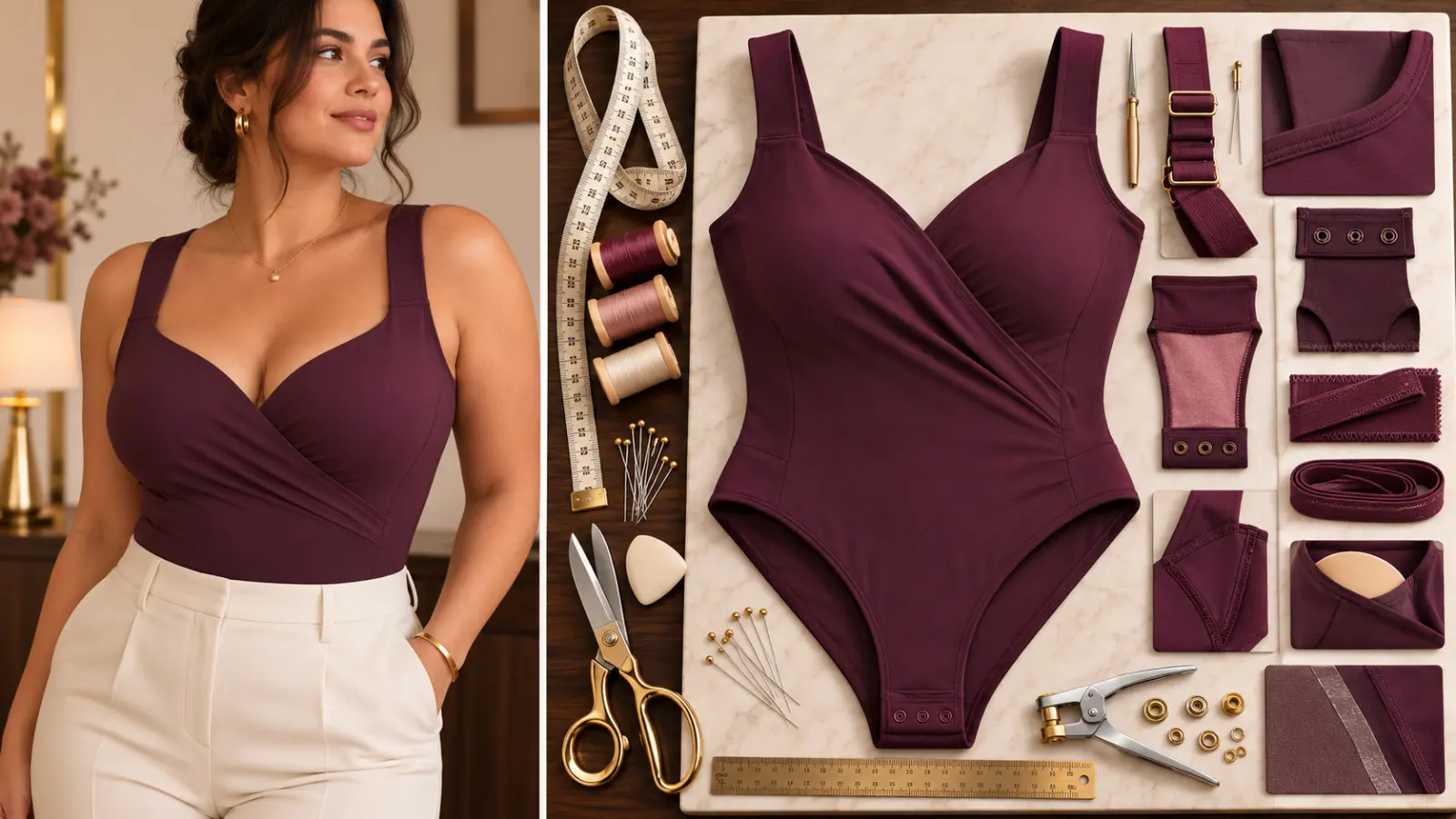
A five-position trial before keeping the bodysuit
The best bodysuits remain stable beyond a mirror-only standing pose. Try the garment over clean underwear with every hygiene liner and tag intact, following the retailer’s current return terms. Wear the planned bra and outer bottom. Give the fabric time to warm, because initial tension may redistribute after several minutes.
1. Neutral standing
Let the garment settle without pulling it down. Check neckline position, strap pressure, armhole coverage, seam placement, opacity, side-seam direction, waist pooling, leg edges, and gusset centering. A smooth front achieved only by sharply tightening straps is not balanced fit.
2. Seated position
Sit upright, then relax against the chair. Notice whether the gusset presses, snaps become prominent, the neckline drops, straps dig, the back pulls down, or leg openings bite. A bodysuit is not successful if it looks controlled while standing but becomes painful during normal seated wear.
3. Reach and rotate
Reach both arms forward and overhead, then turn to each side. The neckline should return, bra coverage should remain intentional, and the lower anchor should not pull the entire upper body downward. Long sleeves need enough shoulder and bicep mobility; sleeveless styles need armhole edges that remain flat.
4. Bend and walk
Bend as the day requires, walk, and take a normal step up. Check whether the back coverage shifts, the leg openings ride, the gusset twists, or the outer trousers catch on the fabric. Test the actual waistband height because a rigid high rise and a thick snap area may interact differently from soft knit bottoms.
5. Use the closure
Practice opening and closing the gusset without straining the upper body. Check whether snaps align naturally and whether fabric edges roll into the mechanism. Accessibility is part of fit. If the garment is only practical with assistance that will not be available, it does not meet the intended use.
The best bodysuits return close to their starting position after this full sequence and remain practical to open and close in the planned outfit.
Common bodysuit fit problems and the evidence behind them
The best bodysuits distribute tension without sacrificing neckline control, opacity, gusset comfort, or leg-opening stability. Use the symptom pattern below to decide whether a size change, torso option, fabric change, or different pattern is the stronger next test.
| What you see or feel | Likely cause | Better next test | Do not assume |
|---|---|---|---|
| Neckline pulled downward | Short torso length, bust tension, or tight gusset | Longer torso plus more bust room | Straps simply need tightening |
| Neckline or armholes gape | Upper body too long, edge lacks recovery, or bust shaping misplaced | Adjustable straps and stable binding | Smaller size fixes every area |
| Fabric sheer over bust | Insufficient ease, light fabric, or low recovery | Higher weight, lining, or shaped front | Darker color guarantees opacity |
| Bust seams sit too low or narrow | Drafted cup volume or position mismatch | Unseamed front or larger bust block | More stretch relocates the seam |
| Back waist pools | Excess upper length or waist mismatch | Shorter torso option or shaped back | Gusset should be pulled tighter |
| Snaps press when sitting | Short rise, bulky closure, or gusset position | Longer rise and flatter closure | Discomfort will always disappear |
| Leg openings cut or ride | Small hip/seat room, tight elastic, or rise mismatch | Different back shape and opening finish | Thong automatically solves lines |
| Outer waistband catches | Surface friction, seam bulk, or length pooling | Smoother fabric and correct vertical fit | Every bodysuit layers invisibly |
When sizing up helps
The best bodysuits should not require extreme stretch merely to close. Try the next size when the chest strains, fabric loses opacity, armholes cut, the gusset requires force, or the hip and leg openings feel small. Recheck neckline security and strap length in the larger size. If the upper edge becomes loose while the crotch still pulls, search for long-torso sizing or a different rise rather than continuing upward indefinitely.
When a different pattern is better
A single size change cannot correct bust seams that miss the bust point, a neckline cut below the planned bra, a gusset that is uncomfortable in every size, or a torso allocation that places extra length in the wrong half. The best bodysuits provide compatible proportions; extreme alteration of a stretch body can change edge tension and closure alignment.
What can be adjusted—and what should change at purchase
The best bodysuits need only minor finishing adjustments, because the closed-loop construction makes alterations more interconnected than on a standard top. Shortening straps may raise a neckline and bust seam, yet it also shortens the total vertical length and lifts the armholes. Adding a hidden modesty stitch can control a wrap overlap, but it does not create bust volume beneath that overlap.
- Often manageable: modest strap shortening, replacing a missing snap, securing a wrap overlap, removing removable pads, or reinforcing a loose edge when enough fabric and comfort already exist.
- Possible for a specialist: replacing gusset snaps, extending a gusset with compatible fabric, adjusting leg elastic, or reshaping a neckline—after checking how the change affects hygiene, stretch, and closure strength.
- Usually poor value: creating major bust volume, moving molded cups, rebuilding low armholes, changing total torso proportion, or converting a heavily bonded seamless body without visible seam allowances.
The large-bust tailoring guide helps separate practical adjustments from pattern-level problems. For a bodysuit designed like a shirt, also diagnose placket tension with the button-gaping guide.
Style a bodysuit around comfort and function
The best bodysuits create an anchored upper line without requiring a visibly tight outfit. Pairing and layering should protect the movement and closure system already tested.
Under tailored trousers
A medium-weight scoop, square, or wrap bodysuit can maintain a clean waistline beneath pleated or flat-front trousers. Check waistband rigidity against snap and gusset bulk while sitting. If the trouser rise presses directly over a thick closure seam, a standard tucked top may be more comfortable even if it needs occasional smoothing.
With denim
Rigid high-rise denim can hold the bodysuit firmly but also increase vertical pressure. Stretch denim allows more movement but may reveal leg-opening lines depending on wash and fabric weight. Test bending, walking, and sitting in the full outfit. A cropped outer layer can add structure without covering the entire anchored waist.
Under jackets and cardigans
A smooth bodysuit is useful under a blazer, cardigan, or overshirt because it reduces lower-edge bulk. Ensure the jacket armhole does not pull the bodysuit sleeve or strap. For additional outfit proportions, use the layering tips for a large bust.
With skirts
A bodysuit can work with slip, A-line, pencil, pleated, and full skirts, but the skirt fabric determines how much seam or leg-edge visibility matters. Thin satin can reveal more lower construction than textured wool or denim. Choose back coverage and binding for the actual skirt rather than following a universal rule.
For events
Formal bodysuits may use drape, mesh, lace, asymmetric necklines, internal panels, or doubled fabric. Confirm that decoration does not replace functional bust room and that the closure remains accessible beneath the event outfit. Bring the exact foundation and lower garment to the final fitting.
Care, cost per wear, and the keep-or-return decision
The best bodysuits for a large bust retain both upper-edge stability and lower closure function. Follow the garment’s disclosed care label. Close snaps before washing if instructed, use a mesh bag when compatible, and avoid high heat when the label warns against it. Heat and aggressive mechanical action can affect elastic, bonded edges, removable pads, grip components, and recovery.
Dry fully before evaluating whether the garment returned to shape. Inspect neckline and armhole binding, bust seams, side seams, leg openings, gusset lining, snaps, and any bonded areas. Alternate garments when possible so elastic can recover between wears. Hygiene and laundering needs may make a theoretically versatile bodysuit less practical than a washable fitted top for some wardrobes.
Calculate value from actual use: number of outfits, compatible foundations, closure convenience, care effort, comfort duration, and whether the garment remains stable through sitting and movement. A slightly higher purchase price can be reasonable when the bodysuit offers size-specific torso options, documented construction, durable edges, and a return process that permits a careful clean trial. A cheap item that remains unworn because the gusset hurts or neckline moves has poor value.
Final buyer checklist
The best bodysuits pass this complete checklist rather than excelling in only one photogenic area.
- The neckline, straps, armholes, and back conceal the planned bra as intended.
- Finished chest space and shaping accommodate projection without sheerness or severe drag.
- Shoulder-to-gusset length and rise allow easy closure and comfortable sitting.
- The gusset is centered, lined as expected, accessible, and not excessively bulky.
- Leg openings and back coverage suit the body, outer garment, and comfort preference.
- Fabric recovers after realistic stretch and maintains opacity at the fullest point.
- Standing, sitting, reaching, bending, walking, and using the closure do not require constant adjustment.
- Materials, care, returns, hygiene conditions, availability, and affiliate disclosure are verified.
Frequently asked questions
What bodysuit style is best for a large bust?
A bodysuit with adjustable or substantial straps, a stable bra-compatible neckline, enough shaped room over the bust, adequate vertical torso length, opaque fabric with strong recovery, comfortable high side coverage, and an accessible gusset closure is the most dependable starting point. A medium-weight stretch jersey bodysuit with bust seaming or a wrap-front design with controlled overlap is often easier to fit than a thin, very low-cut, or heavily compressive style.
Can you wear a bodysuit with a bra?
Yes. Many bodysuits are designed as tops rather than bra replacements and can be worn over a regular, plunge, convertible, or strapless bra when the neckline, straps, armholes, and back conceal that foundation as intended. Choose the bra first, then check coverage from front, side, and back while moving. A built-in shelf or molded panel should not be assumed to provide the support or separation of a well-fitted bra.
Should I size up in a bodysuit for a fuller bust?
Size up when the fabric strains or turns sheer, the neckline pulls down, the armholes cut into the front of the underarm, the cups or seams sit too low, the gusset feels strongly tensioned, or the leg openings bite. If the larger size creates a loose neckline, gaping armholes, excess fabric at the back waist, or a shifting gusset, the issue is likely proportion rather than overall size. Look for more bust shaping, a longer torso option, adjustable straps, or separate top and bottom sizing.
How should a bodysuit fit at the crotch?
The gusset should lie flat and centered without harsh upward pull, twisting, bulky overlap, or a closure pressing painfully when sitting. Snaps should close without force and remain accessible. The leg openings should stay in their intended position without cutting or riding sharply. Because comfort is individual and body proportions vary, test sitting, walking, bending, and using the closure before deciding to keep the garment.
Are thong bodysuits better under fitted clothes?
A thong back can reduce some visible lines, but it is not automatically more comfortable or invisible. Edge thickness, elastic tension, fabric recovery, rise, and the fit of the outer garment all matter. A laser-cut brief, seamless brief, or boyshort-style bodysuit may work better for some wearers. Choose the back shape according to comfort, hygiene preferences, outfit fabric, and the amount of line control actually needed.
How do I stop a bodysuit neckline from gaping?
First check vertical torso length and bust room. A bodysuit that is too long above the bust may gape, while one that is too short can pull the neckline open. Adjustable straps, stable binding, a lined edge, darts, princess seams, or a controlled wrap overlap can improve the fit. Fashion tape may assist a compatible neckline temporarily, but it cannot correct misplaced shaping, inadequate coverage, or strong gusset tension.
Which fabric is best for a large-bust bodysuit?
Medium-weight stretch jersey, compact rib, matte stretch crepe, double-layer knit, and stable performance knit can all work. Useful qualities include four-way comfort where needed, opacity at realistic stretch, quick recovery, smooth neckline binding, low-friction layering, and resistance to bagging at the bust and gusset. Fiber percentages alone do not prove opacity, compression, softness, or recovery in the finished garment.
What measurements should I check when buying a bodysuit online?
Check finished chest width, shoulder-to-gusset length, front and back rise, neckline width and depth, strap width and adjustment range, armhole depth, side height, waist and hip width, leg-opening circumference, gusset width and length, closure type, stretch direction, lining, and back coverage. Compare them with a comfortable bodysuit or with a fitted top and underwear combination, then verify the size-specific chart and return conditions.