Best Peplum Tops for a Large Bust
A fit-first buying guide to bodices with real bust depth, waist seams that stay below breast tissue, flares that begin in the right place, and fabrics that hold their shape without feeling rigid.
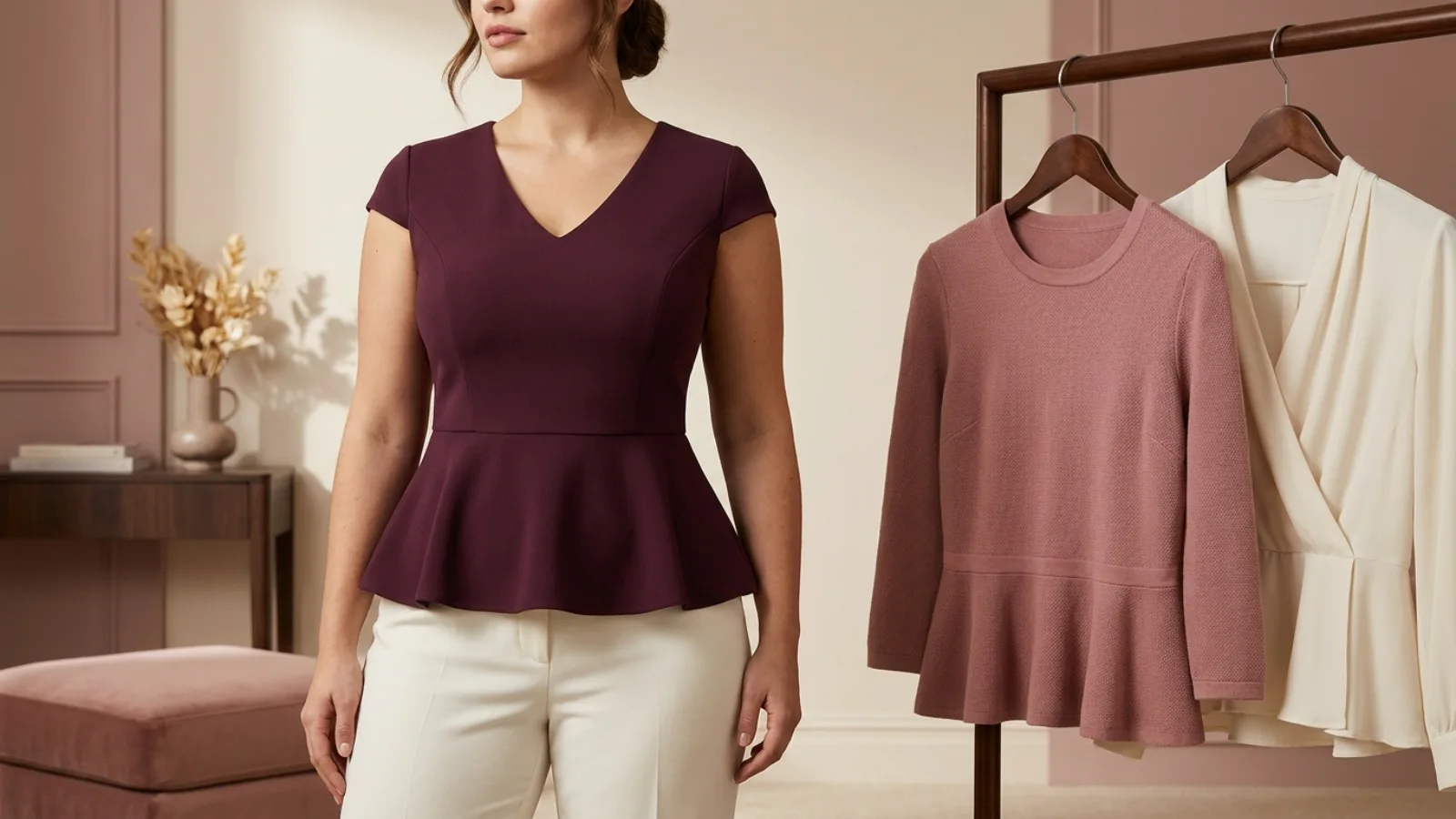
The best peplum tops for a large bust are designed from the bodice down. They provide enough width and forward depth for the bust, position shaping where the body actually projects, and carry sufficient vertical length so the waist seam stays level instead of being pulled into the underbust crease. Only then can the peplum flare do its job. When the upper section is too shallow, a dramatic ruffle does not create balance; it highlights diagonal drag lines, a raised front seam, forward-rotating side seams, or a hem that kicks away from the body. This guide treats the peplum as connected garment engineering rather than a decorative waist frill. It compares six useful constructions, seam placement, flare volume, torso and hip proportion, fabric weight, necklines, bra compatibility, movement, online measurements, alteration limits, care, and realistic cost per wear. Product modules remain empty until a current listing can be verified, so no flattering marketing photograph is mistaken for proof of fit.
The peplum keep-or-return test
Try the top with its intended bra and bottoms, then check these eight points before a sale price affects the decision.
- The shoulder seams sit close to the shoulder points, and the armholes do not cut in or reveal the bra.
- The bust lies inside the shaping rather than above, below, or outside the darts and princess curves.
- The waist seam rests fully below breast tissue and stays approximately level from front to back.
- The bodice has enough front length, so the peplum does not start noticeably higher at center front.
- The side seams remain close to vertical instead of being pulled toward the fullest bust.
- The flare falls away cleanly without collapsing under the bust or catching on the upper hip.
- The fabric remains opaque, recovers after sitting, and does not create shiny strain across the chest.
- You can sit, breathe, reach, and add the intended layer without repeatedly adjusting the seam or neckline.
Best peplum tops by type and purpose
Peplum describes a fitted or shaped upper section joined to a flared lower section, but that broad definition includes very different garments. The seam may sit at the natural waist, under the bust, or lower on the torso. The flare may be a full circle, a few released pleats, a shaped godet, a soft knit extension, or a separate ruffle. The best peplum tops begin with the construction that fits your real wardrobe need. These six types are buying filters, not unverified product recommendations.
Princess-seam woven peplum
Best for: precise bust shaping and polished work or event outfits.
Princess seams can distribute depth vertically from shoulder or armhole through the bust and into the waist. They are useful when a single side dart does not provide enough shaping. Inspect where the fullest curve sits; it should match your bust apex instead of peaking near the armhole. A crepe, stretch suiting, or stable woven with a little give can hold a clean line. The waist seam should meet all vertical seams smoothly without puckering.
Soft knit peplum top
Best for: everyday comfort, easy movement, and casual layering.
Medium-weight jersey, rib, or ponte can adapt to projection and make a pull-on peplum easier to fit. Recovery matters more than raw stretch. The bodice should return after sitting and should not become pale or shiny over the bust. Look for a double-layer front, shaped side seams, or released gathers rather than a flat rectangle joined to a ruffle. A soft flare should fall away without clinging to the waistband underneath.
Wrap-front peplum blouse
Best for: adjustable waist definition and a directional neckline.
A wrap peplum combines crossover panels with a flared hem. It can accommodate a bust-to-waist difference when the panels are wide and the waist anchor is correctly placed. Check overlap while seated, neckline stability, front length, and whether the tie sits below breast tissue. A faux-wrap version may be more predictable for work. Compare the construction checks in the best wrap tops for a large bust guide.
Longline peplum tunic
Best for: extra front length and gentle coverage over the upper hip.
A longer peplum can be useful when a short torso seam feels crowded or when the front normally rises. The upper bodice still needs to fit correctly; extra hem length cannot replace missing bust depth. Look for enough hem circumference to clear the hip, side slits when appropriate, and a flare that starts at a defined waist instead of hanging from the underbust. Pair it with slim, straight, or softly wide bottoms according to the line you prefer.
Button-front peplum shirt
Best for: shirt structure with waist definition.
This hybrid can work beautifully when the placket is reinforced, buttons are spaced through the fullest bust, and darts create three-dimensional room before the flare begins. If the placket strains, the peplum may exaggerate the problem by anchoring the lower bodice. Seek bust-friendly construction, hidden security buttons, or a side zip. Use the same placket and dart checks you would apply to a well-fitted button-down shirt.
Occasion peplum top
Best for: evening trousers, skirts, and coordinated sets.
Structured crepe, jacquard, or lined satin can create a sculptural flare, but the lining must share the outer bodice’s depth. Check boning, side zips, invisible zips, neckline grip, and whether embellishment adds weight near the chest. A dramatic peplum should remain balanced from every angle and while seated. Treat a corset-like top as a separate fit problem if it claims built-in support without cup-based sizing.
| Type | Primary advantage | Main fit risk | Evidence to verify |
|---|---|---|---|
| Princess-seam woven | Precise three-dimensional shaping | Curve placed away from bust apex | Seam contour, front length, waist level |
| Soft knit peplum | Comfort and adaptability | Weak recovery or cling | Fabric weight, opacity, recovery |
| Wrap-front peplum | Adjustable waist and neckline | Overlap opening or tie climbing | Panel width, anchor, movement coverage |
| Longline peplum | Length and upper-hip coverage | Hem catching and riding up | Peplum length, hem width, side slits |
| Button-front peplum | Polished shirt structure | Placket strain at bust | Button spacing, darts, hidden closure |
| Occasion peplum | Sculptural statement | Rigid lining or high seam | Inner construction, cup depth, sitting fit |
Waist-seam placement and flare geometry
The waist seam is the hinge of a peplum top. It ends the fitted bodice, supports the lower flare, and creates the visual point of definition. On the best peplum tops, that hinge sits where the pattern intends and remains stable when the body moves. A natural-waist seam usually falls near the narrowest flexible part of the torso. A high-waist seam may sit above it, but it must still clear the lower edge of breast tissue. An empire seam directly under the bust creates a different silhouette and requires cup-like vertical depth; it should not be sold as an easy substitute for a peplum that fits through the torso.
Check the seam from the side. A slight front-to-back difference can be intentional, especially when the pattern includes extra front length, but a dramatic upward slope at center front usually means the bust is borrowing length. The seam may also rise if the garment waist is too small and searches for a narrower point. Loosening the waist should not be used to diagnose bust room: inspect bust ease, dart position, side seams, and front length together.
Flare volume changes both movement and visual weight. A full-circle peplum creates even volume and a floating hem. A half-circle or gently flared panel is quieter and easier under a jacket. Box pleats concentrate volume at chosen points; they should open below the seam rather than strain flat over the stomach. A gathered ruffle distributes fullness all around but can feel bulky when the fabric is stiff. An asymmetric peplum introduces direction but must remain stable at the side seam.
Length decides where the hem meets the body. A very short flare may end at the high waist and emphasize the seam. A medium length often clears the upper abdomen. A longer flare can skim toward the high hip, but it needs enough circumference not to catch on the hip and push the whole top upward. There is no universally slimming length. The useful length is the one that stays free, works with your bottoms, and creates the proportion you want.
The seam-level test
Fasten the top normally, stand naturally, and place two fingers along the waist seam at center front, side, and center back. Then sit and raise both arms. The seam can move slightly, but it should return to the same level without climbing under the bust or catching above the waistband.
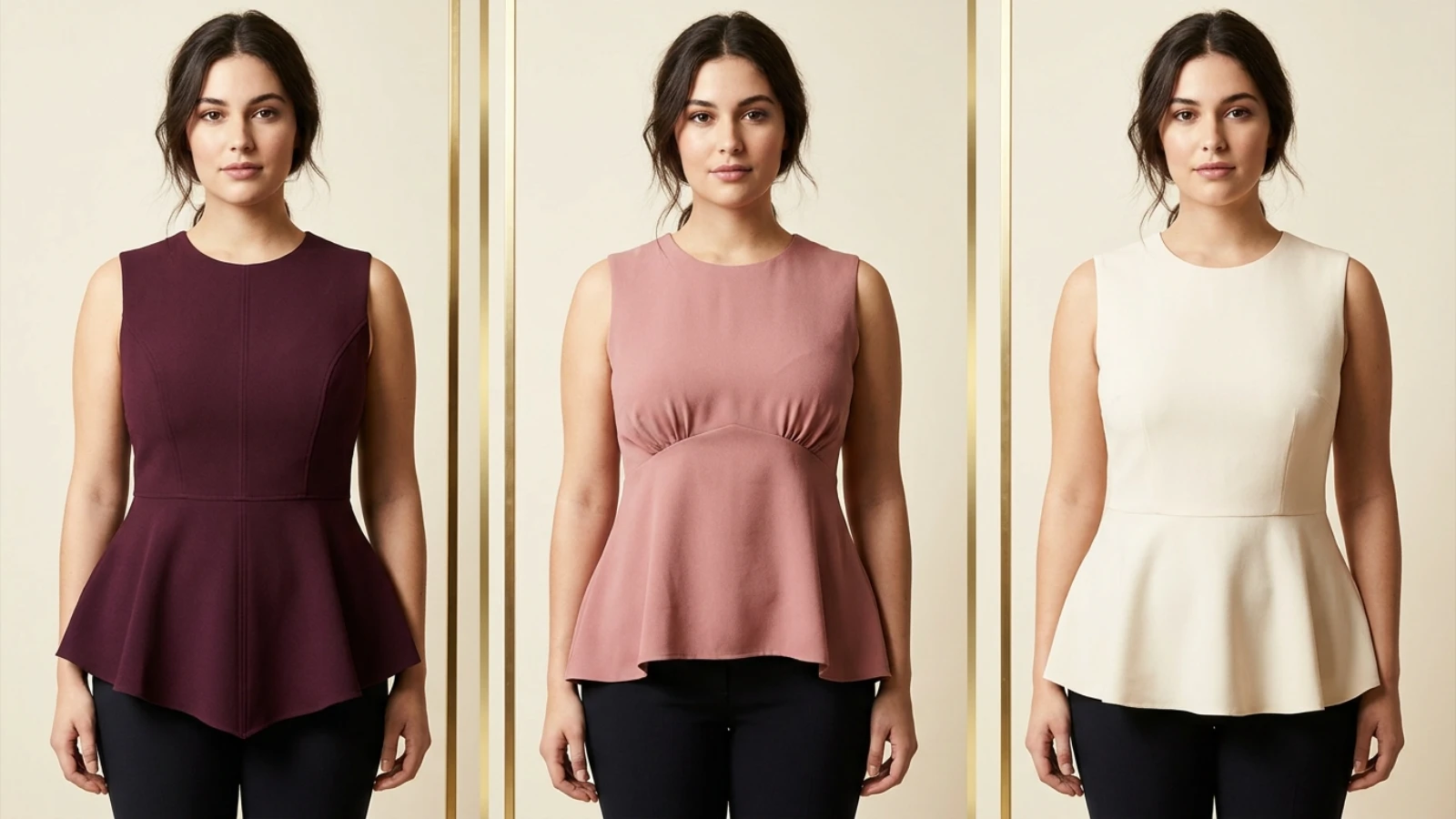
Bust, torso, waist, and hip proportion
The best peplum tops solve four connected proportions. The shoulders establish the garment’s frame. The bodice must project forward around the bust without stealing width from the back. The waist must define without compressing. The flare must clear the abdomen or hip at the length where it ends. A size chart that lists only body bust may not reveal any of these relationships.
Large bust and small waist
This proportion often benefits from princess seams, multiple darts, a true wrap, a side zip, or a stretch bodice with a stable waist seam. Sizing to the bust and reducing the waist can work when shoulders and armholes are correct. Sizing to the waist and asking stretch to absorb all projection often raises the seam and distorts the neckline. The goal is not maximum tightness; it is clear shaping with normal breathing and sitting room.
Short torso
A tall bodice may push the waist seam below your natural waist, where the flare can collapse against the high hip. A very high seam can crowd the underbust. Compare shoulder-to-waist garment length with your own measurement over the intended bra. Petite sizing may reposition bust darts and the waist, while simply hemming the peplum changes only the lower section. A shallow neckline and bulky sleeve can make the upper bodice feel visually crowded even when it technically fits.
Long torso or tall frame
Insufficient bodice length can pull the seam upward and expose a gap above high-rise bottoms. Look for tall sizing, adjustable wrap construction, a clearly stated center-front bodice length, or seam allowances a tailor can use. A longer peplum is not the same as a longer bodice. Ask where the waist seam sits on the garment, not only for total top length.
Fuller abdomen or hips
A peplum can skim, frame, or emphasize these areas depending on seam position, fabric, and hem width. Choose based on preference rather than a rule that the body must be hidden. Soft flare and sufficient circumference prevent the hem from gripping. If the top fits the bust and waist but the hem catches, a side slit or wider peplum panel may solve the issue. If the bodice is already strained, adding lower flare will not correct it.
For a broader outfit framework that includes all proportions, use the complete guide to dressing a large bust. It is more useful to treat the peplum as one wardrobe option than as a required silhouette for every fuller-bust body.
Fabric and shaping in the best peplum tops
Peplum construction asks one fabric to perform two jobs: fit close enough through the bodice to define shape and release far enough below the seam to create movement. The best peplum tops match material weight and recovery to the way the pattern creates volume.
Ponte and substantial jersey
Ponte can support a clean waist seam and a controlled flare while accommodating projection. Substantial jersey creates softer movement. Both need recovery. Stretch a hidden area gently, release it, and check for rippling or shine. The front should remain opaque at normal stretch. Thin rib may feel comfortable but can magnify bra seams and allow a heavy peplum to pull the bodice downward.
Crepe and stretch woven
Crepe provides drape with surface grip and photographs well without excessive shine. A small amount of stretch can improve movement, but the pattern still needs darts or seams. Stretch is not a replacement for three-dimensional shaping. Stable stretch woven works for office peplums because it can hold a pleat or curved seam while permitting sitting and reaching.
Poplin, jacquard, and sculptural cloth
Poplin creates a crisp shirt-peplum line; jacquard and faille can support an occasion flare. Their low stretch makes accurate bust shaping essential. A full stiff ruffle can project abruptly and compete with a fuller bust, while a smaller pleat or shaped panel may feel more balanced. That is an aesthetic choice, but comfort still requires bust ease and a level seam.
Lining and interfacing
The inner layer can be the hidden restriction. Turn the garment inside out when possible. The lining should include the same bust depth and should not pull the outer shell into diagonal wrinkles. Interfacing can stabilize a neckline, placket, waistband, or zip opening, but an entire rigid bodice may feel like a shell. The fabric guide for a large bust explains weight, drape, opacity, stretch, and recovery in more depth.
| Fabric family | Useful strength | Common risk | Best construction match |
|---|---|---|---|
| Ponte | Recovery and controlled body | Heat or excessive thickness | Faux-wrap or seamed knit peplum |
| Substantial jersey | Soft movement and comfort | Cling or growing neckline | Gathered or gently flared everyday top |
| Crepe | Matte drape with polish | Bias edge stretching | Princess-seam or wrap blouse |
| Stretch woven | Structure with modest give | Assuming stretch replaces shaping | Workwear peplum with darts |
| Poplin | Crisp shirt construction | Placket strain and rigid flare | Button-front style with real bust darts |
| Jacquard or faille | Sculptural occasion volume | Bulky seam and restrictive lining | Short event peplum with shaped bodice |
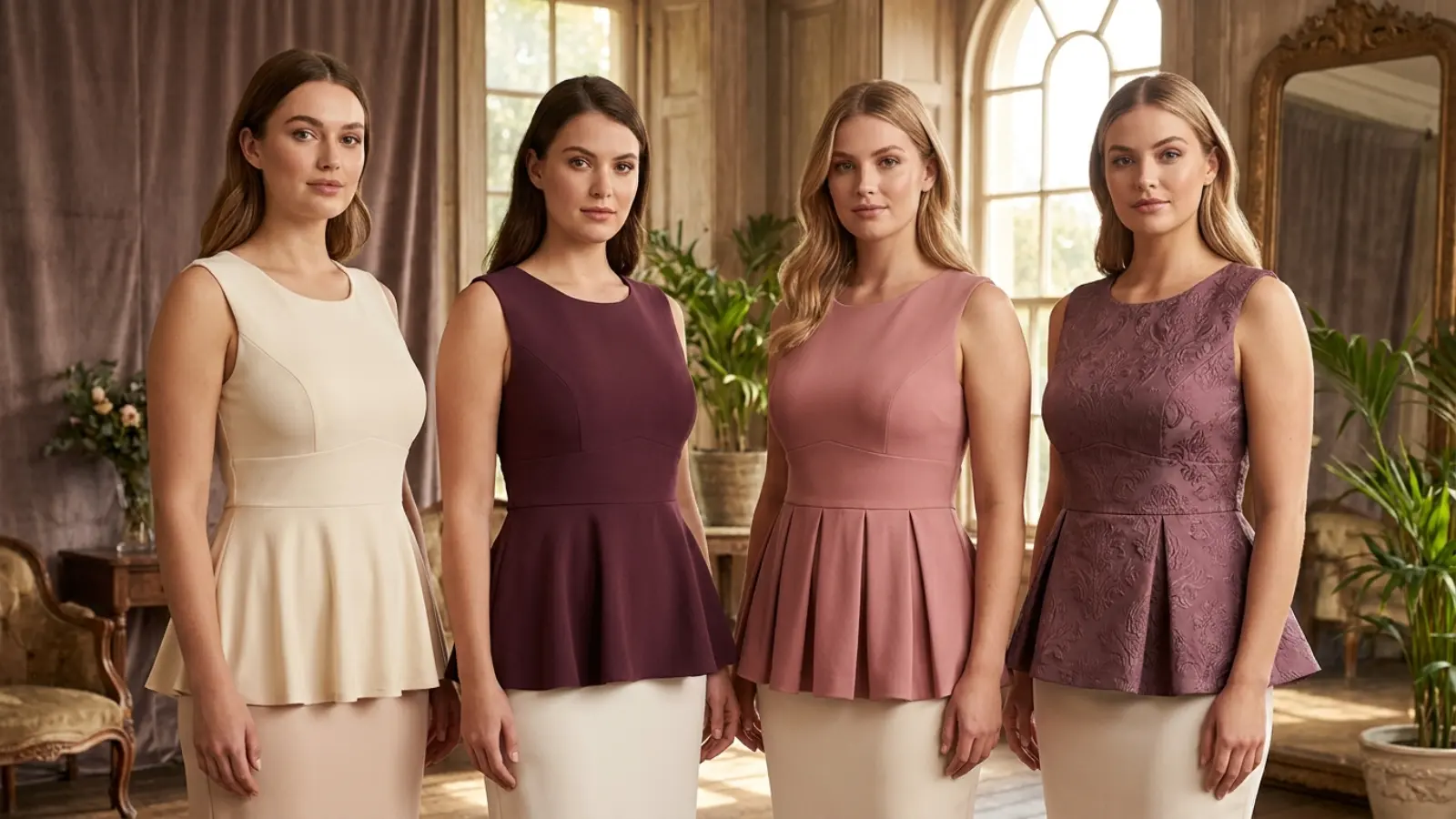
Bra, neckline, shoulder, and sleeve fit
The best peplum tops work over the bra you actually plan to wear. Support changes bust height, projection, and where a dart or princess curve meets the body. A top fitted over one bra can place its waist seam differently over another. Smooth cups can make seams easier to read, but the right bra is the one that provides your preferred support and works with the neckline.
V, scoop, square, sweetheart, boat, and shirt necklines can all work on a fuller bust. The useful neckline lies flat, covers the bra as intended, and feels right for the setting. A neckline pulled outward or upward may be reacting to insufficient bodice depth. Before assuming the shape is wrong for your body, compare it with the best necklines for a large bust guide and inspect the garment’s actual construction.
Shoulder fit is a non-negotiable frame. When sizing up for the bust makes the shoulder seams fall down the arm, the upper garment can collapse and the waist seam may shift. Set-in sleeves should allow reaching without lifting the entire bodice. Raglan and dolman sleeves provide different mobility but can add fabric around the upper torso. Puff sleeves and shoulder emphasis are personal style choices; judge whether their volume works with the peplum and your intended outfit, not by a rule that fuller-bust figures must avoid them.
Armholes should contain the bra and side breast tissue without cutting. A low armhole may expose the band; a tight one can pull the side seam and raise the waist. Sleeveless peplums often need the most precise shoulder and armhole fit because there is no sleeve to conceal excess. Under a blazer, check that the sleeve and peplum do not bunch simultaneously.
Best peplum tops for work, travel, events, and weekends
The best peplum tops for a large bust must fit the amount of sitting, layering, carrying, and movement the real occasion requires. A sculptural event top and a washable travel knit can both be excellent, but they should not be judged by the same practical evidence.
For office and presentations
Choose a stable neckline, a matte fabric, a seam that stays level while seated, and a flare controlled enough to fit beneath an open blazer. A princess-seam woven, ponte top, or button-front peplum with secure placket can work well. Sit at a desk, type, reach for a shelf, and test a lanyard or necklace. The top should not require a closed jacket to hide strain.
For travel
A soft knit peplum with strong recovery is often easier than a rigid woven because it tolerates long sitting and changing temperatures. Check that the peplum does not bunch under a seat belt or catch above the trouser waistband. An open cardigan or jacket can layer without compressing the flare. Pack the top according to its fabric; structured pleats may need hanging or steaming.
For weddings and evening events
A sculptural crepe, jacquard, or asymmetric peplum can create a strong outfit with tailored trousers or a streamlined skirt. Test dining, standing photographs, seated photographs, dancing, and the coat you will wear. If the top has a side zip, make sure the zip lies flat and does not bow over the bust or waist. Built-in structure should support the intended silhouette without replacing a correctly fitted bra unless it is genuinely cup-sized.
For weekends
Soft knit, wrap, and longline peplums can work with jeans, straight trousers, or relaxed skirts. Choose washable fabric, practical sleeves, and a hem that does not catch on pockets. The best peplum tops for casual wear should survive normal reaching, carrying a bag, and sitting without a complete reset.
Diagnose common peplum-top fit problems
Even the best peplum tops can fail when the cut and body proportions do not align. Symptoms can appear far from their cause. A flare that sticks out at center front may be too stiff, or it may be pushed forward because the bodice is short. A seam that climbs may be too small at the waist, or the bust may be taking vertical length. Diagnose from the shoulders through the hem rather than adjusting only the ruffle.
| Symptom | Likely cause | Test first | Keep, alter, or return? |
|---|---|---|---|
| Waist seam climbs under bust | Shallow bodice or short front length | Check dart, side seam, and front-to-back level | Usually return unless seam allowance is generous |
| Front hem sits higher | Bust borrowing vertical length | Compare center-front and center-back bodice | Seek fuller-bust cut or added front length |
| Side seams rotate forward | Missing front width or projection room | Release waist tension and reassess | Return if rotation remains |
| Darts point above or below bust | Wrong vertical placement | Confirm shoulder and bra position | Alter only if movement is modest |
| Back is loose after sizing up | Bust-to-back proportion mismatch | Pin excess without changing armhole | Alter if shoulders and bust fit correctly |
| Peplum collapses under bust | Seam too high or fabric too soft | Check whether seam clears breast tissue | Return if geometry is wrong |
| Hem catches on hip | Insufficient circumference or wrong length | Lift hem slightly to test release | Consider side slit or wider flare |
| Neckline gapes | Loose shoulder, stretched edge, or shallow bust | Reset shoulders and inspect drag lines | Minor alteration only when bodice fits |
A small refinement can rescue a genuinely good top. Repositioning a dart slightly, securing a clean neckline, or reducing a loose waist may be sensible. A collection of fixes—closed jacket, compression layer, pins, tape, and a belt hiding the seam—signals that the pattern is not serving you. Returning it protects wardrobe value.
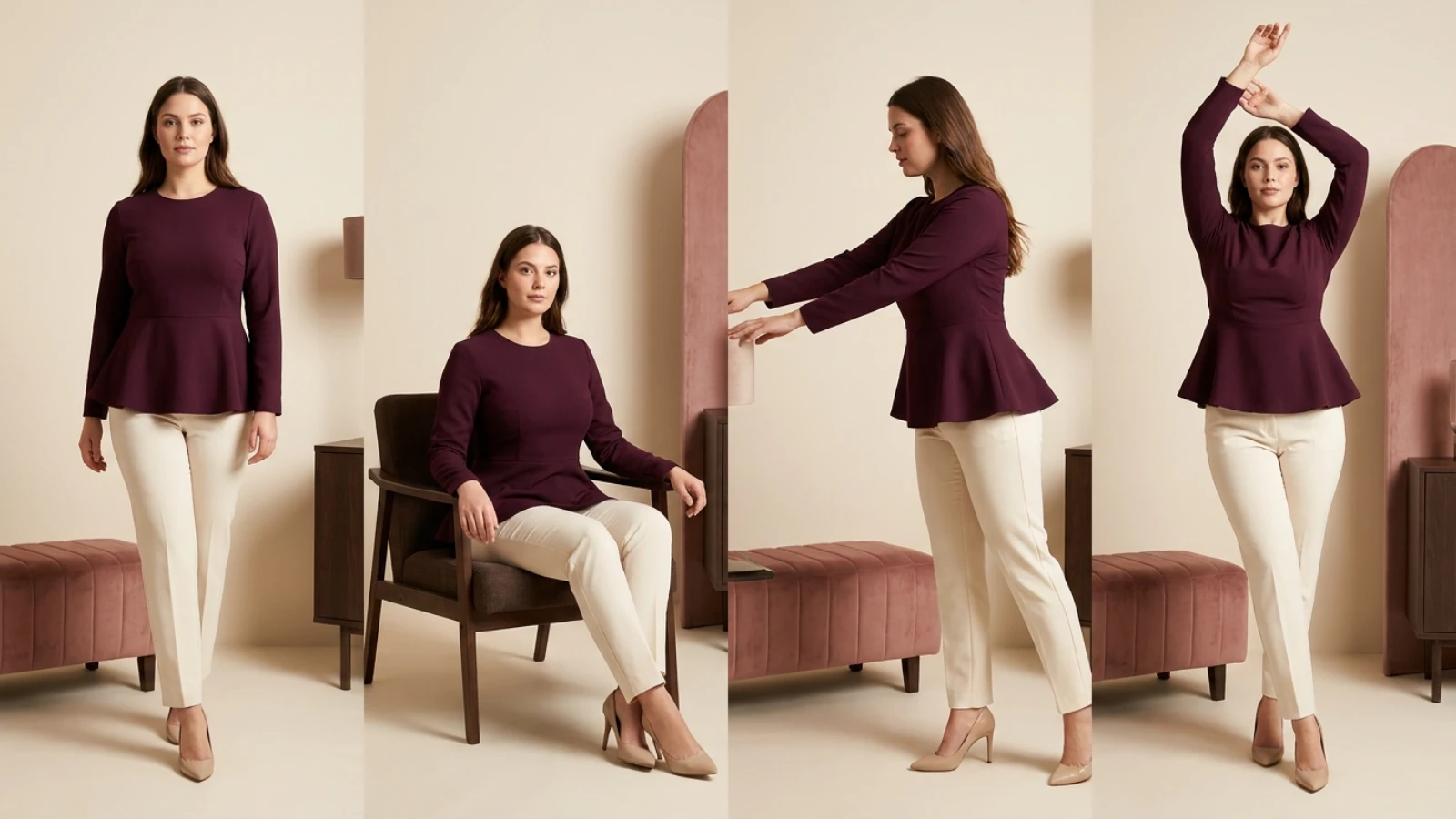
Movement testing the best peplum tops
The best peplum tops for a large bust remain usable after the fitting-room pose ends. Complete this sequence in the intended bra and, when possible, the trousers, skirt, or outer layer that will accompany the top.
- Stand naturally. Drop your shoulders, breathe normally, and inspect the seam, darts, neckline, side seams, and hem.
- Sit fully. Use a normal chair rather than perching. The waist should allow breathing and the peplum should not fold into a hard ridge.
- Reach forward. Simulate typing, driving, or lifting a light bag. The entire bodice should not climb.
- Raise both arms. Some movement is normal; the seam should return to position without needing to be pulled down.
- Turn and lean. Check neckline coverage, back ease, zip behavior, and whether the flare twists.
- Add the real layer. Try the blazer, cardigan, or coat to confirm the peplum and sleeves do not bunch.
- Wait five minutes. Knit recovery, waist pressure, neckline growth, and lining restriction often appear after a short wear.
Photograph front, side, and back views if store rules allow. A side image often reveals a raised waist seam or short front more clearly than a mirror. Evaluate comfort and the silhouette you like; the test is not about forcing the body to match a preset ideal.
How to shop for the best peplum tops online
Online descriptions often label the best peplum tops “figure-flattering” without giving the measurements that determine fit. Translate that promise into garment evidence. Confirm whether the peplum is knit or woven, whether the chart lists body or garment measurements, where the waist seam sits, how much the fabric stretches, how the lower flare is cut, and whether careful indoor try-on can be returned.
- Measure a known top. Record shoulder, underarm width, armhole, front length, waist position, and hem from a garment that fits.
- Separate bust and waist ease. A peplum needs adequate space at both points; one generic size number is not enough.
- Request shoulder-to-seam length. Measure over the intended bra from the high shoulder point to your natural waist.
- Compare front and back bodice length. Extra front length may indicate useful projection allowance, although shaping must still be correct.
- Inspect dart and seam placement. Look at side and three-quarter photos instead of relying only on the front pose.
- Read fabric and lining details. Fiber content does not reveal weight or recovery, but it helps frame better questions.
- Check peplum length and hem width. The flare must clear the body at the point where it ends.
- Protect the return path. Confirm final-sale status, deadline, shipping cost, tags, packaging, and try-on conditions.
| Measurement or fact | Why it matters | How to compare it |
|---|---|---|
| Garment bust | Shows total upper-bodice room | Confirm relaxed or stretched and compare with a known top |
| Shoulder-to-waist seam | Predicts where flare begins | Measure over the intended bra |
| Center-front bodice length | Reveals vertical room for projection | Compare with center back and your known garment |
| Waist-seam circumference | Controls comfort and seam stability | Allow intended ease for sitting and breathing |
| Shoulder and armhole | Frames the whole bodice | Do not trade stable shoulders merely for bust width |
| Peplum length | Shows where hem meets torso or hip | Measure down from your preferred seam point |
| Hem circumference | Predicts whether flare clears the body | Compare at the exact vertical landing point |
| Return terms | Protects movement-based fitting | Check deadline, fees, and exclusions before purchase |
The U.S. Federal Trade Commission explains information generally required on covered textile labels in its textile labeling guidance. Peplum tops may combine lining, interfacing, zips, elastic, and fabric structures with different maintenance needs, so read the actual garment label and the FTC’s care-label guidance. Fiber content supports comparison, but it does not prove weight, opacity, recovery, or fit.
What a tailor can change on a peplum top
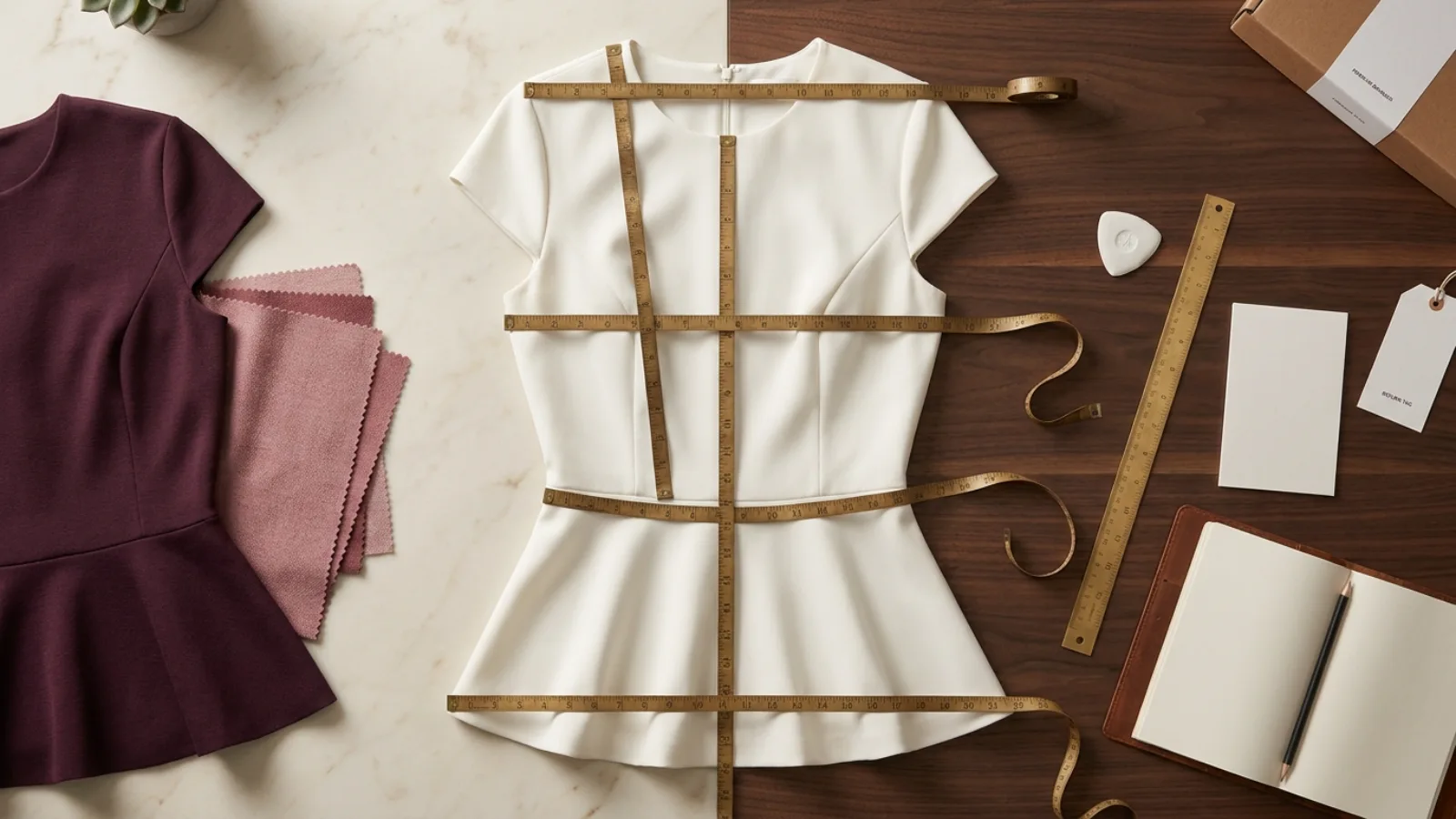
The best peplum tops are worth refining when their core structure is sound. A tailor can often reduce a loose waist or back, adjust a slightly misplaced dart, refine sleeve length, stabilize a neckline, add a discreet closure, shorten the peplum, narrow excessive flare, add side slits, or reinforce a zip opening. These changes are most successful when the shoulders, armholes, bust capacity, and main waist position already work. Taking in the waist can turn a good bust-sized garment into a more precise peplum.
Major limitations include a bodice with too little fabric over the bust, princess curves far from the apex, a waist seam cutting across breast tissue, a front bodice substantially too short, or a rigid lining that cannot be released. Moving an entire waist seam changes the zip, darts, vertical seams, and flare attachment. Adding invisible width is difficult. Review the tailoring guide for a large bust before buying a final-sale item as a project.
Bring the intended bra and bottoms to the fitting. Show the tailor how the seam changes while sitting and reaching. Ask whether the alteration preserves hem balance and allows normal breathing. A technically possible reconstruction is worthwhile only when its cost and risk compare favorably with choosing a better pattern.
How to style, care for, and value peplum tops
The best peplum tops create value when their defined waist and flare connect easily with clothing already in the wardrobe. Styling should support the garment’s construction, while care should preserve its neckline, seams, pleats, and recovery.
Choose bottoms by hem relationship
A peplum already creates a fitted-to-flared transition. Straight trousers, slim pants, wide-leg trousers, pencil skirts, A-line skirts, and jeans can all work; the best pairing depends on where the peplum ends and the silhouette you want. A clean waistband prevents bulk beneath a short fitted bodice. If the flare is dramatic, a simpler lower line lets it remain the focal point. If the peplum is soft and subtle, more volume below can still look intentional.
Layer without crushing the flare
An open blazer or cardigan should have enough bust, waist, and hip room to hang over the peplum. A cropped jacket ending near the waist seam can preserve the flare; a longer open layer can create vertical lines. A narrow closed blazer may compress the ruffle and push the bodice upward. Use the layering guide for a large bust to plan complete outfits.
Keep accessories clear of construction
A necklace can sit clearly above an open neckline or extend below the bust without landing on the waist seam. A belt is usually unnecessary when the peplum seam already defines the waist, though a very soft tunic may support one if the pattern allows it. Avoid using a belt to hide a seam that climbs; that is a fit problem rather than a styling problem.
Protect the bodice and flare
Follow the care label. Close zips, hooks, and buttons before storing; use a laundry bag when the label permits machine care and hardware could snag. Dry structured items in a way that supports the shoulder and seam. Do not hang a heavy wet knit from narrow shoulders. Steam pleats or sculptural flares according to fabric tolerance, and avoid pressing away the shape the pattern is designed to hold.
Calculate complete cost per successful wear
Add tailoring, a required camisole, return shipping, and special cleaning to the ticket price. Then count realistic outfits and occasions. The best peplum tops earn value because the bodice remains comfortable, the seam stays level, and the flare integrates with garments you already own. A moderately priced knit worn weekly can outperform a dramatic bargain that needs reconstruction and only works while standing.
Buy the bodice first and the peplum second
The best peplum tops for a large bust combine stable shoulders, real projection room, correctly placed darts or seams, adequate front length, a level waist seam below breast tissue, and flare volume suited to its fabric and landing point. Keep the top only when it stays comfortable and returns to position through sitting, reaching, layering, and normal breathing. A beautiful ruffle cannot rescue a shallow bodice; a well-engineered bodice lets the peplum look effortless.
FAQs about the best peplum tops for a large bust
Are peplum tops good for a large bust?
Yes, when the bodice has enough bust depth, the waist seam sits below breast tissue, the shoulders remain stable, and the flare begins at a useful point on your torso. A well-cut peplum can create definition without compressing the bust or making the front hem rise.
What peplum shape is best for a large bust?
A softly flared princess-seam peplum, a structured woven style with real darts, or a wrap peplum with secure overlap are dependable starting points. The best shape depends on torso length, bust-to-waist difference, hip proportion, desired coverage, and how much structure the fabric can support.
Where should a peplum waist seam sit on a fuller bust?
The seam should normally sit at the natural waist or at the pattern’s intended high-waist point, fully below breast tissue and level around the body. It should not climb into the underbust crease, cut across the lower bust, or dip sharply at the back because the front bodice lacks length.
Can a peplum top make a large bust look bigger?
A very high seam, stiff horizontal ruffle, shiny fabric, crowded neckline, or undersized bodice can concentrate visual and physical volume around the chest. That is a styling effect, not an automatic property of peplum tops. Correct bust room, a clean neckline, and controlled flare keep the silhouette intentional.
Should I size up in a peplum top for a large bust?
Size up when the bodice strains, darts sit too far outward, the waist seam rises, the side seams rotate forward, or the front hem lifts. Do not size up automatically if the shoulders, armholes, and back become loose. When adjacent sizes trade one structural failure for another, choose a fuller-bust-friendly cut or plan a realistic alteration.
What neckline works best on a peplum top for a fuller bust?
Stable V, scoop, square, sweetheart, and open shirt necklines can all work when their depth and width suit your coverage needs and bra. The neckline should lie flat without being pulled outward by the bust. Construction and personal preference matter more than a universal rule.
Can I wear a peplum top with a belly or fuller hips?
Yes. Choose the seam and flare according to where you want definition and room. A longer soft peplum can skim the upper abdomen, while a shorter controlled flare can work with fuller hips when the hem is wide enough not to catch. Comfort, balance, and your preferred silhouette are the deciding factors.
What measurements matter when buying a peplum top online?
Compare garment bust, waist-seam circumference, shoulder width, armhole depth, shoulder-to-waist length, center-front and center-back bodice length, peplum length, and hem circumference. Confirm whether the chart lists body or garment measurements and whether the fabric is measured relaxed or stretched.
Similar Posts
Best Denim Shirts for a Large Bust
FitShapeGuide · Tops & Blouses Best Denim Shirts for a Large Bust A construction-first buyer’s guide to denim shirts that close smoothly, move comfortably, layer cleanly, and keep their intended shape: bust ease, seams, stretch, weight, plackets, shoulders, length, wash behavior, and care. By EmilyUpdated 2026Evidence-led commercial fit guide A well-fitted denim shirt gets its…
Best Convertible Swimsuits for a Large Bust
FitShapeGuide · Swimwear Best Convertible Swimsuits for a Large Bust A construction-first buying guide to shaped cups, stable underbands, secure necklines, adjustable straps, torso length, wet recovery and confident swimming. By EmilyUpdated 2026Evidence-led commercial fit guide A convertible swimsuit uses its cups, underband, sides and back for support while the straps fine-tune position. Quick answer…
Shoulder Pads & a Large Bust | FitShapeGuide
Structure without unnecessary width Shoulder Pads and a Large Bust:Do They Help or Hurt? Shoulder pads are not automatically wrong for a large bust. Their success depends on thickness, placement, lapel width, sleeve shape and the length of the garment below them. Get the fit answer →Read the complete guide Fit-first guidancepad thickness, extension, sleeve…
Best Sweaters for a Large Bust: Fit & Buying Guide
FitShapeGuide · Tops & Blouses Best Sweaters for a Large Bust A construction-first guide to sweater necklines, knit gauge, bust ease, recovery, front length, warmth, and real-life layering. By Emily Updated 2026 Evidence-led commercial fit guide A dependable sweater has room for projection without losing its shoulder line, stretching sheer, or becoming noticeably shorter at…