Best Bras for Deep-Plunge Necklines
A deep V-neck does not automatically require going braless. Fuller-bust plunge bras can combine a very low center front with real cup depth, a stable underband and strategic side support. The key is matching the bra’s center depth, cup edge, strap placement and back height to the actual dress—not shopping by the word “plunge” alone.
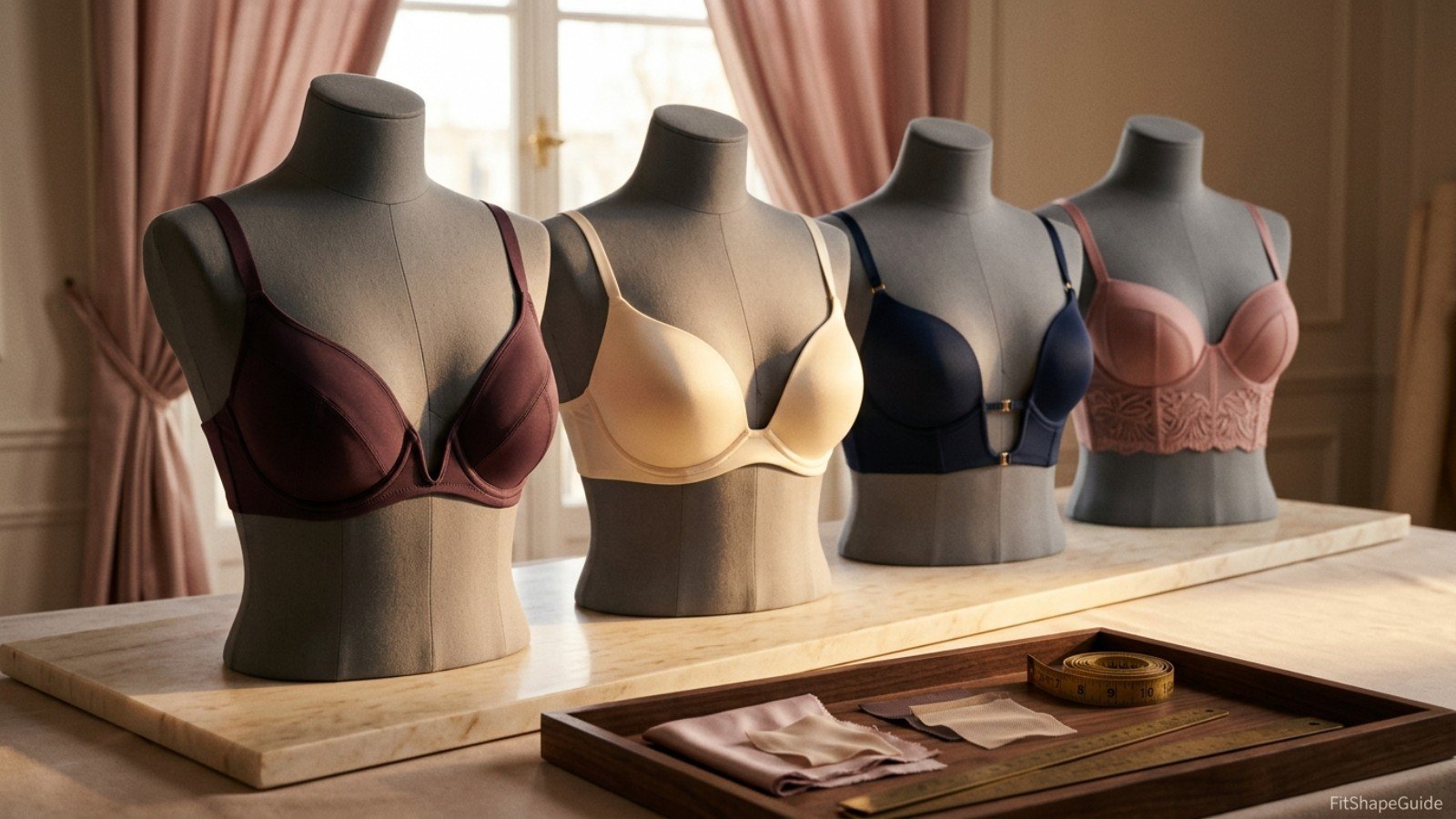
The 90-second plunge-neckline test
- Put on the plunge bra and fully settle the bust into the cups.
- Check for overflow along both angled cup edges.
- Put the actual deep-V top or dress over the bra.
- Stand naturally and check whether the center gore shows.
- Lean forward and check cup containment.
- Raise both arms and make sure the band remains stable.
- Turn sideways and check whether a cup or side wing shows through the armhole.
- Sit down and make sure the low center does not become uncomfortable.
- Check the back and shoulder area separately—front invisibility does not guarantee the whole bra is hidden.
What makes a plunge bra work for a large bust?
A plunge bra differs from a balcony or full-cup bra primarily at the center front and cup neckline.
The center gore is lower, and the inner cup edges angle downward into a V. This creates the open center needed beneath low-cut clothing.
For a fuller bust, however, lowering the center removes some material from an area that would otherwise help contain breast tissue. Good plunge design therefore has to recover stability elsewhere through cup geometry, side support, wires, underband structure and strap placement.
The gore ends below the visible point of the garment’s V-neckline.
The breasts sit inside the cup rather than being compressed toward the center opening.
Side wings, band and straps keep the cup anchored even though the center is lower.
| Neckline problem | Useful starting solution | Why | Watch for |
|---|---|---|---|
| Moderately low V | Standard plunge | Low center + everyday support | Cup edge showing |
| Very deep V | Super/deep plunge | Extra-low bridge | Center containment |
| Deep V + racerback | J-hook/multiway plunge | Solves front and strap route | Neck pressure |
| Deep V + bare shoulders | Strapless plunge if engineered for it | No visible straps | Band stability |
| Deep V + low back | Low-back/alternative solution | Ordinary plunge back may show | Rear support |
| Deep V + low sides | Tape/adhesive/structured garment | Side wings may be visible | Skin and garment compatibility |
| Fine fitted top | Smooth padded plunge | Low-seam surface | Shallow molded cup |
| Soft draped dress | Unlined seamed plunge | Depth without bulky foam | Visible seams in very thin fabric |
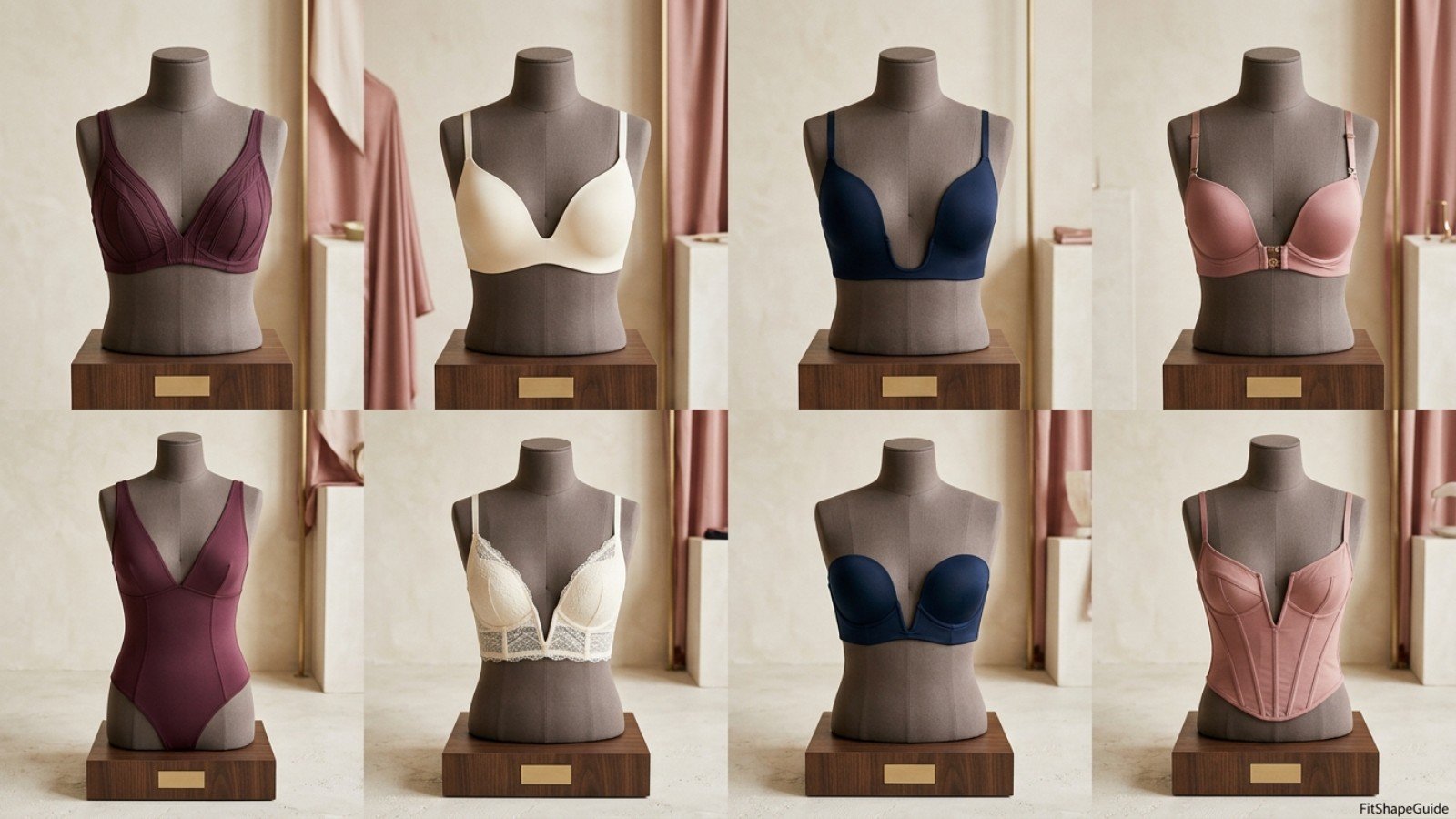
Best bra styles for deep-plunge necklines
Unlined seamed plunge bra
Angled multi-part cups provide breast depth while the center gore stays low enough for many V-neck dresses and tops.
Best for: fuller projection and lightweight support.
Smooth padded plunge bra
Low-center molded or padded cups create a clean clothing surface and can produce a rounded silhouette.
Best for: fitted tops and smoother formal fabrics.
Super-plunge bra
The center front drops significantly lower than an ordinary plunge, making it useful when the dress V extends toward the sternum.
Best for: genuinely deep V-necklines.
Multiway plunge bra
A low center combines with convertible straps for straight, crossback or other manufacturer-approved configurations.
Best for: unusual shoulder and neckline combinations.
Plunge bodysuit
Extends the foundation through the torso, allowing the bust frame to connect with a larger garment structure.
Best for: fitted dresses requiring torso smoothing plus a low center.
Longline plunge bra
A deeper underband spreads support farther down the torso while retaining a low center.
Best for: formalwear when the dress can conceal the deeper band.
Strapless plunge bra
Specialist designs combine a low center with strapless engineering, though both jobs place high demands on the band and cup frame.
Best for: low V plus exposed shoulders.
Tape or structured-garment alternative
When the front, sides and back are all highly exposed, conventional bra architecture may simply have nowhere to hide.
Best for: extreme neckline geometry.
How low should the center gore be?
The center gore is the section connecting the cups at the front of the bra.
On a full-cup bra it may extend relatively high. On a plunge bra, it ends much lower so the bra can disappear beneath a V-neckline.
Compare the gore with the dress
Put the actual dress on. A bra can look “very low” on its own and still show above a dramatic neckline.
Standard plunge vs deep plunge
A standard plunge is often designed for ordinary low-cut tops. A true deep or super plunge takes the center noticeably lower for more dramatic eveningwear.
Lower is not always better
If your dress hides a standard plunge, there is no advantage in choosing an extreme center solely because it exists. More cup coverage can sometimes feel more secure.
Watch center spillage
The low inner cup should still contain breast tissue. If tissue repeatedly escapes toward the center, the cup volume or shape may not suit you.
Close-set breasts may prefer low centers
A shorter center gore can also be comfortable for people whose breasts sit close together and find tall center wires intrusive.
Cup depth and containment in a plunge bra
Do not size down for more cleavage
A smaller cup can force breast tissue toward the center and create dramatic cleavage, but that does not make it a correct fuller-bust fit.
Look for lower-cup depth
Projection near the wire helps the breast settle into the intended cup instead of pushing the cup downward.
Side support matters more with an open center
An outer sling or stable side panel can direct tissue inward while reducing uncontrolled sideways spread.
Check the angled neckline
The plunge edge should sit smoothly against the breast rather than cutting through it.
Stretch lace can improve adaptability
A flexible upper section can be useful for mild asymmetry or softer breast tissue while the lower cup remains structured.
Check the wires
The wire should still surround breast tissue even though it ends lower at the center.
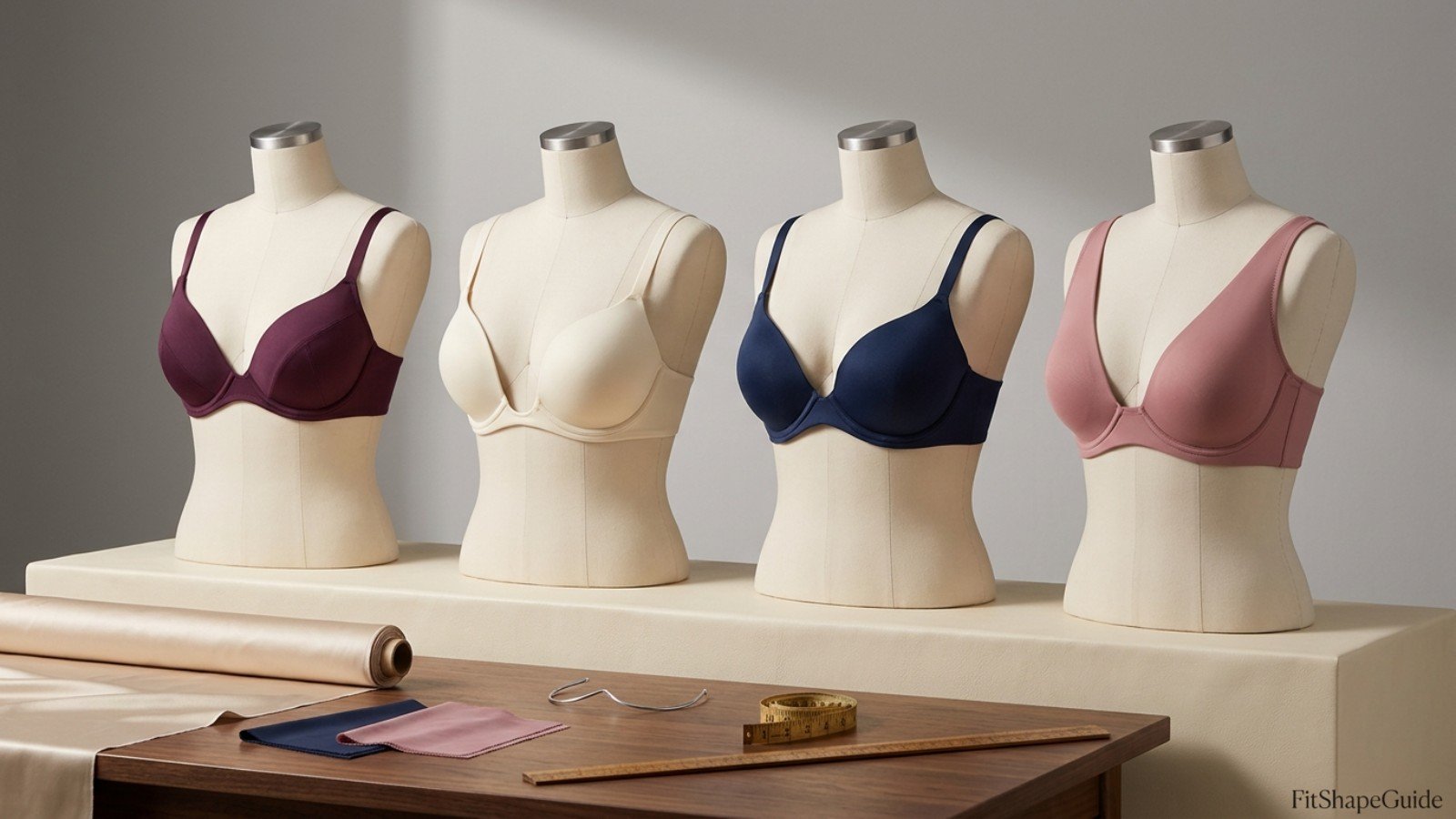
Standard plunge vs super-plunge bras
Standard plunge
A standard plunge lowers the center front enough for many V-neck tops, wrap dresses and lower-cut occasion outfits while retaining more central cup structure than an extreme plunge.
Super plunge
A super-plunge construction takes the center bridge significantly lower. This is the specialist option for dresses whose V extends toward the lower sternum.
More exposed inner breast area
As the center becomes lower, the inner cup has less material available for containment. Correct cup volume and a stable outer frame become especially important.
Check the actual garment rather than the style name
“Plunge,” “deep plunge” and “super plunge” are product-category terms, not standardized measurements. One brand’s ordinary plunge can sit lower than another’s.
Use only as much plunge as you need
If a more covered plunge stays hidden, it may provide the fit you prefer without the compromises of an ultra-low center.
Padded vs unlined plunge bras
Unlined seamed plunge
Individual cup panels can create substantial three-dimensional depth without a thick molded shell. This is useful when very smooth plunge bras feel too shallow.
Padded plunge
Light padding can create a smooth, rounded silhouette beneath fitted eveningwear and may provide extra nipple coverage.
Molded does not automatically mean better support
A preformed cup still has to match breast projection. If the geometry is too shallow, the bust can push the cup downward or toward the center.
Seams depend on the dress fabric
A heavier satin, draped jersey or lined formal dress may disguise cup seams easily. Very fine body-skimming fabric may reveal them.
Choose shape before surface
A seamless bra that fits poorly is rarely a better foundation than a seamed bra that supports the bust correctly.
Multiway plunge bras for difficult straps
Straight straps
Use the standard configuration when the dress fully covers the shoulder area.
Crossback
Crossed straps can clear some racerback or cutaway shoulder designs while also moving the straps inward.
J-hook configuration
An integrated hook can create a temporary racerback shape without fully detaching the straps.
Halter configuration
Only use halter mode when the exact bra is designed and approved for it. Fuller-bust halter tension can feel very different at the neck.
Do not invent convertible modes
Detachable straps do not automatically mean the bra can be worn safely in every possible configuration.
Readjust strap length
Crossing, connecting or rerouting straps changes their effective path. Re-adjust them rather than keeping the straight-strap tension unchanged.
For more, see Best Convertible Bras for a Large Bust .
When a plunge bra is not enough
Deep front + ordinary back
A conventional plunge bra can work beautifully when the dress is low only at the center front.
Deep front + low back
The ordinary bra band may remain visible. Look at a purpose-built low-back solution or another foundation strategy.
Deep front + low sides
The plunge cups or side wings may show through the armhole even when the center is perfect.
Deep front + bare shoulders
You need to solve strap visibility too. Depending on the dress, that may mean a specialist strapless plunge rather than an ordinary plunge.
Deep front + open back + low sides
At some point a conventional bra has too little garment coverage available to hide its structural frame. Purpose-made breast tape, adhesive solutions or a structured dress can become more practical.
Compare Best Backless Bra Solutions for a Large Bust , Boob Tape Guide for a Large Bust and Best Nipple Covers and Adhesive Bra Alternatives .
Deep-plunge dress movement test
Lean forward
The angled cup edge should continue to contain the bust rather than opening away from it or allowing tissue to escape toward the center.
Raise both arms
The band should stay reasonably stable and the dress should not lift enough to expose the bra center.
Reach sideways
Check low armholes for visible cup or wing edges.
Sit down
Some deep V-neck dresses open farther when seated. Recheck bra visibility in the position you will actually spend time in.
Walk and turn
A wrap or draped neckline may shift across the bra during movement.
Use photography
Check the outfit in normal room light and flash if the bra or dress fabric is pale, glossy or thin.
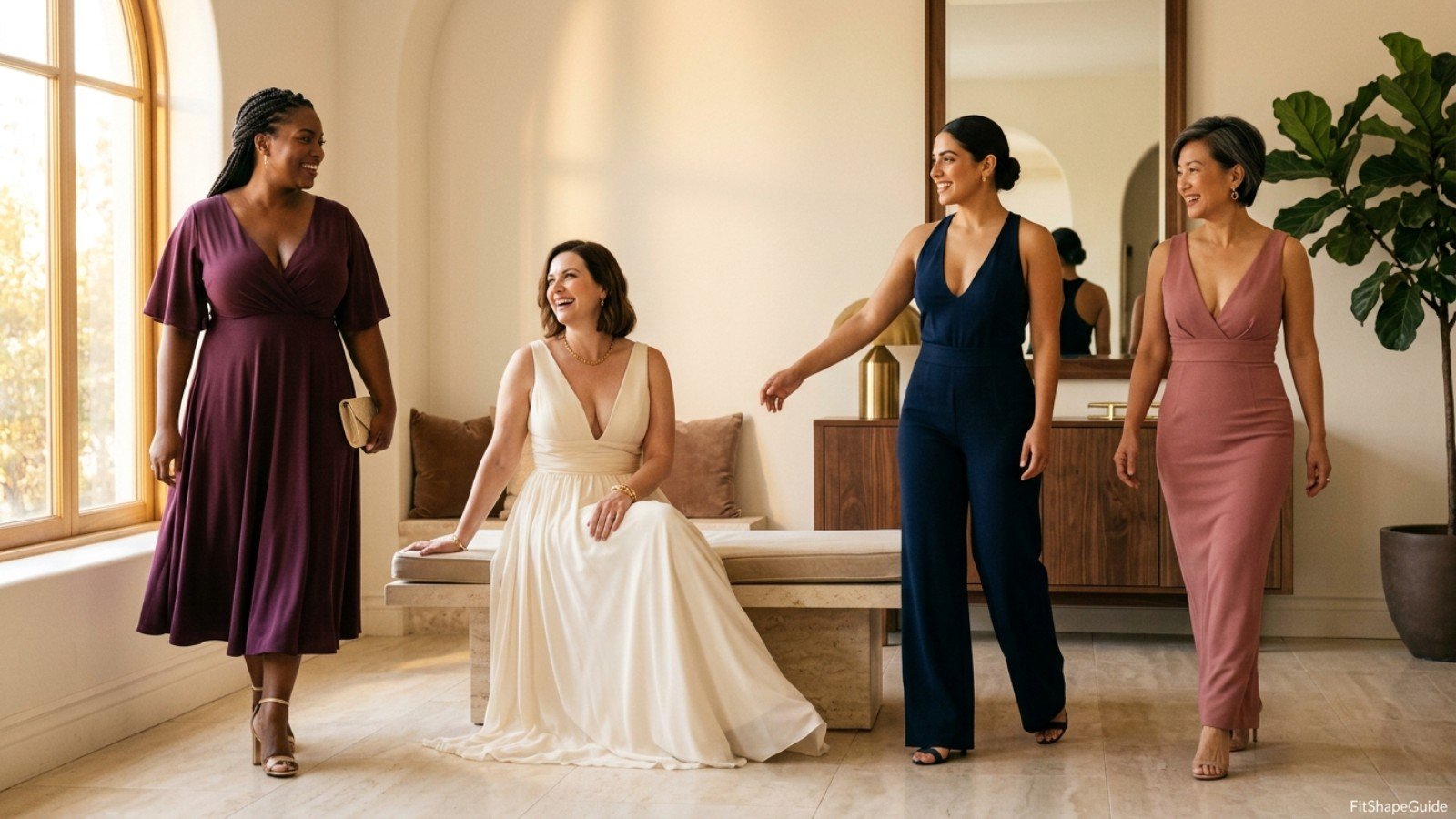
How to buy a deep-plunge bra for a large bust
- Measure the outfit problem visually. Determine whether the challenge is center depth, side exposure, shoulder exposure, back exposure or several at once.
- Choose the lowest center you actually need. A standard plunge may work better than a super plunge if both stay hidden.
- Check current cup fit. The fuller bust still needs adequate cup volume and projection.
- Inspect the inner cup edge. It should contain the breast without cutting in.
- Look for side support. Especially useful when the center front is very open.
- Check side-wing height. A supportive wing can still be too tall for a low armhole.
- Check strap placement. Plunge bras may place straps farther outward depending on cup design.
- Verify multiway modes. Use only manufacturer-approved configurations.
- Check the rear band height. A deep front does not imply a low back.
- Test the actual dress before the event. The bra and neckline must work as one system.
Do not shop only for dramatic cleavage
The correct plunge fit should contain the breast first. Cleavage appearance depends on breast shape, cup construction and garment neckline.
Do not size down in the cup
Overflow near the center may look dramatic in the mirror but creates an unstable foundation during movement.
Do not assume every plunge is equally low
Product names are not standardized. Compare the physical center construction and verify it against your outfit.
Do not assume plunge means backless
Most plunge bras still use an ordinary rear band.
Bring the dress to the fitting
For important formalwear, evaluating the bra without the dress leaves the most important compatibility question unanswered.
Common deep-plunge bra problems
| Problem | Likely cause | Try next | Avoid |
|---|---|---|---|
| Center gore shows | Plunge not low enough | Deeper/super plunge | Pulling bra downward |
| Breast spills toward center | Cup too small/shallow | More cup depth/volume | Sizing down for cleavage |
| Outer cup shows at armhole | Side wing/cup too high | Lower-side solution | Focusing only on center gore |
| Straps show | Shoulder geometry mismatch | Multiway/crossback/strapless option | Hiding straps with unsafe improvisation |
| Back band shows | Dress back lower than bra | Low-back alternative | Pulling normal band downward |
| Molded cup gaps near neckline | Cup-shape mismatch | Seamed/flexible plunge | Smaller cup if fuller side already fits |
| Unlined seams show | Very fine dress fabric | Smooth padded plunge | Sacrificing correct fit blindly |
| J-hook creates neck pressure | Straps too short after conversion | Lengthen and readjust | Keeping straight-mode tension |
| Low gore feels unstable | Outer frame lacks support / shape mismatch | Stronger side support and band | Overtightening straps |
| No conventional bra stays hidden | Dress exposes front, sides and back | Tape/adhesive/structured garment | Forcing ordinary bra into impossible neckline |
My plunge bra still shows in the V
You probably need a genuinely deeper center rather than another ordinary plunge with similar geometry.
The center is perfect but my breasts spill inward
That is a cup-fit issue, not proof that plunge bras cannot work for your bust. Try more cup depth, volume or a different plunge shape.
The bra disappears in front but shows under my arms
Your dress has a low-side problem as well as a deep-front problem. Compare a lower-side foundation or an alternative such as tape or structured garment support.
I need a plunge and a low back
Treat those as two requirements. A standard plunge bra ordinarily retains a conventional back band.
Which bra should you choose for a deep-plunge neckline?
Choose a standard plunge bra for an ordinary low V, a super-plunge bra when the center drops dramatically toward the sternum, and a multiway plunge when shoulder straps also need rerouting. Choose a smooth padded plunge under fine fitted fabrics or an unlined seamed plunge when cup depth and projection matter more than a completely seamless surface.
If the dress is simultaneously deep in front, low at the sides and open at the back, stop asking one conventional bra to disappear everywhere. That is where purpose-made tape, adhesive solutions or built-in garment structure become the more realistic foundation strategy.
Frequently asked questions
What bra is best for a deep-plunge neckline?
A plunge bra with a center gore low enough for the garment, adequate fuller-bust cup depth, stable side wings and secure straps is the best starting point. Very deep V-necklines may require a super-plunge design.
Can plunge bras support a large bust?
Yes. A low center does not automatically mean low support. Fuller-bust plunge bras can combine deep cups, supportive underbands, side support and appropriately sized wires.
What is the difference between a plunge bra and a super-plunge bra?
A plunge bra has a lower center front than full-cup or balcony styles. A super-plunge takes the center significantly lower for more extreme V-necklines.
Should I size down in a plunge bra for more cleavage?
No. An undersized cup can cause center overflow and unstable fit. Choose the cup size and shape that properly contains the breast.
Are padded plunge bras better under tight dresses?
They can provide a smoother outer surface, but the padded cup still needs enough depth for the bust. An unlined seamed plunge may fit better when molded plunge cups are too shallow.
Can a plunge bra also be backless?
Not usually. Most plunge bras retain a conventional rear band. A low-back dress may require a separate low-back or alternative foundation solution.
Can I wear a plunge bra with racerback clothing?
Yes when the bra has an approved J-hook, crossback or convertible configuration that works with the garment. Readjust strap length after changing the strap route.
What if my dress is too low for any bra?
If the front, sides and back expose too much of a conventional bra frame, consider purpose-made breast tape, compatible adhesive solutions or structured support built into the garment.
How FitShapeGuide evaluates deep-plunge bras
This guide evaluates plunge bras through center-gore height, inner-cup angle, cup depth, lower-cup projection, center containment, side-support construction, wing height, band stability, strap placement and clothing compatibility.
FitShapeGuide does not treat the word “plunge” as a standardized measurement. Product center heights vary, so the correct bra must be evaluated against the actual garment neckline.
A low center front is also not treated as evidence of weak support. Fuller-bust plunge designs can use substantial bands, deep multi-part cups, side slings and stable outer frames while removing coverage only where the low neckline requires it.
Standard plunge and super-plunge bras are treated as separate wardrobe tools. A standard plunge can work beneath many lower V-neck tops, while a specialist super plunge is intended for much deeper center-front exposure.
FitShapeGuide also evaluates front, side, shoulder and back exposure independently. A bra that disappears beneath the center V may still show at the armhole, shoulder or rear neckline.
Before publishing any commercial recommendation, FitShapeGuide should verify the exact live seller, product name, current band range, cup range, center-front construction, padded or unlined cup, cup depth, side support, wire frame, wing height, strap placement, detachable straps, approved multiway configurations, rear band height, materials, care, current availability and return eligibility.
No ASIN, cup range, neckline-depth claim, convertible mode, price, rating, review count, coupon, stock statement or delivery promise should be published unless directly verified.