
Best Long-Line Bras for a Large Bust
A long-line bra extends the underband farther down the torso than a standard bra. For a fuller bust, that extra depth can spread garment contact across more of the ribcage, create a more stable base and give designers room for additional panels or boning. But a longline is only comfortable when its cup shape, band tension and torso length all match you—otherwise the extra fabric can roll, fold or dig every time you sit.
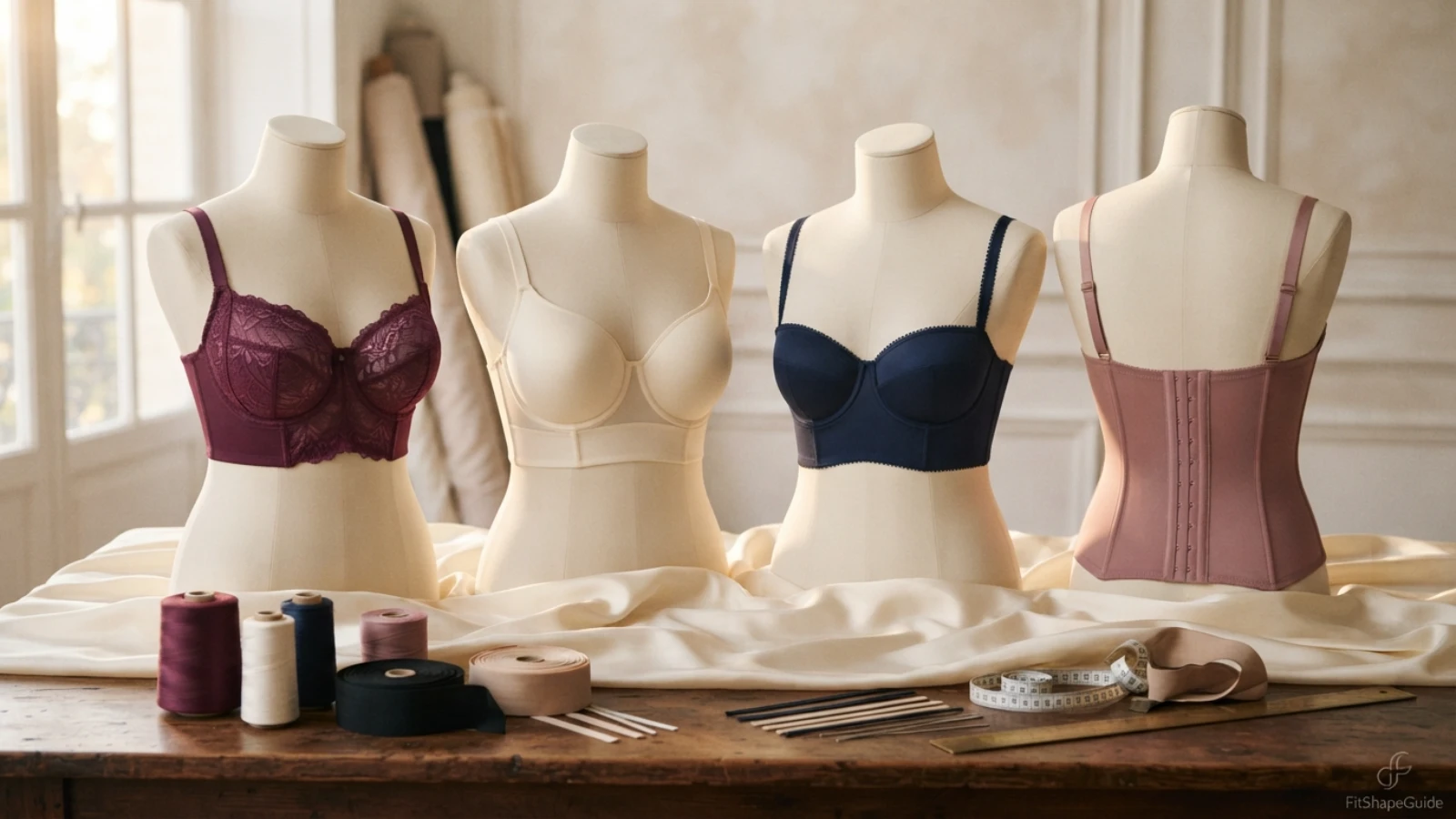
The 90-second longline fit test
- Settle all breast tissue inside the cups before judging the lower band.
- Check that the cup edge does not overflow or gape.
- Stand naturally and make sure the extended band lies flat without aggressive compression.
- Sit down fully—not just on the edge of a chair.
- Lean forward as if tying a shoe or reaching toward a desk.
- Raise both arms and check whether the whole longline frame pushes upward.
- Rotate your torso gently left and right.
- Take several full breaths and check lower-band comfort.
- If the extended panel rolls, folds, stabs or pushes the cups upward, reassess torso length or longline construction rather than sizing down.
What is a long-line bra?
A standard bra usually ends shortly below the underbust. A longline bra extends that lower section farther down the torso.
How far it extends varies considerably. Some styles are only a few centimeters deeper than an everyday band, while others reach much closer to the waist and start to resemble a bustier or corset-style top.
That extra material changes the fit. Instead of concentrating all torso contact around one relatively narrow line beneath the bust, the garment can distribute it through a deeper section of the ribcage or upper waist.
Slightly deeper than an everyday bra, often easy to wear under normal clothes.
Extends farther down the ribcage and may use extra hooks, seams or reinforcement.
Reaches substantially farther toward the waist and may combine a true inner bra with a decorative or supportive outer body.
| Longline type | Best for | Main benefit | Main fit risk |
|---|---|---|---|
| Deep-band everyday | Daily wear | Broader torso contact | Lower edge rolling |
| Underwired full cup | Structured fuller-bust support | Defined breast frame | Too-shallow cups |
| Wireless longline | Wire-free comfort | Wide underband + shaped cups | Band folding |
| Balconette longline | Lower necklines / styling | Lifted open neckline | Wide straps / upper cup fit |
| Plunge longline | Lower V-neck clothing | Low center + deeper frame | Center containment |
| Bridal longline | Formal or strapless wear | More torso anchoring | Dress/back incompatibility |
| Corset-style longline | Outerwear / fashion | Extended statement frame | Torso length mismatch |
| Light lounge longline | Home / relaxed wear | Soft broad support | Insufficient cup structure |
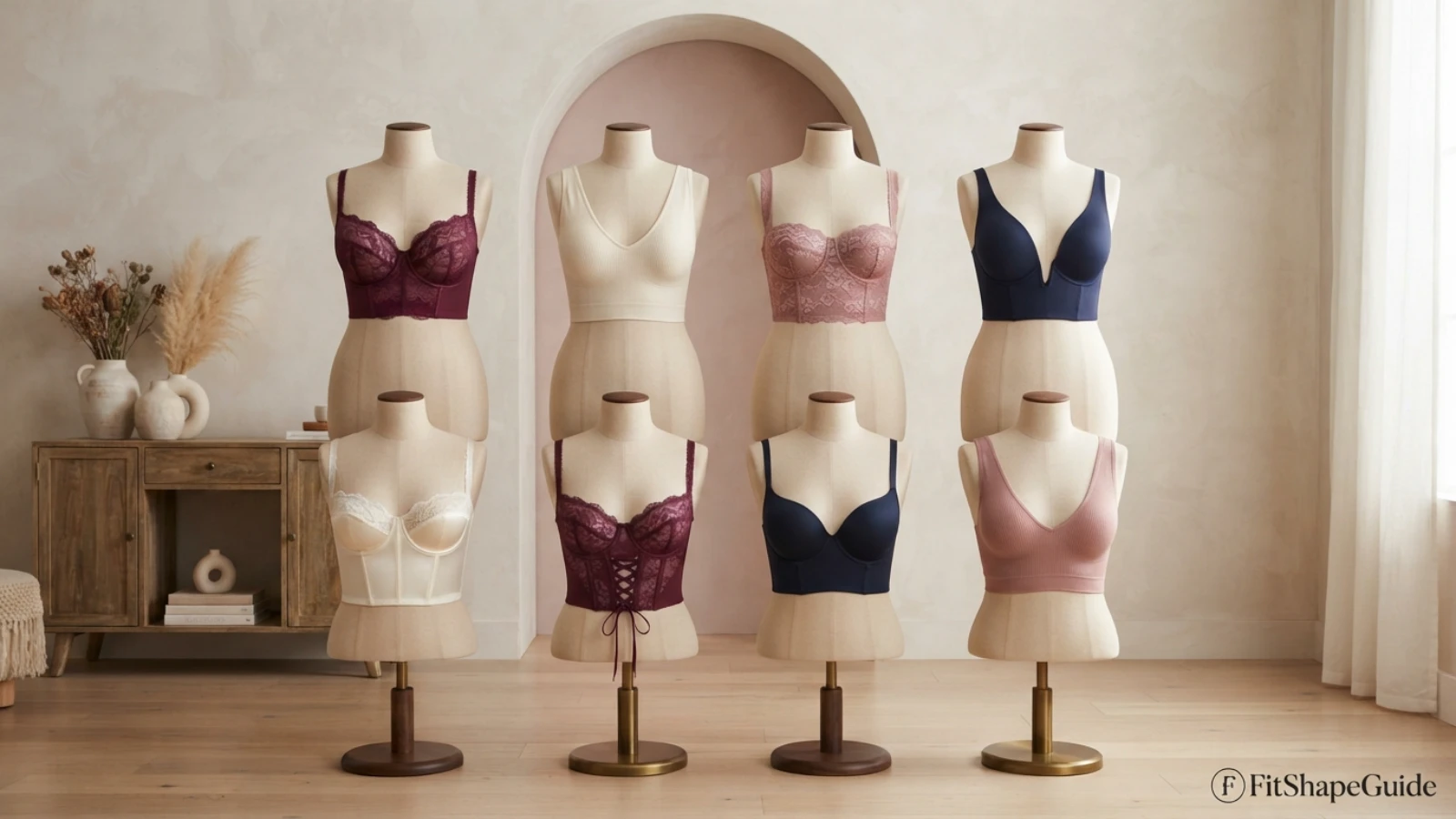
Best long-line bra styles for a large bust
Underwire full-cup longline
Deep seamed cups surround the breasts while the lower frame extends farther over the ribcage.
Best for: structured all-day support with fuller coverage.
Wireless longline bra
Uses a deeper band, shaped cups, mesh lining or internal slings instead of a rigid wire frame.
Best for: wearers who prefer broad wire-free support.
Longline balconette bra
Pairs a more open cup neckline with an extended torso frame.
Best for: square, scoop and moderately lower necklines.
Longline plunge bra
Combines a lower center gore with a deeper band and fuller-bust cup structure.
Best for: low V-neck outfits where a standard longline center would show.
Bridal longline bra
A formal foundation may add boning, smooth cups or strapless engineering to the extended torso frame.
Best for: structured formalwear when the gown can hide the frame.
Corset-style longline bra
A supportive inner bra can sit inside a longer fashion body, giving the look of a corset top without relying only on decorative fabric for bust support.
Best for: lingerie-as-outerwear styling.
Smooth longline T-shirt bra
Uses smooth or molded cups with a deeper lower frame to reduce visible cup seams beneath fitted clothing.
Best for: smooth dresses and fitted tops.
Soft lounge longline
Stretch cups and a broad underband provide lighter containment without the structure of a wired longline.
Best for: home, travel and lower-support days.
Do long-line bras give more support?
They can provide a broader support base, but “longline” by itself does not guarantee stronger bust support.
A fuller bust still needs cups with enough depth and volume, a band that fits the ribcage and straps that position the upper cup correctly.
More torso contact
The extended frame spreads contact over a deeper section of the torso rather than concentrating all band tension immediately below the bust.
More room for reinforcement
A longline design can accommodate additional seams, supportive mesh, multiple hooks or flexible boning that would not fit into a narrow everyday wing.
Potentially more frame stability
When the torso section fits correctly, a deeper band can make the bra feel less dependent on the shoulder straps.
But cup fit still controls the breast
A longline with shallow cups can still create overflow, downward cup displacement or unstable wires.
Longer is not automatically firmer
Some longlines are deliberately soft fashion pieces. Others contain an engineered inner bra. Compare the actual cup and band construction rather than assuming the visual silhouette tells you the support level.
Do not size down for “extra hold”
A smaller torso section may simply fold at the waist or force the entire bra upward.
Cup depth, side support and longline structure
Three-part cups
Seamed cup panels can create fuller-bust projection while the extended frame handles torso stability separately.
Side-support slings
An inner side panel can guide outer breast tissue forward, especially useful in larger cups where the lower torso panel alone cannot control breast direction.
Underwire frame
An underwired longline can create a defined breast perimeter. The wire still needs to surround breast tissue rather than rest on it.
Wireless construction
Without a wire, cup seams, mesh lining, side panels and the broad underband carry more of the structural job.
Upper-cup adaptability
Stretch lace or a flexible edge can accommodate mild asymmetry without changing the fit of the lower longline frame.
Do not let the longline distract from obvious cup problems
If the fuller breast spills, the center floats or the cup collapses, solve the cup first.
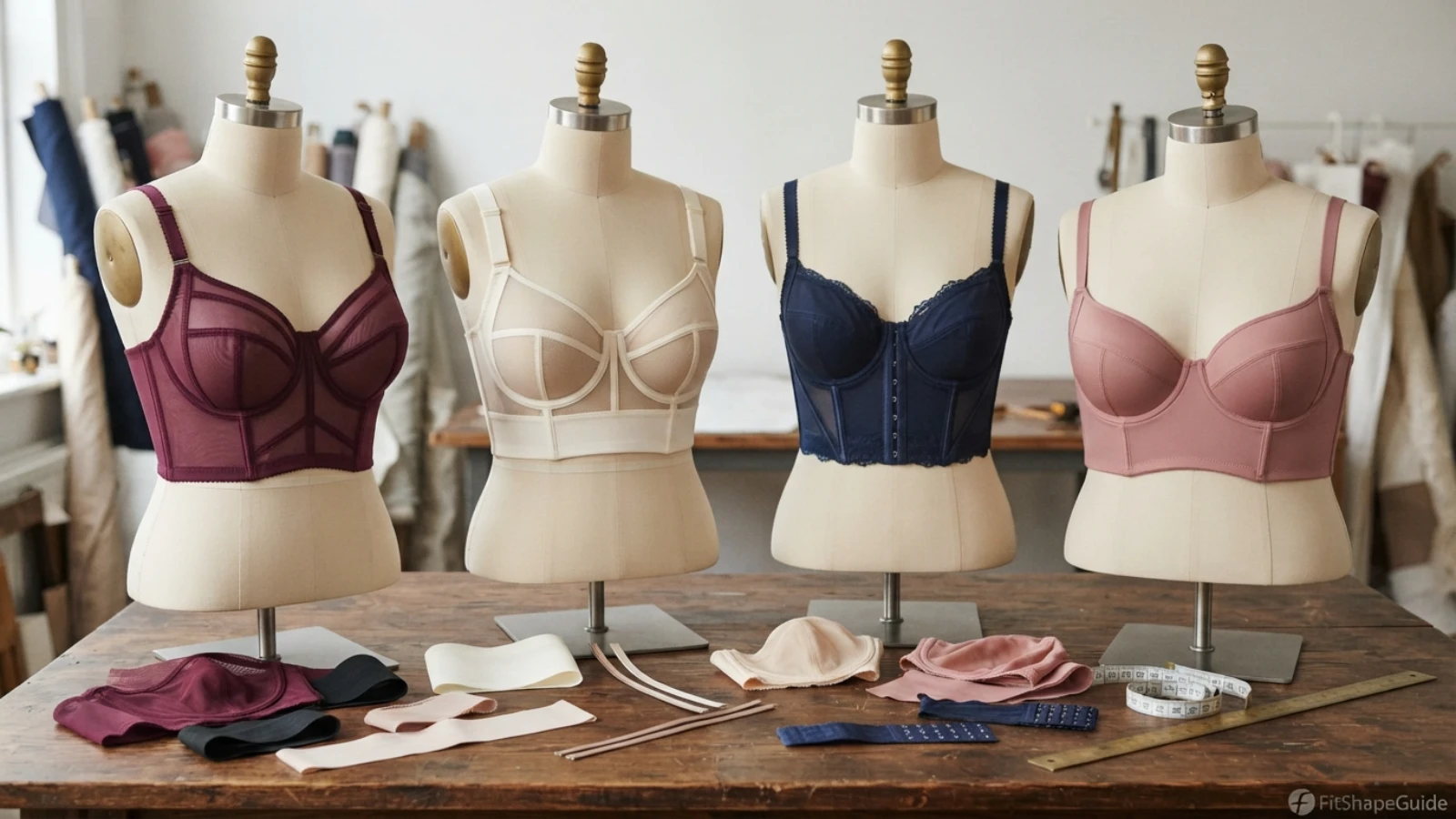
How to fit a longline bra to your torso
Longline bras introduce a fit variable that matters much less in a standard bra: the vertical distance between your underbust and waist or upper abdomen.
Shorter torso
A very deep longline can reach the natural waist quickly. When you sit, the torso shortens and the lower edge may collide with the waist, fold or push the bra upward.
Longer torso
A short longline may stop high enough that it behaves more like a deep everyday band. If you want the broader contact of a true longline, compare deeper frames.
Ribcage shape matters
A torso that becomes noticeably wider below the underbust may require more flare or stretch through the longline body than a straighter ribcage.
Waist position matters
Do not evaluate a longline only while standing tall. The garment has to tolerate the natural fold and shortening of the torso when seated.
Boning placement matters
Flexible reinforcement can stabilize a deeper panel, but a boning channel that ends at the wrong point on your torso may poke while sitting.
Check the lower edge before deciding the band is “too big”
If the lower edge flares while the upper band is stable, the longline shape may simply not match the change in circumference down your torso.
Why longline bras roll up—and what to try
The longline is too long for your torso
When the lower edge meets the waist crease, sitting can push the fabric upward.
The lower panel is too tight
If your torso becomes wider below the ribcage but the bra does not accommodate that change, the lower edge may search for a narrower place and roll upward.
The lower panel is too soft
Very flexible fabric can fold repeatedly when there is not enough reinforcement to maintain the extended shape.
The longline is too loose
An oversized lower panel can wrinkle or collapse rather than lying flat.
Boning can reduce folding—but is not always necessary
Some longer frames use vertical reinforcement to maintain their shape. Softer short longlines may remain stable without it.
Do not automatically size down
A smaller size may increase the difference between your underbust and lower torso circumference and make rolling worse.
Try a shorter longline
If a true waist-length style consistently folds, a deeper-than-standard but shorter longline may give you the broad-band feel without reaching the body crease.
Wireless long-line bras for a large bust
Wireless longlines can be especially comfortable when the design uses the extra underband depth as part of the support system instead of relying on stretch fabric alone.
Wide underband
A deep elastic or fabric frame provides a broad base below the cups.
Hidden mesh cups
Internal layers can add structure while leaving the exterior soft.
Side support
Foam, fabric or mesh side slings can direct the breast forward and help stabilize outer cup tissue.
Seamed shaping
Wireless cups often need darts or seams to create enough projection for a fuller bust.
Wide adjustable straps
Useful for upper-cup positioning and shoulder comfort, but they should not replace the role of the broad underband.
Natural wireless shape is not a fit failure
A wireless longline may create softer separation or a different profile from a wired balcony bra while still providing good containment and comfort.
For more wireless options, see Best Bralettes for a Large Bust .
Corset-style longline bras for a fuller bust
Some longline bras intentionally look like corset tops and are designed to be visible beneath jackets, shirts or as standalone fashion pieces.
Look for an inner bra frame
A fashion longline can appear highly structured while the actual support comes from an internal balcony or full-cup bra.
Decorative body fabric may be separate from breast support
The lower body can stretch for movement while the hidden cups remain stable.
More hooks can accompany the deeper frame
A longer rear closure may use several hook rows simply because the garment extends over more torso area.
Do not interpret corset styling as waist training
A lingerie longline can be worn for appearance and support without being designed to reduce waist circumference.
Check the hem under clothing
A corset-style lower edge may create more visible structure beneath thin tops than a standard bra.
Useful as outerwear
When intentionally visible, a supportive longline can pair with tailoring, high-rise trousers or skirts without trying to disappear under the outfit.
When should you wear a longline bra?
Under fitted dresses
A smooth longline can provide a continuous foundation beneath a structured dress, provided the lower edge does not create a visible ridge.
Under bridal or formalwear
Longline foundations can be useful when the dress provides enough back and side coverage to hide the deeper frame.
Under high-waisted outfits
Check whether the waistband and longline overlap. Two firm garment edges meeting at the same point can feel bulky while sitting.
As visible lingerie
Corset-style longlines can be deliberately styled under an open blazer or as a supportive top when the garment is designed for outerwear.
For long seated days
Choose cautiously. A longline that is comfortable while standing may become your least comfortable bra at a desk if the lower edge hits the waist crease.
For occasions requiring a low back
A standard longline often extends farther down but not necessarily lower at the rear neckline. “Longline” and “low back” are different construction features.
For low-back formalwear, see Best Bras for Backless Wedding Dresses .

How to buy a long-line bra for a large bust
- Confirm the cup fit first. The longline body cannot compensate for undersized or shallow cups.
- Check how far the frame extends. “Longline” can mean anything from a modestly deeper band to near-waist coverage.
- Compare your torso length. Estimate where the lower edge will land when you sit.
- Check lower-frame stretch. Your torso may widen below the ribcage, so the longline should accommodate that shape.
- Inspect reinforcement. Flexible boning, seams or mesh can help a deeper panel resist collapsing.
- Check closure depth. Longlines may use additional hook rows; make sure the rear closure is comfortable and practical.
- Choose underwire or wireless intentionally. Look at where the support comes from in either construction.
- Check strap adjustment. A deep lower frame does not eliminate the need for correctly positioned upper cups.
- Test your clothing. Check whether the lower edge or boning shows beneath fitted garments.
- Sit before buying when possible. Seated fit is one of the most important longline tests.
Do not assume the deepest band is the best
A shorter longline may work far better on a shorter torso while still giving more band coverage than a standard bra.
Do not size down for smoothing
If your goal is torso smoothing, use a product designed to provide your preferred compression level rather than forcing a bra into a smaller size.
Do not ignore lower-edge flare
If the cups and underbust fit but the hem floats away, you may need a different torso shape rather than a different cup size.
Do not assume boning equals better support
Boning can stabilize a long panel, but cup engineering and band fit remain more important for breast support.
Do not assume longline means low-back
Many longlines actually use substantial rear panels. Check the exact back height for formalwear.
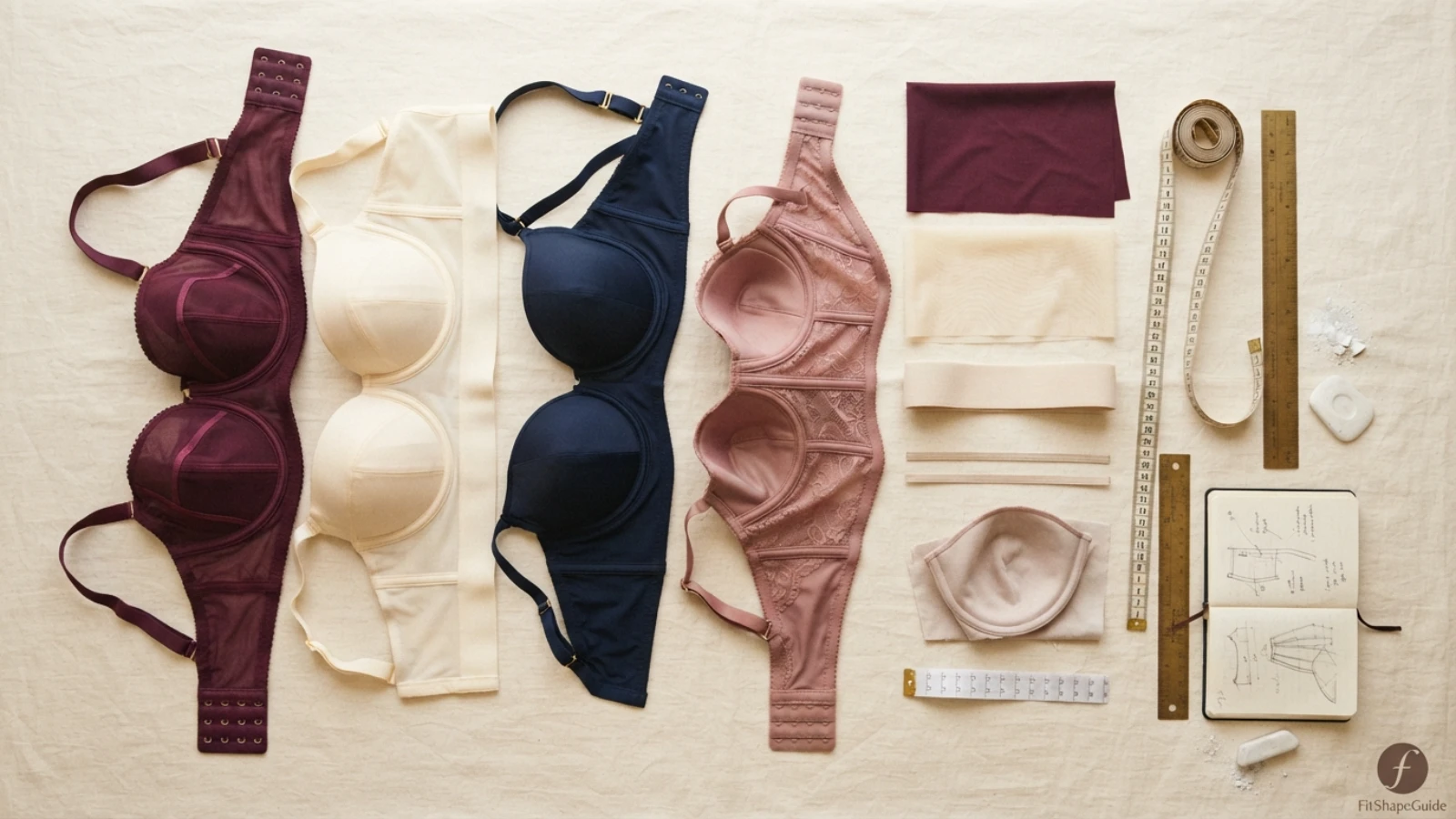
Common long-line bra fit problems
| Problem | Likely cause | Try next | Avoid |
|---|---|---|---|
| Lower band rolls upward | Too long, too tight or wrong torso shape | Shorter/different-cut longline | Automatically sizing down |
| Longline folds when sitting | Torso-length mismatch | Shorter extended band | Ignoring seated fit |
| Cups push upward when seated | Lower frame hits waist | Shorter longline / different shape | Tightening straps |
| Hem flares away | Lower torso smaller/shape mismatch or panel too loose | Different lower-frame cut | Changing cup unnecessarily |
| Lower band digs | Excessive compression / edge placement | Reassess size and length | Assuming pain means support |
| Breasts spill from cups | Cup too small/shallow | More cup capacity | Focusing on longline band |
| Wireless cup collapses | Insufficient cup structure | Hidden sling / stronger lower cup | Overtightening straps |
| Boning pokes while seated | Boning length/position mismatch | Different frame | Trying to bend rigid components |
| Shows under fitted dress | Lower edge/seams too prominent | Smoother/shorter style | Choosing by support alone |
| Feels great standing, awful after an hour | Movement/torso mismatch | Repeat seated movement test | Judging fit only in mirror |
My longline bra rolls at the bottom
Start by checking where the lower edge lands when you sit. If it reaches a natural body crease or your torso becomes wider below the ribcage, another longline shape may work better than a tighter size.
My longline feels supportive but restricts breathing
Support should not require uncomfortable compression. Reassess band size, lower-frame tension and whether the bra is being used as shapewear when it was not designed for that purpose.
My wireless longline still needs very tight straps
Check whether the band and cup frame are providing enough structure. A deep band should reduce—not increase—the need to suspend the bust from the shoulders.
I have a short torso
Look for shorter longline styles or simply a deep everyday underband. You can gain broader torso contact without choosing a frame that reaches the waist.
Which long-line bra should you choose for a large bust?
Choose an underwire full-cup longline when you want defined breast support plus a deeper torso frame. Choose a wireless longline when broad underband comfort matters more than a rigid wire. A balconette or plunge longline can handle lower necklines, while a corset-style longline with a genuine inner bra works well when you want the foundation to be visible as part of the outfit.
The most important measurement is not simply how long the bra is. It is whether that length suits your torso when you breathe, bend and sit. The right longline should feel like a broader foundation—not a garment you spend the day pulling down or unrolling.
Frequently asked questions
Are long-line bras good for a large bust?
They can be. An extended lower band can provide broader torso contact and room for additional support construction, but cup depth, band fit and torso length still determine whether the bra works well.
Do longline bras give more support than regular bras?
A longline may feel more stable because its lower frame covers more torso area, but the length alone does not guarantee stronger bust support. The cup and band still need to fit correctly.
Why does my longline bra roll up?
Rolling can happen when the bra is too long for the torso, too tight or too loose at the lower edge, or when its shape does not match the change in torso circumference below the ribcage.
Are wireless longline bras supportive enough for a large bust?
They can be when they use shaped cups, supportive linings or slings, a broad stable underband and appropriately adjustable straps.
Can I wear a longline bra every day?
Yes if it remains comfortable through your normal routine. Test sitting, bending and breathing because a longline can behave very differently from a standard bra during prolonged seated wear.
Is a longline bra the same as a bustier?
Not necessarily. Both can extend below the underbust, but bustiers often reach farther down the torso and may use more boning or formalwear construction. Product terminology varies.
Are longline bras good for short torsos?
They can be, but shorter longline styles are often easier to fit. A very deep frame may collide with the waist crease and roll or push upward while sitting.
Does a longline bra flatten the stomach?
Not necessarily, and it should not be expected to act as shapewear unless the garment is specifically designed and sized for compression. A longline bra’s main defining feature is its deeper lower frame.
How FitShapeGuide evaluates long-line bras
This guide evaluates longline bras through cup depth, cup containment, band stability, side-support construction, lower-frame depth, lower-edge tension, torso length, closure depth, boning or reinforcement, strap adjustment and seated movement.
FitShapeGuide does not assume that a longer band automatically creates better support. The extended frame can distribute contact across more torso area and provide space for additional reinforcement, but bust support still depends on a correctly fitting cup and stable band.
Wireless longlines are evaluated by where their support actually comes from: shaped cups, hidden mesh, internal slings, broad underbands, side structure and strap placement rather than the absence or presence of wire alone.
Corset-style longlines are also evaluated separately from true corsets or shapewear. A decorative extended body may contain a supportive inner bra, but visual corset styling does not automatically mean waist compression or stronger bust support.
Torso length is treated as a major longline fit variable. A frame that fits while standing but rolls, folds or pushes the cups upward while seated is not considered a successful fit.
Before publishing any commercial recommendation, FitShapeGuide should verify the exact live seller, product name, current band range, cup range, longline depth, cup construction, side support, underwire or wireless frame, boning, body-panel stretch, closure depth, strap width, strap adjustability, materials, care, current availability and return eligibility.
No ASIN, cup range, longline measurement, boning claim, compression claim, price, rating, review count, coupon, stock statement or delivery promise should be published unless directly verified.
One Comment