How to Dress a Large Bust with Wide Hips
When both the bust and hips carry noticeable visual width, clothing often fits best when each area gets enough room instead of forcing one standard garment size to handle everything. Necklines, waist placement, top length, jacket shape, skirt cut and trouser rise can then change how the outfit is composed—whether you want a defined waist, a relaxed column, a dramatic curvy silhouette or something in between.
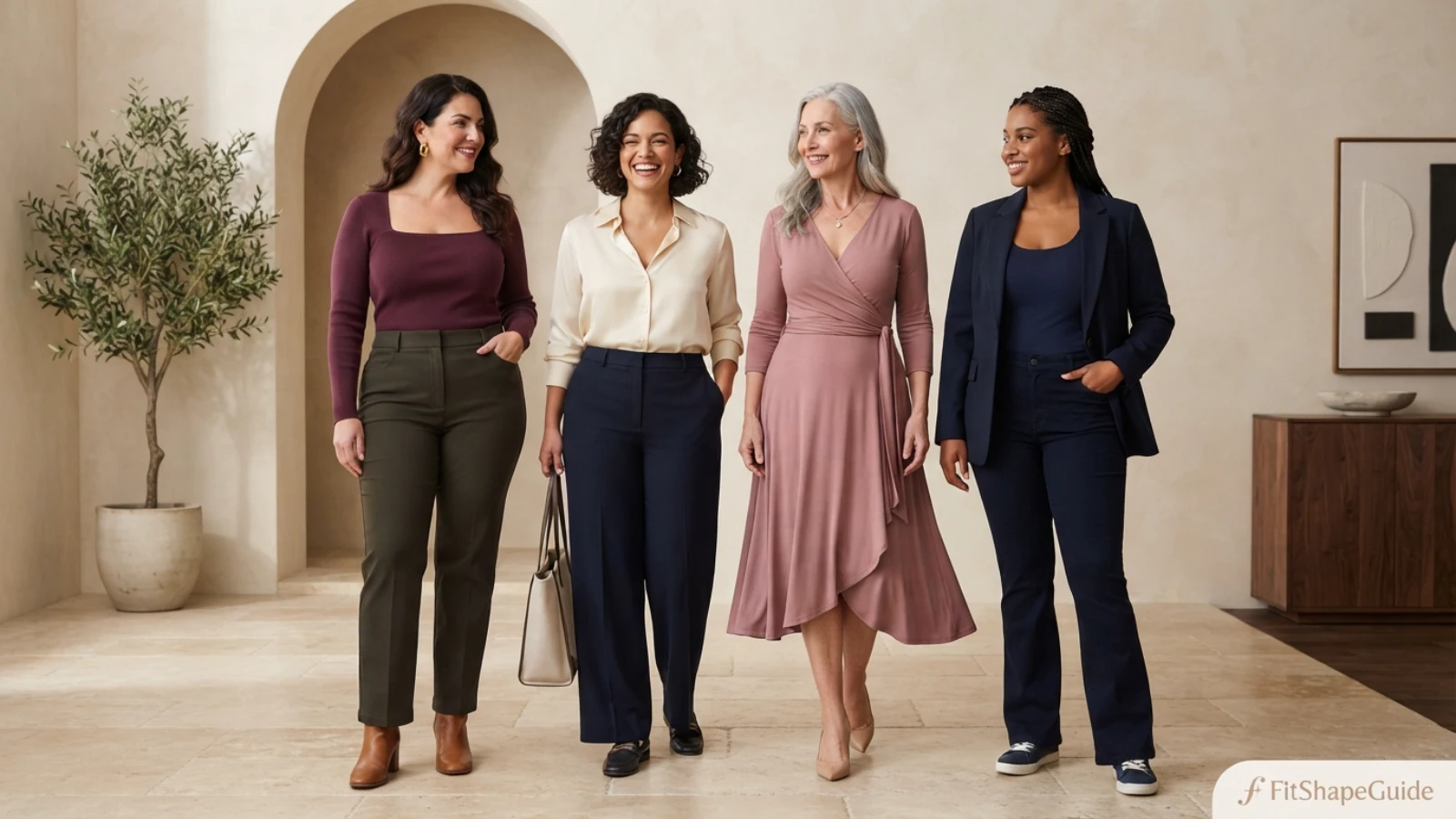
The 60-second full-outfit fit test
- Check the bust for pulling, flattened fabric or strained buttons.
- Check the hips for horizontal drag lines or pockets pulling open.
- Make sure the waist sits where the garment was designed to sit.
- Look at the top hem—does it stop at a useful point, or cut across the widest hip area in an awkward way?
- Sit down and check the trouser or skirt waistband.
- Raise your arms and confirm the top does not ride dramatically upward.
- Walk several steps and make sure the lower garment moves rather than clings unexpectedly.
- Take one full-length photo and judge the whole outfit rather than inspecting bust or hips separately.
The easiest styling framework for a fuller bust and wide hips
When both the bust and hips need significant garment room, one common problem appears immediately: a piece may fit one area beautifully and fail at another.
A dress can fit the hips but pull at the bust. A shirt can fit the chest but become too loose through the waist. Trousers can fit the hips but leave extra waistband room. These are ordinary garment-proportion issues.
Look for darts, seams, stretch, wrap construction or enough front projection.
Define it, skim it or ignore it intentionally depending on the silhouette you want.
The skirt or trouser should have enough width and mobility without borrowing room from the waistband.
| If you notice… | Try… | Why | Avoid assuming… |
|---|---|---|---|
| Top fits bust but hangs loose at waist | Wrap, dart, tuck or shaped seam | Adds garment definition | Your waist must be tight |
| Pants fit waist but pull at hips | Curvier cut / more hip room | Fits lower body proportion | You need a larger waist |
| Pants fit hips but gap at waist | Curvy fit / alteration | Separates hip and waist measurements | You chose the wrong body |
| Loose dress looks boxy | Waist seam/belt if desired | Creates a separate garment break | You must show your waist |
| Tight top + tight bottom feels visually busy | Add one structured or relaxed piece | Changes outfit rhythm | Either area must be hidden |
| Long top catches on hips | Shorter hem / side slit | Improves fabric movement | Long tops are forbidden |
| Full skirt feels too voluminous | Softer A-line/bias skirt | Controls fabric volume | Wide hips cannot wear skirts |
| Blazer looks square from bust to hips | Shorter/open/shaped jacket | Creates intentional jacket line | Blazers do not suit curves |
Best necklines for a large bust and wide hips
Moderate V-neck
A V-neck introduces a central opening through the upper body and can work with fitted, relaxed or wrap silhouettes.
Square neck
A square neckline creates a stronger horizontal upper line and works especially well on knit tops, structured dresses and fitted bodices.
Scoop neck
A broad scoop adds softness and openness while still providing substantial coverage.
Open collar
Button shirts worn with the top buttons open can create a natural V shape while the collar adds structure near the shoulders.
Sweetheart neckline
A sweetheart can follow the upper bust line without requiring a deep center opening.
Wrap neckline
Wrap construction combines a V-neck with adjustable overlap, though fuller busts usually benefit from enough front coverage to stay secure through movement.
Boat neck
If you enjoy a horizontal neckline, a boat neck can work too. Make sure the garment has enough front length and bust room so it does not pull toward the neck.
High necks
Crew necks and turtlenecks are not off-limits. Choose them because you like the look, and use fabric weight, jewelry, jackets or sleeve detail if you want to break up the upper fabric area.
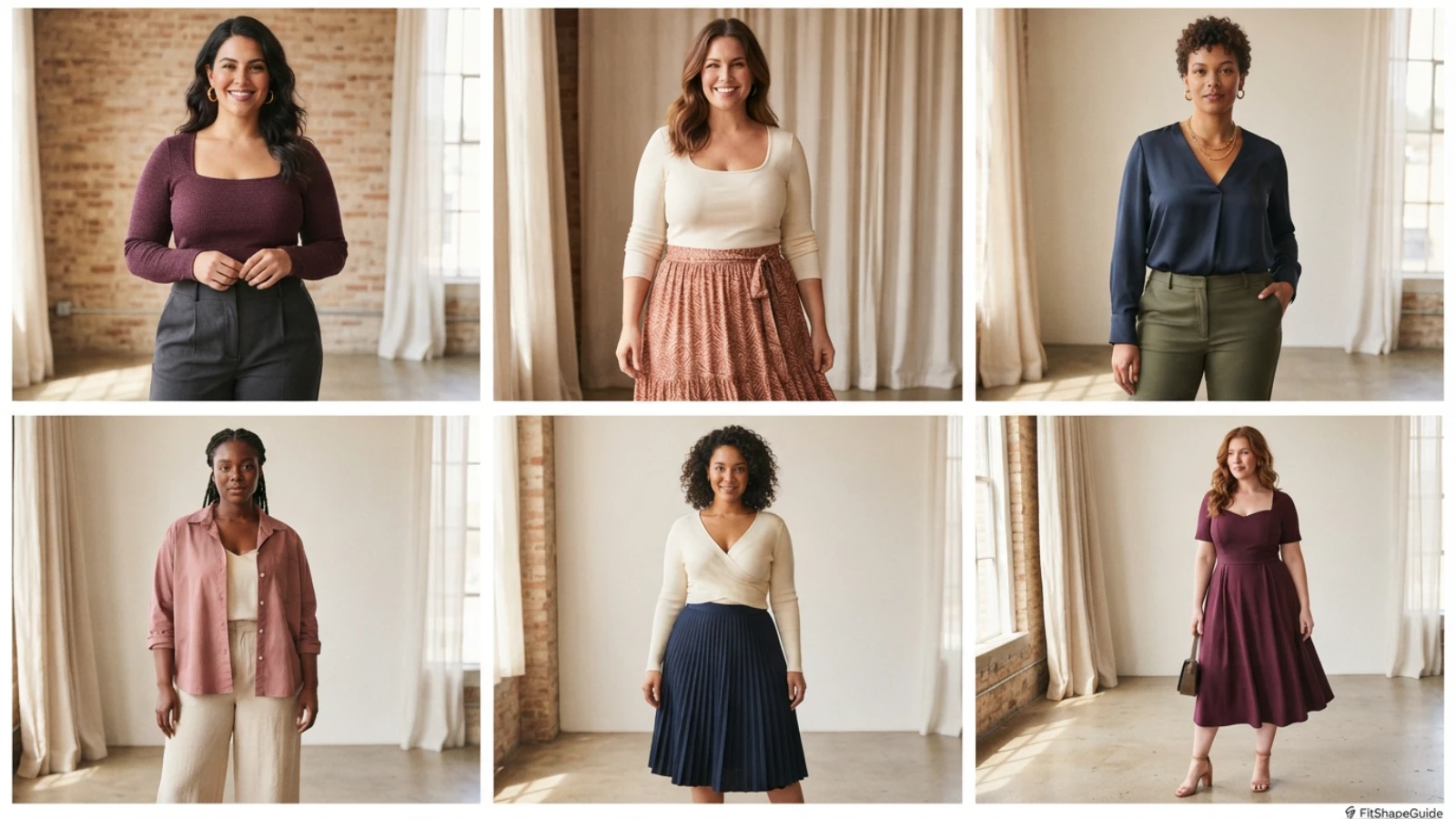
Best tops for a large bust with wide hips
Wrap tops
Wrap tops can adapt around the bust while allowing the waist to remain independently adjustable.
Princess-seam tops
Vertical shaped panels create breast projection and can contour the torso without relying on a large amount of stretch.
Open-collar shirts
Look for darts, stretch or fuller-bust cuts so you do not have to choose between button pulling and an oversized shoulder fit.
Square-neck knits
Medium-weight stretch fabric can fit bust and waist separately while keeping a clean neckline.
Peplum tops
A defined upper torso with controlled flare can work well when the peplum starts near your natural waist and has enough room to move over the hips.
Soft blouse with a tuck
A fluid blouse can accommodate the bust; a full or partial tuck stops all the fabric from hanging straight to the hip.
Cropped-but-not-tight tops
A top ending near the waistband can create a clean break above the hips without requiring a body-hugging fit.
Long tunics
You can wear them too. Side slits, fluid fabric and enough hip circumference help a longer top move instead of catching across the hips.
Should you define the waist?
A fuller bust and wide hips often create a noticeable difference between bust, waist and hip measurements, but you do not have to highlight that contrast every day.
If you like waist definition
Wrap tops, tucked shirts, belts, princess seams, fit-and-flare dresses and high-rise bottoms can create a clear garment break around the waist.
If you prefer a softer silhouette
Use slightly relaxed tops that skim the waist, open jackets, column dresses or longer layers with movement.
If you want a straighter outfit
Pair a softly structured top with straight trousers or a straight midi skirt and avoid strong waist seams.
If you want a dramatic curvy silhouette
Use more fitted upper garments, a clear waist and trousers or skirts that follow or flare from the hip.
Belts
Choose a belt width and placement that feels comfortable. High belts can crowd the underbust on a shorter torso, while a slightly lower natural-waist placement may leave more breathing room.
Do not pull a belt tighter to create shape
If the garment only looks right under uncomfortable compression, the garment cut is doing too little of the work.
Best pants and jeans for a large bust with wide hips
Straight-leg trousers
Straight legs create a clean lower-body line and pair easily with wrap tops, fitted knits and blazers.
Wide-leg trousers
A wider leg continues the garment volume below the hip instead of narrowing immediately after it. This can create fluid movement and work especially well with tucked or shorter tops.
Bootcut jeans
A slight flare below the knee distributes visual width farther down the leg and pairs easily with structured upper layers.
Flare jeans
More pronounced flares create a stronger fashion statement and can work with both fitted and soft tops.
Curvy-fit trousers
When the hips require a larger size than the waist, curvy cuts can reduce waistband gaping by building more difference between waist and hip measurements.
Pleated trousers
Pleats are not automatically bad for wide hips. Soft forward-facing pleats can add useful movement and room, especially in fluid fabrics.
High-rise pants
These can create a clear waist break below the bust, though the exact rise should suit your torso length and seated comfort.
Mid-rise pants
A mid-rise can feel less crowded if the distance between your bust and waist is shorter.
For more detail, see Wide-Leg Pants and a Large Bust .
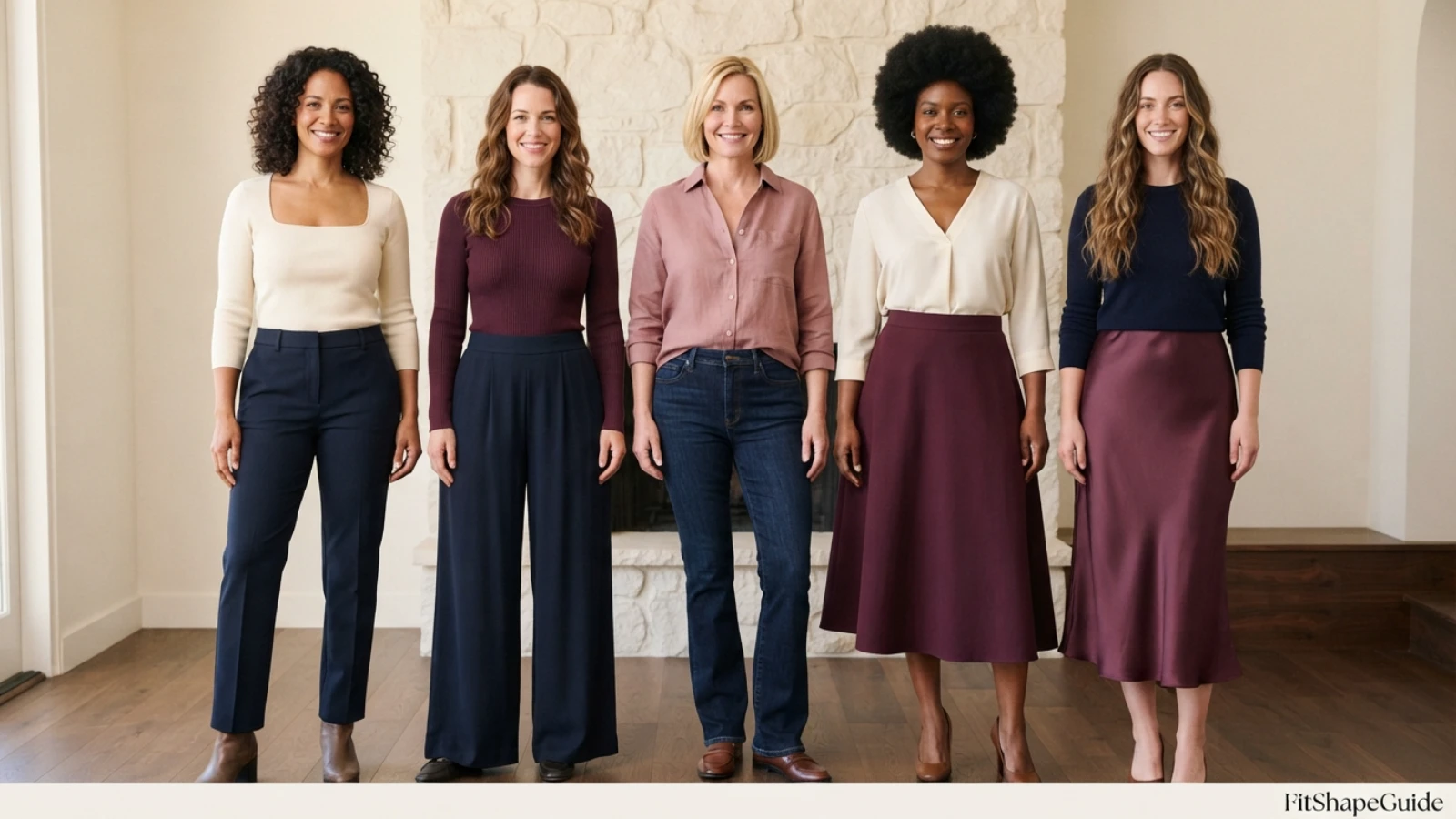
Best skirts for a fuller bust and wide hips
A-line skirt
A fitted waist with gradual flare creates hip room without requiring the fabric to cling to the fullest part of the lower body.
Bias-cut midi skirt
Bias fabric can follow curves softly while maintaining movement, though very thin satin-like materials may show more garment and underwear lines.
Straight midi skirt
A straighter skirt can create a longer column and works well with a slightly shorter or tucked top.
Pleated midi skirt
Look at where the pleats open. Stitched-down pleats near the waist can create a cleaner upper section before the fabric expands.
Full skirt
A fuller skirt can create a dramatic silhouette if you enjoy volume. Choose fabrics that move rather than stand stiffly away from the body unless architectural volume is the look you want.
Wrap skirt
Adjustable waist construction can be practical, though secure overlap matters when walking and sitting.
High-slit skirt
A straight or bias skirt with a slit can add movement without increasing overall skirt width.
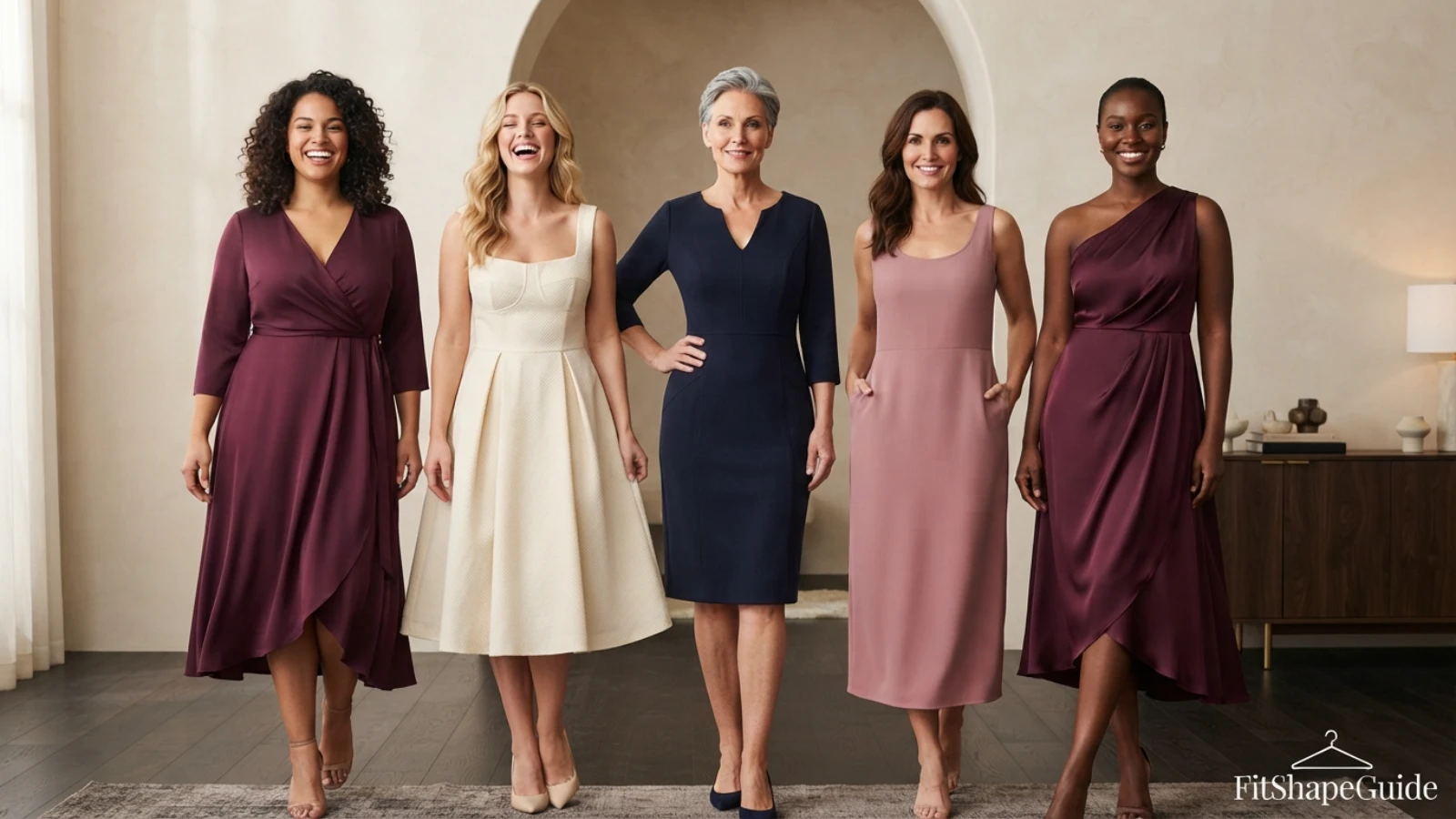
Best dresses for a large bust with wide hips
Wrap dress
A secure wrap can accommodate bust projection, define the waist if desired and create hip room through a flowing skirt.
Fit-and-flare dress
A shaped bodice and independent flared skirt make it easier to fit the bust without asking the skirt to cling through the hips.
Princess-seam dress
Vertical panels allow the garment to change dimension through bust, waist and hips more deliberately than a flat shift pattern.
Shirt dress
Look for enough bust room at the buttons and a skirt section that does not pull across the hips. A belt or tie can be used only if you enjoy the defined-waist effect.
Square-neck midi
A square neckline plus shaped waist and A-line or straight skirt can create a clean, structured silhouette.
Bias dress
A well-cut bias dress can skim bust and hips with softness rather than rigid tailoring. Check side seams and bust coverage carefully.
Column dress
If you prefer minimal waist definition, choose a column with enough room through both bust and hip so the garment falls rather than catches.
One-shoulder dress
Asymmetric necklines can create strong visual movement through the upper body while a fitted or softly draped skirt follows below.
Best jackets and layers for a large bust with wide hips
Cropped jacket
A jacket ending around the waist can create separation between upper and lower garments without laying extra fabric over the hip.
Single-breasted blazer
Open lapels create visual space at the bust while a shaped jacket can follow the torso without becoming excessively boxy.
Open-front blazer
A good solution when shoulder fit matters more than forcing the front to button across the bust.
Hip-length jacket
If the hem lands around the fullest hip, check that it has enough circumference or side vents to avoid catching.
Longline blazer
A longer jacket can create a strong vertical outer line. Look for movement through the hip and enough front width so the lapels do not pull backward.
Denim jacket
Cropped and waist-length denim jackets can work easily with wider hips because the hem stops before the fullest area.
Cardigan
A structured cardigan gives more flexibility than woven tailoring, while a soft long cardigan creates a more fluid vertical layer.
Trench coat
Choose enough chest and hip room. A trench that fits only when the belt is tightly cinched will usually feel restrictive through everyday movement.
Best fabric behavior for this proportion
Medium-weight knits
Useful for fitted tops because they can follow bust and waist while retaining their shape.
Fluid woven fabrics
Viscose-style drape, soft crepe and similar flowing materials can move over bust and hips without requiring a rigid fit.
Structured suiting
Useful in blazers and trousers when the pattern has enough room for your measurements.
Bias-cut fabrics
Can create elegant movement around wider hips and fuller busts, though the garment still needs enough total circumference.
Very thin stretch jersey
It may reveal bra edges, underwear lines and tension points more clearly. That is not inherently bad, but it is useful to know before buying.
Stiff fabric
Rigid cotton or heavy woven material may require more exact darting and shaping because it cannot borrow stretch from the fabric.
10 outfit formulas for a large bust with wide hips
Common outfit problems and what to change
| Problem | Why it happens | Try | Avoid assuming |
|---|---|---|---|
| Dress fits hips but crushes bust | Insufficient upper projection | Stretch / princess seam / larger bust cut | The whole dress size is wrong |
| Dress fits bust but floats at waist | Straight-cut torso | Alteration / belt / wrap style | You must wear it tight |
| Trousers gap at waist | Waist-to-hip ratio mismatch | Curvy cut / alteration | Your waist is the problem |
| Long top sticks on hips | Insufficient hem width | Side slit / shorter hem / more flare | Wide hips cannot wear long tops |
| Blazer pulls at bust and hips | Straight jacket cut | Open front / shaping / vents | You need oversized shoulders |
| Wide-leg pants feel overwhelming | Too much fabric or wrong rise | Cleaner drape / narrower wide leg | Wide-leg is impossible |
| Full skirt feels bulky | Stiff fabric / too much gathering | Soft A-line / bias cut | Skirts add unavoidable volume |
| Fitted outfit feels overly body-conscious | Everything equally close-fitting | Add open layer / relaxed piece | Your curves must be hidden |
Shopping checklist for a large bust with wide hips
- Check the bust first. Look for pulling, flattened fabric or strained buttons.
- Check the hips separately. The lower garment should move without horizontal drag lines.
- Test the waist instead of assuming it. A large bust and wide hips do not guarantee every brand’s “curvy” cut will fit your middle.
- Check front length. Bust projection can make tops and dresses rise at the front.
- Check top hem placement. A hem can sit above, at or below the hips; each creates a different garment line.
- Inspect side seams. They should hang roughly where the garment pattern intends rather than being dragged forward by the bust or backward by the hips.
- Check pockets. Trouser and skirt pockets should lie reasonably flat rather than being pulled open.
- Sit down. Waistbands, hip ease and bust room can all feel different seated.
- Walk. Skirts and trousers should allow a natural stride without twisting around the body.
- Photograph the complete outfit. Evaluate the overall silhouette rather than asking each body area to look smaller.
Do not size only for the bust
The lower garment still needs enough room at the hips, and a dress needs to accommodate both areas simultaneously.
Do not size only for the hips
If that leaves the bust compressed or the shoulder seams oversized, look for a different garment cut or consider tailoring.
Use alterations strategically
Waistband adjustment, shortening a jacket, adding darts or refining a dress waist can solve proportion differences without compromising the fuller areas.
Watch rigid garments carefully
The less stretch a piece has, the more accurately its pattern needs to match bust, waist and hip measurements.
Choose your desired silhouette before shopping
A fitted wrap dress, fluid column dress and oversized shirt dress can all fit the same body correctly while creating completely different visual results.
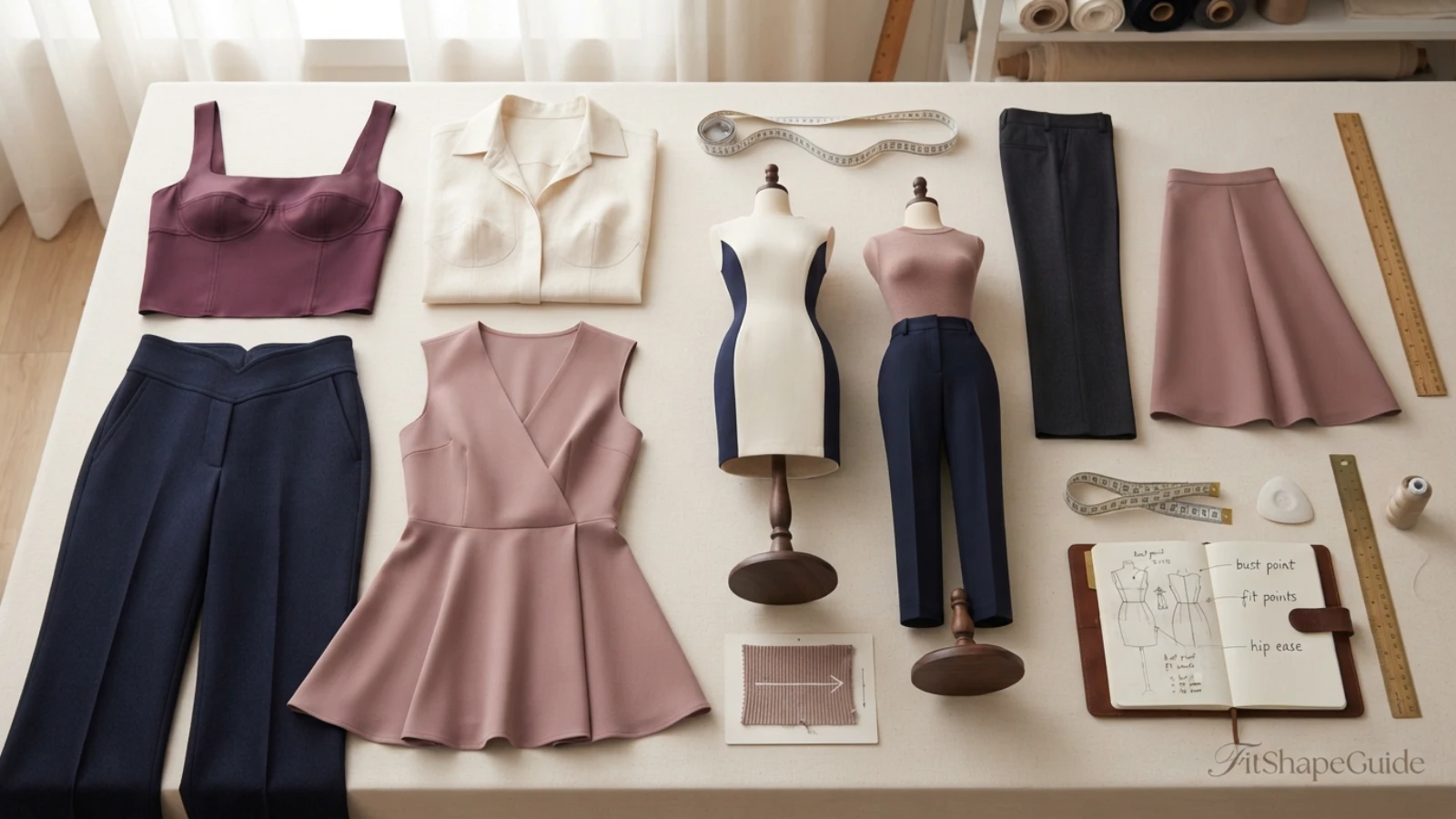
Save the 10 outfit formulas for your next shopping day
Keep a simple reference for necklines, tops, trousers, skirts and dresses that give both the bust and hips enough room—without turning your wardrobe into a list of body-shape rules.
Fit your fullest areas first, then choose the silhouette you want
For a large bust with wide hips, start with enough chest projection and hip room. Then decide whether the outfit should emphasize the waist, skim over it or create a straighter line.
Use square, scoop, V or open-collar necklines when you want upper-body openness; straight, bootcut or wide-leg trousers for different lower-body lines; and wrap, fit-and-flare, princess-seam or column dresses depending on how much shaping you want. None of those options is the “correct” silhouette—the useful one is the one that fits and feels like you.
Frequently asked questions
What should I wear if I have a large bust and wide hips?
Start with clothing that gives both the bust and hips enough room. Wrap tops, square or V-neck knits, straight or wide-leg trousers, A-line skirts and shaped dresses are useful starting points, but the best silhouette depends on your style preferences.
What neckline is best for a large bust and wide hips?
Square, scoop, moderate V and open-collar necklines are versatile because they create openness around the upper chest while working with many dress and trouser silhouettes.
Should I define my waist if I have a large bust and wide hips?
Only if you like that look. Wrap clothing, belts, tucks and waist seams can emphasize the waist, while open layers, column dresses and relaxed tops can create softer or straighter silhouettes.
Are wide-leg pants good for wide hips and a large bust?
Yes. Wide-leg trousers can create fluid movement below the hip and work particularly well with fitted, tucked or shorter tops. Choose a waistband and rise that fit comfortably.
What dress style works for a large bust and wide hips?
Wrap, fit-and-flare, princess-seam, square-neck and bias dresses are useful because they can accommodate bust and hip dimensions separately. Column dresses also work when enough room is built into the pattern.
Can I wear oversized clothes with a large bust and wide hips?
Yes. If you like oversized silhouettes, choose pieces with enough hem and hip width to drape intentionally rather than catch on the hips or pull forward over the bust.
Are skinny jeans bad for wide hips?
No. Skinny jeans are a style choice, not a fit mistake. Make sure the waistband, rise and hip area fit comfortably, then pair them with whatever top silhouette you prefer.
How do I stop trousers from gaping at the waist when they fit my hips?
Try curvy-fit trousers designed with a larger difference between waist and hip measurements, or have the waistband altered while keeping the hip fit intact.
How FitShapeGuide approaches fuller-bust body-combination styling
FitShapeGuide uses body-combination guides to solve garment-fit and outfit-composition questions, not to label one set of proportions as more desirable than another.
For a fuller bust with wider hips, we evaluate whether garments provide adequate three-dimensional space through both areas while keeping waist, shoulder and hem placement intentional.
A dress that fits the hips but compresses the bust is treated as a pattern mismatch. A pair of trousers that fits the hips but gaps at the waist is also treated as a garment-proportion issue rather than something the wearer should correct about their body.
Necklines are evaluated for garment openness and styling effect rather than their ability to make the chest appear smaller. Pants and skirts are evaluated for mobility, rise, waistband fit and fabric behavior rather than their ability to hide the hips.
Waist definition remains optional. Some readers prefer wrap silhouettes and visible waist seams; others prefer relaxed columns, oversized shirts or open layers. Both approaches can fit correctly.
FitShapeGuide also avoids rigid “body-shape rules.” A fuller bust and wide hips can be dressed in fitted, fluid, oversized, straight, flared or asymmetric clothing. The useful question is whether the garment has enough room and behaves the way the wearer expects during real movement.


One Comment