Best Formal Gowns for a Large Bust
A construction-first buying guide to supportive bodices, secure necklines, bra compatibility, full-length balance, formal fabrics, alterations and confident event movement.
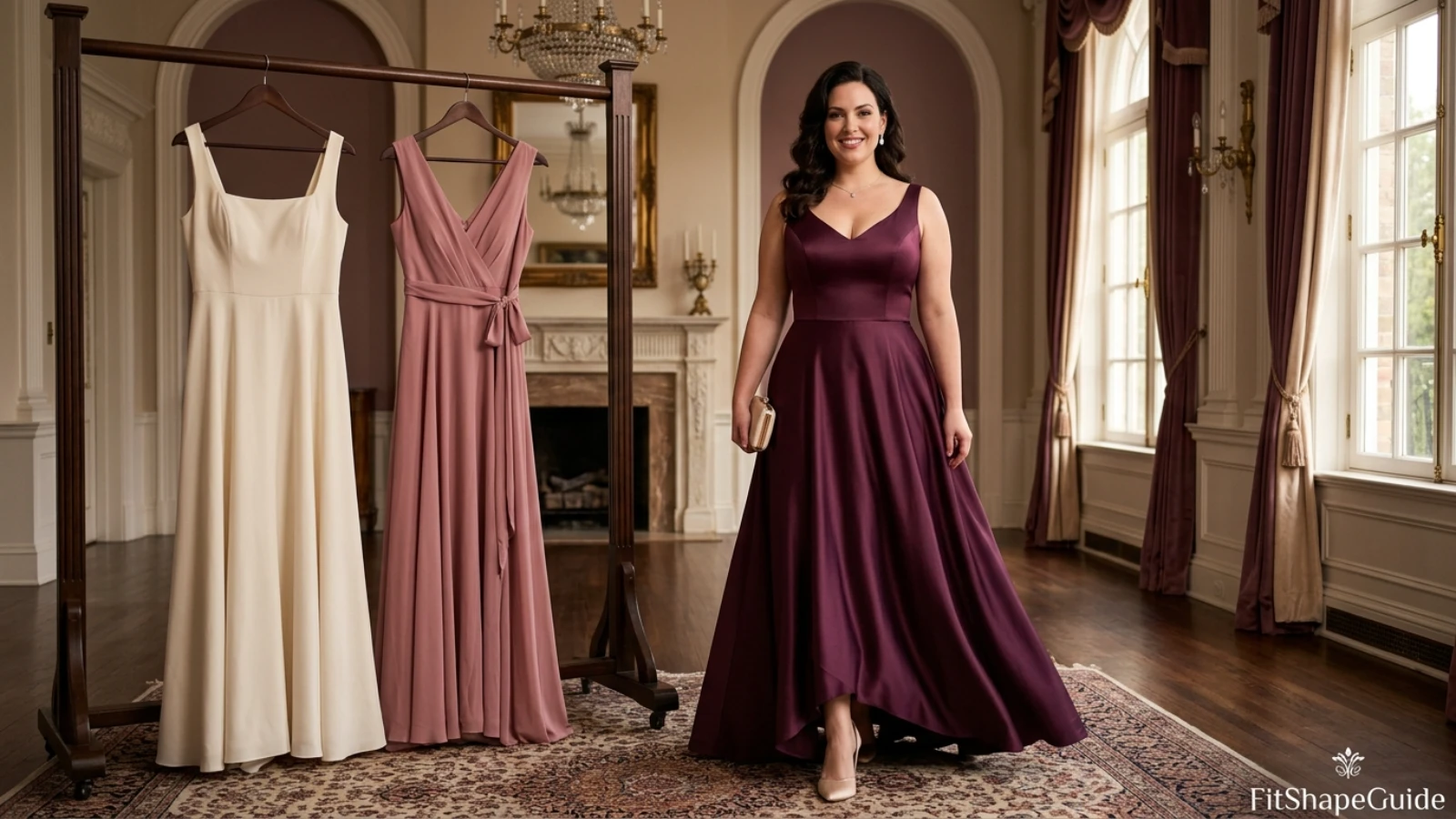
The 60-second formal-gown fit check
- The neckline covers the intended bra and stays secure while leaning and reaching.
- Darts, princess seams, panels, gathers or controlled stretch create smooth bust projection.
- The zipper closes without rippling, twisting or forcing the side seams forward.
- The waist or underbust seam sits where the design intends instead of crossing breast tissue.
- The lining, boning and waist stay permit the same breath, reach and seated movement as the shell.
- Straps or shoulders stay located while the waist—not the neckline—manages most skirt weight.
- The floor-length skirt, slit, train and hem clear the intended shoes through sitting, stairs and dancing.
Best formal gowns for a large bust by design
“Formal gown” usually means an ankle- or floor-length dress suitable for black-tie, gala, prom, formal wedding or evening occasions, but it does not describe one fixed neckline or silhouette. The best formal gowns for a large bust use seams, panels, darts, boning or controlled stretch to create front projection without dropping from the shoulders or becoming loose at the back. Start with the bodice: sparkle, color and a sweeping skirt cannot repair a neckline that rolls open, a waist pulled onto breast tissue or a corset edge that cuts in.
Supportive V-neck column gown
Best for: black-tie dinners and streamlined silhouettes. Look for long princess seams or French darts, a stabilized V, substantial lining and a back slit that allows a full stride. The V can work with a plunge or full-cup bra when its width and depth are measured. Trade-off: a narrow column demands accurate waist, hip and walking ease; sizing only for the bust may leave the lower body either tight or overly loose.
Princess-seam A-line gown
Best for: precise bust projection with forgiving skirt movement. Curved vertical panels distribute shaping from neckline to waist and can continue into a balanced full skirt. Check that each curve meets the bust smoothly and the waist stays level. Trade-off: extra skirt sweep is comfortable but heavier fabric needs a secure waist foundation so it does not pull from the shoulders.
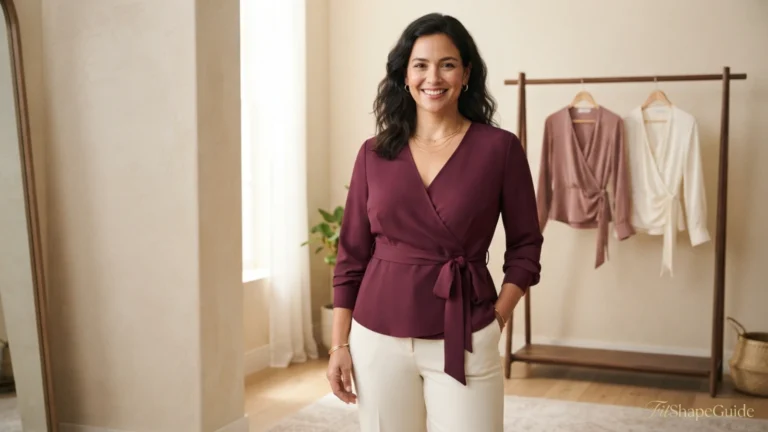
Secured wrap formal gown
Best for: adjustable waist fit and a diagonal neckline. Prefer broad overlapping fronts, a stable edge, an internal anchor and a tie channel at the natural waist. A small snap can stabilize adequate overlap; it cannot create missing front-panel width. Trade-off: a full-length wrap skirt must overlap through walking and wind as well as sitting. Compare the best wrap dresses for a large bust.
Square-neck wide-strap gown
Best for: architectural lines and conventional-bra compatibility. The corners need reinforcement, straps must cover the chosen bra, and the side bodice should conceal cup edges and wings. Trade-off: a very wide square can pull open when seated or reaching, so test above and side views rather than judging the front mirror alone.
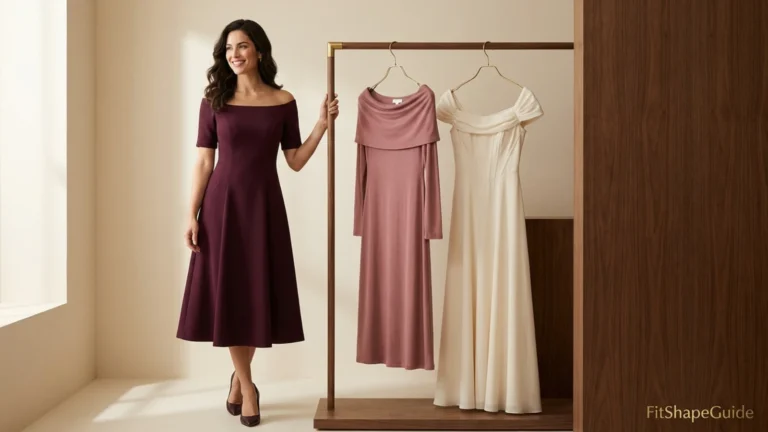
Structured off-shoulder gown
Best for: a formal neckline when the bodice—not the sleeves—provides support. Look for shaped cups or princess panels, gripper or waist stay, stable neckline facing and enough upper-arm mobility. Trade-off: this style normally needs a well-fitted strapless or longline bra unless the internal foundation has been independently verified; raising the arms may be more limited.
Boned or corseted formal gown
Best for: a defined bodice and controlled strapless or low-back styling. Boning should follow the torso without sitting on breast tissue, and cups or panels must offer adequate depth before the back is tightened. Trade-off: internal structure can improve stability but may reduce seated comfort and make alterations more technical. “Corset-style” decorative lacing is not proof of support.
Bust shaping, neckline security and waist placement decide the fit
The best formal gowns must hold a refined line while a longer, often heavier skirt applies downward force. Missing front width creates horizontal pull; missing front length lifts the waist and front hem; misplaced shaping sends drag lines from the bust toward the armhole or waist. The large-bust neckline guide explains how depth, width, straps and edge stability work together.
Projection must be built into the pattern
Princess seams spread shaping through long curves. Side darts and French darts create focused space in woven fabric. Pleats and gathers can help when they release from a stable seam, while stretch works only within its intended range. A dress that looks smooth only because the fabric is pulled tight has not created usable bust ease; it may become sheer, shorten at the front or distort the zipper.
The neckline and internal foundation have separate jobs
Facing, binding, stay tape or a shaped overlay can stop neckline edges growing, but they do not replace bust room. In strapless and off-shoulder gowns, boning, a waist stay, gripper elastic or an accurately fitted longline foundation should transfer load toward the torso. Decorative mesh adds visual coverage but does not automatically stabilize the load-bearing edge. Lean, turn and raise one arm to confirm that the neckline returns without the whole gown sliding.
Waist, closure and skirt weight must balance
Center-front length has to travel over the fullest bust before reaching the waist. If it is short, the waist curves upward and a floor-length hem can appear shorter at center front. A back or side zipper should lie flat without exposed teeth, rippling or a hook straining at the top. In a heavy satin, velvet or beaded gown, inspect whether a waist seam, stay or firm midriff panel carries the skirt so narrow straps are not doing all the work.
| Construction evidence | Promising fit | Warning sign |
|---|---|---|
| Princess seams or darts | Smooth projection with apex correctly placed | Pointed shape or drag lines to armhole and waist |
| Neckline finish | Stable edge that follows the chest without cutting in | Rolling, rippling or spreading when seated |
| Waist seam | Level and fully below breast tissue | Climbs at center front or cuts across lower bust |
| Zipper and side seams | Flat closure and nearly vertical side seams | Twist, ripple or strong forward swing |
| Boning, waist stay and lining | Supports the gown while matching shell ease | Presses on breast tissue or restricts breathing |
Best formal-gown fabrics for a fuller bust
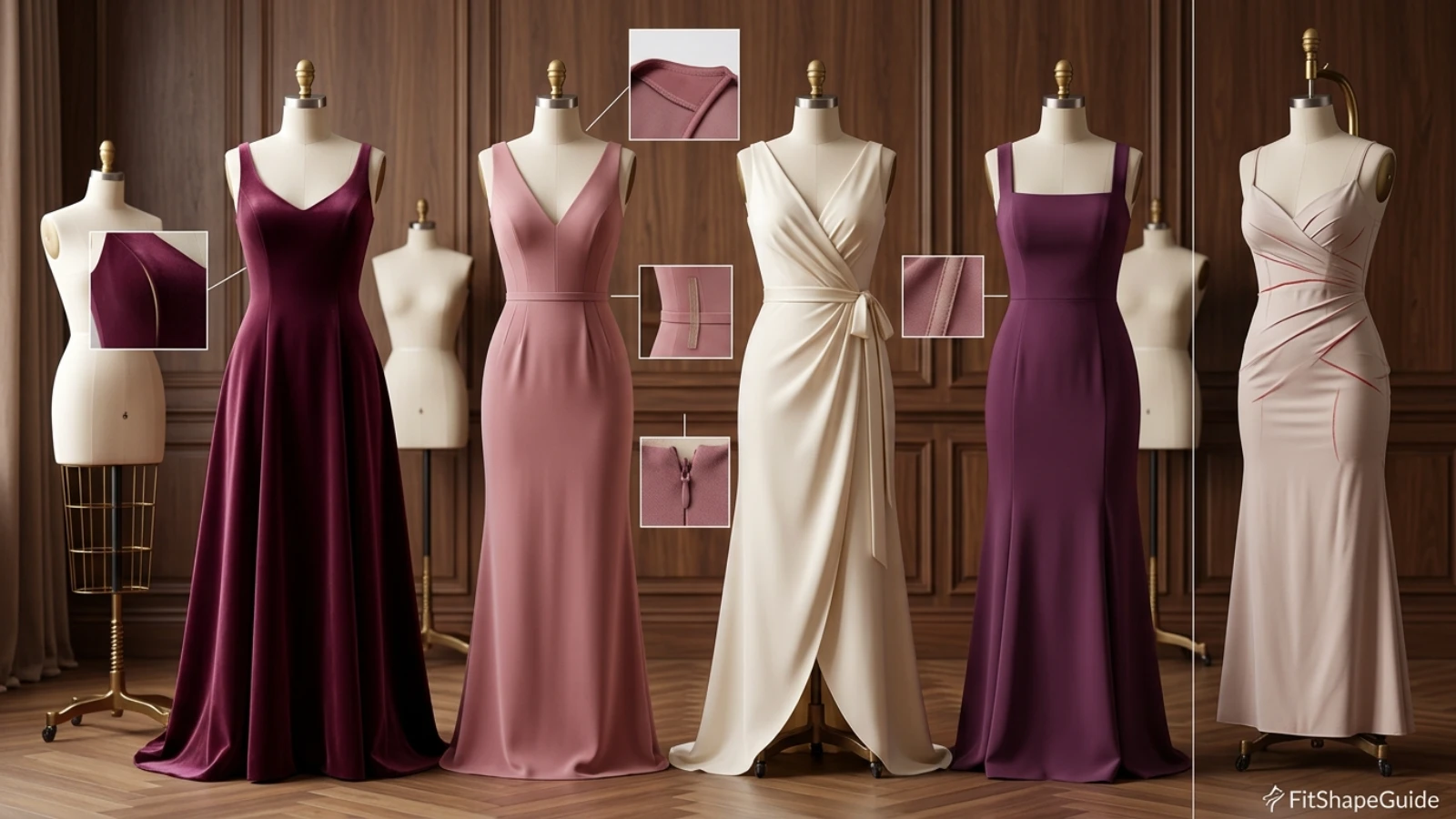
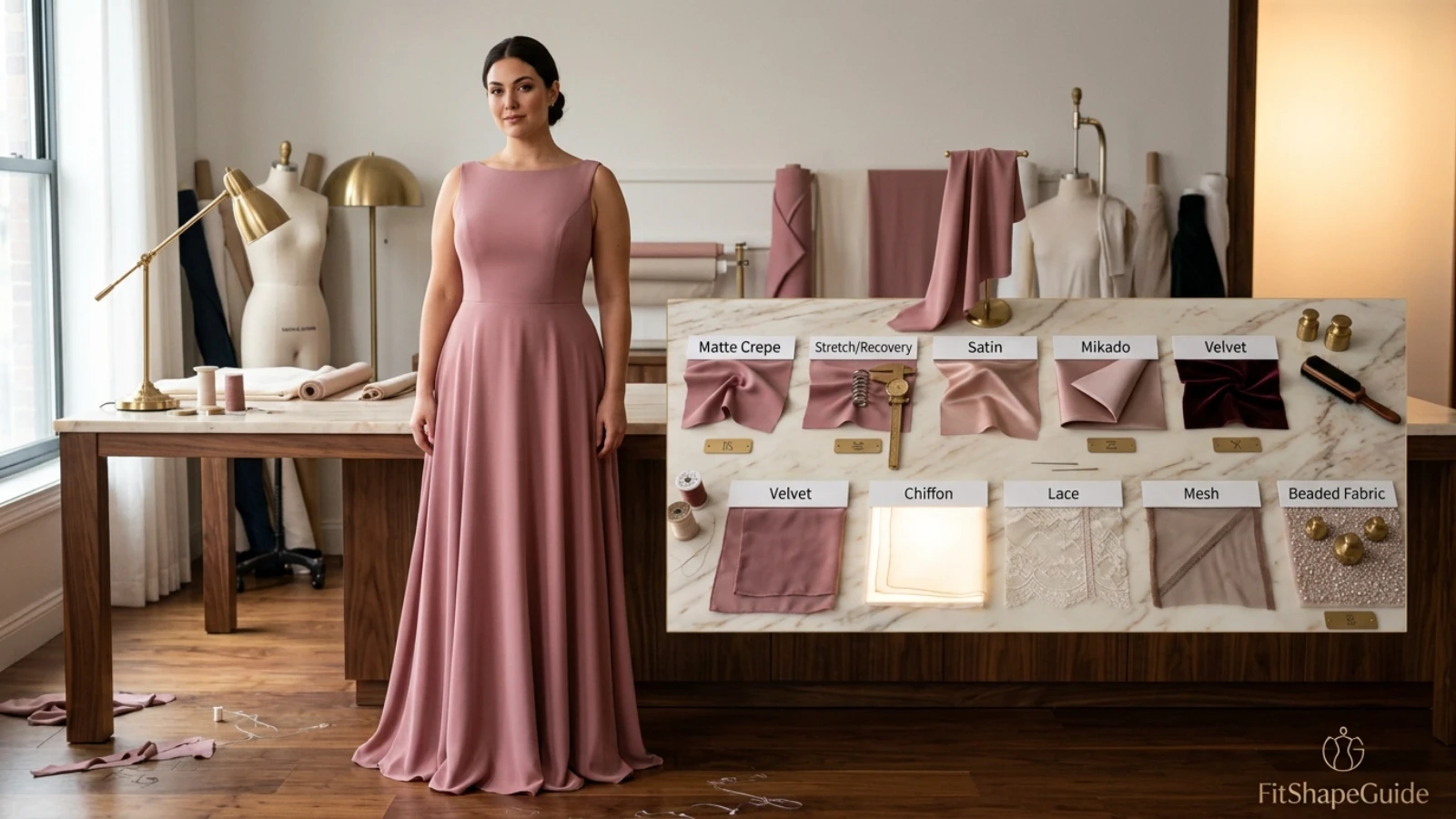
When comparing the best formal gowns for a large bust, fabric affects drape, skirt weight, shine, opacity and how clearly strain appears under ballroom or flash lighting. The best formal gowns coordinate shell, lining and internal support instead of asking one stretchy or rigid layer to solve every fit demand. Fiber content alone is not enough: compare weave or knit structure, weight, stretch direction, recovery, lining, interfacing and seam reinforcement. Use the fabric guide for a large bust when a listing gives only vague terms such as “silky,” “luxury satin” or “premium stretch.”
Crepe, stretch crepe and stable jersey
Matte crepe can drape cleanly and keeps construction clues readable without reflecting every small surface change. Stable stretch crepe offers movement when recovery is strong and the lining stretches in the same direction. Jersey can suit a draped formal gown, but the neckline and waist still need stabilization. Trade-off: more stretch can improve comfort while revealing bra edges or allowing a heavy skirt to lengthen the bodice during wear.
Satin, mikado, taffeta and velvet
Satin reflects drag lines, so accurate seams and enough ease matter. Mikado and taffeta hold architectural shapes but provide little forgiveness; the bust room must already exist in the pattern. Velvet looks rich but can creep at seams and show pressure marks. Trade-off: structured formal fabrics create a dramatic outline, yet they are less adaptable to measurement variation and often require expert alteration.
Chiffon, lace, sequins and beading
Chiffon and lace usually rely on an opaque inner foundation; fit that lining first because it determines breathing room, support and coverage. Sequins and beading add weight and make side-seam or bust alterations harder. Feel the underarm edges, inspect whether motifs interrupt seam allowances and confirm that the skirt weight does not drag the neckline downward. Trade-off: embellished layers create formality but can increase abrasion, alteration cost and storage demands.
How to buy the best formal gowns online
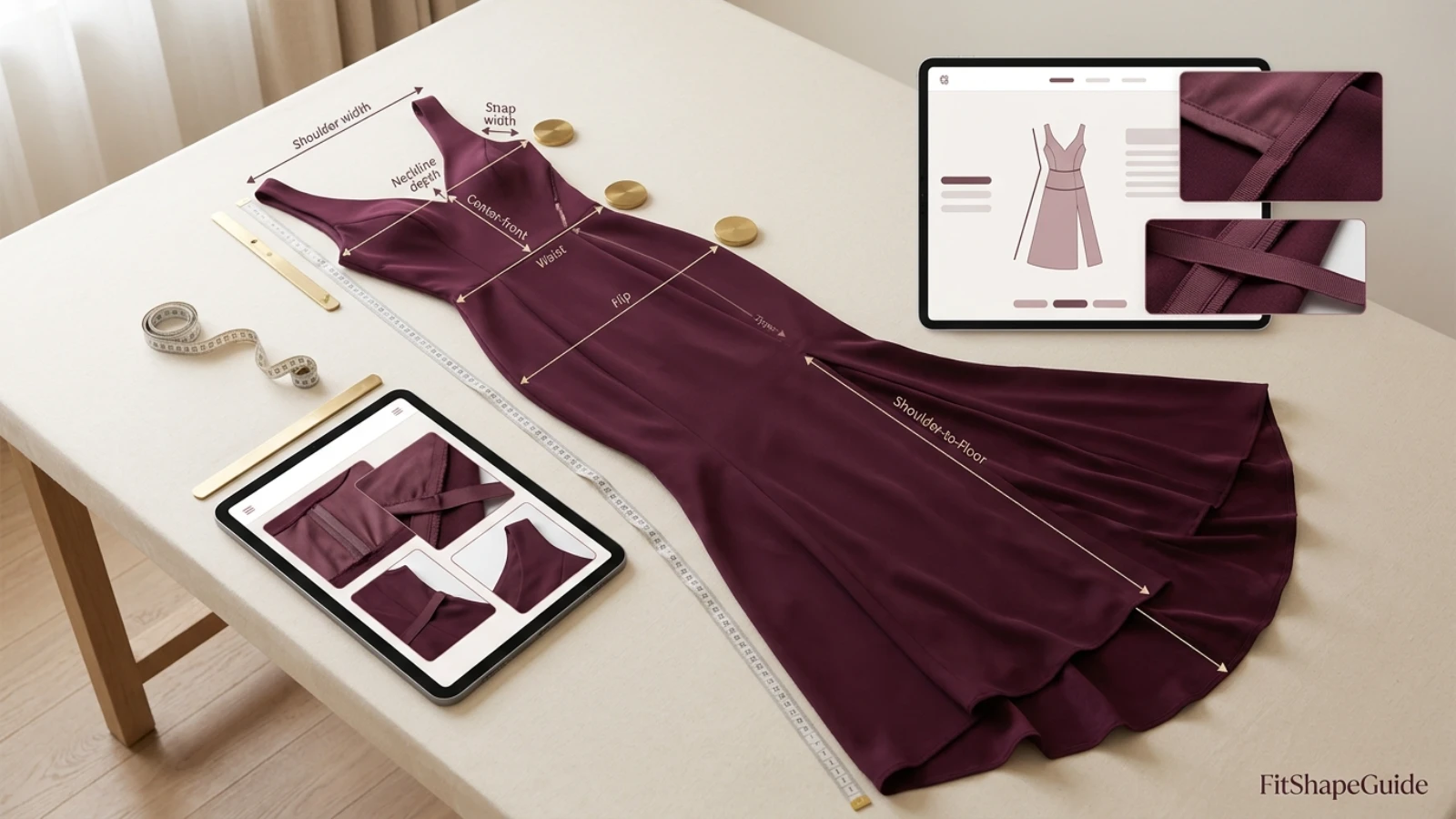
The best formal gowns online provide enough evidence to compare them with a well-fitting dress of similar fabric and construction. Measure your reference garment flat without stretching and compare those figures with the retailer’s garment chart. A body-size chart cannot reveal finished bust ease, center-front bodice length, lining restriction, cup depth, waist-stay position or where a floor-length hem will fall with shoes. When one length is listed, ask whether it was measured from center back, shoulder or high point and whether it includes a train.
| Measurement or listing evidence | How to use it | Risk when absent |
|---|---|---|
| Finished bust or underarm width | Compare with a reference dress in similar fabric | Stretch may be expected to provide all room |
| Shoulder-to-waist front length | Check whether the waist can reach below the bust | Raised seam and shortened front skirt |
| Neckline depth, width and straps | Compare with the exact event bra | Unexpected cup edge, strap or cleavage exposure |
| Waist, hip, skirt sweep and slit | Allow sitting, walking, stairs and dancing | Gown twists, restricts stride or exposes more than intended |
| Shell and lining stretch | Evaluate both layers independently | Flexible shell hides a restrictive lining |
| Closure, boning and seam allowance | Assess support, dressing ease and alteration potential | Complex or uneconomical structural tailoring |
| Shoulder-to-floor length and train | Compare in event shoes and allow hemming time | Trip risk or incorrect front-to-back balance |
| Return window and final-sale status | Protect a size comparison purchase | High-risk commitment before movement testing |
Use reviews as garment evidence
Prioritize reviews that include the purchased size, bust and waist measurements, height, torso notes, bra choice, heel height and what happened while sitting or dancing. “Flattering” is subjective; “the zipper rippled at the waist,” “the cups were shallow” or “the skirt pulled the neckline down after an hour” is actionable. Compare the exact color and fabric composition because variants can use different linings, embellishment weight or stretch.
Safe Amazon recommendation workflow
Before inserting any product, verify the live title, seller, size chart, shell, lining, closure, care instructions, return eligibility and recent customer-photo evidence. Use the affiliate tag bracalculator-20 only on a confirmed Amazon URL. Do not place a permanent price, rating, coupon, stock claim or review count in editorial copy because these details change.
Movement tests every formal gown should pass
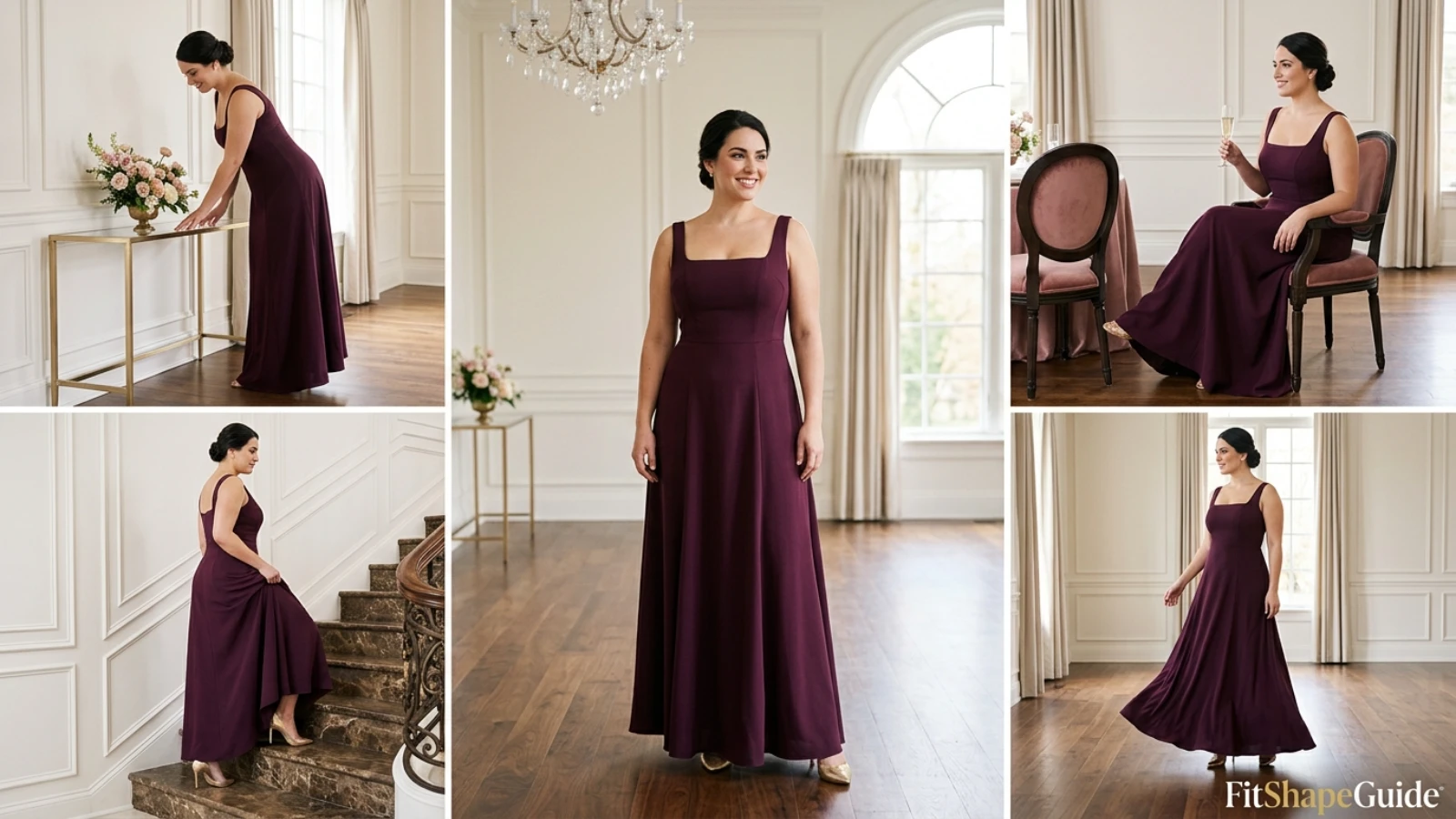
The best formal gowns for a large bust remain wearable through the actual event. Perform these checks after fastening every closure and while wearing the intended bra, shapewear if desired, hosiery and shoes. Give each movement enough time for fabric and lining to settle.
Lean and greeting test
Lean toward a table, bend as if greeting someone and look down. The neckline should maintain the chosen coverage and the bra should stay concealed. If only the edge lifts, stabilization may help; if the whole front pulls apart, the bodice needs more width or projection.
Reach, self-hug and dance test
Raise both arms, reach forward, hug the shoulders and complete several gentle turns. Armholes should not cut in, straps should stay located and the waist should return when the arms lower. In an off-shoulder gown, define a realistic arm range rather than forcing the sleeve. A gown that remains stuck high, rotates around the torso or pulls the zipper sideways is not providing usable mobility.
Seated dinner and breathing test
Sit upright for at least ten minutes, relax the abdomen, take several deep breaths and reach across the table. Check whether cups flatten, boning presses into ribs, the neckline spreads, the zipper ripples or a waist stay becomes painful. A structured gown may feel close; it should not require rigid posture or restricted breathing through a full ceremony and dinner.
Walk, stairs, train and coat test
Walk at normal speed, turn, climb stairs and practise lifting the skirt only as much as the event permits. The shell and lining should allow a full stride, a slit should stay within preferred coverage, and the hem should clear the shoes without relying on constant hand support. Add the planned wrap or coat because its armholes and weight can pull the gown neckline sideways.
Common formal-gown fit problems and what they mean
The best formal gowns reveal their construction clearly: seams remain calm, closures lie flat and the garment returns to position after movement. Use each symptom to identify whether the issue is missing front room, edge instability, rigid lining, misplaced boning, skirt weight or a proportion mismatch before changing size.
| Visible symptom | Likely construction cause | Best next step |
|---|---|---|
| Neckline opens while leaning | Loose edge, excess shoulder width or missing bust projection | Choose broader overlap, stable facing or fuller-bust geometry |
| Waist rises at center front | Insufficient shoulder-to-waist front length | Try a longer or better-shaped bodice |
| Zipper ripples or twists | Uneven tension, short bodice or grading mismatch | Size or fit for the bust; inspect another construction |
| Side seams swing forward | Front is borrowing fabric from the back | Increase front width and projection |
| Straps fall after sizing up | Extra width was added everywhere | Seek fuller-bust shaping or alter shoulders after fitting bust |
| Bodice slides downward over time | Skirt weight, loose waist foundation or shallow cups | Choose a secure waist stay and correct bodice depth |
| Hem catches or skirt twists | Incorrect length, narrow lining or uneven balance | Recheck shoes, sweep, lining and professional hemming |
| Sequins scratch underarms | Rough finishing at high-movement edge | Choose protected edges or obtain a tailoring assessment |
When sizing up works
Size up when the next size restores front length, bust ease, opacity and armhole comfort while shoulders, neckline and waist remain controllable. It is less useful when the larger size falls from the shoulders, creates a loose back and still places the waist too high. That pattern needs different front shaping, not more circumference everywhere.
Alterations worth considering
A tailor may shorten straps, stabilize an adequately sized neckline, refine the waist after fitting the bust, adjust a loose back, move a non-load-bearing snap or hem a plain skirt. Adding major bust width, lowering a fixed waist, rebuilding cups, relocating boning, changing a low back or hemming layered lace and beading can be expensive. Review the large-bust tailoring guide before buying a final-sale gown with structural problems, and allow time for at least one fitting in the event shoes and undergarments.
Bra compatibility and formal-event styling
The best formal gowns do not need to “minimize” the bust. Once the bodice fits, choose neckline, color, texture and accessories for personal style and the invitation. Compare the best A-line dresses for a large bust when skirt balance is the priority, or the best cocktail dresses for a large bust when the event calls for a shorter, less formal hem.
Match the bra to the exact neckline and back
Try the gown with the intended bra before removing tags or approving alterations. A plunge may suit a narrow V, a balconette a square or sweetheart shape, and a strapless or longline bra an off-shoulder design. Check cup edges, center gore, straps, side wings and back band from front, side, seated and overhead views. Sewn-in cups add shape or coverage but are not automatically supportive. Fashion tape can steady an already fitting edge; it should not carry an undersized bodice closed.
Layer without distorting the dress
A cropped jacket, open blazer, wrap or evening coat can change neckline behavior. Armholes that are too close may pull the bodice sideways, while a heavy wrap may drag one shoulder. Sit, reach and walk in the complete outfit and check that closures do not press directly over the fullest bust.
Jewelry, wraps and bags
Necklaces can sit inside or outside a neckline according to preference; there is no universal rule. A belt may emphasize a correctly placed waist but cannot lower a raised seam or secure a sliding bodice. Test the wrap, shawl, clutch or small bag with the gown and confirm that closures, chains and embellishment do not compress the bust, snag chiffon or catch beading.
Care, quality and final value checks
The best formal gowns for a large bust also need practical care and repeat-wear value. The best formal gowns retain their shape because seams, internal structure and storage method protect the bodice between events. Read the care label before purchase. Structured crepe, satin, velvet, chiffon, lace and embellished fabrics can require different cleaning and storage. Close zippers and hooks before storage, support heavy gowns at the waist or with properly positioned hanger loops, use a breathable garment bag when suitable and avoid suspending the entire skirt weight from narrow straps. Steam only at a temperature safe for the shell, lining and embellishment.
Inspect stress points under good light: zipper ends, waist attachment, boning channels, neckline corners, strap joins, underarms, slit reinforcement, train loops and embellishment edges. A lower-priced gown that needs constant taping, new support, complex hemming and major bodice reconstruction may offer less value than a simpler gown with accurate shaping.
Final buyer checklist
- Secure neckline with the exact event bra
- Real bust shaping or proven controlled stretch
- Enough center-front length and a level waist seam
- Flat zipper, vertical side seams and comfortable armholes
- Shell, lining, boning and waist stay tested for support and movement
- Seated breathing room for the length of the event
- Skirt sweep, slit, train and hem tested in event shoes
- Alteration difficulty considered before final-sale purchase
- Care and storage requirements realistic for repeat wear
Frequently asked questions
Are formal gowns suitable for a large bust?
Yes. Formal gowns can work well when the bodice includes genuine bust projection, a stable neckline, enough center-front length and an internal foundation that balances the skirt. Construction matters more than whether the gown is described as fitted or flowing.
What formal-gown style is best for a fuller bust?
Supportive V-neck column gowns, princess-seam A-lines, secured wraps, square-neck gowns with wide straps, correctly structured off-shoulder styles and well-fitted boned gowns are useful starting points. Choose according to measurements, bra compatibility and event movement.
What neckline is best for a formal gown with a large bust?
A stable V-neck, square neck, sweetheart or higher scoop can all work. The best neckline is wide and deep enough for comfort, reinforced against stretching and compatible with the exact bra you plan to wear.
Should I size up in a formal gown for a large bust?
Size up when it restores bust ease, front length, opacity and armhole comfort while the shoulders and neckline remain controlled. If the larger size drops from the shoulders or still places the waist too high, choose a different construction.
How do I stop a formal gown from gaping at the bust?
Identify whether the problem is a loose edge or missing bodice volume. A tailor may stabilize an adequately sized neckline, but gaping combined with drag lines usually requires more front width, better darts or princess seams.
What bra works under a formal gown for a fuller bust?
Match the bra to the exact neckline and strap placement. Plunge, balconette, full-cup and strapless bras can each work in the right dress. Test cup edges, gore, straps and side wings from front, side, seated and leaning positions.
Are stretch formal gowns better for a large bust?
Stretch can improve movement and accommodate small measurement changes, but it cannot replace adequate pattern room or an internal foundation. Choose dense fabric with good recovery, stable neckline edges and a lining that stretches enough without becoming sheer or lengthening under skirt weight.
Can a formal gown be altered for more bust room?
Minor neckline stabilization, strap shortening, back refinement and waist adjustment may be realistic. Adding substantial bust width, lowering a fixed waist, rebuilding cups or moving boning is more complex, especially in lace, satin, velvet, beaded or sequined fabric.