Best Peplum Dresses for a Large Bust
A peplum dress can define the waist and balance a fuller bust beautifully, but only when the bodice reaches the real waist without borrowing fabric from the skirt. This construction-led guide explains how to choose bust room, seam position, flare scale and movement comfort instead of relying on the word “flattering.”

Quick answer
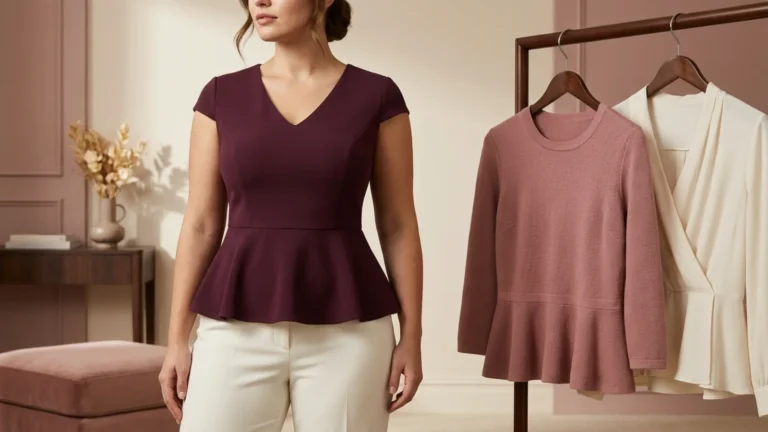
The best peplum dresses for a large bust use princess seams, darts or a secure wrap front to provide projection before the fabric reaches a level natural-waist seam. A medium, controlled peplum usually balances the upper body more predictably than a very stiff, short or highly gathered ruffle. Look for a stable neckline, bra-friendly straps, sufficient center-front bodice length, smooth side seams and a skirt that remains comfortable when sitting. The correct dress defines the waist without compressing the bust, pushing the seam upward or making the front peplum appear shorter than the back.
The 60-second peplum fit check
- Settle the bust fully into the bodice and let the shoulder seams sit naturally.
- Check that the waist seam meets your natural waist at the front, sides and back.
- Inspect the peplum: it should fall from the seam instead of flipping upward over the abdomen.
- Sit for several minutes; the flare should not bunch sharply or force the bodice upward.
- Raise both arms and self-hug. The neckline, side bust and waist must return to position.
- Walk and turn. Keep the dress only if the skirt and peplum move without twisting.
Best peplum dresses for a large bust by construction
Princess-seam peplum sheath
Best for: creating bust projection while keeping the waist and pencil skirt polished. Long curved seams can shape the bust independently of the waist, reducing horizontal pulling and front-seam lift. The seam curve should pass close to the bust apex without cutting across tissue. Choose a back vent and enough hip ease so walking does not drag the peplum downward or twist the bodice.
Wrap-front peplum dress
Best for: adjustable neckline coverage and a bust-to-waist difference. A sewn or securely fastened wrap front can adapt to projection, while the peplum adds definition below it. The crossover must reach the side seam and return after movement. Compare wrap mechanics in our wrap dress guide for a large bust; a shallow faux wrap may gape even when the waist fits.
Structured ponte peplum dress
Best for: workwear, travel and long seated periods. Dense ponte offers controlled stretch and a smoother line than thin jersey. Recovery matters as much as stretch: the neckline and waist should return after sitting. Look for shaped seams and lining where useful. Stretch cannot replace bust room, but it can make small size differences and normal movement more comfortable.
Asymmetric peplum dress
Best for: visual movement without a full horizontal shelf around the waist. A diagonal or one-sided flounce can soften the transition between bodice and skirt. It should be anchored to a level internal waist and balanced in weight. Extremely long, heavy drapes may pull the garment sideways, so check side seams and the back zip after walking.
Soft tailored occasion midi
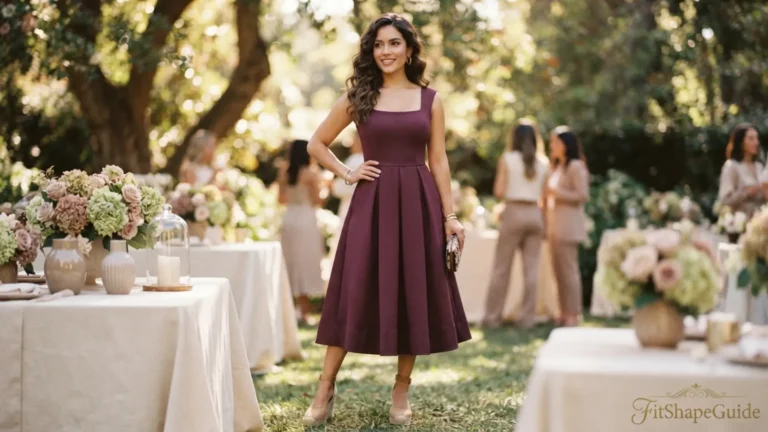
Best for: weddings, dinners and cocktail events. A crepe or softly structured peplum with a lined princess bodice can feel polished without rigidly projecting from the body. Midi length balances the extra waist detail and provides seated coverage. For event-specific neckline and movement tests, see our cocktail dress guide.
Adjustable or separate-waist peplum
Best for: shoppers whose bust and waist do not align with one standard size. A removable peplum belt, adjustable tie or separately seamed overlay lets you position definition at the natural waist. The underlying dress still needs adequate bust ease. Avoid tightening a belt to disguise a raised bodice seam; that creates stacked lines rather than correcting fit.
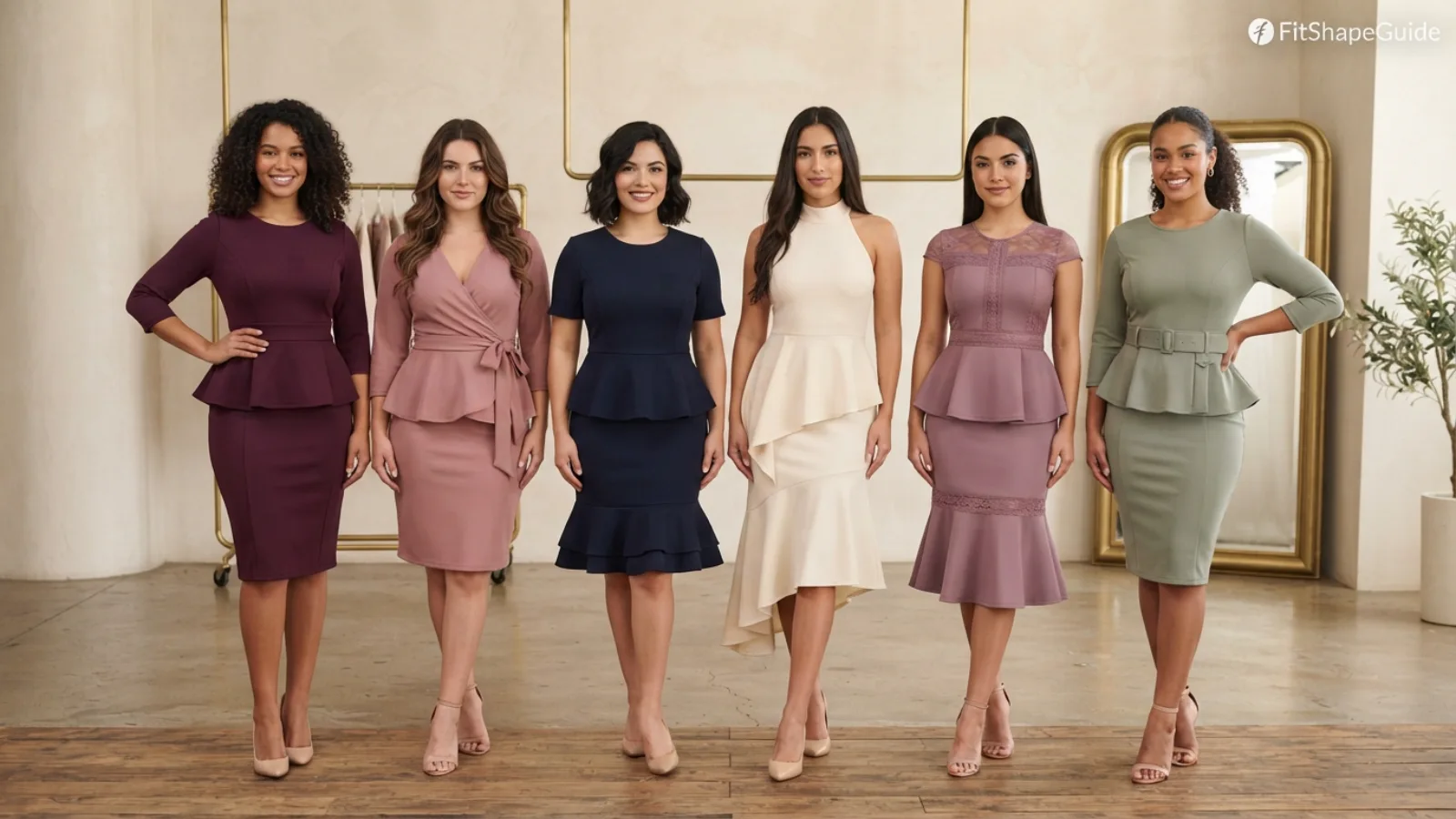
Why waist placement decides whether a peplum works
A peplum is a flare attached near the waist, so its visual effect depends on where that joining line lands. When the bodice has sufficient bust depth and length, the seam can reach the natural waist and the flare opens cleanly. When the front is too shallow, the bust pulls fabric upward. The seam then arches over the abdomen, and the peplum may project from the ribs rather than the waist.
Find the natural waist before judging the ruffle
Your natural waist is usually the area where the torso bends, not necessarily the narrowest point shown in a product photograph. Tie a soft elastic around your middle, bend side to side and allow it to settle. Compare that position with the dress seam. A seam slightly above or below can be a deliberate design, but it should remain level and feel intentional.
Front-bodice length must travel over the bust
Two people with the same shoulder-to-waist length can need different front lengths because bust projection changes the path fabric travels. A raised front seam, diagonal drag lines and a shorter front peplum are signs that the dress needs more length or shaping above the waist. Shoppers with compact proportions can use our large-bust and short-torso guide to separate missing projection from an overly long overall bodice.
Choose flare scale, not a universal “best” volume
A medium semicircular flare often hangs more smoothly than dense gathers, but personal style, hip shape and fabric change the result. A narrow peplum creates subtle waist emphasis. A fuller flare adds drama and hip volume. The goal is not to manufacture an hourglass; it is to choose a line that feels balanced to you and remains stable in motion. If waist definition is your priority, our large bust and small waist outfit guide offers broader strategies.
Bodice and neckline geometry for a fuller bust
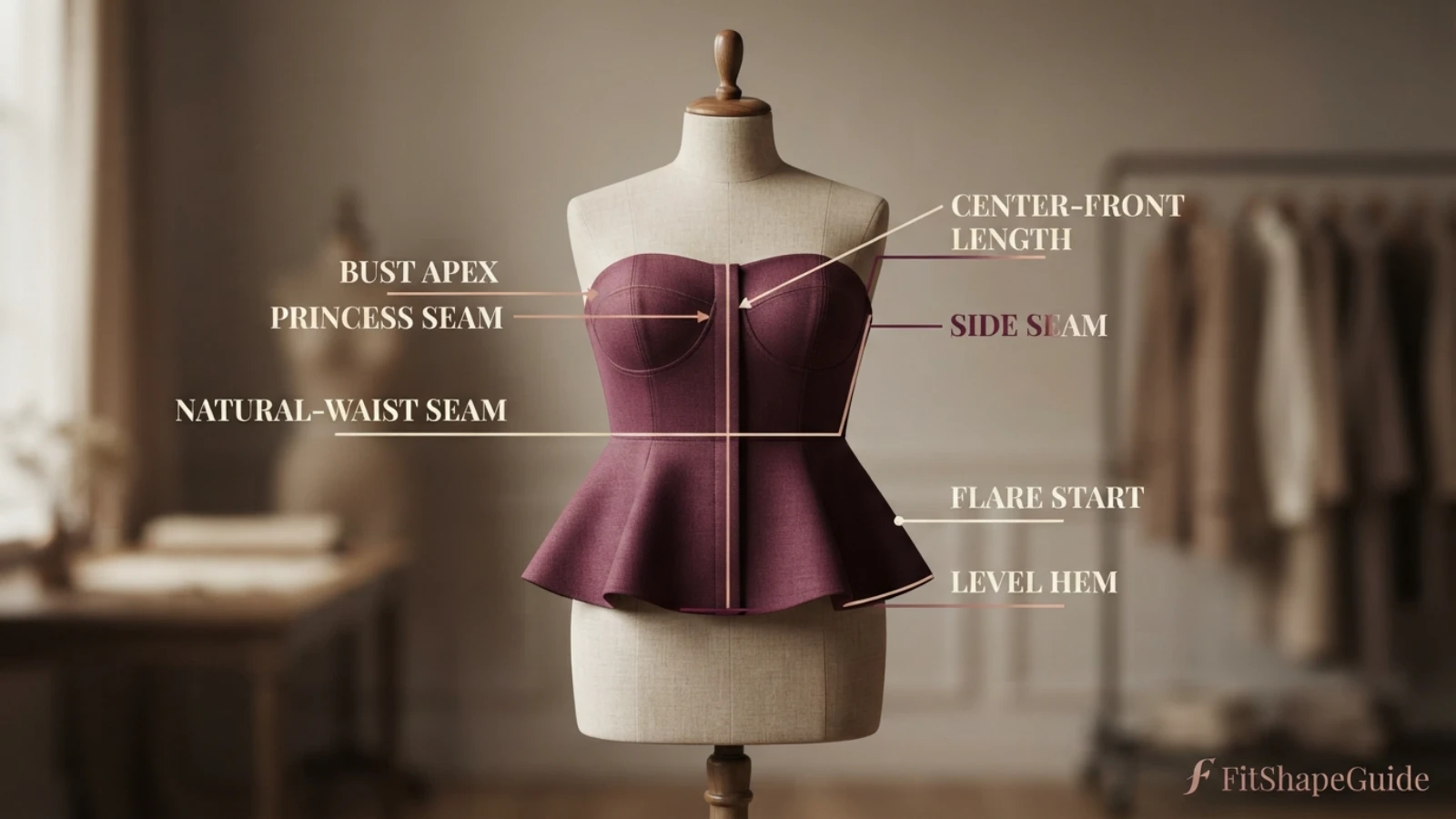
Princess seams and darts need the correct apex
Shaping should release fabric toward the fullest point of the bust. A dart ending too far away may leave excess near the armhole while the center front strains. A princess seam with its curve too high can flatten the lower bust and push tissue upward. Judge smoothness from front, side and three-quarter angles rather than looking only at cleavage.
A stable neckline is more useful than a restrictive one
V, square, scoop, bateau and wrap necklines can all work. The upper edge should lie smoothly without slicing, collapsing or exposing a bra during a reach. Wider straps improve bra compatibility; higher side panels improve containment. Use our neckline guide for a large bust to compare width, depth and bra coverage.
The waist seam should not substitute for underbust support
A firm waist can stabilize a dress, but it cannot correct a bodice with insufficient bust capacity. If the wearer must tighten the waist until breathing becomes uncomfortable to stop the neckline moving, the upper construction is wrong. Support may come from a separate bra, well-shaped lining, a secure wrap or structured panels; compression is not the same as fit.
Side seams reveal hidden strain
Stand naturally and inspect the side seam. It should hang vertically rather than swing toward the bust. A forward-pulled seam indicates that the front needs more room. Underarm wrinkles pointing toward the bust often reveal missing projection or a misplaced dart. Do not blame every line on the peplum—the cause frequently begins in the upper bodice.
Best fabrics and peplum structures
Ponte and structured stretch crepe
These fabrics can hold a clean flare while permitting movement. Look for substantial weight, opacity and recovery. Thin ponte may cling to the bra and collapse at the peplum edge; very stiff ponte may stand away from the waist. A blend with controlled two-way or four-way stretch is useful only when the pattern already has enough bust room.
Woven crepe, suiting and cotton sateen
Stable woven fabrics produce crisp tailoring and make drag lines easy to diagnose. They need precise darts or princess seams because they cannot stretch around missing volume. Cotton sateen offers slight give, while suiting and crepe can create a softer fall. Check that interfacing does not make the waist seam bulky.
Jersey and soft knits
A draped knit peplum feels relaxed and can suit casual wear, but weak recovery may let the waist grow throughout the day. Very thin jersey can catch on the skirt waistband, reveal lining edges and turn gathered flare into bulk. Seek sufficient weight, smooth elastic and a secure shoulder or wrap structure.
Jacquard, satin and embellished fabrics
Jacquard can hold sculptural shapes; satin reflects every pull; sequins and beading add weight. The heavier the flare, the stronger its attachment and bodice anchor must be. Avoid scratchy seam allowances where the peplum touches the arms. Consider whether the dress can be seated, packed and cleaned without crushing the structure.
Evaluate fiber, weave, weight and recovery separately with our best fabrics for large-bust clothing guide.
Measurements to compare before ordering
| Measurement | Why it matters | Warning sign |
|---|---|---|
| Full bust | Determines circumference at the fullest point | Chart ease is zero or negative in a woven bodice |
| High bust | Helps identify whether shoulders and upper chest need a different size | Sizing for full bust makes shoulders excessively loose |
| Underbust | Shows the torso shape below breast tissue | Lower bodice floats or cuts across tissue |
| Natural waist | Controls the seam and peplum anchor | Waist is tight before the bust settles |
| Shoulder to waist | Tests total bodice length | Seam sits too high or folds above the waist |
| Bust apex to waist | Tests front length over projection | Front seam arches upward |
| Hip and upper hip | Predict skirt ease beneath the peplum | Skirt pulls and drags the overlay down |
| Peplum depth | Shows where the flare ends on your torso | Edge hits an uncomfortable or unintended point |
Measurement rule: size for the area that is hardest to alter—usually the bust and upper bodice—then assess whether the waist, straps or skirt can be refined. Bra size alone cannot predict dress fit because garment brands use different ease and shaping.
Peplum length, skirt shape and body proportions
A short peplum creates a crisp waist accent, while a longer overlay can skim the upper hip. Neither is universally more flattering. Judge where the edge lands when you sit as well as stand. A stiff edge that ends at the widest point may be exactly the dramatic effect you want, but it should not feel like a shelf or catch beneath the arms.
Peplum with a pencil or sheath skirt
This pairing creates a strong tailored line. The skirt must have enough hip and stride ease so it does not climb and push the peplum upward. A back vent, stretch panel or walking slit can help. If the close skirt repeatedly rides up, compare the movement guidance in our bodycon dress guide.
Peplum with an A-line or flared skirt
A softer peplum over a gradually flared skirt creates continuity rather than sharp contrast. Too much volume at both layers can feel busy, especially in a stiff fabric, but that is a design preference rather than a body rule. The underlying waist seam still needs to stay level. Our fit-and-flare dress guide explains skirt balance and front-hem lift.
Raised or empire-style peplums
A seam deliberately placed above the natural waist can work, particularly when it clears the fullest part of the bust and is labeled accurately. It should not cut across breast tissue. If the design relies on a high seam, compare it with our empire-waist dress guide and check that the lower bodice does not collapse into a shelf.
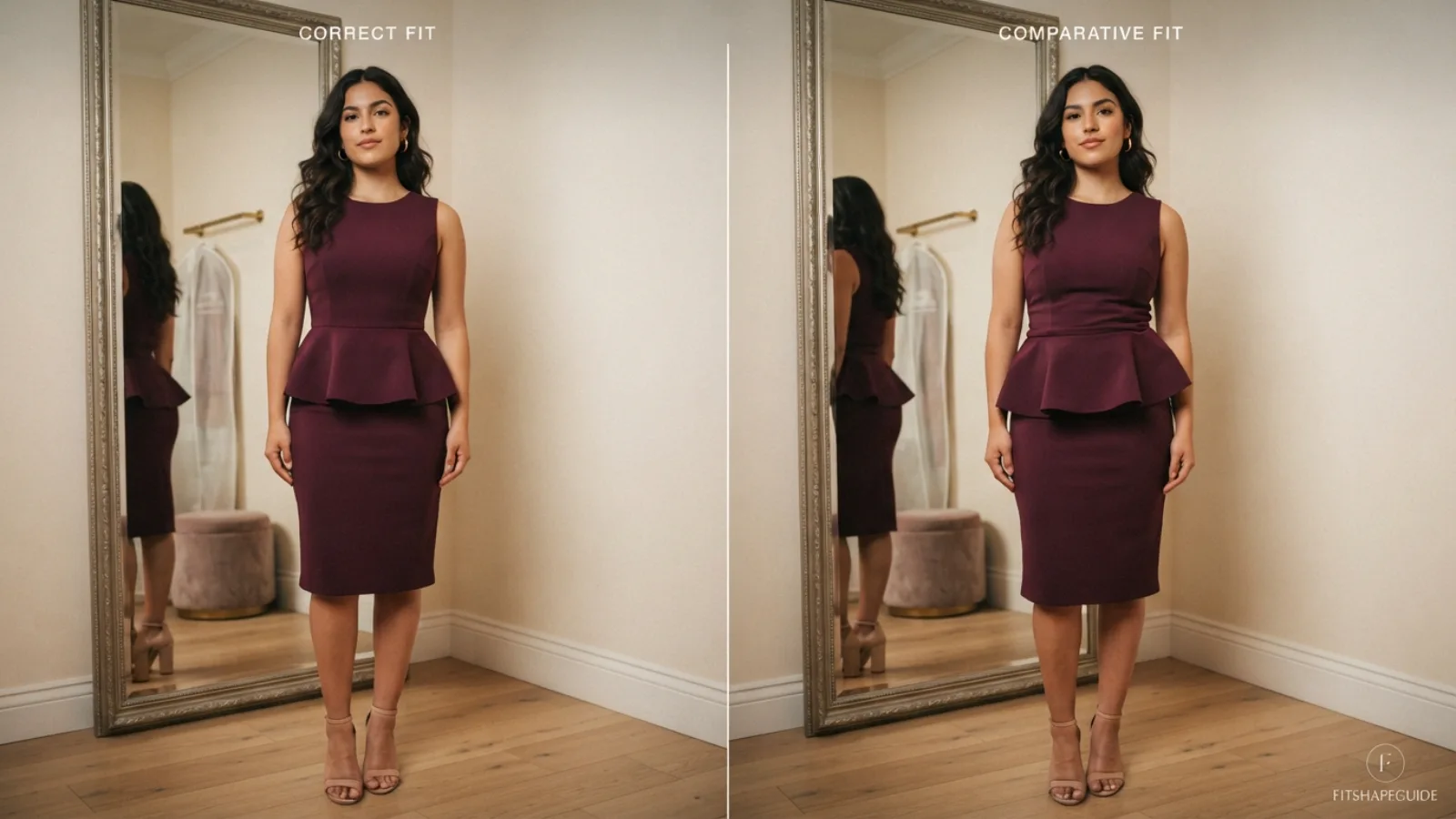
How to shop online for the best peplum dresses for a large bust
Read the construction details
Look for princess seams, darts, wrap fastening, stretch percentage, lining, adjustable straps, zipper position, skirt vent and peplum attachment. “Waist-enhancing” is marketing language, not a measurement. Product photographs should show front, side and back views without the model holding the waist or covering the seam.
Use reviews as fit observations
Prioritize reviews that include full-bust and waist measurements, usual bra size, ordered size and height. Repeated comments about a high waist, tight chest, gaping neckline or upward-flipping ruffle are useful patterns. A single review saying “runs small” cannot reveal whether the issue is bust depth, shoulder width, waist circumference or skirt ease.
Verify Amazon products before publishing
This page is Amazon affiliate-ready but intentionally includes no invented product name, ASIN, price, rating, review count or stock claim. Before adding a recommendation, confirm the live listing, seller, current size chart, fabric, photographs, care label and return conditions. Mark affiliate links with rel="sponsored nofollow" and keep editorial selection independent of commission.
Inspect the return policy before removing tags
Try the dress indoors with the intended bra and shoes. Sit, walk and reach while tags remain attached. Check whether deodorant, makeup, perfume, alterations or laundering affect returns. A good return window matters because peplum balance is difficult to judge from a front-facing product image alone.
Know what tailoring can solve
A tailor may refine the waist, shorten straps, close a neckline, adjust a peplum edge or improve a vent. Creating substantial missing bust depth usually means rebuilding darts, seams, lining and sometimes the zip. Consult our tailoring guide for a large bust before treating structural mismatch as a minor alteration.
Movement and comfort tests every peplum dress should pass
Raised-arm and self-hug test
Raise both arms, reach forward and hug yourself. The shoulder seams should remain near the shoulder, the neckline should return, and the waist seam should settle back without manual adjustment. If the peplum climbs and stays beneath the bust, the upper bodice is probably too short or tight.
Seated test
Sit upright and then lean slightly forward for ten minutes. The peplum will fold; that is normal. It should not create a painful ridge, force the zipper to bow or push the neckline outward. Stand and observe whether the flare drops back into shape without needing to be pulled down.
Walk, stairs and turn test
Take long steps, climb stairs and rotate at the waist. The skirt should allow stride without dragging the bodice. Side seams should stay vertical and an asymmetric peplum should not rotate around the body. Check the back in a mirror; a tight skirt often reveals itself through horizontal lines and a lifted vent.
Outerwear and bag test
Try the jacket, coat or bag you intend to use. A fitted jacket may crush a highly structured flare, while a crossbody strap can pull an asymmetric overlay. Soft peplums layer more easily. If the dress is for work, confirm that the detail remains comfortable against a chair and under regular outerwear.
Common peplum-dress fit problems and better responses
| Symptom | Likely cause | Better response |
|---|---|---|
| Front waist seam rises | Missing bust depth or center-front length | Choose longer princess shaping or size for the bust |
| Peplum flips upward | Seam too high, flare too stiff or abdomen needs more ease | Try a softer, longer or better-positioned overlay |
| Neckline gapes | Upper chest too large, straps long or bust displaced | Settle bust first; tailor only after confirming capacity |
| Horizontal bust lines | Bodice lacks circumference or projection | Choose a fuller-bust seam shape, not more compression |
| Side seam swings forward | Front bodice needs more room | Size up or choose stronger front shaping |
| Peplum looks uneven | Raised front waist, twisting zip or asymmetric strain | Check seam level and skirt ease from all angles |
| Skirt rides up | Insufficient hip or stride ease | Choose a vent, stretch, A-line skirt or larger size |
| Bulky waist seam | Heavy gathers, lining and belt overlap | Choose a circular flare or reduce layered thickness |
When sizing up helps
Sizing up can add bust circumference, front length and armhole room when the brand grades those areas meaningfully. It works best when the waist and straps can be altered. It does not solve a dart or princess curve placed far from your bust apex. In that case, a different construction is more efficient than extensive reconstruction.
When a peplum top is the smarter option
A separate top and skirt let you choose different sizes and position the waist independently. This can be helpful when dress grading does not match your bust-to-waist ratio. Our peplum tops for a large bust guide covers the same flare principle with more mix-and-match flexibility.
Choosing peplum dresses for work, weddings and evenings
Work and professional settings
Choose a controlled peplum in ponte, crepe or suiting with secure bra coverage, a stable neckline and a skirt that allows sitting and walking. A medium flare often fits beneath a coat more easily than a sculptural one. Test desk height, chair contact and reaching for items; professional polish depends on staying comfortable through the day.
Cocktail parties and wedding guests
The best peplum dresses for a large bust at long events combine a lined bodice, enough projection, secure neckline, level waist and seated comfort. Soft asymmetric drape or elegant jacquard can feel special without relying on an exposed neckline. Test the dress with the exact bra, shoes and outer layer before the event.
Formal occasions
A peplum on a gown can create architectural drama. Heavier fabric, embellishment or a long overskirt increases force at the waist, so the internal seam and zip must remain stable. Ensure the chair does not trap a rigid back peplum and that the overlay does not interfere with the skirt closure.
Casual and daytime wear
Soft jersey, cotton sateen or a removable peplum belt can make the silhouette relaxed. Favor washable construction and recovery if the dress will be worn often. Casual does not mean shapeless: darts, wrap fronts and defined shoulder seams still determine whether the bodice reaches the waist cleanly.
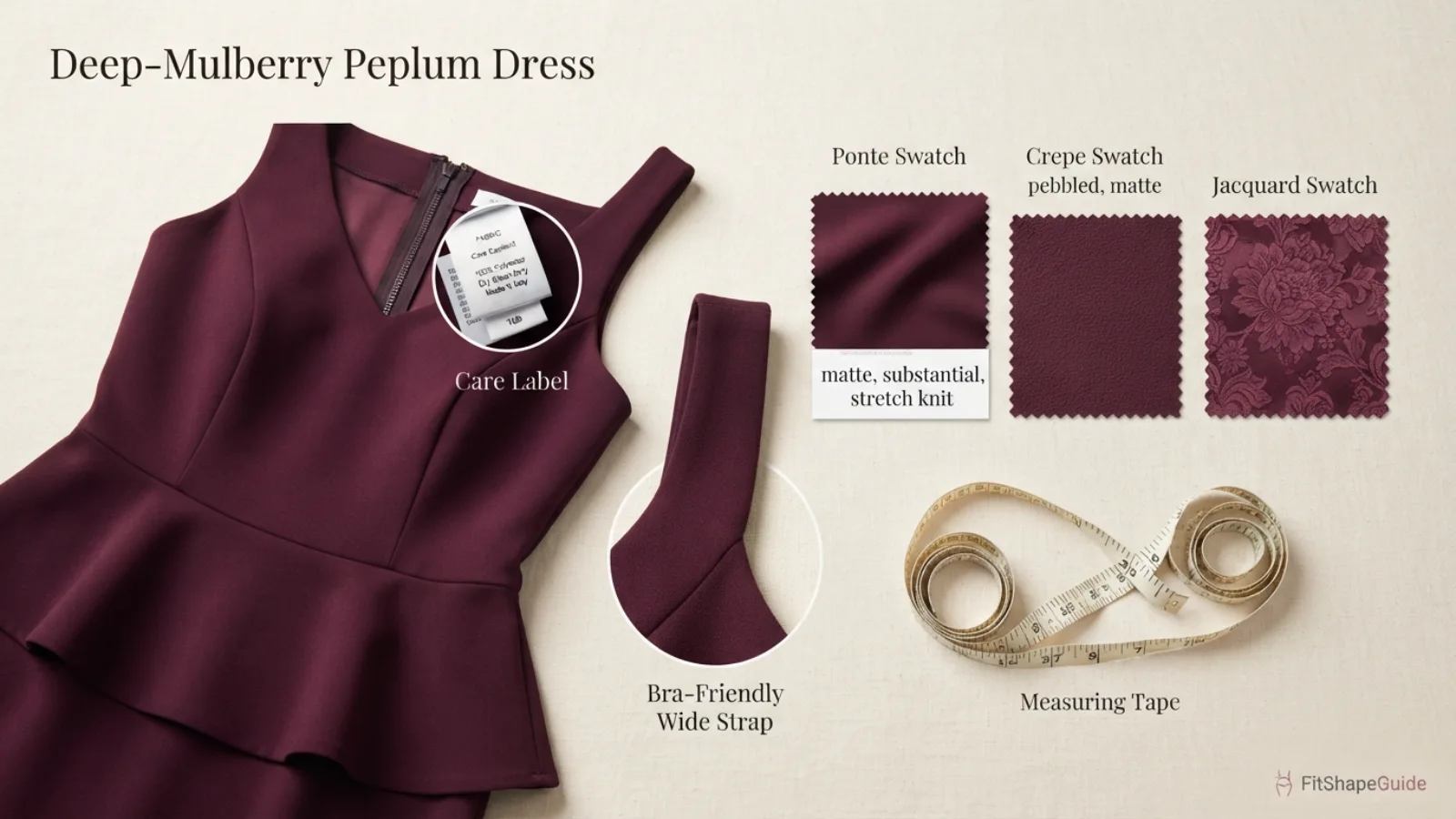
Care, storage and value checks
Always follow the sewn-in care label because the shell, lining, interfacing and trim may need different handling. The U.S. Federal Trade Commission’s official Care Labeling Rule guidance explains regular-care instructions, while its apparel labeling resources cover fiber-content and manufacturer responsibilities.
Fasten zips before hanging, but do not store a garment under tension. Support heavy dresses on a padded hanger if their construction permits, or fold them with the peplum laid smoothly. Avoid crushing stiff jacquard or bonded flare edges. Steam only when the label and fabric allow; direct heat can distort synthetic interfacing, stretch, pleats or adhesive layers.
Inspect the waist seam, zip base, vent and peplum edge after wear. These areas receive repeated force from sitting and movement. Repair loose stitching early. If the peplum is removable, store it flat and keep its fasteners with the dress. Value includes alteration, cleaning, undergarment and return costs—not only the ticket price.
The best peplum dresses for a large bust earn repeat wear because their bodices remain level and their flare returns after movement. A dramatic silhouette that works for one photograph but restricts breathing, sitting or reaching is not a strong purchase.
- Compare full bust, waist, front length and hip measurements.
- Confirm that the waist seam stays level after the bust settles.
- Check neckline return, bra coverage and side containment.
- Test sitting, reaching, walking, stairs and outerwear.
- Verify the current care label, seller and return conditions.
The best peplum dresses for a large bust balance from a correctly fitted bodice
Choose bust projection and center-front length first, then judge waist placement and flare. The seam should remain level, the peplum should fall cleanly, and the entire dress should recover after sitting and reaching. Princess seams, secure wraps, controlled fabrics and realistic tailoring make this silhouette dependable. Keep the dress that defines your waist without compressing your bust or demanding constant adjustment.
Frequently asked questions
Are peplum dresses good for a large bust?
Yes. They can define the waist and balance proportions when the bodice has enough bust projection and length. The waist seam must remain level; the flare cannot correct an undersized upper bodice.
Where should a peplum sit on a fuller-bust figure?
Most designs are intended to begin at the natural waist, though raised and dropped styles exist. The important test is that the seam sits where intended and remains level from front to back.
Which peplum shape is easiest to wear?
A medium circular or softly tailored flare is often predictable because it adds less waist bulk than dense gathers. However, asymmetric, short and dramatic shapes can work when the bodice and seam position fit.
Why does my peplum dress rise at the front?
The front bodice probably lacks bust depth or vertical length, so breast projection pulls the waist upward. Sizing for the bust or choosing better princess shaping is usually more effective than pulling the skirt down.
Should I size up in a peplum dress?
Size for the fullest area that cannot be easily altered. Sizing up helps when it adds real bust room and front length; it will not correct a dart or seam placed at the wrong height.
Can I wear a belt with a peplum dress?
Yes, if it lies at the intended waist and does not stack awkwardly over a bulky seam. A belt should refine a correctly fitting bodice, not hide a seam that has been pulled upward.
What bra works under a peplum dress?
Choose a supportive bra compatible with the neckline and straps. Test the dress with that exact bra because lift and cup shape change how much front-bodice length the garment needs.
Can a tailor fix a peplum dress that is tight in the bust?
Minor adjustments may be possible if seam allowance exists. Adding substantial bust depth can require rebuilding darts, princess seams, lining and the waist join, so another construction may be more economical.