
Best Swimsuits with Adjustable Straps for a Large Bust
A construction-first guide to adjustable-strap swimsuits that let you fine-tune neckline height and torso fit while keeping fuller-bust support anchored through the cups, band and body of the suit.

The 60-second adjustable-strap test
- Fit the cups and band first: settle the bust before touching the straps.
- Adjust each side gradually: aim for equal effective strap length unless your body needs a small intentional difference.
- Check adjustment range: the slider should not already be at its absolute shortest or longest position.
- Raise both arms: neckline and cups should stay secure without sharp shoulder pressure.
- Loosen each strap slightly: the bust should not immediately lose all support.
- Repeat wet: confirm that the strap sliders hold their settings after swimming and the suit returns to place.
Why adjustable straps matter for a large bust
Adjustable straps solve a real problem: fixed shoulder lengths cannot match every torso. Two people with the same bust, waist and hip measurements may need noticeably different strap lengths because shoulder height, torso length and breast position vary.
But adjustment has limits. Shortening a strap can raise the neckline and upper cup. It cannot create more cup depth. It cannot make a loose underband firm. It cannot correct a swimsuit body that is several centimeters too long. And it cannot turn shallow generic cups into fuller-bust cups.
A well-built suit therefore separates support jobs. The cup contains the breast. The underbust frame or elastic anchors the lower edge. Side wings stabilize the cup laterally. The suit body controls torso fit. The straps then position the upper cup and neckline.
That division becomes especially important after the swimsuit is wet. Water adds weight and stretch fabrics can relax temporarily. If the entire support system depends on shoulder tension, wet fabric may increase digging while the neckline still moves.
| Feature | What it should do | Useful sign | Warning sign |
|---|---|---|---|
| Adjustable strap | Fine-tune upper cup and neckline position | Useful range remains both ways | Must be shortened completely to get support |
| Cup | Contain bust volume and projection | No overflow or empty folding | Straps are used to force tissue into shallow cup |
| Underband | Anchor support around ribcage | Stays level | Back rises as straps tighten |
| Side wing | Connect cup securely to back | Contains tissue without rubbing | Cuts into underarm |
| Suit torso | Connect shoulders to leg opening comfortably | Smooth without vertical strain | Straps compensate for short or long body |
| Slider | Hold selected strap length | Position stays after swimming | Slowly slips under wet load |
Eight adjustable-strap swimsuit styles for a large bust
Bra-sized underwire one-piece
A band-and-cup size system plus adjustable straps provides the clearest separation between bust support and shoulder adjustment.
Trade-off: wire shape and cup depth still need to match the individual breast root.
Seamed wireless swimsuit
Multi-part cups can create projection without underwire, while adjustable straps position the upper cup.
Trade-off: the underbust anchor needs enough strength to stop the straps carrying the whole load.
Wide adjustable-strap swimsuit
Wider straps distribute pressure over more surface area and can be comfortable for longer beach and pool days.
Trade-off: width does not compensate for a loose band or shallow cups.
Adjustable plunge swimsuit
A moderate plunge can work well when the suit has deeper cups, strong side support and adjustable straps that control the upper edge.
Trade-off: tightening straps cannot make an overly shallow plunge secure.
Adjustable square-neck swimsuit
Square necklines can provide a clean frame and work especially well with broader adjustable straps.
Trade-off: upper corners may lift if the suit lacks front bust depth.
Fixed-wrap adjustable swimsuit
A secure crossover provides diagonal shaping, while adjustable straps let neckline height be fine-tuned.
Trade-off: the wrap overlap must remain structurally secure rather than relying on strap tension.
Adjustable active swimsuit
Fitness-oriented suits may combine a firm underbust elastic, soft cups or compression lining with adjustable straps for pool exercise.
Trade-off: a fitness suit designed for light bust support may not provide enough structure for every fuller bust.
Convertible-strap swimsuit
Some designs allow straight, crossed or alternative strap arrangements. This can change shoulder security and distribute tension differently.
Trade-off: every configuration should be tested for slider stability, cup position and comfort.
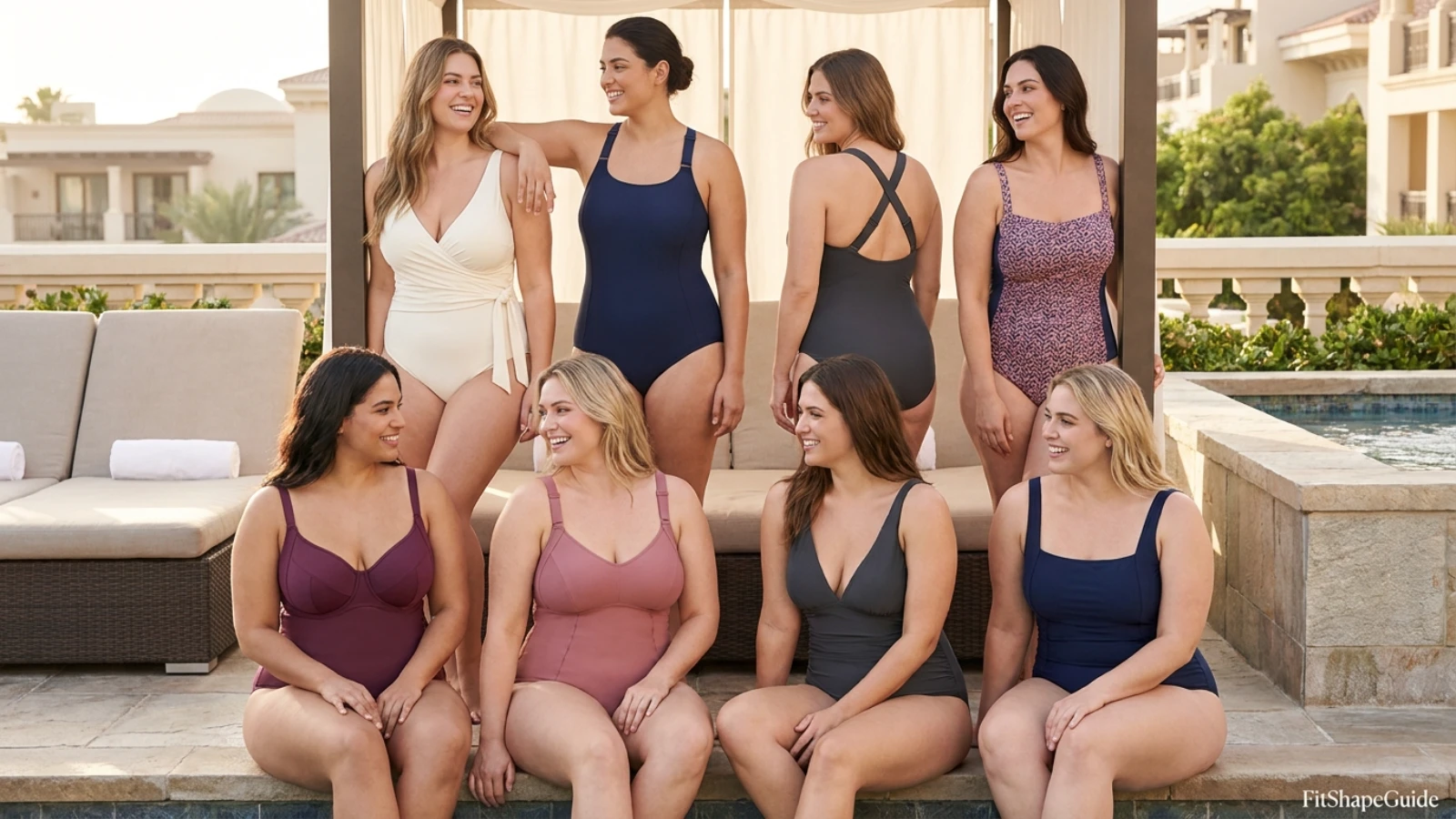
How adjustable swimsuit straps should fit
The correct strap tension keeps the upper cup or neckline positioned while allowing comfortable shoulder movement. A strap that leaves the shoulder repeatedly may be too long, too widely positioned or connected to an unstable back. A strap that creates deep pressure may be over-tightened or compensating for another fit problem.
Start in the middle of the range
Before putting the suit on, set both sliders near the middle of their usable adjustment range. This creates room to move in either direction after the body and cups are settled.
Adjust after settling the cups
Put the suit on, position breast tissue inside the cups and confirm underband placement. Only then adjust straps. Otherwise, the straps can lift a poorly seated cup and temporarily disguise the actual fit.
Strap length does not have to be identical
Bodies are not perfectly symmetrical. A small difference between strap lengths can be reasonable when it creates equal cup position and shoulder comfort. Large differences may suggest the suit itself is twisting or the cup fit differs between sides.
Leave usable range
If the correct fit requires the strap to be fully shortened, the suit may be too long through the upper torso. If it needs maximum extension, the body or strap may be too short.
Check slider creep
Mark the slider position mentally or photograph it before swimming. After movement, confirm that it has not gradually lengthened under wet load.
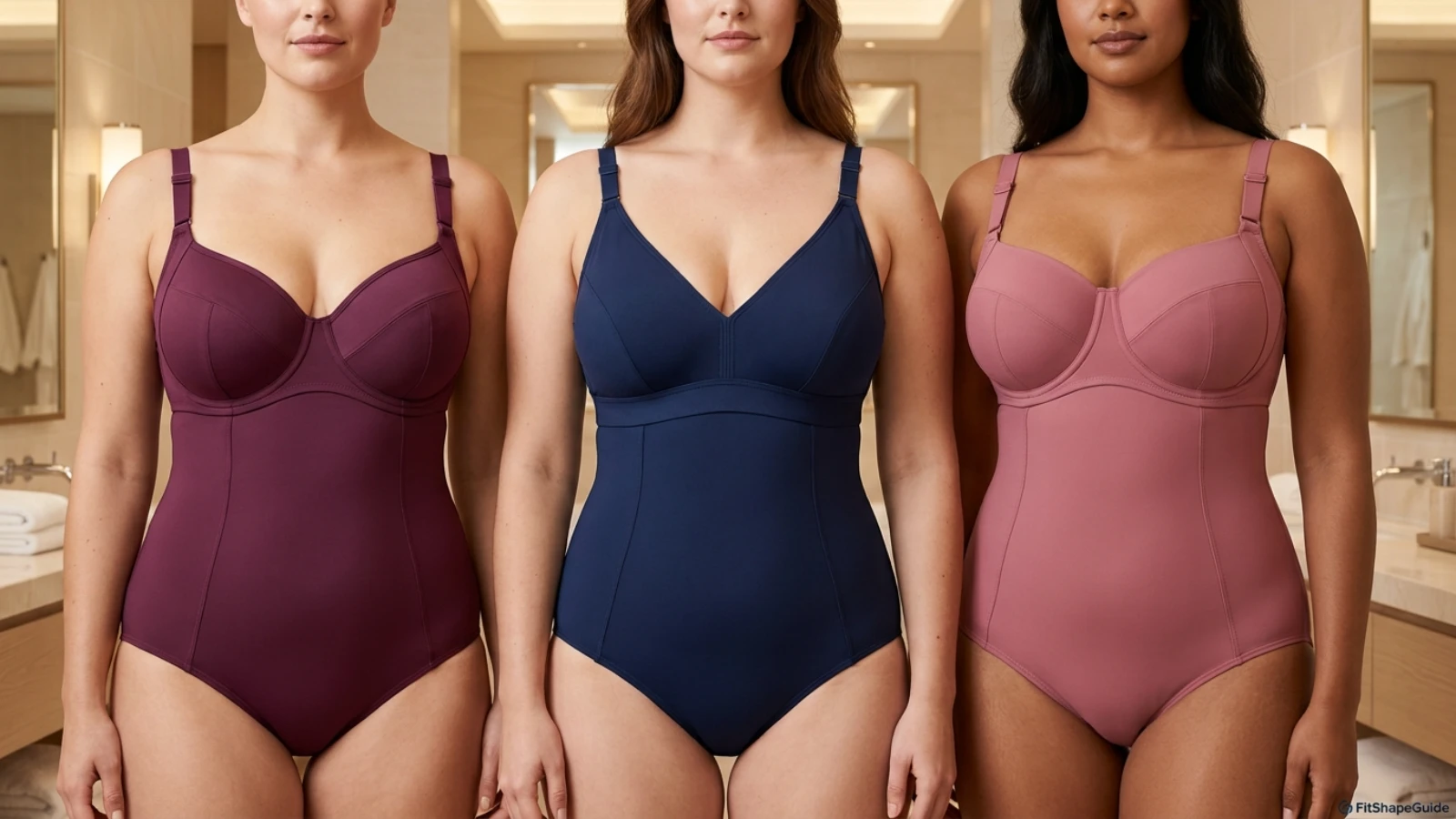
Cup depth, underwire, side support and bands
The bust should be fitted independently of the shoulder strap. If the cups are shallow, tightening the straps can push tissue upward and increase overflow without solving the missing depth.
Bra-sized cups
Cup-sized swimsuits are useful when the bust requires substantially different proportions from the waist and hip. Start from a current well-fitting bra size when the brand recommends that approach, then verify the exact swim size chart.
Underwire
The wire should surround the breast root and remain below breast tissue. If strap adjustment pulls the wire downward or onto side tissue, investigate cup depth and band fit.
Seamed wireless cups
Seamed cups can create projection without wire. Their support depends on cup fabric, seam direction and an effective underbust anchor.
Molded cups
Molded cups create a smooth surface but provide a fixed shape. Adjustment can change neckline position, not the underlying cup geometry.
Side support
High side wings and side-support panels can improve containment. They should stay below the active arm area rather than rubbing during swimming.
Underbust elastic or band
The underbust structure should remain level before and after strap adjustment. A band that moves upward as the straps shorten is a warning that too much support is being transferred to the shoulders.
Straight straps, crossbacks and supportive back closures
Straight-back straps
Straight straps are simple to adjust and easy to put on. They work best when the rear anchor points align with the shoulders and the straps do not drift outward.
Crossback straps
Crossing the straps can reduce slipping and increase security during swimming. The crossing point should not sit painfully close to the neck.
Convertible straps
Convertible designs can offer straight and crossed arrangements. Recheck cup and neckline position whenever the configuration changes because the direction of tension also changes.
Support clasp
A supportive back clasp or internal bra closure can anchor the underbust system independently of the swimsuit body. This can be especially useful in bra-sized designs.
Scoop back
A low scoop back creates a more open appearance, but the remaining body still needs enough tension to keep the front stable. An adjustable strap cannot fully compensate for a back that is too loose.
Higher back
A higher back gives more surface area for support and can work particularly well with broader adjustable straps. The trade-off is additional coverage and sometimes more effort when dressing.
Torso length and adjustable straps
Adjustable straps are especially helpful when a one-piece suit is close to the correct torso length. They cannot fully solve a major body-girth mismatch.
When the suit is too short
The leg openings pull upward, the neckline is dragged downward and the shoulder straps feel increasingly tight. Lengthening the straps may reduce shoulder pressure while making the neckline too low.
When the suit is too long
Fabric wrinkles through the waist or back and the bust frame may shift. Shortening the straps can remove some wrinkles but create unnecessary shoulder loading.
Front length and fuller bust projection
A fuller bust uses more of the suit’s front length. A suit that appears adequate in total girth can still need more front projection to prevent the neckline from being pulled downward.
Long-torso options
If standard suits repeatedly pull at the shoulders despite correct width, a long-torso option may be more effective than searching for longer straps alone.
Petite proportions
A shorter suit body may be useful when straps always need maximum shortening and the torso wrinkles. The goal is not simply a smaller overall size; it is a different vertical proportion.
Best necklines with adjustable straps for a large bust
Moderate V-neck
A moderate V works well when the cups provide enough depth and the straps position the upper edges without pulling the center down.
Sweetheart neckline
Sweetheart necklines pair naturally with molded or seamed fuller-bust cups. Adjust each side until the upper edge follows the body smoothly.
Square neckline
A square neckline can be very stable when supported by broad straps and adequate front shaping. If the corners lift, extra strap tension is usually not the first fix; check bust room.
Fixed wrap
A fixed wrap can provide diagonal shaping while adjustable straps refine the neckline height. The crossover should stay secure even when the straps are slightly loosened.
Higher active neckline
A higher neckline may be preferable for swimming and water exercise. Adjustable straps can help maintain the neckline without forcing an overly short suit.
For underwire-specific swim construction, compare Best Underwire Tankinis for a Large Bust. For active pool use, see Best Support Swimsuits for Swimming Laps for a Large Bust.
Wet-fit, swimming and movement tests
Dry fitting establishes basic cup and strap position. Swimming determines whether the adjustment system is actually useful.
Overhead reach
Raise both arms fully. The strap should rotate naturally with the shoulder without pulling the cup or neckline sharply upward.
Forward swim reach
Reach forward as if swimming freestyle. Check whether the strap slider stays in place and whether the outer cup edge remains secure near the armhole.
Backstroke motion
Move one arm backward overhead. Rear strap anchors and sliders should not create concentrated pressure against the shoulder blade.
Pool exit
After getting wet, step from the pool without immediately adjusting the swimsuit. Let water drain and inspect the neckline, strap lengths and cup position.
Twenty-minute wear check
Strap hardware that feels fine for two minutes may rub after extended wear. Check the front adjustment slider, rear attachment and any convertible hardware.
Slider creep
Compare the adjustment after swimming with its starting point. A slider that gradually lengthens makes the suit less predictable and may require a different strap or hardware design.
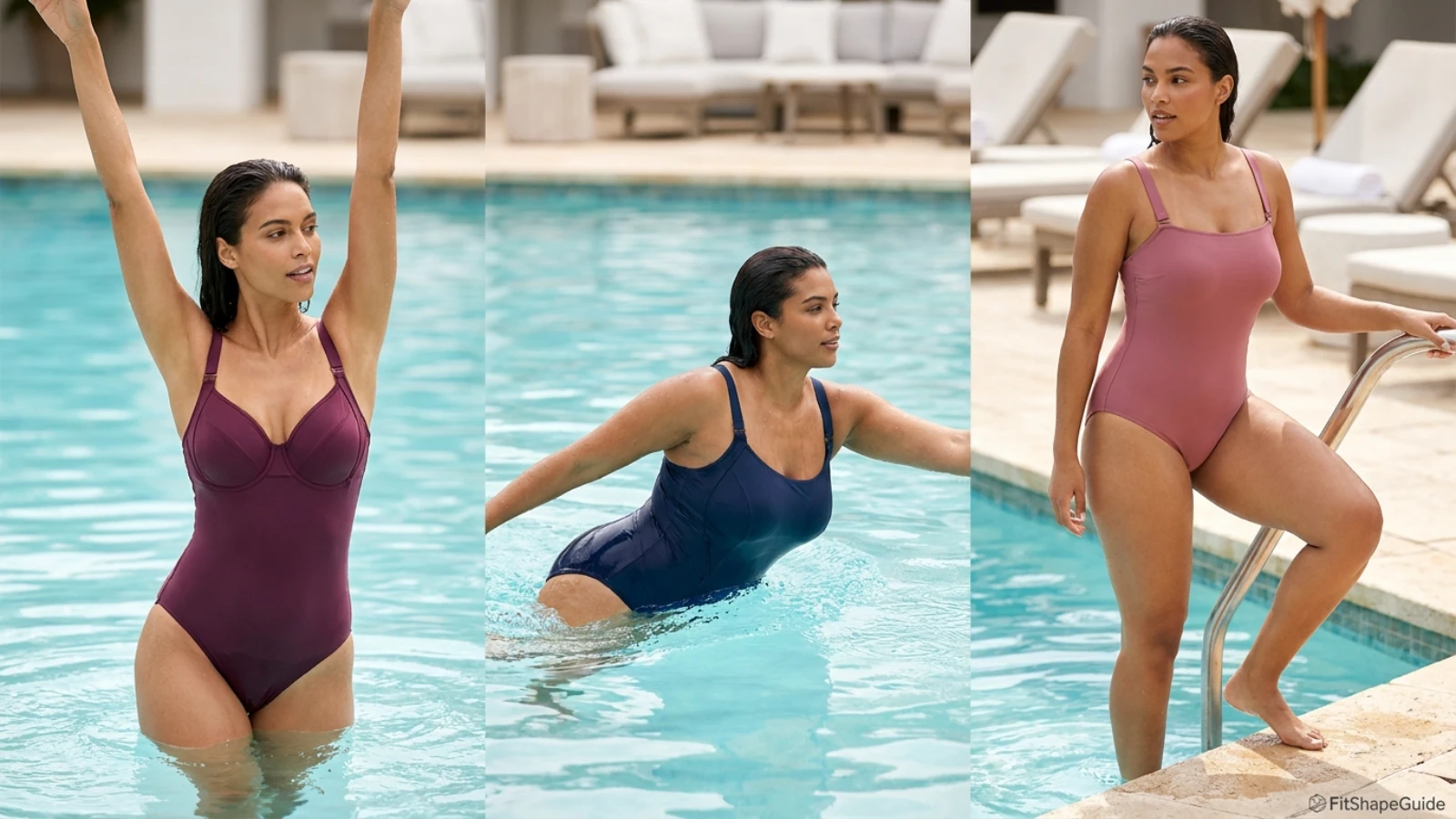
How to buy an adjustable-strap swimsuit online
Many product descriptions mention adjustable straps without explaining the adjustment range or the bust support underneath. Treat strap adjustability as one feature inside the whole suit rather than the buying decision by itself.
- Verify cup construction: bra-sized, underwire, molded, seamed wireless, shelf or soft cup.
- Check the underbust support: band, elastic, internal frame or supportive lining.
- Inspect strap width: broad straps may distribute pressure; narrower straps need enough structural help elsewhere.
- Find the slider: determine whether straps are fully adjustable or only adjust over a short section.
- Check strap position: widely spaced straps may suit some shoulders but slip on others.
- Check convertible options: confirm whether straight and crossed configurations are intended by the manufacturer.
- Review back construction: clasp, scoop, higher back or crossback.
- Check torso measurements: especially if fixed-strap one-pieces usually feel too long or short.
- Read fabric and lining: wet recovery affects how much strap adjustment changes during use.
- Review returns: preserve all hygiene liners and tags while performing permitted dry fitting.
Start from a supportive bra size where applicable
If the swimsuit uses actual band-and-cup sizing, a current well-fitting bra size is a useful starting point. Use the swimwear brand’s own chart rather than assuming conversions are identical.
Do not judge support by strap width alone
A very wide strap attached to a shallow cup can still create poor fuller-bust fit. A medium-width adjustable strap attached to a strong cup and band can provide more useful support.
Check the slider material
Hardware should move intentionally but hold its chosen position. Smooth low-profile sliders are generally preferable to bulky hardware positioned exactly where a bag strap or pool edge may press.
Decide the activity
For relaxed poolwear, comfort and style may carry more weight. For lap swimming or water exercise, prioritize secure strap position, strong wet recovery and unrestricted shoulder movement.
For more bra-sized swim construction, see Best Underwire Tankinis for a Large Bust. If waist proportion is also difficult to fit, compare Best Swimsuits for a Big Bust and Small Waist.
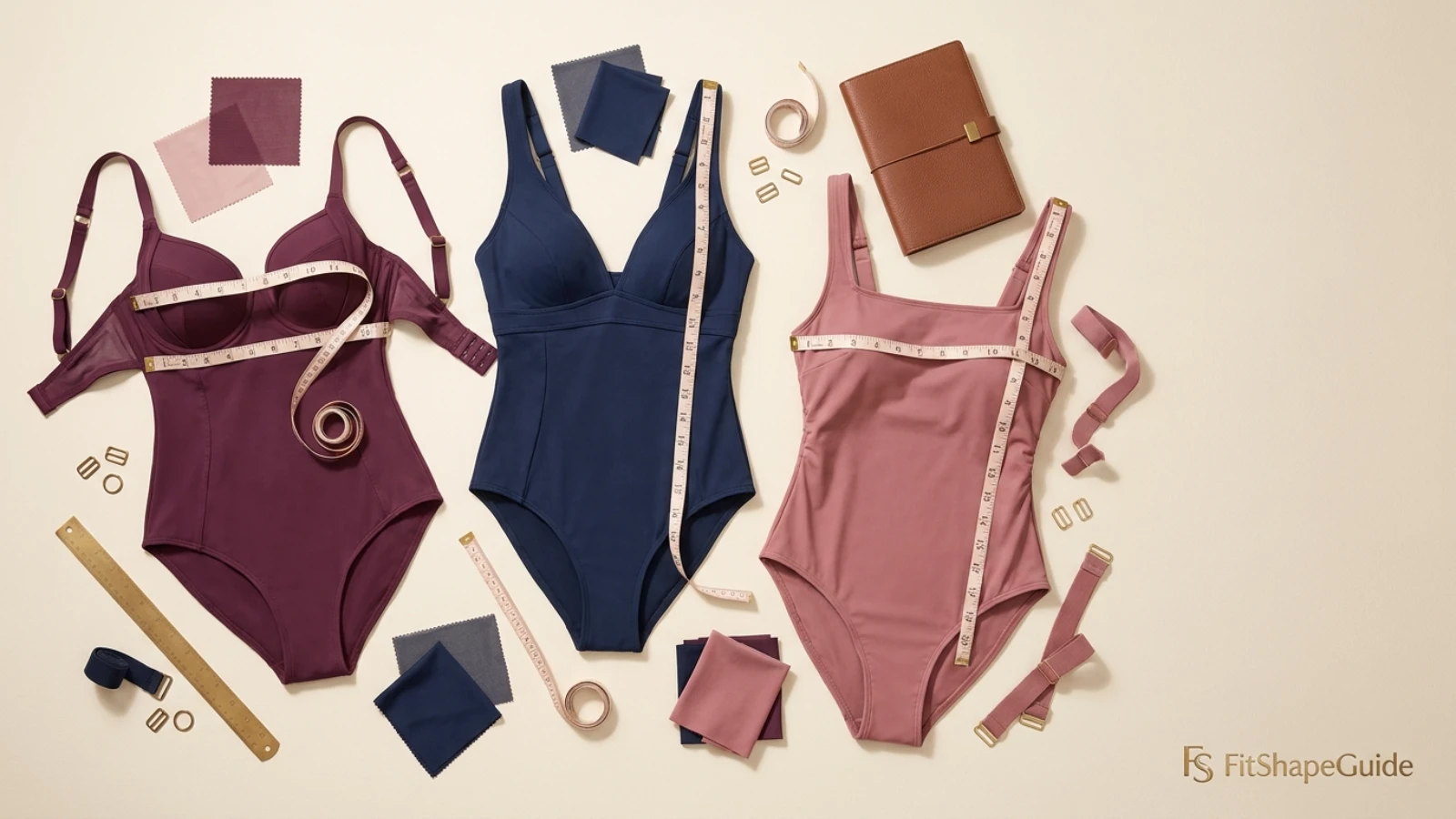
Common adjustable-strap swimsuit problems
| Problem | Likely cause | Better response | Avoid |
|---|---|---|---|
| Straps dig deeply | Overtightening or weak band/cup support | Improve support base and reduce strap tension | Assuming tighter means more supportive |
| Straps keep slipping | Too long, rear anchors too wide or unsuitable shoulder path | Shorten modestly or try crossback/closer anchors | Shortening until neckline distorts |
| Slider reaches shortest setting | Suit body or upper torso too long | Shorter torso construction | Modifying straps before confirming body fit |
| Slider reaches longest setting | Strap/body too short | Longer strap or long-torso option | Accepting shoulder pressure |
| Cup spills after straps tighten | Cup lacks volume or depth | Larger/deeper cup | Using strap tension to force containment |
| Back band rides up | Band too loose or straps too tight | More stable band and balanced adjustment | Shortening straps further |
| Square neckline corners lift | Front bust depth insufficient | More cup projection or shaped front | Using maximum strap tension |
| Straps loosen in water | Slider creep | More secure adjustment hardware | Constant readjustment while swimming |
| One strap always needs much more tension | Body asymmetry or suit rotation | Small asymmetric adjustment or different cut | Forcing identical slider position |
| Neckline drops although straps are tight | Suit body too short/long or cups too shallow | Correct torso and bust construction | Increasing shoulder pressure |
The swimsuit only feels supportive with very tight straps
That is a sign to inspect the cup and underband. Straps should contribute to stability, but the entire bust should not hang from them.
The cups fit but the straps are too short
The issue may be torso proportion rather than bust size. Look for longer adjustment range or a long-torso swimsuit before changing to a cup that no longer fits.
The straps fit but the suit wrinkles through the waist
The body may be too long. Shortening straps can pull some wrinkles upward while creating a false sense of fit and increasing shoulder pressure.
The sliders move after every swim
The adjustment mechanism itself may not be stable enough for the activity. Consider a different strap design rather than repeatedly memorizing and restoring the setting.
Final verdict
The best swimsuits with adjustable straps for a large bust use the straps as fine-tuning tools, not as the entire support system. Start with enough cup depth, a secure underbust frame, supportive sides and correct torso length.
Then adjust the straps until the upper cup and neckline sit securely without digging into the shoulders or pulling the back upward. Finally, repeat the test wet. If the sliders hold, the neckline remains secure and the suit moves naturally with your shoulders, the adjustment system is doing its job.
Frequently asked questions
Are adjustable straps good for a large bust?
Yes. Adjustable straps help fine-tune neckline and upper-cup position, especially when torso lengths vary. They work best with supportive cups and a stable underbust structure.
Should swimsuit straps be very tight for a large bust?
No. Straps should feel secure without digging. If very high tension is required for support, check cup depth, band fit and torso length.
Are wide adjustable straps better?
Wide straps can distribute pressure over more surface area, but width alone does not create support. Cups and underbust anchoring remain important.
Why do my swimsuit straps keep slipping?
They may be too long, positioned too widely or attached to a back that does not suit your shoulders. A crossback or closer rear anchor may help.
Can adjustable straps fix a swimsuit that is too long?
Only slightly. If the entire swimsuit body is too long, shortening the straps may create shoulder pressure while leaving wrinkles elsewhere.
Can adjustable straps fix cups that are too small?
No. Tightening straps can increase compression or overflow, but it cannot add missing cup depth or volume.
Are adjustable straps useful for swimming?
Yes, provided the sliders remain secure when wet and the chosen tension allows full shoulder movement.
How do I test adjustable swimsuit straps?
Fit the cups and underband first, adjust the straps, raise both arms, swim or mimic swimming movements and check that the sliders, neckline and cups remain in position.
Editorial and verification standards
This guide evaluates adjustable-strap swimwear through cup depth, underwire or wireless support, underbust anchoring, side coverage, strap width, slider range, strap placement, back construction, torso length, wet recovery and movement.
Adjustable straps are not treated as proof that a swimsuit supports a large bust. The support system must still provide enough cup capacity and a stable lower anchor.
Before publishing a commercial recommendation, FitShapeGuide should verify the direct live seller, exact swimsuit and color, size range, band-and-cup sizing where applicable, cup construction, underwire or shelf support, underbust elastic, strap width, adjustment range, back design, torso length, shell and lining composition, care, availability and returns.
No ASIN, price, rating, review count, coupon, stock claim or delivery promise should be published unless directly verified. Affiliate disclosure should remain clearly visible near any commercial recommendation.