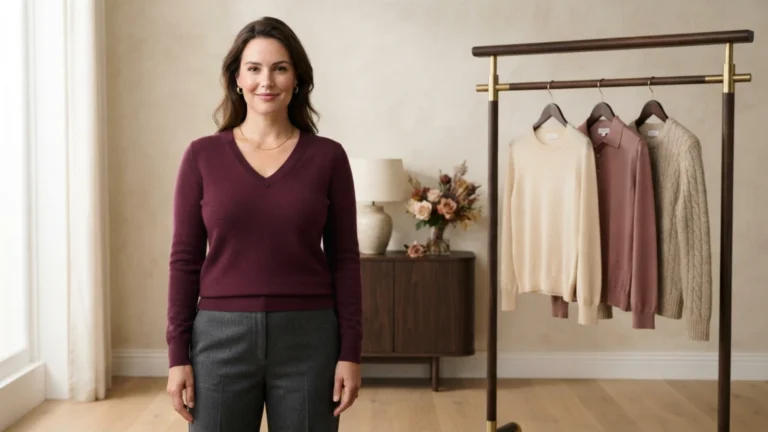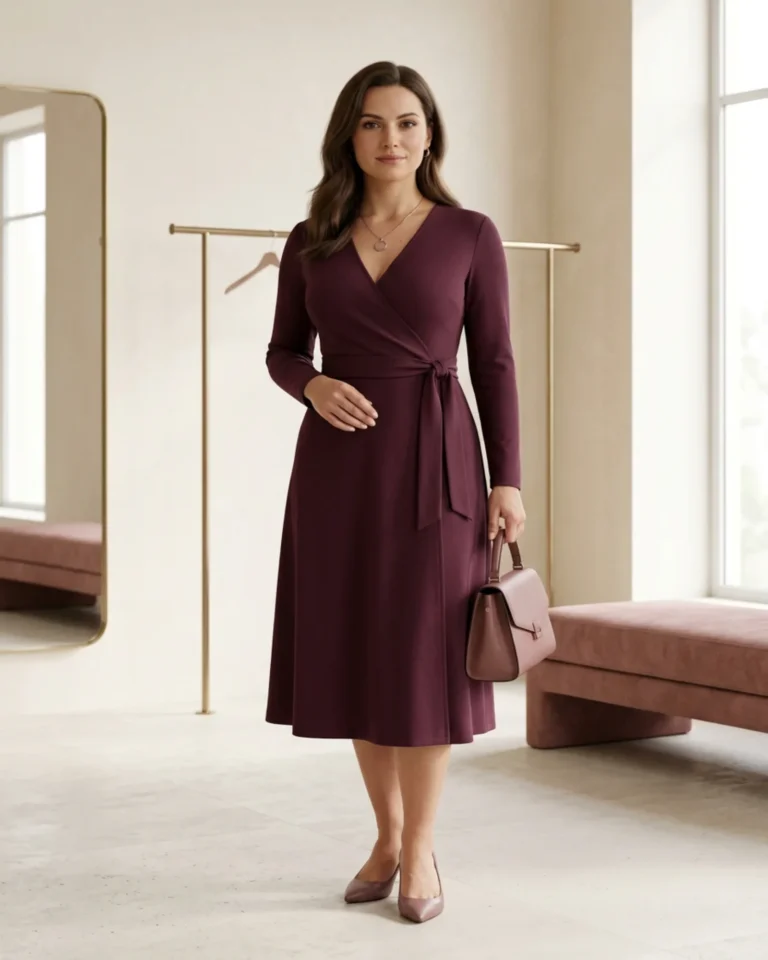
Best Work Pants and Top Pairings for a Large Bust
A construction-first guide to matching trouser rise, leg shape, pleats, waistband and fabric with secure fuller-bust tops, practical tucks and office layers.
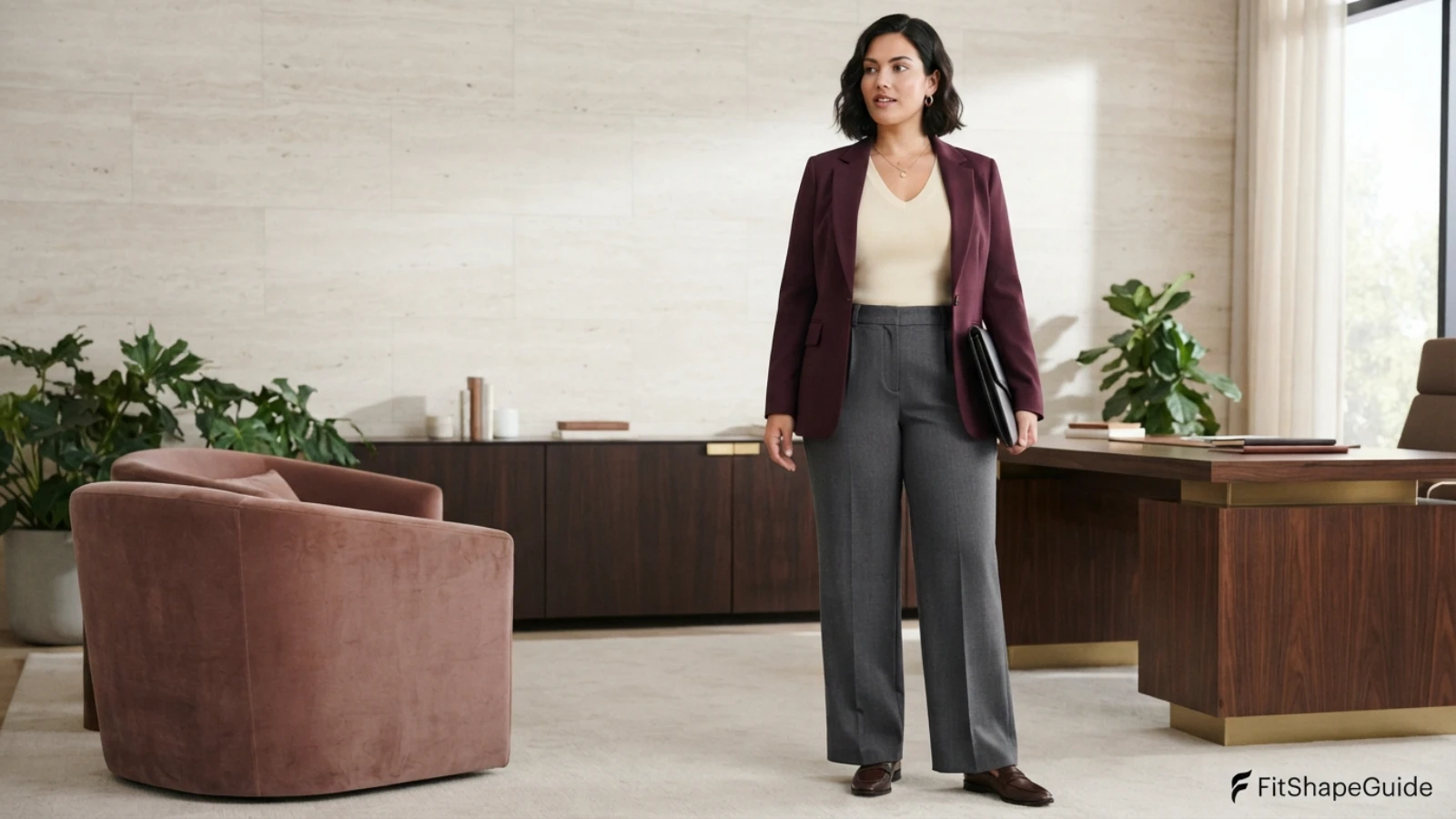
The 90-second pairing check
- Stand without arranging: top hem, tuck, pleats and waistband should settle on their own.
- Sit for one minute: breathe fully and check waist pressure, pocket flare and neckline position.
- Raise both arms: the top should resettle without pulling free or exposing a gap.
- Walk and turn: trouser hem should clear the shoe and the top should not twist.
- Add the blazer: layer should not catch on excess fabric or push the waistband down.
- Use the real pockets: load only daily essentials and see whether the front remains composed.
The work-pants and top pairing framework
A top and trouser are not independent fit decisions. The rise determines where the top ends or tucks. The waistband changes how much shirt length is needed when seated. Pleats and pockets add or remove visual structure near the top hem. Leg volume affects which top length feels deliberate. A pairing can fail even when both pieces fit separately.
Begin with the garment that is hardest to fit. If secure fuller-bust tops are the challenge, choose the top first and find a trouser rise that accepts its hem without pulling. If waist-to-hip fit is the challenge, choose the pants first, then adjust the top length, tuck or outer layer. The body does not need fixing; the two garments need compatible dimensions.
| Work-pant type | Strong top starting point | Useful layer | Main trade-off |
|---|---|---|---|
| Straight-leg trouser | Shaped shell, blouse or no-gape shirt | Single-breasted blazer | Very long top can make the line look accidental |
| Wide-leg trouser | Fine knit, controlled tuck or shorter blouse | Cropped or hip-length jacket | Long loose top plus wide leg can lose structure |
| Tapered ankle pant | Button-down, tunic blouse or cardigan set | Longline blazer | Cropped hem may be less formal in some offices |
| Pleated trouser | Fixed-wrap top or close shaped knit | Clean collarless jacket | Bulky tuck can force pleats open |
| Ponte pull-on pant | Structured woven blouse or substantial shell | Tailored blazer | Soft top and soft pant may read too casual |
| Flared trouser | Tucked shell or shaped blouse | Waist- to hip-length jacket | Hem and shoe height must be coordinated |
| Linen-blend trouser | Crisp popover or refined knit | Unlined soft blazer | Wrinkling can reduce formality |
| Barrel-leg trouser | Simple fitted knit or neat collarless blouse | Short structured layer | Curved leg may not suit conservative dress codes |
Eight work-pants and top outfit formulas
Straight trousers + shaped V-neck shell
A straight leg creates a neutral office base, while a substantial shaped shell avoids shirt-button strain. Add a blazer for meetings or a cardigan for routine desk work.
Trade-off: a thin shell may cling or show seams. Look for recovery, opacity and enough front length to remain tucked.
Wide-leg trousers + fine-gauge knit
A compact knit can be fully tucked without adding volume beneath pleats. The wide leg supplies movement and polish, especially with a front crease and controlled waistband.
Trade-off: a tight high rise can push the knit upward when seated. Test full breath and front-hem recovery.
Tapered ankle pants + no-gape shirt
A bust-shaped shirt adds traditional polish while the tapered pant keeps the outfit modern and allows a longer untucked or softly tucked hem.
Trade-off: an ankle length may appear less formal, and a wide shirt hem can bunch at the narrower trouser line.
Pleated trousers + fixed-wrap blouse
A secured crossover blouse follows the bust without a center placket. A controlled front tuck reveals the trouser waist and lets pleats fall vertically.
Trade-off: true wraps and long ties can shift. Choose a fixed overlap and avoid packing excess fabric into the pleats.
Ponte trousers + structured popover
Stretch ponte supports long seated days. A crisp popover, collarless woven top or blazer adds the construction needed for business casual.
Trade-off: ponte varies widely in thickness and recovery. Thin fabric or visible elastic-waist details may read too casual.
Flared trousers + tucked knit shell
A simple shell keeps the upper half calm while the flare provides the outfit’s strongest shape. A shorter jacket preserves the waistband and leg line.
Trade-off: full-length flares depend on shoe height and careful hemming; an incorrect hem quickly looks unfinished.
Linen-blend trousers + shaped blouse
For warm offices, a medium-weight linen blend with a crease or tailored waistband can pair with a darted blouse or fine knit. An unlined jacket finishes the look.
Trade-off: linen wrinkles and may relax at the waist. A blend can improve recovery but should still be tested after sitting.
Barrel-leg trousers + simple knit top
In creative workplaces, a controlled barrel leg adds modern shape. A clean, secure knit or collarless blouse keeps the pairing intentional rather than costume-like.
Trade-off: curved seams and cropped length may not meet conservative office expectations. Keep a straight-trouser alternative.
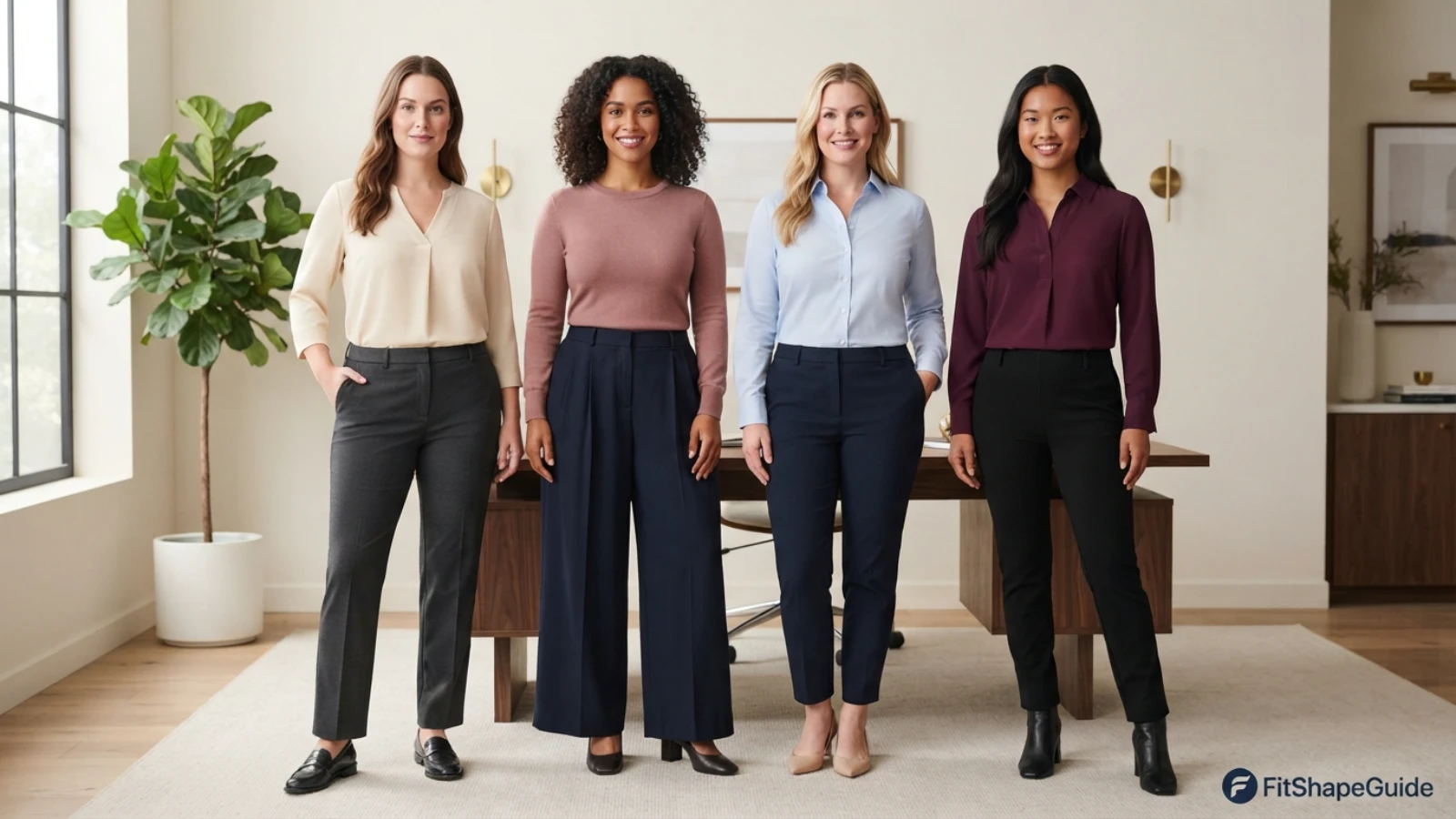
For additional workplace combinations, use the business-casual outfit formulas to adjust the same pants from desk days to meetings.
Rise, waistband and tuck compatibility
The rise is the vertical distance that positions the waistband on the torso. A label such as low, mid, high or ultra-high is relative to the brand and size; use the actual front-rise measurement when available. The best rise is the one that stays comfortable, level and stable in sitting—not the one a trend declares flattering.
High rise
A high rise can create a clear meeting point for a tucked top and support wide-leg or pleated trousers. On a shorter torso, it may leave little space between waistband and bust or press the rib area when seated. Test the exact bra band and top because the three garment edges should not stack uncomfortably.
Mid rise
A mid rise often offers more seated space and works with full or partial tucks. It can be a versatile starting point when tops need extra front length over the bust. Ensure the waistband does not slide downward and pull the tucked shirt with it.
Pull-on and elastic waists
A concealed elastic or drawcord can improve comfort, but its outer appearance and recovery determine formality. A flat front, pressed crease and substantial fabric read more polished than visible gathering. The waistband should return after stretching and not roll under a tucked top.
| Top treatment | Works best when | Key test | Common failure |
|---|---|---|---|
| Full tuck | Top is long, fine enough and shaped | Raise arms, sit, then let fabric resettle | Front pulls down or back billows |
| Partial/front tuck | Dress code is relaxed and hem is soft | Front entry point looks deliberate | Bulky knot or uneven side volume |
| Untucked shaped hem | Top ends cleanly near high hip | Hem clears pockets and widest pleat area | Length cuts across pocket opening |
| Long untucked blouse | Pant is tapered or straight | Side vents permit sitting | Hem catches under the body |
| Bodysuit-style top | Torso length and closure are comfortable | Sit for five minutes and breathe fully | Downward pull changes the neckline |
| Bloused tuck | Fabric is fluid with controlled volume | Even distribution around waistband | Excess fabric hides pleats and pockets |
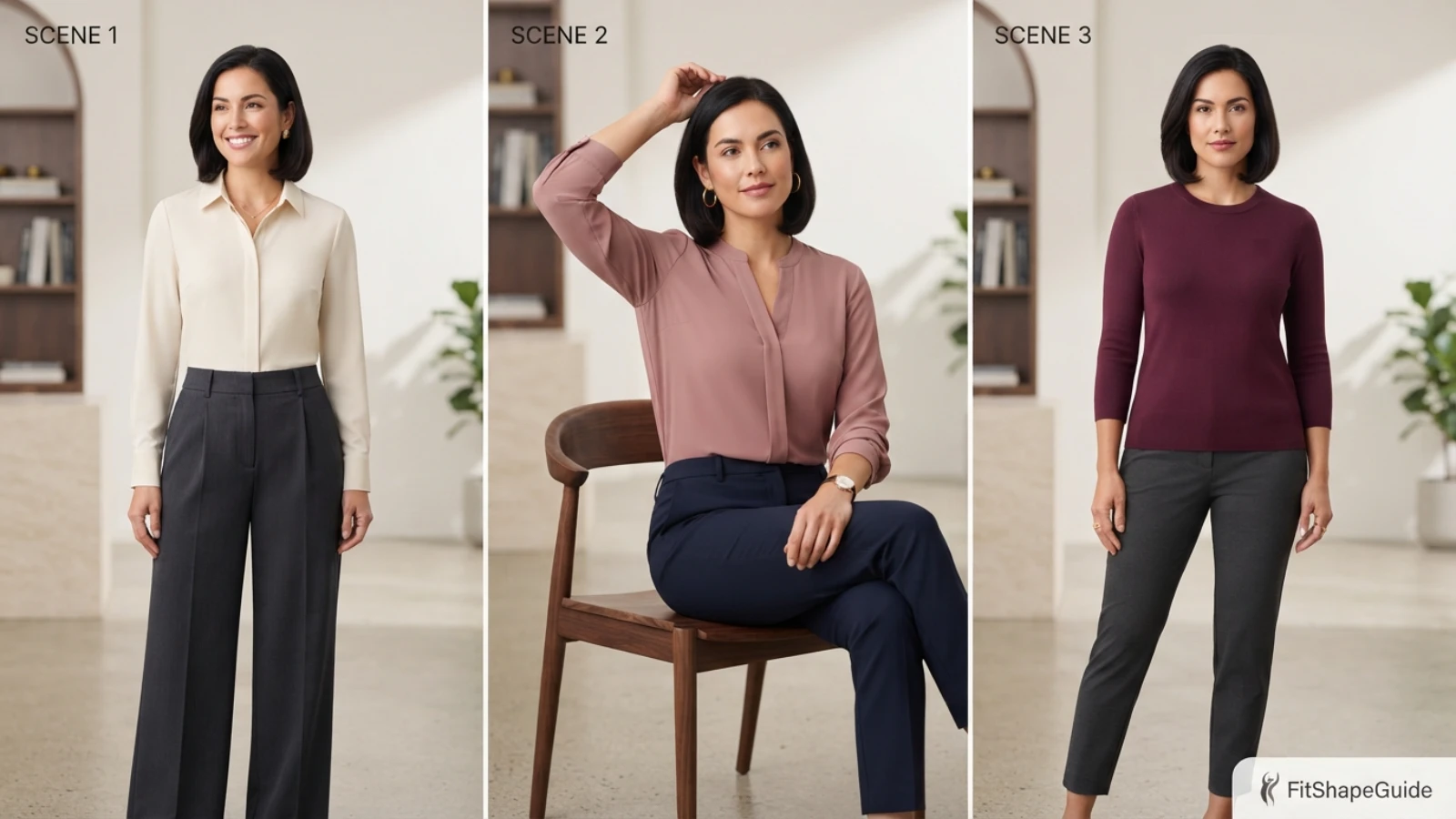
Which tops pair best with work pants?
The top needs enough front depth before it is tucked or layered. A waistband cannot repair a gaping shirt, and a long blazer should not hide a neckline that moves. Select by closure, shaping, fabric and hem.
Shaped knit shells
A substantial knit stretches around the bust without a placket. It is especially useful with pleated, wide-leg and flared trousers because it can tuck smoothly. Look for recovery, opacity, stable armholes and enough front length. Thin ribbing may stretch wider at the bust and stay distorted.
No-gape button-downs
A shirt with bust darts and a hidden chest closure provides traditional structure with straight or tapered pants. For pleated trousers, minimize the amount tucked at front. Check the complete shirt with the no-gape button-down guide.
Fixed-wrap and draped blouses
A fixed crossover can supply diagonal shaping and pair well with wide-leg or straight trousers. The overlap should stay secure while seated. A fluid blouse benefits from a flat, non-rolling waistband; avoid trapping long ties inside the trouser closure.
Popovers and collarless woven tops
A partial placket avoids full-length button strain and can be worn tucked or untucked. Darts, princess seams or a curved hem make the top more deliberate. Crisp popovers add structure to ponte and pull-on trousers.
Fine-gauge cardigans as tops
A compact cardigan can be buttoned as a top when the placket stays flat and closure spacing works for the bust. It pairs naturally with straight or wide-leg pants. If worn open, use a secure shell underneath and check that two necklines do not compete.
Compare more construction options in the fuller-bust tops guide.
Pleats, pockets, creases and seated movement
Pleats should fall from the waistband rather than pull open while standing. Sit and check again: some pleat expansion is normal, but severe spreading can indicate insufficient room through the waist, stomach, hip or rise. The top should not be packed into the pleat area because that changes how the front hangs.
Pockets
Side pockets can flare when the hip area is tight or when a phone weighs down the opening. Welt pockets are visually quiet but may be shallow. Patch pockets can make a trouser more casual. Test the actual items carried at work and remove anything that changes the fit. A pocket is useful only when it functions without pulling the waistband or creating discomfort.
Creases and seam lines
A pressed front crease adds formality and gives wide or straight legs a clear line. Permanent or stitched creases maintain shape but may feel more rigid. Front seams offer a similar visual guide in knit or pull-on pants. None of these details changes body proportions; they change how the garment communicates structure.
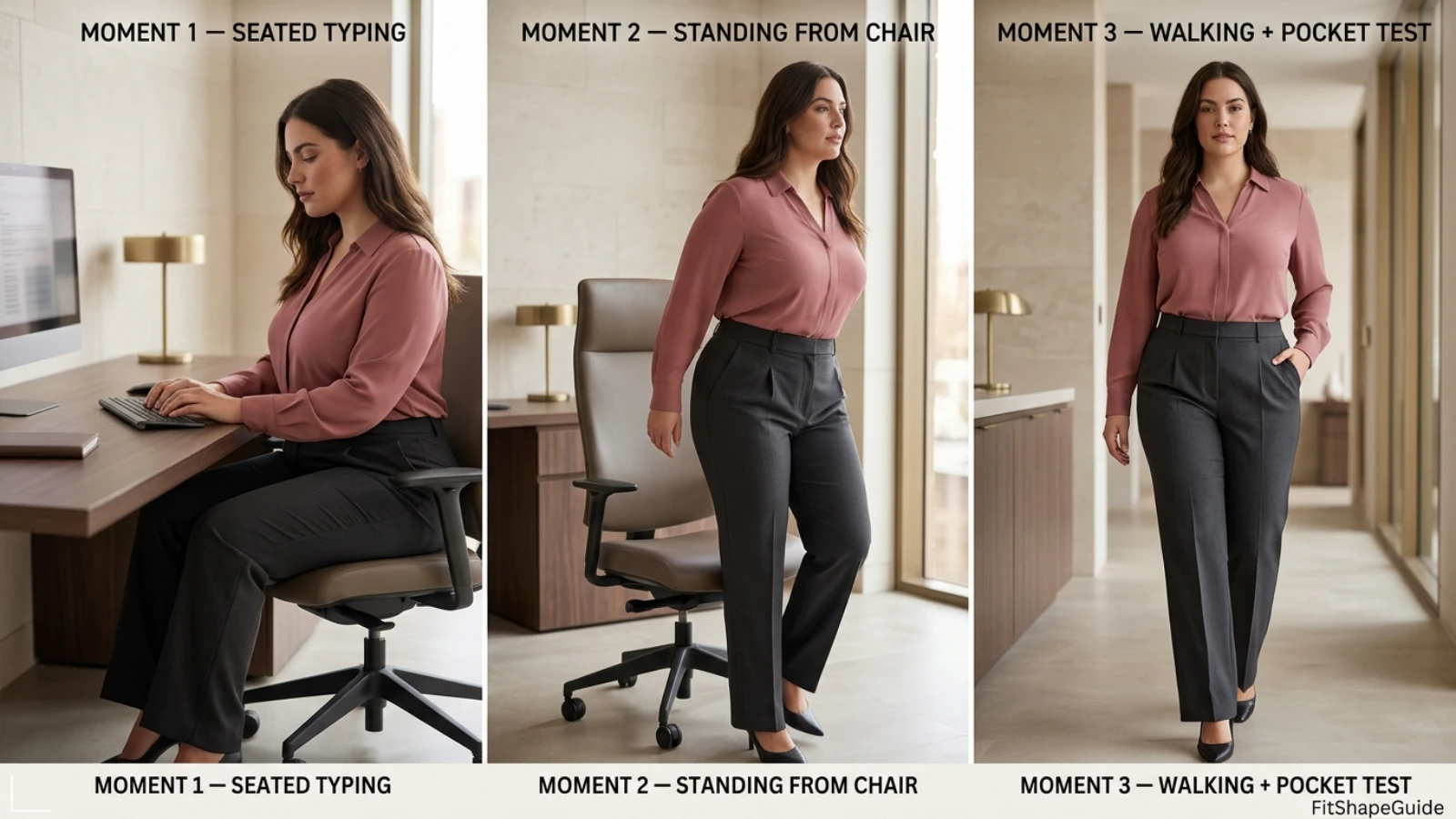
The five-minute desk test
Sit at a realistic desk, type, cross and uncross the ankles, stand, then walk. The waistband should remain level, the zip should stay flat and the knees should recover. Raise the arms and see whether the top stays tucked without pulling the neckline. Repeat with a belt if it is part of the outfit.
Fabric, stretch, lining and seasonal weight
Stretch percentage is not a complete comfort measure. Weave, knit density, fiber blend and recovery determine whether pants move and return. A small amount of elastane in woven suiting can support sitting. Ponte may stretch more but varies in polish. Wool blends can regulate temperature; polyester-viscose blends often resist wrinkles; cotton twill feels structured; linen blends breathe but crease.
Four-season suiting
“Four-season” is a brand term, not a climate guarantee. Check fabric weight, lining and local weather. A medium-weight stretch suiting works across air-conditioned offices but may be hot during a humid commute. Pair it with a breathable top and removable layer.
Lined versus unlined
Lining can improve drape, opacity and friction, particularly in wool trousers. It may also trap heat or reduce stretch. Half lining can balance smoothness and breathability. Unlined pants should be checked for opacity in daylight and while the fabric is stretched in sitting.
Wash and crease recovery
Follow the care label. Some trousers require dry cleaning; others are machine washable but still need reshaping. Test whether knees bag after sitting and whether pleats return. A work pant that looks composed only before the first wash is not a dependable capsule piece.
Static, color transfer and pressing
Static can make a fluid blouse cling to trousers or cause an unlined leg to catch on hosiery. Test the full fabric combination in the expected humidity rather than treating each piece alone. A suitable slip layer may help with skirts, but trousers need compatible lining, fabric finish or garment care. Dark denim-look and heavily dyed trousers should also be checked for color transfer onto pale tops, bags and upholstered chairs; follow the care label before first wear.
Pressed creases and pleats need the correct iron temperature and cloth protection. Do not apply high heat simply because the trousers look like traditional suiting—synthetic blends can shine or distort. If regular pressing is unrealistic, choose a stitched crease, resilient fabric or simpler straight leg. Care compatibility is part of a good pairing: an easy-wash top does not create a low-maintenance outfit when the trousers require frequent specialist care.
How blazers and cardigans change the pairing
A layer can connect top and pants, but its length must relate to both. A hip-length blazer works with straight, tapered and many wide-leg trousers. A shorter jacket highlights a high-rise waist and helps preserve wide-leg volume. A longline blazer can streamline a tunic blouse with tapered pants, provided the two hems do not bunch.
Single-breasted blazer
This is the easiest general layer because its open front frames the top and its lower closure reduces overlap. The blazer should close comfortably when required, and its pockets should not compete with trouser pockets. Use the work-blazer guide for lapel and button-stance tests.
Structured cardigan
A compact knit cardigan can soften straight trousers or add comfort to a no-gape shirt. Choose clean edges, stable shoulders and recovery. With ponte trousers, use a cardigan substantial enough that the full outfit does not read as loungewear.
Belts
A belt is optional. Use it to stabilize a slightly loose waistband or add a deliberate detail, not to force a too-tight waist. The buckle should lie flat under a top and not meet the bust when sitting. A belt can change rise feel, so repeat the seated test.
Build a work-pants capsule and shop online
Begin with two pants that solve different days: a straight trouser for universal use and a wide-leg, tapered or ponte option for comfort or variety. Choose two secure tops for each pant and one layer that works across all four combinations. This produces more value than buying several trousers that need different shoes and tops.
- Measure a working pair: record front rise, back rise, waistband, hip, thigh, inseam and hem opening.
- Read garment measurements: a body chart does not tell the actual trouser dimensions or ease.
- Verify construction: closure, waistband, pleats, darts, pockets, lining, crease and stretch.
- Match the top: identify whether the intended shirt will be tucked, untucked or layered.
- Check inseam options: petite, regular and tall labels vary; use the actual measurement and planned shoe.
- Read care and returns: check final-sale status before buying an unfamiliar rise or cut.
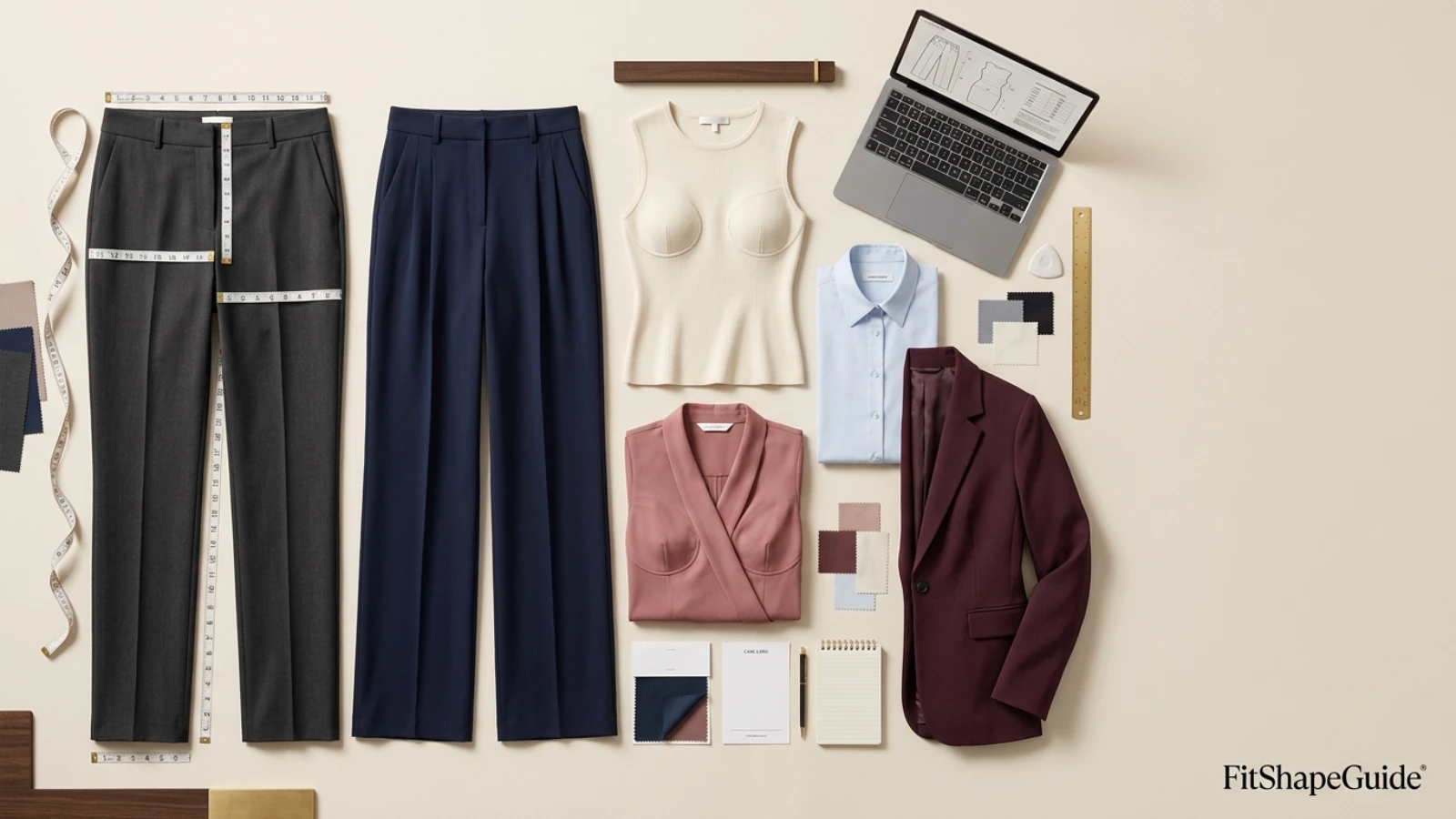
Use the full office-dressing guide to map these pairings to meetings, commute needs and workplace formality. For high-stakes meetings or hiring days, adapt the same trouser base with the interview outfit guide.
Common work-pants and top pairing problems
| Problem | Likely cause | Construction-first response | Avoid |
|---|---|---|---|
| Top pulls down when seated | Short front length or tight tuck | Longer top, different rise or untucked shaped hem | Constantly pulling the neckline back |
| Pleats spread while standing | Insufficient front/hip room or bulky tuck | More garment ease, flatter top or different pleat cut | Sizing down to flatten the waistband |
| Shirt billows at back | Top bought for bust without waist refinement | Back darts, controlled blousing or alteration | Stuffing all excess into front pleats |
| Pockets flare | Hip tension, pocket angle or heavy contents | Different cut, pocket style or lighter load | Sewing useful pockets closed before fit is solved |
| Wide-leg outfit feels shapeless | Long loose top and long loose layer | Clear tuck, shaped top or shorter jacket | Assuming the body needs a tighter pant |
| Ponte outfit feels too casual | Soft fabric in every layer | Structured blouse, crease detail or tailored blazer | Using color alone as the formal signal |
| Waistband rolls | Elastic, rise or stiffness is incompatible | Broader stable band or different rise | Adding a tight belt over a rolling waist |
| Hem catches under shoe | Inseam and shoe height do not match | Professional hemming for the intended shoe | Temporary folding through a full workday |
When tailoring is worth it
Hemming and small waist adjustments can turn a good trouser into a repeatable work piece. A tailor may also reduce a waistband gap, refine a leg or adjust pocket behavior. Buy for the largest essential area first when rise, hip and thigh remain compatible. Major rise or pocket reconstruction can be costly; compare it with a different cut.
Do not solve top problems with tighter pants
A high waistband can hold a shirt in place, but it should not compress the torso to prevent movement. If the neckline changes because the top is too short, choose more front length. If the shirt gaps, choose more bust room. Pairing works when both garments fit independently and cooperate in motion.
Final verdict
The best work pants and top pairings for a large bust start with garment compatibility, not a body-balancing rule. Straight trousers with a shaped shell are the most versatile. Wide-leg or pleated pants work best with a controlled tuck or shorter top; tapered pants support longer shirts; and ponte pants benefit from a structured blouse or blazer.
Test the neckline and waistband together while sitting, reaching and walking. Pleats should fall calmly, pockets should remain useful, and the top should not pull downward or billow. Choose a rise that supports the top length, a fabric that recovers through the day, and a pairing that works with existing office layers.
Frequently asked questions
What work pants are easiest to pair for a large bust?
Mid- or high-rise straight trousers are the most versatile because they work with shaped knits, blouses, shirts and open blazers.
What top should I wear with wide-leg work pants?
A secure fine-gauge knit, shaped shell or controlled-tuck blouse keeps the waistband and pleats clear while preserving movement.
Can I wear an untucked top with work pants?
Yes. Choose a shaped hem that clears pockets and pleats, or pair a longer blouse with straight or tapered trousers.
Are high-rise trousers best for a large bust?
Not automatically. The best rise stays comfortable when seated and leaves enough space between the waistband, top neckline and bra band.
How do I stop a tucked shirt from pulling down?
Choose more front length, test a different trouser rise and avoid over-tightening the waistband or packing excess fabric into pleats.
Do pleated trousers work with a fuller bust?
Yes. Pair them with a shaped top and a low-bulk tuck so the pleats can fall from the waistband without forced spreading.
Are ponte pants appropriate for the office?
They can be when the fabric is substantial, opaque and recoverable, and the outfit includes a structured blouse, crease or tailored layer.
How should I test work pants and a top together?
Wear every intended layer, sit, breathe, raise the arms, walk and load pockets lightly while checking neckline, tuck, waistband and pleats.
Editorial and verification standards
This guide evaluates actual trouser and top construction: rise, waistband, darts, pleats, pockets, lining, leg shape, inseam, hem, fabric recovery, top length, neckline stability, tucks, layers and seated movement. It does not treat body proportions as a problem or promise that one silhouette fits every person or workplace.
Current construction examples were checked against official pages for the J.Crew wide-leg four-season-stretch trouser, which lists front pleats and a stretch blend; HUGO wide-leg stretch pants, which identify high rise, crease, side pockets and unlined construction; Banana Republic Modern Straight City Stretch pants, which describe a high-rise straight cut, waistband and back darts; and the Everlane pull-on Tailor Twill trouser, which combines a wide leg, crease, drawstring waist and partial lining. These demonstrate variation, not universal fit guarantees.
Before publishing a product module, verify the direct live seller, exact variant, garment measurements, rise, waistband, leg, fabric, lining, pockets, care, workplace suitability and returns. Affiliate relationships should be disclosed clearly and close to recommendations under the FTC endorsement guidance.
“Best” means suitable for an individual’s top length, preferred rise, workplace, climate, movement and care needs—not a universal ranking based on body shape.