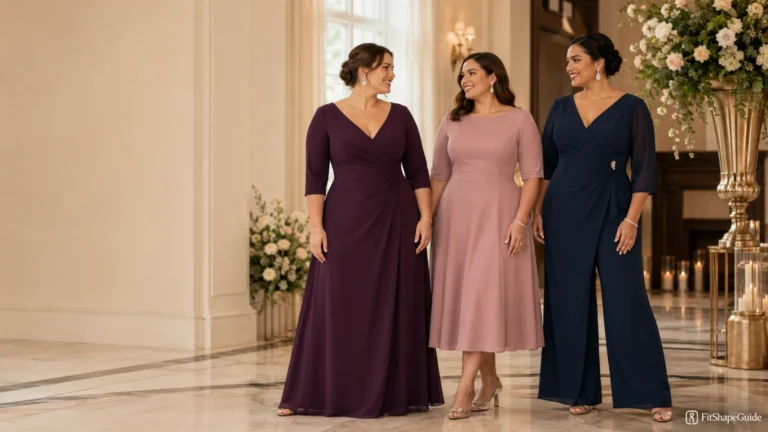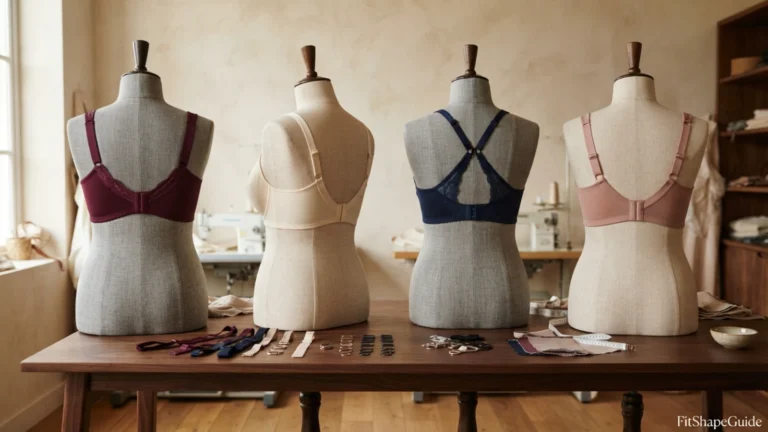
Best V-Neck Dresses for a Large Bust
A V-neck can create an open, elegant neckline without sacrificing support—but only when its edge, overlap, bust shaping and shoulder anchor work together. This guide explains how to judge the garment, not your body.
Quick answer
The best V-neck dresses for a large bust have enough front-bodice length and projection, a neckline that returns after movement, shoulder seams that stay centered, and coverage compatible with your chosen bra. Secure wrap, princess-seam, fixed-surplice, fit-and-flare and lined occasion designs often work well. Avoid buying solely by neckline depth: a modest V can still gape when the bodice is shallow, while a deeper V can feel secure when its edges are stabilized and correctly shaped.
The 60-second V-neck fit check
- Stand naturally: the V point should stay centered and both neckline edges should lie evenly.
- Take a full breath: the bust should not flatten or force the V wider.
- Lean, self-hug and raise your arms: the edge should return without exposing the bra.
- Check side seams and waist: neither should travel forward or upward.
- Sit for five minutes: the neckline should remain comfortable and predictable.
Best V-neck dresses for a large bust by construction
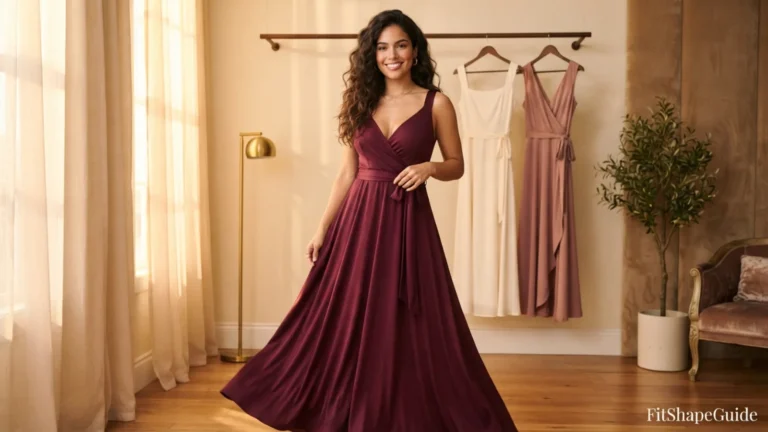
Secure true-wrap V-neck
Best for: adjustable waist definition and variable projection. Choose generous crossover overlap, an inner tie or closure, and enough bodice length for the tie to reach below the bust. The neckline must remain covered when you lean. Compare the detailed overlap checks in our wrap dress guide.
Princess-seam V-neck dress
Best for: shaped room without depending on stretch. Curved seams should travel near the bust apex and remain smooth below it. A fitted waist can work beautifully when the front bodice reaches the natural waist instead of borrowing length from the neckline.
Fixed-surplice V-neck midi
Best for: wrap styling with less movement. A stitched crossover reduces opening, but the lower layer still needs adequate width. Check that the join sits below the breast tissue and does not create a tight horizontal ledge. Use our midi dress guide for calf and waist proportions.
Structured fit-and-flare V-neck
Best for: a defined bodice and balanced skirt. Darts or panels should provide projection before the skirt releases at the natural waist. The V edge benefits from facing, stay tape or stable lining. Review the fit-and-flare construction checks.
Button-front shirt V-neck
Best for: adjustable styling with tailoring cues. The open collar creates the V, but buttons below it must lie flat. Look for bust darts, princess seams, dense overlap and shoulder room. Our shirt dress guide explains button-gap testing.
Lined occasion V-neck
Best for: cocktails, weddings and formal dinners. Stable lining, shaped panels and a secure back closure help the neckline hold its intended geometry. Sequins or lace should decorate a correctly fitted base rather than conceal tension. Compare options in our cocktail dress guide.
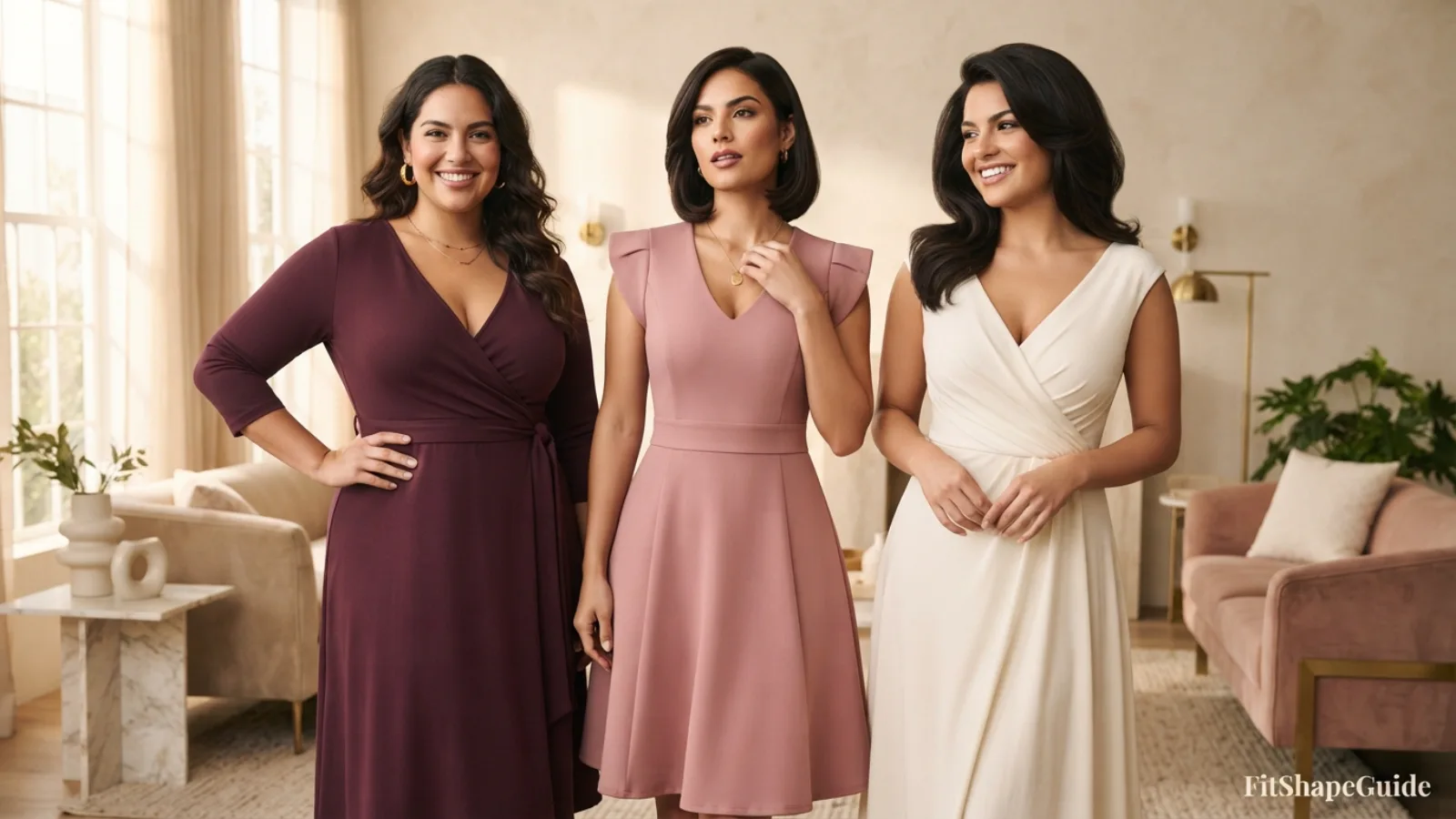
Why V-neck geometry matters more than depth
Edge stability prevents gaping
A neckline is a cut edge under repeated load. Facing, binding, stay tape, a stable lining or carefully engineered stretch helps it return after movement. If the edge has grown during manufacture or hanging, it may ripple even when the bust fits. Pulling the dress tighter rarely fixes that problem; it often makes the V spread wider. Inspect both sides for equal length and smooth contact rather than demanding that every edge cling rigidly.
Bust projection protects coverage
Full-bust fit needs room forward from the ribcage, not merely a wider garment. When the pattern is shallow, breast tissue pushes the front outward, shortens the effective bodice and opens the neckline. Diagonal drag lines from bust to shoulder, forward-pulled side seams and a lifted front waist are useful evidence. Princess seams, well-positioned darts, gathers or a properly drafted crossover can create projection without oversized shoulders.
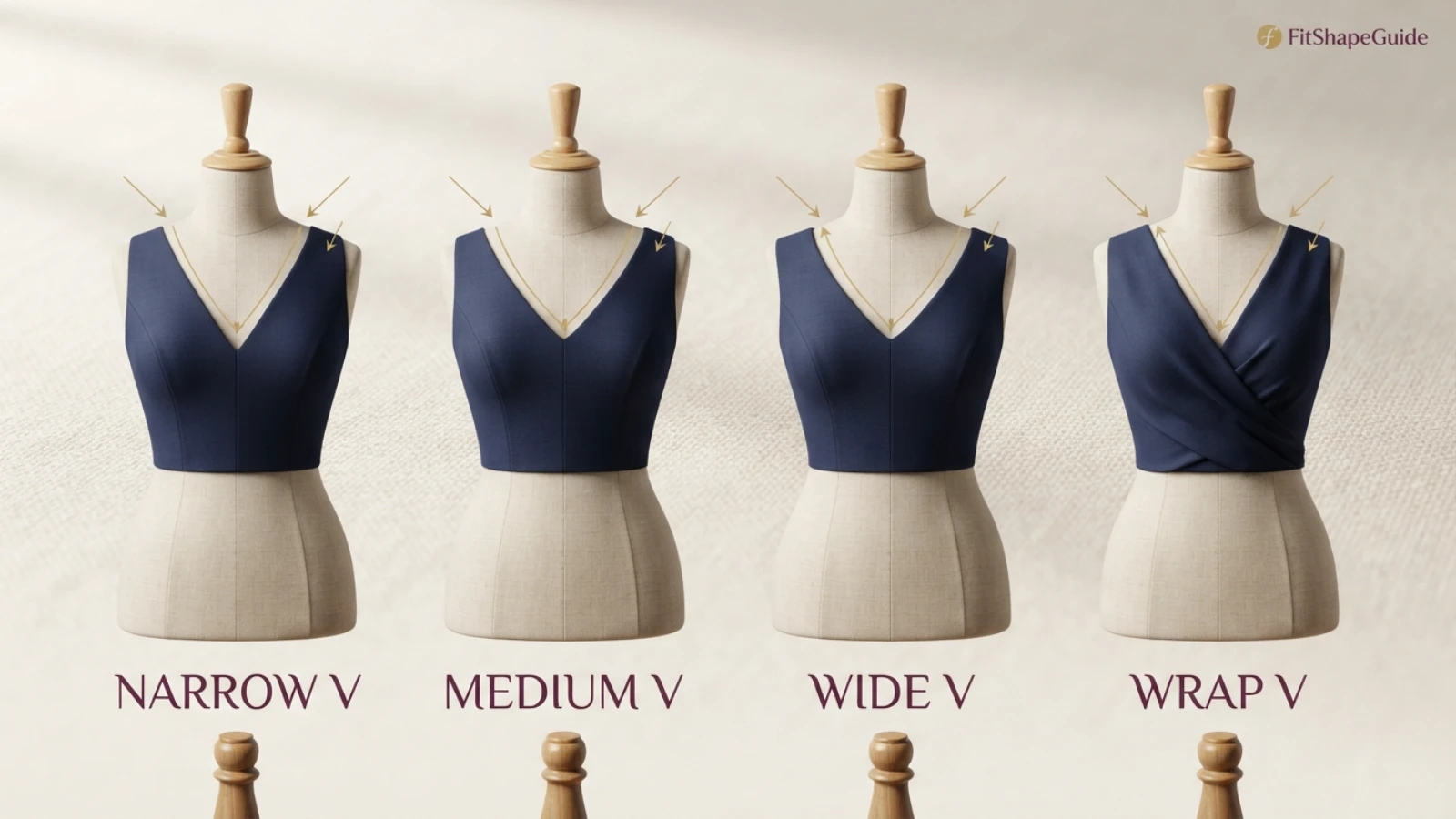
V width changes the support system
A narrow V places its edges closer to the neck and usually conceals conventional bra straps, but it can cut inward if the bust is too wide for the pattern. A wide V may feel visually open and comfortable yet reveal straps near the shoulder. Neither is universally better. Compare the dress while wearing the bra intended for the event and consult our broader best necklines for a large bust guide.
The V point must sit in the intended place
The lowest point may end at the upper chest, cleavage line, bust level or below it. Product photographs alone cannot predict where it lands on you because bust height, projection and torso length change the result. Use the garment’s shoulder-to-V measurement when available. A modesty snap can secure an already well-fitted crossover; it cannot create missing fabric or restore a distorted waist.
Shoulders anchor the neckline
On non-wrap dresses, shoulder seams and the back neckline resist the front’s downward and outward pull. If shoulders are too wide, the V can drift; if too narrow, arm movement can drag the entire bodice upward. The seam should sit near the shoulder point, the back should lie smoothly, and armholes should not cut into breast tissue. A fuller bust with a compact torso may benefit from our large-bust and short-torso guide.
Best fabrics and linings for fuller-bust V-neck dresses
Ponte and structured jersey
Dense double knit can offer movement with useful recovery. It works especially well for princess-seam, sheath and fit-and-flare styles when the neckline is faced or taped. Stretch the fabric gently and release it: it should return without a pale, rippled or bagged area. Thin single jersey may cling, roll at the V or reveal bra texture unless supported by lining.
Woven crepe and stretch crepe
Crepe offers a matte surface that makes drag lines easier to diagnose. Woven versions need precise darts, panels or crossover ease; a small stretch percentage may improve sitting comfort but does not replace bust shaping. Check whether the lining behaves similarly. A non-stretch lining inside a stretch shell can be the true limiting layer.
Poplin, chambray and linen blends
These breathable wovens suit shirt and summer V-necks when the front includes darts or curved seams. Crisp poplin exposes button strain quickly. Linen can relax during wear, so a stabilized neckline and adequate overlap matter. Do not size down in anticipation of relaxation: wrinkles radiating from the bust show missing room, not desirable tailoring.
Satin, velvet, lace and mesh
Reflective satin magnifies tension, while velvet pile can mark under pressure. Lace or mesh overlays may appear flexible although the base is shallow. Assess the lining first, then the decoration. Heavy beads can pull a neckline downward. Our fabric guide for fuller-bust clothing explains recovery, weight and opacity in more detail.
Measurements worth comparing before ordering
| Measurement | What it tells you | Warning sign |
|---|---|---|
| Finished bust circumference | Overall room at the fullest point | Only a body-size chart is supplied |
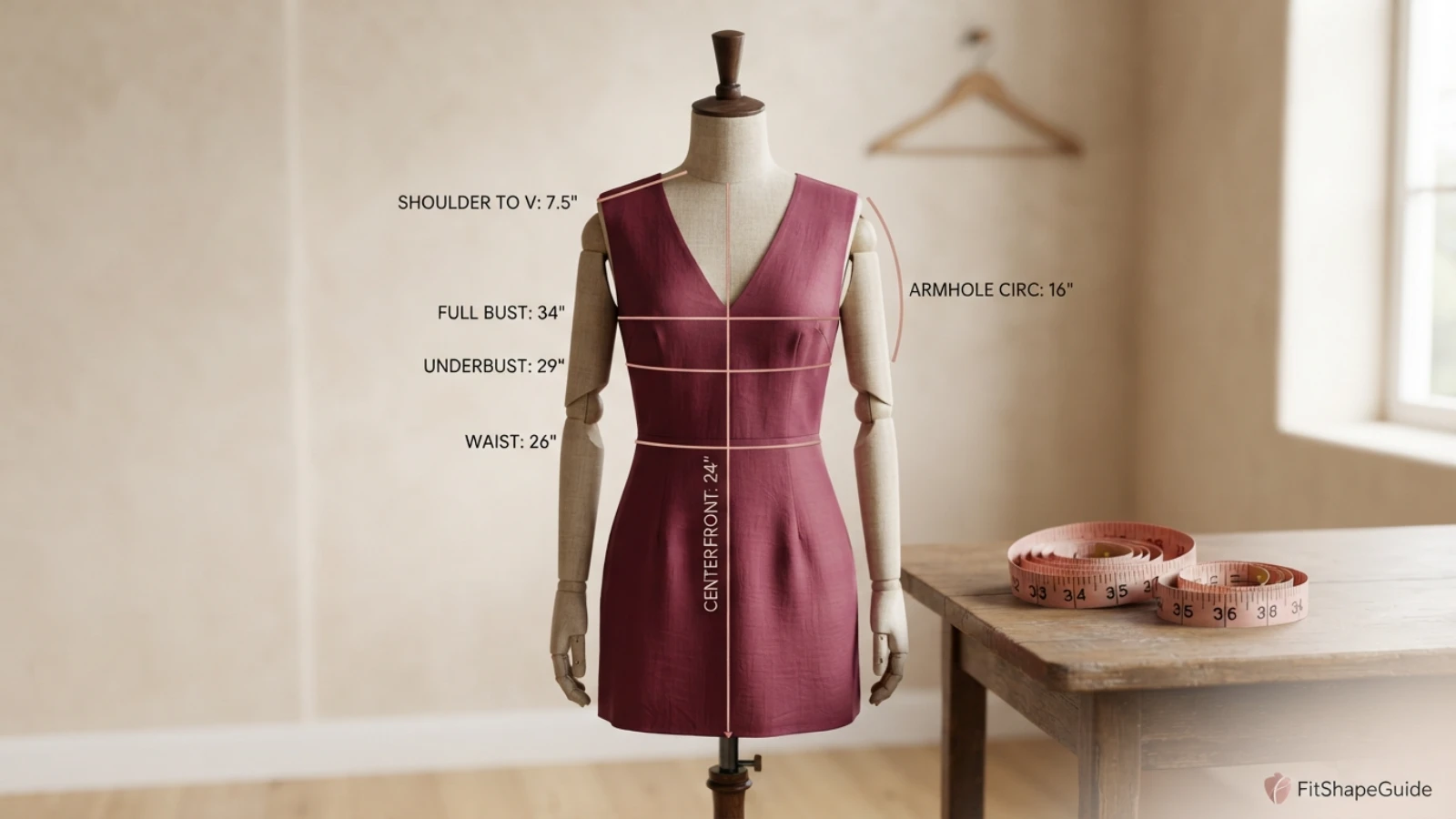
| Shoulder to V point | Likely neckline depth on your torso | Model photo is the only depth reference |
| Center-front bodice length | Whether the waist can reach below the bust | Front waist rises while back waist is level |
| Shoulder width | How securely the bodice is anchored | Seams fall off shoulder or pull toward neck |
| Underbust and waist | Whether a fitted band can sit correctly | Band crosses breast tissue or restricts breathing |
| Crossover overlap | Coverage through leaning and rotation | Lower layer barely reaches center front |
| Armhole depth | Side-bust and bra-band coverage | Armhole cuts in or exposes the bra |
Measure over the bra and underlayers you plan to wear. Compare your body measurements with finished-garment measurements when possible, allowing ease appropriate to the fabric. Product size charts describe a target body; they do not prove the garment includes the projection, torso length or shoulder geometry you need.
How to shop online for the best V-neck dresses for a large bust
Read construction details before adjectives
Search listings for princess seams, bust darts, fixed or true wrap, neckline facing, stay tape, lining, adjustable closure, stretch composition and finished measurements. Words such as “flattering,” “supportive” and “curve friendly” are not construction evidence. Zoom into the shoulder, V point, side seam and waist on every available view.
Use reviews as fit observations
Useful reviews mention measurements, bra type, ordered size, neckline behavior and movement. Look for repeated notes about gaping, bust flattening, waist rise, button strain or bra exposure. Treat subjective words like “too low” as personal context; a measured shoulder-to-V depth and a report about edge recovery are more transferable.
Verify Amazon modules before publication
This page is Amazon affiliate-ready but intentionally contains no fabricated product names, ASINs, prices, stock, ratings or review counts. Before adding any recommendation, confirm the live seller, current size chart, fabric composition, return terms and listing images. Affiliate links should use rel="sponsored nofollow", while editorial selection must remain independent of commission.
Check returns and alteration limits
Confirm the return window, final-sale status and whether tags must remain attached. Order early enough to sit, reach and test the intended bra at home. Taking in an upper back or adding a discreet closure may be practical; creating major bust projection or rebuilding a wide neckline is not a routine alteration. Review our tailoring guide for a large bust before keeping a near miss.
Compare photos with the same evidence checklist
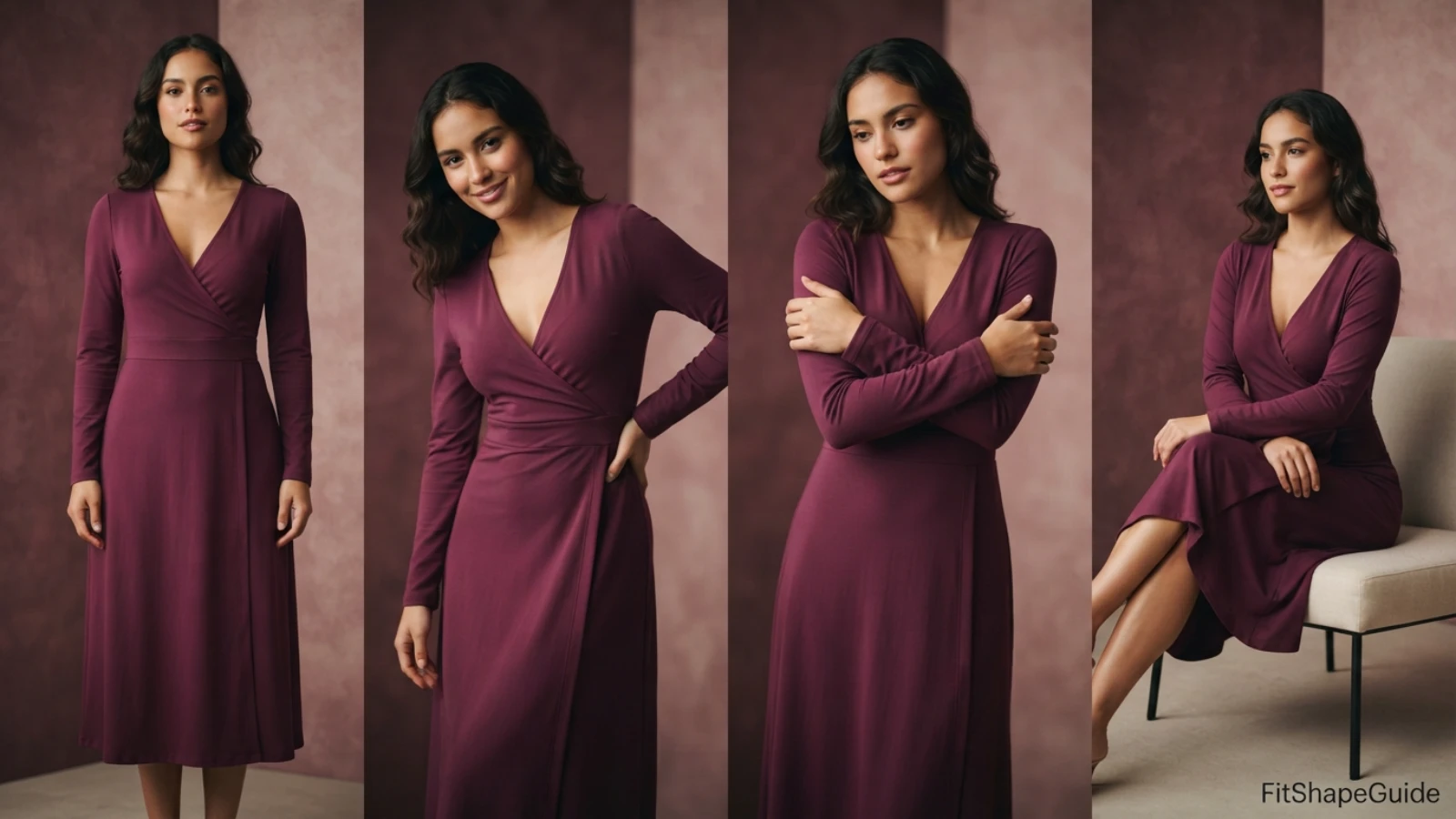
When comparing the best V-neck dresses for a large bust, use front, side and back photographs rather than relying on a posed hero image. A side view can reveal whether the front waist rises; a back view shows whether the shoulders or upper back are oversized; a seated photograph can reveal neckline spread. Also note whether the model is wearing a camisole, whether hair hides the shoulder edge, or whether a hand is holding the wrap closed. These are not reasons to reject the dress, but they limit what the photograph proves. Save screenshots of the size chart and product description at purchase time because marketplace details can change.
Movement tests every V-neck dress should pass
Lean-and-return test
Lean toward a mirror as you might over a table, then return upright. The neckline should preserve planned coverage and settle without manual rearranging. A wrap edge that falls away from the chest or a fixed V that ripples after one lean is unlikely to become more secure over several hours.
Self-hug and raised-arm test
Cross your arms firmly, hold for ten seconds, release, then raise and lower both arms. Check whether the V point shifts, the shoulder seams migrate or side-bust tissue enters the armhole. The waist and side seams should return close to their original positions.
Seated and deep-breath test
Sit upright for five minutes and take several full breaths. The bust should not force the neckline wider, and a waist seam should not press into the lower bust. If coverage only works while you hold your shoulders back unnaturally, the fit is not reliable for a real event.
Bag, jacket and dance test
Add the coat, bag or wrap you intend to use. A shoulder strap can catch a loose V edge, while a tight jacket can push the bodice downward. Walk briskly and rotate. Fashion tape or a small snap can provide insurance for a stable neckline, but neither should carry tension from an undersized bust.
Fit problems to avoid in the best V-neck dresses for a large bust
| Symptom | Likely cause | Better response |
|---|---|---|
| V spreads or gapes | Shallow bust, stretched edge or excess shoulder width | Try more projection and a stabilized neckline; do not only add tape |
| Front waist rises | Insufficient center-front length | Choose a longer or fuller-bust bodice |
| Side seams pull forward | Front is borrowing fabric from the back | Seek darts, panels or more finished-bust room |
| Bra shows at V or armhole | Geometry and bra are incompatible | Test intended bra; choose narrower V or better side coverage |
| Shoulders slide outward | Wide shoulder pattern or unstable back neckline | Try a better shoulder match; assess alteration before keeping |
| Wrap tie sits on bust | Bodice too short or crossover poorly placed | Choose longer front length and lower waist anchoring |
When sizing up helps
A larger size may restore bust ease, center the V and lower the waist. It is useful when the shoulders and back can still be fitted simply. If sizing up makes the neckline fall away while the bust remains compressed, the pattern shape—not just circumference—is wrong. For close silhouettes, compare the bodycon dress fit guide.
Modesty panels, snaps and tape
A removable panel can intentionally change coverage; a small snap can control a correctly overlapping wrap; fashion tape can reduce minor edge movement. These are styling tools, not substitutes for projection. If the neckline carries visible tension or the waist rises, secure the base fit first.
Styling V-neck dresses without “minimizing” rules
There is no requirement to make a fuller bust look smaller. A V-neck can be narrow, broad, shallow or deep according to your comfort and setting. For work, a stable medium V under a jacket may provide predictable coverage. For summer, a lined linen-blend wrap or fit-and-flare can combine ventilation with bra-friendly straps. For evening, a satin or crepe V-neck works when its lining carries the fit and the outer layer remains smooth.
Choose necklaces by the look you want rather than a rigid formula. A pendant can echo the neckline, while a shorter chain or statement earrings create contrast. Test the complete outfit sitting and standing. If adding a camisole, ensure it lies flat and does not pull the V open. Foundations are optional fit tools: the right bra should support comfortably without being forced to repair a shallow dress.
Choosing the right V-neck dress for different occasions
Work and daytime events
For a workplace, conference or daytime celebration, prioritize a neckline that remains stable while typing, greeting people and bending toward a table. A faced medium V, fixed surplice or shirt dress with controlled button overlap can be easier to predict than an unlined jersey crossover. Add a jacket only after checking that its lapels and armholes do not drag the dress neckline outward.
Wedding guest and cocktail dressing
The best V-neck dresses for a large bust at a long event combine shaped lining, a secure closure and enough seated ease. Test dancing, reaching and the planned bag strap. If the dress has a low back as well as a low V, confirm the support solution before keeping it; solving two low edges simultaneously may require a specialty bra or engineered dress lining.
Travel and summer wear
For warm weather, choose breathable fabric without sacrificing recovery at the neckline. A linen blend may relax, while viscose can grow when damp or heavily weighted. Pack the dress folded according to its care needs and recheck a wrap tie after sitting. A bra-friendly fixed V or structured-front sundress can reduce the need for adjustment during travel.
Care, value and final buyer checks
Read the sewn-in fiber and care labels before cleaning. The U.S. Federal Trade Commission’s official Care Labeling Rule guide explains required regular-care instructions, while its apparel labeling resources cover fiber content and origin. Follow the garment label, particularly when the V includes stay tape, delicate facing, beads or mixed-fiber lining.
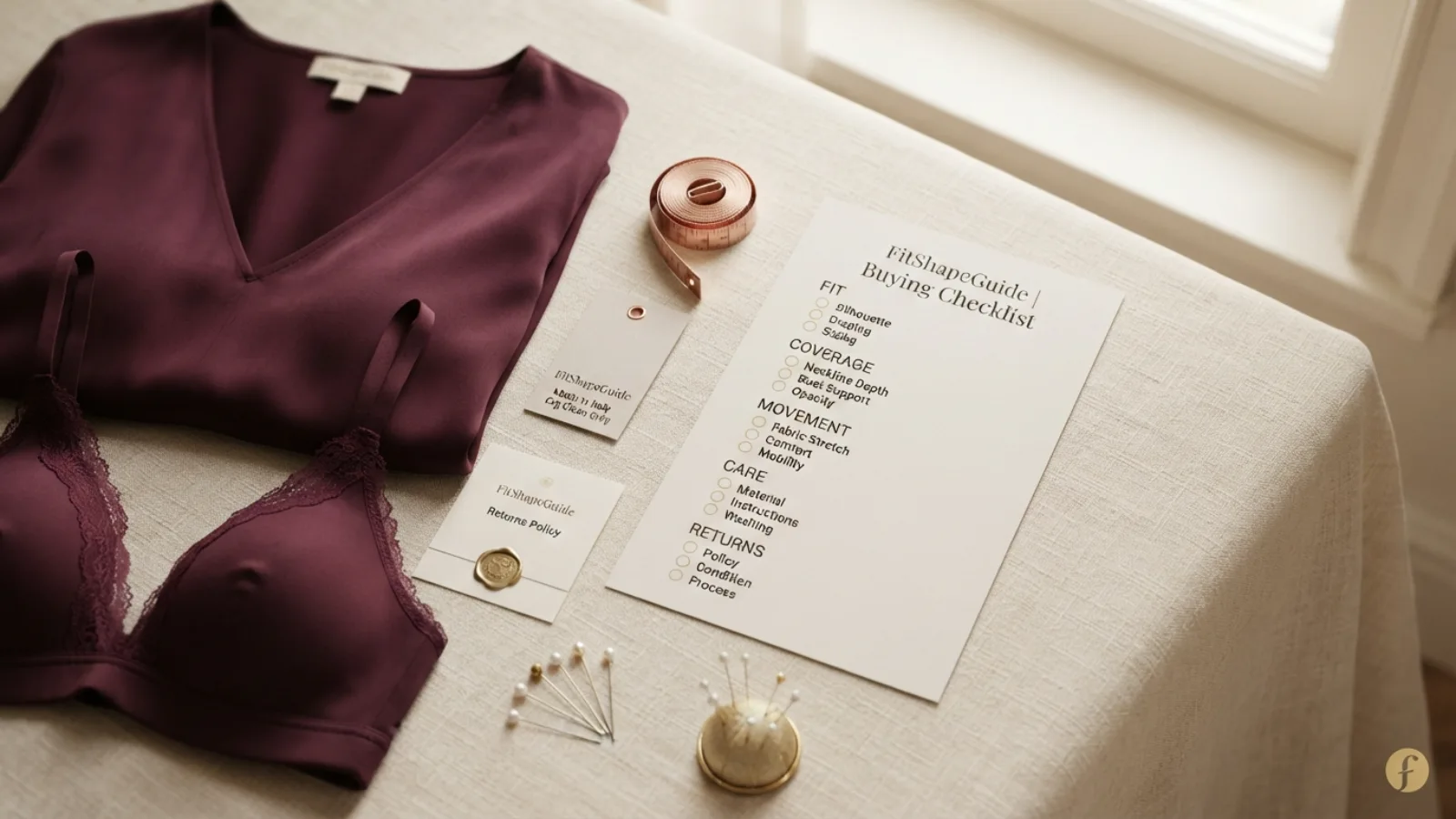
- Confirm the V stays centered through movement.
- Check bust projection and center-front length independently.
- Wear the intended bra, camisole and outer layer.
- Inspect lining, opacity, seams and care instructions.
- Verify current return and affiliate-listing details before purchase.
The best V-neck dresses for a large bust balance openness and control
The strongest choice is not automatically the deepest, highest or stretchiest neckline. It is the dress whose pattern provides projection, whose front bodice reaches the waist, whose shoulders anchor the V and whose edges recover after real movement. Start with construction, verify measurements, test the intended bra and keep only the option that lets you move without monitoring your neckline.
Frequently asked questions
Are V-neck dresses good for a large bust?
Yes. V-necks can be comfortable and bra-friendly when the dress has adequate bust projection, stable edges, centered shoulders and suitable depth. The label “V-neck” alone does not guarantee fit.
How do I stop a V-neck dress from gaping?
First check bust room, shoulder width and neckline recovery. A discreet snap or tape can control minor movement in a correctly fitted edge, but persistent gaping often signals a shallow bodice or stretched neckline.
What type of V-neck is most supportive?
A medium V with facing or stay tape, shaped seams and secure shoulders is often predictable. True-wrap and fixed-surplice styles can also work when the overlap is generous and the tie sits below the bust.
Should I size up in a V-neck dress for a fuller bust?
Size up when it restores bust room and front length without making shoulders and neckline unmanageably loose. If both sizes distort, choose a different cut with more projection.
What bra works under a V-neck dress?
A plunge, balconette or conventional bra may work depending on the V’s depth and width. Test the actual pairing because strap position, center gore height and armhole coverage vary.
Is a wrap V-neck always best for a large bust?
No. Adjustability helps, but a narrow crossover or short front bodice can still gape and raise the waist. Princess-seam and fixed V designs may fit better for some bodies.
Can a tailor make a V-neck less revealing?
Sometimes. A snap, modesty panel or small edge adjustment may be practical. Major changes to neckline width, shoulder position or missing bust volume can be complex and should be assessed before the return period ends.
How can I test a V-neck dress before an event?
Wear the intended bra and perform leaning, self-hugging, raised-arm, sitting, breathing and jacket tests. The neckline, waist and side seams should return without repeated adjustment.