Worst Necklines for a Large Bust (And What
to Wear Instead)
There is no universal blacklist, but some neckline constructions create predictable problems: tight crews, bulky roll necks, very wide boats and thin unsupported halters. Learn when to modify, style or skip them.
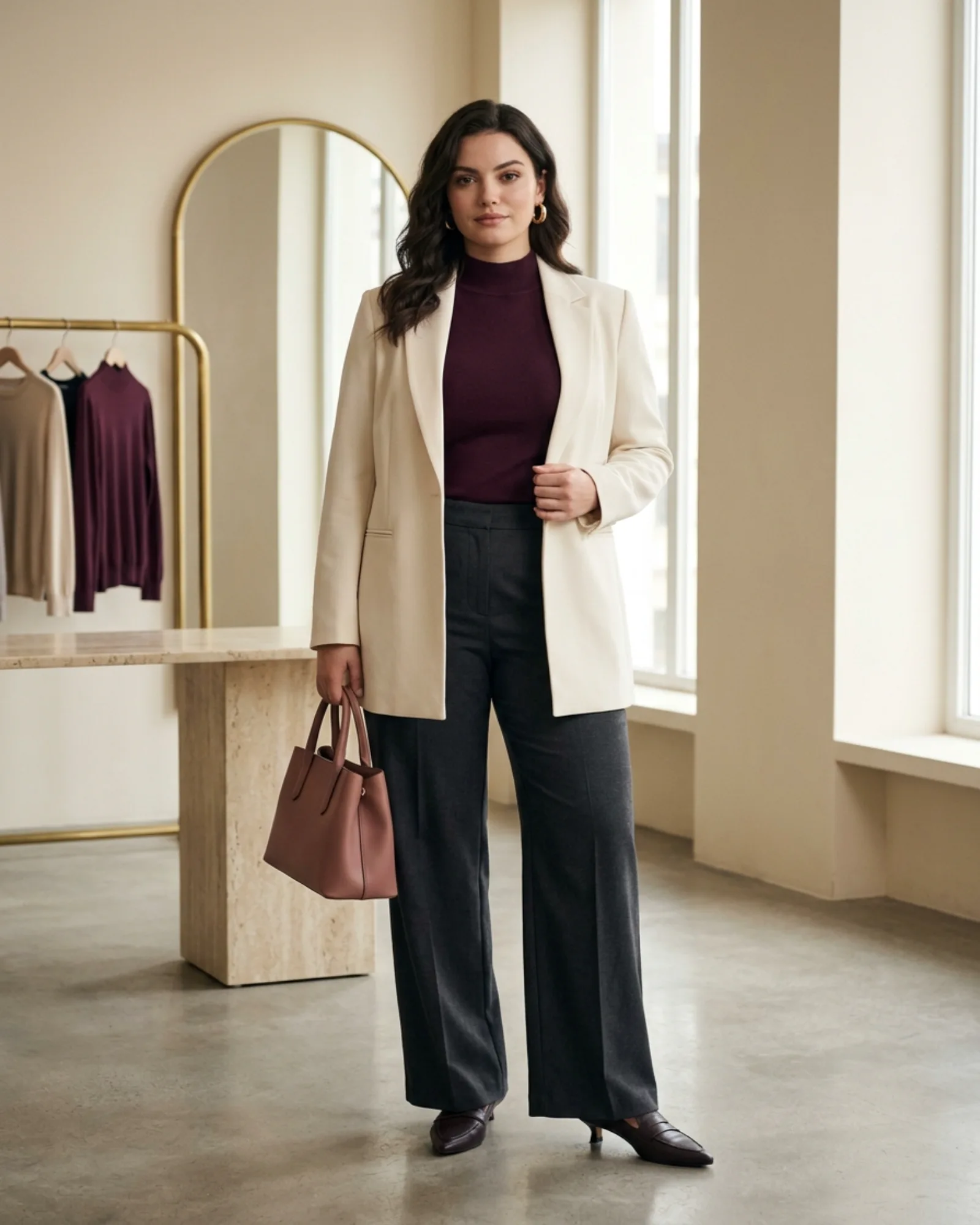
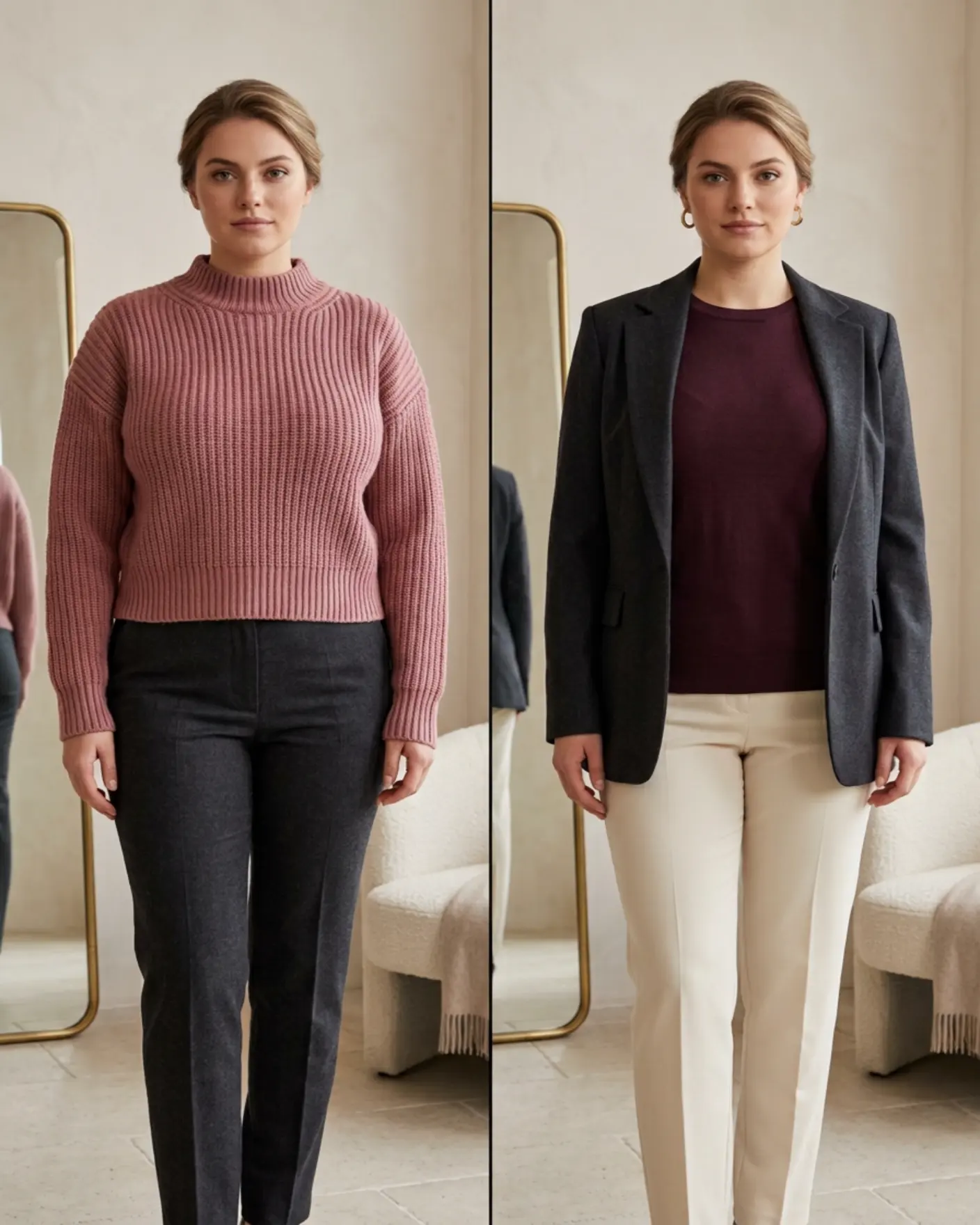
- Judge the construction, not only the neckline name.
- Remove added bulk before deciding the shape itself is wrong.
- Reject any opening that exposes the bra or migrates during ordinary movement.
The difficult neckline is usually a construction combination
A crew neck is not automatically bad, and a V-neck is not automatically good. Trouble appears when a closed shape is cut in bulky fabric, when a wide boat neck lacks edge stability, or when a halter depends on thin ties that cannot support the garment.
This distinction matters because it creates options. A fine mock neck can look sleek where a chunky roll neck feels crowded. A narrower bateau can frame the collarbone without sliding toward the shoulders.
Start by removing variables. Test the neckline with the correct bra, no bulky necklace and a simple lower half. If it still shifts or compresses, the issue belongs to the bodice.
Rescue-or-reject neckline test
Do not ban a neckline name. Identify the failing combination of depth, width, fabric and support.
Better versions of commonly difficult shapes
These options approach neckline failure and rescue from different construction angles; use rescue-or-reject neckline test to compare seam placement, material and movement instead of trusting the style name.
Relaxed crew instead of tight crew
Relaxed crew instead of tight crew works when a crew neck works more easily in fine fabric with a relaxed edge than in a thick, tight rib.
Fine mock neck instead of chunky roll neck
Fine mock neck instead of chunky roll neck works when a fine mock neck can create a clean column, while bulky folds create a much denser upper-body block.
Narrow bateau instead of very wide boat
Narrow bateau instead of very wide boat works when a boat neck should be narrower and more stable than its hanger appearance suggests.
Wide supportive halter instead of thin ties
Wide supportive halter instead of thin ties works when a halter requires genuine support and sufficient strap width; decorative thin ties rarely carry the garment well.
Rescue-or-reject neckline test
Remove bulky jewelry, switch to the intended bra and add a simple open layer. If the neckline still rolls, compresses, exposes the bra or pulls the shoulder forward, the bodice is the problem. If it settles, styling may rescue it.
Run rescue-or-reject neckline test once with the garment alone and again with the intended bra or outer layer. Note the first point that changes, because a neckline may be difficult because of its construction, not because the named shape is universally forbidden. Record whether the change begins when you lean forward without holding the neckline., check whether the shoulder seam moves toward the neck., or add the planned bra and remove any necklace before judging.. The earliest failure point in rescue-or-reject neckline test tells you whether to change size, construction, support or styling. Repeat the test after twenty minutes of wear so warmth and movement can affect compression, width, edge stability, bulk and bra support. Save the result with the brand, size, fabric and bra used; that record makes future decisions about neckline failure and rescue faster and more accurate. During rescue-or-reject neckline test, a change repeated in both passes is construction evidence, while a change appearing only with one layer identifies a compatibility problem.
- Lean forward without holding the neckline.
- Check whether the shoulder seam moves toward the neck.
- Add the planned bra and remove any necklace before judging.
Use motion to decide whether it is salvageable
A still mirror cannot prove that compression, width, edge stability, bulk and bra support will remain controlled, so complete these checks without smoothing between steps and use rescue-or-reject neckline test as the final reference.
Complete this action without smoothing the garment and use rescue-or-reject neckline test to judge whether a neckline may be difficult because of its construction, not because the named shape is universally forbidden.
Lift both arms and lower them, noting any seam, neckline or hem change; a change suggests that a neckline may be difficult because of its construction, not because the named shape is universally forbidden.
Complete this action without smoothing the garment and use rescue-or-reject neckline test to judge whether a neckline may be difficult because of its construction, not because the named shape is universally forbidden.
Add the exact outer layer planned for the outfit; new pulling means that a neckline may be difficult because of its construction, not because the named shape is universally forbidden.
Use a side mirror or phone photograph to find hem lift or bowing, visible signs that a neckline may be difficult because of its construction, not because the named shape is universally forbidden.
Complete this action without smoothing the garment and use rescue-or-reject neckline test to judge whether a neckline may be difficult because of its construction, not because the named shape is universally forbidden.
Classify what rescue-or-reject neckline test revealed: a construction failure, a contained alteration or a personal style preference; return major failures and price small corrections before deciding.
How to style challenging necklines successfully
These combinations show how neckline failure and rescue can change mood and formality while keeping the underlying construction decisions intact.
Fine mock neck
Build the outfit around the fine mock neck and vary color or accessories without changing its fit logic; confirm the fine mock neck with rescue-or-reject neckline test.
Narrow bateau
Build the outfit around the narrow bateau and vary color or accessories without changing its fit logic; confirm the narrow bateau with rescue-or-reject neckline test.
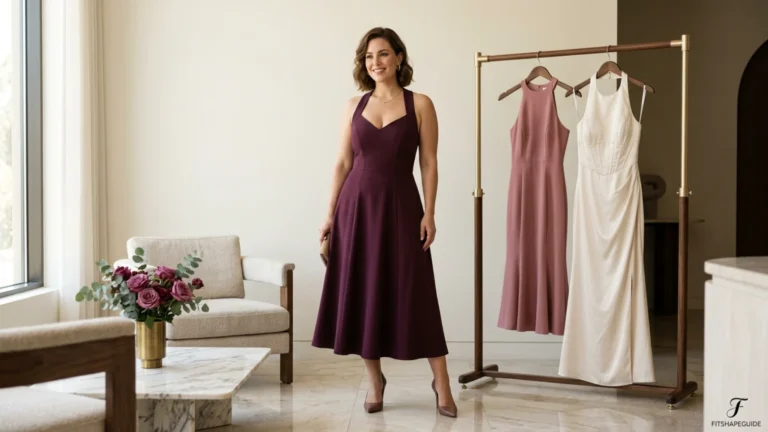
Supported halter dress
Let the supported halter dress carry the silhouette and add only one shoe shape and one accessory; on this supported halter dress, check the bodice waist and front hem from the side.
Crew tee
Use the crew tee as a low-bulk base with a stable trouser, skirt or open layer; for this crew tee, choose opacity and recovery before deciding how close the fit should be.
Mistakes that make a hard neckline harder
The following missteps all confuse the visible symptom with the underlying issue. Each one is better corrected by changing the specific construction detail that affects compression, width, edge stability, bulk and bra support.
Treating every high neck the same
Treating every high neck the same is a problem when high necklines vary by fabric weight, edge fit and shoulder width; Judge the complete construction rather than banning the category.
Forcing low-support undergarments
Forcing low-support undergarments is a problem when a neckline that requires unsupported or uncomfortable underwear is unlikely to become a repeat-wear piece; Choose stronger built-in structure or a bra-compatible opening.
Adding bulky short necklaces
Adding bulky short necklaces is a problem when a short bulky necklace adds another dense line at an already closed neckline; Use a longer pendant, earrings or no necklace.
Combining closed neck and boxy long top
Combining closed neck and boxy long top is a problem when a short boxy piece can end at the widest upper-body point and remove useful vertical space; Adjust the length or add clearer shaping.
For neckline failure and rescue, correct the first displaced landmark—edge, seam, closure, waist or hem—then repeat rescue-or-reject neckline test before adding another styling device.
Diagnose compression, width and instability
Use this table with rescue-or-reject neckline test: each row connects a style choice to visible construction evidence and the way it influences compression, width, edge stability, bulk and bra support.
| Choice | Construction check | Why it helps |
|---|---|---|
| Relaxed Crew Instead Of Tight Crew | For relaxed crew instead of tight crew, a crew neck works more easily in fine fabric with a relaxed edge than in a thick, tight rib. | Relaxed Crew Instead Of Tight Crew creates a clearer line because its key seams remain aligned during rescue-or-reject neckline test. |
| Fine Mock Neck Instead Of Chunky Roll Neck | For fine mock neck instead of chunky roll neck, a fine mock neck can create a clean column, while bulky folds create a much denser upper-body block. | A stable fine mock neck instead of chunky roll neck survives sitting and layering with fewer pins, tape or rescue adjustments. |
| Narrow Bateau Instead Of Very Wide Boat | For narrow bateau instead of very wide boat, a boat neck should be narrower and more stable than its hanger appearance suggests. | Narrow Bateau Instead Of Very Wide Boat becomes easier to repeat when its neckline, waist and hem stay where the pattern intended. |
| Wide Supportive Halter Instead Of Thin Ties | For wide supportive halter instead of thin ties, a halter requires genuine support and sufficient strap width; decorative thin ties rarely carry the garment well. | The construction lets wide supportive halter instead of thin ties shape the outfit instead of fighting the bust through movement. |
| Structured Strapless Bodice Instead Of Stretch Tube | For structured strapless bodice instead of stretch tube, check the relevant seam, edge, length and fabric response during rescue-or-reject neckline test. | A well-built structured strapless bodice instead of stretch tube reduces the need for compensating camisoles or outer layers. |
| Open Jacket Over A Closed Neckline | For open jacket over a closed neckline, check the relevant seam, edge, length and fabric response during rescue-or-reject neckline test. | A stable version of open jacket over a closed neckline keeps the outfit predictable from the front and side. |
When two options for neckline failure and rescue appear equally attractive, favor the one that passes rescue-or-reject neckline test with fewer support or alteration requirements.
Bulk and edge finish change the verdict
For neckline failure and rescue, the support layer changes projection and width, but it cannot supply missing fabric; test the final bra before judging compression, width, edge stability, bulk and bra support.
Tailoring is worthwhile only when the bust and shoulder are comfortable and the remaining issue is local enough to preserve neckline failure and rescue.
Look beyond the front-facing model image
For neckline failure and rescue, compare online measurements with a successful garment you already own instead of relying on the size name.
Save the reference piece’s front length, shoulder width, armhole depth and fabric composition because those landmarks predict compression, width, edge stability, bulk and bra support.
Study side and back photographs for evidence that a neckline may be difficult because of its construction, not because the named shape is universally forbidden is being hidden by front-only styling.
Prioritize reviews that discuss bust room, recovery, bra coverage and landmark placement relevant to rescue-or-reject neckline test.
Before ordering for neckline failure and rescue, confirm the return window and decide what level of alteration would still make the finished garment worthwhile.
Some necklines need a narrower use case
Adjust the strategy to the setting by checking whether compression, width, edge stability, bulk and bra support remain functional for the hours, movement and visual expectations involved.
Everyday wear
For everyday neckline failure and rescue, choose pieces that survive sitting, carrying a bag and laundering without tape or repeated adjustment.
Work and polished settings
In polished settings, compression, width, edge stability, bulk and bra support should remain controlled through a full seated day rather than only during a mirror check.
Events and photographs
For events and photographs, test the exact bra, lighting and outer layer because a neckline may be difficult because of its construction, not because the named shape is universally forbidden becomes clearer from side angles and flash.
Seasonal layering
In seasonal layering, preserve neckline failure and rescue by adding warmth without crowding the same neckline, armhole or waist area.
Style it, alter it or leave it?
Keep the garment when it manages compression, width, edge stability, bulk and bra support through rescue-or-reject neckline test and works with your real support layer and care routine.
Consider alteration when neckline failure and rescue is structurally sound and the remaining problem is contained to a dart, waist, strap, sleeve, button or hem.
Return it when a neckline may be difficult because of its construction, not because the named shape is universally forbidden remains after the correct size, bra and simple styling adjustments have been tested.
Record brand, size, fabric and front length from the successful rescue-or-reject neckline test so the next purchase begins with evidence.
Keep the shapes that behave
The strongest result for neckline failure and rescue is comfortable, deliberate and easy to repeat rather than overloaded with universal rules.
Use rescue-or-reject neckline test, side views and real wear to create personal guidance that is more accurate than a generic shape chart.
Frequently asked questions
Practical answers for the decisions that usually appear after the first try-on.
What is the main rule for worst necklines for a large bust?+
Tight crews, bulky turtlenecks, very wide boats, thin halters and unsupported strapless cuts are difficult when they add bulk, width or instability.
Do I need to avoid treating every high neck the same completely?+
No. The concern is the way treating every high neck the same affects fit or proportion. A modified cut, better fabric or different placement can change the result.
Which option is the safest starting point?+
Relaxed Crew Instead Of Tight Crew is a practical starting point, but it still needs adequate bust room, stable construction and compatibility with your support layer.
Can tailoring improve the result?+
Yes, when the shoulders and bust already have enough room. Waist shaping, sleeve shortening, hidden closures and seam refinement are usually more predictable than adding significant fabric.
How should I judge the outfit in the fitting room?+
Check it standing, sitting, reaching and from the side. Look for level hems, stable necklines, straight seams and freedom from repeated adjustment.
Does color determine whether this works?+
Color can direct attention, but it cannot correct pulling, poor front length or unstable construction. Fit, fabric and line come first.
Related guides
Move to the next connected fit decision instead of starting from zero.
Fit first. Style always.
Keep the garment that remains stable, comfortable and recognizably yours after the complete movement test.