How to Dress a Large
Bust Tall Frame
Tall fuller-bust dressing needs length in the right places: front bodice, sleeve, rise and waist position. Use scale confidently, but reject garments that are merely long below the bust.
- Check front and back length separately.
- Confirm the garment waist reaches your natural waist.
- Use scale as an option, not an obligation to wear oversized clothes.
Height needs vertical accuracy, not just extra hem
Tall ranges often solve sleeve and trouser length while leaving the torso only marginally adjusted. A fuller bust then consumes part of that front length, causing the waist seam to rise and the hem to look shorter in front despite a generous overall measurement.
The best tall garments place the bust shaping, waist and pocket details at the correct heights. Once those landmarks align, a tall frame can carry long jackets, maxi dresses and larger accessories without being overwhelmed.
Do not confuse scale with oversizing. Height may support bold proportions, but the shoulder seam, armhole and bust still need controlled fit.
Vertical landmark audit
A tall garment should be long through the bodice, not only through the sleeve and hem.
Use length where the pattern needs it
These options approach tall vertical proportions with bust projection from different construction angles; use vertical landmark audit to compare seam placement, material and movement instead of trusting the style name.
Tall wrap tops
Tall wrap tops works when a true wrap needs generous overlap while seated, with the tie landing at the intended waist rather than under the bust; A tall cut needs extra front-bodice length and correctly lowered shaping, not only longer sleeves.
Long-bodied stretch shirts
Long-bodied stretch shirts works when the placket and side seam should remain vertical, with a button positioned close to the fullest point.
Tall wrap and column dresses
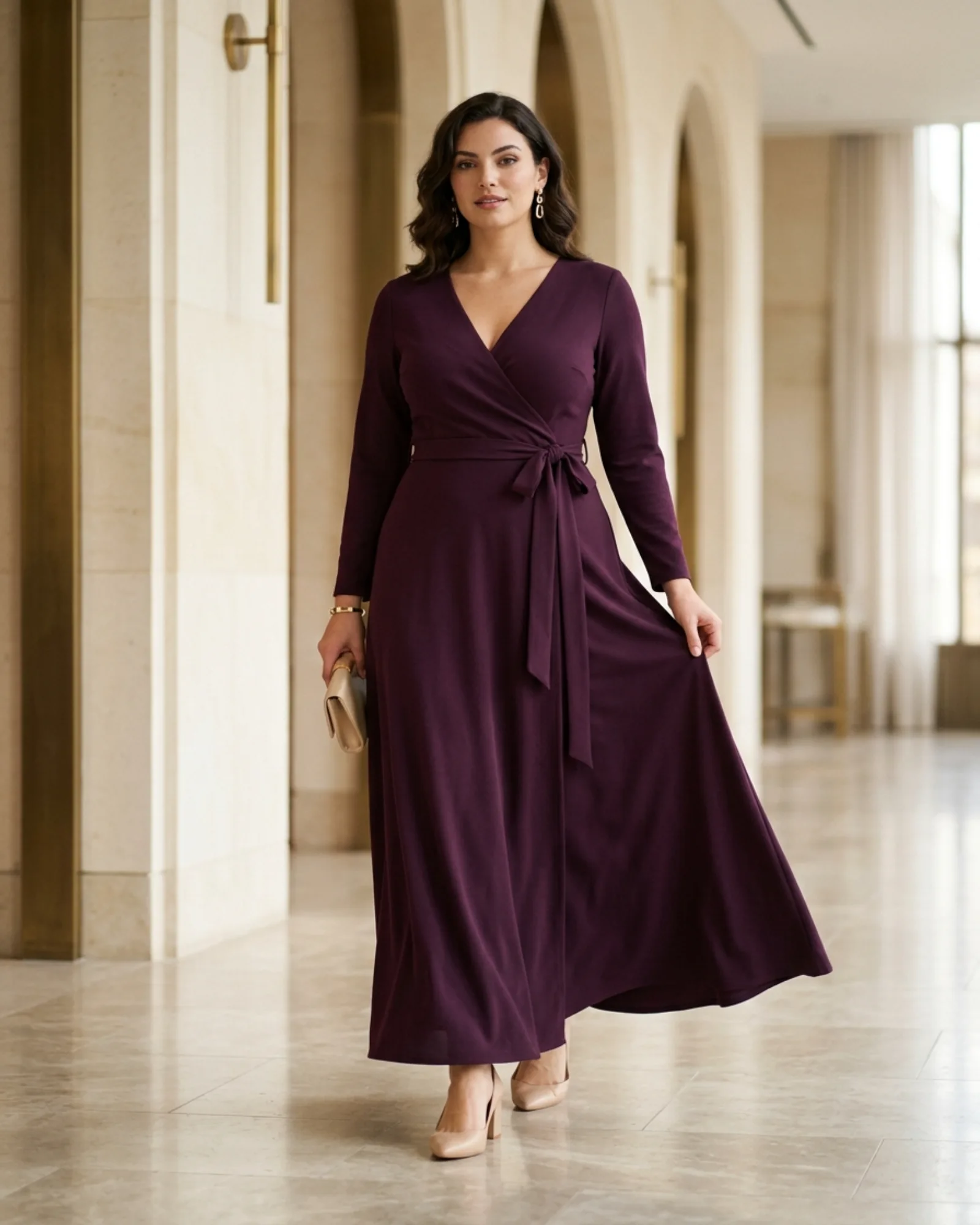
Tall wrap and column dresses works when a true wrap needs generous overlap while seated, with the tie landing at the intended waist rather than under the bust; A tall cut needs extra front-bodice length and correctly lowered shaping, not only longer sleeves.
Longline blazers
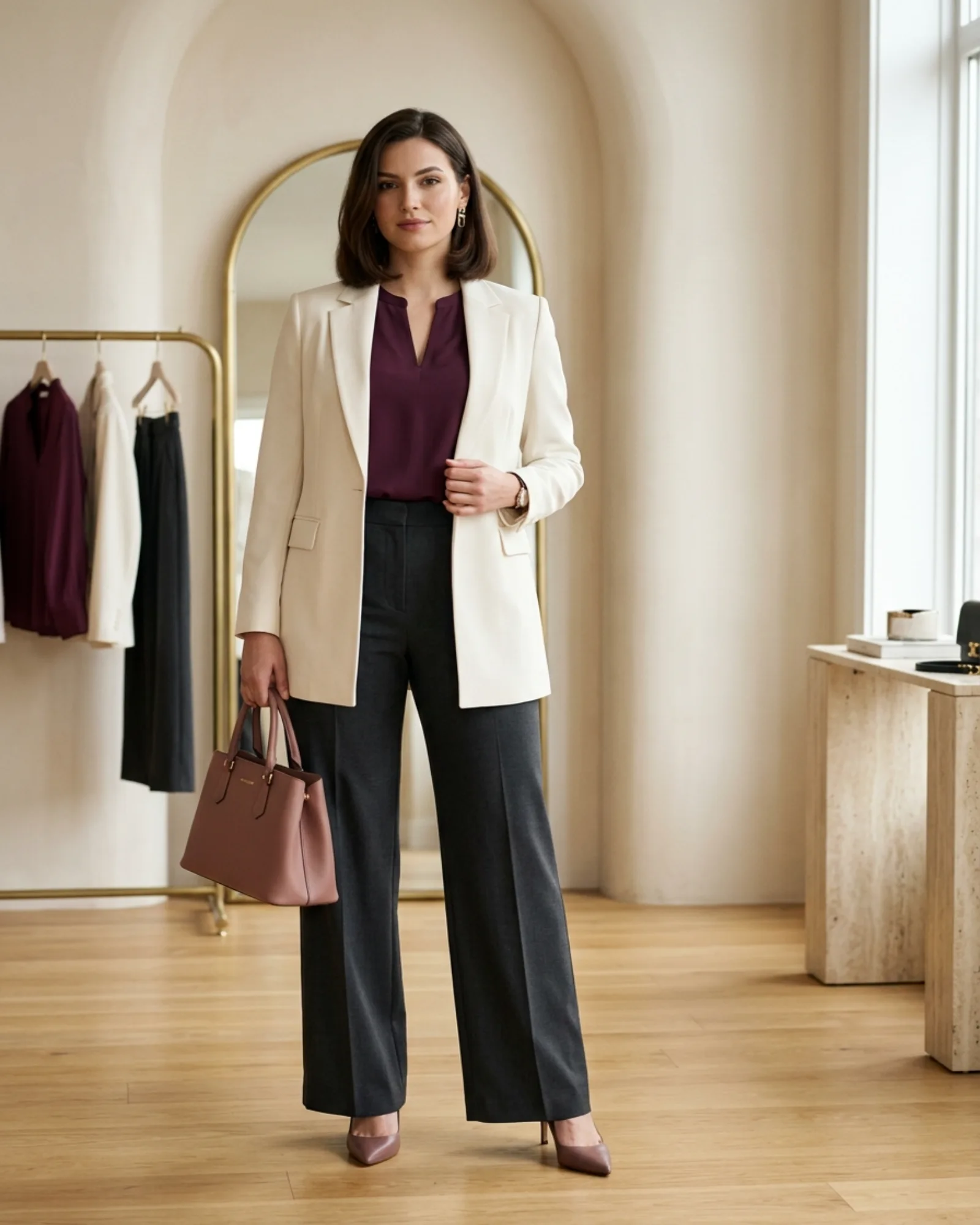
Longline blazers works when a blazer should fit the shoulder and bust even when worn open; bowed lapels reveal hidden strain; A longline piece needs a clean shoulder and enough front room so its vertical edge stays straight.
Vertical landmark audit
Mark shoulder, bust apex, natural waist, hip and intended hem. A tall garment should place several landmarks correctly; extra sleeve or hem length alone does not make the bodice a tall fit.
Run vertical landmark audit once with the garment alone and again with the intended bra or outer layer. Note the first point that changes, because standard tall clothing may add overall length without adding enough front path over the bust. Record whether the change begins when you compare front and back bodice length., check where pockets and waist seams land., or sit to see whether the front hem shortens excessively.. The earliest failure point in vertical landmark audit tells you whether to change size, construction, support or styling. Repeat the test after twenty minutes of wear so warmth and movement can affect front length, waist placement, sleeve length, rise and scale. Save the result with the brand, size, fabric and bra used; that record makes future decisions about tall vertical proportions with bust projection faster and more accurate. During vertical landmark audit, a change repeated in both passes is construction evidence, while a change appearing only with one layer identifies a compatibility problem.
- Compare front and back bodice length.
- Check where pockets and waist seams land.
- Sit to see whether the front hem shortens excessively.
Check every vertical landmark
Use this table with vertical landmark audit: each row connects a style choice to visible construction evidence and the way it influences front length, waist placement, sleeve length, rise and scale.
| Choice | Construction check | Why it helps |
|---|---|---|
| Tall Wrap Tops | For tall wrap tops, a true wrap needs generous overlap while seated, with the tie landing at the intended waist rather than under the bust. | Tall Wrap Tops creates a clearer line because its key seams remain aligned during vertical landmark audit. |
| Long-Bodied Stretch Shirts | For long-bodied stretch shirts, the placket and side seam should remain vertical, with a button positioned close to the fullest point. | A stable long-bodied stretch shirts survives sitting and layering with fewer pins, tape or rescue adjustments. |
| Tall Wrap And Column Dresses | For tall wrap and column dresses, a true wrap needs generous overlap while seated, with the tie landing at the intended waist rather than under the bust. | Tall Wrap And Column Dresses becomes easier to repeat when its neckline, waist and hem stay where the pattern intended. |
| Longline Blazers | For longline blazers, a blazer should fit the shoulder and bust even when worn open; bowed lapels reveal hidden strain. | The construction lets longline blazers shape the outfit instead of fighting the bust through movement. |
| Full-Length Wide Or Straight Trousers | For full-length wide or straight trousers, check the relevant seam, edge, length and fabric response during vertical landmark audit. | A well-built full-length wide or straight trousers reduces the need for compensating camisoles or outer layers. |
| Medium-To-Large Accessories | For medium-to-large accessories, check the relevant seam, edge, length and fabric response during vertical landmark audit. | A stable version of medium-to-large accessories keeps the outfit predictable from the front and side. |
When two options for tall vertical proportions with bust projection appear equally attractive, favor the one that passes vertical landmark audit with fewer support or alteration requirements.
Watch the waist and front hem through motion
A still mirror cannot prove that front length, waist placement, sleeve length, rise and scale will remain controlled, so complete these checks without smoothing between steps and use vertical landmark audit as the final reference.
Sit naturally for two minutes and stand without tugging; any lasting shift supports the diagnosis that standard tall clothing may add overall length without adding enough front path over the bust.
Sit naturally for two minutes and stand without tugging; any lasting shift supports the diagnosis that standard tall clothing may add overall length without adding enough front path over the bust.
Compare this version with a proven garment or adjacent size, focusing on the landmarks affected when standard tall clothing may add overall length without adding enough front path over the bust.
Complete this action without smoothing the garment and use vertical landmark audit to judge whether standard tall clothing may add overall length without adding enough front path over the bust.
Use a side mirror or phone photograph to find hem lift or bowing, visible signs that standard tall clothing may add overall length without adding enough front path over the bust.
Walk, turn and carry a bag without adjusting the garment; repeated rescue suggests that standard tall clothing may add overall length without adding enough front path over the bust.
Classify what vertical landmark audit revealed: a construction failure, a contained alteration or a personal style preference; return major failures and price small corrections before deciding.
When “tall” means only extra hem
The following missteps all confuse the visible symptom with the underlying issue. Each one is better corrected by changing the specific construction detail that affects front length, waist placement, sleeve length, rise and scale.
Standard tops that ride up
Standard tops that ride up is a problem when standard proportions may add bust room only by making the whole garment longer and wider; Use a petite or tall block that places landmarks correctly.
Tiny details throughout
Tiny details throughout is a problem when several chest-level details compete with the garment line and can magnify any underlying tension; Keep one intentional focal point and simplify the surrounding area.
Too many contrasting horizontal breaks
Too many contrasting horizontal breaks is a problem when a hard horizontal break across the fullest point creates emphasis exactly where the colors meet; Move the contrast line or soften the value difference.
Oversizing simply because height can carry it
Oversizing simply because height can carry it is a problem when extra fabric everywhere can hide shape without solving the actual tight point; Look for room added through the front rather than global volume.
For tall vertical proportions with bust projection, correct the first displaced landmark—edge, seam, closure, waist or hem—then repeat vertical landmark audit before adding another styling device.
Long garments need enough recovery to stay aligned
For tall vertical proportions with bust projection, the support layer changes projection and width, but it cannot supply missing fabric; test the final bra before judging front length, waist placement, sleeve length, rise and scale.
Tailoring is worthwhile only when the bust and shoulder are comfortable and the remaining issue is local enough to preserve tall vertical proportions with bust projection.
Long lines that remain shaped
These combinations show how tall vertical proportions with bust projection can change mood and formality while keeping the underlying construction decisions intact.
Tall split-neck blouse
Wear the tall split-neck blouse with a clean-waist trouser or skirt and an optional open layer; the tall split-neck blouse needs enough front ease for its placket or neckline to remain flat when seated.
Long V tee
Use the long v tee as a low-bulk base with a stable trouser, skirt or open layer; for this long v tee, choose opacity and recovery before deciding how close the fit should be.
Tall wrap maxi
Let the tall wrap maxi carry the silhouette and add only one shoe shape and one accessory; on this tall wrap maxi, check the bodice waist and front hem from the side.
Column dress
Let the column dress carry the silhouette and add only one shoe shape and one accessory; on this column dress, check the bodice waist and front hem from the side.
Save tall measurements by brand and cut
For tall vertical proportions with bust projection, compare online measurements with a successful garment you already own instead of relying on the size name.
Save the reference piece’s front length, shoulder width, armhole depth and fabric composition because those landmarks predict front length, waist placement, sleeve length, rise and scale.
Study side and back photographs for evidence that standard tall clothing may add overall length without adding enough front path over the bust is being hidden by front-only styling.
Prioritize reviews that discuss bust room, recovery, bra coverage and landmark placement relevant to vertical landmark audit.
Before ordering for tall vertical proportions with bust projection, confirm the return window and decide what level of alteration would still make the finished garment worthwhile.
Use scale differently for work and events
Adjust the strategy to the setting by checking whether front length, waist placement, sleeve length, rise and scale remain functional for the hours, movement and visual expectations involved.
Everyday wear
For everyday tall vertical proportions with bust projection, choose pieces that survive sitting, carrying a bag and laundering without tape or repeated adjustment.
Work and polished settings
In polished settings, front length, waist placement, sleeve length, rise and scale should remain controlled through a full seated day rather than only during a mirror check.
Events and photographs
For events and photographs, test the exact bra, lighting and outer layer because standard tall clothing may add overall length without adding enough front path over the bust becomes clearer from side angles and flash.
Seasonal layering
In seasonal layering, preserve tall vertical proportions with bust projection by adding warmth without crowding the same neckline, armhole or waist area.
Lengthen, tailor or choose another block?
Keep the garment when it manages front length, waist placement, sleeve length, rise and scale through vertical landmark audit and works with your real support layer and care routine.
Consider alteration when tall vertical proportions with bust projection is structurally sound and the remaining problem is contained to a dart, waist, strap, sleeve, button or hem.
Return it when standard tall clothing may add overall length without adding enough front path over the bust remains after the correct size, bra and simple styling adjustments have been tested.
Record brand, size, fabric and front length from the successful vertical landmark audit so the next purchase begins with evidence.
Let height create options
The strongest result for tall vertical proportions with bust projection is comfortable, deliberate and easy to repeat rather than overloaded with universal rules.
Use vertical landmark audit, side views and real wear to create personal guidance that is more accurate than a generic shape chart.
Frequently asked questions
Practical answers for the decisions that usually appear after the first try-on.
What is the main rule for how to dress a large bust tall frame?+
Use tall cuts for sleeves, rise, bodice and hems, then confirm enough front length and bust ease. Height does not correct pulling or a raised waist seam.
Do I need to avoid standard tops that ride up completely?+
No. The concern is the way standard tops that ride up affects fit or proportion. A modified cut, better fabric or different placement can change the result.
Which option is the safest starting point?+
Tall Wrap Tops is a practical starting point, but it still needs adequate bust room, stable construction and compatibility with your support layer.
Can tailoring improve the result?+
Yes, when the shoulders and bust already have enough room. Waist shaping, sleeve shortening, hidden closures and seam refinement are usually more predictable than adding significant fabric.
How should I judge the outfit in the fitting room?+
Check it standing, sitting, reaching and from the side. Look for level hems, stable necklines, straight seams and freedom from repeated adjustment.
Does color determine whether this works?+
Color can direct attention, but it cannot correct pulling, poor front length or unstable construction. Fit, fabric and line come first.
Related guides
Move to the next connected fit decision instead of starting from zero.
Fit first. Style always.
Keep the garment that remains stable, comfortable and recognizably yours after the complete movement test.