Best Vests for a Large Bust
A construction-first guide to tailored waistcoats, knit vests, insulated layers, armhole coverage, necklines, closures, hem balance, pockets and movement.
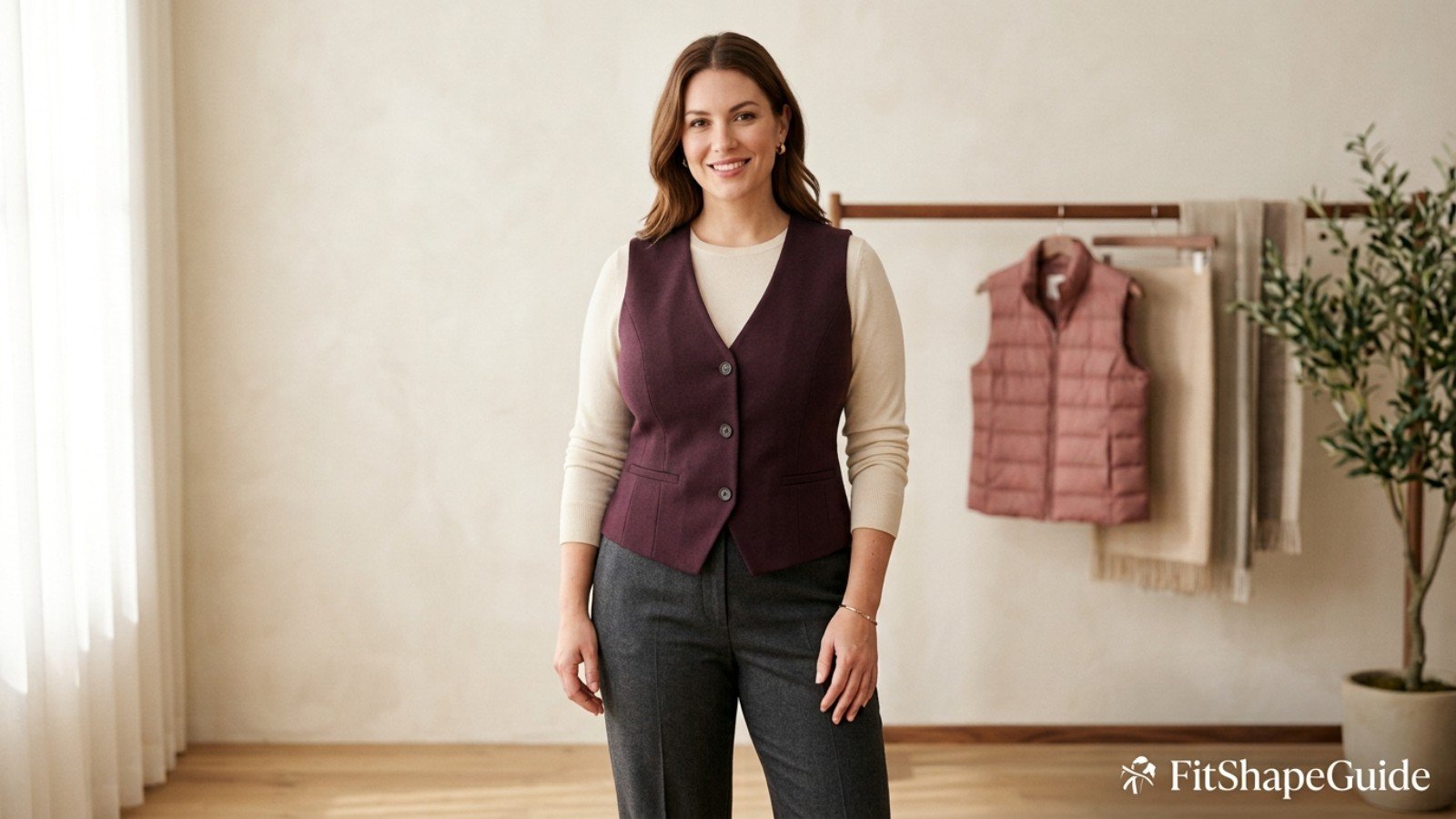
The 90-second vest check
- Wear the exact bra and base layer planned beneath the vest.
- Settle the shoulder edges before fastening the front.
- Close every functional button, snap or zipper without pulling.
- Check armhole coverage from front, side and back.
- Cross the arms and reach forward as if driving or working.
- Sit, breathe fully and check the neckline and lower closure.
- Place a light item in each functional pocket and walk.
- Confirm the front hem, side seams and back adjustment stay balanced.
Best vests for a large bust by construction
“Vest” can mean a tailored waistcoat, sleeveless knit, insulated gilet, fleece layer, longline topper or pocketed utility piece. These garments solve different problems. The useful choice begins with whether the vest will be worn as a top, over a shirt, under a coat or as the primary outdoor layer.
Single-breasted tailored vest
Best for: polished outfits, targeted shaping and lower closure bulk. Princess seams, darts and a moderate V-neck can create chest room without widening the shoulder. Trade-off: firm woven fabric exposes button strain quickly, and low necklines or wide armholes may require a deliberate underlayer.
Longline tailored vest
Best for: an open vertical line, extra torso coverage and layering over shirts or dresses. Side vents can support stride and sitting. Trade-off: a closed longline front may catch at the hip, while an unshaped open front can swing toward the sides of the bust.
V-neck sweater vest
Best for: flexible layering, soft chest accommodation and adjustable formality. Ribbing or side slits can help the hem settle. Trade-off: thin knits may cling or stretch sheer, while bulky ribs and a high tight V can make the neckline rise.
Low-profile quilted or puffer vest
Best for: core warmth with free sleeves and easy outdoor movement. Shaped side panels and thinner quilting reduce bulk. Trade-off: horizontal baffles, high collars and rigid zipper tape show missing chest depth; low-profile insulation may be less warm than a bulkier option.
Fleece or softshell vest
Best for: active layering, flexible reach and practical zipped pockets. Stretch panels can help the front and sides move. Trade-off: fleece can grip base layers, and a close athletic cut may pull at the zipper or armhole despite fabric softness.
Utility or field vest
Best for: accessible storage, adjustable waist details and casual structure. A plain upper chest with lower pockets reduces stacking. Trade-off: flap pockets, hardware and loaded compartments add weight and bulk that can pull the front out of balance.
The best vests solve a clear layering task rather than relying on one silhouette for every setting. For overall outfit balance, start with how to dress a large bust.
Armhole depth, neckline and side coverage
Because a vest has no sleeves, its armhole reveals fit evidence that a jacket can hide. The edge must allow reach without cutting the front of the underarm, yet it should not gape so widely that the bra or unintended base layer shows. The correct amount of coverage depends on whether the vest is a standalone top or an outer layer.
When the vest is worn as a top
Check armhole depth with the intended bra and normal movement. Look from the front, true side and back. A fitted tailored vest usually needs a closer armhole and adequate side-front width. If the edge stands away from the body, tailoring may reduce a small amount of gape, but pinching the armhole can also change the bust and shoulder line. Major gape usually means another pattern is better.
When the vest is worn over a shirt or sweater
Some extra armhole depth is useful because it must clear the base layer’s armhole and sleeve seam. The vest should not drag the shirt upward or trap the sweater beneath the arm. Test with the thickest planned layer, then raise and lower both arms to see whether the underlayer returns to place.
V-necks, round necks and high collars
A moderate V-neck can create space above the bust and frame a shirt collar. A deep V may expose more base layer or bra than intended when worn alone. A round or crew neck provides coverage but may move toward the throat if the front is short. Insulated stand collars protect the neck yet can press the chin when a shallow front pulls the zipper upward. Compare broader frame choices in the necklines guide.
Shoulder-edge placement
A tailored vest may end near the shoulder point; a sweater vest may be cut wider; a puffer vest often has a shaped yoke. The edge should lie smoothly without curling, floating or restricting arm rotation. Dropped edges can be intentional, but they need enough room beneath a coat and should not create a hard ridge across the upper arm.
| Armhole or neckline detail | Useful evidence | Movement test | Trade-off |
|---|---|---|---|
| Close tailored armhole | Side coverage with smooth front edge | Reach forward without cutting underarm | Less room for thick shirt seams |
| Layering armhole | Clears sweater sleeve and armhole | Raise arms and let layers resettle | May gape over thin tops |
| Moderate V-neck | Space above bust and controlled exposure | Sit and lean forward | Requires compatible bra or underlayer |
| High round neck | Upper-chest coverage and clean knit line | Turn head and take a full breath | Can press throat if front length is short |
| Stand collar | Weather protection and zipper guard | Zip fully and rotate neck | Adds bulk and may contact chin |
| Wide shoulder edge | Intentional knit or padded silhouette | Layer beneath coat and move arms | Can bunch under narrow outer sleeves |
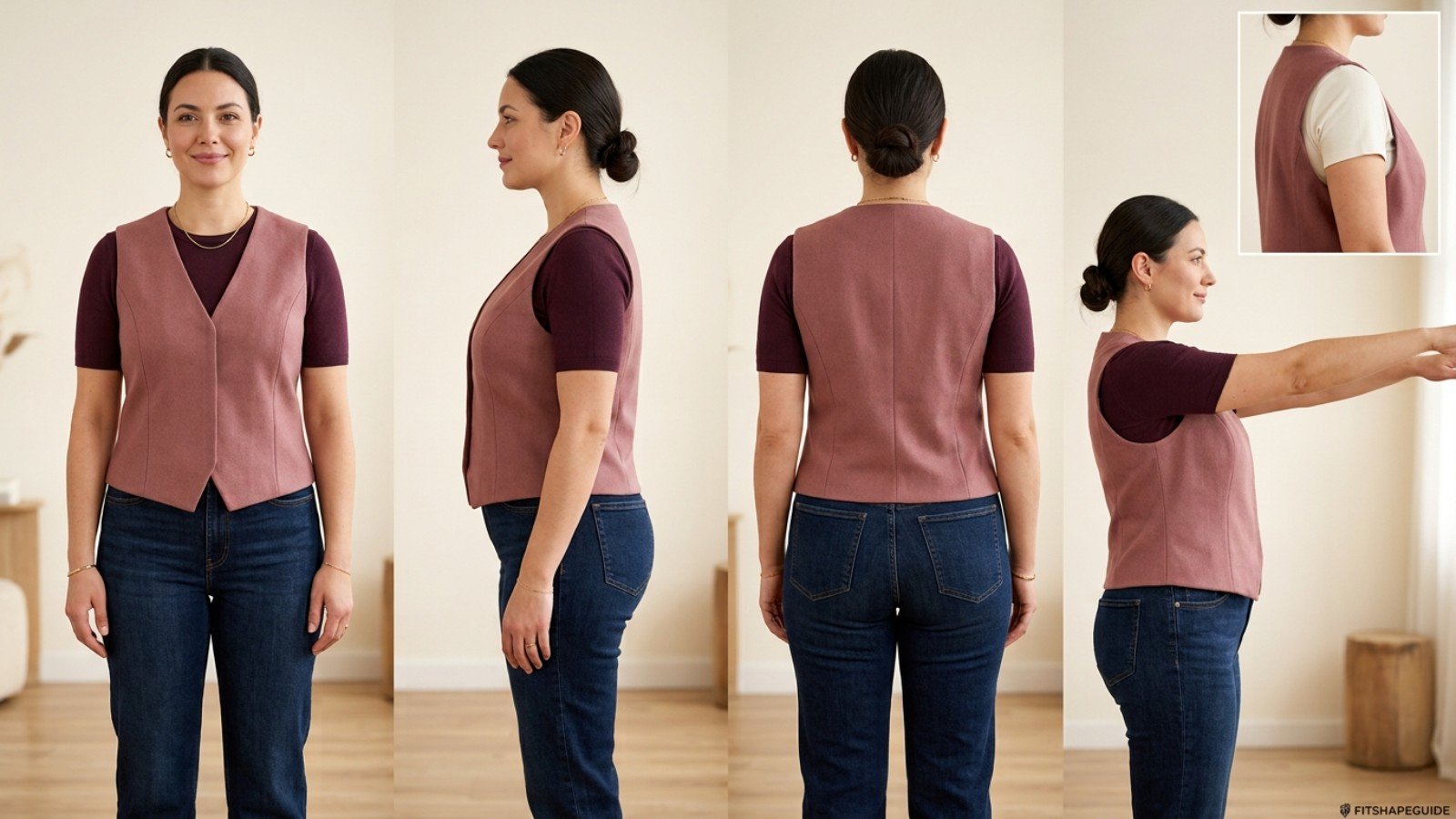
The best vests for a large bust balance arm mobility with the exact level of coverage required by the outfit.
Shaping, buttons, zippers and hem balance
A sleeveless garment still needs three-dimensional front shaping. Woven waistcoats use darts, princess seams, curved panels or adjustable backs. Knits use stretch, rib structure and shaping. Puffer and softshell vests may rely on curved side panels or articulated seams. Stretch helps movement, but it does not replace enough pattern depth.
Princess seams and darts
Princess seams can add volume from the shoulder or armhole through the chest. Darts provide localized shaping. Both should lie smoothly rather than collapsing or pointing. A tailored vest with a fabric back may be easier to alter than one with a slippery lining and narrow buckle strap, but significant missing depth calls for a different cut.
Button-front waistcoats
Fasten every functional button. The placket should remain vertical without X-shaped strain, and buttonholes should not stretch open. A lower V means fewer buttons across the chest but more exposure; a higher front increases coverage while adding closure points. An intentionally open lower button is a styling convention on some waistcoats, not a repair for upper-button strain.
Front zippers
Zipper tape is less flexible than surrounding knit or insulation, so it reveals insufficient depth quickly. Start the zipper without pulling the bottom edges together, close it fully and sit. The track should remain straight, the collar should not rise into the chin and the lower edge should not roll. A two-way zipper can improve seated comfort in a long vest, but only if the upper front fits.
Back tabs, drawcords and side adjusters
A back buckle can refine waist ease after the chest fits. Side tabs or drawcords can stabilize a relaxed outdoor vest. Do not tighten an adjuster to compensate for a size that is too large at the shoulder and armhole. Hardware should lie flat, remain accessible and avoid pressing against a chair.
Choose the hem endpoint
A cropped vest can coordinate with high-rise bottoms but makes any front rise more visible. A hip-length vest is versatile and often clears the waist. A longline vest adds coverage but must work with hip circumference and sitting. Side slits, a curved drop-tail or a two-way zipper can improve movement, each with a different visual and weather trade-off.
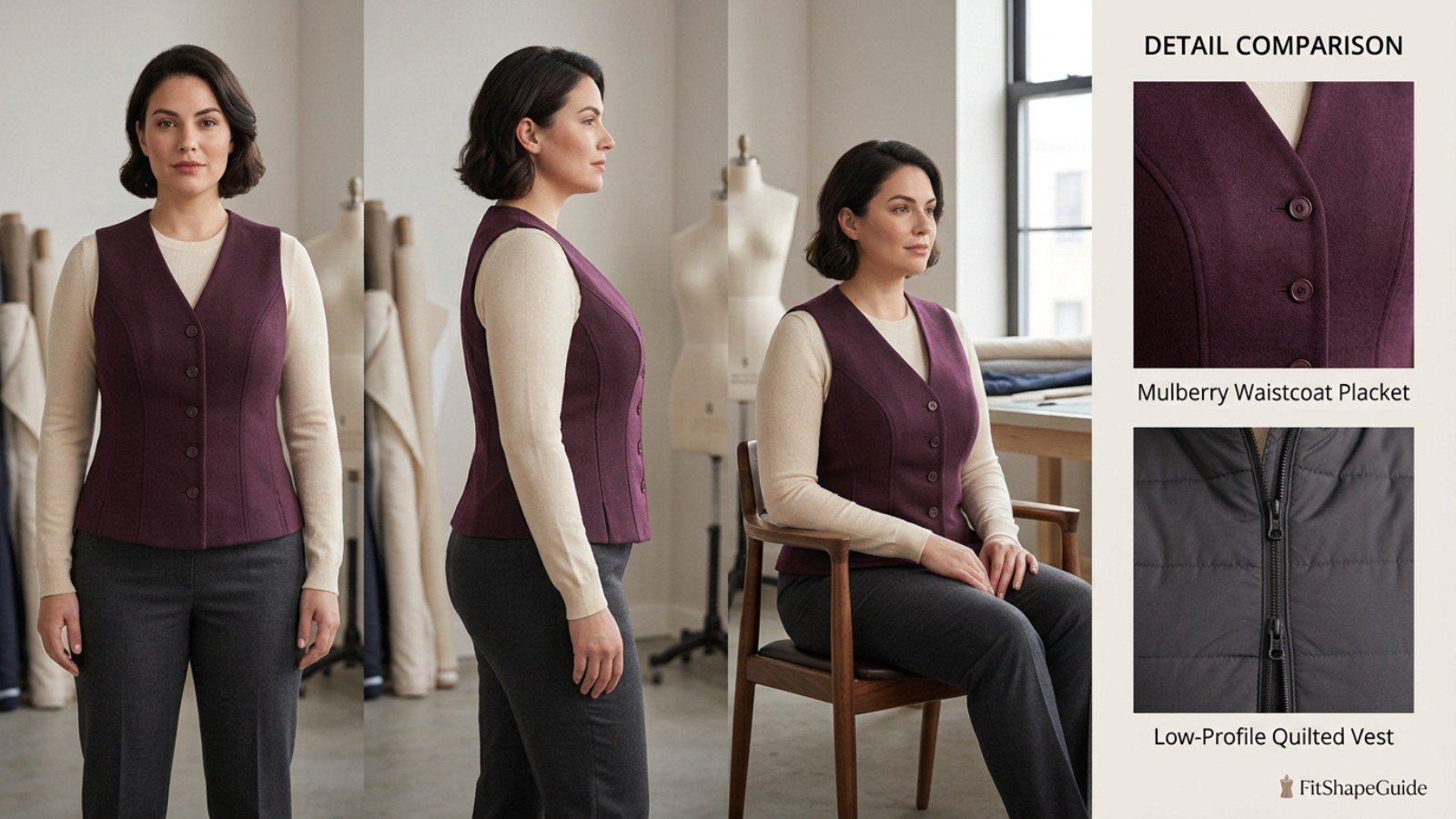
Layering combinations and movement tests
A vest changes how a base layer behaves because its armhole, neckline, hem and closure sit on top of existing seams. Fit both garments together. The same vest may work over a smooth knit and fail over a crisp shirt with a thick placket.
Over a fitted knit top
This is the cleanest test for a tailored or sweater vest. The base layer should remain smooth at the armhole and neckline. A thin knit reveals vest seam ridges and closure strain clearly. If the vest is intended as a standalone top, conduct the side-coverage test with the actual bra rather than assuming photos show enough coverage.
Over a button-down shirt
Allow room for the collar, shoulder seam, sleeve head, cuff and front placket. Two buttoned fronts can magnify gaping if either lacks depth. Cross the arms and sit to ensure the shirt does not bunch through the vest armhole. The button-down shirt guide helps establish a stable base layer.
Over a sweater or hoodie
An outdoor vest needs deeper armholes, more upper-back room and sufficient collar space. Pull the hoodie through completely rather than trapping fabric under the back neck. A bulky hood can push a stand collar forward. With a chunky sweater, check whether baffles compress unevenly or the zipper bows.
Under a jacket or coat
A low-profile insulated or knit vest can add core warmth beneath an outer layer. Test both garments closed. The vest shoulder edge, collar, pockets and hem should not form pressure ridges. A shaped coat offers less internal room than a relaxed shell; compare broader options in the structured-coat guide.
| Layering plan | Vest detail to verify | Movement test | Trade-off |
|---|---|---|---|
| Tailored vest over fitted knit | Close armhole and shaped woven front | Reach and sit with buttons closed | Thin base reveals seam ridges |
| Sweater vest over shirt | Neckline, armhole and placket room | Cross arms without shirt bunching | Two collars or fronts add bulk |
| Puffer vest over sweater | Curved side panels and straight zipper | Walk, sit and raise arms | More ease may feel loose over thin tops |
| Fleece vest over active top | Low-friction inner face and pocket stability | Rotate torso and carry a bag | Fleece may grip some fabrics |
| Low-profile vest under coat | Flat collar, shoulder edge and hem | Close both layers and reach forward | Combined closures may concentrate pressure |
| Long vest over dress | Hip ease, side vents and lining slip | Sit and take a long stride | Hem may catch on textured fabric |
Choose a stable base from the best tops guide. For sleeved outdoor alternatives, compare the athletic-jacket guide.

Tailoring fabrics, knits, insulation and pockets
Material changes how a vest shapes, layers and moves. Fiber content is only one part of the decision. Fabric weight, weave, stretch, lining, quilting, insulation distribution, closure and internal finish all affect fit.
Tailoring cloth and lining
Wool, twill, linen blends and suiting fabrics can hold a defined line. A small elastane percentage may support movement, but it cannot replace bust shaping. Full or partial lining helps the vest slide over a shirt and supports internal seams. Check whether the lining pulls before the outer fabric does. Follow the care label; tailored construction may require professional cleaning.
Sweater knits and recovery
Fine gauge knits create less surface bulk, while chunky cables and ribs add texture and thickness. Recovery matters: the vest should return after stretching over the chest rather than growing wider through wear. Hold the knit to light to check opacity where it stretches. Ribbing at the hem should grip gently without rolling beneath the bust.
Insulation and quilting
Down, synthetic insulation and fleece provide different warmth, weight, moisture and care characteristics. Do not assume a thicker-looking vest is automatically warmer. Fill type, amount, baffle construction, shell, wind resistance, collar, hem and base layer all contribute. Low-profile quilting layers more easily but may offer less insulation than a bulkier design.
Water and wind claims
“Water-resistant,” “water-repellent” and “waterproof” are not interchangeable. Verify the manufacturer’s exact claim, coating, seams and care requirements. A sleeveless vest leaves the arms exposed regardless of shell performance. Wind protection also depends on zipper flap, collar, armhole fit and hem adjustment.
Pocket placement and load
Chest flap pockets add layers directly over the bust and may distort under strain. Lower welt, seam or zipped hand pockets can keep the upper front cleaner. Load pockets lightly during the fit test. A phone or keys may pull one side downward, flare the opening or make a long vest uncomfortable while seated.
Hardware and internal finish
Inspect zipper guards, snap backing, button attachment, buckle tabs, drawcord channels and seam finish. Hard hardware should not press the bust, ribs or chair. On insulated vests, check for trapped fabric near the zipper. On tailored vests, examine whether the back buckle lies flat and remains secure.
How to shop online for a vest
A useful listing should show the vest open and closed from front, side and back. It should state whether it is intended as a top, midlayer or outer layer; identify fit category, closure, fabric, lining or insulation, pockets, care and actual length; and supply a current size chart.
Measure a known-good vest
Record flat chest width, front-panel width at bust height, shoulder width, armhole depth, waist, hem and center-back length. For a tailored vest, note V-neck depth and button spacing. For an insulated vest, note collar height and whether the hem adjusts. Compare over the same base-layer thickness, and confirm whether the chart gives body or finished garment measurements.
Look beyond model height
Model information helps but cannot predict armhole or bust fit. Product photos should reveal side coverage, shoulder edge, front hem balance and pocket placement. “Cropped,” “longline,” “slim” and “relaxed” are not standard measurements. Search the page for body length and fit notes rather than estimating from styling alone.
Separate tailored and outdoor evidence
Official current listings illustrate the difference. J.Crew and Ralph Lauren tailored vests describe features such as single-breasted fronts, V-necks, lining, back buckles and notched hems. Patagonia and L.L.Bean insulated vests document armhole mobility, center zippers, quilting, pocket systems, intended layer weight and specific lengths. Verify the exact construction instead of transferring assumptions between categories.
Use reviews for specific outcomes
Prioritize reviews that include body and garment measurements, purchased size, underlayer thickness and an observable result: armhole gape, side coverage, button or zipper strain, neckline depth, hem rise, pocket drag or collar pressure. A rating or “true to size” label cannot predict fuller-bust fit without context.
Amazon verification workflow
Use only a direct live product-detail page after confirming the brand or authorized seller, exact variant, current chart, measurements, armholes, closure, fabric, lining or insulation, pockets, care and return eligibility. Never publish a search-results URL. Do not hard-code changing prices, coupons, ratings, review counts, stock claims or delivery promises into evergreen copy. Keep the affiliate disclosure close to recommendations.
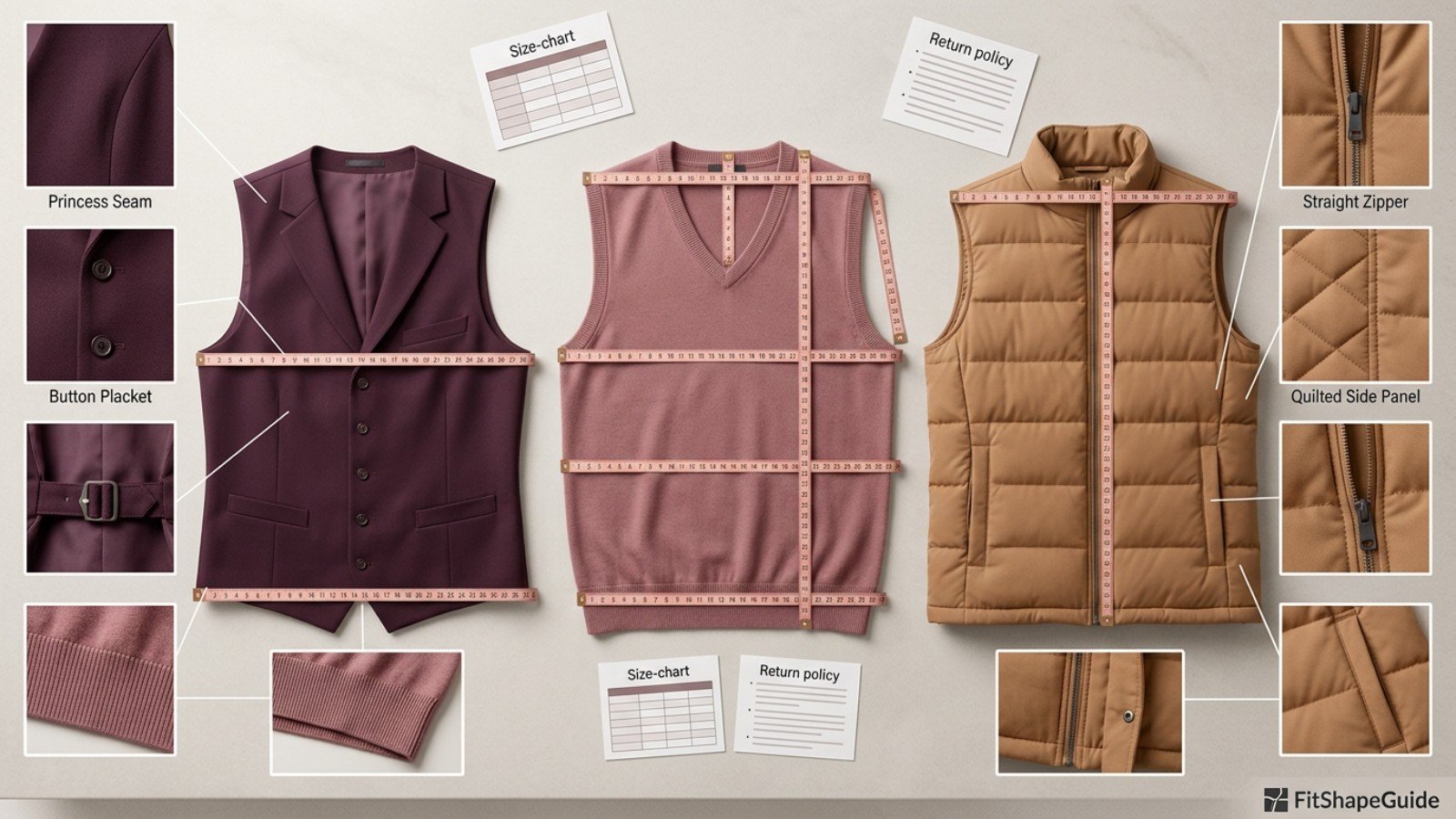
Listings for the best vests for a large bust make armhole, shaping, closure and layer evidence visible before checkout.
Common vest fit problems
| Symptom | Likely cause | Better next step |
|---|---|---|
| Armhole gaps and exposes bra | Armhole too deep, shoulder too wide or front lacks shaping | Choose a closer armhole with targeted chest depth |
| Armhole cuts the front underarm | Opening too small or front pulled backward | Add front width/depth and verify shoulder placement |
| Buttons form X-shaped folds | Woven front is shallow or button stance crosses strain | Try princess seams, darts or a different closure layout |
| Zipper bows outward | Rigid tape crosses insufficient chest depth | Choose shaped side panels or more front room |
| Neckline rises toward throat | Bust or upper-back tension pulls vest upward | Add front length and upper-back reach |
| Front hem climbs sharply | Missing chest depth or short front | Choose shaped or deliberately longer front panels |
| Pockets make front flare | Placement, pocket bag or carried load disturbs balance | Choose lower-profile pockets or carry less weight |
| Long vest restricts sitting | Narrow hip, rigid hem or one-way closure | Try side vents, more sweep or a two-way zipper |
Do not size up automatically
A larger size may close over the bust but create wide shoulders, deep armholes and excess waist or hem. Diagnose whether the missing room is at the chest, upper back, base layer or hip. A differently shaped vest often solves the actual problem more cleanly.
Do not judge an open vest only
If the design includes functional buttons, snaps or a zipper, test them. An open front may temporarily hide insufficient depth. A vest designed exclusively as an open topper is different, but its front edges should still hang intentionally rather than swinging behind the bust.
Do not blame the body for armhole gape
The best vests for a large bust coordinate front depth, shoulder width and armhole shape. Gape, cutting and closure strain are pattern evidence—not body failures. Choose a garment that supports normal coverage, breath and movement.
Choose chest depth and armhole control together
The best vests for a large bust combine targeted front room, compatible armhole coverage, a calm neckline, stable closures and a hem that stays balanced over the intended layer. Start with a princess-seam tailored vest for polish, a V-neck sweater vest for flexible layering, or a low-profile insulated vest for outdoor use. Keep the vest that remains covered and comfortable while fastened, reaching and seated.
Frequently asked questions
These answers explain how the best vests for a large bust should shape, layer and move.
What vest style is best for a large bust?
A single-breasted vest with princess seams is a strong tailored starting point because it creates targeted chest depth with less closure and lapel bulk.
Can a fuller bust wear a tailored waistcoat?
Yes. Look for shaped front panels, compatible V-neck depth, close but comfortable armholes and buttons that remain flat during sitting and movement.
How should vest armholes fit a large bust?
They should allow forward reach without cutting the underarm while providing the intended side and bra coverage for the chosen base layer.
Are sweater vests good for a large bust?
They can be. Choose a neckline, knit weight, recovery and hem rib that accommodate the chest without becoming sheer, rising or rolling.
What puffer vest is best for a fuller bust?
A low-profile style with shaped side panels, mobile armholes and a straight zipper reduces bulk while preserving room for the intended sweater.
Should a vest be worn open or closed?
Follow the design intent. Functional closures should work without strain, while an open-front vest should still hang vertically with enough front width.
Should I size up in a vest?
Only if the shoulder edges, armholes, waist and hem remain intentional. A different cut with targeted chest depth is often better than extra width everywhere.
How do I test a vest before keeping it?
Wear the intended base layer, close every fastening, inspect side coverage, cross and raise the arms, sit, breathe fully, load pockets lightly and check hem balance.
Editorial and verification standards
This guide evaluates observable construction: front-panel depth, darts, princess seams, armhole shape, neckline, closures, shoulder edge, back adjusters, hem, fabric, lining, insulation, quilting, pockets, care and returns. It recommends vest constructions rather than inventing products or universal fit promises.
Current construction examples were checked against official pages for a Ralph Lauren buttoned linen vest, a J.Crew single-breasted tailored vest, the Patagonia Nano Puff vest and an L.L.Bean long insulated vest. These sources illustrate why tailored and insulated vests require different armhole, closure, length and layering evidence.
Before publishing a product module, verify the direct live seller, measurements, armholes, closure, fabric, lining or insulation, pockets, care and returns. Affiliate relationships should be disclosed clearly and close to recommendations under the FTC endorsement guidance.
“Best” means a suitable verified vest for an individual body, base layer, coverage preference, climate and activity—not a guarantee that one neckline or armhole shape works for everyone.