Best Denim Jackets for a Large Bust
A construction-first guide to jean jackets that close without placket strain, move through the shoulders and layer over fuller-bust tops without relying on a shapeless size-up.
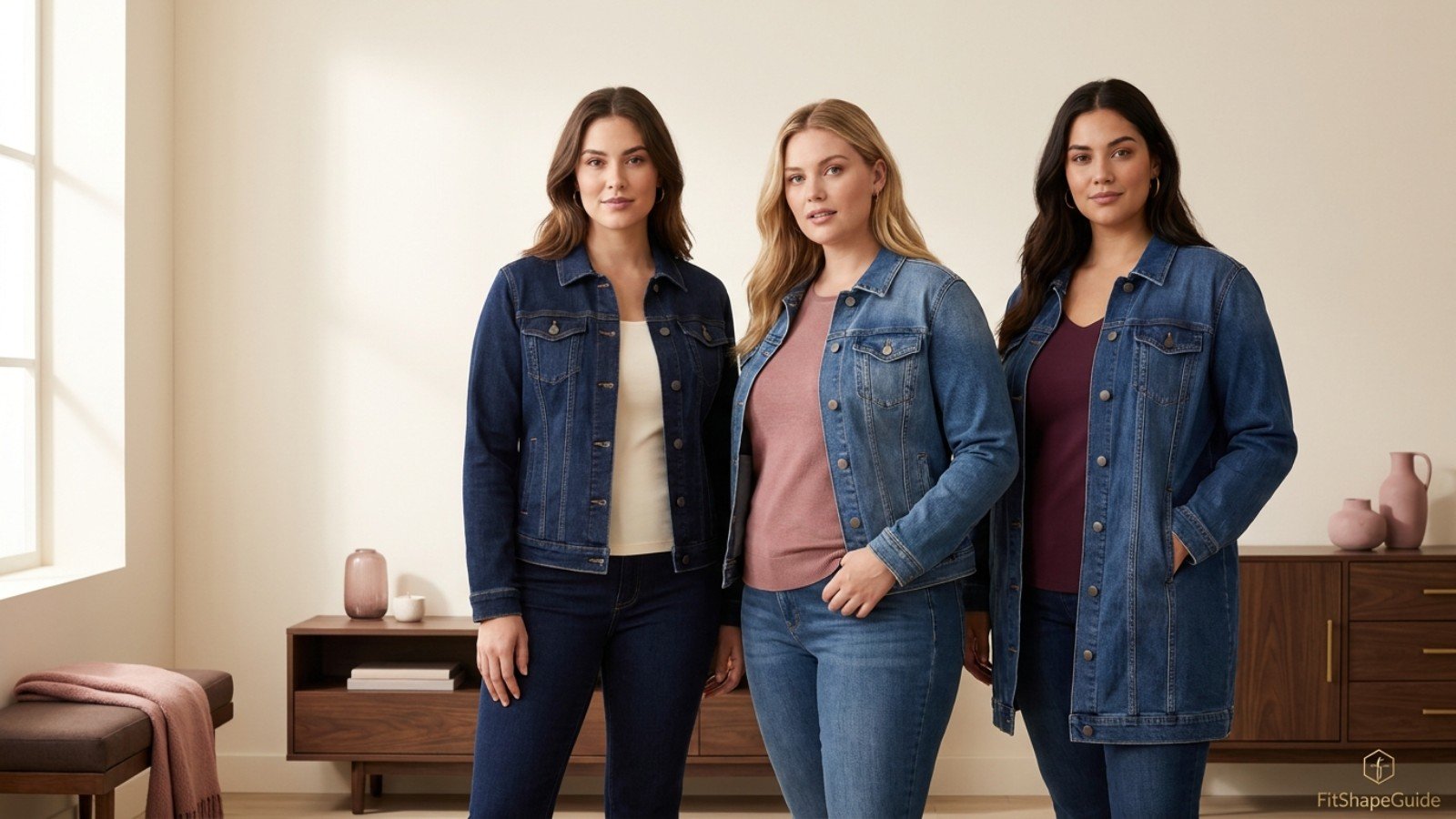
The 90-second denim-jacket test
- Set the shoulders: seams should sit near the intended point unless the cut is deliberately dropped.
- Button without arranging: placket should remain vertical with no sharp horizontal pull from bust to armhole.
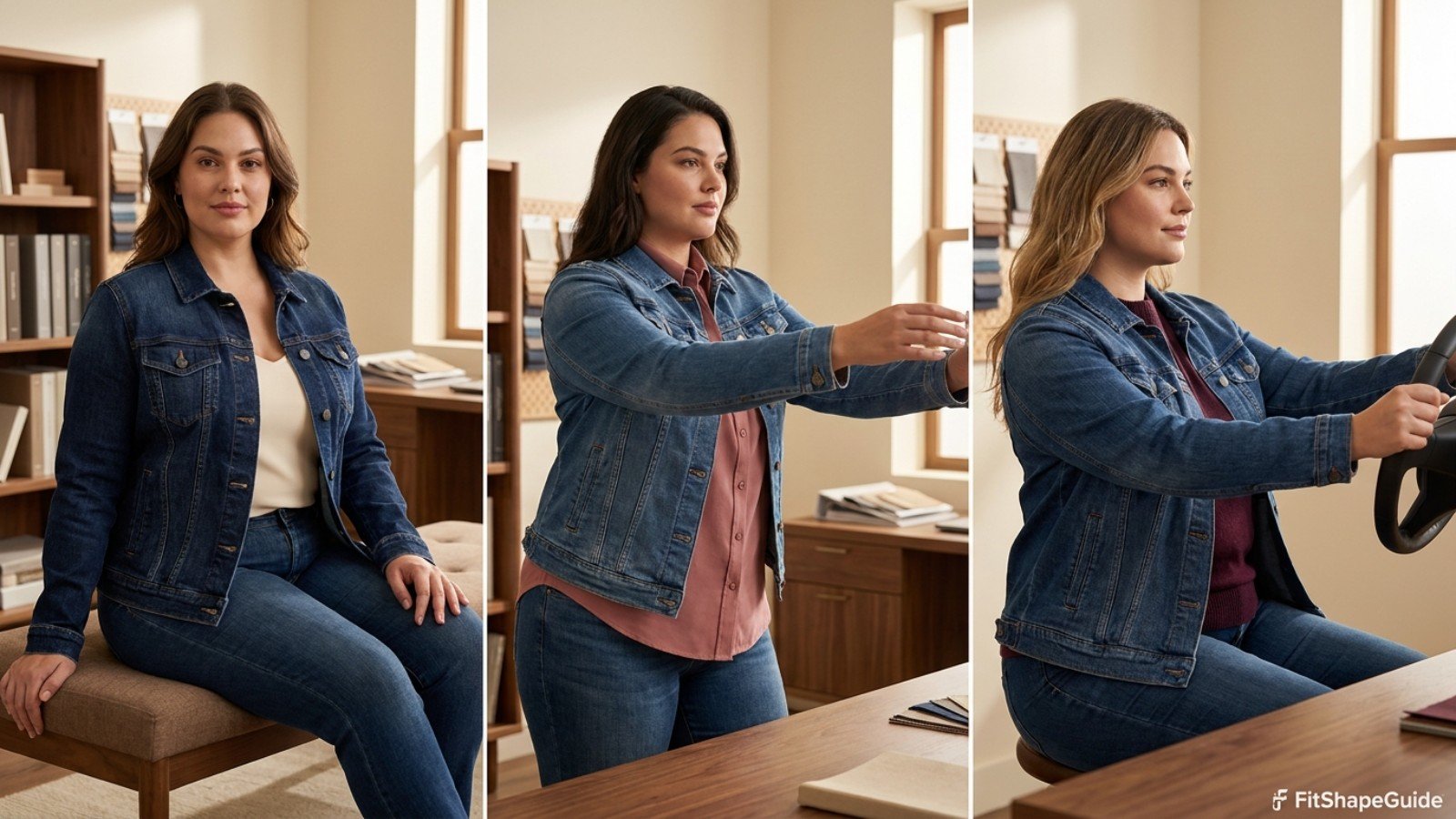
- Reach forward: sleeves, back and armholes should permit keyboard and steering-wheel movement.
- Sit for one minute: hem should not push upward, collar should not move back and lower buttons should not press.
- Use every pocket: chest and side pockets should remain functional without opening the front.
- Add the intended layer: repeat over a shell, shirt or sweater before choosing size.
What makes a denim jacket work for a large bust?
A denim jacket is both a woven top layer and a structured garment. It must accommodate the bust, but the result also depends on shoulder width, armhole shape, back width, sleeve pitch, hem and fabric. Adding size increases all dimensions at once. That can provide front room while dropping the shoulders, lengthening sleeves and making the collar unstable.
Begin by deciding whether the jacket must close. A buttonable jacket needs enough bust circumference and appropriate front shaping. An open-only jacket can use less closure ease, but its front edges should hang deliberately rather than being pushed to the side seams. If it will layer over sweaters, bring the thickest planned knit. If it will replace a blazer over shells, test the lightest layer too.
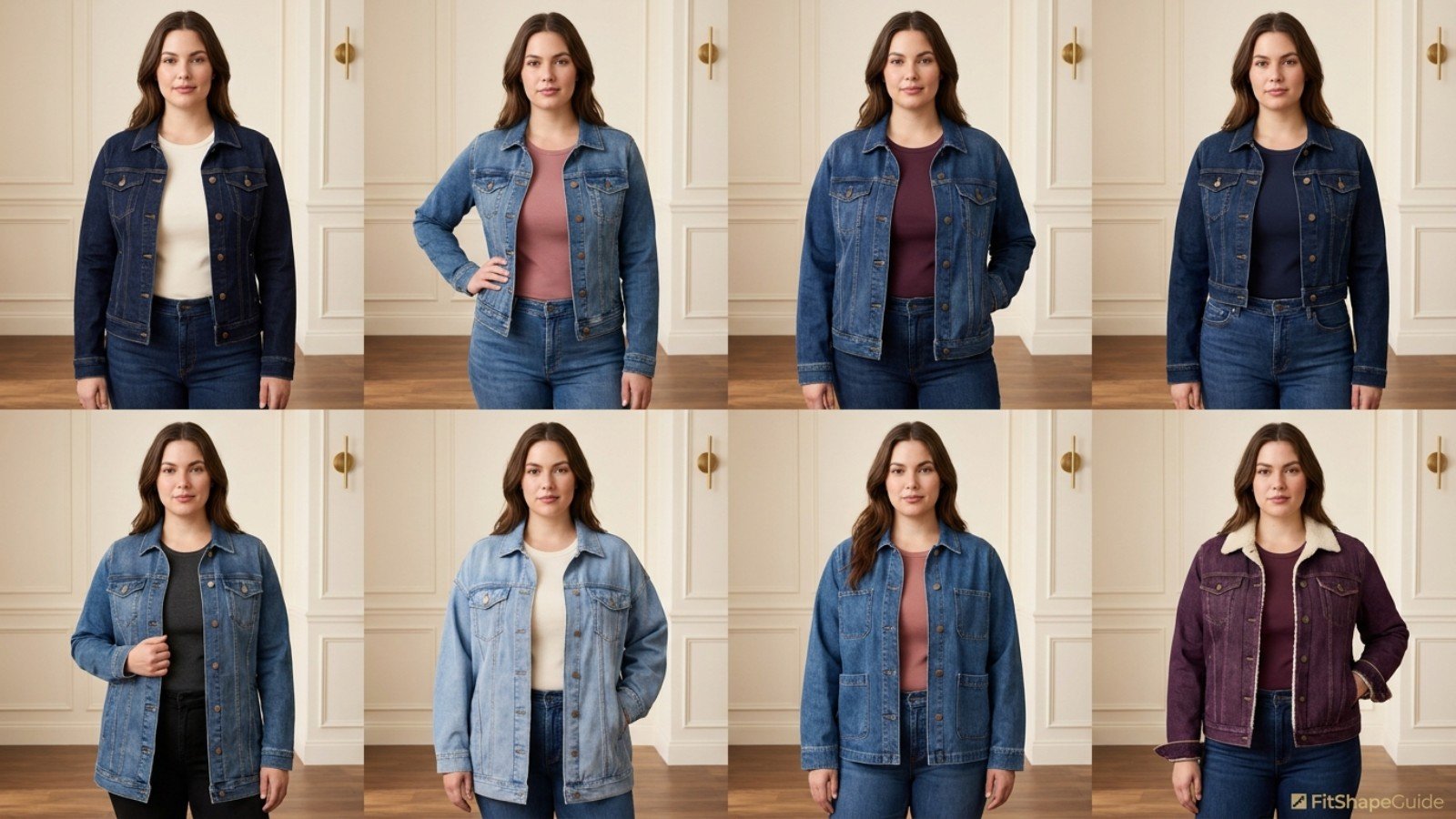
Next choose structure. Classic trucker jackets use a point collar, front button placket, chest pockets, vertical panel seams and a shorter hem. Relaxed and oversized versions add body and shoulder ease. Chore jackets replace fitted paneling with a straighter body and larger patch pockets. Cropped and longline lengths change which tops and waistbands they meet. There is no single best shape for every body or outfit.
| Jacket style | Why it can work | Best use | Main trade-off |
|---|---|---|---|
| Shaped classic trucker | Vertical seams and controlled waist can add front room without excess shoulder width | Buttoned or open everyday outfits | Close cut needs accurate bust and armhole fit |
| Stretch denim jacket | Fabric give supports reaching and buttoned movement | Commutes, desk days and fitted layers | Weak recovery can distort placket or elbows |
| Relaxed trucker | More body and back ease with familiar denim details | Shirts, tees and light sweaters | Extra room can overwhelm pockets or collar |
| Oversized jacket | Dropped shoulders and wider body support substantial layers | Chunky knits and casual outerwear | Long sleeves and low armholes can restrict practical reach |
| Cropped denim jacket | Short hem clears high-rise waistbands and dresses | High-rise jeans, skirts and fit-and-flare dresses | May end at the fullest bust or ride when seated |
| Longline denim jacket | More front length and vertical pocket space | Leggings, slim denim and longer tops | Heavy fabric can pull from shoulders and bunch when sitting |
| Denim chore jacket | Straight body, simple closure and large pockets offer practical ease | Casual workwear and layering | Minimal bust shaping may tent when buttoned |
| Lined or sherpa jacket | Provides warmth in one durable layer | Cold weather and outdoor use | Lining reduces internal measurements and armhole space |
The best denim-jacket styles, ranked by function
Shaped classic trucker
A point collar, vertical panels and shorter body create the familiar jean-jacket look. The best fuller-bust version adds enough front width or seam shaping while keeping the shoulder and sleeve controlled.
Trade-off: traditional slim truckers can be snug through the body. Verify buttoned movement rather than assuming the style will break in.
Stretch denim jacket
Stretch can help the jacket follow arm and torso movement, particularly when driving or working at a desk. The fabric should return after the arms lower.
Trade-off: stretch does not replace front room. An overstretched jacket can show pocket outlines and pull the placket sideways.
Relaxed trucker
A relaxed cut offers more circumference and back width without the extreme drop of a true oversized jacket. It is useful over button-downs and light knits.
Trade-off: check sleeve and hem length. “Relaxed” may add width in locations that do not improve bust closure.
Cropped denim jacket
A cropped hem can sit above or near a high-rise waistband and gives dresses a defined outer layer. Look for a curved or shaped front that does not end abruptly across the bust.
Trade-off: very short rigid jackets ride easily and may provide little pocket space or weather coverage.
Longline jean jacket
Extra length can clear longer tops and add side pockets below the bust. A back vent, softer denim or room through the hip improves sitting.
Trade-off: denim weight increases with length, and the hem can push the jacket toward the neck while seated.
Oversized denim jacket
An oversized shape gives substantial layering room and a casual look. Dropped shoulders should be intentional, and sleeves should roll or adjust without excessive bulk.
Trade-off: more size is not always more movement. Low armholes and a very wide back can make reaching harder.
Denim chore jacket
A chore jacket uses a straighter body, simpler collar and larger patch pockets. It can bypass high chest pockets and provide practical open-layer ease.
Trade-off: without darts or curved panels, a buttoned straight front may tent below the bust.
Lined or sherpa denim jacket
A warm lining turns denim into outerwear. Choose a fit measured with the lining included and inspect whether sleeves are also lined for easy dressing.
Trade-off: lining consumes internal space. A jacket that fits in an unlined version may need a different cut, not simply one larger size.
Bust shaping, button stance and chest pockets
Buttoning is the clearest test of front capacity. Fasten the jacket from top to bottom over the intended layer without pulling the two sides together. The placket should stay approximately vertical, buttons should sit centered in their holes, and fabric should not radiate sharply toward the armholes or pockets.
Vertical seams and panels
Traditional trucker seams can provide visual structure, but they only add fit when the pattern includes enough shape. Princess-style seams running over or beside the bust can distribute volume more precisely. Side panels can add circumference without widening the center front. Inspect where the seam falls on your body rather than assuming every vertical line is shaping.
Bust darts
Darts are uncommon in classic jean jackets but useful in more tailored versions. A dart should point toward the bust area without ending exactly at the fullest point or creating a bubble. If it sits too high or low, the jacket may need another size or cut; denim darts are difficult to move cleanly because of topstitching and wash.
Button spacing
Close spacing can control the front, while a large gap between buttons may allow the placket to bow. Check the button nearest the fullest bust point and the one below it. Leaving one strategic button open can be a styling choice, but the jacket should not require a precise unbuttoned configuration just to avoid strain if closure is part of the intended use.
Chest pockets
Flap pockets add multiple layers of denim at the upper front. On some jackets they sit above the bust; on others they overlap the fullest area. Neither placement is universally better. The pocket should lie flat, remain symmetrical and not be pulled open. If high pockets add unwanted bulk or distort, choose low-profile welts, no chest pockets or a chore style with lower patches.
Collar and front yoke
A collar pulling backward can signal insufficient front length, tight armholes or a bust that is pushing the jacket forward. The front yoke should remain calm rather than arching. More neck size will not solve a shortage of bust or sleeve mobility.
| Closure signal | Likely cause | Better response | Avoid |
|---|---|---|---|
| Placket bows between buttons | Insufficient front circumference or button spacing | More bust room, stretch or shaped panels | Assuming the denim will permanently loosen |
| Chest pockets pull outward | Pocket placement intersects tension area | Different placement, flatter pocket or more ease | Removing useful pockets before fit is solved |
| Collar rides backward | Front length, armhole or bust tension | More front length or different cut | Pulling the hem down all day |
| Lower front tents outward | Straight body without under-bust or waist shaping | Curved seams, shorter length or open styling | Sizing down into bust strain |
| Top button pulls at neck | Neck, upper chest or shoulder width is limited | Wear open at neck or choose another collar shape | Forcing a button rarely needed |
| Side seams rotate forward | Front needs more width or projection | Fuller front pattern or different size/cut | Twisting the jacket back into place |
Shoulders, armholes, sleeves and back width
A jacket can have enough front circumference and still restrict movement. Shoulder width, sleeve head, armhole depth and back ease determine whether the arms can reach a keyboard, steering wheel or shelf. Rigid denim makes these relationships more obvious because it contributes less give.
Shoulder seam
On a classic fitted jacket, the seam should sit near the shoulder point. If it stops too far inward, the sleeve and upper front may pull. If it falls far outward unintentionally, the sleeve may hang low and make the collar unstable. In oversized styles, a dropped seam is deliberate, but the sleeve should still move easily.
Armhole height
A higher, correctly shaped armhole can allow the arm to move without lifting the entire jacket. An armhole that is too tight pinches; one that is excessively low can drag the body upward when reaching. More depth is not automatically more mobility.
Sleeve pitch and width
Sleeve pitch describes the angle at which the sleeve is set. A jacket cut for arms resting straight may resist forward reach; a more forward sleeve can suit driving or desk use. Check upper-arm and elbow room with the planned underlayer. Stretch panels or an action back can help, but only if the shoulder still sits correctly.
Back yoke and pleats
A back yoke shapes the upper back. Box pleats, side pleats or an action back can add reach without expanding the front. Ensure pleats close again when arms lower. Permanent gaping can signal too little width elsewhere or weak recovery.
Sleeve length
Test sleeves with arms down and forward. Denim cuffs can be folded, but multiple thick rolls may be uncomfortable or bulky. Altering sleeve length is possible on some designs, yet cuffs, plackets and fading increase complexity.
Cropped, hip-length and longline denim jackets
Length affects closure, pocket placement and how the jacket meets a top or waistband. Measure center-back and front length on a working jacket, then note where the hem lands in relation to the bust, natural waist, high-rise jeans and hip. Product photos can obscure length through poses or styling.
Cropped length
A cropped jacket can sit above a high-rise waistband, creating a clear separation between layers. It works well with dresses and wide-leg bottoms. The front must still include enough bust length; otherwise the hem rises further and the jacket appears shorter than designed. A curved front or slightly longer back can improve coverage.
Classic hip length
A traditional trucker often ends near the high hip. This length supports jeans, skirts and trousers and keeps pockets accessible. Check whether the hem catches on belt loops when seated. A rigid band at the jacket hem can press or stand away if the bust consumes front length.
Longline length
Longline jackets can cover longer tops and provide lower side pockets. They need hip room, a vent or side openings for sitting. Heavy denim over a longer area may pull the shoulders and collar backward. A softer fabric or unlined build can reduce weight, with the trade-off of less structure.
Shirt-jacket length
A denim shacket or overshirt usually has a curved hem and relaxed body. It can layer easily, but side-seam pockets and chest patches may create bulk. Check that the curved front remains long enough over the bust and does not expose the underlayer unintentionally.
For more short-layer construction choices, compare the cropped jacket guide. If a firmer tailored outer layer is needed, the structured coat guide explains seams, closures and internal support.
Rigid, stretch, lightweight and lined denim
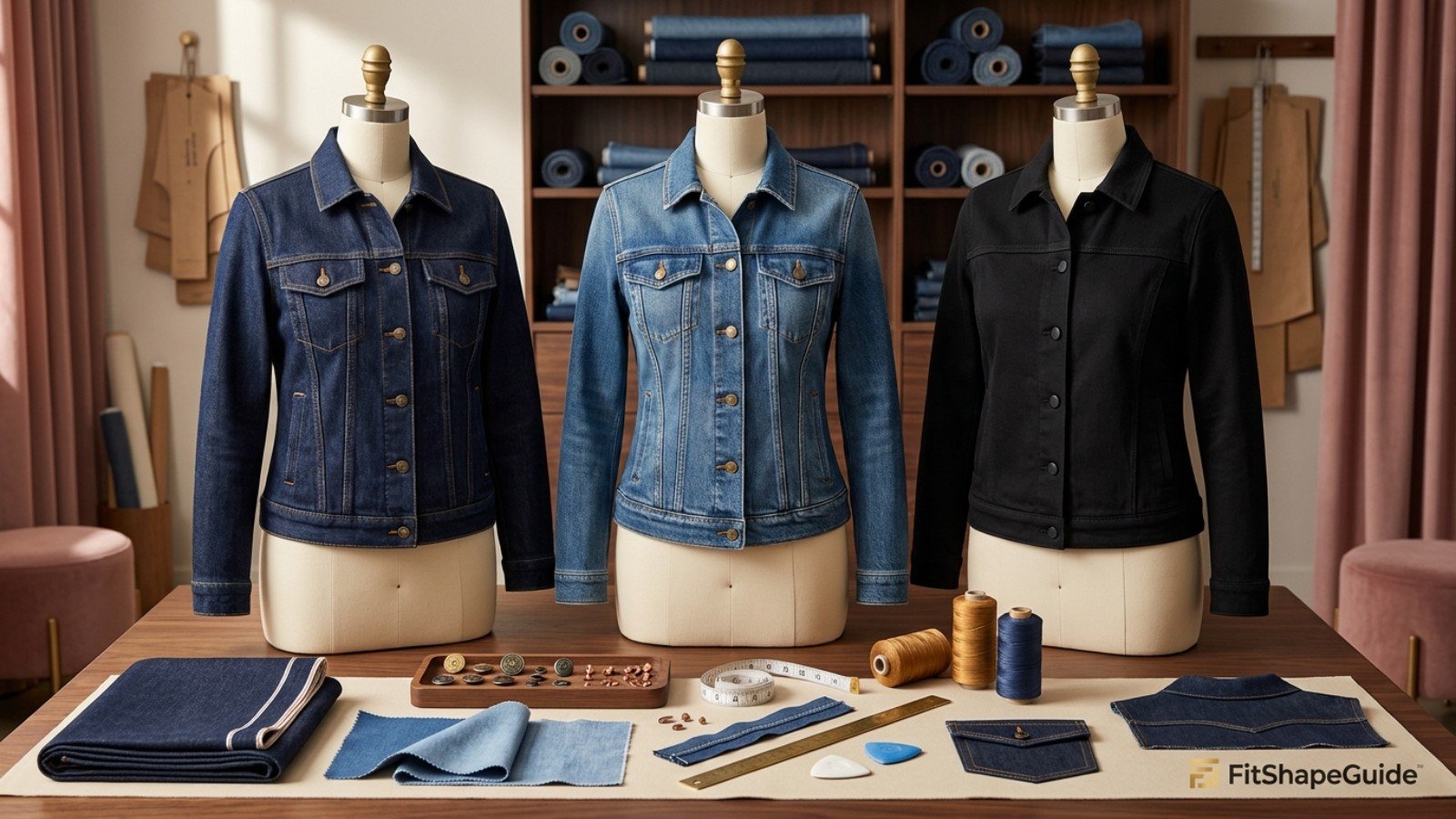
Denim is a cotton or cotton-blend twill, but jackets vary in weight, stretch, finishing and wash. The same labeled size can feel different across rigid and stretch versions. Read the exact fiber content and care for the selected wash.
Rigid denim
Rigid denim gives a classic structured collar, placket and pocket shape. It needs enough ease at bust, shoulder and upper arm before wear. Do not choose painful tightness based on a promise that it will break in. Washing and finishing may change hand feel, but pattern shortage remains.
Comfort stretch
Low or moderate stretch can help with driving, desk work and buttoned movement. It should recover when arms lower. If pockets ripple, placket edges wave or elbows remain bagged, the fabric may be overstretched or have insufficient recovery.
Lightweight denim
Light denim behaves more like a shirt-jacket and can drape over the bust with less weight. It is useful in warm climates and under coats. Check opacity, seam strength and whether the collar collapses. Less weight does not automatically mean less durability, but construction must suit the intended use.
Heavyweight denim
Heavy denim offers pronounced structure and weather resistance but can limit reach and feel hot. Oversized cuts may manage stiffness better than fitted ones. Test the jacket for several minutes; a heavy collar or longline hem can create shoulder fatigue.
Lining and insulation
Sherpa, fleece or quilted lining reduces internal room. Sleeve lining affects how easily a sweater slides inside. Check the jacket buttoned over the thickest layer, and inspect bulk at armholes and placket. A lined style is an outerwear decision, not merely a warmer version of the same fit.
Wash, distressing and dye transfer
Dark denim can look polished but may transfer dye to light tops, bags or seating, especially when new. Distressing removes or weakens fabric by design; inspect high-stress areas near pockets, buttons and elbows. Choose wash for preference and setting rather than a rule about making the bust appear smaller.
Layer denim jackets over fuller-bust tops
The underlayer changes the jacket’s internal space and friction. A silky blouse slides differently from a ribbed sweater; a puff sleeve adds volume at the armhole; a high neck fills the collar area. Bring the real layer when shopping or measure a jacket that already works over it.
Over a shaped tee or shell
This is the simplest test for a fitted or shaped trucker. The top should have a secure neckline and enough front length. Button the jacket fully, then open it and see whether the edges hang vertically. Use the large-bust tops guide for darts, seams and neckline stability.
Over a button-down shirt
Two collars and two plackets can stack. Keep the shirt collar flat or deliberately outside, and make sure the jacket front does not increase shirt gaping. Sleeve cuffs should fit inside denim cuffs without pressure.
Over a sweater
Choose a relaxed, oversized or lined outerwear cut with enough upper-arm and back room. Chunky knit can catch on unlined denim, so repeat the forward-reach test. A jacket that fits over a tee may need a different size or style for winter rather than one compromise size for every layer.
With high-rise jeans
A cropped or classic jacket can meet high-rise denim cleanly. Avoid matching washes unintentionally; double denim can be tonal, contrasted or coordinated by choice. Check whether the jacket hem catches on the jean waistband or belt loops. The jeans outfit guide compares leg shapes and top interactions.
For business casual
Where dress codes permit denim, choose a clean dark or even wash, stable collar, minimal distressing and functional pockets. Pair with tailored trousers, a shaped shell and refined shoes. The business-casual guide helps assess workplace context.
Online shopping, care and alterations
Measure a jacket that already works. Record shoulder width, pit-to-pit width, front length, center-back length, upper arm, sleeve length, cuff, hem and back width when possible. Note whether it is measured buttoned, the underlayer worn and whether the denim stretches. Compare garment measurements, not only a body size chart.
- Choose closure intent: fully buttoned, sometimes buttoned or open-only.
- Inspect every view: front seams, side panels, yoke, shoulder, sleeve, pockets and hem.
- Verify materials: denim fiber content, stretch, lining, insulation and hardware.
- Read measurements: chest alone does not reveal shoulder, armhole, sleeve or hem behavior.
- Check exact wash and style: fabric and measurements may vary within one named jacket family.
- Review care and returns: keep tags until buttoned, layered and movement tests are complete.
Care
Follow the sewn-in label. General denim guidance often recommends less frequent full washing, spot cleaning minor marks and air drying, but personal hygiene, soil and the manufacturer’s instructions control. Close buttons, turn the jacket inside out if directed and wash with compatible colors. Avoid assuming every lined or stretch jacket accepts the same cycle.
Alterations worth considering
Sleeve shortening, small side-seam refinement or hem adjustment may improve a fundamentally good jacket. Moving a shoulder, adding major bust circumference or reconstructing chest pockets and placket is complex because topstitching and wash reveal changes. Buy for bust, shoulder and armhole compatibility before planning alterations.
Build a two-jacket capsule
Choose one shaped medium-weight jacket for tees, shells and dresses, plus one relaxed or lined jacket for sweaters and cold weather. This is more efficient than forcing one jacket to be fitted in summer and roomy in winter. If a more formal layer is needed, compare closure and lapel options in the large-bust work blazer guide.
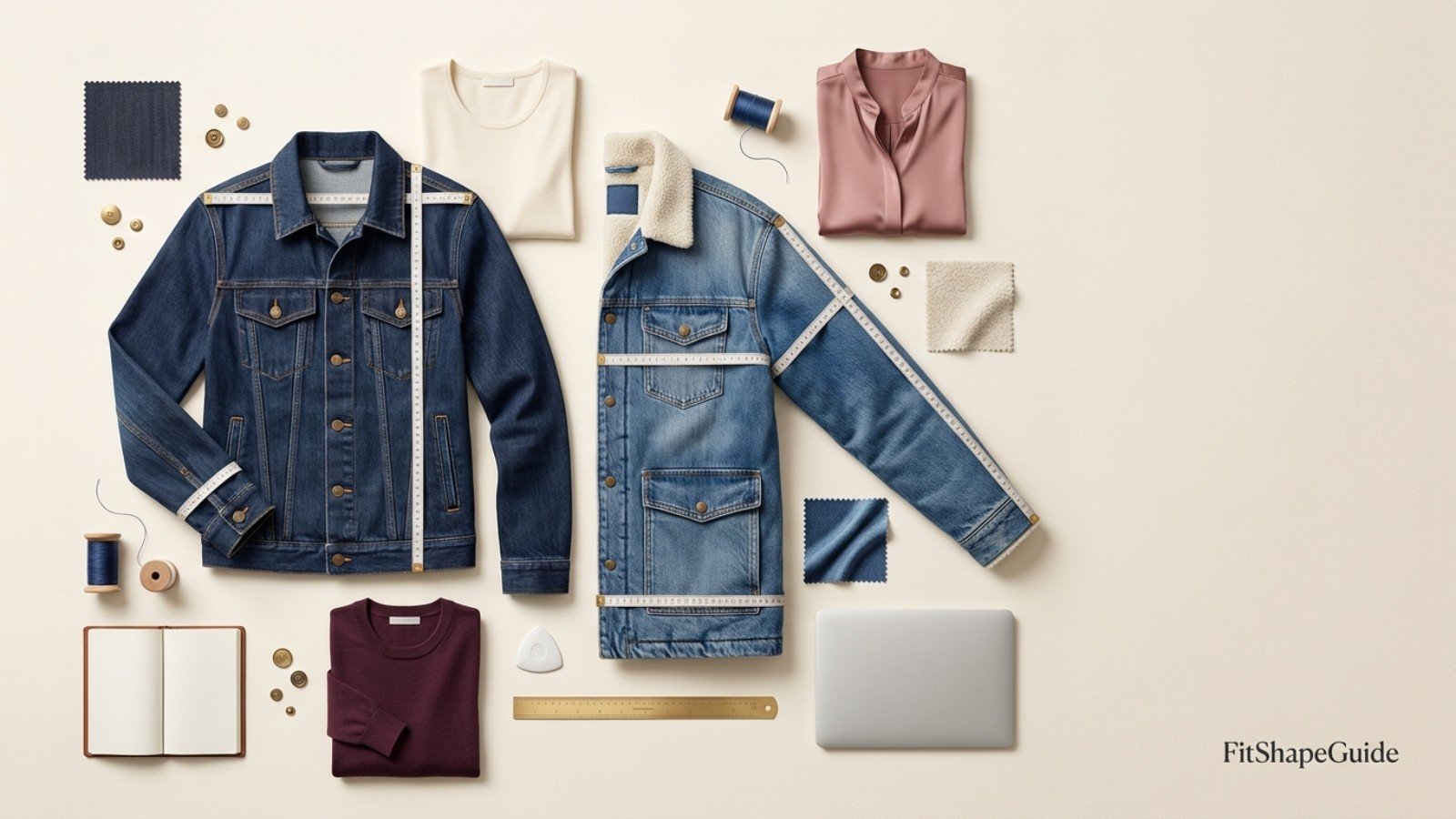
Common denim-jacket fit problems
| Problem | Likely cause | Construction-first response | Avoid |
|---|---|---|---|
| Buttons pull across bust | Insufficient front room or incompatible shaping | Fuller front, panel seams, stretch or another cut | Buying painfully tight for break-in |
| Shoulders fit but sleeves restrict | Sleeve pitch, upper-arm width or armhole shape | Different sleeve/armhole or action back | Sizing up without checking shoulders |
| Collar moves backward | Front length or bust/armhole tension | More front length and compatible armhole | Pulling the hem down repeatedly |
| Open fronts slide to sides | Insufficient front width or unstable shoulders | Better shoulder anchor and shaped front | Assuming open styling removes fit needs |
| Cropped hem rides above bust | Front is too short or armholes drag | Longer curved front or different crop | Constantly pulling the jacket downward |
| Oversized jacket feels restrictive | Low armholes, heavy denim or poor sleeve angle | Lighter fabric, higher armhole or action back | Adding more volume everywhere |
| Chest pockets gape | Pocket placement intersects bust tension | Lower, flatter or no chest pockets | Sewing flaps shut before solving fit |
| Lined jacket will not layer | Lining consumed expected internal room | Fit over actual sweater or choose roomier cut | Using unlined measurements as a proxy |
The jacket buttons only over a thin top
Decide whether that matches its role. A fitted spring jacket can be valid, while winter outerwear needs sweater space. Do not compromise shoulder fit across every season; use separate layer categories when possible.
The right bust size has very long sleeves
The brand may be adding room by grading the entire jacket rather than shaping the front. Try fuller-bust seams, shorter proportions or an alteration-friendly cuff. Rolling is acceptable when comfortable but should not be the only way to use the hands.
The jacket closes but looks twisted
Check side seams, placket and back yoke. Rotation suggests uneven front/back demand, sleeve pitch or fabric torque. Another cut may solve it more cleanly than size change.
The hem stands away below the bust
A straight rigid body may lack under-bust or waist shaping. Choose curved seams, a shorter hem, adjustable side tabs or intentional open styling. The body does not need compression to make a straight pattern lie flat.
Final verdict
The best denim jacket for a large bust is a shaped classic trucker when you want versatile buttoned and open wear. Choose stretch for frequent reaching, relaxed or oversized construction for sweaters, a carefully cut crop for high-rise bottoms, and longline or chore styles for practical length and pockets.
Fit shoulders, armholes and sleeves before sizing up. Then verify front seams, button placket, chest pockets, collar and hem over the intended layer. The right jacket closes without strain when required, remains stable when open and returns to position after real movement.
Frequently asked questions
What denim jacket is best for a large bust?
A shaped classic trucker with enough front room, vertical seams, stable shoulders and moderate stretch is the most versatile for buttoned and open wear.
Should a denim jacket button over a large bust?
It should button smoothly if closure is part of the intended use. An open-only jacket can fit differently, but its front edges and shoulders should still hang securely.
Should I size up in a denim jacket?
Size up only when the added shoulder, sleeve, armhole and hem dimensions still work. A fuller-bust cut or shaped front may fit better than an overall larger size.
Are stretch denim jackets better for a fuller bust?
Stretch can improve reaching and buttoned comfort, but the jacket still needs enough front room and fabric recovery so the placket and elbows retain shape.
Do cropped denim jackets work with a large bust?
Yes. Choose enough front length and bust shaping so the hem lands where designed and does not ride upward during sitting or reaching.
What should I wear under a denim jacket?
Shaped tees, secure shells, button-downs and fine knits work well; relaxed or oversized jackets are more suitable for thicker sweaters.
How should denim-jacket shoulder seams fit?
Classic seams should sit near the shoulder point, while dropped seams should be clearly intentional and still permit comfortable sleeve and back movement.
How do I test a denim jacket before buying?
Wear the intended layer, button the jacket, sit, reach, cross the arms, use the pockets and check that placket, collar, shoulders and hem return to position.
Editorial and verification standards
This guide evaluates denim jackets through front circumference, panel shaping, button stance, pocket placement, collar, shoulder, armhole, sleeve pitch, back width, length, fabric and movement. Current style terminology was checked against Levi’s official trucker-jacket guide, which distinguishes classic fitted and oversized constructions, and its women’s trucker fit overview. These are construction examples, not product endorsements.
Care guidance was checked against the official Levi’s denim care guide, which discusses spot cleaning, less frequent washing and air drying. The sewn-in label for the exact jacket always overrides general advice because stretch, lining, wash and finishing differ.
Before publishing a product module, verify the direct seller, exact style and wash, size range, garment measurements, closure, bust shaping, shoulder, upper arm, sleeve, hem, fiber content, stretch, lining, care, current availability and returns. Affiliate relationships should be disclosed clearly and close to recommendations under the FTC endorsement guidance. No product ranking appears until those facts can be checked.
“Best” means compatible with an individual’s dimensions, closure intent, layers, movement, climate, dress code and care routine. The jacket construction—not the body—is the source of fit strain when plackets, pockets or shoulders distort.