Best Sleeveless Tops for a Large Bust
A construction-first guide to shoulder coverage, bra concealment, armhole control, side-bust security, neckline stability, shaping, fabric behavior, front length, and movement.
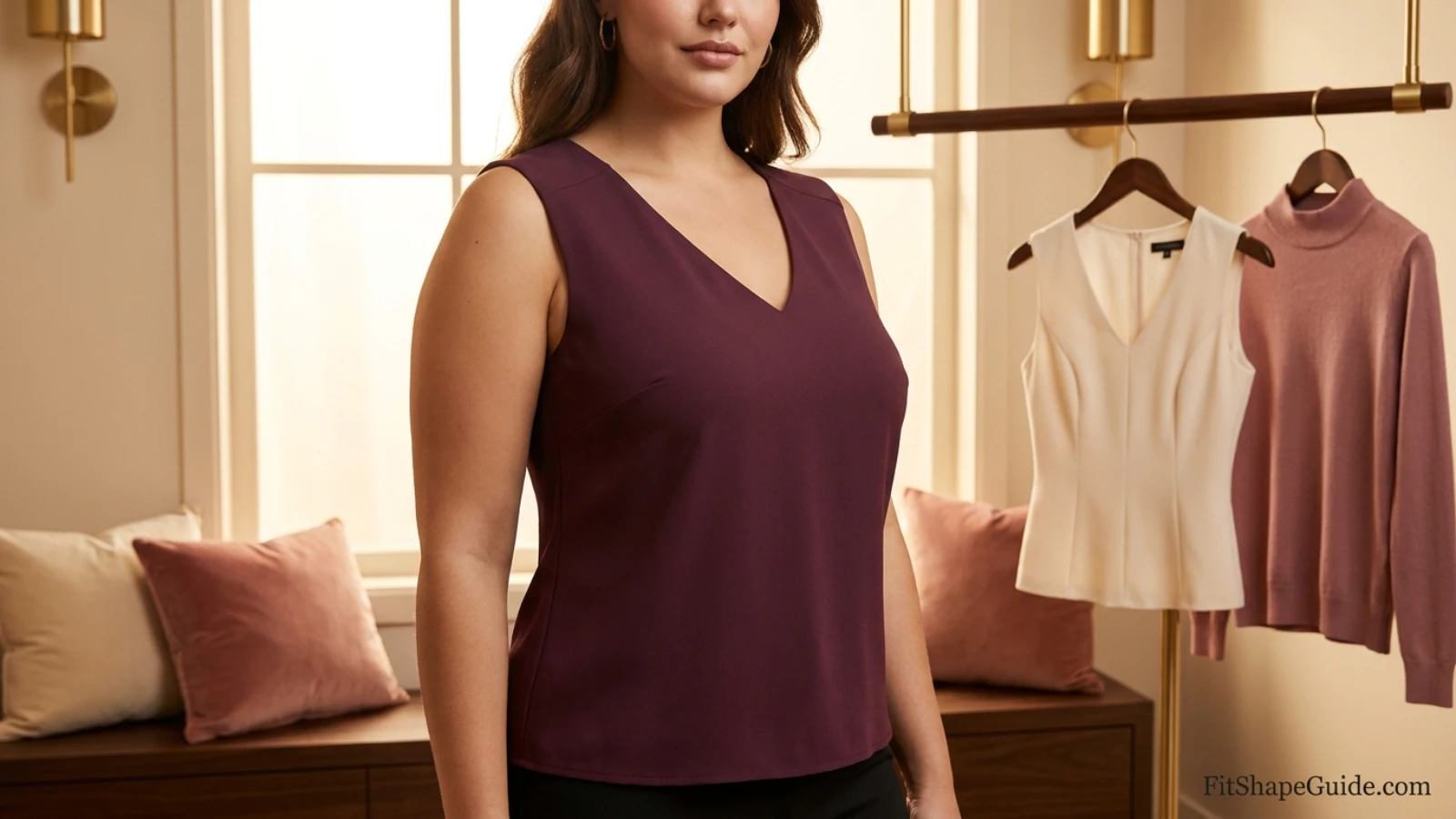
The best sleeveless tops for a large bust do more than remove sleeves. Their shoulder panels sit on the body without drifting toward the neck, their armholes follow the front and back of the arm without cutting or opening, and their bodices create three-dimensional room rather than stretching one flat front across the chest. That distinction matters because a wide shoulder can still expose a bra when the armhole is scooped too deeply, while a narrow-looking shell can provide excellent coverage if its front armhole is shaped close to the body. Judge the top through four connected zones: neckline, shoulder, armhole, and bust. Then confirm center-front length and movement. A good sleeveless top should remain calm when the arms reach forward, the body sits, and a jacket is added. This guide compares six useful constructions and shows what to verify online before any product earns a recommendation. Product slots remain private until live measurements, materials, care, stock, returns, affiliate disclosure, and retailer details are verified.
The neckline-to-armhole fit check
Settle the top over the bra you intend to wear, then evaluate it before arranging the fabric for a mirror photo.
- The shoulder panel covers the bra strap at rest and after a forward reach.
- The front armhole follows the crease of the arm without cutting into it or revealing side-bust fabric.
- The back armhole lies flat rather than standing away from the shoulder blade.
- The neckline does not spread, roll, or drop when the arms move.
- Darts, princess seams, panels, gathers, wrap shaping, or stable stretch create projection through the bust.
- The fabric remains opaque and matte across the fullest point.
- The center-front hem stays close to level with the back and returns after sitting.
- The top works under the planned layer without the armhole edge bunching or the neckline shifting.
Best sleeveless tops by construction
The best sleeveless tops do not share one neckline or level of structure. Choose the architecture that matches your support, coverage, setting, and layering needs, then judge its dimensions instead of relying on a “bra-friendly” label.
Darted V-neck sleeveless blouse
Best for: a clear central neckline and tailored bust room without a rigid shell. Look for wide shoulder panels, a faced or bound V-neck, side darts ending before the fullest point, high front armholes, and enough center-front length. Fluid crepe can skim while the darts supply shape. The trade-off is that a very deep V or soft shoulder edge may require a specific bra and careful laundering.
Princess-seamed sleeveless shell
Best for: controlled projection and a polished layer under jackets. Curved seams should pass near the fullest bust point and continue cleanly to the hem or armhole. A partial lining can stabilize the neckline and armholes. The structured finish suits workwear, but an undersized shell exposes every tension line and may feel warmer than an unlined blouse.
Wide-strap compact-knit shell
Best for: stretch, recovery, and everyday layering. Shoulder width should fully cover the bra strap; rib lines or knit texture should remain mostly true across the bust. Seek a double-layer neckline or stable binding and enough fabric density for opacity. This is easy to wear, but thin shiny knits can turn transparent, display bra edges, and stretch longer at center front.
Sleeveless wrap top with an anchor
Best for: adjustable neckline depth and diagonal shaping. A secure waist tie, internal snap, modesty panel, or stitched crossover point prevents the front from opening during movement. Confirm side-bust coverage and enough wrap overlap while seated. The adjustable feel is useful, but a decorative faux wrap without real projection can still pull at the armhole.
Collared sleeveless shirt
Best for: an open vertical front and a crisp workwear option. Check button spacing at the fullest bust, a flat reinforced placket, shoulder panels wide enough for the collar base, and armholes finished without bulky binding. A hidden snap may improve security. Crisp poplin looks precise, but it needs accurate darts or panel shaping because it cannot redistribute tension quietly.
Soft cowl or draped-neck shell
Best for: controlled neckline softness and an occasion-ready surface. The cowl should be drafted into the front rather than created by excess fabric everywhere; shoulders and armholes still need stable edges. Test the drape from side view so it does not pull the front shorter. The trade-off is that a deep cowl can shift, reveal the bra when leaning, or add more maintenance than a fixed neckline.
How the best sleeveless tops engineer coverage at the armhole
The best sleeveless tops for a large bust treat an armhole as a shaped path, not a circular opening cut equally at front and back. The front curve must clear the arm while remaining close enough to contain the side of the bodice; the back curve has a different relationship to the shoulder blade. Its edge finish then removes a small amount of usable opening. That is why a size chart showing only chest width cannot predict coverage.
Shoulder-panel width and armhole depth solve different problems
A wide shoulder panel hides the top portion of a bra strap, but it cannot cover a low-cut armhole beneath it. Conversely, a narrow panel may sit over a narrow strap while a high armhole contains the side. Verify both zones. Measure the narrowest shoulder-panel width and compare it with the bra strap plus a small movement allowance; then inspect the front armhole depth from the shoulder seam to the underarm.
The front armhole needs a shaped hollow, not a straight drop
The most revealing area is often between the front crease of the arm and the side of the bust. A straight or deeply scooped armhole removes coverage here. A shaped front curve approaches the body before turning under the arm. Binding, facing, or lining should hold that curve without rolling. This subtle hollow is one of the strongest construction clues in neutral front photography.
Back-armhole gape can begin at the shoulder
A loose back edge is not always a large armhole. The shoulder may be too long, the upper back too wide, or the neckline may be pulling the panel inward. Pinch the excess temporarily at the shoulder: if the armhole lies flat, the issue may be shoulder length rather than circumference. That distinction determines whether a small alteration is realistic.
| Construction detail | What it controls | Evidence to inspect | Main trade-off |
|---|---|---|---|
| Wide shoulder panel | Bra-strap coverage and neckline anchoring | Narrowest panel width, shoulder seam, back view | May feel visually heavier if the neckline is also very high |
| High shaped front armhole | Side-bust and bra-wing coverage | Front crease curve, underarm height, movement photo | Can cut if the curve or binding is too tight |
| Faced armhole | A clean edge with minimal visible topstitching | Facing width, understitching, rolling, lining | Adds layers and can flip outward if poorly secured |
| Bound armhole | A narrow reinforced perimeter | Binding stretch, puckering, seam bulk | Tight binding can shorten the opening and cause cutting |
| Cutaway shoulder | Deliberate exposure toward neck or back | Bra path, back shape, edge recovery | Often needs a racerback, convertible, or strap solution |
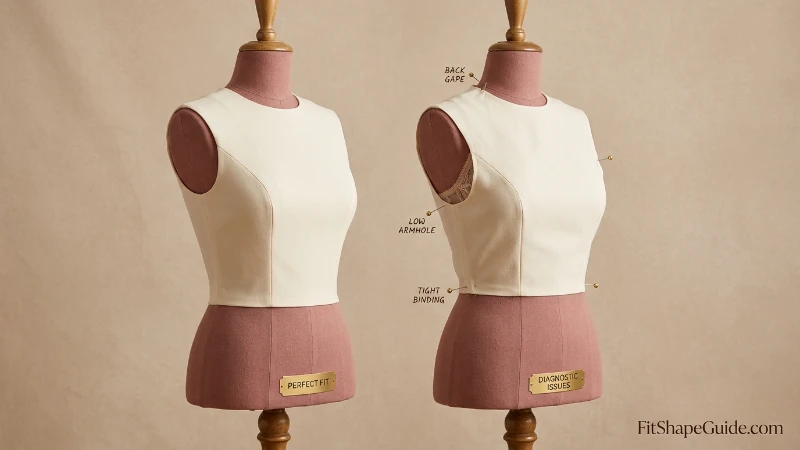
Fabric decides whether a sleeveless edge stays calm
The best sleeveless tops pair the pattern with a fabric capable of holding the neckline and armhole. Removing sleeves removes one source of weight, but it also leaves exposed edges that must resist stretching, rolling, and distortion. Fiber content is only a starting point; weight, weave or knit structure, finish, lining, and recovery explain more.
Fluid crepe and matte woven blends
Fluid woven fabric can skim through the waist while darts or princess seams create bust room. A matte surface disguises ordinary folds better than satin. Because the fabric has limited stretch, the finished chest and front length must already be sufficient. Very light crepe may need a facing or lining so the armhole does not ripple.
Poplin, oxford, and structured shirting
Crisp fabric keeps collars, plackets, and armhole edges precise. It also reveals insufficient projection immediately through horizontal pulls, lifted buttons, and a rising front hem. Look for side darts, princess seams, curved panels, or a fuller-bust cut. A stiffer armhole binding can rub, so inspect the underarm finish as closely as the outside.
Compact jersey, ponte, and stable ribs
Stable knits can combine stretch with bra concealment, but they must recover. Stretch the edge gently and release it: the neckline and armhole should return without waves. Across the bust, ribs should stay mostly vertical and the surface should remain opaque. Thin jersey may technically stretch enough while becoming shiny, transparent, or longer at center front.
Silky satin and draped occasion fabric
Satin magnifies pressure through reflected light. Bias-cut fabric may drape beautifully but can grow in length, shift at the neckline, and reveal seam tension. A matte-back satin, double layer, lining, or supported shoulder can improve control. Choose it for the surface and movement you want, accepting more careful bra selection and maintenance.
The broader fabric guide for a large bust explains recovery, opacity, cling, and weight in more depth. For sleeveless garments, add one edge-specific question: will the chosen finish remain flat after washing and after being held on a hanger?

The best sleeveless tops shape the bust before finishing the armhole
The best sleeveless tops for a large bust cannot correct a flat front by cutting a larger armhole. That shortcut creates apparent chest room by removing fabric from the side, which then exposes the bra and allows the bodice to drift. Projection must be built into the front through darts, curved seams, panels, controlled gathers, wrap overlap, or a knit with enough stretch and recovery.
Darts should point toward the fullest point, not land on it
A side dart usually begins at the side seam and ends before the bust apex. If it ends too high, low, or far away, folds radiate from the armhole or waist. The dart intake also matters: a token dart cannot shape significant projection. In online photos, look for a clean three-dimensional curve rather than a perfectly flat side seam image that may be clipped or pinned.
Princess seams distribute shape vertically
Princess seams can start at the shoulder or armhole and curve over the bust. An armhole princess seam is particularly relevant in a sleeveless shell because the seam influences the armhole edge. If its curve is misplaced, the opening may pull forward. Well-matched seams remain smooth without a sharp ridge and allow the waist or hem to be shaped separately.
Neckline choice changes the shoulder anchor
V-necks, scoops, square necks, mock necks, collars, and cowls can all be effective. A wide neckline leaves less shoulder width to cover a conventional bra; a high neckline adds fabric but still needs proper armhole shaping. Use the neckline guide for a large bust to choose the visual frame, then verify that the exact shoulder panel and bra path agree.
Center-front length is not optional ease
Bust projection consumes vertical fabric as well as width. A sleeveless top can have a generous flat chest measurement and still lift at the front because its pattern is too short. Compare front and back lengths, watch the side seam, and note whether the hem rises again after sitting. Sizing up helps only if it restores length without making the shoulders and armholes too loose.
How to find the best sleeveless tops online
The best sleeveless tops for a large bust can be shortlisted online when a listing provides neutral front, side, and back photographs plus useful finished-garment measurements. A cropped model image may hide the hem; a hand on the hip can close a gaping armhole; a jacket can conceal shoulder width. Search for unlayered views and zoom into edge finishes, darts, seams, plackets, and lining.
Compare with a sleeveless top, not a T-shirt
Choose a reference garment with a similar fabric and neckline. Lay it flat without stretching. Record chest width, narrowest shoulder-panel width, neckline depth and width, front and back armhole depth, center-front and back length, waist, and hem. If the retailer measures armhole “straight,” “along curve,” or as circumference, use the same method before comparing.
Translate “bra-friendly” into dimensions
The label has no universal measurement. Ask whether the shoulder panel exceeds your bra-strap width at its narrowest point; whether the front armhole reaches above the bra cup edge; whether the side seam covers the bra wing; and whether the back neckline works with the bra band and strap placement. A product can be bra-friendly for one bra and incompatible with another.
Read reviews for location-specific evidence
Useful reviews identify where an opening occurs: front armhole, side seam, back armhole, neckline, or button placket. They also mention the bra type, usual size, purchased size, stretch, opacity, and movement. “Runs large” is incomplete if the chest is comfortable but the armholes gape. Do not convert personal fit reports into universal sizing rules.
| Evidence | What to verify | Risk if missing |
|---|---|---|
| Unlayered front, side, and back views | Bra path, armhole height, dart direction, hem level | A pose or jacket may conceal opening and front lift |
| Finished chest and front length | Usable projection room and vertical balance | Width alone may hide a short front pattern |
| Shoulder-panel width | Coverage at the panel’s narrowest point | “Wide strap” may still reveal the intended bra |
| Front and back armhole depth | Coverage and reach clearance | A low opening can expose; a tight opening can cut |
| Shell, lining, stretch, and edge finish | Opacity, recovery, rolling, and seam thickness | The edge may wave or the bust may turn sheer |
| Care and return terms | Maintenance burden and try-on window | A delicate edge may not recover after unsuitable care |
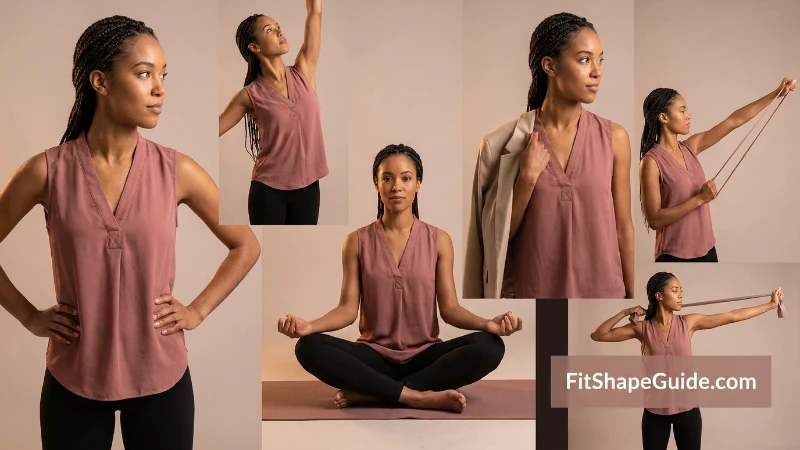
How the best sleeveless tops behave when the arms move
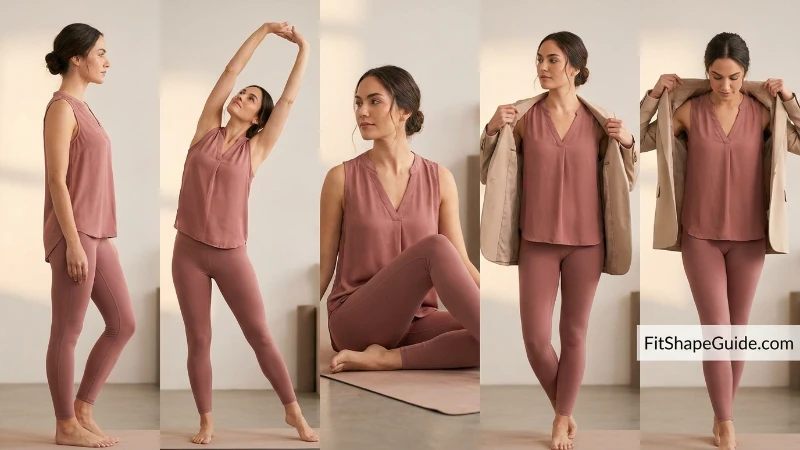
The best sleeveless tops remain secure through ordinary movement without using a painfully tight armhole as the solution. Test each position with the intended bra and bottoms; then repeat it under the jacket, cardigan, or shirt you plan to add.
Neutral side view
Let both arms hang. The shoulder should not creep toward the neck, the front armhole should cover the bra cup edge, and the side seam should remain close to vertical. Check whether the hem is level and whether the neckline projects forward because the front lacks room.
Forward reach and self-hug
Reach toward a keyboard, then cross the arms gently. The back needs enough width, but the shoulder panels should not rotate and expose the bra straps. The front armhole may open slightly as the arm moves; it should close again at rest. If the entire bodice travels upward, the armhole or bust fit is restricting movement.
Overhead and side reach
Lift one arm overhead and then out to the side. Watch the underarm edge, neckline, and front hem. A high armhole can provide strong coverage yet still allow movement when the curve is correctly shaped. A low armhole is not automatically more mobile; it may simply expose more while the shoulder continues to pull.
Seated and leaning
Sit upright, then lean forward naturally. Confirm neckline depth, side-bust coverage, hem position, and whether a cowl or wrap opens. This is where a top that photographs well can reveal insufficient overlap or a shoulder panel that drifts. A small fashion tape solution may suit an occasional neckline, but it should not be required to hold the whole garment together.
Add the planned layer
A good shell should sit beneath a blazer without the armhole facing folding into the underarm or the neckline climbing. A relaxed cardigan tolerates more drape; a close jacket needs a smoother top. The blouse guide for a large bust helps compare woven base layers, while the complete large-bust styling guide places neckline, layer, and proportion choices within the whole outfit.
Fit failures that rule out the best sleeveless tops
The best sleeveless tops for a large bust avoid using a larger opening as a substitute for shaping. Sleeveless fit problems often look similar from a front-facing mirror, but their causes differ. Trace where the edge moves and where wrinkles begin before assuming the entire size is wrong.
| Visible or felt symptom | Likely cause | Best next action |
|---|---|---|
| Front armhole reveals bra cup or side | Curve cut too deep or front lacks projection | Choose a higher shaped armhole or more darted/panelled bust room |
| Back armhole stands away | Shoulder too long, upper back too wide, or edge stretched | Test a temporary shoulder pinch; choose a narrower upper cut if needed |
| Underarm edge cuts | Armhole too high, binding too tight, or opening too small | Choose a differently shaped curve; do not rely only on sizing up |
| Shoulder panel slides inward | Wide neckline, weak stabilization, or panel narrower than bra path | Choose a more anchored neckline or wider panel |
| Horizontal pull from armhole to bust | Insufficient bust projection or misplaced dart | Select fuller-bust shaping rather than a larger armhole |
| Front hem rises after sitting | Short center front, tight bust, or narrow hem | Compare front/back length and choose more projection plus hem room |
| Neckline and armhole edges wave | Poor recovery, stretched binding, or insufficient facing | Choose stable edge construction; tailoring may not remove permanent growth |
When sizing up helps
A larger size helps when it restores bust ease, opacity, front length, and reach while the shoulder panels and armholes remain controlled. Recheck the back opening and neckline. If the larger top hides tension but creates deep armhole gape, it has exchanged one pattern mismatch for another.
When a different construction is better
Choose another cut when the correct chest size gives an oversized upper back, the bra cannot follow the shoulder path, the armhole still cuts across sizes, or a flat front lacks usable projection. A princess-seamed shell, darted blouse, stable knit, wrap with real overlap, or fuller-bust block is often more effective than repeated size changes.
The tank-top guide for a large bust covers narrower straps, casual knits, and ribbed basics. A sleeveless blouse or shell earns its own guide because its shoulder and armhole structure usually carries more of the fit.
Which alterations preserve a sleeveless top?
The best sleeveless tops make some edge alterations accessible because no sleeve must be removed, but the exposed opening also makes every change visible. A tailor should inspect facing depth, lining, seam allowance, dart position, shoulder seam, and the relation between neckline and armhole before changing the opening.
Reasonable adjustments
Shortening a shoulder slightly, securing a facing, replacing stretched binding, adding a discreet internal bra-strap keeper, closing a modest armhole gap, or refining side seams below adequate bust room can be practical. A shoulder adjustment changes neckline depth and armhole height together, so pin and move before cutting.
High-risk reconstruction
Adding substantial bust projection, raising a deeply cut front armhole without matching fabric, moving princess seams, rebuilding a full lining, or changing a cutaway shoulder into a conventional one requires pattern work. The result may cost more than a better original garment and may alter the intended design.
Style the best sleeveless tops around neckline, edge, and layer
Styling cannot repair an exposed armhole, but it can make a well-built sleeveless top more useful across settings. Begin with the neckline and fabric, then choose whether the armhole will remain visible or become a smooth base beneath another garment.
Polished workwear shell
A princess-seamed or darted shell works beneath a blazer when its armholes lie flat and the shoulder edge does not bunch. Straight trousers, fluid wide-leg pants, or an A-line skirt keep the outfit clear. Remove the jacket during the fit test; the shell should still meet your coverage standard on its own.
Relaxed warm-weather blouse
A V-neck or collared sleeveless blouse in crepe, linen blend, or lightweight poplin can work with jeans, tailored shorts, and skirts. Choose enough hem width for airflow without sacrificing armhole security. If you prefer more coverage in strong sun or air conditioning, an open shirt adds function without hiding the neckline entirely.
Wide-strap knit base
A compact-knit shell fits under cardigans, overshirts, and suits with little sleeve bulk. Its usefulness depends on recovery and opacity. The camisole guide for a large bust is the better next read when the design has lingerie-width straps, a shelf bra, lace trim, or is intended primarily as an underlayer.
Occasion drape
A cowl, satin shell, or softly wrapped front can pair with a clean skirt or trousers and compact jewelry. Confirm how the neckline behaves while leaning and dancing, not only standing. If the top needs an invisible support solution, test that solution with the exact fabric because adhesive edges and bra seams can show through a reflective surface.
Layering without losing the armhole line
A blazer, cardigan, cropped jacket, or open shirt should glide over the armhole finish. Thick facings can fold; deep cutaways can expose bra straps when the layer moves. Put the layer on, remove it, and check whether the shoulder panel and neckline return. The best combination should not need complete re-styling each time the jacket comes off.
Care for the best sleeveless tops without stretching their edges
For the best sleeveless tops, edge care protects fit. The FTC’s official textile-label guidance explains fiber-content and origin labeling, while its care-label guidance covers care-instruction requirements. Read the garment’s actual label; identical fiber percentages can behave differently because weave, knit, finish, lining, and construction differ.
If washing is permitted, close buttons and ties, use a mesh bag for delicate binding or drape, and avoid hanging a heavy wet knit by its shoulders. Reshape neckline and armholes while damp. Steam or press at the temperature specified for the garment, supporting the facing so it does not imprint through the front. Secure loose facings early before repeated rolling stretches the outer edge.
Evaluate value by more than a low purchase price. Count the bras it works with, the settings where it remains secure without a layer, the jackets it fits beneath, the care it requires, and whether an edge can be repaired. A beautiful shell that exposes the only bra you can comfortably wear may have less practical value than a simpler top with stronger dimensions.
Final buyer checklist
- The shoulder panel, front armhole, side seam, and back armhole cover the intended bra.
- The neckline stays anchored during forward, overhead, and seated movement.
- Darts, princess seams, panels, wrap overlap, or stable stretch create real bust projection.
- Finished chest, shoulder-panel width, armhole depth, and front length match a useful reference top.
- Fabric remains opaque and recovers at exposed edges.
- Facing, binding, lining, or stay tape lies flat without cutting or rolling.
- The front hem returns close to level after sitting and reaching.
- The top works alone and under the planned layer.
- Care, returns, stock, and affiliate disclosure are clear before purchase.
Frequently asked questions
What sleeveless tops look best on a large bust?
Darted V-neck blouses, princess-seamed shells, wide-strap compact knits, sleeveless wrap tops, collared shells, and controlled cowl tops can all work. Prioritize stable shoulders, a high-enough shaped armhole, side-bust coverage, real bust projection, opaque fabric, and enough center-front length. The best choice is the construction that works with your bra, intended layer, movement, and preferred visual effect.
How can I keep my bra from showing under a sleeveless top?
Check the narrowest shoulder-panel width, front armhole curve, underarm height, side-seam coverage, and back-armhole shape against the exact bra. A conventional bra usually works best with broad shoulders and a high shaped armhole. Cutaway or racerback styles may need a convertible bra. Small internal strap keepers can prevent movement, but they cannot fix an armhole cut too low.
Why do sleeveless armholes gape on a large bust?
Gape can come from insufficient bust projection, an armhole cut too deeply, a shoulder that is too long, an upper back that is too wide, stretched binding, or a misplaced princess seam. Pinch the excess at different seams and move before altering. If more bust shaping closes the front gap, choose a darted or fuller-bust pattern rather than simply sizing down.
Should sleeveless tops have high armholes for a fuller bust?
A higher front armhole often provides better side-bust and bra coverage, but height alone is not enough. The curve must clear the arm without cutting, and the binding or facing must not shorten the opening excessively. Test forward, overhead, and side reach. A well-shaped high armhole can be secure and mobile; a badly shaped one can rub or pull the whole top upward.
Should I size up in sleeveless tops for a large bust?
Size up when it restores bust ease, opacity, front length, and movement while the shoulders, neckline, and armholes remain controlled. If the larger size creates back-armhole gape, drops the shoulder, or opens the neckline, choose a different construction. A princess-seamed, darted, wrap, stable-knit, or fuller-bust cut may solve the fit conflict more cleanly.
What fabric is best for sleeveless tops for a large bust?
Fluid crepe works well with darts, crisp poplin suits shaped shirts, compact jersey and ponte offer stretch with recovery, and matte-back satin creates occasion drape. Evaluate opacity, weight, edge stability, stretch, recovery, lining, and care—not fiber name alone. The fabric must support the neckline and armholes while providing the movement and surface you want.
Can a sleeveless top be altered to cover more of the bra?
Minor shoulder shortening, strap keepers, facing repair, binding replacement, or a small armhole-gap adjustment may help. Raising a deeply cut armhole usually requires matching fabric or a deliberate inset, and adding major bust projection is pattern reconstruction. Pin the proposed change and move before cutting because shoulder, neckline depth, and armhole height affect one another.
What measurements should I check when buying a sleeveless top online?
Check finished chest, narrowest shoulder-panel width, neckline depth and width, front and back armhole depth, center-front and back length, waist, and hem width. Verify the retailer’s measurement method, shell and lining composition, stretch, facing or binding construction, care, and returns. Compare the numbers with a similarly constructed sleeveless top that already fits.