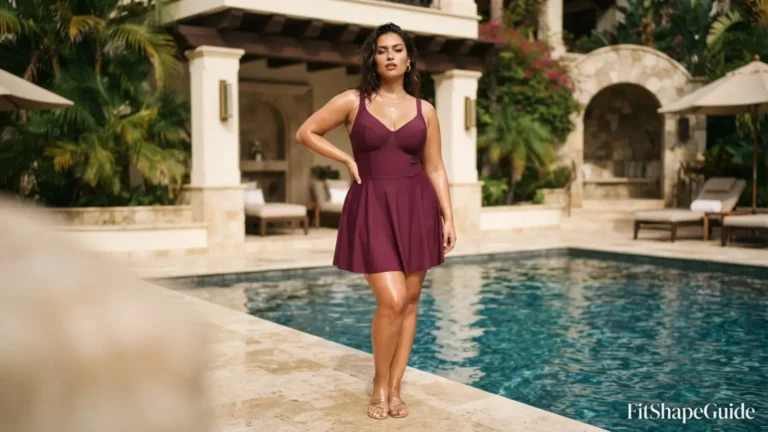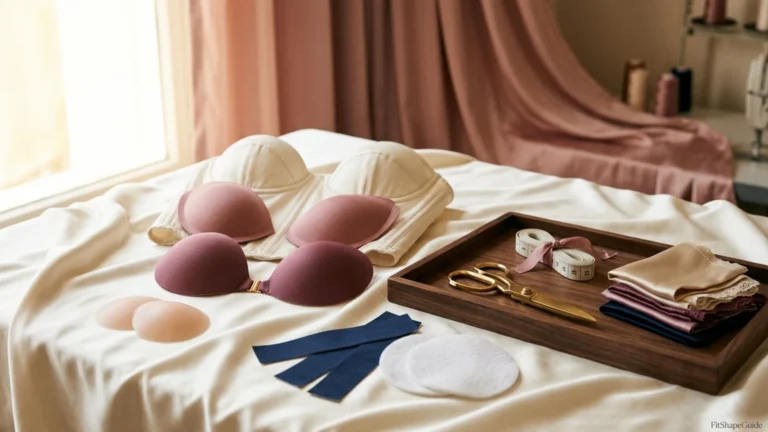
Best Slip Dresses for a Large Bust
A construction-first buying guide to straps that share the load, real bust shaping, stable necklines, bias-cut behavior, lining, bra compatibility and movement-ready fit.
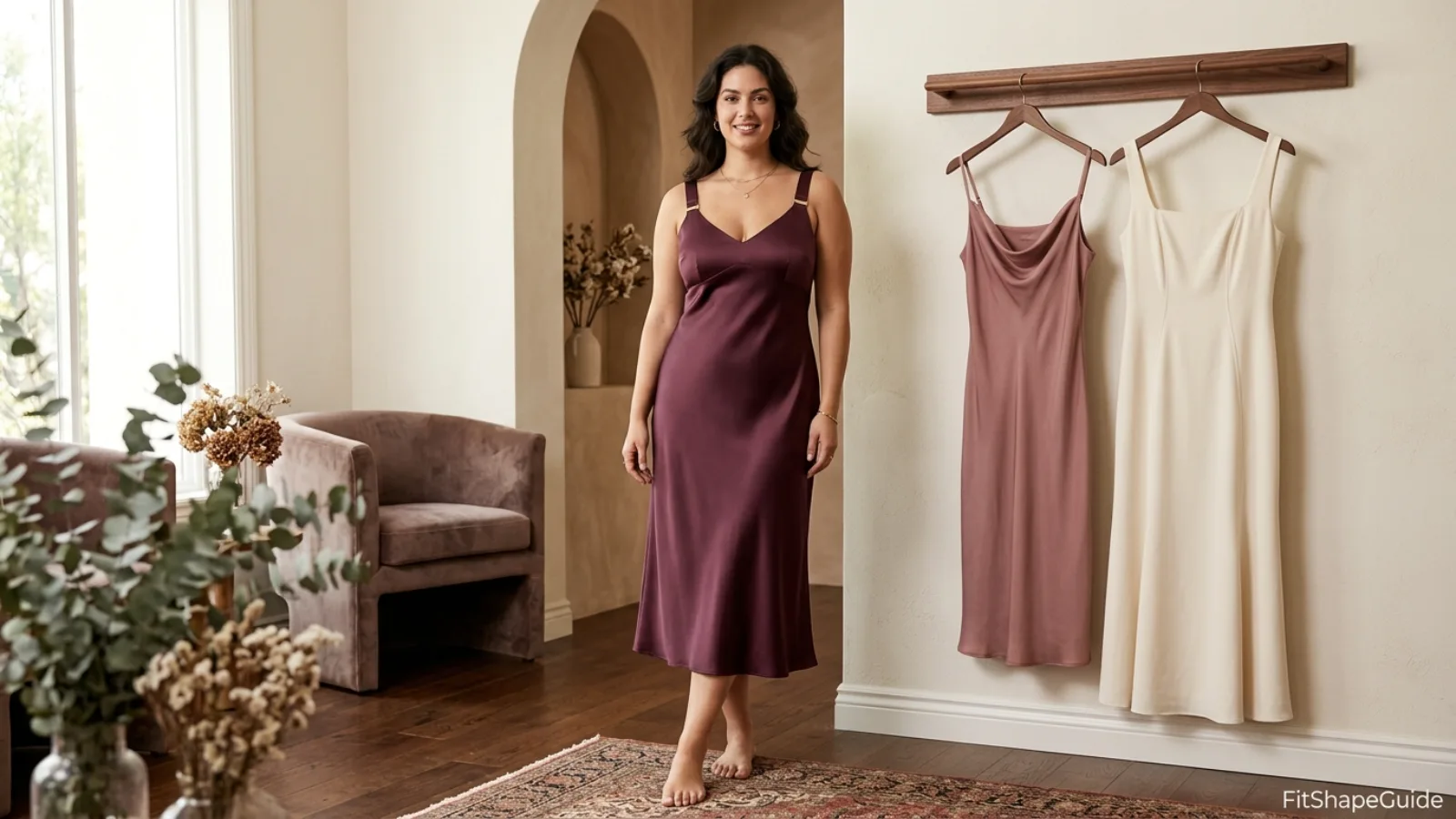
The 60-second slip dress fit check
- The straps lie flat and remain comfortable without being shortened to their limit.
- The neckline stays against the chest when standing and leaning.
- Darts, seams or shaped panels point toward and contain the fullest part of the bust.
- The armholes cover the intended bra and do not gape or cut inward.
- Both side seams hang vertically instead of sweeping toward the front.
- The center-front waist or hip line stays level, and the front hem does not climb.
- The lining moves with the shell rather than compressing underneath it.
- You can sit, breathe, reach and walk without pulling the neckline back into place.
Best slip dresses for a large bust by design
A slip dress is often defined by narrow straps, a relatively simple bodice and fluid fabric, but those visual traits say little about fit. One style may include shaped darts, adjustable straps, a stable neckline and a fully compatible lining. Another may be two flat satin panels suspended from fixed shoestring straps. The best slip dresses create three-dimensional bust space before relying on drape.
Wide-strap V-neck slip midi
Best for: shoppers who want classic slip-dress fluidity with easier bra concealment. Look for straps at least wide enough to cover the chosen bra, a medium V rather than a collapsing plunge, curved bust darts, high side coverage and a back that sits above the band. Trade-off: wide straps improve pressure distribution and styling flexibility, but they do not compensate for a shallow front. The V must still have enough edge length to travel around the bust without opening.
Adjustable cowl-neck slip
Best for: evening wear when soft drape and adjustable shoulder length are priorities. A controlled cowl with a separate shaped lining or modesty panel can accommodate projection while keeping the outer layer fluid. Trade-off: excess drape may expose the bra when leaning, while a shallow inner layer can flatten the bust even if the cowl looks generous. Confirm both the outer neckline and the hidden foundation.
Darted bias-cut midi
Best for: a body-skimming silhouette without a rigid waist seam. Choose a stable satin or crepe with real bust darts, balanced grain, generous seam allowance and enough hip ease for the fabric to fall rather than catch. Trade-off: bias gives controlled diagonal movement; it does not manufacture missing bust depth. A shallow panel can open over the bust, pull the side seams forward and make the front hem shorter.
Square-neck lined slip
Best for: a clean neckline, dependable coverage and conventional bra options. Wide-set straps, a high-enough square edge, curved front seams and matching lining dimensions provide useful evidence. Trade-off: a square neckline has limited forgiveness if it is too short across the upper bust. A loose edge may stand away, while a tight one can create a horizontal pressure line. Strap placement must match the bra as well as the shoulders.
Seamed satin maxi slip
Best for: weddings, formal dinners and black-tie-adjacent events when you want fluid length with more engineering. Princess-style panels, a stable back, full lining and a lightly defined under-bust or waist can carry the skirt. Trade-off: a long satin skirt adds downward drag, especially when cut full or embellished. If the waist is not anchored, that weight transfers to the straps and neckline.
Supportive stretch-knit slip
Best for: travel, daytime layering and changing measurements. Dense matte jersey, double knit or resilient rib can provide surface length and easier movement when recovery is strong. Trade-off: stretch may cling to every bra edge, and thin knit can lengthen through the front or turn transparent under light. A double layer helps only when both layers stretch and recover together.
The best slip dresses for a large bust are therefore not limited to one neckline or fabric. The best category depends on bra preference, bust depth, shoulder comfort, event formality, hip-to-bust proportion and skirt weight. Begin with construction that solves your hardest fit requirement, then choose color and finish.
Straps, neckline, darts and side coverage decide support
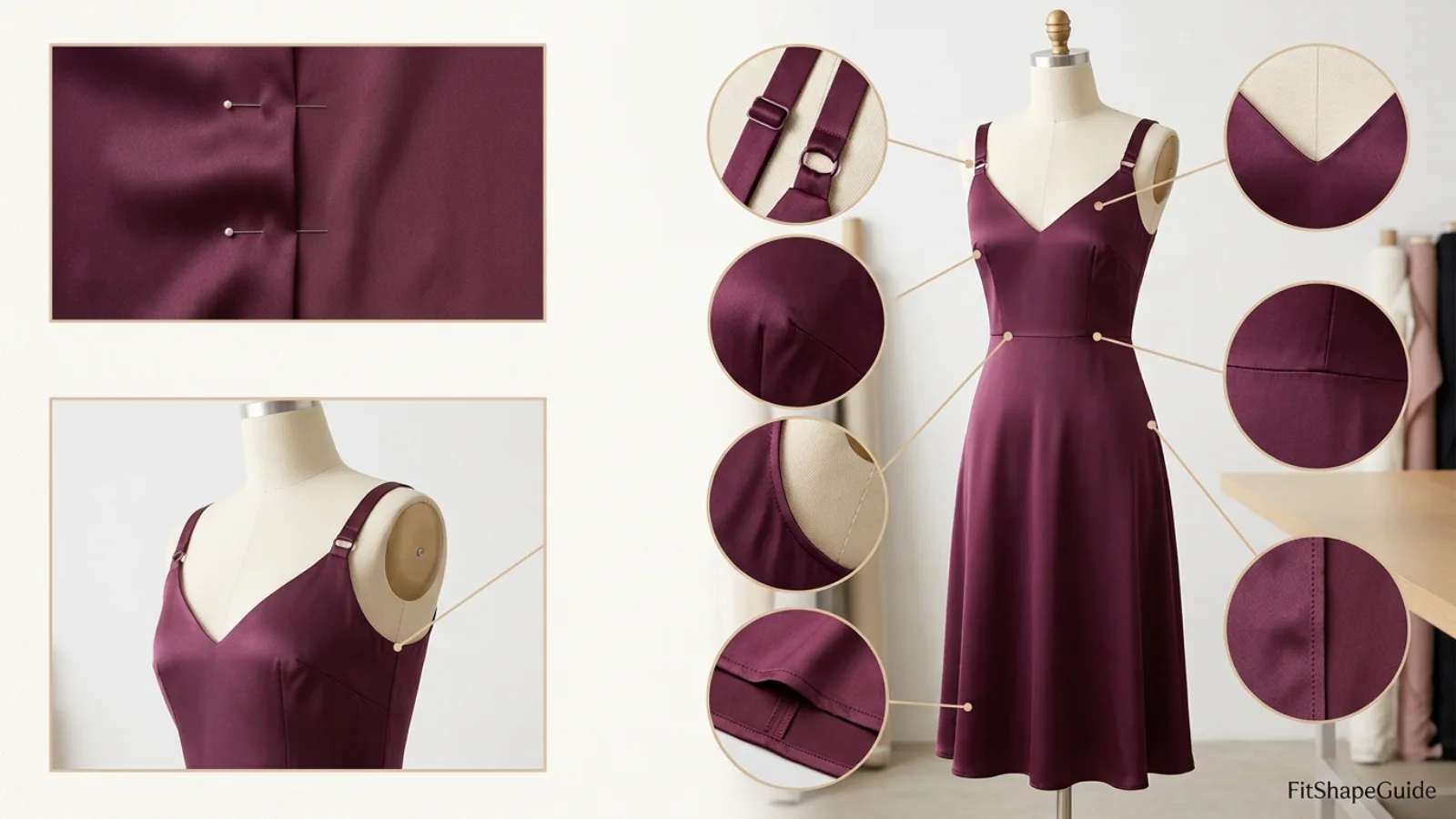
The best slip dresses distribute work across the complete upper body. Straps set vertical position. The neckline controls the upper edge. Darts, curved seams or shaped stretch create projection. Armholes and side panels contain the bust, while the back and any waist shaping prevent the dress from sliding forward. If one part is missing, another part usually shows the strain.
Straps should position the dress, not hoist it
Adjustable straps are useful because torso length and shoulder slope vary, but adjustability has limits. When straps must be shortened until the hardware sits on top of the shoulder, the bodice may be too long or the front too shallow. The result can be neck and shoulder pressure, a neckline pulled too high, armholes driven upward and a back that drops. Wider straps spread pressure and hide more bra options; narrow straps need an especially stable bodice below them.
Neckline length must follow the bust
A V neck needs enough finished edge length on both sides. A cowl needs enough drape plus a safe inner layer. A square neck needs sufficient horizontal width and stable corners. If a neckline opens only when the straps are loosened, or closes only when they are painfully short, the pattern geometry is wrong. The neckline should sit in position before fashion tape is considered.
Darts and seams create usable projection
Look for darts that end below or beside the fullest point rather than on it. Curved princess seams should pass over the bust apex and continue smoothly into the torso. In a simple two-panel dress, check whether the fabric itself has enough width and vertical length to skim rather than flatten. Decorative seam lines are not proof of shaping; front and side photos should show actual curvature.
Side height controls containment and bra concealment
Low armholes are common in lingerie-inspired slips, but they can reveal a bra cup, wing or breast tissue during movement. A higher side panel often provides more security than making the entire dress tighter. Check the armhole at rest, with arms forward and while reaching. Gape can come from excess edge length, but it can also occur because the bust pushes a shallow front outward. Solve projection before taking in the armhole.
The back and waist manage skirt load
A close but comfortable back keeps the dress from pitching forward. A lightly shaped waist, under-bust seam or controlled bias can help the skirt hang from the torso instead of the straps. Very low backs and heavy maxi skirts are a demanding combination because they remove upper-body stability while adding downward weight. For similar upper-body principles, see the camisoles for a large bust guide; remember that a dress adds hip fit and skirt drag.
| Construction point | Why it matters | Useful evidence | Main warning |
|---|---|---|---|
| Adjustable or wider straps | Set vertical position and share pressure | Flat straps, secure hardware, useful adjustment range | Straps shortened completely just to close the neckline |
| Stable neckline | Controls coverage without constant correction | Medium depth, adequate edge length, shaped inner layer | Gape, rolling or tension across the upper bust |
| Darts or curved seams | Create three-dimensional bust space | Apex-aligned shaping visible in front and side views | Darts point too high or seams flatten over the fullest point |
| High enough side panels | Contain tissue and conceal a bra | Armhole depth, side height and front/side photos | Bra cup or wing visible with arms forward |
| Compatible shell and lining | Allow the garment to move as one layer | Same bust ease, recovery and seam placement | Outer shell looks loose while lining compresses |
| Stable back or waist | Stops forward pitch and carries skirt weight | Shaped back, waist seam, darts or resilient stretch | Back drops as front neckline rises |
When these components cooperate, the dress can remain visually light without depending on compression. That complete load path is the clearest difference between the best slip dresses and a flat satin tube that happens to fit in one standing photo.
How bias cut, satin, stretch and lining behave over a fuller bust
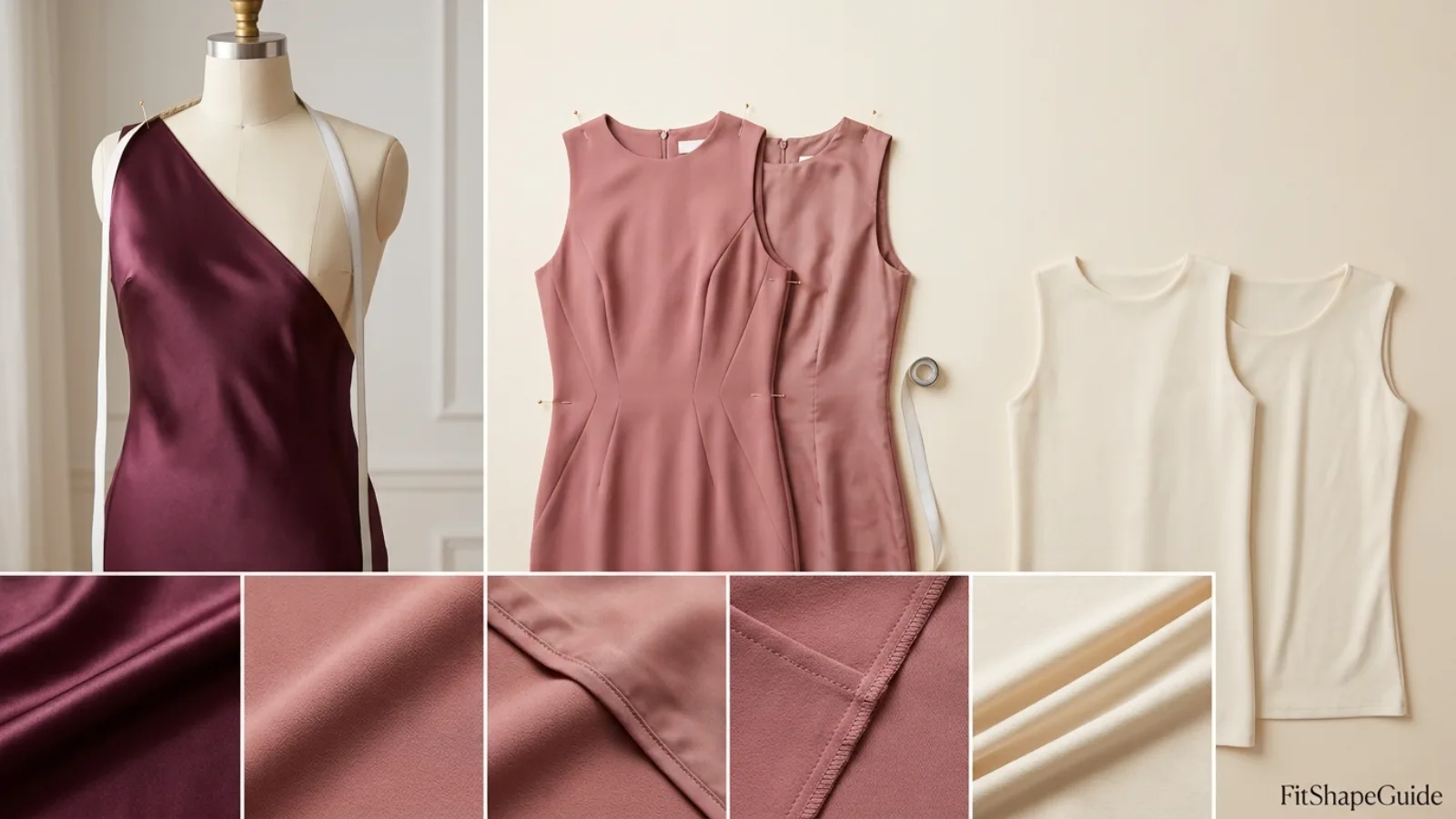
Fabric choice changes how a slip dress reveals fit. Glossy satin reflects every ridge and tension line. Crepe absorbs light and may look calmer. Bias cut allows diagonal give but can distort when the garment is under uneven load. Stretch knit accommodates movement but may cling. The best slip dresses use fabric behavior deliberately rather than presenting “fluid” as a substitute for measurements.
Bias cut follows curves but does not add pattern depth
Woven fabric cut on the bias can elongate and narrow as it hangs. Over a fuller bust, the front may use that diagonal movement to open around projection. If the pattern already includes enough cloth, the result can skim beautifully. If it is too shallow, the bust consumes front length, the side seams rotate forward and the fabric below may narrow or rise. Bias is movement within the panel, not extra fabric.
Let a new bias-cut dress hang before judging the final hem or arranging alterations, because the grain may settle unevenly. During fitting, compare both side seams, the front and back hem, and the direction of reflected light. Symmetrical diagonal ripples may be part of drape; strong lines radiating from the bust, armhole or hip usually signal tension.
Satin shows pressure and underlayers
Satin is a weave, not one fiber, and listings may use polyester, silk, acetate or blends. Its smooth surface can reveal cup edges, seams, labels and static cling. Heavier satin often hangs more steadily, but weight can increase strap load. Very light satin moves easily yet may collapse into the space between breasts or cling beneath the bust. A matte crepe-back satin or sandwashed finish may be more forgiving without solving structural fit.
Stretch should recover after load
Elastane content alone does not predict comfort. Ask which direction stretches, how the lining behaves and whether the fabric returns after sitting. A dress that stretches around the bust but lengthens permanently may drop at the neckline and armholes. Dense knit can be practical, while thin “stretch satin” may simply show strain more clearly. Recovery matters as much as extension.
Lining is a second dress
A lined slip succeeds only when the inner layer has compatible dimensions, grain and stretch. A generous outer cowl can hide a tight lining. A stretch shell may sit over a rigid lining that limits breathing. Inspect whether the lining has its own darts, whether it is attached cleanly at the neckline and armholes, and whether it ends at a point that creates a visible horizontal ridge. Both layers should settle after movement without twisting apart.
Static, seams and finish affect real wear
Static can make a fluid skirt cling to hosiery or shapewear, changing how it hangs. Test the intended underlayers rather than evaluating the dress alone. French seams can create a polished interior in delicate fabric, but insufficient seam allowance limits alteration. Overlocked edges may allow easier access but can show through thin satin. Beading, lace edging and cut-out panels also change where a tailor can add or release room.
| Fabric or build | Potential advantage | Fuller-bust risk | What to test |
|---|---|---|---|
| Bias-cut woven satin | Fluid diagonal movement and elegant skim | Side seams rotate; front hem rises | Hang time, grain balance, side seams and hem |
| Midweight satin with darts | Clear shaping and polished finish | Shine emphasizes tension or bra edges | Dart position, lining ease and light from several angles |
| Matte crepe | Stable drape with less reflection | Rigid versions may need more precise measurements | Seated bust and hip ease; wrinkle recovery |
| Dense stretch knit | Movement and adaptable sizing | Cling, growth and visible underlayers | Return after sitting; opacity and neckline recovery |
| Double layer or full lining | Coverage and smoother finish | Inner layer can be smaller or less stretchy | Separate shell/lining tension and twisting |
| Lace-trimmed or embellished satin | Occasion detail and edge definition | Less alteration access; added weight | Trim stability, seam allowance and cleaning instructions |
The best slip dresses for a large bust combine the visual finish you want with predictable recovery, adequate front length and an inner layer that does not secretly reduce room. Fabric can refine a correct pattern; it cannot correct a missing one.
How to buy the best slip dresses online
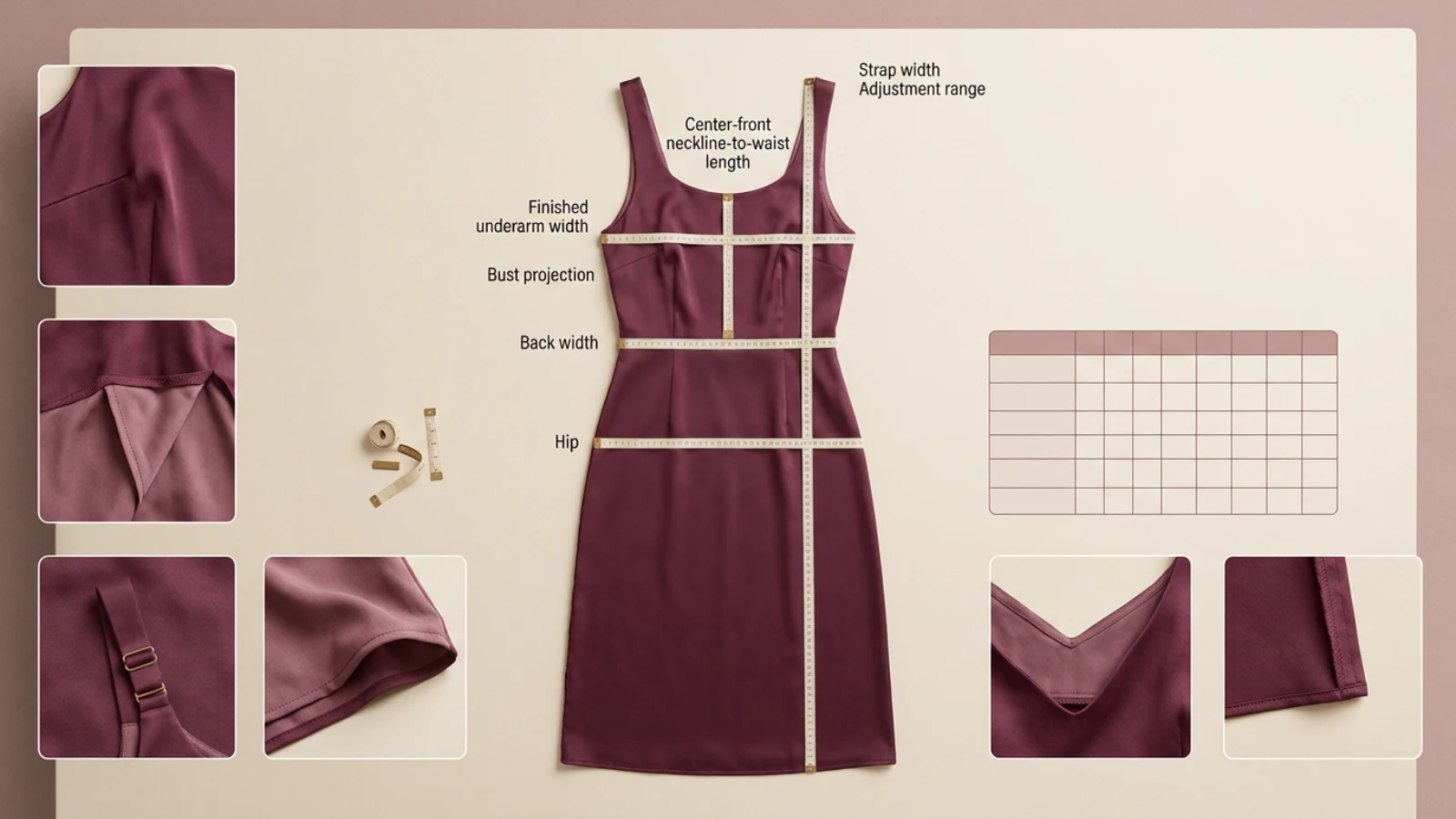
Online listings often provide a body-size chart while the dress shown is fitted differently from the model’s measurements. For a slip, finished garment dimensions are especially valuable because small changes in bust width, armhole depth and front length alter the neckline. Treat a generic “true to size” statement as weak evidence. The best slip dresses can be assessed through multiple measurements, clear construction images and a workable return window.
Record body and successful-garment measurements
Measure the full bust in the intended bra, snug under-bust, natural waist, fullest hip and shoulder-to-bust-apex length. Then measure a dress or camisole that fits well: flat underarm width, front neckline-to-waist length, strap length, armhole depth, back width and total length. A successful garment gives practical ease information that a body chart cannot provide alone.
Confirm what the listing chart represents
Ask whether numbers are body measurements or finished garment measurements and whether tolerance is included. For bias-cut items, confirm whether the dress was measured relaxed, hanging or lightly extended. Double a flat bust width only when the garment lies flat and the seller intends that conversion. Do not compare a stretched garment number with a relaxed body circumference as if they are equivalent.
Read the front, side and back photos
Front photos show neckline position and dart direction. Side views reveal armhole coverage, side-seam angle and front projection. Back views show bra compatibility and whether the dress pitches forward. Zoom in on strap hardware, lining edges and seam placement. If every image is front-facing, posed with arms down or heavily clipped, the listing provides incomplete fit evidence.
Use reviews as symptom reports
Search for observations such as straps too short, cowl too open, lining tight, armholes low, side seams pulling forward, front hem shorter, static cling or fabric growing during wear. A reviewer’s verdict on “flattering” is subjective. Their body measurements, chosen size, bra setup, garment behavior and photos can be useful when the product version matches the current listing.
Compare adjacent sizes when returns allow
If the bust suggests one size and waist or hip another, two sizes may reveal whether the problem is scale or proportion. Keep tags attached and use clean indoor try-ons. A larger size is useful when it restores bust depth and front length while straps, neckline, back and waist remain adjustable. If the larger dress still rotates or gapes, seek a different pattern rather than relying on alteration.
Safe Amazon recommendation workflow
Before adding a product module, verify the live title, seller, size chart, strap width and adjustability, neckline, dart or seam shaping, armhole height, shell and lining composition, care directions, current return eligibility and useful customer-photo evidence. Use the affiliate tag bracalculator-20 only on a confirmed Amazon URL. Never publish a permanent price, rating, review count, coupon, stock, seller-quality or delivery claim.
This evidence-first method helps identify fuller-bust slip dresses worth shortlisting without pretending that a product name, star rating or model photo can guarantee fit.
Movement and security tests every slip dress should pass
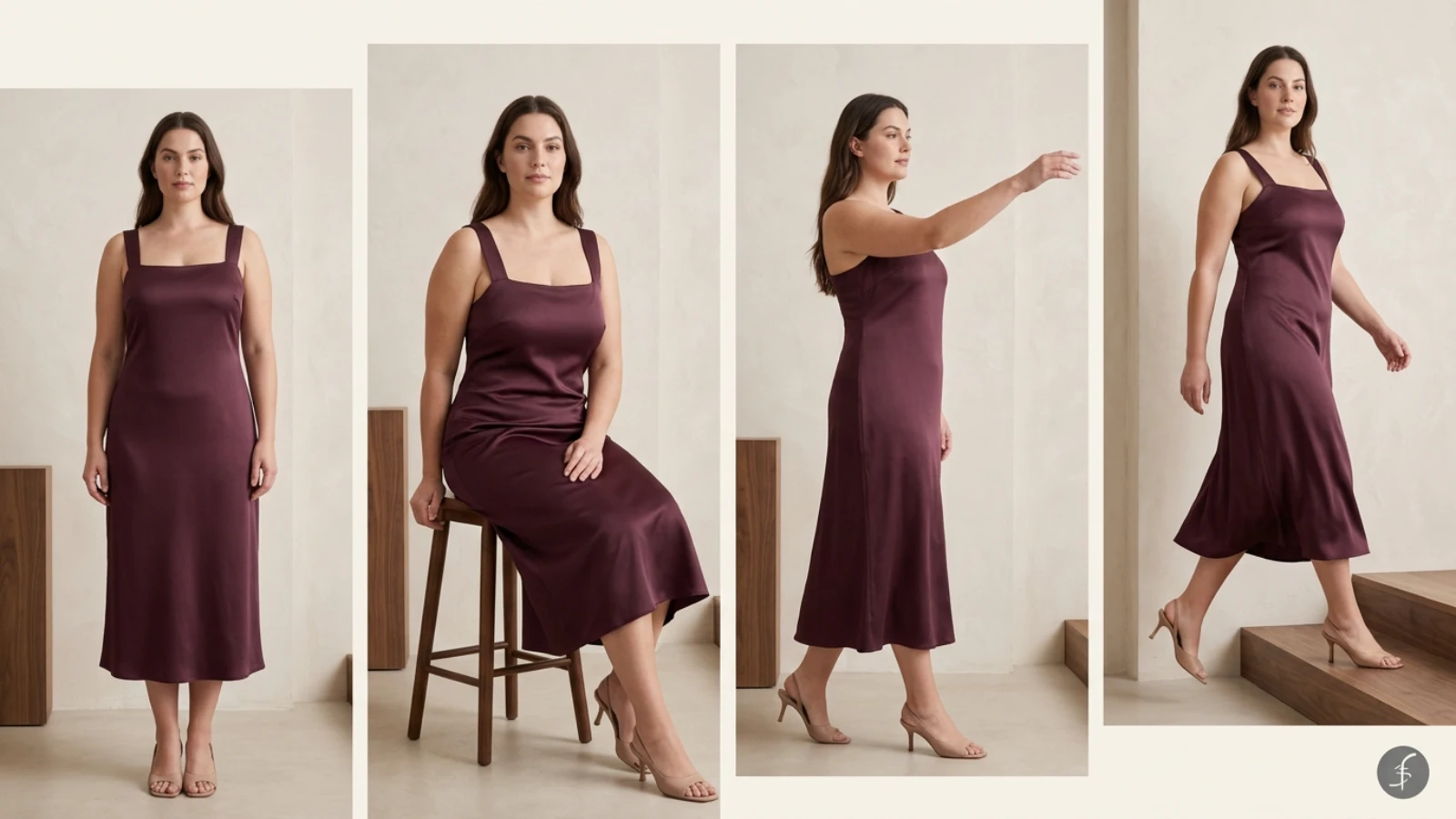
A mirror check with arms down is only a starting point. Slippery fabric, narrow straps and a low-friction lining can shift over time. Test the dress with the exact bra, shapewear, hosiery and outer layer intended for the event. The best slip dresses recover after normal movement without repeated neckline, strap or skirt adjustments.
Neutral stand and slow walk
Stand naturally instead of lifting the chest or holding the shoulders back. Note neckline height, strap position, armhole coverage, side seams and hem. Walk slowly, turn and stop. The fabric should settle without the front dropping, the back rising or one side seam moving around the body.
Seated breathing test
Sit for at least ten minutes and take several full breaths. Check whether the lining tightens, the neckline opens, the armholes cut in or the skirt pulls upward from the hips. A bias dress may redistribute its length while seated; it should return close to baseline after standing. Permanent distortion is a recovery or sizing warning.
Lean and phone test
Lean forward as if greeting someone, using a phone or reaching across a table. Look at the neckline from above and the armholes from the side. A controlled cowl may move slightly, but it should not expose the bra or require a hand to hold it. Fashion tape can manage minor edge movement after fit is correct; it should not be the primary closure.
Equal and unequal arm test
Lift both arms to shoulder height, then one at a time. Reach forward and cross the arms gently. Straps should remain on the shoulder, hardware should not dig in and the entire dress should not climb. If the neckline is secure only with very short straps, restore front depth or choose a more stable style.
Stairs, stride and dance test
Take a long stride, climb a few steps and try a gentle turn. Confirm hip ease, slit coverage and hem safety. In a maxi, skirt weight should remain below the waist rather than pulling the neckline downward. If wearing heels, test the exact height because it changes stride and the chance of stepping on the hem.
Layer and bag test
Add the jacket, wrap or cardigan you plan to wear and carry the intended bag. A shoulder strap can displace a narrow dress strap or crush a cowl. Outer layers may generate static or reveal bunching at the back. The best slip dresses remain stable as part of the complete outfit, not just alone in a fitting room.
| Test | Pass signal | Warning signal | Likely cause |
|---|---|---|---|
| Natural stand | Neckline level; side seams vertical | Front hem high or seams pulled forward | Insufficient bust depth or front length |
| Ten-minute sit | Breathing room; layers move together | Lining compresses or dress grows | Inner layer too small or weak recovery |
| Forward lean | Neckline and armholes preserve coverage | Cowl opens or bra becomes visible | Excess edge length, low sides or shallow inner layer |
| Arm raise | Straps remain comfortable; dress settles | Whole bodice climbs and stays raised | Armhole restriction or straps over-shortened |
| Walk and stairs | Skirt clears feet and hangs from torso | Neckline pulled down by the skirt | Heavy hem without waist stability |
| Outer layer and bag | Straps and cowl remain in position | Bag shifts strap; jacket creates bunching | Accessory conflict or unstable upper edge |
The best slip dresses for a large bust pass these tests without forced posture. Comfort is not merely the absence of tightness; it is the ability to move, recover and remain covered without constant monitoring.
Common slip-dress fit problems and what they mean
Slip dresses show fit problems through changes in grain, shine and edge position. The best slip dresses make the load path readable instead of hiding strain beneath gathers. Diagnose the first place where tension begins rather than adjusting the most visible symptom. Shortening straps, sizing down or adding tape may make one edge look closer while increasing pressure elsewhere.
The neckline gapes
First loosen and reset the straps, then check bust projection. A neckline may gape because it is too long, but it may also be pushed outward by a shallow bust panel or tight lining. If the side seams swing forward and the front hem rises, taking in the neckline alone can worsen compression. A tailor can refine excess edge length only after adequate depth is confirmed.
The straps dig or fall
Digging can mean the straps are carrying skirt weight, compensating for a long bodice or being shortened to close the neckline. Falling straps can reflect excess length, hardware slipping, wide placement or a back that is too loose. Wider adjustable straps and a stable torso are more dependable than repeated shortening. Strap position should also align with the intended bra.
The armholes gape or expose the bra
Check side height, strap placement and front depth. A low armhole is a design feature that alteration may not fully change. Gape near the front can arise when the bust pushes a shallow panel outward; gape at the back may indicate excess width or a long strap. Pinning the edge is a useful diagnostic but not always the final alteration.
Side seams pull forward
This is a strong sign that the front is borrowing fabric from the back. The dress may need more bust width, dart volume or center-front length. On bias, the grain may also be opening unevenly. Sizing up can help when the waist, back and hips remain manageable; otherwise look for a style with shaped front panels.
The front hem is shorter
A fuller bust requires vertical cloth. If the bodice has no separate waist, the effect can travel down the whole dress and lift the front hem. Compare front and back lengths from shoulder to hem, then inspect hip balance. A small high-low difference may be intentional, but an unlisted rise combined with drag lines points to insufficient front length.
The lining twists or rides up
The inner layer may be narrower, shorter, less stretchy or cut on a different grain. Smooth the shell and lining separately. If the outer dress settles but the lining remains tight, sizing the shell alone will not solve the problem. An accessible lining can sometimes be altered; a fully enclosed or lace-finished bodice may be more complicated.
The dress clings under the bust or at the hips
Cling can come from negative ease, static, moisture, surface friction or a bias panel narrowing as it lengthens. Test with the intended underlayers and move in normal humidity when possible. A slip or anti-static solution may address surface friction, but it cannot replace missing circumference or correct a twisted grain.
When sizing up works
Choose the larger size when it restores bust depth, center-front length, armhole comfort and lining ease while straps, neckline, back and waist can still be adjusted safely. Do not reject the larger size merely because the waist needs a modest alteration. Fit the hardest area first when that alteration is straightforward.
When sizing down is the wrong fix
A smaller dress may hold the neckline closer through compression, yet flatten the bust, pull side seams forward, raise the hem and make straps carry more load. Security created by overall tightness is not stable fit. The best slip dresses solve coverage through pattern shape and edge control, not pressure.
What a tailor can realistically improve
A tailor may shorten adjustable or accessible straps, refine a loose back or neckline, add bra-strap keepers, release usable side-seam allowance, improve a slit or hem the skirt after bias settling. Adding major bust depth, raising very low armholes, rebuilding a cowl, matching a restrictive lining or altering delicate French seams may require significant reconstruction. Obtain an estimate before the return window closes.
Bras, layers, occasions and styling for slip dresses
The best slip dresses for a large bust work with a support plan rather than forcing one universal bra. Decide whether you want a regular bra concealed by wider straps, a low-front or strapless option, verified internal support, or an intentional layer underneath. Test bra edges under the actual fabric and event lighting before removing tags.
Regular bras and wider straps
A wide-strap V or square-neck slip is usually the simplest choice for band-based support. Compare strap placement at front and back, cup height, center gore visibility and wing coverage. Small bra-strap keepers can reduce movement when the dress already aligns. They do not fix a dress strap that is set too far outward or an armhole cut below the bra.
Strapless, plunge and adhesive options
A well-fitted strapless bra may suit narrow straps or an open neckline if the back and sides conceal it. A plunge bra requires enough dress depth at the center front. Adhesive cups can provide shaping or nipple coverage for some wearers but do not reproduce the support of a firm band. Check skin sensitivity, removal instructions and event duration when considering adhesive products.
Built-in cups and internal structure
“Built-in bra” can mean anything from removable foam pads to real cups, an under-bust elastic and boning. Inspect cup width, depth, position and size range. A small pad sewn into a broad bodice may sit on top of the bust or create a visible outline. Internal support is useful only when it fits the body and does not reduce the shell’s room.
Layering can expand wear without hiding fit
A fine fitted tee, mesh top or lightweight knit underneath can add strap coverage and make a slip practical for daytime. A blazer, cardigan or wrap on top can shift formality. Keep layers smooth enough that satin can move over them, and check static. For fabric coordination and fluid layering, the silk blouses guide offers related seam and drape checks.
Match the build to the occasion
For a cocktail event, a darted satin midi or square-neck lined slip offers a polished starting point. Weddings may require secure coverage through ceremony, dining and dancing. Formal events add longer wear and possibly a heavier skirt. The best slip dresses match their construction to the complete schedule, then add jewelry, shoes and outerwear that do not catch the straps or cowl.
Keep styling intentional, not corrective
A pendant can echo a V neckline, while earrings or a cuff keep a cowl uncluttered. A belt can define the waist when the dress already has enough bust and hip room; it should not be used to pull a too-large flat dress into shape. Shapewear may smooth chosen areas but cannot add front length or prevent side seams from rotating.
The best slip dresses remain secure when the final outfit is assembled. Recheck neckline, bra concealment, static, bag placement and hem clearance after every layer and accessory is added.
Care, storage and final buying checklist
Follow the garment label because satin fiber content, trim, lining and construction determine safe care. Heat can damage elastane, acetate, bonded edges and plastic strap hardware. Twisting can distort bias grain. For a heavy maxi, support the skirt with both internal hanger loops or fold it over a padded bar so narrow straps are not carrying the garment in storage.
Let bias-cut garments settle
Before a first hem alteration, hang the clean dry dress as recommended and allow the grain to settle. A professional may mark the hem while the dress is worn with the intended shoes. Recheck after cleaning because uneven relaxation can recur. Do not cut a new hem based only on how the garment looked immediately after unpacking.
Inspect high-stress points
Before each event, check strap sliders and stitching, neckline facing, underarm seams, dart ends, zipper base, slit top and lining attachments. The best slip dresses keep these high-stress points accessible for inspection. Snags and pulled threads can spread quickly in smooth satin. Store jewelry and rough accessories away from the garment, and use a breathable cover rather than trapping moisture.
- Does the listing show front, side, back, straps, neckline and lining?
- Are body or finished bust measurements clearly identified?
- Do shell and lining offer compatible ease and stretch?
- Can the intended bra remain concealed through leaning and reaching?
- Do side seams hang vertically and does the front hem stay level?
- Are return, care and alteration timelines practical for the event?
Use these questions to distinguish the best slip dresses from listings that show attractive satin and styled model photos but provide little evidence about projection, coverage, recovery or long-wear stability.
Final verdict
The most reliable starting point is a wide-strap V-neck or square-neck slip with adjustable straps, curved bust shaping, high enough side panels, matching lining room and a stable back or waist. A controlled cowl can offer softer drape; a darted bias midi can skim elegantly; and a seamed satin maxi can suit formal wear when the torso carries the skirt. The best slip dresses for a large bust create space before drape. If the style stays covered only through over-tight straps, compression or tape, choose a better pattern.
Frequently asked questions
Can women with a large bust wear slip dresses?
Yes. Choose a slip dress with enough center-front length, darts or curved seams, adjustable or wider straps, a stable neckline, high enough side panels and a shell and lining that offer compatible bust room. Fluid fabric should skim the bust rather than supply all the support.
What slip dress style is best for a large bust?
A wide-strap V-neck or square-neck lined slip is a dependable starting point because it can conceal a regular bra and provide clear shaping. A controlled cowl, darted bias midi, seamed satin maxi or dense stretch-knit slip may also work when projection, recovery and side coverage are correct.
Are bias-cut slip dresses good for a fuller bust?
They can be, but bias movement does not create missing pattern depth. Look for adequate finished bust room, real darts or shaping, balanced side seams and enough center-front length. If the side seams pull forward or the front hem rises, the panel is probably borrowing fabric to cover projection.
What bra should I wear with a slip dress?
A regular bra can work under wider aligned straps and high side panels. Depending on the neckline and back, a strapless, plunge or verified built-in support option may be suitable. Test cup edges, straps, wings and band under the actual fabric while sitting, leaning and reaching.
How do I stop a slip-dress neckline from gaping?
Reset the straps and confirm enough bust depth, front length and lining room before altering the edge. A tailor may refine genuine excess neckline length, and fashion tape may control minor movement when the dress already fits, but neither should compensate for a shallow bodice.
Should I size up in a slip dress for a large bust?
Size up when it restores bust projection, center-front length, armhole comfort and lining ease while the neckline, straps, back and waist remain manageable. If the larger size still twists, exposes the bra or hangs poorly, choose a style with more deliberate front shaping.
Can a slip dress be altered for a fuller bust?
A tailor may shorten straps, refine a loose neckline or back, add bra keepers, release available side-seam allowance or hem the skirt after bias settling. Adding major bust depth, raising very low armholes, rebuilding a cowl or enlarging a restrictive enclosed lining is more complex.
How can I make a satin slip dress look smoother?
Begin with adequate garment ease and a compatible lining. Test smooth underlayers in the event lighting, manage static according to fabric-care instructions and steam only when permitted. Shapewear may change surface appearance, but it cannot correct tension, short front length or rotated side seams.
Related resources
Compare event-ready bodices, fabrics and movement. Best Wedding Guest Dresses for a Large Bust
Match construction to dress code and long event wear. Best Formal Gowns for a Large Bust
Evaluate foundations, skirt weight and alterations. Clothing Guides
Explore fit-first wardrobe and buying guidance.
How recommendations should be verified
FitShapeGuide evaluates visible construction, measurement evidence, material behavior, support compatibility, movement and alteration practicality. Style categories are starting points, not guarantees for every body or brand. Product details and return conditions can change, so commercial modules must be checked against the current live listing before publication.
No Amazon product, ASIN, price, rating, review count, seller, stock, coupon or personal wear claim has been fabricated. Product slots remain deferred until the listing can be verified. When details change or cannot be confirmed, update the module, state the limitation or remove the recommendation. See the official FTC guidance on endorsements and reviews for disclosure principles.