Best Empire Waist Dresses for a Large Bust
A construction-first guide to finding an empire seam that sits below—not across—the bust, with enough bodice length, projection, neckline security and skirt balance for comfortable movement.
The 60-second empire-dress fit check
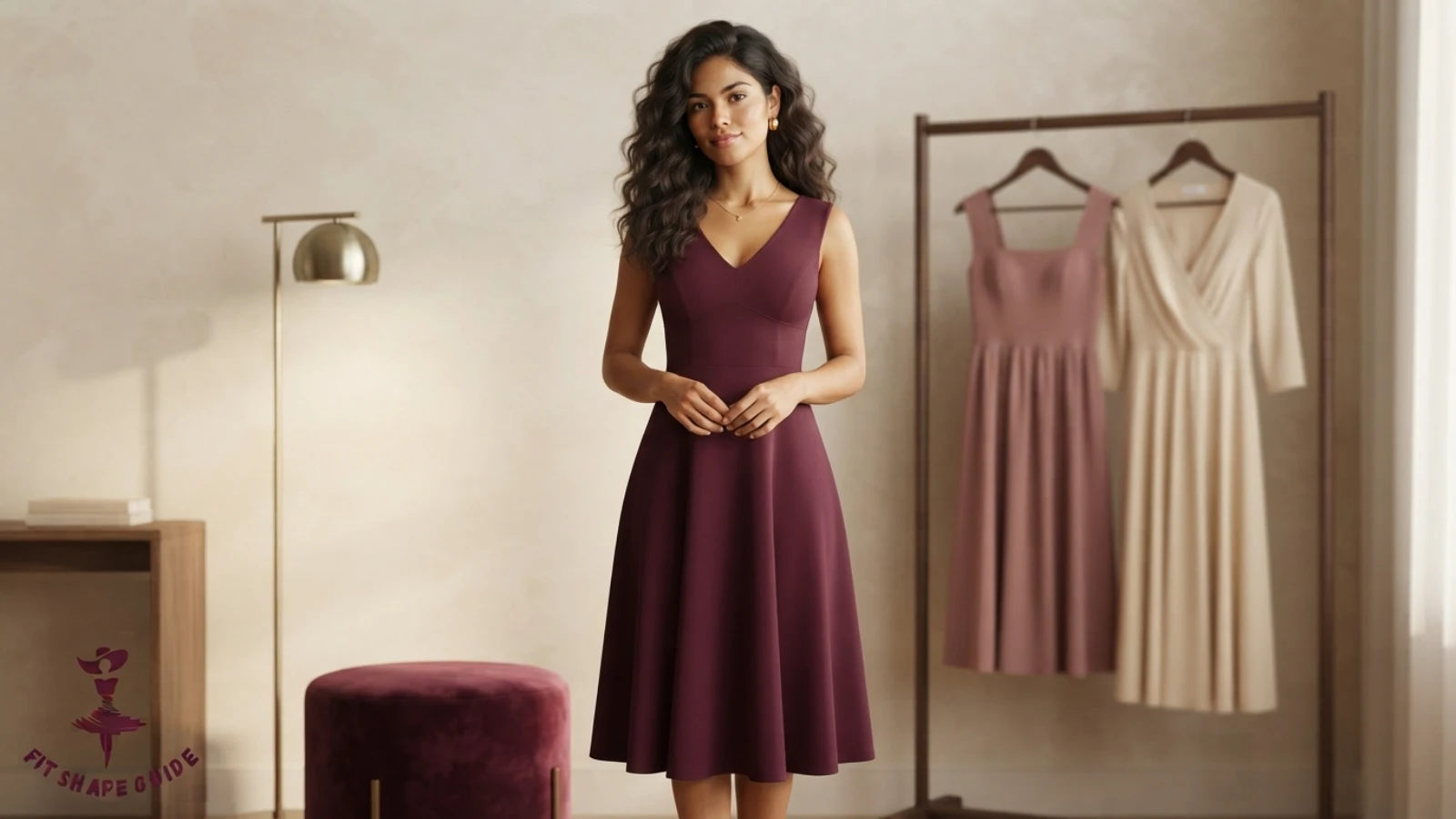
- The entire breast root sits above the empire seam; no breast tissue is trapped below or crossed by it.
- The seam follows the ribcage and remains level rather than climbing toward the center front.
- The neckline covers the intended bra through leaning, reaching and sitting.
- Darts, princess seams, gathers or a crossover create real bust projection.
- The upper back and armholes stay smooth without borrowing width from the neckline.
- The skirt falls from the ribcage without being pushed forward into a tent.
- The front and back hems remain visually balanced after walking and sitting.
Best empire waist dresses for a large bust by design
An empire waist is defined by a raised seam positioned below the bust and above the natural waist. That label alone does not guarantee fuller-bust room. Two dresses can look identical from the front while one has a longer center-front bodice, deeper darts and an adjustable back, and the other uses a shallow upper panel that ends halfway down the bust. Use the broader large-bust styling guide for the overall hierarchy: shoulders and neckline first, three-dimensional bust room second, seam placement third and skirt balance after that.
Shaped wrap-bodice empire dress
Best for: adjustable neckline coverage and diagonal shaping. Choose a crossover with enough overlap, an anchored inner edge and a seam that reaches the ribcage below both breasts. A true wrap offers adjustment, while a stitched faux wrap may provide greater security.
Princess-seam empire dress
Best for: defined projection without relying on extreme stretch. Curved vertical panels can add depth and center-front length. The seam curve should follow the bust rather than flatten it, and the raised waist must sit below the curve’s fullest point.
Smocked-back structured empire
Best for: ribcage adjustment with a shaped front. Look for a front bodice with darts, cups or panels plus back smocking that expands horizontally. Smocking cannot rescue a front bodice that is too short, but it can stabilize the underbust without a rigid fit.
Supportive empire maxi dress
Best for: travel, summer events and long-line movement. The skirt needs enough weight to fall rather than float forward from the bust. Compare with the maxi-dress fit guide for hem length, sweep and petite or tall adjustments.
Square-neck bra-friendly empire
Best for: standard-bra coverage and a defined frame. Choose wide straps or shoulders, stable neckline corners and vertical bust depth. Check that the straight edge stays flat instead of bowing outward when you move.
Lined occasion empire dress
Best for: wedding guests, formal dinners and photographs. A lined stretch-crepe, chiffon or satin shell needs compatible lining, secure neckline edges and a zipper that closes without pulling the seam upward. Test it under seated and flash-light conditions.
Where should an empire waist sit on a large bust?
The seam should sit on the ribcage immediately below the breast root, not on the fullest part of the bust and not halfway between the underbust and natural waist. “Immediately below” is personal: breast root height, projection, torso length and bra shape all change the visual position. Wear the exact bra planned for the dress because a more lifted or projected bra can alter where the garment’s fixed seam meets the body.
Front bodice length is as important as bust circumference
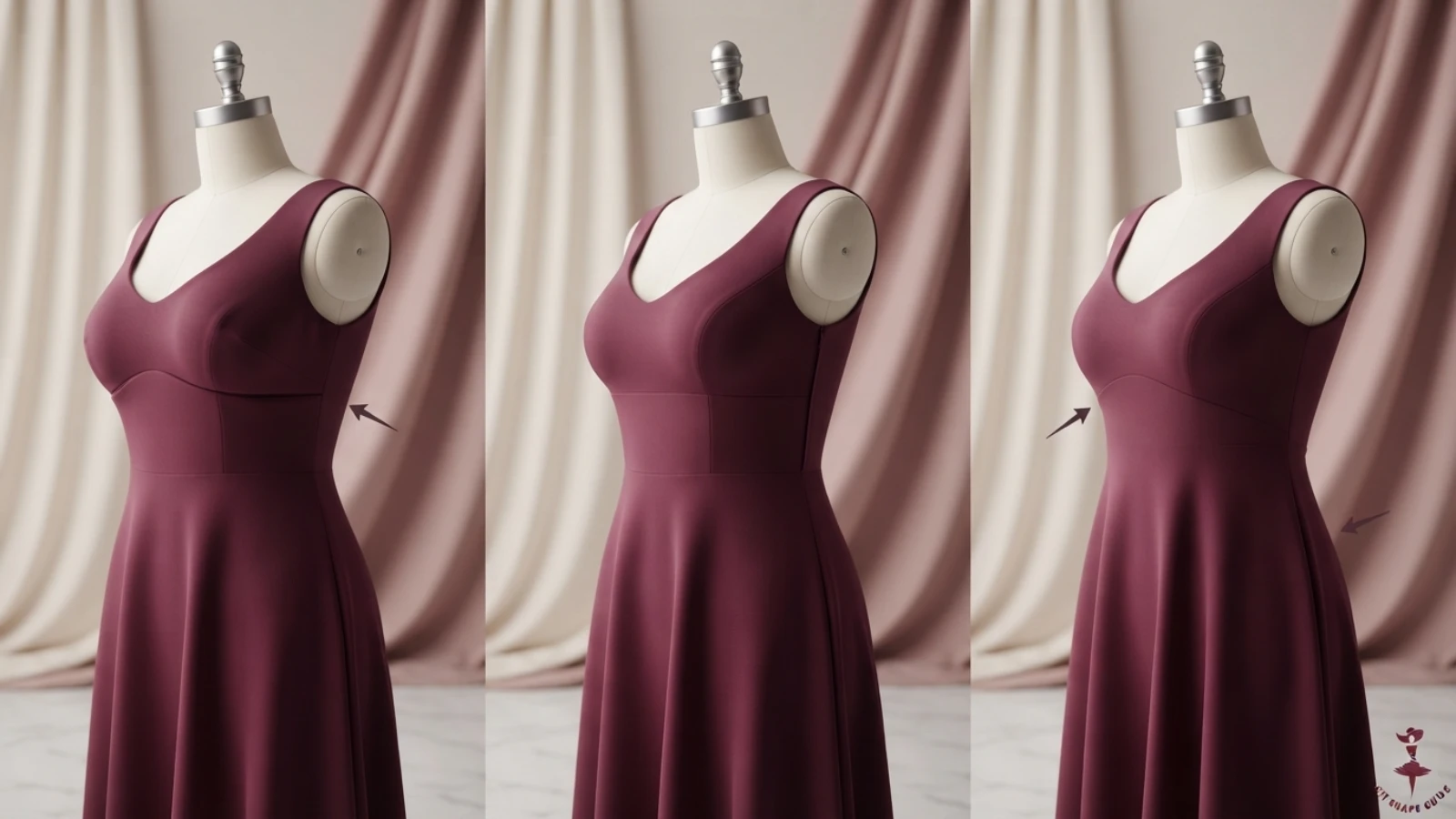
A size chart may offer enough bust circumference but too little vertical distance from shoulder to underbust. Then the bust consumes the upper bodice length and pulls the seam upward. Look for shoulder-to-empire-seam, center-front bodice or cup-depth information. Side-view product photos are valuable: the raised seam should remain nearly horizontal rather than arching dramatically upward at center front.
Projection must be built above the seam
Side darts, princess seams, gathers controlled into the underbust, cup panels and a well-drafted crossover convert flat fabric into volume. Uncontrolled gathering can add width without usable depth. The garment should curve outward over the bust and return to the ribcage before the skirt begins. For a direct silhouette decision, consult empire waist vs natural waist dresses for a large bust.
Short torsos need careful—not automatically higher—placement
An empire line may create visual space below the bust, but a very high seam can crowd a short upper torso or cross breast tissue. If this is your recurring problem, use the sheet-matched guide to dressing a large bust with a short torso. Petite shoppers should also compare shoulder width, strap length and total dress length rather than assuming “petite” guarantees deeper bust shaping; the petite large-bust guide explains those trade-offs.
| Evidence | Good fit | Warning sign |
|---|---|---|
| Empire seam | Circles the ribcage below the entire breast root | Cuts through lower breast tissue or arches upward |
| Bust shaping | Darts, curved seams, crossover or controlled gathers create depth | Flat panel stretches tightly from armhole to center front |
| Neckline | Lies flat and covers the intended bra in motion | Gapes, rolls or is pulled wider by the bust |
| Side seam | Falls vertically from underarm toward hem | Swings forward because the bust is borrowing width |
| Skirt start | Falls down from the ribcage with balanced volume | Projects straight outward from the bust like a tent |
Best fabrics for an empire line on a fuller bust
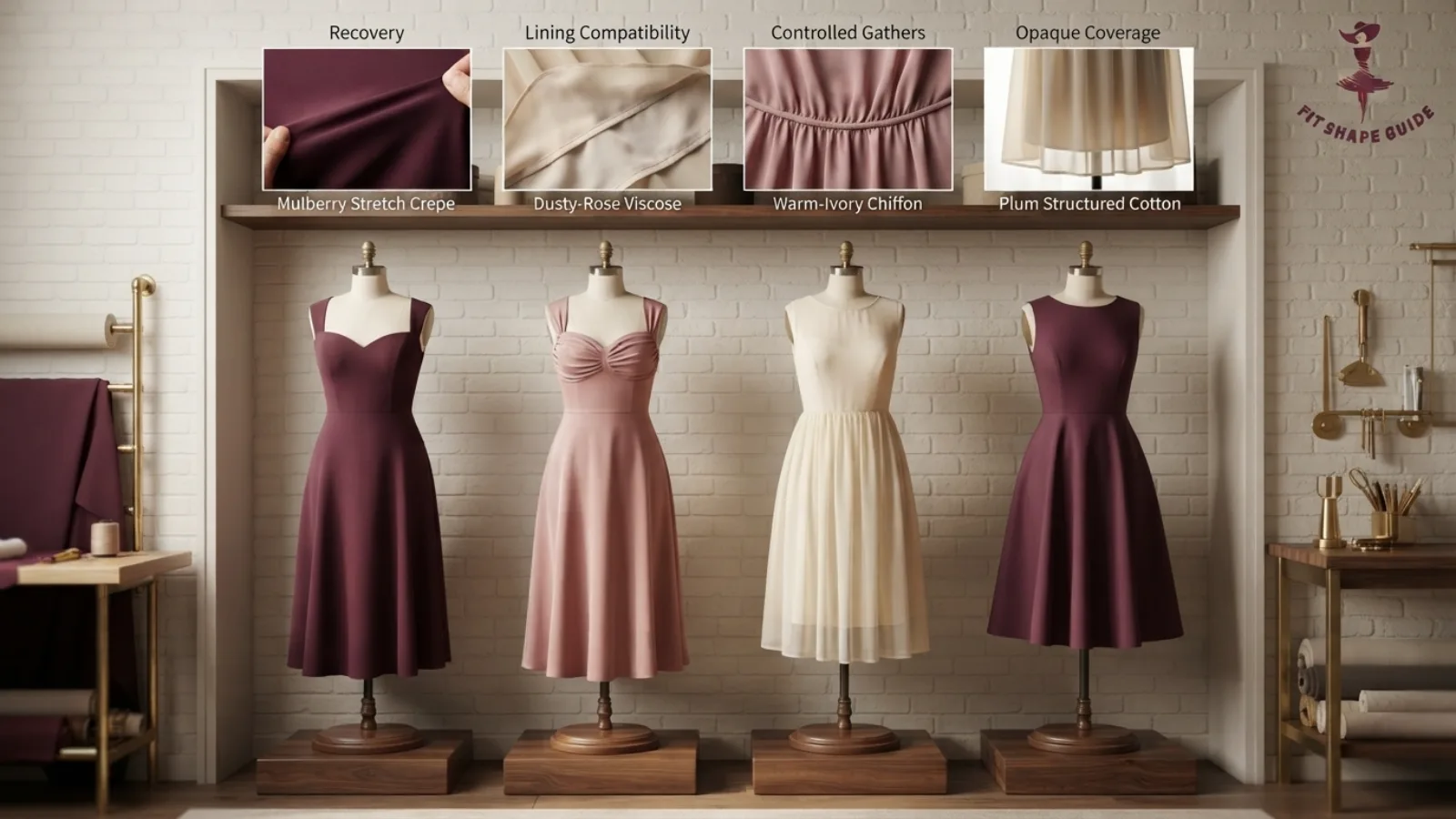
Fabric changes whether a raised waist looks defined, soft or inflated. The bodice needs enough stability to hold its shape, while the skirt needs enough drape to descend from the ribcage. A single lightweight fabric can work when it is lined or strategically stabilized; a dense fabric can work when seams create sufficient projection. Compare fiber, weave, weight, stretch direction, recovery and lining rather than shopping by fiber name alone. The sheet’s best-fabrics guide for a large bust provides the wider framework.
Stretch crepe and dense jersey
These are forgiving when the bodice is shaped and the seam is stable. Moderate stretch supports breathing and sitting, but strong recovery is important so the neckline and underbust do not loosen. Matte surfaces make tension easier to evaluate than shiny ones.
Viscose, chiffon and soft woven fabrics
Fluid viscose can fall beautifully from the raised waist but needs adequate bust shaping. Chiffon usually requires lining, and both layers must offer compatible movement. If the lining is smaller, it becomes the real fit limit even when the outer layer looks loose.
Satin, poplin and structured cotton
Non-stretch woven fabrics demand accurate darts, panels and zipper placement. Satin reveals every drag line; crisp cotton may stand away from the body if too much skirt volume begins high on the torso. These fabrics can be excellent when the pattern includes projection rather than merely extra overall width.
How to buy an empire waist dress online
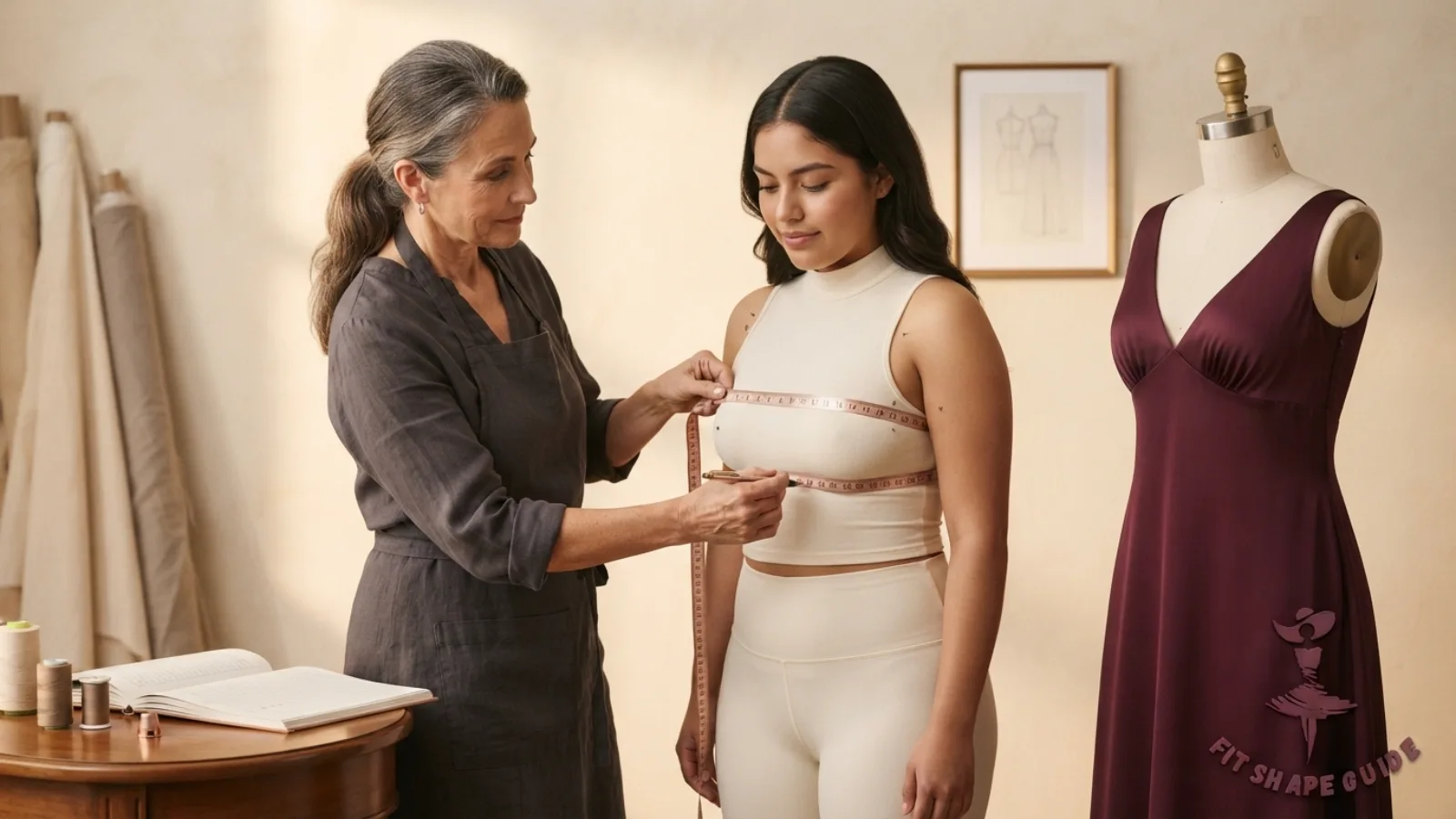
Start with the retailer’s garment chart, not only a generic body chart. Record your high bust, full bust, snug underbust, natural waist, shoulder-to-underbust, shoulder-to-natural-waist and intended dress length while wearing the planned bra. A high-bust and full-bust comparison helps identify how much upper-bodice shaping you need, but it does not replace the brand’s specific garment dimensions.
| Measurement or listing detail | Why it matters | What to ask when missing |
|---|---|---|
| Full bust circumference | Confirms baseline room around the fullest point | Is this body or finished-garment measurement? |
| Shoulder to empire seam | Predicts whether the seam can reach below the bust | Can support provide center-front and side-seam lengths? |
| Underbust/raised-waist circumference | Shows whether the seam can close around the ribcage | Is the seam fixed, elastic, smocked or adjustable? |
| Neckline width and depth | Predicts bra coverage and lean-forward security | Are neckline edges faced, bound or stay-taped? |
| Skirt length and sweep | Controls coverage, stride and visual balance | From which point is the listed length measured? |
| Lining dimensions | Identifies the hidden restrictive layer | Does the lining stretch in the same directions? |
Choose size for the structural limit
On a fitted woven empire dress, the bust, upper back and fixed underbust seam are normally the limiting areas. On a smocked style, shoulder width, neckline, front bodice length and armholes may matter more. Sizing up helps only when the larger size restores bust room and seam position while shoulders and neckline remain controllable.
Read product photos and reviews diagnostically
Use front, side and back photos. Look for a level raised seam, vertical side seams, a neckline that touches the body and a skirt that falls downward. Reviews from people with similar bust and underbust measurements can flag short bodices, but cup letters alone are not enough because band size changes volume. Before placing an Amazon module, verify the live size chart, closure, stretch, lining, care, return terms and whether variations share the same construction.
Movement and coverage tests every empire dress should pass
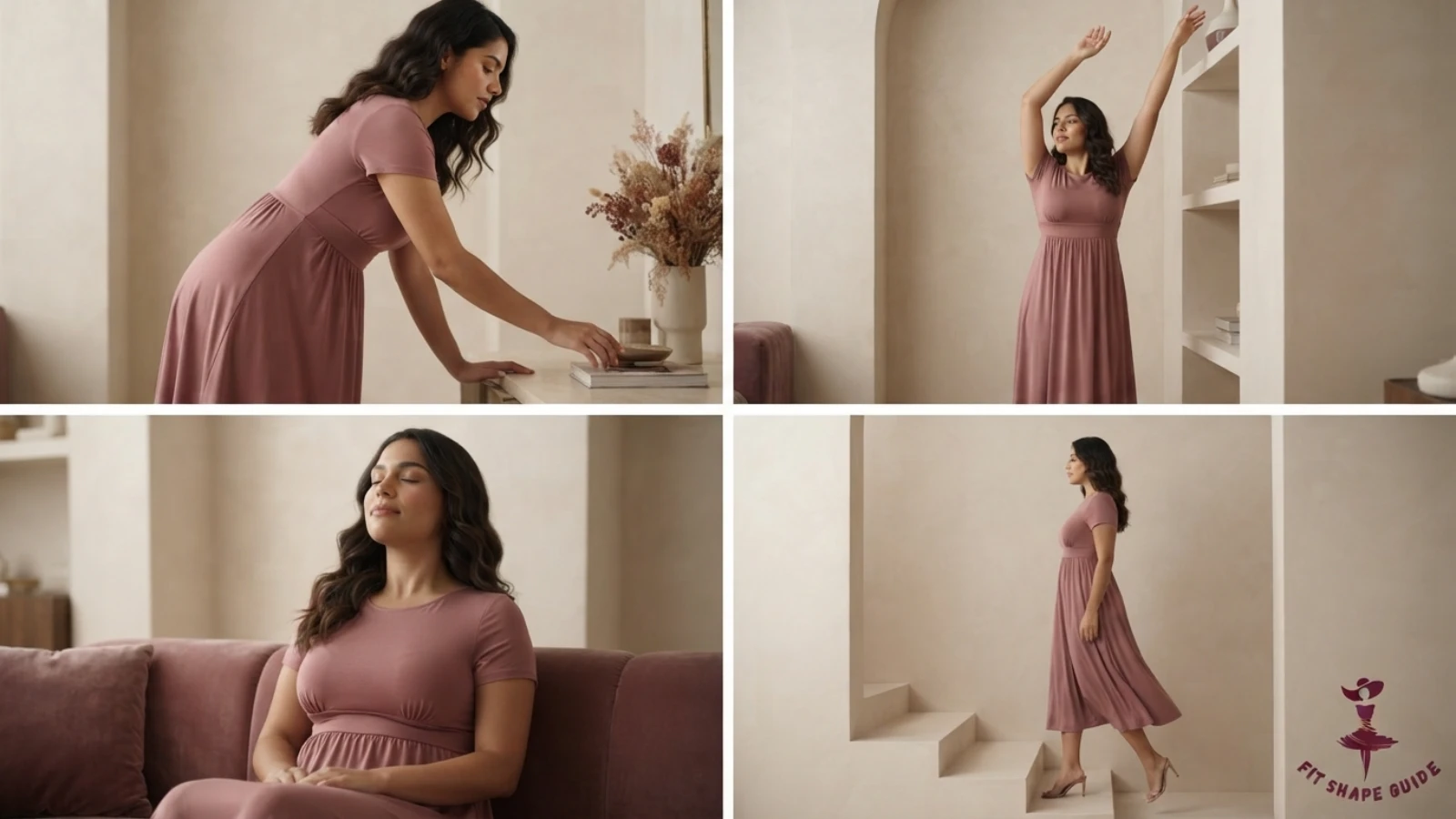
Lean and reach
Lean forward, reach across a table and return upright. The neckline should maintain useful coverage and the crossover, if present, should not fall open. When the bust pulls a neckline outward, the cause may be inadequate projection or front length rather than an edge that simply needs a pin.
Overhead reach and self-hug
Raise both arms, then hug your shoulders. The raised seam may move slightly, but it should return to the ribcage when the arms lower. If it remains trapped on breast tissue, the upper bodice is too short, too shallow or too narrow through the back and armholes.
Sit, breathe and eat
Sit upright and relaxed, take a deep breath and rotate gently. A fixed underbust seam needs enough ease for ribcage expansion. Elastic should feel secure without rolling, digging or pressing upward into the bust. Test the zipper and lining in the seated position, not just while standing still.
Walk, stairs and hem balance
Walk briskly, turn and climb stairs. The skirt should clear the legs and fall back into place. A maxi needs safe length and sweep; a midi should land at a deliberate calf point. For length-specific comparisons, see the guides to midi dresses for a large bust and A-line dresses for a large bust.
Common empire-dress fit problems and what they mean
| Problem | Likely cause | Best next step |
|---|---|---|
| Seam crosses the lower bust | Upper bodice is too short or shallow | Try a longer/deeper bodice; sizing up works only if shoulders stay controlled |
| Seam rises at center front | Bust projection consumes front length | Choose princess seams, deeper darts or fuller-bust drafting |
| Skirt tents forward | Seam sits too high, bust pushes fabric, or gathers are too dense | Correct seam position first, then choose softer or less concentrated fullness |
| Back seam drops lower than front | Front length is being borrowed by the bust | Seek extra center-front length rather than shortening the back immediately |
| Neckline gaps | Edge too long, shoulders too wide, or bust lacks projection | Identify drag lines before adding a snap or alteration |
| Elastic underbust rolls | Elastic is narrow, overstretched or placed on breast tissue | Choose a wider stable casing and correct bodice length |
What a tailor can realistically fix
A tailor may shorten straps, secure a crossover, refine a loose back neckline, reduce an underbust seam with accessible allowance, adjust skirt length or remove some excess gathering. Adding major bust depth, lowering a fixed empire seam, enlarging armholes or rebuilding a lined cup is pattern reconstruction. Read how tailoring can fix clothes for a large bust before buying final sale.
When an empire silhouette is the wrong pattern
If every raised seam cuts through the bust, do not force the category. A natural-waist wrap, princess-seam A-line or fit-and-flare may supply more vertical bodice room. The best garment is the pattern that fits, not the label that a generalized style rule says should be flattering.
How to style an empire waist dress for a fuller bust
Styling should support a dress that already fits. It cannot relocate a seam or manufacture missing bust depth. Use the best necklines for a large bust to compare coverage, openness and bra compatibility, then choose accessories for the setting rather than for “minimizing” the chest.
Work and polished daytime
Choose a matte, stable fabric, a secure neckline and sleeves or shoulders compatible with your bra. A long open blazer or cardigan can add vertical structure, but verify that its armholes and front edges do not pull the dress sideways. Keep the empire seam visible only if you like; it does not need a belt to work.
Casual summer wear
Breathable viscose, cotton blends and dense jersey are practical when the neckline is stable and the skirt is not transparent. Wider straps preserve bra options. Test the dress in backlight and confirm that any smocking remains comfortable after a meal.
Wedding guest and evening
Lined chiffon, satin, velvet and stretch crepe can work when bust projection and seam placement pass first. Try the intended bra, jewelry, coat and shoes together. Photograph the outfit from the side and while seated; flash can expose strain or transparency not obvious in a mirror.
Belts and jewelry
A belt should not be used to hide an empire seam sitting on the bust. If added, place it at the designed seam or a deliberate lower point only when the dress construction allows it. Necklaces should end clearly above or below the neckline edge instead of tangling with it.
Empire waist vs nearby dress silhouettes
| Silhouette | Choose it when | Watch for |
|---|---|---|
| Empire waist | You want a raised ribcage seam and free skirt below it | Seam crossing breast tissue; insufficient front bodice length |
| Wrap dress | You value adjustable crossover shaping and natural-waist control | Shallow overlap and neckline movement |
| A-line dress | You prefer a conventional bodice with gradual skirt flare | Waist placement and front hem lift |
| Shift dress | You want a straighter silhouette without a fixed raised seam | Bust tenting and forward side seams |
| Maxi dress | Length and skirt sweep are your primary needs | Maxi describes length, not bodice quality |
For a fuller comparison within the same Excel-defined Dresses cluster, see the guides to wrap dresses, shift dresses and bodycon dresses for a large bust.
Final empire-dress buyer checklist
- Wear the planned bra while measuring and trying on.
- Confirm that the complete breast root is above the seam.
- Look for darts, princess seams, cups, crossover shaping or controlled gathers.
- Check shoulder-to-underbust length, not bust circumference alone.
- Verify neckline and bra coverage while leaning and reaching.
- Check lining measurements, zipper strain and underbust expansion.
- View the seam and hem from the side.
- Sit, breathe, walk and raise both arms before removing tags.
- Reject a seam that cuts across breast tissue even if the rest looks loose.
- For Amazon placements, recheck the exact variation and live return terms.
Frequently asked questions
Are empire waist dresses good for a large bust?
They can be. The upper bodice must contain the full bust, and the empire seam must sit on the ribcage below the breast root. A seam that crosses breast tissue is a fit failure, regardless of how loose the skirt is.
Where should an empire waist sit on a fuller bust?
It should circle the ribcage immediately below the breast root and remain reasonably level. It should not cut across the lower bust or float far below the underbust unless that is an intentional dropped design.
Why does an empire seam ride up over my bust?
The most common causes are insufficient center-front bodice length, inadequate bust projection, a tight upper back or armholes, and a fixed underbust seam that is too small. Sizing up helps only if the larger shoulders and neckline remain stable.
What neckline is best on an empire dress for a large bust?
Secure V-necks, shaped crossovers, square necks and moderate scoops can all work. The best option lies flat, covers the intended bra and remains stable when you lean and reach.
Should I size up in an empire waist dress?
Size up when it restores bust room, front bodice length and underbust comfort without making shoulders, back and neckline excessively loose. If the seam remains on the bust, choose a different pattern.
Can petite women with a large bust wear empire dresses?
Yes, but petite length alone does not guarantee adequate bust depth. Compare shoulder width, strap length, shoulder-to-underbust distance, seam position and total hem length while wearing the intended bra.
How can I stop an empire dress from looking like maternity wear?
Focus on fit rather than the label: a defined seam below the bust, controlled skirt fullness, vertical side seams and fabric that falls downward create a deliberate silhouette. Dense gathers beginning too high often produce excess forward volume.
What fabric is best for an empire waist dress?
Stretch crepe, dense jersey, fluid viscose and lined chiffon are useful starting points. The bodice needs stability and projection, while the skirt needs enough weight and drape to fall from the ribcage.