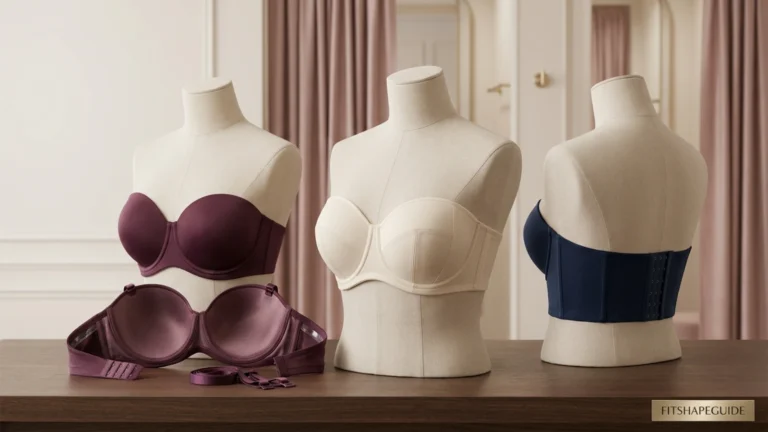
Best Front-Close Sports Bras for a Large Bust
A construction-first guide to secure zippers, protected hooks, backup closures, cup depth and easy entry—without mistaking a convenient opening for complete support.
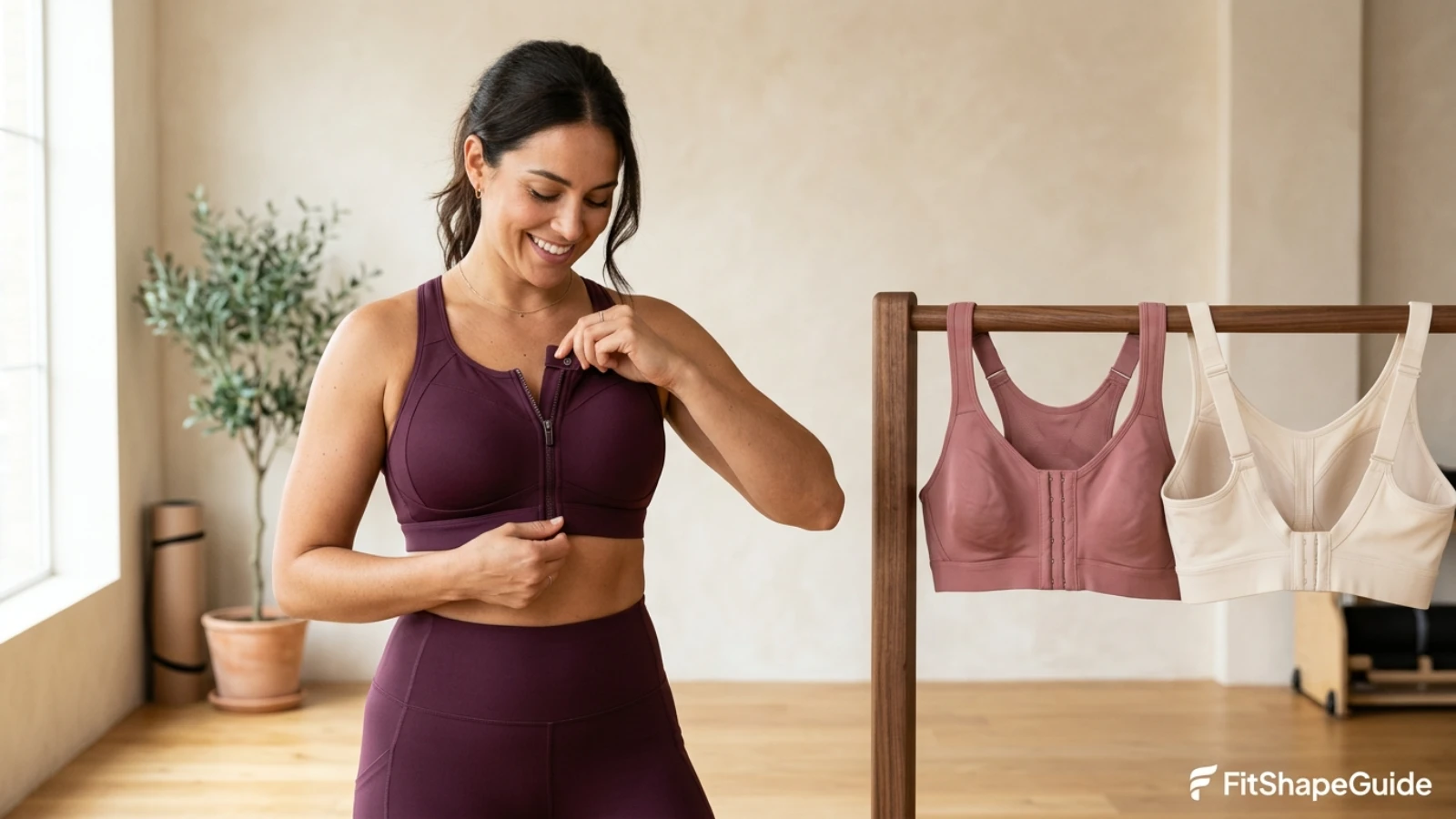
The 90-second front-close check
- Set each breast fully inside the cups before closing the center front.
- Seat the zipper pin completely or align every hook without twisting the band.
- Engage the top lock, tab or backup closure when the design provides one.
- Confirm that the inner guard covers the complete closure against skin.
- Check the band from front, side and back; it should remain horizontal.
- Take five full breaths and raise both arms without center-front bowing.
- Walk, hinge and test the intended movement while the closure remains flat.
- Recheck removal after a short warm session, not only while the bra is dry.
Best front-close sports bras for a large bust by construction
“Front-close” describes access, not support level. A zipper, row of hooks or clasp can open the bra without an overhead pull, but the garment still needs enough cup volume and a lower anchor. Compare the closure only after confirming the frame matches your breast shape, torso and workout.
Locking front-zip encapsulation bra
Best for: fuller busts that need shaped cup depth plus easy access for walking, gym work or moderate impact. Seek a zipper base that seats completely, a protected track and a top lock. Trade-off: a rigid center can press during a deep fold if cup depth is insufficient.
Hook-and-eye front-close bra-sized frame
Best for: gradual fastening and precise band-and-cup sizing without a long zipper. Multiple hooks share load across the center. Trade-off: small hooks take longer to align and need a soft backing that prevents rubbing.
Dual-closure zip-over-hooks bra
Best for: higher security when inner hooks set the frame and the zipper creates a smooth outer closure. Trade-off: more parts add heat, bulk and extra steps; both systems must be fastened as designed.
Front-zip encapsulation-compression hybrid
Best for: running or varied high-energy training when shaped inner cups need a controlled outer layer. Trade-off: excessive compression can squeeze the cups and push extra force into the zipper.
Longline front-close sports bra
Best for: spreading pressure across a taller band and creating a smooth base under high-rise activewear. Trade-off: the lower edge may roll during flexion or conflict with a short torso and rib flare.
Soft-cup low-impact front fastening bra
Best for: walking, mobility and comfort-led sessions when easy dressing matters more than maximum control. Trade-off: a soft knit still needs real cup capacity; a flat front panel may compress without containing.
The best front-close sports bras for a large bust do not ask the zipper or hooks to carry the entire load. Cups shape and contain, the band anchors, sides limit outward movement, straps position the neckline and the closure keeps the center securely joined.
Zipper, hook and backup-closure engineering
The center front changes shape as the ribcage expands, the torso bends and breast weight moves. A good opening follows that motion without separating, curving away from the body or pressing one hard edge into skin. Closure security is therefore a system, not a single zipper tooth or hook.
Zipper base and insertion pin
A separating zipper must be fully seated at the base before it travels upward. If the pin is only partly inserted, the track may look closed while the lower section remains vulnerable. Close the bra while upright, support the cups as instructed and never force a misaligned slider.
Top lock, garage or tab
Some zippers lock when the pull lies flat; others use a fabric tab or covered “garage” at the top. This reduces movement and protects the neckline. A top feature is helpful only when the lower insertion, cup fit and band tension are also correct.
Internal hooks or backup fastening
Inner hooks can hold the two sides together while the zipper closes and may reduce strain on the track. They must be used exactly as designed. Skipping a backup system can change the load path and make an otherwise secure bra unreliable.
Full-length skin guard
The inner guard should cover the zipper or hook line during standing, breathing and folding. Check the bottom stop and upper edge, where gaps commonly appear. The backing needs enough width to remain beneath the closure rather than shifting sideways.
| Closure feature | Why it matters | What to verify | Failure clue |
|---|---|---|---|
| Separating zipper base | Joins the two sides before upward travel | Pin fully seated and slider moves smoothly | Lower track separates or sits unevenly |
| Top lock or tab | Limits pull movement and cushions the neckline | Pull lies flat and cover remains closed | Slider creeps down or scratches skin |
| Backup hooks | Stabilize the frame while zipper closes | Every hook engages without twisting cups | Center bows when hooks are skipped |
| Full inner guard | Separates hard parts from skin | Coverage continues through bending | Teeth, stop or hooks touch skin |
| Hook-and-eye row | Shares tension across several fastening points | Hooks align and backing remains flat | One hook carries more load or opens |
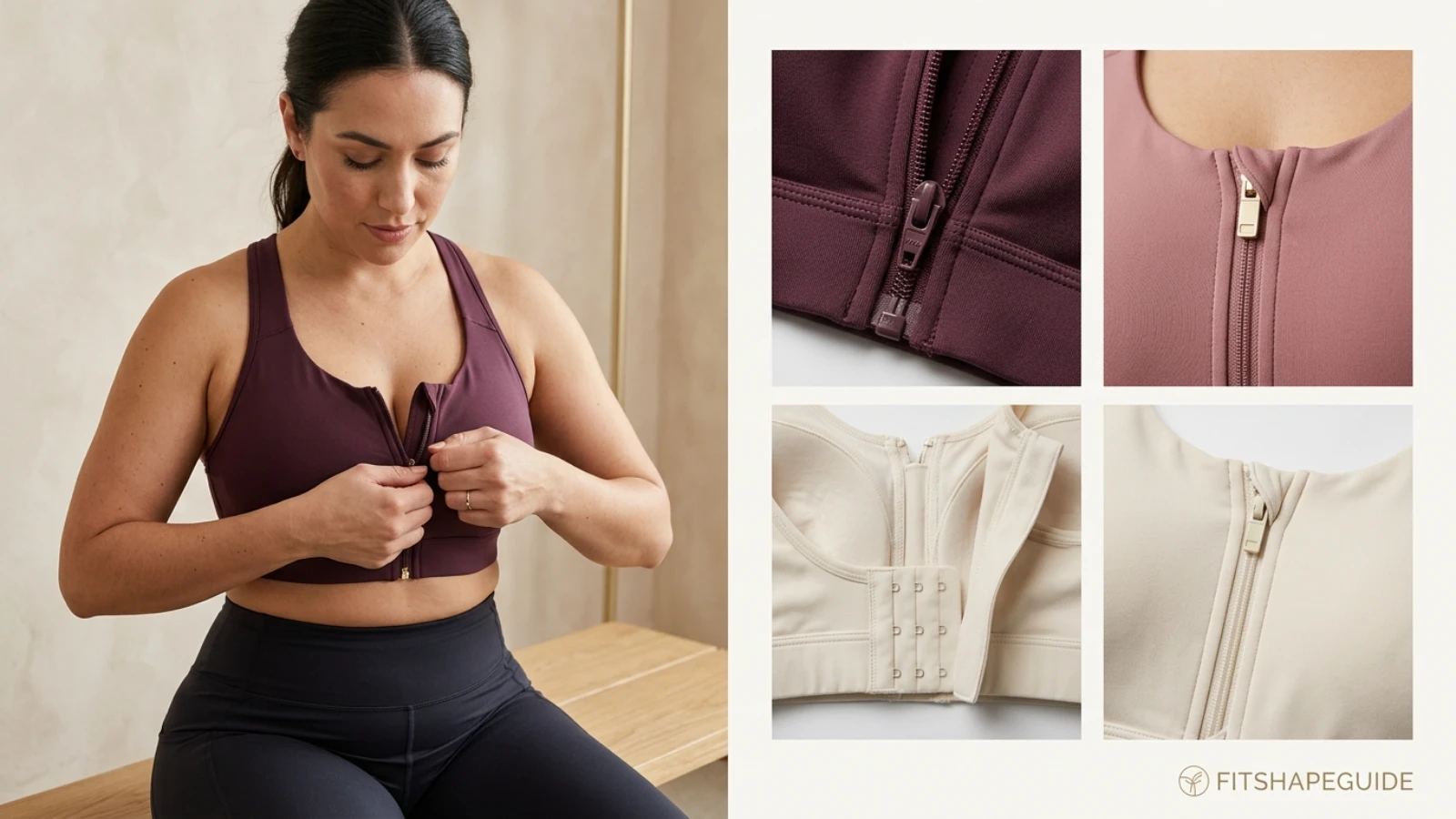
The best front-close sports bras keep the center aligned before, during and after movement instead of relying on painful tension to hold it shut.
Band anchoring, cup depth and side containment
A front opening divides the band and cup frame at the center, so every surrounding component must return to its intended position once fastened. The lower band should reconnect into one level anchor, and the cups should meet without crushing tissue into the closure.
Band continuity
Check the lower band as one continuous horizontal line. The front segment should not peak upward beneath the zipper or dip below it. When the band rises at the back, possible causes include loose tension, worn elastic or shallow cups pushing the entire frame forward.
Cup capacity before closing
Place breast tissue fully into each cup before fastening. The center edges should meet without forcing tissue inward. Overflow above, beside or between the cups suggests insufficient volume or the wrong shape; empty lower folds suggest excess depth or a mismatch. A strong zipper cannot correct either problem.
Encapsulation and compression
Encapsulation shapes each breast in a distinct cup. Compression holds the cups closer to the torso. For higher movement, the two systems can work together, but the overlay must not flatten the underlying cups or concentrate pressure at the center front.
Side wings and strap anchors
High side wings connect cup containment to the back while limiting outward escape. The top edge should clear the arm crease. Straps should stabilize the upper cup without pulling the zipper toward the neck. Fixed racerback routes can simplify the back; adjustable or convertible straps provide more tuning.
Wire and wire-free options
An underwire can stabilize the breast root when it surrounds tissue and ends away from the closure. Wire-free frames rely on multi-panel cups, inner slings and firm elastic. Neither is automatically better. Poking, channel distortion, center pressure or a wire that shifts during movement indicates a fit failure.
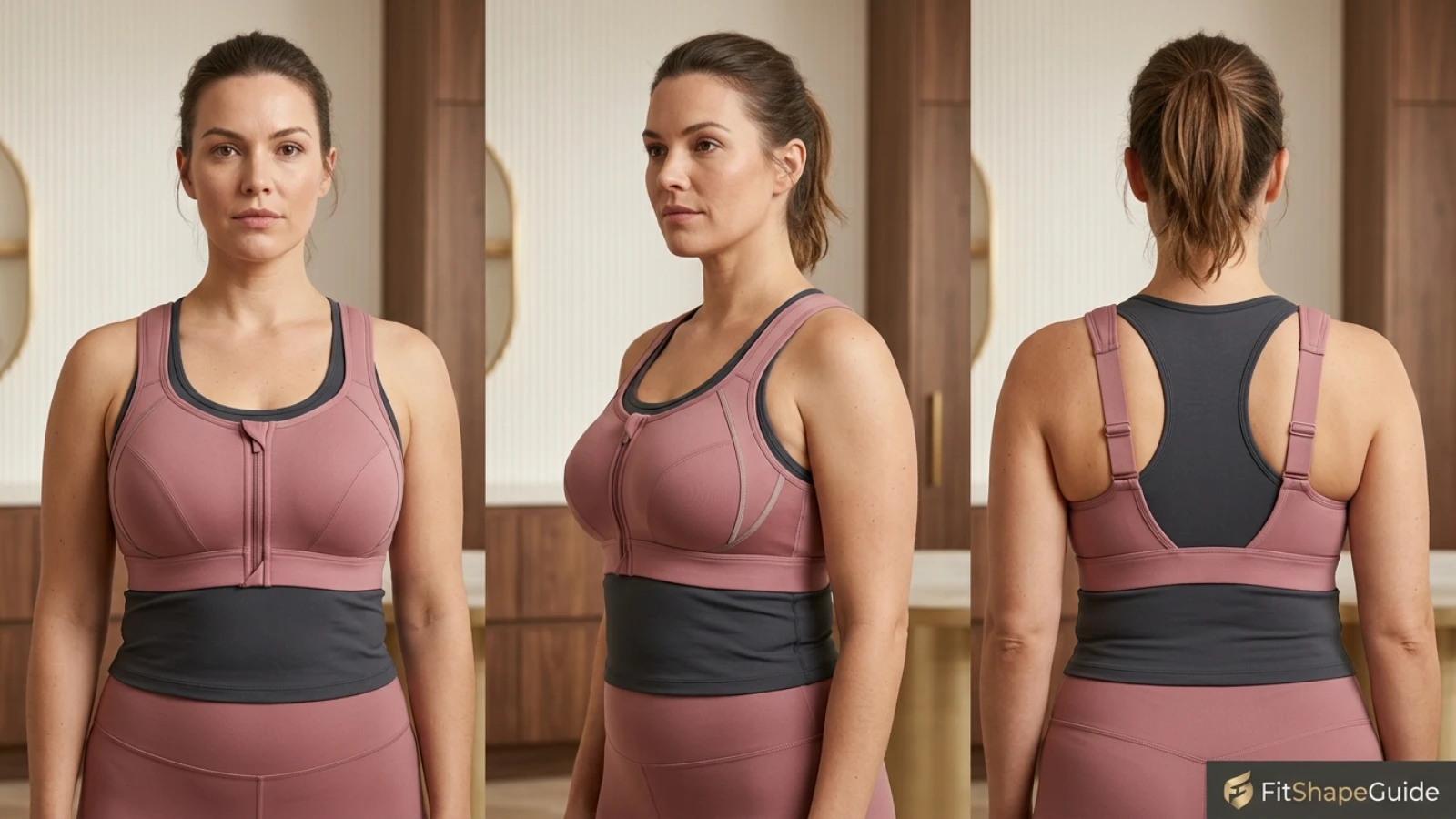
The best front-close sports bras make the closed band feel continuous and keep breast tissue inside the cups rather than against the hardware.
Running, HIIT, lifting and low-impact checks
A closure can remain secure while standing yet bow during a forward hinge or rub during arm drive. Test from low intensity toward the planned activity, and observe the band, cups and center as fabric warms and becomes damp.
Breathing and arm baseline
Take five full breaths, speak a complete sentence and raise both arms. The center should remain flat, the backing should stay beneath the hardware and the band should remain level. Do not progress if breathing feels restricted or the closure pinches.
Walking and running
Begin with several minutes of walking, then a brief easy jog when appropriate. Check vertical, lateral and forward-back movement, not only the zipper. For activity-specific cup and band decisions, compare the sports bras for running guide.
HIIT and direction changes
A controlled squat-to-reach, side step and low-impact landing alternative can reveal center bowing, side escape and guard movement. The HIIT sports bra guide explains why secure hardware and multidirectional containment matter.
Lifting and machines
Test overhead reach, a row position and a comfortable hinge. A rigid front zipper should not press during setup, and the back should allow shoulder-blade motion. On benches or machines, confirm that no hard adjuster sits directly beneath the body.
Twenty-minute sweat check
During a safe session, recheck the top lock, backup hooks, band level, guard position, underarm friction and strap settings after about twenty minutes. Sweat adds weight and friction. A closure that needs repeated resetting is not dependable for that workout.
Damp removal
Allow breathing to settle, disengage the lock or tab, lower the zipper without forcing it and release backup hooks in the intended order. A major advantage of front access is avoiding an overhead peel, but only if the opening remains easy to operate after exercise.
| Activity | Priority construction | Short test | Stop or change when |
|---|---|---|---|
| Running | Hybrid cups, stable band, locked zipper | Walk, easy jog and arm drive | Center bows, band bounces or cup escapes |
| HIIT | High sides, backup fastening, upper containment | Squat-to-reach and side step | Guard shifts, hooks strain or breathing narrows |
| Lifting | Flexible center, shoulder-blade clearance | Reach, row and hinge position | Zipper presses or longline edge rolls |
| Walking | Comfortable encapsulation and smooth guard | Ten-minute brisk walk | Gradual rubbing or strap slip appears |
| Floorwork | Low-profile protected hardware | Supported rotation and gentle fold | Closure stop or adjuster presses into body |
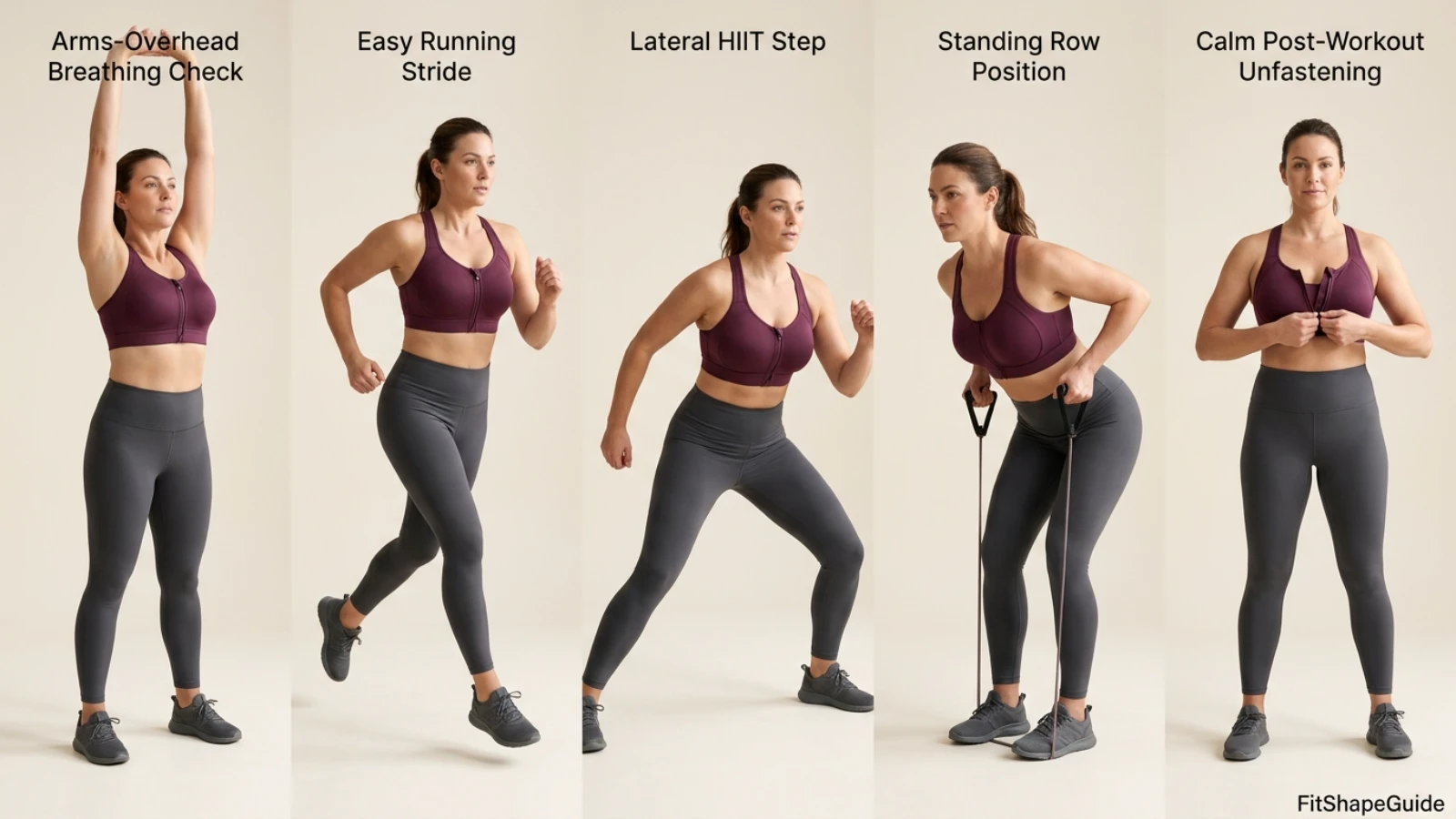
The best front-close sports bras stay closed during movement and open predictably afterward without turning either step into a struggle.
Fabric recovery, friction and care
A front-close bra combines elastic textiles with a comparatively rigid center component. Good patternmaking distributes that contrast across the cups and band. Poor recovery makes the opening carry more force as the rest of the bra stretches out.
Stable cup knit and power mesh
Stable knit helps cups keep their shape, while power mesh can reinforce sides and back with less bulk. Neither material should become board-like at the closure seam. Inspect the stitching that joins the zipper tape or hook panel to the cup.
Guard softness and width
The guard needs enough body to stay beneath the hardware but should remain soft against skin. It should not fold into a narrow ridge when damp. Check the upper garage, lower stop and every backup-hook backing after repetitive movement.
Foam, liners and removable pads
Spacer foam can create shape with less bulk than dense padding, though every foam layer holds some moisture. Loose pads may fold while the bra is being zipped. If pads are included, they should lie flat, preserve cup depth and follow the care label.
Wash with the closure protected
Follow the garment label first. Fasten hooks or close the zipper when instructed, use a wash bag if recommended and avoid snagging the track against other hardware. Adidas recommends laying a sports bra flat to air-dry in its official care guidance. Heat and aggressive handling can shorten elastic and closure life.
Retire a failing closure
Stop using the bra if zipper teeth separate, the slider no longer locks, the base becomes distorted, hooks bend, backing tears or the guard no longer covers skin. Do not pin, stitch or improvise a high-load repair for exercise. Replace the garment or use manufacturer-approved service.
Extra outer compression does not repair a failing closure. If layering is part of your activewear system, compare purpose-built compression tops for a large bust without asking the top to substitute for a fitting bra.
How to shop online for a front-close sports bra
Useful listings show the front open and closed, the zipper base or hook row, the inner guard, the cup interior, the side frame and the back. They also disclose sizing, intended support level, materials, care and return eligibility. A single polished front photograph cannot prove security.
Use the current seller size chart
Do not assume one brand size transfers to another. Follow the current chart and note whether the listing uses band-and-cup sizing, combined sizing or generic letters. Nike’s official sports-bra fit guidance recommends checking that the band stays level, straps remain secure and the bra is tested with workout movement. Use those principles while following the actual manufacturer’s chart.
Identify the complete closure sequence
Look for photographs or instructions showing how the opening works. Does the zipper have a seated base and top lock? Are backup hooks mandatory? Does a hook-front design fasten from the bottom upward? If the operating sequence is missing, request clarification before buying.
Check cup evidence separately
Search the images and description for shaped seams, molded cups, inner slings, side support and a defined underband. The words “front zip” or “high support” do not establish cup depth. If running or jumping is central, compare the complete frame with a high-impact sports bra.
Read reviews for failure details
Prioritize reviews that state the wearer’s band/cup size, purchased size, activity, session duration and actual result. Reports about zipper separation, hook alignment, guard rubbing, cup overflow, band position and damp removal are more useful than a generic claim of “great support.”
Amazon verification workflow
Before adding an affiliate module, confirm the live product title, brand or authorized seller, size chart, cup frame, closure sequence, backup system, materials, care, intended activity and current return eligibility. Never hard-code price, coupon, rating, review count, stock or delivery promises. The FTC says material affiliate relationships should be disclosed clearly and conspicuously.
For a broader comparison that includes pullovers and back-clasp designs, use the sports bra guide for a large bust. If a clear upper back is the priority, compare the racerback sports bra guide while remembering that back shape and front access solve different problems.
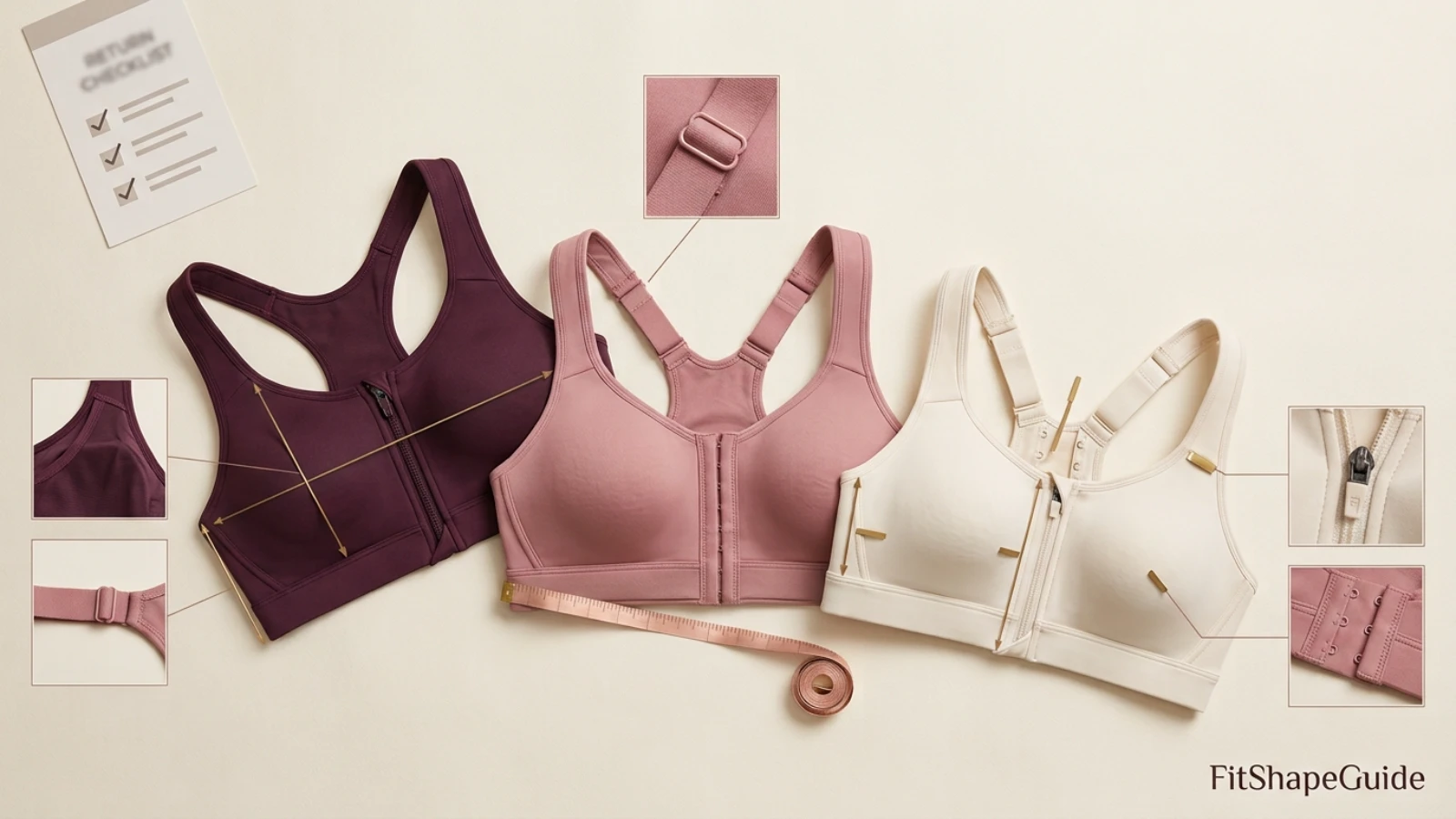
Listings for the best front-close sports bras reveal how the garment opens, closes, contains and returns—not merely how the zipper looks.
Common front-close fit and closure problems
| Symptom | Likely cause | Better next step |
|---|---|---|
| Zipper separates from the base | Insertion pin not fully seated, damaged track or excess frame strain | Stop use; inspect instructions and replace damaged hardware |
| Center bows outward | Shallow cups, tight overlay or closure lacking reinforcement | Increase cup depth or choose a stronger complete frame |
| Hooks pop or feel uneven | Misalignment, insufficient cup volume or distorted backing | Refasten upright; change size or closure construction |
| Guard shifts away from skin | Backing too narrow, cup distortion or damp fabric migration | Choose a wider secured guard and correct cup fit |
| Band rides upward | Loose band, worn elastic or shallow cups pushing forward | Reassess band and cup together before tightening straps |
| Underarm overflow or rubbing | Insufficient cup/side capacity or high rough edge | Restore cup room and compare side-wing geometry |
| Longline edge rolls | Torso length, rib shape or flexion conflicts with tall band | Choose a shorter stable band or different lower edge |
| Damp zipper will not lower smoothly | Track strain, fabric caught or damaged slider | Stop pulling; free fabric safely and retire faulty closure |
Do not pull the front together with the zipper
A zipper is meant to join two correctly positioned sides, not drag undersized cups and an overstretched band into place. Support the breasts and align backup hooks first when instructed. If the two sides cannot meet comfortably, choose a different size or frame.
Do not skip the backup system
Internal hooks, a top tab or locking pull are functional parts. Using only the visible zipper can place more strain on the track and change the fit. Follow the manufacturer’s complete fastening sequence every time.
Do not accept friction as normal
Temporary awareness of a new garment is different from burning, broken skin or persistent pressure. The best front-close sports bras for a large bust keep hard components separated from skin and remain comfortable through breathing, motion and removal.
Choose a secure opening inside a supportive frame
The best front-close sports bras for a large bust pair deep shaped cups and a level band with a fully protected closure. Choose a locking front zip for straightforward access, hook-and-eye front fastening for gradual alignment, dual closure for extra security or a longline frame for broader pressure distribution. Keep only the bra whose base seats correctly, backup system stays engaged, guard protects skin and cups remain contained through the intended workout and sweat-damp removal.
Frequently asked questions
These answers explain how the best front-close sports bras for a large bust should fasten, fit, move and open after exercise.
The best front-close sports bras still require a personal movement test; front access alone is not a support rating.
What front-close sports bra style is best for a large bust?
A bra-sized encapsulation front-close bra is a strong starting point. For higher impact, consider an encapsulation-compression hybrid with a stable band, guarded zipper and reliable backup or lock.
Are front-zip sports bras supportive for a large bust?
They can be, but support depends on cup depth, band stability, side containment, straps and closure security. A zipper by itself does not make a bra supportive.
Can a front-zip sports bra open during exercise?
A correctly fitted design with a fully seated base, working top lock or backup fastening should remain closed. Stop using any bra whose zipper separates, creeps or becomes damaged.
Should a front-close sports bra have backup hooks?
Backup hooks can stabilize the frame while the zipper closes and add security. If the manufacturer includes them, fasten every hook in the stated sequence rather than treating them as optional.
Can I run in a front-close sports bra?
Yes, when the complete bra is designed for running and passes a gradual movement test. Look for shaped cups, controlled support, a level band, secure hardware and full skin protection.
Why does my front zipper bow outward?
Common causes include shallow cups, an overly tight compression layer, insufficient center reinforcement or a distorted band. Reassess cup capacity and the complete frame instead of forcing the zipper.
How should a front-close sports bra fit?
The band should stay level, cups should contain without overflow or empty folds, the closure should lie flat and guarded, and full breathing should remain comfortable during movement.
How do I remove a front-close bra after exercise?
Let breathing settle, release the top tab or backup hooks and lower the zipper in the intended order without force. Stop if fabric is caught or the slider feels damaged.
Editorial and verification standards
This guide evaluates construction instead of inventing a ranked product list. Fit checks align with the Nike sports-bra fit guide: a level band, secure straps, complete cup coverage and a movement test. Adidas also identifies zip-front sports bras as an easy-on-and-off option and recommends laying sports bras flat to air-dry in its care guidance.
Before publication of any product module, an editor should verify the live listing, exact size system, seller, product images, closure sequence, backup hardware, cup and band construction, intended activity, materials, care and current return terms. Affiliate relationships should be disclosed clearly and conspicuously according to the FTC endorsement guidance.
The phrase best front-close sports bras for a large bust therefore means suitable verified constructions for an individual fit and activity, not a guarantee that one garment will work for every body.