Best Swimming Sports Bras for a Large Bust
A water-first guide to swim-specific bra tops, cup depth, stable bands, secure straps, closures, fabric recovery and activity testing—without treating an ordinary gym bra as pool gear.
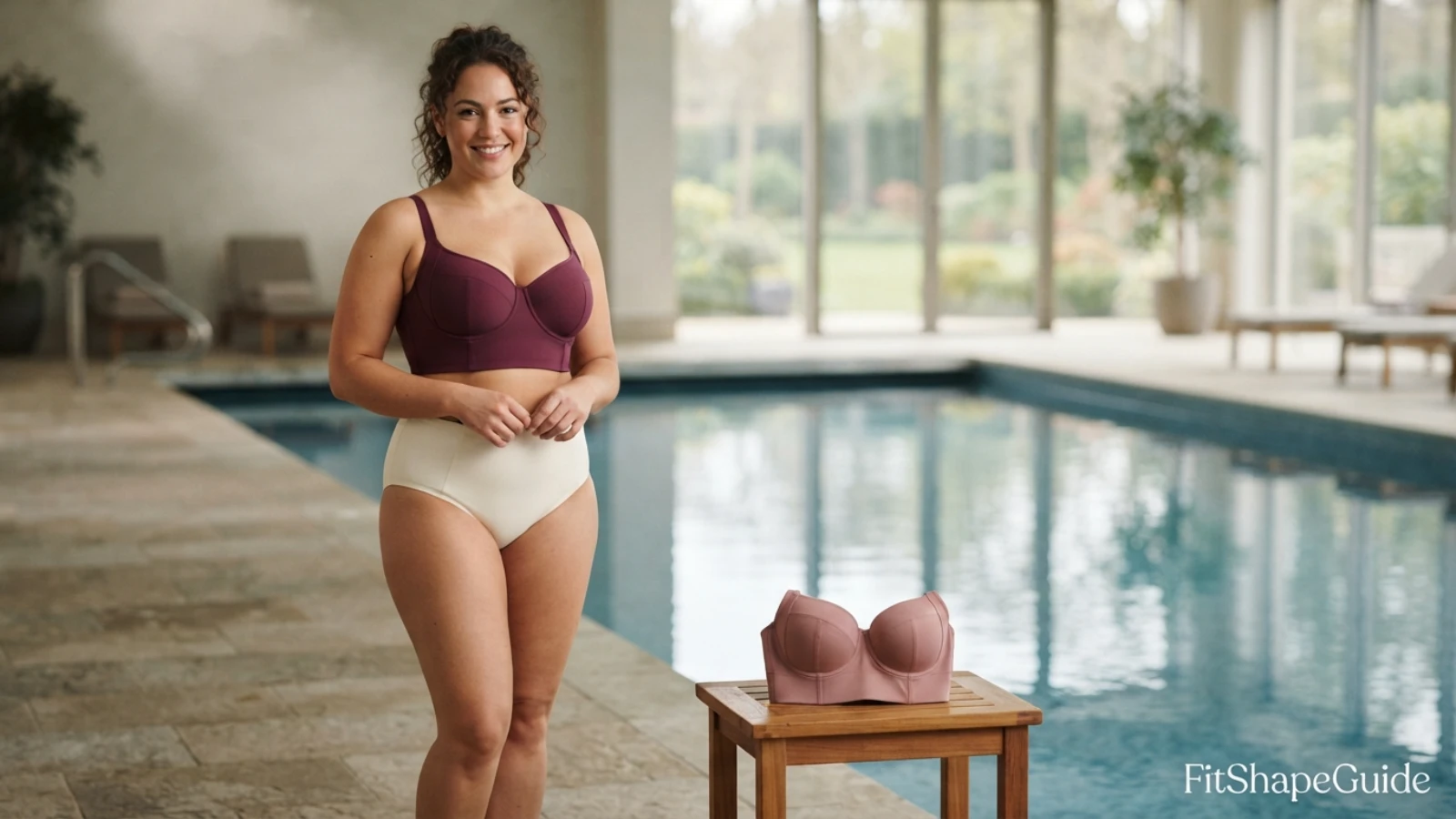
The 90-second water-ready check
- Confirm the listing and sewn-in label identify the garment as swimwear.
- Fasten every closure exactly as intended; never rely on a half-engaged zipper or hook.
- Check that the band is level and firm enough to resist upward movement.
- Raise both arms into a streamlined position without cup spill or neckline lift.
- Rotate the shoulders as if swimming freestyle, backstroke and breaststroke.
- Lean forward and push gently against the cups to simulate water pressure.
- Check every edge for rubbing, wire pressure, zipper contact and underarm cutting.
- Take full breaths. Pain, numbness or restricted breathing means the fit fails.
Best swimming sports bras for a large bust by design
“Sports bra” describes support style, not water suitability. Chlorinated pools, salt water, sunscreen, repeated soaking and wet fabric load create demands that a dry-land training bra may not be built to handle. The safest shopping shortcut is to choose a garment explicitly sold as a swim bra, bikini top for active swimming or integrated-bra swimsuit, then evaluate its actual structure.
Bra-sized encapsulation swim crop
Best for: distinct cup depth and a band-led fit when ordinary S–XL swim tops are too shallow. Separate cup shaping can contain each side while a wider band provides the anchor. Trade-off: the bra-like appearance may offer less torso coverage, and exact cup availability varies by brand.
Encapsulation-compression swim top
Best for: combining shaped inner support with an outer panel for lap swimming, aqua fitness or active beach use. Trade-off: too much compression can flatten cups, force fullness upward or make full breathing difficult.
Swim-specific underwire athletic top
Best for: a defined lower cup boundary and familiar bra-sized lift. The wire must belong to a swim construction, sit behind breast tissue and remain securely covered. Trade-off: a hard or narrow wire can press during a long streamline, so range-of-motion testing matters.
High-neck racerback swim bra top
Best for: upper-cup coverage, stable strap routing and confident overhead movement. Trade-off: a fixed racerback junction may pull near the neck, and a flat front can still lack depth despite generous coverage.
Guarded front-zip swim crop
Best for: easier dressing and removal when the zipper, lock, inner guard and backup closure are designed for swimming. Trade-off: the center hardware can press in a forward fold, and an unsecured zipper is a reliability problem.
Supportive one-piece with integrated bra
Best for: linking bust support, torso coverage and strap tension in one system. This is a useful alternative when a separate top shifts against the bottom. Trade-off: torso length can pull the cups downward or straps upward if the body proportion and suit length do not match.
The best swimming sports bras are not defined by the tightest neckline or thickest strap. Their support comes from a coordinated band, sufficient cup volume, stable side panels and a strap route that stays comfortable while the shoulders move repeatedly.
Band, cups, side panels and straps in water
A swimming bra must contain while the torso lengthens, rotates and meets drag. Support should be distributed rather than hanging from the shoulders. The underband supplies the anchor, cups provide volume, side panels control outward movement and straps keep the cup frame positioned.
Level underband
The band should feel firm on the loosest usable setting when dry if the design includes adjustability. It should remain horizontal during arm lift and a simulated stroke. If it climbs, the band may be too loose, the cups may be too small, or the straps may be over-tightened. If it restricts breathing or leaves sharp pressure, it is too aggressive.
Cup depth and upper containment
Look for shaped seams, molded structure, a supportive inner frame or bra-sized cups. The neckline should contact the body without cutting into tissue. A high neckline adds coverage but does not automatically add depth; a shallow high panel can simply redirect fullness toward the armholes.
Side containment
Higher side panels can reduce outward movement and help keep the band connected to the cup frame. They should clear the underarm during rotation. When a side edge rubs, changing the shape is usually more useful than tightening the straps.
Secure, adjustable straps
Wide straps distribute pressure, but width alone is not proof of support. Check stretch, attachment position, adjustability and back geometry. A racerback can reduce strap slip; parallel or convertible straps may offer more placement control. Compare dry-land strap routing in the racerback sports bra guide, then verify the chosen top is actually swim-specific.
| Component | Useful evidence | Dry movement test | Trade-off to watch |
|---|---|---|---|
| Wide level band | Firm recovery, secure fastening, multiple cup connections | Arms overhead without upward travel | Excess pressure can restrict breathing |
| Shaped cups | Seams, molding or an inner support frame | Forward lean without spill or collapse | Foam may hold more water unless designed for swim |
| High side panels | Contained side tissue and stable band transition | Full shoulder rotation without rubbing | Too-high edges can cut the underarm |
| Racerback straps | Stable central route and secure attachment | Streamline reach without neck pull | Fixed junction offers less adjustment |
| Adjustable parallel straps | Individual length control and stable hardware | Repeated arm circles without slip | Hardware must be specified for swim use |
| Front closure | Lock, inner guard and secure backup where provided | Lean and rotate without pressure or opening | Center hardware may feel prominent |
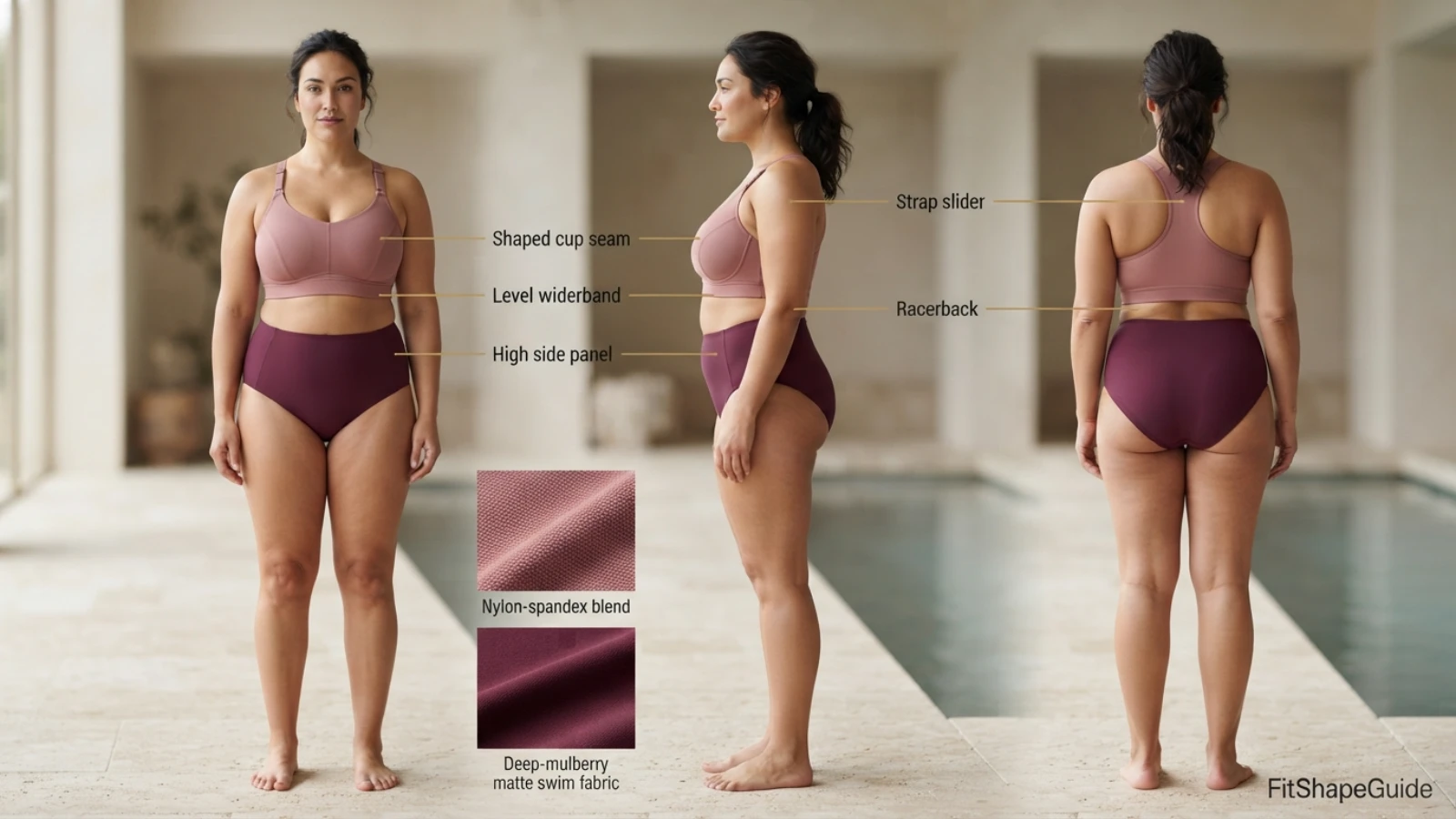
The best swimming sports bras for a large bust stay supportive without turning every feature into more pressure. Stable is the target; painfully tight is a fit failure.
Water load, chlorine, salt and fabric recovery
Dry fitting is necessary, but water changes the garment. Fabric and lining absorb water, surfaces become more slippery, and drag tests the neckline, straps and band from several directions. A top that already feels loose or rolls dry is unlikely to become more reliable after immersion.
Choose a fabric described for swimming
Do not infer water suitability from a generic blend name. Two fabrics with similar fiber percentages can use different yarns, elastane levels, knits, finishes and linings. Look for a manufacturer statement about swim use, chlorine resistance or frequent-swim suitability, then follow the actual product label.
Recovery matters more than first-stretch drama
A useful swim fabric stretches for movement and returns toward its original shape. Overly soft fabric may feel comfortable in the fitting room but relax around the band, neckline or straps when wet. Extremely firm fabric may retain shape yet fail if it cannot accommodate cup depth and breathing.
Evaluate lining and padding
A supportive inner sling, cup frame or full lining can improve containment. Removable pads are not automatically supportive; they may fold or shift unless the pocket and pad are stable. Thick absorbent padding can hold water, so verify that any foam is intended for swimwear and lies flat after rinsing.
Inspect every hardware point
Hooks, rings, sliders and zippers should be part of the swim design and securely enclosed where they contact skin. Do not promise corrosion resistance unless the manufacturer states it. A front zipper should have a reliable lock or retention method and a guard that prevents rubbing.
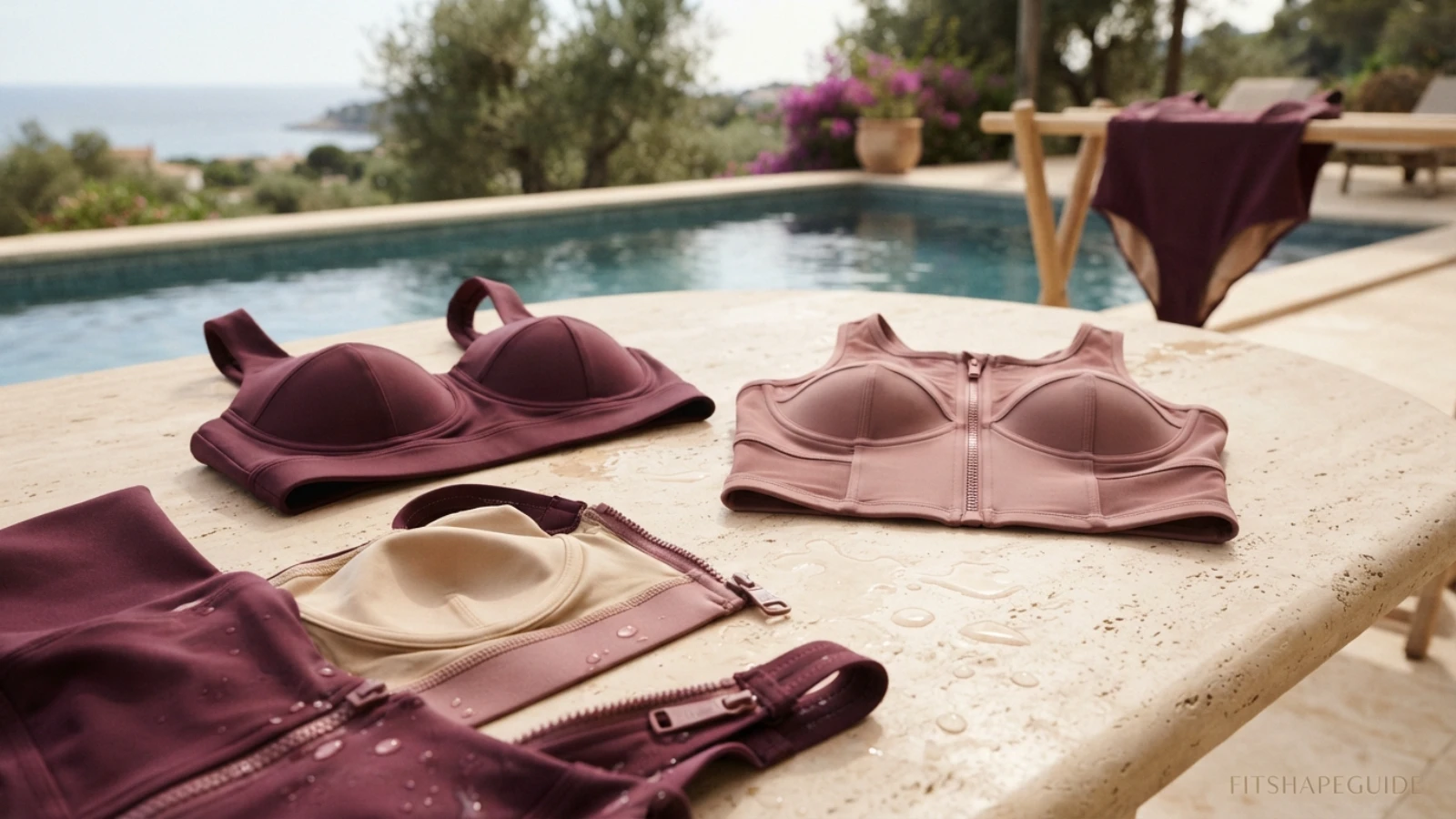
When comparing the best swimming sports bras, prioritize verified swim fabric and stable recovery over vague claims such as “performance material.”
Lap swimming, aqua fitness and recreational water use
The same top may behave differently during a long streamline, vertical jumping or casual floating. Choose for the most demanding movement you expect, while keeping breathing and shoulder mobility comfortable.
Lap swimming
Freestyle and backstroke need repeated overhead reach; breaststroke adds wide arm movement; turns and push-offs increase water pressure. A streamlined top with stable straps, a contained neckline and minimal loose trim is usually easier to manage. Test the exact stroke pattern dry before removing tags.
Aqua fitness
Vertical jumps, arm sweeps and rapid direction changes can resemble land exercise, but the garment still needs swim-safe materials. An encapsulation-compression top or supportive one-piece may reduce shifting. High-impact language from a gym bra listing is not enough evidence; water compatibility must also be explicit.
Paddle, beach and recreational use
Coverage, sun layers and a secure closure may matter more than maximum compression. A high-neck swim crop can reduce upper-cup exposure, while an adjustable bra-sized top may improve fit precision. Verify sun-protection claims on the product page rather than assuming coverage equals a specific rating.
Open-water layering
If a swim top sits under a rash guard, buoyancy aid or wetsuit, test the complete system. Seams, sliders and closures should not become pressure points beneath another layer. Safety equipment must be selected and worn according to its manufacturer guidance; the bra is not a substitute for flotation equipment.
| Activity | Prioritize | Movement test | Common trade-off |
|---|---|---|---|
| Lap swimming | Streamlined straps, contained neckline, stable band | Full streamline, arm circles, torso roll | High coverage may pull if front depth is shallow |
| Aqua fitness | Encapsulation plus controlled compression | March, side step, gentle jump and arm sweep | Excess compression can limit breathing |
| Recreational pool use | Comfort, adjustable fit and secure coverage | Sit, lean, reach and pool-exit motion | Softer styles may shift during vigorous movement |
| Paddle or beach activity | Secure closure, coverage and layer compatibility | Forward reach and torso rotation | Hardware may press under a vest or rash guard |
| Under a rash guard | Smooth seams and low-profile straps | Wear both layers through full reach | Two tight layers may create excess pressure |
| Supportive one-piece | Torso length, inner bra and strap balance | Streamline plus squat and body extension | Wrong torso length distorts cup position |
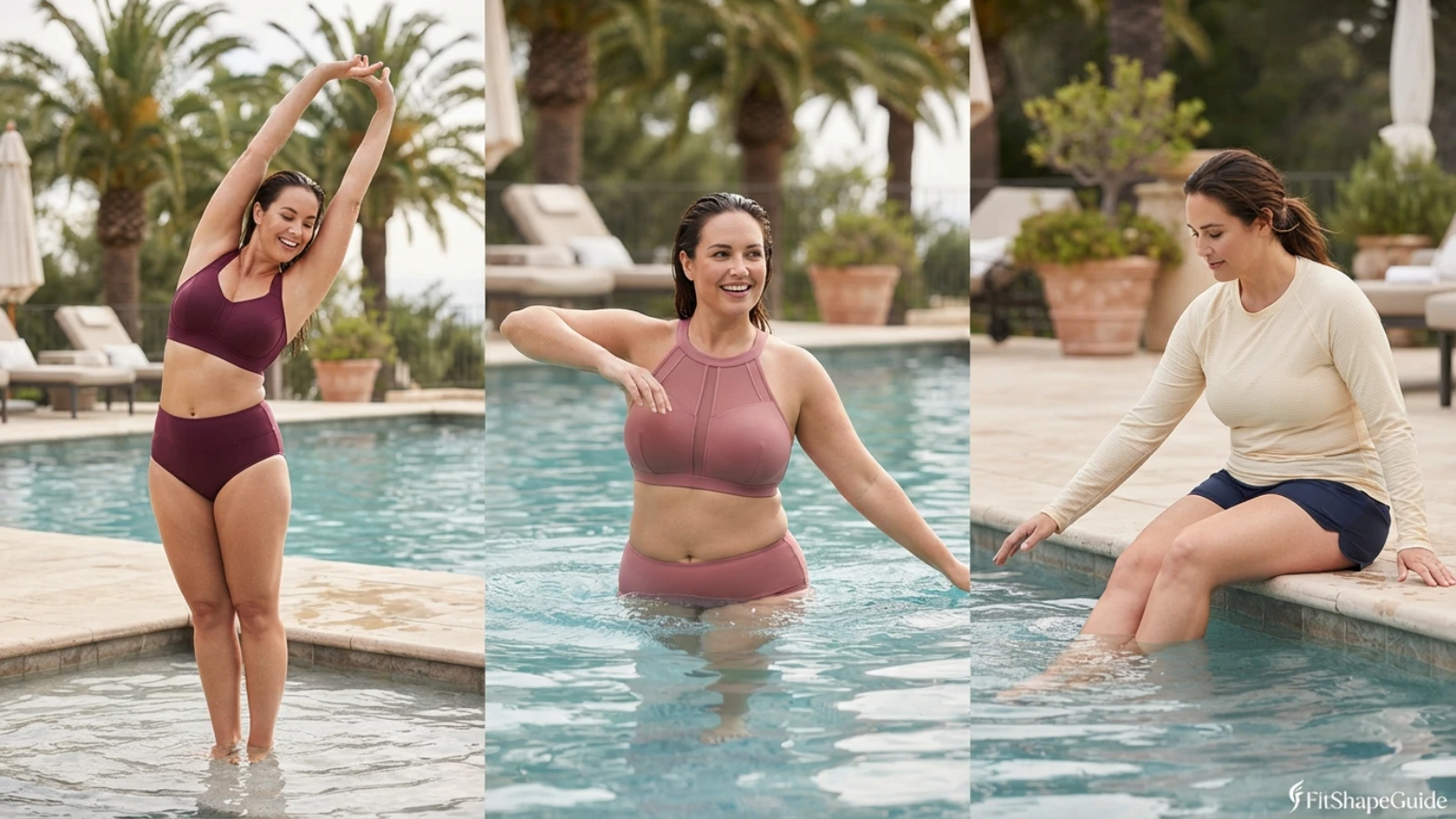
The best swimming sports bras for a large bust match real movement without promising “zero bounce,” universal support or one construction for every swimmer.
Rinse, wash and dry the swim bra correctly
Care begins immediately after swimming. Official arena care guidance advises rinsing swimwear after use in non-chlorinated water, avoiding prolonged storage while wet, using detergent suitable for delicate clothes and air-drying away from heat sources. The sewn-in label remains the controlling instruction for the actual garment.
Rinse promptly
Use cool fresh water after pool or salt-water use. Work water gently through the cups, band, lining and closure instead of twisting the top. Rinsing cannot reverse existing damage, but it reduces how long pool water, salt, sunscreen and body oils remain in the fabric.
Do not trap it wet
A wet swim bra left in a sealed bag stays folded against elastics, cups and hardware. Transport it only as long as necessary, then remove it, reshape cups and follow the label. Avoid leaving a wet item exposed to direct sun inside a bag or container.
Wash according to the label
Fasten closures if instructed, use an appropriate delicate cleanser and avoid bleach unless the label specifically permits it. Do not assume machine washing or a dryer is safe. Separate care can also stop rough fasteners from catching smoother swim fabrics.
Air-dry without distorting the band
Lay flat or support the garment as directed. Hanging a water-heavy top from one strap can stretch that point. Direct high heat can affect elastics and molded components, so keep the garment away from heat sources unless its label says otherwise.
How to shop online for a supportive swim bra
A trustworthy listing should show that the top is intended for swimming, explain its cup and band structure, identify materials and lining, show the back and closures, provide a current size chart, state care instructions and make returns understandable. Lifestyle photos alone cannot answer those questions.
Start with the seller’s sizing system
Bra sizes, dress sizes and S–XL ranges are not interchangeable. Follow the seller’s measurement method and check whether the chart lists body measurements or garment dimensions. If your known-good bra size falls between categories, use cup-depth, band and review evidence rather than assuming the larger letter has more proportional bust room.
Inspect front, side and back views
The front reveals neckline and cup construction; the side shows containment and band continuity; the back shows strap routing and closure access. Zoom in for seams, lining edges, adjusters, zipper guards and hook positions. Missing back views are a reason to pause, not a reason to guess.
Read reviews for measurable evidence
Useful reviews state body or bra measurements, purchased size, swim activity and a specific outcome such as band rise, cup spill, strap slip, slow drying or closure pressure. A star rating without context cannot predict fuller-bust fit. Review dates and variant names also matter because products can change.
Use the return window as part of the fit process
Before removing hygiene protection or entering water, confirm the current return rules. Perform dry movement tests over clean skin or a suitable clean base layer as permitted. Keep packaging until cup, band, straps and torso movement have been checked.
Amazon verification workflow
Verify the direct live product page, brand or authorized seller, exact variant, swim-use wording, materials, current chart, closure, lining, care and return eligibility. Never publish a search-result link or copy a transient price, coupon, rating, review count, stock message or delivery claim. The affiliate disclosure should appear near recommendations, not hidden on a separate page.
For a swim-specific wired alternative, compare the underwire swimsuit guide. For more integrated coverage, see the sporty swimsuit guide.
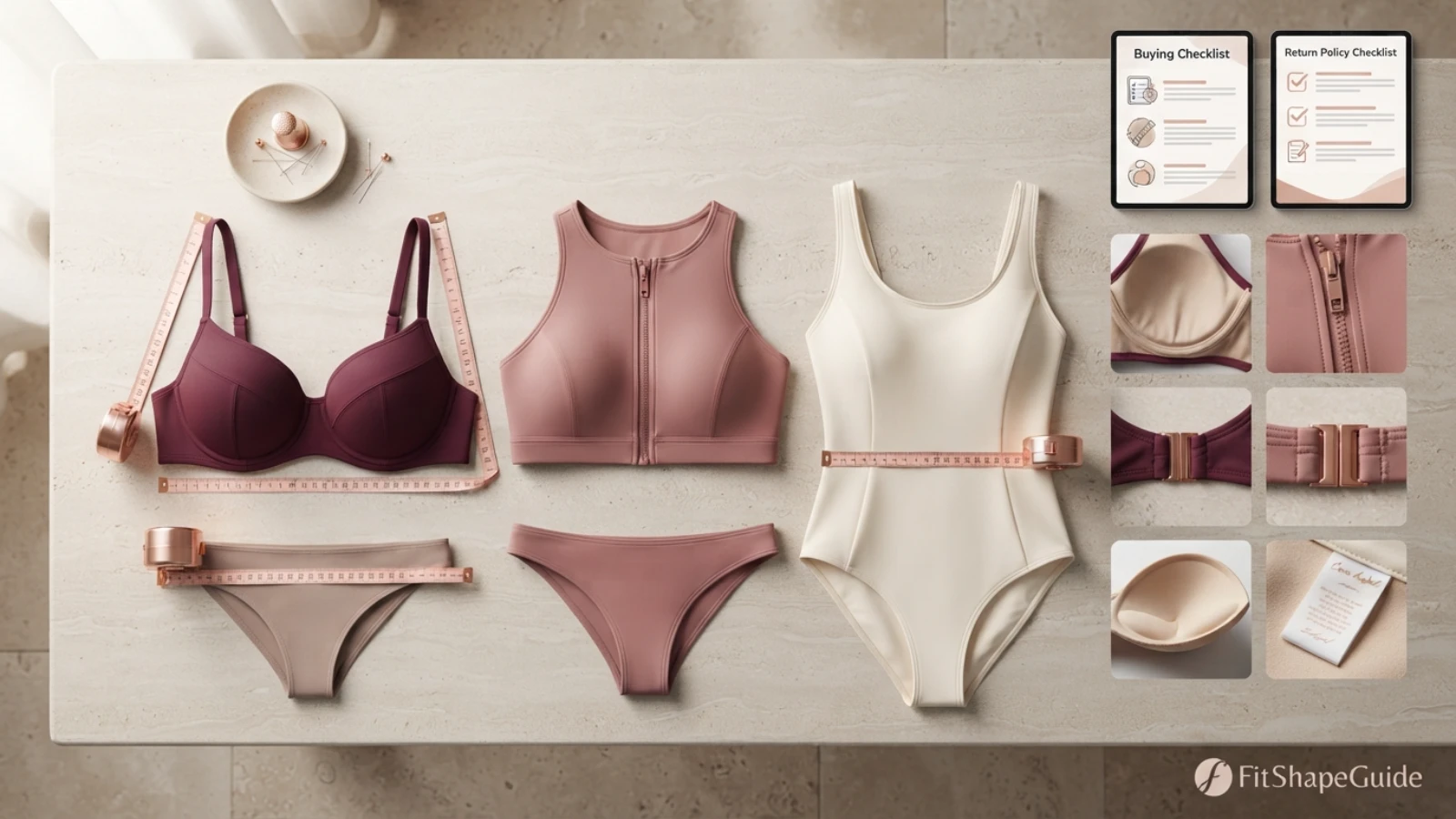
Listings for the best swimming sports bras make the water-use evidence and support construction visible before purchase.
Common swimming-bra fit problems
| Symptom | Likely cause | Better next step |
|---|---|---|
| Band rises during arm lift | Band too loose, cups too small or straps over-tightened | Restore cup depth and a firmer level anchor |
| Neckline lifts away | Shallow cups, weak recovery or strap geometry mismatch | Choose shaped cups and a more stable neckline |
| Spill at top or side | Insufficient cup volume or low side containment | Try bra-sized cups or higher side panels |
| Racerback pulls the neck | Straps too short or junction positioned too high | Choose adjustable length or different back route |
| Front zipper presses or opens | Poor lock, missing guard, excessive center tension | Stop use and choose a secure guarded swim closure |
| Top becomes loose when wet | Weak fabric or elastic recovery, or oversized band | Choose verified swim fabric and a more stable anchor |
| Cups fold or pads move | Unstable pocket, removable pad or excess water retention | Try fixed shaping or a structured swim lining |
| Pain, numbness or restricted breath | Excess compression, wire pressure or narrow edges | Stop and refit; discomfort is not proof of support |
Do not solve every problem by sizing down
A smaller top may tighten the band while reducing cup depth and pulling the straps harder. Identify the failing component first. When the band is loose but cups already feel small, a more precise bra-sized construction is usually more logical than global downsizing.
Do not use shoulder pressure as the support test
Tight straps can temporarily lift the front while dragging the band upward and loading the neck. Loosen them until comfortable, restore a stable band and confirm that the cup frame carries volume correctly.
Do not confuse coverage with containment
A high panel may cover more skin but still stretch away from the body. The best swimming sports bras for a large bust combine coverage with adequate cup space, recovery and anchoring.
Choose a swim bra, not just a sports-bra silhouette
The best swimming sports bras for a large bust begin with verified swim use, then add real cup depth, a level underband, high side containment and secure straps. Choose bra-sized encapsulation for fit precision, hybrid compression for active water movement, a high-neck racerback for coverage or an integrated-bra one-piece for whole-torso stability. Keep only the construction that stays aligned through a full stroke and remains breathable, comfortable and secure.
Frequently asked questions
These answers clarify how the best swimming sports bras for a large bust should fit, move and recover.
What type of sports bra is best for swimming with a large bust?
A swim-specific bra-sized encapsulation or encapsulation-compression top is a strong starting point because it combines cup depth, a stable band and water-ready materials.
Can I wear a regular sports bra in a swimming pool?
Do not assume it is suitable. Choose a garment explicitly made for swimming, because ordinary gym fabric, elastic, padding and hardware may not be designed for chlorinated or salt water.
Is an underwire swim top suitable for lap swimming?
It can be when the wire is designed for swimwear, fully contained and comfortable through a streamlined reach. Stop if it presses, shifts or restricts movement.
Are racerback swim tops supportive for a large bust?
They can stabilize the straps and add coverage, but support still depends on cup depth and a firm band. The racerback junction should not pull near the neck.
How tight should a swimming sports bra fit?
It should feel secure enough for the band to stay level, yet allow full breaths and shoulder movement. Pain, numbness or restricted breathing means it is too tight.
Can a front-zip swim top stay secure in water?
Yes, when it uses a swim-specific zipper with a reliable lock or retention method, an inner guard and enough cup room to avoid excessive center tension.
How do I care for a swimming sports bra?
Follow its sewn-in label, rinse promptly in fresh water, avoid leaving it wet in a bag, use appropriate gentle washing and air-dry away from heat.
How do I test a swim bra before keeping it?
Confirm return rules, then test the band, cups, straps and closure dry with arm circles, a full streamline, torso rotation, forward lean and full breathing.
Editorial and verification standards
This guide evaluates observable construction: verified swim use, band recovery, cup depth, side containment, strap route, closure security, lining, wet-load behavior, activity compatibility and care. It recommends support categories rather than inventing unverified products or universal fit promises.
Swimwear care references official arena material and care guidance, which advises a prompt fresh-water rinse, avoiding prolonged wet storage and air-drying away from heat. Always prioritize the care label attached to the selected garment.
Before publishing a product module, verify the direct live listing, brand or authorized seller, swim-use description, sizing method, materials, lining, closures, care and returns. Affiliate relationships should be stated clearly and near the recommendation under the FTC endorsement guidance.
“Best” here means suitable verified constructions for an individual body, activity and coverage preference—not a guarantee that one top will fit every swimmer.