Best Blazers for a Large Bust at Work
A construction-first guide to office blazer shaping, lapel break, button stance, shoulders, lining, length, base layers, seated movement and commute practicality.

The 90-second work-blazer check
- Wear the exact bra and office base layer planned beneath the blazer.
- Settle the jacket from the shoulders before touching the closure.
- Fasten every functional button without pulling the fronts together.
- Check lapel roll, button strain, side seams and front-hem balance.
- Cross the arms and reach forward toward an imaginary keyboard.
- Sit for one minute and take several complete, comfortable breaths.
- Load pockets lightly and wear the usual lanyard, bag or ID badge.
- Raise both arms, then confirm the blazer settles back into place.
Best blazers for a large bust at work by type
Blazer labels describe style more often than fit. “Classic,” “slim,” “relaxed” and “oversized” mean different things across brands. Start with the construction, how the blazer will be worn and the office’s real dress level.
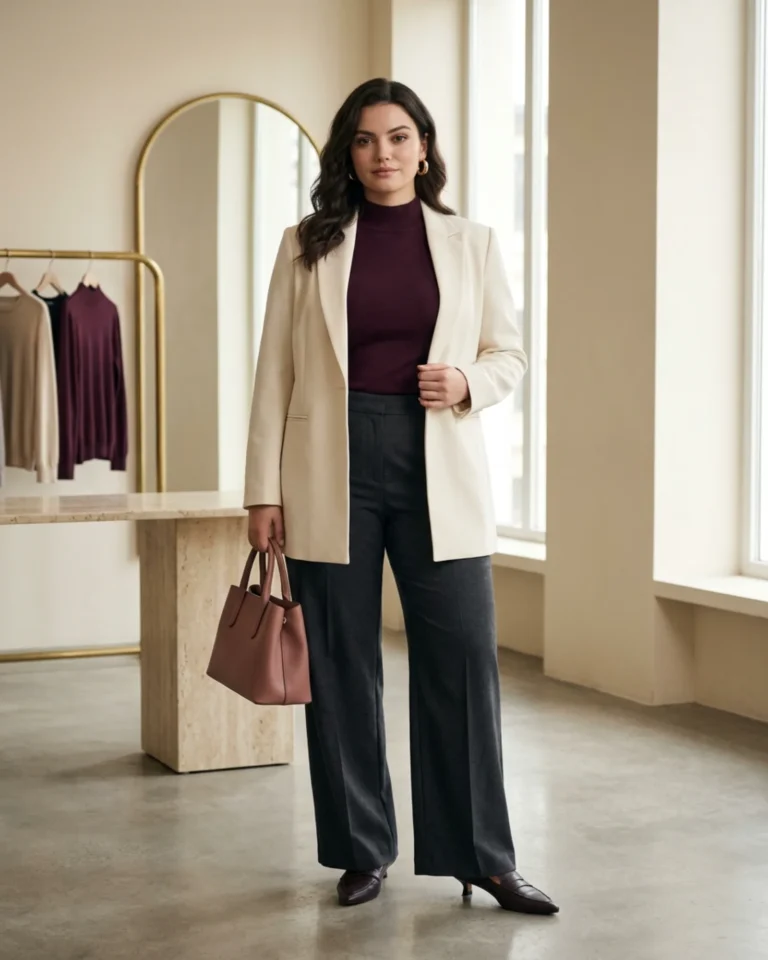
Single-breasted princess-seam blazer
Best for: targeted chest depth, a clean center front and reliable formal dressing. One waist-level button usually creates less closure bulk. Trade-off: poor seam placement can flatten or point, and one badly positioned button carries most of the strain.
Collarless tailored jacket
Best for: reducing lapel layers and framing blouses, dresses or scarves with a quiet neckline. Trade-off: a high round edge can press the throat if the front is short, while edge-to-edge versions offer no functional closure.
Soft structured knit blazer
Best for: business-casual offices, travel and long seated days. Stable knit or ponte can support reach without feeling rigid. Trade-off: soft fabric may read less formal, and heavy knit pockets or lapels can stretch with wear.
Longline single-breasted blazer
Best for: extra torso coverage, straight trousers and a modern office silhouette. A back vent supports stride. Trade-off: longer fronts may catch at the hip or chair, and insufficient bust depth can exaggerate front-to-back hem imbalance.
Double-breasted work blazer
Best for: formal presence and natural overlap when the pattern includes real chest depth. Trade-off: two button columns, wider facings and peak lapels add layers, making a flat or shallow front buckle more visibly.
Relaxed or unstructured blazer
Best for: creative offices, warm climates and easy layering over fluid tops. Minimal padding can feel lighter. Trade-off: excess body width may swing behind the bust, and an unlined interior can grip some shirts or knits.
The best work blazers support the job rather than asking the wearer to remain motionless. Use the complete office dressing guide to place the blazer inside a repeatable wardrobe.
Bust shaping, lapel break and button stance
A woven blazer must contain chest volume in its pattern. Stretch can assist movement but does not replace darts, princess seams or shaped panels. Inspect the jacket closed because an open front can hide insufficient depth.
Princess seams and darts
Princess seams may begin at the shoulder or armhole and curve through the bust area. They distribute shaping over a longer line. Side or waist darts add more localized depth. The curve should follow the garment’s intended shape without collapsing. A dart ending abruptly or a seam sitting too far inward can create distortion instead of room.
Read the lapel break
The break point is where the front folds into the lapel. If it lands across high strain, the lapel can spring outward or bow. A lower break creates a longer open neckline; a higher stance offers more coverage. Neither is universally better. The useful blazer keeps its lapel calm while buttoned and seated. Compare different neckline frames before deciding which feels most balanced.
Place the button away from maximum strain
A one-button blazer often anchors near the waist or below the fullest bust area. Two or three buttons distribute closure but require several positions to align. Fasten every functional button the design intends. Decorative buttons do not count. If the button pulls into a crater or radiating folds, the front needs more depth or a different stance.
Double-breasted overlap
Overlap provides useful fabric only when the under-front reaches naturally. If it must be dragged across, side seams rotate and lapels buckle. Test both functional button columns, the inner anchor and the seated position. A double-breasted blazer may fit beautifully, but it is not automatically roomier.
Front facing and canvas
Facings and internal canvas support the lapel and front edge. Half-canvas and fused construction are methods, not automatic fit rankings. The result should return to shape without ridging, bubbling or flattening the chest. A rigid facing across a shallow front magnifies the problem.
| Construction detail | Useful evidence | Desk test | Trade-off |
|---|---|---|---|
| Princess seam | Curved front volume through bust | Button and lean forward | Wrong placement can flatten or point |
| Side/waist dart | Localized depth in woven fabric | Sit without dart collapsing | Short darts may create a sharp end |
| One-button stance | Low-strain anchor near waist | Breathe fully while closed | One point carries closure load |
| Two-button front | Longer closure and formal line | Test intended button convention | More positions can gape |
| Double-breasted front | Natural overlap and inner anchor | Close both rows and sit | More facing, lapel and button bulk |
| Open edge-to-edge jacket | Front edges hang vertically | Walk and reach without sides swinging back | No functional closure or weather control |
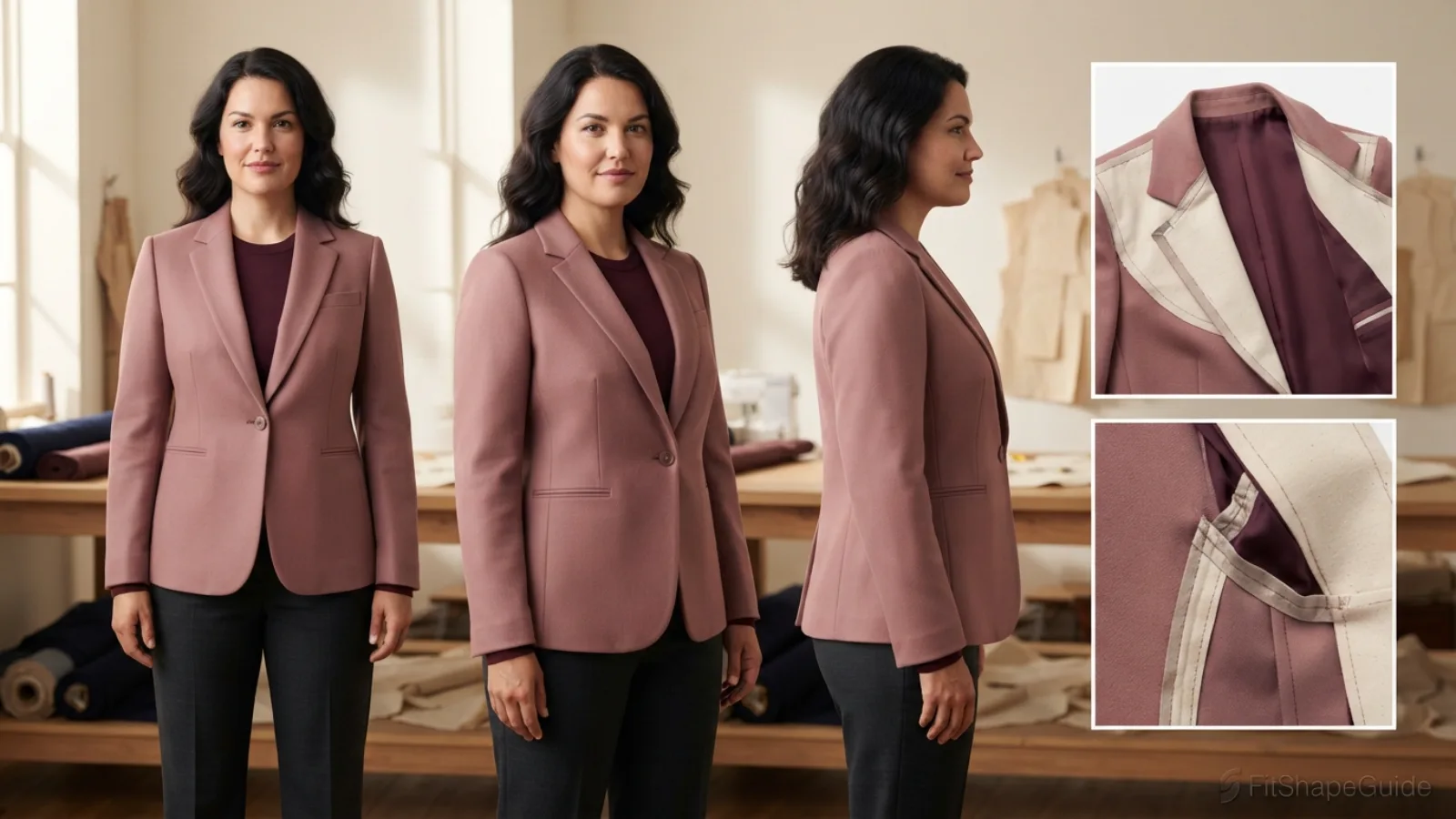
The best blazers for a large bust at work close because their fronts contain shape—not because a button forces flat panels together.
Shoulders, sleeves, lining and desk movement
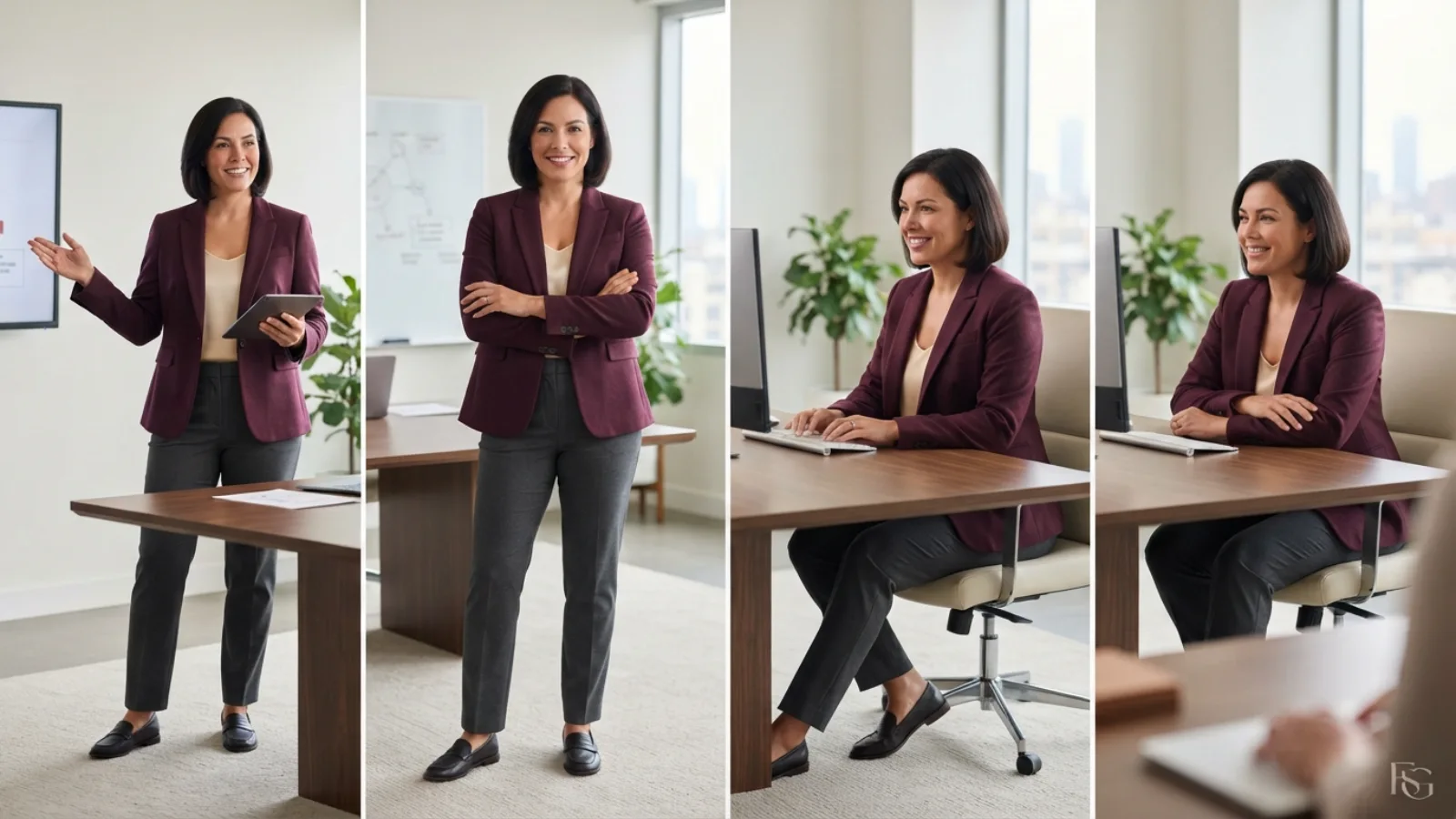
Office work involves more upper-body movement than a fitting-room stance: typing, driving, carrying a laptop, reaching for files and presenting. Chest fit and upper-back reach are connected. A tight back pulls the fronts apart even when the blazer looks smooth with arms at the sides.
Find the intended shoulder line
A traditional set-in blazer usually places the seam near the shoulder edge. A small pad may extend or square it intentionally. Decide whether the design is classic, sharp or oversized before judging. The shoulder should look symmetrical and allow movement without the pad floating above the body.
Check upper-back width
Cross the arms, reach toward an imaginary keyboard and extend one arm as if taking a file from a shelf. Firm tailoring will move less than knit fabric, but the neckline should not choke and the button should not pop. A center-back vent supports the hem, not the upper back; adequate width is still required.
Evaluate upper arm and sleeve pitch
Bend both elbows and rotate the forearms. The sleeve should follow the natural arm position rather than twisting. Extra chest circumference does not guarantee upper-arm room. If a larger size fixes the arm but drops the shoulder, another pattern is more useful.
Inspect the lining
Full lining improves slip over shirts and knit tops. Partial lining reduces weight and may feel cooler. Sleeve lining is especially important with textured layers. Check whether it pulls before the outer fabric, twists at the cuff or hangs below the hem. A roomy blazer with a tight lining is still restrictive.
Test sleeve length at the desk
Rest forearms on a desk and type. Sleeves should not swallow the hands or expose far above the wrist unless that is the intended crop. Functional or decorative cuff buttons affect alteration options. A tailor can often shorten sleeves, but working buttonholes may increase complexity.
Blazer length, office formality and proportions
Length changes where the blazer meets trousers, skirts and dresses. It also affects sitting, pocket placement and front-to-back balance. There is no universally flattering endpoint. Choose the length that works with the job, outfit and body.
Cropped and waist-length blazers
A short blazer can coordinate with high-rise trousers, skirts and dress waists. It needs enough front length because small upward pull is obvious. Check that the hem does not finish directly under the bust unless that is the intentional design. Shorter jackets may read modern or less formal depending on fabric and office.
Hip-length blazers
This is the most versatile work length. It can cover a waistband, balance trousers and layer over dresses. Sit on a firm chair to ensure the hem does not bunch and drive the collar upward. Pockets should remain accessible without flaring.
Longline blazers
Longline cuts create extra torso coverage and a strong vertical frame. They need hip ease, a back vent and enough front length. Check chair contact, stride and whether the jacket catches on a bag. Soft longline fabric may drape easily, while structured cloth holds more visual weight.
Single versus double-breasted formality
Single-breasted blazers are often easier to layer and close. Double-breasted versions can look authoritative but add front layers. Collarless and knit jackets may suit business casual. Formality also depends on fabric, matching trousers, color, care and workplace norms—not button count alone.
| Work situation | Useful blazer construction | Movement test | Trade-off |
|---|---|---|---|
| Interview or formal meeting | Shaped single-breasted, lined, calm lapel | Button, sit and present | More structure and heat |
| Business-casual office | Soft structured knit or unstructured woven | Type and walk through full day | May read less formal |
| Warm climate | Partial lining, breathable cloth, lighter shoulder | Layer over sleeveless opaque shell | May wrinkle or grip more |
| Cold office | Fully lined blazer with sweater ease | Close over fine knit and reach | Can feel bulky beneath a coat |
| Presentation role | Stable shoulder, secure closure, useful pockets | Raise arms and carry notes | Hardware and pocket load add weight |
| Commute-heavy day | Stretch fabric, back vent, crease recovery | Sit, carry bag and drive | Softer structure may relax |

Best base layers and office outfit formulas
A blazer can fit over a fine shell and fail over a crisp shirt. Test the complete combination because collars, plackets, sleeve heads and fabric friction change the result.
Fine-knit shell
A smooth opaque knit reduces front-placket bulk and lets the blazer slide. Choose a stable neckline and recovery. Thin fabric reveals jacket seam ridges; a medium gauge may be more forgiving but warmer. Explore options in the best tops guide.
Button-down shirt
Allow room for the shirt collar, placket, shoulder seam and sleeve head. Two structured fronts can magnify strain. Fasten the shirt and blazer separately, then together. The shirt should not bunch through the armhole or gape when the blazer is closed. Use the button-down fit guide for the base layer.
Blouse or wrap top
Fluid blouses reduce stiffness but may shift under lining. A secure wrap can create a useful neckline; a shallow overlap can open while seated. Check whether the blazer lapel catches the blouse edge or pulls it downward. A camisole can provide chosen coverage but should not repair an unstable top.
Work dress
A blazer over a dress creates one clear outer layer, but waist seams and hems must coordinate. Cropped jackets often pair with defined dress waists; hip-length blazers provide more coverage. Sit to check that the jacket does not catch on the dress. Compare constructions in the work-dress guide.
Matching trousers or separates
A matching suit reads more formal, but separates provide more outfit range. Exact dye lots and fabric texture may vary, so do not assume similar navy pieces match. A high-rise trouser can create a stable junction with a shorter blazer; a longline jacket may pair better with a simple leg line. Choose by workplace and comfort.
Fabric, lining, pockets, commute and care
Fabric determines structure, heat, recovery, wrinkles and care. Fiber content matters, but weave, weight, stretch, lining, canvas and seam construction matter too. A wool blazer can be lightweight; a synthetic blend can be dense.
Wool and stretch-wool blends
Wool suiting can hold a lapel and regulate temperature across conditions. Elastane or mechanical stretch may support reach, but does not replace shaping. Fine wool often requires specialist care. Check actual weight and lining rather than assuming every wool blazer works year-round.
Ponte and structured knits
Ponte can provide stretch, recovery and a clean edge with less internal tailoring. It is useful for travel and business casual. Dense knit may feel warm and heavy; pockets and lapels can stretch. Check whether the blazer recovers after sitting and whether the hem rolls.
Linen and linen blends
Linen blends can feel lighter and look appropriate in warm climates. Wrinkling is part of the fabric behavior, though blend and construction influence severity. Partial lining reduces weight but may expose internal friction. Decide whether the care and natural creasing suit the office.
Pockets and hardware
Chest welt and flap pockets add layers. Lower welt or patch pockets can be practical but may flare under strain. Load a phone, access card or notes lightly and watch front balance. A lanyard can press lapels; inside pockets may distribute small items more cleanly.
Commute test
Wear the blazer under the planned coat and with the usual bag. Shoulder pads and sleeves can bunch beneath fitted outerwear. Sit as if driving or using public transport. A blazer that looks polished after ten minutes but creases or twists during the commute may not be the best daily choice.
Care and alteration potential
Follow the sewn-in care label. Broad supportive hangers protect shoulders. Empty pockets before storage. Tailors can often adjust sleeve length, waist and some seams; moving shoulders, lapel break or major chest structure is more complex. Do not buy a fundamentally shallow front expecting a simple alteration.
How to shop online for a work blazer
A useful listing should show the blazer open and closed from front, side and back. It should state fit category, closure, fabric, lining, pockets, vents, care and actual length. “Tailored” and “stretch” are not standardized fuller-bust measurements.
Measure a known-good blazer
Record flat chest width, front-panel width at bust level, shoulder, upper arm, sleeve, waist, hip, front length and center-back length. Compare over the same office base layer. Confirm whether the seller chart lists body measurements or finished garment dimensions.
Find shaping and closure evidence
Zoom in for princess seams, darts, curved side panels, lapel break, functional button positions, lining and vent. A product photo styled open does not show whether the button works. If dimensions are missing, model height and size still cannot predict chest depth.
Separate slim, classic and relaxed
Current official listings demonstrate the variation. BOSS describes slim one-button and two-button wool blazers with lining and specific back lengths. Burberry lists slim and classic jackets with single- or double-breasted closures, partial or full lining, vents, shoulder padding and half-canvas construction. Verify each exact style rather than transferring assumptions across a brand.
Use reviews for observable outcomes
Prioritize reviews that include body and garment measurements, purchased size, base layer and a specific result: button strain, lapel lift, shoulder restriction, sleeve length, lining drag, pocket flare or wrinkles after sitting. Ratings and “true to size” statements alone cannot predict fuller-bust fit.
Amazon verification workflow
Use only a direct live product-detail page after confirming the brand or authorized seller, exact variant, current chart, measurements, shaping, closure, fabric, lining, pockets, vents, care and return eligibility. Never publish a search-results URL. Do not hard-code changing prices, coupons, ratings, review counts, stock claims or delivery promises. Keep the affiliate disclosure close to recommendations.
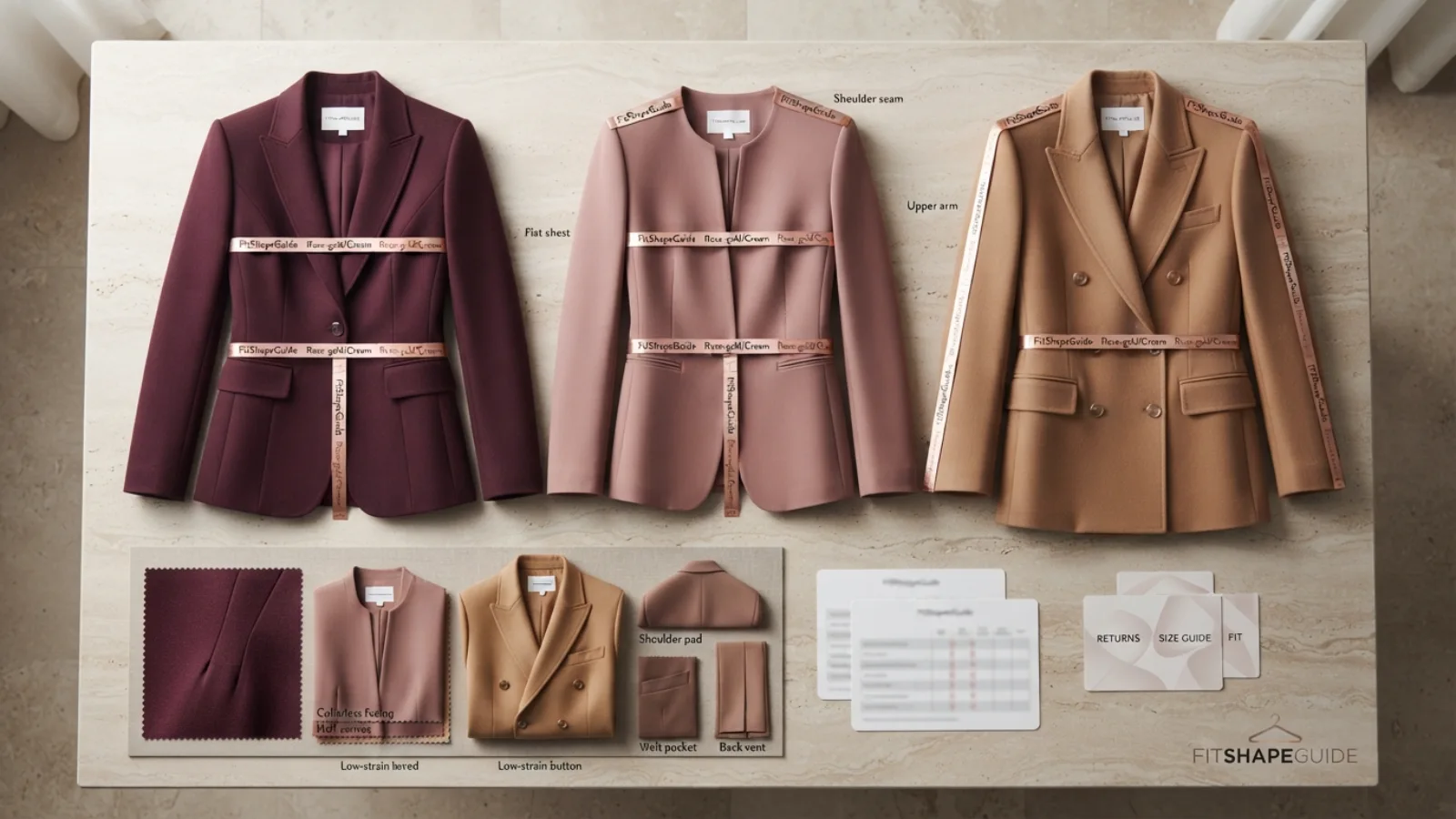
Listings for the best blazers for a large bust at work make shaping, closure and base-layer evidence visible before checkout.
Common work-blazer fit problems
| Symptom | Likely cause | Better next step |
|---|---|---|
| Lapels spring outward | Insufficient chest depth, wrong break point or rigid facing | Choose more shaping and compatible lapel stance |
| Button forms X-shaped folds | Flat front or closure across maximum strain | Try darts, princess seams or lower button stance |
| Front hem rises sharply | Missing front length or chest depth | Choose a shaped or intentionally longer front |
| Neckline presses throat | Chest or upper-back tension pulls blazer upward | Add front depth and reach; stop if breath is restricted |
| Shoulders drop after sizing up | Global width added without targeted front room | Choose fuller-bust shaping or intentional relaxed cut |
| Sleeve lining binds | Internal sleeve is narrow or twisted | Try another pattern or have a tailor assess lining |
| Pockets flare | Front strain or pocket crosses a curved area | Choose lower-profile placement and more panel depth |
| Long blazer bunches seated | Hip too narrow, vent restricted or fabric rigid | Try more sweep, open vent or shorter length |
Do not size up automatically
A larger blazer may close at the bust but create dropped shoulders, long sleeves, excess waist and misplaced pockets. Diagnose whether the missing room is at the chest, upper back, upper arm or base layer. Targeted shaping usually solves the actual problem more cleanly.
Do not judge only while open
If the design includes a functional button, test it. An open front can temporarily hide insufficient depth. A true edge-to-edge jacket is different, but its fronts should hang vertically and stay intentional during movement.
Do not blame the body for distorted tailoring
The best blazers for a large bust at work account for three-dimensional front volume. Pulled buttons, flipped lapels and a rising hem are garment evidence—not body failures. Choose the construction that supports ordinary work movement.
Choose shaped structure that survives a desk day
The best blazers for a large bust at work combine targeted front depth, a calm lapel, low-strain closure, stable shoulders, upper-back reach and lining that moves over the actual base layer. Start with a single-breasted princess-seam blazer for formal reliability, a collarless jacket for less front bulk, or a structured knit for business casual. Keep the blazer that remains balanced while buttoned, reaching, commuting and seated.
Frequently asked questions
These answers explain how the best blazers for a large bust at work should shape, layer and move.
What work blazer style is best for a large bust?
A single-breasted blazer with princess seams is a strong starting point because it provides targeted chest depth with less closure and lapel bulk.
Should a work blazer button over a large bust?
If it has a functional closure, it should button without pulling, gaping or restricting breath, even when the preferred styling is open.
Are double-breasted blazers good for a fuller bust?
They can be when the overlap reaches naturally, the button stance is compatible and the shoulders remain balanced with every functional button closed.
Are princess seams useful in a work blazer?
Yes. Curved princess seams can add three-dimensional front volume, provided their placement follows the garment’s intended bust shaping.
Why do blazer lapels spring open over the bust?
Common causes include insufficient chest depth, an incompatible lapel break point, a rigid facing or a button placed under excessive strain.
What should I wear under a work blazer?
A shaped opaque knit, darted button-down or secure blouse works well when its neckline, placket and sleeves remain smooth beneath the blazer.
Should I size up in a work blazer?
Only if the shoulders, sleeves, waist and pockets remain intentional. A different cut with targeted front depth is often better than extra width everywhere.
How do I test a blazer before wearing it to work?
Wear the intended top, close every fastening, cross and raise the arms, reach toward a desk, sit, breathe fully, load pockets lightly and check hem balance.
Editorial and verification standards
This guide evaluates observable construction: front-panel depth, darts, princess seams, lapel roll, button stance, shoulders, upper arms, lining, length, pockets, vents, fabric, care and returns. It recommends blazer constructions rather than inventing products, office policies or universal fit promises.
Current construction examples were checked against official pages for a J.Crew single-breasted stretch-wool blazer, a BOSS one-button lined wool blazer, a Burberry single-breasted half-canvas jacket and a Burberry double-breasted half-canvas jacket. These sources illustrate why blazer labels do not determine fit.
Before publishing a product module, verify the direct live seller, measurements, shaping, closures, fabric, lining, pockets, vents, care, workplace suitability and returns. Affiliate relationships should be disclosed clearly and close to recommendations under the FTC endorsement guidance.
“Best” means a suitable verified blazer for an individual body, office, base layer, climate and movement needs—not a guarantee that one silhouette works for everyone.