Best Puff-Sleeve Tops for a Large Bust
A construction-first guide to sleeve-cap volume, gathering placement, shoulder stability, bust shaping, bicep ease, cuff comfort, fabric behavior, front length, and movement.
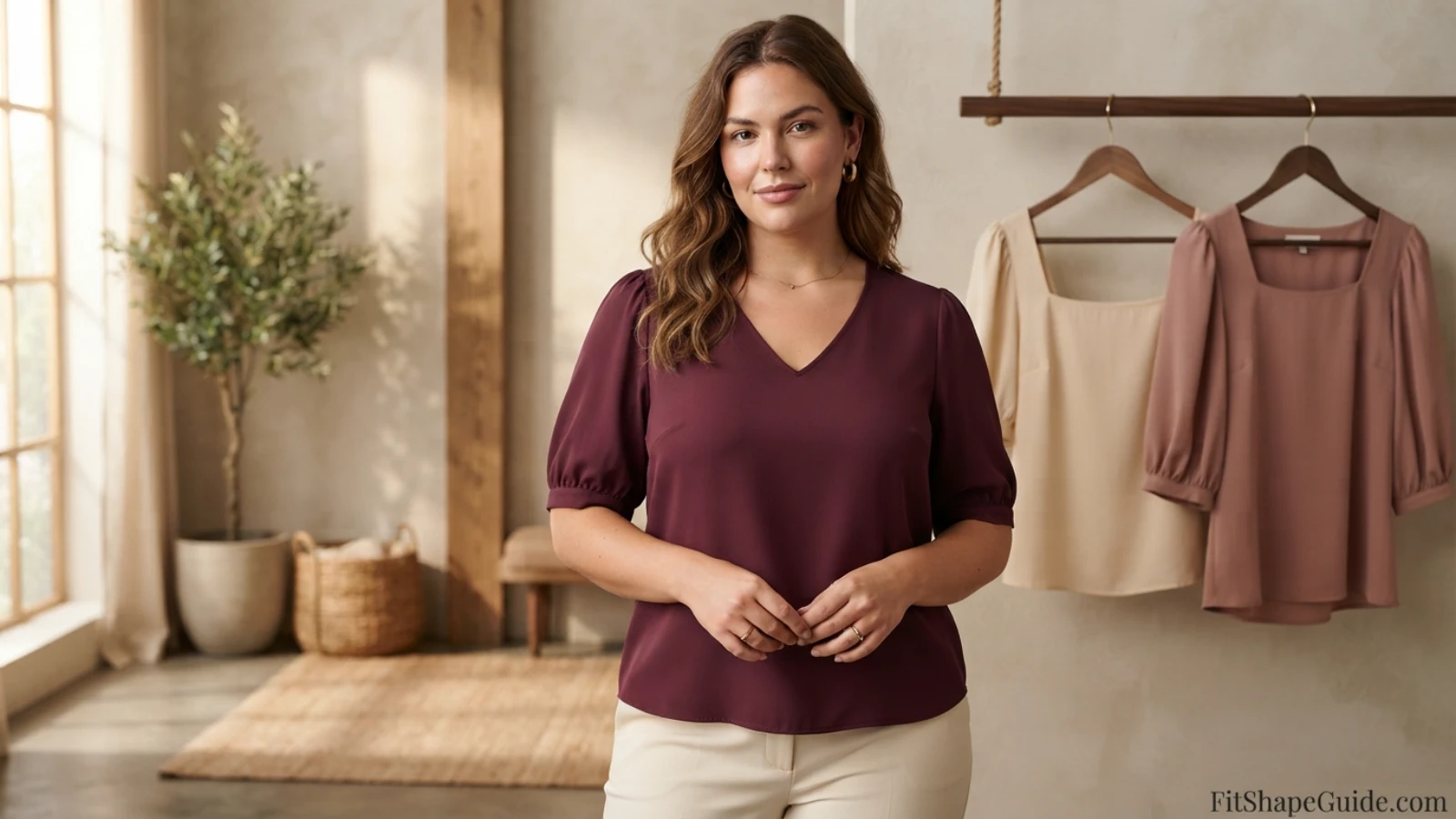
The best puff-sleeve tops for a large bust are designed from the shoulder outward, not decorated with extra sleeve fabric after the bodice has already been fitted. A puff changes more than visual width. Gathering at the sleeve head places extra fabric into the armhole seam; a high cap concentrates volume above the shoulder, while a lower release point carries fullness beside the upper arm. That volume can frame a shaped bodice beautifully, but it cannot correct a neckline that spreads, a dart that sits too high, or a front hem shortened by insufficient bust projection. The most useful question is not whether puff sleeves “suit” a fuller bust. It is whether the shoulder seam remains located, the armhole carries the gathered sleeve without twisting, the bodice provides real chest room, and the puff returns to its intended shape after reaching or sitting. This guide compares six practical constructions and shows exactly what to verify before buying online. Product recommendations remain private until current measurements, materials, care, returns, stock, affiliate disclosure, and retailer details are checked. No Amazon product name, ASIN, price, rating, review, or personal wear claim is invented.
The sleeve-head-to-hem fit check
Wear the intended bra, release any cuff elastic to its natural position, and let both sleeves settle before judging the silhouette.
- The shoulder seam lands where the design intends and does not slide toward the neck or upper arm.
- Gathering is distributed evenly around the sleeve cap instead of bunching at one pressure point.
- The neckline remains flat while the arms move; the puff does not pull it sideways or upward.
- Bust darts, princess seams, panels, gathers, or controlled stretch create projection below the shoulder line.
- The puff reaches its fullest point at a deliberate height rather than collapsing beside the fullest bust.
- The bicep has usable ease, and any elastic or fixed cuff leaves room for normal circulation and movement.
- The center-front hem stays close to level with the back after a forward reach.
- Both sleeves return to a similar shape without repeated smoothing, twisting, or pushing.
Best puff-sleeve tops by sleeve architecture
The best puff-sleeve tops do not all create the same outline. Some concentrate fullness at the sleeve cap, some release it through the upper arm, and others contain it between seams or cuffs. Start with the architecture that fits your planned outfit and range of motion, then judge the bodice independently.
Set-in soft puff with a clean V-neck
Best for: controlled definition at the shoulder without a large side projection. Look for a clearly located set-in seam, moderate cap gathering, a faced or bound V-neck, bust darts or princess panels, and a sleeve that becomes quieter before the widest part of the bust. A soft crepe or stable lightweight woven creates movement without turning the cap into a rigid shelf. The trade-off is that a very soft puff may flatten under a jacket and need light steaming to recover.
Square-neck bodice with elbow-length puffs
Best for: a visible neckline frame and sleeve volume that ends above or near the elbow. The square edge needs facing, elastic channels, or internal stabilization so the sleeves cannot pull it outward. Seek generous side-bust coverage, a high enough back, adequate front length, and a cuff that is neither tight nor positioned on the widest part of the forearm. This construction makes a statement, but it requires more careful bra and neckline checks than a conventional V-neck.
Bishop sleeve with a restrained upper puff
Best for: carrying much of the volume below the bust line. A fitted or lightly gathered sleeve head flows into a fuller lower sleeve and closes at a cuff. Confirm elbow mobility, cuff opening, sleeve length, and enough fabric above the cuff for the intended billow. A fixed cuff looks tailored; elastic offers flexibility but may migrate upward. This style layers poorly under narrow sleeves, yet it works well as the visible focus of a simple outfit.
Controlled lantern sleeve
Best for: sculptural volume contained between upper and lower seams. Lantern sleeves use shaped panels rather than relying only on gathers, so the curve can look deliberate and balanced. Inspect seam matching, internal support, bicep circumference, and where the widest point sits in side view. A crisp fabric holds the architecture but occupies more physical space; a lighter fabric makes the shape quieter and easier for everyday wear.
Stabilized raglan puff blouse
Best for: shoppers who prefer a less defined shoulder seam. Because a raglan seam travels from neckline to underarm, sleeve fullness can pull directly on the neck edge. Choose a firm neckline finish, balanced front and back raglan seams, an underarm gusset or usable armhole depth, and gathering that is distributed rather than concentrated near the neck. The fit can feel flexible, but it is harder to diagnose online because there is no conventional shoulder measurement.
Compact-knit puff-sleeve top
Best for: lower-maintenance volume with stretch and recovery. The body knit should remain opaque across the bust, while the sleeve cap may use pleats, gathers, or a slightly firmer double layer. Check that rib lines stay mostly true, shoulder seams do not migrate, and the puff recovers after the arm is raised. Compact knit is forgiving, but a thin shiny knit may reveal strain and allow the sleeve head to collapse.
How the best puff-sleeve tops control cap height and volume
A puff sleeve is created by adding fabric beyond the armhole seam length and controlling that excess with gathers, pleats, elastic, panels, or internal support. Where that extra fabric is released determines the outline. Two blouses can share the same “puff sleeve” label while behaving completely differently beside the bust.
Sleeve-cap height changes where the eye reads width
A high sleeve cap rises above the shoulder point and creates a stronger vertical frame. A low cap spreads more of its volume outward. Neither is automatically better. A high cap can look architectural but may feel costume-like in stiff fabric; a low soft cap can be relaxed but may align its widest point with the bust in side view. Examine front and side photographs, not only a three-quarter pose.
Gathering distribution changes armhole load
Fine, even gathering across the upper cap usually produces a rounder crown. Gathering concentrated at the very top creates a peak; gathering extending toward front and back notches creates broader fullness. The non-gathered lower armhole should still sit smoothly. If all the extra fabric has been forced into one small section, the seam can pucker or rotate after movement.
The release point matters more than the marketing name
Trace the sleeve from shoulder to cuff. Does it narrow immediately, stay full through the bicep, or expand again near the elbow? A puff that narrows before the fullest bust keeps the two volumes visually distinct. A fuller bishop or lantern sleeve can also work because its emphasis continues below the chest. What often feels awkward is accidental alignment: the sleeve reaches maximum width at exactly the same horizontal level as the bust without enough structure to keep either line clear.
| Sleeve geometry | What it creates | Evidence to inspect | Main trade-off |
|---|---|---|---|
| High gathered cap | Vertical, editorial shoulder emphasis | Cap support, seam puckering, shoulder location, side profile | Can feel rigid or occasion-specific in crisp fabric |
| Low soft cap | Rounded everyday volume | Release point, bicep ease, recovery, armhole stability | May collapse or merge visually with the bust line |
| Elbow bishop | Movement distributed down the arm | Sleeve length, cuff opening, elbow room, lower fullness | Occupies space and resists close layering |
| Panelled lantern | Contained sculptural curve | Panel seams, support, widest point, bicep circumference | More structure, care, and alteration complexity |
| Raglan puff | Continuous neck-to-sleeve line | Neckline reinforcement, raglan balance, underarm reach | Harder to size from shoulder measurements alone |
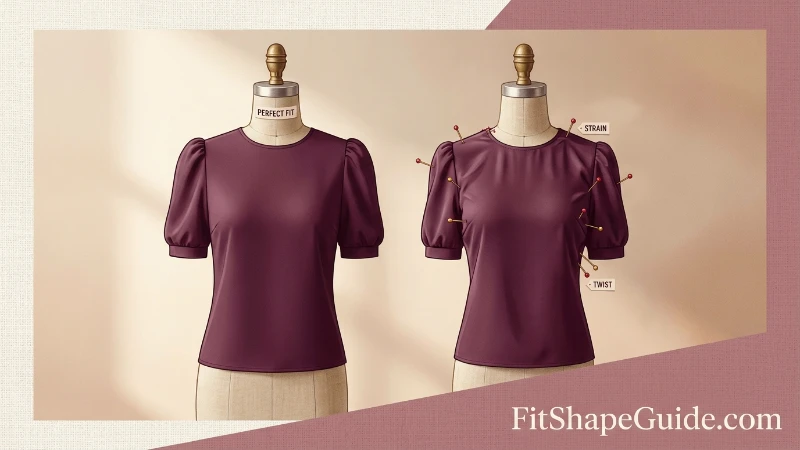
How the best puff-sleeve tops match volume to fabric support
The best puff-sleeve tops for a large bust use fabric that can create the intended volume without destabilizing the bodice. Fiber content alone cannot predict this. Weight, weave or knit structure, surface finish, layer count, interfacing, lining, elastic strength, and seam treatment decide whether a sleeve floats, droops, crackles, or stays suspended. The large-bust fabric guide explains the wider relationship between drape, opacity, stretch, and recovery.
Fluid crepe and soft woven viscose
These fabrics create a low-profile puff with graceful folds rather than a fixed dome. They suit a blouse intended for work, dinners, or repeat wear because the sleeve can move without holding a theatrical shape. Check opacity at the bust and whether the cap uses enough gathering to remain visible. The trade-off is that very fluid cloth can pool beneath tight elastic or lose definition after a jacket compresses it.
Poplin and crisp cotton blends
Crisp woven fabric turns modest pattern volume into a clear silhouette. It is useful for high caps, pleated puffs, and lantern panels, but every wrinkle and seam pucker becomes visible. The bodice needs sufficient darting or panel shaping because crisp fabric does not quietly redistribute bust tension. Large rigid sleeves also need physical space at desks, under coats, and in crowded settings.
Organza, taffeta, and supported occasion fabrics
These materials can create an architectural sleeve with little gathering. Some use an organza sleeve over a softer opaque bodice, keeping the statement at the arm while protecting bust coverage. Inspect seam softness, lining, underarm finish, and whether internal tulle or sleeve-head support is removable. A dramatic result may justify specialist cleaning or careful storage, but it is rarely the most versatile everyday choice.
Compact jersey, ponte, and stable rib knits
A knit puff may use pleats or elastic rather than dense gathers. Recovery is essential: squeeze a small section in a product video or perform a stretch-and-release test at home. The sleeve should regain its shape and the body should remain matte and opaque. Stretch without recovery leads to a tired cap and a neckline that widens over time.
Why sleeve-head support is not the same as a shoulder pad
A narrow sleeve-head roll, interfacing strip, organza stay, or gathered lining supports the cap from inside. A shoulder pad changes the shoulder line itself. Both can be intentional, but they solve different problems. The shoulder-pad guide for a large bust helps distinguish a balanced frame from unnecessary bulk. If a product photograph shows a perfectly suspended cap, look for construction information rather than assuming the outer fabric holds that shape unaided.
Fit the bodice beneath the best puff-sleeve tops
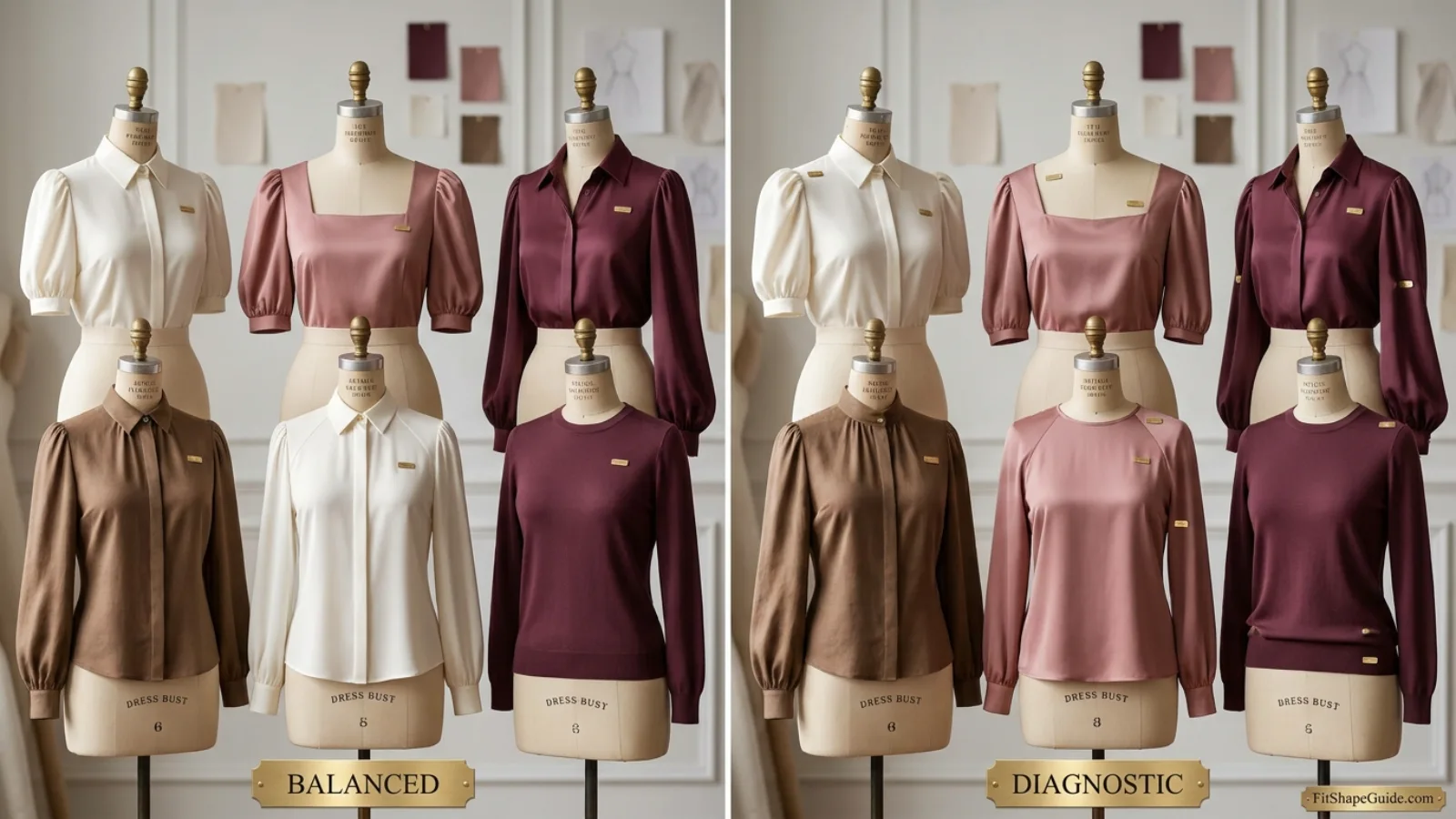
The best puff-sleeve tops for a large bust still have to succeed when the sleeve is mentally removed. A sleeve can attract enough attention to hide a poor fit in a front-facing product image. The best blouses guide provides a broader construction framework; for puff sleeves, the key is to prove that the shoulder, bust, and neckline are supporting the added sleeve volume rather than being distorted by it.
Shoulder placement establishes the sleeve’s starting point
On a conventional set-in sleeve, the seam normally ends near the shoulder point. If it sits too far inward, the puff can perch toward the neck; if it falls too far down the arm, the volume begins lower and may make the sleeve look collapsed. A deliberate extended shoulder is different because the entire pattern is designed around that line. Compare front and back views for symmetry and watch whether one cap rotates forward.
Neckline stability protects coverage
Square, sweetheart, scoop, V, boat, and high necklines can all accompany puff sleeves. Their edges need enough facing, binding, elastic control, or stay tape to resist the sleeve’s outward pull. Explore the best necklines for a large bust, then test the exact top with the planned bra. A neckline that is perfect while standing but opens during a forward reach has not passed.
Projection room belongs in the bodice, not the armhole
Look for bust darts aimed toward but ending before the fullest point, princess seams that follow the bust curve, side panels, controlled gathers, a fuller-bust size option, or stable stretch with recovery. Horizontal lines from the armhole toward the bust indicate that the chest is borrowing fabric from the sleeve area. That tension changes the armhole shape and can pull sleeve gathers forward, making a sleeve problem that began in the bodice.
Center-front length prevents false sleeve imbalance
Bust projection consumes vertical fabric. If the front pattern is too short, the hem rises and the blouse can rotate toward the front. The puff then appears to sit farther back, even when the sleeve itself is symmetrical. Compare center-front and center-back length, inspect the side seam, and note where a waist seam or tuck line lands. Length is a fit measurement, not merely a styling preference.
Armholes need calm edges and usable depth
A very low armhole may reveal the bra and pull the bodice when the sleeve moves. An overly tight armhole cuts into the front or back and restricts reach. The best puff-sleeve tops have enough space for the arm without making the body of the blouse travel upward. Check the underarm seam finish too: dense gathers, lining, and elastic create thickness that can rub even when the visible silhouette looks polished.
How to find the best puff-sleeve tops online
The best puff-sleeve tops for a large bust can be shortlisted online only when the listing shows both bodice and sleeve evidence. Search filters rarely distinguish a soft puff from a rigid statement sleeve, and size charts often omit sleeve measurements. Save front, side, back, raised-arm, and seated images when available. Zoom into the shoulder seam, armhole, cap gathering, cuff, dart, lining, and neckline finish. A model’s pose can hide a tight bicep or support a sleeve with a bent elbow, so neutral photographs carry more value.
Compare with a similarly constructed top
Measure a blouse you own that has the same shoulder type and similar sleeve length. A T-shirt is a poor comparison for a woven square-neck puff blouse because stretch, armhole depth, cap ease, and neckline behavior differ. Lay the reference flat without stretching. Record chest, shoulder, front length, armhole depth, bicep width, sleeve length, and cuff opening, then compare measurement method as carefully as the number.
Read reviews for evidence, not verdicts
Useful review details describe the reviewer’s usual size, the size purchased, fabric feel, shoulder position, bicep comfort, cuff pressure, opacity, and what happened when the arms moved. “Flattering” or “unflattering” cannot explain construction. A sleeve described as huge may be exactly right for a statement look; a sleeve described as small may still be uncomfortable if its fixed bicep circumference is narrow.
| Evidence | What to verify | Risk if missing |
|---|---|---|
| Front, side, and back photos | Cap height, widest point, shoulder symmetry, hem level | A three-quarter pose can hide front lift and sleeve projection |
| Finished chest and shoulder | Bodice ease and where a set-in sleeve begins | Bust tension may be mistaken for a sleeve issue |
| Bicep and cuff circumference | Usable arm room at the exact sleeve level | Elastic may ride, fixed cuffs may restrict, volume may bunch |
| Front and back length | Bust projection allowance and hem balance | The blouse may climb and rotate during movement |
| Shell, lining, and support | Opacity, drape, cap structure, underarm thickness | The photographed sleeve shape may not reflect normal wear |
| Care and returns | Real maintenance burden and try-on window | A sculptural sleeve may be costly or difficult to restore |
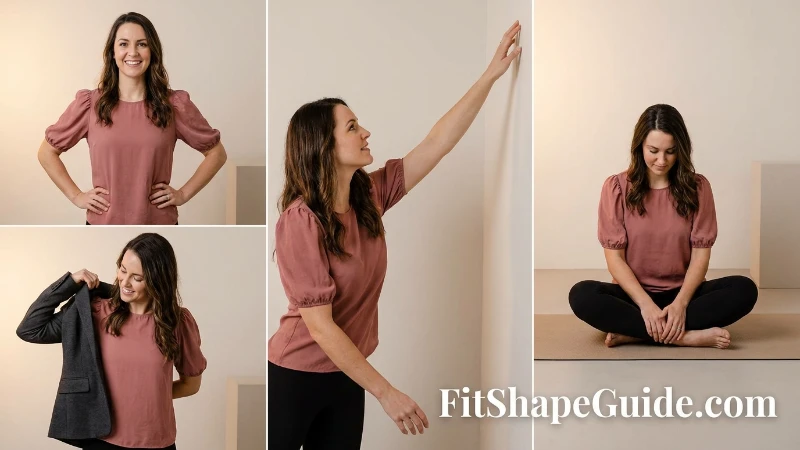
How the best puff-sleeve tops perform through a full arm arc
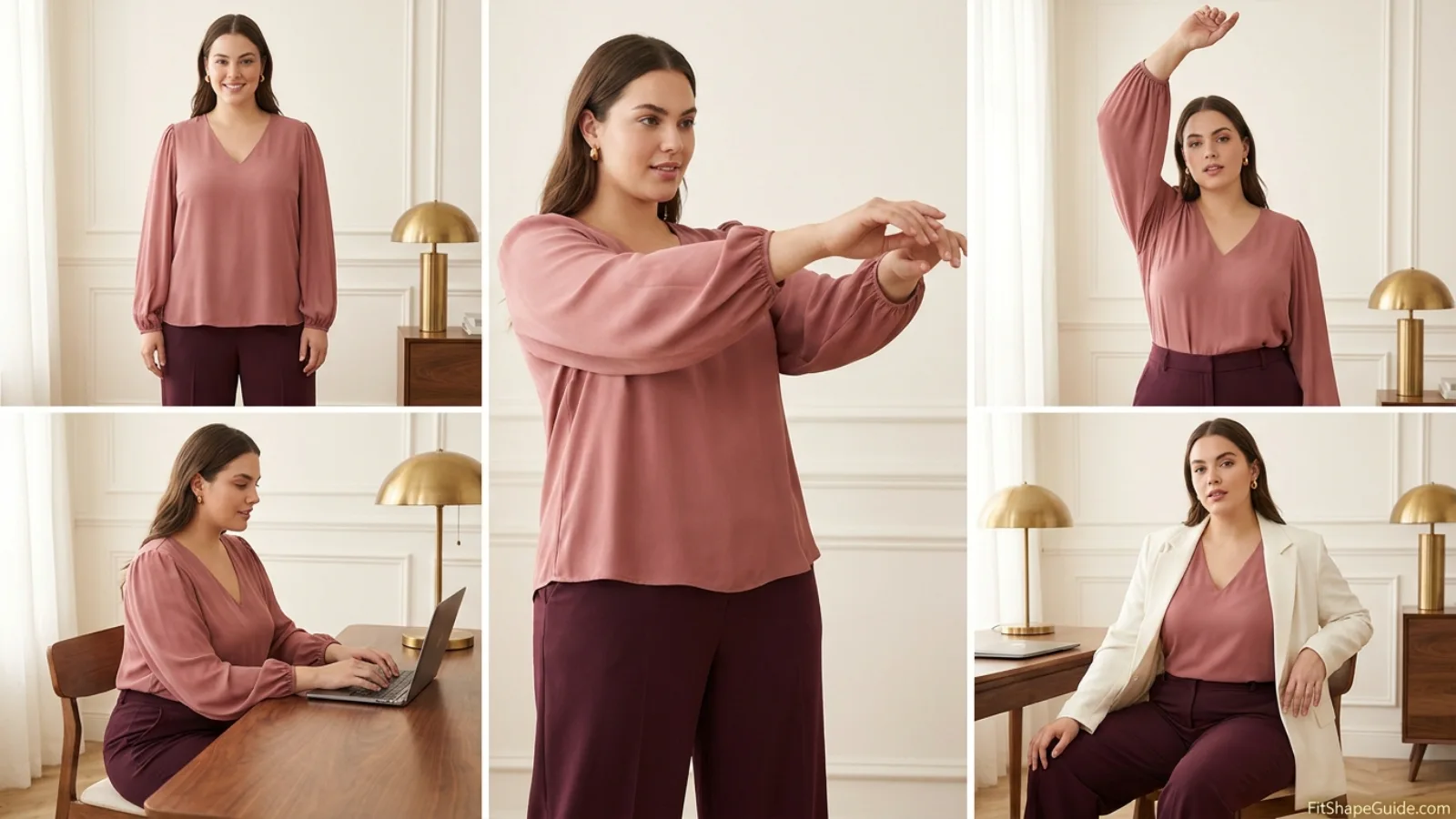
The best puff-sleeve tops remain recognizable after movement. A sleeve does not need to stay frozen, but its gathering, cuff, and widest point should return close to their intended position. Test with the bra, bottoms, and outer layer you actually plan to wear.
Neutral standing
Let the arms hang without arranging the fabric. Compare both caps, cuff heights, shoulder seams, neckline corners, bust darts, and side seams. Natural body asymmetry and garment asymmetry are different: one sleeve that twists sharply or one neckline corner that drops often signals construction or fit strain.
Forward reach and self-hug
Reach as if using a keyboard, then fold the arms gently across the body. The back needs enough width, the armhole should not cut, and the bust should not pull fabric from the sleeve. Watch whether cap gathers migrate toward the front and whether the neckline opens. A blouse that only works with the elbows pinned back is not practical.
Overhead and side reach
Lift one arm overhead, then reach sideways. The bodice may move slightly, but it should not remain trapped under the bust or expose more than you planned. Elastic cuffs should return to a similar height. A raglan puff often offers more overhead range, while a high set-in cap may feel more structured; the better choice depends on the garment’s purpose.
Seated position
Sit upright and then lean forward. Check front length, neckline coverage, cuff pressure, and whether a full lower sleeve piles against the table. An elbow-length puff that looks balanced standing may become inconvenient if a stiff cuff lands exactly at the desk edge. This is a function test, not a judgment about the silhouette.
Add the planned layer
Try the actual coat, cardigan, or blazer. A high cap may be compressed by a narrow shoulder; a bishop sleeve may bunch inside a slim sleeve; organza can crease. If the puff is the outfit’s main feature, an open sleeveless layer or generous outer sleeve may be the practical choice. If regular layering matters more, choose a softer, smaller cap. The broader large-bust styling guide can help place that trade-off within the full outfit.
Fit failures that rule out the best puff-sleeve tops
A dramatic sleeve makes it tempting to blame every issue on volume. Diagnose the path of tension. If wrinkles begin at the bust and travel to the armhole, the bodice needs more projection. If the neckline changes only when the arm moves, the sleeve or armhole may be driving the problem. If the cuff rises and traps fullness, its pressure or position deserves attention.
| Visible or felt symptom | Likely cause | Best next action |
|---|---|---|
| Cap gathers dragged toward the front | Bust or front armhole borrowing sleeve fabric | Try more bust projection, a different darted bodice, or a fuller-bust cut |
| Square neckline spreads during reach | Weak edge stabilization or sleeve pulling outward | Choose firmer facing, elastic control, stay tape, or a more stable neckline |
| One puff sits behind the shoulder | Rotated sleeve, shoulder mismatch, or uneven gathering | Re-seat the garment; reject if the sleeve remains twisted |
| Elastic cuff rides and volume bunches | Cuff too tight, wrong sleeve length, or taper too abrupt | Measure the cuff level and choose a roomier or fixed cuff |
| Front hem climbs after arm lift | Short center front, tight armhole, or inadequate back reach | Choose more front length and movement ease; sizing up only if shoulders remain controlled |
| Crisp puff collapses into hard creases | Support absent, fabric crushed, or care incompatible | Check internal structure and care; choose softer volume for easier maintenance |
| Fabric turns shiny across bust | Insufficient chest ease or low-opacity stretch | Increase usable bust room or choose a denser, matte fabric |
When sizing up helps
A larger size is useful when it restores chest ease, bicep room, cuff comfort, opacity, front length, and arm mobility while the neckline and shoulders remain located. Re-run the full movement test. A size increase that makes the neckline fall open or drops the sleeve seam too far down the arm has exchanged one fit problem for another.
When a different construction is the answer
Change the pattern architecture when the correct bust size produces an oversized shoulder, a square neckline cannot stay stable, or the bicep remains narrow across sizes. A raglan puff, stretch bodice, darted blouse, lower-volume cap, fixed wide cuff, or fuller-bust pattern may solve the conflict more cleanly than repeated sizing.
Which alterations preserve the best puff-sleeve tops?
The best puff-sleeve tops for a large bust need alterations that preserve the relationship among cap ease, armhole shape, cuff position, and bodice fit. Some changes are modest; others require rebuilding that relationship. Ask a tailor to inspect the shell, lining, cap support, elastic casing, cuff, and seam allowance before promising a result. A useful alteration hierarchy begins with reversible comfort changes and treats armhole or sleeve-cap reconstruction as specialist pattern work.
Reasonable adjustments
Shortening a simple sleeve above a plain cuff, replacing accessible elastic, reducing modest cap fullness, securing a loose neckline edge, or refining side seams below sufficient bust room can be practical. Even these changes affect proportion. Removing too much cap gathering can flatten the sleeve and reduce movement ease; loosening cuff elastic can change where the sleeve blouses.
High-risk reconstruction
Adding substantial bicep width, moving a shoulder seam, changing armhole depth, creating missing bust projection, rebuilding a lined lantern sleeve, or lowering a sleeve cap are pattern corrections. They may disturb the neckline, bodice, or sleeve pitch. Unless the garment is valuable or special-occasion worthy, choosing a better original pattern is often the sounder decision.
Style the best puff-sleeve tops according to where volume lives
Styling cannot repair a strained blouse, but it can give a well-built puff sleeve a clear role. Start with the sleeve’s widest point, fabric structure, and neckline. Then decide whether the top will be the primary statement or part of a more layered composition.
High caps and structured shoulders
Let the shoulder architecture stay visible. Clean trousers, straight or fluid skirts, and simple necklines give the cap room to read. A long necklace competing with a high sculptural sleeve may create too many directional cues, while earrings or a compact pendant keep the focus higher. If you enjoy a maximal look, repeat the sleeve’s structure intentionally elsewhere rather than apologizing for it.
Soft upper-arm puffs
These integrate easily with jeans, tailored pants, A-line skirts, and layered necklaces. A V-neck or open collar creates a central line while the sleeves add a rounded frame. The effect can be understated in a tonal outfit or more expressive in contrast color. Choose the version that matches your style; there is no requirement to minimize the sleeve.
Bishop and lantern sleeves
Because their volume continues below the bust, consider hand use and setting. A wide cuff can look polished at an event but may interfere with cooking or desk work. Pairing a full sleeve with a defined waist or clean vertical front can make the garment’s construction easier to read, though an intentionally loose tunic shape is equally valid when the hem remains balanced.
Puff sleeves with ruffles, bows, or prints
Multiple details can work when they share a hierarchy. Decide which feature leads. A restrained sleeve with a neckline bow, or a clear puff with a small cuff ruffle, is easier to read than several equally dominant elements. The ruffle-top fit guide helps separate true sleeve volume from attached trim and explains how extra fabric weight affects seams.
Layering without crushing the cap
Open vests, capes, sleeveless coats, relaxed cardigans, and generous-sleeve jackets preserve more volume than a close blazer. If you need a conventional outer layer, select a softer cap that can recover. Test the actual combination before committing; a top should not require a separate emergency strategy every time the weather changes.
Care for the best puff-sleeve tops without flattening the shape
For the best puff-sleeve tops, care is part of fit preservation rather than an afterthought. Read fiber and care information before purchase. The FTC’s official textile-label guidance explains the role of fiber-content and origin labeling, while its care-label guidance describes care-instruction requirements. Follow the garment’s actual label rather than assuming all polyester, cotton, viscose, or silk behaves the same.
Fasten cuffs and closures before washing if the label permits washing. Use a mesh bag for delicate elastic, organza, or surface trim, and avoid overloading the machine where sleeves can twist. Reshape gathers while damp. Steam from a safe distance for the fabric, supporting the cap from inside rather than pressing the puff flat. Structured taffeta, internal tulle, boned cuffs, or lined lantern sleeves may require professional care.
Storage depends on weight. A light blouse can hang on a broad, smooth hanger if the shoulders do not stretch. Heavy knits may be folded with tissue or soft padding inside the sleeve. Do not force a high cap under tightly packed garments. Evaluate value by the settings in which the sleeve works, the care you will realistically perform, the number of compatible layers, and the likelihood that elastic or support can be repaired.
Final buyer checklist
- The sleeve architecture and widest point are visible in neutral front and side views.
- Set-in shoulders, raglan seams, neckline edges, and armholes appear symmetrical and reinforced.
- The bodice contains enough bust projection through darts, panels, gathers, or stable stretch.
- Finished chest, front length, bicep, sleeve length, and cuff measurements are compatible with a reference top.
- Fabric weight, opacity, lining, internal support, and recovery match the intended puff.
- The cuff does not rely on painful pressure to keep the silhouette in place.
- The top passes standing, reach, overhead, seated, and layering checks.
- Care and storage requirements fit your real routine.
- Return terms and affiliate disclosure are clear before purchase.
Frequently asked questions
Can women with a large bust wear puff-sleeve tops?
Yes. Puff sleeves are a garment-construction choice, not a style reserved for one body. Prioritize a stable neckline, located shoulders, enough bust projection, adequate front length, comfortable armholes, and a puff whose widest point and fabric structure create the effect you want. Test the blouse while reaching, sitting, and layering rather than judging it only from a still front view.
What puff-sleeve shape works best for a fuller bust?
Soft set-in puffs, elbow-length bishop sleeves, controlled lantern sleeves, stabilized raglan puffs, and compact-knit puffs can all work. A sleeve that narrows before the fullest bust often creates a clearer separation between sleeve and bodice, while a bishop or lantern sleeve distributes volume lower. Choose by shoulder stability, movement, and desired emphasis rather than a rule about minimizing width.
Do puff sleeves make a large bust look bigger?
Puff sleeves add volume at the shoulder or arm, not directly to the bust, but their widest point, fabric stiffness, and alignment can change the overall outline. A low wide puff beside the bust creates a different effect from a high cap or lower bishop sleeve. That effect may be subtle or deliberately dramatic. Accidental bulk usually comes from poor fit, collapsed fabric, or misplaced volume rather than the puff concept itself.
Which neckline is best with puff sleeves for a large bust?
V-necks, square necks, scoops, open collars, and higher necklines can all work if their edges stay stable and cover the intended bra. Square and wide necklines need enough facing, elastic control, or stay tape because sleeve volume can pull them outward. Test the neckline during a forward and overhead reach; shape alone cannot compensate for weak stabilization or an undersized bodice.
Should I size up in a puff-sleeve blouse?
Size up when it restores bust ease, opacity, bicep room, cuff comfort, front length, and movement while the shoulders and neckline remain controlled. If the larger size drops the shoulder, opens the neckline, or still leaves the bicep tight, choose a different pattern or fuller-bust construction. Sleeve and bodice measurements must work together.
What fabric is best for puff-sleeve tops for a large bust?
Fluid crepe and soft viscose create quieter moving puffs; poplin and cotton blends hold a clearer outline; organza and taffeta create occasion structure; compact jersey and stable rib knits offer stretch and recovery. Evaluate weight, opacity, support, seam finish, lining, static, and care—not fiber name alone. The best fabric is the one that supports the intended volume without destabilizing the bodice.
Can puff-sleeve tops be worn under a blazer or cardigan?
Yes, but the outer layer needs enough shoulder, armhole, and sleeve space. High crisp caps may crush under a close blazer, while bishop sleeves can bunch inside narrow sleeves. A soft compact puff layers more easily. Try the complete outfit and move the arms; if the top emerges deeply creased or the bodice stays pulled upward, choose a roomier layer or a smaller, softer puff.
What measurements should I check when buying a puff-sleeve top online?
Check finished chest, shoulder width or raglan seam length, center-front and back length, neckline depth and width, armhole depth, bicep circumference, widest sleeve point, sleeve length, and cuff opening. Also verify shell and lining composition, stretch, internal sleeve support, elastic or fixed cuff construction, care, and returns. Compare with a similarly constructed top that already fits.