
Best Sports Bras for a Large Bust
An activity-first guide to encapsulation, compression, band anchoring, cup depth, strap geometry, sweat control and real movement testing.
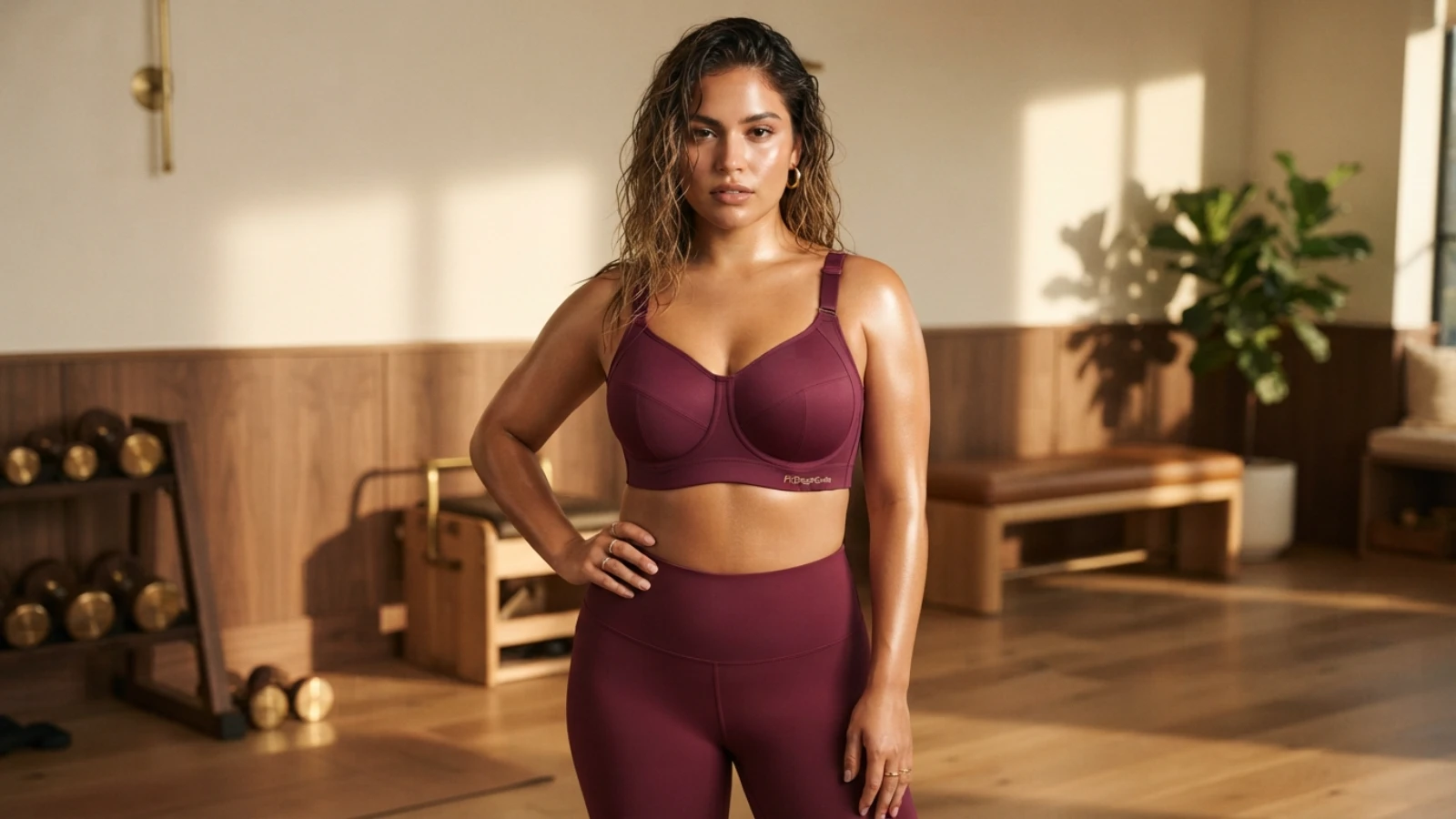
The 90-second sports-bra fit check
- The band sits level and remains stable when the straps are loosened slightly.
- Each breast is contained inside its cup or shaped panel without overflow or empty folds.
- The center and side panels contain tissue without painful pressure.
- Straps lie flat, adjust symmetrically and permit full shoulder rotation.
- You can inhale deeply and speak normally without chest restriction.
- A light march and gentle bounce do not cause band ride, tissue escape or sharp pain.
- Hooks, zippers and seams do not rub during arm movement.
Best sports bras for a large bust by design
Two bras described as “high impact” may use completely different load paths. One shapes each breast inside a stable frame. Another compresses tissue against the chest. A third combines both. The most effective choice is the one whose band, cups, side support and straps remain stable during the wearer’s actual activity.
Bra-sized encapsulation sports bra
Best for: clear band-and-cup sizing, separation and multidirectional control. Seek seamed or molded cups, high sides and a firm closure. Trade-off: cup shape and wire width must match the body.
Encapsulation-compression hybrid
Best for: running, court sports and vigorous classes when shaped cups need an additional outer control layer. Trade-off: the overlay must reduce movement without flattening cups or restricting breathing.
Adjustable high-impact running bra
Best for: tuning band, cup and strap tension for repeated vertical movement. Look for padded straps and secure back hardware. Trade-off: maximum tightness is not a substitute for correct sizing.
Front-close sports bra
Best for: easier dressing or limited shoulder reach when the zipper or hooks have a secure guard and secondary closure. Trade-off: the closure must not separate, press or chafe during flexion.
Seamed wire-free training bra
Best for: strength sessions, walking and moderate impact without rigid wires. Multi-panel cups and a stable shelf can shape effectively. Trade-off: a flat pullover panel may compress without separating or anchoring.
Longline low-to-medium-impact bra
Best for: yoga, Pilates, mobility and light training when a taller band distributes pressure. Trade-off: the longline must stay flat rather than roll or restrict the ribcage.
The best sports bras for a large bust do not need to eliminate all visible movement. They should reduce uncomfortable motion to a level appropriate for the activity while preserving breathing, shoulder function and skin comfort.
Low, medium and high impact are not universal labels
Brand impact labels are useful starting points, but there is no single standardized consumer scale that predicts every body and movement pattern. Walking produces repeated low-to-moderate motion. Yoga adds bends and inversions. Lifting demands shoulder freedom and bracing. Running creates repeated vertical and lateral movement. Court sports add acceleration and direction changes.
Low-impact activity
For mobility work, gentle yoga or easy walking, comfort and range of motion may matter more than maximum control. A seamed wire-free or longline bra can work when the band stays level and the neckline remains secure during bending. Test floor positions and overhead reach; a bra that feels soft while standing may gape when inverted.
Medium-impact training
Strength circuits, hiking, cycling and some dance classes require stable cups without restricting shoulder or torso movement. Encapsulation or a light hybrid can offer control. For cycling, test the leaned-forward position. For lifting, check that straps and back hardware do not interfere with a bar, bench or backpack.
High-impact movement
Running, jumping and court sports commonly need stronger band anchoring, shaped cups and more upper-edge control. A hybrid construction can reduce motion in several directions. Begin with short intervals and stop if pain, tissue escape, breathing restriction or hardware movement occurs. No bra makes an unsuitable activity medically safe; use professional guidance where needed.
Individual comfort matters
Breast volume, tissue softness, sensitivity, previous surgery, pregnancy, postpartum changes and personal preference affect support needs. High support should not mean numbness or pain. Anyone with persistent breast, chest, shoulder or skin symptoms should seek appropriate medical advice rather than relying on apparel changes alone.
| Activity | Primary movement challenge | Useful construction | Test position |
|---|---|---|---|
| Walking/mobility | Repeated light motion | Seamed wire-free or longline | Walk, reach, bend |
| Yoga/Pilates | Inversion and torso flexion | Secure neckline, flexible straps | Forward fold, side bend |
| Strength training | Shoulder range and bracing | Encapsulation or moderate hybrid | Press, row, squat |
| Cycling/hiking | Lean, sweat and pack contact | Breathable stable band | Forward lean, stair step |
| Running/court sports | Vertical and lateral acceleration | Encapsulation-compression hybrid | Jog, hop, direction change |
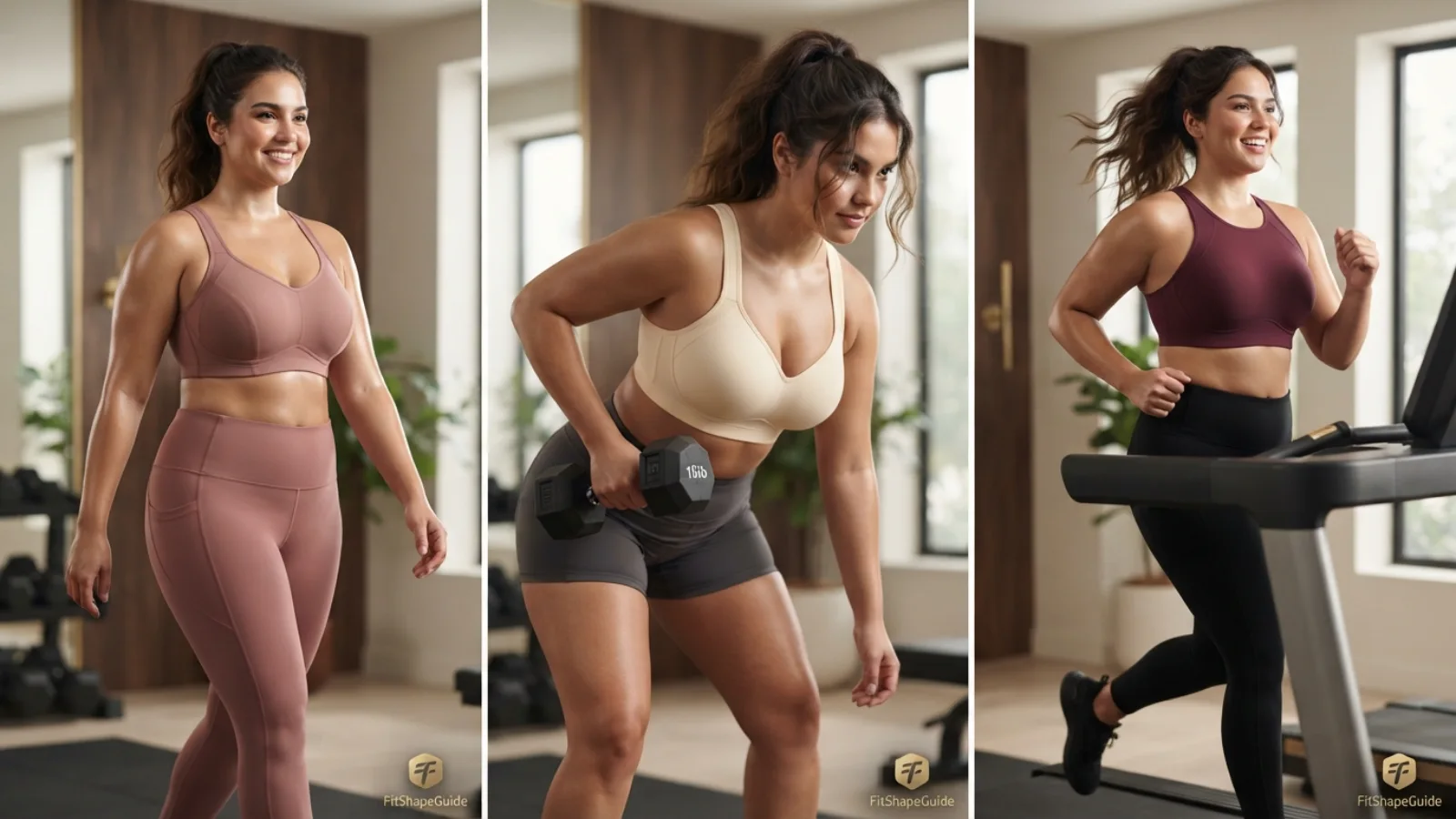
Band, cups, center, sides and straps
A sports bra is a load-sharing system. The band provides the main horizontal anchor. Cups or shaped panels contain tissue. The center and side wings control lateral movement. Straps position the upper edge and influence shoulder comfort. If one component fails, another usually becomes painfully tight.
The band should be firm and level
The band should resist movement without restricting a full breath. Raise the arms and turn sideways; it should remain horizontal. If it climbs, confirm band tension, cup depth and closure setting. A band may ride because the cups are shallow and push the whole bra away—not only because the band is large.
Cups need volume in the correct direction
Overflow at the neckline or underarm, center separation, cup folding and wire-on-tissue pressure indicate a mismatch. Encapsulation cups need both depth and width. Compression panels must still provide enough total area to contain tissue without pushing it out above or beside the bra.
Straps position; they should not carry everything
Wide padded straps can distribute pressure, but width alone is not support. Loosen them slightly. If the cups and band collapse, the lower anchor is insufficient. Racerback and cross-back shapes may reduce strap slip, yet they can concentrate pressure near the neck or make dressing harder.
Underwire is optional, not automatically superior
A properly fitted wire can define each breast root and stabilize the cup. It should not sit on tissue, poke during bending or shift with the band. Seamed wire-free bras can also provide strong support through panels and firm elastics. Wire pain is not a normal training requirement.
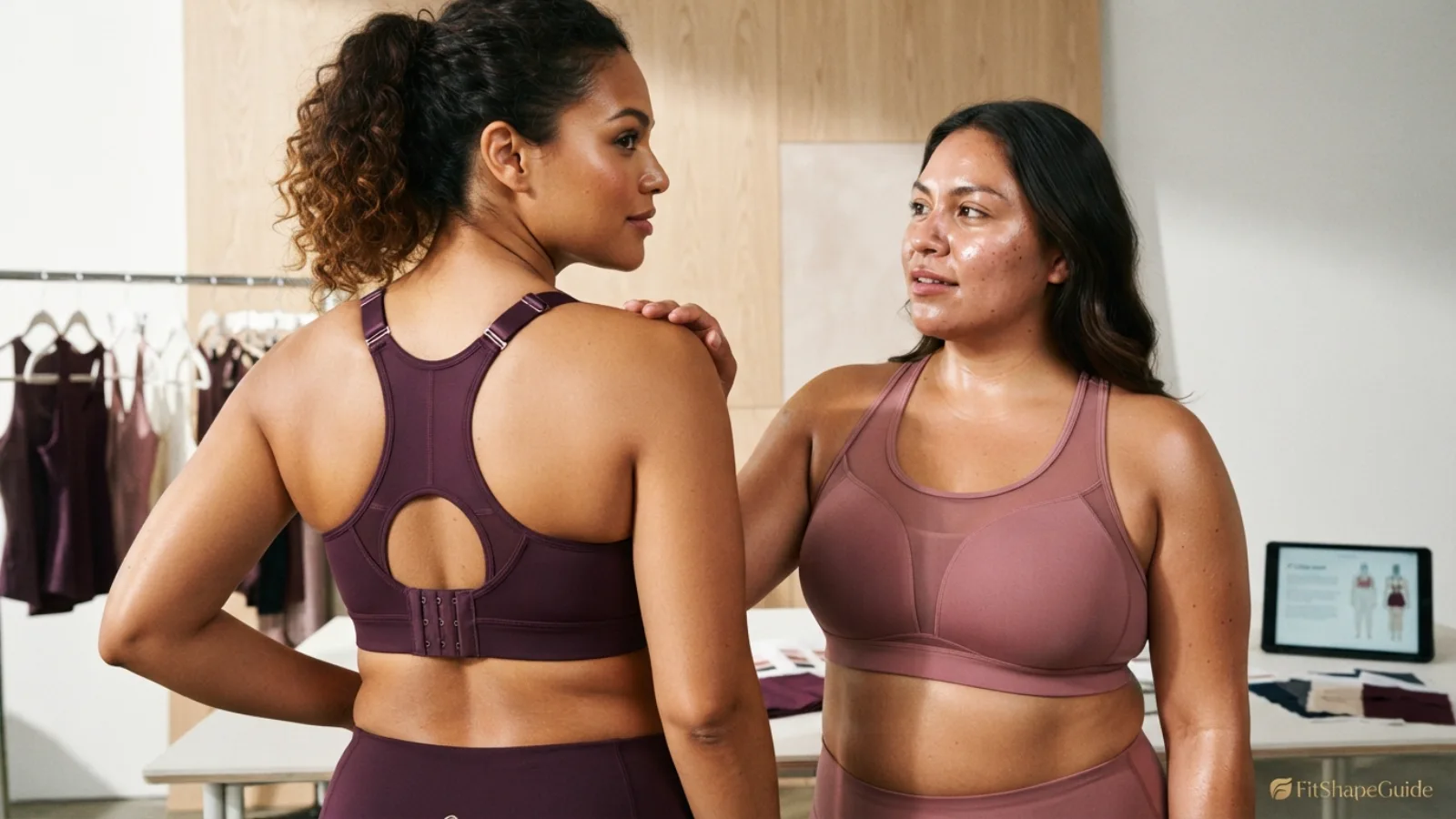
Fabric, sweat, seams and chafing
Technical fabric must stretch enough for dressing and movement, then recover so the band and cups stay stable. Fiber percentages alone do not reveal knit structure, recovery or moisture transport. Inspect shell, lining, mesh zones, elastics and seam placement as a complete system.
Sweat management is more than “moisture wicking”
Marketing claims should be supported by material and care details. Breathable mesh can improve airflow, but rough mesh edges may irritate. Thick foam can hold moisture and heat. Removable pads may fold in laundering. Test the bra through a normal session and note drying time, odor retention and skin response.
Seams should avoid high-friction zones
Underarm edges, band joins, zipper guards, hook panels and strap adjusters can chafe during repetitive motion. Run a finger over the interior and test under the intended top or pack. Flat seams help only when their thread and placement remain smooth under stretch.
Band liners and sweat
A soft liner can reduce friction, but a soaked band may feel heavier and lose recovery. Change out of damp sportswear after activity and follow hygiene guidance. Wash according to the label; heat and fabric softener can damage some elastics or moisture-management finishes.
Skin safety
Redness that fades quickly can reflect pressure, but persistent marks, broken skin, rash, numbness or burning require attention. Stop wearing the bra and seek professional advice when symptoms persist. Anti-chafe products should be compatible with the fabric and skin and should not be used to justify a poor fit.
| Material detail | Potential benefit | Check in use |
|---|---|---|
| Power mesh | Stable ventilation and support | Edge softness and recovery |
| Molded spacer cup | Shape with airflow | Depth, heat and drying time |
| Seamed technical knit | Directional shaping | Seam friction and stretch |
| Padded straps | Pressure distribution | Bulk, slip and moisture |
| Wide elastic band | Horizontal anchoring | Rolling and wet recovery |
| Front zipper guard | Protects skin from closure | Coverage through flexion |
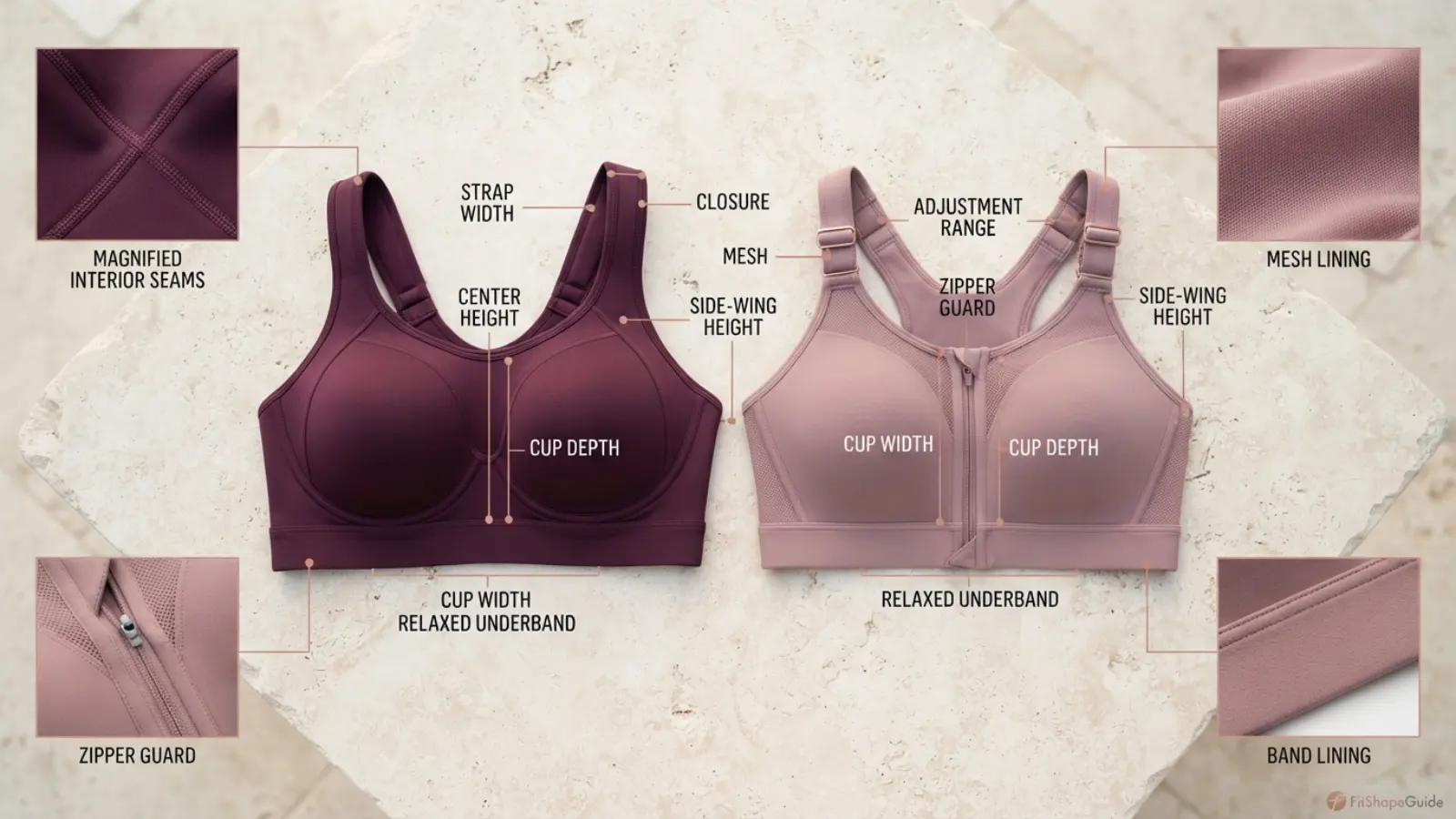
Sports-bra sizing for a large bust
Measure snug underbust and full bust using the brand’s method, then compare with its own chart. Record a current everyday bra size only as a starting reference. Brands may use different cup progressions, compression levels and conversion systems. Recheck after major body changes or when every familiar bra begins to fail in the same direction.
Use a firm but breathable band
A new sports bra often starts on the loosest practical hook so later settings can compensate for elastic wear. Pullover bands require enough stretch for dressing while recovering on the ribcage. If removing a tight pullover is difficult, consider an adjustable back or front-close design rather than choosing excessive looseness.
Sister sizes are comparison tools
A sister size changes the band and cup letter while preserving approximate cup volume. It does not preserve wire width, strap placement or support tension exactly. If a band is too tight but cups fit, compare the appropriate adjacent size and reassess every component.
Account for asymmetry and cycle changes
Fit the larger breast when practical, then use adjustable straps or a small removable insert only if the manufacturer permits and the smaller side remains stable. Hormonal changes can alter tenderness and volume. A bra comfortable on one day may need reassessment rather than maximum tightening on another.
| Fit symptom | Likely cause | Next comparison |
|---|---|---|
| Band rides up | Loose band or shallow cups pushing frame | Firmer band with protected cup volume |
| Overflow at top/side | Insufficient cup volume or wrong shape | More depth/coverage, not just tighter overlay |
| Empty cup folds | Excess volume or shape mismatch | Different cup size or geometry |
| Straps dig | Band not carrying enough load | Stabilize band/cups before loosening straps |
| Band rolls | Length, flare or recovery mismatch | Different band height or torso contour |
| Restricted breathing | Excess compression or small band | Stop use and reassess size/construction |
How to buy sports bras online
Useful listings disclose the band-and-cup system, intended impact, encapsulation or compression construction, closure, strap routes, shell and lining materials, care and return eligibility. Product titles and star ratings cannot replace this evidence.
Confirm the exact support mechanism
Look for interior and rear photos. Identify cup seams, molded shapes, outer overlays, underband, side wings, wire channels, zipper guards and hooks. “High support” without visible construction or size range deserves caution.
Check activity and return terms
Determine whether the brand describes the bra for running, training, yoga or general fitness. Review hygiene and return requirements before trying it. Keep tags and liners intact while performing permitted indoor checks.
Read reviews by body and activity evidence
Prioritize reviews with band/cup size, purchased size, activity, session duration and exact failure. “No bounce” is less useful than a report of band stability, cup containment, breathing, strap comfort and chafing during a defined run or class.
Safe Amazon workflow
Before inserting a product module, verify the live product title, seller, size chart, support construction, closure, materials, care, current return eligibility and recent customer evidence. Add the approved affiliate tag and disclosure. Never hard-code price, rating, coupon, review count, stock or delivery claims.

Activity-specific movement protocol
Set the band, cups and straps once, then note every readjustment. Begin below the intended intensity and progress only if the bra remains comfortable. This is a clothing fit test, not an exercise prescription; use an appropriate environment and follow professional guidance for activity safety.
Breathing and posture baseline
Stand naturally, take five full breaths and speak. Raise the arms, rotate the shoulders and bend gently. The band should remain level and cups should contain without pressure spikes. Stop immediately for chest pain, dizziness, numbness or difficulty breathing.
Walk and strength pattern
Walk for several minutes, then mimic the planned training motions without heavy load: reach, row, press and squat within a safe range. Check underarm friction, strap interference, band rolling and hardware contact. A bra suitable for walking may still fail overhead lifting.
Jog and directional movement
For high-impact use, progress to a brief jog, small controlled hops and gentle direction changes only if appropriate for the wearer. Movement should feel controlled without tissue escape, wire pressure or constant adjustment. Compare vertical, lateral and forward-back comfort rather than one mirror angle.
Twenty-minute sweat and recovery check
Wear the bra through at least twenty minutes of the intended low-risk activity. Inspect band position, cup containment, strap setting, chafing and sweat accumulation before adjusting. The best sports bras for a large bust remain predictable as fabric warms and becomes damp.
Removal and care test
A supportive bra must still be removable safely when damp. Confirm zipper, hooks or pullover access without excessive shoulder strain. After washing according to the label, check elastic recovery, cup shape, pad movement and hardware. Fit that deteriorates quickly affects both support and value.
Match construction to movement—not the strongest label
The best sports bras for a large bust use a stable band, adequate cup depth, controlled sides and adjustable straps to reduce movement without restricting breath. Encapsulation works well for separation, compression adds close control, and hybrids can suit high impact. Keep the bra that passes the actual activity test with no pain, tissue escape or repeated adjustment.
Frequently asked questions
What type of sports bra is best for a large bust?
Bra-sized encapsulation or encapsulation-compression hybrid bras are strong starting points. The best choice has a stable band, enough cup depth and support matched to the activity.
Is compression or encapsulation better for a large bust?
Encapsulation separates and supports each breast; compression holds tissue closer to the chest. Many fuller-bust wearers prefer a hybrid for high-impact activity, provided breathing remains unrestricted.
How tight should a high-impact sports bra be?
It should feel firm and stable while allowing full breaths and normal speech. Pain, numbness, dizziness, deep rolling or tissue escape indicate a poor fit, not stronger support.
Are underwire sports bras better for large breasts?
Not automatically. A correctly fitted wire can stabilize shaped cups, but seamed wire-free bras can also support well. Any wire must surround tissue without poking or shifting.
Why does my sports-bra band ride up?
The band may be too loose, the cups may be shallow and pushing the frame away, or the elastic may have lost recovery. Reassess band and cup together.
Can I wear two sports bras for more support?
Layering may increase compression but can also restrict breathing, trap heat and create chafing. A correctly sized hybrid or high-impact bra is a more controlled solution.
How often should I replace a sports bra?
Replace it when the band no longer recovers, straps slip at their previous setting, cups distort, hardware fails or support declines. Lifespan varies with use, rotation and care.
Are front-zip sports bras supportive for a large bust?
They can be when the cups and band fit, the zipper has a secure lock or backup closure and a full guard protects the skin. Test flexion and removal while damp.