Mother-of-the-Bride Dress Guide for a Large Bust
A construction-first guide to elegant mother-of-the-bride dresses with secure necklines, enough bust room, comfortable formal fabrics, refined sleeves and wedding-ready movement from ceremony through reception.
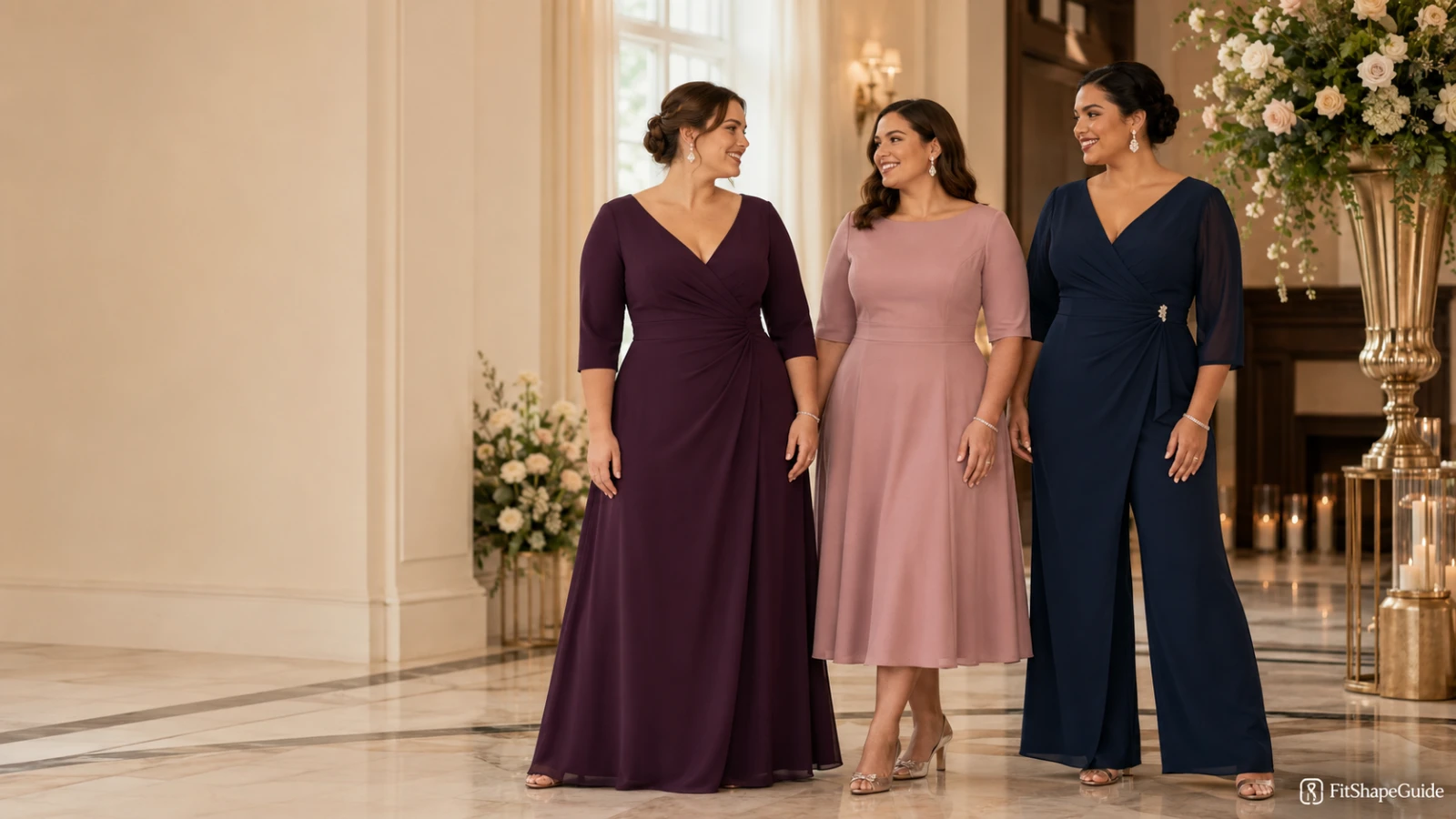
The 90-second formal-dress test
- Sit for one minute: the neckline and waist should stay where they were standing.
- Lean forward: verify coverage at the ceremony-seat angle.
- Raise both arms: sleeves and armholes should permit greeting and dancing movement.
- Turn sideways: inspect bust seams, waist placement and front hem length.
- Walk in the real shoes: confirm hem clearance without holding the dress.
- Add the planned bra and shapewear: the final fitting should use the actual foundation garments.
How to choose a mother-of-the-bride dress for a large bust
Mother-of-the-bride dressing usually carries more visual and practical requirements than ordinary wedding guestwear. The outfit needs to coordinate with the wedding’s level of formality, photograph well beside the wedding party, remain comfortable through a long day and still feel like the wearer’s own style.
For a fuller bust, begin with the bodice rather than the skirt. If the dress does not provide enough front circumference or projection, the neckline may spread, the waist seam may climb, the front hem may become shorter and side seams may rotate toward the front.
The solution is not automatically a looser dress. A closely shaped bodice can fit beautifully when darts, princess seams or curved panels provide room in the correct location. Conversely, a straight unshaped dress can pull across the bust even when the overall garment looks roomy.
| Dress style | Why it can work | Best setting | Main trade-off |
|---|---|---|---|
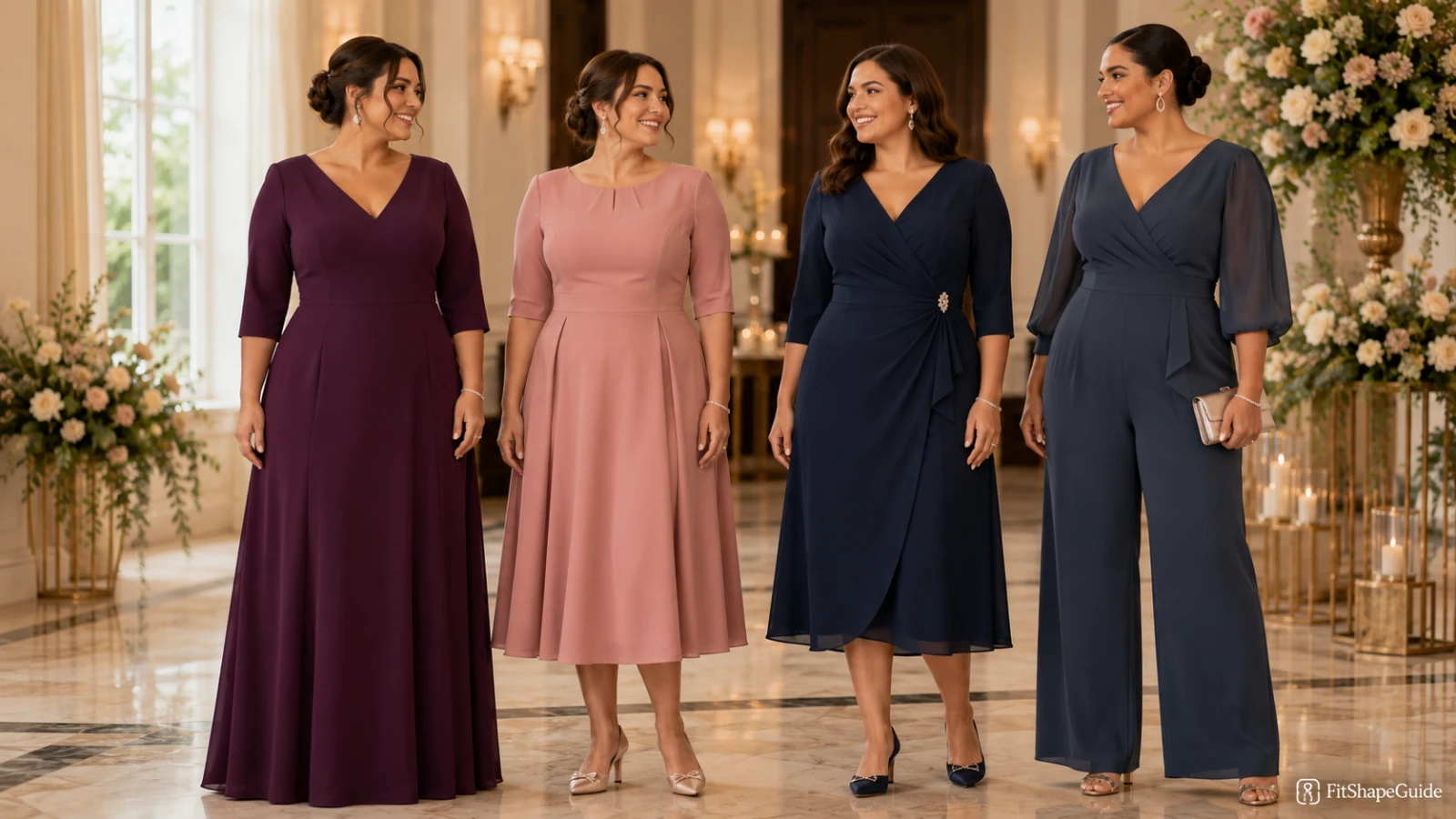
| A-line formal gown | Shaped bodice with easy skirt movement | Formal and evening weddings | Waist seam must stay correctly positioned |
| Fit-and-flare midi | Defined bodice with manageable hem | Daytime and semi-formal weddings | Close bodice needs accurate bust shaping |
| Fixed-wrap dress | Diagonal shaping and adjustable-looking front | Most daytime weddings | Overlap must remain secure |
| Portrait-neck dress | Elegant open neckline with formal presence | Hotel and ballroom weddings | Wide neckline needs stable shoulders |
| Column dress | Clean formal line with minimal skirt volume | Modern or black-tie-adjacent events | Hip and stride room need checking |
| Jacket dress | Layer adds ceremony coverage | Traditional or religious venues | Jacket must fit independently over bust |
| Formal jumpsuit | Polished alternative to a gown | Modern weddings and receptions | Torso length and restroom practicality |
| Tea-length structured dress | Formal without floor-length hem | Garden and daytime weddings | Hem should look intentional with shoes |
Best mother-of-the-bride dress styles for a large bust
A-line formal gown
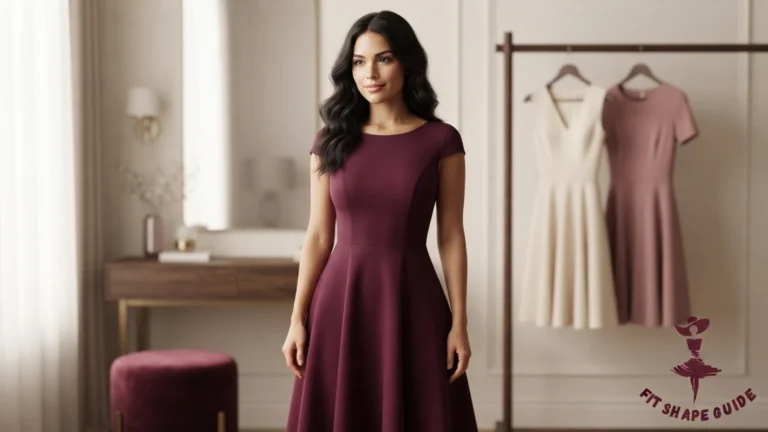
A shaped bodice transitions into an easy skirt, making this one of the most adaptable formal silhouettes. Look for princess seams, darts or curved panels through the bust.
Trade-off: if the bodice is too short in front, the waist seam can climb underneath the bust.
Fit-and-flare midi dress
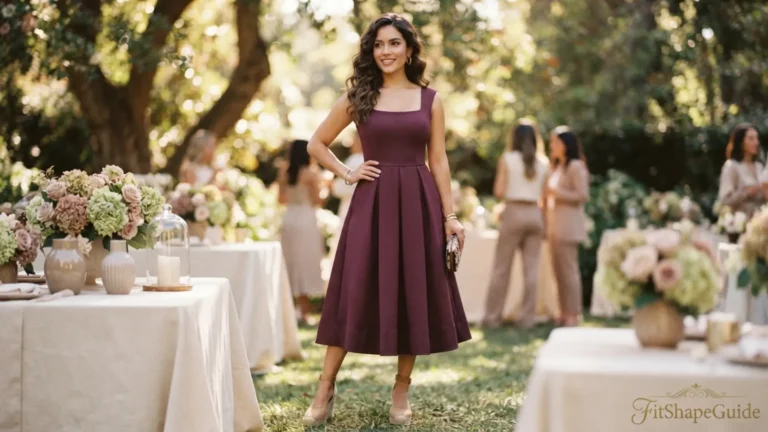
A midi hem is practical for ceremony seating and dancing, while a fitted bodice can create clean formal structure.
Trade-off: the bodice should follow the bust rather than compress it to achieve definition.
Fixed-wrap formal dress
A diagonal crossover can accommodate bust projection without a center placket. Fixed or internally secured designs are preferable for a long wedding day.
Trade-off: true wraps can loosen or change neckline depth during movement.
Portrait-neck dress
A portrait neckline gives a sophisticated formal frame and can work beautifully with structured shoulders and shaped bodice panels.
Trade-off: a very wide neckline may expose bra straps or shift during greetings.
Column or sheath dress
A column dress creates a clean event silhouette with less skirt volume. Vertical seams can provide excellent fuller-bust shaping.
Trade-off: sitting and walking room must be tested at the hip and hem.
Jacket dress
A coordinated jacket can add coverage for ceremonies and be removed later. The dress underneath should fit correctly without depending on the jacket.
Trade-off: two layers increase armhole and bust bulk.
Formal jumpsuit
A tailored jumpsuit can look elegant and modern while removing skirt-management concerns. A shaped bodice and fluid leg work particularly well.
Trade-off: bust, torso length and rise must all align.
Tea-length structured dress
Tea length works for daytime, garden and traditional weddings while still reading as special occasion dressing.
Trade-off: the skirt length and shoe combination should be intentional rather than simply shorter than a gown.
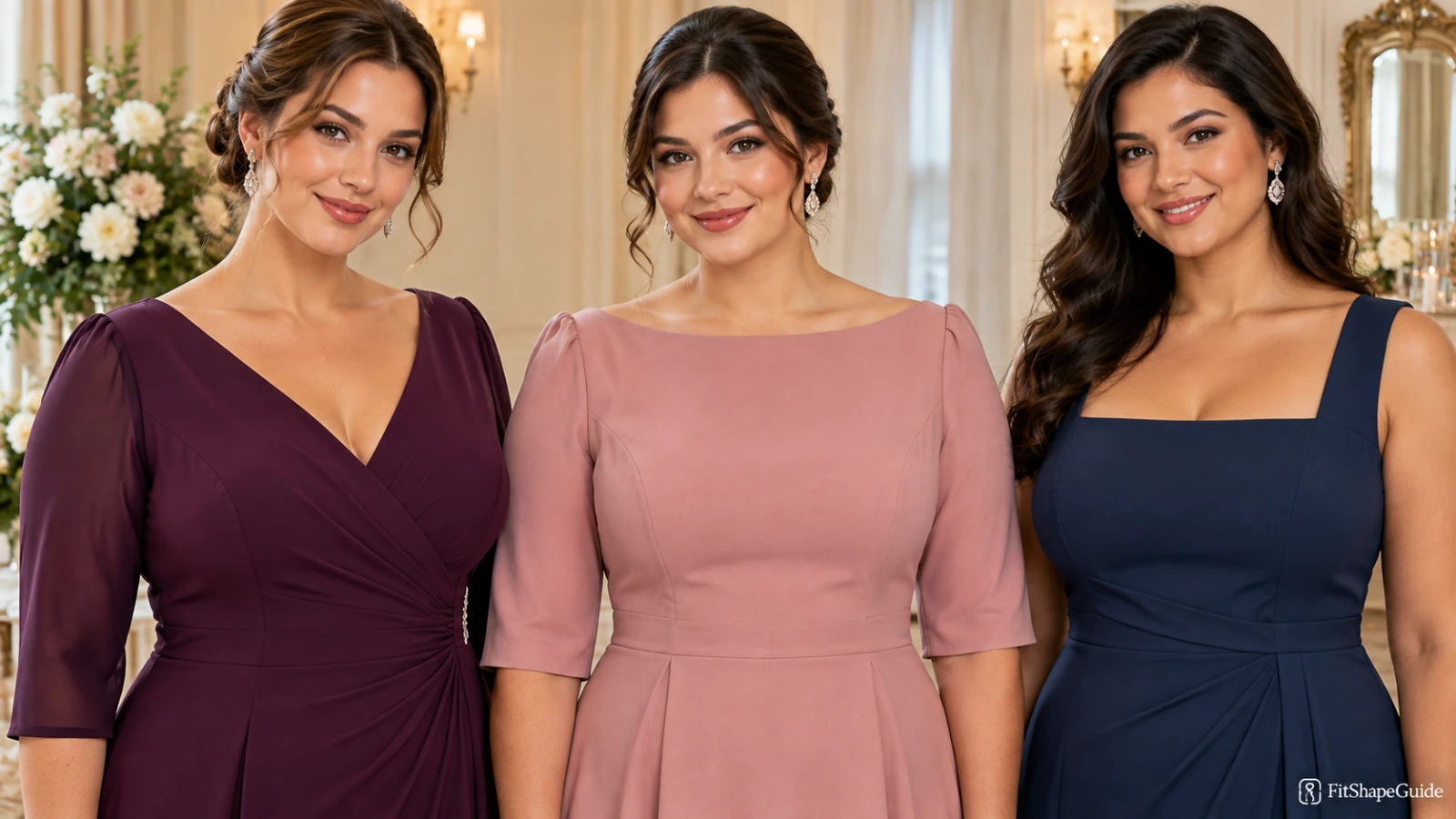
Best necklines for a mother-of-the-bride dress with a fuller bust
Moderate V-neck
A moderate V provides center-front room while keeping a formal, elongated neckline. It should remain stable during sitting and leaning rather than becoming substantially deeper.
Portrait neckline
Portrait necklines can look exceptionally polished in formal photographs. Look for stable shoulder construction and enough width through the upper bodice so the neckline lies flat.
Square neckline
A square neck can create clean structure when the corners remain flat and straps are wide enough to cover the intended bra.
Bateau neckline
A bateau or boat neckline can work well with a shaped bodice, especially for traditional formalwear. Ensure it does not pull toward the bust or sit too close to bra straps.
Fixed wrap
A secured wrap front is particularly useful when a rigid center-front closure tends to gape. Internal snaps or stitched overlaps can preserve the intended neckline.
Princess seams, darts and waist placement
Formal dresses often use more internal structure than everyday dresses. Princess seams, side darts, waist darts and shaped linings allow fabric to move around the bust while keeping the waist controlled.
Princess seams
Princess seams are especially useful because they distribute shaping vertically. They should follow the torso smoothly without flattening the fullest point or creating empty fabric above it.
Bust darts
A dart should point toward the bust but stop before the fullest area. If it points far above or below, the size or pattern proportions may be wrong.
Natural waist seams
A waist seam should stay where designed when standing and sitting. If it climbs under the bust, the dress may lack front bodice length.
Empire seams
An empire seam can work, but it should clearly sit under the bust rather than cutting across it. Dresses designed with too little cup depth can place the seam midway through the bust instead.
Stretch panels
Controlled stretch can add comfort, particularly in formal knits or stretch crepe. Stretch should support movement without distorting the neckline or pulling seams out of position.
Sleeves, shoulders and armholes
Mother-of-the-bride dressing involves frequent hugging, photographs, dining and sometimes dancing. Arm movement deserves the same attention as bust fit.
Cap sleeves
Cap sleeves can look refined, but a narrow cap may restrict upper-arm movement. Test reaching forward before committing.
Elbow-length sleeves
Elbow-length sleeves are a versatile formal option because they provide coverage while keeping the lower arm free. Check that the sleeve opening does not grip.
Three-quarter sleeves
Three-quarter sleeves work particularly well for cooler venues and traditional formalwear. The sleeve should bend comfortably at the elbow.
Flutter sleeves
Flutter sleeves provide movement and can soften a formal dress, but their armhole still needs to sit securely without revealing the bra.
Sheer sleeves
Sheer chiffon or lace sleeves can add ceremony formality without the weight of a lined sleeve. Check seam strength and upper-arm room because delicate fabric usually has limited stretch.
Crepe, chiffon, satin, lace and stretch formal fabrics
Crepe
Crepe can provide elegant drape while maintaining enough body for darts and seams. Stretch crepe can be particularly practical for seated comfort when recovery is good.
Chiffon
Chiffon creates softness and movement but usually requires lining. The lining—not just the outer layer—must provide enough bust and armhole room.
Satin
Satin reflects light and makes drag lines particularly visible. Accurate sizing and seam shaping matter because tightness can show clearly in photographs.
Lace
Lace overlays can add visual detail, but the underlayer controls actual fit. Check whether lace seams or motifs restrict stretch across the bust.
Jersey and formal knits
A substantial formal jersey can offer excellent mobility. Choose enough weight and opacity so the garment remains event-ready and does not reveal every foundation seam.
Beading and embellishment
Beading increases garment weight. Test whether embellishment near the neckline or shoulders pulls the bodice downward during several minutes of wear.
Midi, tea-length and floor-length mother-of-the-bride dresses
Midi length
Midi dresses are practical for semi-formal and daytime weddings. They work well with flats, low heels and block heels and are easier to manage on stairs.
Tea length
Tea-length dresses can suit garden, daytime and traditional weddings. The hem should be clearly intentional and paired with shoes that support the overall level of formality.
Floor length
A floor-length gown is appropriate for more formal ceremonies and evening receptions. Hemming should be finalized with the exact shoes.
High-low hems
A restrained high-low hem can work for modern weddings but should not create a front length that becomes unexpectedly short because the bodice is pulled upward.
Mother-of-the-bride dresses by season and venue
Spring wedding
Mid-weight crepe, lace overlays and softly structured dresses work well. A removable wrap, bolero or light jacket can cover cool ceremony periods.
Summer wedding
Prioritize breathable lining, secure armholes and lighter formal fabrics. Outdoor weddings also require shoes that work on grass, gravel or uneven ground.
Autumn wedding
Deeper colors, substantial crepe, formal jersey and three-quarter sleeves can work beautifully. A tailored jacket or wrap provides flexible warmth.
Winter wedding
Choose fabrics with enough weight for the season while keeping indoor comfort in mind. Velvet details, heavier crepe and lined gowns can work, but shoulder weight should remain manageable.
Religious ceremony
If additional coverage is appropriate, use sleeves, a jacket or wrap that fits the dress rather than buying a bodice so restrictive that it needs to be hidden.
Ballroom or hotel
Formal gowns, portrait necklines, elegant sleeves and polished embellishment can suit the venue. Test sitting because formal dinners can keep the outfit compressed for long periods.
Garden wedding
Tea-length and midi dresses are easier to manage outdoors. Avoid hems that continuously contact the ground and choose stable shoes.
Online shopping, fittings and alterations
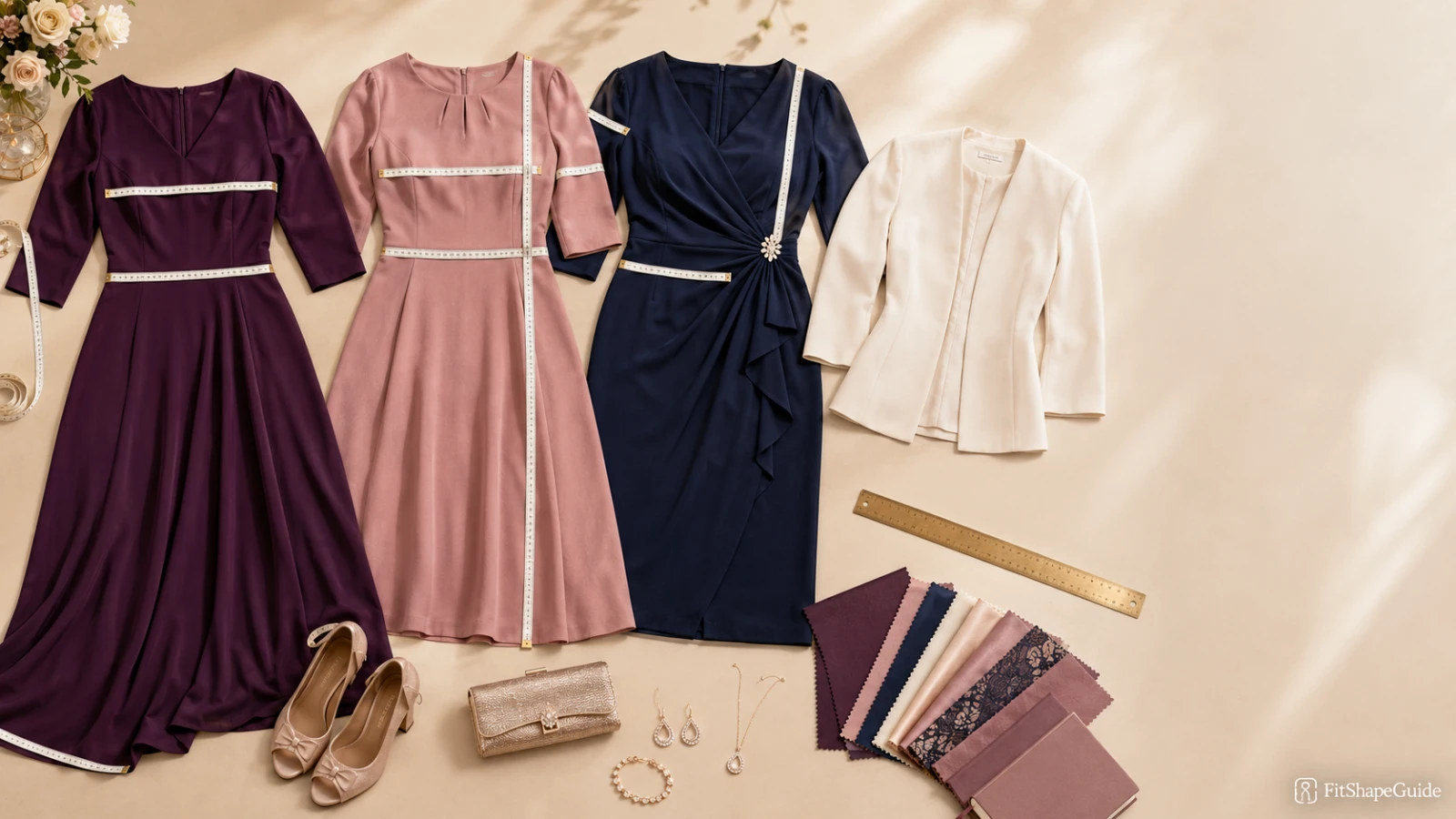
Order formalwear with enough time for a proper home fitting and possible alterations. Mother-of-the-bride dresses often contain linings, zippers, structured seams and embellishment that make last-minute adjustments harder than everyday clothing.
- Measure over the wedding bra: record full bust, waist and hip.
- Inspect the bodice: look for darts, princess seams, curved panels or stretch.
- Confirm neckline width and depth: especially for square, portrait and wrap styles.
- Check front length: bust projection can change waist and hem placement.
- Verify sleeves: compare upper-arm room and movement.
- Read lining details: lining can be tighter than the outer dress.
- Check closure: back zip, side zip, buttons or wrap construction.
- Review returns early: formalwear may have stricter return conditions.
Alterations worth considering
Hemming, minor waist refinement, sleeve length and small strap adjustments are common alterations when the dress already fits the bust and shoulders. Major bust expansion, neckline reconstruction or moving complex princess seams may be much more difficult.
Buy the hardest area correctly first
If the bust fits but the waist is slightly loose, tailoring may be straightforward. If the waist fits but the bodice is pulling sharply, sizing down was probably not the correct starting point.
For another formal-event fit framework, use the Formal Black Outfit Guide for a Large Bust. The Engagement Photo Outfit Ideas for a Large Bust also includes useful photograph and movement checks.
Common mother-of-the-bride dress fit problems
| Problem | Likely cause | Better response | Avoid |
|---|---|---|---|
| Waist seam sits too high | Insufficient front bodice length | Longer front or fuller-bust construction | Pulling dress downward repeatedly |
| V-neck becomes too low seated | Insufficient overlap or vertical ease | Shallower or secured neckline | Depending entirely on fashion tape |
| Princess seams sit inside bust | Bodice width or projection is too small | Larger or differently shaped bodice | Ignoring seam placement because zipper closes |
| Back zipper strains at bust | Insufficient circumference or shaping | More bust room or another cut | Forcing zip closed |
| Shoulders fit but bust pulls | Front pattern lacks projection | Fuller front or curved seams | Sizing up until shoulders become oversized |
| Sleeves restrict hugging | Armhole or upper-arm fit | More armhole mobility or sleeve width | Assuming stretch will appear during wear |
| Front hem looks shorter | Bust is using front garment length | Longer front or correct bodice fit before hemming | Hemming based only on back length |
| Jacket edges pull sideways | Insufficient jacket front room | Fuller front jacket or different cut | Using open styling to hide poor fit |
The dress fits everywhere except the bust
Do not assume it is close enough simply because the zipper closes. Bust tension can change neckline, waist and hem placement. Try a fuller-front size or a design with more deliberate shaping.
The bust fits but the waist is loose
That can be an alteration-friendly starting point. Waist refinement is often more straightforward than adding significant bust room to a fully constructed formal bodice.
The dress is comfortable but feels too casual
Formality can often be increased with fabric, shoes, jewelry and a refined layer rather than moving into a tighter dress.
Final verdict
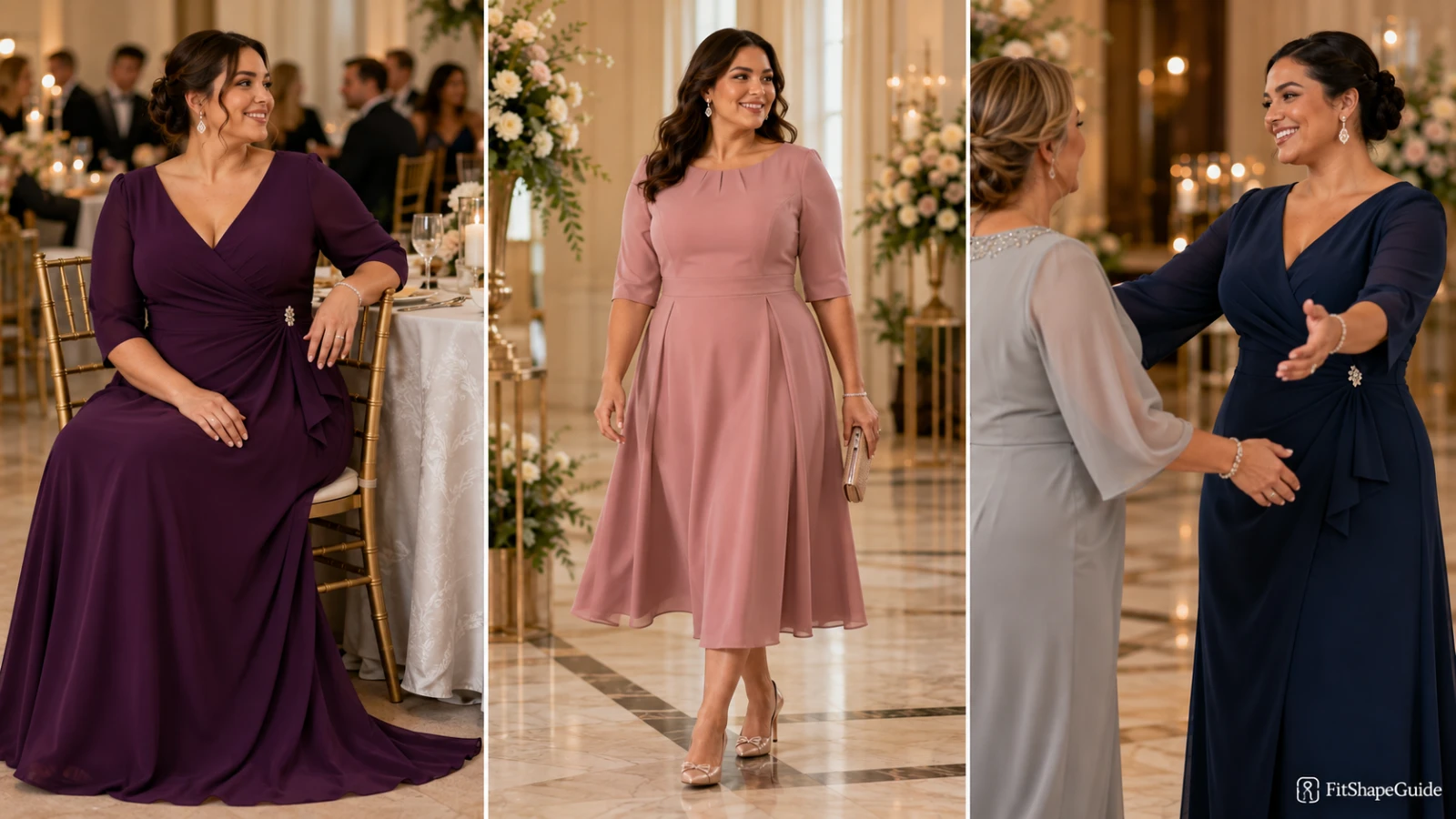
The best mother-of-the-bride dress for a large bust begins with a bodice that provides adequate front room and stable shaping. A-line gowns, fit-and-flare midis, fixed wraps, portrait-neck dresses, column styles and formal jumpsuits can all work when the neckline and waist stay where designed.
Test the dress with the actual bra, shoes and ceremony layer. Sit, lean, walk, hug and raise the arms. A successful formal dress should remain secure through the wedding day without repeated neckline adjustments, zipper strain or a waist seam creeping upward.
Frequently asked questions
What mother-of-the-bride dress is best for a large bust?
An A-line or fit-and-flare dress with a secure neckline and princess-seam or darted bodice is one of the most versatile starting points.
What neckline works best for a fuller bust?
Moderate V-necks, portrait necklines, square necklines, bateau necks and secured wrap fronts can all work when the bodice provides enough bust room.
Can a mother of the bride wear a wrap dress?
Yes. A formal wrap-style dress can work very well, especially when the overlap is fixed or otherwise secure throughout sitting and movement.
Are floor-length gowns better than midi dresses?
Neither is universally better. Match the length to the wedding’s formality, venue and the shoes you plan to wear.
Can the mother of the bride wear a jumpsuit?
Yes. A tailored formal jumpsuit can be elegant when the bust, torso length, rise and closure all fit comfortably.
How do I stop a formal dress from gaping at the bust?
Choose more bust room, darts, princess seams or a secure crossover rather than depending on fashion tape to correct an undersized bodice.
Should I size up for a large bust?
Size according to the hardest essential fit area, but check whether the larger size also works at shoulders and waist. A fuller-bust cut can be better than simply increasing every dimension.
How should I test a mother-of-the-bride dress?
Wear the planned bra and shoes, then sit, lean, raise both arms, walk, hug, take photographs and check that neckline, waist, seams and hem remain stable.
Editorial and verification standards
This guide evaluates mother-of-the-bride formalwear through neckline security, bust circumference, princess seams, darts, front bodice length, waist placement, shoulder mobility, sleeve construction, fabric, lining, hem length and real wedding-day movement.
No dress style is presented as mandatory for a fuller bust. A-line, column, wrap, midi, full-length and jumpsuit options are judged by garment construction and event function rather than claims that the body needs to be hidden, minimized or corrected.
Before publishing any commercial recommendation, FitShapeGuide should verify the exact seller, dress, color, size range, garment measurements, neckline, bust shaping, front length, shoulder and sleeve measurements, closure, lining, fabric, stretch, care, current availability and return conditions.
Affiliate links should be clearly disclosed close to any recommendation. No ASIN, price, rating, review count, discount, stock claim or delivery promise should be published unless directly verified.