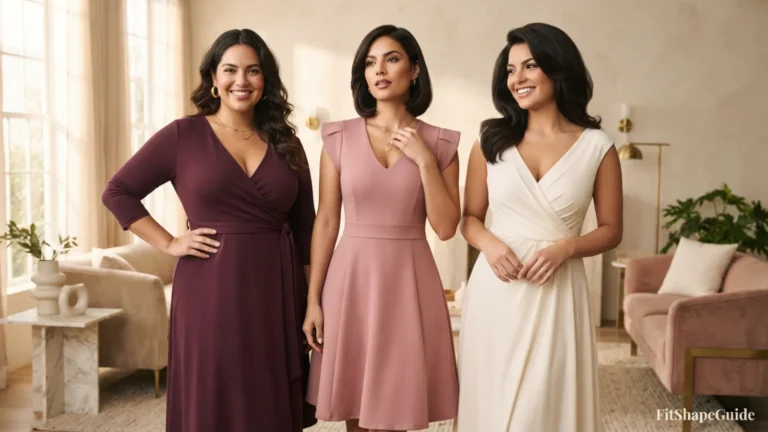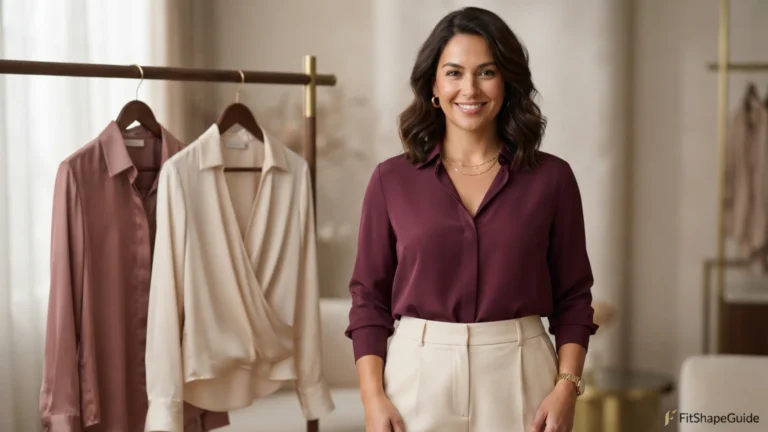
Graduation Outfit Ideas for a Large Bust
Six ceremony-ready outfit systems built around academic regalia, bust projection, breathable layers, secure necklines, long seated periods, stage movement and the photographs that happen after the gown comes off.
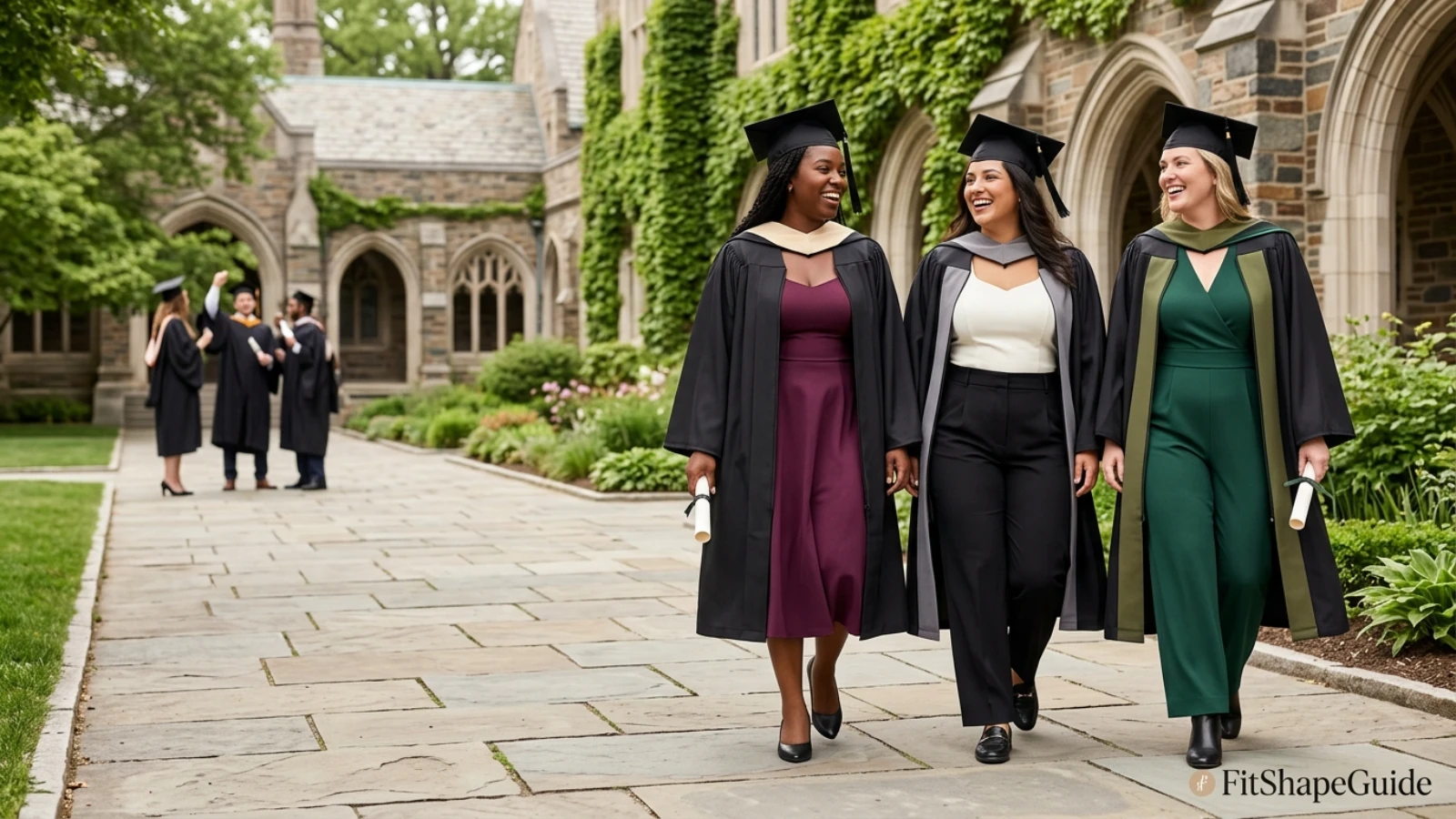
The 15-minute commencement test
- Put on the exact bra, base outfit, hosiery or socks and shoes planned for the day.
- Add the real academic gown, hood, stole, cords and cap according to institutional instructions.
- Zip the gown, take full breaths and check that the zipper track stays straight rather than bowing over the bust.
- Sit for ten minutes, stand without rearranging the outfit and simulate receiving a diploma with both hands.
- Walk briskly, climb several steps, use a ramp if available and test the floor surface expected at the venue.
- Remove the gown and take front, side and seated photographs in daylight and indoor light.
Keep the combination only if it stays comfortable, secure and visually intentional in all three states: gown closed, gown open and gown removed. A ceremony outfit should not require constant neckline, strap, waistband or hem correction.
Start with regalia and ceremony instructions
Graduation is unusual because the main garment is assigned rather than chosen. The academic gown, cap, hood, stole and cords create fixed volume, neckline layers and movement requirements. The best base outfit is therefore not simply the most photogenic dress in isolation; it is the one that cooperates with the required regalia and still feels like the graduate when the gown comes off.
Read the institution’s current commencement page and every vendor instruction before ordering. Some schools size gowns primarily by height and weight; others ask for chest or head measurements as well. Some permit decorated caps, while others restrict them. Some ceremonies limit bags or require graduates to carry nothing. Footwear recommendations can reflect steep stage stairs, outdoor grass, ramps or long processions. These details are not universal, so the official instructions outrank any general fashion guide.
Ask how long graduates must arrive before the ceremony and how long the event usually lasts. A three-hour ceremony plus line-up, security, photographs and reception can turn a seemingly comfortable outfit into a six-hour system. Long waiting periods make breathable fabrics, an easy waistband, dependable support and practical shoes more important than a five-minute fitting-room impression.
Confirm the venue. Air-conditioned arenas, warm gyms, outdoor lawns and drafty halls create different layer needs. Academic gowns are often opaque synthetic fabrics with generous sleeves and limited ventilation. Even when the base outfit is sleeveless, the gown may feel warm. Conversely, an outdoor morning ceremony can be cool before the crowd and sun arrive. Build a removable weather layer for before and after rather than stuffing a bulky jacket under the gown.
Regalia should also be tried on early. Check the vendor’s exchange deadline, inspect the zipper and closures and follow pressing or steaming instructions compatible with the care label. If the gown is borrowed or rented, learn what alterations, pins, tape or cleaning methods are prohibited. A last-minute gown problem is harder to solve than a last-minute jewelry change.
| Ceremony setting | Reliable starting outfit | Fuller-bust priority | Main risk to test |
|---|---|---|---|
| Indoor arena or hall | Shaped midi, jumpsuit or shell with trousers | Low-bulk bodice and breathable lining | Overheating during long seated periods |
| Outdoor lawn | Midi dress or trouser outfit with stable hem | Wind-secure neckline and bra route | Grass, wind, sun and changing temperature |
| Formal graduate ceremony with hood | Clean neckline and simple upper bodice | Space for hood without neck crowding | Collars, bows or necklaces tangling with regalia |
| Short daytime ceremony | Refined knit dress or dressy separates | Fast gown-on/gown-off transition | Base outfit looking unfinished in photos |
| Long procession or large campus | Tailored trousers, midi or jumpsuit | Supportive bra and stable waistband | Foot fatigue, chafing and restricted stride |
| Reception immediately afterward | Photo-ready dress, suit or jumpsuit | Intentional neckline above open gown | Base outfit chosen only for concealment |
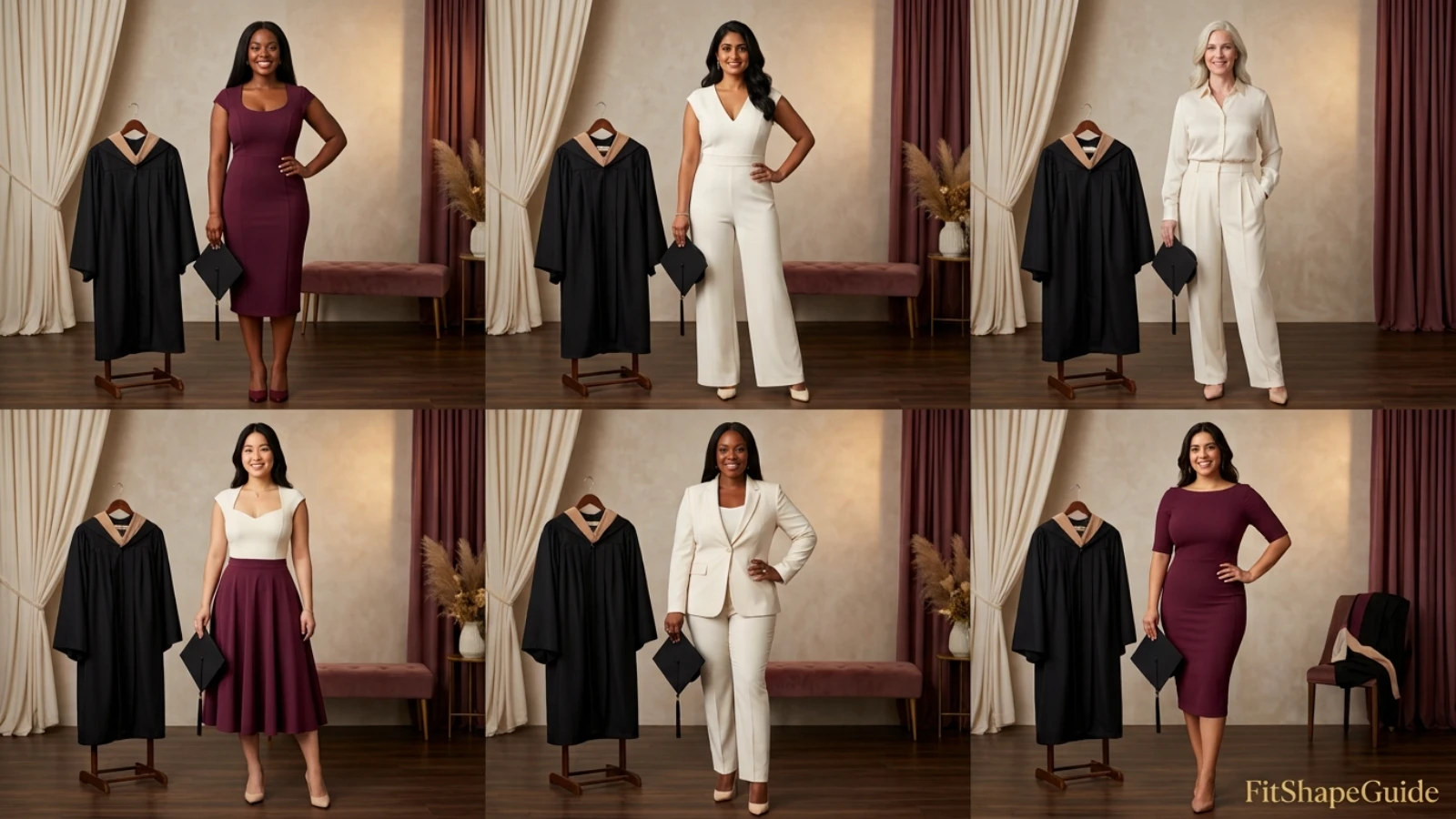
Six graduation outfit ideas for a large bust
Princess-seam or darted midi dress
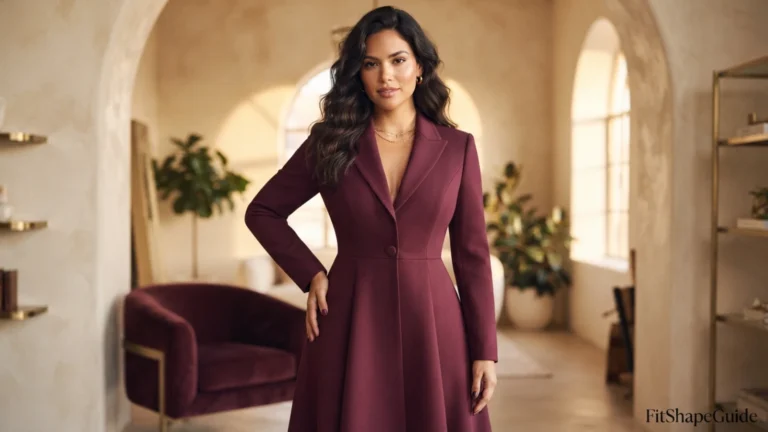
Best all-rounder: a shaped midi can create three-dimensional bust room, keep the waist level and provide enough skirt movement for stairs and a long seated ceremony. Wide straps or sleeves preserve ordinary-bra options, while a knee-to-midi hem usually stays clear of the gown.
Trade-off: decorative seams are not automatically functional. The dart or princess-seam curve must align with the fullest bust area, and the bodice must have enough center-front length. Test the gown zipper over the actual dress rather than assuming a smooth dress guarantees a smooth outer layer.
Tailored jumpsuit
Best one-piece alternative: a jumpsuit with darts, princess seams, a defined waist and a straight or wide leg can look polished after the gown comes off. It also avoids a skirt shifting during stage stairs or outdoor wind.
Trade-off: torso length, bathroom access and neckline security are decisive. A jumpsuit that pulls from crotch to shoulder will become less comfortable when seated. Test the restroom routine with the gown and cords in mind, and avoid a back closure that requires assistance if facilities are crowded.
Non-gape shirt or shaped shell with trousers
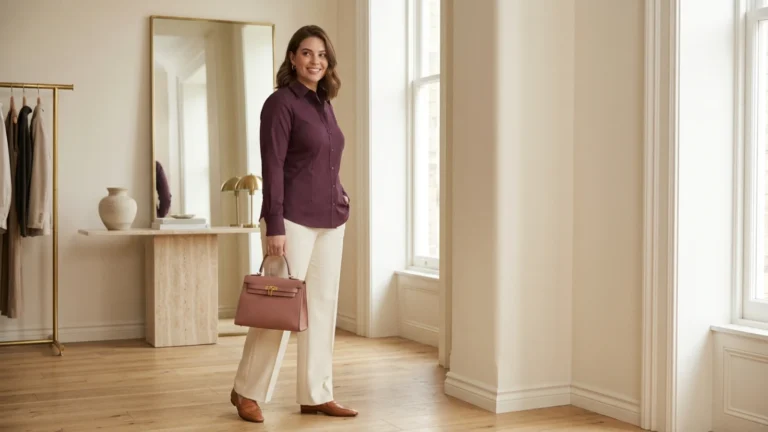
Best for tailored separation: a hidden-button shirt, darted shell or fine knit can provide bust room without adding bulk at the waist. Pair it with straight, tapered or fluid wide-leg trousers whose rise remains comfortable during extended sitting.
Trade-off: a full tuck can bunch beneath the gown, and a stiff waistband may press while seated. Check that the shirt placket stays vertical, the shell is long enough to remain tucked and the trouser pockets do not flare. A half tuck may look polished after the gown is removed but can feel uneven under a closed gown.
Fine knit or shell with an A-line midi skirt
Best for flexible sizing: separates let the graduate fit upper and lower body independently. A shaped shell or dense fine-gauge knit can sit smoothly under regalia, while an A-line or gently columnar midi allows stride and seated ease.
Trade-off: waistbands, pleats and full gathers can stack bulk beneath the gown. Choose a stable waistband that does not roll, test the skirt on stairs and confirm that the top stays anchored when arms lift. A smooth side zip or flat-front waist is often calmer than heavy elastic or layered ties.
Lightweight suit separates
Best for professional photos or a formal reception: a shaped shell, fluid trousers and a single-breasted blazer create an outfit that can move directly from ceremony to networking, dinner or family photographs. The blazer can be worn before and after rather than underneath a warm gown.
Trade-off: shoulder pads, lapels and double layers can crowd the gown and hood. If the blazer must stay under the gown, test shoulder reach, zipper closure and neck comfort. A softer unlined jacket is lower bulk; a structured blazer may be better carried or stored until the ceremony ends.
Refined knit or stretch-crepe dress
Best for cool weather and long sitting: an opaque knit or stretch crepe with recovery can provide mobility, warmth and a polished base. A moderate scoop, V or crew neckline can remain visible above the gown without colliding with the hood.
Trade-off: thin rib knit can widen over the bust, heavy knit can grow and cling, and bulky sleeves may twist under regalia. Look for stable recovery, sufficient front length and a hem that does not creep upward when seated. Use a separate coat for outdoor warmth rather than relying on the gown.
| Outfit formula | Under-gown bulk | Support route | Decisive test |
|---|---|---|---|
| Shaped midi dress | Low to medium | Standard, balconette or plunge by neckline | Level waist and gown zipper |
| Tailored jumpsuit | Low to medium | Standard or plunge; wide straps preferred | Torso length, sitting and restroom use |
| Shirt/shell and trousers | Low with a flat tuck | Standard bra or neckline-matched option | Placket security and waistband comfort |
| Shell and midi skirt | Low if waistband is smooth | Standard bra with anchored top | Top stays tucked during raised arms |
| Lightweight suit | Medium to high with blazer | Standard bra under shaped shell | Shoulder reach and hood clearance |
| Knit or stretch-crepe dress | Low to medium | Smooth everyday bra matched to neckline | Recovery after sitting and heat comfort |
These are starting points, not rules. A graduate may wear cultural dress, religious garments, adaptive clothing, a uniform or an outfit that reflects personal identity. The same evidence still applies: required regalia should sit safely, the base garment should allow movement and the wearer should be able to participate without repeated adjustment.
Academic gown, hood, stole and zipper fit
Academic gowns are intentionally loose, but “loose” does not mean every size closes comfortably over every bust, shoulder or outfit. Order with the measurements and method required by the institution or regalia vendor. If a height-and-weight system is used, do not silently substitute a clothing size. Contact the vendor or commencement office when the chart places you between options or when the gown must accommodate a brace, mobility aid, religious garment or other access need.
The center zipper is the most useful diagnostic. It should join without pulling the two front panels inward, bowing into an arc or placing pressure across the bust. A slight fold from generous robe volume is normal; a tense zipper track is evidence of insufficient circumference, restrictive underlayers or both. Do not plan to keep the gown open unless the ceremony explicitly permits it. Photographs may be taken in both states, and some processions require closed regalia.
Check shoulder and upper-back reach. Extend both arms as if accepting a diploma, shaking a hand or holding a certificate. The gown should permit that reach without dragging the neckline backward. Very structured shoulders, puff sleeves or a thick blazer underneath may consume room even when the zipper closes. A low-bulk sleeve and smooth shoulder usually cooperate better with the robe.
Graduate hoods can add weight and multiple fabric layers around the neck and upper chest. Stoles and cords add more vertical lines over the bust. A clean scoop, moderate V, square neck, collared shell or simple crew usually gives the regalia space to lie as intended. Large bows, heavy statement necklaces, high ruffles and bulky cowls may tangle or stack beneath a hood. If the institution supplies an attendant to position the hood, follow their instructions.
Stoles and cords may fall differently over three-dimensional bust projection; symmetry can change when the wearer moves. Position them according to official instructions, take a photograph, then sit and stand once. Small removable keepers may be prohibited on rental regalia, so ask before adding pins, adhesive or alterations. Do not pierce or tape borrowed fabric without permission.
The cap is a separate fit problem. Test the prescribed hairstyle, head covering and cap together. Hair volume, pins and scarf fabric can change the fit. If the institution allows anchors, use methods that remain comfortable for the whole event. The tassel must move as directed without catching earrings or hood fabric.
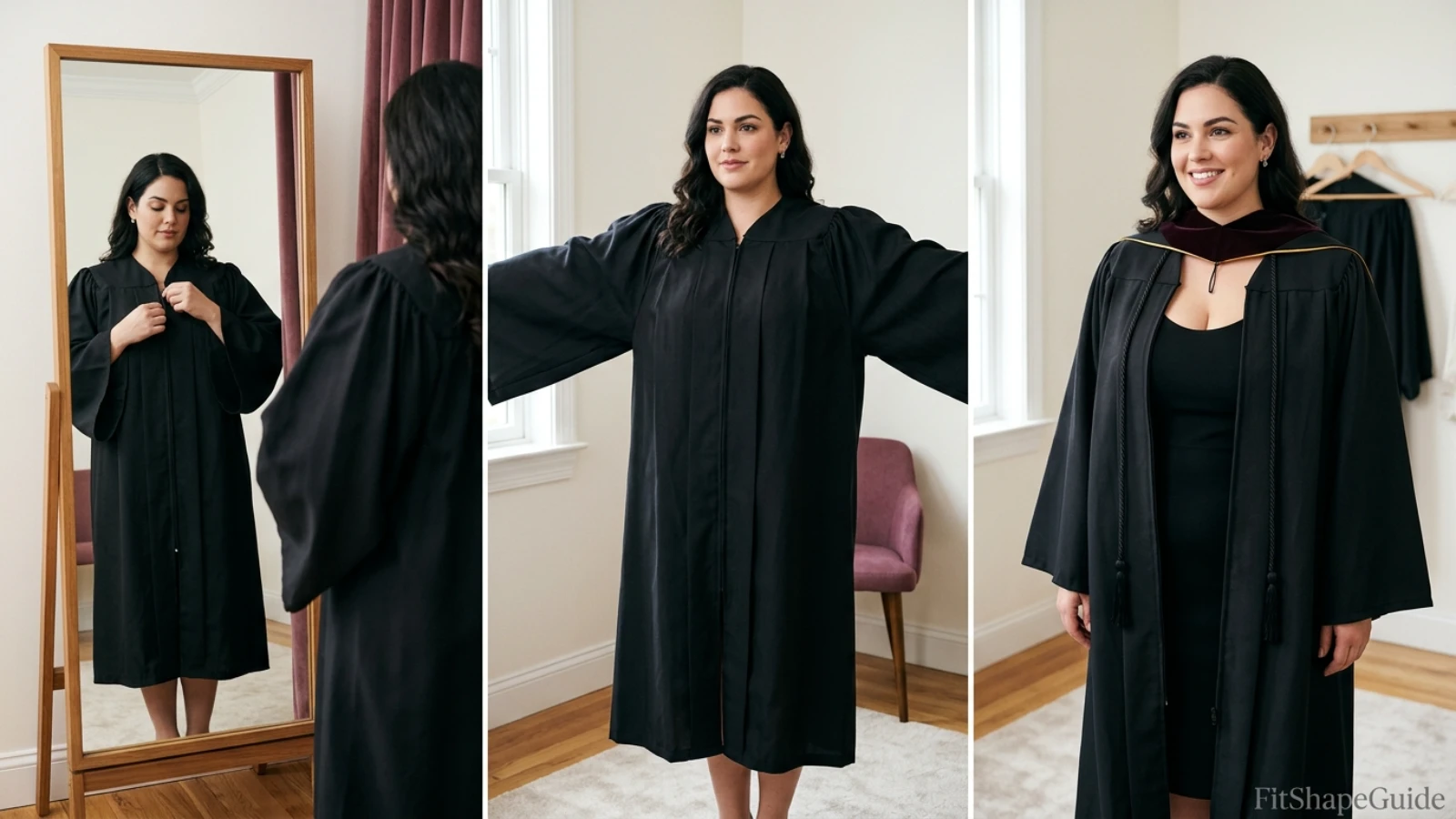
Bust shaping, necklines and bra compatibility
A graduation outfit is worn for longer than most fitting-room tests and under an additional garment. Begin with a bra that is already comfortable for extended sitting. The band should remain level and provide most of the support; cups should contain the breast tissue without cutting in or gaping; straps should be secure without being tightened to carry the whole load. Graduation morning is not ideal for testing a new size, adhesive method or unfamiliar strapless bra.
Fit the outfit over the exact bra. Bust darts should point toward the fullest area without ending directly on it. Princess seams should curve smoothly around the bust, and a waist seam should remain level rather than rising only at center front. Horizontal folds toward the side seam, a lifted front hem or a zipper that needs the bust manually repositioned are signs that the bodice lacks projection or front length.
Moderate V, square, scoop and crew necklines can all work. The best choice is the one that remains stable while seated, leaning for photos, raising arms and wearing the hood or stole. A neckline need not be high to be secure, and a high neck is not automatically low-maintenance: if it is too short through the front, it can pull backward and press the throat beneath the gown.
A button-down can be excellent when it includes enough bust room, well-spaced buttons or a hidden bust closure. The placket should stay vertical and closed while sitting and reaching. If a shirt fits only because it is oversized everywhere, extra fabric may bunch under the gown or puff above the waistband. Purposeful shaping is usually more reliable than unrestricted volume.
Wrap and surplice necklines need adequate panel width. Tightening a tie cannot create missing overlap. Test the outfit while leaning forward and lifting both arms. A discreet snap may stabilize a close fit, but tape should not hold structural tension for an hours-long ceremony. If the neckline repeatedly opens, a different cut is the safer choice.
Built-in cups deserve skepticism. Their position, wire width and depth may not match the wearer even when the dress label is correct. If they sit on breast tissue, cut across the bust or force the outer bodice away from the body, sizing up may not relocate them appropriately. A dress designed around a separate bra often offers a simpler support route.
For a more detailed office-to-ceremony blazer fit check, see the blazer guide for a large bust. If a shirt is part of the plan, the non-gape button-down guide explains placket and hidden-closure evidence.
Fabric, lining and weather planning
The base outfit needs to be judged under the gown, not in open air. An academic robe adds an opaque layer over the torso and arms, so a fabric that feels pleasant alone may become warm in a crowded hall. Lightweight crepe, breathable woven blends, stable jersey and fine-gauge knits can work when they remain opaque and recover after sitting. The fiber label matters, but weave, weight, lining and finish determine the lived result.
Warm-weather ceremonies reward low bulk and moisture management. Avoid piling a thick blazer, padded bodice and lined gown together. A sleeveless or short-sleeve base may be practical if it meets the institution’s expectations and still looks complete after regalia removal. Test opacity in sunlight and indoor flash, especially with pale colors.
For cool weather, use a real coat for arrival and post-ceremony photographs rather than making the base outfit excessively heavy. A fine knit, long-sleeve crepe dress or shell beneath a separate coat allows temperature adjustment. Confirm where outerwear will be stored; some graduate line-up areas do not accept bags or coats.
Outdoor ceremonies require wind and ground planning. A very full or lightweight skirt can move beneath an open gown; a wrap skirt can separate; a wide trouser hem can collect moisture. Test the hem in a breeze and on steps. A midi length, controlled A-line, straight trouser or softly wide leg often provides movement without trailing.
Static can make synthetic gown and base layer cling together. Test the actual combination several days before the ceremony. Follow both care labels and use only compatible solutions. Fragrance-heavy sprays or improvised treatments can irritate skin, mark fabric or conflict with venue sensitivity policies. A smooth slip can help some dresses, but it must stay hidden and should not add heat or ride upward.
Color is personal, but test it with the real gown. Pale shades may show through thin regalia in bright light; high-contrast prints can compete with cords and stoles; dark fabrics may absorb heat outdoors. None is automatically wrong. Take photographs with the gown closed, open and removed, and choose the combination that supports the intended visual story.
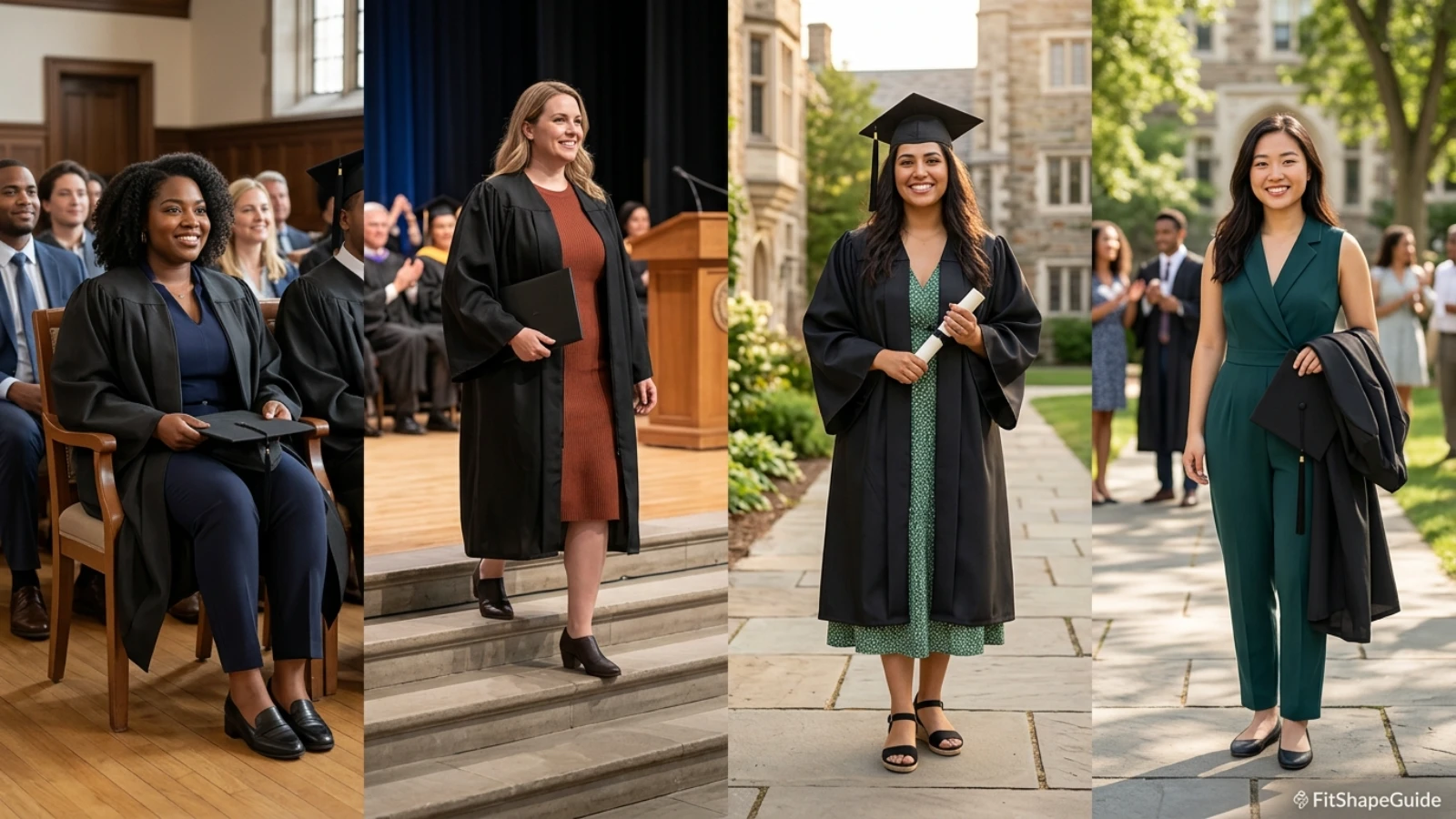
Shoes, pockets, bags and ceremony logistics
Graduation shoes must handle the route, not just the portrait location. Graduates may stand in line, cross a large venue, use stairs or ramps and walk on grass. Official institutions commonly emphasize comfortable, supportive footwear for exactly this reason. A stable flat, loafer, dress sneaker, low block heel or supportive sandal may be appropriate depending on the dress code, weather and venue.
Test shoes on the expected surface and for the full duration. A narrow heel can sink into grass or catch in a stage gap; a slick sole can feel unstable on polished flooring; a loose back can slip during stairs. Break shoes in safely before the event, but do not depend on painful “breaking in” as a plan. Insoles and blister protection should also be tested in advance.
Hem length and shoes are connected. Try trousers and dresses with the exact pair. A wide-leg hem should clear the ground and the toe during a normal stride. A midi skirt should not tangle with the gown when stepping up. If graduation shoes change the hem height, complete alterations only after the final pair is chosen.
Pockets are unusually valuable because bag rules may be strict and graduates may be separated from guests. A flat phone pocket, concealed side-seam pocket or secure trouser pocket can hold a small approved essential without distorting the gown. Test pocket weight: a large phone can pull a knit dress, open a skirt seam or swing against the leg during the procession.
Carry only what the institution permits. If bags are banned, a beautiful clutch is not a workaround. Arrange for keys, coat, medication, water, accessibility equipment and other essentials according to official procedures. Medical and access needs should be discussed with the school in advance rather than improvised on ceremony day.
Jewelry should coexist with regalia. Large earrings can catch the tassel; a necklace can tangle with the hood; a brooch may damage rental fabric. Smooth, low-profile pieces are often easiest, but personal and cultural jewelry may be meaningful. Test each item with the full cap, hood, stole and gown so the decision is informed rather than restrictive.
Graduation shopping and alteration checklist
Measure the body in the intended bra and close-fitting clothing. Record full bust, high bust if available, waist, hip, shoulder-to-waist length, rise and inseam as relevant to the garment. Compare those measurements with the current size chart for the exact item, not a generic brand memory. If a dress chart provides only bust, waist and hip, listing photos and seam placement become especially important.
Choose the size that restores bust room and front length without creating an unmanageable shoulder, armhole or waist. Sizing up can be sensible when the rest of the garment is alterable, but it is not a universal solution. Built-in cups, fixed waist seams and short bodices may remain misplaced in a larger size.
Read material, lining, closure and care details. “Stretch” should not substitute for shaping; recovery after sitting matters more than maximum expansion. A back zipper must be reachable or manageable on a busy morning. A side zipper can lie smoothly but may be difficult with a stiff waistband. Buttons, snaps and wrap ties need testing under gown pressure.
Purchase early enough for two complete fittings. The first checks the base outfit and bra. The second adds gown, regalia, shoes and planned underlayers. Take photographs and sit long enough for fabric growth, waistband pressure or neckline movement to appear. Preserve tags and follow return conditions until the combination passes.
A tailor can refine a strong near-fit by shortening straps, stabilizing a neckline, adjusting a waist, hemming trousers or skirt, adding bra keepers or improving a modesty closure. Creating missing bust projection, moving generic cups, enlarging a tight armhole or rebuilding a jumpsuit torso is more involved. Request an assessment before the return deadline and bring the exact bra and shoes.
If the event includes interviews, networking or formal photographs, the same trousers and top can be compared using our work pants and top pairings and job interview outfit guide. For skirt construction and waistband choices, use the best skirts guide.
| Checkpoint | Evidence to confirm | Warning sign | Best response |
|---|---|---|---|
| Institution rules | Current regalia, bag, footwear and arrival instructions | Depending on a previous year or another school | Use the official current page or contact the office |
| Base outfit fit | Level waist, aligned seams, full breath and seated ease | Pulling, rising front or repeated adjustment | More projection, length or different construction |
| Gown compatibility | Straight zipper, free shoulder reach and hood clearance | Bowed zipper, neck pressure or trapped sleeves | Exchange gown or reduce underlayer bulk |
| Movement | Secure neckline, stable waistband and safe stride | Opening wrap, rolling waist or catching hem | Alter close fit or choose another silhouette |
| Weather/logistics | Ventilation, coat plan, pockets and permitted essentials | Overheating or nowhere to store belongings | Use breathable base and official storage plan |
| Photos and value | Intentional closed/open/removed views and repeat wear | Outfit works only when fully hidden | Choose a polished base with future use |
Do a final 24-hour check: steam or press only as allowed, charge necessary devices, pack permitted essentials, inspect closures, confirm accessibility arrangements and review the arrival route. The morning should be reserved for celebration, not structural garment repair.
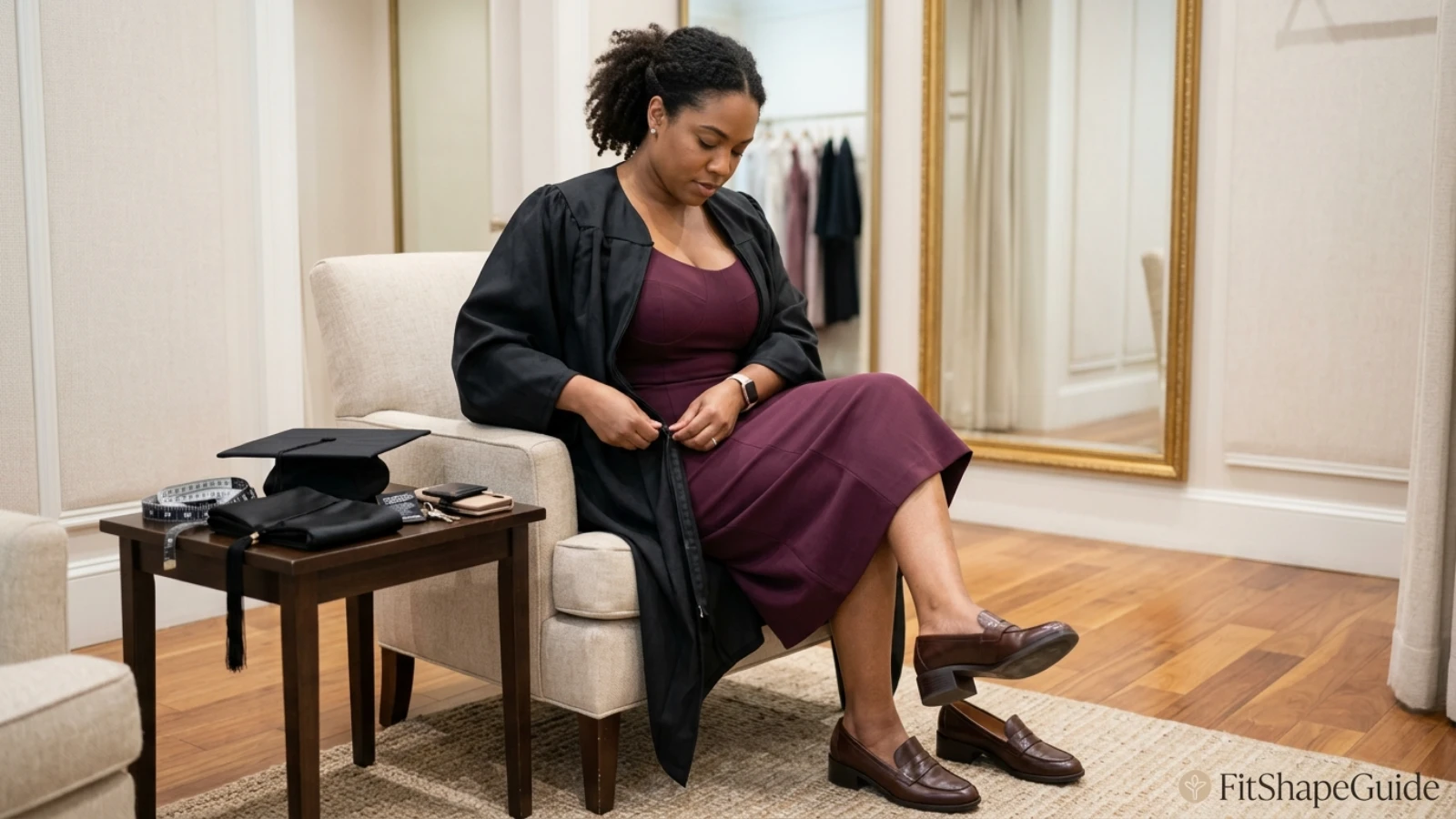
Common graduation outfit problems and fixes
The gown zipper bows across the bust
The gown may lack circumference or the under-outfit may be too bulky. Test the gown over a smooth low-bulk base. If the zipper still curves under tension, contact the vendor or school about the correct size. Do not force a rental zipper or assume it can remain open.
The hood or stole feels crowded at the neckline
Remove bulky necklaces, bows or high collars and arrange the regalia exactly as instructed. If a simple neckline still causes pressure, check gown size and hood placement with commencement staff. Do not cut, pin or tape borrowed regalia without approval.
The dress waist rises only at center front
The bodice likely needs more bust projection or front length. Look for deeper darts, correctly curved princess seams or a longer front bodice. Pulling the skirt down or adding a belt cannot create the missing room.
The shirt gaps when accepting the diploma
Shoulder reach changes tension across the placket. Check bust ease, armhole mobility, button spacing and hidden closures. A small snap may stabilize an adequate fit; if the placket is being pulled apart, choose a shaped or roomier cut.
The jumpsuit is comfortable standing but tight when seated
The torso or rise may be too short, or the waistband may lack ease. A larger size helps only when shoulder, crotch and waist proportions improve together. Test a different torso length or use separates when bathroom and seated comfort remain difficult.
The outfit overheats under the gown
Reduce unnecessary layers, choose a lower-bulk breathable base and keep the weather layer removable. Confirm whether the gown can be opened at permitted times and where a coat can be stored. Hydration and venue rules should follow official guidance.
The shoes are stable indoors but fail on grass
Switch to a broader heel, flat, loafer or supportive shoe suited to the surface. Test it with the final hem. Safety on the procession route is more important than preserving a planned shoe silhouette.
The base outfit looks unfinished when the gown comes off
Add polish through fit, a clear neckline, intentional shoes and low-profile accessories rather than more under-gown bulk. A shaped dress, jumpsuit or coordinated separates should read as a complete outfit on its own. For an elevated post-ceremony reception, compare the cocktail party outfit guide.
Choose the outfit that disappears as a problem and remains as a memory
A shaped midi dress is the strongest all-rounder; a tailored jumpsuit offers a polished one-piece alternative; a non-gape shirt or shell with trousers gives independent sizing; a shell and midi skirt adds flexibility; a lightweight suit serves professional photographs; and a refined knit or stretch-crepe dress supports long seated comfort.
Let the institution decide regalia and safety, let garment construction decide fit, and let personal style decide the final expression. The winning outfit allows the gown to zip, the hood to sit correctly, the wearer to breathe and move, and the photographs to feel recognizably theirs.
Frequently asked questions
What graduation outfit is best for a large bust?
A princess-seam or darted midi dress with a secure neckline, ordinary-bra-friendly straps and enough movement is the most versatile option. A tailored jumpsuit or shaped shell with trousers can be equally effective when the gown closes comfortably over it.
What should I wear under a graduation gown with a large bust?
Wear a low-bulk, breathable outfit with real bust shaping and a dependable bra. Shaped dresses, jumpsuits and dressy separates work well when the neckline does not crowd the hood or stole and the complete gown passes sitting, reaching and zipper tests.
Should my graduation gown zip over my bust?
Yes, if the institution expects the gown to be worn closed. The zipper should join without force, bowing or chest compression. Follow the official sizing method and contact the regalia vendor or commencement office if the assigned size does not close comfortably.
Can I wear a jumpsuit to graduation?
Yes, when it meets the school’s dress expectations and provides enough torso length, seated ease and practical restroom access. Test it with the gown, hood and shoes, and confirm that the neckline remains secure while reaching and walking.
What neckline works best under graduation regalia?
A stable scoop, moderate V, square, simple crew or neat collar can all work. Choose enough front length and edge stability for the planned bra, then confirm that the neckline does not tangle with a hood, stole, cords or necklace.
What shoes should I wear for graduation?
Choose supportive shoes that match the actual route and surface, such as stable flats, loafers, dress sneakers, low block heels or supportive sandals when permitted. Test stairs, ramps, grass, long standing and the final garment hem before the event.
How do I avoid overheating under a graduation gown?
Use a breathable, low-bulk base outfit, minimize unnecessary layers and keep a real coat removable for before and after the ceremony. Check the venue, forecast, storage rules and official instructions rather than assuming the gown will feel like ordinary outerwear.
How far in advance should I test my graduation outfit?
Order early enough for exchanges and alterations, then complete two fittings: one for the base outfit and bra, and one with the actual gown, regalia, shoes and essentials. Perform the full seated, walking, stairs and photo test before return deadlines.
Related FitShapeGuide guides
Editorial and verification standards
This guide evaluates commencement rules, academic-gown sizing and closure, hood and stole clearance, bust shaping, bra compatibility, fabric, heat, seated movement, stage walking, footwear, pockets, alterations and photographs. Ceremony duration, lightweight layers and pocket planning were checked against current Georgia Tech commencement guidance. Business-casual base layers and supportive shoe principles were checked against current Arizona State University graduation guidance, while academic-costume footwear cautions were checked against Ohio State University instructions.
Regalia measurement methods were checked against current university ordering guidance. Bra-fit principles were checked against Bravissimo’s current fitting guide, and garment-care statements were checked against current Federal Trade Commission care-label guidance. Institution-specific instructions always take priority because ceremonies, venues and regalia systems differ.
No outbound source link appears in the visible article. FitShapeGuide does not invent product names, ASINs, prices, ratings, review counts, sellers, materials, stock or performance. Before an Amazon module is published, verify the live seller, size chart, garment measurements, fiber content, care, returns and image rights; place a clear affiliate disclosure near recommendations.
“Best” means the most suitable verified outfit for an individual body, support preference, institution, ceremony, climate and activity—not a promise that one graduation silhouette works for everyone.