Best Camisoles for a Large Bust
A construction-first guide to bra-friendly straps, secure necklines, side coverage, bust ease, opacity, length, shelf bras, and dependable layering.
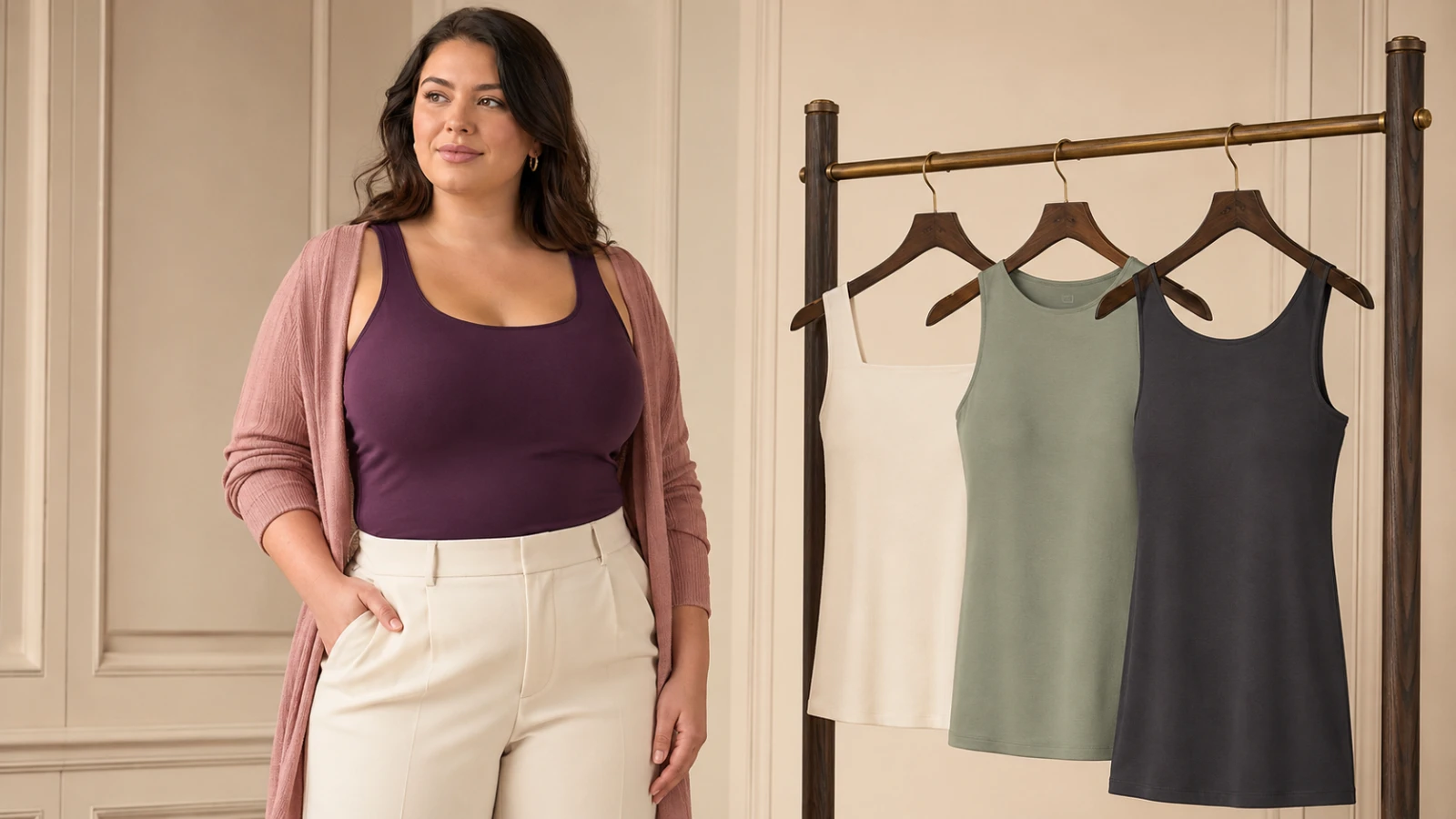
The best camisoles for a large bust are not simply the stretchiest tops with the deepest necklines. A camisole has very little fabric and very few structural seams, so every dimension works hard: straps control height, the neckline controls coverage, armholes determine side-bra concealment, the front body must travel over projection, and the hem must stay long enough after that fabric is used. A cami may look smooth while standing but reveal its weakness as soon as you sit, reach, add a blouse, or wear it for an hour. The neckline slides, the armholes expose the bra, the front turns sheer, the straps dig, or the entire top climbs toward the waist. Another camisole may offer generous bust stretch yet become loose through the back and armholes. This guide compares six useful constructions, explains shelf-bra limitations, shows how to measure a successful reference garment, diagnoses common fit problems, and separates realistic alterations from pattern failures. Product modules remain private until current listing details, garment measurements, materials, support construction, returns, and availability can be verified. That keeps the commercial guidance useful without inventing an Amazon product, rating, price, or fit claim.
The 60-second camisole fit test
Wear the bra and outer layer planned for the outfit, then check the camisole from front, side, and back.
- The straps sit securely and either cover or intentionally coordinate with the bra straps.
- The neckline remains at the desired height without being pulled downward or outward by the bust.
- The armhole covers the side of the bra and lies close without cutting into the front underarm.
- The fabric stays opaque across the fullest point and the knit or weave does not look strained.
- The side seams remain close to vertical instead of swinging toward the front.
- The center-front hem reaches its designed position and does not lift far above the back.
- The hem stays down during reaching, sitting, and layering rather than collecting beneath the bust.
- The back, waist, and neckline are not loose simply because enough bust room was achieved.
Best camisoles by type and wardrobe need
The best camisoles solve one defined job before they try to solve everything. A smooth under-sweater layer needs different fabric and neckline behavior from an evening cami worn beneath a blazer. A sleep or lounge style should not be ranked as though it provides structured daytime support. Begin with the outfit role, then judge whether the pattern has enough front room, appropriate coverage, and a strap system strong enough for that role.
Wide-strap bra-friendly camisole
Best for: daily wear, modest layers, and predictable bra coverage. Look for straps wide enough to align with your bra, a stable scoop or square neckline, and high side coverage. The trade-off is visibility beneath very narrow-neck outer tops, so test the complete outfit rather than the cami alone.
Adjustable-strap woven camisole
Best for: polished work, dinner, and blazer outfits. Adjustable straps refine neckline height, while bust darts, princess seams, or a shaped front create room without relying on stretch. The trade-off is fit precision: a straight woven front can bridge from bust to hem and pull at the armhole.
Resilient rib-knit camisole
Best for: close everyday fits and breathable casual layers. Narrow, dense ribs can follow projection and recover, but widely spread ribs show that the bust is using too much stretch. The trade-off is that thin ribs may reveal bra texture or become sheer.
High-neck layering camisole
Best for: neckline coverage beneath wrap tops, shirts, or jackets. A higher front can reduce the need for pins and create a clean column under layers. The trade-off is extra fabric and warmth on the upper chest, plus possible pulling if the neckline and armholes are cut too tightly.
Longline smoothing camisole
Best for: staying tucked, reducing layer friction, and wearing beneath sweaters. Choose enough bust room and a hem that does not compress the hip. The trade-off is heat and upward migration if the lower edge is too tight for the body area where it lands.
Fuller-bust shelf-bra camisole
Best for: light support, lounge use, or specific built-in-support wardrobes when engineered for fuller busts. Look for real cup depth, a stable underbust anchor, strong straps, and a size range that separates bust and band needs. The trade-off is that many generic shelf bras flatten, divide poorly, or place elastic on breast tissue.
| Wardrobe need | Strong starting point | Evidence to verify | Main trade-off |
|---|---|---|---|
| Everyday bra coverage | Wide-strap knit cami | Strap alignment and side height | May show under narrow tops |
| Blazer or occasion layer | Shaped woven cami | Darts, neckline stability, front length | Less forgiving sizing |
| Close casual fit | Dense rib knit | Opacity and rib recovery | Can cling or turn sheer |
| Neckline coverage | High-neck cami | Comfort and armhole room | Adds upper-chest warmth |
| Under sweaters | Longline smooth cami | Low-friction surface and hem width | May roll at the hip |
| Light built-in support | Fuller-bust shelf-bra design | Band anchor, depth, straps, size system | Not equal to structured bra support |
How the best camisoles balance straps, necklines, and armholes
A camisole’s upper edge is one connected system. Shortening adjustable straps raises the neckline, but it also lifts the armhole and can pull the hem upward. Lengthening them lowers the neckline and armhole, potentially exposing the bra. The best camisoles have a base pattern close enough to correct that strap adjustment fine-tunes the fit rather than repairing it.
Strap width should match the intended bra
Wide straps are the easiest way to conceal a regular bra, but width alone is insufficient. The strap must also sit in the same path. If the cami strap is placed far toward the neck while the bra strap sits wider, both remain visible. If it sits too far outward, it may slide. Photograph the back as well as the front because alignment can differ. Narrow straps are a valid aesthetic choice when exposure is intentional or the bra solution is appropriate.
Adjustable straps need usable range and stable hardware
Inspect where the slider lands after adjustment. Hardware should not sit on the shoulder crest, dig under a bag, or reach the end of its range before the neckline is correct. Thin elastic straps may lengthen under the weight of the front garment. A doubled fabric strap or stronger elastic can be more stable, but comfort depends on edge finish and width.
Neckline depth is a coverage decision, not a flattering rule
Scoop, square, V, straight, cowl, and high necklines can all work. The useful test is whether the neckline keeps its shape and coverage over the bust. A square neckline needs reinforced corners and enough width to avoid bowing. A V should remain centered. A cowl needs enough fabric to drape rather than being stretched flat. For more construction detail, compare these options with the neckline guide for a large bust.
Armhole height protects side coverage
Deep armholes can reveal the bra band or side bust, particularly when a straight-front camisole is pulled forward by projection. Very high armholes can rub and drag the neckline sideways. Check the front armhole curve while reaching forward. A clean armhole follows the body without cutting, gaping, or borrowing fabric from the bust.
The back neckline controls stability
A very low or narrow back can reduce the area supporting the straps, making the front less stable. A higher straight back usually covers a bra more easily and distributes tension. Racerback shapes can work with a matching bra configuration, but they may narrow the front strap position too. Choose the back for the complete undergarment system rather than only its front appearance.
How the best camisoles use opacity, recovery, and drape
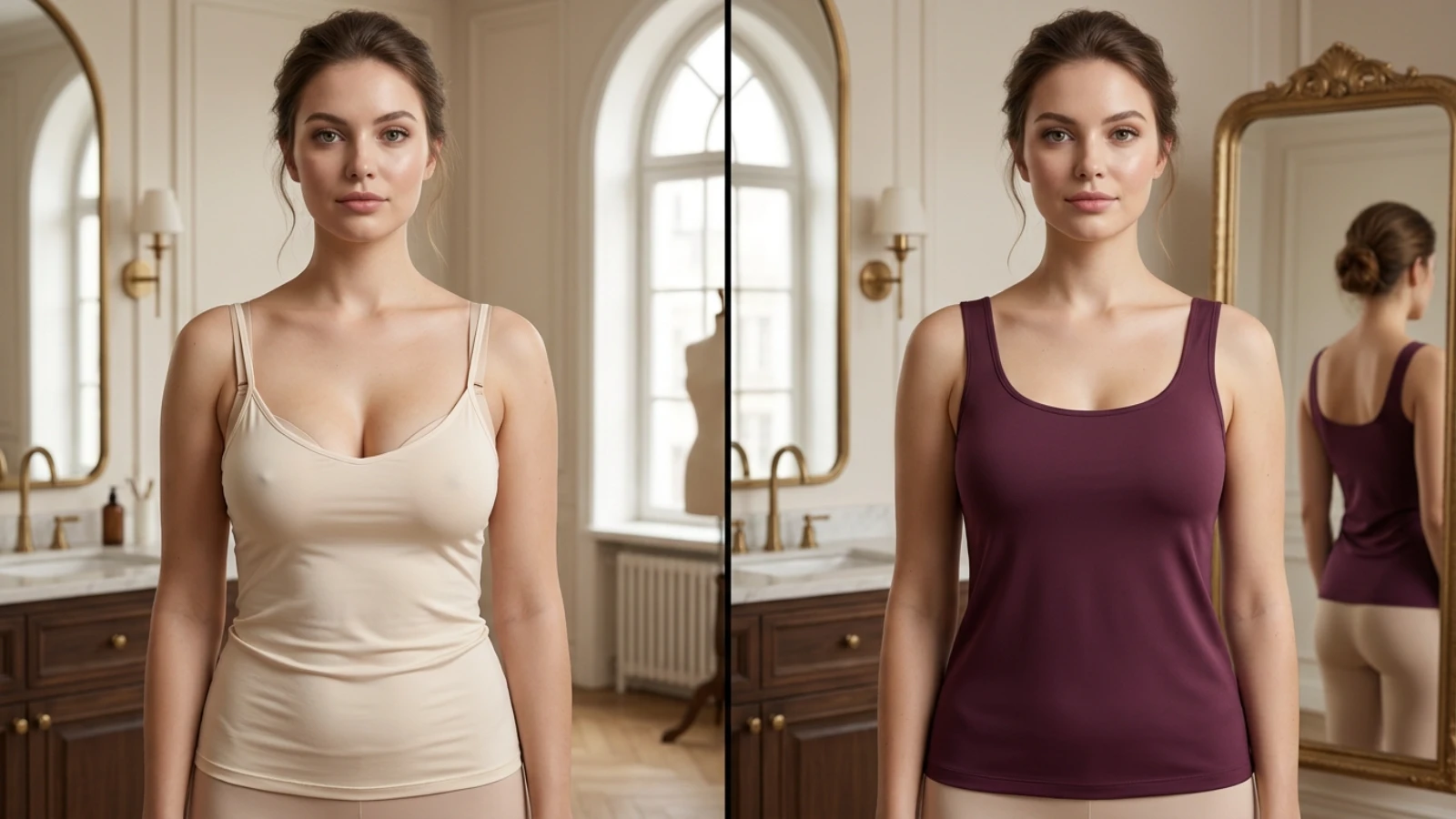
Camisole fabric works under concentrated stretch and often sits directly beneath another garment. The best camisoles stay opaque over the bust, recover at the neckline and armholes, and create the right amount of friction for their purpose. A clingy rib can help a cami stay tucked but may grip beneath a blouse. A smooth woven fabric layers cleanly but needs pattern shaping because it cannot stretch around projection.
Compact jersey is versatile when it recovers
Cotton, modal, viscose, nylon, polyester, and blended jerseys can all form a useful base layer. Judge the finished knit. Stretch a hidden section gently and watch whether it returns promptly. Compare the fabric at the upper back with the fabric over the bust. If the front becomes lighter, shinier, or visibly thinner, the garment needs more room or density.
Rib knit should retain recognizable channels
Ribs are designed to expand, but their behavior reveals strain. Narrow channels that spread slightly and close after movement are working. Ribs that open into wide flat spaces across the bust are near their limit. Dense ribs usually give more coverage than fine, loose ribs, though a heavy rib can feel warm under layers.
Woven satin and crepe require front shaping
Woven camisoles may use bust darts, princess seams, bias cutting, gathers, or panel shaping. A straight rectangle often hangs from the fullest point and leaves excess below. Bias can drape around curves, but it may lengthen, twist, or become less opaque under tension. Inspect side-seam direction and neckline stability rather than assuming satin automatically produces fluid drape.
Lace should be placed where it can remain stable
Lace trim can add detail at the neckline and hem, but rigid scallops may not follow a stretched edge. The seam joining lace to fabric should lie flat and feel smooth. Large open lace panels may reveal bra edges or skin in places that change with cup projection. Treat lace placement as a coverage and durability decision, not only decoration.
Fiber labels support questions but do not predict performance
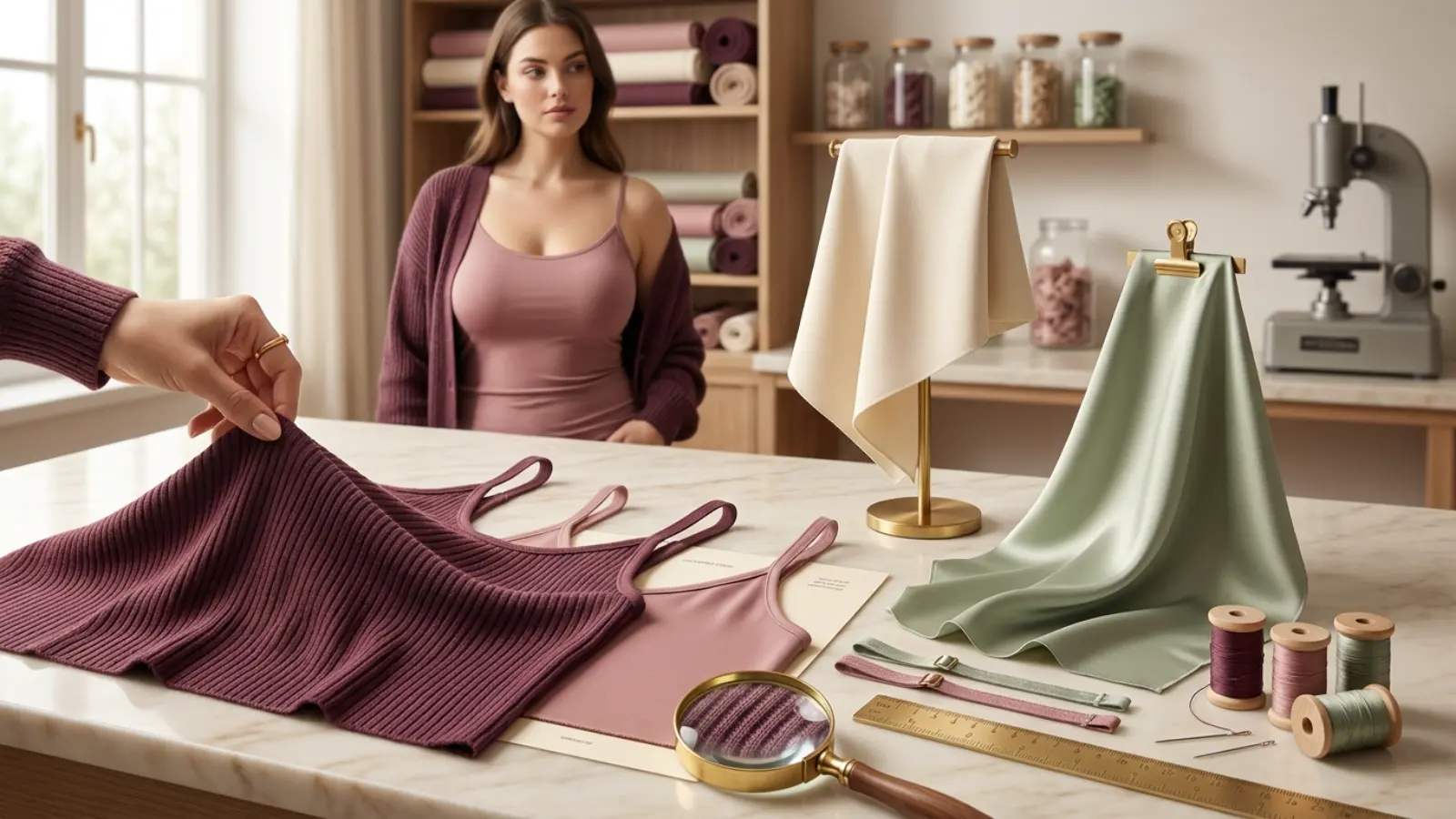
A small amount of elastane may improve recovery, but percentage alone does not describe fabric weight, stitch density, or direction of stretch. Modal and viscose blends can feel smooth and drape well; cotton can feel breathable and substantial; synthetic blends may dry quickly or reduce friction. Results vary with construction. Confirm the sewn-in label and realistic care. The FTC textile-label guidance explains U.S. fiber-content labeling requirements.
For a deeper material comparison, use the fabric guide for a large bust. That page covers fiber and drape broadly; this guide applies those principles specifically to camisole opacity, edge stability, and layering.
What shelf bras can and cannot do in the best camisoles
A basic shelf bra is usually a second fabric layer attached to elastic beneath the bust. It may reduce movement or add coverage, but it does not automatically provide lift, separation, cup depth, or a stable band. The best camisoles with built-in support describe their construction clearly and offer sizing that reflects the relationship between underbust and bust. A generic S–XL tank with a shallow shelf may fit the torso while cutting across breast tissue.
Check where the elastic actually lands
The lower elastic should sit beneath the breast root rather than riding onto it. If it climbs, the shelf may lack depth, the straps may be too short, or the body may be too short. Elastic that feels tight is not proof of support; it can be tight in the wrong location. Raise your arms, sit, and take several breaths before deciding.
Cup depth and separation change comfort
A single flat shelf often presses the bust toward the center or downward. Seamed inner cups, molded zones, slings, or separate cup sizing may create more controlled space, but every design needs verification. Removable pads frequently shift or create a small cup shape that does not match fuller-bust proportions. Remove them only if the garment is designed to function without them.
Straps and back tension carry part of the load
Supportive claims should be evaluated through strap width, stretch, adjustability, and back anchoring. Thin straps can feel concentrated even when the shelf elastic is firm. A broad back and stable lower band distribute force better, but the garment should still permit breathing and ordinary movement. Return a style that depends on overtight straps to keep the neckline up.
Choose the support level for the activity
Light containment may be enough for sleeping, lounging, or low-movement home wear. Everyday outside wear may call for a regular bra under a bra-friendly cami. Exercise involves different forces and should not be judged through casual shelf-bra language. Avoid converting marketing words such as supportive or sculpting into an assumed activity rating.
| Built-in feature | What it may provide | Evidence to inspect | Do not assume |
|---|---|---|---|
| Simple elastic shelf | Light containment | Underbust position and depth | Lift or separation |
| Double front layer | Opacity and mild smoothing | Stretch, seams, and heat | Structured support |
| Seamed inner cups | Potential shaping space | Cup depth and size system | That one cup suits all bands |
| Wide adjustable straps | Better force distribution | Hardware range and edge comfort | That straps replace band anchoring |
| Wide lower band | Potentially stable base | Firmness, placement, breathing | That tighter always means better |
| Removable pads | Optional coverage | Pad size, pocket, and movement | Fuller-bust cup capacity |
How the best camisoles balance bust ease and front length
Finished chest width matters, but it must be interpreted with fabric stretch and the intended fit. A rib cami can use negative ease, while a woven cami needs positive ease and shaping. The best camisoles for a large bust provide enough room without turning the upper back, armholes, or waist loose. Compare a successful garment in the same construction rather than applying one universal number to every camisole.
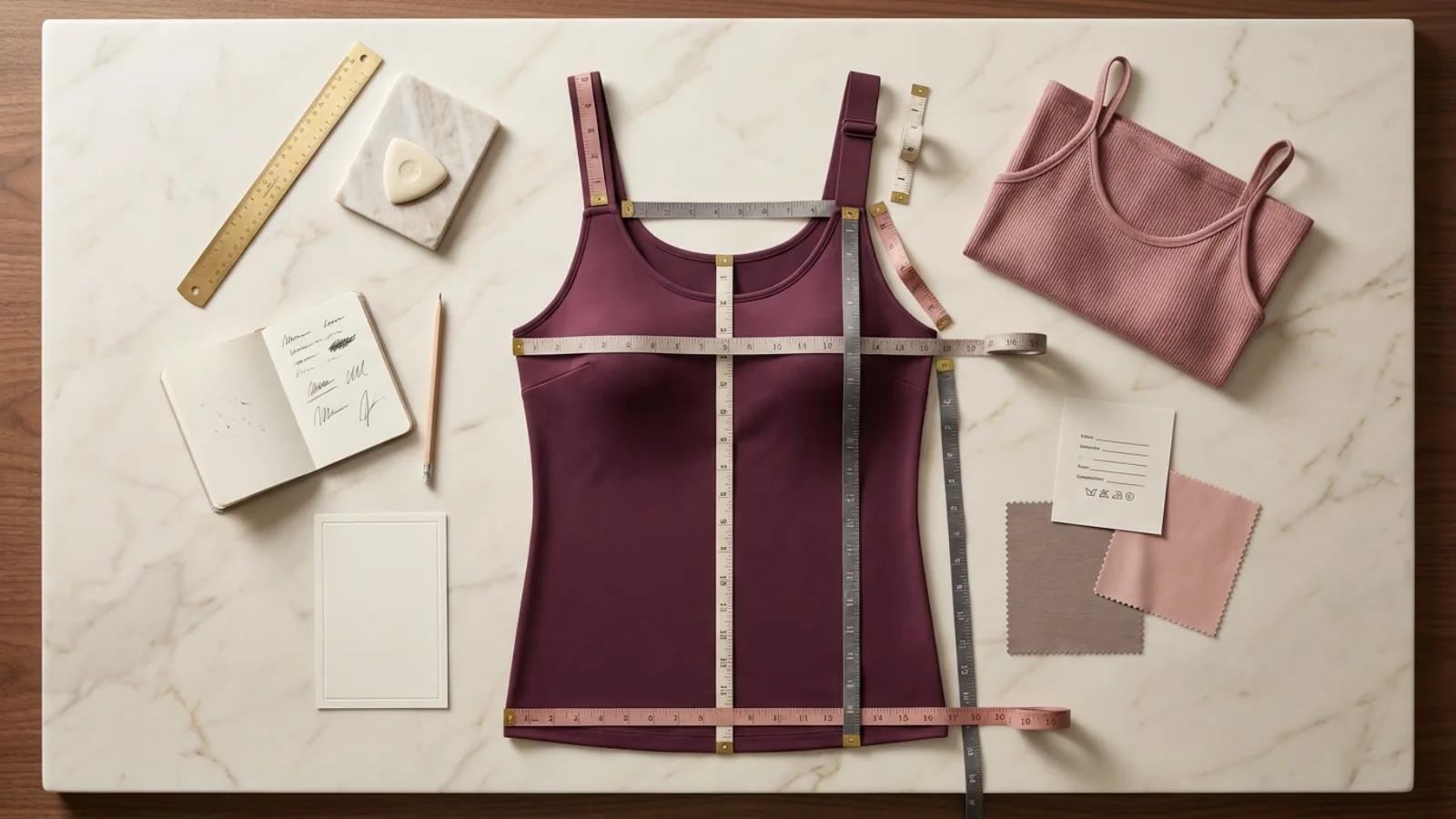
Measure the chest without stretching
Lay the reference cami flat, smooth it without pulling, measure from underarm to underarm, and double the result. Record whether the material is ribbed, jersey, woven, or compression-like. The same flat width can fit very differently in two fabrics. If a retailer provides only body measurements, ask for finished garment dimensions or choose a seller with more evidence.
Center-front length is not the same as back length
Bust projection uses vertical fabric. A listing may publish one length measured at the center back or high shoulder. Record center-front and center-back length separately on your reference cami. A sharp front rise can expose a waistband, pull a tuck loose, or make a longline top feel standard length only in front.
Hem width determines whether the top stays down
A narrow hem can grip the waist or hip and push the camisole upward. A very loose hem may bunch beneath a fitted outer layer. Measure the point where the hem will land and compare it with finished hem width. A straight or gently shaped hem often stays more predictably than a tight elastic finish.
Side seams reveal front-body shortage
If the side seam swings forward at bust level, the front is borrowing fabric from the back. This often coincides with armhole exposure and a lifted front hem. Sizing up may help, but if it creates a gaping back and loose straps, choose a design with darts, a shaped front, or a fuller-bust cut.
How to buy the best camisoles online accurately
The best camisoles for a large bust can be shortlisted online when the listing provides evidence beyond a size label and styled photograph. First define the role: worn alone, under a blouse, beneath a sweater, for sleep, or with built-in support. Then identify whether the chart lists body or garment measurements. Both are useful, but they answer different questions.
- Choose a matching reference garment. Use knit for knit or woven for woven and record why its fit succeeds.
- Measure finished chest width. Measure flat without stretch and note the fabric’s direction and degree of give.
- Record neckline dimensions. Measure depth from the shoulder or high point used by the seller and note the width.
- Measure straps. Record width, placement, total length, adjustable range, and where the slider sits.
- Record armhole depth and side height. These measurements predict bra-band and side-bust coverage.
- Separate front and back length. Measure center-front and center-back to understand hem balance over projection.
- Measure the hem. Confirm that the relaxed lower edge can sit where the garment is designed to finish.
- Verify material and care. Check exact percentages, lining, shelf-bra construction, pad details, and washing method.
- Read the return terms. Confirm the window, fees, final-sale exclusions, hygiene rules, and marketplace differences.
Reviews are most useful when they include body or garment measurements, selected size, bra setup, and the specific use. Repeated comments about rolling hems, sliding straps, loose pads, sheerness, or shrinkage identify questions to investigate. They do not prove the same outcome for every wearer. A vague “runs small” statement cannot replace measurements.
| Listing evidence | Why it matters | Strong signal | Weak signal |
|---|---|---|---|
| Finished chest width | Shows room before stretch | Garment method stated | Only generic body chart |
| Strap dimensions | Predicts bra coverage and neckline height | Width and adjustable range | “Adjustable” without details |
| Front and back length | Predicts hem balance | Both dimensions listed | One vague length |
| Fabric and lining | Supports opacity and care questions | Exact composition and layers | “Buttery soft” only |
| Shelf-bra construction | Clarifies support potential | Band, cups, padding, and size system | “Built-in support” only |
| Return policy | Protects the fit trial | Window, fees, and exclusions clear | Policy difficult to find |
The ten-minute test for the best camisoles
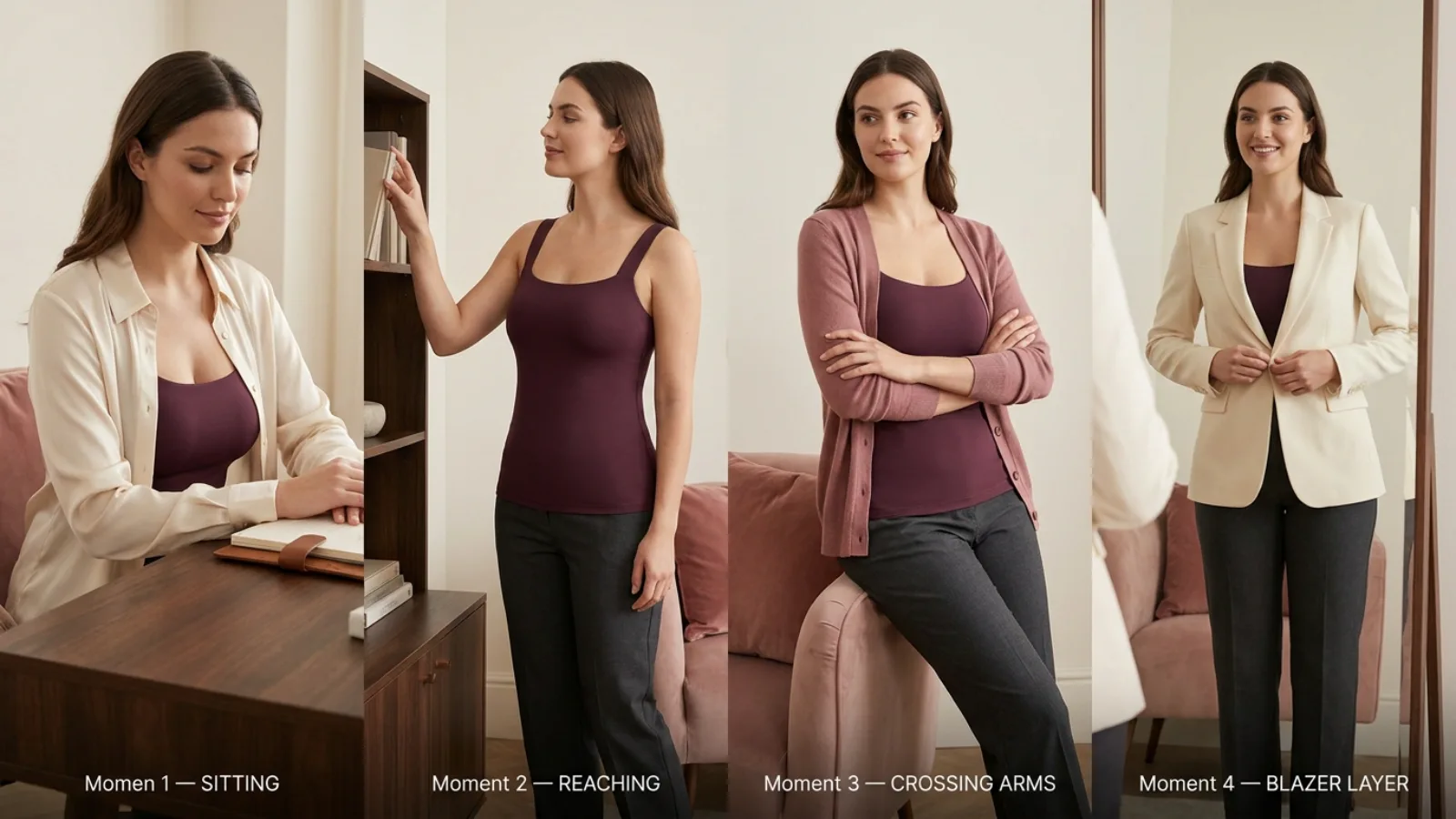
The best camisoles for a large bust keep working after the mirror pose. Wear the exact bra and outer layer planned for the garment. Sit, type, reach overhead, cross your arms, bend, twist, and carry a bag. Then remove the outer layer and recheck the neckline, straps, armholes, side seams, and hem. Movement shows whether the cami is independently stable or held in place only by the garment above it.
Test the neckline after reaching
Raise both arms and lower them naturally without pulling the cami down. A stable neckline returns close to its original position. If it drops, rolls, or becomes asymmetric, inspect strap stretch, front length, and chest room. Tightening straps may raise the edge temporarily while worsening underarm pressure and hem lift.
Check layer friction in both directions
Put on the blouse, cardigan, or sweater, then turn, sit, and reach. A rough outer knit may drag a cotton cami upward; a slippery satin cami may shift beneath an open jacket. The desired friction depends on the outfit. The large-bust layering guide explains how base, middle, and outer layers share volume and movement.
Wear the bra that matches the final neckline
Bra strap placement, cup projection, band height, and surface seams all affect coverage. A smooth cup may reduce visible lines beneath thin fabric, but it does not fix sheerness or a small garment. A seamed bra may support the preferred shape but show under compact jersey. Choose the combination deliberately rather than treating the camisole as a repair.
Check sitting length and hem pressure
When seated, the torso shortens and the hem may meet a wider body area. A longline cami can roll if its lower edge is too narrow. A woven cami can pull upward if it lacks hip ease. Sit for several minutes, stand without adjusting, and see where the hem settles. Constant migration is a fit signal.
Keep / alter / return rule
Keep when straps, neckline, armholes, opacity, front length, and layering already work. Alter when the base fit is sound and one small change—such as shortening straps—is feasible. Return when the fabric turns sheer, armholes expose the bra, the shelf elastic sits on breast tissue, the neckline migrates, or the hem repeatedly rides up.
Fit problems even the best camisoles must avoid
The best camisoles preserve the relationship between straps, neckline, bust, armholes, side seams, and hem. When something fails, name the behavior before changing sizes. A larger size is one response, but it is not the diagnosis.
The neckline is much lower than expected
Possible causes include straps that are too long or elastic, insufficient front length, excessive bust tension, or a neckline pattern that is simply deep. Adjust straps only within a comfortable range. If raising the neckline makes the armholes cut or the hem lift, choose a higher-neck design with more front room.
The armholes expose the bra or side bust
The armhole may be too deep, the front may be pulled forward, or the camisole may be too large through the upper body after sizing for the bust. Look for a higher side seam, more shaped front, adjustable strap balance, or fuller-bust sizing. Sewing a gusset into a low armhole is possible in limited cases but rarely the best plan for a new purchase.
The front becomes shiny or transparent
The material is opening under stretch. Try more finished chest width, a denser knit, a lined front, or a fabric intended for less negative ease. Wearing another layer adds coverage but does not restore distorted stitches or change the garment’s stress.
The hem rolls or climbs beneath the bust
The camisole may lack front length, chest room, or hem width. Friction from the outer layer and tight armholes can contribute. A longer garment will not solve the issue if all additional length is at the back or the lower edge is too narrow for the hip.
The straps dig despite a loose torso
The front body may be hanging from the straps rather than fitting through the bust. Thin or highly elastic straps concentrate force. A shelf bra may also be transferring support demand upward because its lower band is unstable. Choose stronger straps, better underbust anchoring, or wear a regular bra beneath a bra-friendly style.
The back and waist gape after sizing up
A larger standard size may provide bust circumference while making the rest too large. Choose a shaped knit, darts, princess seams, adjustable back, or fuller-bust size architecture. The goal is a coherent garment, not maximum tightness at the waist.
What a tailor can change in the best camisoles
Camisoles are simpler than jackets, but their narrow straps, bound edges, delicate fabrics, bias grain, lace, and built-in support can make changes visible. A tailor may shorten straps, reduce some side width, adjust a simple hem, secure gaping neckline sections, replace unstable elastic, or close a small armhole gap. Success depends on fabric, seam allowance, trim, lining, and whether changing one edge disrupts another.
Adding substantial bust room, changing a shelf-bra cup system, creating missing front length, rebuilding a very low armhole, or moving a complex neckline is usually more involved. A small gusset or panel can work for a valued garment, but it may alter appearance and cost more than selecting a better pattern. The tailoring guide helps separate local repairs from pattern-level problems.
| Possible change | Feasibility | Good candidate | Better buying response |
|---|---|---|---|
| Shorten adjustable or plain straps | Often | Neckline otherwise fits | Verify minimum strap length |
| Reduce side width | Sometimes | Bust fits and seams are accessible | Choose shaped torso cut |
| Stabilize neckline edge | Sometimes | Minor gaping with sound fit | Choose reinforced neckline |
| Replace lower elastic | Sometimes | Simple shelf construction | Verify band position and firmness |
| Add major bust room | Rarely simple | Planned side or front panels | Choose fuller-bust pattern |
| Create missing front length | Usually impractical | Specialty redesign only | Buy correct center-front length |
How to style the best camisoles for real wardrobes
The best camisoles for a large bust should make an outfit easier, not require a jacket to hide poor fit. Styling starts after coverage, opacity, strap position, and hem balance already work. Use neckline, texture, and layer weight to serve the setting.
Work layer: shaped cami + blouse or blazer
A matte woven or compact knit camisole can create reliable coverage beneath an open blouse or blazer. Choose a neckline high enough for the office role and straps that work with the bra. Keep lace or shine deliberate rather than accidental. When using a shirt as the outer layer, the button-down shirt guide helps prevent placket strain before the cami is added.
Fine-knit base: smooth longline cami + sweater
A smooth, low-bulk longline cami can reduce itch and add opacity beneath a sweater. The hem should stay flat rather than rolling at the hip, and the neckline should not create an unwanted visible line. Compare the full knit system with the sweater fit guide, especially when the outer knit is fine or close-fitting.
Evening: shaped satin cami + tailored trouser
Use darts, bias drape, or panel shaping so the woven front follows the body instead of hanging as a tent from the bust. A jacket can add structure, but the camisole should remain secure when the jacket is removed. Test the neckline while sitting and leaning forward, not only upright.
Weekend: rib cami + open cardigan + denim
A dense rib cami works as a simple column under an open layer. Let the cardigan provide adjustable warmth while the cami supplies coverage. Avoid making both garments extremely tight; independent movement reduces bunching. Check that the cardigan’s button band hangs cleanly and its shoulders allow room for the base layer.
Wrap-top coverage: high-neck cami + crossover layer
A high-neck or stable scoop camisole can add coverage beneath a wrap neckline without a pin. Match the inner neckline to the point where the outer crossover naturally opens. If the cami is too high or heavy, it can change the intended outfit line and add heat. Coverage is a preference, not a requirement to hide the body.
Travel: bra-friendly wide strap + easy outer layer
Choose soft edges, stable straps, a hem that stays down while seated, and care that suits the trip. Wear it for the length of a realistic journey before packing. A cami that rolls, overheats, or needs constant adjustment at home will not become easier in transit.
Care, durability, and value in the best camisoles
The best camisoles earn value through frequent useful wear. Inspect strap attachment, sliders, neckline binding, armhole finish, side seams, hem stitching, lace joins, lining, and shelf elastic. Turn the garment inside out. Small areas carry substantial tension, and weak strap joins or rippled binding can fail before the body fabric.
Washing affects straps and edges first
Heat and agitation may shrink the body, relax elastic, distort bias fabric, or wave a bound neckline. Follow the sewn-in care label. The FTC care-label guidance explains U.S. care-instruction requirements for covered garments. Fasten hooks where relevant, contain delicate straps, and avoid hanging heavy wet camisoles from narrow straps unless instructed.
Deodorant, friction, and outer layers affect lifespan
Underarm products, sweat, bag straps, rough sweaters, and repeated tucking can affect color and fibers. Rotate base layers when possible and wash according to soil and label instructions rather than letting residue accumulate. A camisole worn directly against the body may need more frequent care than an outer blouse, so easy maintenance can matter more than a luxurious hand feel.
Value comes from role clarity
A camisole that works under five existing layers may offer more value than a decorative style requiring a new bra and jacket. Before buying, list the outfits, seasons, and care steps. Verify that its neckline and straps work with garments already owned. Cost per wear is not a promise; it is a planning tool based on realistic use.
Final buying scorecard
- Purpose: the camisole has a defined outer layer, setting, and support plan.
- Straps: width, placement, adjustment, and hardware work with the intended bra.
- Coverage: neckline, armholes, back, and side height stay where intended.
- Bust behavior: fabric remains opaque and does not depend on extreme stretch.
- Balance: side seams remain near vertical and the center-front hem stays useful.
- Support: shelf-bra construction is judged separately and matches the activity.
- Layering: friction, warmth, bulk, and movement work with the complete outfit.
- Evidence: measurements, materials, care, returns, and availability are verified.
Frequently asked questions
What camisole style is best for a large bust?
A wide-strap, bra-friendly camisole with a stable neckline, high enough side coverage, adequate finished chest width, resilient fabric, and sufficient center-front length is the most dependable starting point. The best style still depends on whether the camisole will be worn alone, beneath a blouse, as a smoothing base layer, or for neckline coverage.
Can I wear a camisole with a regular bra?
Yes. Choose straps that align with or cover your bra straps, armholes high enough to conceal the side band, and a back neckline that does not expose the bra. Wear the intended bra during the fitting because strap placement, cup projection, band height, and seam texture all change how the camisole sits.
Are built-in shelf-bra camisoles supportive for a large bust?
Some shelf-bra camisoles provide light containment or lounge support, but a simple elastic shelf is not equivalent to a structured bra. Check whether cup depth, band anchoring, strap strength, separation, and size range are designed for fuller busts. Do not assume that a product labeled supportive can replace your preferred bra.
Should I size up in a camisole for a fuller bust?
Size up when the neckline is dragged down, fabric becomes sheer, armholes cut forward, side seams rotate, or the hem climbs. If the larger size makes the straps, back, waist, and armholes too loose, choose a camisole with more front room, adjustable straps, a fuller-bust size range, or a different fabric construction.
How do I stop a camisole from riding up over my bust?
Look for enough finished chest width, adequate center-front length, a hem that is not excessively tight, smooth layer interaction, and armholes that allow movement. Riding up is often a pattern or length problem rather than something that can be solved by repeatedly pulling the camisole down.
What fabric is best for a fuller-bust camisole?
Compact cotton blends, resilient modal or viscose blends, smooth nylon blends, and stable rib knits can all work. Judge the finished fabric by opacity, recovery, breathability, seam finish, friction, and care rather than fiber name alone. A small elastane percentage helps only when the knit and pattern are already appropriate.
How should a camisole fit around the armholes?
The armhole should cover the side of the bra, lie close without cutting, and permit reaching without pulling the neckline or hem. A deep armhole may expose the bra and side bust, while a tight armhole can pull fabric from the front and create rubbing.
What measurements should I check when buying a camisole online?
Check finished garment chest width, front neckline depth, back neckline height, strap length and adjustability, armhole depth, center-front and center-back length, hem width, and stated stretch. Compare those dimensions with a camisole that already works and confirm whether the retailer chart shows body or garment measurements.