Best Corset Tops for a Large Bust
A construction-first buyer’s guide to bust projection, cup depth, boning placement, closures, torso length, support compatibility, seated comfort, and movement.
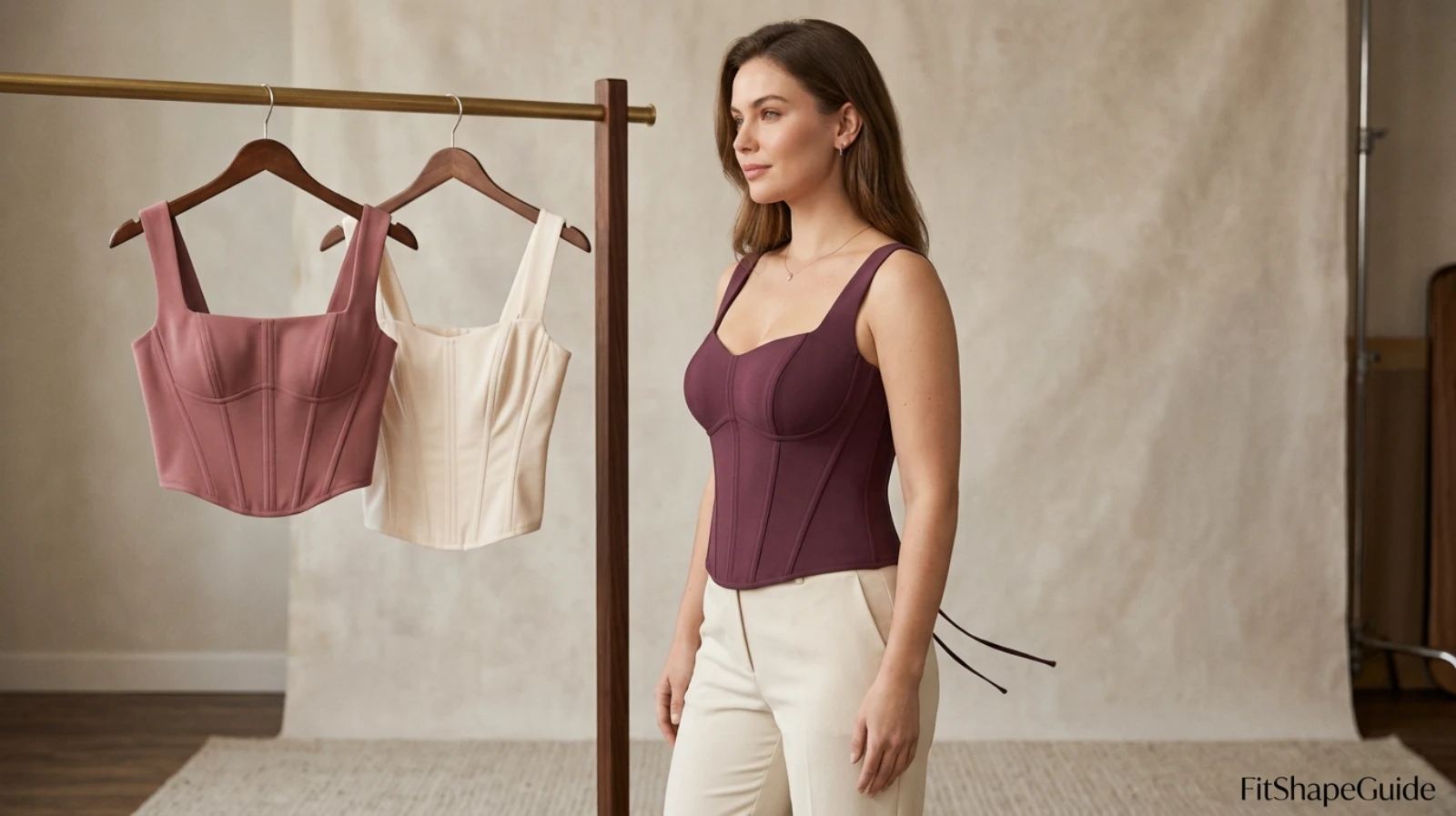
The best corset tops for a large bust are not the garments that squeeze the hardest or create the smallest-looking waist. They are tops whose pattern makes adequate three-dimensional room for the bust while distributing tension through stable seams, a correctly sized torso, and a closure with useful adjustment. A shallow fashion corset may appear supportive in a front photograph yet flatten the fullest point, force the neckline downward, pull boning into curves, and create a wide gap at the back. A better design uses shaped cups or princess panels, appropriate side height, reinforced but flexible boning channels, a modesty panel, and enough front length to accommodate projection. This guide compares six practical constructions, explains what retailer evidence matters, and shows how to separate a sizing issue from a pattern mismatch. Product recommendations remain private until exact names, measurements, materials, care, returns, stock, imagery rights, affiliate destinations, and current retailer details are verified.
The 60-second corset-top fit check
- The fullest point of the bust sits inside the shaped area rather than above, below, or beyond it.
- The neckline touches the body evenly without cutting inward, gaping, or collapsing at center front.
- Boning channels remain mostly vertical and do not bow sharply around the bust or dig into the underarm.
- The side seam stays under the center of the arm instead of being pulled toward the front.
- The back closure has usable adjustment while the modesty panel fully covers the opening.
- You can inhale normally, sit upright, lean slightly, and raise your arms without pain or escape.
- The lower edge lies smoothly instead of flipping because the waist or high hip is too tight.
- The planned bra, if worn, remains hidden at the neckline, sides, straps, and back.
Best corset tops by construction
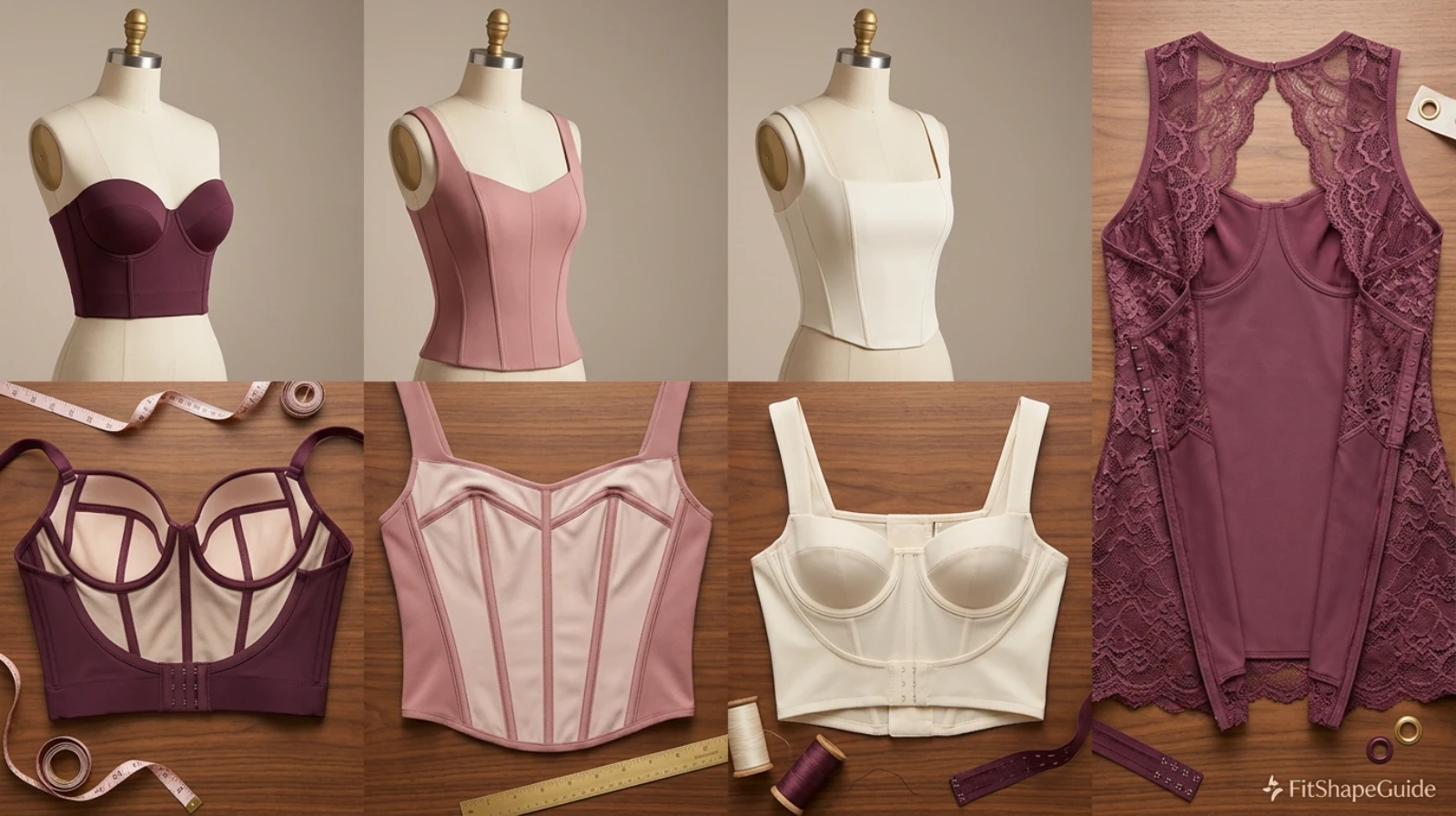
The best corset tops solve different wardrobe jobs. A cup-sized bustier can offer precise occasion shaping, while a corset-seam woven top with wide straps may be easier over a regular bra. An adjustable lace-back design can accommodate a greater difference between bust and waist, but only when the front already contains enough projection. When comparing the best corset tops, choose the architecture that matches your support plan and activity before considering color or trim.
Cup-sized bustier corset top
Best for: shoppers whose bust and torso do not align with one general clothing size. Separate band-and-cup sizing gives the pattern a chance to provide width and depth without enlarging the entire waist. Look for a stable center front, high side wings, correctly scaled cups, wide-set or removable straps, a lined cradle, and multiple back settings. A cup label alone is not proof: confirm whether the brand uses real bra sizing and whether cup depth increases across its range.
Princess-seam longline corset top
Best for: smooth projection without a visible horizontal cup seam. Curved princess panels can add length and volume over the bust while returning toward the underbust and waist. A longer body distributes pressure, but the top must match the ribcage, natural waist, and high hip. Seek several flexible boning channels, a secure lower edge, and enough seated torso room; a lower edge that jams into the lap can push the entire top upward.
Square-neck corset top with wide straps
Best for: bra coverage and everyday styling. Wide straps and a higher square neckline can conceal a supportive bra while corset seams create the visual structure. Check the strap path, front armhole coverage, side height, and neckline corners. The neckline should remain flat without being stretched into a curve. This construction is often more forgiving than a strapless bustier because the straps stabilize the upper edge without needing to carry all the bust weight.
Adjustable lace-back corset top
Best for: a pronounced difference between full bust, underbust, and waist. Lacing can fine-tune circumference at several vertical levels, provided the back has a full modesty panel and the front has adequate bust shaping. Parallel lacing is a useful starting point; a dramatic V-shaped opening often signals that the top is too small at the upper torso. Strong eyelets, reinforced edges, a replaceable cord, and a centered panel matter more than decorative ribbon.
Corset-seam top with stretch back
Best for: breathing flexibility and size fluctuation. A shaped woven front can preserve a tailored appearance while a wide stretch-back panel adapts through sitting and movement. The stretch section should span enough height to distribute tension and recover without rippling. Check whether the retailer’s measurements are relaxed or stretched. A soft back improves comfort but cannot compensate for shallow front panels or an undersized neckline.
Soft bustier-knit hybrid
Best for: casual outfits where corset lines are wanted without rigid compression. Dense double-knit fabric, bonded or sewn shaping panels, a lined front, and light flexible stays can define the torso while allowing moderate movement. The fabric must remain opaque and recover after stretching. This style is usually a fashion top rather than a foundation garment, so plan for independent bra support when needed and avoid assuming decorative seams equal structural lift.
| Construction | Best use | Evidence to require | Main fit risk |
|---|---|---|---|
| Cup-sized bustier | Precise occasion shaping | True cup method, cup depth, cradle and back settings | Cup label may not follow standard bra grading |
| Princess-seam longline | Smooth tailored projection | Full-bust, waist, high-hip and center-front length | Lower body pushes upward when seated |
| Square neck with wide straps | Bra-friendly everyday wear | Strap width/path, neckline width and side coverage | Wide neckline can reveal straps or gape |
| Adjustable lace back | Bust-to-waist adjustment | Modesty-panel width, eyelet reinforcement and closure range | Large V-shaped gap from insufficient upper room |
| Stretch-back hybrid | Breathing and sitting comfort | Relaxed/stretch measurements and recovery | Back stretches while front still compresses |
| Soft knit bustier | Casual corset aesthetic | Opacity, lining, recovery and bra plan | Decorative seams mistaken for structural support |
How the best corset tops create support
Bust room must be patterned before the waist is tightened
A corset top cannot manufacture cup depth simply by opening the back. Bust projection is created in the front pattern through curved cup seams, princess seams, darts, gathers, or molded panels. If the fullest point lands above the designed apex, the neckline may cut inward while the lower cup wrinkles. If it sits below, the top may leave empty space near the upper edge and press at the underbust. Look for side and three-quarter product photographs in which seam lines remain smooth and the side seam is vertical.
The most useful comparison is not “does it look tight?” but “where has the pattern placed volume?” A deep front with a stable underbust can fit closely without flattening. A shallow front may feel restrictive even when the waist is loose. Shoppers choosing the best corset tops for a large bust should treat cup depth, apex placement, and side containment as separate from waist circumference.
Boning guides fabric; it should not replace correct sizing
Boning keeps long seams from folding and helps transmit tension vertically. Flexible spiral steel can bend in more than one direction; flat steel is generally used where firmer straight stability is needed; synthetic stays vary widely. A fashion top may use light plastic boning effectively when channels are well placed and pressure is moderate. The useful questions are where the stays sit, whether their ends are cushioned, whether they stop before a sensitive edge, and whether they remain vertical during sitting.
One rigid strip at center front does not equal whole-garment support. Stronger architecture often includes paired front seams, side-front channels, side seams, and back-edge reinforcement. More boning is not automatically better: a short torso can be overwhelmed by long stays, and an underarm channel that is too tall can become painful. Boning that bows severely usually reports an underlying circumference or projection mismatch.
Lining and waist tape manage different forces
A stable lining can reduce seam strain, protect skin from rough construction, preserve opacity, and help the shell keep its intended shape. Power mesh or stretch lining may improve breathing flexibility, while woven coutil-like layers provide firmer control. Read the actual fiber and stretch description rather than assuming a satin outer surface indicates structure. In a genuinely tension-bearing design, internal waist reinforcement may help distribute horizontal load, but the top must still permit normal breathing and must never be used to force a size mismatch.
Straps stabilize; they should not drag the whole bodice upward
Wide straps can improve confidence, conceal a bra, and stop the neckline from drifting, but they should not be shortened until the torso hangs from the shoulders. If shortening straps is the only way to keep the bust inside, the cup or front body may be too shallow. Removable straps need reinforced loops located below the top edge. For everyday wear, a corset-seam top designed around a regular bra may be more versatile than a built-in-cup garment.
Measurements that predict the best corset tops
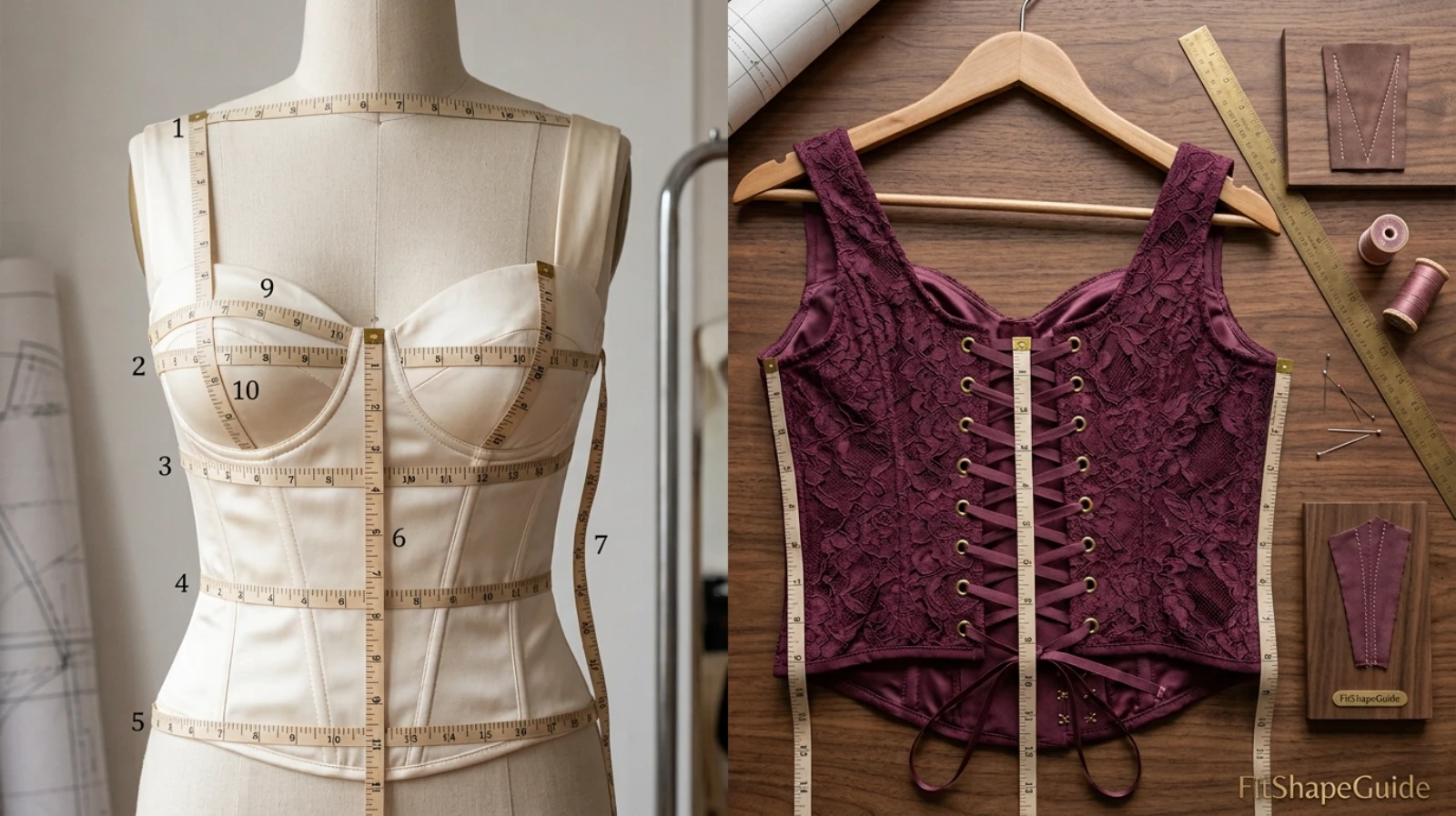
General size charts rarely show the vertical and curved dimensions that control corset fit. The best corset tops make more of this evidence available. Ask for finished garment measurements and clarify whether they are taken flat, doubled, closed at the loosest setting, or measured at a stated lacing gap. Compare them with a reference top or fitted longline garment that has similar stretch. Body measurements describe you; finished garment measurements describe the available space. The relationship between them depends on fabric, structure, and intended ease.
Full bust, underbust, and waist are three separate levels
Measure full bust at the fullest point while wearing the foundation planned for the top. Measure the ribcage directly beneath the bust and the natural waist without pulling the tape tight. A corset top graded from one generic hourglass block may fit the waist yet lack the difference needed between full bust and underbust. An adjustable back can absorb some circumference difference, but it cannot relocate the cup apex or widen a narrow front neckline.
Cup width and depth matter more than a decorative cup outline
For a top with distinct cups, request the internal cup width from wire line to wire line if applicable, the vertical cup height, and the cup depth measured through the fullest curve. Confirm whether padding is removable and whether cup measurements include it. A cup that is wide but shallow may spread tissue sideways; a cup that is narrow and projected may feel secure for one shape and restrictive for another. Reviews are most useful when they mention the wearer’s usual bra size and the exact point of mismatch, though those reports remain personal evidence rather than universal sizing rules.
Center-front, side, and back height determine comfort
Center-front length must cover the projected route from neckline over the bust to the lower edge. Side height influences containment but must stop below the underarm crease. Back height affects bra coverage, lacing leverage, and shoulder movement. Compare these lengths with your seated torso, because standing photographs hide how the ribcage, waist, and lap approach one another. Petite and short-torso shoppers often need shorter boning rather than simply a smaller circumference.
| Measurement | How to use it | Warning signal |
|---|---|---|
| Full-bust circumference | Compare at intended closure setting and wearing stretch | Only a body chart is given; garment room is unknown |
| Underbust level | Checks whether front shaping returns beneath the bust | Same width as waist despite a longer upper torso |
| Natural waist / lower edge | Predicts anchoring, breathing, and seated pressure | Must be overtightened to stabilize the neckline |
| Cup width, height, and depth | Locates apex and estimates three-dimensional capacity | Retailer gives only “padded cups” with no scale |
| Center-front length | Allows for bust projection and waistband overlap | Front appears much shorter than back on model |
| Side and back height | Checks containment, underarm comfort, and bra coverage | Very low sides paired with a shallow cup |
| Closure range / lacing gap | Shows usable adjustment at bust, ribcage, and waist | Fit requires the opening to exceed modesty-panel width |
| Stretch and recovery | Explains how the top changes during breathing and sitting | “Stretchy” is stated without fiber or measurement context |
How the best corset tops use closures and modesty panels
Lacing gives range only inside a well-cut garment
Back lacing can allow different tension at the upper torso, ribcage, and waist. That makes it useful when measurements span several general sizes. It does not add cup depth to the front. Begin with the top positioned correctly, loosened enough to close safely, then tighten gradually from the center toward each end while taking normal breaths. The edges do not need to touch unless the garment was designed that way. They should remain reasonably parallel and centered over the modesty panel.
A slight controlled variation in gap can be normal, but a sharp V opening at the top suggests insufficient upper circumference or bust space; a reverse V can signal excess upper room relative to the waist. A modesty panel should remain flat, wide enough to cover the entire usable gap, and attached so it does not twist. Bare exposed lacing may be intentional styling, but it offers less coverage and can reveal a bra.
Hooks provide repeatability; zippers provide speed
Multiple hook-and-eye columns offer repeatable circumference settings and make gradual adjustment easy. Check that hook tape is firmly stitched and protected from skin. A zipper creates a clean entry but usually provides little size flexibility unless paired with lacing, stretch, or an elastic panel. It should close without forcing the seam together, and its base should not poke when seated. A separating front zipper changes the visual line and needs a stable guard beneath it.
Smocking and stretch panels need recovery
Stretch-back corset tops may be more practical for all-day wear, especially where breathing, meals, and sitting matter. Photograph the panel after it has been gently stretched: waves or loose horizontal lines can reveal weak recovery. A narrow elastic strip carries more concentrated pressure than a broad panel. The strongest hybrid uses front shaping for projection and a wide back zone for controlled adaptation.
How to find the best corset tops for a large bust online
Require front, side, back, and seated evidence
A front photograph can hide a wide back opening, shallow cups, low side coverage, or a hem that lifts. The best corset tops should be supported by more than one polished angle. Look for a true side view showing the bust apex relative to the cup or princess seam, a back view showing the closure and modesty panel, and a close-up of the lining and boning channels. Seated imagery is especially valuable for longline tops because it reveals whether the lower edge collides with the lap or whether boning pushes toward the underarm.
Separate construction language from fashion language
Terms such as “snatched,” “supportive,” “corset,” and “bustier” are not standardized fit specifications. Translate them into verifiable features: number and location of boning channels, shell and lining fibers, stretch percentage if provided, closure type, cup method, side height, and finished garment measurements. “Corset-inspired” often means seam styling rather than a tension-bearing structure. That can still be an excellent choice when the desired result is shape and bra-friendly styling rather than compression.
Read reviews for precise symptoms
Useful reviews identify a usual bra size, the size purchased, torso length, foundation worn, closure gap, and where pressure or empty space appeared. Statements such as “the cup seam ended below my fullest point” are more transferable than “runs small.” Photos should be treated cautiously because posture, lens, styling clips, and unlisted alterations can change appearance. This evidence-led filter is the safest way to narrow the best corset tops for a large bust. Never infer that another wearer’s comfortable tightness will be safe for you.
How the best corset tops pass breathing and movement tests
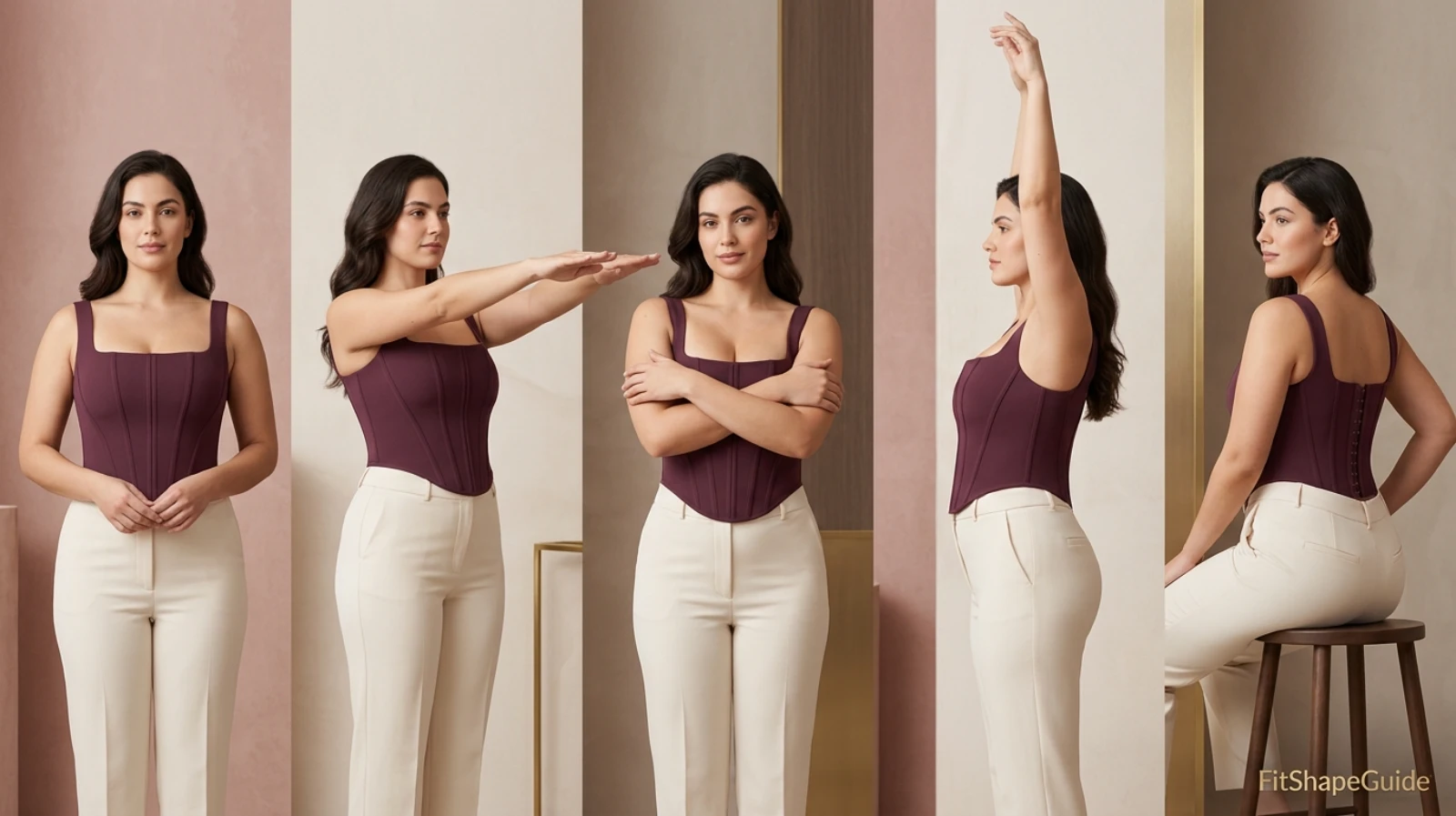
Try the top with the exact bra, trousers, skirt, and layer planned for wear. Lace or fasten it to a comfortable repeatable setting; never begin at maximum tightness. A corset top should feel secure, but security is not numbness, restricted breathing, sharp pressure, or the inability to sit. Stop immediately if you feel pain, dizziness, tingling, shortness of breath, or intense pressure.
1. Neutral stance and three full breaths
Stand naturally without lifting the chest. Inhale fully three times. The closure and stretch zones should accommodate ribcage expansion, the neckline should stay in position, and boning should not buckle. Inspect the side seam and back gap. If the top fits only while holding the abdomen in, the setting is not functional.
2. Forward reach and self-hug
Reach toward a table, then gently hug your arms across the body. Watch the outer neckline, front armhole, and side-bust area. The bust should remain contained without the whole bodice shifting upward. A little fabric response is normal; seam strain, cup escape, or a digging upper edge is not.
3. Controlled arm lift and shoulder roll
Raise both arms to a realistic height, lower them, and roll the shoulders. Wide straps should return flat. A strapless neckline should stay level without hand adjustment. If the top rises and does not return, check the waist and high hip for excess tightness as well as the bust for insufficient projection.
4. Sit, lean, and turn
Sit on a normal chair for several minutes, lean slightly forward, and turn each direction. The lower edge should not stab the thighs, the center-front stay should not press sharply, and side boning should remain below the underarm. A seated test is decisive for longline construction because torso length shortens in this position.
5. Walk, layer, and repeat
Walk, add the planned jacket or overshirt, and repeat a reach. Friction from a layer can pull a neckline or catch raised trim. After removing the layer, inspect the closure and seams. The best corset tops return close to their starting position without repeated tugging or retightening.
Fit problems that eliminate the best corset tops
Do not solve every problem by tightening the laces or sizing up. Tightening can disguise a loose waist while worsening a shallow bust; sizing up can improve cup room while making the neckline and lower torso unstable. Identify the location, direction, and timing of the symptom. Then choose the smallest change that addresses its likely cause.
| Symptom | Likely cause | Next step |
|---|---|---|
| Bust spills over neckline | Cup/front too shallow, apex too low, or upper edge too closed | Seek more cup depth, taller neckline, or fuller-bust grading |
| Empty space at top of cup | Apex/shape mismatch, cup too tall, or straps over-loosened | Try a shorter or differently shaped cup before sizing down |
| Boning bows outward | Insufficient circumference or projection at that level | Loosen closure; choose deeper front or larger relevant level |
| Back opens in a sharp V | Upper torso needs more room than waist | Choose larger bust/underbust capacity or stronger front projection |
| Lower edge flips upward | Waist/high hip too tight or torso too long | Try shorter body, curved hem, or more lower-edge room |
| Underarm edge digs | Side height too tall, cup too narrow, or top riding up | Seek shorter side, wider cup, or correct waist fit |
| Neckline gapes while bust is tight | Pattern shape mismatch rather than simple oversizing | Choose a different cup edge or princess-panel geometry |
| Front hem rises above waistband | Center-front length consumed by bust projection | Seek longer front body or pair with higher rise |
When sizing up works
Sizing up can help when every horizontal level is too tight, the closure exceeds its designed range, boning is uniformly bowed, and the neckline still has a useful shape in the next size. Recheck waist anchoring and strap length afterward. If only the bust is restricted while the waist and back are already loose, a larger general size may exchange compression for instability. A cup-sized or adjustable-bust construction is the stronger answer.
When a different construction is smarter
Choose a corset-seam top over a built-in-cup bustier when you need your own bra; choose a stretch-back hybrid when seated comfort is the priority; choose a shorter body when longline boning meets the lap; choose wide straps when a strapless anchor demands excessive tension. The best corset tops for a large bust are the designs that cooperate with your proportions, not the ones requiring the most aggressive alteration.
Which alterations are realistic for the best corset tops?
Reasonable adjustments
A skilled tailor may shorten straps, add reinforced strap loops, replace lacing, add a wider modesty panel, move hooks within a small range, secure loose boning channels, reinforce eyelets, or make a minor back or side-seam adjustment when adequate seam allowance exists. A curved lower edge may sometimes be shortened, but every boning channel and lining layer increases complexity. Pin or baste the proposed change and repeat the full seated movement test before permanent cutting.
High-risk reconstruction
Adding substantial cup depth, changing underwire size, moving the bust apex, raising low side wings, lengthening a short center front, or inserting major circumference through a fully boned body changes the pattern architecture. The cost can exceed the value of the top and the result may still be uncertain. Molded foam, bonded seams, embroidery across panel lines, and boning that terminates inside a decorated edge make reconstruction harder.
Never cut or remove structural boning simply because it feels uncomfortable before identifying why it is under pressure. The channel may be reporting an incorrect size, a torso-length mismatch, or insufficient projection. Removing one stay can transfer stress to the fabric and neighboring seams. A different top is usually safer than trying to convert a shallow fashion corset into a supportive fuller-bust block.
How to style the best corset tops
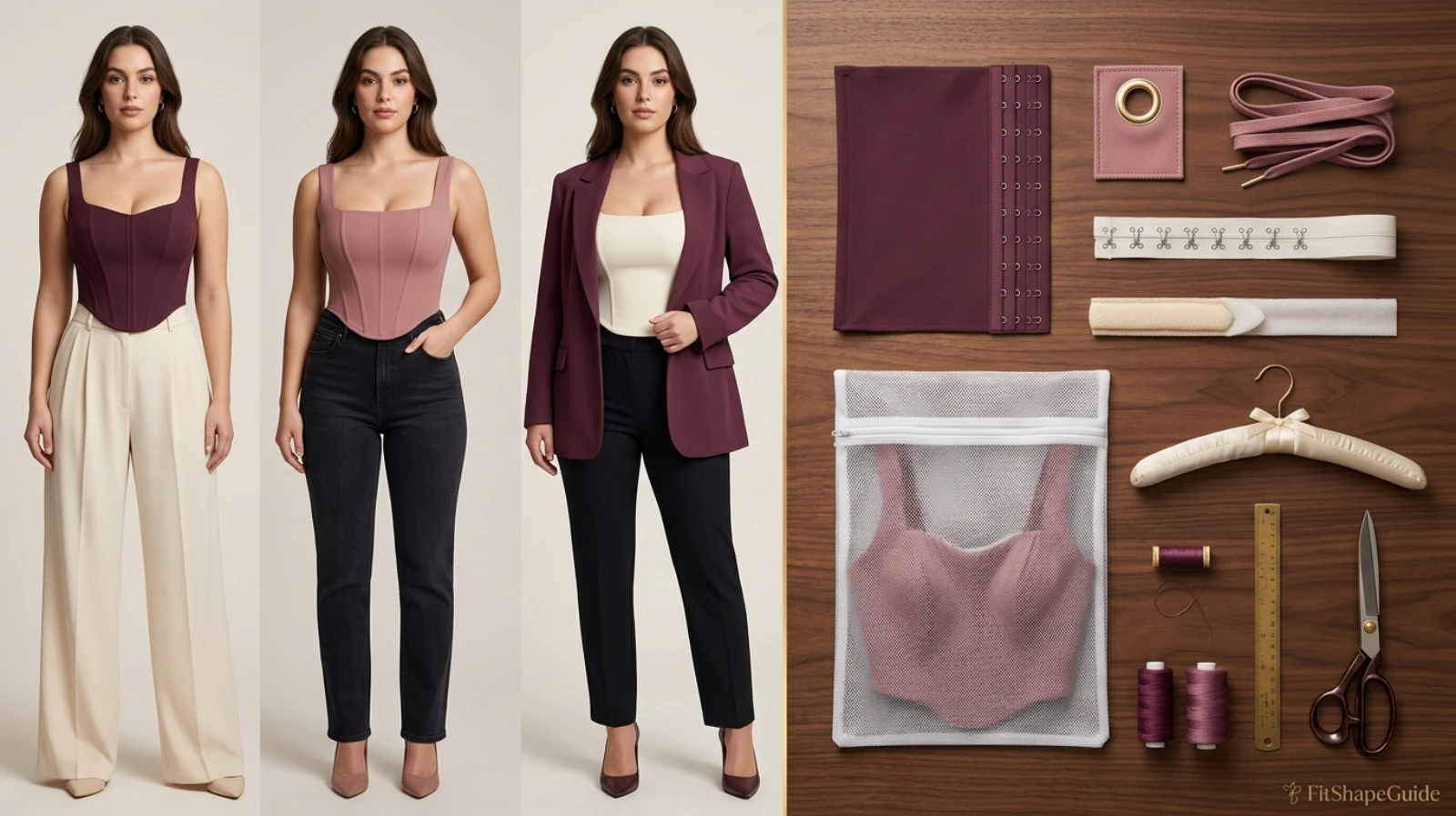
Longline corset top with high-rise tailoring
Pair a shaped longline top with wide-leg trousers whose waistband meets the lower edge while seated. The continuous vertical line looks polished and prevents repeated exposure caused by front hem lift. A cropped blazer can frame the neckline without pressing on cup edges. If you prefer a softer base layer and more independent support, a bra-friendly camisole offers a useful alternative.
Square-neck corset top for everyday structure
A wide-strap square-neck style works with straight jeans, an A-line skirt, or tailored shorts. Check that the neckline corners and straps fully conceal the planned bra. For less rigid construction with similar shoulder coverage, compare the armhole and strap guidance in the sleeveless-top guide.
Bustier top under an open layer
An open shirt, soft cardigan, or jacket can add coverage without hiding the corset line. The outer layer should slide over hardware rather than snag eyelets or push the neckline down. A strapless bustier requires the same independent support planning as a secure bandeau top, but its cup and torso architecture may be more precise.
Crop proportion and waistband overlap
Bust projection consumes center-front length, so judge the crop gap while sitting. A curved front hem or longer center panel often creates more predictable overlap than a straight short edge. Use the same proportion and front-lift checks described for crop tops for a large bust.
If an asymmetric neckline is the goal, a one-shoulder top uses a different anchoring strategy and may work more comfortably with less torso compression. For a smoother tucked-in line without boning, a fuller-bust-friendly bodysuit can provide continuity through the waist, though torso length and gusset comfort become the key measurements.
Care for the best corset tops without damaging boning
Follow the garment’s own care label because shell, lining, foam, underwire, elastic, boning, eyelets, hook tape, and decorative trim may have different limits. The FTC’s textile-label guidance explains fiber-content responsibilities, while its care-label guidance covers care instructions. Heat can distort synthetic stays and weaken elastic; twisting can bend boning and crush cups; aggressive machine action can damage eyelets or force stays through their casings.
Close zippers and hooks before storage, but loosen lacing so the garment is not held under tension. If washing is permitted, use the method stated on the label and protect hardware in a mesh bag where appropriate. Do not wring. Reshape cups and panels while damp, then dry in the recommended position. Keep longline tops flat or supported from strong internal loops rather than hanging their entire weight from straps or the neckline.
Inspect boning ends, channel stitching, eyelets, and hook tape after each wear. A loose eyelet can tear a larger hole; a stay beginning to escape can damage the shell or skin. Early repair is usually simpler than rebuilding a split seam. Store shaped cups without inverting one into the other, keep pale garments away from dark laces that may transfer dye, and prevent jewelry from snagging mesh overlays.
Value should be measured as cost per comfortable, secure wear. Consider how many foundations, bottoms, and layers the top works with; whether its closure range covers normal fluctuation; whether it survives a full seated event; and whether the hardware is repairable. The best corset tops earn repeat use because their structure reduces adjustment rather than demanding endurance.
Final buyer checklist
- The cup or princess shaping contains the fullest point without flattening or empty space.
- The neckline remains stable and the side height is supportive but not painful.
- Boning channels stay vertical, cushioned, and clear of the underarm and lap.
- The closure range works with a centered, fully covering modesty panel.
- Full bust, underbust, waist, and lower edge match at the same time.
- Center-front and side lengths suit the wearer in a seated position.
- The planned bra is fully concealed throughout the movement test.
- Normal breathing, reaching, sitting, and turning remain comfortable.
- Care, returns, stock, and affiliate disclosure are verified before purchase.
Frequently asked questions
Can someone with a large bust wear a corset top?
Yes. Look for real bust projection through cup sizing, curved princess seams, or deep shaped panels; high side coverage; flexible vertical boning; a stable neckline; enough center-front length; and an adjustable closure with a full modesty panel. The top should contain the bust without restricting normal breathing or becoming painful when seated.
What type of corset top is best for a large bust?
Cup-sized bustiers offer the most specific bust grading, while princess-seam longline tops create projection without a horizontal cup seam. Wide-strap square-neck designs are useful over a regular bra, lace-back styles adjust a larger bust-to-waist difference, and stretch-back hybrids improve breathing flexibility. The best type matches your support plan, cup shape, torso length, and activity.
Should I size up in a corset top for a fuller bust?
Size up when the full bust, underbust, waist, and closure are all too tight and the next size still aligns at the neckline and apex. If only the bust is restricted while the waist is loose, a larger general size may become unstable. Choose deeper front shaping, cup sizing, or an adjustable construction instead of relying on one all-over size change.
Do corset tops support a large bust without a bra?
Some cup-sized or internally structured bustier tops may be designed for independent support, but decorative corset seams and light boning do not prove that function. Verify cup depth, lining, cradle or underbust structure, side height, closure, and the brand’s fit method. If support details are unclear, plan for a compatible strapless, convertible, or regular bra.
How tight should a corset top feel?
It may feel close and stable, but it should allow normal full breaths, comfortable sitting, reaching, and turning. Pain, numbness, tingling, dizziness, shortness of breath, sharp boning pressure, or the need to hold the abdomen in are stop signals. Tightness cannot correct shallow cups, misplaced seams, or a torso-length mismatch.
How should back lacing look on a corset top?
The back edges should usually remain centered and reasonably parallel within the maker’s intended gap, with the modesty panel covering the opening. A sharp V at the top often suggests insufficient upper-torso or bust room; a reverse V can indicate a different waist-to-upper ratio. Lacing adjusts circumference but does not add front cup depth.
Can a corset top be altered for more bust room?
Minor changes such as widening a modesty panel, adjusting straps, changing lacing, or making a small seam alteration may help when construction allows. Adding substantial cup depth, moving the apex, changing underwire, raising side wings, or lengthening the center front requires pattern reconstruction. A different fuller-bust construction is usually more reliable and economical.
What measurements should I check when buying a corset top online?
Check finished full bust, underbust, waist, lower edge or high hip, cup width and depth, center-front length, side height, back height, strap length, and closure range or intended lacing gap. Confirm whether measurements are relaxed, stretched, flat, or doubled, then compare them with your body and a similarly structured reference garment.