Best Blazer Dresses for a Large Bust
A blazer dress can define the waist and balance a fuller bust beautifully, but only when the bodice reaches the real waist without borrowing fabric from the skirt. This construction-led guide explains how to choose bust room, seam position, flare scale and movement comfort instead of relying on the word “flattering.”
Quick answer
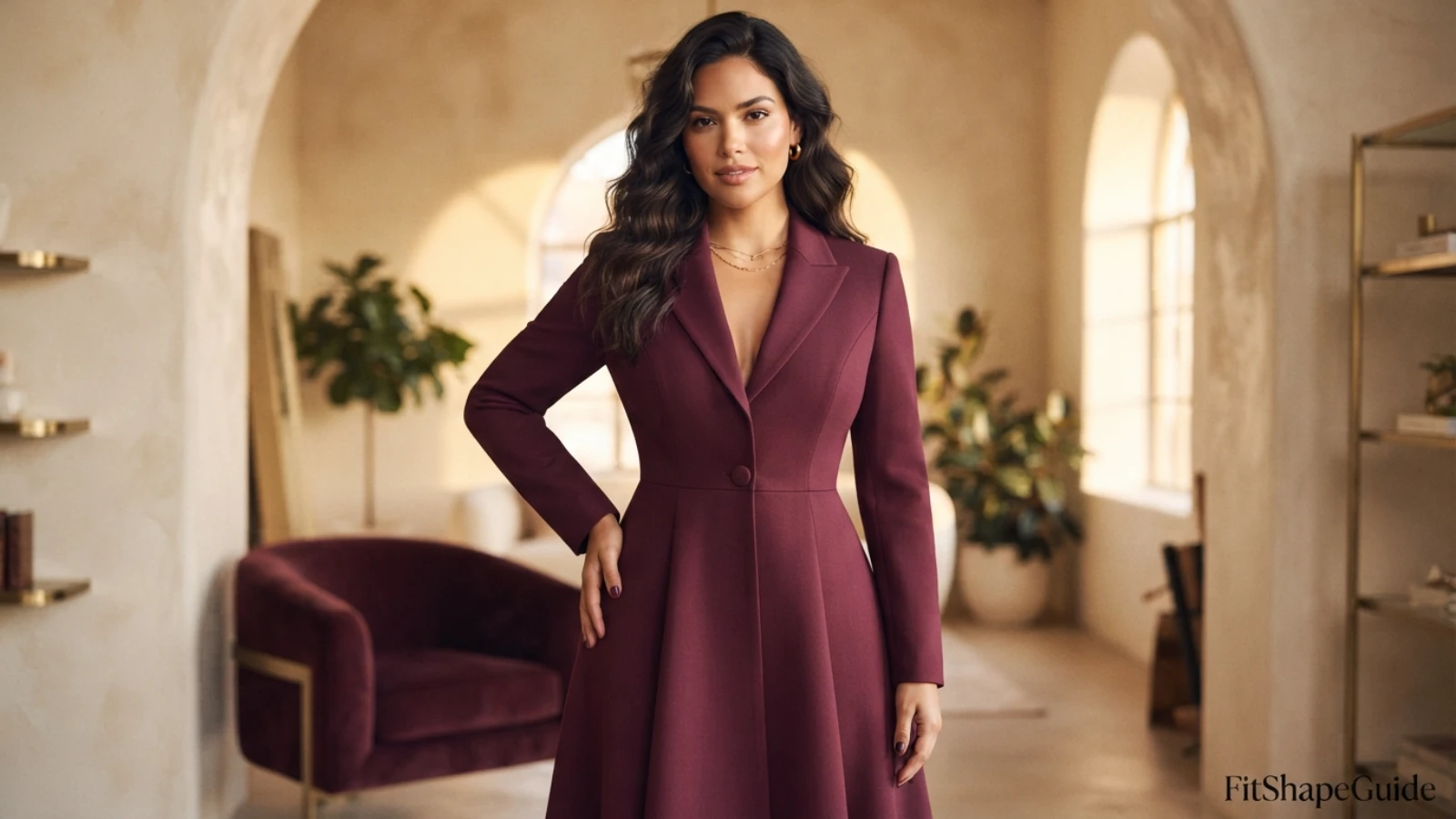
The best blazer dresses for a large bust combine stable shoulders with princess seams, bust darts or a true wrap front, plus a button stance that closes below—not across—the fullest point. Look for lapels that lie flat, adequate center-front length, a lined but non-rigid chest, waist shaping that does not pull the closure, and a vented skirt with seated ease. Single-breasted and tuxedo-wrap designs are often easier to fit than closely spaced double-breasted styles, but construction matters more than the label. The right blazer dress stays closed and polished through reaching, sitting and walking without using compression as support.
The 60-second blazer-dress fit check
- Settle the shoulder points first; pads must end at your natural shoulder without drooping.
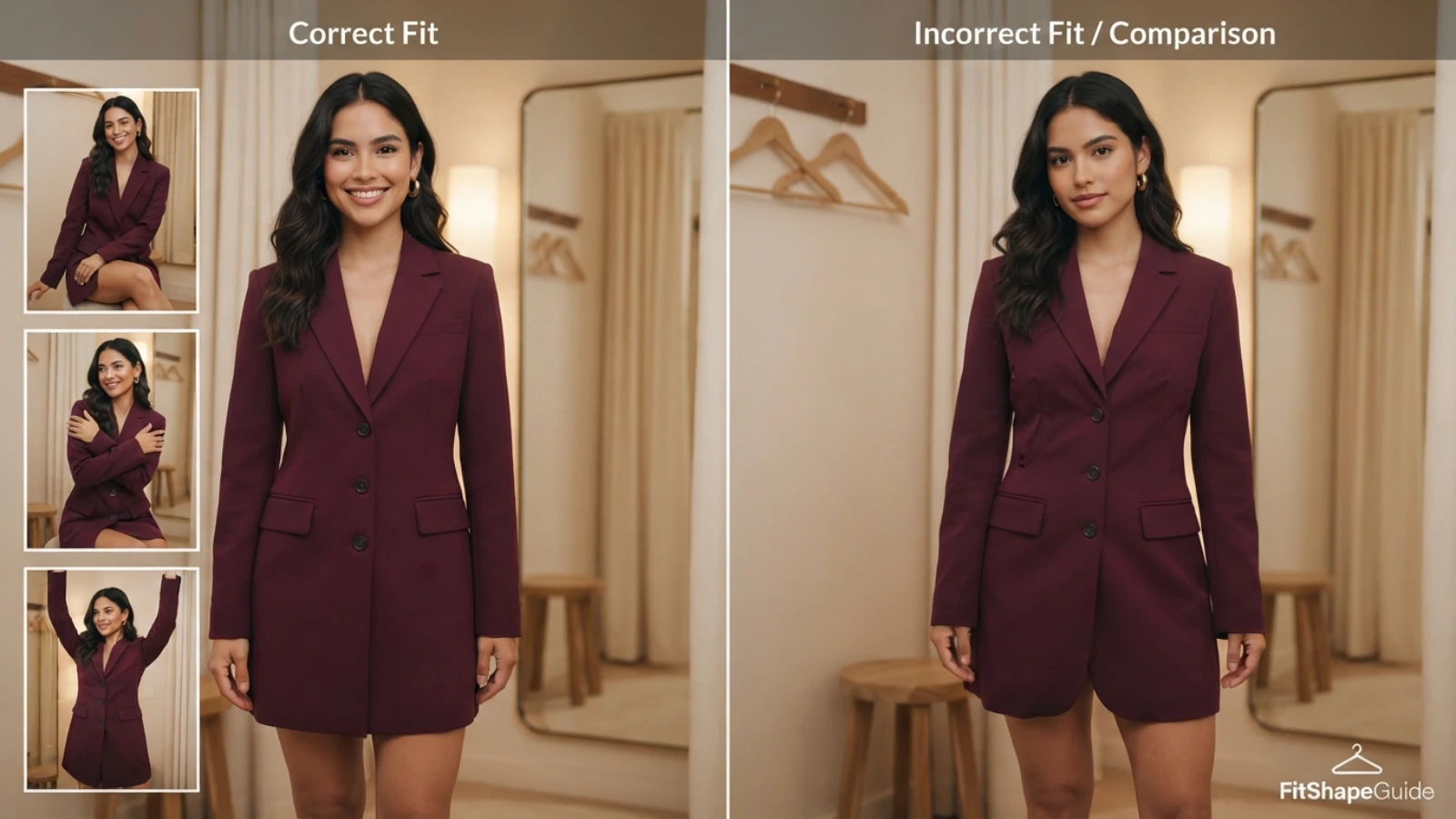
- Fasten every working button and check for radiating wrinkles around the bust.
- Confirm both lapels lie flat and the break point sits cleanly rather than springing open.
- View the side: the front hem, waist and pockets should remain level.
- Sit, reach and self-hug; the closure must not strain and the armholes must not cut.
- Walk and climb a step; the skirt, vent and lining should return without twisting.
Best blazer dresses for a large bust by construction
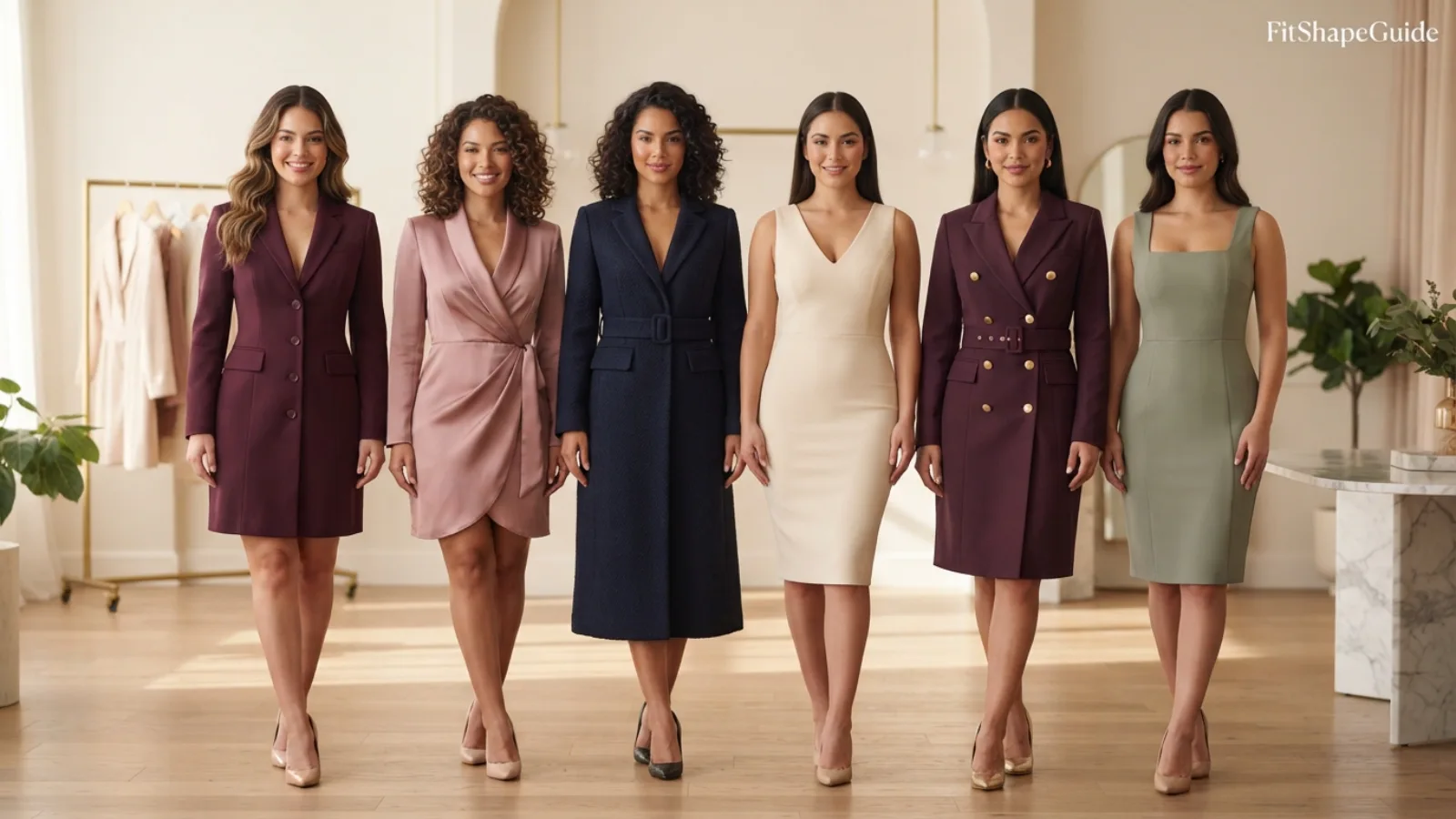
Single-breasted princess-seam dress
Best for: clean professional tailoring with controlled bust projection. One vertical row of buttons creates fewer tension points than a close double-breasted front, while long princess seams can shape the chest and waist independently. The key button should sit below the bust apex, not directly over it. Check that the lapel edge stays flat and that the back vent permits a full stride.
Wrap-front tuxedo blazer dress
Best for: adjustable closure and evening polish. A true wrap with an internal tie and secure outer fastening can accommodate a larger bust-to-waist difference, while a satin or peaked lapel creates the tuxedo line. The crossover must extend far enough toward the side seam to contain the bust during movement. Compare the mechanics in our wrap dress guide for a large bust.
Longline belted blazer dress
Best for: adjustable waist definition and layering. The belt should refine an already adequate chest rather than pull an undersized front closed. Choose a longline cut with darts, a stable inner fastening and enough overlap so the skirt stays covered while sitting. A removable belt also lets you position the waist to suit your torso length.
Stretch-crepe blazer sheath
Best for: travel, desk work and longer wear. A substantial stretch crepe can allow reach without looking like knitwear, but the pattern still needs darts or princess shaping. Test recovery at the elbows, button area and lower back. A lined front with an unlined or stretch-lined back can improve structure without making the whole garment rigid.
Adjustable double-breasted dress
Best for: a strong tailored look when closure spacing is generous. Seek functional inner and outer buttons, more than one fastening position, and enough distance between the rows to avoid a compressed rectangle across the chest. Decorative buttons do not create fit. The front edges should remain parallel, and every button should sit flat without pulling.
Sleeveless tailored blazer dress
Best for: warm weather and shoppers who struggle with sleeve or upper-arm restriction. The armhole must be high enough for coverage but shaped away from breast tissue. Broad shoulder panels and a secure lapel help the garment hang correctly. Wear it alone or layer over a fitted top, provided the added layer does not consume the intended bust ease.
Button stance and lapel placement decide the fit
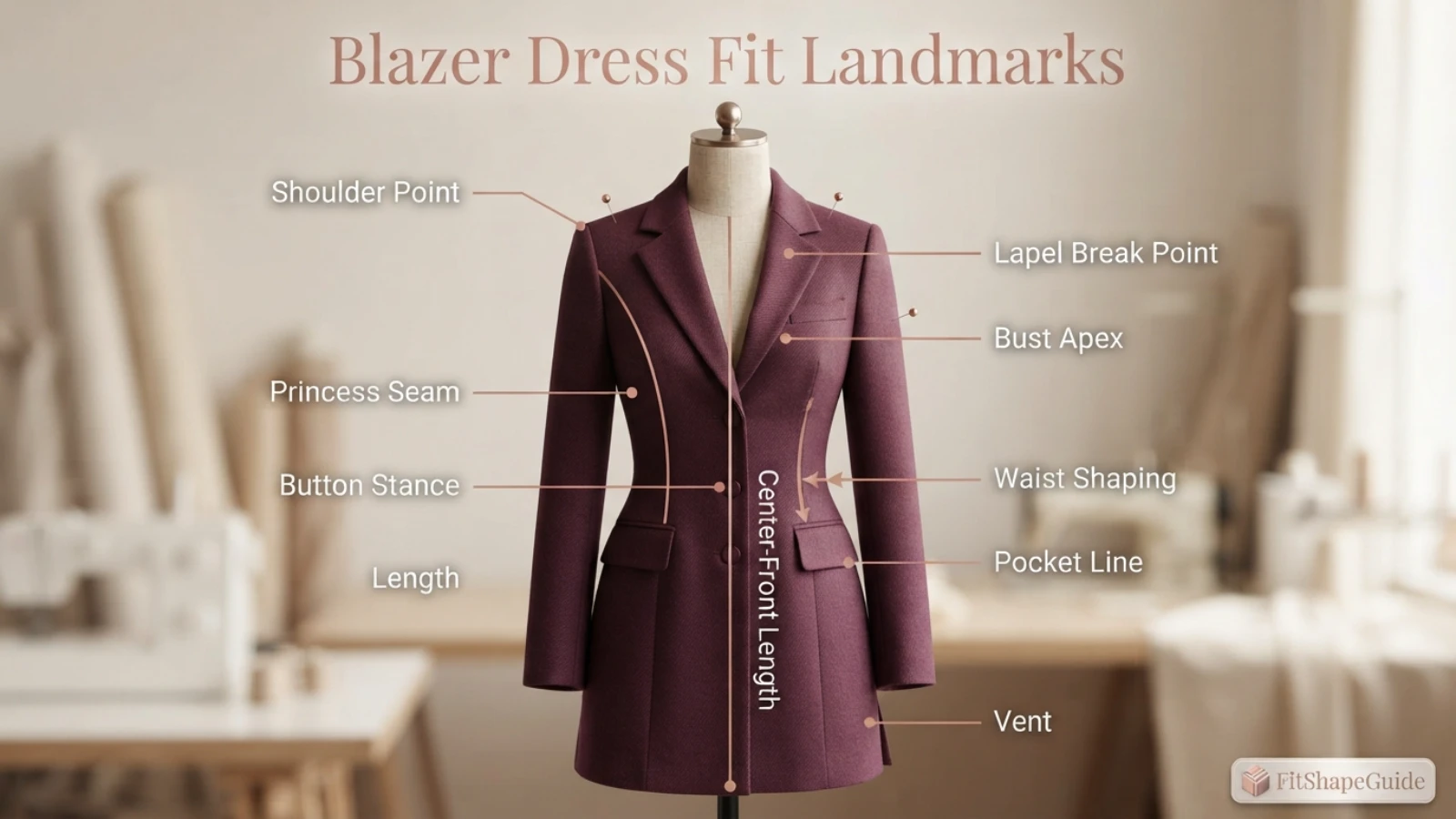
A blazer dress is built around a front closure, and that closure carries tension from the shoulders through the bust and waist. If the fullest point of the bust is forced between two closely spaced buttons, the front edge may bow even when the total circumference looks adequate. A main fastening slightly below the bust apex usually allows the lapel to open cleanly and the lower front to shape toward the waist.
Read the lapel break point
The break point is where the lapel rolls away from the chest. It should look deliberate and symmetrical. If it springs open early, collapses inward or creates a sharp diagonal pull toward a button, the chest lacks room or the canvas is too rigid for the pattern. Deep V lapels can visually lengthen the torso, but depth does not guarantee containment; use our neckline guide for a large bust to compare bra coverage.
Front length must travel over the bust
Bust projection increases the path from shoulder to hem. When the front is too short, the hem rises, pockets tilt and the back may appear longer. Shoppers with compact proportions can use our large-bust and short-torso guide to distinguish missing front length from an overall bodice that is genuinely too long.
Waist suppression should come from seams
Curved side panels, darts and princess seams create a cleaner bust-to-waist transition than simply tightening a belt. A belt can refine fit, but it should not make the button area strain or cause lapels to buckle. For a pronounced bust-to-waist difference, our large bust and small waist guide explains why fitting the bust first usually gives a better alteration path.
Shoulders, sleeves and bust shaping
Fit the shoulder frame before altering the waist
The shoulder seam should end at the shoulder point and follow its angle. Oversized shoulders can make lapels collapse, while narrow shoulders pull the armhole and chest upward. Light padding may create a crisp line, but thick pads do not fix incorrect width or pitch. If sizing for the bust makes the shoulders very large, seek fuller-bust grading or plan a skilled alteration.
Princess seams and darts need the correct apex
Shaping should release fabric toward the fullest point without ending directly on it. Curved princess seams are especially useful because they can add projection while suppressing the waist. Horizontal lines between buttons, a forward-swinging side seam and pockets pulled open all indicate insufficient front room.
Sleeve mobility is part of chest fit
Raise your arms and reach forward. Low armholes can lift the entire dress; narrow biceps can pull the shoulder line; an incorrect sleeve pitch creates diagonal wrinkles. A small back vent or stretch lining helps, but it cannot replace correct sleeve circumference and armhole shape.
Structure is not built-in bust support
Interfacing, shoulder pads and lining help the blazer keep its form; they do not automatically support breast weight. Unless a garment contains genuine bra-like engineering, plan to wear a compatible supportive bra. The dress should fit over that exact bra without flattening the cups or exposing them at the lapel.
Best fabrics, interfacing and lining
Stretch crepe and ponte
These fabrics offer polish with useful movement. Choose substantial weight and strong recovery so the button area, elbows and seat return after wear. Stretch is a comfort feature, not permission to buy a bodice with negative ease. Thin ponte may reveal bra edges and make lapels look limp.
Wool blends and classic suiting
Woven suiting gives lapels and shoulders a precise line, but it needs accurate darts and seam shaping. A small elastane percentage can improve comfort. Check that chest interfacing supports the roll line without creating a rigid plate over the bust.
Soft crepe and linen blends
Soft crepe makes a fluid tuxedo or wrap dress, while linen blends suit warm weather. Both can wrinkle where the front strains, making fit problems obvious. Linen should contain enough structure to support the closure; very loose weaves may distort around buttons.
Lining changes the usable ease
A non-stretch lining can make a stretch shell feel restrictive. Reach forward and sit long enough to test the complete garment. Partial lining, stretch lining or a back pleat may improve mobility. Evaluate fiber, weave, weight and recovery separately with our best fabrics for large-bust clothing guide.
Measurements to compare before ordering
| Measurement | Why it matters | Warning sign |
|---|---|---|
| Full bust | Controls front circumference at the fullest point | Garment bust equals or undercuts the body in woven suiting |
| High bust | Helps separate shoulder-frame size from cup projection | Shoulders become oversized when full bust fits |
| Back width | Affects reaching and sleeve mobility | Center back strains during a self-hug |
| Shoulder width | Sets the entire tailored frame | Seam droops beyond or cuts inside the shoulder point |
| Bicep | Determines sleeve comfort | Sleeve pulls the armhole during reach |
| Natural waist | Controls shaping and belt position | Waist is tight before the chest settles |
| Shoulder-to-hem front | Tests length over bust projection | Front hem and pockets rise |
| Hip and seated hip | Predicts skirt and vent ease | Buttons strain or vent spreads while sitting |
Measurement rule: fit the shoulders and bust first, then evaluate whether the waist can be taken in. Bra size alone cannot predict blazer-dress fit because garment patterns distribute ease differently.
Length, skirt shape and pocket placement
Blazer dresses range from sharp minis to work-ready midis. Judge length while sitting because the structured front may rise more than a soft dress. The button overlap must continue far enough below the waist to prevent exposure, and any back vent should open for movement without separating excessively.
Straight and sheath skirts
A close skirt creates a classic tailored line, but it needs seated hip ease and a functional vent. If it repeatedly rides up, compare our bodycon dress guide. The pulling may start at the hips and travel upward to the buttons rather than originate at the bust.
A-line blazer dresses
A subtle A-line lower half reduces tension at the seat and can make a double-breasted front easier to wear. It should begin below a properly shaped chest rather than flare immediately from an oversized torso. Our A-line dress guide explains hem balance and skirt ease.
Pockets should stay closed
Flap or welt pockets add horizontal structure. If they gape, angle upward or disappear beneath the bust, the front may be too short or tight. Decorative pockets are acceptable, but product descriptions should clearly distinguish them from usable pockets.
How to shop online for the best blazer dresses for a large bust
Read the construction details
Look for garment bust and shoulder measurements, princess seams or darts, functional button count, lining composition, stretch percentage, sleeve length, pocket type and vent depth. “Tailored fit” is not a measurement. Product photos should show the dress fully fastened from front, side and back.
Use reviews as fit observations
Prioritize reviewers who share full-bust, waist, height and ordered size. Repeated reports of popping buttons, bowed lapels, tight arms or a raised front hem are more useful than a general “runs small.” Identify where the restriction occurs before changing size.
Verify Amazon products before publishing
This page is Amazon affiliate-ready but intentionally includes no invented product name, ASIN, price, rating, review count or stock claim. Confirm every live listing, seller, size chart, fabric, photographs, care label and return condition. Mark affiliate links with rel="sponsored nofollow" and keep editorial selection independent of commission.
Try it with the intended bra and layer
Button the dress over the exact bra or base layer you will wear. Sit, reach and walk while tags remain attached. A thin camisole, padded bra or long-sleeve base can materially change the usable ease.
Know what tailoring can solve
A tailor can often suppress the waist, shorten sleeves, move a button slightly or refine a vent. Major shoulder changes and missing bust depth may require rebuilding lapels, canvas, lining and princess seams. Consult our tailoring guide for a large bust before assuming the alteration is minor.
Movement and comfort tests every blazer dress should pass
Buttoned self-hug test
Fasten the dress, reach forward and hug yourself. The back needs enough width, sleeves should permit movement, and the buttons must remain flat. A little fabric movement is normal; sharp rays from the button or armhole are not. The best blazer dresses for a large bust return to their original shoulder and lapel position when your arms lower.
Seated closure test
Sit upright for ten minutes with the dress fastened. Check breathing, lapel position, pocket openings and skirt coverage. The lower buttons should not dig into the abdomen or pull the vent open. After standing, the lining and front edges should settle naturally.
Walk, stairs and reach test
Take long steps, climb stairs and reach overhead. The hem should provide coverage, the vent should close again and the shoulders should return to position. If the whole dress rises when the arms move, the armholes may be too low or the sleeves too narrow.
Bag and coat test
Try the bag and outer layer you intend to use. A shoulder bag can crush a structured shoulder, while a tight coat can distort lapels. For work, confirm that pockets remain accessible and the dress stays comfortable against a chair and desk.
Common blazer-dress fit problems and better responses
| Symptom | Likely cause | Better response |
|---|---|---|
| Buttons pull into an X | Insufficient bust circumference or projection | Choose more front shaping or size for the bust |
| Lapels spring outward | Chest too tight or break point poorly placed | Try a lower stance or fuller-bust cut |
| Front hem rises | Missing center-front length | Choose longer princess shaping |
| Shoulders droop | Frame too wide after sizing up | Try a better-graded cut; assess alteration cost |
| Sleeves twist or bind | Bicep, armhole or sleeve pitch mismatch | Choose more sleeve ease or sleeveless tailoring |
| Pockets gape | Front panel or hip is under tension | Add front/hip ease; do not stitch them shut as the first fix |
| Vent spreads while standing | Insufficient hip ease | Try an A-line lower half or larger size |
| Lining pulls | Lining is smaller or less flexible than shell | Choose stretch or pleated lining |
When sizing up helps
Sizing up can add bust, back and bicep room when the brand grades those areas meaningfully. It is useful when the waist can be taken in without moving pockets or destroying balance. It will not fix a shoulder seam far beyond the shoulder or a lapel drafted for a much flatter chest.
When separates are smarter
A separate tailored jacket and skirt let you choose two sizes and adjust overlap. This can be more economical when one-piece grading does not match your proportions. Compare our structured blazer-top guide for additional lapel and layering checks.
Choosing blazer dresses for work, weddings and evenings
Work and professional settings
Choose secure coverage, functional pockets, breathable lining and a skirt that passes the seated test. A single-breasted midi in stretch crepe or light suiting often layers more easily beneath a coat. Professional polish depends on comfort through meetings, commuting and desk work.
Cocktail parties and wedding guests
The best blazer dresses for a large bust at long events combine a stable shoulder line, flat lapels, enough projection and reliable closure. Tuxedo lapels, covered buttons or refined crepe can feel special without sacrificing bra compatibility. Compare event needs in our cocktail dress guide.
Formal occasions
Satin lapels, velvet, metallic buttons and longer lengths can raise the formality. Heavy embellishment increases pull at the front, so fastening and lining must remain stable. Check flash photography, seated coverage and whether the fabric creases during travel.
Casual and daytime wear
Softer twill, linen blends or sleeveless tailoring can relax the silhouette. Favor washable construction when appropriate and confirm that casual unlined designs still have enough bust shaping. A loose rectangle is not automatically more comfortable if its armholes and buttons are misplaced.
Care, storage and value checks
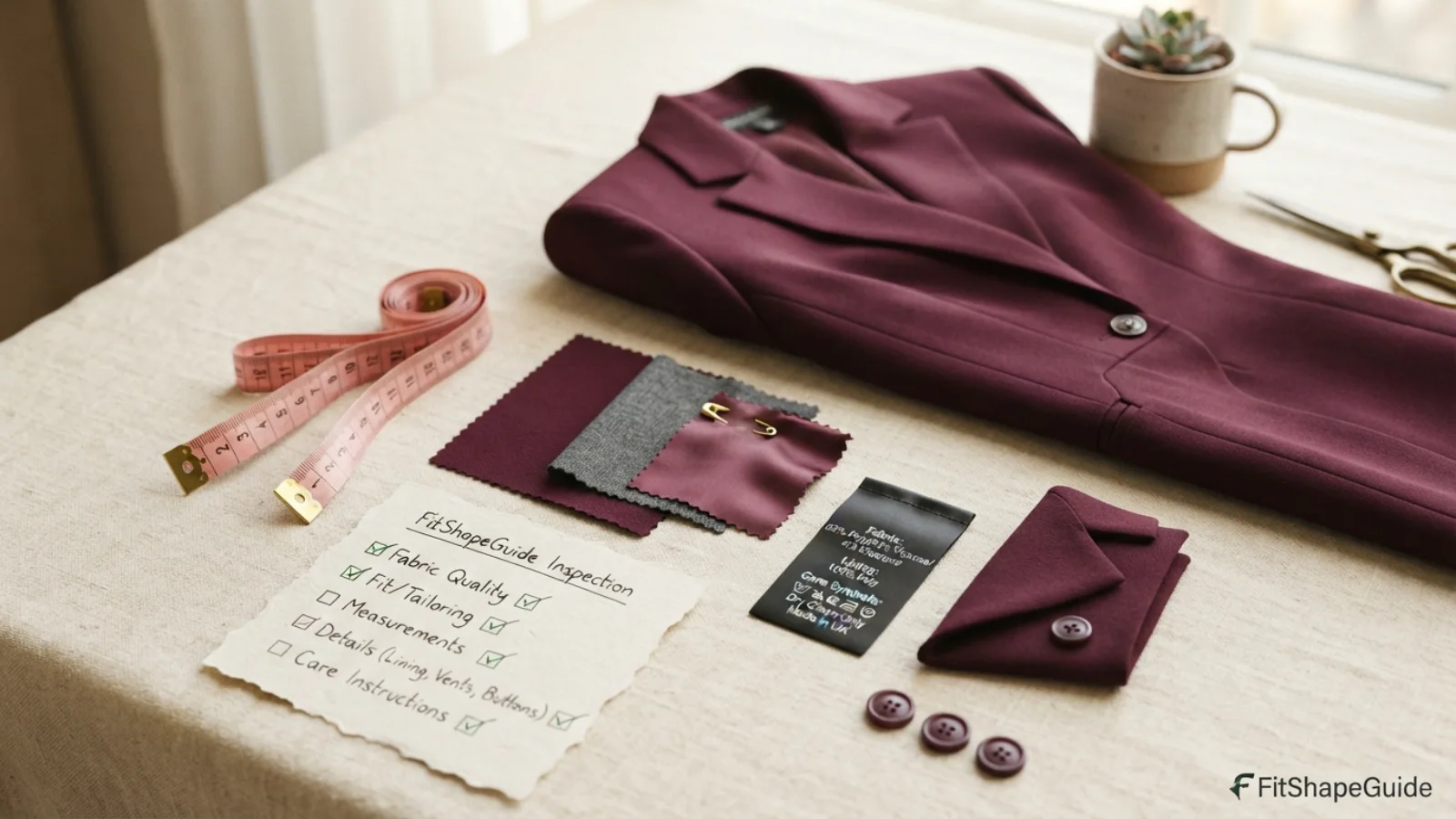
Always follow the sewn-in care label because shell, lining, interfacing, buttons and trim may need different handling. The U.S. Federal Trade Commission’s official Care Labeling Rule guidance explains regular-care instructions, while its apparel labeling resources cover fiber-content responsibilities.
Use a broad or padded hanger that supports the shoulders. Empty pockets and avoid leaving the dress tightly buttoned under tension. Steam only when the label permits; excessive heat can bubble fusible interfacing, shine suiting or distort synthetic lining.
Inspect buttons, buttonholes, underarms, pockets, vent and lining after wear. These points absorb repeated force. Reinforce a loose button before it tears the front, and repair a separating lining before it changes the hang. Value includes alteration, cleaning, compatible undergarments and return costs—not only ticket price.
The best blazer dresses for a large bust earn repeat wear because their shoulders remain stable, lapels return and closures stay smooth after movement. A design that works only while standing still is not a strong purchase.
- Compare full bust, shoulder, back, bicep, waist and hip measurements.
- Confirm lapels and buttons lie flat after the bust settles.
- Check bra coverage, front length and pocket alignment.
- Test sitting, reaching, walking, stairs and outerwear.
- Verify the current care label, seller and return conditions.
The best blazer dresses for a large bust begin with shoulders, projection and closure
Choose a stable shoulder frame and sufficient bust room before judging waist definition. Lapels should lie flat, buttons should close without radiating wrinkles, pockets should remain level and the skirt should recover after sitting and reaching. Princess seams, thoughtful button stance, flexible lining and realistic tailoring make the silhouette dependable. Keep the dress that looks polished without compressing your bust or demanding constant adjustment.
Frequently asked questions
Are blazer dresses good for a large bust?
Yes. The best blazer dresses for a large bust use princess seams, a lower button stance and stable shoulders to create projection and polish. The dress must fit without bowed lapels or strained buttons.
Should a blazer dress button above or below the bust?
The key fastening often works best slightly below the bust apex. Exact placement varies, but a button directly across the fullest point is more likely to show tension.
Is single-breasted or double-breasted better?
Single-breasted styles are often easier because they create fewer fixed tension points. Double-breasted designs can work when button rows are generously spaced and adjustable.
Why do blazer-dress lapels stick out?
The chest may lack circumference or projection, the button stance may be too high, or rigid interfacing may fight the bust shape. A different cut is usually better than pressing the lapels flat.
Should I size up in a blazer dress?
Size up when it adds real bust, back and bicep room and the shoulders remain workable. If shoulders become far too broad, seek a differently graded cut.
Can I belt a blazer dress?
Yes. The belt should refine an already comfortable front rather than pull strained buttons closed. Check lapels and pockets after tightening it.
What bra works under a blazer dress?
A supportive plunge, balconette or full-coverage bra may work depending on lapel depth. Test the exact bra because lift and cup shape alter the required front length.
Can a tailor add bust room to a blazer dress?
Minor changes may be possible when seam allowance exists. Significant added projection can require rebuilding princess seams, lapels, interfacing and lining, so another cut may be more economical.